Sunday, July 12, 2026

India's Hindu nationalists take 17th-century king as new anti-Muslim symbol


Statues of 17th-century king Shivaji have been erected across various Indian cities over the past few years by Hindu nationalist groups, who view him as a symbolic defender of Hindus against Muslims. The campaign marks another act of intolerance toward Muslim and Christian minorities, who have been targeted since the Bharatiya Janata Party took power 12 years ago.

Issued on: 10/07/2026 
By:The FRANCE 24 Observers

Screenshot of a video showing the Indian army erecting a statue of Chhatrapati Shivaji Maharaj near the Line of Control that separates India and Pakistan on March 5, 2026. 
© Instagram/ anilchoudhari2909

A few hundred men paraded on motorcycles through the streets of Sangareddy, in the southern Indian state of Telangana, on May 29, 2026. They were supporters of the Rashtriya Swayamsevak Sangh, or RSS, the foremost organisation within the Hindu nationalist movement and the ideological backbone of the ruling Bharatiya Janata Party (BJP) – the Hindu nationalist party of Indian Prime Minister Narendra Modi.

Wearing saffron scarves around their necks, they rode down the roads waving their signature double-pennant flags, also saffron – the colour of the BJP.
A video shows members of the Hindu nationalist group celebrating the unveiling of a statue of Chhatrapati Shivaji Maharaj in Sangareddy on May 29, 2026. The footage was posted on X on May 31, 2026. Source: X/VLKAS_PR0NAM0

Since 2022, hundreds of statues of King Chhatrapati Shivaji Maharaj – some of them towering up to 27 metres – have emerged across several towns and cities, including in Telangana and Ladakh, a northern Indian state bordering Pakistan and China.

These statues are sometimes erected in secret by nationalist groups, at times with the complicity of local authorities and elected officials and in some instances, with the assistance of the military.


This video shows the Indian army erecting a statue of Chhatrapati Shivaji Maharaj near the Line of Control that separates India and Pakistan on March 5, 2026. Source: Instagram/anilchoudhari2909

Shivaji is a prominent 17th-century figure in Maharashtra, a state in western India. Today, he serves as a key point of reference for local political parties across the entire political spectrum. He is widely known for his military campaigns against the Muslim Mughal emperor Aurangzeb, who is commonly depicted as a tyrant in popular Indian historical narratives.

However, in the political communication strategy of the Hindu nationalist right, Shivaji has been cast as a symbol of the struggle against Muslimsa minority community heavily targeted by the BJP and the RSS.

‘There has been this Hindu right-wing project aimed at making India a de facto Hindu state’

The New York Times reported that several states governed by Modi’s political party have allocated funds to projects aimed at promoting Shivaji's legacy.

The narrative the party is trying to push aligns with a clear political agenda, according to Rohit Chopra, a communications professor at Santa Clara University and a member of the advisory board of the Centre for the Study of Organised Hate:


“At this point, this has become a project of state and society. In my opinion, it's definitely coming from the BJP high command. [...] Since the BJP came back to power under Mr. Modi's prime ministership in 2014, there has been this Hindu right-wing project, which is a hundred-year-old project aimed at making India a Hindu state de facto, as opposed to a secular state. Even if it is constitutionally a secular state, the idea is that the national culture at large should be Hindu, and accepted as such.

There's been this project to create an overarching pan-Hindu cultural identity, in which Shivaji is a figure who is now being recast as a Hindu nationalist figure who has significance not just for Maharashtra but also for all Hindus and all of India. So there's this new kind of landscape and topography where these pan-Hindu icons are being recast and reshaped through statues. [...] It is a state project, but there are some different cultural organisations also involved.”

A driver filmed a statue of Shivaji, transported on a truck. The video was posted on YouTube on September 29, 2024. Source: YouTube / Vinay_khatri_vinu

Chopra said that the RSS’s narrative surrounding the Maratha king is, moreover, “historically completely inaccurate”:

“That is reading a 20th-century conception of nationalism and ethno-nationalism back into an earlier time, when that logic of our conflation of political and religious identification didn't exist. Aurangzeb, against whom Shivaji fought, had Hindus in his army, and Shivaji had Muslims in his army. These were regional political battles. The conception of Hinduism that the RSS and the BJP promote is a profoundly modern one, rooted in the 19th and 20th-century conception of religion that conflates religious territory and national identity. That way of looking together religion, territory, land and politics simply did not exist in an earlier period.”
‘Another reminder that minorities don't have a claim on public space’

Since 2014, religious minorities in India – specifically Muslims and Christians – have been targeted by violence and what Human Rights Watch terms “abusive policies”, such as expulsions and politically motivated prosecutions.

Chopra says the erection of Shivaji statues is part of an ongoing pattern of exclusion targeting these marginalised groups:


“It doesn't directly insult minorities as such, but it becomes another way in which Muslims, Islam, and Christians are completely excluded from public life and public culture. I doubt anyone will speak up publicly against it because if you are a minority and speak up, the risks are very high. But it is another reminder that they don't have a claim on public space. [...] The idea is that this conception of Hinduism is not just the only way to be a Hindu, but this is also the only authentic way to be an Indian.”

A driver filmed a statue of Shivaji in Bengaluru, southern India. The video was posted on YouTube on October 2, 2023. Source: YouTube/RAM-lf2jt

While the erection of statues dedicated to Shivaji serves a clear political agenda, the specific locations chosen for these monuments are equally crucial to the nationalists' political strategy:


“Telangana is in the south of India, a region that has historically not been a stronghold of the BJP, though they are beginning to make some inroads there in alliance with local parties. So it's very clear that the goal is to cover the whole of India, and I'm sure that we'll see one in the east as well.”

This article has been translated from the original in French.
The Bayeux Tapestry's risky journey across the Channel

Cover image: Bayeux Tapestry © Loic Venance, AFP

Issued on: 10/07/2026 - 
Play (12:17 min)From the show


Nearly 1,000 years after chronicling the Norman conquest of England, the Bayeux Tapestry is making history once again. The fragile 11th-century embroidery has arrived in London on an unprecedented loan to the British Museum, prompting delight and concern in equal measure. Celebrated as one of Europe's greatest medieval treasures, its journey has reignited debates over heritage, diplomacy and the risks of moving delicate cultural artefacts.

Today, many scholars believe its 58 vivid scenes recounting the events leading up to the Battle of Hastings in 1066 were stitched in England. More than nine centuries after William, Duke of Normandy, defeated King Harold, the tapestry has become a symbol of the love-hate relationship between England and France. "The tapestry's always been a political object," according to former British ambassador Lord Peter Ricketts, who helped coordinate the loan. "It's absolutely the founding story of our modern history. It's the date everybody knows from school: 1066."

For historians, the embroidery's enduring appeal lies in its remarkable detail. "You don't really get many other historical sources that are that evocative of the everyday person's experience of war," explains academic Millie Horton-Insch. From royal intrigue and military strategy to horses, ships and soldiers, the tapestry offers an extraordinary window onto medieval life.

A loan decades in the making

Successive British governments have sought to borrow the tapestry over the years, including for Queen Elizabeth II's coronation in 1953, but France has always refused. A breakthrough came in 2018, when President Emmanuel Macron floated the idea during talks with then British Prime Minister Theresa May. Brexit tensions and the Covid-19 pandemic delayed the project, alongside concerns about the feasibility of transporting such a fragile object.

Yet when the museum in Bayeux, where the tapestry had been on display since 1983, closed for major renovations, the tapestry had to be placed into storage. Closed since September 2025, the site is undergoing a €40 million transformation, with the new museum and annexe due to open in 2027. During a detailed conservation assessment in 2020, experts concluded that the tapestry should no longer hang vertically but instead be displayed along its full length on a gently sloping support, reducing stress on its ageing fibres. The new annexe has been designed to accommodate the tapestry under those specific conditions.

For Bayeux's residents, its temporary absence is bittersweet. "We live with the Bayeux Tapestry," said one local. "The whole town lives with it and we're proud of it." Others see the loan as fitting for an artwork that illustrates the birth of the Anglo-Norman monarchy. "The English used to come and see it here," explained tour guide Christèle Tait. "We're sending it there. We just hope they'll give it back!"

Conservation concerns overshadow a highly symbolic journey

Amid the cultural and political significance of this priceless artefact, transporting the tapestry has sparked fierce criticism in some quarters. Its most recent scientific assessment identified thousands of stains, holes and tears, prompting recommendations for restoration. Critics argue that moving such a fragile textile is an unnecessary risk, particularly as some technical details of the transport operation were not disclosed in advance by the French Ministry of Culture.

Art historian and journalist Didier Rykner launched a petition opposing the loan in 2025. He argues that experts have never fully measured how the tapestry might respond to vibrations during transport. "We've never transported something this fragile," he says. French authorities, meanwhile, insist that every precaution has been taken, pointing to the custom-built, climate-controlled crate used for the journey. Curators at the British Museum also say the bespoke transport technology developed for the move is unprecedented.

"There is never any movement that goes without any risk whatsoever," acknowledges lead curator Michael Lewis. "But the procedures put in place have been designed to reduce that risk to as low a level as reasonably possible."

At a time when public spending on the arts has been cut in both countries, this high-profile Franco-British operation has prompted debate over the role of governments in cultural heritage. Yet while 1066 is synonymous with conflict for generations of Britons, 2026 may be remembered as the year two countries came together to celebrate a shared history – and the extraordinary work of art born from it.
BY:

Olivia SALAZAR-WINSPEAR

Stéphanie CHEVAL

Mélina HUET
Trump's 'unusual' attack on reporters for Air Force One story floors expert: 'Troubling'


Robert Davis
July 12, 2026 
RAW STORY


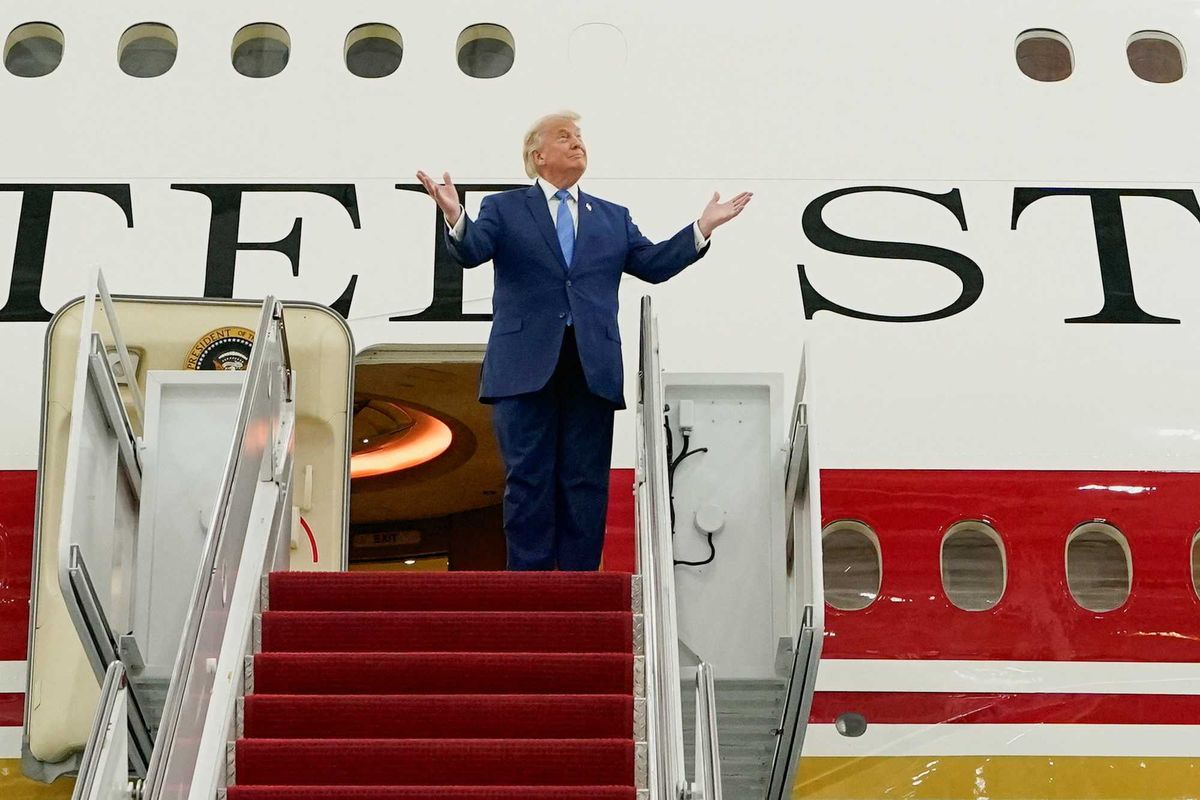
U.S. President Donald Trump gestures as he tours the VC-25B aircraft gifted by Qatar that will be used as Air Force One, at Joint Base Andrews, Maryland, U.S., June 19, 2026. REUTERS/Elizabeth Frantz

A media expert was floored on Sunday by reporting on the Trump administration's latest effort to silence reporters after they broke a story about Air Force One last week.

Brian Stelter, a CNN media expert, discussed the Trump Department of Justice's subpoena to a pair of New York Times reporters who broke the story that President Donald Trump landed in the United Kingdom to change from his Qatari-donated Air Force One to the regular Air Force One on his way home from a NATO summit in Turkey. The report indicated that administration officials made the call because of threats against the president's plane.

Stelter told CNN's Omar Jimenez on "CNN Newsroom" that the subpoena is "very troubling" for several reasons.

"That is a highly unusual, very aggressive, and very troubling step forward, or a reassertion of the government's powers here because ultimately, a subpoena to a journalist is an attempt to compel them to testify, to reveal anonymous sources," Stelter said. "And in this particular case, the anonymous sources are officials inside Trump's government who contradicted him, who said that the security concerns were the reason why the plane was not taken back from Turkey."

Stelter also noted that the Times plans to fight the subpoenas. He read a statement from Joseph Kahn, the outlet's executive editor.

"The Trump administration, with its impulsive subpoenas, used vague pretenses of a threat to national security to try to compel our reporters to appear before a grand jury. But the law protects news gatherers from this sort of retaliatory abuse of prosecutorial power. It is essential that the courts reaffirm that protection and quash this overreach, and we are confident that they will do so," the statement reads.

Stelter also noted that judges have struck down the Trump administration's previous attempts to force journalists to reveal their anonymous sources. The key difference between those cases is that "this is all happening within a matter of days of the story being published in the first place," he added.


Trump administration subpoenas New York Times journalists over Air Force One story


The New York Times said on Saturday that the US Department of Justice had ​ordered several of its journalists to testify before a federal grand jury after they reported on security concerns involving President Donald Trump's new Qatari-donated Air Force One.


Issued on: 11/07/2026
By: FRANCE 24

The Department of Justice has subpoenaed New York Times journalists after they reported on security concerns involving the new, Qatari-gifted Air Force One, marking a dramatic escalation of President Donald Trump’s campaign against the media that has drawn condemnation for eroding a fundamental freedom of American democracy.

The new jet, a present from the US ally that the administration spent $400 million on to retrofit and upgrade, entered service last week. But Trump used an older model Air Force One jet to leave a NATO summit in Turkey and later referenced threats against him made by Iran.

The subpoenas seek to force the reporters to testify before a federal grand jury in Manhattan next week, the Times said, adding that federal agents delivered some subpoenas to the reporters at their homes.


WATCH MOREGlobal press freedom falls to lowest level in 25 years, RSF warns

They were issued after FBI Director Kash Patel and other Justice Department officials met at the White House on Friday to talk about the matter, according to a person familiar with the discussions who was not authorised to discuss the issue publicly and spoke on the condition of anonymity.

The journalists subpoenaed included Julian E. Barnes, Eric Lipton, Tyler Pager and Eric Schmitt, the Times reported.

“The appearance of federal law enforcement agents on the doorstep of news reporters should shock the conscience of any American who believes in the Constitution and the press freedom it protects,” David McCraw, a lawyer for the Times, said in a statement.

Bruce D. Brown, president of the Reporters Committee for Freedom of the Press, said Trump's “war on the press is looking for another victim”.

He said in a statement that the subpoenas "break from longstanding Justice Department practice to protect the public interest and press independence by requiring prosecutors to only seek information from reporters as a last resort when all other avenues have been exhausted”.

The department said that "to be clear, reporters are not the targets, those leaking classified information are.”

Its statement said, "we value and appreciate the important role that the press plays in this country, but DOJ also plays an important role to make sure that the people entrusted with our nation’s secrets do what they’re supposed to do with that information, which means not sharing classified information.”

While recognising “there may always be natural tension there”, the department said "we are not going to ignore the law and stop investigating the people who work in the administration and think it’s okay to leak classified information impacting national security.”

Issuing subpoenas represents further ramping up of Trump's effort to threaten independent news organisations by leveraging the power of the federal government against them.

It is also part of a systematic pattern by the Republican president to attempt to undermine press freedom in order to shield him from negative coverage.

Earlier this year, the Justice Department issued subpoenas seeking to compel testimony from reporters at The Washington Post and The Wall Street Journal. In both cases, the department later withdrew the subpoenas, though.


'Chilling message to journalists'

In January, FBI agents searched the home of Washington Post reporter Hannah Natanson, who has been covering Trump’s transformation of the federal government, as part of a leak investigation into a Pentagon contractor accused of taking home classified information.

Adam Steinbaugh, senior attorney for the Foundation for Individual Rights and Expression, said Friday's subpoenas and the prospect of “hauling reporters before grand juries sends a chilling message to journalists and whistleblowers alike: Watch what you say, or expect a knock on the door.”

“These tactics are becoming more common,” Steinbaugh said in a statement. “That doesn’t make them normal.”

During his first term, Trump suggested that the press constituted an “enemy” of the American people.

Since returning to the White House, he has waged an aggressive campaign against the media unlike any in modern US history.

(FRANCE 24 with AP)

Fox News host blasts Trump for bullying reporters: report

U.S. President Donald Trump reacts as he welcomes Israeli Prime Minister Benjamin Netanyahu (not pictured) at the White House in Washington, D.C., U.S., September 29, 2025. REUTERS Kevin Lamarque

July 11, 2026
ALTERNET


Fox News Chief National Security Correspondent Jennifer Griffin is calling out President Donald Trump’s administration for issuing subpoenas to four New York Times reporters for daring to do the news, according to Mediaite

After the Times embarrassed Trump with an article revealing that security flaws kept Trump from flying his new $400 million luxury plane (gifted from Qatari leaders) his politicized Department of Justice subpoenaed four journalists including reporters Julian E. Barnes, Eric Lipton, Tyler Pager and Eric Schmitt on Friday.

The Times blasted the subpoenas as an intimidation move, noting that in some instances the legal documents were administered by federal agents who showed up at the reporters’ homes.

“The appearance of federal law enforcement agents on the doorstep of news reporters should shock the conscience of any American who believes in the Constitution and the press freedom it protects,” the Times wrote. “… our journalists report the facts and advance the American public’s right to know how their government is operating and their taxpayer dollars are being used. This brazen act should be seen as nothing more than an attempt to prevent the public from knowing what is happening in their country by intimidating journalists from doing their jobs.”

But Griffen had her own criticism of the DOJ’s behavior.

“This action by the US government to subpoena reporters for reporting legitimate news on security concerns about Air Force 1 should alarm every American,” Griffen wrote on X.

Other critics joined in under her post, with one demanding: “Why can’t the federal government, regardless who is president, not allow the press to exercise its First Amendment rights?”

Another posted on X that it was “good to see” an honest reaction from a Fox News reporter.

“Welcome to our new police state,” quipped another X user.

“It’s time Republicans grow a pair and stop this nonsense!” howled a fourth. “We have a Constitution to follow, not allow Trump to destroy it!”

Similarly, a statement from the Washington DC-based National Press Club said federal prosecutors’ subpoena of journalists should alarm every American “because it threatens the public’s constitutional right to an independent press.”

The White House remains extremely sensitive about the endangered status of the Qatari gift. White House communications director Steven Cheung also singled out MS NOW reporter Carol Leonnig's social media post about the plane on X last week.

“Carol Leonnig is a liar and this article is complete Fake News. She has no idea what she is talking about,” posted Cheung on X. “She says the White House declined to comment. Not true. We gave comment to The New York Times and many other outlets. Carol is not a real journalist. A complete fraud.”


As Iran buries Khamenei, it shifts from 'a theocracy to a nationalistic military leadership'


Issued on: 09/07/2026 - FRANCE24

Khamenei's marathon funeral is coming to an end as the coffin arrives in Mashhad, following a week of mass processions across Iran resonating with revenge slogans against Trump. It comes as strikes between of US and Iran have started up again. The funeral is also being used as a way to project to the world a regime that has managed to withstand the war. FRANCE 24's Angela Diffley tells us more.

Video by:
Angela DIFFLEY


Iran claims US strike hit near nuclear power plant


Issued on: 10/07/2026 
FRANCE24

The United States and Iran are continuing to trade strikes on July 9 for a second straight day after President Donald Trump said the ceasefire between the two countries was "over". According to Iran's health ministry, the two days of US attacks have killed at least 14 people and injured more than 70. In response, Tehran said it had resumed its targeting of US assets in Kuwait, Bahrain and Qatar.

Video by: Carys GARLAND

Surprise alliance hands anti-independence bloc control of New Caledonia Congress

The anti-independence bloc has won control of New Caledonia's deliberative assembly, after securing the backing of a small party – despite the two sides holding sharply different views on the future of the French Pacific territory.


Issued on: 10/07/2026 - RFI

Milakulo Tukumuli, head of Eveil Oceanie party that's become kingmaker in New Caledonia's Congress. AFP - THEO ROUBY

The victory came less than two weeks after pro-France parties won the wealthy and most populous Southern Province in provincial elections held on 28 June.

In a vote on Friday, Virginie Ruffenach, of the Les Loyalistes and Le Rassemblement party, one of the hardline branches of the non-independence movement, was elected president of the Congress – the territory's elected assembly – securing 28 of the 54 votes.

Her opponent, Dominique Fochi, backed by the pro-independence bloc "Kanaky for All", got 26 votes.

The pro-France bloc initially held 24 seats in the assembly but a deal with the four lawmakers of the Eveil Océanien (Oceanian Awakening) party enabled it to form a majority.

Ruffenach said the "governance" coalition had been formed to help rebuild New Caledonia after a difficult period.

Deadly unrest in May 2024, sparked by planned changes to voting rights, left 14 people dead and caused more than €2 billion in damage.

Virginie Ruffenach (centre) was elected president of New Caledonia's Congress on Friday. AFP - DELPHINE MAYEUR


Alliance of convenience

Oceanian Awakening was founded in 2019 to represent the interests of New Caledonia’s Wallisian and Futunian community

"We do not share the same vision with Oceanian Awakening on the island's institutional future," Ruffenach said. "But we have put that aside to build a majority for recovery and reconstruction at what is probably the most difficult period in New Caledonia's recent history."

Oceanian Awakening said it had first tried to form a majority with the independence bloc, led by the Kanak Socialist Liberation Front (FLNKS), but had failed.

"We believe the conditions for stability within the independence bloc are not in place," the party's president, Milakulo Tukumuli, said.

Questions over durability

The new partners say they expect the alliance to last for the full five-year term.

However, the Congress elects its president every year, leaving open the possibility that the balance of power could change.

The coalition agreement does not include long-term political projects, including the issue of the archipelago's institutional future, which is still to be debated between New Caledonia's political parties and the French government.

New Caledonia has rejected independence from France in three successive referendums, laid down as part of the 1998 Noumea accord, which set out a roadmap for greater autonomy for the territory.

However, the third and final referendum in December 2021 took place during Covid restrictions and was boycotted by the pro-independence camp.
Fifteen years of independence for South Sudan, but still little to celebrate

South Sudan, the world's youngest country, on Thursday marks the 15th anniversary of its independence, following decades of war with Sudan, a 2005 peace agreement and a 2011 self-determination referendum in which almost 99 percent of voters backed statehood. But the hopes that came with it have given way to renewed conflict, economic collapse and political deadlock.


Issued on: 09/07/2026 - RFI

South Sudan, the world's youngest country, will again not be marking its independence. AFP - TIZIANA FABI


For several years now, the government of President Salva Kiir has cancelled large Independence Day celebrations, saying they are too expensive and the authorities have other priorities.

"Fifteen years after independence, the country is almost at a dead end," Daniel Akech, a researcher at the International Crisis Group, told RFI. "We have a financial crisis, which is really the main reason as to why they cannot celebrate."

He added: "And the country has not transitioned to what was expected... people are frustrated. People need to see some kind of transition, a peaceful democratic transition. Independence was meant to improve things. That achievement has not been realised. The country is risking basically disintegration”.

According to the International Monetary Fund, South Sudan was the sixth-poorest country in the world in 2025, with a GDP per capita of $470.

Oil revenues, the country's main source of income, have fallen in recent years – mainly because of the war in neighbouring Sudan, through which South Sudan's oil exports pass.

Edmond Yakani, director of the Community Empowerment for Progress Organization, told RFI that the country's civil servants received their first salary in two years last week.

Just 8 percent of the population has access to electricity, and South Sudan is ranked alongside Somalia as the most corrupt country in Africa.
Short-lived jubilation

Akech says the people feel they are being held hostage by the ongoing conflict between Kiir and his former vice-president Riek Machar.

Kiir and Machar both fought for South Sudan's independence from Khartoum as members of the armed group, the Sudan People's Liberation Movement/Army.

After decades of war with the north, South Sudan became an autonomous region in 2005. Kiir was appointed president and Machar vice-president. They remained in those positions as the country officially became independent on 9 July, 2011.

In Juba, there was jubilation. People who had long been marginalised within Sudan saw the day as the culmination of more than half a century of struggle.


South Sudan's independence day celebrations in 2011. © Reuters

Relations, however, between Kiir and Machar were difficult from the start. Rivalry, ambition, and mistrust quickly caught up with the two men.

In 2013, just two years after independence, Kiir dismissed his vice-president, accusing him of wanting to take his place as head of state. War broke out again.

The conflict lasted five years, during which 400,000 South Sudanese people were killed and more than half the population was displaced.

The international community and countries in the region put pressure on both sides. Several ceasefires were signed and later broken.

In 2018, the two men signed the Revitalised Peace Agreement, which was meant to begin a transitional period. Machar returned as vice-president.

Key parts of the Revitalised Peace Agreement are still yet to be implemented. The integration of Machar's forces into the national army, the demobilisation of militias, and the organisation of the country's first elections – originally scheduled for 2015 – have all been postponed several times.

Mistrust between the two men has continued to grow and their struggle for power has intensified. To strengthen their support, both leaders have relied on ethnic divisions – Kiir is Dinka, the country's largest ethnic group, while Machar is Nuer, the second largest.

From refugee to red carpet, the remarkable journey of Amine Benrachid
Peace agreement collapses

In March 2025, an attack on a government military base shattered an already fragile political peace.

The Nuer White Army, a militia linked to forces loyal to Machar, attacked in Upper Nile State and captured a military base in Nasir. More than 250 government soldiers were killed.

In the aftermath, Kiir ordered the arrest of several opposition figures. Machar was placed under house arrest before being removed from office.

He was accused of orchestrating the attacks on the national army and charged with treason, murder and crimes against humanity, alongside seven senior members of his party, the Sudan People's Liberation Movement-in-Opposition.

Machar’s party says the case is politically motivated and intended to remove him from politics.

By the end of last year, heavy fighting had resumed between government forces and militias close to the opposition, mainly in Jonglei State. Millions of South Sudanese have once again been displaced.

"There is an ongoing war, as we speak," said Akech – even if much of the international community is reluctant to use the term.

Machar sits in the dock with seven others charged with murder, treason, and crimes against humanity at Freedom Hall in Juba, 24 September, 2025. AP - Florence Miettaux

Despite the resumption of war and the trial of Machar, the government in Juba announced a few months ago that elections will be held at the end of this year, on 22 December.

For Yakani, however, this announcement is intended only to quell public anger. And the lack of celebrations on Thursday speaks volumes.

“Independence Day is now being described by citizens with bitter words instead of sweet words – like corruption, manipulation, lack of human rights, absence of rule of law, deadly violence. The beauty, the sweetness of independence is fading every year."

This article has been adapted from the original version in French by Alexandra Brangeon.
INTERVIEW

Capital punishment in Pakistan: 'Islam does not promote the death penalty'


Around the world, a total of 47 countries still retain capital punishment – including Pakistan. Barrister Sarah Belal founded the Justice Project Pakistan in 2009 to represent the most vulnerable Pakistani prisoners facing the death penalty, at home and abroad. RFI met her in Paris.

Issued on: 11/07/2026 - RFI
By:Zeenat Hansrod

RFI: You are a barrister and the executive director of Justice Project Pakistan. How do you reconcile your work on the abolition of the death penalty while operating in Pakistan, an Islamic state?

Sarah Belal: I don’t find the two to be contrary [to each other]. Islam does not promote the death penalty, and it is not banned under international law. It says the death penalty can only be prescribed for the most serious crimes.

Actually, under Islam the Quran only prescribes the death penalty for two offences, which broadly match the international human rights standard – intentional killing and Fasad-Fil-Arz, which covers various violent crimes including crimes against humanity. So, they’re not at odds with each other at all. You’ll see that international human rights law standards match with the Quranic ones.

Islam's concept of Tazkiyah al-Shahood is a very high evidentiary standard to determine the competency of a witness. Yet, in Pakistan, these standards are never upheld in court where witnesses regularly perjure themselves while never being held accountable.

RFI: Although capital punishment is legal in Pakistan, there hasn't been an execution since 2019. What does this say about the direction the country is taking?

SB: I think it's going in the right direction. This halt in executions shows that the various governments Pakistan [has had since then] have realised that there's a severe lapse in justice in who we are executing, and are trying to correct the system.

If you're going to have the ultimate punishment, you need to have the ultimate justice system. We come from a country that's plagued by a lot of problems.

One of my favourite quotes is from a visiting American professor who worked on the death penalty in the United States.

He said: "This is incredible to me how vibrant and dynamic the Pakistani society is. But, you know, since I've been here, I've seen the electricity go several times [due to load shedding] and I've seen the distrust that people have in paying their taxes because they don't trust the government to use their money in the right way. Yet we have this ultimate faith in the government that they can determine somebody's innocence or guilt to an extent that they can determine who gets to live or not. It seems to be a very paradoxical kind of a view."

RFI: There are 3,646 people on death row in Pakistan, their ages ranging from 16 to 70. What are the most common offences which lead to a death sentence?

SB: It fluctuates over time, but the top two crimes are murder and people convicted under the Anti-Terrorism Act.

RFI: What led you to create the Justice Project Pakistan in 2009?

SB: I was one year out of law school in Pakistan when I came across a letter from a death row prisoner. His name was Zulfiqar. He had written saying he was going to be executed in a week, and he was worried about his two girls who were going to grow up without a father. His wife had died while he was in prison.

He had spent nearly 16 years on death row. He educated himself and hundreds of other prisoners. He was actually called Dr. Zulfiqar Ali.

That letter really changed my life. I went on to represent him. He was executed in 2015. It was the first time I ever saw [an execution], and there were hundreds of people there.

What was beautiful was that in his mercy petition, 600 of the prisoners that he had educated wrote letters to the president saying, "this man deserves to live". He was a source of inspiration and a guiding light for how and why we are doing this work.

RFI: Among all the prisoners on death row you have met throughout your career, is there one whose story has stayed with you?

SB: All the people we represent are incredibly important to us – the clients that we've lost and the clients that we have now. To me personally, Zulfiqar is important because he was my first client and my entry into this field, and so he remains very close to me.

But there are so many. There are those who were wrongly sentenced to death as juveniles when clearly the law does not allow [it]. So, I'm thinking of Azam and Munawar, who are in prison in Sindh on death row, waiting for decades – 28 years for Azam, 24 years for Munawar – for the Supreme Court to revisit their decision.

They were under 18 at the time that they were convicted of the offence, but because they were incredibly poor and were represented by an inadequate state council, they were never able to bring evidence to prove that they were wrongly convicted. They are waiting for their mercy petitions to be accepted, or for the courts to take their case up again and commute their sentences.

RFI: When prisoners are being jailed for decades, how does this help their rehabilitation?

SB: It doesn't help. Prison is hyper-violent. Everyone comes out of prison with PTSD. It is not a place built to rehabilitate. It's just designed to punish and forget people.

I don't see any rich people in prison at all. And what does that say about the system? Do rich people not commit crimes?

I work in a country that purports to be a Muslim country, to uphold Muslim values and principles. Criminal justice in Islam focuses on the people and questions the responsibility of the State. Are you providing the social services that are necessary to ensure that your citizens are able to live good and dignified lives? It considers the circumstances when determining culpability and sentence.

When you look at women in prison in Pakistan, most of them are in prison for drug offences. When you do a profile of why these women are selling drugs, these are not high-level traffickers. These are women who, out of desperation, are forced to engage in this activity just so their children and themselves could survive.

Why is that being punished again and again? These are non-violent offenders. And why is our state and our community not looking at how can we better take care of these women and their children? But we spend an insane amount of money on building new prisons.


Sweeping victory for Europe as 15 nations top climate scoreboard – see the full list

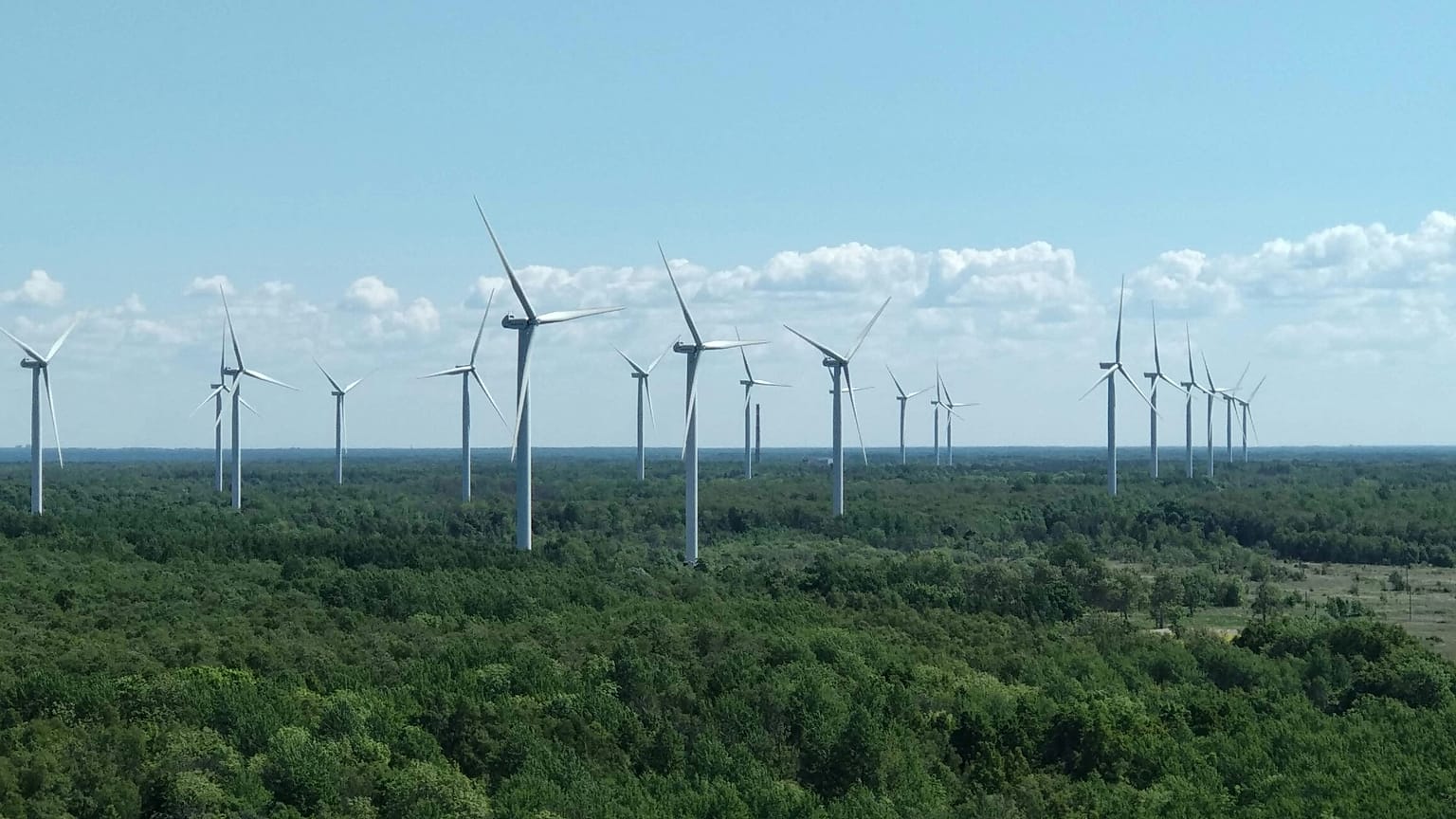
A wind farm located in Estonia.
Copyright Aleksandr Klepikov via Unsplash.

By Liam Gilliver
Published on

Europe has come top in the latest Environmental Performance Index, partly due to the boom in renewables. But experts warn that more progress is needed.

Europe has dominated new global sustainability rankings, but experts warn that all nations are “still far from critical goals” to tackle climate change.

The Environmental Performance Index (EPI) – produced by researchers at Yale and Columbia University – is released every two years and ranks countries from around the globe on their commitment to sustainability.

It focuses on 47 different indicators which are split into 12 categories, including climate change mitigation, air quality, forests, water resources, waste management and biodiversity.

Using data from major research institutions, international organisations and other information collectors such as the World Resources Institute and the EU’s Copernicus, each country is scored from zero to 100.

Estonia tops the climate leaderboard

Estonia topped the leaderboard, largely due to its substantial reduction of greenhouse gas emissions in power generation over the past decade.

In recent years, Estonia has lowered its reliance on electricity generation from domestic oil shale, an energy-rich sedimentary rock.

While oil shale remains the main energy source in the country, a boom in renewables is helping Estonia wean off fossil fuels – primarily through the power of solar.

According to the International Energy Agency (IEA), Estonia is aiming to accelerate its clean energy transition with a target to cover 100 per cent of annual electricity with renewables by 2030. It’s part of the country’s wider target to achieve climate neutrality by 2050.

Estonia also won out thanks to efforts to bolster biodiversity and ecosystem protection. More than 50 per cent of its land mass is covered by forests and protected wetlands – making it home to more than 300 bird species.

At a conference held yesterday (9 July) in New York by the United Nations University - Centre for Policy Research (UNU CPR), Andres Sutt, Estonia’s Minister of Energy and the Environment said he was “very proud” that the country’s sustainability drive was being recognised.

However, Estonia only achieved 75 points out of a possible 100, showing that even as the winner – it is far from where it needs to be.

“If countries aim to maintain a trajectory toward net-zero emissions by 2050, they will need to continually achieve large emissions reductions which will require additional policies in the future,” says Zach Wendling, lead author of the report.

Yale’s global environmental ranking – see full list

Luxembourg came a close second, scoring 74 points, followed by the United Kingdom (72), Finland (71) and the Netherlands (71).

In fact, European countries hold all but one of the top 20 positions in this year’s ranking – despite many EU nations scoring low in the agricultural sustainability category.

At the bottom of the league tables is Laos, followed by India, Bangladesh, Mali and Vietnam. Experts warn that all of these nations face “serious environmental degradation that represents a direct threat to human health and critical ecosystems”.

At the conference yesterday, experts said that India could be doing so much better – but it ranked second to last due to its struggle to deal with ambient particulate matter. These tiny droplets, which come from fuel combustion, construction, dust, and natural sources like wildfires and sea salt, can cause major respiratory and cardiovascular issues.

The Environmental Performance Index 2026

  1. Estonia, 75
  2. Luxembourg, 74
  3. United Kingdom, 72
  4. Finland, 71
  5. Netherlands, 71
  6. Germany, 70
  7. France, 70
  8. Norway, 69
  9. Sweden, 69
  10. Austria, 67
  11. Denmark, 67
  12. Spain, 66
  13. Greece, 66
  14. Slovenia, 65
  15. Switzerland, 64
  16. Japan, 63
  17. Czechia, 63
  18. Portugal, 63
  19. Slovakia, 62
  20. Poland, 62

The US slips to 27th place

The report warns that China and the United States – the world’s biggest greenhouse gas emitters – look likely to “fall far short” of the global target of net-zero GHG emissions by 2050.

The US ranked 27th place, just behind Australia (25th) but ahead of Canada (29th). However, the rankings use data up to 2024, representing the last part of Joe Biden’s presidency rather than Donald Trump’s.

Since returning to the White Office, Trump has consistently tried to boost polluting coal, stop the expansion of offshore wind farms, and pulled the US out of several key UN climate targets.

The US score reflects strong results on environmental health issues, but under-performance on biodiversity protection and climate change metrics.
 The Environmental Performance Index 2026 

China came 129th, due to poor outcomes on climate change measures despite improving indoor air pollution, water sanitation and solid waste management.

A list of wealthy nations?

While Europeans may celebrate topping the leaderboard, wealthier nations tend to have more access to capital to improve their environmental credentials – such as investing in large-scale green energy projects.

Low-income countries are contributing less to climate change, despite facing greater consequences of global warming, and may struggle to build funds to accelerate the green transition.

Many wealthy countries also offshore their manufacturing and waste to other countries, skewing their true progress. In 2022, for example, the EU exported 12.4 million tonnes of waste to Türkiye and 3.5 million tonnes to India.

Earlier this year, the bloc also announced it will start allowing countries to cut five per cent of their emissions based on “high-quality international credits”. You can read more about how the scheme will work, and why experts are sceptical, here.

France must speed up climate action, as watchdog warns current efforts fall short

France is not prepared for the pace and scale of climate change, the country’s climate watchdog has warned in a report that calls for a significant acceleration of both emission reduction efforts and adaptation policies, as the country faces its third heatwave since May.


Issued on: 10/07/2026 - RFI

A construction worker resurfaces a road in Bordeaux during the heatwave in May when temperatures hit record highs across France, 28 May 2026. © Alice Sacco/Reuters

France must rapidly expand the ambition, scope and speed of its response as the effects of global warming become more severe, the High Council for Climate (HCC), an independent body created in 2018 to assess the government's climate policies, said in its annual report published on Thursday.

Mainland France and Corsica have warmed by 2.2C between the periods 1900-1930 and 2016-2025, the report said.

Summer temperatures have risen even more sharply – by 2.9C – contributing to increasingly frequent and intense heatwaves, like the one currently hitting large parts of the country.

'Dangerous range'

"We are entering a tragic period,” JCC president François Soussana said at the presentation of the report, referring to the heat waves in May and June this year, which caused thousands of additional deaths in France.

Climate researcher Valérie Masson-Delmotte said France has entered what she called a "dangerous range", with temperatures above 40C now affecting large parts of the country on a regular basis.

France must “increase the scale of the amount, scope, reach and speed of implementing adaptation measures”, said the report.

The HCC says heatwaves are just one result of climate change, with droughts, wildfires and extreme rainfall also becoming more common, bringing increased health, social, economic and environmental consequences.


France unprepared for new climate

The country’s infrastructure, land planning and economic activity “had been developed and were set up for a climate that no longer exists”, said Masson-Delmotte, who worked on the Intergovernmental Panel on Climate Change, the UN climate science panel.

The HCC says current adaptation measures are inadequate to face the new climate reality, as homes become dangerously hot, students at schools and universities are unable to study and cities have too few cool public spaces for vulnerable people to seek relief.

The agricultural sector has yet to make climate adaptation a sufficient priority despite repeated climate-related shocks.

“Current adaptation efforts favour incremental, technology-based solutions that address some impacts while worsening or shifting risks onto others, creating a recurring, systemic risk of maladaptation,” said Masson-Delmotte.

Recommendations

The watchdog offers six recommendations that the government must respond to within the next six months.

These include extending the time frame for official heatwave plans, to cover May through to September, as well as introducing a temperature and humidity threshold beyond which outdoor work would become unsafe.

Other proposals include modifying energy performance certificates for buildings to include assessments of summer comfort, instead of just recording heat loss in winter.

The report also recommends upgrading hospitals, care facilities, schools and universities with shaded and greener outdoor spaces, improved ventilation, window coverings, ceiling fans and permanent cooling systems where appropriate.

While air conditioning may be necessary in some cases, the HCC says the priority should be on installing heat pumps to “reduce unwanted consequences”.


Decarbonisation is key

But adaptation alone will not be enough. Cutting greenhouse gas emissions remains essential to limit future climate impacts.

Without decarbonisation efforts, “heatwaves could become five times more frequent in 2050 and ten times in 2100, which would be intolerable,” warned Soussana.

Ten years after the Paris Climate agreement, in which countries agreed to cut emissions to keep global temperatures under 2C higher than pre-industrial levels, France has made progress, but “it is completely insufficient”, said Soussana.

Emissions in France fell by 2.1 percent in 2025, a slower rate than the previous year, and not nearly fast enough, according to the HCC, which says annual reductions will need to exceed over 4 percent to remain on track.

Current climate policies will not get France there, according to the HCC. There is not enough funding and some recent policy reversals, particularly on water management and land development, risk undermining progress.

The report calls for stronger guarantees that the investment needed for the green transition will be delivered, including doubling funding for decarbonisation and expanding the green fund, which was established in 2023 to support local energy transition efforts.

Sector-specific policies should be brought into line with climate goals, while promoting greater restraint in transport and agriculture, the two top sources of emissions in France, accounting for 34 percent and 21 percent, respectively.

The HCC also calls for a "fair transition" to avoid widening inequalities and climate vulnerabilities.

Support schemes such as MaPrimeRénov', which helps homeowners improve energy efficiency and France's social leasing scheme for electric vehicles are too small to meet demand.

(with AFP)
French farmers race to adapt as repeated heatwaves hit crops and livestock

After weeks of sweltering heat and drought, farmers and analysts fear France's maize crop could be down by a third this year – making it the smallest in 35 years. Poultry farmers are also counting their losses as many as 3 million broiler chickens died within a few days in in June. The damage is a result of three heatwaves that have already hit France this year, and is only set to intensify as climate change disrupts agriculture across Europe.


Issued on: 11/07/2026 - RFI

An irrigation sprinkler sprays water on a corn field in Parigne-l'Eveque near Le Mans on 8 July, 2026, as drought worsens in Sarthe department during a heatwave affecting a large part of the country. © Benoit Tessier / REUTERS


Temperatures have climbed above 40C in parts of France and elsewhere in Europe, affecting both crops and livestock.

Harvests have started much earlier than usual in several regions, reflecting a longer-term trend linked to global warming.

"The weather station on the farm is showing 38.8C," says David Vincent, who grows almost 200 hectares of cereals in the southern department of Aude.

"The heatwaves since May have accelerated the end of the growing cycle for all our crops. So we started harvesting 15 days earlier than we used to. Clearly, our yields are down today," he told RFI.

Winter rainfall helped replenish soil moisture, allowing crops to grow normally through spring. But the rain stopped in April.

The harvest could potentially have been good at the beginning of May, Vincent said, but "by June, when we started harvesting, it was down by 10 percent to 30 percent in my area".

Vincent grows a wide range of crops – durum wheat, soft wheat, barley, protein peas, sorghum, maize, sunflower and rapeseed.

He said diversifying crops had become the best way to adapt to increasing climate uncertainty in the southern Occitanie region.

'I thought I was ready'

Livestock farmers have also been badly affected. Agriculture Minister Annie Genevard told the Senate that 9,127 tonnes of dead animals, mainly poultry, had been collected by the state after the heatwave at the end of June.

The worst-hit livestock farms are in western France, and with a third heatwave now affecting much of the country, many farmers fear further losses.

Pig farmer Bertrand Feugnet, from Rouillac in western France, said he had been anxious when temperatures of 43C were forecast.

"It's true that 15 days ago, when they announced 43C – which we did get – I was really worried about how the animals were going to react."

He said one neighbouring farmer lost 17 sows while they were giving birth in buildings where temperatures reached 34C. Thanks to a cooling mist system that lowered temperatures inside his buildings, Feugnet himself lost only three of his piglets.

Organic cattle farmer Éric Germon, who raises Limousin cattle, said even his more traditional farming model was no longer protected from extreme heat.

"I thought I was ready for 2050 and I realise that even I am suffering. But we'll still have a head start, we'll suffer less than others," Germon said.

His working day now starts at 5:30 in the morning so he can move his cattle before temperatures rise. Although he rests during the afternoon, he said the long days were becoming exhausting.


'We'll face shortages'

Extreme weather including flash droughts and torrential rain is expected to become more common as the climate warms, said Inaki Garcia de Cortaza Atauri, an agronomist and research director at the French National Research Institute for Agriculture, Food and Environment (INRAE).

"Within five or 10 years, these types of events are going to become more and more the norm and if we don't adapt, we're going to have problems, such as plants stopping growing," he said. "The quality of harvests will deteriorate, and production in general. At some point, we'll face shortages."

He said farmers would need to diversify crops, change crop rotations, alter growing cycles and improve soils so they retain water for longer.

The challenge, he said, is to spread those practices as widely as possible so farming can continue despite rising temperatures.

Firefighters work to extinguish a fire near a farm in Grand-Auverné, in the west of France, 30 June 2026. @ REUTERS - Stephane Mahe


A Europe-wide issue

The European Union estimates that recent heatwaves have caused 3,500 excess deaths.

Climate Commissioner Wopke Hoekstra said productivity had fallen, schools had closed, harvests had been damaged, hospitals had come under pressure and roads and railways had been damaged.

On Wednesday, the European Parliament debated the EU's response to increasingly frequent wildfires. Beyond emergency measures, the bloc is also reviewing how it adapts to climate change.

The EU has activated its Civil Protection Mechanism nearly 20 times in recent months to respond to wildfires linked to heatwaves. It is also funding projects including urban greening to reduce heat in cities.

The European Environment Agency says Europe is the fastest-warming continent and faces 36 major climate risks covering ecosystems, food, health, infrastructure, the economy and finance.

The EU's 2021 climate adaptation strategy, which is not legally binding, is due to be replaced in 2026 by an integrated climate resilience framework. It is expected to include recommendations for protecting workers during periods of extreme heat.