Tuesday, September 01, 2026


Turkish Commandos Retake Cargo Ship Killing 14 Somali Pirates
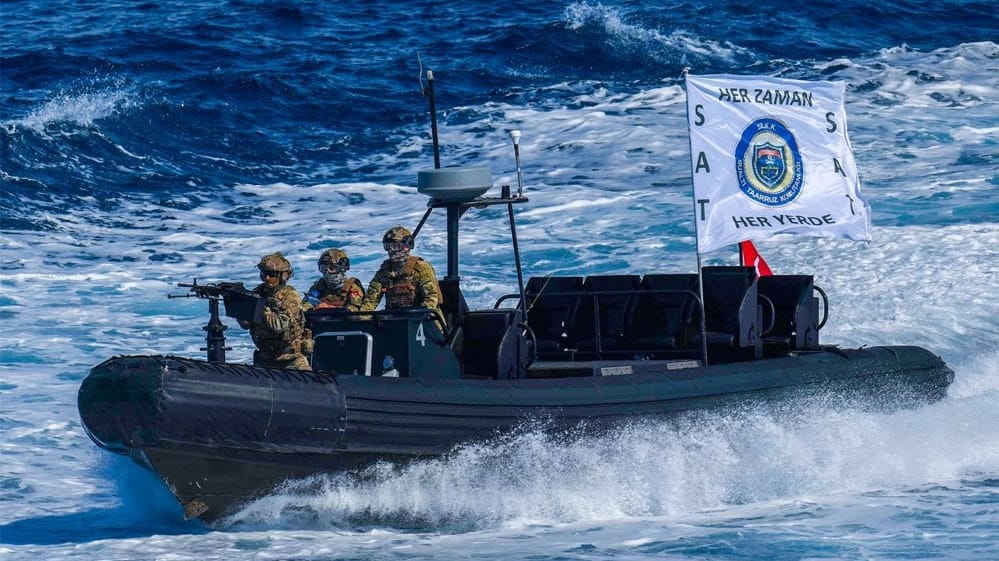
Turkish commands
Turkish commandos retook the cargo ship killing 14 pirates (TC Defnese file photo)

Published Aug 30, 2026 10:53 AM by The Maritime Executive


Turkish commandos working from a frigate off the coast of Somalia retook the cargo ship Lutuf, which had been seized nearly two weeks ago by Somali pirates. In a statement from Turkey’s Ministry of Defense, they confirmed that the ship had been transporting supplies to the TURKSOM Military Base in Somalia when it was targeted by pirates.

In an operation that lasted 10 days, the Turkish Navy, working with Somali forces, had been closely monitoring the vessel. The Ministry said the ship was retaken on Saturday morning, August 29, after rejecting ransom demands by the pirates. Unconfirmed media reports said the pirates had initially demanded $10 million, but it was later lowered to $2 million.

There had been reports from Somalia of several earlier skirmishes with the pirates. The media said between four and six pirates were killed when they left the cargo ship in a small boat to resupply. The cargo ship was reportedly then placed in a full lockdown by the pirates. The crew of the Lutuf consisted of 10 members: six Indian nationals, one Turkish national, one Georgian, and two Serbian security guards.
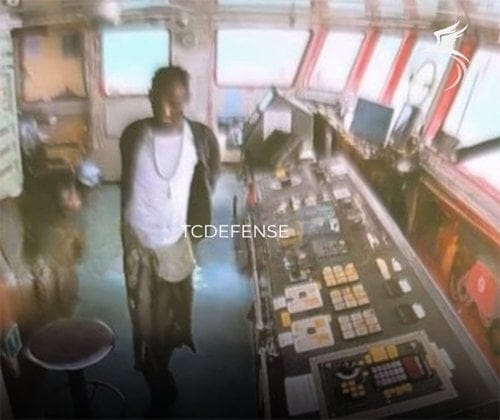
 

Pirate on the bridge of the Turkish cargo ship (TC Defense)


The 1,400-dwt Lutuf, built in 1995 and operating under the flag of Cameroon, was seized by pirates in the Indian Ocean waters on Monday, August 17, approximately 4.5 nautical miles south of Maraya on the southern coast of Somalia. According to the information, at least eight pirates boarded the ship and took control. 

“The forces have taken full control of MV Lutuf, which has now safely resumed its voyage,” said the Somali authorities. “Acts of piracy are serious criminal offences carrying severe penalties. The Ministry warns those involved, their backers and anyone who supports or condones such acts that they will be held accountable and brought to justice.”

Somali pirates are thought to be still holding four more ships that have been seized since April. Countries including Egypt and Pakistan have been pressuring for a diplomatic solution to release their citizens who are among the kidnapped crewmembers. Pakistani officials had said that because the ships are tankers, it would be too dangerous to attempt to retake the vessels by force.
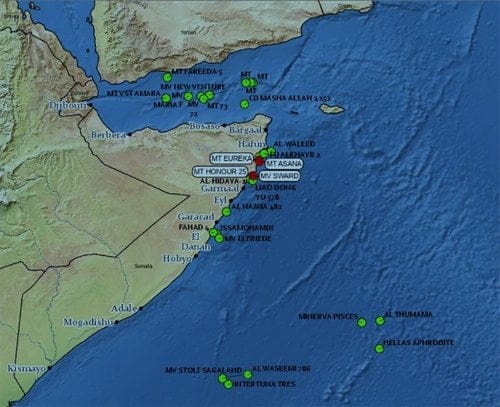
 

Location of piracy incidents between January 2025 and July 2026 (MSICO report)

Since the beginning of the year, 15 ships have been seized or attacked by pirates, developments that are renewing concern about maritime security in the region that is critical to international trade. Analysts have suggested the pirates were emboldened by the instability in the region, encouraged by the increased cost of oil, and possibly receiving direct support from the Houthis in Yemen.

Turkey’s direct involvement in the operation to free Lutuf demonstrates Ankara’s determination to protect its growing interests in Somalia, which include maritime, military, energy, and infrastructure among others. As part of its deepening involvement, Turkey has deployed the navy ships TCG Kemalreis and TCG Yzb to the Horn of Africa to combat piracy and protect maritime routes linking the Red Sea, Gulf of Aden, and Indian Ocean. 


Rescuers continue search for missing after deadly north Cyprus ferry accident


By Gavin Blackburn
Published on

Several survivors told local media they heard a blast shortly before the vessel rolled, with police detaining the captain and more than a dozen others.

Rescuers were still searching for survivors on Monday a day after a ferry capsized off northern Cyprus, leaving eight people dead and more than a dozen missing, authorities said.

The ferry left the northern port of Kyrenia around midday on Sunday en route for the Turkish mainland but capsized shortly afterwards, sparking a major rescue operation, local authorities said.

There were 267 on board at the time.

Of that number, 241 people were rescued, eight died and another 18 were listed as missing, they said. There was no immediate word on their nationalities.

Several survivors told local media they heard a blast shortly before the vessel rolled, with police detaining the captain and more than a dozen others.

Early on Monday, the captain and eight others were brought before a judge where they were placed under formal arrest as northern Cyprus began three days of national mourning, the north's news agency TAK said.

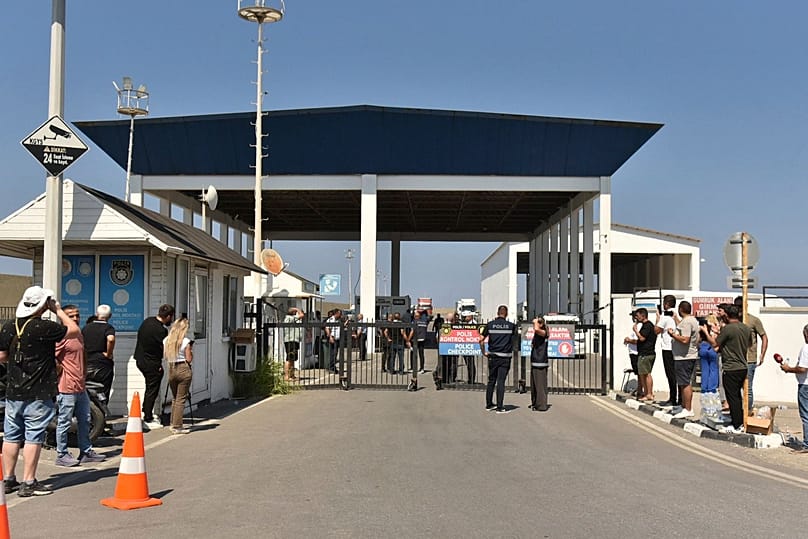
People gather outside the port of Kyrenia in the Turkish-occupied northern part of Cyprus, 30 August, 2026 Uncredited/Copyright 2026 The AP. All rights reserved

Passengers said the boat had begun taking on water before it capsized about four nautical miles (7 kilometres) into the journey.

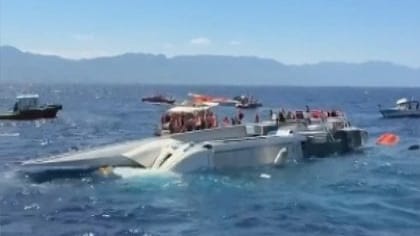
Footage from the scene broadcast by Turkish television showed the capsized ferry with passengers wearing life jackets sitting atop its orange hull.

Shortly afterwards, the ferry totally sank and is currently lying at a depth of 514 metres, the north’s transport minister Erhan Arikli said.

Recovering the vessel's "black box" would help understand what caused the tragedy, he added.

Some survivors said they heard an explosion at the front of the boat, with others saying there wasn't enough safety equipment.

"Some people had to jump without lifebuoys or life jackets," one young man, Efe Multici, told CNN Türk. "It was literally a fight for survival."

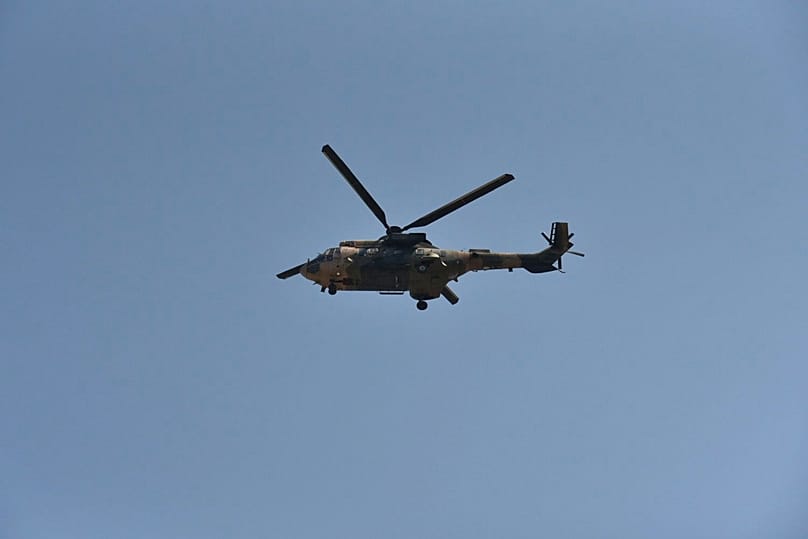
A helicopter flies over the port of Kyrenia in the Turkish-occupied northern part of Cyprus, 30 August, 2026 Uncredited/Copyright 2026 The AP. All rights reserved


Cyprus has been split since 1974, when Turkey invaded and occupied the northern third of the island in response to an Athens-engineered Greek Cypriot coup seeking unification with Greece.

Today the island comprises the self-styled Turkish Republic of Northern Cyprus (TRNC), which declared independence in 1983 but is only recognised by Ankara, and the EU member Republic of Cyprus in the south.

The TRNC is served by regular air and sea links to Turkey.


Passengers Killed and Missing After Turkish Ferry Capsizes off Cyprus

capsized ferry
Rescue operations were underway off Cyprus (Turkish TV)

Published Aug 30, 2026 1:51 PM by The Maritime Executive


A large search and rescue operation was underway off the north coast of Cyprus after a Turkish ferry began taking on water shortly after it departed and rapidly capsized miles from shore. The last reports said 237 people were rescued, while seven or eight bodies have been recovered, and between 17 and 22 people are still reported as missing.

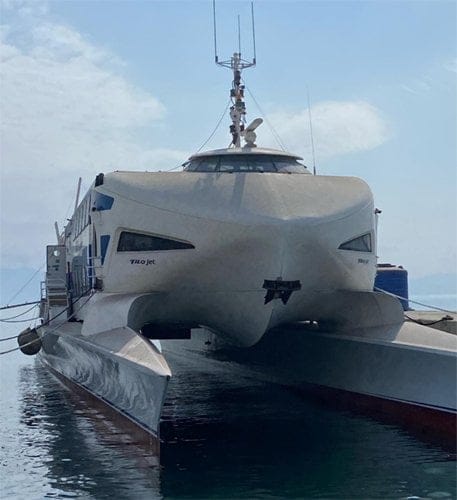
The ferry Filojet departed the port of Girne at noon on Sunday for a trip that lasts approximately two hours to the mainland of Turkey. The vessel was a high-speed catamaran ferry, with reports that there were 259 passengers aboard and eight crewmembers. The Filojet was 40.5 meters (133 feet) in length.


Filojet was a high-speed catamaran making two-hour runs between Cyprus and Turkey (Filo Denizcilik)


The vessel had begun taking on water shortly after departing, and the captain issued an emergency call. It rolled onto its side while it was approximately four nautical miles off the coast. A government minister has said in an unconfirmed report that the vessel later sank in an area of approximately 514 meters (1,686 feet) in depth.

The government of the Turkish community on Cyprus said that rescue crews were able to reach the vessel approximately 15 to 20 minutes after the distress call. Four vessels from the Coast Guard, along with the passenger ship Akgunler 3, were rescuing people from the water and were being joined by five marine vessels and two Coast Guard helicopters from Turkey. Six navy vessels were also joining the search. 

Some passengers had been able to don lifejackets and jump into the water. Video of the rescue operation appears to show people standing on the mostly submerged vessel. Survivors were being brought to hospitals on Cyprus.


A government official said the service had been suspended on Saturday due to adverse weather conditions. They said the sea conditions were still quite rough but that it was acceptable for the trip. Girne is a popular tourist destination on Cyprus for the Turkish community.

There is speculation that the ferry might have struck an object in the water, and the minister said they would be looking at this as one possibility. The Turkish authorities were also dispatching a vessel with divers to the site, and the plan is to recover the vessel’s "Black Box" as quickly as possible.

The captain and seven crewmembers from the ferry have been taken into custody as part of the investigation.


Turkey’s electric car champion Togg will never turn a profit and is hardly “native”, says ex-Renault Turkey CEO

Turkey’s electric car champion Togg will never turn a profit and is hardly “native”, says ex-Renault Turkey CEO
Turkey's leader Recep Tayyip Erdogan loves posing with Toggs, but in his presidential convoy he is transported in Mercedes (Frankfurt/MBG) vehicles. / @RTErdoganFacebook
By Akin Nazli in Belgrade August 31, 2026

Turkey’s “native and national” electric vehicle (EV) champion, Togg, faces severe profitability headwinds because of its low-margin assembly operation, Hakan Dogu, a former Renault (Paris/RNO) CEO, told local YouTube broadcaster Mesele Ekonomi on August 28.

“It is impossible for Togg to turn a profit at these volumes,” Dogu said, observing that the eight-year-old company’s target of producing 50,000 vehicles this year falls drastically short of commercial viability.

“They need at least 200-300,000 units [to turn a profit],” he added.

Cabin slung on top of Chinese platform

Dogu also pointed out that Togg has procured complete rolling platforms, including the chassis, steering system, wheel  and suspension, directly from China’s CATL (Shenzen/300750), the world’s largest battery maker, for its upcoming T6X model.

“You put a cabin on top of it, source the display screens from Asia and, maybe, write some software. Your local added value wouldn’t exceed 30%,” he remarked.

China, China and China

During the interview, Dogu also stressed the growing anxiety within European and Turkish automotive circles over China’s mounting dominance in the global EV supply chain. He warned that Chinese carmakers enjoy a structural cost advantage, manufacturing vehicles 40-45% cheaper than their Turkish counterparts.

Turkey has long served as an export hub for global carmakers including Renault, Ford (New York/F) and Toyota (Tokyo/7203), leveraging competitive labour costs and proximity to Europe. Yet, the rapid influx of aggressively priced Chinese EVs threatens to undermine both domestic market share and regional competitiveness.

Separately, Reuters reported on that Turkey's sovereign wealth fund TVF (aka TWF) is to become a shareholder in Togg, with Vstel Elektronik (VESTL.IS) and Anadolu Group Holding (AGHOL.IS) to sell their stakes. The news service cited ​three sources familiar with the matter.

Vestel Elektronik, Anadolu Group Holding, Turkcell (TCELL.IS) ⁠and BMC Otomotiv each hold 23% stakes in Togg as things stand. The Union of Chambers ​and Commodity Exchanges of Turkey (TOBB) owns the remaining 8%.

Two of the sources were reported as stating that ​Turkcell and TVF would buy Vestel and Anadolu Group's stakes, but they did not provide details on the value of the 46% stake sale. Discussions were proceeding and a final agreement was expected soon, ​the sources added.

Saudi Arabia Backs Turkey’s Rapid Renewable Energy Buildout


By Felicity Bradstock - Aug 30, 2026

  • Turkey and Saudi Arabia are working toward 5 GW of renewable energy projects, led by a roughly $2 billion, 2-GW solar first phase.

  • Turkey is rapidly expanding wind and solar, although coal remains its largest source of electricity generation.

  • Ankara is simultaneously boosting Black Sea gas production and pursuing new regional energy corridors linking the Middle East with Europe.

Turkey and Saudi Arabia have announced ambitious plans to cooperate on renewable energy, as both countries aim to deploy vast amounts of clean power. Saudi Arabia has already invested heavily in Turkey’s solar power sector and aims to deepen its energy partnership with Turkey. Meanwhile, Turkey is also continuing to expand its oil and gas production and discussing the potential for new energy routes linking the Middle East and Europe.

Turkey and Saudi Arabia have signed an agreement to add a further 3 GW of renewable energy capacity in Turkey, bringing the country’s total planned capacity to 5 GW, Natural Resources Minister Alparslan Bayraktar announced in August. Bayraktar emphasised that Turkey has “almost accomplished a century’s worth of work” under President Recep Tayyip Erdogan’s leadership, with major progress in renewable energy.

Turkey has “quadrupled its installed electricity capacity, from 32,000 megawatts to 126,000 megawatts,” said Bayraktar, adding that the country had commissioned around 95 GW of new capacity over the past 24 years. Turkey now has Europe’s third-largest installed electricity capacity and consumption, after France and Germany.

Oil production has also tripled, while natural gas output has increased ninefold, and mineral exports have risen tenfold, according to Bayraktar. The massive rise in energy production, both fossil fuels and renewables, supports Turkey’s goal of becoming self-sufficient. The government has set ambitious energy targets for the next decade to help achieve this goal.

Domestic natural gas production in the Black Sea is set to double in 2026 and quadruple by 2028. Bayraktar views the ongoing crisis in the Middle East as an opportunity for Turkey to establish itself as a major energy hub between the Middle East and Europe, as countries seek to diversify energy routes to ensure their energy security. Accelerating the development of alternative new energy corridors could help the Middle East prepare for potential future geopolitical challenges.

In February, Saudi Arabia announced plans to invest $2 billion in the construction of two solar farms in Turkey, with a total capacity of 2 GW, following the signing of an agreement between Bayraktar and his Saudi counterpart, Prince Abdulaziz bin Salman. The two plants are expected to meet the electricity needs of 2.1 million households once operational.

The deal states that Saudi companies will build a solar power plant in the eastern province of Sivas and another in the central province of Karaman. Bayraktar stated, “We view these investments as one of the most important examples of direct foreign investment in our energy sector, and they will be financed entirely through external financing. Credit will also be provided by international financial institutions.”

Hydropower remains Turkey’s largest renewable electricity source, contributing around 17 per cent of total electricity in 2025, while wind and solar account for around 22 per cent. Turkey has a total of 42 GW wind and solar power capacity. However, the country still relies heavily on coal, which contributed around 34 per cent of Turkey’s electricity last year. It is the largest coal producer in Europe, although its coal power is expected to peak soon as the government focuses on greater energy diversification. Turkey imports around two-thirds of its coal generation.

Turkey’s power sector emissions have nearly doubled over the last 20 years, owing to a rise in fossil fuel electricity production to meet the country’s rising power demand. However, the increase in Turkey’s renewable energy capacity has helped limit this increase. Solar power generation doubled between 2023 and 2025, although it contributes just 10.5 per cent of electricity generation. The government aims for 47 per cent of Turkey’s electricity to be produced from renewable energy sources by the end of the decade.

In July, Turkey’s Ministry of Energy and Natural Resources announced the launch of solar and wind power auctions totalling 2.4 GW, with 1.5 GW available across seven wind power projects – six located between Istanbul and Izmir, and Sivas in central Turkey. The solar energy auctions total 900 MW altogether across 14 areas in nine provinces. The bids for the 2026 round must be submitted on October 13.

Bayraktar stressed that the government aims to offer at least 2 GW of wind and solar capacity through auctions each year and vowed that Turkey would achieve its 2035 target of 120 GW of combined capacity on the grid earlier. He also said he expects solar to become the largest electricity source in the country by the end of the year.

Turkey aims to achieve its ambitious energy expansion plans by working closely with international investors and neighbouring countries to accelerate development. The government expects Turkey to become a major energy hub between the Middle East and Europe in the coming decades, attracting significant international investment as countries seek to diversify their energy routes to ensure their energy security.

By Felicity Bradstock for Oilprice.com


Nepal flood death toll rises further to 955

Nepal flood death toll rises further to 955
/ Sushanta Rokka - UnsplashFacebook
By IntelliNews - Chennai Bureau September 1, 2026

The death toll from severe flash floods in Nepal has risen to 955, while more than 4,471 remain missing, according to a report by CNN.

Debris has obstructed nine hydropower tunnels under construction in Rasuwa and Nuwakot districts, trapping more than 900 workers from Nepal, South Korea and China. The scale of the underground emergency has complicated rescue operations and increased pressure on already stretched response teams, who are reportedly struggling to detect signs of life even with heat signature tracking equipment. Domestic rescue teams reportedly lack sufficient heavy machinery and equipment capable of accurately locating people underground.

Emergency personnel from India, China, South Korea and Australia are working alongside Nepal’s military and police in efforts to extract workers from the blocked tunnels. The multinational response reflects the technical complexity of searches conducted in unstable underground environments.

Nepal rejected the notion that it was limiting the scope of foreign assistance. A report by NPR quoted Nepal’s Minister of Finance, Swarnim Wagle as saying that Nepal had accepted support based on “the needs on the ground”.

However, it is likely that geopolitical sensitivities and the specter of possible foreign interference may have been a possible factor behind the reluctance to accept foreign assistance, as traditionally Kathmandu has been a subject of soft power rivalries between regional heavyweights India and China.

According to a report by Reuters, China’s Foreign Ministry rejected allegations that authorities had failed to issue adequate warnings or had understated casualties in Chinese territory.

Difficult weather conditions continue to hamper rescue operations, while the possibility of further glacial collapses poses additional risks to search teams and nearby barrier lakes.

The evolving hazards could prolong recovery efforts and increase the potential for further casualties, underscoring the need for specialised equipment, cross-border coordination and sustained international assistance as conditions remain unstable.

Authorities in Nepal carry out temporary burials of unidentified flood victims causing public outrage


By Malek Fouda
Published on

Temporary burials of hundreds of the catastrophic flood victims have caused public outrage in parts of the country who accused authorities of not following Hindu burial rites and mismanaging the situation.

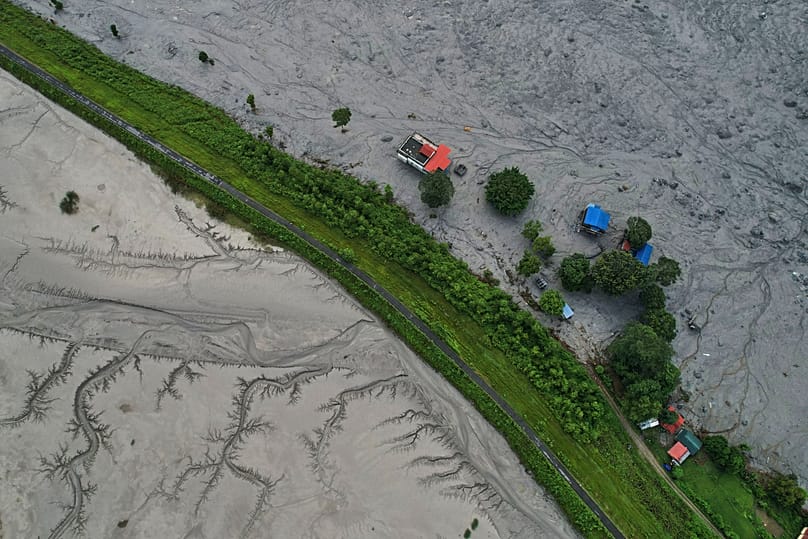
Nepal was burying on Monday some of the hundreds of bodies retrieved after a deadly, tsunami-like flood crashed through the Himalayan region, sweeping away villages and causing widespread destruction in its path.

In south-central Nepal's Chitwan district, hundreds of victims were being buried while awaiting identification in hastily dug trenches serving as temporary graves, prompting accusations from locals that Hindu funeral traditions were being ignored.

Government officials have noted that the measure is needed due to the severity of the situation, as the catastrophic floods are estimated to have killed at least 903 people, a number which could rise dramatically as 4,247 more are still reported missing.

Some of the bodies that were buried were carried hundreds of kilometres downstream by the Bhotekoshi River from the flood's epicentre before being recovered in Chitwan.


A drone view shows a major section of Pasang Lhamu highway washed away along swollen Trishuli river. 31 August, 2026 AP Photo
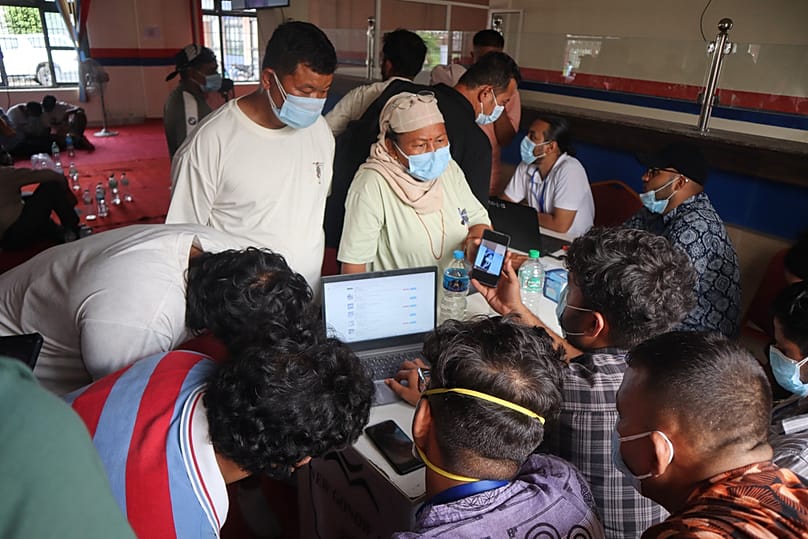
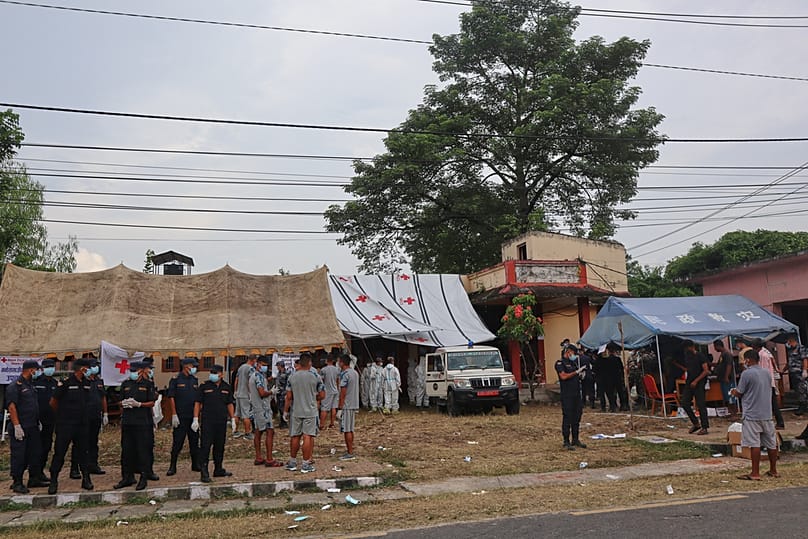
Distraught families have packed rescue stations and hospitals in search of their missing relatives, while others have faced the grim task of identifying bodies at overflowing morgues.

Authorities carried out a temporary burial of about 100 victims on Saturday, officials said, as forensic teams struggled to cope. A convoy of vehicles carrying bodies entered a lush, forested area as an excavator dug a wide trench in the red earth while officials and media looked on.

Anil Thapa, a police inspector coordinating the handling of the bodies, said another 50 bodies were having DNA samples taken ahead of their likely burial on Sunday.

Limited forensic infrastructure and inadequate morgue capacity in the district further strained efforts to manage the overwhelming number of bodies recovered from the disaster, officials said.

People inquire about the bodies of their relatives killed in flash floods at a mortuary in Chitwan, Nepal, Saturday, 29 August, 2026 Nisha Shrestha/Copyright 2026 The AP. All rights reserved

High humidity and sweltering heat accelerated decomposition, compounding the challenges as health experts warned that leaving the remains exposed could increase the risk of disease.

As survivors grappled with the aftermath, criticism of the burials mounted. Some residents said the dead had waited days for their last rites and were denied dignity in death. Families still waiting to locate missing relatives and some public figures questioned whether authorities moved too quickly.

The issue is particularly sensitive in Nepal, a predominantly Hindu nation where the dead are traditionally cremated. Ruby Chaudhary, who has two missing relatives, said the burials should not proceed without families’ consent.

“The dead deserve to be treated with dignity,” she said. “Our tradition is to cremate them on the riverbank, surrounded by their immediate family.”

Rescuers carry bodies of flash flood victims for a mass burial, in Chitwan, Nepal, Saturday, 29 August, 2026 Nisha Shrestha/Copyright 2026 The AP. All rights reserved

“People are worried that this could be a permanent burial, but it is only temporary management,” said Thapa. “If someone is able to verify the identity later using the available information, they can take back the body and perform the appropriate funeral rites.”

Amrit Bahadur Rai, Nepal’s foreign secretary, said the temporary burial of unidentified bodies was carried out in line with internationally accepted disaster-management protocols, including those of the International Committee of the Red Cross.

“Families can match records later, and will be allowed to exhume (the remains later) for necessary rituals,” Rai said at a press briefing in the capital Kathmandu.


In shadow of Nepal-Tibet disaster Tajikistan searches for glacial lakes at risk of catastrophic outburst

In shadow of Nepal-Tibet disaster Tajikistan searches for glacial lakes at risk of catastrophic outburst
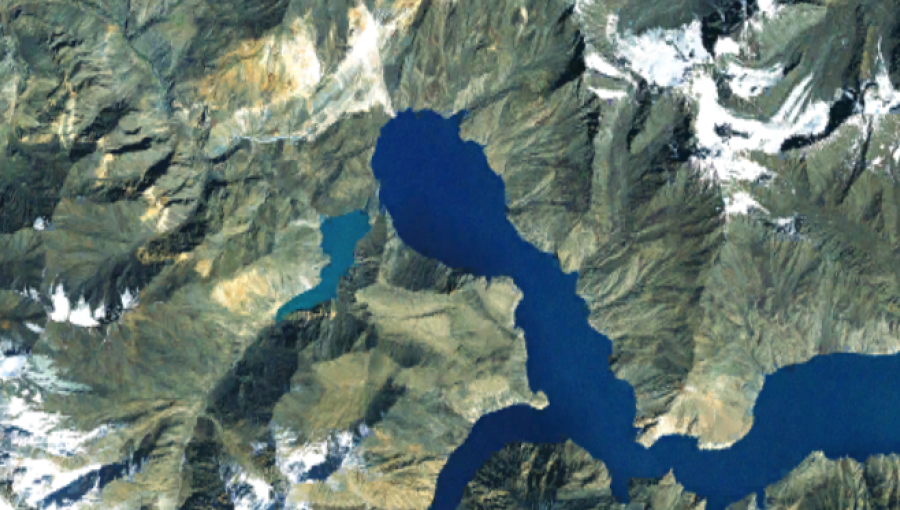
Satellite image that shows how the Usoi natural dam holds back Lake Sarez. / Mikenorton, Nasa, World Wind software, public dom.


\


By bne IntelliNews August 30, 2026

Mountainous Tajikistan is using satellite technology to search for mountain lakes that pose a risk of catastrophic outbursts.

The announcement of the lake surveillance, reported by Asia-Plus on August 30, comes as rescuers continue to search the Nepal-Tibet border region of the Himalayas for survivors of the August 26 disaster in which a wall of water, released by a glacial collapse, surged downstream, claiming the lives of hundreds, and likely thousands. As of August 30, around 3,000 people were still missing.

Among the lakes that Tajik scientists are monitoring for changes – using the Transient Hydrologic Anomalies Weekly (THAW) automated tool – are Lake Sarez and other high-altitude water bodies of the Pamir mountains, including the glacial lakes of Baralmoos. Glacial lake outburst floods (GLOF) pose a particular threat to life and property as, when an outburst occurs, the flow can carry large volumes of water, rocks, ice and mud, which can destroy roads, homes and agricultural land. 

Lake Sarez was formed amid mountains by an earthquake that struck Rushon District of Tajikistan’s eastern Gorno-Badakhshan Autonomous Oblast (GBAO) in 1911. The tremor caused a landslide that blocked the Murghab River.

The lake spans 61 kilometres (38 miles) in length and reaches depths of 500 metres. Seismologists remain worried that, while the natural damming of the lake appears stable, another major earthquake in the vicinity could cause catastrophic flooding of land below the location of the lake. Asia-Plus said scientists have detected some land movement in the slopes around the lake, which research suggests contains approximately 16-17 cubic kilometres (16,000 to 17,000 million cubic metres) of water.

In June 2024, IntelliNews reported on a proposal to export freshwater from Sarez to Gulf countries and other regions experiencing water stress and scarcity.

The THAW system uses data from the Sentinel-1 SAR satellite and the Google Earth Engine platform. The objective is to locate water bodies that require additional monitoring. 

Climate change is leading to accelerated glacier melting and the formation of new unstable lakes in high-altitude areas

According to an academic’s research data, Tajikistan has approximately 500 to 600 glacial lakes.