Trump Says Venezuelan Oil Will Refill U.S. Strategic Petroleum Reserve

The United States will use Venezuelan crude to refill the Strategic Petroleum Reserve, President Donald Trump said on Sunday on social media.
Describing the move as a “Gift from Venezuela to the People of the United States,” President Trump said the “topping out” will begin soon, as quoted by Reuters.
The Strategic Petroleum Reserve has been drawn close to minimum operational levels amid a surge in U.S. crude oil exports in response to the crisis in the Middle East. As of August 21, per Reuters, the SPR held 290 million barrels. This was the lowest level in almost 44 years.
The “gift” that President Trump expects from Venezuela, however, may take a while to reach its destination. Venezuela exported 1.16 million barrels of crude oil daily last month, a slight decline from June’s 1.2 million barrels daily, on lower withdrawals from storage. The fact it needs draws from storage to top up exports suggests production is not rising as fast as some may hope.
There are also port capacity constraints, with reports from earlier this month saying tankers have to wait for as long as 30 days to load, as ports struggle with power outages and quality problems with the crude oil getting shipped out. Still, in July, exports to Venezuela’s biggest oil destination—the United States—averaged 786,000 barrels daily, which was the highest since early 2019.
Last week, meanwhile, news broke that the U.S. federal government is negotiating a direct ownership stake in the country’s high-yield field that contains combined reserves of 90 billion barrels of crude. Currently, Venezuela is pumping oil at a daily rate of 1.25 million barrels per day. To boost this, a lot of investments would be required, with Rystad Energy estimating the total for the next ten years at some $180 billion.
By Irina Slav for Oilprice.com
Venezuela says it will retain 'sovereignty' over its oil reserves despite US deal
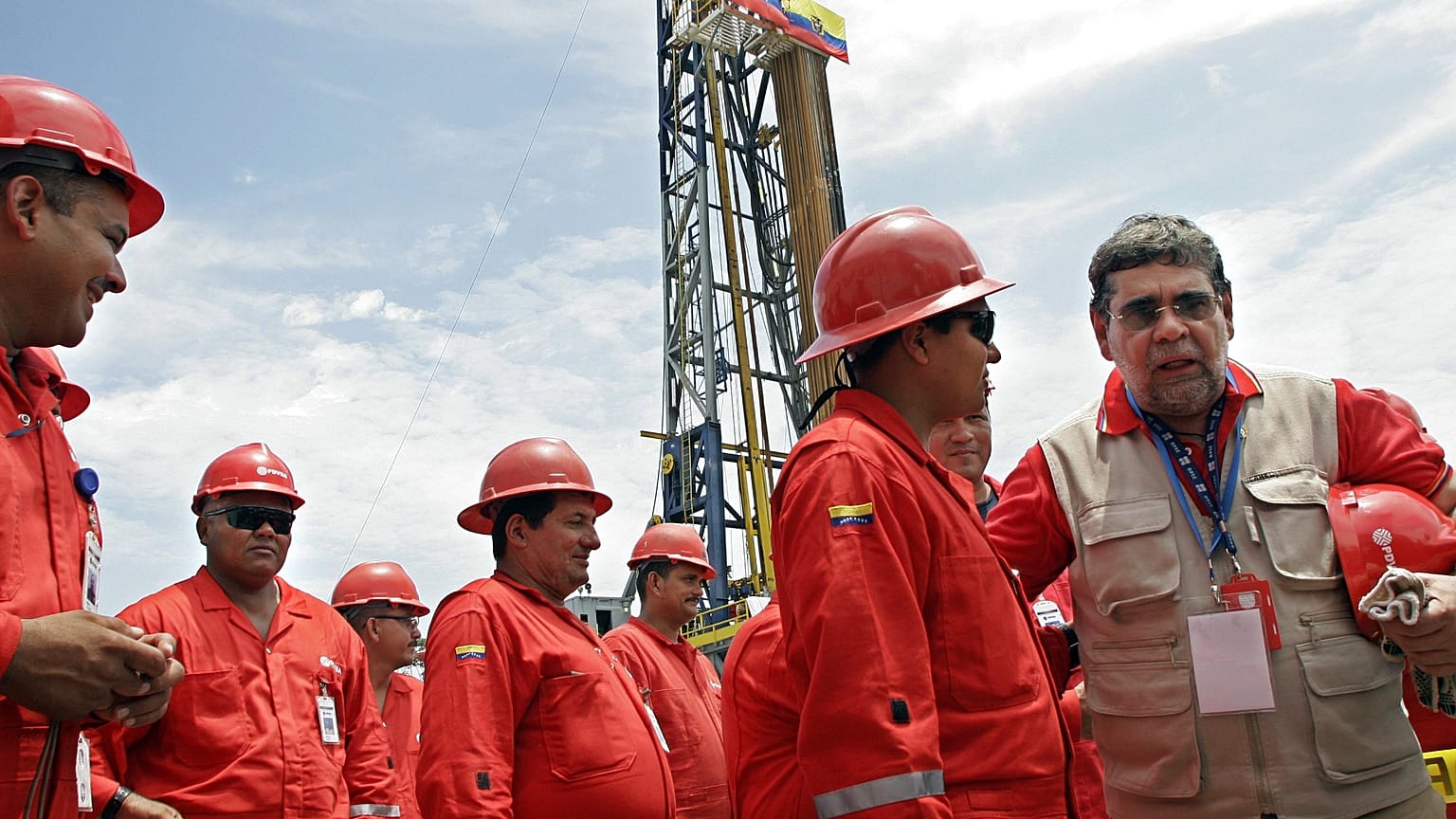
Venezuela's acting president says the aim is to turn the country's underground resources into a "source of social and economic well-being for the people of Venezuela."
Venezuela's acting President Delcy Rodríguez said on Saturday that the country would retain "sovereignty" over its oil resources despite a new agreement with the US that grants Washington significant access to the South American nation's reserves.
"One thing must be absolutely clear: Venezuela retains ownership and sovereignty over its resources," Rodríguez said in a speech broadcast on state television.
Under the terms of the agreement, which was announced by US President Donald Trump on Friday, the US is set to take control of 65 billion barrels of Venezuela's oil reserves.
According to Rodríguez, the deal also "calls for the development of 17 strategic fields" and could see investment of "more than $100 billion, and more than $209 billion in taxes for the state."
Rodríguez says the aim is to turn Venezuela's underground resources into a "source of social and economic well-being for the people of Venezuela."
However, some have accused the government of a lack of transparency surrounding the deal, with questions also being raised on social media about whether it will truly benefit Venezuelans.
The agreement comes after more than a decade of struggling to attract investment amid a deep economic crisis in the country.
Some analysts have now welcomed the US' role as a "guarantor" for investments into Venezuela, which has the world's largest proven reserves.
"Without this, these fields would not be developed over the next 10 or 15 years," Oswaldo Felizzola, a professor at the Institute of Advanced Studies in Administration (IESA), told AFP, adding that Venezuela's state-owned energy firm Petróleos de Venezuela "does not have the financial resources to do so."
Oil production in Venezuela rose by 29.8% between January and July, reaching 1.2 million barrels a day, although it remains well below the three million barrels a day recorded 25 years ago.
Rodríguez has introduced reforms in the mining and oil sectors to facilitate the entry of private and foreign capital, while Washington has relaxed sanctions on Venezuela's oil sector.
In a post on X, US Secretary of State Marco Rubio hailed the deal as a "huge win for both the American and Venezuelan people."
"It demonstrates how President Trump's bold foreign policy is driving America First wins: securing stable reserves and low-cost oil in our Hemisphere and lowering gas prices here at home," he wrote.
What we know about Trump’s deal giving the US access to Venezuela’s oil
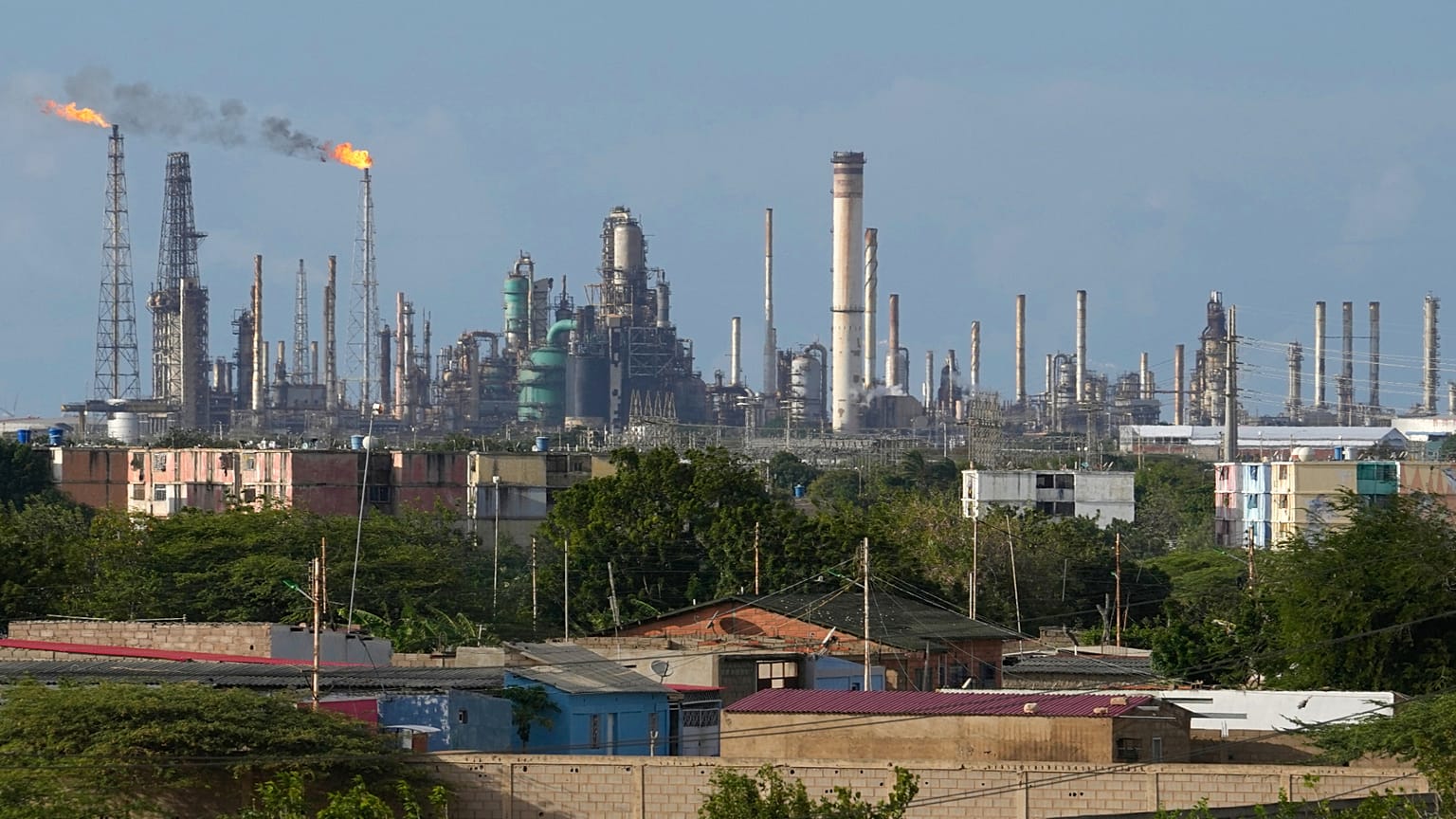
Besides a social media post from US President Donald Trump, the White House has said little about what he is calling “the biggest oil deal in world history” in Venezuela.
Trump said the agreement announced on Friday night would give the United States a stake in Venezuela’s vast oil reserves, a step towards his goal of extracting energy from the country after American forces captured then-President Nicolás Maduro in a middle-of-the-night raid in January and brought him to New York to face federal drug trafficking charges.
Venezuela’s interim leader, Delcy Rodríguez, described the deal as a step towards economic recovery that will modernise the country’s oil industry. In a televised address to the nation late on Sunday, Rodríguez insisted Venezuela's sovereignty is secure and said she wants the country to become a global energy powerhouse.
Earlier on Saturday, she said the oil reserves would “cease to be an inert, cold statistic and will instead become concrete solutions. Housing is one of them.”
But the answers to many questions, including how soon the reserves could be drilled and who will pay to make it happen, were not immediately clear. No text of any agreement has been released.
Here's a look at what is known and unknown:
What are the terms?
The US government and an unnamed private operator in Venezuela formed a new company that was given rights to develop untapped oil fields.
A statement from Rodríguez said the deal involves the development of 17 fields with a proven potential of 65 billion barrels. It said the agreement could draw $100 billion (€86 billion) in investment into Venezuela’s oil industry and yield more than $209 billion (€180 billion) in taxes for Caracas.
Trump said the agreement was negotiated by Secretary of State Marco Rubio, Defense Secretary Pete Hegseth and Rodríguez.
The deal gives the United States 55% effective output of the new private company, including an ownership stake and rights to buy oil at cost. American purchases of the oil will go towards the US Strategic Petroleum Reserve along with the military, according to a US official who was not authorised to discuss the matter publicly and spoke on the condition of anonymity.
The company would be the second-largest corporate holder of proven reserves after Saudi Aramco, according to the official.
How will Venezuelans react?
Some in Venezuela considered it a betrayal of what their government has stated repeatedly for decades: Venezuelan resources are for Venezuela, and leaders would not allow the US government access to those resources.
Harvard University professor Ricardo Hausmann, a former Venezuelan planning minister, called it a “shameful deal."
“Venezuelans will not respect this illegitimate deal and no major US oil company will take it seriously because they know it will not last,” Hausmann said on social media, adding that Rodríguez “has no legitimacy or constitutional power to commit Venezuela to any such deal."
In her national address, Rodríguez pushed back on some of the early criticism.
“One thing must be absolutely clear: Venezuela retains ownership and sovereignty over its resources,” Rodríguez said. She said the goal is to reach other agreements with transnational private companies such as Chevron, Repsol and Shell.
She added: “We want to be an energy powerhouse, a major oil producer, a significant gas exporter, and a major national petrochemical developer."
What's the reaction on Capitol Hill?
It is unclear whether Congress will play a role in the arrangement, but lawmakers from both parties were quick to weigh in.
Trump allies called it a win.
Sen. Bernie Moreno, R-Ohio, said it was a historic deal that helps both countries. “If it were up to DC Democrats, Maduro would still be in power, Venezuelan oil would be going to China at half price, and the people of Venezuela would be getting robbed by a corrupt regime,” Moreno wrote on social media.
It was condemned by Democrats who said Maduro's capture was a means to this end.
Sen. Tim Kaine, D-Va., said Trump was always after Venezuela's oil, branding it “corruption at epic scale.”
“Will prices come down for Americans? Who knows but likely not as much as Trump has forced them up thru his idiotic Iran War," Kaine said on social media.
Sen. Chris Van Hollen, D-Md., said Trump “put our service members at risk to get Venezuelan oil for his billionaire buddies.”
What questions remain?
Many important details remain unclear, including who will cover necessary investments, the identity of the private operator and how America’s stake in the company breaks down.
The US will get 55% of the company's effective output, but it was not clear what portion of that comes from an ownership stake and how much comes from the right to buy oil at cost.
It also is unclear how the industry will react. Persuading big American oil companies to return to the region could prove a challenge given the political uncertainty and damaged infrastructure.
Chevron, the only US oil company actively producing in Venezuela, declined to comment. Separately from Trump’s announcement, Chevron already had been in talks to expand investment in the country. Exxon Mobil also declined to comment.
David Oxley, chief climate and commodities economist at Capital Economics, said that on its face, the deal could double US oil reserves and reduce dependence on crude oil from Canada and Mexico. But Oxley, writing in a commentary, cautioned that there are logistical hurdles and said the value of Venezuela's reserves may have been exaggerated under former President Hugo Chávez.
Even with legal and security guarantees, it is not clear that US oil companies “would be eager to invest,’’ he wrote, noting that “there simply might be more enticing commercial opportunities on offer elsewhere.’’