Tuesday, September 01, 2026


Israel signs €3 billion arms export deal with Greece, defence ministry says
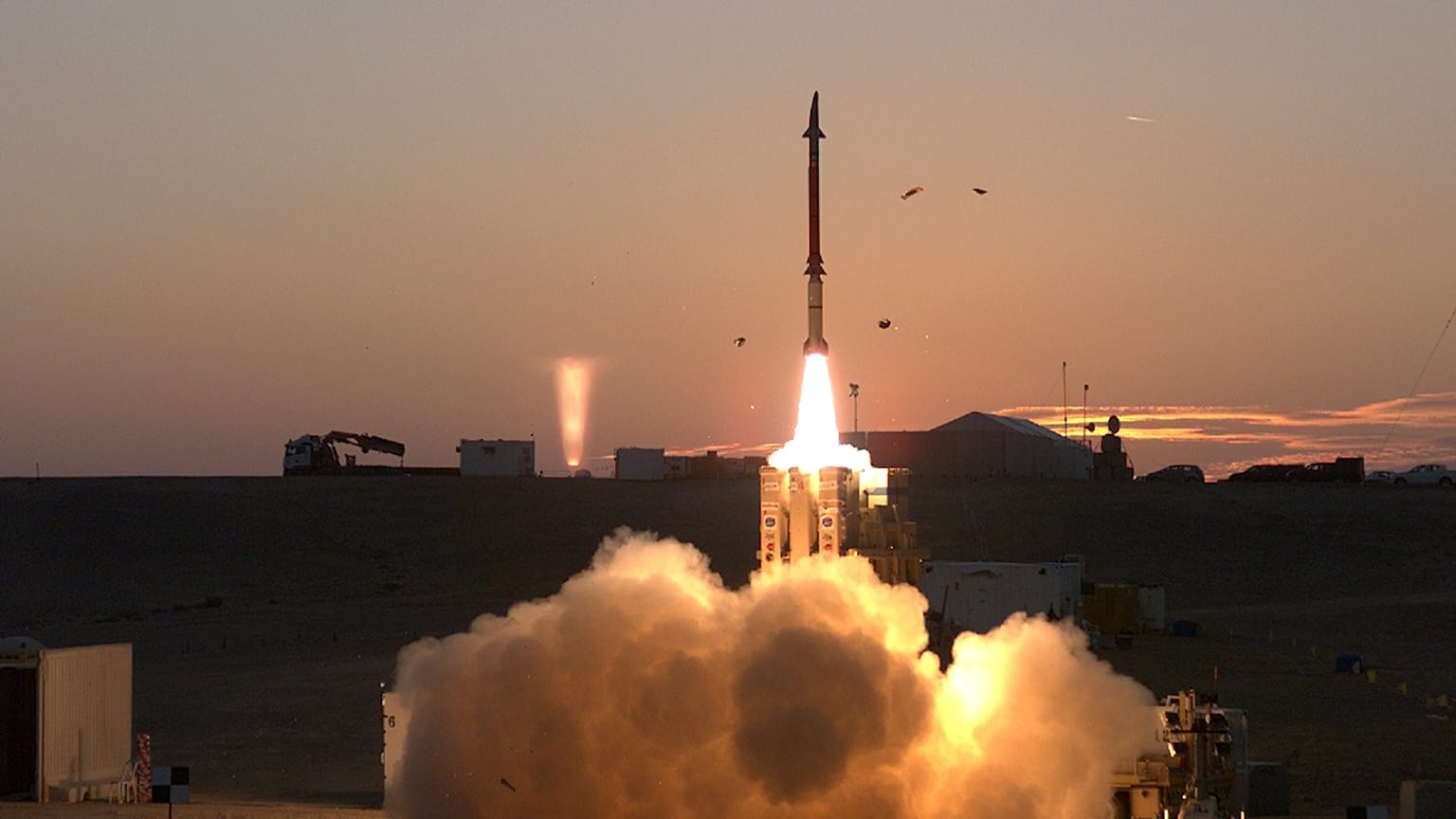
A launch of the David's Sling missile defence system, 21 December, 2015
Copyright AP Photo


By Ioannis Karagiorgas & Gavin Blackburn
Published on

In a statement, the Greek Defence Ministry said the multi-billion euro purchase was part of "the greatest reform of its armed forces in its history."

Israel's defence ministry said on Monday it had signed a deal with Athens worth approximately €3 billion to set up the "Achilles Shield" aerial defence system for Greece.

"Under the deal, Israel will build Greece a comprehensive, multi-layered air defence array, drawing entirely on Israeli-made systems and on the extensive operational experience Israel's defence establishment has gained during the war," the ministry said in a statement.

"This is the largest defence export deal in the history of Israel-Greece relations and one of the largest in the history of the State of Israel," it added.

The deal was signed by the Israeli defence ministry's director general, Major General Amir Baram and his Greek counterpart, Ioannis Bouras, in Tel Aviv.

A Greek defence ministry source had told the AFP news agency in late July about an upcoming purchase of Israeli-made anti-missile, anti-aircraft and anti-drone systems, part of a broader defence investment for the Achilles Shield of €4.2 billion.
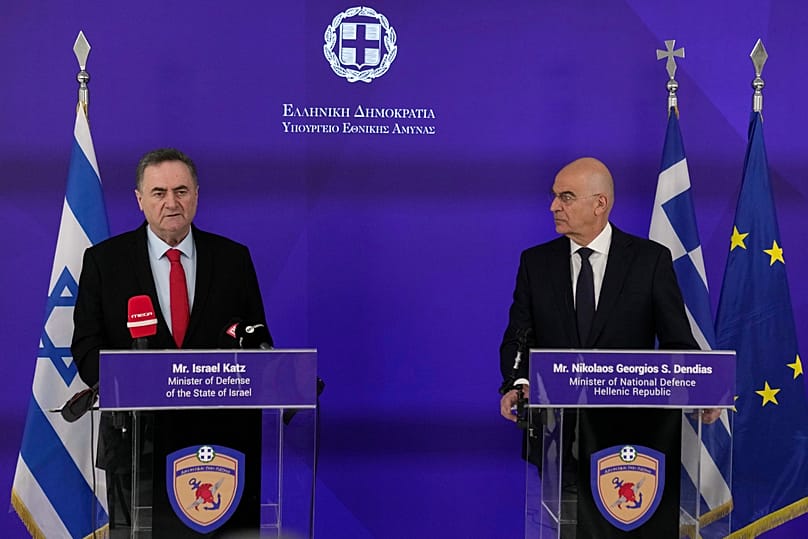
Greek Defence Minister Nikos Dendias, right, and his Israeli counterpart Israel Katz speak in Athens, 20 January, 2026
Greek Defence Minister Nikos Dendias, right, and his Israeli counterpart Israel Katz speak in Athens, 20 January, 2026 AP Photo

In a statement, the Greek Defence Ministry said the multi-billion euro purchase was part of "the greatest reform of its armed forces in its history."

Greek Defence Minister Nikos Dendias was quoted in the statement as saying that recent technological developments "have long rendered existing defence doctrines completely obsolete."

"Greece is the first country in the European Union to adopt" a multi-layered air defence system such as the Israeli one, he added.

According to the Israeli Defence Ministry, the export deal includes the David's Sling, Barak MX and SPYDER interception systems, air surveillance radars and "a new national command and control system".

All the equipment is manufactured by Israeli defence contractors Rafael and Israel Aerospace Industries and its subsidiary ELTA Systems.

A supplementary €26 million deal was also signed to provide Greece with Rafael's defence systems against drones, the ministry said.

"Israel and Greece share common strategic interests and face shared regional challenges," said Defence Minister Israel Katz, quoted in the statement.

"At a time when actors with hegemonic ambitions are seeking to expand their influence and undermine stability in the region, Israel and Greece will continue to deepen their defence and strategic cooperation," he said, in a likely reference to Turkey.
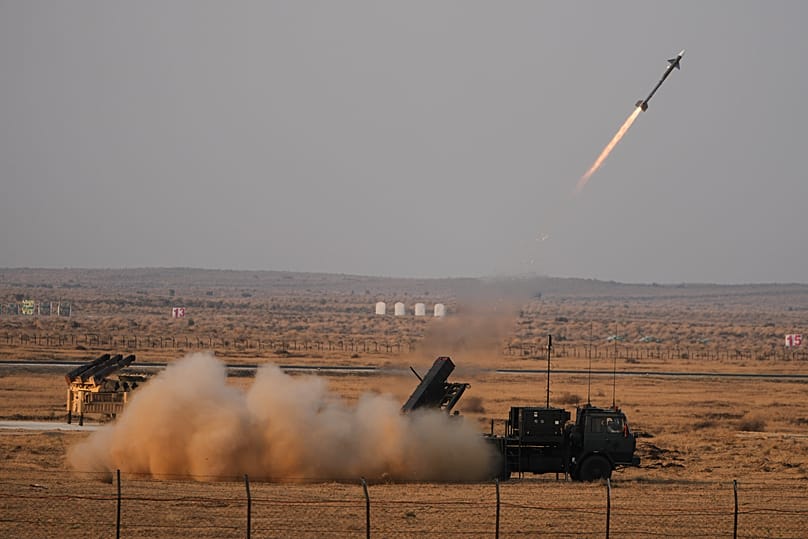
A SPYDER (Surface-to-air PYthon and DERby) missile fired near Jaisalmer, 24 February, 2026
A SPYDER (Surface-to-air PYthon and DERby) missile fired near Jaisalmer, 24 February, 2026 AP Photo

Greece is now one of only four European NATO members to spend at least 3% of GDP on its military, amid decades of tensions with neighbouring Turkey.

Israel has also increasingly locked horns with Turkey, having struck a disused military base in northwest Syria, claiming it wanted to avert Turkish troops deploying to the facility.

In 2023, Israel signed a deal with Germany to provide the Arrow 3 anti-ballistic missile defence system, which was expanded in December for a total value of $6.5 billion (€5.6 billion), the country's largest-ever military export contract.

American Policy Of Burden Sharing In West Asia – Analysis


The essay reads West Asia through neorealism and burden-sharing: Washington still wants influence but prefers partners (Turkey, Gulf states, Pakistan) to carry more of the security load after Assad’s fall.


Turkey’s Syria role, plus the Aug. 7, 2026 Mecca/Makkah pact among Saudi Arabia, Turkey, and Pakistan, is framed as flexible balancing and autonomy—not a finished anti-Iran alliance; success depends on exercises, industry, and crisis aid.

Iran’s “strategic depth” via Syria and Hezbollah is described as under pressure if a Turkey-friendly Syrian order takes hold; the author sees a fluid multipolar balance, not a single bloc.
Strategic Reconfiguration of the Middle East: An Assessment Through International Relations Theory


A phase of structural adjustment is about to begin in the West Asian geopolitical order. Neither the United States nor regional powers are merely stepping in to fill the void left by the United States’ withdrawal from the Middle East. Rather, Washington seems more open to encouraging skilled allies to take on more responsibility for regional security while maintaining American strategic sway.

Neorealism, balance-of-power theory, and alliance politics can all be used to understand this new paradigm. When faced with uncertainty, states try to expand their strategic autonomy, diversify their alliances, and strengthen their security. The formation of a united anti-Iranian bloc is not always the outcome. Instead, a more flexible security architecture is emerging in West Asia, where regional powers are becoming more capable and motivated to establish their own regional order.

The Middle East’s shifting geopolitical environment can be explained by a number of theoretical frameworks, including neorealism, balance-of-power theory, alliance formation, strategic depth, proxy competition, and burden-sharing. This perspective holds that the interactions between the United States, Israel, Turkey, Iran, Saudi Arabia, and Pakistan reflect a broader restructuring of regional power relations rather than being a collection of separate bilateral occurrences.

According to a neorealist viewpoint, nations aim to optimize their security and strategic independence in a competitive and unstable international system. This interpretation is supported by Carnegie Endowment research describing the post-Assad environment which characterizes the post-Assad situation as a new geopolitical battle in which Turkey and Gulf states have forged ties with the new Syrian administration while simultaneously attempting to lessen Iranian influence, lends credence to this assessment.

The Turkish Factor in Syria

The Turkish influence in Syria is expected to be a key component of the growing regional security architecture. Turkey’s geographical position, NATO membership, military capabilities, and nearly 900-kilometer border with Syria provide Ankara with unusually considerable strategic power over developments in Syria.

According to Chatham House, Turkey has emerged as a major beneficiary of the Syrian change, with its influence in Damascus expanding significantly following the fall of Bashar al-Assad.

Carnegie’s analysis is especially noteworthy since it finds a shared goal among Turkey, Saudi Arabia, and the new Syrian leadership: to reduce Iranian influence and dismantle the Iranian regional network that previously connected Tehran to the Mediterranean.

Turkey, Saudi Arabia, and Syrian leadership are working together to create a cohesive and friendly Syrian state while restricting Iranian influence.

“Given Ankara’s significant political, military, and economic clout in Syria, Turkish involvement in Syria can be viewed as a key external pillar supporting the development of the new Syrian political system. “The Turkish role in Syria may become more significant as part of a larger NATO-US-Israeli regional security architecture.


. The U.S. Withdrawal and Burden-Sharing Argument

During the Trump administration, Washington expressed a preference for decreasing the direct US military burden in foreign wars while urging regional partners to take on more responsibility for regional security.

The 2018 decision to withdraw U.S. forces from Syria Analysts regarded the 2018 decision to withdraw US soldiers from Syria as potentially opening up strategic space for Iran and other regional entities. According to Brookings, the withdrawal might boost Iran’s influence over Syria and disrupt the regional balance of power.

The expanding trilateral defense cooperation between Saudi Arabia, Pakistan, and Turkey can also be evaluated using alliance theory and the burden-sharing concept. It might be regarded as part of the larger evolution of US regional strategy, notably the trend of urging regional allies to take more responsibility for their own security.

“The trilateral defense arrangement can be interpreted as broadly compatible with the longer-term trend toward greater regional burden-sharing and reduced dependence on direct U.S. security provision, a tendency that became particularly visible during the Trump administration.”

 Saudi Arabia–Pakistan–Türkiye Defense Agreement

Saudi Arabia, Turkey, and Pakistan signed the Makkah Joint Defense Agreement on August 7, 2026, stating that any armed attack on one of them is an attack on all and vowing to increased defense cooperation.

The International Institute for Strategic Studies (IISS) “The Makkah Joint Defence Agreement demonstrates a developing regional security architecture in which Saudi Arabia, Turkey, and Pakistan desire more collective deterrence and strategic autonomy. This move is consistent with a larger trend toward regional burden sharing and diversity of security alliances.

“The strategic significance of the Makkah Joint Defense Agreement should therefore be assessed according to its implementation rather than its symbolism. ” Its eventual success will be determined by institutionalization, intelligence sharing, joint exercises, interoperability, defense-industrial cooperation, strategic planning, and a demonstrated political readiness to provide collective aid during a crisis.”


 Iran, Strategic Depth and Hezbollah

Iran’s regional strategy has frequently been analyzed through the concept of strategic depth and the use of regional partners and non-state actors. Recent Carnegie research describes Iran’s previous deterrence model as relying heavily upon strategic depth through its network of regional allies and proxies, including Hezbollah. Iran’s support for the Assad government, Hezbollah and other regional partners as part of a strategy intended to preserve Iranian influence and deter U.S. and Israeli pressure “Iran’s strategic interest in Syria historically extended beyond the Syrian theatre itself, because Syria constituted an important component of the logistical and strategic depth supporting Iran’s regional network, particularly Hezbollah in Lebanon.”

“The growing Turkish role in Syria may function as an indirect structural constraint on Iran’s regional strategic depth, particularly if Ankara contributes to the consolidation of a Syrian order less receptive to Iranian military and logistical influence.”

Taken together, the available evidence supports the proposition that the Middle East is undergoing a significant restructuring of its regional security architecture.

Overall, the Middle Eastern security environment appears to be moving toward a more complex and multidimensional balance-of-power structure. The United States and Israel seek to constrain Iranian regional influence; Iran seeks to preserve strategic depth and deterrence

“The emerging Middle Eastern security order should be understood not as the formation of a single, coherent anti-Iranian bloc, but as a fluid process of regional balancing in which Türkiye’s expanding influence in Syria, the restructuring of Iran’s strategic depth, and the emergence of Saudi–Pakistan–Türkiye defense cooperation collectively indicate a gradual diversification of regional security partnerships and a partial redistribution of the strategic burden previously carried by the United States.”


About Adeel Abbas Mangi
Adeel Abbas Mangi, Master’s in international relations, Quaid e Azam University Islamabad, Independent Researcher and frequently writing for Asia Times, Eurasia Review, Modern Diplomacy.eu, National Herald Tribune, Global village space, SMT studies Centre, SouthAsian Monitor and IICR, Pakistan (Islamabad Institute of conflict resolution).
View all posts by Adeel Abbas Mangi →


G20 finance chiefs gather in North Carolina with Iran sanctions and tariffs in focus

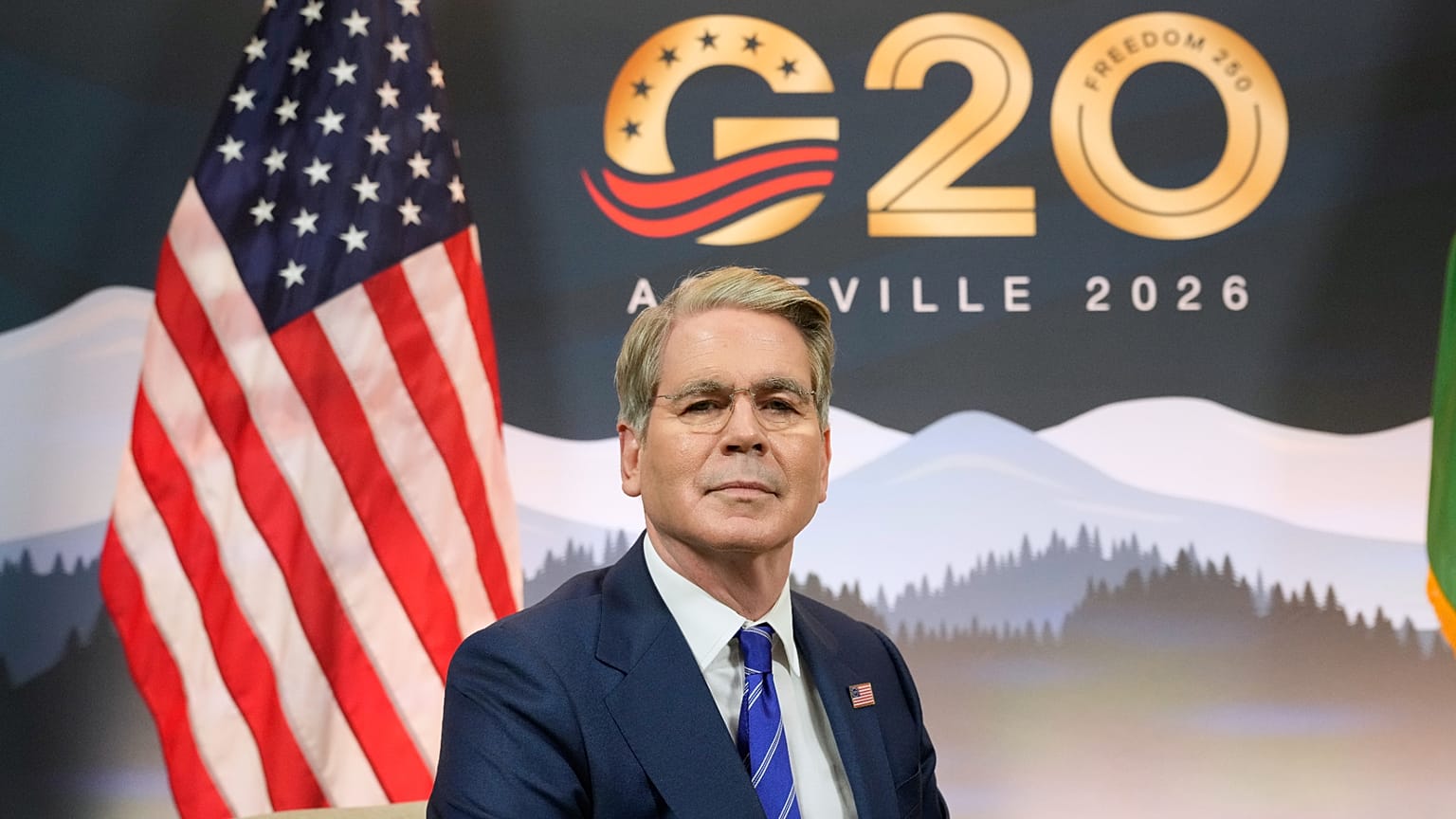
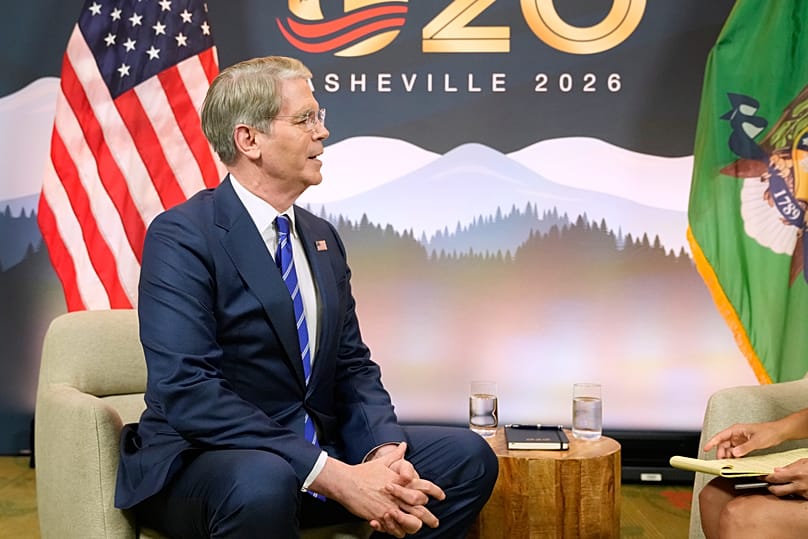
US Treasury Secretary Scott Bessent speaks during an interview with The Associated Press in Asheville, North Carolina, 30 Aug. 2026
Copyright AP Photo/Gerald Herbert

By Quirino Mealha
Published on

Finance ministers and central bank governors from the world's largest economies meet in Asheville, North Carolina, on Monday and Tuesday, hosted by a US administration that is simultaneously pressing allies to help isolate Iran financially and imposing tariffs on several of them.

The United States takes its turn chairing the G20 finance track this week under distinctly awkward conditions.

US Treasury Secretary Scott Bessent and Federal Reserve Chair Kevin Warsh are hosting counterparts in the North Carolina mountains, following a deputies meeting held over the weekend, with the formal agenda covering economic growth, global imbalances, sovereign debt restructuring, banking regulation and energy security.

Asheville was chosen deliberately.

The city was devastated by Hurricane Helene in September 2024, a storm that killed more than 250 people and caused close to $80 billion (€69bn) in damage from Florida to the Carolinas, and Bessent has cited its rebuilding as a fitting backdrop for talks about economic growth.

"We want the rest of the world to come along with our growth agenda, whether it's deregulation, the energy independence [...]" he said, adding that "the world has this mountain of debt, and we do have to grow our way out of it," confirming public debt will feature prominently in the discussions.

The setting may prove easier than the substance.

Trade friction between the US and Canada escalated after negotiations broke down, hostilities with Iran have resumed through economic rather than military means, and Warsh arrives days after a hawkish first Jackson Hole address that sharply raised the odds of a US rate rise this month.

Both meetings serve as groundwork for the leaders' summit at Trump National Doral in Miami on 14 and 15 December, and come weeks before Xi Jinping is expected in Washington on 24 September.

Bessent's push on Iran

The US Treasury Secretary intends to use bilateral meetings to build support for squeezing Tehran, and stated that Washington will sanction another bank this week, though he declined to name it.

"This is going to be financial violence if we have to," Bessent told AP.

"We are showing people that we know who you are, you know who you are, and this has got to stop," he added.

US Treasury Secretary Scott Bessent speaks during an interview with The Associated Press in Asheville, North Carolina, 30 August 2026
US Treasury Secretary Scott Bessent speaks during an interview with The Associated Press in Asheville, North Carolina, 30 August 2026 AP Photo/Gerald Herbert

The campaign's opening move came on Friday, when the US Treasury proposed a rule that would cut the Emirati branches of Banque Misr, Egypt's second-largest lender, off from the American financial system.

By stopping short of full sanctions, the US administration appeared to signal reluctance to punish major trading partners that still deal with Iran, notably China and India.

On Beijing specifically, Bessent said "all options are on the table" over its continued oil purchases, while dismissing suggestions of hesitancy as "a completely false narrative that the media picked up on."

The meetings are also being held under unusual media restrictions, after the US Treasury barred certain reporters from the New York Times, Wall Street Journal and Bloomberg from covering them.

The New York Times called the move "not just another disturbing effort by the administration to undermine independent journalism, but a blatant attempt to evade public scrutiny."

The department has not explained its decision, though Bessent told the AP that "it has nothing to do with point of view."

Who speaks for Europe at the G20

The EU is represented by Ireland's Tánaiste and Finance Minister Simon Harris, who holds the role by virtue of Ireland's EU presidency since 1 July, alongside ECB President Christine Lagarde and Economy Commissioner Valdis Dombrovskis.

Harris said he was looking forward to "the first Ministerial meeting of the G20 Finance Ministers and Central Bank Governors since Ireland assumed the Presidency of the EU," describing the forum as a place where the largest economies "can exchange views and work towards international economic and financial stability."

The Irish minister's stated priority reflects the conflict shaping much of the agenda at this G20 meeting.

Among the EU's concerns, Harris listed "energy security and ensuring we have secure and resilient energy supplies at a time of severe volatility caused by the conflict in the Middle East."

He will also hold bilateral meetings with counterparts from G20 member states as Ireland has also been invited as a guest for the December leaders' summit in Miami.

HIGH SEAS PIRACY

U.S. Eyes 18th-Century Law to Seize and Sell Iranian Oil

  • The U.S. is considering reviving centuries-old “prize law” to seize ownership of Iranian ships and oil captured during its blockade, potentially replacing slower civil forfeiture proceedings.

  • Captured oil and vessels could be sold with proceeds flowing to the U.S. Treasury, turning maritime seizures into another source of economic pressure on Tehran.

  • The strategy faces major legal and geopolitical risks, from questions over wartime authority to fears that China or other rivals could eventually use the same precedent against U.S. shipping.

The US government is exploring an unusual legal route for dealing with Iranian oil and ships captured as part of its blockade: bringing back a wartime maritime system that has barely been used for generations, according to Bloomberg.

The Justice Department, working with the Pentagon, is preparing to use prize law, which historically allowed courts to decide whether vessels and cargo captured during armed conflict could legally become property of the United States. The mechanism was once commonplace in naval warfare but largely disappeared from American practice after the 19th century and has been dormant since World War II.

The appeal for the administration is largely practical. At present, the government generally relies on civil forfeiture to take ownership of vessels accused of sanctions violations or other offenses. Those cases can become complicated and slow, particularly when shipping companies, creditors, terrorism victims or other parties assert competing rights to the ship or its cargo. A prize proceeding could potentially narrow those disputes and allow captured oil to be sold more quickly, with the proceeds going to the US Treasury.

Bloomberg writes that Houston is being considered as a central venue for these cases. The Southern District of Texas has jurisdiction over a major port and sits alongside the country’s largest concentration of petrochemical infrastructure, giving it the capacity to receive and store substantial quantities of crude. US Attorney Aaron Reitz, whose office is working with DOJ officials in Washington, said the department is “now reviving” prize courts, describing the concept as an “ancient body of maritime law.”

The effort comes as Washington looks for additional ways to put economic pressure on Iran. US forces have already intercepted Iranian-owned or Iran-linked vessels since the blockade was imposed in April. Using prize law could turn those captures into a more direct financial tool: ships and oil deemed lawful prizes could be liquidated, potentially generating revenue while depriving Iran of valuable exports.

Supporters also see a strategic purpose beyond the money. Reviving the system would reinforce the message that the US considers the blockade a serious wartime measure rather than simply another sanctions regime. It could also make it more difficult for neutral commercial vessels to continue transporting goods that Washington believes support Iran.

But there is considerable uncertainty over how a centuries-old framework would operate under modern international law. “This really is a historical area of law that is not tested in modern times,” maritime attorney Allison Luzwick said. Courts could be asked to determine whether the current conflict provides sufficient legal grounds for invoking prize authority at all, particularly given questions surrounding congressional authorization for the hostilities.

The practical challenges are significant as well. Federal judges, prosecutors and the Navy have virtually no contemporary experience administering prize cases, meaning procedures would effectively have to be rebuilt for modern shipping and warfare. Shipowners and other parties with financial claims are also expected to contest seizures.

There are broader geopolitical risks. Critics argue that normalizing prize law could create a precedent that Washington may later regret. A rival power such as China, for example, could point to US practice when attempting to seize American or neutral merchant vessels during a future conflict.

The proposal therefore offers Washington a potentially faster way to convert captured Iranian oil into government revenue and tighten economic pressure on Tehran, but it would do so by reopening an area of wartime law that has gone largely untouched for more than a century.

By Zerohedge.com

Trump Says Venezuelan Oil Will Refill U.S. Strategic Petroleum Reserve


The United States will use Venezuelan crude to refill the Strategic Petroleum Reserve, President Donald Trump said on Sunday on social media.

Describing the move as a “Gift from Venezuela to the People of the United States,” President Trump said the “topping out” will begin soon, as quoted by Reuters.

The Strategic Petroleum Reserve has been drawn close to minimum operational levels amid a surge in U.S. crude oil exports in response to the crisis in the Middle East. As of August 21, per Reuters, the SPR held 290 million barrels. This was the lowest level in almost 44 years.

The “gift” that President Trump expects from Venezuela, however, may take a while to reach its destination. Venezuela exported 1.16 million barrels of crude oil daily last month, a slight decline from June’s 1.2 million barrels daily, on lower withdrawals from storage. The fact it needs draws from storage to top up exports suggests production is not rising as fast as some may hope.

There are also port capacity constraints, with reports from earlier this month saying tankers have to wait for as long as 30 days to load, as ports struggle with power outages and quality problems with the crude oil getting shipped out. Still, in July, exports to Venezuela’s biggest oil destination—the United States—averaged 786,000 barrels daily, which was the highest since early 2019.

Last week, meanwhile, news broke that the U.S. federal government is negotiating a direct ownership stake in the country’s high-yield field that contains combined reserves of 90 billion barrels of crude. Currently, Venezuela is pumping oil at a daily rate of 1.25 million barrels per day. To boost this, a lot of investments would be required, with Rystad Energy estimating the total for the next ten years at some $180 billion.

By Irina Slav for Oilprice.com


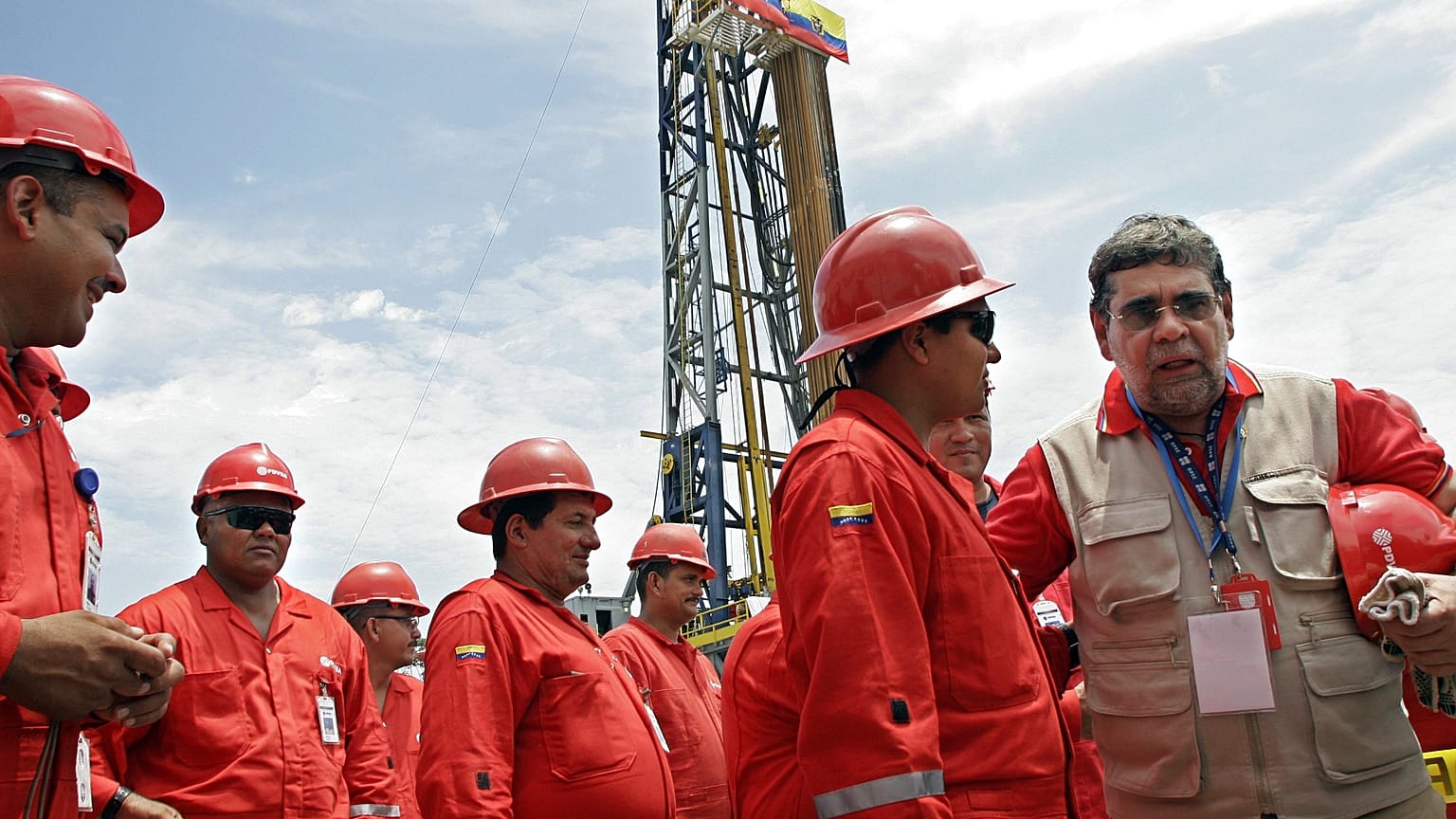
Venezuela says it will retain 'sovereignty' over its oil reserves despite US deal

The US has announced a deal that will give it access to Venezuela's oil reserves.
Copyright Copyright 2008 AP. All rights reserved.

By Rafael Salido
Published on

Venezuela's acting president says the aim is to turn the country's underground resources into a "source of social and economic well-being for the people of Venezuela."

Venezuela's acting President Delcy Rodríguez said on Saturday that the country would retain "sovereignty" over its oil resources despite a new agreement with the US that grants Washington significant access to the South American nation's reserves.

"One thing must be absolutely clear: Venezuela retains ownership and sovereignty over its resources," Rodríguez said in a speech broadcast on state television.

Under the terms of the agreement, which was announced by US President Donald Trump on Friday, the US is set to take control of 65 billion barrels of Venezuela's oil reserves.

According to Rodríguez, the deal also "calls for the development of 17 strategic fields" and could see investment of "more than $100 billion, and more than $209 billion in taxes for the state."

Rodríguez says the aim is to turn Venezuela's underground resources into a "source of social and economic well-being for the people of Venezuela."

However, some have accused the government of a lack of transparency surrounding the deal, with questions also being raised on social media about whether it will truly benefit Venezuelans.

The agreement comes after more than a decade of struggling to attract investment amid a deep economic crisis in the country.

Some analysts have now welcomed the US' role as a "guarantor" for investments into Venezuela, which has the world's largest proven reserves.

"Without this, these fields would not be developed over the next 10 or 15 years," Oswaldo Felizzola, a professor at the Institute of Advanced Studies in Administration (IESA), told AFP, adding that Venezuela's state-owned energy firm Petróleos de Venezuela "does not have the financial resources to do so."

Oil production in Venezuela rose by 29.8% between January and July, reaching 1.2 million barrels a day, although it remains well below the three million barrels a day recorded 25 years ago.

Rodríguez has introduced reforms in the mining and oil sectors to facilitate the entry of private and foreign capital, while Washington has relaxed sanctions on Venezuela's oil sector.

In a post on X, US Secretary of State Marco Rubio hailed the deal as a "huge win for both the American and Venezuelan people."

"It demonstrates how President Trump's bold foreign policy is driving America First wins: securing stable reserves and low-cost oil in our Hemisphere and lowering gas prices here at home," he wrote.


What we know about Trump’s deal giving the US access to Venezuela’s oil

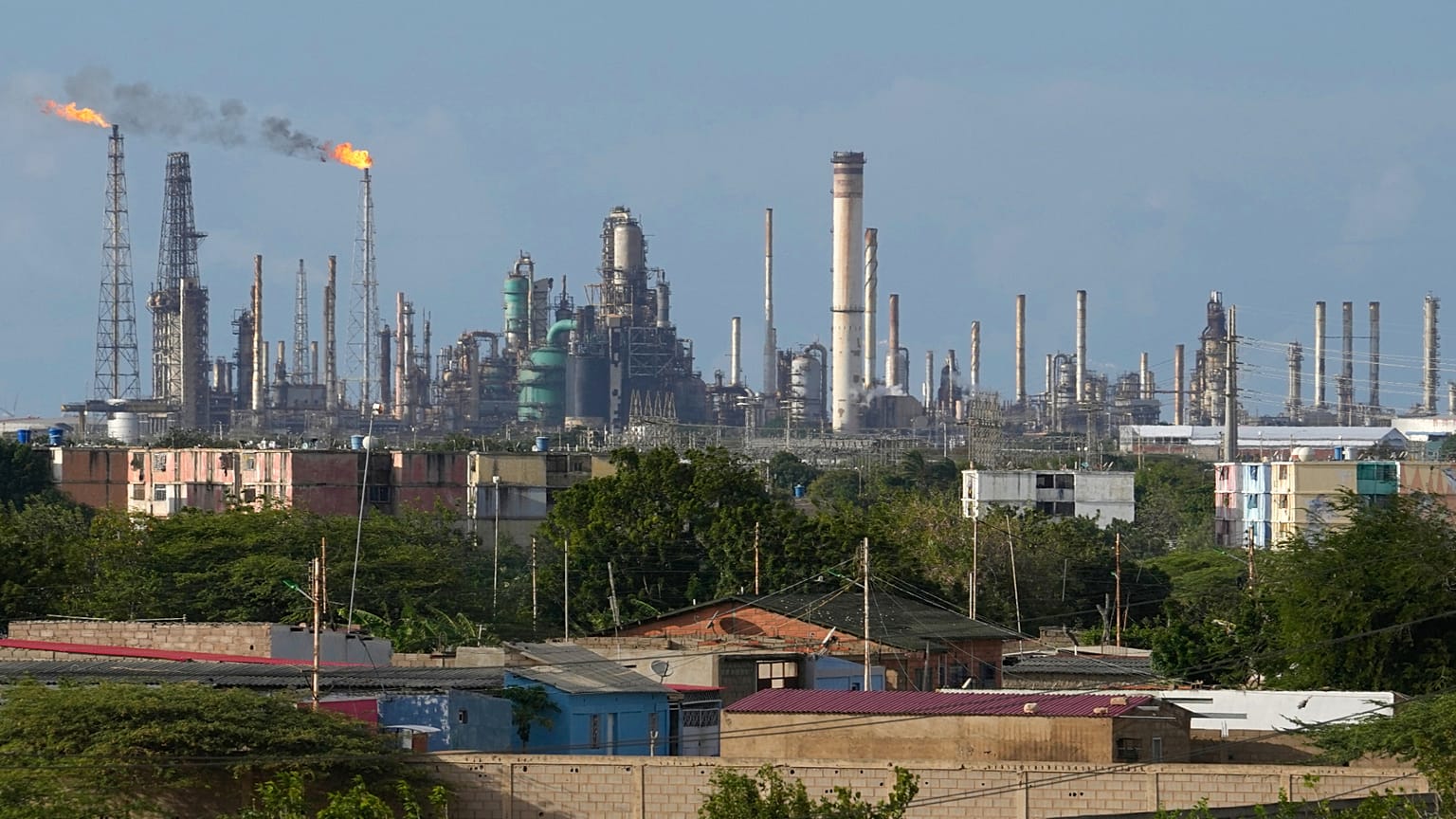
FILE - Flames rise from flare stacks at the Amuay refinery in Los Taques, Venezuela, Jan. 14, 2026.
Copyright AP Photo


By Angela Barnes with AP
Published on

Besides a social media post from US President Donald Trump, the White House has said little about what he is calling “the biggest oil deal in world history” in Venezuela.

Trump said the agreement announced on Friday night would give the United States a stake in Venezuela’s vast oil reserves, a step towards his goal of extracting energy from the country after American forces captured then-President Nicolás Maduro in a middle-of-the-night raid in January and brought him to New York to face federal drug trafficking charges.

Venezuela’s interim leader, Delcy Rodríguez, described the deal as a step towards economic recovery that will modernise the country’s oil industry. In a televised address to the nation late on Sunday, Rodríguez insisted Venezuela's sovereignty is secure and said she wants the country to become a global energy powerhouse.

Earlier on Saturday, she said the oil reserves would “cease to be an inert, cold statistic and will instead become concrete solutions. Housing is one of them.”

But the answers to many questions, including how soon the reserves could be drilled and who will pay to make it happen, were not immediately clear. No text of any agreement has been released.

Here's a look at what is known and unknown:

What are the terms?

The US government and an unnamed private operator in Venezuela formed a new company that was given rights to develop untapped oil fields.

A statement from Rodríguez said the deal involves the development of 17 fields with a proven potential of 65 billion barrels. It said the agreement could draw $100 billion (€86 billion) in investment into Venezuela’s oil industry and yield more than $209 billion (€180 billion) in taxes for Caracas.

Trump said the agreement was negotiated by Secretary of State Marco Rubio, Defense Secretary Pete Hegseth and Rodríguez.

The deal gives the United States 55% effective output of the new private company, including an ownership stake and rights to buy oil at cost. American purchases of the oil will go towards the US Strategic Petroleum Reserve along with the military, according to a US official who was not authorised to discuss the matter publicly and spoke on the condition of anonymity.

The company would be the second-largest corporate holder of proven reserves after Saudi Aramco, according to the official.

How will Venezuelans react?

Some in Venezuela considered it a betrayal of what their government has stated repeatedly for decades: Venezuelan resources are for Venezuela, and leaders would not allow the US government access to those resources.

Harvard University professor Ricardo Hausmann, a former Venezuelan planning minister, called it a “shameful deal."

“Venezuelans will not respect this illegitimate deal and no major US oil company will take it seriously because they know it will not last,” Hausmann said on social media, adding that Rodríguez “has no legitimacy or constitutional power to commit Venezuela to any such deal."

In her national address, Rodríguez pushed back on some of the early criticism.

“One thing must be absolutely clear: Venezuela retains ownership and sovereignty over its resources,” Rodríguez said. She said the goal is to reach other agreements with transnational private companies such as Chevron, Repsol and Shell.

She added: “We want to be an energy powerhouse, a major oil producer, a significant gas exporter, and a major national petrochemical developer."

What's the reaction on Capitol Hill?

It is unclear whether Congress will play a role in the arrangement, but lawmakers from both parties were quick to weigh in.

Trump allies called it a win.

Sen. Bernie Moreno, R-Ohio, said it was a historic deal that helps both countries. “If it were up to DC Democrats, Maduro would still be in power, Venezuelan oil would be going to China at half price, and the people of Venezuela would be getting robbed by a corrupt regime,” Moreno wrote on social media.

It was condemned by Democrats who said Maduro's capture was a means to this end.

Sen. Tim Kaine, D-Va., said Trump was always after Venezuela's oil, branding it “corruption at epic scale.”

“Will prices come down for Americans? Who knows but likely not as much as Trump has forced them up thru his idiotic Iran War," Kaine said on social media.

Sen. Chris Van Hollen, D-Md., said Trump “put our service members at risk to get Venezuelan oil for his billionaire buddies.”

What questions remain?

Many important details remain unclear, including who will cover necessary investments, the identity of the private operator and how America’s stake in the company breaks down.

The US will get 55% of the company's effective output, but it was not clear what portion of that comes from an ownership stake and how much comes from the right to buy oil at cost.

It also is unclear how the industry will react. Persuading big American oil companies to return to the region could prove a challenge given the political uncertainty and damaged infrastructure.

Chevron, the only US oil company actively producing in Venezuela, declined to comment. Separately from Trump’s announcement, Chevron already had been in talks to expand investment in the country. Exxon Mobil also declined to comment.

David Oxley, chief climate and commodities economist at Capital Economics, said that on its face, the deal could double US oil reserves and reduce dependence on crude oil from Canada and Mexico. But Oxley, writing in a commentary, cautioned that there are logistical hurdles and said the value of Venezuela's reserves may have been exaggerated under former President Hugo Chávez.

Even with legal and security guarantees, it is not clear that US oil companies “would be eager to invest,’’ he wrote, noting that “there simply might be more enticing commercial opportunities on offer elsewhere.’’


Trade Analyst: Tariffs Cost Americans $200 Billion A Year, Add $147 To School Supplies


August 30, 2026
The Center Square
By Morgan Sweeney


Key Takeaways:

NTU’s Bryan Riley says tariffs add about $200 billion a year to U.S. costs and hit back-to-school goods; one trade analyst puts the extra at about $147 per family.

Item estimates include roughly $18.80 more for sports shoes, $4.90 for calculators, $0.85 for notebooks, and $5.13 for clothes—small per item but large for districts buying at scale.

Economist Orphe Divounguy cites BLS data that the same household basket costs about $2,900 more than a year ago, and lists tariffs plus spending, rates, and energy as joint pressures.


(The Center Square) – Tariffs will cost Americans about $200 billion per year, according to the National Taxpayers Union, and school supplies aren’t exempt from the heightened costs getting passed on to the American consumer.

As summer winds down and students head back to the classroom, parents are paying more to fill their carts with notebooks, backpacks and other school supplies – about $147 more, according to one trade analyst.


The Center Square’s Greg Bishop spoke Thursday with Bryan Riley, director of the National Taxpayers Union’s Free Trade Initiative, on The Center Square’s news show “The States” about how tariffs are affecting the economy.

“Almost everything is driven up by the cost of tariffs,” Riley told Bishop.

But costs aren’t driven up uniformly, Riley said. Tariffs impact some goods more than others.

“In some cases, it’s a big chunk. For clothing, it’s a big chunk. In other cases, it’s kind of like getting nickel-and-dimed. Everything, almost everything, costs a little bit more, and it’s a policy that really hurts those lower income households the most, who are least able to afford the cost of the tariffs,” Riley said.

The National Taxpayers Union calculated the added cost to some common kids’ items around this time of year – things like new shoes for sports, calculators, notebooks, writing utensils and new clothes.

On average, tariffs have added $18.80 to the cost of sports footwear, $4.90 to calculators, $0.85 to notebooks and $5.13 to clothing. The average cost of writing utensils increased slightly, from $0.1 to $0.5.


“One of the defenses of these tariffs historically has been, ‘Oh, it’s just a little bit, and you won’t even notice it when you buy that can of food and when you buy that pack of pencils. But it all adds up,” Riley said.

And that added cost can be especially substantial when the buyer is a school district, which is supported by taxpayer dollars.

“Go to the grocery store, buy a can of beans. It’s not going to affect you much. But if you’re a school district and you’re feeding thousands of kids, that really affects your bottom line, and it directly comes out of the taxpayers’ wallet,” Riley said.

Bishop also spoke to economist Orphe Divounguy after the Bureau of Labor Statistics released its Personal Income and Outlays report for July.

Divounguy confirmed what consumers are feeling: Costs are rising.

“The average household is spending roughly $2,900 more per year to buy the same basket of goods than they did a year ago,” Divounguy said.

But Divounguy also noted other factors besides tariffs.

“You have record government spending that’s pushing interest rates higher. You have the war on the other side of the world that’s affecting oil prices,” Divounguy said.

“If you look at the overall economy right now, if you look at Q2 GDP numbers, what you see is that outside of AI spending, the AI build-out, there isn’t much else growing in this economy anymore, and I think that is concerning,” Divounguy said. “Unless you get relief on the tariff front, unless you get relief on the gas front and oil, the energy front, unless you get government to make some adjustments that will result in lower interest rates, not higher interest rates, the consumer is going to continue to feel the pinch.”


About The Center Square
The Center Square was launched in May 2019 to fulfill the need for high-quality statehouse and statewide news across the United States. The focus of their work is state- and local-level government and economic reporting.
View all posts by The Center Square →


Europe is heading into winter waiting for Qatari gas that is not coming back

Europe is heading into winter waiting for Qatari gas that is not coming back
A Macro-Advisory note argues traders have been holding out for the Gulf war to end. Doha says repairs may take up to three years, and the EU bans Russian LNG on 1 January. / bne IntelliNewsFacebook
By Ben Aris in Berlin August 29, 2026

Europe's gas traders have spent the summer betting that the Gulf war would end before the heating season starts, giving them time enough to restock Europe’s gas tanks. That bet has gone badly.

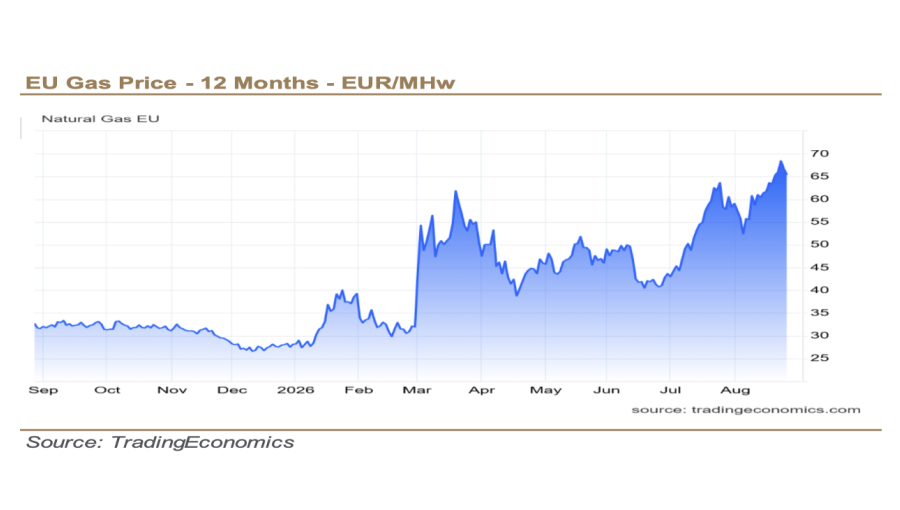
European gas storage currently stands at about 63% of capacity against a five-year average of 79%. Macro-Advisory, the Eurasia consultancy, said in EU Gas Dilemma note published in August that governments "may very soon force traders to start buying." And that could be very expensive. Investment banks are starting to warn of a repeat of the 2022 energy crisis with price of gas tripling to over €100/MWh once the weather turns colder, which will "start an LNG price war with Asian buyers".

Gas in Europe and LNG in Asia both cost just over double what they did a year ago.

The big change from 2022 is that not only has Europe largely been cut off from Russian gas, but this year the LNG supplies from Qatar have also disappeared thank to the Iran war. Doha says it cannot resume exports because of damage sustained to its Ras Laffan LNG plant, with full repair at 12 to 36 months out. “If that is right, the market has been pricing a supply return that is one to three years away as though it were weeks away,” and the storage deficit is the accumulated cost of the error.

Not all of Europe’s gas tanks are empty. As IntelliNews reported, many countries like Italy and Poland are on track to hit the EU’s mandatory benchmark of 90% full by November 1. Italy was about 82% full and France 67%. The problem children are Germany with 51% and the Netherlands with only 45% of tanks capacity used. Germany is the vulnerable one and also the largest in Europe, but high prices have prevented traders from buying gas during the restocking summer season.

The deficit has raised the risk of power outages in some EU states this winter, according to Macro Advisors, depending on the weather, and "for 100% certain, the price of electricity will be higher".

Then there is the sanctions timetable. The EU has legislated Russian gas out of existence and will ban imports of Russian gas completely by January 1. Short-term LNG contracts have been banned since April 25; all LNG imports go on January 1, 2027; long-term pipeline contracts follow on September 30, 2027, or November 1 if member states face severe storage emergencies.

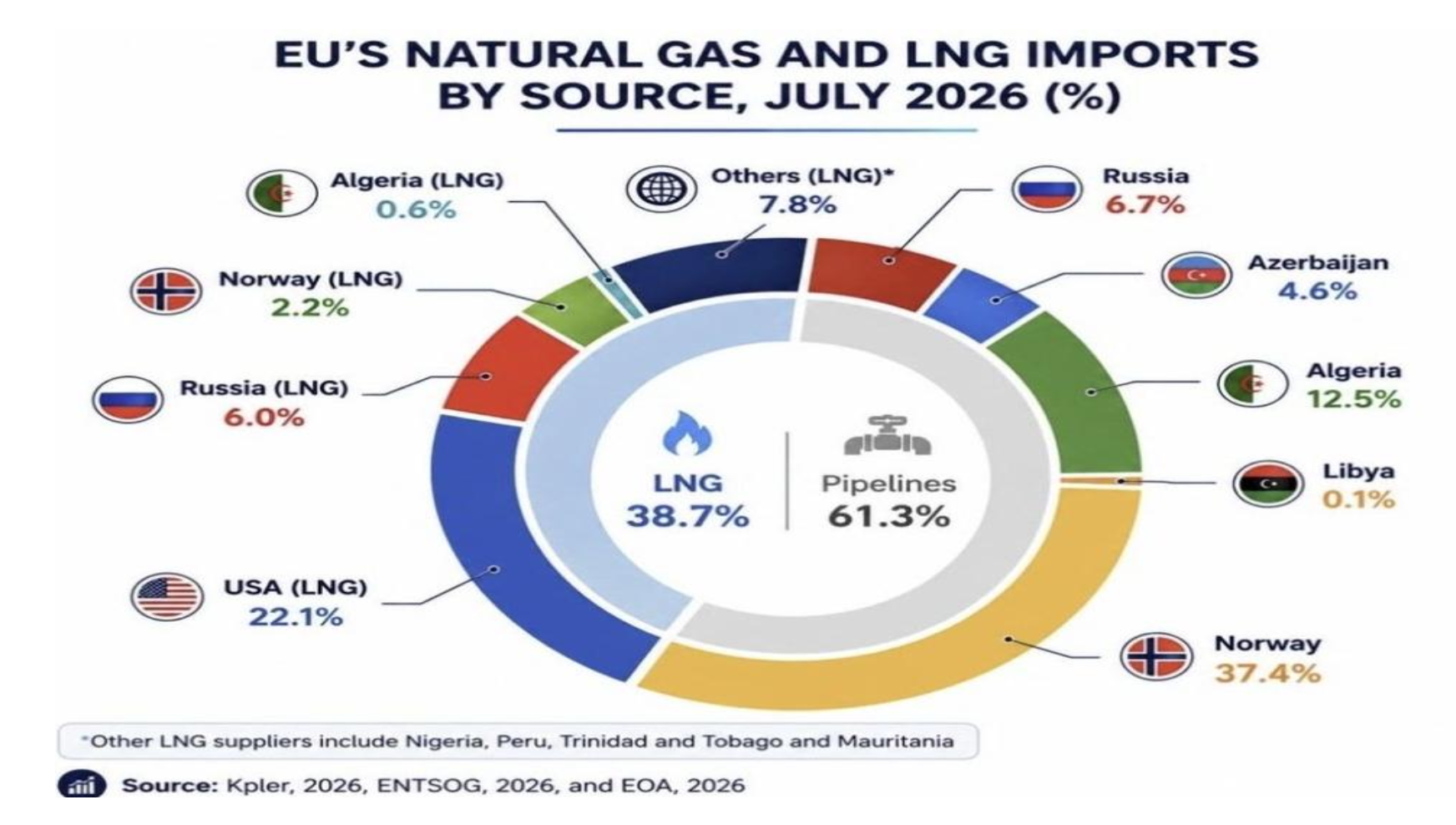
So, buyers are loading up while it is still legal. The EU bought €809mn ($942mn) of Russian LNG in June, 57% more than a year earlier, giving Russia 24.1% of the bloc's LNG market by value against the US on 54.3%. Belgium - the seat of EU executive and legislative power - was the single biggest buyer at €268mn ($312mn), ahead of France on €258mn ($300mn) and Spain on €201mn ($234mn), and it overtook France and Hungary as the largest buyer of Russian gas of any kind.

Pipeline flows tell the same story in the other direction. The bloc imported a further €542mn ($631mn) of Russian pipeline gas in June, 12.5% of the value of all pipeline gas imports, with Norway leading on 33.3%, Algeria on 23.6% and the UK on 18.8%. TurkStream is the only route still carrying Russian pipeline gas into Europe. Hungary remains the largest buyer at €1.3bn ($1.5bn) in the first half, down 12.5% y/y, then Bulgaria on €704mn ($820mn) and Greece on €539mn ($628mn).

Across the first half Russian LNG purchases came to €4.5bn ($5.24bn) and total EU spending on Russian gas of all kinds fell just 3.4% y/y to €7.4bn ($8.62bn). June volumes of Russian LNG were 2.17 bcm, up 10%, on Bruegel figures. "Volumes rising into those deadlines look less like weaning and more like stocking up while it is still legal," the note says.

Where the EU's gas came from in July 2026. Pipelines were 61.3% of the total and LNG 38.7%; Russia supplied 6.7% by pipeline and 6.0% as LNG. Source: Kpler, ENTSOG and EOA, 2026, via Macro-Advisory.

With Europe threatening ban Russian gas completely, Putin turned the tables on Europe and threatened to cut Europe off early rather than wait to be pushed. That would exacerbate the potential crisis as Europe remains addicted to Russian gas. Deputy Prime Minister Alexander Novak said Russian companies would redirect LNG to China, India, Thailand and the Philippines. Russia supplied Europe with 38 bcm of gas in 2025, just over 20 bcm of it as LNG.

The alternatives all fail on timing rather than on volume. New US LNG capacity arrives too late for this winter and perhaps for 2027-28, and Washington has warned it may restrict exports as data centres and AI drive domestic power demand. Azerbaijan is promising more piped gas but the TAP and TANAP pipeline projects need significant capacity upgrades first, which takes "several years". Turkmenistan has the reserves and sells over 80% of its gas to China, but it is on the wrong side of the Caspian: a new trans-Caspian pipeline, or an LNG plant in Turkey, is still at the talking stage because nobody will commit until they know when Gulf supply returns.

Every one of those routes is waiting on the same unknowns, which is why none of them is being built.

Macro Advisory has also flagged a competitiveness argument that outlasts the winter. If Russia sells its LNG into Asia at prices below what the US charges Europe, European chemicals and other energy-intensive manufacturers face a permanent cost gap against Asian competitors - a structural transfer rather than a seasonal one.

Weather decides the rest, IntelliNews Lambda recently reported in a deep dive into the gas sector. Inventories are at their lowest in 17 years and available supply is tighter than in 2022, with under three months to the heating season. What a cold winter does is not push up prices per se, but empties the tanks out faster; the danger this year is with low storage the space underneath the gas market was already a lot shallower than normal.

The wider gas crisis now runs through a single chokepoint, and Europe's answer to losing Russian pipeline gas was to buy a seaborne commodity whose route Iran controls. The sanctions deadlines were written when Qatar was the swing producer and will now go into effect when Qatari gas is off the market.