Tuesday, September 01, 2026


‘Small Interests, Big Politics’: What Defines American Powers – Analysis

Panorama of the west facade of United States Supreme Court Building at dusk in Washington, D.c. CC BY-SA 3.0


By Xia Ri


Key Takeaways:

  • ANBOUND’s Xia Ri says a 5–4 Court, in an opinion by Justice Barrett, required counting compliant mail-in ballots that arrive after Election Day and, with Chief Justice Roberts, also rejected a Trump birthright-citizenship order.
  • The author treats Barrett as an establishment “Bush person” placed in 2020 by McConnell and allies, not as MAGA, and ties that to later Senate fights (Thune, the SAVE Act) and a claimed 35%+ GOP establishment vote break from Trump.
  • The conclusion is that “circle” elite politics, not the textbook separation of powers, explains these rulings; that is the author’s theory, not a Court finding.


Not long ago, the United States Supreme Court delivered a highly controversial election law ruling that sent shockwaves through American politics. Centering on Mississippi’s mail-in voting rules, the Supreme Court ruled by a narrow 5-4 majority that legally compliant mail-in ballots arriving after Election Day must still be counted in the final election results. The majority opinion was authored by Justice Amy Coney Barrett, a nominee of Donald Trump, directly striking down a lawsuit filed by the Republican National Committee attempting to ban the counting of post-Election Day mail-in ballots. This dealt a severe blow to the core electoral demands of Trump and his Make America Great Again (MAGA) faction.

This outcome not only shocked the American public but also left observers abroad baffled: How could a Supreme Court justice nominated by President Trump himself turn against him?

Around the same time, the Supreme Court rejected an executive order from Trump demanding changes to birthright citizenship. On this occasion, Chief Justice John Roberts authored the opinion for the majority, rebuking this “dramatically revisionist view” of the Fourteenth Amendment, with Barrett likewise joining the majority. ANBOUND’s founder Kung Chan believes that such an occurrence is actually unsurprising. The process surrounding Barrett’s appointment as a justice back in 2020 already signaled this outcome, reflecting the long-standing factional rift between the Republican establishment and Trump’s MAGA faction, and offering a true microcosm of American deep-circle politics within the framework of the separation of powers.

Tracing Barrett’s political roots, her core political allegiance has never been to Trump’s MAGA faction, but rather to the Republican establishment led by George W. Bush. Public resumes and historical records show that Barrett is fundamentally a Bush person. During her younger days, she worked for George W. Bush’s legal team. At the critical juncture of the 2000 U.S. presidential election recount in Florida, she assisted Bush, the leader of the Republican establishment.

The sudden passing of Justice Ruth Bader Ginsburg in 2020 provided the Republican Party with an opportunity to quickly seize judicial control of the U.S. Supreme Court, but Barrett’s nomination and appointment process was entirely guided and controlled by the Republican establishment, with Trump serving merely as the “nominal nominator”. On the very night Ginsburg died, then-Senate Majority Leader and establishment stalwart Mitch McConnell placed an immediate phone call to Trump, forcefully demanding the nomination of Barrett as Supreme Court justice. Meanwhile, current Senate Majority Leader John Thune served as a key supporter of Barrett’s ascension to the U.S. Supreme Court.

A crucial fact widely overlooked by the outside world is that rushing through Barrett’s Supreme Court appointment eight days before the 2020 election was not a tactical election maneuver by the Trump team, but a preemptive move by the Republican establishment. According to post-election reviews by multiple mainstream U.S. media outlets at the time, the core circle of the Republican establishment had already used polling data and voter trends to predict that Trump would likely lose. Consequently, they positioned a judicial figure they could rely on ahead of time to firmly control the conservative majority on the Supreme Court, hedge against judicial reform risks under a future Democratic administration, and counterbalance the aggressive expansion of Trump’s MAGA faction.

Barrett’s alignment with the Republican establishment directly reflects the “small interests, big politics” characteristic of American political club culture, where various “small interests” run through and intertwine with networking ties. In 2021, Barrett secured a lucrative two-million-dollar book publishing contract, roughly equivalent to the payout for a presidential memoir, a reward widely viewed by the American political scene as a textbook political payback. Notably, the literary agency she signed with, Javelin, was co-founded by Matt Latimer, former chief speechwriter for George W. Bush, and Keith Urbahn, former chief of staff to Secretary of Defense Donald Rumsfeld, serving as an exclusive networking and interest-operation platform for the Republican establishment.

Furthermore, Barrett’s family industrial background further cemented her ties with the Republican establishment figures such as the Bushes and Cheney. Public career records show that Barrett’s father worked for Royal Dutch Shell for 29 years, specializing in core contracts for offshore drilling in the Gulf of Mexico. The core capital entities behind Gulf of Mexico offshore oil development were none other than Zapata Corporation, founded by the Bush family, and Halliburton, the energy services company controlled by former Vice President Dick Cheney. For decades, these two enterprises monopolized the U.S. Gulf of Mexico offshore drilling and supporting services market, forming a solid energy-interest community

These connections have never been severed by Barrett’s elevation to Supreme Court justice. The Republican establishment maintains regular contact with Supreme Court justices, just as Democrats undoubtedly do, with both major parties having their own representative figures on the high court.

The antagonism between the Republican establishment and Trump’s MAGA faction has long permeated multiple dimensions, including congressional legislation and personnel appointments. As an establishment successor personally fostered by Bush and Cheney, John Thune now stands as a core figure in the anti-Trump MAGA camp. They are closely knit, frequently attending events and fundraisers together. Thune shares a deep personal friendship with Cheney and often goes hunting with him.

At the level of critical legislation, Thune has repeatedly taken the lead in blocking main bills advanced by Trump’s MAGA faction, most notably the Safeguard American Voter Eligibility Act (SAVE Act). Designed to tighten election rules and strengthen presidential campaign authorities, the bill would clearly benefit the long-term governance of Trump’s MAGA faction. Encountering universal opposition from the Democrats, the bill was also forcefully obstructed by the Republican establishment led by Thune and ultimately stalled in the Senate.

The factional standoff in the Senate is starkly clear. McConnell, who long controlled the Senate previously, is a crucial establishment figure, while newly empowered Thune is a steadfast anti-Trump establishment figure. Senate veteran and former Texas Senator John Cornyn has likewise repeatedly and publicly rejected Trump’s core proposals, standing out as a well-known MAGA opponent within the Republican Party. Congressional voting records show that in the 118th and 119th Congresses, the proportion of votes cast by Republican establishment lawmakers that ran counter to Trump’s stance consistently hovered above 35%, exceeding 50% in areas such as electoral rules, capital regulation, and energy policy. Therefore, the surface-level “separation of powers” actually conceals a four-way contest, one of which involves the Republican establishment.

For a long time, outsiders have widely misunderstood the operating logic of American politics. When deconstructing American politics, Kung Chan once noted that numerous political cases and institutional practices prove that American politics is fundamentally a circular culture. All these connections among Thune, Bush, and Cheney are merely superficial manifestations of this culture. While the Republican establishment and Democratic elites ostensibly belong to different parties, they actually stand together as forces blocking Trump’s MAGA efforts. The Supreme Court’s 5-4 mail-in ballot ruling serves as a perfect testament to this logic, directly undercutting the electoral voice of the MAGA faction while preserving the establishment-dominated flexible voting system.

From an institutional architecture perspective, the system of the “separation of powers” established by the U.S. Constitution appears to achieve a checks-and-balances framework among the legislative, executive, and judicial branches, constructing a structured equilibrium of power. In actual political operations, however, the separation of powers is merely a surface-level institutional framework. What truly dictates the direction of American politics is the various elite circle politics hidden beneath the surface of these institutions. Anyone who believes that Trump is genuinely leading the Republican Party is being overly naïve. Everything is a struggle, and it is a struggle fought among circles.

The anomalous ruling on mail-in ballots by the U.S. Supreme Court in 2026 is not an isolated judicial dispute, but rather an inevitable consequence of America’s deep political structure. Barrett’s appointment, her ruling stance, her interest ties, Thune’s personnel arrangements and legislative obstruction, along with the deep penetration of the Bush-Cheney energy circle, progressively reveal the operational logic of American circle politics, i.e., political parties, factions, and institutions are all surface-level tools, while the preservation of interests across various elite circles remains the core objective.

Naturally, Trump and the MAGA faction will not sit idly by and will mount a counter-offensive, primarily leveraging House legislative procedures to try and force the Senate to pass resolutions favorable to themselves. This outcome remains to be seen.

Final analysis conclusion:

Not long ago, the U.S. Supreme Court ruled 5-4 that compliant mail-in ballots arriving after Election Day are valid. Justice Barrett, who authored the opinion, actually belongs to the Republican establishment and holds views contrary to the Trump MAGA faction, thoroughly exposing internal rifts within the Republican Party. Powered into her position by the establishment, Barrett serves establishment demands by relying on deep-seated interests and networking circles. The establishment, represented by Thune, has repeatedly blocked core MAGA legislation, and the antagonism between the two factions runs deep across multiple political domains. This reflects that beneath America’s separation of powers structure, the political landscape is truly dominated by elite circle struggles.

  • Xia Ri is an Industry Researcher at ANBOUND, an independent think tank.

About Anbound

Anbound Consulting (Anbound) is an independent Think Tank with the headquarter based in Beijing. Established in 1993, Anbound specializes in public policy research, and enjoys a professional reputation in the areas of strategic forecasting, policy solutions and risk analysis. Anbound's research findings are widely recognized and create a deep interest within public media, academics and experts who are also providing consulting service to the State Council of China.

View all posts by Anbound →

Experts Gather in Tunis To Improve Safeguards Against The Diversion Of Hazardous Materials


Attendees at the Africa Shield 2026 Regional Counterproliferation Workshop in Tunis discuss keeping hazardous materials from falling into the hands of terror groups and nonstate actors. ANDREA CHANEY/DTRA

August 30, 2026

By Africa Defense Forum


Key Takeaways:

Africa Shield 2026 in Tunis brought more than 100 African military, police, and policy officials together, with DTRA, EU, and U.N. support, to tighten control of dual-use industrial and medical materials that militants might steal or divert.

Sessions covered borders and supply chains, intelligence and incident response, export controls, and CBRN investigations and financing, tied to implementing U.N. Security Council Resolution 1540.

Follow-on work includes a Nigeria Police CWMD train-the-trainer workshop and Kenya’s CBRN National Action Plan plus Justified Accord drills; analysts say the goal is oversight that does not block lawful industry.


Industrial development is booming across much of Africa, and with it comes the use of hazardous chemicals and other sensitive material.

Terrorist groups covet many of these “dual-use” items for use in attacks. Chlorine gas, for example, is commonly used in water treatment but can be weaponized to deadly effect. Medical research uses radiological and biological materials that can be dangerous in the wrong hands.

“The same materials that strengthen healthcare, scientific research, mining and industry can also become security risks if poorly managed,” Mubarak Aliyu, a Nigeria-based political and security risk analyst, told Al Jazeera.


To combat this threat, more than 100 professionals from across the continent gathered in Tunis for Africa Shield 2026, a regional counterproliferation workshop. Participants represented the military, law enforcement, policymakers and international oversight bodies.

The U.S. Defense Threat Reduction Agency (DTRA), with help from the European Union and United Nations agencies, funded and organized the three-day conference. Participants discussed a range of topics, including:

Border management and supply chain security: Countries are working to tighten controls at border crossings and are sharing best practices to stop nonstate actors smuggling sensitive materials.

Intelligence flow and incident response management: Information sharing and coordination will improve responses to potentially dangerous incidents.

Export controls and dual-use technologies: Strengthening regulations and enforcement helps prevent the illicit transfer of sensitive materials.

Chemical, biological, radiological and nuclear (CBRN) crime investigation and counter-proliferation financing:Security professionals are updating investigative skills and collecting information needed to disrupt financial networks that enable proliferation.


The meeting also emphasized the implementation of U.N. Security Council Resolution 1540, passed in 2004, which calls for information sharing, interagency coordination, border management and regional cooperation to combat the threat.

Attendees said events like Africa Shield are key to strengthening the network of professionals that stops hazardous items from being diverted or stolen.

“This initiative has enabled African countries to clearly demonstrate their ownership of the counterproliferation problem set,” said Maj. Brittany Brown of DTRA’s Africa counter-weapons of mass destruction (CWMD) program. “The networks and collaboration created and endorsed at Africa Shield are unmatched, allowing our foreign partners to effectively fight against adversarial networks.”

Countries across Africa are also working to strengthen domestic safeguards. After Africa Shield, the Nigeria Police Force held a CWMD curriculum development workshop in Abuja. The event, held in partnership with DTRA, was part of a train-the-trainer initiative to heighten awareness and strengthen the ability of police across the country to respond to chemical, biological, radiological, nuclear and explosive threats.

“The evolving nature of weapons of mass destruction demands proactive policing, continuous operational training and deeper inter-agency and international collaboration,” Nigeria’s Deputy Inspector-General of Police in charge of Operations Umar Shehu Nadada said at the beginning of the event.

In Kenya, the military, police and civilians have held a number of training events. The country formally unveiled its first comprehensive CBRN National Action Plan last year. During the annual Exercise Justified Accord in Nairobi, U.S. Soldiers trained alongside members of Kenya’s Disaster Response Battalion to prepare for CBRN threat scenarios.

Experts believe CBRN safeguards and awareness need to be part of a whole-of-government approach that prepares for threats without impeding lawful economic activity.

“The challenge is not to restrict development, but to ensure that innovation is matched by effective oversight, secure handling practices and robust regulatory systems that prevent diversion or misuse without slowing economic progress,” Aliyu told Al Jazeera.


About Africa Defense Forum
The Africa Defense Forum (ADF) magazine is a security affairs journal that focuses on all issues affecting peace, stability, and good governance in Africa. ADF is published by the U.S. Africa Command.
View all posts by Africa Defense Forum →


Israel signs €3 billion arms export deal with Greece, defence ministry says

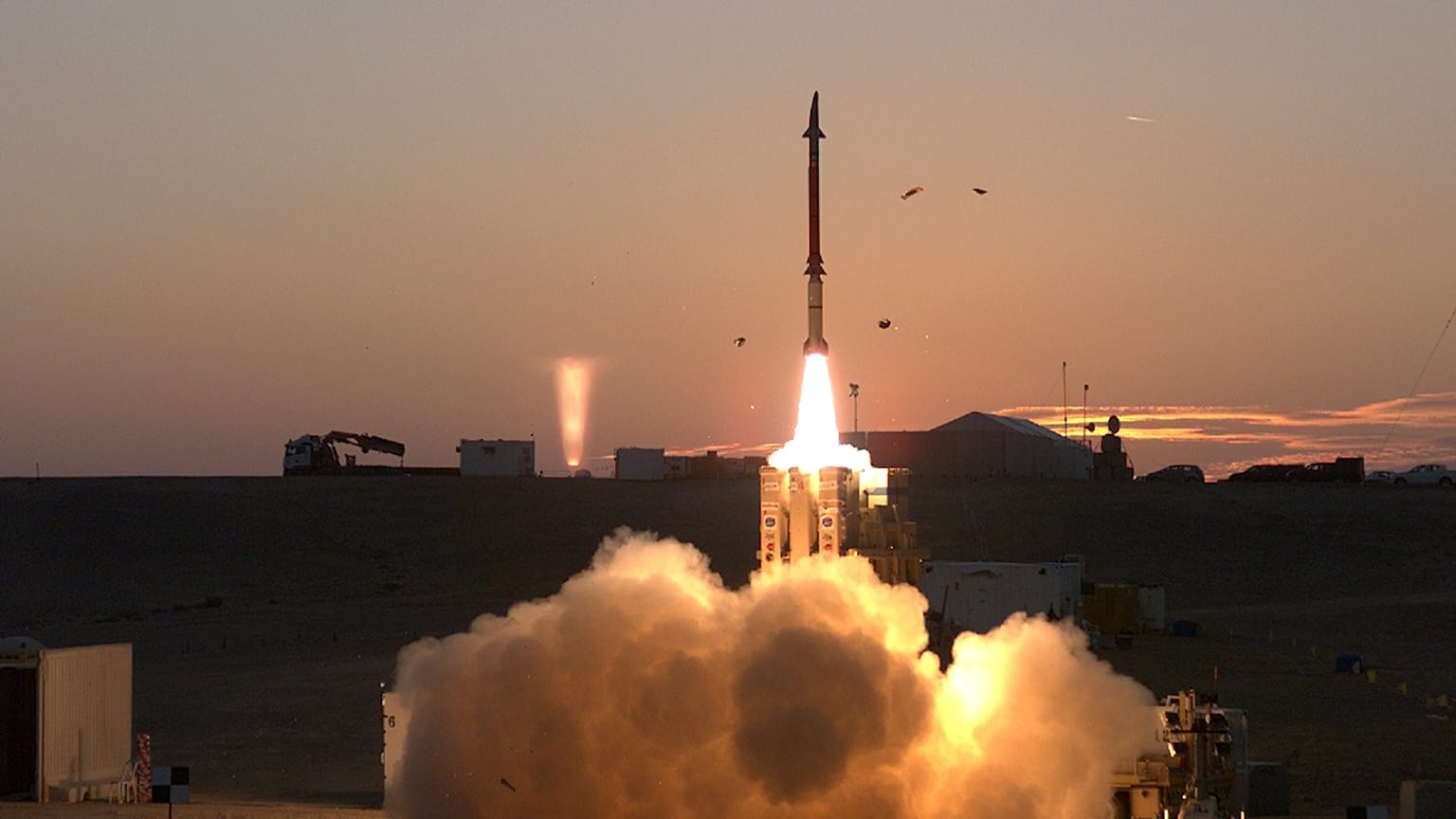
A launch of the David's Sling missile defence system, 21 December, 2015
Copyright AP Photo


By Ioannis Karagiorgas & Gavin Blackburn
Published on

In a statement, the Greek Defence Ministry said the multi-billion euro purchase was part of "the greatest reform of its armed forces in its history."

Israel's defence ministry said on Monday it had signed a deal with Athens worth approximately €3 billion to set up the "Achilles Shield" aerial defence system for Greece.

"Under the deal, Israel will build Greece a comprehensive, multi-layered air defence array, drawing entirely on Israeli-made systems and on the extensive operational experience Israel's defence establishment has gained during the war," the ministry said in a statement.

"This is the largest defence export deal in the history of Israel-Greece relations and one of the largest in the history of the State of Israel," it added.

The deal was signed by the Israeli defence ministry's director general, Major General Amir Baram and his Greek counterpart, Ioannis Bouras, in Tel Aviv.

A Greek defence ministry source had told the AFP news agency in late July about an upcoming purchase of Israeli-made anti-missile, anti-aircraft and anti-drone systems, part of a broader defence investment for the Achilles Shield of €4.2 billion.

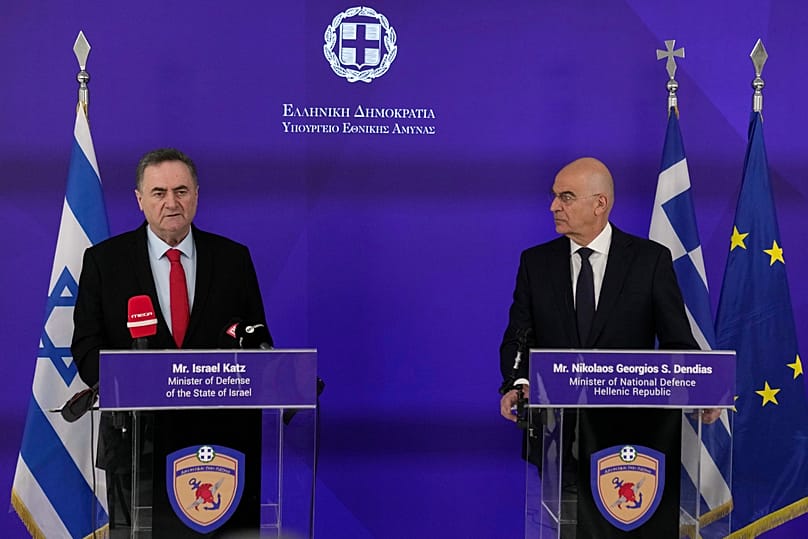
Greek Defence Minister Nikos Dendias, right, and his Israeli counterpart Israel Katz speak in Athens, 20 January, 2026
Greek Defence Minister Nikos Dendias, right, and his Israeli counterpart Israel Katz speak in Athens, 20 January, 2026 AP Photo

In a statement, the Greek Defence Ministry said the multi-billion euro purchase was part of "the greatest reform of its armed forces in its history."

Greek Defence Minister Nikos Dendias was quoted in the statement as saying that recent technological developments "have long rendered existing defence doctrines completely obsolete."

"Greece is the first country in the European Union to adopt" a multi-layered air defence system such as the Israeli one, he added.

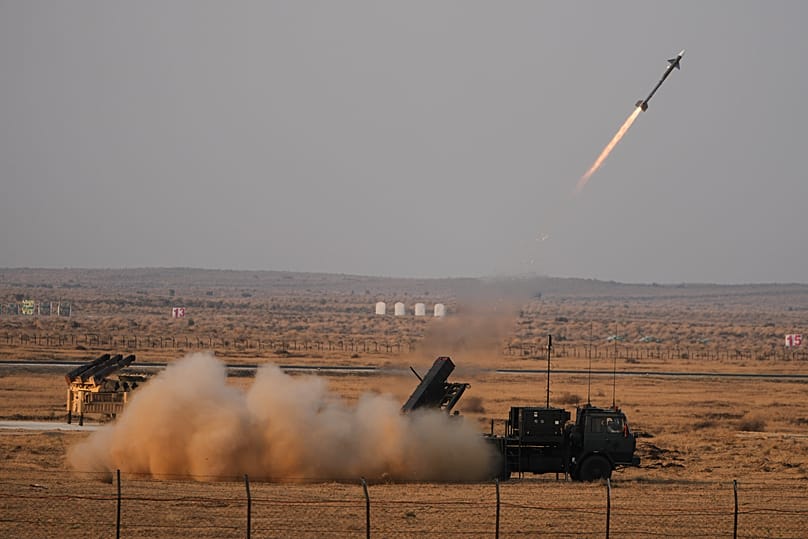
According to the Israeli Defence Ministry, the export deal includes the David's Sling, Barak MX and SPYDER interception systems, air surveillance radars and "a new national command and control system".

All the equipment is manufactured by Israeli defence contractors Rafael and Israel Aerospace Industries and its subsidiary ELTA Systems.

A supplementary €26 million deal was also signed to provide Greece with Rafael's defence systems against drones, the ministry said.

"Israel and Greece share common strategic interests and face shared regional challenges," said Defence Minister Israel Katz, quoted in the statement.

"At a time when actors with hegemonic ambitions are seeking to expand their influence and undermine stability in the region, Israel and Greece will continue to deepen their defence and strategic cooperation," he said, in a likely reference to Turkey.

A SPYDER (Surface-to-air PYthon and DERby) missile fired near Jaisalmer, 24 February, 2026
A SPYDER (Surface-to-air PYthon and DERby) missile fired near Jaisalmer, 24 February, 2026 AP Photo

Greece is now one of only four European NATO members to spend at least 3% of GDP on its military, amid decades of tensions with neighbouring Turkey.

Israel has also increasingly locked horns with Turkey, having struck a disused military base in northwest Syria, claiming it wanted to avert Turkish troops deploying to the facility.

In 2023, Israel signed a deal with Germany to provide the Arrow 3 anti-ballistic missile defence system, which was expanded in December for a total value of $6.5 billion (€5.6 billion), the country's largest-ever military export contract.

American Policy Of Burden Sharing In West Asia – Analysis


The essay reads West Asia through neorealism and burden-sharing: Washington still wants influence but prefers partners (Turkey, Gulf states, Pakistan) to carry more of the security load after Assad’s fall.


Turkey’s Syria role, plus the Aug. 7, 2026 Mecca/Makkah pact among Saudi Arabia, Turkey, and Pakistan, is framed as flexible balancing and autonomy—not a finished anti-Iran alliance; success depends on exercises, industry, and crisis aid.

Iran’s “strategic depth” via Syria and Hezbollah is described as under pressure if a Turkey-friendly Syrian order takes hold; the author sees a fluid multipolar balance, not a single bloc.
Strategic Reconfiguration of the Middle East: An Assessment Through International Relations Theory


A phase of structural adjustment is about to begin in the West Asian geopolitical order. Neither the United States nor regional powers are merely stepping in to fill the void left by the United States’ withdrawal from the Middle East. Rather, Washington seems more open to encouraging skilled allies to take on more responsibility for regional security while maintaining American strategic sway.

Neorealism, balance-of-power theory, and alliance politics can all be used to understand this new paradigm. When faced with uncertainty, states try to expand their strategic autonomy, diversify their alliances, and strengthen their security. The formation of a united anti-Iranian bloc is not always the outcome. Instead, a more flexible security architecture is emerging in West Asia, where regional powers are becoming more capable and motivated to establish their own regional order.

The Middle East’s shifting geopolitical environment can be explained by a number of theoretical frameworks, including neorealism, balance-of-power theory, alliance formation, strategic depth, proxy competition, and burden-sharing. This perspective holds that the interactions between the United States, Israel, Turkey, Iran, Saudi Arabia, and Pakistan reflect a broader restructuring of regional power relations rather than being a collection of separate bilateral occurrences.

According to a neorealist viewpoint, nations aim to optimize their security and strategic independence in a competitive and unstable international system. This interpretation is supported by Carnegie Endowment research describing the post-Assad environment which characterizes the post-Assad situation as a new geopolitical battle in which Turkey and Gulf states have forged ties with the new Syrian administration while simultaneously attempting to lessen Iranian influence, lends credence to this assessment.

The Turkish Factor in Syria

The Turkish influence in Syria is expected to be a key component of the growing regional security architecture. Turkey’s geographical position, NATO membership, military capabilities, and nearly 900-kilometer border with Syria provide Ankara with unusually considerable strategic power over developments in Syria.

According to Chatham House, Turkey has emerged as a major beneficiary of the Syrian change, with its influence in Damascus expanding significantly following the fall of Bashar al-Assad.

Carnegie’s analysis is especially noteworthy since it finds a shared goal among Turkey, Saudi Arabia, and the new Syrian leadership: to reduce Iranian influence and dismantle the Iranian regional network that previously connected Tehran to the Mediterranean.

Turkey, Saudi Arabia, and Syrian leadership are working together to create a cohesive and friendly Syrian state while restricting Iranian influence.

“Given Ankara’s significant political, military, and economic clout in Syria, Turkish involvement in Syria can be viewed as a key external pillar supporting the development of the new Syrian political system. “The Turkish role in Syria may become more significant as part of a larger NATO-US-Israeli regional security architecture.


. The U.S. Withdrawal and Burden-Sharing Argument

During the Trump administration, Washington expressed a preference for decreasing the direct US military burden in foreign wars while urging regional partners to take on more responsibility for regional security.

The 2018 decision to withdraw U.S. forces from Syria Analysts regarded the 2018 decision to withdraw US soldiers from Syria as potentially opening up strategic space for Iran and other regional entities. According to Brookings, the withdrawal might boost Iran’s influence over Syria and disrupt the regional balance of power.

The expanding trilateral defense cooperation between Saudi Arabia, Pakistan, and Turkey can also be evaluated using alliance theory and the burden-sharing concept. It might be regarded as part of the larger evolution of US regional strategy, notably the trend of urging regional allies to take more responsibility for their own security.

“The trilateral defense arrangement can be interpreted as broadly compatible with the longer-term trend toward greater regional burden-sharing and reduced dependence on direct U.S. security provision, a tendency that became particularly visible during the Trump administration.”

 Saudi Arabia–Pakistan–Türkiye Defense Agreement

Saudi Arabia, Turkey, and Pakistan signed the Makkah Joint Defense Agreement on August 7, 2026, stating that any armed attack on one of them is an attack on all and vowing to increased defense cooperation.

The International Institute for Strategic Studies (IISS) “The Makkah Joint Defence Agreement demonstrates a developing regional security architecture in which Saudi Arabia, Turkey, and Pakistan desire more collective deterrence and strategic autonomy. This move is consistent with a larger trend toward regional burden sharing and diversity of security alliances.

“The strategic significance of the Makkah Joint Defense Agreement should therefore be assessed according to its implementation rather than its symbolism. ” Its eventual success will be determined by institutionalization, intelligence sharing, joint exercises, interoperability, defense-industrial cooperation, strategic planning, and a demonstrated political readiness to provide collective aid during a crisis.”


 Iran, Strategic Depth and Hezbollah

Iran’s regional strategy has frequently been analyzed through the concept of strategic depth and the use of regional partners and non-state actors. Recent Carnegie research describes Iran’s previous deterrence model as relying heavily upon strategic depth through its network of regional allies and proxies, including Hezbollah. Iran’s support for the Assad government, Hezbollah and other regional partners as part of a strategy intended to preserve Iranian influence and deter U.S. and Israeli pressure “Iran’s strategic interest in Syria historically extended beyond the Syrian theatre itself, because Syria constituted an important component of the logistical and strategic depth supporting Iran’s regional network, particularly Hezbollah in Lebanon.”

“The growing Turkish role in Syria may function as an indirect structural constraint on Iran’s regional strategic depth, particularly if Ankara contributes to the consolidation of a Syrian order less receptive to Iranian military and logistical influence.”

Taken together, the available evidence supports the proposition that the Middle East is undergoing a significant restructuring of its regional security architecture.

Overall, the Middle Eastern security environment appears to be moving toward a more complex and multidimensional balance-of-power structure. The United States and Israel seek to constrain Iranian regional influence; Iran seeks to preserve strategic depth and deterrence

“The emerging Middle Eastern security order should be understood not as the formation of a single, coherent anti-Iranian bloc, but as a fluid process of regional balancing in which Türkiye’s expanding influence in Syria, the restructuring of Iran’s strategic depth, and the emergence of Saudi–Pakistan–Türkiye defense cooperation collectively indicate a gradual diversification of regional security partnerships and a partial redistribution of the strategic burden previously carried by the United States.”


About Adeel Abbas Mangi
Adeel Abbas Mangi, Master’s in international relations, Quaid e Azam University Islamabad, Independent Researcher and frequently writing for Asia Times, Eurasia Review, Modern Diplomacy.eu, National Herald Tribune, Global village space, SMT studies Centre, SouthAsian Monitor and IICR, Pakistan (Islamabad Institute of conflict resolution).
View all posts by Adeel Abbas Mangi →


G20 finance chiefs gather in North Carolina with Iran sanctions and tariffs in focus

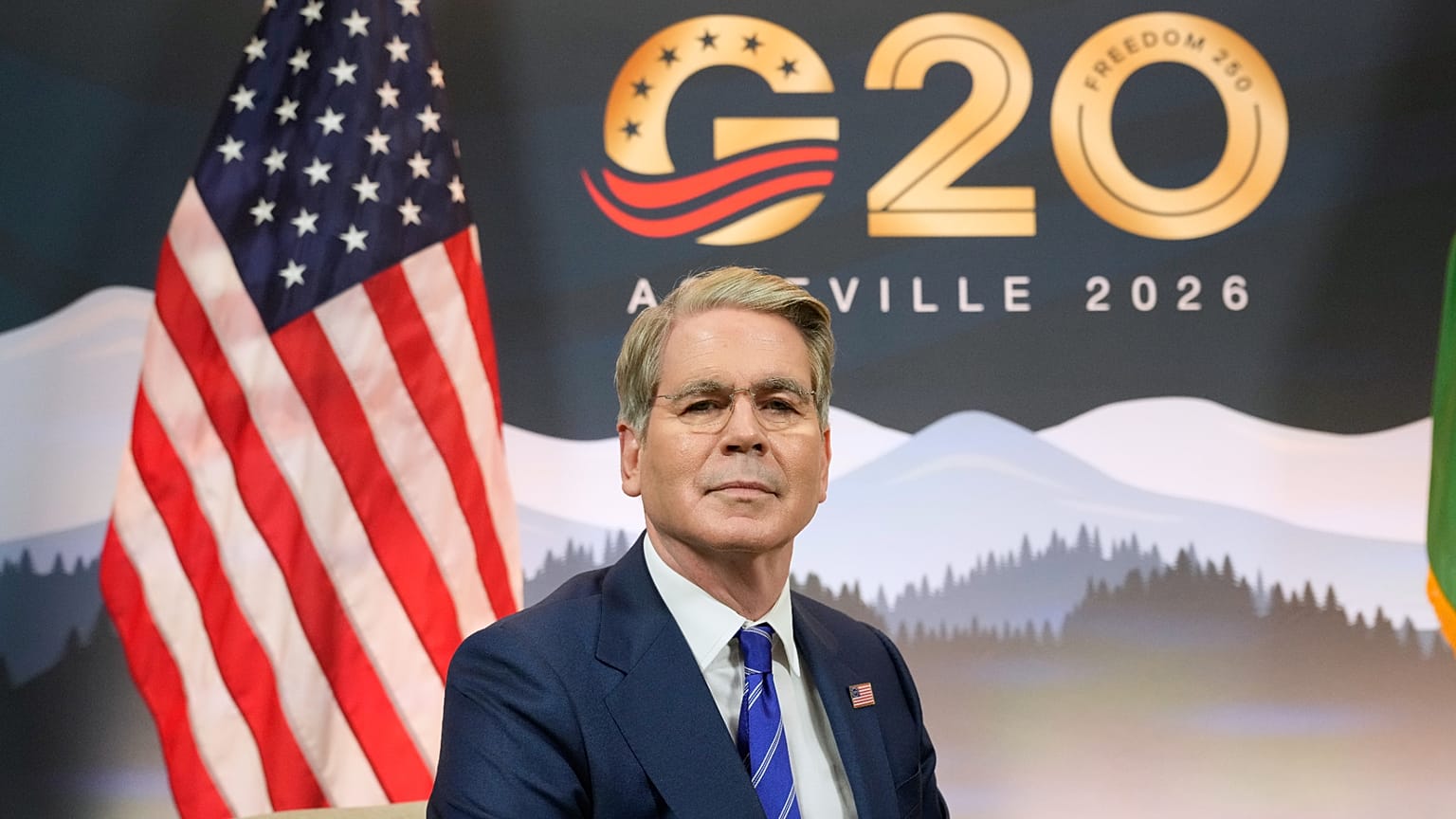
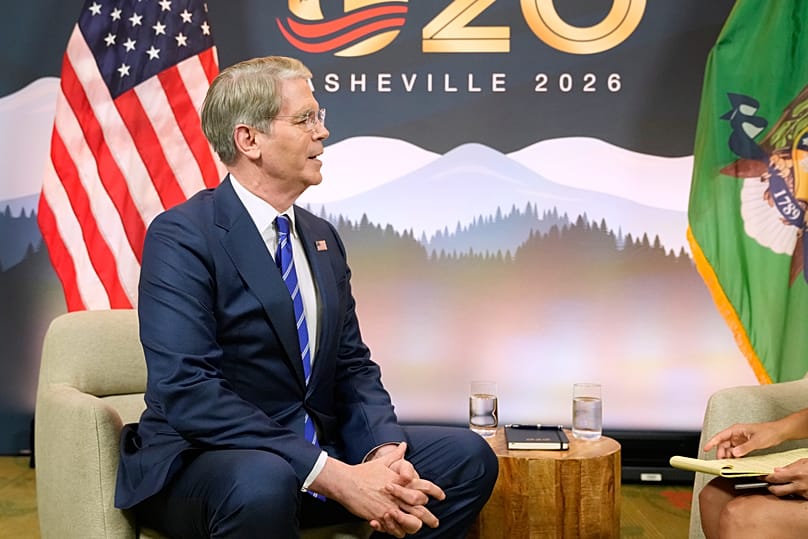
US Treasury Secretary Scott Bessent speaks during an interview with The Associated Press in Asheville, North Carolina, 30 Aug. 2026
Copyright AP Photo/Gerald Herbert

By Quirino Mealha
Published on

Finance ministers and central bank governors from the world's largest economies meet in Asheville, North Carolina, on Monday and Tuesday, hosted by a US administration that is simultaneously pressing allies to help isolate Iran financially and imposing tariffs on several of them.

The United States takes its turn chairing the G20 finance track this week under distinctly awkward conditions.

US Treasury Secretary Scott Bessent and Federal Reserve Chair Kevin Warsh are hosting counterparts in the North Carolina mountains, following a deputies meeting held over the weekend, with the formal agenda covering economic growth, global imbalances, sovereign debt restructuring, banking regulation and energy security.

Asheville was chosen deliberately.

The city was devastated by Hurricane Helene in September 2024, a storm that killed more than 250 people and caused close to $80 billion (€69bn) in damage from Florida to the Carolinas, and Bessent has cited its rebuilding as a fitting backdrop for talks about economic growth.

"We want the rest of the world to come along with our growth agenda, whether it's deregulation, the energy independence [...]" he said, adding that "the world has this mountain of debt, and we do have to grow our way out of it," confirming public debt will feature prominently in the discussions.

The setting may prove easier than the substance.

Trade friction between the US and Canada escalated after negotiations broke down, hostilities with Iran have resumed through economic rather than military means, and Warsh arrives days after a hawkish first Jackson Hole address that sharply raised the odds of a US rate rise this month.

Both meetings serve as groundwork for the leaders' summit at Trump National Doral in Miami on 14 and 15 December, and come weeks before Xi Jinping is expected in Washington on 24 September.

Bessent's push on Iran

The US Treasury Secretary intends to use bilateral meetings to build support for squeezing Tehran, and stated that Washington will sanction another bank this week, though he declined to name it.

"This is going to be financial violence if we have to," Bessent told AP.

"We are showing people that we know who you are, you know who you are, and this has got to stop," he added.

US Treasury Secretary Scott Bessent speaks during an interview with The Associated Press in Asheville, North Carolina, 30 August 2026
US Treasury Secretary Scott Bessent speaks during an interview with The Associated Press in Asheville, North Carolina, 30 August 2026 AP Photo/Gerald Herbert

The campaign's opening move came on Friday, when the US Treasury proposed a rule that would cut the Emirati branches of Banque Misr, Egypt's second-largest lender, off from the American financial system.

By stopping short of full sanctions, the US administration appeared to signal reluctance to punish major trading partners that still deal with Iran, notably China and India.

On Beijing specifically, Bessent said "all options are on the table" over its continued oil purchases, while dismissing suggestions of hesitancy as "a completely false narrative that the media picked up on."

The meetings are also being held under unusual media restrictions, after the US Treasury barred certain reporters from the New York Times, Wall Street Journal and Bloomberg from covering them.

The New York Times called the move "not just another disturbing effort by the administration to undermine independent journalism, but a blatant attempt to evade public scrutiny."

The department has not explained its decision, though Bessent told the AP that "it has nothing to do with point of view."

Who speaks for Europe at the G20

The EU is represented by Ireland's Tánaiste and Finance Minister Simon Harris, who holds the role by virtue of Ireland's EU presidency since 1 July, alongside ECB President Christine Lagarde and Economy Commissioner Valdis Dombrovskis.

Harris said he was looking forward to "the first Ministerial meeting of the G20 Finance Ministers and Central Bank Governors since Ireland assumed the Presidency of the EU," describing the forum as a place where the largest economies "can exchange views and work towards international economic and financial stability."

The Irish minister's stated priority reflects the conflict shaping much of the agenda at this G20 meeting.

Among the EU's concerns, Harris listed "energy security and ensuring we have secure and resilient energy supplies at a time of severe volatility caused by the conflict in the Middle East."

He will also hold bilateral meetings with counterparts from G20 member states as Ireland has also been invited as a guest for the December leaders' summit in Miami.

HIGH SEAS PIRACY

U.S. Eyes 18th-Century Law to Seize and Sell Iranian Oil

  • The U.S. is considering reviving centuries-old “prize law” to seize ownership of Iranian ships and oil captured during its blockade, potentially replacing slower civil forfeiture proceedings.

  • Captured oil and vessels could be sold with proceeds flowing to the U.S. Treasury, turning maritime seizures into another source of economic pressure on Tehran.

  • The strategy faces major legal and geopolitical risks, from questions over wartime authority to fears that China or other rivals could eventually use the same precedent against U.S. shipping.

The US government is exploring an unusual legal route for dealing with Iranian oil and ships captured as part of its blockade: bringing back a wartime maritime system that has barely been used for generations, according to Bloomberg.

The Justice Department, working with the Pentagon, is preparing to use prize law, which historically allowed courts to decide whether vessels and cargo captured during armed conflict could legally become property of the United States. The mechanism was once commonplace in naval warfare but largely disappeared from American practice after the 19th century and has been dormant since World War II.

The appeal for the administration is largely practical. At present, the government generally relies on civil forfeiture to take ownership of vessels accused of sanctions violations or other offenses. Those cases can become complicated and slow, particularly when shipping companies, creditors, terrorism victims or other parties assert competing rights to the ship or its cargo. A prize proceeding could potentially narrow those disputes and allow captured oil to be sold more quickly, with the proceeds going to the US Treasury.

Bloomberg writes that Houston is being considered as a central venue for these cases. The Southern District of Texas has jurisdiction over a major port and sits alongside the country’s largest concentration of petrochemical infrastructure, giving it the capacity to receive and store substantial quantities of crude. US Attorney Aaron Reitz, whose office is working with DOJ officials in Washington, said the department is “now reviving” prize courts, describing the concept as an “ancient body of maritime law.”

The effort comes as Washington looks for additional ways to put economic pressure on Iran. US forces have already intercepted Iranian-owned or Iran-linked vessels since the blockade was imposed in April. Using prize law could turn those captures into a more direct financial tool: ships and oil deemed lawful prizes could be liquidated, potentially generating revenue while depriving Iran of valuable exports.

Supporters also see a strategic purpose beyond the money. Reviving the system would reinforce the message that the US considers the blockade a serious wartime measure rather than simply another sanctions regime. It could also make it more difficult for neutral commercial vessels to continue transporting goods that Washington believes support Iran.

But there is considerable uncertainty over how a centuries-old framework would operate under modern international law. “This really is a historical area of law that is not tested in modern times,” maritime attorney Allison Luzwick said. Courts could be asked to determine whether the current conflict provides sufficient legal grounds for invoking prize authority at all, particularly given questions surrounding congressional authorization for the hostilities.

The practical challenges are significant as well. Federal judges, prosecutors and the Navy have virtually no contemporary experience administering prize cases, meaning procedures would effectively have to be rebuilt for modern shipping and warfare. Shipowners and other parties with financial claims are also expected to contest seizures.

There are broader geopolitical risks. Critics argue that normalizing prize law could create a precedent that Washington may later regret. A rival power such as China, for example, could point to US practice when attempting to seize American or neutral merchant vessels during a future conflict.

The proposal therefore offers Washington a potentially faster way to convert captured Iranian oil into government revenue and tighten economic pressure on Tehran, but it would do so by reopening an area of wartime law that has gone largely untouched for more than a century.

By Zerohedge.com