It’s possible that I shall make an ass of myself. But in that case one can always get out of it with a little dialectic. I have, of course, so worded my proposition as to be right either way (K.Marx, Letter to F.Engels on the Indian Mutiny)
Tuesday, September 01, 2026
Serbia launches Europe's first mass-production factory for humanoid robots
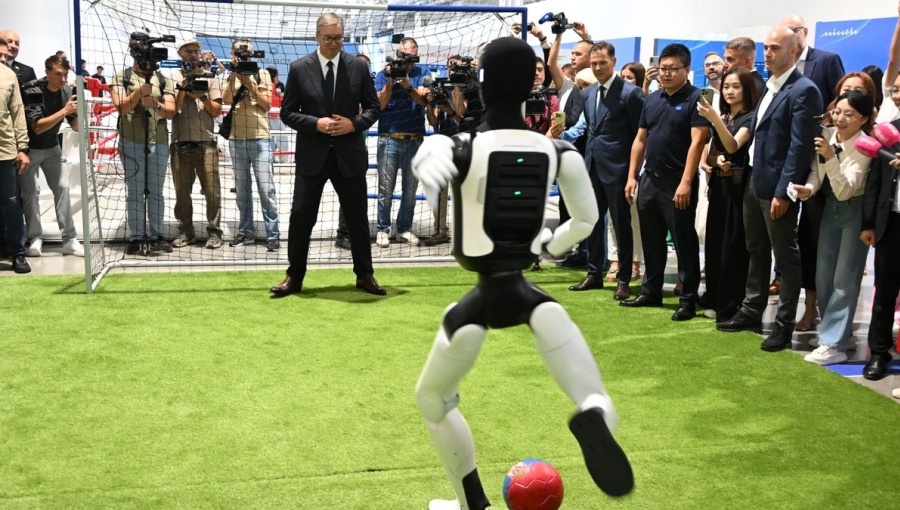
President Aleksandar Vucic at the opening ceremony for the factory on August 29. / Presidency of Serbia/Dimitrije GollFacebook
Serbia opened what the government described as Europe's first mass-production facility for humanoid robots on August 29, with President Aleksandar Vucic hailing the project as a step into a new technological era.
The plant, operated by Minth Group in partnership with robotics company AGIBOT, is part of a wider €200mn investment plan that Serbia hopes will establish the country as a European base for an industry still in its early stages.
Vucic, who attended the opening ceremony, said he hoped the Sabac plant would initially assemble more than 5,000 robots a year, arguing that Serbia needed to keep pace with the world's leading technological powers.
"I am certain that today we have taken a historic, pioneering step into the future. Serbia has stepped into the future today," Vucic said, according to public broadcaster RTS.
He said the robots would initially be used in industrial production, with applications later expanding to areas including education and public services.
During a tour of the factory, Vucic interacted with a humanoid robot that greeted him in English and demonstrated functions including folding clothes, playing chess, dancing and writing Chinese calligraphy.
The factory covers around 3,000 square metres and focuses on assembling robots and robotic dogs, as well as calibrating and testing their movement and vision systems.
Different models range from 130 to 173 centimetres in height and weigh between 35 and 55 kg, according to the company.
Military use
Vucic also said Serbia was testing humanoid robots for use by its armed forces and that a demonstration would take place in about 15 days.
"You will see them not only walking, but you will see them using weapons, very serious weapons," he said during the factory tour.
The comments point to a potential military application for the technology alongside the project's stated industrial and civilian uses.
Vucic visited Minth's innovation centre in Shanghai during a trip to China in May, where he viewed demonstrations of robotic technologies.
He has increasingly showcased robotics as part of Serbia's drive to attract high-tech investment from China. In June, humanoid robots appeared alongside him at a pro-government rally in Belgrade, where they danced on stage as Vucic announced plans for an early election.
At Saturday's opening, Minth founder Qin Zhonghua said the company was pleased to have chosen Serbia as a partner.
Vucic also thanked Chinese President Xi Jinping for China's support, saying Serbia aimed to combine robotics manufacturing with artificial intelligence, supercomputing and data centres to develop local skills and employment.
The project adds to a growing presence of Chinese manufacturers in Serbia, a candidate for European Union membership that has maintained close economic ties with Beijing while seeking closer integration with the bloc.
Permafrost is thawing on every continent that has it
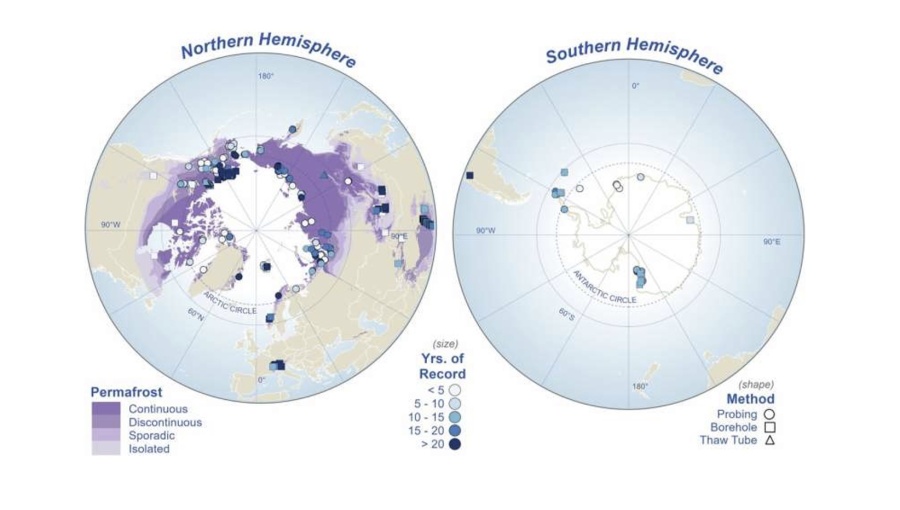
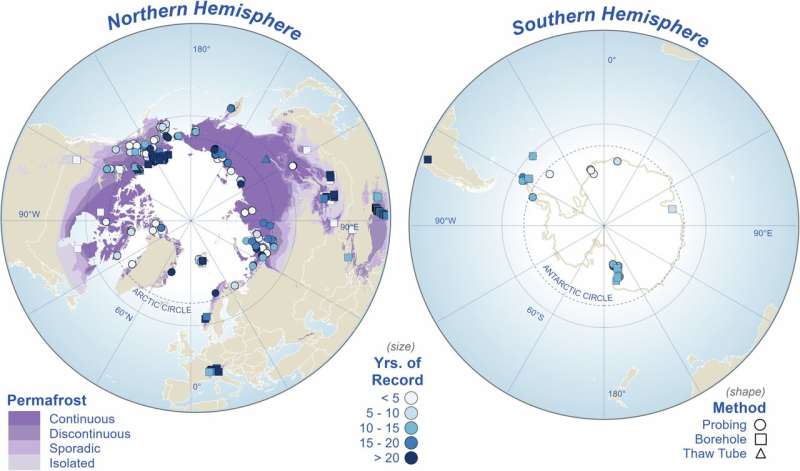
The first global assessment of long-term active layer data finds significant deepening at 55% of Arctic sites and more than 90% of European mountain ones. One Swiss site thawed to 13 metres. / bne IntelliNewsFacebook
Frozen ground is thawing faster each summer almost everywhere it has been measured, according to the first global assessment of long-term monitoring data, and that threatens to set off a CO₂ giga-bomb in the coming decade.
Russia is currently 45% covered by permafrost, most of it in the northeast corner, but once temperatures pass 3°C above the long-term industrial average, all that ice is gone, that will release an estimated 800-1,000 gigatonnes of primordial CO₂ trapped in the ice – twice the amount of CO₂ released by all of humanity since the dawn of history – almost overnight with unpredictable consequences. The disaster in Nepal this week is an early warning of what can happen when the world’s ice melts too quickly.
As IntelliNews reported, Siberian permafrost could disappear by 2100 as rapid thawing accelerates, but more recent measurements suggest the permafrost thaw is accelerating and that deadline could be brought forward by several decades.
Active layer thickness - the surface layer that thaws and refreezes each year above permafrost - increased significantly at 55% of Arctic sites and 38% of Antarctic ones between 2000 and 2024, at more than 90% of European mountain and high-elevation Asian sites, and at sites in South America, according to a study published in Communications Earth & Environment on August 26.
The work draws on field measurements from 156 sites with at least ten years of records, an average record length of 20 years, compiled from a wider pool of 316 observational sites. It was led by Dmitry Streletskiy, professor of geography and international affairs at George Washington University, with 30-odd co-authors running national monitoring networks.
The Circumpolar Active Layer Monitoring networks, north and south. Symbol shape shows the measurement method, colour the length of record. Source: Streletskiy et al, Communications Earth & Environment (2026), via Phys.org.
What makes this different from the modelling that dominates permafrost coverage is that these are holes in the ground, probed by hand or read off boreholes and thaw tubes, in some cases for a quarter of a century. Models have consistently disagreed with observations about how fast degradation is running. This is the observational side finally being assembled globally.
The headline count for the Northern Hemisphere is that 66.4% of sites - 91 of 137 - showed statistically significant increases, 32.1% showed no significant change and just two sites showed a significant decrease.
Mountains melt fastest
Mountains are thawing fastest by a wide margin. European mountain sites averaged an increase of 10.3 cm a year against 0.8 cm a year in the Arctic and 3.2 cm on the Third Pole. Swiss Alpine bedrock sites ranged from 0.9 to 36.2 cm a year, and at Schilthorn the active layer exceeded 1,300 cm in 2022, the highest on record and confirmed across multiple boreholes. Italian Alpine sites gained 9.7-20.2 cm a year and French ones 7.7-17.6 cm.
Russia’s gas industry is threatened by melting permafrost as much of its pipeline network is built on piles driven into the icy ground. If that ground melts, then those pipelines will collapse. The Russian northwest showed an increase of 3.9 cm a year in continuous permafrost, with 0.7-2.5 cm south of Vorkuta. On the Yamal Peninsula, the heart of the country's gas industry, the active layer deepened by 0.4-0.7 cm a year, and by up to 2.1 cm on Bely Island, with the higher readings at sandy sites. Near Urengoy it ran at 2.7 cm a year, at sites where taliks - permanently unfrozen layers between the active layer and the permafrost below - have appeared.
Talik increasingly common
A talik is a layer or body of year-round unfrozen ground found inside or below a permafrost area. They used to form after fires or hydrological disturbance; they are now turning up in undisturbed ground where summer thaw simply outruns winter freeze. Once one forms, the ground above it has stopped being permafrost in any load-bearing sense, which undermines the integrity of every pipeline, pad and railway built on the assumption it would stay frozen. Russian studies estimate that entire cities in the interior will have to be rebuilt if their foundations are sitting on top of what will become mud.
Central and eastern Siberian sites gained 0.4-1.0 cm a year and Igarka 3.0 cm; northeast Siberian sites in the Indigirka and Kolyma basins 0.3-1.0 cm; Chukotka 0.4-0.9 cm and Kamchatka 0.2 cm. In North America the average was 0.4 cm a year in continuous permafrost and 1.0 cm in discontinuous, with Alaskan Interior sites reaching 2.6 cm.
The ground that is protecting itself best is the ground with the most ice and the thickest organic cover. Peat and ice-rich soils change least because melting ice absorbs an order of magnitude more energy than warming soil does. Bedrock, sand and gravel conduct heat and deepen fastest. Sites in discontinuous permafrost generally moved more than those in continuous permafrost.
Regression analysis attributes Arctic changes to rising thawing degree-days first and increased total rainfall second. For every other region they say plainly that more sites and longer series are needed before attribution can be claimed.
‘Europe’s climate and security challenges are inseparable,’ Hoekstra tells Euronews
In an exclusive Euronews interview, Hoekstra argues climate resilience, energy security, and geopolitical independence are now inseparable. EU gas storage remains below target as the Strait of Hormuz stays blocked.
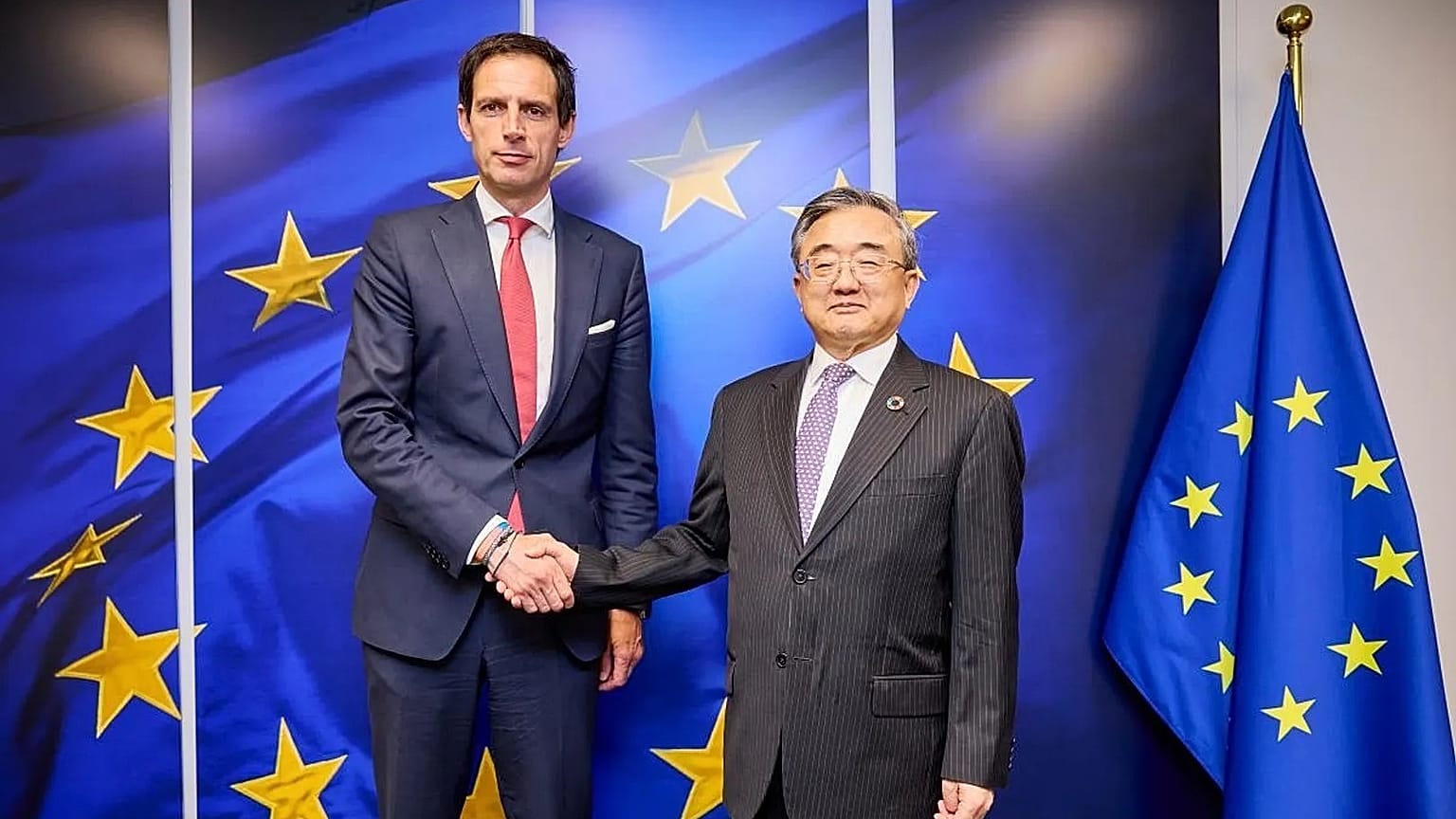
Europe must spend more upfront to protect itself from increasingly severe climate disasters, European Union Climate Action Commissioner Wopke Hoekstra told Euronews, arguing that paying for fires, floods and other damage after they strike will ultimately cost far more.
"All evidence shows that making the upfront investments is way cheaper than just being hit by fire, being hit by floods and then paying for the damage. That's just way more costly," Hoekstra told Europe Today, Euronews' flagship morning show.
Describing the summer as “dramatic”, the Dutch Commissioner said the EU was better prepared than last year, with more firefighters, planes and helicopters deployed, but that the scale of destruction had barely improved.
An area twice the size of Luxembourg was lost to fires, while estimates of the economic damage range from €50 billion to €70 billion or more. Spain and France lost thousands of hectares to the blazes, while at least 14 first responders died fighting the fires.
The Commissioner rejected the idea that the EU can attach a single figure to climate resilience. Instead, he called for a more fundamental overhaul of how infrastructure is built, with bridges, for example, rebuilt to withstand the next flood rather than simply replacing what was lost.
Pressed by Euronews for a specific figure, Hoekstra did not commit to one but suggested the bulk of the funding would still come from national budgets.
"The reality is that we need to become much more granular and do a couple of things at the same time. That means we need the same assessment of the type of impact we're going to see for the whole Union," Hoekstra said.
"We need to be crystal clear about who is responsible for what. What is for the local governments, what is for regional governments, what is for national governments and what is for Europe."
But EU governments are under pressure to reduce spending, with tension mounting as talks resume to decide on the EU’s proposed long-term budget for 2027–2034, with Germany, Austria, Denmark, Finland, the Netherlands and Sweden seeking to cut it.
Hoekstra acknowledged the fiscal tight situation but maintained that upfront investment is cheaper than repeatedly paying for climate damage. He also pushed back against attempts to frame climate action and economic competitiveness as competing priorities.
"There is no easy way out and there's no alternative to continuing with our climate ambition," the Commissioner added, after a summer of devastating fires and heatwaves that caused an excess death of at least 30,000 people, according to the European Mortality Monitoring Platform, which tracks data across 23 countries.
Hoekstra's preferred formula combines climate action, competitiveness and European independence. This means continuing the green transition while reducing Europe's dependence on China for clean technologies, Hoekstra noted. He pointed to Finland, Denmark and Sweden as examples where climate policy and competitiveness can reinforce each other.
"It is imperative that we marry-bridge climate action with competitiveness and with independence," stressed Hoekstra.
For the Dutch Commissioner, the direction of the bloc's climate policy is directly linked to Europe's energy vulnerability, particularly amid uncertainty around the Strait of Hormuz, which accounts for 20% of the world's oil and gas transit and affects global energy prices.
He also stressed that, in the long term, a successful climate transition will boost the EU's economic sovereignty.
"In the medium term, by far our best bet is to move to a completely different energy system and that is where the money should be going," Hoekstra said.
The EU cannot rely indefinitely on imported fossil fuels, he warned, citing the around 80% dependence on gas imports and 95% on oil imports as a signal the EU has “a very bad hand”. His proposed escape route includes more nuclear, solar and wind, combined with electrification and more European energy production.
On the immediate gas situation, which is currently at its lowest level (around 62%) since 2011, the Commissioner said EU countries must continue filling storage and prepare for the possibility of low storage combined with a severe winter, which he calls a scenario “no one can afford”.
"Our gas comes primarily from the US and from Norway. That makes it slightly easier, but of course it is a global market, so there is a fight for this gas potentially coming to us as well," Hoekstra said.
EU climate chief warns China dependence will make EU’s green transition more costly
Copyright CE - Service audiovisuel Photographer : Claudio Centonze
Hoekstra warns China dependence will make the EU’s green transition more costly, saying there is “no alternative” to levelling the playing field.
Europe must accept higher short-term costs to reduce its dependence on China for clean-energy technologies, EU Climate Action Commissioner Wopke Hoekstra has told Euronews, warning that delaying action will make the strategic vulnerability harder and more expensive to unwind.
The EU should have confronted its reliance on China “five to ten years ago”, Hoekstra said, arguing that waiting longer would bring greater disruption and costs.
“But it will be much cheaper and much more to our advantage to do it now than be wishy washy and wait another five to 10 years,” the Dutch Commissioner said.
Europe needs to rapidly deploy solar, wind, batteries and other clean technologies to reach climate neutrality by 2050. But Hoekstra warned that heavy reliance on Chinese manufacturers for electric vehicles, batteries, solar panels and energy storage risks replacing one strategic dependency with another — echoing Europe’s former dependence on Russia for cheap energy.
“This will stay with us for years to come, because the dependencies in many domains have simply become too large,” he said, describing the situation as a “dangerous and uncomfortable” vulnerability for both Europe’s climate ambitions and economic security.
Chinese companies already dominate key parts of Europe’s battery supply chain. They account for more than 80% of the bloc’s residential battery energy storage market and nearly 88% of lithium-ion battery imports, according to Wood Mackenzie.
The EU’s dependence on China for critical materials is also deep-rooted.
The issue has risen up the EU’s political agenda as the rapid expansion of wind and solar power outpaces the development of storage infrastructure. EU energy ministers recently discussed the bloc’s reliance on Chinese-made storage during a meeting under the Cyprus EU Presidency.
The wider trade relationship is also under pressure. The EU’s trade deficit with China reached a record €1 billion a day in 2025, prompting European leaders to call for a rebalancing of what they describe as “unsustainable” economic relations.
“Dialogue with China remains necessary. But it must produce results. And when dialogue is not enough, we must be ready to make full use of our instruments,” Commission President Ursula von der Leyen said on 27 August.
Tensions have intensified as Brussels has taken measures to protect the European market, targeting Chinese companies over issues including illegal products, state subsidies and foreign investment. Beijing has threatened retaliation.
Hoekstra pointed to Europe’s solar industry as a warning of what can happen when domestic production loses out to heavily subsidised Chinese imports.
But the Commissioner went further, raising concerns about alleged Chinese interference and security risks involving critical infrastructure in Europe.
“Kill switches are being included in windmills. Espionage happens at a very high degree on European soil. Intellectual property theft in our most advanced companies happens on a weekly basis and on and on and on — that is something no government and the EU can simply allow,” he said.
The comments come as Brussels seeks tangible progress in its economic relationship with Beijing.
Technical talks between the EU and China are expected to advance in October, with EU Trade Commissioner Maroš Šefčovič expected to travel to China.
For Hoekstra, however, the goal is not to end trade with China but to ensure that Europe is no longer vulnerable to a single external supplier for technologies critical to its energy transition.
The challenge, he said, is to build European capacity now — even if doing so comes with higher costs in the short term.
COP17 in Mongolia wraps up with 1.3 billion dollars of Green Investment Pledge
Countries signatories of the UN Convention to Combat Desertification agree with banks and private investors on financing scores of projects in 23 countries across 5 continents.
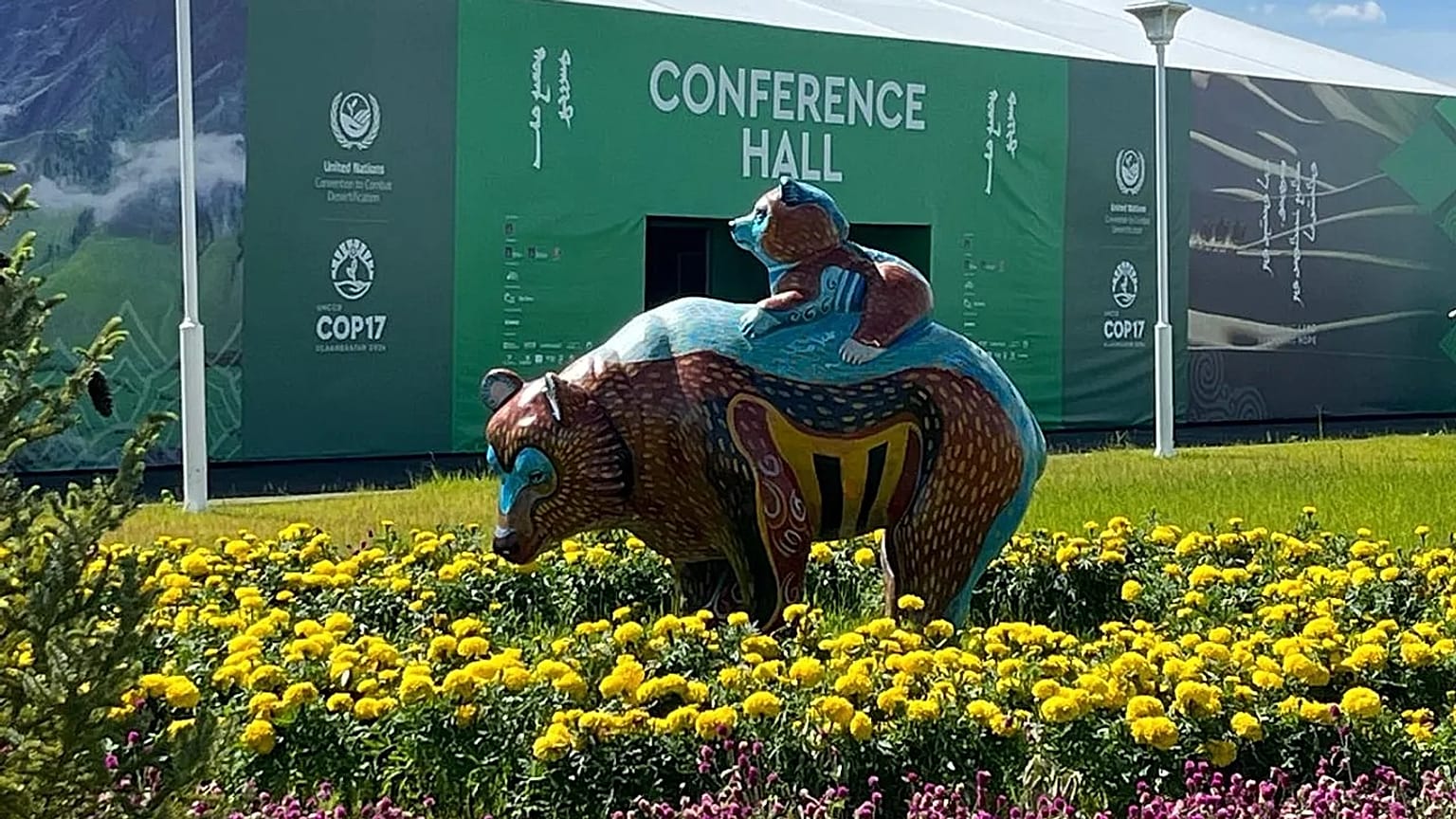
After 12 days of debates and negotiations in the Mongolian capital, Ulaanbaatar, delegates of 197 parties (196 countries + the EU) who signed the United Nations Convention for Combating Desertification wrapped up the soConference of Parties (COP17) with note-worthy results.
Like in all previous COPs it proved difficult to achieve unanimity over a legally binding all-encompassing documents, especially at the time when the big powers question the mere principle of multilateralism.
But, the Convention is a process and from the beginning of COP17 the host country Mongolia and the UN have appealed for it to try to produce tangible results.
“Today, the time has come for us to ask ourselves a bold and candid question – we have spoken at length and made many declarations, but have we been able to turn our words into action?
The previous events all brought meaningful outcomes. But, the truth is that the world has never lacked goals and commitments.
What we need more urgently are the resources, financing, technology and institutional environment to turn those commitments into tangible results,” said Mongolian Prime Minister Nyam-Osoryn Uchral.
So, did the COP17 produce tangible results?
\
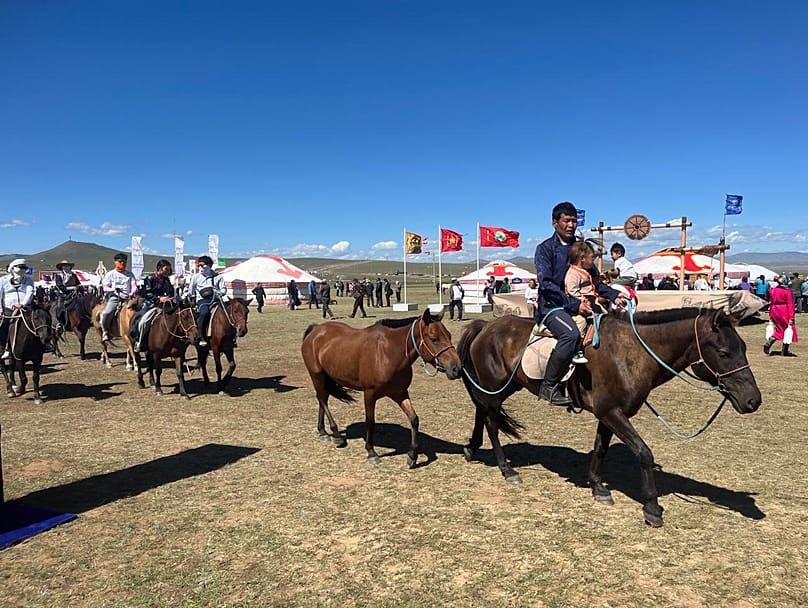
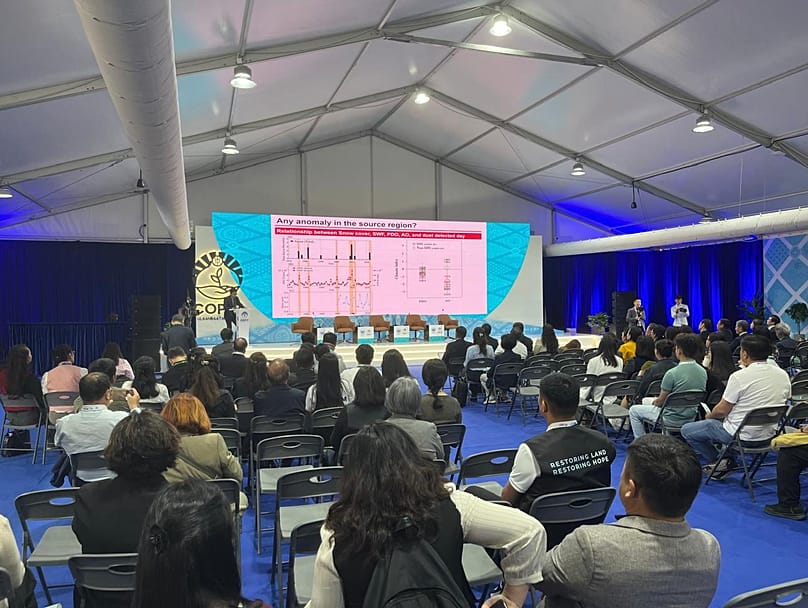
One of the sessions within COP17 Euronews
Raising awareness
40% of usable, arable land on the planet is affected by land degradation. That is, it is slowly turning into a barren desert. The problem already affects 3.2 billion people in the world. From the very opening of COP17 its officials and delegates from different countries warned that the world often fails to see that the more obvious issues such as migration, wild fires and draughts are often consequences of the land not being able to sustain vegetation and human habitation.
“Desertification can simply be a food crisis because once your land is degraded you will not be able to plant and you will have both food and water security problem and migration and displacement.
Here, the people are not being given a choice whether they will leave their land, yes or no, but they have nothing to sustain their livelihood and give them resilience. Add to that the impact of draught, the climate change and the loss of biodiversity and it all adds to the problem of desertification,” says Yasmine Fouadh, Executive Secretary of the UNCCD.
Our languages, cultures, ethnic backgrounds and religions may differ, but we share a common determination to safeguard the future in which we can all continue to live in harmony with Mother Earth.
Nyam-Osoryn Uchral
Prime Minister of Mongolia
“We will not be able to resolve any of our issues without working on the land. 90% of our food comes from the land, 99.8% of our calories come from the land, our cities and on land, our villages and farms are on land, rivers, lakes, all the freshwater lie on the land. And that land also stores three times more carbon dioxide than there is in the atmosphere,” warned dr Osama Faqeeha, advisor to COP16 in Riyadh.
Raising funds
During COP16 in Riyadh in Saudi Arabia, mechanisms were initiated to gather financial institutions, bank and private equity to invest in projects that protest land from degradation. It is possible because those projects can be profitable, especially if they tackle water utilization and sustainable agriculture.
The Convention estimates that inaction on land costs the world almost 900 billion dollars a year while investment in healthy land could generate up to 1.8 trillion through food production, water provision and carbon storing. Yet, the investment so far remains modest.
“If you look at how much money goes into artificial intelligence, it is the same amount of money that goes into climate financing – 2 trillion dollars a year.
But, when you double-click on climate financing, less than 3% goes into land and water. It is way under-invested.
And the white-paper we published puts forward reasons why businesses can actually invest into land and water. It can bring returns, every dollar you put into land brings 8 to 30 dollars in exchange,” says Gim Huay Neo, Managing Director World Economic Forum.
77% of land in Mongolia is already degraded and needs funds for restauration Euronews
This is why the governments, development banks and private investors were able to announce one of the biggest successes of COP17 - the $1.3 billion in new and pipeline financing for land restoration and drought resilience across 23 countries on five continents.
Of the $1.3 billion announced, $644.5 million has been identified as new finance, while $216.4 million has already been confirmed and is moving towards implementation, the UNCCD noted.
The announcement came against the backdrop of perceived huge financing gaps for meeting global land restoration commitments.
“There is a huge gap in the funding for land preservation. Annualy, about 355 billion dollars is needed but we have only about 70 billion, so we miss around 280 billion,” says deputy Prime Minister of Mongolia Togmid Dorjkhand who chaired the ministerial session on finance.
“The governments have raised over a billion dollars for projects and in the afternoon session we got the private sector involved and another 1.3 billion were discussed so all in all about 2.1 billion dollars are on the bale. COP17 has been a success in that financial part,” explains Dorjkhand.
A lot of fundraising was done in direct talks between the financial institutions and governments. Mongolia as used the opportunity to offer favourable conditions for opening data centres across its vast territory.
The advantages it presented are the low cost of energy, 40% of savings on cooling owing to Mongolias harsh winters and the fact that 98% of land in Mongolia is state-owned which simplifies construction.
“But this is not the only thing that Mongolia offers, there are also legal advantages. We have just proposed a so-called data law which guarantees data sovereignty. It basically turns data centre into a data embassy in which both data and connectivity, networking guarantee safety and security.
So, we hope that this will be attractive to those who want to build data centres to serve the largest market, China, but still keep their data outside China,” explains Mongolian Minister of Digital Development Chinbat Nomin.
Networking, planning and making commitments
COP17 saw hundreds of events and many countries had their pavilions on the its grounds. Big projects were presented, like the Chinese “Green Wall of China” a mega project of planting billions of trees over several decades to stop the spreading of deserts.
Countries most affected by desertification had the biggest presence. Among them the host country, Mongolia, where 77% of land is already degraded and where Gobi desert “swallows” thousands of hectares every year.
Folklore programme at COP17 Euronews
“There are many problems that countries share and we all learn from each other here,” says Bakhtiyor Pulatov, Rector of the Central Asian University of Environmental and Climate Change Studies. “Uzbekistan has established scientific approach to solving the problem of the land degradation because it is serious in our country, more than 70% of the territory is already a desert or turning into one.
So, we established many systems like early warning system for sand and dust storms. There is also the initiative of our president Shavkat Mirziyoyev to plant a billion saksaul trees in deserts that works well.
We also opened the only university that studies the environmental issues, because we believe I science and we are ready to share, out pavilion here is open to their countries that have similar problems,” says Pulatov.
The Mayor of Ulaanbaatar hosted the first Mayor’s Forum during COP17. It gathered participants from 30 countries, including around 30 mayors, governors and other local and regional leaders.
They signed a joint declaration, exchanged experience and agreed that they would be involved in the negotiations by their national governments in the future because they will be the ones implementing the solutions to combat desertification.
Also, within 90 days they will create a network of cities in dryland and extreme climate areas.
COP17 Green Zone Euronews
All the countries of UNCCD have made national agendas. More of them than ever came to Ulaanbaatar with their own initiatives.
In Riyadh we had 35 initiatives and real national agendas and we continued after that in 2025 and 2026 and we came here to Mongolia and we have 200, or to be exact 198 initiatives under the Riad action agenda, says dr Osama Faqeeha, advisor to COP16 in Riyadh.
During 12 days in Ulaanbaatar alliances were forged, like the one between China and the League of Arab States who made a joint 5-year plan of cooperation to restore land. Countries shared experience in fighting desertification.
Where politics meets life
Summits of this kind can often feel distant from real life of the people whose problems are being discussed. Negotiations are mostly behind closed doors and end in documents whose bureaucratic and expert language is difficult to understand.
A day into the conference, it opened the so-called Green Zone, part of the event open to the general public. More than 400 events were held in its halls, stages and meeting points. It was visited by thousands of people who could see exhibitions of around 60 different organisations.
This is where visitors met representatives of businesses, civil society, scientists, young people, entrepreneurs and government agencies and see their projects, solutions, screenings, workshops and cultural performances.
Lower pollution, longer range: How a new type of car tyre is reversing a hidden downside of EVs
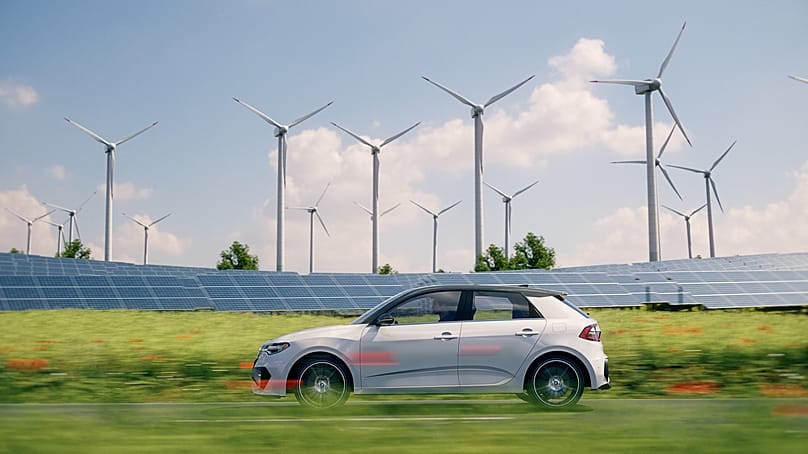
EVs wear out tyres faster, according to ENSOGetty Images
By Denis Loktev
Published on
Electric cars are cleaner to drive - but their tyres pose a pollution problem. Better materials could help fix the problem.
Electric cars are widely seen as the cleaner choice on the road. But according to Gunnlaugur Erlendsson, founder and CEO of technology company ENSO, there is a significant environmental cost hiding in plain sight: the tyres.
"Tyres are one of these really complicated products we don't really see very often, even though they're absolutely everywhere," Erlendsson tells Euronews Earth. "The whole global economy runs on tyres."
That ubiquity comes at a cost. Raw material extraction, energy-intensive manufacturing and the wear generated every time a vehicle stops, starts or turns all add up.
"Tyres are both a source of major air pollution, which is also a microplastic. So it's one of the biggest sources of air pollution in cities. It's also one of the biggest source of microplastic pollution in our oceans," Erlendsson says.
Disposal adds another layer to the problem. "We actually burn almost two billion tyres every year because so few of them are actually recycled back into tyres again," he explains.
ENSO was founded to address these impacts while supporting the shift to electric vehicles. "Our mission really is about enhancing electric vehicles while we're addressing the problems that tyres cause," Erlendsson says.
Why electric vehicles wear tyres faster
Electric vehicles might be cleaner to run, but according to Erlendsson, they place greater demands on tyres. "Electric vehicles are fairly unique because they're really heavy. They have really high torque. So they tend to wear out tyres faster than traditional cars ever did," he says.
Driving behaviour makes the issue worse. "They're really fun to drive. People drive them more aggressively, which again wears tyres faster," Erlendsson notes, adding that EVs are often used in cities, where frequent stopping, starting and turning generates more tyre pollution.
Relate
There is also a less obvious factor: efficiency. Erlendsson explains that electric vehicles convert around 90 per cent of energy into motion, compared with roughly 30 per cent for petrol cars.
"That efficiency gain with electric vehicles is positive, but it makes them incredibly sensitive to tyres," he says. "If you don't put a good tyre on an electric car, you lose a lot of range and you buy a lot more electricity."
To tackle this, ENSO changed the raw materials, formula and construction used in its tyres, while also drawing on data collected from vehicle fleets. "When we deploy onto fleets, it means that we get data. We take that data, that insight, that knowledge, that know-how, and we put it back into the product again," Erlendsson says.
Designed to handle the high torque and heavy battery weight of EVs, ENSO's advanced polymer compounds and tread chemistry reduce tyre particulate pollution by up to 35 per cent compared to conventional tyres. They also improve overall energy efficiency and vehicle driving range by up to 10 per cent, according to the company.
ENSO was a finalist in the 2023 edition of the Earthshot Prize, a global environmental award founded by Prince WilliamENSO
Scaling up with major partners
ENSO has built its growth around partnerships with large-scale taxi and delivery fleets rather than individual consumers. The company already works with Uber, supplying tyres to electric vehicle drivers across the UK, with plans to expand beyond it.
"Ultimately, it's about enabling these high mobility use cases that drive a lot to get better products," Erlendsson says, noting that high-mileage vehicles see the greatest savings in energy, cost and pollution.
Recognition from the Earthshot Prize, where ENSO was a finalist in 2023, helped raise the profile of an issue Erlendsson believes the industry has long avoided.
"Tyre pollution has been this kind of industry topic that hasn't really been addressed by, I would say, the mainstream industry. They don't really want to talk about it," he says. He credits Prince William's involvement with bringing wider attention to the issue, calling it "really substantial in terms of highlighting... how we can actually use technology to enhance better air we breathe, reduce the microplastics in our oceans."
Looking ahead, ENSO plans to keep expanding its fleet partnerships and broaden its range of tyre sizes to match new electric vehicle models entering the market, with the United States identified as its next major growth market.
"We want the rest of the industry to follow us," Erlendsson says. "We just want to be the catalyst that makes the change happen."


 \
\