Tuesday, September 01, 2026

Russian strikes on warehouses leave Kyiv shops empty and destroy 12m school books ahead of new term
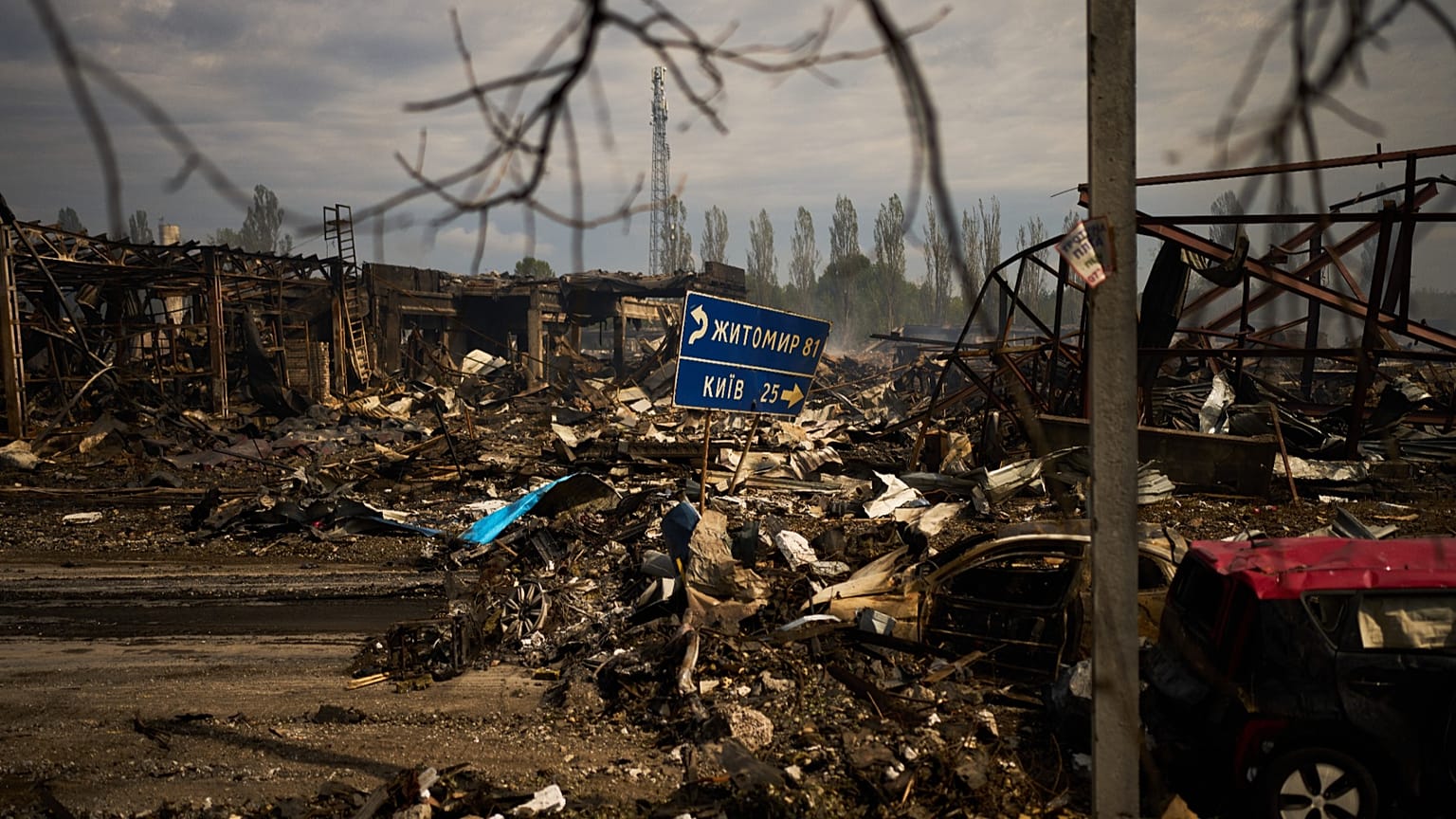
Destroyed vehicles and debris are scattered the day after a Russian attack struck a warehouse in the village of Myla, 30 August, 2026
Copyright AP Photo

By Gavin Blackburn
Published on

The Russian Defence Ministry said on Sunday it is preparing “massive strikes” on Ukraine’s energy infrastructure.

Russian forces relentlessly battered Kyiv and cities in the region around the Ukrainian capital for a fifth straight day on Monday, leaving some supermarket shelves bare after repeated strikes on warehouses as Ukraine reels from attacks with jet-powered drones.

Russia has intensified its aerial attacks in recent months, more than four years after it launched its full-scale invasion of its neighbour.

Almost constant air raid alerts in the Kyiv region in recent days have severely disrupted daily routines. Two major attacks in July killed almost 50 civilians and a strike on Saturday killed at least 38 people.

Meanwhile, an overnight strike on a printing press on the edge of the Ukrainian capital destroyed around 12 million textbooks ahead of the start of the new school year.

Classes were due to resume at Ukrainian schools on Tuesday, but it was unclear whether parents would send their children. Schools have air raid shelters, and classes can also be held online.

Earlier this month, a Russian strike on a warehouse in northeastern Kharkiv destroyed 8 million books, the publishing house said, slamming it as an attack on Ukrainian culture.
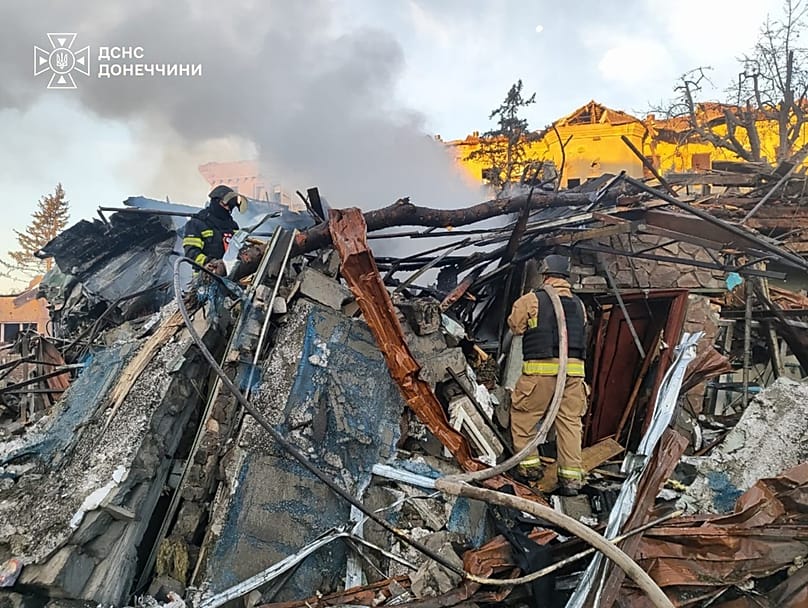
Emergency services personnel work to extinguish a fire following a Russian guided bomb strike in Sloviansk, 31 August, 2026 Ukrainian Emergency Service via AP/Ukrainian Emergency Service

It is not the first time Russia has struck a major publishing centre, drawing accusations from Kyiv that Moscow was specifically targeting them.

"The enemy is trying to burn out our education and culture," the publisher, Ranok, said.

But Ukraine has also tried to make Russian civilians feel the burden of war by hammering major online retailers and oil facilities.

The attacks have brought shortages for ordinary Russians, though its strikes have not been as deadly for civilians.

Ukraine builds technology to counter jet-powered drones

A pall of black smoke drifted over Kyiv on Monday morning. In Brovary and Boryspil, cities in the Kyiv region, the aerial attacks struck several warehouses and four people were wounded, said Tymur Tkachenko, head of the regional military administration.

Ukraine’s President Volodymyr Zelenskyy conceded on social media that Ukraine is struggling to counter fast-flying jet-propelled drones that Russia is increasingly deploying.

Between Thursday and Sunday, Russia fired almost 1,500 drones at Ukraine and around 800 of them were jet-powered, Zelenskyy said.

Combat aircraft are currently trying to stop the jet-powered versions while Ukraine looks to develop more effective technology.

“Four companies have developed the relevant interceptor drones, and one company has the most successful technology,” Zelenskyy said. He didn't elaborate.

Kyiv official says Ukrainians won't go hungry

Repeated Russian strikes on food distribution centres and retail hubs have disrupted Ukrainian logistics, leaving some supermarket shelves bare and fuelling public concern about shortages.

Those fears prompted Zelenskyy adviser Serhii Beskrestnov to say on social media on Monday that Ukraine will not go hungry.

He urged the public not to give in to rumours, disinformation or panic, saying producers and retailers are currently restructuring supply chains.

He added that European countries would be ready to fill any food supply shortfall, if necessary.

At the same time, Russia has kept up its attacks on Ukraine’s power grid, seeking to leave civilians cold and without running water in the approaching winter.
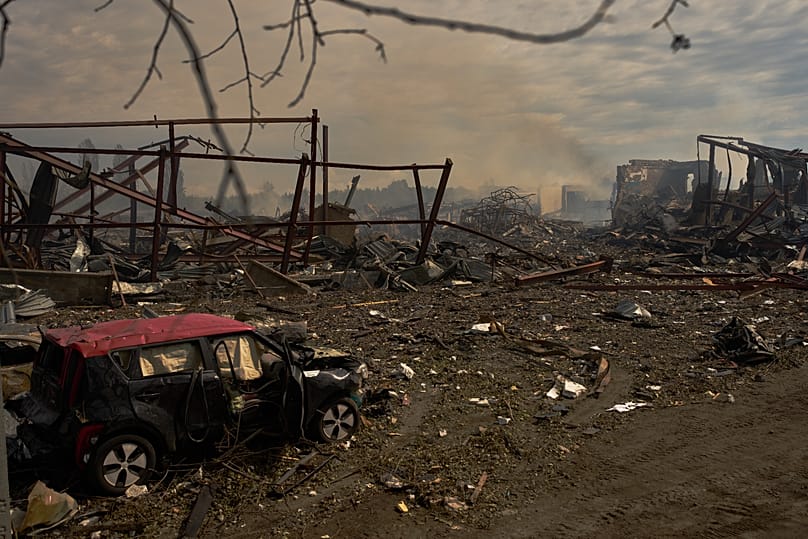
Destroyed vehicles and debris are scattered the day after a Russian attack struck a warehouse in the village of Myla, 30 August, 2026 AP Photo

Russian forces launched what officials said was a massive overnight drone attack on Ukraine’s northern Chernihiv region, which borders Russia, where an energy facility was damaged, according to Viacheslav Chaus, head of the regional military administration.

He did not provide details of the damage.

The Russian Defence Ministry said on Sunday it is preparing “massive strikes” on Ukraine’s energy infrastructure.

Russia overnight shot down 239 Ukrainian drones over 14 Russian regions, occupied Crimea and the waters of the Black Sea, the Defence Ministry in Moscow said Monday.

A Ukrainian missile attack on Sunday evening on the Russian border city of Belgorod killed three people, acting regional Governor Alexander Shuvayev said.


Zelenskyy Blasts ‘Negligence’ As Ukraine Mourns Dozens Killed In Russian Strike

The village of Myla near Kyiv is left in ruins after an ammunition detonation took place following a Russian drone strike. Photo Credit: RFE/RL

Key Takeaways:

  • After a Russian drone hit a warehouse in Kyiv’s Bucha district on Aug. 28, Zelenskyy said 37 were dead as of Aug. 29 and that stacked ammunition and drones should not have been stored next to homes; a criminal inquiry is open.
  • Officials and residents called the siting “criminal negligence,” comparing it to a July Vyshneve blast that killed nine; a nursing home was also hit and community head Taras Didych was among the dead.
  • An aid HQ was set up in Dmytrivka; villagers in Myla said they were not told what the warehouse held while rubble searches continued.

Ukrainian crews early on August 30 continued to search for victims of the deadly Russian attack outside of Kyiv, while local residents — as well as President Volodymyr Zelenskyy — demanded answers as to why explosives were stored in a warehouse so near private housing.

“A terrible situation and terrible negligence on the part of those who stored explosives right next to people,” Zelenskyy said late on August 29 in his nightly video address.

“There has been extensive destruction, and as of now, 37 people have been reported killed. The rubble is still being cleared, and unfortunately, the death toll may increase.

Zelenskyy said the Russian drone strike was on an ammunition storage site “that definitely shouldn’t have been there…shells, mines, other ammunition, and drones detonated.”

He added that a criminal investigation was under way.

“All the facts must be fully investigated. Another such crime — after what happened in Vyshneve — is absolutely unacceptable. I expect the details to be presented to the public promptly,” he said.

In July, a similar incident occurred in the Vyshneve region of Kyiv where a Russian strike caused explosions at a warehouse, killing nine people and damaging more than 280 houses.

Explosive Storage

Following the latest attack, Prime Minister Serhiy Koretsky also criticized officials for storing explosive materials near residential areas. He said making such mistakes was “criminal negligence.”

Along with the fatalities, dozens of people were injured from the overnight Russian drone strike on Ukraine’s Bucha district in the Kyiv region.

Local authorities said the August 28 drone strike caused a major fire and explosions at the warehouse, which is said to be the major cause of the casualties.

Reporting from the scene, RFE/RL’s Ukrainian Service correspondent Maryan Kushnir said that “the whole area is in ruins,” adding that the strike also affected a nursing home, where “many” people were killed.

According to Tymur Tkachenko, a top district administration official, those killed in Bucha also included the head of the Dmytrivka community in the district, Taras Didych. Tkachenko said it was a “great loss” for the region.

Operational HQ

The official added that an operational headquarters had been set up in Dmytrivka to provide food as well as other support to the people in the affected region.

As sounds of detonations continued in Myla village, local resident Zhanna told RFE/RL that she had lost her husband in the incident, adding that he had previously survived the Russian occupation.

“Why can’t this be organized?” she asked through tears, referring to the placement of explosives in the village.

Another Myla local, Oleksandr, said the village’s residents didn’t know what was stored in the warehouse there. “Nobody told us anything… People aren’t informed. I think everything is being done the wrong way.”

EU expected to lobby member states to give Patriot interceptors to Ukraine

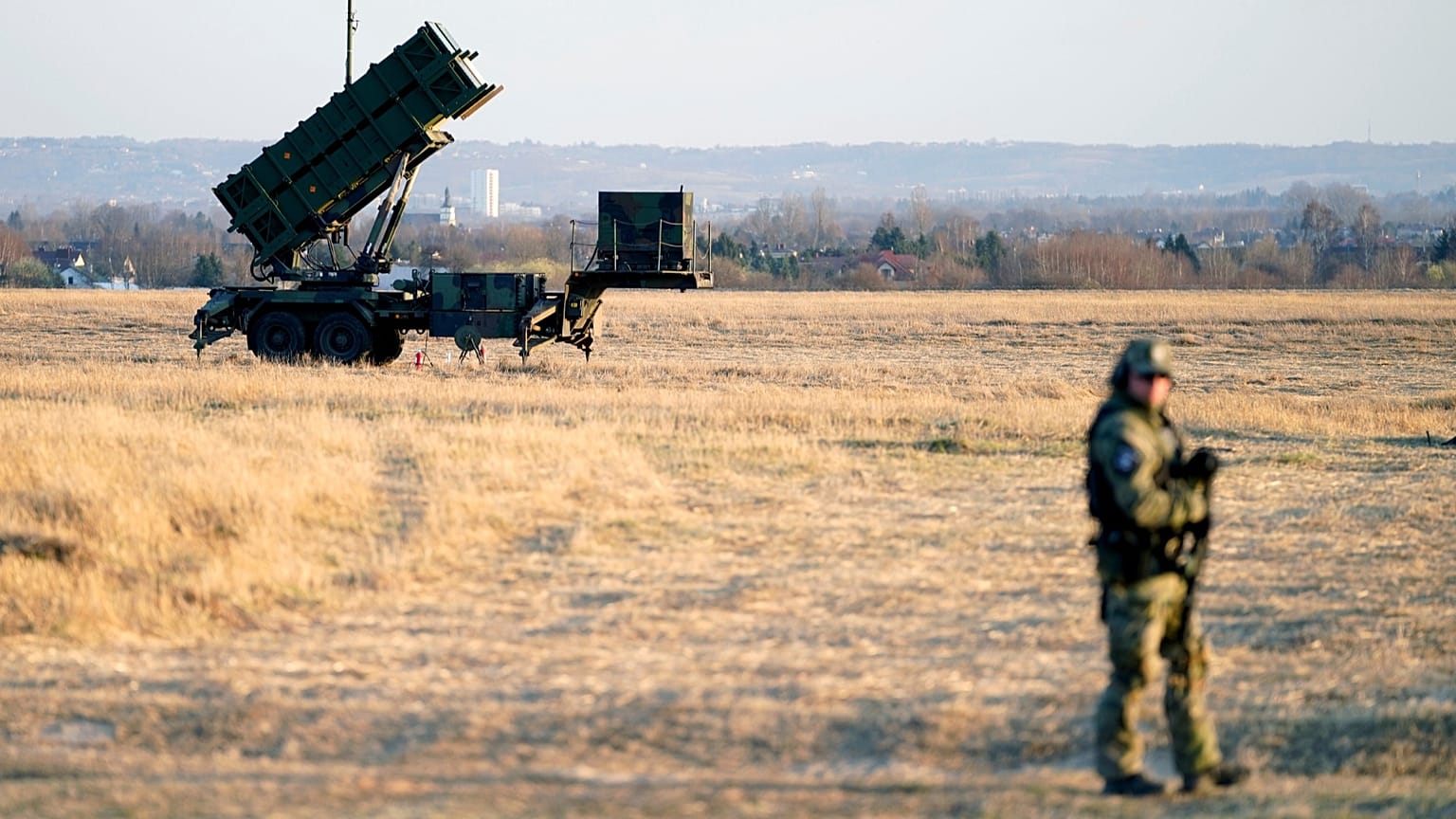
FILE - Patriot missiles at the Rzeszow-Jasionka Airport in Jasionka, Poland, 25 March 2026.
Copyright AP

By Angela Skujins
Published on

Ukraine is running out of Patriot interceptors to shoot down Russian missiles and other airborne threats. The EU executive is expected to put pressure on Mediterranean nations, like Greece and Spain, to give theirs up at a defence meeting on Tuesday.

European countries that still hold significant stocks of interceptor missiles are expected to face pressure from the European Commission to transfer them to Ukraine, as Kyiv’s need for air-defence systems grows increasingly urgent, EU officials told Euronews.

Spain and Greece, in particular, are expected to come under pressure at a defence meeting on Tuesday in County Wicklow, Ireland, to provide some of their stocks.

Ukrainian President Volodymyr Zelenskyy said late August that deliveries of Patriot interceptors had declined even as Russian missile attacks on Ukraine intensified. He said Kyiv needs an estimated 300 interceptors to fend off what is already shaping up to be a bitter winter battling another year of Russia's full-scale invasion.

The war with Iran has forced the US to draw heavily on its own Patriot reserves, shrinking the pool of interceptors available to replenish allies — including Ukraine — at precisely the moment Kyiv needs more.

Spanish Prime Minister Pedro Sánchez said earlier this year Madrid pledged to donate five Patriot missiles to Ukraine amid the shortage. Greek Prime Minister Kyriakos Mitsotakis said Athens has “resisted” pressure to transfer any of its six Patriot batteries to the war-torn nation in the past. He argued they are critical for defending the country’s own airspace.

One EU diplomat speaking to Euronews on condition of anonymity, due to the sensitivity of the matter, said the issue of Madrid and Athens keeping a tight grip on their Patriot interceptors is not new. But the issue is gaining pace with Zelenskyy voicing louder requests for interceptors, with the air defence system proving to be the “debate of the summer”, they said.

The European External Action Service (EEAS), the EU's diplomatic arm, is currently speaking with Japan and South Korea to convince them to share some of their stocks with Ukraine.

However, diplomats are wary that potential tensions with China are due to limit how much the two Asian countries are willing to share. Greece may also be reluctant to draw down its stockpile amid rising tensions with Turkey in recent months.

Three EU diplomats agreed that Ukraine’s shortage of Patriot interceptors is a “big issue” with broader questions about how to fill the gap. “What this will look like, I am not sure,” one EU diplomat said, adding that Tuesday's meeting is informal and therefore not expected to produce any formal conclusions.

The effectiveness of Europe’s own defences, particularly in the wake of a series of hybrid threats, is also expected to be a key focus of the talks.

Moldova, an EU candidate country, was recently rocked by a series of drone incursions. Five unmanned aerial vehicles entered the country’s airspace on 27 August, with the president Maia Sandu offering a defiant statement in response.

The meeting comes after media reports also reveal the director of the CIA, John Ratcliffe, embarked on a secret trip to Moscow.

In the wake of the visit, which reportedly centred on warning the Kremlin against any form of aggression towards Baltic nations, various leaders from the region have insisted their threat assessments of a Russian attack on Latvia, Estonia and Lithuania remains the same.

The former president of Estonia, Toomas Hendrik Ilves, went so far as to tell Euronews he is sceptical that Ratcliffe was dispatched to warn Russia against escalation. He argued that Washington remains more concerned about Iran

Meanwhile, one European Commission official revealed to Euronews that Kyiv is mulling whether to use the next funding envelope of the €90 billion support loan to purchase anti-ballistic systems, which could either be Patriots or the Franco-Italian version, the SAMP/T NG system.

To find other ways of plugging Ukraine’s anti-ballistic gap, the EU executive recently rubber-stamped a €6.1 billion defence procurement to supply the country with air and missile defence systems, missiles, ammunition and radars.


Russia-Ukraine War: Frozen Front, Burning Hinterland – Analysis


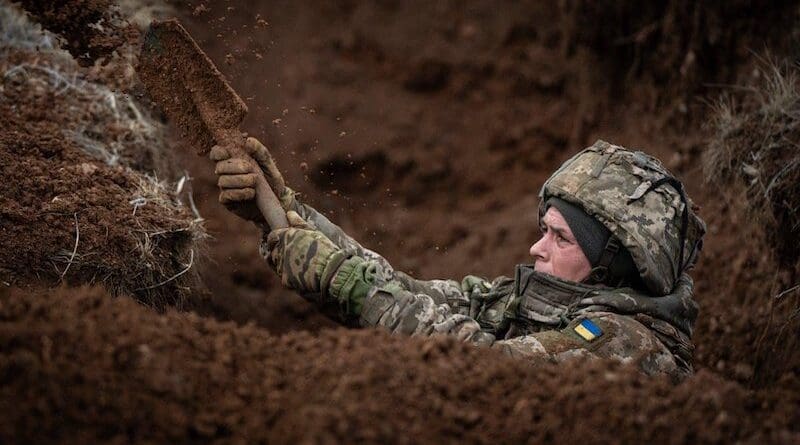
A Ukrainian soldier digs a trench. Photo Credit: Ukraine Defense Ministry

August 30, 2026

 Observer Research Foundation

By Nandan Unnikrishnan and Aleksei Zakharov

Key Takeaways:

After four-and-a-half years, the authors say the 2025 “Anchorage” talks are dead and the front is barely moving: Russia still wants all of Donbas, claims on Kostiantynivka are disputed, and drones have made big assaults rare.

A late-June 40-day Ukrainian deep-strike campaign hit Crimea supply lines, distant refineries (Omsk is cited), warehouses, and Black Sea shipping; Russia answered with ports, grain terminals, petrol stations, and Kyiv-area raids as interceptor stocks run short.

The predicted endgame is a ceasefire on the line of contact, a heavily armed Ukraine outside NATO, and a fragile European security deal—only after both sides decide more fighting no longer pays.


There appears to be no endgame in sight after four-and-a-half years of fighting in Ukraine, with peace negotiations making no progress in 2026. If anything, with both Russia and Ukraine escalating strikes on energy facilities, logistics infrastructure, warehouses, as well as ports and vessels in the Black Sea, a protracted war looks increasingly likely.

The so-called “Anchorage formula”, or, as the Russians call it, “the spirit of Anchorage”, referring to the understandings Russia claims were reached at the 2025 Trump–Putin summit in Alaska, is firmly dead, while a new baseline for negotiations remains undefined. Both Moscow and Kyiv remain confident that they can sustain the war for several more months and gain the upper hand in negotiations through military pressure. So far, however, the escalation has produced no tangible results. Rather, it is creating a more dangerous situation in which the war could spill over into new territories and draw in new actors and domains.

A Stalled Battlefield

The dynamics across the line of contact have not seriously shifted over the past several months. Russian armed forces continue to inch forward but with little to suggest that Moscow will achieve its military goals anytime soon. Russia’s main objective remains the capture of the entire Donbas region, which still requires seizing some of the most heavily fortified settlements in Donetsk oblast. Even though Russian forward-deployed groups are, by various estimates, 5 to 15 kilometres from Kramatorsk and Sloviansk, Ukrainian defence lines there appear to be holding, and the scattered villages, together with natural obstacles such as rivers and hills, will only make it more difficult.

The Russian Ministry of Defence’s announcement of full control over Kostiantynivka (Konstantinovka), an important stronghold in the Donetsk oblast that has seen fierce fighting for more than ten months, has been contested by Ukraine. The same appears to be true for some other locations, which, despite Russian advances and Ukrainian counterattacks, remain largely in a grey zone that neither side has managed to bring under firm control.


The nature of warfare has also changed dramatically. Various types of drones dominate the so-called ‘kill zones’, making massive assaults not viable, and most forward movement is now carried out by small tactical groups. Even when such units succeed in advancing and planting their flag, the effect is not always lasting—they are quickly targeted with drones and forced to retreat.

Meanwhile, Ukraine has upped the cost of war for the Kremlin with spectacular strikes deep into Russian territory on refineries, warehouses, and military infrastructure. Russia has responded in kind. If anything, this tit-for-tat escalation is only blurring the lines between civilian and military targets.

This is not entirely new in the current conflict, as many major industrial sites, particularly military production facilities and dual-use infrastructure, have already been targeted. Russia had long been the more active party, owing to its capability to strike Ukrainian regions far from the frontline. This situation is now shifting.
An Economy Under Strain

In late June 2026, Kyiv launched a 40-day operation aimed at “pressuring Russia to end its war.” First, Ukraine has acquired mid-range strike drones, which have enabled it to hit supply chains into Crimea, effectively isolating the peninsula and exacerbating the food and energy situation there.

Second, Ukraine has made progress in developing drones capable of striking facilities deep inside Russian territory, as well as establishing stable satellite navigation access. This is evident in sustained attacks on energy infrastructure, particularly oil refineries. The longest-range strike of this campaign hit a refinery in the city of Omsk, almost 2,500 kilometres from the Russia-Ukraine border. Kyiv has also launched a series of attacks on warehouses belonging to Russia’s largest online retailers across several Russian regions and has disrupted the passage of oil tankers, grain-carrying bulk carriers and container ships travelling to and from Black Sea ports. This has impacted Russia’s exports of crude oil and grain, compelling it to rearrange supply chains.


The results of Kyiv’s operation have been mixed. It has definitely posed serious challenges to Russia’s wartime economy: sustained strikes on refineries have triggered a fuel crisis across the country, with refining capacity falling and Moscow being forced to import petrol and diesel from abroad. The growing number of drone strikes, and their ability to reach distant regions, have brought the war home to many ordinary Russians, with recent surveys showing that anxiety levels have risen markedly compared to earlier years of the conflict.

However, the 40-day operation has done little to change the situation on the ground. It has done economic damage to Russia but has not shaken Moscow’s resolve to end the war on its own terms. It has also provoked Russia into intensifying attacks on Ukrainian logistics.

In recent weeks, for instance, Russia has stepped up strikes against Ukrainian ports, grain terminals on the Black Sea and commercial vessels heading to them—dealing a heavy blow to Ukrainian agricultural exports, one of the country’s few remaining sources of income. Russia has also destroyed nearly 250 petrol stations across various Ukrainian regions, particularly in the frontline-adjacent areas of the Kharkiv, Dnipro and Zaporizhzhia oblasts. Finally, capitalising on the Ukrainian shortage of interceptors for Patriot air defence systems, Russian forces have escalated strikes on the greater Kyiv area, home to many military and industrial facilities.

If the current trend of escalation continues without new agreements, Russia and Ukraine may be facing a brutal winter, in which economic strain inevitably spills over into a humanitarian crisis.

A Possible Endgame

Although the outlook for peace remains bleak, with previous attempts to craft a peace framework failing, the broader contours of how the war will end are discernible. For one, this will be a ceasefire along the line of contact rather than any land swaps presumably envisaged by the US-Russia discussions in Anchorage last year. It is a different matter that Russia may gain more territory by the time an agreement is signed. Second, Ukraine will likely become one of the most militarised countries in Europe, closely tied to Western security arrangements, albeit without formal NATO membership.

Despite neither side achieving its objectives, both could claim a form of victory: Kyiv for preserving its sovereignty, independence, and potential to further integrate into the European space; Moscow for creating a buffer zone on its borders and preventing Western military deployment on Ukrainian soil. The latter, however, would hinge on security guarantees offered to Ukraine, likely to be a point of hard negotiation.

Beyond Ukraine, Russia and European nations will also need to coordinate a new framework for coexistence—one that cools mutual hostility and brings more pragmatism to the relationship. Without a solid agreement on the future of European security architecture—itself likely to be the subject of protracted negotiations that may ultimately fail—the relationship will remain fraught with the risk of a new conflict flaring up.


Additional factors that will keep any peace deal fragile include domestic developments in both Ukraine and Russia, two countries that will suffer a post-war hangover. The loss of territory will bedevil Ukraine’s domestic politics for years to come, fuelling a sense of revanchism among constituencies pushing to regain lost lands. An economically weakened Russia, having expended vast resources in the war, would also seek clear mutual guarantees or deterrence mechanisms from the West. Beyond long-term economic issues, the country is likely to face deep social challenges in reintegrating all the demobilised soldiers back into society—something the Soviet Union grappled with in the late 1980s following the war in Afghanistan. Additionally, the social contract—a relatively high standard of living in exchange for reduced political freedoms—will come under further pressure in post-war Russia.

Although the Russia-Ukraine war is at an obvious deadlock, the conditions for the endgame have not yet ripened. For the diplomatic path to prevail, both sides must come to feel that continuing the war—wasting lives and economic and military resources—serves no strategic or political purpose. Kyiv and Moscow clearly are not there yet: both still hope to turn the tide of war in their favour.

Whether this ‘escalate to de-escalate’ approach can force a peaceful solution remains to be seen. One thing is clear: the Russia-Ukraine war will end in an armistice or a peace agreement rather than a total victory for either side.

About the authors:

Nandan Unnikrishnan is a Distinguished Fellow at the Observer Research Foundation.

Aleksei Zakharov is a Fellow, Russia & Eurasia, with the Strategic Studies Programme at the Observer Research Foundation.

Source: This article was published at the Observer Research Foundation.


About Observer Research Foundation
ORF was established on 5 September 1990 as a private, not for profit, ’think tank’ to influence public policy formulation. The Foundation brought together, for the first time, leading Indian economists and policymakers to present An Agenda for Economic Reforms in India. The idea was to help develop a consensus in favour of economic reforms.
View all posts by Observer Research Foundation →


Putin’s Monopoly On ‘Russianness’ Has Allowed Him To Continue To Wage War In Ukraine And Must Be Challenged – OpEd


Russia's President Vladimir Putin. Photo Credit: Kremlin.ru

August 30, 2026
By Paul Goble


Key Takeaways:

Denis Bilunov argues the West still treats “ethnic Russians” as one bloc, which lets Putin claim a monopoly on “Russianness” and justify the Ukraine war.

He says those labeled Russian are politically, culturally, and even linguistically diverse; breaking that monopoly would weaken the regime more than treating all Russian-speakers as Moscow’s constituency.

His prescription is a Western strategy of institutional recognition—separate flags, seats, and voices for multiple “Russias” abroad—modeled on earlier shifts that recognized union republics and then non-Russian regions inside the federation.


Ever more people around the world recognize that the Russian Federation includes a variety of non-Russian nations who make up an increasing share of that country’s population and aspire to greater autonomy and in some cases even independence from Moscow.

But they still treat those whom the Russian census counts as “ethnic Russians” as an undifferentiated whole and even accept the idea that even those who speak Russian should be included part of that community. That is no small thing, and Denis Bilunov argues that it has given the Kremlin the ability to continue its war in Ukraine (region.expert/monopoly/).

The former editor of Kasparov.ru who is now a graduate student at Prague’s Charles University says that the Kremlin leader’s “monopoly on ‘Russianness’” is so strong that many in both the Russian Federation and the West accept it as somehow natural and fail to recognize that those called Russians are extremely diverse culturally and politically.


As long as Putin can successfully make this claim, his regime will remain stable and he will be able to conduct aggressive wars as now in Ukraine. But, Bilunov says, “if this monopoly can be challenged convincingly enough, the regime will lose its stability, and the chances for real change for the better will emerge.”

To that end, the West must adopt “a proactive strategy” aimed at challenging Putin’s claims to have a monopoly on the representation of ‘Russianness,’” depriving him of the chance to claim to speak for all Russians and Russian speakers and supporting the diversity of people lumped together as ethnic Russians so that these can lead to “an organic process capable of garnering mass support.”

These must involve first of all the recognition of how diverse those labelled ethnic Russian by Moscow in fact not only politically but culturally and even linguistically as well are and then on “institutional recognition” by such means as allowing representatives of these multiple Russias to compete under their own flags or have their own places in activities of various kinds abroad.

That is going to be difficult given Moscow’s media campaign and the inertia of western thinking, but the fact that there has been so much change first in recognizing that the union republics of the USSR were different and now in acknowledging that the non-Russian republics within the Russian Federation gives hope that Bilunov’s call will gain support.


Polish prosecutors launch terrorism investigation following fire at drone maker's factory

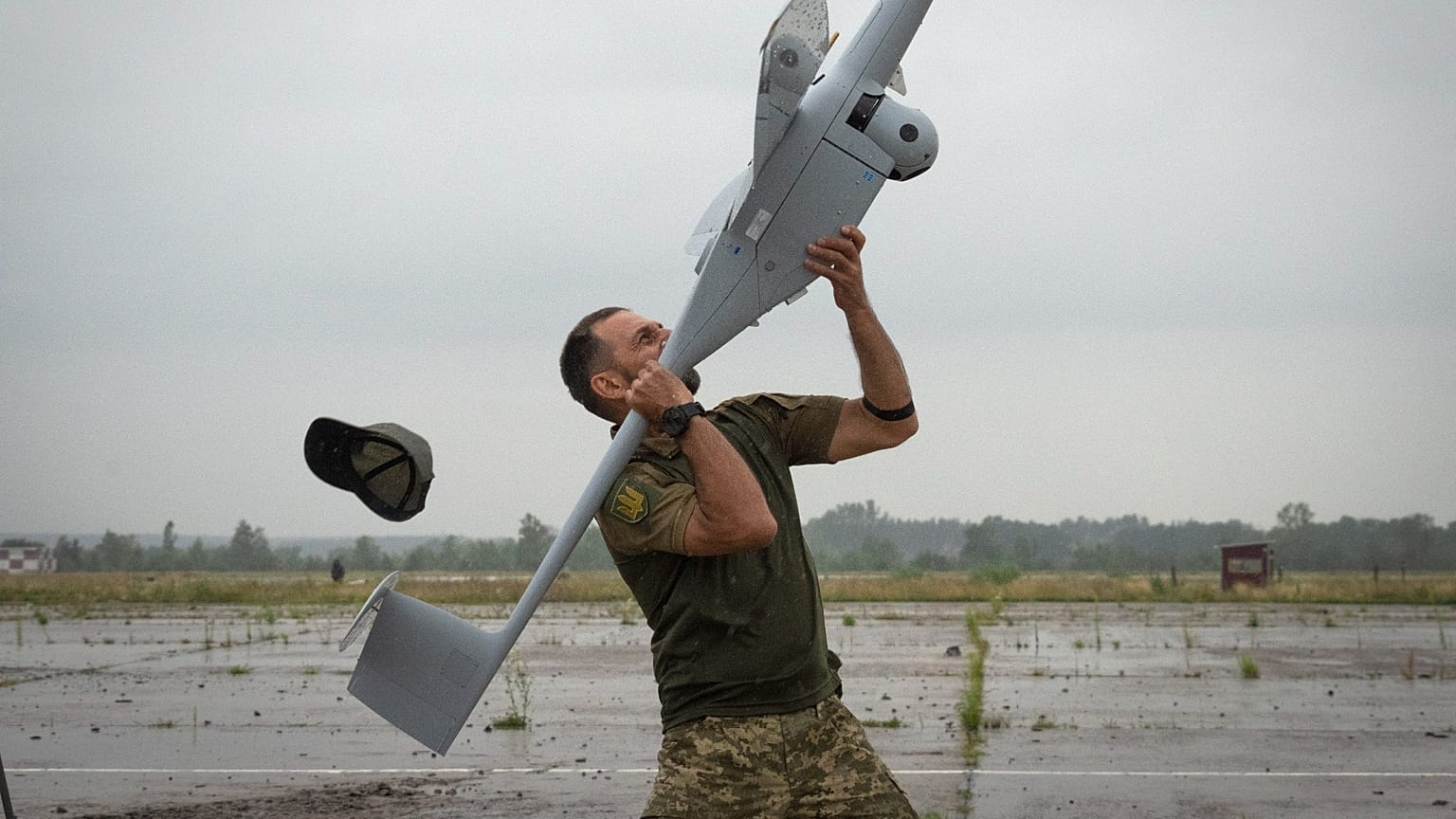
A Ukrainian soldier launches a Polish FlyEye reconnaissance drone made by WB Electronics, used by Ukraine's army, in Kyiv region on 2 August 2022.
Copyright (AP Photo/Efrem Lukatsky)


By Aleksandra Galka Reczko
Published on

"As a result of the fire, warehouse facilities were destroyed, and the value of the damage caused amounts to at least 15 million PLN," Polish prosecutors said in a statement.

Prosecutors in Poland have launched a terrorism investigation into a fire at a drone factory in the city of Skarżysko-Kamienna.

In a statement, prosecutors said the fire, which broke out at a WB Electronics factory, was started deliberately "by planting an explosive device containing flammable materials."

CCTV footage had reportedly captured an unidentified person in a balaclava who allegedly entered the premises after climbing a fence. A backpack and a sweatshirt were also found near the site.

WB Electronics is the largest private arms company in Poland. Its reconnaissance and attack drones are used by the Ukrainian armed forces.

Prosecutors said in their statement that an investigation had been launched into "participation in the activities of a foreign intelligence service against the Republic of Poland and the commission of a terrorist offense, consisting of the deliberate setting of a fire on August 31, 2026, on the premises of WB Electronics S.A. in Skarżysko-Kamienna."

It added: "As a result of the fire, warehouse facilities were destroyed, and the value of the damage caused amounts to at least 15 million PLN."

Investigation

The local fire service said the fire at the facility "was not large" and that firefighters took just under two hours to tackle it.

After the blaze had been put out, police officers secured the scene and began a detailed investigation.

A fire investigation expert is also working at the scene.

WB Group responds

The plant in Skarżysko-Kamienna produces components for unmanned systems destined for the Polish army.

Remigiusz Wilk of WB Group told TVN24 that the company has enjoyed the trust of the Polish military and other armies for years.

"We are, in a sense, part of Poland's security system as a major entity that cooperates with thousands of enterprises across the country – from very small firms to giants such as the Polish Armaments Group, which is a subcontractor in some of our projects," Wilk said.

"When it comes to unmanned systems worldwide, we are one of the largest manufacturers. These are not single platforms; they are systems linked together into one large 'ecosystem,'" he said.

Speaking about the fire, Wilk said the facility would be ready to resume production as soon as authorities completed their work. He added that he did not expect the incident to cause delays in deliveries to the Polish armed forces.

Second similar fire within 24 hours

The incident marked the second similar fire in 24 hours.

On Sunday, firefighters were called to a blaze at a warehouse in Lublin belonging to a company that produces aircraft parts.

Asked about a possible link between the two incidents, Karolina Galecka, a spokeswoman for the Polish Ministry of the Interior and Administration, said authorities would investigate every possible lead.

British newspaper "The Telegraph," citing western intelligence sources, recently reported on a series of suspected Russian sabotage operations in Europe targeting arms factories and companies supplying weapons to Ukraine.

According to those reports, the operations are being carried out in a way designed to stay below the threshold that could trigger NATO's Article 5, which commits allies to collective defence should one of them come under attack.


What are phantom scams, and why do they end with you robbing yourself?

Silhouette of a person typing on a computer in a dimly lit room, emphasizing cybersecurity threats.
Copyright Anete Lusina/Pexels

By Indrabati Lahiri
Published on

No hacker, no crime, no bank on the other end of the line — just a script designed to make you empty your own account. Here's how phantom scams work, and how to hang up in time.

Phantom hacker scams, also known as phantom scams, have surged in recent years.

These are elaborate frauds in which criminals convince victims their money or computer has been compromised by a hacker. The scammer then pushes the victim to move their savings into a supposedly "safe" account, which is in fact controlled by the criminals themselves.

The rise of artificial intelligence, online banking and social media has fuelled the trend — more ways to pay and receive money mean more entry points for scammers to exploit.

How phantom hacker scams work

Some of the most common phantom hacker scams work in a few stages. The first one is tech support.

This usually involves a pop-up screen warning, text or call claiming that your computer or device has a virus. When you call the number provided, a person pretending to be tech support can ask you to download remote-access software.

The next phase is the fake bank alert. Another person might call you, claiming that your accounts are being hacked. Scammers may often spoof caller ID information, so you may believe that the call is from a legitimate phone number.

They may say that immediate action needs to be taken to protect your account and funds, so you need to log in right now to check your balance.

However, since they now have remote access to your device, they can watch you log in and gather your details.

The final phase is the government imposter one. This can involve a third person calling you, claiming to be from a government or law enforcement agency like the FBI or Federal Reserve.

They may pressure you to move your money into a supposedly “safe” account or direct it towards things like cryptocurrency and gold bars in order to protect it.

Some variations ask victims to download an app that supposedly speeds up fund transfers. In reality, this hands scammers remote access to the device, letting them steal money, often entire life savings, directly from the account.

The methods vary, but the underlying tactic is nearly always the same: create a sense of urgency and push victims into acting out of panic.

How to protect yourself

According to TEG Federal Credit Union, the best defence is simple: never trust unsolicited calls, texts or pop-ups about your bank account or computer. Hang up immediately if you receive one.

Never download remote-viewing software or apps at the request of someone who contacted you out of the blue.

If you suspect a scam, call your bank directly using the number on its website or on the back of your card.

No legitimate bank, tech company or government agency will ever ask you to move your savings into a "safe" account or buy gold or cryptocurrency.

How are phantom hacker scams different from phantom debt?

Unlike phantom hacker scams, which typically rely on gaining access to a victim’s money or bank account, phantom debt or zombie debt is a different type of scam. This involves scammers attempting to get victims to pay fake or expired debts.

While this was previously done through badly-written emails or unconvincing cold calls, today, scammers rely on large language models (LLMs) to write perfectly localised and highly convincing legal threats.

These debts might already have been paid off, discharged in bankruptcy or artificially inflated by shady operators.

Scammers usually pose as debt collectors and attempt to use aggressive language, fake threats of arrest or intimidation to scare victims into paying immediately.

In many cases, they may also use confusing language to explain how a debt that was previously thought to be paid off or cleared is still owed, while continuing to use intimidation and panic creation tactics to prevent victims from further digging into the mechanics.

This can especially be done to senior victims.

Scammers also leverage automated AI agents to scrape public information, build a profile on a target and use audio clips to clone voices, posing as law enforcement or bank officials.

Sometimes they may ask for crypto payments or wire transfers to settle these phantom debts.

Similar to phantom hacker scams, consumers should immediately hang up while receiving these calls, along with locking down their information and freezing payments.

They can also demand a validation letter, which real collectors in many jurisdictions are obliged to send, or block and report them.


Is Twitter back? Ex-employee fights to revive the blue bird

FILE - A Twitter app icon on a mobile phone is displayed in Philadelphia, U.S.A., April 26, 2017.
Copyright AP Photo


By Jonathan Benton
Published on

Is Twitter back? A startup including former Twitter staffer Stephen Coates launched a new platform this week, giving users early access to a “reclaimed” social media platform and the chance to take the fight to Elon Musk.

To paraphrase a famous saying, "Twitter is dead. Long live Twitter."

A new social network that looks like Twitter, works a bit like Twitter — and is also called Twitter — has just launched, in defiance of a lawsuit from Elon Musk's X.

Virginia-based startup Operation Bluebird, founded by, among others, original Twitter former general counsel and board member Stephen Coates, launched Twitter.now this week.

Coates made the announcement on LinkedIn, saying, “Get over your X. The bird is back.”

In his message he also made clear that Twitter.now "is not an attempt to recreate the old platform," but a service that allows users to decide what kind of content reaches their feeds, based on the principle of "freedom of speech, not freedom of reach".

The campaign to restore Twitter in some form, said Coates, followed Elon Musk’s takeover, rebrand and redesign of the popular social media platform as X.

“There was a place where the whole world came to talk. The richest man alive bought it, and broke it. We're a small team taking Twitter back — rebuilt on trust,” reads the landing page of the website.

The campaign began when Operation Bluebird filed a petition to the US Patent and Trademark Office in December 2025, seeking cancellation of X’s “Twitter” and “tweet” trademarks.

They argued that X had abandoned the trademarks after removing the Twitter branding and replacing it with X, and simultaneously applied for their own Twitter trademark.

The startup was subsequently sued by Musk’s X in an attempt to prevent them from launching the social media platform and accused Operation Bluebird of copyright infringement.

The startup successfully argued that X had let go of the trademarks like “Twitter” and “Tweet” in a US District Court, with Judge Colm Connolly issuing a tentative ruling indicating that X may have abandoned the intellectual property claims, presenting Operation Bluebird with an opportunity to go ahead with their plans.

Join 'the fight' against Musk

The new Twitter is currently at an early access stage, offering people the opportunity to sign up as “founders’ for $20 (€17) to help build and test the platform, and secure popular handles ahead of time.

The platform's homepage makes clear that the launch is a direct response to Elon Musk's changes to the original Twitter, with members also encouraged to pay $40 (€34) to join "the fight" — the startup's ongoing legal battle against X.

The website describes it as a “David & Goliath” battle pitting a small team against “the richest man alive,” as the startup defends its right to launch and operate. X maintains that millions of users still use the old Twitter URL to reach X and still refer to posts on their platform as “Tweets”.

A key element for the new platform is transparency and credibility. The startup is introducing a feature that allows users to “set the dial” on how much “trusted” and “low trust” content and sources appear on their feed

How trust is determined has not been revealed, but the website states that it will run according to “the Birdhouse Constitution and Community Guidelines”.

The company also states that it aims to prohibit illegal content, child exploitation, threats of violence, harassment, scams and other harmful conduct, with policies evolving as the platform grows.

This is in response to widespread claims that X has failed to uphold the platform’s original values, with many dissatisfied users — estimated at 33 million globally — opting for alternatives that they view as more reliable or useful.


EU places ChatGPT, Reddit and Roblox under strictest digital safety rules

FILE - FILE - The Chat GPT app icon is seen on a smartphone screen, Aug. 4, 2025, in Chicago. (AP Photo/Kiichiro Sato, File)
Copyright AP Photo


By Una Hajdari
Published on


Brussels has classified ChatGPT as a search engine under the Digital Services Act, a first for an AI chatbot, and designated Reddit and Roblox as Very Large Online Platforms. All three have four months to comply.

The European Commission has designated ChatGPT as a Very Large Online Search Engine and Reddit and Roblox as Very Large Online Platforms under the Digital Services Act, subjecting all three to the bloc's strictest online safety regime

The designation will prove particularly consequential for ChatGPT because the Commission has concluded that an AI chatbot that pulls live results from the internet functions, in regulatory terms, as a search engine — not merely a platform.

"These new designations mean that ChatGPT, Reddit and Roblox will now be held to a higher standard of scrutiny and accountability in the European Union, in line with their large impact on our citizens and society," said Henna Virkkunen, executive vice-president for tech sovereignty, security and democracy.

The Commission described ChatGPT as a "hybrid service" that qualifies as an online search engine under the DSA because it can engage with and respond to users' prompts and queries, including by searching the web.

Reddit and Roblox have been designated as Very Large Online Platforms (VLOPs), as both allow users to create and share content publicly.

"We continue to watch the digital landscape closely and will not hesitate to designate any platform that meets the threshold for enhanced supervision under the Digital Services Act."

Under the DSA, online services that reach more than 45 million monthly users in the EU — roughly one in 10 of the bloc's population — are classified as either Very Large Online Platforms or Very Large Online Search Engines, depending on what they do.

OpenAI disclosed that ChatGPT's search function averaged about 159 million monthly active users in the bloc for the six months ending March 2026, while Reddit reported 57.2 million and Roblox roughly 48 million.

The three services now have four months — until the end of November — to comply with a suite of obligations reserved for the largest platforms, including annual systemic risk assessments covering illegal content, the protection of minors, effects on users' mental and physical wellbeing, fundamental rights, electoral processes and public security.

They must also submit to independent audits and share data with regulators and vetted researchers.

The Commission will supervise compliance in cooperation with Ireland's Coimisiún na Meán, the digital services coordinator for ChatGPT and Reddit, and the Netherlands' Authority for Consumers and Markets (ACM) for Roblox.

The designations bring the total number of platforms and search engines under the DSA's strictest tier to 28.

The regulation has already produced around €870 million in fines, including a record €550 million penalty against AliExpress in July for failing to curb the sale of illegal and counterfeit goods, a €200 million fine against Temu in May for comparable failings and a €120 million fine against X in December 2025 over content moderation and transparency shortcomings.

Non-compliance can attract penalties of up to 6% of a company's global annual turnover — a figure that, for OpenAI and its rapidly growing revenue, could prove substantial.

Washington has taken a dim view of the EU's enforcement drive.

The Trump administration called DMA fines on Apple and Meta a "novel form of economic extortion" and has threatened retaliation against countries with digital rules targeting US tech firms — rhetoric that could sharpen now that three more American-owned services have been brought under direct Commission supervision.