Friday, September 04, 2026


Leaking Chemical Cargo Blamed for Fire and Poisoning Killing Two Crew

chemical cargo fire
A leaking chemical cargo severely poisoned three crewmembers and caused the massive fire

Published Sep 3, 2026 3:53 PM by The Maritime Executive


An Indonesian cargo ship burst into flames on Monday in a devastating fire. The authorities now suspect it was the result of a chemical leak from its cargo that also resulted in severe chemical poisoning for two crewmembers and the captain.

A deck cargo ship, Legenda Nusantara699, was built in 2019 and used to ferry cargo between islands in Indonesia. It was 699 dwt and 78 meters (256 feet).

The reports did not identify the chemical cargo loaded in Jakarta along with other heavy equipment. The ship had gotten underway bound for Morowall in the Southeast Sulawesi region. 


Reports of a fire came in about 0100 on August 31, and the pictures show the vessel engulfed in a massive fireball. The ship had 13 crewmembers aboard, and they were transferred to another vessel, KBR Benua Dua, a cement and cargo carrier, until they could be transferred to the coastal authorities’ patrol boat.

A 22-year-old crewmember who was an oiler died before they could get him to shore, and a second individual, the 42-year-old second officer, was later declared deceased at a regional hospital. The vessel’s captain, age 42, was also hospitalized. The authorities believe all three were suffering from severe chemical poisoning.

The ship was burnt out. Pictures show it overturned the following morning.


SAR Operation Underway for 10 Missing Crew After Turkish Ships Collide

SAR operation empty lifeboat
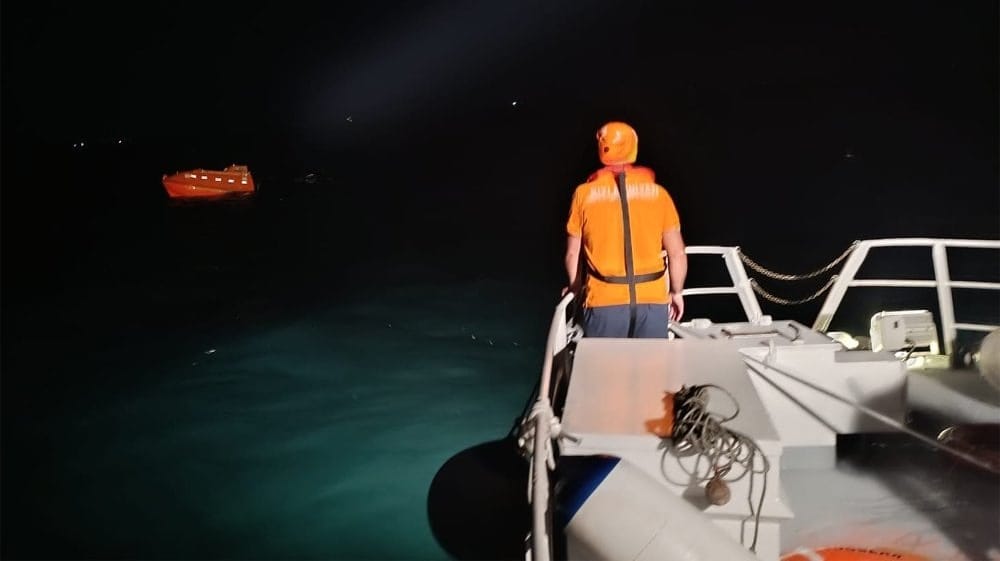
Turkish authorities located the cargo ship's lifeboat but the crew is missing after the collision (Directorate General of Maritime Affairs)

Published Sep 2, 2026 11:20 AM by The Maritime Executive


Multiple Turkish agencies are assisting in a search and rescue operation looking for 10 missing crewmembers from a small Turkish general cargo ship. They suspect the vessel, Tugberk Imamoglu (4,598 dwt), sank after colliding with a Turkish-flagged product tanker in the Marmara Sea early on September 2.

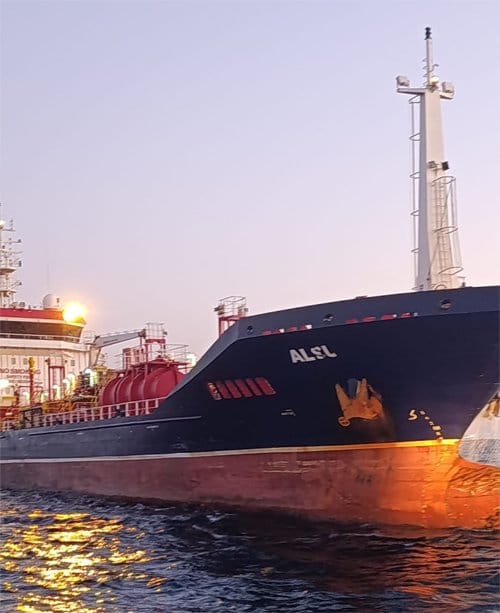
Turkey’s Directorate General of Maritime Affairs reports that a signal was detected from an EPIRB device around 0330 local time on September 2. The captain of the tanker Alsu (3,338 dwt) also reported a collision with an unidentified vessel approximately 18 miles south of Silivri, located west of Istanbul on the Marmara Sea.

The authorities determined the signal was coming from the cargo ship and commenced a search. They report that the Coordination Center was unable to contact the vessel. It also attempted to call the crewmembers on their mobile phones and received no response.


Tanker Alsu was assisting in the search after colliding with the cargo ship (DGMA)


Searchers located the vessel’s free-fall lifeboat, and there was no one aboard. Other debris has also been spotted on the sea surface. A helicopter and 14 maritime search and rescue units were participating in the SAR operation along with the tanker Alsu.

Built in 1990, the Tugberk Imamoglu is a 90-meter (295-foot) general cargo ship. It was transporting 4,200 tons of coiled steel from Iskenderun to Eregli, a port on the Black Sea. The tanker, which the authorities said was traveling empty, was coming from Kocaeli bound for Aliaga. The Alsu is a 91-meter (298-foot) product tanker. Both vessels are Turkish-owned and flagged.

There was no official comment on weather conditions or visibility issues at the time of the collision. 


Turkey Detains Crew from Tanker Involved in Collision

tanker detained by Turkish Coast Guard
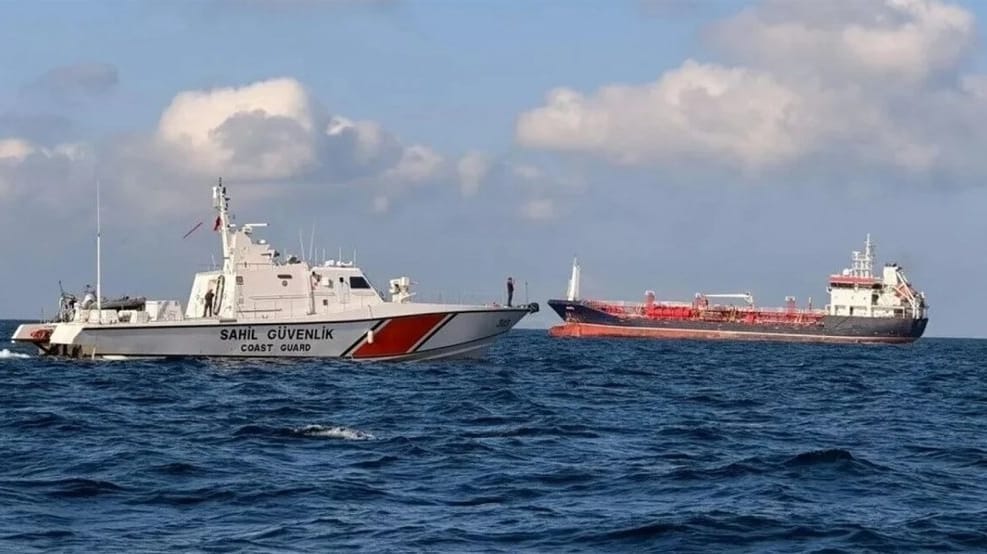
Tanker Alsu is detained while its crew is providing statements in the investigation (Istanbul Governor's Office)

Published Sep 3, 2026 12:04 PM by The Maritime Executive

Turkish authorities have detained nine of the 10 crewmembers from the tanker Alsu that was involved in a collision with a Turkish cargo ship on Wednesday as the search and rescue operation continued. Prosecutors provided additional details as the investigation was launched while also reporting that no survivors had been located from the cargo ship.

The collision happened approximately 18 miles south of Silivri in the Sea of Marmara. A team of experts was assembled to begin the investigation, and in a preliminary statement, they now believe the cargo ship Tugberk Imamoglu sank within 10 minutes of the collision. They received the first emergency signal at 0326 on Wednesday and believe the ships collided at 0315. Efforts to contact the ship and attempts to call the crew’s registered mobile phone numbers received no responses.

Prosecutors said that radio records indicate the captains of the two vessels communicated before the collision. They believe that this indicates that both crews had seen the other vessel and that they were discussing their routes to pass. Prosecutors said they will be listening to the actual recording.

The French news agency AFP (Agence France-Presse) is reporting that prosecutors are looking at “multiple breaches of safety procedures.” An inexperienced officer was alone on the bridge without a lookout or helmsman. The tanker made no effort to slow or reverse engines to avoid the collision. Equally, the cargo ship’s AIS was not functioning, and the Tugberk Imamoglu is reported to have suddenly altered course to starboard when the ships were within 0.5 nautical miles of each other, veering across the tanker's bow.

As many as 15 vessels, five helicopters, two drones, and an aircraft, as well as forces from the Turkish Navy, have been scouring the Sea of Marmara for signs of the missing cargo ship. They found a lifeboat, life rings, and other debris, but no signs of the 10 crewmembers, who were all Turkish nationals.

The tanker Alsu, which was traveling empty, was ordered to anchor, and the crew is being interviewed. They are being detained aboard the ship. Prosecutors said nine of the crewmembers, excluding the cook, are under suspicion. Reports indicate that initial tests found no indication of alcohol, but blood tests were still underway.

An initial visual inspection of the Alsu showed no signs of damage above the waterline. Divers were reportedly being called in to do a further survey of the vessel. In the meantime, prosecutors ordered the collection and preservation of navigation, radar, and communication records.

Government officials said they, so far, have not been able to locate the wreck of the cargo ship, but they suspect it sank in waters about 900 meters (2,950 feet) in depth. The depth in the area is reported to be between 800 and 1,000 meters. They are working with the Navy to secure assets to conduct further underwater searches and to eventually survey the wreck.

Prosecutors were expected to quickly bring the case before the court in the Istanbul region.


Turkish Companies Suspend Shipping to Russia Citing Increased Dangers

burnt out containership
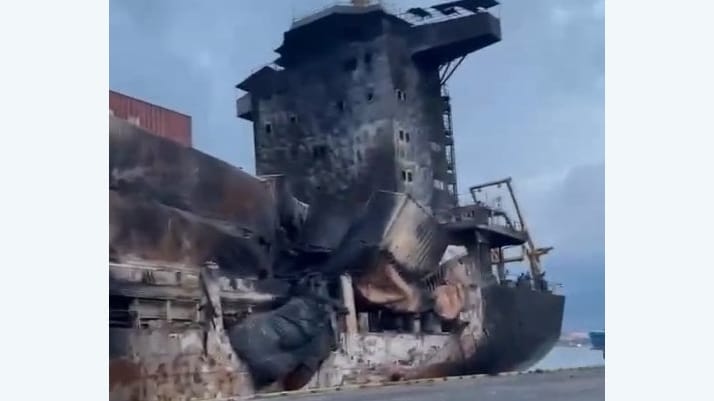
Damage to the Turkish-owned containership RMS Teams

Published Sep 1, 2026 6:02 PM by The Maritime Executive


Two of Turkey’s leading shipping companies, Akkon Lines and Arka, have suspended their services to all Russian ports, citing the increased dangers. The move comes after the Turkish-owned containership RMS Teams was struck in Novorossysk and has now been declared a total constructive loss.  

Turkish shipping has suffered heavy casualties in the Black Sea as it attempted to maintain trade with Ukraine and Russia. Media reports are citing comments from Deniz Tas?mac?l?g?, chairman of the board of directors of Turkish company Transbosphor, who estimated Turkish losses at $20 billion due to the attacks over the past three months and the loss of trade.

Akkon Lines, which is reported to be Turkey’s largest regional operator, had begun redirecting cargo from Novorossiysk to St. Petersburg earlier in August. The Moscow Times, however, says it was adding charges of up to $2,500 per container while others were adding risk surcharges of $1,000 per container.

The line was also reported to be working with Russia’s Fesco, which had lost its containership Yanina on August 1 to an attack in the Black Sea. Shippers reportedly were using Akkon as an alternate.

Akkon’s vessel, RMS Team, was docked in Novorossiysk on August 21 when it was struck by a drone. The ship was heavily damaged, and the crew evacuated into the port. Video has now surfaced showing the extent of the damage, with the report that the ship was declared a total constructive loss. Built in 2004, the 13,000 dwt vessel had been sailing under Turkish ownership and the Barbados flag since May 2023. It had a container capacity of 1,096 TEUs.


The Moscow Times reports it saw a new customer memorandum sent out at the end of last week by Akkon announcing it has decided to suspend all service to all Russian ports, including St. Petersburg. The company says it concluded that further escalation poses increased risks to the crew, vessel, and cargo. It advised that any cargo currently in the system will be returned to its port of origin or shipping destination. However, one ship heading to St. Petersburg, which was in the Baltic, may be diverting to Lithuania to offload boxes shipped to St. Petersburg instead of taking them back to Turkey.

Akkon’s decision follows a similar move by the Turkish carrier Arkas, according to a freight forwarding company. MSC Mediterranean Shipping Company also recently announced that it was suspending its service to Novorossysk after one of its vessels was struck.

Carriers sailing to Ukraine’s Black Sea ports, including Maersk and Hapag-Lloyd, also announced a suspension of their services last mont has the Russian attacks intensified on the ports. 

Turkish diplomats continue to push for a moratorium on attacking commercial shipping in the Black Sea. They report they have presented several proposals to Russia and Ukraine and continue to try to find a solution to stop the violence and protect seafarers. Turkey played a key role in 2022’s opening of the first grain corridor, and it hopes to duplicate its efforts to mediate a new agreement. Until then, shippers are saying the loss of the Turkish route makes it increasingly difficult to deliver cargo into both countries.


Report: Russia Helping Iran to Develop a Supersonic Anti-Ship Missile

Russian supersonic missile
  The Russian Kh-31 ramjet supersonic anti-radiation missile – something for the Iranians to copy (Rosoboroneexport)

Published Sep 2, 2026 6:44 PM by The Maritime Executive


Russia is helping Iran develop a supersonic anti-ship cruise missile, according to a report in the Financial Times.

If the development comes to fruition, it could pose a threat to US Navy ships maintaining a blockade on Iranian ships and ports from a piquet line in the Gulf of Oman. So far, Iran has had no success in targeting US Navy vessels deployed against it, and this clear US advantage is proving to be decisive. 

CENTCOM’s successful isolation of Iran from global maritime commerce is depriving Iran of much-needed export revenues, a financial stream which the IRGC needs to maintain internal order – both by paying the IRGC Basij internal security forces and keeping them loyal, but also by providing subsidies to shelter ordinary Iranians from fast-rising prices for basic essentials. Coordinated with US Treasury Secretary Bessent’s Operation Economic Outcast, the naval blockade looks to be the most effective tool the United States has to persuade Iranian leaders to return to the negotiating table in a more conciliatory mood, in the face of rising internal unrest which would otherwise threaten regime survival.

Iran’s current arsenal of anti-ship cruise missiles and drones is effective when deployed against innocent and undefended merchantmen, albeit not when they are being escorted by well-equipped warships. The Iranian missiles are consistently accurate, usually fired to disable engine rooms, but all are subsonic. The main systems in the Iranian long-range anti-ship cruise missile inventory are the Noor and Ghadir derivatives of the Chinese C-802 missile, which the Iranians have been tweaking and improving since reverse-engineering originals first supplied by China in 1995.

Subsonic sea-skimming anti-ship missiles such as the Noor and Ghadir can normally be detected at about 20nm range, so that the defending warship has about 150 seconds to engage an incoming target with a missile. If the incomer can evade the missile, then warships have Close-in Weapon Systems such as Phalanx to shoot down the target at short range. Intercept ranges and possibilities are better if warships can deploy helicopters with radar and intercept systems.  But if the incomer were to be supersonic, the detection and engagement window comes down to about 40 seconds with a missile – and the target, the ramjet being smaller, is also a harder hit.

Cooperation between Iran and Russia over the development of ramjet motors, which are needed to power supersonic anti-ship missiles, has been going on since 2023 under the codename Project C430L, but the Farzanegan Propulsion Bureau has been working on ramjets since about 2017. The bulk of the Project C430L research and development work is taking place in Iran, and the Iranians are believed to have flight-tested their own ramjet design. Russian assistance, provided by the US-sanctioned rocket company NPO Mashinostroyenia through the state arms export company Rosoboronexport, has primarily been to comment on Iranian flight test telemetry, to identify where design improvements can be made.  

The Russians do not appear to have handed over an example of a Kh-31, a Russian first-generation ramjet supersonic missile with a small warhead primarily used as an anti-radiation weapon. Iranians were apprehended trying to steal a Ukrainian Kh-31 back in 2018. Nor does it appear that they have shared details of the Kh-47 Kinzhal hypersonic missile, which the Russians are using to deadly effect against land and shipping targets in Ukraine, largely because it is so difficult to counter. While for reverse-engineering purposes, the Iranians are likely to have at least the Kh-31 technology, they do not appear to have operationalized any derivative of it or the Kh-47.

The Financial Times story did not outline that a developmental milestone had been achieved, nor suggested that operational deployment of an Iranian supersonic or hypersonic anti-shipping missile is imminent. The story may instead have been prompted by an intelligence agency keen to make a political point and inhibit further cooperation, rather than to warn of the imminent or immediate threat to the Fifth Fleet in the Gulf of Oman. But the Iranians, on the balance of probability, may be further advanced in the development of a supersonic anti-ship cruise missile than Western intelligence agencies have been able to detect, and this could be the new weapon the Iranians are always boasting they are about to deploy.  

In any case, the continuing Iranian efforts should give added impetus to the development of defensive systems which are urgently needed to counter both supersonic and hypersonic missiles – at sea and on land. In general, the development of hypersonic offensive missile systems is much further advanced in Russia, China and Iran but also in the West than the development of the defensive systems needed to counter them.


Putin Visits Zvezda Shipyard Building Arctic 2 LNG Tankers

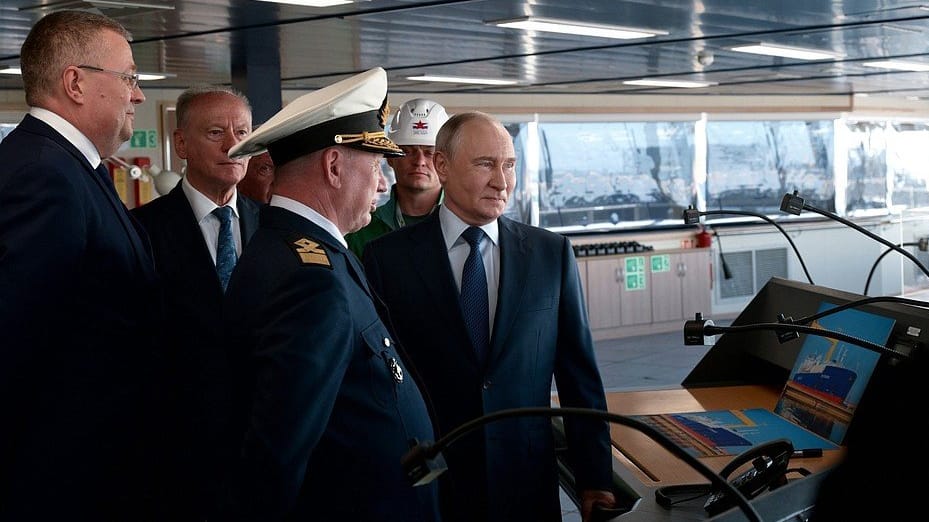
Inspecting LNG tanker at the Zvezda shipyard
Putin inspecting the Pyotr Stolypin LNG tanker at the Zvezda shipyard (Photo: Alexei Danichev, RIA Novosti)

Published Sep 3, 2026 5:48 PM by The Maritime Executive


Russian President Vladimir Putin has been spending a lot of time in recent weeks visiting the Russian Far East – an area where he probably feels safe from the Ukrainian long-range sanctions program. It is also an area in the strategic depth of a vast country that is as yet untouched by the war with Ukraine.

A visit on September 2 to the Zvezda shipyard in Bolshoy Kamen, across the Ussuriyskiy Zaliv from Vladivostok, was steeped with symbolism. It touches many of Russia’s pet projects and ones critical to its economy. Putin has been a supporter of the development of the Zvezda complex, which in turn is closely tied to Arctic shipping and the Northern Sea Route.

President Putin inspected the Arc7 Class icebreaking LNG carrier Pyotr Stolypin (IMO 9904675), which is designed to operate throughout the year through the ice-bound seas of the Northern Sea Route, the 3,000nm Arctic shipping corridor along Russia’s northern coast. The Northern Sea Route used to be navigable for only two months a year, but melting Arctic ice has extended the shipping season, and the route can now be kept open using Rosatom’s nuclear-powered icebreakers.  

The tanker is one of five Arc7 LNG tankers being built at the Zvezda shipyard, to service the Arctic LNG 2 project being developed by Novatek on the Gydan Peninsula in Western Siberia. The primary, and closest destination terminal will be Murmansk, but the tankers are also designed to be able to sail eastwards to a transshipment point in Kamchatka and onwards to China. The fleet will be Russian-flagged and operated by Sovcomflot.


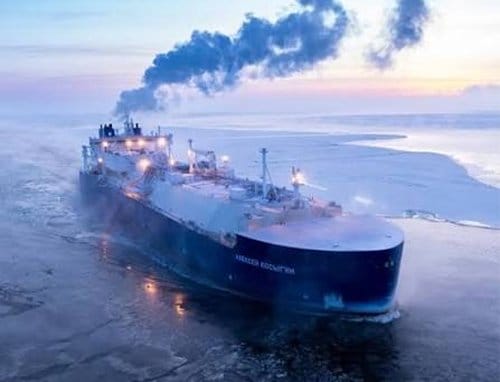
Arc7 Class icebreaking LNG carrier Aleksey Kosygin (Sovcomflot)


The ships, based on the Samsung 172 Yamalmax design, are designed to be able to operate through ice over 2m thick, along the length of the Northern Sea Route. The lead tanker in the class, the Aleksey Kosygin (IMO 9904546), made its first journey to Gydan in December 2025. Like the Pyotr Stolypin, the Kosygin is already OFAC-sanctioned by the U.S. and was last spotted offloading at the Jinhai Heavy Industry facility in Zhoushan, China, on August 25.

Originally, 15 tankers were to be built in the class, in cooperation with Samsung and the South Korean Hanwha Ocean shipyard, plus French sub-contractors. But when the project was sanctioned, the order was slimmed down and the work transferred to the Zvezda yard, and the technically challenging five-ship class is now being completed at Zvezda. The LNG project in Gydan has also been scaled down as a consequence of sanctions, and only one of three planned LNG trains was completed before foreign partners withdrew and exports of specialized equipment were halted, curtailing the scale of the project and the need, at least for now, for such a large number of Arc7 Class tankers. Completion of all the shipbuilding work at Zvezda has necessitated the construction of specialist plants nearby to produce the azimuth thrusters needed for the icebreakers to function, as well as a foundry to produce large-format steel sheets at Primorye.  


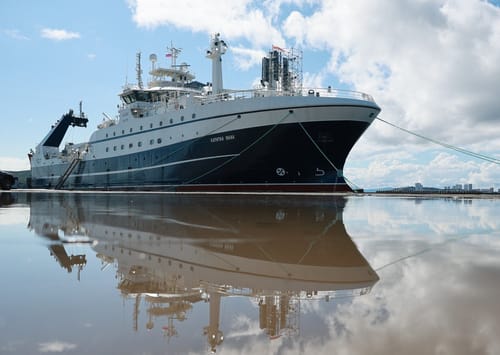
Freezer-fishing trawler Kapitan Yunak (Kremlin - Presidential Press Office)

Sanctions and the withdrawal of foreign partners have turned the Arctic LNG 2 project into an economic nightmare. But with the Ukrainian attacks on oil and gas infrastructure across Russia, this plant should at least be out of range and able to maintain production to counter shortages – that is, until the Ukrainians extend the range of their drones out to 3,000km. So far, the longest-range drone attack was the 2,500km raid on the Omsk refinery complex on July 6.

While he was in the Vladivostok area, President Putin also went aboard the newly-launched deep-sea long-range freezer-trawler, the Kapitan Yunak (IMO 9901178). With a gross tonnage of 9,055, the Kapitan Yunak is among the largest and probably most sophisticated of its type. Although not yet sanctioned, it is likely to range far and wide under the protection of its Russian flag. 


Ukraine Strikes Russia’s Ust-Luga Oil Terminal as Attacks Intensify

Russia Ust-Luga
Ukraine launched a large-scale attack that started fires in the Ust-Luga port (Gazprom file photo)

Published Sep 1, 2026 2:14 PM by The Maritime Executive


Ukraine Strikes Russia’s Ust-Luga Oil Terminal as Attacks Intensify

Ukraine and Russia are again intensifying their attacks. Reports indicate Ukraine launched one of its largest attacks of the war, targeting areas across Russia, including hitting the Ust-Luga oil terminal, while Russia retaliated with widespread attacks.

The regional governor for the area along the Baltic that includes Ust-Luga posted that there was a large and prolonged attack underway. He said 52 drones were shot down in the Leningrad region over the span of four hours on Tuesday, September 1.

Governor Alexander Drozdenko posted online that there was damage in the Ust-Luga port area and a fire. Emergency services were working to control the fire, and he later posted that the fire caused by a drone attack had been extinguished.

There were claims that at least 17 drones were intercepted during the attack on Ust-Luga. It is Russia’s largest oil terminal on the Baltic and the second largest in Russia behind Novorossysk on the Black Sea, which has also been a target of Ukraine’s attacks.  Over the past few months, Ukraine has increased its targeting of the export infrastructure and oil industry. The last strike on Ust-Luga was reported on August 14.

Other strikes also hit the oil industry infrastructure, including the Novokuibyshevsk Oil Refinery. It was said to be one of the largest Ukrainian attacks, with Russia claiming to have destroyed 516 Ukrainian drones overnight in 18 regions of Russia.

Ust-Luga is a key export facility for Russia, with Reuters reporting it handles around 700,000 barrels per day. Grain traders are also reported to have increased shipments to the Baltic port after Ukraine’s repeated attacks on the Black Sea grain export infrastructure.

Today’s attacks were so significant that it drew defense responses in both Estonia and Romania. Estonia’s Foreign Minister, Margus Tsahkna, posted online that they had scrambled NATO fighter jets after several drones entered Estonia’s airspace.

Russia’s attack was reported to be equally as significant, with the brunt of it aimed at the Odesa and Kyiv regions. Port infrastructure in the Odesa region was struck while Ukraine said it had intercepted or suppressed 199 aerial targets. The Russian attack included ballistic, cruise, and Banderol missiles as well as 187 drones.

In addition to the port infrastructure, Ukraine said Russia had targeted its border crossings with Romania. President Volodymyr Zelenskiy called it a “deliberate” effort to damage the border crossing point and the export infrastructure. Ukraine has also been forced to divert its grain and other exports away from its Black Sea ports due to repeated Russian attacks. The Danube ports and the border crossing, including the rail lines to the west and Romania, have taken on a greater role in Ukraine’s exports.


Reading the Trump Administration's Maritime Action Plan (MAP)

Haven't read the MAP yet – the Maritime Action Plan? Relax. We've got you covered.

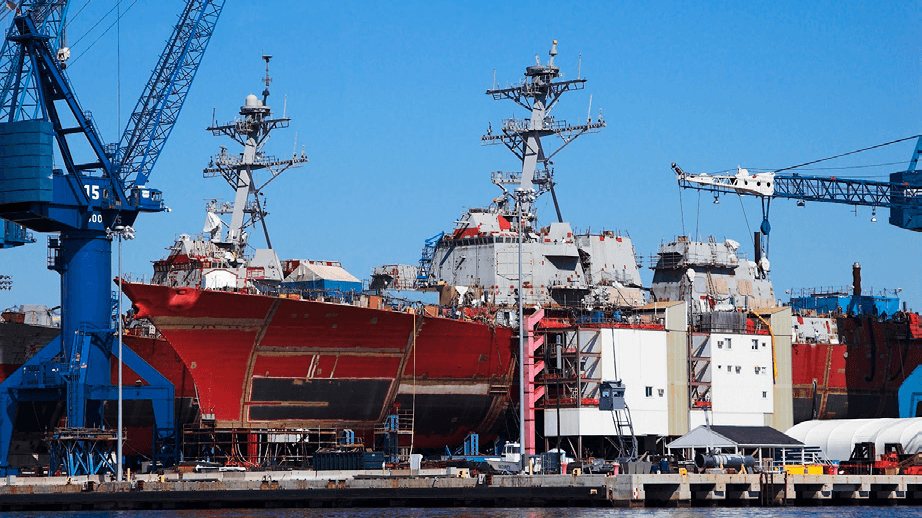
Ship under construction

Published Sep 1, 2026 8:40 PM by Jack O'Connell

(Article originally published in July/Aug 2026 edition.)


The Trump Administration's much-anticipated Maritime Action Plan (MAP) was released in February and immediately received the endorsement of just about everyone in maritime – and for good reason. For the first time in recent memory, the U.S. has a blueprint – call it a map – of how to get from point A to point B.

Point A, of course, is the current situation.

Less than one percent of new commercial ships are built in the United States. With only 66 total shipyards—consisting of eight active shipbuilding yards, 11 shipyards with build positions, 22 repair yards with drydocking, and 25 topside repair yards—the United States does not have the capacity necessary to scale up the domestic shipbuilding industry to the rate required to meet national priorities. Strategic competitors, meanwhile, dominate the market and build ships at a fraction of the cost of U.S. production.

That's how the co-authors – Secretary of State Marco Rubio and Office of Management & Budget chief Russell Vought – put it in their "Introduction" to the MAP. Furthermore, they explain:

This status quo poses significant security and supply chain dependency issues. A self-sustaining domestic shipbuilding sector is critical for national and economic security. The United States can neither afford for its trade to and from foreign markets to be ferried almost entirely on foreign-built, -crewed, and -flagged ships, nor for the MIB (maritime industrial base) to be unable to build and maintain the vessels the United States needs to defend American interests on the high seas.

Point B is where we want to be when we fix all this – with the MAP as our guide.

The MAP calls for policies that modernize government procurement processes and streamline regulations to accelerate shipbuilding and reduce costs. By streamlining regulatory processes, strengthening interagency coordination, and providing reliable long-term funding and demand for U.S.-built ships, shipyards, and mariners, America will rebuild maritime strength at the speed and scale required to meet the challenges of today and the future.

Well, that's a tall order. Let's see how we do all that. But first, a confession.

I dreaded having to read the MAP. Why? Because I was all too familiar with the dialect peculiar to bureaucrats, politicians and lobbyists called "bureaucratese," having served in government for a spell during the Reagan Administration.

Everything in Washington is written in bureaucratese.

Think acronyms – lots of them. Bureaucratese is riddled with acronyms. The MAP has a convenient two-page list at the end – 76 in all – in a 35-page document, each of them used at least twice and actually more like six or seven times. So that's about 10 acronyms per page.

Acronyms are annoying, but equally annoying is vague and general language that doesn't mean anything, or using ten words when five would do, or repeating the same idea in different ways over and over again – all characteristics of bureaucratese.

So I put it off and only recently decided to bite the bullet. Now that I've read it – and re-read it – I felt it only right, dear readers, that I save you the trouble.

Okay, back to the main event.

FOUR PILLARS

The MAP is built on four pillars:

– Rebuild U.S. shipbuilding capacity and capabilities
– Reform workforce education and training
– Protect the maritime industrial base (MIB), and
– Bolster national security and industrial resilience.

Let's look at each one in turn and see what they involve.

With only eight shipyards capable of building vessels over 400 feet in length, Pillar 1 is about rebuilding the U.S. shipbuilding base. It's the cornerstone of the entire MAP and calls for expanded investment in shipyard capacity, establishing Maritime Prosperity Zones (100 of them in the next 10 years) around ports and shipyards, and getting our more shipbuilding-savvy allies involved.

Funding is key, and there are various proposals involving Title XI, public-private partnerships, federal loan guarantees and even a one-cent-per-kilogram tax on all cargo imported in non-U.S.-flagged vessels. Proceeds from such a tax (tariff?) would help establish the Maritime Security Trust Fund, which would in turn invest in shipyard expansion projects and related initiatives.

In the meantime, and this is the most interesting part to me, the U.S. should turn to its allies – South Korea and Japan, in particular – for the know-how necessary to build the expanded fleet, and we all know this is already happening with Hanwha's takeover of Philly Shipyard being Exhibit A. Related to this is the reflagging of foreign vessels into the U.S. fleet as a stopgap measure until we're able to bulk up on our own.

Having expanded the shipyard base in Pillar 1, Pillar 2 is all about mariner training and education and assuring that the U.S. will have the maritime workforce necessary to build and crew the newly expanded fleet. It focuses on enhancing the capabilities and resources of the U.S. Merchant Marine Academy and the six state maritime academies in producing credentialed mariners and also on the vocational and trade schools that graduate the pipefitters, welders, electricians and skilled craftsmen needed in our shipyards.

"Scalable maritime initiatives" include an innovative military-to-mariner (M2M) program aimed at facilitating the transition from military service to credentialed mariner by maximizing credit for military training and sea service. Another is the mariner incentive program (MIP) – don't you just hate these acronyms? – that would provide additional funding mechanisms to attract, train and retain future mariners, among them the possible exclusion from federal income tax of mariner income on foreign trade routes.

Having secured the expanded fleet and workforce needs in Pillars 1 and 2, Pillar 3 focuses on protecting the maritime base, which involves things like trade policy, customs enforcement and federal procurement programs, all of which affect the demand for U.S.-flag vessels.

And here we get pretty specific.

At the top of the list of recommended actions is expanding Cargo Preference requirements from the current 50 percent to as much as 100 percent of federal cargoes provided the necessary number of U.S.-flagged ships is available.

Another is a new maritime preference requirement: "As ships are being built in the United States, require high-volume exporting economies (read China) to transport a gradually increasing percentage of their U.S.-bound containerized cargo on qualifying U.S. vessels."

And a third is to establish a so-called "Land Port Maintenance Tax," similar to the Harbor Maintenance Tax, under which merchandise entering the U.S. through land ports would be subject to a modest tax (0.125 percent of the value of the merchandise), ensuring that land ports pay their fair share of infrastructure upkeep.

Pillar 4, strengthening national security and industrial resilience, is a catchall category that includes such things as streamlining federal procurement policy and implementing all the recommendations under the first three pillars. It does focus on the Arctic and the need for an adequate strategy and resources to protect our interests there – another welcome inclusion.

NEXT STEPS

So there you have it. What comes next is the big question.

The consensus seems to be that enactment of the FY 2027 National Defense Authorization Act, which includes a number of MAP provisions like the Maritime Security Trust Fund, will get the ball rolling. Or maybe Congress will finally pass the SHIPS Act?

Stay tuned!


Jack O'Connell is the magazine's Senior Editor.


This article appeared in the July/August issue of The Maritime Executive. To read the latest edition of the magazine, go to The Maritime Executive July/August 2026 Ship Management edition. To subscribe to the magazine, please go to https://www.maritime-executive.com/subscribe.


The opinions expressed herein are the author's and not necessarily those of The Maritime Executive.
 

Northern Europe Ports Brace for Labor Strikes This Week

port workers on strike
German port workers are striking over wages while inthe Netherlands the strike is over social welfare issues (2024 photo of Ver.di strike in Hambirg)

Published Sep 2, 2026 7:49 PM by The Maritime Executive


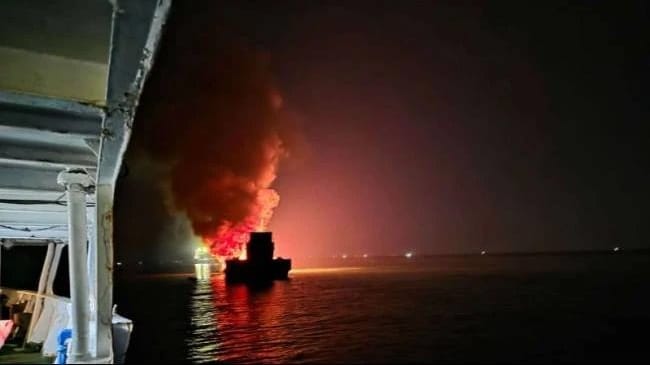
Labor unrest is promising to disrupt operations across several of Northern Europe’s largest ports. Dockworkers at Germany’s major ports are commencing a rolling strike that will run till Friday, ending just as a strike is due to begin in the Netherlands.

 It comes as concerns are already growing over port congestion and delays, with only a little over half of containerships currently on schedule. Analysts at Sea-Intelligence calculated that currently a total of 5.0 percent of all global deep-sea capacity – 1.7 million TEU – is tied up, due to the delays, congestion, and other factors. The ports of Rotterdam, Hamburg, and Bremerhaven are already in the top 10 on Linerlytica’s list of the top ports for congestion. As of the end of last week, Linerlytica calculated that over 160,000 TEU was waiting at anchor in the three ports.

Germany’s Ver.di union is starting so-called warning strikes beginning with the night shift on September 2. The warning strike is scheduled to last 48 hours, until Friday, September 4, 2026, after the late shift. On Friday, the union Ver.di is calling for a large demonstration by members in the Hamburg port. At issue is the collective bargaining agreement covering some 11,000 union members at the ports in Hamburg, Bremen, Bremerhaven, Emden, Brake, and Wilhelmshaven. 

The members have rejected a proposed 5.1 percent wage increase. They are waiting for the employers to agree to a new round of negotiations.

As the warning strike in Germany concludes, operations across major ports in the Netherlands, including Europe’s busiest port, Rotterdam, are set to be paralyzed on September 4 after trade unions called for industrial action to protest against social security reforms.

Early this year, the Dutch government unveiled plans to undertake drastic cuts in social security, including unemployment and disability benefits, as well as increasing the state pension age. Though plans for pension age increase have been shelved, the government has remained adamant on plans to reform the Unemployment Insurance Act (WW) and the Work and Income (Capacity for Work) Act (WIA).

The plans have ignited unprecedented opposition, with trade unions asserting that a cut of €6.5 billion ($7.5 billion) in social security will affect thousands of workers and their families. Since the reforms were unveiled, trade unions have been organizing demonstrations, actions and strikes, the largest demonstration having been organized in Rotterdam in June.

The government’s refusal to yield has forced two of the country’s largest trade unions, FNV Havens and CNV, led to call for strikes across the Netherlands ports of Rotterdam, Amsterdam and Zeeland. On September 4, workers across the ports will down their tools, a move that is expected to paralyze operations across the facilities.

Critical operations like vessel schedules, mooring, loading, unloading, lashing, towing, cargo inspections, among others, are expected to be severely affected. The strike is expected to have knock-on effects on road, rail and inland transport operations. The affected ports and terminal operators are already sending alerts that the strike could badly affect operations.

“Svitzer towing service has indicated that their employees are heeding the call of the union and will strike that day. This means that there is less available tugboat capacity. This will potentially lead to delays in ship handling and thus also affect terminal operations,” said the Port of Amsterdam in a statement.

The strike is bound to add to the woes that have been afflicting Dutch ports in recent months. Rotterdam has been grappling with growing uncertainties, including the Middle East crisis that continues to impact cargo throughput. In the first half of the year, the port posted flat growth with total throughput standing at 212 million tonnes compared to 211 million tonnes in the same period last year.

Apart from paralyzing port operations, the unions also intend to disrupt rail transport with a nationwide strike organized by FNV slated for September 9.

Port operations are already being impacted by low water levels, which have hit the inland river operations in particular. The carriers are now bracing for the added impact of strikes and labor unrest at Northern Europe’s largest ports.