White Hydrogen Drilling Push Gains Momentum Across Three Continents
- Scientists are increasingly exploring naturally occurring “white hydrogen” as a potentially cheaper alternative to green hydrogen produced through electrolysis.
- Recent research in Australia and Canada suggests vast geological formations could continuously generate hydrogen, raising hopes for large-scale commercial extraction.
- Exploration is already underway in the U.S. and Canada, although companies still need to prove that geologic hydrogen can be produced economically at commercial scale.
Scientists and start-ups believe naturally occurring hydrogen could be the next major geological breakthrough, unleashing huge amounts of hydrogen to power the clean energy transition.
Researchers in the United States, Canada, and Australia are mapping and discovering potential sources of so-called geologic hydrogen, or white hydrogen, which would be mined instead of produced from electrolysis using renewable energy, the way the so-called green hydrogen is currently obtained.
Several major discoveries in recent months have raised hopes that mined natural hydrogen from rocks underground could be an alternative to the still costly green hydrogen production, which has failed to live up to the hype in recent years, with a major gap in the planned and actually launched projects amid high costs and struggles to secure offtake deals.
As enthusiasm for green hydrogen has somewhat faded, researchers and mining companies are exploring another hydrogen output avenue—extracting natural hydrogen from rocks underground.
The most recent breakthrough that could lead to a whole new industry was announced in Australia, where scientists found a potentially huge hydrogen source in Western Australia’s iron ore deposits in the Pilbara region.
The study, published in the International Journal of Hydrogen Energy by researchers at Edith Cowan University (ECU) School of Engineering, focused on the mineral magnetite, which is found in the iron ore deposits.
The researchers experimented by exposing magnetite samples to water at temperatures of 200°C and under high-pressure conditions for 60 days, replicating the environment found deep beneath the Earth's surface. They say they found a way to stimulate hydrogen production by injecting a solution into banded iron formations. This significantly increases the potential to harness this naturally occurring resource.
According to the team, their research provides one of the clearest insights yet into how natural hydrogen forms underground and the conditions needed to sustain production.
“Western Australia has some of the world's largest banded iron formations. If we can unlock this resource at scale, it could be transformative for our energy future,” lead author Kaveh Moghanirahimi said.
The experiment could bridge the gap between laboratory experiments and real-world hydrogen exploration, said Professor Stefan Iglauer from ECU’s School of Engineering.
“Our findings show that hydrogen production depends not only on the amount of magnetite present, but also on how easily water can access fresh mineral surfaces through fractures, pores and permeable pathways,” Professor Iglauer commented.
The Australian study comes shortly after Canadian geochemists at the University of Toronto and the University of Ottawa earlier this year found that hydrogen gas is steadily building up within the Canadian Shield among some of the oldest rocks on Earth.
They mapped natural hydrogen concentration and tracked its long-term accumulation at a single location, making it possible to assess potential hydrogen exploration.
“The data from this study suggests there are critical untapped opportunities to access a domestic source of cost-effective energy produced from the rocks beneath our feet,” said the lead author of the study, University Professor Barbara Sherwood Lollar in the Department of Earth Sciences in the Faculty of Arts & Science at the University of Toronto.
“Natural hydrogen is produced over time through underground chemical reactions between rocks and the groundwaters in those rocks,” said Sherwood Lollar. “Canada is blessed that vast amounts of its territories, especially on the Canadian Shield, contain the right rocks and minerals to create this natural hydrogen.”
In Canada, local firm Max Power Mining is already exploring for white hydrogen, with the start of drilling of a third validation well to 2,278 meters (7,473 ft) underground at the Lawson Complex in southern Saskatchewan.
Exploration has started in the United States, too.
For example, Australia-listed HyTerra is production testing for white hydrogen at its Nemaha Project in Kansas and is well testing at its Geneva Project in Nebraska.
“Establishing a commercial geologic hydrogen project remains our clear focus,” HyTerra CEO Riley Kemp said last month, commenting on the production testing results at the McCoy-1 well at Nemaha.
Last year, the U.S. Geological Survey (USGS) published the first map of the prospective locations of naturally occurring geologic hydrogen resources in the United States. The map revealed areas of interest that could hold accumulations of geologic hydrogen, including a mid-continent region that covers Kansas, Iowa, Minnesota, and Michigan, the Four Corners states of Arizona, Colorado, New Mexico, and Utah, the California coast, and areas along the Eastern seaboard.
By Tsvetana Paraskova for Oilprice.com
Scientists discover massive natural hydrogen source beneath Canada
FULL STORY
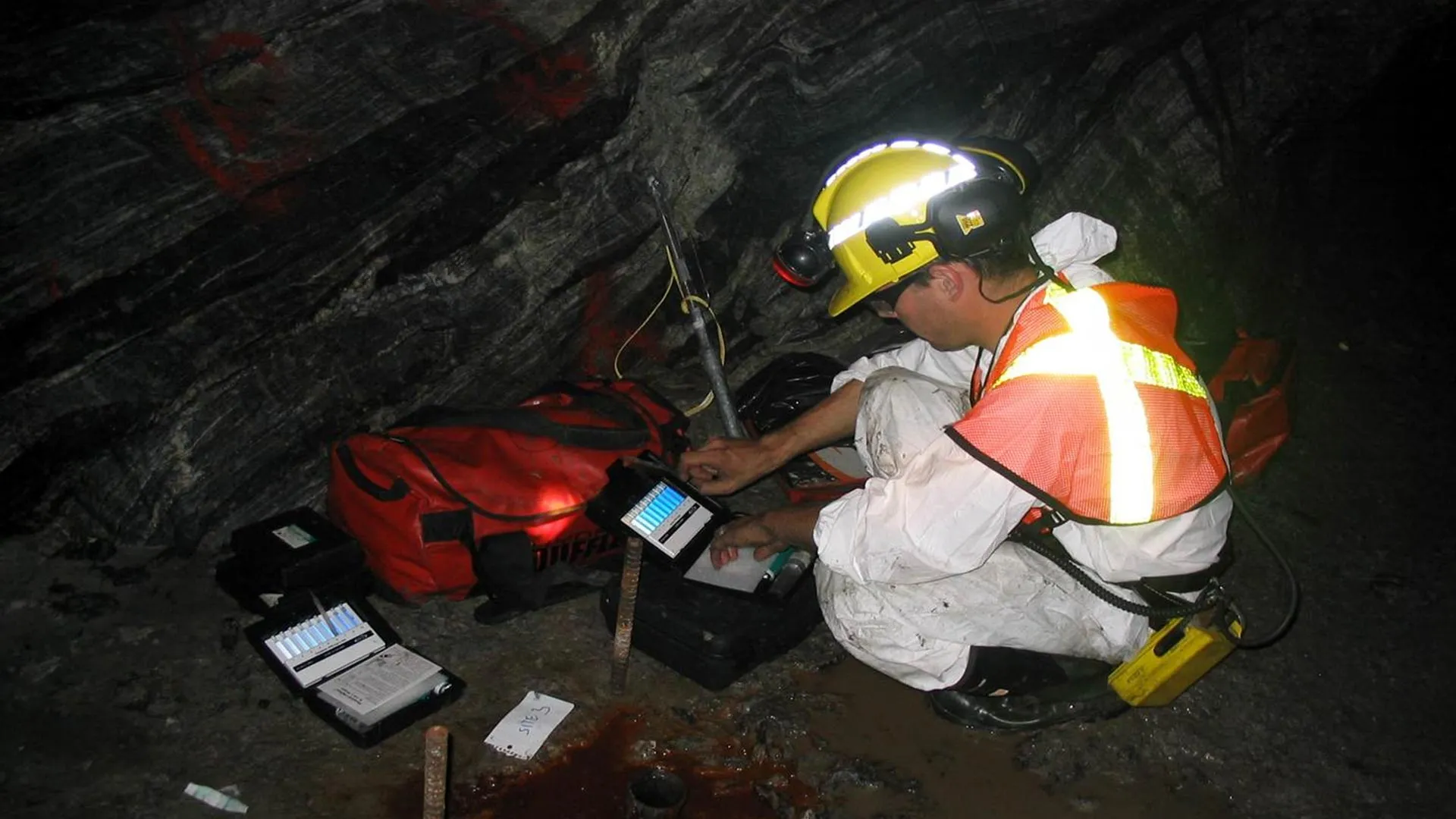
Scientists have discovered that ancient rocks deep beneath Canada are naturally releasing hydrogen gas, offering new evidence that Earth itself may contain significant untapped sources of clean energy.
Researchers from the University of Toronto and the University of Ottawa studied the Canadian Shield, a vast region of some of the oldest rock formations on the planet. For the first time, they directly measured hydrogen escaping from these billion-year-old rocks, tracked how it builds up over time, and mapped where the gas is concentrated.

The findings, published in the Proceedings of the National Academy of Sciences, could help determine whether naturally occurring, or "white," hydrogen can become a practical and economical energy source. The work also introduces a new strategy for hydrogen exploration that may support efforts to reduce greenhouse gas emissions and expand clean energy options.
Hydrogen Flow Measured in Ontario Mine Boreholes
The researchers gathered data from an active mine near Timmins, Ontario. They found that boreholes drilled into the rock release an average of 0.008 tonnes of hydrogen each year, roughly 8 kilograms, which is about the weight of a typical car battery. According to the study, the gas can continue flowing for at least a decade.
When expanded across the site's nearly 15,000 boreholes, the estimated hydrogen output exceeds 140 tonnes annually. The team calculated that this amount could generate approximately 4.7 million kilowatts of energy per year from just one location, enough to meet the yearly energy demands of more than 400 homes.
"The data from this study suggests there are critical untapped opportunities to access a domestic source of cost-effective energy produced from the rocks beneath our feet," says University Professor Barbara Sherwood Lollar in the Department of Earth Sciences in the Faculty of Arts & Science at University of Toronto, the lead author of the study. "What's more, this provides a 'made in Canada' resource that might be able to support local and regional industry hubs and reduce their dependence on importing hydrocarbon-based fuels."
Why Natural Hydrogen Matters
Hydrogen already plays a major role in the global economy, which is valued at roughly $135 billion. It is widely used in fertilizer manufacturing, which is essential for agriculture and global food production. Hydrogen is also important in methanol production and steelmaking.
Today, most hydrogen is produced through industrial methods that rely on fossil fuels such as petroleum, natural gas, and coal. These processes require large amounts of energy and release carbon monoxide and CO2. Even "green hydrogen," which is generated using renewable energy, remains expensive and energy intensive while also requiring transportation and storage infrastructure.
Natural hydrogen, however, has received far less attention. Until recently, most research focused on its role in underground microbial ecosystems and its potential importance for astrobiology and space exploration. Estimates of its energy potential were largely theoretical because scientists lacked direct long-term measurements from real-world sites.
The new study changes that by documenting sustained hydrogen releases over many years.
Ancient Rocks Naturally Produce Hydrogen
"Natural hydrogen is produced over time through underground chemical reactions between rocks and the groundwaters in those rocks," says Sherwood Lollar. "Canada is blessed that vast amounts of its territories, especially on the Canadian Shield, contain the right rocks and minerals to create this natural hydrogen."
The researchers say Canada may have a unique opportunity to produce cleaner and potentially cheaper hydrogen without depending on hydrocarbons. They also note that similar hydrogen-producing rocks exist in many other countries, suggesting the approach could eventually be used worldwide.
The largest concentrations of natural hydrogen appear in geological regions already associated with Canadian mining activity. These include Northern Ontario, Quebec, Nunavut, and the Northwest Territories.
"The common link is the rock," says study co-author Oliver Warr, an assistant professor in the Department of Earth and Environmental Sciences at University of Ottawa. "Natural hydrogen is produced in the same rocks where Canada's nickel, copper and diamond deposits are found, and that are currently under exploration for critical minerals such as lithium, helium, chromium and cobalt. The co-location of mining resources and hydrogen production and use mitigates the need for long transportation routes to market, for hydrogen storage and major hydrogen infrastructure development."
Potential Benefits for Mining and Northern Communities
The study's authors believe natural hydrogen could help reduce both costs and carbon emissions for Canada's mining sector. Hydrogen generated close to mining operations could provide a local energy source without requiring major new transportation systems.
The researchers also suggest that northern communities, which often face high fuel transportation costs, could benefit from nearby hydrogen resources. Using locally sourced hydrogen may lower energy expenses while reducing reliance on imported fuels.
"There is a global race to increase hydrogen availability in order to decarbonize and reduce the costs of the existing hydrogen economy," says Sherwood Lollar. "We now have a better understanding of the economic viability of this resource that can be mapped to hydrogen deposits around the world that are both already known and yet to be discovered."
Story Source:
Materials provided by University of Toronto. Note: Content may be edited for style and length.
Journal Reference:Barbara Sherwood Lollar, Oliver Warr. Decadal record of continental H 2 reservoirs reveals potential for subsurface microbial life and natural H 2 exploration. Proceedings of the National Academy of Sciences, 2026; 123 (21) DOI: 10.1073/pnas.2603895123
University of Toronto. "Scientists discover massive natural hydrogen source beneath Canada." ScienceDaily. ScienceDaily, 20 May 2026. <www.sciencedaily.com/releases/2026/05/260519224317.htm>.

No comments:
Post a Comment