Friday, September 04, 2026


First Grain Shipment From Canada’s Churchill Port in Six Years

Churchill Canada
Port of Churchill recently shipped minerals and this week is loading grain as part of the expansion of its operations (Arctic Gateway Group)

Published Sep 1, 2026 8:26 PM by The Maritime Executive


The Port of Churchill, located in Manitoba and Canada’s Arctic, checked off another important first in its efforts to revitalize the operation. This week, the port is loading its first grain shipments in six years, and this comes after its first critical minerals export in over two decades.

The FedNav bulker Federal Sprey (37,141 dwt) is currently alongside in the port. It is loading approximately 30,000 tonnes of Canadian durum wheat supplied by a company in Saskatchewan and being shipped to the Mediterranean. The grain traveled to the port on the rebuilt Hudson Bay Railway.

Several factors contributed to the end of the grain business from the port. The pandemic in 2020 and 2021 was a key factor, along with the high cost of shipping the grain and a failing rail line. The Canadian Wheat Board also ceased operations in 2021, which further hurt the industry. However, the Arctic Gateway Group acquired the port in 2018 from the U.S.-based OmniTrax with a goal of rebuilding the operations.

This week’s shipment is set to be the first of three grain cargoes to leave the port in 2026. Officials said they will ship over 100,000 tonnes of grain this year and predict there will be more in 2027. They said it was providing a significant boost for Manitoba’s agricultural business.

In addition to the grain exports, Churchill is also launching its exports of critical minerals. It has loaded zinc concentrate and next week expects to ship its first-ever cargo of potash. It has been mined in Manitoba.

This is in addition to the port’s role in loading out resupply ships traveling to the First Peoples' communities in the Arctic. A resupply ship departed the port earlier in the season, and another is due to arrive to carry supplies to Nunavut. The first supply ship of the 2026 season, Qamutik (12,760 dwt), departed Churchill on July 12, transporting a wide range of construction equipment, industrial supplies, trucks, and other goods.

Officials expressed their excitement at the developments during a ceremony to celebrate the grain shipment. They also pointed to new agreements such as a partnership with Belgium’s Port of Antwerp-Bruges International.

Critics of the expansion efforts and the government financial support argue that the shipping season is too short to make Churchill a meaningful contributor to Canada’s exports. They also say that rail and insurance costs are very high, and the port lacks sufficient storage capacity.

Arctic Gateway Group, however, points to its success in rebuilding the operations and hopes for expanded support from the Canadian government. It points to the critical role the port could play as Canada reshapes trade outside the United States and looks to more international markets. 

The federal and provincial governments were also supportive of new studies that explored the potential to make the Port of Churchill into a year-round port. Canada’s CTV National News quotes Manitoba Premier Wab Kinew, who said earlier this year that the federal government had indicated it wants to see liquefied natural gas shipped from Churchill by 2030. He is also hopeful that the government will reconsider federal support for a larger port expansion project.


US Counters China’s Pacific Forays with Cook Islands Port Investment
Penrhyn Atoll, Cook Islands
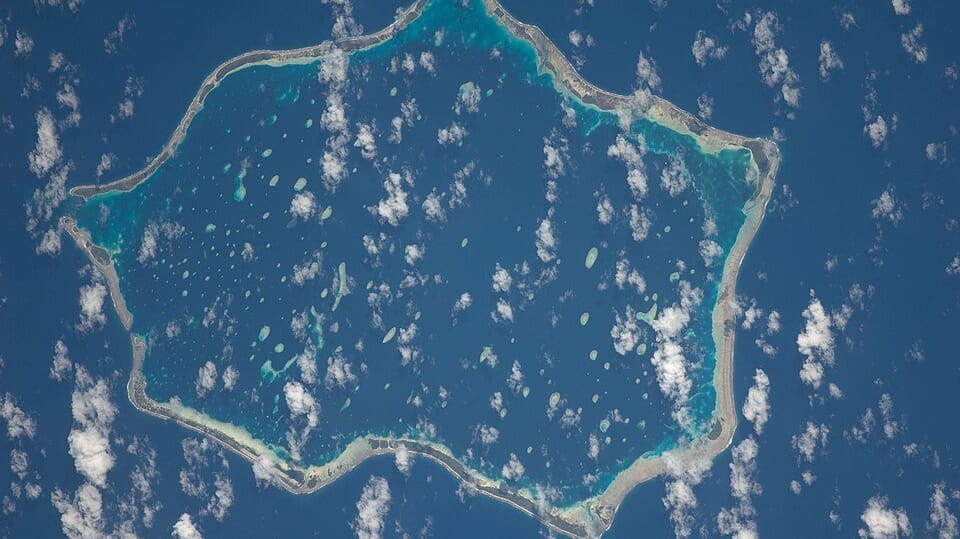
Penrhyn Atoll, Cook Islands (NASA)

Published Sep 3, 2026 1:27 PM by The Maritime Executive


The U.S. government is taking actions to counter China’s incursions in the Cook Islands while pushing its own interests for critical mineral exploitation. Officials announced commitments for a significant investment to fund the upgrade of a port that once hosted a U.S. military base.

As Beijing continues to assert its influence in the Pacific region, the U.S. said that it is partnering with New Zealand to finance the upgrade of Penrhyn Port, which is located on the island of Penrhyn in the northern Cook Islands. The project is expected to cost $60 million, with the U.S. government providing $50 million and New Zealand $10 million.

The U.S. not only has historical ties with the Penrhyn atoll, which served as a military base during World War II, but the island is also strategic in Washington’s push to exploit deep-sea mining for critical minerals. During WWII, U.S. personnel constructed the port and an airstrip following a blockade of the South Pacific air ferry route by the Japanese. The base was used to station bombers alongside some 1,000 military personnel.

Apart from historical ties, the U.S. sees the port as a major asset in facilitating its critical minerals agenda. Early this year, Washington and the Cook Islands government signed a Critical Minerals Framework agreement to cooperate in the exploration of critical minerals, rare earths, and deep-sea mining in the Cook Islands' two million square kilometers exclusive economic zone.

“This project underscores the United States’ strong commitment to our partners in the Pacific and builds on the Critical Minerals Framework the United States and the Cook Islands signed earlier this year,” said Christopher Landau, U.S. Deputy Secretary of State.

Penrhyn, which is also called Tongareva, is the northernmost island in the Cook Islands, with the port located at the village of Omoka. Upgrading of the port is expected to have major benefits, specifically on safety and security, as well as expand transport links and economic opportunities for the northern Cook Islands. The project will be implemented by New Zealand.

Cook Islands Prime Minister Mark Brown said that the port is a critical lifeline for Tongareva in terms of allowing for safer landings, better access to services, and stronger connections between Pa Enua and the world. “This wharf upgrade complements our new domestic shipping investments and our own efforts in improving transport connections for our Pa Enua.”

Both the U.S. and New Zealand have been concerned by a decision by the Cook Islands government to sign a comprehensive strategic partnership with China. Signed in February last year, the agreement creates a framework for cooperation on areas like trade and investment, infrastructure, maritime, seabed mining, among others.

The Penrhyn Port upgrade project was announced during the 55th Pacific Islands Forum in Palau. For the U.S., investing in the project is aimed at countering Beijing’s growing influence in the Pacific region, cutting across diplomatic, economic, and security spheres.


ICTSI Expands Southern Africa Market Grip with TLG Acquisition
Mozambique Beira port
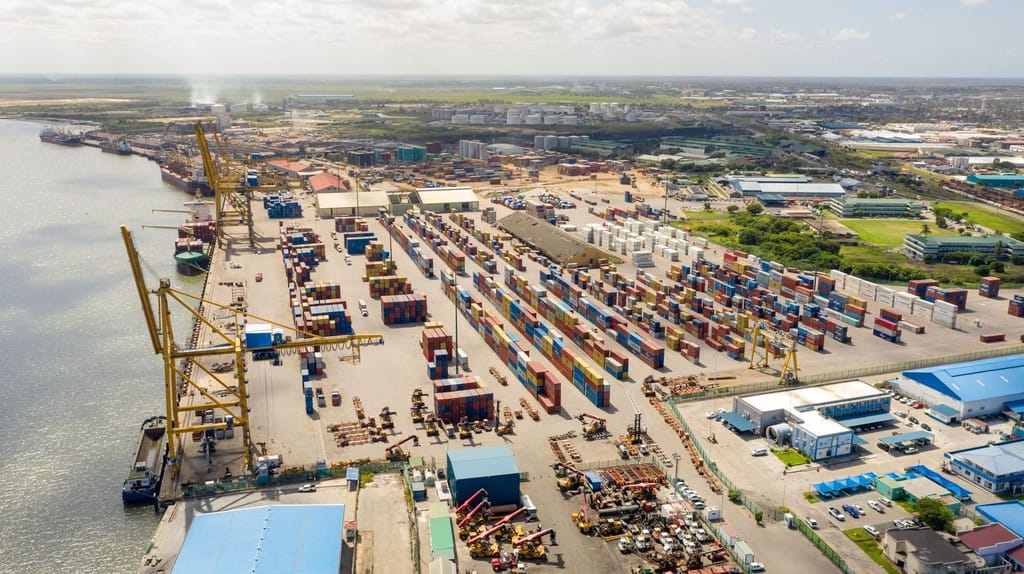
TLGC operates terminals in Mozambique, Namibia, and South Africa (Mozambique)

Published Sep 3, 2026 7:50 PM by The Maritime Executive


The Philippines-based ports operator ICTSI is signaling intentions to tighten its grip on the Southern Africa ports and logistics space. It entering into an agreement to acquire the South Africa-based The Logistics Group (TLG), an integrated logistics firm offering services across port, rail, warehousing and digital transport logistics.

ICTSI, which is already a major player in Africa with terminal operation interests in five countries including South Africa, revealed in regulatory filings that it has signed an agreement to acquire 100 percent ownership of TLG Acquisition Holdings.

The company did not reveal the amount it is paying to acquire TLG, which is currently owned by African Infrastructure Investment Managers (AIIM) and Mokobela Shataki Proprietary Limited. AIIM controls a 74 percent stake in TLG with Mokobela Shataki owning the remaining 26 percent. The two entities have been the shareholders of TLG for four years, having acquired the company that was started in 2019 in 2022.

The acquisition of TLG is strategic for ICTSI, which has deliberately been pushing to increase its presence in the African market that is fast emerging as critical in the global logistics and supply chains configurations. As an integrated port and cargo handling services provider, TLG has operations across Mozambique, Namibia, and South Africa where it handles a diversified range of bulk commodities and agricultural products across its portfolio of port facilities.

The Philippines-based ports operator reports that TLG will be a strategic addition to its southern Africa interests, a market where it has been seeking to dominate. Among its interests are the Matadi Gateway Terminal in D.R. Congo, and the Madagascar International Container Terminal.

In Africa, ICTSI is also the operator of the Onne Multipurpose Terminal in Nigeria and Kribi Multipurpose Terminal in Cameroon. The company’s entry into South Africa was delayed by court battles. In 2023, ICTSI was awarded a 25-year concession by Transnet to develop and operate the Durban Container Terminal (DCT) Pier 2, an award that was contested in courts by its rival APM Terminals. ICTSI got a major reprieve last year when the Durban High Court upheld Transnet’s decision.

Considering that DCT Pier 2 is the largest container terminal in Durban handling 72 percent of the port’s throughput and 46 percent of South Africa’s container traffic, the planned integration of TLG now expands ICTSI’s business beyond containers to other critical segments like bulk commodities, agricultural cargo and break bulk. TLG operates in countries where agriculture and mining are critical economic pillars.

As one of the world’s largest terminal operators, ICTSI has interests across 19 countries where it operates 34 terminals. The latest addition into its portfolio are two dry bulk port terminals at Brazil’s Port of Aratu that it acquired in July at a cost of $150 million.

On August 3, ICTSI released its first of half this year performance that showed its container throughput across its terminals increased by 16 percent to 8.1 million TEU compared to 6.9 million TEU in the same period in 2025. DCT Pier 2 was one of two terminals that significantly contributed to the growth, the other being the Batu Ampar Container Terminal in Indonesia.

During the period, ICTSI revenues increased by 27 percent to $1.9 billion from $1.51 billion while earnings before interest, taxes, depreciation and amortization grew by 24 percent to $1.2 billion compared to $990.5 million generated in the same period last year.


Australia Likely to Fine Racing Yacht After Hitting Great Barrier Reef

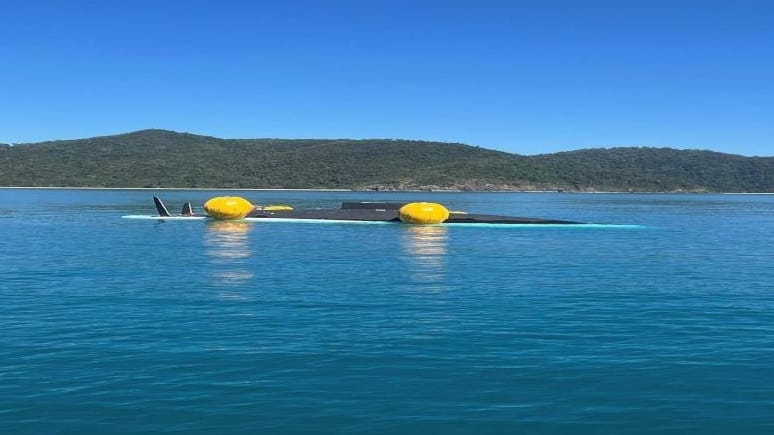
capsized racing yacht
Racing yacht overturned in the Great Barrier Reef region (Reef Authority)

Published Aug 31, 2026 6:05 PM by The Maritime Executive


The skipper and organizers of a thrilling odyssey to circumnavigate the planet could be slapped with hefty fines after one of the luxurious yachts in the flotilla grounded in an environmentally sensitive area in Australian waters.

The 82.5-foot (25-meter) Viva La Vida yacht (Oyster model 825), which is part of a 23-yacht flotilla participating in the 2026-27 edition of the Oyster World Rally, sank in the Whitsunday Islands, which form part of the Great Barrier Reef, a sensitive coral habitat ecosystem.

The Great Barrier Reef Marine Park Authority said that the yacht was sailing at high speed when she hit a rocky reef off Long Island, causing damage to the lower part of her keel. Following hitting the rock in the Whitsunday Islands, which are notoriously difficult to navigate, the vessel quickly capsized and was adrift.

All 10 people onboard the yacht were safely rescued following the incident that occurred during the odyssey’s Hamilton Island race week on August 21. Although there have been no reports of diesel leaks, the upturned wreck has been anchored to minimize the potential of catastrophic grounding as recovery operations continue.

According to Reef Authority, salvors have managed to stabilize the 56-tonne wreck on the surface with lift bags and intend to remove the mast and rigging and tow the vessel to Mackay in the coming week, depending on weather conditions.


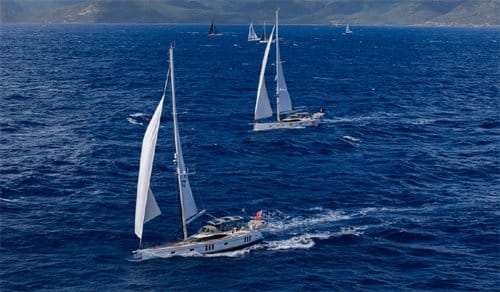
Yachts starting the adventure off Antigua in January 2026 (Oyster)


The Viva la Vida was one of seven yachts in the 825 series built by the British company Oyster Yachts. Designed by British design studio Humphreys Yacht Design, the vessel was delivered in 2019.

Oyster Yachts is the organizer of the Oyster World Rally, an odyssey described as the ultimate sailing adventure that gives expeditioners the thrill of circumnavigating the globe, covering 27,000 nautical miles in a span of 16 months starting and ending in Antigua. The exclusive event has been organized every two years since 2013, with the 2026-27 edition having started on January 18.

The skipper and the British firm are now facing the prospects of hefty fines following Viva la Vida's grounding in a sensitive coral habitat ecosystem that is part of the UNESCO World Heritage-listed site. Under Marine Park legislation, the maximum penalty for a vessel causing damage to the ecosystem is 1,000 penalty units, which is currently A$364,000 (US$260,668). The actual penalties depend on the circumstances and severity of individual incidents, with the largest fine imposed under this provision in recent years being under A$10,000 (US$7,200).

“Corals can be broken, crushed or dislodged in seconds, while recovery can take years,” said Mark Read, Reef Authority Field Management Strategy Director. “The responsibility is on every skipper to know the rules, remain vigilant and navigate safely.”

The Reef Authority said that almost 60 vessels run aground or sink in Great Barrier Reef waters annually, something that has forced the authority to impose fines in efforts to protect the sensitive environment.

It reports an average of 58 groundings and sinkings annually across the Great Barrier Reef Marine Park and Great Barrier Reef Coast Marine Park over the past five years. It has ranged from a low of 38 incidents to a high of 77 incidents a year.


Gulf War Forces Antarctic Expedition Firm to Replace Historic Liner

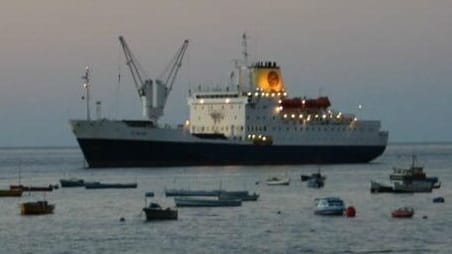
St Helena cargo-passenger ship
St. Helena transported passengers and cargo till 2018 as the last long-distance RMS vessel and sailing to the remote British outpost in the middle of the South Atlantic (Burgh House photo)

Published Sep 3, 2026 7:04 PM by The Maritime Executive


The start-up Terra Nova Expeditions announced this week that it has been forced to change plans for its inaugural expedition cruise season to Antarctica. The company had planned to bring back the historic liner St. Helena for a new career as an expedition ship, but was forced to replace the ship, creating an uncertain future.

St. Helena, built at the Appledore Shipyard in the UK and commissioned in 1990, provided a vital service to the island of the same name located more than 1,100 miles west of Africa and became one of the last RMS (Royal Mail Ships) in service. She is 344 feet (105 meters) in length and approximately 6,800 gross tons. She plods along at 14 knots, but her service primarily between Cape Town and Saint Helena, and continued to Ascension Island, was vital to maintaining a link to the outside world before there was an airport. The introduction of air service was her death knell, and despite the protests of her loyal following, St. Helena was retired in 2018.

The historic ship cheated the scrappers, finding a repurposing. She was briefly used as a vessel-based armory in the Gulf of Oman and later sold to the car racing group Extreme E, which used her as a transport for materials and cars. The company extensively renovated the ship in 2022, retrofitting her engines, updating her systems, and refurbishing her cabins and public spaces.

Terra Nova Expeditions emerged in 2025, saying they had chartered the quirky little ship and were refitting her to commence Antarctic voyages in 2026-2027. The first voyage was planned for December 2026. 

The company reported this week that St. Helena is currently unable to reposition from the Persian Gulf in a safe and timely manner for the start of the 2026/2027 Antarctic season due to the ongoing situation in the Middle East. According to her AIS transmissions, the ship, which is currently registered in Djibouti, has been caught in the Dubai area and last reported near Port Rashid in the United Arab Emirates. 

Terra Nova Expeditions said it spent several months working to secure an alternate vessel and has been forced to abandon plans for St. Helena and proceed with an alternate ship. It reports it secured a three-year season charter for the vessel that formerly operated as the Expedition and G Expedition, which it will rechristen Terra Nova Adventurer.


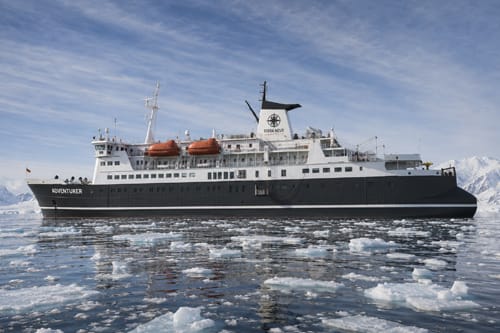
Terra Nova Adventurer will be a suitable replacement but is not the quirky St. Helena (Terra Nova Expeditions)


The replacement ship has a long history as well, and Terra Nova has the advantage of having an extensive history of expedition cruising in Antarctica, the Arctic, and other remote destinations. She had been sailing for the Canadian company G Adventures since being rebuilt for expedition cruising in 2008. The 6,333 gross ton ship started her life as a passenger car ferry in the Baltic, built in 1972. Currently, she appears to be laid up as the Vestland Adventurer, registered in Liberia.

Terra Nova Expeditions says it will undertake a series of enhancements ahead of the vessel’s first season with the company. Alongside new soft furnishings and décor throughout the ship, the project will include the remodeling of the bar and lounge areas and the addition of a Jacuzzi and new sauna on Deck 5. It reports, “The result will combine the vessel’s established expedition credentials with a refreshed onboard experience aligned with Terra Nova Expeditions’ approach to small-ship polar travel. 

The company says that its Antarctic itineraries and expedition program will continue as planned aboard Terra Nova Adventurer. Under the charter, the ship will remain with the company through the 2028/29 season.

The fate of the historic St. Helena, however, appears uncertain at best. 

LEGAL POT AND LADYBOYS


USS Abraham Lincoln Welcomed in Thailand After 286 Days Underway

USS Abraham Lincoln arriving Thailand
USS Abraham Lincoln looking weathered and worn coming into Pattaya, September 2 (AP Photo/Sakchai Lalit)

Published Sep 2, 2026 4:46 PM by The Maritime Executive


In what must be one of the largest naval port visits for decades, Carrier Strike Group 3 (CSG-3) headed up by USS Abraham Lincoln, arrived in Thailand for what will be for most a five-day visit, docking just to the north of Pattaya. There are approximately 5,000 servicemen and women aboard enjoying time ashore, which will last until Sunday, September 6.

The carrier USS Abraham Lincoln (CVN 72), with the CSG-3 staff as well as the nine squadrons of aircraft from Carrier Air Wing 9, pulled into Laem Chabang, along with the Arleigh Burke Class guided-missile destroyers USS Spruance (DDG-111) and USS Michael Murphy (DDG-112) from Destroyer Squadron 21, while the USS Frank E. Petersen Jr. (DDG 121) docked in nearby Sriracha. Ticonderoga Class guided-missile cruiser USS Robert Smalls (CG 62) docked in Map Ta Phut, south of Pattaya. 

CSG-3 deployed in November 2025 and has been at sea for 286 days, most of it while conducting operations. For the CSG, the only respite was a two-day port call in Guam before Christmas and a day call into Duqm in Oman on July 7. Reports are that the sailors had restricted access during the short stay.

For almost the entire period, the flight deck of the Abraham Lincoln has been active, day and night, maintaining over-watch of the CSG, in a high threat environment for 200 days. For all the ships and crews, there has been little opportunity for downtime. As well as an extraordinary display of human resilience, the technical challenge of keeping such a sophisticated and complex activity operational over such an extended period of time will have set several world records, and all without suffering combat casualties. 


Abraham Lincoln arriving in port (USN)


Unsurprisingly, there have been complaints from families at the extended duration of the deployment, which will also have been taxing, particularly on the younger sailors not used to extended periods away from home, but nevertheless operational readiness has been maintained throughout. Heavy wear and tear on the ships as well was evident as the ships came into harbor, particularly on the Abraham Lincoln, which looked battered, bruised, and heavily rusted. The CSG has been operating in the Northern Arabian Sea, which in recent months has been subject to seasonal heavy monsoon weather and stormy seas. The weathered appearance of the carrier, however, drew extensive attention, including from the Chinese media.

The US Navy and the Thai authorities have gone to some effort to make sure that the port call goes well, with nobody wanting accidents to mar the homecoming of the CSG. To that end, the sailors have been banned from taking part in what can be described as dangerous sports, such as paragliding and use of jet skis, and there will be limits to the number of sailors allowed ashore at any one time to stop the town being overrun. Buses are taking sailors to hotels around the district, with some travelling further afield to Bangkok. Reports are that they have also been restricted from visiting certain districts. While Royal Navy ships are “wet” at sea, albeit no longer with a daily issue of rum, US Navy ships have traditionally been dry, so for many sailors there will need to be a gentle re-introduction to alcohol. 

The visit has been particularly welcomed in Thailand, where visitor numbers have been heavily depressed by the conflict in the Gulf. Tourism receipts from this port visit alone should be sufficient to turn the year around. Pattaya Mayor Poramet Ngampichet has estimated that his town could benefit from sailors spending an average of $100 per day when ashore. 

Challenged by reporters about the record deployment, Donald Trump responded: “It wasn’t long enough.” 

The visit marks USS Abraham Lincoln’s first full port stop since the start of the deployment in November 2025, which included a continuous stretch at sea that lasted 208 days, versus the typical 30 to 45 days between ports. She spent after nearly seven months of operations supporting the war in Iran. The carrier was replaced by USS George Washington, but the Navy has not officially confirmed that it will be returning to the United States after the port stop. 


Red Sea Coastal Battles Intensify Raising New Concerns for Shipping

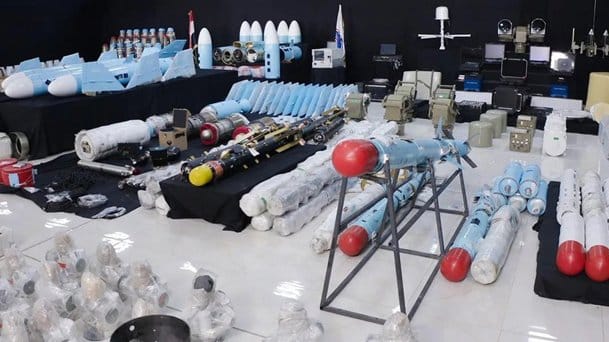
Iran arms shipped to Yemen
A display of the Iranian arms shipment intercepted on August 22 by National Resistance Forces on its way to the Houthis (NRF)

Published Sep 3, 2026 10:25 AM by The Maritime Executive


Fighting has intensified on most of the border between Houthi forces in Yemen and the areas held by the internationally recognized government (IRG). The scale of fighting is much worse since an informal ceasefire came into force in March 2022, but has not yet returned to full-scale warfare, largely because the Saudi-led coalition has not fully engaged – although most parties are preparing for the worst.

Probably the principal focus of the current fighting is the coastal strip bordering the eastern side of the Red Sea. To the north and south of Hodeida, the coast is held by the Houthis, including Yemen’s second biggest  port in Hodeida itself, plus Ras Isa, and Salif further north – through which aid reaches the country, but also the arms and munitions which the Houthis need to arm their war machine. The IRG holds a small stretch of the coastline leading up to the Saudi border, and then the coastline south of Hodeida down to the Bab el Mandeb and the entrance to the Red Sea. Most of the islands in the Red Sea remain in the hands of the IRG, save those close-in to the Houthi-held coastal strip. By hanging on to the coast south of Hodeida, the IRG makes smuggling of arms to the Houthis difficult, and also inhibits attacks on ships where the Red Sea, at its southern end, is at its narrowest.

In the current clashes, the Houthis seek to expand their coastal strip – to make it easier to smuggle in goods and attack shipping. The IRG, in contrast, led in this area by the murdered President Ali Saleh’s nephew, Major General Tariq Saleh, is intent on regaining Hodeida, to reduce the Houthis’ access to the outside world.

From the number of funerals being held in the Tihama coastal strip from both sides of the conflict, the fighting appears to have been heavy, with large numbers of casualties attributed to the novel use by both sides of camera- and bomb-equipped drones. But as yet, there appears to have been no substantial change to front-line positions or territory held.

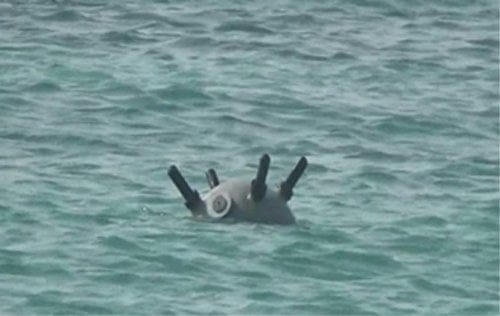
The importance to the Houthis of gaining ground in this area has been demonstrated in recent days by the Houthi’s firing of at least six high-value Fateh-110 ballistic missiles from the Ibb and Ta’izz areas at targets in the IRG territory being defended by General Tariq and his National Resistance Forces (NRF), most notably at the harbor facilities in Mocha, Khawkah, and on the Hanish Islands, as well as front-line positions further inland. General Tariq’s forces claim to have fended off an attack by five Houthi speedboats that were aiming to make a landing on Zuqar Island off Khawkah. The Emiratis built an airfield on this island before they left earlier this year precisely because Red Sea commercial traffic could be interdicted by any force holding the island, using speedboats, mines or missiles. The NRF also on August 22 apparently recovered a very clean (hence only recently sown) Iranian Maham-1 sea mine in the Bab-el Mandeb area, together with a bobby-trapped boat. 


The Maham-1 sea mine swept by NRF marine forces in the Bab el Mandeb (NRF) 


In an alarming development, the NRF reports that on the same busy day, they intercepted a large consignment of Iranian arms destined for the Houthis on board a dhow in the Red Sea. If this is verified, it suggests that the IRGC arms smugglers of Unit 190 can still slip past the US naval blockade in the Gulf of Aden in small dhows. Or more likely, that they have employed their well-practiced flexibility and use of drug-smuggling routes to find arms shipment corridors to the Horn of Africa, and thence by dhow across the Red Sea.

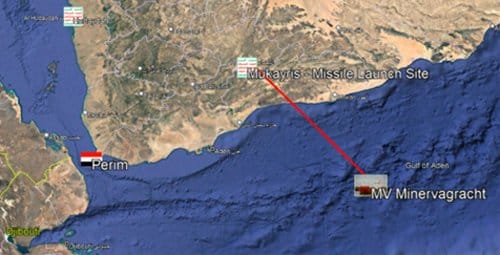
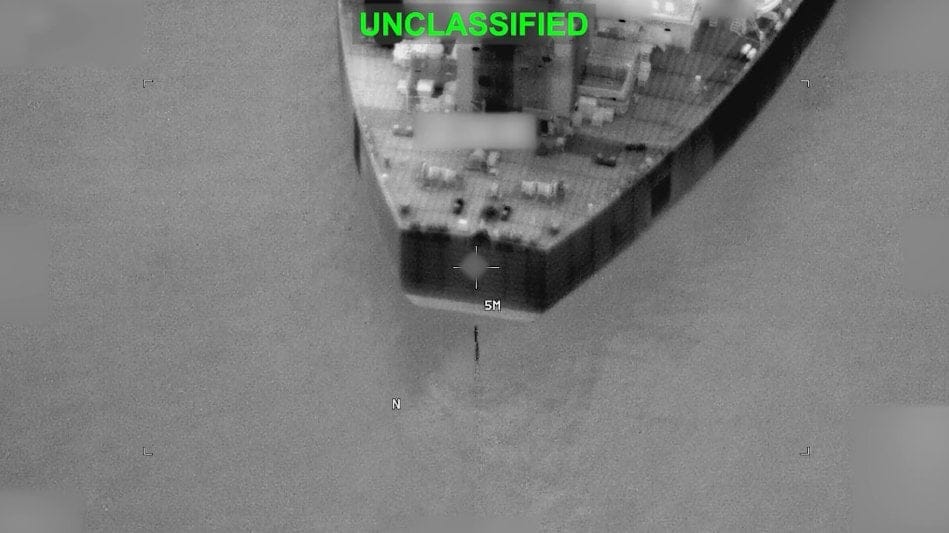
If the pictures published by the NRF are to be believed, the consignment included complete assemblies and components for at least 25 Mandab-2 anti-ship cruise missiles, which are based on the Iranian Noor/Ghadir missile and in turn upon the Chinese C-802. This is a missile with a range of about 180nm, and was probably the missile used by the Houthis to attack the MV Minervagracht (IMO 9571521) in September 2025.


Having such range as well as its own independent active radar terminal guidance, a Mandab-2 missile can be fired from high ground inland, threatening both ships in the lower Red Sea and on the Maritime Security Transit Corridor in the Gulf of Aden, needing only a cue from a Chinese or Russian imagery satellite.

Warfare between tribes and different parties has been endemic in Yemen for centuries. It becomes relevant for the international maritime community when one side appears intent on improving their ability to attack the shipping of external parties in the Red Sea and Gulf of Aden, hoping to exploit political leverage out of such attacks as the IRGC is attempting to do in the Strait of Hormuz. As yet, general warfare has still not quite resumed, but when and if it does so, the Saudis are well prepared, lessons having been learned from the last round of the contest. While reluctant to get involved in fighting yet again in Yemen, the Saudis know that with the Strait of Hormuz blocked, their gateway to Asia through the Red Sea must at all costs be kept open.


Iran Threatens “Additional Punitive Measures” as US Goes Tanker-for-Tanker

US striking Iranian tanker
U.S. showed images of two tankers among the targets struck in the latest wave of attacks (CENTCOM)

Published Sep 2, 2026 1:04 PM by The Maritime Executive


Iran and the United States are further escalating the contest for the Strait of Hormuz and the attacks on tankers. U.S. Central Command included images of two tankers being struck as part of its "highlights" reel from the September 1 retaliation for Iran’s "attempted attacks" on commercial shipping, while the Islamic Revolutionary Guard Corps (IRGC) made further claims of tankers hitting mines in the Strait of Hormuz while threatening increased actions.

CENTCOM reported that it had struck IRGC targets, including air defense sites, radar systems, maritime assets and facilities, mine laying capabilities, and communications sites during strikes that began late on Tuesday, September 1. It came as Donald Trump wrote online, “I’m not trying to force Iran to the bargaining table... I couldn’t care less if they sign a worthless, to them, agreement. I like our position now much better, with almost total control of the Hormuz Strait, and their economy totally collapsing.”

Axios is quoting unnamed U.S. military sources that said the two tankers shown in the video were “anchored off Iran’s north coast of the U.S. naval blockade.” It says U.S. drones launched missiles into the tankers’ engine rooms. No details were supplied on which vessels were struck.

It is reported to be part of a larger “tanker-for-tanker” policy approved by Donald Trump. The sources said it is designed to “further deter Iranian attacks on tankers that move through the Strait.” The sources said the U.S. is trying to reduce the risk for tankers by a strategy to “mow the lawn.”


Officials in the Gulf states and CENTCOM confirmed that Iran had launched retaliatory attacks on U.S. positions in Bahrain, Kuwait, and Jordan. The U.S. asserts that less than half the 25 ballistic missiles fired toward Jordan reached the country’s airspace, with 10 intercepted and three landing without casualties. Iran is claiming mass casualties. Most of the two dozen drones aimed at Bahrain, the U.S. says, were intercepted. Drones and missiles were fired at Kuwait, and drones at the U.S. position in Erbil in the Kurdistan region of Iraq.

Trump posted online Wednesday morning saying, “Now that we have it (Strait of Hormuz) under U.S.A. control, should we change the name Hormuz Strait to TRUMP STRAIT?”

The IRGC, however, issued a new statement today claiming that two “non-compliant oil tankers” had caught fire and were “rendered immobile” after striking naval mines in the Strait of Hormuz. It made a similar claim on Monday, which CENTCOM denied.

There, however, were reports on Monday that Iran struck the South Korean-owned tanker Senegal Prosperity, which the Joint Maritime Information Center said was listing and dead in the water. It said the crew had been evacuated. In addition, Saudi Arabia’s Bahri issued a statement today confirming that its tanker, Sidr, was also struck on August 31, resulting in the death of two Filipino crewmembers. The tanker is reported to be anchored in the Strait, with Bahri saying it remains in continuous contact with the vessel. 

The IRGC asserted that the U.S. actions would “not weaken its control over the Strait of Hormuz.” Further, the so-called Persian Gulf Strait Authority increased its list of “non-compliant vessels” to 57 total, up from 46 last week. It continues to say vessels violating Iranian protocols for the Strait of Hormuz shall face restrictions on future passages, including fines, detention, or confiscation. It also continued the warning to charterers to review the list and not become involved with these vessels to “avoid potential issues.”

The IRGC asserted that “additional punitive measures would soon be enforced against maritime companies that violate established legal routes and place their vessels at the disposal of foreign powers.”

The Secretary General of the Gulf Cooperation Council, Jasem Mohamed Albudaiwi, issued statements saying they “condemned in the strongest terms” Iran's attack on the positions in Bahrain, Kuwait, and Jordan and the tanker Sidr. He called the attack on the tanker a “dangerous escalation.” He said it was a grave violation of the principles of international law and a direct threat to the security and safety of international navigation.


Iranian Tankers Wait at Sea Off Sri Lanka and Malaysia Due to U.S. Blockade

tankers s-t-s
Indonesia caught shadow tankers conducting a ship-to-ship transfer (Bakamla)

Published Sep 2, 2026 1:10 PM by The Maritime Executive


It is a challenging time for the crews of Iranian-owned tankers. They are mostly stuck at sea, unable to return to ports in Iran because of the US naval blockade. On Tuesday, the U.S. also reported attacks on two Iranian tankers believed to have been anchored near the port of Bandar Abbas.

There is now a large fleet of empty tankers, which, having discharged their cargos – mostly in China – are now stranded at sea with nowhere to go.

So far the US naval blockade has been operated as a bar on ships of any flag seeking to load or discharge at Iranian ports, enforced from the Gulf of Oman on the approaches to the Strait of Hormuz. As of September 1, CENTCOM reports its forces have redirected 84 commercial vessels, disabled three, and boarded two to ensure compliance. However, there must be some nervousness within the Iranian tanker fleet that US naval action could expand to include the seizure of Iranian vessels elsewhere, as the blockade notification already covers. There previously were long-range actions on ships that have escaped the blockade.

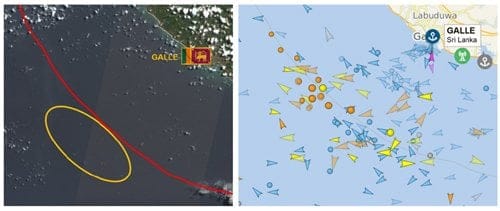
The fraught situation is evident in a cluster of Iranian tankers which has gathered in the Galle Anchorage off the south-west corner of Sri Lanka. The Financial Times estimated that “more than a dozen” of these ships are at anchor just meters outside Sri Lankan territorial waters, within which the seizure of a ship would be a breach of UNCLOS. Sri Lankan port authorities say that the ships are outside their territorial waters, and not therefore under their jurisdiction. But if the masters of the Iranian vessels thought they were under threat, they could quickly move into Sri Lankan territorial waters, not necessarily with any permission, and seek protection by default. These distinctions matter, because the Iranian frigate IRINS Dena (F75) was sunk on March 4 in international waters 40nm south of Galle with the loss of 87 lives, after Sri Lankan President Anura Dissanayake refused the ship refuge in Sri Lankan waters.


Periscope view as the stern of IRINS Dena fractures and lifts out of the water when hit by a Mk 48 torpedo fired by USS Charlotte (SSN-766) off Sri Lanka on March 4 (CENTCOM video)


Satellite imagery shows a large number of tankers at anchor on the territorial waters boundary, and interrogation of the VesselFinder database shows that many of these tankers (indicated by an orange dot) are vessels which are sanctioned by the United States, Canada, and the United Kingdom


Sentinel-2 imagery and VesselFinder map showing a cluster of sanctioned tankers just outside Sri Lankan territorial waters off Galle, August 29 (Sentinel-2/VesselFinder/©CJRC)


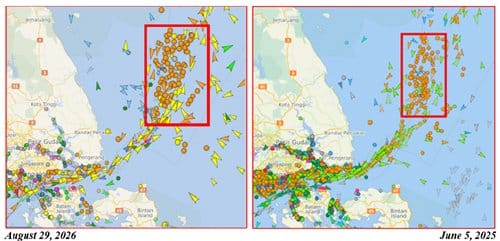
The Financial Times, quoting the NGO UANI (United Against Nuclear Iran), has also identified a further 48 tankers linked to trading in Iranian crude, which are anchored in the long-established ship-to-ship transfer box east of Johore and just outside the Malaysian Exclusive Economic Zone. There appear to be significantly more tankers at anchor in this area currently, and in a bigger box than when The Maritime Executive last looked in June last year.  


Tankers at anchor off Malaysia but outside its Exclusive Economic Zone (Vesselfinder.com/CJRC)

Kpler currently estimates that Iranian oil stocks held afloat appear to have declined from 192 million barrels in mid-April to about 80 million barrels at the end of August. Most of this stock, however, is already pre-sold and is waiting off Chinese ports for unloading. Where data from Iranian-associated tankers is available on VesselFinder, draught in the water readings suggest that almost all of those off Sri Lanka and most off Malaysia are unladen. 


Tugboat Boat Capsizes with One Crewmember Saved, Six Missing, One Killed

tugboat capsized in South Korea
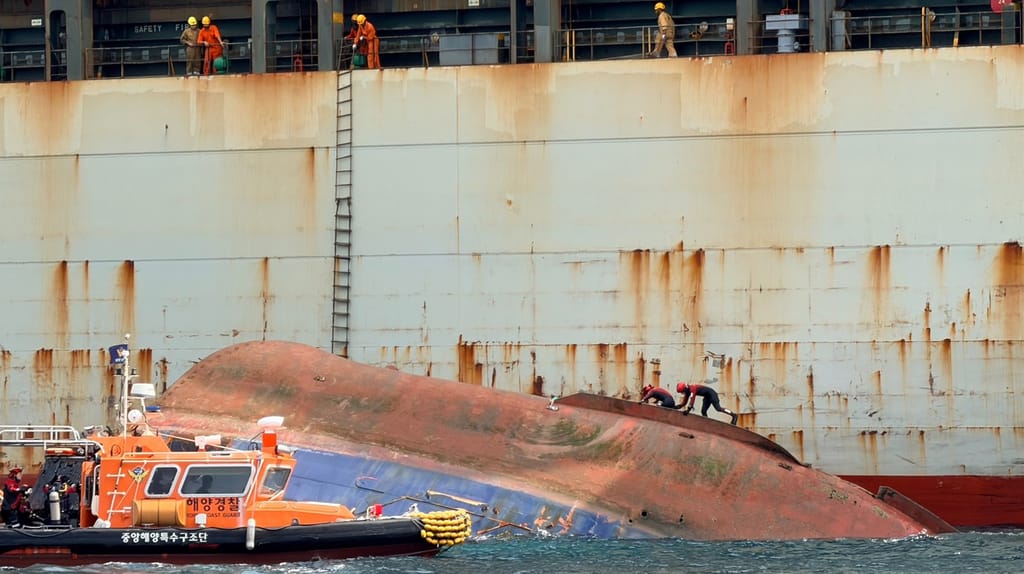
Photo provided by Busan Coast Guard, South Korean Coast Guard personnel carry out a rescue operation after a tugboat capsized off Busan, South Korea, Wednesday, Sept. 2, 2026. (Busan Coast Guard via AP)

Published Sep 2, 2026 2:29 PM by The Maritime Executive


One crewmember, the cook, aboard a South Korean tugboat, miraculously survived as the boat he was working on capsized off Busan, South Korea, on Wednesday afternoon, September 2. Search and rescue teams recovered the body of one other crewmember and were continuing to search for six others who were still missing as night fell on Busan.

The 286-ton tugboat TNS Catcher had been dispatched Wednesday morning with a crew of eight aboard and was assigned to assist a containership. The vessel is not being named in the Korean media, only identified as a 66,332-ton Liberian-flagged vessel. The tug built in 2007 was 34 meters (110 feet) in length.

It is unclear from the reports if the operations had begun, but the tug was near the containership based on the pictures released by the Busan Coast Guard. The tug suddenly overturned at around 1:29 pm local time.

The 53-year-old Indonesian cook told reporters that he had been in the galley and ran when he realized the vessel was in trouble. He was able to climb on top of the stern of the overturned tugboat, and the containership saw him and lowered a ladder for him to climb up. He said the tug’s second engineer had followed his escape but had fallen into the water.


The Coast Guard immediately dispatched 13 rescue boats and began a search, also using helicopters and aircraft. It asked for additional assistance, and South Korea’s President Lee Jae Myung mobilized the Navy to assist. By nightfall, the Coast Guard reported that 19 boats, including the Navy, Busan metropolitan government, and fire authorities, were continuing the search.

Pictures show the Coast Guard team atop the capsized tugboat attempting to search the vessel. The boat remained afloat for about two hours before sinking in water at a depth of 87 meters (285 feet).

The Coast Guard reports the search was being hampered by waves up to 1.5 meters (5 feet). The winds were up to 13.5 mph.

The unconscious body of a male, later reported to be a 57-year-old Korean, was taken to the hospital, where he was pronounced deceased. The crew consisted of six Koreans and two Indonesians.


Breakaway Tanker Stopped by Roadway Bridge Supports

tanker stuck on roadway bridge
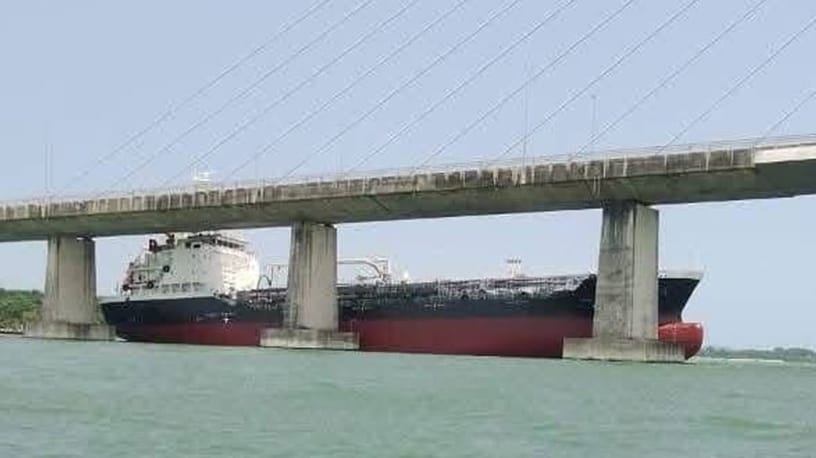
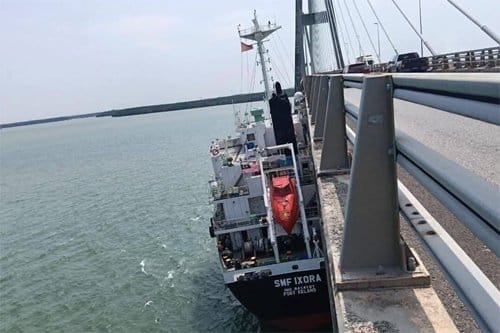
Tanker was stopped by the supports under the bridge (social media photos)

Published Sep 3, 2026 12:50 PM by The Maritime Executive


A small Malaysian product tanker went out of control of the tugs that were relocating the ship on Wednesday, September 2, and became wedged up against a highway bridge. Authorities are saying the damage was only minor, but drivers crossing the Sungai Johor Bridge were concerned as they saw the 5,643-dwt tanker heading for the bridge.

The Maritime Department believes the tanker SMF Ixora was being relocated early Wednesday afternoon while at the Benzmark Marine Shipyard in Johor, Malaysia. The tanker is 100 meters (328 feet) in length and used for bunkering operations.

“The tugboat escorting the vessel was reportedly unable to control its movement due to the strong current and limited towing capacity,” said the Marine Department in a statement. Citing the strong current, they said the vessel began to drift on the Johor River. 

The vessel became stuck alongside the 5,600-foot roadway bridge crossing the river. Opened in 2011, it is the longest central-span bridge in Malaysia and provides access for one of the country’s major highways.

Several additional tugs were called in, and working with the tide, they were able to free the ship and return it to the shipyard’s anchorage. The reports said there was minor damage to the exhaust system, railing, and navigation equipment. The bridge sustained minor damage, and the roadway remained open.