Friday, September 04, 2026


Chile copper thieves are thwarting security measures on mine trains

AI-generated stock image by By Sawaratch.

Gangs raiding copper trains across Chile’s remote Atacama Desert are growing bolder and more tactically sophisticated, breaching anti-theft protections that had worked for years, miner Antofagasta Plc (LON: ANTO) warned in a memo reviewed by Reuters.

The copper miner and rail operator ​sounded the alarm in a meeting with authorities this year.

Chilean prosecutors say some thieves jump from trucks onto rail cars crossing isolated stretches of desert, toss 80-kilo copper ‌slabs from moving trains to waiting gang members and then escape into the desert. Others use hook lines to pull entire stacks of copper from slowed trains.

The stolen copper is sold to illegal scrap yards, melted down to remove identifying markers and shipped abroad, often disguised as scrap cargo to destinations like China.

“Today, copper cathode theft in railway transport represents a direct risk to worker safety, mining operational continuity and protection of a strategic logistics chain for the northern part of ​the country,” Antofagasta said in the memo, prepared in May for Chile’s security ministry as follow-up to a March meeting with former Security Minister Maria Trinidad Steinert.

Copper is critical to manufacturing ​and fast-growing markets for electric vehicles and renewable energy. The scale of robberies remains modest compared to monthly exports by one of the world’s largest ⁠copper producers, which reached $5.37 billion in July. Yet any escalation of copper theft is still a problem in Chile, whose economy relies on exports of the red metal and which supplies roughly a quarter of the world’s copper.

Antofagasta’s ​subsidiary Ferrocarril de Antofagasta a Bolivia (FCAB) operates about 700 km (435 miles) of railway used to move copper from its own mines as well as operations run by rivals to ports.

The thefts occur in lonely parts ​of northern Chile, where trains haul copper cathodes across mile after mile of desert terrain with limited nearby infrastructure or communications coverage.

Antofagasta did not respond to a request for comment to provide further details.

Picking up pace

The pace of robberies is accelerating. Antofagasta reported 86 robberies last year, more than double the 39 train heists local media logged in 2022. In the first four months of 2026, thieves had already struck 34 times, stealing 169 metric tons, equal to 71% of what was ​taken in all of 2025.

One repeated target is the train carrying copper from state-owned Codelco’s Chuquicamata mine. Antofagasta said it was hit dozens of times last year, with thieves making off with $2.4 million worth of ​the red metal.

The rail operator has since budgeted nearly the same amount to install an anti-theft cage and assign a security crew to the line.

Cages bolted onto train cars were the firm’s “most effective control” against the desert heists, ‌Antofagasta said. But ⁠attacks have recently become more brazen, according to the firm.

In early 2026, a train outfitted with a cage carrying ore from Freeport-McMoRan’s (NYSE: FCX) El Abra mine was hit twice in two weeks, Antofagasta said.

“This demonstrates a higher level of adaptation, coordination, sophistication and risk appetite on the part of the gangs,” the train operator said.

Copper cargo is typically insured during transit, limiting financial losses. But the company said its workers are also in danger. Criminals escaping with copper this year pelted the operators of one train with rocks.

Copper smuggling crackdown

Security analysts say gangs have evolved into quasi-paramilitary operations, well-equipped with firearms and bulletproof vests.

In April, authorities dismantled ​a major copper-smuggling ring that had allegedly moved an ​estimated $917 million worth of the red metal ⁠out of the country from 2020 to 2025. The operation was the first major bust under President Jose Antonio Kast, who took office in March vowing to crack down on crime.

At the time, then-Deputy Minister of Public Safety Andres Jouannet promised quick progress on combating copper theft, vowing to set up working groups ​to tackle the issue. He was replaced in early June.

The ministry did not respond to requests for comment on the working groups, or on any ​actions taken following the ⁠office’s meeting with Antofagasta.

Codelco and Freeport-McMoRan, both targeted by the thefts, did not respond to requests for comment.

Legislators have pledged to tackle the issue. But even as robberies have ramped up, a bill that would make copper theft a specific criminal offense has stalled in the lower house since clearing the Senate in 2024.

Several lawmakers on the house mining committee did not respond to requests for comment.

Kast has pushed for tougher powers to ⁠combat crime, proposals ​which have faced resistance in Congress. But he has also framed security improvements as an economic necessity for mining companies ​currently forced to shoulder mounting protection costs.

“Mining companies shouldn’t have to dig trenches to prevent theft of machinery, or send armed guards up into mines just to get product out,” Kast said last week. “That’s the security we’re looking for.”

“Organized crime has changed,” Kast ​said. “These are transnational organizations that require a different legal framework. We need to agree on what that framework should be.”

(Reporting by Kylie Madry; Additional reporting by Fabian Cambero; Editing by Lucinda Elliott and David Gregorio)

 

Copper price stalls short of record as Chile’s storm-hit output slumps to 2011 low


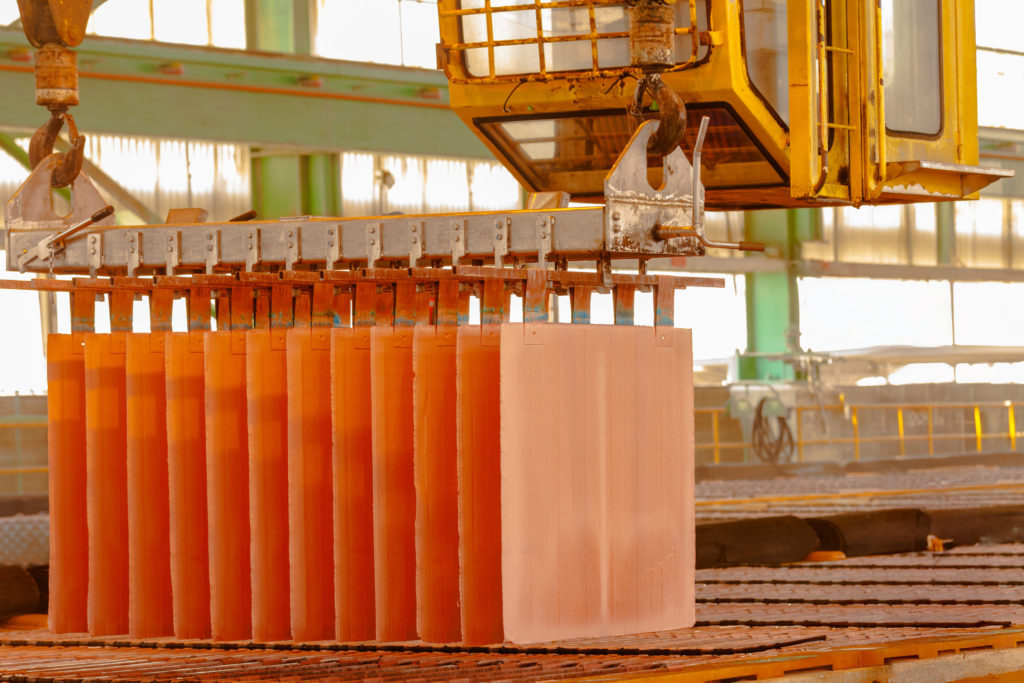
Copper cathodes hanging from a crane in an electrowinning plant at a copper mine. Credit: Adobe Stock/Jose Luis Stephens

Copper slipped in New York on Tuesday, giving back an advance in London, as a global bond selloff and a firmer dollar cut into a rally that has carried the metal to within touching distance of record highs.

Comex copper for December delivery, which took over this week as the most-active contract, fell 1.3% to $6.6020 a pound (about $14,555 a tonne) by late morning in New York, after trading as high as $6.7420 earlier in the session. The September contract touched an all-time high of $6.7775 last Wednesday.

In London, three-month copper came within $2.50 of its own record last week, touching $14,525 a tonne against the all-time intraday peak of $14,527.50 set on January 29. LME inventories have fallen for four straight sessions, to 234,275 tonnes.

Copper price 2026 chart, Comex most-active contract
Click on chart for live prices.

Traders have spent the year shipping copper into the United States ahead of a 15% duty on refined imports due in January 2027, rising to 30% in 2028, a trade that has dominated the paper market and drained warehouses everywhere else. Comex stockpiles reached about 688,000 tonnes on August 31, almost three times the LME total, according to Bloomberg.

CRU projected a 639,000-tonne global surplus for 2026 but now regards the market as at best balanced. “If imports keep coming in as they have been, then it’s going to look like a deficit market in reality,” principal copper analyst Robert Edwards told Reuters last week.

Chile’s missing tonnes

Chile produced 403,424 tonnes of copper in July, down 9.4% from a year earlier and 9.8% below June, the weakest July for the world’s biggest producer since 2011. The national statistics agency blamed weather in the north of the country that hindered normal production, along with maintenance at major sites.

The damage showed up in the wider economy on Tuesday. Chile’s Imacec activity index, a proxy for GDP, fell 1.5% in July from a year earlier against expectations for 0.4% growth, with mining down 9.3%. The 1.7% monthly drop was the steepest since 2022. “These results were partly affected by weather conditions that disrupted the normal operation of production facilities,” the central bank said.

The storms, arriving as El NiƱo intensifies, shut Antofagasta’s Los Pelambres and Lundin Mining’s Caserones. Antofagasta cut 2026 guidance to between 625,000 and 655,000 tonnes from 650,000 to 700,000 alongside first-half results on August 13, and Lundin trimmed Caserones to 120,000 to 130,000 tonnes from 130,000 to 140,000 six days later, after a second storm brought down a transmission tower.

Monster month for equities

Copper producers fell with the metal on Tuesday, though the month behind them looks very different. Freeport-McMoRan, down 2.6% to $73.76 on Tuesday, has still gained 17.8% over the past month, the best of the majors, ahead of First Quantum’s 15.6% and Ivanhoe Mines’ 15.3%. Southern Copper is up 13.3% over the month, Teck Resources 11.4%, Glencore 10.7% and BHP 10.5%.

The two producers that cut Chilean guidance are the laggards. Antofagasta, ahead 4.9% over the month, dropped 5.1% on Tuesday, the worst performer in the group, while Lundin Mining has managed just 2.9% and fell 3.8% in Toronto.

Teck has a second story running. Anglo American aims to close its $53 billion merger with the Canadian miner as soon as next month, pending Chinese approval, and Glencore’s 44% stake in Collahuasi stands between the enlarged company and the $1.4 billion in annual earnings that Anglo believes it can unlock by linking that mine to Teck’s Quebrada Blanca.

Sibanye-Stillwater, down 0.8%, used first-half results on Tuesday to commit to the $340 million Mt Lyell copper-gold mine in Tasmania, targeting first ore in 2029 and 26,000 tonnes of copper a year over a 23-year life.

Comex copper is up about 15% in 2026 and 44% over the past year.


Vulcan Energy seeks investors for German lithium expansion project, courts Asian interests


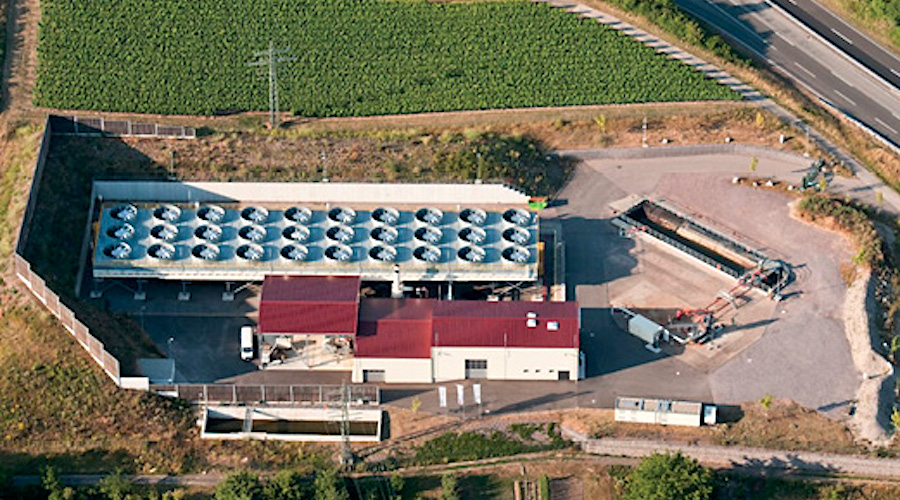
Vulcan’s geothermal power plant in Germany. (Image courtesy of Vulcan Energy Resources.)

Lithium developer Vulcan Energy Resources (ASX: VUL) on Thursday announced phase two of its lithium project in Germany’s Upper Rhine Valley and commenced process to bring in additional strategic investors.

Funding efforts for the second phase, Project Ludwig, are being launched as construction gets underway on the project’s first phase, Lionheart.

Vulcan will produce mainly EV battery-grade lithium chemicals using geothermal brine and also provide renewable heating.

The Perth-headquartered company owns 86% of the first phase of the project, Project Lionheart, while the remaining 14% is owned by the German government-backed Federal Raw Materials Fund.

Vulcan also owns 85% of Project Ludwig, while existing investors German industrial conglomerate Siemens SIEGn.DE , construction group Hochtief (ETR: HOT) and investment firm DemEA hold the remaining 15%.

The company is now launching a process to bring in additional minority strategic investors

“We are looking for strategic investors to take a minority stake at the asset level. Phase one investors were very Eurocentric. For phase two we have interest from European investors but of the unsolicited interest, a lot is coming from Asia,” Executive Chair Francis Wedin told Reuters.

Vulcan’s search for a strategic investor comes as Asian battery and EV makers establish supply chains in Europe. World’s largest EV battery maker CATL (SHE: 300750), raised about $4.6 billion in a Hong Kong listing in 2025, saying most of the proceeds would fund a battery plant in Hungary as part of its overseas expansion strategy.

With the Vulcan’s stock down 41.5% year-to-date and closing at A$2.610, near its 52-week low, the search for a strategic investor comes at a key juncture as the company looks to mitigate risk through partnerships

(Reporting by Shravya Marakini in Bengaluru and Melanie Burton in Melbourne; Editing by Nivedita Bhattacharjee)


Ionic Rare Earths, US Strategic Metals form JV to build $100M magnet recycling plant in Missouri  


Metal recycling. AI-generated stock image by DigitalSpace.

Ionic Rare Earths (ASX: IXR) has, through its wholly owned U.S. subsidiary, Ionic Rare Earths USA, entered into a joint venture (JV) term sheet with Missouri-based US Strategic Metals (USSM) for the construction of magnet recycling facilities at USSM’s fully permitted site in Missouri. 

Ionic USA and USSM have agreed to form a 50-50 JV that plans to develop an integrated campus for the production of critical minerals and metals at USSM’s 1,800-acre (728.4 ha) fully permitted site near Fredericktown. 

The JV aims to construct one or more magnet and other rare earth recycling facilities at the site, processing recycled permanent neodymium-iron-boron (NdFeB) and samarium-cobalt (SmCo) magnets and magnet scrap. The companies also said they intend to evaluate recycling heavy rare earth elements (REEs). 

The JV will be funded with $100 million for the construction of initial NdFeB and SmCo magnet recycling facilities, comprised of $95 million funding from USSM and a $5 million equity contribution split equally between Ionic USA and USSM.  

The initial $5 million equity contribution will be used to complete front end engineering design or the facility and accelerate demonstration-scale magnet recycling at the site or other location agreed on, the companies said.  

Under the proposed deal, IonicRE’s wholly owned Belfast subsidiary, Ionic Technologies, will contribute a non-exclusive licence to the proposed JV for its magnet recycling technology for the recycling of magnets and magnet scrap plus other heavy REE containing compounds. 

 
“The proposed JV will seek to provide IonicRE with a practical and capital-efficient method of building rare earth magnet recycling capacity in the United States, the world’s biggest economy,” IonicRE managing director Tim Harrison said in a news release.  
 
“Magnet recycling is a fast and low-cost pathway to developing a secure, sovereign and sustainable rare earths supply chain. It is intended that the proposed JV will deliver on the capability already demonstrated at demonstration scale at Ionic Technologies in the UK to deliver a resilient supply of high purity, separated REOs for US industrial needs.” 

Colombia scraps 10 mining restrictions to lure investors

President Abelardo De La Espriella. (Image courtesy of Defensores de la Patria.)

Colombia’s new government has repealed 10 resolutions restricting natural resource exploration and extraction, accelerating President Abelardo De La Espriella’s push to revive mining investment and unlock the country’s largely untapped copper potential.

Mining Minister Maria Nohemi Arboleda announced the repeal by decree Thursday at a mining conference in Cartagena. The measures, established under the previous leftist administration, restricted activity in designated areas under tighter environmental and land-use policies.

“Mining districts were intended to bring order to land use and support mining regions,” Arboleda said, local newspaper La Razón reported. “However, they were used to replace mining, were poorly designed, and as a result discouraged investment and exploration, dealing a blow to small-scale mining and efforts to formalize the sector.”

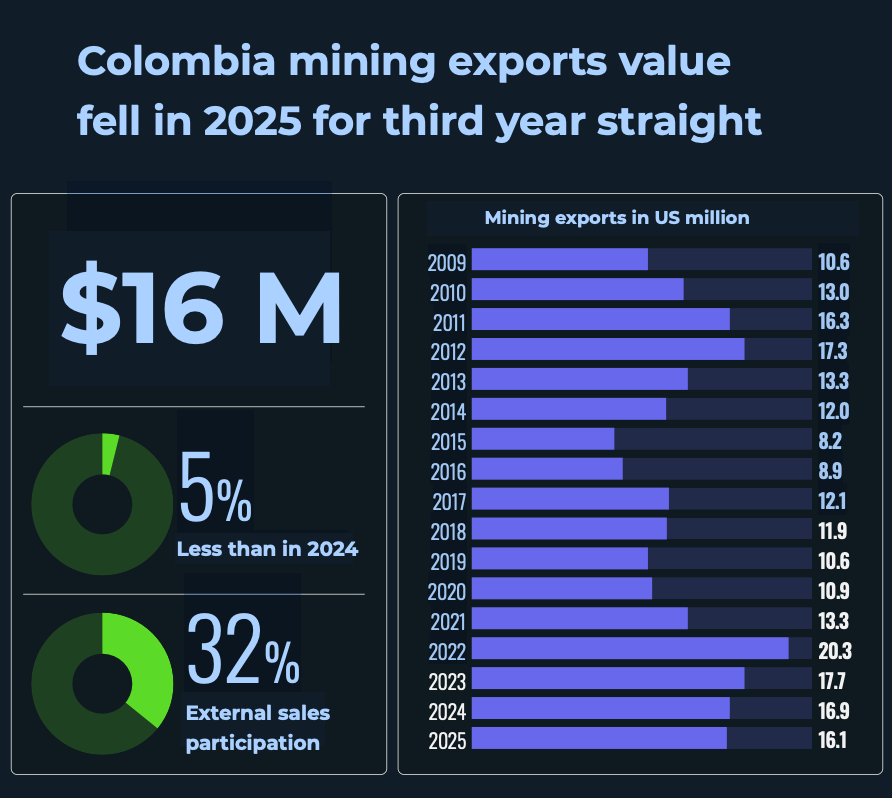
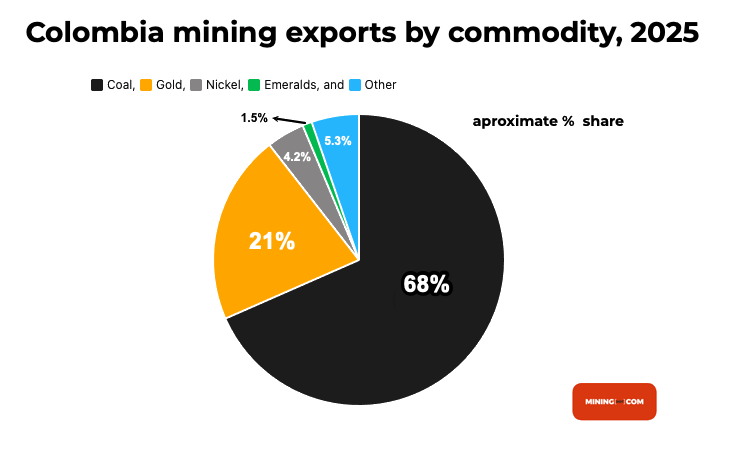
The reversal is an early test of whether De La Espriella can translate his pro-investment platform into exploration spending and mine development. Colombia has substantial copper, gold, coal and nickel potential, but lengthy permitting, regulatory uncertainty and security risks have constrained investment and left much of the country underexplored.

Regulatory reset

De La Espriella, who took office last month after campaigning on a right-wing economic platform, has promised to roll back restrictions on oil and mining as part of a broader effort to stimulate economic growth.

His administration can make some changes by decree, including simplifying administrative procedures, shortening licensing timelines and streamlining community consultations. More ambitious reforms could prove harder where legislative approval is required.

“We are going to eliminate a large number of procedures, we are going to be agile because we are eager to see results,” Arboleda said.

The shift marks a sharp break from former president Gustavo Petro, whose government tightened environmental oversight under its green-energy agenda. His administration sought to reduce Colombia’s dependence on fossil fuels while directing the mining industry towards strategic minerals and stronger environmental protections.

Among those measures was Decree 044, adopted in January 2024, which allowed the Environment Ministry to establish temporary natural resource reserves in mining areas and suspend activities for up to 10 years to protect sensitive ecosystems such as pƔramos.

Restrictions also emerged at the regional level. Authorities in Antioquia, one of Colombia’s most important gold-producing regions, established a temporary renewable natural resources zone across six municipalities and suspended new mining permits for three years.

The measures added to industry concerns about Colombia’s tax burden, lengthy permitting and security problems in mineral-rich regions. The Fraser Institute’s 2025 survey of mining companies ranked Colombia 42nd of 68 jurisdictions overall and 57th for policy perception.

Copper opportunity

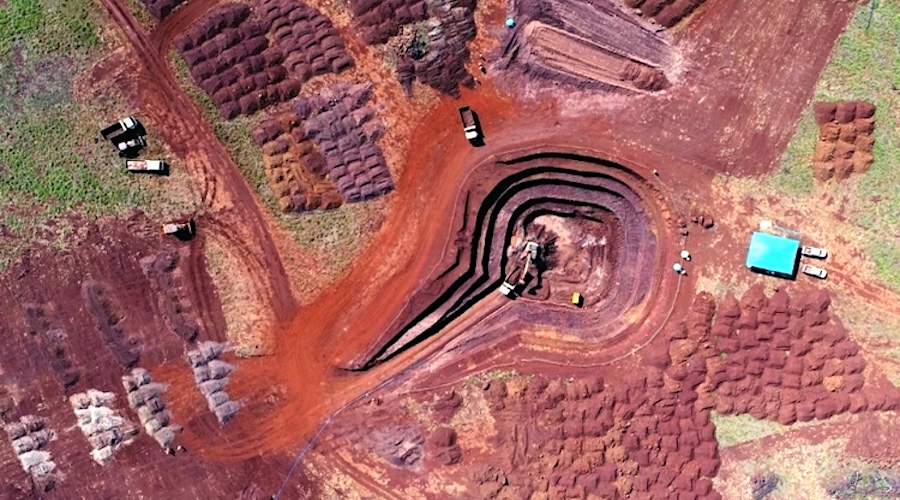
The regulatory reset could have its greatest impact on copper, where Colombia has substantial geological potential but little production.

The Colombian Mining Association estimates the industry could attract as much as $4 billion through 2030. The group sees investment opportunities across copper, gold, coal and nickel.

Colombia lies along the Andean geological belt that hosts some of the world’s largest copper deposits, yet its output is marginal compared with regional leaders Chile and Peru.

Atico Mining’s (OTCMKTS: ATCMF) El Roble, Colombia’s only significant producing copper mine, yielded 9.2 million lb. of copper, or about 4,200 tonnes, in 2025. By comparison, Chile produced about 5.5 million tonnes and Peru 2.7 million tonnes.

Colombia mining reforms test copper ambitions
Coal remains Colombia’s top mining export. (Sources: USGS, Asociación Colombiana de MinerĆ­a, ColombiaOne)

The development pipeline includes AngloGold Ashanti’s (JSE: ANG)(NYSE: AU)(ASX: AGG) Quebradona, Cordoba Minerals’ (TSXV: CDB) AlacrĆ”n, Libero Copper’s Mocoa and Royal Road Minerals’ (TSXV: RYR) Guintar-Aleman-Margaritas projects.

Colombia also launched tenders for 14 strategic copper areas in late 2025 under its 2024–2035 National Mining Development Plan. The government includes copper among 17 minerals designated as strategic.

Removing regulatory barriers, however, will not by itself turn those deposits into mines. Large copper developments can require billions of dollars and take 15 to 20 years to advance from discovery to production, putting a premium on predictable permitting and regulation.

“Colombia could become a meaningful copper producer, but it will not happen on potential alone,” Juan Ignacio Guzman, head of mineral consulting firm GEM, told MINING.COM. “It requires at least one, preferably two, large-scale mines reaching construction and steady-state.”

Security poses another hurdle. Illegal gold mining has expanded in parts of the country and is frequently linked to organized crime and narcotics trafficking, increasing costs, compliance requirements and risks for legitimate operators.

De La Espriella’s challenge now extends beyond dismantling his predecessor’s restrictions. Attracting the billions of dollars the industry says are available will require faster approvals alongside regulatory stability, community support and improved security.

Vale shelves base metals IPO amid Brazil pushback: report

The Salobo Mining Complex holds the largest copper mineral reserve in Brazil. (Image courtesy of Vale Base Metals.)

Vale (NYSE: VALE) has shelved plans for an initial public offering of its critical-minerals subsidiary Vale Base Metals Ltd. amid political opposition in Brazil to potentially losing control over strategic mining assets.

The Globe and Mail reported the decision, citing unnamed sources. London-based VBM was carved out internally from its parent in 2023 in preparation for an eventual listing and operates with separate management and investor-relations teams. CEO Shaun Usmar said in March the company was working to have the business ready for a potential IPO by midyear.

The listing could still be revived at a later date, according to the report.

VBM holds Vale’s global portfolio of copper, nickel and cobalt operations across Canada, Brazil, Japan, Britain and Indonesia. Vale acquired its Canadian nickel assets through its 2006 takeover of Inco Ltd.

Copper focus

VBM agreed in February to sell most of its stake in a Canadian nickel venture as Vale focuses on doubling copper production over the next decade.

The strategy comes as copper, a key metal for electrification and energy infrastructure, has outperformed nickel. Copper prices have climbed about 45% over the past year, roughly four times nickel’s gain.

Putting the IPO on hold leaves Vale with its base metals portfolio intact as it pursues that copper expansion, while preserving the option of returning to public markets with the unit later.


Brazil’s Congress approves bill establishing national policy on critical minerals


Araguaia nickel project in north Brazil. (Image courtesy of Horizonte Minerals.)

 Brazil’s Congress on Wednesday approved a government-backed bill establishing a national policy on critical and strategic minerals, as President Luiz Inacio Lula da Silva moves to set a legal framework for a sector getting rising interest from foreign investors.

The bill establishes a guarantee fund with an initial amount of 2 billion reais ($392.7 million) from the government and provides for 5 billion reais in tax credits over five years.

Under the new proposal, the government will also create a federal council responsible for determining which minerals will be classified as critical and strategic.

Critics fear the council could bring overwhelming government intervention to the sector, creating obstacles to its development.

The bill, pending Lula’s sign-off and approved by the Senate after the lower house green-lit it in May, clarifies the legal definition of minerals including nickel, lithium and other rare earths.

Despite a modest production, Brazil has the world’s second-largest reserve of rare earths behind China.

The abundance has garnered interest from countries seeking to lower their dependence on the Asian country, such as the United States and the European Union.

Rare earths are considered essential for technology in key industries from renewable energy sources to electric vehicles and weapons.

($1 = 5.0929 reais)

(Reporting by Maria Carolina Marcello and Marta Nogueira; Writing by Fernando Cardoso, Editing by IƱigo Alexander)


Brazil Hands Government Control Over Mining Deals


  • Brazil's Senate passed PL 2.780/2024 Wednesday, creating a presidential council that can block foreign takeovers of mining companies and review long-term supply contracts.

  • The bill grew directly out of USA Rare Earth's $2.8 billion deal for Serra Verde, the only company outside Asia mining the full set of magnet rare earths at scale.

  • Brazil still has no commercial magnet plant and refines almost none of what it mines; researchers put a fully domestic supply chain at six to nine years out, at best.

Brazil's Congress passed a bill Wednesday letting the government block foreign takeovers of mining companies and scrutinize who gets access to the country's mineral reserves…the thing is, though...Brazil still can't turn its rare earth ore into a single magnet, and won't be able to for years.

The Senate approved PL 2.780/2024 by voice vote, sending it to President Luiz InƔcio Lula da Silva for signature. It creates a national policy on critical and strategic minerals, a guarantee fund starting at 2 billion reais, about $393 million, to back mining loans, and roughly 5 billion reais, about $980 million, in tax credits over five years for companies that process minerals inside Brazil instead of shipping raw ore abroad, according to Rio Times.

The part that has miners nervous sits elsewhere in the text, however…

A new council attached to the presidency can review, and potentially block, changes in ownership of companies holding mineral rights, along with the long-term supply contracts that finance new mines. Bloomberg reported the law hands Brasilia broader scrutiny over mining deals, over industry objections that the rules could scare off the same foreign capital Brazil is courting.

"If we scare off foreign investors, or any other investor, the sector locks up," Pablo Cesario, chief executive of the Brazilian Mining Institute, told the South China Morning Post. He said the council leaves too much discretion with the executive branch over decisions that used to be purely commercial.

In April, USA Rare Earth agreed to pay $2.8 billion for Serra Verde, the only company outside Asia mining the full set of magnet rare earths at commercial scale. Left-wing lawmakers pushed to fold the sector into a state-owned company along the lines of Petrobras, nicknamed Terrabras. 

The Lula administration rejected that idea, but the new council was the compromise that survived, giving Brasilia a say over the next Serra Verde-style deal without nationalizing anything outright.

Here is what the law doesn't fix…

Brazil holds the world's second-largest rare earth reserves, but has no commercial magnet plant and refines almost nothing it mines. Andre Luis Pimenta de Faria, who runs the country's main magnet pilot plant for the industrial research group Senai, told a mining conference in Goias state last week that Brazil could produce a magnet from imported inputs by 2028 at the earliest. 

A fully domestic chain, from ore to finished magnet, is more like 2032 to 2035, he said, in comments carried by the South China Morning Post. Cesario called even that timeline optimistic, putting the average gap between a proven Brazilian reserve and first production at 17 years.

So the fight Congress just settled, over who gets to buy into Brazilian mines and on what terms, is a fight over ore, not industry. 

China still handles nearly all the processing that turns Brazilian rare earths into anything usable, and Serra Verde itself still ships its concentrate to Chinese refiners under contracts it renegotiated only last December. 

By Michael Kern for Oilprice.com


Radiant World sent lender fake Glencore deals, lawsuit says


Iron ore trader Radiant World used Glencore invoices that had already been paid, supported by fake contracts, in order to raise $31.7 million, a lender alleged in a filing to Singapore’s High Court.

The disclosure — in papers filed by Singapore-based Incomlend Pte., an invoice financing platform last week — marks the first time a lender to Radiant World has detailed allegations of fraud against it. Bloomberg reported in July that several top commodity firms had moved to cut ties with the company amid concerns it had provided falsified documents to banks to secure finance.

According to the court document, Amit Sharma, a senior executive for the Radiant World group, approached Incomlend in December 2025 asking for financing assistance, to be secured against invoices issued to commodity trader Glencore International AG, a purchaser of its cargoes.

Incomlend advanced $31.7 million in May 2026, the document says, against two invoices with a combined face value of more than $34 million, which Radiant World represented as unpaid amounts due from Glencore.

When Incomlend approached Glencore for payment in August, however, it was informed by the group that the invoices had already been paid, and that the underlying contracts were not genuine, according to the court filing. 

Radiant World made representations to Incomlend knowing “fully well that they were false and with the intention that the Claimants would rely on them to make available the total credit amount”, lawyers for Incomlend wrote in the document.

There were further discrepancies in the paperwork, including differing payment terms and bank account details, Glencore allegedly told Incomlend. For one, Glencore’s records showed a cargo had been shipped on a different vessel to the one named by Radiant World, according to the filing.

Radiant World has previously denied wrongdoing and said it conducts its business to the highest commercial and legal standards. The company did not immediately comment on the Incomlend allegations. A spokesperson for Glencore declined to comment.

Incomlend, as a platform, is not a direct creditor but is “pursuing the claim on behalf of the relevant funder,” the company said in a statement. “Incomlend intends to pursue the claim against Radiant World and its directors to the fullest extent.” 

Incomlend had expected to earn about $2.5 million in profit from the financing, according to the court filing. The firm is now seeking that amount as damages on top of the $31.7 million it advanced to Radiant World, bringing its total claim to over $34 million.

Incomlend is suing Radiant World, founder Pinkesh Nahar and Amit Sharma, who described himself to Incomlend as holding leadership roles in the group, as well as managing the group’s investment arm Tanas Capital. Sharma declined to comment, and a lawyer for Nahar declined to comment, citing ongoing litigation.

Radiant World now is facing a growing list of legal difficulties, including being sued in Singapore by Incomlend and Mizuho Bank Ltd., and is also facing probes by the US Department of Justice, the US Commodity Futures Trading Commission and Singapore police. A unit of Jefferies Financial Group Inc. won a worldwide freezing order against Radiant World and its founder Pinkesh Nahar, Bloomberg reported this week.

The company is little known outside the world of commodity trading, but has grown quickly to become a major player in the iron ore market. Its ascent has been supported by hundreds of millions of dollars in credit lines from a network of banks and credit funds, which have been in many cases backed by trade documents such as invoices and shipping receipts.

Glencore, one of the world’s biggest miners and traders, has been a major backer of Radiant World through its growth years and a key counterparty in many of its trades. It has since taken a provision of about $480 million on its exposure to the company. 

Radiant World has not yet filed a defense in the case and the next hearing is scheduled for Oct. 13.

(By Alfred Cang, Jack Farchy and Katharine Gemmell)


Trump plans to open Utah wildlife refuge to oil, gas drillers

Uinta National Forest Basin, Utah. Stock image by Jeremy.

Oil and gas drilling beneath a Utah national wildlife refuge will be permitted under a proposal the Interior Department announced Wednesday, reversing restrictions on fossil fuel development last affirmed by the George W. Bush administration.

Ouray National Wildlife Refuge, which protects 16 miles of the Green River in northeast Utah’s oil and gas-rich Uintah Basin, would be open to drilling under a proposal to amend the Bureau of Land Management’s Vernal, Utah, Resource Management Plan, which was completed in 2008.

This new proposal is among the numerous restrictions on fossil fuel development the Trump administration has either lifted or plans to lift in pursuit of its “energy dominance” agenda. Trump officials have opened Alaska’s Arctic National Wildlife Refuge to drilling, exempted offshore oil development in the Gulf of Mexico from the Endangered Species Act, opened millions of acres of Alaska to drilling, and slashed royalty rates, air quality controls, and other environmental safeguards.

Opening the Utah refuge to oil and gas leasing aligns with President Donald Trump’s executive order calling for “unleashing American energy,” the BLM said in an unsigned email Wednesday.

When asked why BLM is opening the refuge to drilling, the bureau cited $3 billion in economic benefits the state derives from the fossil fuel industry and an additional $177 billion the industry contributes to the US economy.

The current Vernal Resource Management Plan blocks all access to oil and gas beneath the refuge, which the US Fish and Wildlife Service considers a sanctuary for migratory birds. The proposal to amend the plan says drillers would be allowed to access about 5,200 acres of federally-managed minerals that exist beneath the nearly 12,000-acre refuge.

However, oil and gas companies would only be allowed to access the refuge’s oil and gas from outside its boundaries, a drilling-rights restriction known as a “no surface occupancy” stipulation, according to the proposal.

About 1,700 active oil wells are found on about 100 national wildlife refuges nationwide, but most either predate the refuges or tap private minerals the federal government doesn’t control in an arrangement called “split estate,” according to the US Fish and Wildlife Service.

Opening the Ouray National Wildlife Refuge to oil and gas drillers is “heartbreaking,” said Randi Spivak, public lands director for the Center for Biological Diversity, an environmental group.

“Even the Bush administration—a fierce ally of oil and gas—recognized that we must protect the Ouray Refuge,” she said. “This refuge was legally established to be an inviolate sanctuary for migratory birds, we will fight this drilling expansion every step of the way.”

(By Bobby Magill)

High Oil Prices Speed Up China’s Shift Away From Crude

China’s oil consumption fell 9% year over year in the second quarter as expensive crude accelerated the use of electric cars, trucks, rail and industrial equipment.

The decline helped cut China’s carbon dioxide emissions by 1% during the quarter, according to an analysis by the Centre for Research on Energy and Clean Air. It was the first quarterly emissions decline in China driven primarily by lower oil consumption.

Power-sector emissions rose 3% during the same period as coal-fired generation increased.

Electric vehicles displaced 36 million metric tons of oil during the first half of 2026, accounting for roughly one-third of the reduction in Chinese oil demand. EVs displaced 19 million tons during the second quarter alone, 50% more than a year earlier.

Electric trucks produced the fastest change. Alternative-fuel use in China’s trucking sector jumped 90% year over year between January and June, reducing diesel consumption in one of the country’s largest transportation fuel markets.

Oil got more expensive after the Iran war disrupted Persian Gulf supply and traffic through Hormuz. China cut crude imports and drew more heavily from inventories. At the same time, EVs and electric trucks were replacing more gasoline and diesel, giving China another way to reduce its exposure to high oil prices.

Oil use also fell in construction and mining as electric equipment replaced diesel-powered machinery. Slower growth in China’s chemical sector reduced another source of petroleum demand.

CREA estimates lower oil consumption prevented roughly 35 million tons of carbon dioxide emissions during the second quarter, equal to about 1.3% of China’s total emissions during the period. The calculation includes emissions associated with electricity used to charge EVs.

China remains the world’s largest crude importer, giving changes in its transportation fleet consequences well beyond its emissions numbers.

CREA expects Chinese emissions could fall for the full year as oil demand weakens, property activity remains subdued, and coal-to-chemicals production runs near capacity.

For oil producers, the 9% decline is the number to watch. China’s enormous EV fleet was already eroding gasoline demand. $90-plus crude is now speeding up diesel displacement too.

By Julianne Geiger for Oilprice.com