Friday, September 04, 2026

Why Uranium Stocks Are Falling as U.S. Production Triples


  • U.S. uranium production is surging, but domestic output still supplies only a small fraction of the roughly 47 million pounds purchased annually by U.S. nuclear operators.

  • U.S. utilities face 186 million pounds of uncovered uranium requirements through 2035, although large inventories give them time before signing new contracts.

  • Uranium stocks have retreated despite strong long-term demand, as high expectations, slow contracting and long-term pricing mean rising uranium prices take time to boost producer earnings.

U.S. uranium production is climbing from a base so depleted that a threefold increase still leaves America dependent on imports for most of its reactor fuel. Output rose to 2.1 million pounds in 2025, its highest level since 2017, before reaching 2.13 million pounds in the first half of 2026, according to the EIA. Second-quarter production increased 4.7% to 1.09 million pounds. U.S. nuclear-plant operators purchased 46.9 million pounds of uranium in 2025, more than 22 times the amount produced domestically. Uranium of U.S. origin accounted for 7% of deliveries, while Canada, Kazakhstan and Australia supplied a combined 75%. Domestic output is rising rapidly but still supplies only a small fraction of the uranium used by U.S. reactors.

Higher output has been accompanied by the heaviest drilling and spending campaign in more than a decade. Exploration drilling increased by two-thirds to 1.02 million feet in 2025, and spending on land, drilling, production and reclamation rose 47% to $234.7 million, its highest level since 2014, according to the EIA’s annual production report. 

Six facilities produced uranium during the second quarter of 2026: four in Wyoming, one in Texas and one in Utah. Five additional in-situ recovery plants were on standby at the end of last year, while seven proposed plants had combined planned capacity of 10.5 million pounds.

The EIA reported 13.3 million pounds of annual capacity at operating U.S. in-situ recovery plants at the end of 2025, although the domestic industry produced only 2.1 million pounds during the year.

Overall, U.S. utilities expect to require as much as 360 million pounds of uranium through 2035. Existing contracts provided for maximum deliveries of 174 million pounds, leaving 186 million pounds of anticipated requirements without contracts. Utilities already owned 118 million pounds in commercial inventories at the end of 2025, which is enough volume for three years of reactor loading at the 2025 rate. The inventories allow utilities to defer part of their contracting.

Global reactor requirements also exceeded primary mine production last year, with inventories and other secondary supplies covering the difference. Mines produced about 60,000 tonnes, compared with reactor requirements of approximately 70,000 tonnes. The World Nuclear Association estimates that annual requirements would approach 200,000 tonnes by 2040 under its upper nuclear-growth scenario. But that’s only if reactors are completed on schedule.

Why Uranium Stocks Have Retreated

Investors do not appear to be treating U.S. dependence on imported uranium as an immediate earnings event. The Sprott Uranium Miners ETF rose to $84.95 on Jan. 29, fell 45% to $46.82 by July 29 and recovered to $56.81 at the end of August. A 3.8% decline on Sept. 1 left the fund about 36% below its January peak, although it was approximately flat for the year.

The broader Global X Uranium ETF traded near $59 in late April, fell below $38 in July and ended August at $45.51, about 23% below its spring high. 

Cameco, Uranium Energy, NexGen Energy and Denison Mines were all 20% to 35% below their 2026 peaks at the beginning of September, even though several remained positive for the year.

Time is of the essence here. The 186 million pounds of uncovered U.S. requirements are spread across a decade, and utilities hold enough inventory to postpone part of their purchasing. Mining companies (especially smaller developers without operating revenue) need long-term contracts to finance construction now. 

Uranium shares entered this year with fairly high expectations. URNM had more than tripled from its April 2025 low to its January 2026 peak. The rally priced in expectations of higher uranium prices, stronger utility contracting and successful mine development. But operating results did not move at the same pace. 

Most uranium does not sell at the current spot price. Long-term contracts accounted for 87% of the uranium delivered to U.S. operators in 2025, at an average price of $55.91 per pound, while spot purchases averaged $76.01. 

Producers receive prices set by agreements that may have been signed years earlier and can include fixed prices, market adjustments, floors and ceilings. Because of that, higher spot prices only reach earnings gradually. 

Still, the latest decline in uranium shares was on the heels of a fairly strong August rebound. It wasn’t simply an uninterrupted sell-off. URNM gained about 16% in August, before falling 3.8% on Sept. 1, when higher oil prices and Treasury yields pushed the S&P 500 down 0.7% and the Russell 2000 down 1.2%. 

Tripling production is impressive, but it doesn’t mean we are materially much closer to uranium independence. Even if output maintained its first-half pace for the rest of this year, domestic facilities would produce little more than 4 million pounds in a market where U.S. reactors recently loaded about 41 million pounds a year.

The uranium market has ample deposits, ambitious developers and growing reactor demand. But they don’t have a lot of time. 

By Charles Kennedy for Oilprice.com

Saudi Arabia Plans To Free 1 Mb/d As it Invests in Nuclear Power

  • Saudi Arabia wants to displace more than 1 million bpd of domestic liquid-fuel consumption, primarily through natural gas and renewables by 2030.

  • Nuclear could play a larger role after 2030, with a proposed 2.8-GW plant potentially displacing the equivalent of around 105,000 bpd of crude.

  • A new U.S.-Saudi nuclear cooperation agreement opens the door to U.S. suppliers, but political, regulatory and geopolitical hurdles could significantly delay development.

Saudi Arabia’s power stations, desalination plants, factories and farms consume more than 1 million barrels per day of liquid fuel that the kingdom aims to displace by 2030. Natural gas and renewables will provide most of the replacement energy. Nuclear power could reduce domestic oil consumption further after 2030 as electricity demand continues to grow. On July 22, the United States and Saudi Arabia signed a 30-year civil nuclear cooperation agreement, clearing the way for U.S. companies to potentially supply the kingdom with reactors, nuclear materials and technical services. Similar agreements with Turkey and the UAE entered into force in June 2008 and December 2009, respectively. 

The commercial opportunity is in Saudi Arabia’s search for additional generating capacity. The IEA estimates that the kingdom’s electricity demand grew by 3.8% in 2025 and forecasts average annual growth of 3.1% through 2030.

Saudi consumption of crude oil and fuel oil for power generation rises sharply during the summer, when air-conditioning demand peaks. Combined burn reached 1.42 million b/d in June 2024, according to the EIA. It fell to an average of 678,000 b/d in January and February 2025 (the lowest level for that period since 2016) with February alone registering an 11-year monthly low of 589,000 b/d. Reducing domestic oil-fired generation can leave more petroleum available for export or other uses.

The Jafurah unconventional gas field, which began production in December 2025, is a central part of Aramco’s plan to increase its sales-gas production capacity by approximately 80% by 2030 from 2021 levels. Saudi Arabia is also targeting as much as 130 GW of renewable capacity by 2030. Gas and renewables are intended to replace liquid fuels in power generation, while the broader Liquid Fuel Displacement Program seeks to displace more than 1 million b/d across utilities, industry and agriculture. With no reactor vendor selected or construction timetable established, nuclear power is unlikely to contribute materially to that target by 2030.

Saudi Arabia’s proposed first commercial nuclear plant would be built at Duwaiheen, on the Gulf coast. The Saudi regulator has granted a site-preparation licence for two pressurized-water reactors, each with capacity of between 1.0 GWe and 1.6 GWe, but no vendor has been selected. The project offered to prospective suppliers has been described as two reactors of approximately 1.4 GWe each, giving the plant 2.8 GW of nameplate capacity.

Operating at a 90% capacity factor, a 2.8-GW plant would generate about 22 TWh annually. If all of that output replaced oil-fired generation with an assumed thermal efficiency of one-third, it would be equivalent to approximately 105,000 b/d of crude oil, based on the EIA’s crude-oil energy conversion factor. Actual oil displacement would be lower to the extent that nuclear generation met additional demand or displaced natural gas or renewable power.

And there have been questions, too, about why the Saudis would want nuclear power when they have vast solar capabilities. But the case for nuclear power rests partly on what it can provide when solar generation is unavailable. 

A study published in August by the King Abdullah Petroleum Studies and Research Center estimates that nuclear power could produce firm electricity for about $60/MWh–roughly 30% less than solar paired with batteries, depending on the level of reliability required. Hal Turton, the study’s author and a principal fellow at the center, describes nuclear as “a competitive source of firm, low-carbon electricity.”

So, there appears to be a case for Saudi Arabia to pursue nuclear power, despite the regional proliferation implications, but it’s a long and winding road littered with geopolitical hurdles.  

The White House submitted the agreement to Congress on Aug. 24, and it is subject to 30 days of consultation and a further 60 days of review. And important political and technical questions remain, not the least of which is Trump’s current insistence that it all depends on Saudi Arabia establishing diplomatic relations with Israel. That condition was conveniently missing from the Energy Department’s public announcement and it remains unclear whether it forms part of the submitted agreement or associated documents. 

By Charles Kennedy for Oilprice.com

Superhot Geothermal Just Got A $180 Million Vote Of Confidence

  • Quaise Energy closed a $180 million Series B, with $35 million coming from drilling giant Nabors Industries.

  • The Houston startup's millimeter wave drilling technology aims to reach superhot rock anywhere on Earth, freeing geothermal from geologically lucky spots like Iceland.

  • Rhodium Group projects geothermal could meet up to 64% of data center demand growth by the early 2030s, positioning it as a real answer to AI's power crunch.

As the artificial intelligence boom drives major energy demand growth and catalyzes an all-of-the-above approach to energy development, enhanced geothermal energy is catching a windfall of investment dollars and renewed policy interest. A new wave of next-gen geothermal energy projects and startups may have the backing it takes to bring the cutting-edge, round-the-clock clean energy technology out of the lab and into commercial markets across the United States.

Geothermal energy is not a new technology, but its applications are severely limited in its traditional form. The process uses the thermal energy from the Earth’s core where it naturally escapes to the surface – such as in geysers – where it then converts that heat into electricity. The problem is that such vents are geological anomalies, making geothermal energy viable and scalable in places like Iceland and almost nowhere else on the planet.

But creative approaches to tapping into that natural thermal energy could soon bring geothermal energy to a grid near you. Enhanced geothermal methods borrow drilling technologies from the oil and gas sector – and even from nuclear fusion in some cases – to dig deeper into the Earth to access the core’s heat from nearly anywhere on the surface. These technologies are hugely promising for the clean energy transition and for commercial application as they are totally emissions-free, but are not intermittent like solar and wind. And, critically, they continue to enjoy broad bipartisan support, including strong policy backing by the current administration.

Some companies are looking to take this approach one step further, drilling down even deeper to reach hotter temperatures for more powerful energy generation. And one of the leading startups looking to develop this ‘superhot’ geothermal at a utility scale just got a huge step closer to bringing that plan into reality. Houston-based geothermal startup Quaise Energy just announced the final close of its Series B funding this week, raising a total of $180 million in equity financing. A significant chunk of that money – $35 million – comes from drilling heavyweight Nabors Industries.

“We are unlocking the most powerful clean energy source on Earth, and the Series B signals deep conviction across a wide range of investors,” Carlos Araque, CEO and President of Quaise Energy, was recently quoted in Business Wire. “Quaise’s millimeter wave technology changes the equation entirely by reaching superhot rock at temperatures and depths that are inaccessible with conventional drilling, transforming geothermal from a location-dependent resource into a global energy solution,” added Nabors President and CEO Anthony G. Petrello.

The timing for gigawatt-scale geothermal power could not be better, as reliable and indigenous forms of clean energy become more important than ever against the backdrop of the artificial intelligence boom. Data center hyperscalers are driving up energy demand projections at a jaw-dropping rate and changing the global energy landscape at a nearly incomprehensible rate. Geothermal could be an indispensable part of the solution to this ballooning energy problem. New York-based research firm and think tank Rhodium Group geothermal says that geothermal could meet up to 64 percent of the expected growth in data center energy demand as soon as the early 2030s.

Geothermal could also transform the energy landscape in quieter, but no less important ways, such as by changing the way that we heat and cool our buildings. As extreme weather conditions grow more common and more intense, energy-efficient heating and cooling is a surprisingly critical part of the energy security puzzle.

What is more, the nascent nature of geothermal technology offers some critical advantages. As Latitude Media reported back in April, “geothermal has the chance to get it right the first time” – particularly when it comes to managing public backlash and policy snags such as those that have created major bottlenecks for nuclear, solar and wind energies.

In short, the time is right for a geothermal energy breakthrough. Whether or not superhot holds the answer, the sector’s progress is a huge step in the right direction at an absolutely critical juncture for national and global energy security.

By Haley Zaremba for Oilprice.com

White Hydrogen Drilling Push Gains Momentum Across Three Continents

  • Scientists are increasingly exploring naturally occurring “white hydrogen” as a potentially cheaper alternative to green hydrogen produced through electrolysis.

  • Recent research in Australia and Canada suggests vast geological formations could continuously generate hydrogen, raising hopes for large-scale commercial extraction.

  • Exploration is already underway in the U.S. and Canada, although companies still need to prove that geologic hydrogen can be produced economically at commercial scale.

Scientists and start-ups believe naturally occurring hydrogen could be the next major geological breakthrough, unleashing huge amounts of hydrogen to power the clean energy transition.

Researchers in the United States, Canada, and Australia are mapping and discovering potential sources of so-called geologic hydrogen, or white hydrogen, which would be mined instead of produced from electrolysis using renewable energy, the way the so-called green hydrogen is currently obtained.

Several major discoveries in recent months have raised hopes that mined natural hydrogen from rocks underground could be an alternative to the still costly green hydrogen production, which has failed to live up to the hype in recent years, with a major gap in the planned and actually launched projects amid high costs and struggles to secure offtake deals.

As enthusiasm for green hydrogen has somewhat faded, researchers and mining companies are exploring another hydrogen output avenue—extracting natural hydrogen from rocks underground.

The most recent breakthrough that could lead to a whole new industry was announced in Australia, where scientists found a potentially huge hydrogen source in Western Australia’s iron ore deposits in the Pilbara region.

The study, published in the International Journal of Hydrogen Energy by researchers at Edith Cowan University (ECU) School of Engineering, focused on the mineral magnetite, which is found in the iron ore deposits.

The researchers experimented by exposing magnetite samples to water at temperatures of 200°C and under high-pressure conditions for 60 days, replicating the environment found deep beneath the Earth's surface. They say they found a way to stimulate hydrogen production by injecting a solution into banded iron formations. This significantly increases the potential to harness this naturally occurring resource.

According to the team, their research provides one of the clearest insights yet into how natural hydrogen forms underground and the conditions needed to sustain production.

“Western Australia has some of the world's largest banded iron formations. If we can unlock this resource at scale, it could be transformative for our energy future,” lead author Kaveh Moghanirahimi said.

The experiment could bridge the gap between laboratory experiments and real-world hydrogen exploration, said Professor Stefan Iglauer from ECU’s School of Engineering.

“Our findings show that hydrogen production depends not only on the amount of magnetite present, but also on how easily water can access fresh mineral surfaces through fractures, pores and permeable pathways,” Professor Iglauer commented.

The Australian study comes shortly after Canadian geochemists at the University of Toronto and the University of Ottawa earlier this year found that hydrogen gas is steadily building up within the Canadian Shield among some of the oldest rocks on Earth.  

They mapped natural hydrogen concentration and tracked its long-term accumulation at a single location, making it possible to assess potential hydrogen exploration. 

“The data from this study suggests there are critical untapped opportunities to access a domestic source of cost-effective energy produced from the rocks beneath our feet,” said the lead author of the study, University Professor Barbara Sherwood Lollar in the Department of Earth Sciences in the Faculty of Arts & Science at the University of Toronto.

“Natural hydrogen is produced over time through underground chemical reactions between rocks and the groundwaters in those rocks,” said Sherwood Lollar. “Canada is blessed that vast amounts of its territories, especially on the Canadian Shield, contain the right rocks and minerals to create this natural hydrogen.”

In Canada, local firm Max Power Mining is already exploring for white hydrogen, with the start of drilling of a third validation well to 2,278 meters (7,473 ft) underground at the Lawson Complex in southern Saskatchewan.

Exploration has started in the United States, too.

For example, Australia-listed HyTerra is production testing for white hydrogen at its Nemaha Project in Kansas and is well testing at its Geneva Project in Nebraska.

“Establishing a commercial geologic hydrogen project remains our clear focus,” HyTerra CEO Riley Kemp said last month, commenting on the production testing results at the McCoy-1 well at Nemaha.

Last year, the U.S. Geological Survey (USGS) published the first map of the prospective locations of naturally occurring geologic hydrogen resources in the United States. The map revealed areas of interest that could hold accumulations of geologic hydrogen, including a mid-continent region that covers Kansas, Iowa, Minnesota, and Michigan, the Four Corners states of Arizona, Colorado, New Mexico, and Utah, the California coast, and areas along the Eastern seaboard.

By Tsvetana Paraskova for Oilprice.com


Scientists discover massive natural hydrogen source beneath Canada


Date: May 20, 2026
Source: University of Toronto

Summary:

Scientists in Canada have discovered that ancient underground rocks are naturally producing hydrogen gas — and lots of it. Measurements from mine boreholes in Ontario show the gas can flow continuously for years, offering a potential new source of clean energy called “white hydrogen.” Researchers say this hidden resource could help power industries and remote communities while cutting carbon emissions and reducing dependence on fossil fuels.


FULL STORY
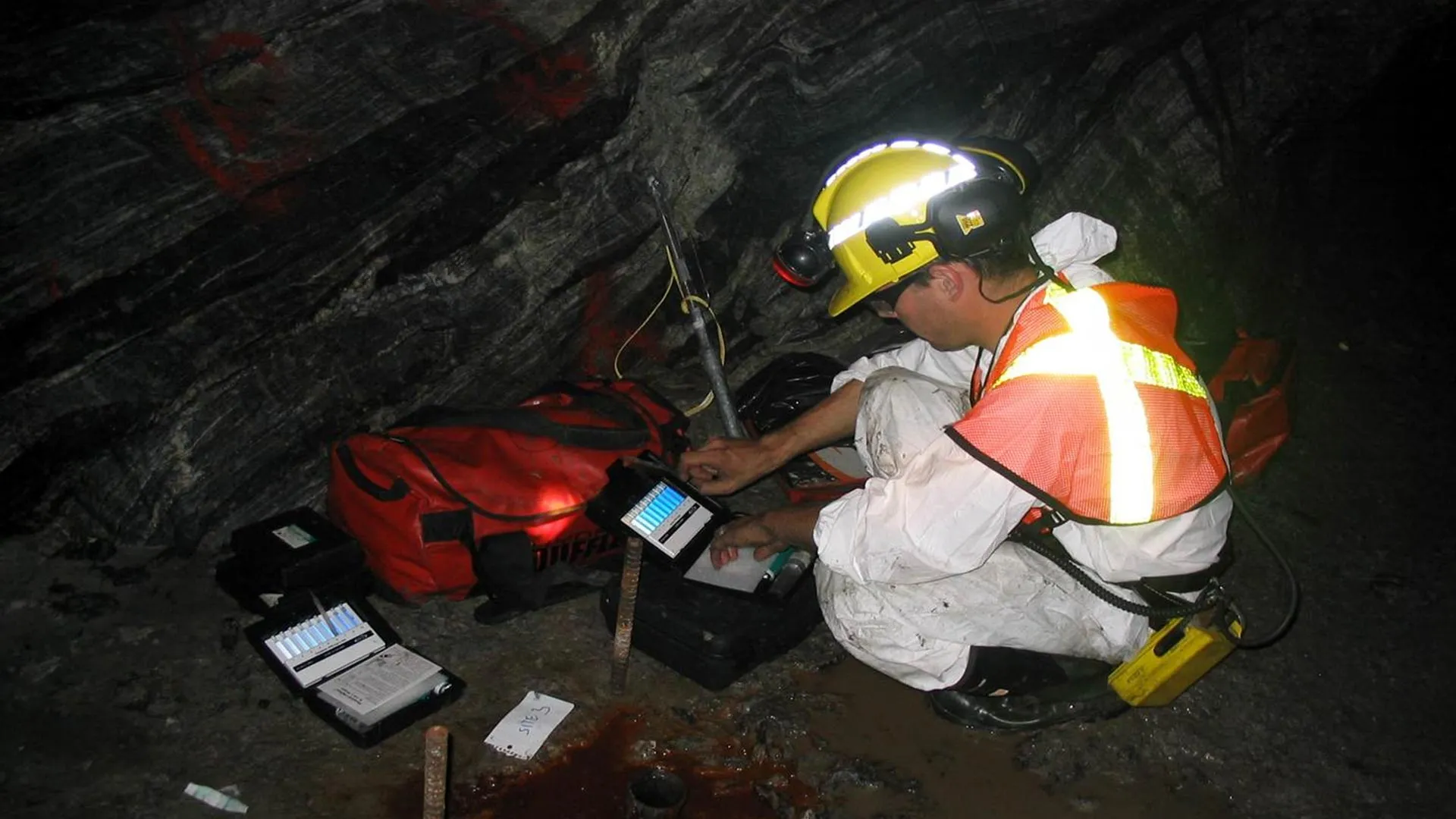

Continuous long-term measurement underground at a mine in northern Ontario provided evidence of sustained accumulation and discharge of natural hydrogen generated within Earth’s crust. Credit: Barbara Sherwood Lollar

Scientists have discovered that ancient rocks deep beneath Canada are naturally releasing hydrogen gas, offering new evidence that Earth itself may contain significant untapped sources of clean energy.

Researchers from the University of Toronto and the University of Ottawa studied the Canadian Shield, a vast region of some of the oldest rock formations on the planet. For the first time, they directly measured hydrogen escaping from these billion-year-old rocks, tracked how it builds up over time, and mapped where the gas is concentrated.


The findings, published in the Proceedings of the National Academy of Sciences, could help determine whether naturally occurring, or "white," hydrogen can become a practical and economical energy source. The work also introduces a new strategy for hydrogen exploration that may support efforts to reduce greenhouse gas emissions and expand clean energy options.

Hydrogen Flow Measured in Ontario Mine Boreholes

The researchers gathered data from an active mine near Timmins, Ontario. They found that boreholes drilled into the rock release an average of 0.008 tonnes of hydrogen each year, roughly 8 kilograms, which is about the weight of a typical car battery. According to the study, the gas can continue flowing for at least a decade.

When expanded across the site's nearly 15,000 boreholes, the estimated hydrogen output exceeds 140 tonnes annually. The team calculated that this amount could generate approximately 4.7 million kilowatts of energy per year from just one location, enough to meet the yearly energy demands of more than 400 homes.

"The data from this study suggests there are critical untapped opportunities to access a domestic source of cost-effective energy produced from the rocks beneath our feet," says University Professor Barbara Sherwood Lollar in the Department of Earth Sciences in the Faculty of Arts & Science at University of Toronto, the lead author of the study. "What's more, this provides a 'made in Canada' resource that might be able to support local and regional industry hubs and reduce their dependence on importing hydrocarbon-based fuels."

Why Natural Hydrogen Matters


Hydrogen already plays a major role in the global economy, which is valued at roughly $135 billion. It is widely used in fertilizer manufacturing, which is essential for agriculture and global food production. Hydrogen is also important in methanol production and steelmaking.

Today, most hydrogen is produced through industrial methods that rely on fossil fuels such as petroleum, natural gas, and coal. These processes require large amounts of energy and release carbon monoxide and CO2. Even "green hydrogen," which is generated using renewable energy, remains expensive and energy intensive while also requiring transportation and storage infrastructure.


Natural hydrogen, however, has received far less attention. Until recently, most research focused on its role in underground microbial ecosystems and its potential importance for astrobiology and space exploration. Estimates of its energy potential were largely theoretical because scientists lacked direct long-term measurements from real-world sites.

The new study changes that by documenting sustained hydrogen releases over many years.

Ancient Rocks Naturally Produce Hydrogen

"Natural hydrogen is produced over time through underground chemical reactions between rocks and the groundwaters in those rocks," says Sherwood Lollar. "Canada is blessed that vast amounts of its territories, especially on the Canadian Shield, contain the right rocks and minerals to create this natural hydrogen."

The researchers say Canada may have a unique opportunity to produce cleaner and potentially cheaper hydrogen without depending on hydrocarbons. They also note that similar hydrogen-producing rocks exist in many other countries, suggesting the approach could eventually be used worldwide.


The largest concentrations of natural hydrogen appear in geological regions already associated with Canadian mining activity. These include Northern Ontario, Quebec, Nunavut, and the Northwest Territories.

"The common link is the rock," says study co-author Oliver Warr, an assistant professor in the Department of Earth and Environmental Sciences at University of Ottawa. "Natural hydrogen is produced in the same rocks where Canada's nickel, copper and diamond deposits are found, and that are currently under exploration for critical minerals such as lithium, helium, chromium and cobalt. The co-location of mining resources and hydrogen production and use mitigates the need for long transportation routes to market, for hydrogen storage and major hydrogen infrastructure development."

Potential Benefits for Mining and Northern Communities

The study's authors believe natural hydrogen could help reduce both costs and carbon emissions for Canada's mining sector. Hydrogen generated close to mining operations could provide a local energy source without requiring major new transportation systems.


The researchers also suggest that northern communities, which often face high fuel transportation costs, could benefit from nearby hydrogen resources. Using locally sourced hydrogen may lower energy expenses while reducing reliance on imported fuels.

"There is a global race to increase hydrogen availability in order to decarbonize and reduce the costs of the existing hydrogen economy," says Sherwood Lollar. "We now have a better understanding of the economic viability of this resource that can be mapped to hydrogen deposits around the world that are both already known and yet to be discovered."


Story Source:

Materials provided by University of Toronto. Note: Content may be edited for style and length.

Journal Reference:Barbara Sherwood Lollar, Oliver Warr. Decadal record of continental H 2 reservoirs reveals potential for subsurface microbial life and natural H 2 exploration. Proceedings of the National Academy of Sciences, 2026; 123 (21) DOI: 10.1073/pnas.2603895123

University of Toronto. "Scientists discover massive natural hydrogen source beneath Canada." ScienceDaily. ScienceDaily, 20 May 2026. <www.sciencedaily.com/releases/2026/05/260519224317.htm>.


U.S. SPR Depletion Threatens Further Oil Price Volatility

  • The U.S. Strategic Petroleum Reserve could fall to around 243 million barrels, pushing it below the level considered optimal for efficient operation.

  • Heavy SPR releases have helped contain oil prices during the Iran war, but dwindling U.S. and Chinese inventories are reducing the market’s emergency supply cushion.

  • Refilling the SPR with Venezuelan crude could prove difficult, as Venezuela’s heavy oil may not be suitable for infrastructure designed primarily for lighter crude.

Crude oil prices are on their way up again, driven by the latest flare-up of hostilities in the Persian Gulf—but they are also up because U.S. crude inventories are down again, and the Strategic Petroleum Reserve is moving closer to critical levels.

The importance of oil inventories came to the fore soon after the United States and Israel launched their war against Iran at the end of February. It was thanks to these inventories that the world avoided a sharp and painful spike in oil prices. The OECD agreed a controlled release of 400 million barrels, and China slashed its oil imports, leaning into its reserve.

The U.S. Strategic Petroleum Reserve has been essential for the OECD release. Its part in the joint release stood at 172 million barrels. Oil production in the United States has responded to the supply squeeze, but neither as fast or as significantly as some may have hoped as the industry retains its cautious attitude to growth. So, the U.S. federal government has been selling oil from the Strategic Petroleum Reserve. A lot of this oil has gone to Europe, which has struggled to secure its oil supply amid its own sanctions on Russian energy and the war in the Middle East.

Yet the latest release of oil from the SPR has come on top of earlier releases, under the Biden administration, that already reduced the level of available oil in the reserve significantly—and that was never fully replenished, leading to a much lower starting point for this year’s release.

The United States is set to release another 39 million barrels from the Strategic Petroleum Reserve under the joint OECD plan. This would bring down the level of crude in the reserve to 243 million barrels, Reuters reported earlier this week. This will be dangerous: the generally accepted operational minimum for oil in the SPR is between 250 and 300 million barrels, below which the reserve may find it difficult to pump and process oil efficiently.

Some industry observers were voicing concern about the level of crude in the SPR even before the Trump administration came into office. Their argument was that the Biden releases have brought the SPR down to uncomfortably low levels and it needed fast replenishment. That replenishment never came, however, although some crude purchases have been made since the massive release in 2022. And then the new war began, squeezing supply much worse than last time.

The reason for worry about the SPR is purely physical. As explained by Reuters, the oil in the strategic reserve is stored in salt caverns and floats on a layer of water. The more oil is drawn from the caverns, the higher the water level rises, and with it the risk of damage to the walls of the caverns and the pipes and pumps used to suck the crude out. The absolute minimum required for the existence of the reserve is 70 million barrels, according to a petroleum engineering professor from A&M University, but this is irrelevant because the critical level is around 250 million barrels. Below that, the reserve becomes difficult to draw from.

“The core mission of the reserve is to supply the market rapidly during a crisis,” Professor Siddharth Misra told Reuters. “But operating below 250 million barrels pushes the infrastructure into a dangerous zone.”

If the strategic petroleum reserve of the world’s largest oil consumer is nearing critical levels, that would be one less stabilizing factor for oil prices. A shrunken SPR means less available supply in storage to mitigate any future—or continued—supply squeezes. This, in turn, will enhance oil price volatility as China’s oil inventories remain the one substantial supply cushion in case of a new outage. Yet China’s inventories are also not where they were at the start of the year, at over 1 billion barrels. Drawn down inventories make markets nervous.

The U.S. president said this weekend that his administration would refill the SPR with Venezuelan crude, but whether that would be physically possible is unclear. Venezuelan crude is heavy while the crude that can be stored in the Strategic Petroleum Reserve needs to be much lighter because that was the kind of crude the reserve was designed for. One cannot simply swap light for heavy crude with no consequences for the infrastructure. One analyst suggested that Trump could sell Venezuelan heavy to buy lighter crude for the SPR—but that would take years, according to ClearView Energy Partners’ Kevin Book, as quoted by Reuters.

There is also the little detail about the immediate availability of that Venezuelan oil and whether Trump really plans to just take it as a “Gift from Venezuela to the People of the United States” without payment, or whether the U.S. would pay for it. Currently, Venezuela is producing oil at a rate of 1.25 million barrels daily.

While the SPR depletion problem gets resolved, we could reasonably expect higher oil prices, especially if the fighting in the Persian Gulf continues.

By Irina Slav for Oilprice.com


UK Poised to Approve Jackdaw Gas Field as Energy Costs Soar

Prime Minister Andy Burnham is expected to approve the development of the Jackdaw natural gas field in the North Sea before the end of the month, the BBC reported, citing unnamed sources.

The Jackdaw project, along with Rosebank, was initially approved for development several years ago, but environmentalists sued and overturned the approval on the grounds that the effects of that development on the climate were not considered. However, now that oil and gas prices are soaring and the UK’s dependence on imported energy deepens, priorities are being reconsidered.

“We won't be able to stop using oil and gas for some time. That's just a fact,” MP Burnham said soon after taking office, suggesting a pragmatic approach to energy policy. “The question is whether we can accelerate use of it so that we pay for the transition,” Burnham also said.

Jackdaw and Rosebank are operated by a joint venture between Shell and Equinor. Rosebank contains an estimated 300 to 500 million barrels of oil and Jackdaw holds enough gas to cover 6.5% of the UK’s gas demand at its peak, according to the partner operators.

Some, including Wood Mackenzie, believe it is not even worth trying to revive the North Sea oil and gas industry, because there is not enough oil and gas left to make it worthwhile. The analytics company estimates that 90% of the UK’s commercially viable oil and gas reserves have already been exhausted.

However, at a time of soaring oil and gas prices, this belief may be challenged. According to Shell and Equinor, which operate Jackdaw and Rosebank under the name Adura, gas from Jackdaw could start flowing as soon as this winter, with all necessary infrastructure 99% complete. Opposition from environmentalists, however, is unlikely to subside, with this week seeing the first protest organized by radical group Just Stop Oil in months.

By Irina Slav for Oilprice.com