Saturday, September 12, 2026


Ukraine’s development cycle down to three months, building $55bn of weapons a year

Ukraine’s development cycle down to three months, building $55bn of weapons a year
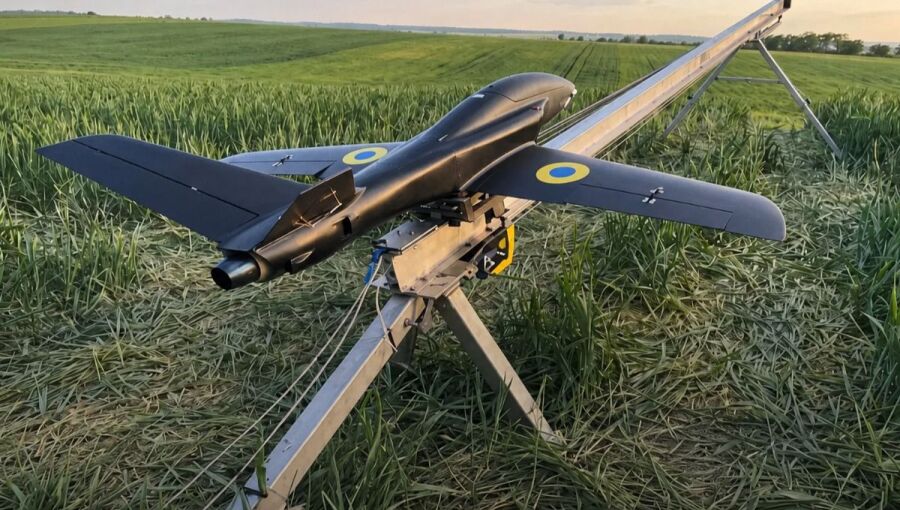
Ukraine has recently developed the Alexa Spatium, the first reusable jet powered interceptor drone. Capacity has grown from about $1bn in 2022, but domestic orders cover only a third of it and the 2026 funding gap is around $23bn / bne IntelliNews / bne IntelliNewsFacebook
By Ben Aris in Berlin September 11, 2026

Ukraine's defence industry has reached annual production capacity of about $55bn and can turn a development project around in 3-6 months, the defence ministry told delegations from Nato member states on September 9.

The figure was given by Deputy Defence Minister for European Integration Sergiy Boyev at a meeting of the Ukraine-Nato Interparliamentary Council, where the ministry briefed parliamentarians on procurement reform and the state of the industry. A few years ago most of those companies were startups, Boyev said.

Production and development is accelerating, the ministry said. More than 1,300 new Ukrainian weapons and equipment models were authorised for operational use in 2025 alone, and new technologies are introduced every three to six months against an innovation cycle of 10 to 15 years in Nato countries. "Ukraine has learned to adapt faster than traditional defence systems," Boyev said.

Capacity is not the same as orders, and the gap is the reason the ministry was talking to legislators rather than to generals. Domestic contracts covered only about a third of what the industry could build last year, and Ukraine faces a shortfall of roughly $23bn against its 2026 defence needs, Euromaidan Press reported in July. Production capacity has grown from around $1bn at the start of the full-scale invasion to about $35bn last year.

The mechanism Boyev credits for the speed is a direct line between the soldier and the manufacturer. Brigades hold their own procurement budgets and assess suppliers themselves, and a company that does not act on feedback loses the next contract. "Under the new procurement rules, 80% of the budget goes to those who have learned to deliver results. If you don't improve your product, you lose immediately," he said.

The second half of the pitch was about corruption, which is what determines whether European money is allowed to flow into Ukrainian factories. Deputy Defence Minister Mstyslav Banik told the meeting that the ministry is opening up its procurement mechanisms to eliminate shadow schemes and behind-the-scenes influence, set fair rules for suppliers and cut corruption risk, and that the first competitive tenders are working.

"Our partners see this, we are open to any questions or requests they may have and always provide them with all the information," Banik said. "This is also important to ensure that we can continue receiving assistance." The work is being done under the Nato-Ukraine Strategic Defense Procurement Review and recommendations agreed by the alliance's defence and security sector committee.

The timing is set by the alliance's own spending. Nato's declaration commits members to 5% of GDP on defence and provides $50bn for new procurement and faster innovation, and Boyev's argument is that Ukrainian manufacturers, who are designing against a live threat, should be inside that programme rather than outside it. He pointed to Build with Ukraine, Drone Deals, the European Defence Industry Programme and the European Defence Fund as the existing routes. At the same meeting the ministry called on Nato parliamentarians to speed up assistance and invest in Ukrainian defence production.

Some of that is already happening on other countries' soil. Denmark, Germany and the Baltic states pay to manufacture Ukrainian designs at home, which puts the production lines out of Russian missile range, and President Volodymyr Zelenskiy has authorised controlled exports of categories where output runs well beyond what Ukraine can use or fund, with the revenue recycled into domestic production.

Boyev is also acting head of Ukroboronprom, the state defence conglomerate, following the resignation of Herman Smetanin after the Vyshneve ammunition depot blast. The industry he is describing to Nato legislators is one whose main constraint is now money rather than capacity, and the request behind the briefing is that the alliance close the difference.

Ukraine strikes deep into Russia's Siberian gas heartland

Ukraine strikes deep into Russia's Siberian gas heartland
The Yamal LNG plant / NovatekFacebook
By Newsbase analysts September 11, 2026

Ukraine’s deepest strike yet into Russia has brought its Arctic gas heartland — and potentially Yamal LNG in the future — within reach.

WHAT: Ukrainian drones hit two gas-condensate plants more than 3,000 km from the border.

WHY: The strike exposes a new vulnerability in Russia’s Arctic energy infrastructure.

WHAT NEXT: Further attacks could threaten LNG exports and tighten an already strained global gas market.

Ukraine has pushed its drone campaign against Russia’s energy industry into territory that until now had appeared largely untouchable, striking two gas condensate facilities more than 3,000 km from the Ukrainian border.

Ukraine’s Special Operations Forces said on September 9 that they had successfully hit the Novy Urengoy and Purovsky plants in the Yamalo-Nenets region, just south of the Arctic circle, describing the operation as the deepest Ukrainian strike into Russia since the beginning of the full-scale war.

Russian regional governor Dmitry Artyukhov confirmed that an industrial facility in Novy Urengoy had been attacked and caught fire, while saying there were no deaths or injuries and that the scale of the damage was still being assessed. Russian authorities have not independently confirmed Ukraine’s claim that both specific plants were successfully hit.

Beyond the damage incurred, the sheer distance covered by drones will prove alarming to Moscow, raising concerns that other projects even further afield, including the flagship Yamal LNG plant, might also come under attack in the future. 


Into Russia’s gas heartland

Yamalo-Nenets is the centre of Russia’s natural gas industry, responsible for around four-fifths of national production, and contains some of the world’s largest gas fields, as well as a dense network of processing plants, pipelines and export infrastructure.

The Novy Urengoy condensate facility, controlled by Russia’s state gas giant Gazprom, has design capacity to handle 19.5mn tonnes of feedstock per year. The second target, the Purovsky gas processing plant, owned by private gas producer Novatek, handles around 13.4mn tpy of de-ethanised condensate.

Purovsky plays an important role in Novatek’s liquids business. Gas condensate produced at the company’s fields is piped to the facility for stabilisation into stable gas condensate and natural gas liquids. Much of the resulting stable condensate is then sent by rail to Novatek’s Ust-Luga complex on the Baltic coast for processing or export.

The September 9 strikes took place significantly further south than Novatek’s prized Yamal LNG terminal, located at Sabetta on the Yamal Peninsula, almost 600 km away from Novy Urengoy as the crow flies. The 17.4mn-tpy LNG plant receives gas from the nearby South Tambey field. Yet Ukraine’s latest operation demonstrates that long-range strikes can now penetrate deep into the same remote Arctic region.

Ukrainian weapons producer Fire Point said its FP-1 drones had travelled more than 3,200 km in the attack, beyond their previously publicised operating range. The precise launch locations and flight paths have not been disclosed. It does not follow that Sabetta can necessarily be attacked with the same weapons under the same conditions. But the security calculation surrounding Russia’s Arctic LNG infrastructure has changed.


Yamal matters more in a tight LNG market

Any threat to Yamal LNG would have consequences well beyond Russia.

The project is Russia’s biggest source of LNG production. Novatek operates the facility, alongside partners TotalEnergies and China’s CNPC and China’s Silk Road Fund. Europe has paradoxically become particularly dependent on the project just as the EU prepares to eliminate Russian gas imports.

The EU received 9.97mn tonnes of Yamal LNG during the first half of this year across 136 cargoes, 16% more than a year earlier and a record for the period. More than 97% of Yamal’s delivered LNG during those six months went to EU ports, according to Kpler data reported by Reuters.

That dependence is scheduled to end. EU rules already prohibit new and short-term Russian LNG purchases, while exemptions covering older long-term contracts expire from January 1, 2027. Until then, however, Yamal remains an unusually important source of supply.

Any disruption at Yamal LNG would further tighten the global gas supply, which has already become significantly strained by the blockade of the Strait of Hormuz, which has resulted in around a fifth of global LNG trade, overwhelmingly from Qatar, being halted.

The market showed signs of reacting to the attacks. The Dutch TTF front-month price soared on September 10 to over €80 per MWh, reaching a level not since since late 2022, as traders may have absorbed the prospect of a new threat to Russian LNG exports. 


Shifting the focus

The attack also marks a shift in Ukraine’s strategy. Kyiv has concentrated heavily on Russia’s oil sector because refineries, storage facilities and export terminals offer relatively large, fixed targets whose disruption can reduce fuel availability domestically while constraining Moscow’s export earnings.

Those attacks are having an increasingly measurable effect. The International Energy Agency on September 11 cut its forecasts for Russian crude production by 125,000 bpd for 2026 and 235,000 bpd for 2027, citing the effect of continued Ukrainian attacks on energy infrastructure among the pressures on output.

Natural gas has presented a different target set. Russia’s upstream gas infrastructure is spread across an enormous area, much of it thousands of kilometres from Ukrainian territory, while the collapse in Russian pipeline exports to Europe had already reduced the value of disrupting some westbound infrastructure, including via the TurkStream, although Russian authorities have claimed several unsuccessful attacks on that pipeline in recent years. 

LNG is different. Unlike pipeline gas, Russian LNG continues to reach the international market in substantial volumes and remains an important source of hard-currency revenue. Yamal LNG has also escaped the operational difficulties that have hampered the newer, US-sanctioned Arctic LNG-2 project.

A successful attack on Sabetta or associated shipping infrastructure would therefore have a considerably more direct impact on Russia’s ability to monetise its gas internationally.

There is no evidence that Kyiv may try to strike Yamal LNG in the future. Arctic LNG-2, situated on the Gydan Peninsula on the other side of the Gulf of Ob to Yamal, could be another, albeit less impactful target. The facility is operating at only a fraction of the 13.2mn-tpy combined capacity of its two completed trains. 

This article is from bne IntelliNews’ sister publication NewsBase that covers global energy issues. Sign up for a two-week trial here

Newbase also has a specialist advisory division, Horizon, providing bespoke energy intelligence for complex markets. Click here to find out more or contact us at apaul@intellinews.com.

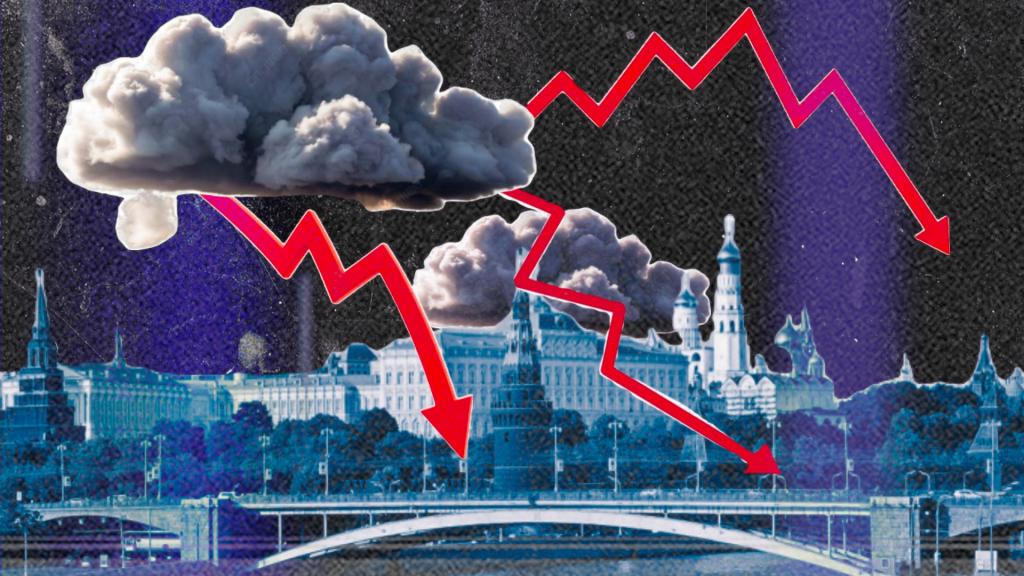
War eating away at Russia’s economy

War eating away at Russia’s economy

First published at Posle.

In early August, the otherwise listless campaign for the State Duma began to attract some public attention. The reason was the registration of the Yabloko party’s candidate list and the controversy that followed. Yabloko, the only openly antiwar party in Russia, is entering the campaign organizationally weakened to the point of near-collapse. Its leading politicians are either in prison or have been charged with extremist offenses that explicitly bar them from running for office. Its strongest organizations in St. Petersburg, Karelia, and Pskov have been disqualified from elections to local legislatures. The party has no money. An unofficial media blackout has been imposed on it.

Yet the registration of Yabloko’s list, initially approved by the Kremlin, triggered a hysterical reaction among ultrapatriotic forces. The leadership of A Just Russia and Rodina demanded that Yabloko be barred from the election, producing precisely the opposite effect in public opinion. As an old Russian movie put it: “If you don’t like it, that means it’s a good product. You should buy it.”

In every recent election, Yabloko has failed to break 2% of the vote. So what explains all the uproar?

The controversy did not come out of nowhere. Modern Russian history offers plenty of examples of protest voting. In 2018, amid widespread opposition to the pension reform, complete unknowns such as Vladimir Sipyagin effectively defeated four United Russia candidates in gubernatorial races and won a respectable 20–30% of the vote in another two dozen regions.

In 2024, Boris Nadezhdin, little known to the broader public at the time, swept through the Kremlin administration’s rear lines like a grass fire, rapidly establishing campaign offices in dozens of regions and collecting genuine signatures from thousands of Russians who stood outside in the freezing cold to put their names on his petition. His support broke through the 10% threshold in the polls. After Nadezhdin was barred from the race, Vladislav Davankov of the New People party moved into second place. He, too, had been relatively unfamiliar to the public, although the official results assigned him a far more modest share of the vote.

Across polls of every kind, from the state-run VTsIOM to the pro-Kremlin Tsargrad, the share of Russians categorically opposed to the war has never fallen below 20–25%.

Not all of them will go to the polls. But for those who do, the names on the ballot may ultimately matter very little. People barely knew Sipyagin or Nadezhdin either. What matters to them is the position itself, the knowledge that, personally, they cast a vote against the war.

That is why Yabloko’s polling numbers surged after its registration, reaching 9.3% and showing potential for further growth. Of course, the authorities could have simply fabricated whatever figures they wanted on election day without having to fear protests. But the aftertaste would have been too bitter. So, a week after registering Yabloko, they removed the party from the ballot. That same day, its popular lawmaker Lev Shlosberg was sentenced to 12 years in prison for “discrediting the army.”

Cut, brothers, cut

In February 2022, the Russian internet exploded with patriotic outbursts. For people who did not watch television or get their information from right-wing social media channels, those outbursts were difficult to understand. But a substantial part of the population genuinely came to believe that the country was on the rise and that living standards in Russia would improve significantly. The narrative included everything from “Europe is buying Russian raw materials on the cheap” and “With Chubais gone, the oligarchs will finally be brought to heel” to “We’ll trade in rubles” and even “Investing in military production will boost the economy.”

Set aside the gasoline crisis, internet shutdowns, and burned-down Wildberries warehouses. Instead, let’s look at what has happened to the budget and to household incomes. Vladimir Putin has repeatedly invoked, almost like a mantra, the claim that government revenues have remained stable and that nothing has fundamentally changed since the war began. The government, for its part, claims that the country has not seen income growth on this scale since the early 2000s.

Meanwhile, the increase in incomes that was genuinely recorded during the early years of the war has not merely stopped. It has been replaced by a decline.

So what does the budget look like in the fifth year of the war?

We will compare the 2021 budget with the 2026 budget law.

The first thing that stands out is the increase in spending on “Defense” and “National Security.” Before the war, these categories already accounted for a substantial quarter of federal spending. This year, they are projected to make up 37%.

In reality, the share devoted to the security and military apparatus is considerably higher. War-related spending is scattered throughout the budget, including under categories that appear entirely civilian. For example, purchases of tracked vehicles worth 1 trillion rubles ($12 billion) were classified under housing and utilities. Military hospitals were included under Health Care. And under “Social Policy,” benefits for disabled children and cancer patients now sit alongside funeral payments to the wives of soldiers taking part in the so-called “special military operation.”

If military spending has increased, what has been cut?

The share of spending that goes to the National Economy has fallen from 17.6% to 10.8%. That amounts to a reduction of 3 trillion rubles a year, money that previously went toward subsidized loans for factories and farmers, infrastructure modernization, and leasing programs to purchase advanced machinery and equipment. Those trillions now go toward drones and multiple-launch rocket systems.

The share of spending on social policy, including transfers to the Pension Fund, has fallen from 27% to 16% of the federal budget. Spending on health care has dropped from 6% to 4%, and education from 4.5% to 3.8%.

This part requires a closer look, and we will begin with pensioners.

The blow to pensioners came three years before the war, when preparations for it were still being conducted in secret. In the summer of 2018, Vladimir Putin abandoned his own promises not to raise the retirement age and announced a reform that would increase it by five years on an accelerated schedule. Russia responded with mass protests. Independent trade unions affiliated with the Confederation of Labor of Russia played a major role. Rallies and demonstrations swept across the country, involving more than half a million people, but they had no effect.

It soon became clear that the money saved at the expense of pensioners was being spent by the Kremlin on weapons. Social-policy spending, including transfers to the Pension Fund, fell by more than 2.5 percent from 2019 to 2021. Over the same period, spending on the military and security services rose 28%, from 5.421 trillion to 6.940 trillion rubles.

Naturally, the trend only accelerated after the invasion of Ukraine began. It was the incomes of pensioners, doctors, and teachers that became the fuel Vladimir Putin burned to keep the war machine running. The authorities did not directly cut pensions and salaries, but they had no need to. Amid accelerating inflation, it was enough to claim that the actual increase in prices was much smaller than it actually was and then adjust annual benefits and salaries according to that understated figure.

A telling, if indirect, indication of the statistical manipulation is the Central Bank’s key interest rate. By mid-summer 2026, for example, the key rate stood above 14%, while the officially reported rate of inflation was 4.5%.

The result has been a genuine catastrophe for pensioners’ incomes. Before the pension reform, the average pension was equivalent to 32% of the average wage. By the beginning of the war, that figure had fallen to 30%. After four years of the “special military operation,” it had plunged to 23.8%. In other words, upon retirement, a worker has to learn how to stretch what used to be a week’s wages over an entire month. In 2024, pensions fell even further behind the official rate of inflation. One reason was the scaling back of government transfers to the Pension Fund: during the war years, the share of the fund’s revenues coming from the federal budget fell threefold, from 25% to 8%.

Less dramatically, but still significantly, the incomes of workers in health care, education, and science have also declined. In 2012, Vladimir Putin announced an ambitious program to raise the salaries of doctors, teachers, and scientists, declaring that their pay should match, or even substantially exceed, wages in industry. The targets he set were never achieved, and after the start of the “special military operation,” the situation began visibly deteriorating.

In 2021, teachers’ salaries were equivalent to 79% of the national average. By 2026, that figure had fallen to 69%. The ratio of scientists’ and researchers’salaries to average wages across the economy fell from 117% to 107.6%. Doctors’ salaries, which in 2021 stood at 158% of the official national average, had fallen to 98% five years later. There are, of course, serious questions about Russia’s official wage statistics, but in this case, it is the trend that matters.

Let’s return to the changing structure of the budget. Another development deserves attention: the cut in assistance to the regions. The share of such spending in the federal budget has fallen from 4.4% to 3%.

This matters because the regions are responsible for funding schools, clinics, the overwhelming majority of hospitals, and local infrastructure. Moreover, regional budgets rely heavily on the volatile corporate income tax, which creates an extremely uneven picture of prosperity or decline during wartime. While revenues were growing in Moscow, the budget of the oil-and-gas-producing Astrakhan region contracted by 16% in real terms, and that of the coal-producing Kemerovo region shrank by as much as 40%.

As a result, whereas 21 of Russia’s 85 regions ran budget deficits in 2021, by 2026 that number had risen to 56, including the occupied territories of Crimea and Sevastopol. Governors are being forced to cut spending on road repairs and abandon school renovations not simply because revenues are falling. The Kremlin has also shifted part of the cost of the war onto the regions. Local budgets now cover a substantial portion of payments for military contracts, combat injuries, and compensation to the families of soldiers killed in the war.

The sums involved are substantial. In the Astrakhan region alone, such expenditures have reached 6% of the region’s own revenues, and the situation is evidently similar elsewhere across the federation.

Behind all these figures lies more than a mere shift in priorities. Even using the official inflation rate, which should itself be regarded as seriously understated, real spending on health care has fallen by 14% during the war, aid to the regions by 20%, and spending on the national economy and social policy by 25%.

These are the figures contained in the government’s own report attached to the 2026 budget proposal. How does all of this affect the population?

Less clothing, less food

The sanctions imposed on Russia after the war began drove Western goods off store shelves, replacing them with Chinese products. China’s share of Russian imports rose from 25% to 38% after the start of the war. Taking advantage of its position, China raised the prices of its goods by 87% during the first three years, compared with a 9% increase in prices for goods it supplied to Azerbaijan.

One factor that helped contain inflation was the strengthening of the ruble. In the first weeks of the war, the national currency collapsed, but it soon recovered and held onto its gains. The reason for this unexpected good fortune was that capital flight from Russia was blocked, transactions in dollars and euros were restricted, and demand for foreign currency fell sharply.

For the federal budget, this had negative consequences: exporters needed fewer rubles for every dollar they earned, and tax revenues collected from them declined accordingly.

On the other hand, the stronger ruble helped contain inflation and stabilize household incomes. To understand how important the exchange rate is to ordinary Russians, consider that before the war imports accounted for 19% of food, 29% of household appliances such as televisions, refrigerators, and washing machines, 47% of furniture, and 74% of computers and smartphones.

Massive government spending on the war also played a role. Military enlistment contractsalone generate as much as 3 trillion rubles in annual payments, equivalent to 1.5% of the country’s GDP. Military factories ramped up production. Through the personal consumption of those receiving these payments, the money flowed through the wider economy, driving income growth in civilian manufacturing, small businesses, and the service sector.

During the first two years of the war, average household incomes did indeed rise. And it was not just rentiers who benefited. Wages as a share of GDP increased from 39% to 48%, returning to roughly the level seen in 2013. An indirect indicator was also the increase in contributions to the Pension Fund, which are essentially payroll taxes.

However, the gains were extremely uneven across industries and social groups. Surveys show that the composition of the consumer basket has not changed. Food continues to account for a consistently large share of household expenditure, holding steady at 32%. In 2025, the average Russian household had savings of 30,000 rubles, or about $400, while the share of disposable income left after paying for food, housing, utilities, transportation, clothing, etc. actually fell from 30% to 16% between 2023 and 2025.

In other words, the growth in real wages in the defense sector was offset by the decline described above in health care, education, and utilities.

But starting in 2024, even this picture began to deteriorate. By 2025, the trend had reversed, turning into a precipitous decline in living standards.

Furniture sales plunged 20% last year. Smartphone sales had already fallen by 3–4% in 2024, and by the third quarter of 2025, the decline had reached 26% in units sold and 29% in monetary terms. Clothing and footwear sales fell 7%. For the first time in 15 years, even food sales declined. In other words, people began cutting back even on food last year: food sales by volume fell 5% over the course of the year.

The decline continued in 2026. During the first half of the year, visits to cafes and restaurants fell by 10%. Sales of major household appliances such as washing machines and dishwashers fell by as much as 30% compared with the already poor previous year. Visits to grocery stores dropped 10%, while traffic at alcohol retailers fell by a full 14%.

Against a backdrop of crushing inflation, an overwhelming majority of Russians have begun cutting back on food. In 2025, 47% were already doing so; this year, another 34% joined them. In other words, four out of five Russians are now going without food purchases they would otherwise make. It is not only delicacies that have been pushed aside, but also chips, chocolate, and ice cream.

The share of people cutting back on clothing was 54% last year. In the first six months of this year, it surged to 82%, an increase of half. One in seven respondents has stopped buying clothes altogether because such goods have effectively become luxury items.

In terms of life expectancy, Russia, according to World Bank estimates, slipped from 109th place in the world in 2019 to 114th in 2024.

The spike in gasoline prices caused by the shutdown of oil refineries in the summer of 2026 will presumably deepen this process even further.

In the absence of protest

All of this, of course, cannot help but affect political attitudes in Russian society.

The war divided Russian society more deeply than any election ever had. As early as June 2023, the Telegram channel Nezygar, which reflects the position of the Presidential Administration’s Domestic Policy Directorate, reported that only 8–12% of respondents actively supported the war. “The rest are indifferent.” More than 74% of people under 30, moreover, were strongly opposed to the war in Ukraine. Nezygar cited a closed poll conducted by the Federal Agency for Government Communications and Information, which is controlled by the FSB.

By October 2023, as many as 44% of respondents said the “special military operation” should never have been launched in the first place. The share of those who justified the start of hostilities had fallen from 54% to 45%. From that point onward, the number of people favoring peace negotiations consistently exceeded the number supporting a continuation of the war.

These sentiments became most visible in what appeared to be the tightly controlled Russian presidential election of March 2024. Alongside the thoroughly system-aligned candidates from the parliamentary opposition, Boris Nadezhdin, a former State Duma deputy and liberal politician with little name recognition, entered the race.

Nadezhdin explicitly called for an end to the war. Within a couple of weeks, news of his candidacy had spread across the country like a grass fire. Dozens of regional campaign offices sprang up, and on cold winter evenings, people lined up for hours to sign petitions in support of his candidacy. Within three weeks, Nadezhdin’s polling numbers had climbed above 10%, twice the ratings of any candidate from the official opposition.

Despite successfully collecting the required 100,000 signatures, he was, predictably, not allowed to run. After that, support from the antiwar electorate shifted toward Vladislav Davankov, the candidate of the parliamentary New People party. Davankov said nothing about the war, and that silence was interpreted as an eloquent form of dissent. His polling numbers reached 10–12%, after which the election results awarded him just 3.85%.

Davankov did not protest, but during these years New People became the only party to consistently advocate easing the country’s repressive practices.

Once real wages began to decline, Putin’s approval rating quickly began to slide. It stood at 38.1% in the summer of 2025 but had to 29.5%, by April 2026. VTsIOM then stopped publishing the relevant polling data.

United Russia’s rating also fell below the combined ratings of the parliamentary opposition, 32.7% versus 37.5%, a level not seen since 2011. New People regularly comes in second, while A Just Russia, which has become a mouthpiece for the war and repression, hovers around 5%. The political class’s nervousness over the prospect of some voters supporting Yabloko makes the picture even more striking.

That said, Putin’s popularity should not be exaggerated even in earlier years. The Wagner mercenary revolt in 2023 shone a spotlight on the authorities’ complete lack of popular support. People either welcomed the fighters with open arms or watched the events with detached indifference. No one took to the streets in support of Putin that day. The only exceptions were perhaps the three “community activists” who, on orders from the Presidential Administration, appeared on television in every region.

Still, it is important to understand that, in practical terms, none of the data cited above means much. Unlike in 2011, the parliamentary opposition has no politicians actually fighting for power. Not a single candidate running for parliament on its behalf will take to the streets. There is no corps of election observers—the force that became the backbone of mass protests against electoral fraud in those earlier years. Rallies are banned. Navalny has been killed. Opposition leaders are either in prison or in exile. In Bashkortostan alone, for example, dozens of active participants in environmental protests have been sent to prison. On-line electronic voting makes it possible to produce virtually any official result.

So the election will unfold exactly as it is scripted in the Old Square [the seat of Presidential Administration], and there will be no unrest afterward.

A bleak outlook in sight

Russia's fiscal outlook is plainly grim. The country's budget has always rested on a combination of low taxes, profits from raw-material exports, and restrained social spending. Oil and gas revenues were funneled into the Reserve Fund, which allowed the government to avoid major shortfalls in difficult times.

The war has eaten through the Reserve Fund. In 2021, the fund's liquid assets amounted to 7.5% of GDP. By the summer of 2026, they had shrunk to 1.5%. At that level, the Reserve Fund can no longer be tapped for ordinary government needs. What remains is a relatively small sum intended exclusively for emergencies.

Oil and gas revenues have collapsed. Russia has lost its premium European market, while China is not only buying less but paying prices roughly 40% below what the European Union used to pay. As a result, the share of oil and gas revenues in the federal budget fell from 35.8%to 22.7%between 2021 and 2025. And in the summer of 2026, following Ukrainian strikes, Russia began importing gasoline from India, Belarus, and Kazakhstan.

Russian government economists are looking to the future with grim apprehension. Six months ago, the cabinet published a fiscal forecast extending to 2042. It projects a further decline in oil and gas revenues, partly because fields are being depleted and sales are becoming less profitable. As a share of GDP, oil and gas revenues are expected to fall from 4.0% in 2025 to 1.9% in 2042.

Non-oil and gas revenues are also expected to decline, from 13.1% of GDP to 12.2%. As a result, government spending will have to be cut by roughly one-seventh. It is as if a worker were told, at the end of the year, that they would no longer be paid for seven weeks of work.

And even that will not be enough to balance the budget. Spending will continue to exceed revenues throughout the entire period. In other words, Russia faces 16 consecutive years of budget deficits.

The deficits will be financed in part through higher government borrowing, with public debt expected to double from 17.7% of GDP in 2025 to 32.2% in 2042. Debt-service costs will double as well, rising from 7.6% of the budget today to 15%. To put that in perspective, that is more than the government currently spends on education, pensions, and health care combined.

Social spending, investment in housing, utilities, and roads, and support for domestic production will have to give way. Alternatively, military spending would have to be cut roughly in half.

And this is the baseline scenario — the optimistic one. There is also a conservative, or pessimistic, scenario in which the fiscal picture is worse and public debt triples.

In theory, the Kremlin could increase the tax burden on the country's wealthiest 1%. Among developed economies, Russia has long been a textbook example of a neoliberal approach to fiscal policy. On the eve of the war, the country's tax burden was 10 percentage points below the OECD average, amounting to 32–33% of GDP.

The demands of wartime spending have forced the government to partially abandon that approach. The corporate profit tax was raised from 20% to 25%. A progressive personal income tax was introduced, with a top rate of 22%.

But all of these measures have been largely offset by sweeping tax breaks, whose primary beneficiaries have been large corporations and wealthy capital owners. In 2021, these benefits, officially classified as “tax expenditures,” amounted to 4.5 trillion rubles, or 3.4% of GDP. Under the 2026 budget law, they will amount to 15.8 trillion rubles, or 7% of GDP.

It is hardly surprising, then, that Russia's Forbes billionaires have more than recovered their losses from the sanctions, with their fortunes growing at a remarkable pace.

For ordinary Russians, for working people, the country's ruling political system offers no future other than hardship, poverty, and hopelessness. The golden age of oil and gas abundance was squandered on military exercises, yachts, vaults full of gold bars, and the Sochi Olympics. The incomes of ordinary Russians, who also benefited from a share of the country's oil wealth, peaked in 2014 and then began to decline.

Now it is clear that there is no end in sight to that decline.

There is an old joke: Vladimir Putin will return Russia to exactly the condition in which he found it. Minus the commission.
Sweden’s 2026 election on a knife-edge

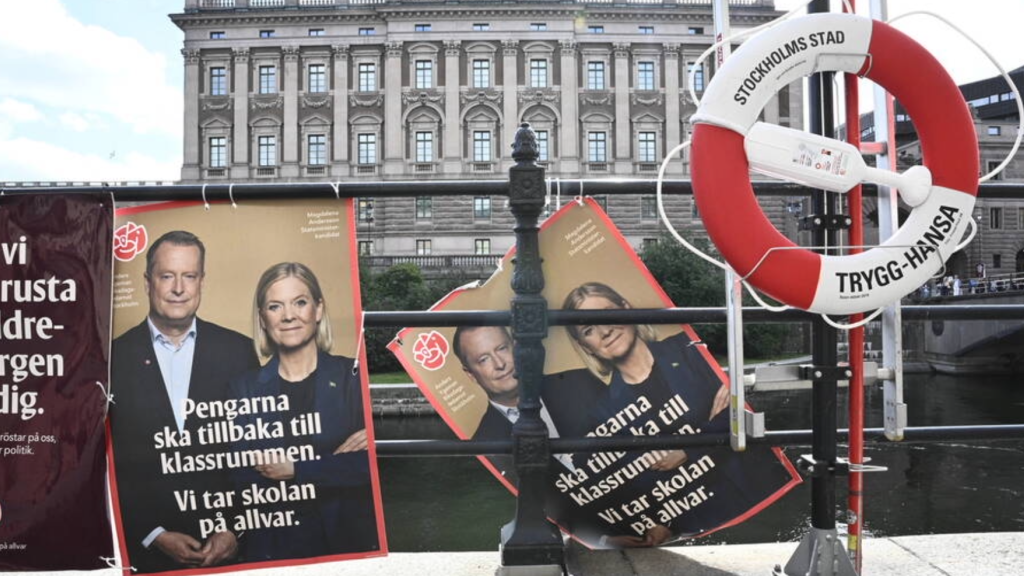
Who's going down? Election posters in front of the Parliament building in Stockholm ahead of the 2026 parliamentary election

First published at Rosa-Luxemburg-Stiftung.

If opinion polls are to be believed, Sweden’s September 13 parliamentary election will return former Social Democratic prime minister Magdalena Andersson to power after four years on the sidelines. But the centre-left opposition’s once-substantial lead has narrowed sharply, with Social Democratic support falling to an historic low. Discord among potential coalition partners could further complicate a left victory, making it difficult for a new government to undo four years of right-wing government under the sway of the far-right Sweden Democrats.

The past four years of far-right influence have transformed the political landscape of the Nordic country, making their xenophobic rhetoric increasingly mainstream. The Social Democrats have themselves adopted much of the right’s politics on migration and law and order, narrowing the political spectrum. While Andersson’s potential government allies remain divided, the question is therefore not simply whether the left can return to government, but what kind of politics it can offer after four years of far-right influence. Sunday’s vote is also a triple election, with Sweden’s regional and municipal councils facing re-election, making the results consequential for Swedish society for years to come.

Support for Social Democrats falling

The Riksdag, Sweden’s parliament currently hosts eight parties, broadly divided into two blocs. For most of the summer, the centre-left opposition — the Social Democrats (S), the Greens (MP), the Left Party (V) and the Centre Party (C) — held a substantial lead over the right-wing “Tidö” bloc: the Moderates, Christian Democrats (KD), Liberals (L) and Sweden Democrats (SD). At its peak, the centre-left led by around 10 points, 54 to 44 percent while the Social Democrats were polling just above 30 percent — already a poor result for Sweden’s oldest party — with the Moderates on 17 percent and the Sweden Democrats sitting just below 20.

Since then, support for the Social Democrats has fallen further to an historic low of 27 percent, while the Left, the Greens and the Centre Party have all risen to around 8 percent, well above their 2022 results. On the right, the Sweden Democrats sit around 20 percent, and the Liberals appear to have finally moved back above the 4 percent parliamentary threshold. A centre-left victory remains the most likely outcome, but the narrowing margin means it is no longer assured.

Support has bled from the Social Democrats to their potential coalition partners to such an extent that a left-bloc government would require the involvement of all three minor parties. This alignment is further complicated the Left Party’s decision at its last congress to insist on full government participation as a condition of its support. The Social Democrats have shown little enthusiasm for such a deal, while the Centre Party — traditionally a party of the centre-right — has rejected it outright.

The Centre Party’s hope, shared by some in the Social Democrats, of persuading the Christian Democrats to support — or even join — a minority S-MP-C government were quickly ruled out by Christian Democrat leader Ebba Busch. Ironically, such attempts by the Social Democrats to look for allies to the right have only further encouraged left wing voters uneasy with its right turn on migration, crime, and citizenship to shift towards the Left or the Greens, raising the stakes on government formation even further.

The Sweden Democrats’ influence

The right is not without its own tensions, largely over how to relate to the Sweden Democrats. Formed in 1988 out of the racist, far-right organisation Keep Sweden Swedish (itself founded by Nazis and neo-Nazis), the Sweden Democrats spent their first 30 years behind a political “cordon sanitaire”. In 2022, it became Sweden’s second-largest party with 20.5 percent of the vote, but its failure to enter government was less a continuation of this firewall than a decision by the Moderates, Christian Democrats and Liberals to form a minority government dependent on the Sweden Democrats for external support, through the Tidö Agreement (named for the castle where it was negotiated).

The Tidö agreement granted the Sweden Democrats most of their major policy demands, including tougher criminal penalties, expanded deportation powers (including on the grounds of “dubious morals”), tighter asylum, residence and citizenship rules, and a shift from renewables to nuclear power. It also gave the Sweden Democrats an unprecedented coordinating office inside the Government Offices, allowing the far-right to work alongside and influence governing parties on legislation and budgets, veto core domestic policies, and access information and briefings normally available to ministers. The Sweden Democrats thus became a governing force without ministerial posts. Much of the Tidö Agreement’s reactionary programme, particularly on migration and law and order, has since been implemented.

Jimmie Åkesson, far-right violence and the Örebro Party

Rather than moderating through proximity to government, the Sweden Democrats have continued to intensify their provocative rhetoric. Their campaign slogan, “Make Sweden like Sweden again” — itself a reference to its radical far-right origins — has accompanied inflammatory attacks on migrants and welfare recipients. This includes plastering buses in western Sweden with the message: “Do you miss Mogadishu? The repatriation grant helps you home”, and spending over a million kronor to blanket Stockholm Central Station in similarly inflammatory posters.

Yet the political question on the right is now no longer whether the Sweden Democrats should join a right-wing government, but how much direct power they should receive, with their leader Jimmie Ã…kesson demanding at least twelve ministerial posts. Both the Moderates and Christian Democrats have accepted full Sweden Democrat participation, while the Liberals remained opposed until March this year, when the party’s new leadership abandoned that position. That backflip triggered massive internal upheaval, and cost vital public support, with the party polling well below the 4 percent threshold until only days before the vote.

The rise of the Sweden Democrats has also created space and comfort for other forms of radical-right politics. Incidents of Islamophobia and far-right violence, including activity associated with the global Active Clubs phenomenon, have increased. In Örebro, where a gunman killed 10 people in 2025 — most of them of immigrant backgrounds — the obscure far-right Örebro Party has surged in regional polls, backed financially by tech millionaire Daniel Berntsson, co-founder of Mullvad VPN.

The Örebro Party was formed in 2014 by expelled Left Party member Markus Allard, yet its policies — mass “remigration”, welfare chauvinism, aggressive assimilation, forced labour for criminals, and a DNA database to monitor residents’ ethnicity — place tit to the right even of the Sweden Democrats. Some polls have put it at up to 15 percent support in the Örebro region, enough to win a seat. Sweden’s electoral system allows parties winning over 12 percent in local constituencies to qualify for a limited number of “top-up” seats, bypassing the national 4 percent threshold.

The Left Party’s plan to reverse inequality

While the right has sought once again to make crime and immigration central election issues, concerns over public services and the cost of living have asserted themselves as Sweden’s welfare model comes under strain. This focus is due, in part, to the fact that Sunday’s vote is in fact a triple election: Sweden’s 21 regional councils, responsible for health, public transport, and regional development, and 290 municipalities, overseeing schools, social services, care, and recreational facilities, all up for re-election. Sweden faces shortages of nurses (made worse by recent immigration reforms) and aged-care workers, ballooning emergency-room waiting times, and stubbornly high food, housing, and energy costs. It has the third highest unemployment rate in the European Union, and a youth unemployment rate of 23.3 percent.

The Social Democrats have presented a raft of proposals, including free dental care for under-23s, and cheaper treatment for other adults, higher child and student allowances, higher taxes on banks and high earners, and paid sick leave from the first day. The right-wing government, trumpeting the health of Sweden’s economy, has nonetheless cut fuel tax and temporarily halved VAT on food, while promising free kindergarten places. The Sweden Democrats, too, have promised subsidised dental care, and the Christian Democrats are calling for a doubling of child benefits.

The Left Party has taken a more radical approach, presenting the election as a chance to reverse decades of inequality and the erosion of public services. Its demands include universal dental care (an issue later picked up by the Social Democrats), a “billionaire tax” to raise SEK 50 billion (approx. EUR 4.5 billion), stronger price controls, cheaper food, and expanded public investment, alongside more healthcare staff, stronger primary care and an end to profit-driven welfare and marketised education.

On climate and infrastructure, the Left argues for a much larger role for public investment in the transition — expanding rail and public transport, renovating and building climate-friendly housing, and supporting the transformation of industry. The Greens and Social Democrats are also promising additional resources for schools, healthcare, climate, regions and municipalities, but are less willing to challenge the privatisation and market mechanisms that have undermined Sweden’s welfare state, including under Social Democrat-led governments. The key difference is not simply how much to spend, but whether public investment should be accompanied by greater public ownership, democratic control, and a redistribution of wealth and power.

Currently enjoying around 8 percent support, the Left is polling better than in 2022 and has spent the intervening years preparing for government, including moderating its positions on NATO and the EU. While heavily debated within the party, its demand for ministerial representation is therefore far from symbolic. External support for previous Social Democrat-led governments gave the Left only limited influence, allowing the Social Democrats to compromise repeatedly with parties further to the right. Government participation would give the Left Party greater leverage over welfare, taxation, housing, and climate policy.

For the Centre Party, however, the prospect of an influential left in government is a red line. Although it has moved away from its former right-wing allies over their cooperation with the Sweden Democrats, the Centre Party remains committed to lower taxes, a “flexible” labour market, and the for-profit schools and welfare provision. It has indicated it would rather trigger a snap election than allow a government containing Left Party ministers. The Centre Party also opposes the Social Democrats’ proposals on higher corporate taxes, workers’ rights, and sick leave, and its preferred outcome remains an S-MP-C-KD government across the centre, making the path to a left government difficult to chart.

Teen deportations and inaction on climate change

The consequences of the Tidö government’s restrictive migration policies point to the limits of change under a government led by the Social Democrats. Most controversial is the “teen deportations” issue, where tightened migration laws mean the children of long-term migrants, many of whom have grown up in Sweden, can face deportation when they reach adulthood, while their parents and younger siblings remain. Recent reporting identified at least 127 such deportation cases in 2025, many involving “well-integrated” children of people with work, study or business permits, with little or no connection to the countries to which they were being sent (such as Egypt and Iran).

Facing public outcry, the government temporarily paused removals, and — facing further pressure — the parliament finally lifted the dependency age from 18 to 21. Yet the move came too late for the hundreds already affected, and the issue has exposed a deeper political challenge. Having itself moved right on migration and integration, and terrified of appearing “soft on borders”, the Social Democrats also initially refused to back legislative moves by the Left, Greens and Centre Party to stop the deportations. In the face of immense backlash, and the prospect of losing votes on both sides, the Social Democrats eventually came out against the deportations. Yet the Social Democrats continue to support a restrictive migration framework, including backing government proposals to make it easier to revoke the Swedish citizenship of dual citizen holders. The episode therefore raises doubts about how far the Social Democrats in government would depart from the Tidö consensus on migration.

Climate policy is another dividing line, with 37 percent of respondents to a recent poll identifying climate change as a main election priority. Sweden has long presented itself as a climate leader, but the Tidö government has weakened previous ambitions, put new main railway lines on hold, suspended night-train plans, and prioritised nuclear power and cheaper fossil fuels over renewables. On August 23, around 50,000 climate activists marched in Stockholm, five times the expected turnout, demanding more urgent climate action.

The Social Democrats’ climate strategy centres heavily on industrialisation, including fossil-free steel, mining, and electrification. But setbacks including the bankruptcy of battery developer Northvolt have exposed the risks of large-scale private investment supported by public resources. The strategy is also criticised by environmentalists and the left for a lack of urgency, reliance on “green capitalism”, and limited attention to biodiversity, forests, and conservation.

The Left Party instead advocates broader public investment: rebuilding railways, expanding public transport and night trains, renovating and constructing climate-friendly housing, supporting industrial transformation, and making electric vehicles and household energy investments more affordable. The Left’s proposals also include a nationwide public-transport card costing SEK 450 (approx. EUR 40) a month, and “Sweden prices” to decouple domestic electricity from European energy markets. It insists that increased public investment should come with greater public ownership and democratic control.

NATO and Swedish neutrality

Sweden joined NATO in March 2024 after Russia’s full-scale invasion of Ukraine ended decades of military non-alignment, but the issue has featured little in the campaign. Most major parties now agree on membership, the Russian threat, and increased defence spending. Sweden is rapidly integrating into NATO and increasing military expenditure, while providing substantial support to Ukraine, leaving a potential left government to reconcile those commitments with investment in healthcare, education, housing, and climate.

The Left Party remains opposed to NATO, but it accepts that Swedish membership is a reality. It instead focuses on security policy within the alliance, calling for a ban on nuclear weapons, opposing foreign military bases, and seeking to preserve Sweden’s diplomatic independence. Its pragmatic acceptance of NATO membership removes a formal obstacle to joining government, but this may not be enough to resolve tensions with its potential partners.

What comes after the four year Tidö government?

Early voting has reached a record 29.7 percent, particularly in areas with greater inequality and social exclusion and high rates of migrant backgrounds. Much of this appears driven an opposition to Sweden Democrats that has become a central theme of the campaign’s final days, but it also challenges assumptions that these communities are politically apathetic. The Left is also running its largest grassroots door-knocking campaign to date, targeting voters most affected by Sweden’s growing inequality.

The centre-left may well win, but such an Andersson-led government — if it can be formed — would inherit a political landscape transformed by the centre-right and far-right and years of increasingly restrictive migration, tougher criminal justice, increased military expenditure, and market-oriented economic policy, all of which the Social Democrats have themselves helped to shape. Simply restoring the Social Democrats to government will not reverse that trajectory.

With national, regional and municipal elections being held simultaneously, Sunday’s vote is a test not only of who governs Sweden, but of whether the electorate can respond in defence of the public services, democracy, and egalitarianism that Sweden once claimed to represent. The Left believes its stronger position — building on its excellent European Parliament election results in 2024 — gives it an opportunity to push the next government towards wealth redistribution, stronger welfare, public investment and a more ambitious climate transition.

But the Left Party will have to demonstrate that it can operate close to power without becoming a left appendage of the Social Democrats, while developing and promoting a convincing response to the politics of insecurity. The Sweden Democrats spent decades moving from the political margins into the centre of Swedish politics, bringing their politics with them. The task for the left is not simply to remove them from government, but to change the material and political conditions that allowed them to get there in the first place.

Duroyan Fertl is a former political advisor for Sinn Féin and the European United Left/Nordic Green Left (GUE/NGL) in the European Parliament. Since 2021, he has been coordinating the work of the Rosa Luxemburg Foundation’s Brussels Office in the Nordic countries.