China rare earth exports to US drop before Xi-Trump meet
China’s exports of rare-earth magnets to the US fell last month, underscoring concerns in the Trump administration that Beijing is still squeezing flows of the critical minerals despite last year’s trade truce.

Shipments of magnets to the US dropped 21% in August to 512 tons from the month before, according to Chinese customs data released on Sunday. The industrial components — along with other types of rare-earth products — became Beijing’s greatest point of leverage over Washington in trade negotiations last year.
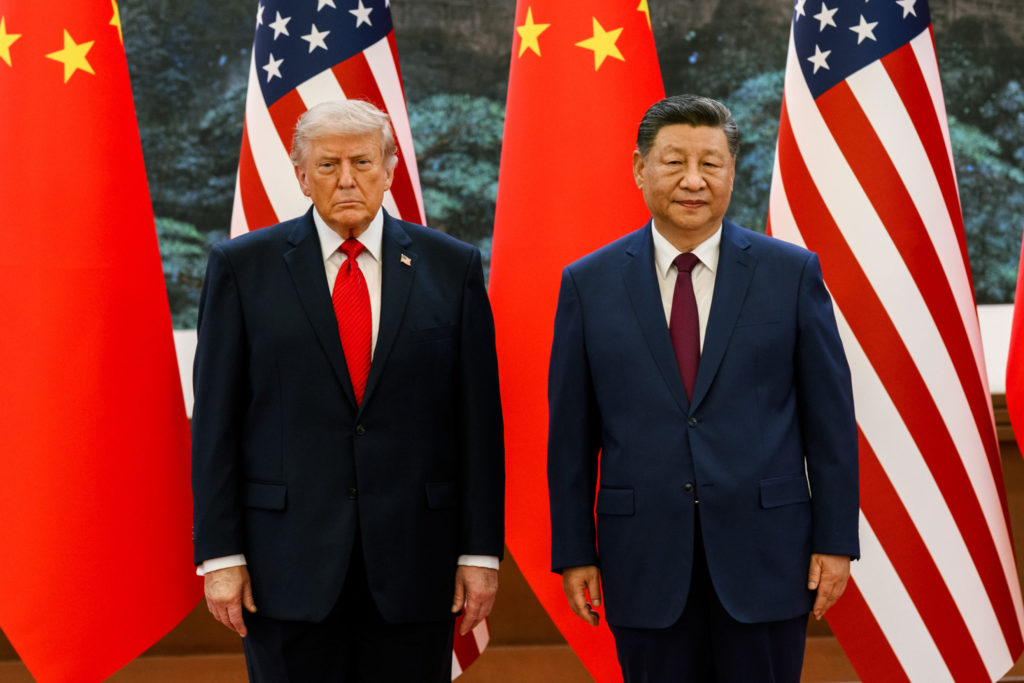
President Donald Trump and Chinese leader Xi Jinping are due to meet in the US capital on Thursday to flesh out their approach to topics ranging from trade to artificial intelligence. Ahead of that, top US negotiators signaled rare earth flows were a sticking point and may mean that the truce — which expires November — may be extended only by three to six months.
“I think a lot of it is because China has created this uncertainty,” US Trade Representative Jamieson Greer said in a Monday interview with Bloomberg Television after talks in New York with his Chinese counterparts. “They have limited rare earths exports. They control them, we monitor them, and I think just saying we have full confidence and trust with each other at this point is a little naive.”
China imposed controls on exports of rare-earth magnets — used in everything from cars to consumer goods and weaponry — in April 2025, although they were subsequently eased. The industry is keenly waiting for the outcome of the Xi-Trump talks as they come before the expiration of a US-China trade truce, which includes commitments by Beijing to maintain flows of critical minerals by issuing more generous export licenses.
China hopes to offer more licenses for rare earth exports as a bargaining chip in talks, people with familiar with the matter said, without disclosing what Beijing would demand in return.
“Washington needs stability with Beijing to keep these critical inputs moving,” Chris Kennedy, lead for economic statecraft at Bloomberg Economics, said in a note. “Yet periods of calm that restore access to lower-cost Chinese material weaken the urgency for the US to break its dependence on China.”
Shipments slumped in May last year, but quickly recovered. They’re running at an average of about 504 tons a month this year, although that’s still below 621 tons in 2024 before the curbs. Chinese customs data shows that direct exports of rare earths including yttrium, dysprosium and terbium — subject to export controls — have also dropped compared with previous years.
In May, Greer gave Beijing a “passing grade” for its performance in keeping flows of critical minerals going. US Treasury Secretary Scott Bessent said in July that China should “fully meet its commitments.” Bessent and China’s Vice Premier He Lifeng are holding talks in New York ahead of the leaders’ meeting.
World’s top rare earth magnet maker gives Xi leverage over US
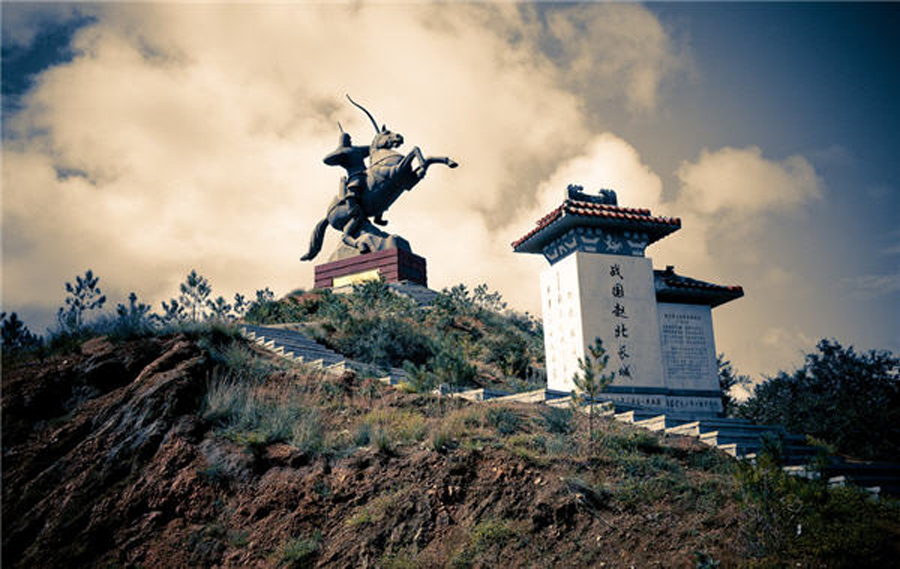
Baotou, an industrial city near the Gobi Desert, is the Silicon Valley of rare earths. Off Rare Earth Street, research institutes sit alongside a museum devoted to the minerals. Nearby, JL Mag Rare Earth Co., the world’s top maker of high-performance magnets, is building its largest plant yet — an expansion that offers a glimpse of how China plans to defend its commanding position in the supply chain.
Over the past year, the US and its allies have pledged billions of dollars to develop new sources of rare earths outside China. Indispensable to everything from missiles to electric vehicles, the minerals are a potent source of Beijing’s economic leverage. As President Xi Jinping arrives in Washington this week, rare earths are at the top of the trade agenda, with China weighing whether to expand export curbs this fall.
But as the US and others attempt to replicate China’s supply chain, Beijing is trying to redefine it. The country already dominates magnet production, and companies like JL Mag are now expanding into increasingly sophisticated components that incorporate them.
That creates a moving target. Mining rare earths is only the first step. The minerals must be separated and refined, turned into high-performance magnets and then manufactured into usable parts. Even if countries outside China secure enough dysprosium or terbium from new mines in places like Brazil, for example, they could still depend on Chinese companies — and their technology, patents and manufacturing scale — to supply fast-growing industries like robotics.
China’s rare earth magnet exports to the US fell last month, and Beijing hopes to offer additional export licenses as a bargaining chip at the summit, Bloomberg News reported.
JL Mag is Exhibit A. Just a few years ago, the company was best known for making rare earth magnets for air conditioners and wind turbines. Today, it has more than 10 times the current production capacity of its closest US competitor and has emerged as a major supplier to the EV industry, with analysts linking it to customers including Tesla Inc. and Volkswagen.
A review of JL Mag’s corporate filings and interviews with magnet makers in Asia and North America, as well as those familiar with the company’s operations, found that the scale and scope of its expansion far eclipse the nascent projects underway in the West. Little known outside the industry, the company is extending its reach from Baotou to as far away as Monterrey, Mexico, where it wants to shift some processing closer to US clients.
“JL Mag can meet the needs of its customers in a way that US competitors just can’t,” said David Abraham, principal at Materium Strata, a critical minerals advisory and market intelligence firm. “Customers can just give them their specs, and JL Mag basically presses a few buttons on their machines and out comes the product. Catching up to that is incredibly hard.”
Estimates put JL Mag’s share of the global rare earth magnet market at 10% to 20%, with its products used across the world’s top 10 new-energy vehicle brands. By 2028, it plans to add as much as 20,000 tons of annual capacity in Baotou, a 50% increase that would extend its lead in an industry where its three closest rivals are also Chinese.

The expansion is already visible. JL Mag’s Baotou site sits on the block next to Rare Earth Park, where Chinese scientists are carved into a granite wall and stainless-steel cubes embossed with chemical symbols dot the flower beds. At the factory, a recruitment flyer hangs on the front gate. The plant takes more than half an hour to walk around.
Robotics shows where JL Mag wants to go next. Last year, the company launched a business unit dedicated to humanoid robots that reports directly to its chief executive, with plans to expand its presence in the sector. Daiwa Securities has identified the firm as the sole supplier of motor rotors for Tesla’s Optimus robots. Another analyst estimates that JL Mag supplies about 80% of the magnets used in Tesla vehicles.
“They came out of nowhere,” said Constantine Karayannopoulos, the former chief executive officer of Neo Performance Materials Inc., which also operates a magnet plant in China. “To me, there is JL and then there is everybody else. They are a juggernaut. They can take business at any price.”
JL Mag referred questions about its operations and expansion plans to its exchange filings.
The company has long been on Beijing’s radar. In May 2019, Xi stopped at some of JL Mag’s facilities in southern China, touring production lines and inspecting the furnaces used to make rare earth magnets. The visit was celebrated in state media and JL Mag’s publications. To remain “undefeated in fierce competition,” Xi said, according to state media, “we must firmly grasp technological innovation as a strategic foundation.” China’s top trade negotiator, Liu He, stood at his side.
The timing and choice of venue were provocative then and prescient in hindsight. Just 10 days earlier, US President Donald Trump had hiked tariffs on Chinese goods, escalating a trade war that would punctuate his first term in office.
It would take until last year — just after Trump’s “Liberation Day” tariffs — for Xi to pull the trigger. China imposed export controls on rare earths, choking off supplies and threatening swaths of US manufacturing before helping force a trade truce with Washington.
Yet JL Mag has been largely unfazed. US efforts to diversify rare earth flows still face “numerous challenges,” the company said in its latest annual report. Chinese magnet makers will remain the “dominant players.”
In 2024, China accounted for about 94% of global rare earth permanent magnet manufacturing — far exceeding its share of mining — according to the International Energy Agency. That same year, JL Mag says it became the world’s largest magnet producer by both output and sales. Between Xi’s visit in 2019 and 2025, the company’s annual capacity more than quadrupled, according to its historical reports. By next year, it wants to boost that by another 50%, to 60,000 tons.
That advantage is reinforced by clusters like Baotou, where processors, magnet makers and research institutes sit just a few hours by train from the giant Bayan Obo mine. The proximity cuts logistics costs and makes it easier to share suppliers, recruit specialized workers and tap decades of expertise.
By comparison, MP Materials Corp., which operates the only rare earth mine and processing facility in the US, started producing rare earths magnets from its plant in Fort Worth, Texas, last year. After the Trump administration invested $400 million in the company, for a roughly 15% equity stake, MP unveiled plans to spend more than $1.25 billion on a much bigger magnet-making plant in Northlake, Texas, that would eventually bring its production to about 10,000 tons a year.
That expansion would equal about a third of JL Mag’s production in 2025, without factoring in the Chinese firm’s plans to expand.
Other US companies have made similar pledges to build magnet facilities but have little experience and capital to show for it.
Demand, meanwhile, is surging, benefiting JL Mag and Chinese rivals such as Ningbo Yunsheng Co. Ltd. Consumption of rare earths used in permanent magnets has doubled since 2015 and is projected to rise another third by 2030, according to the IEA. Outside China, demand is expected to climb 50% by 2035, with existing and planned magnet projects meeting less than a fifth of it.
“The Western companies are still developing their technology, doing everything from scratch,” said Derek Zhang, a Daiwa Securities analyst. “The Chinese companies can ramp up capacity very easily and the cost is maybe about 1/10th.”
JL Mag was founded by industry outsiders. Two decades ago, Cai Baogui was hunting for his next business opportunity. He grew up in Jiangxi province, the southern heartland of China’s rare earths sector, but had spent his career elsewhere — first as a university lecturer and later as a senior executive overseeing plastics manufacturing operations in Dongguan.
Renewable energy caught his attention after he met the chairman of emerging wind-turbine maker Goldwind, according to a rare interview Cai gave to a Chinese news outlet in 2020. Soon after, he teamed up with two friends, Hu Zhibin and Li Xinnong, to explore making rare earth magnets needed for such machines.
In 2008, the trio launched JL Mag by uniting opposite ends of the supply chain. Ganzhou Rare Earth provided a link to raw materials, while Goldwind became an important early customer. The idea was to move beyond the mining, separation and smelting that dominated the city of Ganzhou’s rare earth industry and capture more value by turning those resources into the magnets that make technologies actually work. JL Mag’s founding philosophy, Cai said, was “long-termism.”
Success was hardly assured. Rare earth prices surged more than tenfold in a matter of months in 2011 before collapsing, according to Cai, who remains the firm’s chief executive officer. If raw materials became too expensive, he said, it would be like having “flour more expensive than bread.”
By 2013 and 2014, Cai recalled, employees were leaving and he faced a choice over whether to abandon the industry.
But by the time Xi visited in 2019 — a moment Cai said “greatly boosted our confidence” — JL Mag had emerged from the downturn with a growing business supplying magnets for wind turbines, ACs and EVs. It had also gone public in Shenzhen the previous year.
Four years later, JL Mag raised about HK$4.2 billion ($540 million) in Hong Kong, giving it access to more capital as it embarked on a massive expansion.
In the years since, government support has accompanied JL Mag’s rapid expansion. The company received tens of millions of dollars in subsidies recognized over the past three years, while local authorities have repeatedly designated its factories as major projects.
Some describe JL Mag as unusually well-positioned to weather even the stormiest stretches in relations with Washington. When Beijing’s rare earth controls disrupted manufacturers abroad last year, JL Mag was among the first Chinese companies granted a general export license. Its US sales revenue rose 40%.
The firm has for years been one of the government’s “favorite sons,” said John Ebert, the longtime US representative for magnet producer Ningbo Yunsheng, which he left this year. “That’s why JL Mag grew so quickly from almost nothing into something.”
For potentially huge new markets like robotics, the company is going all-in.
JL Mag named humanoid robots as its next major growth pillar in its latest annual report. Their joints rely on magnet-powered motors that effectively act as muscles, allowing for precise, agile movement. JL Mag is pushing beyond simply supplying these magnets to making finished components, adding another layer of the supply chain for Western competitors to replicate.
“Moving forward the company will continue to increase its investment in research and development of magnetic components for humanoid robots,” JL Mag said.
China is already an early leader in humanoid robotics, accounting for 97% of global shipments in the first half of 2026, according to one survey.
The potential is substantial. Nomura says humanoids use significantly more rare earth material per motor than EVs. JL Mag expects China to remain dominant, telling Citigroup analysts it will likely still produce 80% of the world’s magnets in 2030.
“Even if Western projects materialize, management believes they may solve the ‘availability’ issue, but are unlikely to compete with China on costs, scale, quality and customization,” Citigroup said in a February report, summarizing JL Mag’s views.
That helps explain another US strategy for reducing China’s leverage: eliminating rare earths from magnets altogether.
Niron Magnetics, a Minnesota-based manufacturer, is pursuing that approach with magnets made from iron and nitrogen. The Pentagon is backing the company as it develops factories capable of eventually producing as much as 11,500 tons annually. Looming restrictions are also helping create a market for alternatives: Starting Jan. 1, the Pentagon will stop procuring certain defense technology containing Chinese rare earth magnets.
But the economics remain daunting. Niron has seen a “massive” influx of inquiries from prospective defense customers ahead of the deadline, said Tom Grainger, its vice president of commercial and corporate development. Demand has already overwhelmed the relatively small company — before it has even begun targeting robotics.
“If you take major economic buckets like labor, or government support, you just can’t compete with China,” Grainger said.

No comments:
Post a Comment