Tuesday, October 20, 2026

Vote for Québec solidaire to block the right and open horizons

Quebec solidaire poster

First published in French at Presse-toi à gauche. Translation and introduction by Richard Fidler for Life on the Left.

Quebec’s general election on October 5 was contested by five parties. Four are right-wing: the pro-independence Parti québecois (PQ), which replaced the Coalition Avenir Québec (CAQ) in government, and the Liberals and Conservatives. The latter three are federalist or autonomist in constitutional orientation. Challenging these parties was the left-wing and pro-independence Québec solidaire, founded in 2005, which won nine seats compared to the 11 it held in Quebec’s National Assembly.

This was a difficult election for QS. Quebec politics today are dominated by the rightward trend evident throughout the hemisphere and QS is far behind the capitalist parties in public opinion polls.

The online weekly journal Presse-toi à gauche supports Québec solidaire and the party’s left wing, now identified as “The Party of the Streets,” which aims to build support for QS in the unions and social movements. Also supporting QS in this election campaign was an open letter signed by about 100 activists and journalists, entitled “The only shield against austerité.”

In the following article, PTàG editor Bernard Rioux makes the case for voting for QS, while pointing to serious deficiencies in its electoral platform. 


Vote for QS to block the right and open horizons

In a Quebec political landscape where the other four political parties are proposing tax cuts, partial privatizations or a disengagement of the state, Québec solidaire’s program is distinguished by an opposite orientation. This is based on the idea that contemporary social problems do not come from a state that is too present, but from a state that is insufficiently equipped and whose resources are too concentrated in the hands of the society’s wealthiest. This simple reversal of the diagnosis has a political significance that goes beyond the content of each measure taken in isolation. It keeps alive, in the public debate, the hypothesis that broader public intervention is not only possible, but desirable.

The importance for the social left of voting for Québec solidaire despite the limits of the definition of its social project

This rejection of the logic of reducing the welfare state can be seen first and foremost in taxation. The tax on large fortunes, aimed at assets of more than $25 million, reaffirms the principle of redistributing wealth at a time when the other parties are proposing instead to reduce the tax burden on the wealthiest taxpayers or corporations. While the real return on this tax will depend on the extent of tax avoidance strategies, its very existence in the electoral debate prevents the issue of wealth distribution from disappearing from the political agenda.

By proposing a 3 percent cap on rent increases, a moratorium on evictions, a fight against speculation, and the penalization of abusive landlords, as well as the acquisition of thousands of properties to offer them below the market price, among other measures, Québec solidaire is not content to mitigate the effects of a market deemed to be failing. It holds that the state can once again become a direct actor — owner, regulator, even competitor — rather than a mere arbiter. It is exactly the same logic that underlies the project of public non-profit grocery stores: by capping the margins of large chains and creating public outlets, QS proposes that the state compete directly with the private sector instead of limiting itself to regulating it from without.

In health care, the massive return to CLSCs [community health clinics], placing them in the front line, goes in the same direction: it reaffirms the principle of a universal public system at a time when the growing use of the private sector is not condemned by the CAQ, the Quebec Liberal Party, or especially by the Conservative Party of Quebec, which presents the private sector as a solution to strengthening access to the health care system. Free contraception, eye and dental care for minors, and universal school meals are part of the same philosophy: to expand, rather than contain, the scope of what the community collectively undertakes to cover.

Québec solidaire also proposes a whole series of measures aimed at fighting women’s poverty and domestic violence, and giving victims of domestic violence more means to find safety and regain their autonomy.

What distinguishes this program from a simple policy of defensive resistance, however, is that it is not limited to protecting the gains: it opens up projects that, once started, can create their own dynamics of transformation. Reform of the voting system and referendums by popular initiative are not simple administrative measures: they change the rules of the democratic game themselves, which can facilitate the adoption of more ambitious reforms than those included in the current program. Similarly, the Constituent Assembly co-constructed with the First Peoples places the independence project within a participatory approach that goes beyond the traditional electoral framework and leaves the door open to a broader refoundation of the social contract.

Mission-based funding for community organizations, the climate emergency fund, the gradual phase-out of oil and gas infrastructure, and the massive development of free public transit for young people and seniors all work together to chart a coherent trajectory: each measure, taken alone, corrects a specific inequity, but as a whole this installs an institutional infrastructure — fiscal, democratic and energy — on which more important transformations could then be supported. It is in this sense that Québec solidaire’s program can be read as a brake on the neoliberal trend in Quebec politics.

Faced with the right-wing policies defended by the other major political parties, a vote for Québec solidaire is therefore a vote in defence of the interests of the popular majority. This is all the more important for activists from the various social movements — trade-union, feminist, popular, student, etc. A joint declaration by activists from these different social movements could be an important contribution to the defence of the gains of the popular majority.

The limits of defensive demands incapable of presenting an alternative social project to capitalism

Québec solidaire’s program shifts from the dominant right-wing discourse of the other parties. It reaffirms the legitimacy of public intervention, fiscal redistribution and market regulation. But this shift, as real as it is, takes place almost entirely within the existing framework of capitalist property and economic power relations. The problem is constantly posed in terms of insufficient or unfair results produced by the market, but rarely in terms of who controls the means of production and who therefore holds the decision-making power.

This absence has concrete effects on the nature of the solutions proposed. Let’s take the most telling example: the $2 billion “Trump provision” intended to support companies affected by the tariff war. It is a transfer of public funds to the private sector to help it maintain jobs and transform production, without any quid pro quo in terms of ownership, governance or workers' control over these companies. The state thus finances the survival and restructuring of capital rather than considering, for example, the nationalization of strategic companies or the establishment of workers’ cooperatives as alternatives.

The 2035 Transition Plan constitutes, in relation to the prevailing climate inaction and the refusal of the other parties to make a clear break with the exploitation of hydrocarbons, a set of important redistributive and regulatory measures. But, if we analyse these proposals from the systemic bases of the crisis, they fall short of the necessities posed by the climate emergency and the loss of biodiversity.

The crisis is described more as a problem of governance and poor choices than as the result of a capitalist economic system hung up on growth incapable of respecting planetary boundaries. Thus the 2035 Transition Plan states: “In reality, the climate crisis is the result of poor economic choices as well as ineffective and poorly targeted policies.” The proposed climate targets fall short of the scientific urgency highlighted by the IPCC. The nationalization of renewable energies is not presented as a priority. The industrial policy relies on partnership with employers rather than on public and democratic planning. Public transit remains partially commodified, since free travel is restricted to young people and seniors. The construction of public transit infrastructure is left to the private sector. The protection of the territory is mainly based on a regulatory framework, while the exploitation of mining and forestry resources remains largely in the hands of large Canadian and American multinational companies. The plan aims to strengthen food autonomy without calling into question agro-export agriculture, a large part of which is focused on animal production.

As for the independence project, the text presents it mainly through the prism of a constituent and participatory approach, co-constructed with the First Peoples — which distinguishes it from the Parti Québécois in terms of method. But there is no sufficiently developed link between independence and a critique of Quebec’s structural dependence on foreign capital, continental value chains or international financial institutions.

Independence is therefore thought of mainly as an institutional reform and as national recognition, rather than as a break with relations of economic domination that go beyond the Canadian framework alone. For an anti-imperialist reading of sovereignty, this leaves intact the question of who would really own an independent Quebec and what its relationship would be to militarist alliances like NATO and NORAD. These questions are all the more important when confronted with the PQ project, defined in its Blue Book as a project of independence which, in this analysis, remains marked by a neocolonial orientation.

Finally, in the field of labour itself, the program remains largely within the parameters of the existing wage system: an increase in the minimum wage, an improvement in conditions in the community sector, and the hiring of staff in the public services. These are real gains for workers, but there are no measures to affect economic democracy in the strongest sense: no mention of increased representation of workers on boards of directors, union vetoes over closures and relocations, expansion of the cooperative or self-managed sector, or a plan of nationalizations democratically controlled by those who work there.

It can therefore be argued that Québec solidaire acts as a brake on the neoliberal trend by reaffirming the role of the redistributive state. This is why the mobilization to broaden its electorate is an important issue for the left. But this strategic choice should not prevent us from understanding that QS’s proposals do not, on their own, provide a strategic compass for the radical transformation needed to shift economic decision-making power out of the hands of capital.

Such a transformation is essential to confront the economic, social and ecological crises faced by the people of Quebec, like the rest of humanity.

Voting for QS can thus help block social retreat and the slippage to the right, while leaving open the need to build, beyond its current program, a real ecosocialist alternative to capitalism.

 

Partido Lakas ng Masa: The international political situation and the call for a revolutionary bloc of social forces

Tanks

First published at Ang Masa Para Sa Sosyalismo.

We are in a period of ‘Globalised War’. Today, there are at least three major strategic theatres:

* Middle East: the US/Israeli war against Iran, alongside the continuing Israeli genocide in Gaza, the intensified settler violence and Israeli occupation of the West Bank, and occupation of South Lebanon, with Israeli forces continuing airstrikes.

* Europe: the NATO- Ukraine war against Russia is now European war with NATO’s 2026 commitments of €70 billion in military equipment, assistance and training for Ukraine, alongside continued reinforcement of its eastern defences. The war is a wider confrontation over the future European security order, NATO’s role, Russia’s strategic position and the balance of military power in Europe. It also has broader consequences for energy security, defence industries, sanctions, arms production and the allocation of public resources.

* Indo-Pacific: The intensifying US–China strategic confrontation is centred on the future balance of power in the region, with Taiwan a major potential flashpoint. The competition extends across the South and East China Seas, military alliances, advanced technologies, critical minerals, trade and strategic supply chains. The United States is strengthening its regional alliances and military capabilities, while China in response is expanding its own military and strategic capacity. The Indo-Pacific has therefore become a central arena in the wider struggle over the future balance of economic, technological and military power.

These theatres of war are increasingly interconnected through military alliances, arms supplies, energy and shipping routes, sanctions, technology, finance and global supply chains.

Hence there is growing speculation about whether these interconnected wars could develop into a wider World War.

The changing global balance of power

Despite overwhelming US military superiority, US hegemony is being increasingly challenged.

The global balance of economic, technological and political power is changing.

China has emerged as a major economic and technological power. Russia has challenged the post-Cold War European security order. Iran has resisted incorporation into a US-dominated Middle Eastern order.

The US security order in the Middle East has effectively broken down, with Iran’s attacks and destruction of US military bases in the Gulf states, Ansarallah (the Houthis’) control of parts of Yemen’s Red Sea coast, its disruption of Saudi Arabia’s oil-shipping routes, and direct attacks on Riyadh airport.

In Lebanon the Hezbollah continues to resist and fight Israel.

Across the Global South, countries are increasingly seeking greater strategic autonomy rather than aligning themselves exclusively with Washington or another major power (with countries such as the Philippines being the exception).

Mass movements of resistance are having a significant political impact — the Palestine Solidarity movement, the climate justice movements, etc.

The growth of democratic socialist politics in the United States is an important indicator of a broader resurgence of left and socialist politics. In the US, growing movements around workers’ rights, healthcare, housing, climate action and public services reflect widespread dissatisfaction with inequality, corporate power and the limits of neoliberal politics.

In Berlin, Die Linke’s historic electoral victory, with strong electoral advance particularly in working-class districts, has emerged alongside struggles over housing costs, insecure work, inequality and pressure on public services, while taking place against the wider rise of a neo-Nazi extreme right.

These developments point to a renewed search for political alternatives based on social needs, and democratic control.

Military superiority does not automatically produce political control

The central contradiction of contemporary imperialism or global capitalism is that overwhelming military superiority does not necessarily produce political or economic control.

In Afghanistan and Iraq the United States could deploy overwhelming military force, defeat existing governments and occupy territory, but it could not simply determine the political future of either country.

The current conflict with Iran raises the same fundamental contradiction.

The US and Israel may possess the capacity to destroy enormous quantities of Iranian military infrastructure. But military destruction has not led to regime change in Iran and does not automatically determine the political future of Iran or the wider Middle East.

Cuba represents an important example of a small country asserting national sovereignty and pursuing an independent political path despite sustained external pressure. Its experience also demonstrates the importance of international solidarity.

Military power can destroy. It cannot, by itself, create political legitimacy, social stability or a sustainable regional order.

The Global South is a central political terrain

The peoples of the Global South, who have the least influence over the geopolitical decisions of the major powers, are often those who bear some of their greatest consequences.

The current energy shock illustrates this clearly. Conflict in the Middle East can disrupt oil supplies, shipping routes and global markets thousands of kilometres from the battlefield.

The consequences are transmitted through a chain of economic pressures: war → energy disruption → higher fuel prices → inflation → higher food and transport costs → pressure on workers and poor communities.

The peoples of the Global South are being asked to pay for a situation they did not create.

At the same time, countries face pressure to increase military expenditure and align themselves with competing geopolitical blocs.

Resources that could be directed towards health, education, housing, social protection, infrastructure and climate adaptation are instead increasingly diverted towards militarisation.

Energy, war and climate

The Middle East conflict also exposes the vulnerability of a fossil-fuel-centred global economy.

The relationship is increasingly clear: fossil-fuel dependence → geopolitical competition → militarisation → war → energy disruption → economic and social crisis.

Climate change creates another reinforcing cycle: climate disruption → disasters → displacement → food and energy insecurity → social instability → political conflict and militarisation.

These processes cannot be treated separately.

They point towards an important political convergence: anti-war politics + climate justice + workers’ rights.

The Philippines: A forward position in a globalised war and a vulnerable frontline

The Philippines’ growing integration into the US military structure risks turning the country into a forward position in a wider globalised war. Its proximity to Taiwan and the South China Sea makes Philippine bases, ports, airfields and communications infrastructure strategically important and vulnerable.

This military vulnerability is compounded by energy dependence and climate exposure: disruption of fuel supplies and shipping could rapidly drive up energy and food costs, while typhoons, flooding and sea-level rise threaten critical infrastructure and livelihoods.

The danger is therefore not only that the Philippines could become a military frontline, but that military, energy and climate vulnerabilities could converge, leaving Filipino workers and the masa to bear the costs of US imperialism’s aggression.

From imperialist wars to socialist alternative

The crisis of the existing imperialist order cannot be resolved simply by replacing one great-power bloc with another.

Nor can it be resolved through endless military expansion, permanent war economies and competition for strategic resources.

The alternative has to be socialist internationalism: cooperation among peoples and workers across national borders rather than competition among states and ruling classes for control over the remaining spoils.

A socialist alternative would place human needs above military power and private accumulation.

The role of revolutionary politics

The role of revolutionary politics is not simply to predict whether the present conflicts will become a world war.

It is to understand the structural crisis producing these conflicts and to organise people around an alternative.

The task is to connect struggles that are too often treated as separate:

* the struggle against war and militarisation;

* the struggle for workers’ rights and democratic control;

* the struggle for climate justice;

* the struggle for democracy and sovereignty;

* the struggle against poverty, inequality and exploitation;

* the struggle for the rights of migrants and displaced peoples;

* the struggle for national and popular sovereignty; and

* the struggle for peace and international solidarity.

For workers and peoples in the Global South, this means building an independent political movement.

Independence does not mean political neutrality in the face of oppression or war. It means developing the political capacity of workers and peoples to determine their own interests and their own future.

The objective is not simply to oppose the next war, fight for climate justice or campaign for energy democracy as separate struggles.

The objective is to build the social and political forces capable of creating an alternative to the system that continually produces war, exploitation, inequality and ecological crisis.

It requires transforming fragmented struggles into a common political project.

The call for a revolutionary bloc of social forces

This is why we need to call for a revolutionary bloc of social forces.

Such a bloc should not be understood simply as an electoral alliance or a coalition of existing political organisations.

It should be understood as a social and political alliance of forces capable of challenging the system.

The challenge before us is therefore much greater than responding to one war or a particular manifestation of the crisis of the international capitalist system.

The task of revolutionary politics is to transform this crisis from a source of fear, division and reaction into an opportunity for collective political organisation — towards a Gobyerno ng Mass and socialism.

That is the political basis for building a revolutionary bloc of social forces.


Navigating Kurdish unity: An internationalist perspective

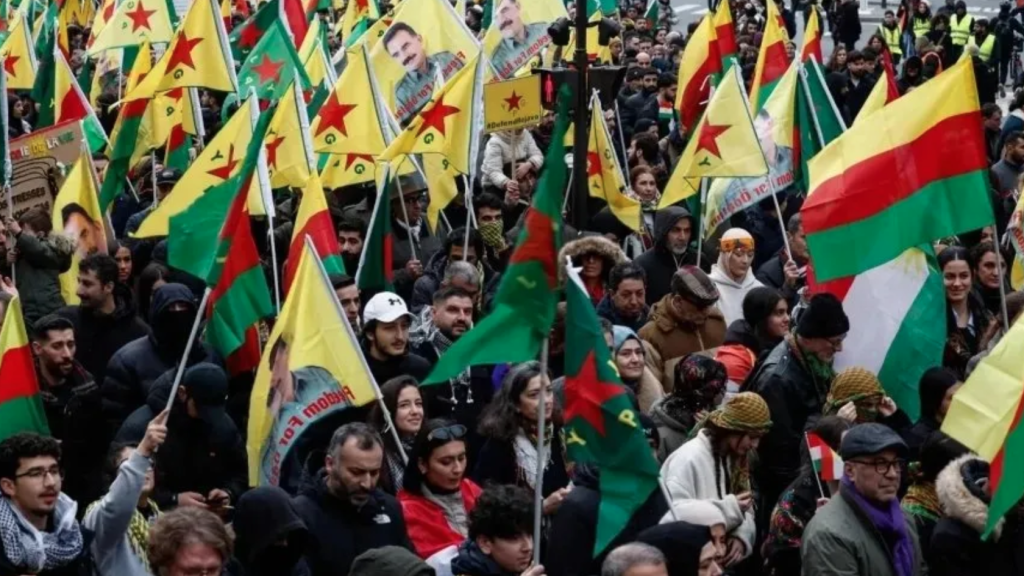
Kurdish unity rally

First published in Turkish at Jineolojî. English version published at News From Kurdistan.

When Jineolojî Magazine asked me to write an article on Kurdish unity, I wasn’t sure what to say. Although I have long supported the Kurdish struggle against oppression, I am very wary of anything that opens up the possibility of ethnic nationalism, or cuts across the wider struggle for a better world. One of the achievements of the revolution in Rojava has been the insistence on cultural freedom for all ethnic groups, not just the Kurds. How can this universality sit alongside the concept of Kurdish unity? And how can the representatives of a system that takes inspiration from the communitarian ideas of Murray Bookchin form a unity with the feudal and materialist society of Erbil?

But in these times, when people are being attacked for their Kurdishness, and prevented from living and celebrating their Kurdish culture, they should be able to expect the support of everyone with a conscience, and especially of other Kurds. And Kurdish unity against anti-Kurdish oppression can exist alongside other political allegiances.

Navigation of this type of relationship has been a constant theme of progressive political debate, and I thought I would take the opportunity to look at some historic examples, both beyond and within the Kurdish movement.

Lenin and the national question

Just over a century ago, when Kurdistan was being divided up by the victors of the First World War, political activists from all parts of the world were pinning their hopes on the new socialist future that was being pioneered in Russia. Those activists, who envisaged a path to real equality, would be astonished as well as devastated if they could visit us today; and among the things that would astonish them is the persistence of ethnic division and of interethnic prejudice and oppression.

The Russian empire was a patchwork of different nationalities, and how to bring these together in the struggle for socialism was a subject of vital debate. Positions taken at that time have echoed through the decades, with Lenin’s writings providing a source of reference — and of disputed interpretation.

For Lenin, ending capitalism and its class divisions was paramount, and to achieve this he insisted on a unified party. He repudiated the nationalism of dominant oppressor nations, and he was very wary of how nationalism can be used to divide people who otherwise have a shared class interest in dismantling existing hierarchies; but he insisted on national and cultural rights and freedoms in opposition to the coercion of the Russian empire.

An early testing of these ideas was brought about by the Jewish Bund, which adopted the concept of national-cultural autonomy put forward by the Austrian socialists. This has many similarities to the practices of multicultural representation developed in Rojava — especially in the form in which it was taken up by the Bund, which recognised national groups not tied to a distinct territory.

Jewish workers were relatively well organised, and the Bund was an important founding constituent of the Russian Social Democratic Labour Party (RSDLP). Profoundly anti-Zionist, it was established to combine the general socialist struggle with the struggle for Jewish civic rights, “because,” in the words of one of its founders,1 “Jewish workers suffer not only as workers but also as Jews”. However, by the time of the RSDLP’s second Congress in 1903, the Bundists were demanding a federal party structure and the exclusive right to speak in the name of the RSDLP on all Jewish affairs. After extensive debate, both Bolsheviks and Mensheviks rejected this demand for organisational autonomy. As Julius Martov argued, “We cannot allow that any section of the Party can represent the group, trade or national interests of any section of the proletariat. National differences play a subordinate role in relation to common class interests. What sort of organisation would we have if, for instance, in one and the same workshop, workers of different nationalities thought first and foremost of the representation of their national interests?”

However, that same congress agreed on a programme that included equal rights regardless of sex, religion, race and nationality; the right to mother tongue education at the expense of the state and the right to use the mother tongue in all local, public and state institutions; extensive local self-government; and the “right of self-determination for all nations included within the bounds of the state.”

Nine days after the October revolution, the right of nations to self-determination was passed into law. For Lenin, this was a democratic right like divorce, and “repudiation of the right to self-determination… means nothing more than defence of the privileges of the dominant nation and police methods of administration, to the detriment of democratic methods.” But, like with divorce, the desirability of separation depends on circumstances and was not the main focus of socialist politics.

Many of the demands of the Bundist programme became official policy in the early years of the Soviet Union. And Lenin argued that rather than alienate people from the class struggle by offending them it could be “better to over-do rather than under-do the concessions and leniency towards the national minorities.” However, while the Bolsheviks respected cultural difference and cultural rights, they saw their role as bringing peoples together rather than promoting difference. They dismissed the politics of national-cultural autonomy as a compromise with bourgeois nationalism, “which drugs the minds of the workers, stultifies and disunites them in order that the bourgeoisie may lead them by the halter”; and they embraced a modernism that replaced the shackles of custom and convention with a new proletarian internationalism. This made it difficult for them to comprehend the positive human values that are also part of traditional culture and community, and the solidarity and richness that traditional culture can bring.

As Trotsky explained (in his description of Marxism and the National Problem, which Stalin wrote under Lenin’s guiding hand) “One of the aims of the Austrian program of “cultural autonomy” was “the preservation and development of the national idiosyncrasies of peoples.” Why and for what purpose? asked Bolshevism in amazement. Segregating the various nationalistic portions of mankind was never our concern. True, Bolshevism insisted that each nation should have the right to secede — the right, but not the duty — as the ultimate, most effective guarantee against oppression. But the thought of artificially preserving national idiosyncrasies was profoundly alien to Bolshevism.”

The Turkish left

With the emergence of numerous Left movements in 60s and 70s Turkey, these debates, and Lenin’s copious writings, informed long and heated discussions; especially with respect to the Kurdish Question — the endemic oppression of Kurdish culture and denial of Kurdish identity that was built into the Turkish Republic from its first constitution of 1924. While Kurds increasingly viewed their position as that of an internal colony within the Turkish state, Left organisations were wary of falling into the nationalist trap. In emphasising working-class unity, they postponed addressing the very real and brutal oppression of the Kurds.

This position was expressed as political principle, but long-instilled prejudices persist even within Left organisations that proclaim socialist equality. Lenin observed (in 1919) “Scratch some communists and you will find Great-Russian chauvinists;” and these prejudices were shared by Stalin, who, despite his own Georgian origins, rolled back the freedoms of the early revolutionary years. Similarly, Turkish chauvinism and Kemalist nationalism are no strangers to the Turkish Left, even among people of non-Turkish ethnic backgrounds. The theoretical picture was complicated by the understanding that Turkey itself was a victim of American imperialist oppression, and this was allowed to obscure Turkey’s own role in oppressing the Kurds.

Of course, Turkish responses to the National Question were not uniform. In the early seventies, İbrahim Kaypakkaya, following in the footsteps of Lenin, argued that the Turkish left should not ignore the national oppression faced by Kurdish workers, and that the Communist Party’s historic failure to support the Kurds against national oppression had damaged the class struggle by encouraging Kurdish resentment towards Turkish workers. The Turkish state regarded him as the most dangerous revolutionary in Turkey, and he was murdered in a Turkish prison before he could see his 25th birthday.

But this understanding was far from general. The seventies saw the emergence of a plethora of left groups that together struggled against capitalism, US imperialism, and the brutal oppression of the Turkish state and its far-right thugs; but these groups also carried out intense, and sometimes violent, ideological battles between themselves. In her memoir of that period, Sakine Cansiz gave a vivid account of the intense debates taking place among the students; and she reserved her deepest criticism for fellow Kurdish students who aligned themselves with those Turks who disregarded the additional oppression suffered by the Kurds. She wrote: “the revolutionaries of an oppressor nation had different tasks from those of an oppressed nation. How could anyone try to make a revolution in another country, when they rejected revolution in their own country and ignored the concerns of their own people?”2

It was the failure of so much of the Turkish left to address the Kurdish Question that forced Abdullah Öcalan and the group around him to organise separately and, eventually, in 1978, to found the Kurdistan Workers’ Party (PKK) to struggle for an independent Kurdish socialist republic. Sakine Cansiz was a founding member. The PKK has never been exclusively Kurdish, but it has put Kurdish liberation at the centre of its struggle.

Rivalries and political difference in an international colony

The Kurdish condition was given sociological recognition in the 1980s by Turkish sociologist, İsmail Beşikçi, who described Kurdistan as an “international colony” ruled over by four different countries, Turkey, Iran, Iraq, and Syria. In each of those countries, Kurds are engaged in a different struggle. And within countries, there have been major, sometimes violent, disagreements between movements: in the 1990s, Iraqi Kurdistan saw three years of fratricidal civil war. Besides basic power rivalries, there are important differences in political ideology that no one wants to concede.

As the PKK grew, it promoted a Kurdish national consciousness that traversed international frontiers. At the same time, repression in Turkey, forced the organisation to relocate many of its operations to neighbouring states. Öcalan’s sojourn in Syria left a lasting legacy for Syrian Kurdish politics that inspired the Rojava revolution. In Iraq, initially with the agreement of the Kurdistan Democratic Party (KDP), the PKK established bases in the northern mountains, and these mountain regions became effectively under PKK control. However, relations with the other Iraqi Kurdish parties were often difficult and sometimes collapsed into military conflict. The KDP has joined Turkey in attacking the PKK, and in recent years has provided Turkey with information and logistical support.

Under Öcalan’s leadership, the PKK developed their own socialist ideology that continued to distinguish them from “bourgeois nationalists” such as the KDP. During the 1990s, the organisation shifted emphasis from national liberation by independence, to local autonomy that — it was hoped — would increasingly marginalise state control without challenging existing state boundaries. These ideas were further developed by Öcalan after his capture and imprisonment in 1999, and were put into practice in the creation of new social structures in Rojava, the Autonomous Administration created by the Kurds in north and east Syria in the political vacuum of the Syrian civil war.

In line with Öcalan’s thinking, Rojava adopted a system that ensured that all ethnic groups were represented, with leadership roles deliberately divided up between different ethnicities (as well as being shared between men and women). This organisation by ethnic group shares similarities with the cultural-national autonomy of the Austrian Marxists. Ethnic groups even organised their own units within the Syrian Democratic Forces. These practices can be criticised for solidifying ethnic difference, but for the short term, in today’s volatile Middle East, they helped ensure an island of peace and stability.

The Autonomous Administration always insisted that their system could provide a model of ethnic and religious coexistence for the whole of Syria, but the United States and Europe, through their support for and recognition of Al-Sharaa, ensured that this was not to be.

When Rojava came under attack from al-Sharaa’s forces, Kurds everywhere came out in support of their brothers and sisters in Syria. The call for Kurds from all four parts of Kurdistan to unite in self-defence was expressed in the phrases 2+2=1 and the Kurdish People are One. In the face of a largely indifferent world, Kurds created a movement too big to be ignored. Arguably, this put pressure on the United States to negotiate a ceasefire agreement between al-Sharaa and the Autonomous Administration’s Syrian Democratic Forces, though it couldn’t change the overall trajectory towards centralisation and control from Damascus.

The Autonomous Administration, which once controlled almost a third of Syria, has been reduced to its Kurdish core, and Arab tribes that once supported them quickly changed their allegiance to the new power in Damascus. Integration with al-Sharaa’s government is the only option on the table, and Syria’s Kurds have been left trying to salvage some of their hard-won social gains.

Within Syria, Kurdish political divisions are exemplified by relations between the Democratic Union Party (PYD), which follows Oçalan’s ideas and has dominated politics in the Autonomous Administration of North and East Syria, and the Syrian Kurdish National Council (EKNS), which takes a Kurdish nationalist position, has organisational and political links to the KDP in Iraq, and has been accused of working with Turkey. The EKNS lacked the PYD’s broad support, and chose not to take part in the structures of the Autonomous Administration. However, they had backing from the United States, who kept pushing for a power-sharing agreement that would have diluted the PYD’s radicalism.

With al-Sharaa’s rise to power in Damascus, EKNS and the PYD agreed to work together for Kurdish interests, but the new alliance has not survived much beyond its initial celebration of unity. While the Autonomous Administration has taken a principled stance against the Syrian Transitional Government’s mockery of democracy, EKNS has used the system, and their own Turkey friendly image, to get their members into positions of power. Kurdish politics has to be about more than getting individual Kurds into government.

Kurdish unity within a wider struggle

The history of Kurdish oppression has led many to put the blame on Kurdish division, and to attempt to bring Kurds together. They want to end the — sometimes-lethal — competition, and to see Kurds combine against their external oppressors.

No organisation has been more consistent in trying to unite Kurds in the cause of Kurdish freedoms than the Brussel’s-based Kurdistan National Congress, which was established in 1999, shortly after Öcalan’s capture, but builds on an older organisation. The Congress is a project of the Öcalan-inspired Kurdish Freedom Movement, but it attempts to live up to its name by working with Kurds of all different parties, other than the political right and the Islamists. With the notable exception of the KDP, most Kurdish parties respond to their initiatives and take part in their discussions.

Like all progressive movements for oppressed peoples, the Kurdish Freedom Movement must combine their fight for national survival with the general struggle for a fairer society — a struggle that has made them an inspiration to activists throughout the world. At the same time as combining with other Kurdish parties in the fight for Kurdish rights, they recognise the importance of inclusivity — both politically and tactically — and they continue to promote their own alternative to the dead end of capitalism and liberal democracy.

In negotiations with the Syrian Transitional Government, the Kurdish-led Autonomous Administration has attempted to act with and for all the peoples of their multicultural region, and also as part of a Kurdish alliance. In Iran, Kurdish parties have made links with other minorities; however, there has been worryingly little connection with progressive groups from the majority Persian community.

Disappointingly, outside a politicised core, the Movement’s approach is not well understood, as was made clear recently in Syria. Many Kurds reacted to the collapse of their hopes in Rojava by retreating into Kurdish nationalism and blaming the PYD ideology — especially the idea of working with other peoples. But nationalism alone cannot solve structural inequality, and can even risk replacing one oppression with another. Israel provides an extreme example of this, but any state based on one ethnic group risks mistreating others.

Kurdish unity against oppression can be vital. And in the right circumstances the fight for freedom can include a fight for independence, if this is inclusive and doesn’t prioritise one ethnicity. But no national unity should be at the expense of wider solidarity, or of the struggle for systemic change.

  • 1

    Arkady Kremer, quoted in Levin, Nora (1978) Jewish Socialist Movements, 1871 – 1917: While Messiah Tarried London: Routledge and Kegan Paul, p259

  • 2

    Cansiz, Sakine (2018 trans Janet Biehl) Sara: my whole life was a struggle London: Pluto Press, p144


On violence in fighting occupation: The case of Palestine

October 7 Israeli tank Palestine flag

First published at New Politics.

Author’s note: The following text is a postscript, dated February 22, 2026, to recent editions — Arabic, German, and Spanish — of my 2025 book, Gaza Catastrophe: The Genocide in World-Historical Perspective. The postscript discusses Palestinian liberation strategy and its various manifestations since the completion of the Israeli occupation of Palestine in 1967. In this regard, it is important to bear in mind the results of the most recent public opinion poll conducted in Gaza and the West Bank on August 20–25 by the Jerusalem Media and Communications Centre (JMCC). Asked about the “best method to achieve the Palestinian people’s goals of ending the occupation and establishing a state,” only 13.3% chose “military means” (9.7% in Gaza and 15.7% in the West Bank), while 17.8% were in favor of “non-violent resistance,” and a majority of 55.8% in favor of “peaceful negotiations.” This bears witness to the degree of exhaustion of the population of the 1967-occupied Palestinian territories, with 58.6% trusting no Palestinian personality and 55% trusting no political faction. Rebuilding a sustainable Palestinian popular emancipatory struggle in those territories will require a lot of patient effort.


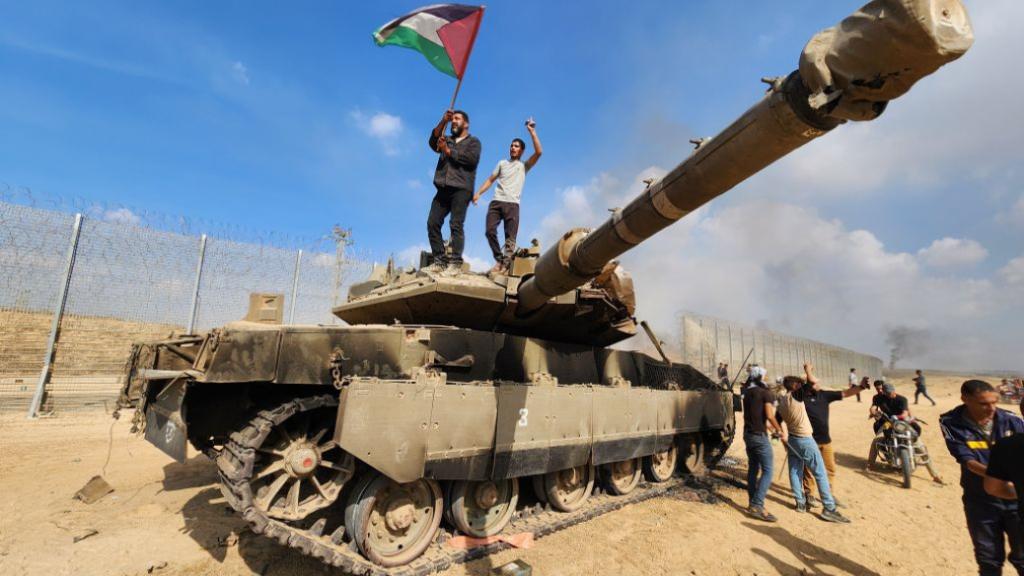
The farther we move from what has befallen the Palestinian people since the Hamas-led operation on October 7, 2023, the clearer becomes the magnitude of the disaster triggered by what I have described as “the most catastrophic miscalculation ever in the history of anticolonial struggle.” Seizing the opportunity provided by that fateful operation and the apparent war crimes that it involved, the far-right government of Israel felt unrestrained, even widely supported, in launching the most murderous and devastating war ever waged against the Palestinian people — one that has rightly been recognized as genocidal by many scholars, human rights organizations including the well-known Israeli organization B’Tselem, and various international bodies.

The massive death toll and the total human cost resulting from Israel’s onslaught, the full extent of which won’t be known for some time, are compounded by the unprecedented intensity of destruction of all means of life in the Gaza Strip: buildings, infrastructure, natural environment. The main aim of this mass destruction is the forced displacement of the Gazan population, i.e. the furthering of the ethnic cleansing of the land of Palestine between the Jordan River and the Mediterranean Sea that has been core to the Zionist settler-colonial enterprise since the foundation of the State of Israel in 1948. In parallel, creeping ethnic cleansing and annexation have intensified to an unprecedented level in the West Bank.

Consequently, the Palestinian people are farther from self-determination today than at any time since the unarmed popular uprising, known as the First Intifada, that started in December 1987 in the territories seized by Israel in the June 1967 war, i.e. the West Bank and Gaza, usually designated as the Occupied Palestinian Territories (OPTs). The Palestinian movement now faces a long period of retreat under duress. In this most tragic period of its history, the question of how it can secure its survival and go on to fight back with any chance of success must be prioritized.

Stages of struggle

The assessment must necessarily start from the peak impact that the Palestinian people’s struggle achieved in the late 1980s. Indeed, the Intifada provoked a deep crisis in Israel’s society, polity, and military. A strong opposition to the continued occupation of the OPTs emerged. The “Labor” wing of Zionism came back to power in 1992, defeating the Zionist far-right Likud party. They engaged with the Palestine Liberation Organization (PLO) — which Israel had hitherto castigated as “terrorist” — in the negotiations that led to the 1993 Oslo Accords.

The Israeli army withdrew from the densely populated areas of the 1967-occupied Palestinian territories and handed rule over them to the PLO-based Palestinian Authority (PA). But the PLO leadership had committed the major error of not insisting on including in the accords the freezing of settlements. This issue led to the collapse of the Oslo “peace process” by the end of the century. The expansion of Zionist settlements and the increase in oppressive measures against the Palestinian population led to growing popular anger that the Islamic fundamentalist Hamas (Arabic acronym for the Movement of Islamic Resistance, originally a branch of the Muslim Brotherhood) capitalized on by waging a series of indiscriminate suicide attacks against the Israelis. This contributed to renewed polarization through which Israel’s society and polity shifted back rightward.

It is against this background that the PLO leadership made another major error in what was called the Second Intifada, in allowing for the use of the light weapons that the Israeli occupation had authorized PA troops to possess for the purpose of policing the Palestinian population. This episode started in the autumn of 2000 in response to the provocation staged by rightwing Zionist leader Ariel Sharon at the Al-Aqsa compound in Jerusalem and in protest against the betrayal of the hopes created seven years earlier. The effect, however, was the opposite of that of the First Intifada. The Second Intifada saw the return of Likud to power under the leadership of Sharon — the military commander of Israel’s invasion of Lebanon in 1982 and the man condemned for his role in supervising the horrible massacres at the Sabra and Chatila camps in Beirut. This was followed in 2002 by the most violent Israeli onslaught on the OPTs until that year.

Since then, a much-crippled Palestinian Authority has ruled part of the OPTs under the thumb of the Israeli occupation. Benefiting from popular disgust with the PA’s subservience and corruption, Hamas won the Palestinian parliamentary election of 2006. Clashing with the PA, which refused — with Western encouragement — to abide by the election’s outcome, Hamas took over Gaza in 2007, two years after Israel’s withdrawal from the Strip, leading to a partition of the semi-autonomous parts of the OPTs. Today, Hamas’s semi-autonomous government of Gaza under Israeli oversight has been wiped out, most of the Strip has been reoccupied by Israel, and a quasi-colonial administration is being put in place in the remaining part under the direct supervision of U.S. president Donald Trump in person. The PA, in turn, is under intense pressure from the United States to abide by Israel’s requirements in furthering its subservience to occupation authorities.

The setback from the aftermath of the First Intifada until today’s disastrous state of affairs for the Palestinian people is enormous. This series of defeats of armed struggle episodes, after the major success achieved by an unarmed popular uprising, provides clear and important lessons for the Palestinian struggle, stemming from a general strategic reflection on struggles against foreign occupation with regard to the means they resort to. This is a pragmatic discussion: except for war crimes, such as the deliberate killing of children and non-combatants, armed resistance to foreign occupation is an undisputable right in international law. Whether violent means are effective in each specific case, however, is another question entirely. Here again there is no general rule: the history of struggle against colonial domination and foreign occupation has witnessed successful cases of each of violent and non-violent struggles, as well as of combinations of both.

Liberation strategies

When a foreign army occupies a land whose population is hostile to it and from where withdrawal is an option for the invader, a great imbalance in military strength can be successfully compensated by asymmetric means, such as guerilla operations harassing the occupying army, in order to bring it to conclude that the cost of continuing occupation is higher than whatever benefit is derived from it. This dynamic is very much compounded by the ability of the liberation struggle to win over the minds, if not the hearts, of a major section of the aggressor country’s population.

The Vietnamese resistance against U.S. occupation, combined with the antiwar movement in the United States, achieved that result in 1973. The Lebanese resistance to Israeli occupation achieved it in 2000 on a background of opposition by a significant portion of Israel’s population to continued occupation. When the Israeli army was occupying the densely populated areas in the OPTs from 1967 until 1993, guerilla attacks harassing it made strategic sense. Ultimately, however, it was the non-violent Intifada and its impact on the Israeli population that proved decisive in getting Israel’s military to favor withdrawal from those areas, leading to the Oslo Accords.

The situation is fundamentally different when confronting a state entrenched in a territory that it sees as its one-and-only land, inhabited by a population that overwhelmingly sees that state’s armed forces as their own. There is no way under such circumstances to compensate for the enemy’s overwhelming military superiority by asymmetric military means: it is not going to surrender or withdraw its forces under the impact of transborder guerilla attacks. Indeed, it will rather retaliate with all the power of its superior military to achieve deterrence, inflicting brutal devastation on the attackers’ territory to deter them from repeating their attacks.

Thus, when Hezbollah carried out a guerilla operation across Lebanon’s border with the Israeli state in 2006, it was met with devastating retaliation that destroyed whole areas inhabited by its sectarian-cum-political popular constituency. Never again did Hezbollah resort to such cross-border attacks. Yet, when it launched a self-limiting bombing exchange with Israel in solidarity with Gaza in October 2023, it eventually paid a huge price, with Israel decapitating the organization and destroying much of its military capabilities a year later. Hezbollah had believed that it had accumulated enough deterrent means — rockets and missiles provided by Iran after 2006 — to keep the mutual bombing within limits. This proved to be a fatal miscalculation.

Hamas’s miscalculation in October 2023 was far worse, in that its consequences have been much more dreadful. In October 2023, Israel had been governed for less than a year by the most extreme far-right coalition in its history, the farthest to the right of any freely elected government in the world — a coalition that included openly racist groups advocating the annexation of the OPTs and expulsion of their population. To any rational assessment, it was obvious from the very morning of October 7 that Israel’s retaliation would be hugely murderous and devastating, way beyond anything it had done in all its many wars since its foundation in 1948. For anyone concerned, unlike Hamas, with the strategic impact of the Palestinian struggle on the Israeli population, it was obvious likewise that the effect of the attack would be a massive swing toward the most extreme hatred of Palestinians.

Breaking the Zionist consensus

What, then, could a rational and efficient perspective for Palestinian liberation consist of? Given the realities on the ground, it should necessarily involve a strategy of popular struggle aimed at dividing Israeli society and changing Israeli politics. Despite the growing hegemony of the extreme right, Israel’s political regime is still based on proportional electoral representation of its citizens, one-fifth of whom are Palestinian citizens of Israel (PCI). This means that, were about two-fifths of Jewish Israelis to be convinced of the need to end the occupation of the 1967 territories and accept Palestinian rights, this would be enough to provoke a major rupture of the Zionist consensus.

For years, however, the Palestinian resistance in the OPTs has been torn between subservient collaboration on the part of a PA relying upon Arab and international pressure on Israel to improve its lot, and armed confrontation led by Hamas, consisting in successive rounds during which Israel would confront Hamas’s low-tech rockets with much more murderous and destructive bombing. None of the two Palestinian administrations — neither the PA in the West Bank nor Hamas in Gaza — have shown the least interest in addressing the Israeli population and winning over a significant section of it to the support of Palestinian rights. Both remain deeply suspicious of any alliance with political forces independent from them — be they Arab or Jewish or, most importantly, mixed – within Israel’s pre-1967 boundaries, and fear losing control of the territories under their administration, a control that is very much antithetical to the type of local self-organization that was the First Intifada’s strength at its peak in 1988. New initiatives toward popular mobilization only came from the grassroots of Palestinian society, pointing to what kind of popular resistance is possible.

In March 2018, independent activists in Gaza initiated what they called the Great March of Return, i.e. weekly demonstrations toward the fence surrounding the Strip. This went on powerfully for a year and then continued with a reduced impact until the end of 2019. The initial popular success of that endeavor led the Hamas leadership to take control of it and steer it toward a deal with Benjamin Netanyahu’s government in March 2019, easing the blockade imposed on Gaza and allowing an increase in Qatari funding of the Hamas administration. This cooptation, along with Israeli forces’ murderous firing on the marchers (over 200 killed and thousands injured between March 2018 and March 2019), the setting of an unrealistic goal (the implementation of the Palestinian refugees’ right of return to their 1948 territory of origin), and most crucially the lack of simultaneous similar mobilization in the West Bank, where neither the PA nor Hamas favored extending it, ultimately curtailed the effectiveness of the endeavor. Nevertheless, it demonstrated what kind of pressure mass, non-violent resistance can unfold.

The next significant experience was more spontaneous. It was the beginning in May 2021 of a popular uprising in the West Bank, as well as among Palestinian citizens of Israel, ignited by the eviction of Palestinians in the Sheikh Jarrah neighborhood of East Jerusalem. The important popular mobilization that unfolded within a few days was stifled by Hamas’s interference, when it started launching rockets from Gaza, thus initiating an exchange of bombing that resulted, as usual, in many more Palestinian casualties than Israeli, and quickly dampened the popular uprising’s momentum. What we have seen over the last two-and-a-half-years in Gaza represents a catastrophic culmination of the same pattern.

In the face of the present disaster, it is to be hoped that the Palestinian people will find its way to new popular non-violent resistance struggle throughout the OPTs, in order to mobilize maximum international pressure as well as split off at least a significant minority of Israel’s Jewish population from the Zionist consensus. Only by such struggle, combined with international solidarity and the global Boycott-Divestment-Sanctions (BDS) movement, the natural complement of a non-violent popular strategy, can Palestinian rights be efficiently asserted. This prospect is reinforced by the surge — in reaction to the Gaza genocide — of Palestine solidarity in Western countries, including the United States, and most crucially among American Jews, especially the younger generations. Continuing to resort to reactive violence — however legitimate and humanly understandable it is, especially after the Gaza genocide and in the face of ever more brutal aggression against the Palestinian population in the West Bank — would inevitably be used as a pretext by Israel and its U.S. sponsor, now the quasi-colonial overseer of Gaza, to unleash yet more mayhem with a view to speeding up the ethnic cleansing of Palestine.

Gilbert Achcar grew up in Lebanon and has lived and taught in Paris, Berlin, and London. He is Professor Emeritus at SOAS, University of London. His many books include The Clash of Barbarisms (2002, 2006); Perilous Power: The Middle East and US Foreign Policy, co-authored with Noam Chomsky (2007); The Arabs and the Holocaust: The Arab-Israeli War of Narratives (2010); Marxism, Orientalism, Cosmopolitanism (2013); The People Want: A Radical Exploration of the Arab Uprising (2013); Morbid Symptoms: Relapse in the Arab Uprising (2016); The New Cold War: The United States, Russia, and China from Kosovo to Ukraine (2023); and Gaza Catastrophe: The Genocide in World-Historical Perspective (2025).