Tuesday, November 22, 2022

The West is using COP27 to shift blame to poorer nations: Private greed prevails over humanity’s survival

Image via Shutterstock.
Prabir Purkayastha and
Globetrotter November 18, 2022

COP27 has begun in Sharm el-Sheikh. Although the Ukraine war and the U.S. midterm elections have shifted our immediate focus away from the battle against global warming, it still remains a central concern of our epoch. Reports indicate that not only are we failing to meet our climate change goals, but we are also falling short of the targets by a large margin. Worse, the potent methane greenhouse gas emissions have grown far more rapidly, posing as much of a climate change threat as carbon dioxide. Even though methane lasts for a shorter time in the atmosphere, viewed over a period of 100 years, it is a more potent greenhouse gas than carbon dioxide.

This article was produced in partnership by Newsclick and Globetrotter.

The net result is that we are almost certain to fail in our target to limit global temperature rise to 1.5 degrees Celsius above preindustrial levels. And if we do not act soon, even a target of 2 degrees Celsius is hard to achieve. At this rate, we are looking at a temperature rise of 2.5-3 degrees Celsius and the devastation of our civilization. Worse, the impact will be much higher in the equatorial and tropical regions, where most of the world’s poor live.

In this column, I will address two issues. One is the shift from coal to natural gas as a transitional fuel, and the other is the challenge of storing electricity, without which we cannot shift successfully to renewable energy.

The advanced countries—the U.S. and members of the European Union—bet big on natural gas, which is primarily methane, as the transition fuel from coal. In Glasgow during COP26, advanced countries even made coal the key issue, shifting the focus from their greenhouse emissions to that of China and India as big coal users. The assumption in using natural gas as a transitional fuel is that its greenhouse impact is only half that of coal. Methane emissions also last for a shorter time—about 12 years—in the atmosphere before converting to carbon dioxide and water. The flip side is that it is a far more potent greenhouse gas. Its effects are 30 times greater over a 100-year period than an equivalent amount of carbon dioxide. So even a much smaller amount of methane has a much more significant global warming impact than carbon dioxide.

The bad news on the methane front is that methane leakage from the natural gas infrastructure is much higher, possibly as much as six times more—according to a March 2022 Stanford University study—than the advanced countries have been telling us. The high methane leakage from natural gas extraction not only cancels out any benefits of switching to natural gas as an intermediary fuel but even worsens global warming.

There are two sets of data on methane now available. One measures the actual leakage of methane from the natural gas infrastructure with satellites and planes using infrared cameras. The technology of measuring methane leaks from natural gas infrastructure is easy and cheap. After all, we are able to detect methane in exoplanets far away from the solar system. Surely, saving this planet from heat death is a much higher priority! The other data is the measurement of atmospheric methane conducted by the World Meteorological Organization (WMO).

The Environment Protection Agency (EPA) in the U.S. estimates that 1.4 percent of all natural gas produced in the U.S. leaks into the atmosphere. But the March 2022 Stanford University study using cameras and small planes that fly over natural gas infrastructure found that the figure is likely to be 9.4 percent—more than six times higher than the EPA’s estimate. Even if methane leaks are only 2.5 percent of natural gas production, they will offset all the benefits of switching from coal to natural gas. “Clean” natural gas may be three to four times worse than even dirty coal. At least in the hands of capital!

The EPA does not conduct any physical measurements. All it uses to estimate methane emissions is a formula that involves a number of subjective factors, along with the number of wells, length of pipelines, etc. Let us not forget that there are many people in the U.S. who either do not believe in or choose to ignore the fact of global warming. They would like to take a crowbar to even a weakened EPA, dismantling all measures to reduce global warming.

The impact of methane leaks can be seen in another set of figures. The World Meteorological Organization reported the biggest jump in “methane concentrations in 2021 since systematic measurements began nearly 40 years ago.” While WMO remains discreetly silent on why this jump has occurred, the relation between switching to natural gas and the consequent rise of methane emissions is hard to miss.

The tragedy of methane leaks is that they are easy to spot with today’s technology and not very expensive to fix. But companies have no incentive to take even these baby steps as it impacts their current bottom line. The larger good—even bigger profits, but over a longer time frame—does not interest them. They aren’t likely to change unless they are forced to by regulatory or direct state action.

The cynicism of the rich countries—the U.S. and members of the EU—on global warming can be seen in their conduct during the Ukraine war. The European Union has restarted some of its coal plants, increasing coal’s share in the energy mix. Further, the EU has cynically argued that developing oil and gas infrastructure in Africa is all right as long as it is solely for supply to Europe, not for use in Africa. African nations, according to the EU, must instead use only clean, renewable energy! And, of course, such energy infrastructure must be in the hands of European companies!

The key to a transition to renewable energy—the only long-term solution to global warming—is to find a way of storing energy. Renewables, unlike fossil fuels, cannot be used at will, as the wind, sun, and even water provide a continuous flow of energy. While water can be stored in large reservoirs, wind and sun cannot be, unless they are converted to chemical energy in batteries. Or unless they are converted to hydrogen and then stored in either tank or natural storage in geological formations, underground or in salt caverns.

There has been a lot of hype about batteries and electric cars. Missing here is that batteries with current technology have a much lower energy density than oil or coal. The energy from oil or natural gas is 20-40 times that of the most efficient battery today. For an electric vehicle, that is not such a major issue. It simply determines how often the vehicle’s batteries need to be charged and how long charging will take. It means developing a charging infrastructure with a quick turnaround time. The much bigger problem is how to store energy at the grid level.

Grid-level storage means supplying the grid with electricity from stored energy. Grid-level batteries are being suggested to meet this task. What the proponents of grid-level batteries neglect to inform us is that they may supply power for short-term fluctuations—night and day, windy and non-windy days—but they cannot meet the demand from long-term or seasonal fluctuations. This brings us to the question of the energy density of storage: How much energy does a kilogram of lithium battery hold as compared to a kilogram of oil, natural gas, or coal? The answer with current technology is 20-40 times less. The cost of building such mammoth storage to meet seasonal fluctuations will simply exhaust all our lithium (or any other battery material) supplies.

I will not address the prohibitive energy cost—electric or fossil fuel—of private versus public or mass transportation, and why we should switch to the latter. I will instead focus on addressing the larger question of how to store renewable energy so that we can run our electricity infrastructure when wind or sun is not there.

Is it possible that a new technology will solve this problem? (Remember the dream of nuclear energy that will be not only clean but also so cheap that it will not need to be metered?) But do we bet our civilization’s future on such a possibility?

If not, we have to look at existing solutions. They exist, but using them means seeking alternatives to batteries for addressing our grid-level problems of intermittent renewable energy. It means repurposing our existing hydro-projects to work as grid-level storage and developing hydrogen storage for use in fuel cells. No extra dams or reservoirs, as the opponents of hydroelectricity projects fear. And of course, it means more public transportation instead of private transportation.

All of these existing solutions mean making changes on a societal level that corporate interests oppose—after all, doing so would require public investments for social benefits and not for private profits. Capital privileges short-term private profits over long-term social benefits. Remember how oil companies had the earliest research to show the impact of global warming due to carbon dioxide emissions? They not only hid these results for decades but also launched a campaign denying that global warming is linked to greenhouse gases. And they funded climate change deniers.

The contradiction at the heart of global warming is private greed over social needs. And who funds such a transition, the poor or the rich? This is also what COP27 is all about, not simply about how to stop global warming.


Author Bio: Prabir Purkayastha is the founding editor of Newsclick.in, a digital media platform. He is an activist for science and the free software movement.
The good priest who called greed 'venomous'

Image via screengrab.
Chris Hedges and ScheerPost 
November 15, 2022

During the two years the cartoonist Joe Sacco and I spent on our book Days of Destruction, Days of Revolt, written out of the poorest pockets of America, we invariably encountered heroic men and women who — against overwhelming odds — rose up to fight lonely and often losing battles on behalf of the oppressed. Bill Means, Charlie Abourezk and Leonard Crow Dog in Pine Ridge, South Dakota. Larry Gibson and Judy Bonds in the coal fields of West Virginia. Lucas Benitez, Laura Germano and Greg Abbot in the produce fields of Florida. The men and women in Zuccotti Park during the Occupy Wall Street movement.

When set against the crushing poverty, environmental degradation, corporate abuse and despair they opposed, the victories they amassed were often miniscule. And yet, to them, and to the people they were able to support, these victories were immense. They kept alive kindness, community, decency, hope and justice. They provided another way to speak about the world. They reminded us that our primary task in life is to care for others. These moral giants, by their very presence and steadfast refusal to surrender, damned the avarice, lust for power, hedonism and violence that define corporate culture.

Joe and I met Father Michael Doyle in Camden, New Jersey, one of the poorest cities and most dangerous in the United States. Father Doyle, an Irish priest and poet with ruddy cheeks and snow white hair, ran the Sacred Heart Church in one of the city’s bleakest corners. He died at the age of 88 on November 4th in the church’s parish house.

“I haven’t heard God speak in a burning bush, but I hear Him speak from the burning issues of the day, and they are all in Camden,” he told us.


Camden is desolate, with gutted and abandoned row houses, boarded-up storefronts, the empty shells of windowless brick factories and the skeletal remains of old gas stations. Weed-choked vacant lots are filled with garbage, old tires and rusted appliances. Cemeteries are overgrown. Open-air drug markets are divided up among gangs such as the Bloods, the Latin Kings, Los Nietos and MS-13 or Mara Salvatrucha. Knots of young Hispanic or African-American men dressed in black leather jackets and occasionally seen flipping through wads of cash, sell weed, dope and crack to clients, many of whom drive in from the suburbs. The drug trade is perhaps the city’s only thriving business. A weapon, usually stashed behind a trash can, in the grass or on a porch, is never more than a few feet away from the dealers. Camden is awash in guns.


Camden sits on the edge of the Delaware River facing the Philadelphia skyline, with scrap yards and a vast sewage treatment plant that fouls the air. An elevated multilane highway slices through the heart of the city allowing commuters to pass in and out of Philadelphia without seeing the misery below.

“At Ferry and Sixth, we stopped at one of Camden’s 150 open air drug markets,” Father Doyle wrote in one of his newsletters. “Then down Sixth to Viola where Kevin Walls was shot a few months ago. Where his mother bent beside her bleeding son and tried to say the 23rd Psalm in his ear. Though I walk in the valley of death, I fear not evil. There’s plenty of fear at 6th and Viola. There now the most pathetic of urban shrines. His name scrawled on an abandoned wall. Dozens of beer bottles arranged for the glint and glow of a burnt out candle. A teddy bear soiled and wet on an abandoned step. Soft wishes in a hard hearted-place.”

“Sometimes I see men and women hardened by time and all washed out like the hills of Appalachia and I wonder what were their first few years of life and what happened in the little places where they played,” he wrote in another letter. “Right here on Broadway, on the blocks above and below Sacred Heart, the prostitutes adorn every corner in all weather. They are like hardy fishermen casting their lines in the constant stream of traffic. The windowless walls of gutted houses gape down like skeletons with holes for eyes on a tragic human scene. At 3:15 PM, Anna May carefully guides little children with Sacred Heart uniforms across the street when the light changes. May God’s holy angels always get them safely across the street and off it before they harden and crack like the pavements and the prostitutes and the failed plans for urban renewal.”

You can listen to Martin Sheen read from Father Doyle’s letters in the documentary “Poet of Poverty.”

Father Doyle raised the funds to restore Sacred Heart Church, built at the end of the 19th century, and its murals illustrating the Ascension, the baptism of Jesus by John, the marriage of Mary and Joseph, and the return of the prodigal son. In 1984, he founded Heart of Camden, a nonprofit community development corporation that has renovated 250 homes for local families. He sustained the parish’s K-8 school, which the diocese tried to shut down, getting thousands of donors and supporters to provide $1 million a year. He was one of the driving forces behind the creation of the Waterfront South Theatre, the Nick Virgilio Writers House, the Camden FireWorks arts center and the Camden Shipyard & Maritime Museum. Every year, he held a service for the victims of gun violence in the city, reading aloud from the pulpit the names of those killed and the type of weapons used to cut short their lives, as weeping family members, the name of those they lost displayed on a sign around their necks, came forward to light a memorial candle. He started community gardens and opened a medical clinic. He arranged for Mother Teresa to visit the city. He relentlessly defied the destructive forces around him, determined to nurture life, even if it was only a “fragile blade of grass poking up between the cracked cement.”

“When I look at all of Camden, I am paralyzed,” he said during one of my many visits to the rectory. “But it’s like a child at the beach. You give them a shovel. They’ll make a hole and a hill and work at it all day. They’ll have a grand time. And then the tide comes in and the waves bring down the little hill. The little thing is trampled on. But the tide doesn’t take what happened, what they were doing, what’s inside. That’s preserved forever.”

Father Doyle was a member of the Camden 28, a group of left-wing Catholics and anti-war activists who, in 1971, planned and executed a raid to destroy draft files on the Camden draft board. The defendants were arrested but acquitted when it was found that the FBI, which had an informant in the group, had provided tools for the break-in and facilitated the logistics.

“What do you do when a child is on fire in a war that was a mistake and you can’t extinguish the flame — the napalm flame — with water or anything else?” he said in his closing statement at the trial. “What do you do about that? What do you do with an old man whose bones are splintered by anti-personnel weapons in a war that was a mistake? We have no answer to that. There is no answer in the law for a child on fire in a war that was a mistake.”

He organized a memorial service for 300 young men from South Jersey killed in the Vietnam war. Years later, he would still carry a card with the name of one of those killed, Lawrence J. Virgilio from Camden.

The bishops were not pleased. He was fired from Holy Spirit High School near Atlantic City where he taught and transferred to Sacred Heart, a run-down and neglected parish, in 1974. He had to chop firewood to heat the church. It was meant to be a punishment, a demotion, but Father Doyle saw it as the greatest blessing of his life.

“I’ve failed…nicely,” he joked.

He called Camden “a concentration camp for the poor” and saw the city as a template for all that had gone wrong in America. He likened the suffering around him to the crucified Christ, nailed to “the cross of awfully polluted air” and “the broken sidewalks, the broken lives, the ugly scenes that wail for beautification, the dilapidated houses that must be restored for the children.”

“Camden is a casualty of capitalism,” he said as we sat drinking tea one afternoon. “It’s what falls off the truck and can’t get back on the truck. It is a sad stage we are in. There is a meanness that has raised its ugly head in the soul of America. Bobby Kennedy, even Lyndon Johnson, spoke about the poor. Now you can’t say the word poor and get elected. Let the poor suffer. They’re not important. Let the train roll over them.”

“Today’s a very hard time to be poor,” he went on. “Because you know you’re poor. You hear people my age get up and say, ‘We were poor. We put cardboard in our shoes’. But we didn’t know we were poor. Today you do. And how do you know you’re poor? Your television shows you you’re poor. So it’s very easy to build up anger in, say, a high-voltage kid of 17. He knows he’s poor. He looks at the TV. ‘All these people have everything. I have nothing’. And so he’s very angry. This is violence. I’m not talking about a violent show. I’m talking about the violence that rises out of the marketing that shows the kid what he could have. This creates a huge anger that explodes, easily. That I discovered very quickly when I came to Camden. The anger is so near the surface. You rub it and it explodes. There’s no respect for you if you have no money. The constant assault of the marketers is never-ending.”


“I grew up in Ireland,” he went on. “We had the songs of our struggle. It was clear who we were struggling against. It was the money crowd. But people here can’t see the enemy. You can’t challenge what you can’t see. Greed, prejudice and injustice, you can’t get at it. There’s no head. There’s no clarity. So you take it out on your neighbor. It’s horrendous what people do.”

He saw the United States as cursed by the war industry and American militarism, a curse that would doom it. The billions diverted to endless wars meant those around him went hungry. He prayed with his congregation that America will one day “come to the front lines of our cities to protect our children, not with guns, but hammers and saws and jobs and tools of transformation.”

“A child in Camden could teach the proud missile makers a lesson,” he said. “‘Take my hand,’ the little Camden child says, ‘and walk with me. Walk my streets to school. Will your bombs save me? If you want to defend me, come and live on my block.’”

He knew this was the end of the American empire, but he did not understand why it had to go out with such cruelty. What kind of a country, he asked, allowed people to die or go bankrupt because they were unable to pay for medical care?


“Capitalists shouldn’t be allowed anywhere near the medical industry,” he said. “What they do is evil. Greed is venomous.”

“The history books are littered with the ruins of fallen empires,” he said. “A fellow I knew, a blue-collar fellow, he worked with the navy, had to go over with some work crew to Italy. He sent me a card with a picture of the Colosseum. He wrote, ‘I went to the Colosseum, but all I saw were two cats fighting in the weeds.’ It was, when you think about the mighty Caesars, what ancient Rome had been, quite profound.”

Father Doyle loved literature, especially Irish literature, and poetry, which he wrote and included in his letters. He was close friends with the local poet Nick Virgilio, whose brother he had memorialized years earlier and whose haikus captured the desperation of Camden: the prostituted women knitting baby booties on the bus; sitting alone as he ordered eggs and toast in an undertone on Thanksgiving; the latch key children “exploring the wild on public television”; the frozen body of a drunk found on a winter morning in a cardboard box labeled “Fragile: Do Not Crush”; as well as his lamentations for his older brother killed in Vietnam. Nick wrote what could be the city’s epithet:

the sack of kittens

sinking in the icy creek

increases the cold

In 1989, Nick died of a heart attack in Washington, D.C., at the taping of an interview for CBS Nightwatch. Father Doyle rode in the hearse that brought Nick’s body back to Camden, the head of his deceased friend thumping softly against the back partition. He built him a gravestone in the shape of a slender granite podium in Harleigh cemetery, where Walt Whitman, who Father Doyle could quote from memory, is also buried. He had one of Nick’s haiku poems carved on it:

lily:

out of the water…

out of itself

Father Doyle organized and attended a soup kitchen every Saturday where he would sit at the tables with about a hundred people, many of whom were destitute and homeless. He recruited volunteers from the suburbs, most of whom were white, to cook and serve his guests. “You have dignity at a table when you’re sharing food,” he said.

He spoke frequently about death, perhaps because in Camden, it is a daily reality. He loved the story of two old men in Ireland who spent their lives together until one fell deathly ill and told his friend he didn’t think he would be getting up, that he had always known when he started out where he was going, but now he didn’t. “But John,” his friend replied, “when you were coming, you didn’t know where you’re going and didn’t it turn out alright?”

“The same God that was there when you slithered into this world will be there when you slither out of it,” Father Doyle told me.

And yet, no matter how bleak, there were always unexpected flashes of joy and hope, gifts of grace.

“One day God sent a message from of all places Arlington Street, and it brightened up the doorway of my mind,” he wrote. “On Arlington, in the awful heat, on that Godforsaken street without light or life, ugly, urban decay at levels straining the imagination, seven children were splashing in cascading water like shining wet dolphins in the sun. Somehow, they had hauled a discarded hot tub from Adventure Spas on Chelton Avenue, opened a fire hydrant and the powerful pressure sent the water upward on an old sheet of plywood into the tub and sent the children into ecstasies of delight in spite of all the awful misery around them…Nothing could daunt the wild surge of their young lives and hopes. What is it about hope? Does its real inspiration only rise out of the tragic emptiness to take its pure and unsupported stand against all odds?”

These moments of grace sustained him even as he acknowledged that everything he had spent his life fighting for had gotten worse. They affirmed that no matter how bleak the world around us, death and despair do not have the final word. Time will slowly erode the memory of this priest, as it erodes all memory, until he becomes a ghostly remnant of another era, a name adorned on a plaque. But what will endure is what mattered to him most, the life force to which he dedicated his existence.

 Here's a quick explainer of what happened with crypto giant FTX — and how the GOP is lying about it


November 18, 2022
If you are online or have paid a little bit of attention over the past week, you’ve probably heard about FTX (short for “Futures Exchange”) and its various connected companies crashing and burning in the marketplace. What does it all mean? To be completely honest, it is mostly crypto Ponzi scheme magic unfolding in real time. On Nov. 11, FTX CEO Sam Bankman-Fried (who is also known by the moniker “SBF”) announced he was stepping down and his crypto exchange was filing for bankruptcy. On Wednesday, FTX Digital Markets, based in the Bahamas, filed for Chapter 15 bankruptcy protections in New York. Chapter 15 is what you do when you want U.S. protections for a company that is “based” offshore.

FTX had been touted as, The New York Times puts it, the most stable and responsible companies in the freewheeling, loosely regulated crypto industry.” In January it was valued at an estimated $32 billion. It turns out that this reputation was based on … nothing. It was based on magic. It has very quickly unfolded that the unregulated crypto exchange, with “digital assets” in a range between $10 billion and $50 billion,* was giving out billions in loans using customers’ money and just doing all sorts of (alleged) securities fraud, regular fraud, banking fraud, and wire fraud behavior.

However, conservatives (and Elon Musk) are seizing on the connections the Democratic Party had with SBF. Bankman-Fried was a big Democratic donator this past cycle. The now 30-year-old Bankman-Fried, who went from being worth about $17 billion to nothing in about a week, wasn’t the only person at the top of the FTX food chain giving money to politicians. His co-CEO, Ryan Salame, was donating at a pace that was neck and neck with SBF, except his donations went to conservatives.

*For comparison, Enron had $60 billion in assets when it filed for bankruptcy in 2006.

In the beginning, FTX said that the company’s sudden plunge in stock numbers were the result of an old time-y run on the bank. Then the full extent of this rose-colored glasses “run on the bank” began to unfold. A timeline:

The largest U.S. crypto exchange, CoinDesk, published a report on Alameda Research (Bankman-Fried’s original FTX crypto trading firm) and its leaked balance sheet. This revealed that Alameda Research was wildly overleveraged by the FTT token issued by FTX itself. This is the equivalent of me telling you that I have tons of money in the bank and when you look at my vault, you see that the “money” I have are pictures of my cats with word bubbles saying “I.O.U purrr.”

FTX customers began trading off their digital assets and hitting FTX with a reported $5 billion in withdrawal requests, forcing the firm to pause customer withdrawals. FTX quickly realized it needed to find big investors.

Then the other crypto trade and exchange giant, Binance, announced that it would be getting out of the FTX token business. This led FTT token prices to beginning to drop exchange value of over $26 a coin to a lot less over the next few hours. FTT sits at $1.56 as of the writing of this story.

The following day, Binance announced it had reached a deal with its rival to buy out FTX. Twenty-four hours after that, Binance walked away from this deal, stating that “as a result of corporate due diligence, as well as the latest news reports regarding mishandled customer funds and alleged US agency investigations, we have decided that we will not pursue the potential acquisition of FTX.com.”

Two days later, Alameda Research filed for bankruptcy. The Wall Street Journal reported that Bankman-Fried was telling his investors that Alameda Research owed FTX about $10 billion. By then, SBF had also resigned his position. Why did his one company owe this other company more than half of the other company’s supposed customers’ money? You don’t have to be a finance wizard to understand.

Bankman-Fried seems to have used most of his customers’ money (FTX) in order to cover loans his trading firm (Alameda Research) had received to gamble with but had lost.

The following day, reports came out that “between $1 billion and $2 billion in client money is unaccounted.”

Politico reports that some of that money being spread around Congress is being given back symbolically right now:
Campaigns for Reps. Chuy García (D-Ill.) and Kevin Hern (R-Okla.) have given local charities money equal to the amount they received from FTX leaders, according to their spokespeople.

But I thought this was a big Democratic Party money-laundering scam? Bankman-Fried reportedly funneled almost $40 million into Democratic Party hands through direct contributions and super PACs.

What has been lost in all of this is that is Salame served as co-CEO of FTX Digital Markets Ltd., hanging in the Bahamas with Bankman-Fried. Instead of showering Dems with money like SBF, Salame donated around $24 million to Republicans. Between the two men, their bases were covered. Anyway, as The Berkshire Eagle points out, Salame, just like Bankman-Fried, has some dubious finance questions to answer. One of the FTX units, FTV Trading Ltd., seems to have an outstanding loan with Salame of (checks notes) $55 million. Yeeghaaaad, man!

As of right now, Forbes reports that lawyers for the “liquidators” of FTX are battling between whether to allow the Chapter 15 filing for the Bahamas-based business to take place in Delaware or New York. FTX has turned over control of the bankruptcy of the company to John J. Ray III. If you remember that name, it’s because he was the same “restructuring specialist” who handled Enron’s collapse.

Is this the last you and I will speak about FTX?

Probably not. Throw it on the Hunter Biden pile of investigations.

The sad part here is that there really is something here to investigate, and there is a very good chance that lots of elected politicians with red and blue badges have some skin in the game. Unfortunately, Marjorie Taylor Greene isn’t the kind of broken clock that tells the time right twice a day—she’s special in that way. The crypto world is made up of a lot of Ponzi schemes. Some might argue there is no crypto market that isn’t a Ponzi scheme.

Nicholas Weaver is a senior staff researcher at the International Computer Science Institute and lecturer in the computer science department at UC Berkeley. He has been very critical of cryptocurrencies. During an interview in May, he said the last decade with unregulated cryptocurrency markets open to the world has been like speed-running 500 years of financial history” with booms and busts and every example of why regulatory markets were adopted in our financial market in the first place.

The fact of the matter is that there is a good chance more crypto exchanges and trading firms will go down in flames with the failure of FTX. How deep FTX’s penetration is into the market on the whole remains to be seen, and what will come of this in regards to oversight also remains to be seen. It is a big fish going down, and there will be all kinds of waves.


And how about this.

And this is also interesting.

'Abusing its market position': Klobuchar, AOC rip Ticketmaster 'monopoly' following Taylor Swift ticket debacle


Alex Henderson
November 17, 2022

On Tuesday, November 15, fans of pop star Taylor Swift were furious with Ticketmaster when ticket sales for forthcoming tour dates went on sale and the company’s website appeared to crash during the purchasing process. Democratic Sen. Amy Klobuchar was quick to speak out about that debacle, sending Ticketmaster CEO Michael Rapino a strongly worded open letter that was highly critical of the company’s practices.

The need for competition is one of the fundamentals of free-market capitalism, and Klobuchar complained that Ticketmaster “continues to abuse its market positions” by imposing high fees and engaging in the practices of a monopoly.

“Ticketmaster’s power in the primary ticket market insulates it from the competitive pressures that typically push companies to innovate and improve their services,” Klobuchar told Rapino in her November 16 letter. “That can result in the types of dramatic service failures we saw this week, where consumers are the ones that pay the price.”

READ MORE: Progressives rip corporations for 'using inflation as a cover story to jack up prices and pad profits'

In 2010, Ticketmaster merged with another major company: Live Nation. At the time, critics of the merger warned that like so many corporate megamergers — from banks to airlines — the Ticketmaster/Live Nation merger would be terrible for consumers. And Klobuchar brought up that merger in her letter to Rapino.

Klobuchar told Rapino, “When Ticketmaster merged with Live Nation in 2010, it was subject to an antitrust consent decree that prohibited it from abusing its market position. Nonetheless, there have been numerous complaints about your company’s compliance with that decree.”

Klobuchar isn’t the only well-known Democrat who has been lambasting Ticketmaster. On November 15, Rep. Alexandria Ocasio-Cortez of New York City tweeted, “Daily reminder that Ticketmaster is a monopoly, it’s merger with LiveNation should never have been approved, and they need to be reigned in. Break them up.”

That same day, Rep. Rep. David Cicilline of Rhode Island tweeted, “@Ticketmaster’s excessive wait times and fees are completely unacceptable, as seen with today’s @taylorswift13 tickets, and are a symptom of a larger problem. It’s no secret that Live Nation-Ticketmaster is an unchecked monopoly.”

CNN reporter Jordan Valinsky notes that critics of Ticketmaster were calling it a “monopoly” long before the 2010 merger. Back in 1994, members of the Seattle grunge rock band Pearl Jam filed a complaint with the U.S. Department of Justice’s antitrust division and argued that Ticketmaster had a “virtually absolute monopoly on the distribution of tickets to concerts.”
Why Americans of all races, classes and genders looked to the ancient Mediterranean for inspiration

Gossip was a powerful tool for the powerless in Ancient Greece
November 21, 2022

The ancient world of the Mediterranean has long permeated American society, in everything from museum collections to home furnishings. The design of the nation’s public monuments, buildings and universities, as well as its legal system and form of government, show the enduring influence of Mediterranean antiquity on American culture.

Until the late 19th century, Americans encountered the ancient world almost exclusively through reproductions – in books, artwork and even popular plays. Very few could afford to travel abroad to encounter Mediterranean artifacts firsthand.

Yet despite barriers to access, many Americans forged personal connections with the cultures of the ancient Mediterranean – not only the Greeks and Romans, but also the Egyptians and Israelites. Perhaps the newness of American culture inspired this deep interest in the ancient past.

One of the most fascinating aspects of Mediterranean antiquity’s influence on America, even before it officially became a country, is how it cut across cultural lines of race, class and gender. Far from being the preserve of a privileged few, the art and literature of the ancients was often embraced by Americans of all stripes – including the enslaved Black poet Phillis Wheatley (circa 1753-1784) and Black and Native American sculptor Edmonia Lewis (1844-1907). But the circumstances of these encounters and the way individual Americans thought about antiquity varied greatly.

I’m an art historian specializing in ancient Mediterranean art and culture. I am particularly fascinated by the way Americans, from the earliest days, made creative connections between past and present, despite being separated by thousands of miles and millennia of history.

In researching and selecting works of art for the exhibit “Antiquity and America,” on view at the Bowdoin College Museum of Art, I was excited to show an exceptionally diverse range of American encounters with the ancient world, especially in portrait painting.

Marker of education

Take, for example, Samson Occom (1723-1792), a member of the Mohegan nation, Presbyterian minister and one of the first Native Americans to pen an autobiography in English.


The portrayal of Samson Occom includes symbols of both the Indigenous identity of the sitter and his connections to Mediterranean antiquity
Painted by Nathaniel Smibert. Courtesy of Bowdoin College Museum of Art

His unfinished portrait, painted by Nathaniel Smibert (1735-1756) in the mid-18th century, alluded to Occom’s Indigenous identity in the coloring of his skin and the styling of his hair. Simultaneously, it also referenced his training in classical literature and oratory, acquired by studying with Eleazar Wheelock (1711-1779), a Connecticut Congregational minister.

Occom’s pose and draped cloak recall those found on ancient statues of Roman senators – a portrait convention familiar in early America from prints circulating at the time – and one that would later become quite popular in American society.

While his learning in Greek and Latin was undoubtedly a source of great pride for Occom – and a way for him to level the playing field with the European colonists – it was used by others to demonstrate the “civilizing” effect of European culture and education in the British Colonies.

In 1776, Eleazar Wheelock sent his former pupil Occom to Great Britain to raise money for a Native American school – funds that were ultimately repurposed for the founding of Dartmouth College. Occom would later charge Wheelock with using him as a “gazing stock” in E
urope while planning all the while to use the funds for the benefit of white settlers.

Shaping public opinion

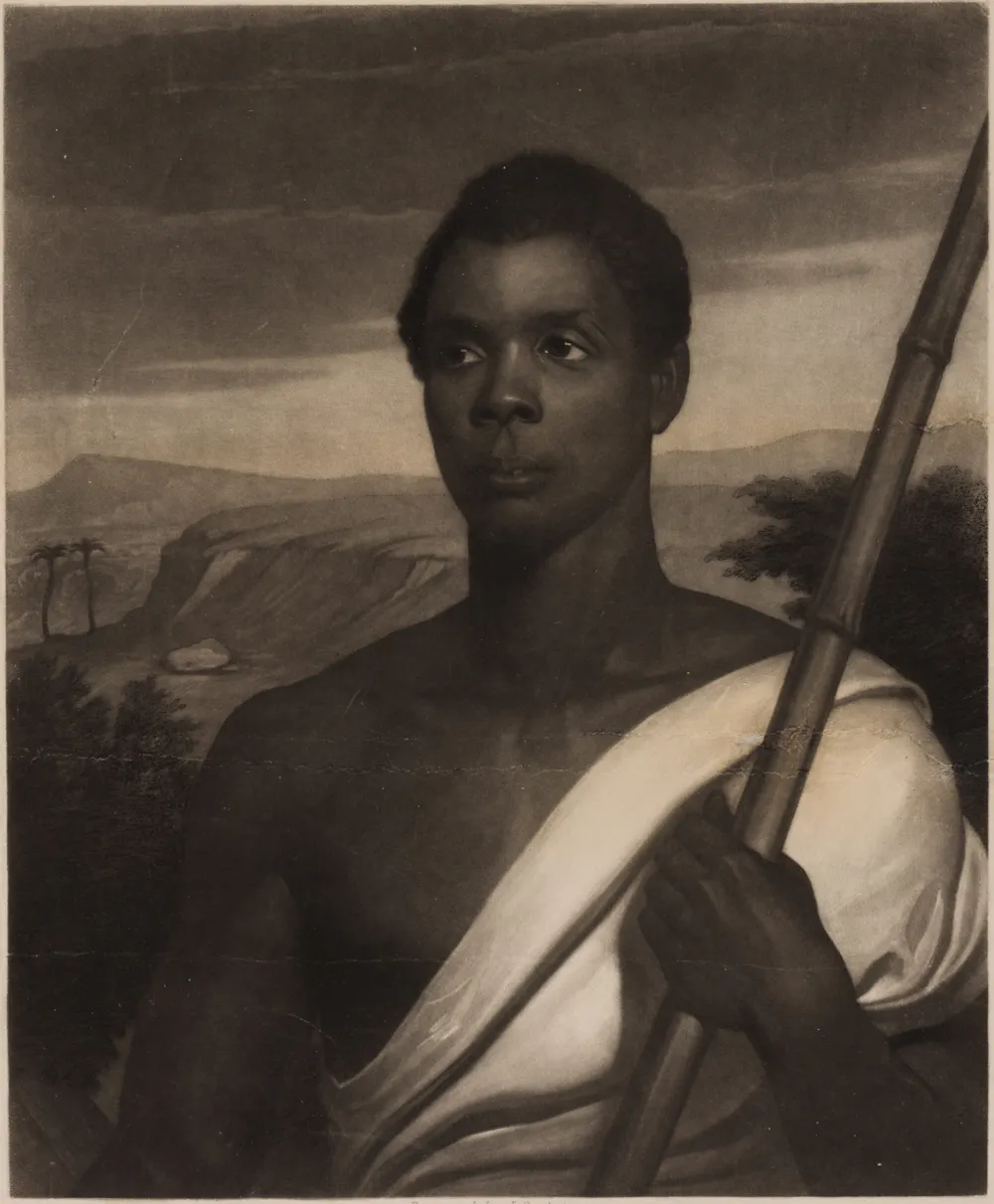
A portrait of Sengbe Pieh, also known as Cinqué, who led the 1839 Amistad slave ship revolt, is an example of Black Americans’ use of the classical world for political purposes.


Portraying Sengbe Pieh, who led the revolt on the slave ship Amistad, in the pose and garb of an ancient Roman senator was an intentional way to influence public opinion.
Courtesy of Bowdoin College Museum of Art


Commissioned by Robert Purvis (1810-1898), a Black Philadelphian and prominent abolitionist, this striking portrait by John Sartain (1808-1897) was intended to shape the popular image of Pieh and his fellow Africans during their Supreme Court trial for mutiny and murder in 1840-1841.

Pieh’s African identity is made evident not only in the tone of his skin, but in the bamboo staff he holds and the landscape in background depicting his homeland. The white cloak draped over his shoulder would have called to mind the white robes worn by Roman senators and, by extension, the Roman virtues of honor and dignity.

Pieh and his fellow Africans were ultimately acquitted and returned to the Sierra Leone Colony in 1842.

Feminist icon


At the turn of the 20th century, a portrait of an American woman portrayed as the Greek poet Sappho connected the sitter to themes in the ancient work.
Painted by Jean-Léon Gérôme, 1899. Courtesy of Bowdoin College Museum of Art

Caroline Sanders Truax (1870–1940), one of the first women admitted to the New York state bar, was so enamored by the ancient past she was portrayed as the Greek lyric poet Sappho by painter Jean-Léon Gérôme (1824–1904).

This was a bold choice for a representation of an American woman in 1899. Sappho, whose writing is among the only surviving sources of female authorship from antiquity, was already an icon of the first-wave feminist movement, and the homoerotic themes of her poetry were well understood. Was the choice the artist’s – or the sitter’s? The most likely answer is it was by mutual agreement, perhaps inspired by Truax’s knowledge of classical language and literature – and her own interest in composing lyric poetry.

The portrait was a sensation in New York society when it arrived from the artist’s studio in Paris. It was featured in several portrait exhibitions and newspaper articles – and was hung with pride by Truax and her husband in their home.


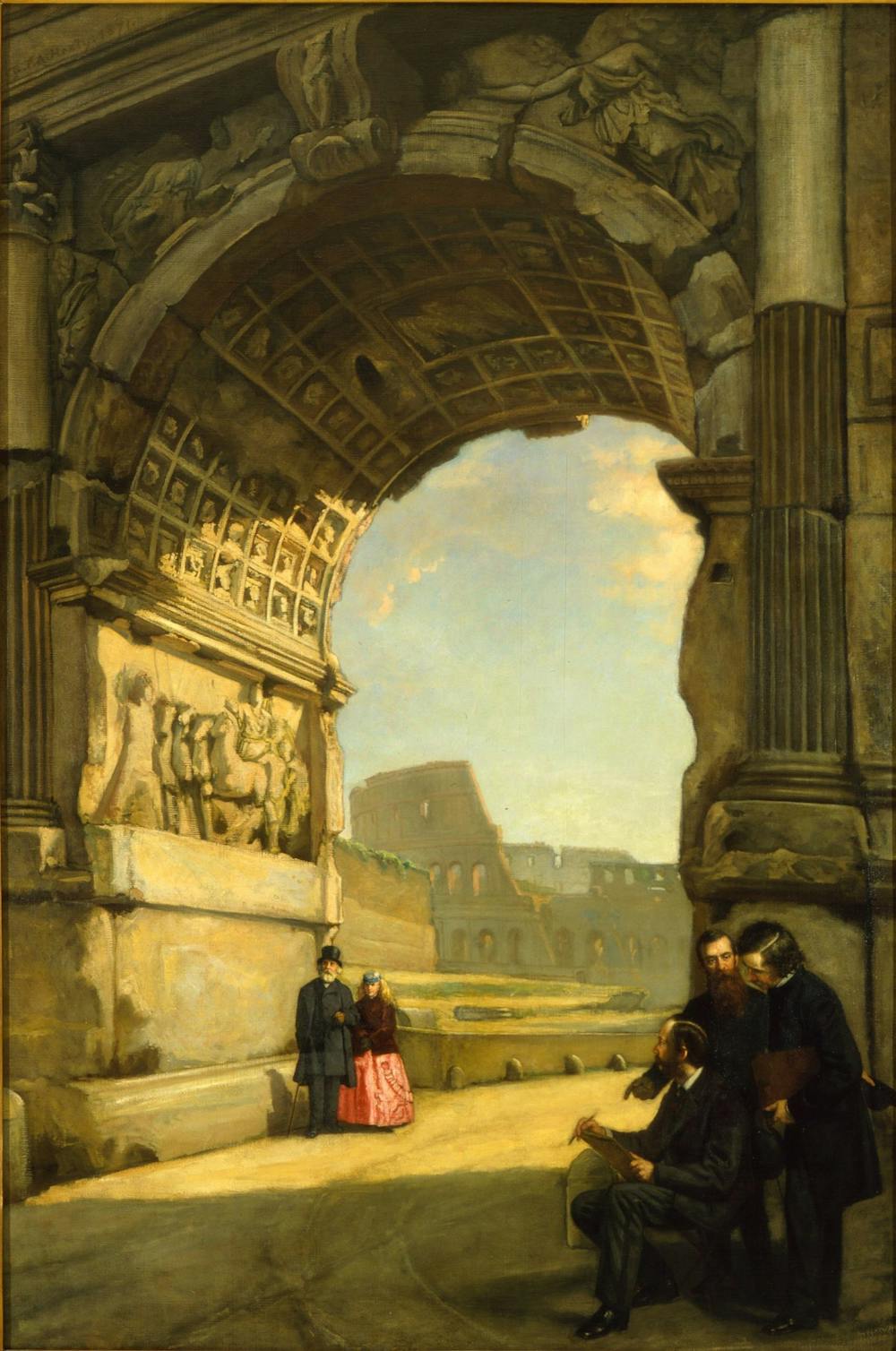
American poet Henry Wadsworth Longfellow (1807–1882) walks with his daughter under the Arch of Titus in Rome, with the famed Colosseum in the background.

Painted by George Healy. Courtesy of Bowdoin College Museum of Art

For generations of Americans, the history and literature of Mediterranean antiquity was fertile ground for contemporary comparisons. It was universal enough to be brought into debates about the Constitution and founding principles of democracy, slavery and abolition, and women’s rights and suffrage. It was also of great individual significance for Americans of many different backgrounds – a past they were on intimate terms with, despite the millennia and miles separating the United States from the ancient Mediterranean.

Sean P. Burrus, Post-Doctoral Curatorial Fellow, Bowdoin College
U$A
How union solidarity improves everyone’s healthcare

Image via Fibonacci Blue.
Tom Conway and
Independent Media Institute November 20, 2022

Alyssa Stout and her 800 coworkers banded together to keep Oroville Hospital open throughout the COVID-19 pandemic, working around the clock to save countless lives.

This article was produced by the Independent Media Institute.

But these union members didn’t stop there. They brought that same unwavering solidarity to the bargaining table earlier in 2022 and won a new contract with safety enhancements and other provisions designed to leave the workforce, the hospital, and their Northern California community stronger than before.

Stout and her colleagues are among thousands of union healthcare workers nationwide who are harnessing the collective power they forged during the pandemic to dramatically improve America’s system of care.

“I feel we have more leverage now than we ever did before, just because people realize we’re needed,” said Stout, president of United Steelworkers (USW) Local 9600 and an X-ray technologist at Oroville, recalling how union workers put their lives on the line and pulled their communities through the crisis.

“People realize, in general, now how important the health care community is,” she continued, noting local residents signed petitions, reposted the union’s social media messages, and took other actions to support the workers’ recent contract negotiations. “It all kind of trickles down. People want to see us being treated well so they’re treated well. We were fighting for everyone.”

Hospitals, clinics, and other healthcare facilities wrestled with turnover long before the pandemic, partly because they tried to save money on the backs of workers in crucial but long-underappreciated departments such as environmental services and dietary. But nurses, certified nursing assistants, and other caregivers couldn’t have saved COVID-19 victims without the contributions of colleagues who sanitized rooms and prepared nutritious meals.

So workers at Oroville stood together for a contract providing significant raises to all union members, underscoring the collective effort essential to operating the hospital and ensuring patients continued access to an experienced, stable workforce committed to delivering ever better care across every department.


The contract also establishes a labor-management safety committee that gives a real voice to the front-line workers who best know how to address the hazards they and their patients face every day. Union members provided management with photos documenting cluttered hallways and blocked fire exits, driving home the need for collective vigilance and worker input in a part of the country where a wildfire destroyed another hospital just a few years ago.

“Our safety has to be a priority. Otherwise, we can’t be there for the patients we care about,” observed Stout, noting the challenges of the pandemic fostered greater cohesion and tenacity that union members brought to bear at the bargaining table.

Across the country, other union contracts are yielding similar improvements for workers, patients, and their communities.

More than 2,700 nurses and other workers at UMass Memorial Health Care in Massachusetts won significant raises and other enhancements that not only recognize the sacrifices they made throughout the pandemic but will also help the system’s hospitals recruit and retain the workforce patients need.

Nurses at three Steward Health Care hospitals in Florida achieved protections from unsafe scheduling and the creation of an infectious disease task force in their new agreements, while workers at Kaleida Health in New York successfully fought for wages increases, a health and safety committee and the health system’s commitment to create 500 new positions to address unsafe staffing issues.

And nearly 80 members of USW Local 7798-1 attained management’s commitment to address safe staffing concerns, among other gains, in a new agreement they ratified on November 14 with Copper Country Mental Health in Michigan.

“I do see a new trend,” said Local 7798-1 President Scott Skotarczyk, referring to the power that pandemic-tested healthcare workers are bringing to the bargaining table. “Look at what we did in this agreement. We got a pay increase. We got—for our more senior staff—an increase in vacation time. We didn’t give anything up.”

The contract also spells out a procedure for developing timely, effective responses when clients act out, creating safer environments for both workers and residents in the agency’s group homes.

“This is a stressful job,” Skotarczyk said, noting the contract improvements will help to facilitate the stable, experienced workforce needed to help clients build more independent lives.

“The more time you spend in this field, the more effective you are,” he said. “I’ve learned over the years what works best.”

Workers at union-represented hospitals have better patient outcomes, more inspections for workplace hazards, and better access to personal protective equipment (PPE), among many other advantages, than their counterparts at other facilities. Now, union members’ successful advocacy for themselves and their patients is fueling a wave of union drives across the healthcare industry.

More than 800 interns, residents, and other doctors at the University of Illinois Chicago formed a union in 2021, for example, citing the need to band together and fight for the long-overdue resources essential to patient care. Overall, according to new research from the AFL-CIO, 71 percent of healthcare workers would vote to unionize their workplaces.

“Don’t give up. Don’t back down,” Stout advises healthcare workers who want to leverage union power at their workplaces.

“We all made it, and we all helped each other,” she said of her coworkers at Oroville over the past few years. “We’re so much stronger together.”

Author Bio: Tom Conway is the international president of the United Steelworkers Union (USW).


How the GOP's 'folk libertarians' and 'cynical irreligious right' clashed in the midterms: historian

Image via Creative Commons.
Alex Henderson November 23, 2022

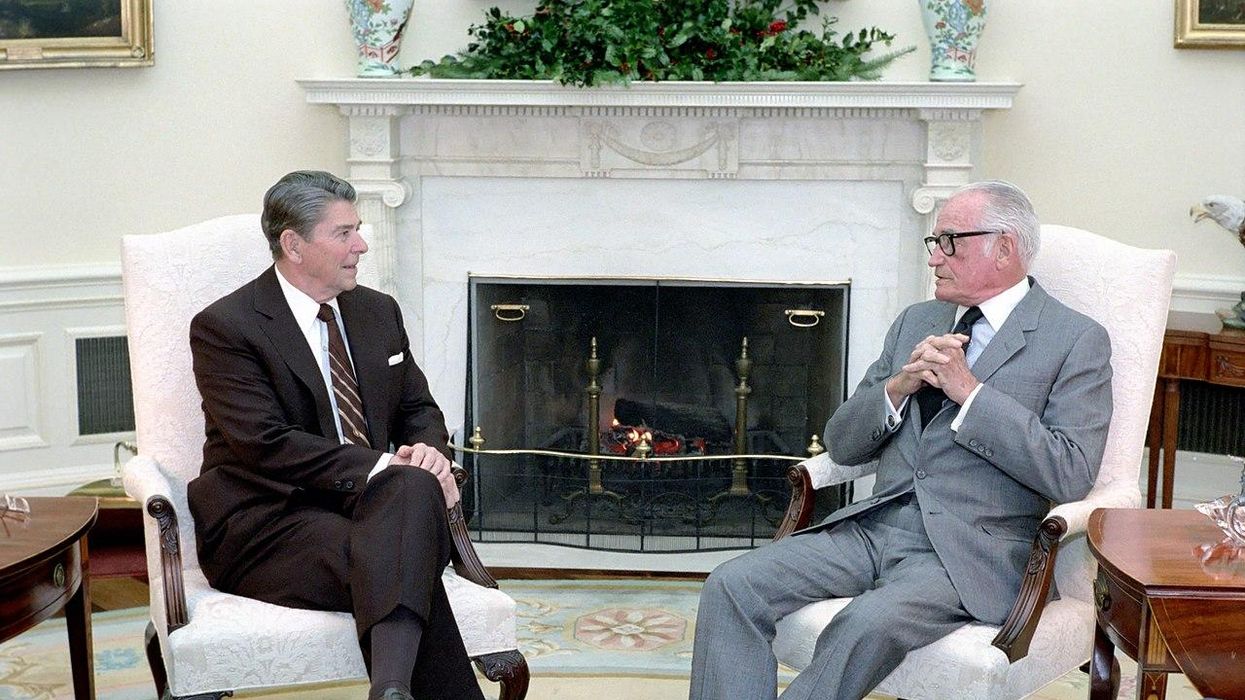
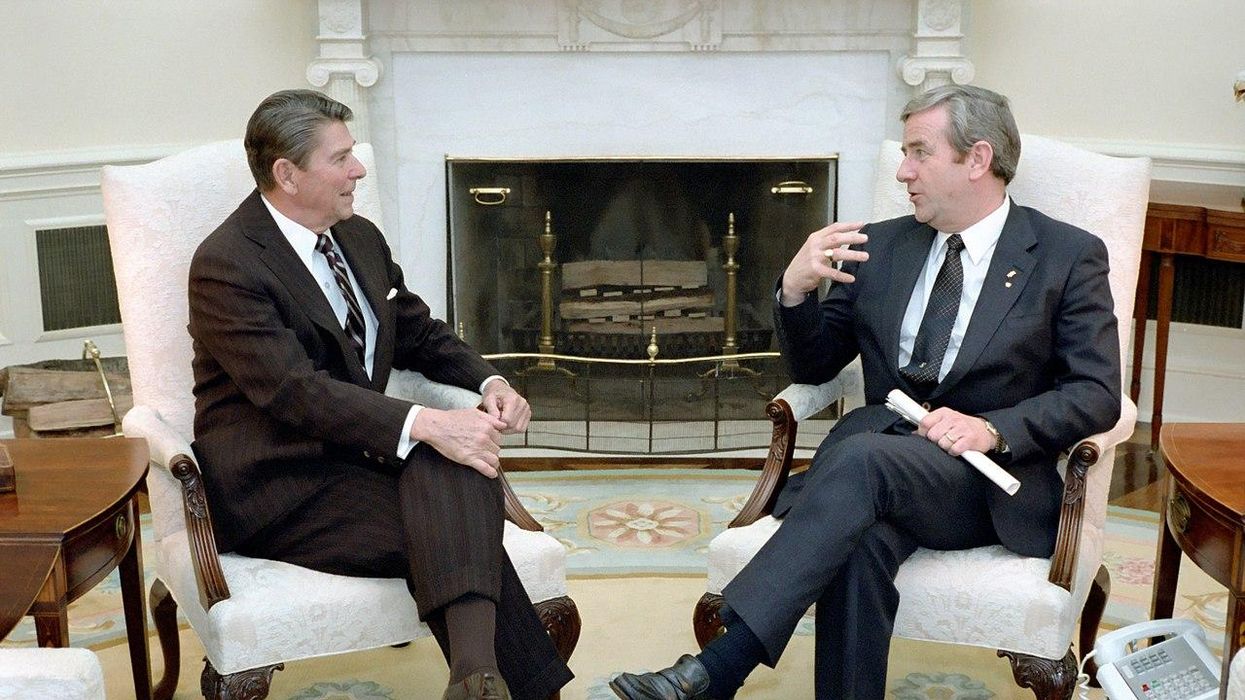
When the Christian Right movement associated with White evangelical fundamentalists like Pat Robertson, Jimmy Swaggart, James Dobson and the Moral Majority’s Jerry Falwell, Sr. became prominent in the Republican Party in the early 1980s, one of the United States’ most influential conservatives expressed total disdain for the movement. The late Republican Sen. Barry Goldwater of Arizona, railing against Falwell, made it abundantly clear that he believed the Christian Right was bad for the GOP and bad for conservatism.

Ironically, the arch-conservative Goldwater found himself in agreement with the American Civil Liberties Union (ACLU) and shared their view that the last thing the U.S. needed was to become the type of theocracy that Falwell and other evangelicals wanted the U.S. to become. Goldwater, the ACLU and television producer Norman Lear’s People For the American Way weren’t anti-religion but rather, realized that a strong separation of church and state was necessary to protect religious freedom.

Falwell and Goldwater were both part of President Ronald Reagan’s fragile right-wing coalition of the 1980s, but the animosity between the two Republicans was considerable. And that tension between the secular right and the fundamentalist right continues to exist in 2022.

READ MORE: How Moral Majority founder Jerry Falwell, Sr. helped pave the way for Trumpism and the white nationalist horrors of the Trump era

In a think piece published by The Bulwark on November 22, historian Joshua Tait takes an in-depth look at the secular/fundamentalist rivalry on the American right — a rivalry that, according to Tait, is as intense as ever.

“On the illiberal right, there’s a divide between religiously motivated conservatives and their secular allies,” Tait explains. “This divide will likely grow, and be felt at both the elite and popular levels. In one sense, this is not new: There has long been a religious/secular fault line in the conservative coalition. But as hypocritical as the Religious Right can be, religious — generally Christian — impulses have, at times, tempered American conservatism. Now, however, we already see signs of a cynical irreligious right and how its ideas and attitudes have infected politically minded believers.”

According to Tait, trying to get the secular right and the fundamentalist right to find common ground is as difficult in 2022 as it was during the 1980s when Goldwater vowed to “fight” the Christian Right “every step of the way if they try to dictate their moral convictions to all Americans in the name of ‘conservatism.’” Tait emphasizes that although “folk libertarians” are quick to express their contempt for “woke” ideology, that doesn’t automatically make them allies of the Christian Right.

“It’s hard to imagine that religious conservatives’ eternal commitments and their genuine belief in sin will allow for any sort of long-term alliance,” Tait argues. “As soon as Christians are perceived as a more censorious threat, the folk-libertarian impulse of this cohort will swing left, as we saw in the midterms.”

It's not just Trump: Midterms show the religious right is an albatross around the GOP’s neck

Image via The White House.
Amanda Marcotte and
Salon November 22, 2022

A couple of weeks out from a midterm election in which Republicans dramatically underperformed, one major theme has emerged in the post-mortems: Donald Trump is to blame. Turns out that voters do not like efforts to overthrow democracy, like Trump's attempted coup or the January 6 insurrection. As data analyst Nate Cohn at the New York Times demonstrated, Trump's "preferred primary candidates" — who usually won a Trump endorsement by backing his Big Lie — fell behind "other G.O.P. candidates by about five percentage points." The result is a number of state, local and congressional offices were lost that Republicans might otherwise have won.

Republican leaders are struggling with this information because dumping Trump is easier said than done so long as he has a substantial percentage of their voting base in his thrall. But, in truth, Republican problems run even deeper than that. It's not just Trump. The religious right has been the backbone of the party for decades, but this midterm election shows they might now be doing the GOP more harm than good at the ballot box.

As with Trump, Republicans are in a "can't win with them/can't win without them" relationship with the religious right. Fundamentalists remain a main source of organizing and fundraising for the GOP, as well a big chunk of their most reliable voters. They can't afford to alienate this group any more than they can afford to push away Trump. Doing so risks the loss of millions of loyal voters. But by continuing to pander to the religious right, Republicans are steadily turning off all other voters, a group that's rapidly growing in size as Americans turn their backs on conservative Christianity. That's doubly true when one looks at the youngest voters, the ones Republicans will need to stay viable as their currently aging voter base starts to die off.

New data from the progressive polling firm Navigator Research shows how dire the situation is for Republicans. On "culture war" issues like reproductive rights and LGBTQ equality, the voters broke hard on the progressive side of things. Among Democratic voters this midterm, 48% said abortion was an important issue for them, showing strong pro-choice sentiment. But among Republicans, only 13% ranked abortion (and the banning of it) as a driving factor in their vote. When Democratic voters were asked their main reason for their voting choice this year, abortion rights was the most popular, cited by 49% of voters. But among Republican voters, only 24% cited support for abortion bans as a major factor.

Republican politicians may have been circumspect in talking about their anti-abortion views prior to Election Day, hoping to make the issue less salient to swing voters. But overall, the past two years have been heavily defined by Republicans catering to the religious right. It's not just that the GOP-controlled Supreme Court went out of its way to overturn Roe v. Wade this past June. Republican leadership in state governments rushed forward to ban abortion, to the point where the red states seemed to be competing over how draconian their abortion bans could be.


Nor were the attacks on reproductive health care limited to abortion. In July, the House of Representatives voted on a bill to codify contraception rights so state governments couldn't ban birth control. All but eight Republicans voted to allow contraception bans. Democratic fears about legal contraception are not misplaced, either. Last week, ProPublica leaked audio of a meeting between anti-choice activists and Republican legislators in Tennessee, where the assembled can be heard gaming out their next steps to ban female-controlled forms of contraception.

The situation was similarly dire on the LGBTQ front, as Republican politicians raced to oppress queer and trans people, especially kids. In Florida, Gov. Ron DeSantis championed the "don't say gay" law that forces queer teachers and students into the closet. In Texas, Gov. Greg Abbott menaced parents who accept a child's trans identity by threatening to use Child Protective Services to break up their families. Republicans keep passing laws blocking trans people from receiving health care or playing on sports teams. In addition, there's been a dramatic rise in conservatives attempting to ban books featuring LGBTQ characters.

This rash of queerphobic policy has been accompanied by an escalation of bigoted rhetoric in right wing media, all aimed at painting LGBTQ people as perverts and child predators. From Fox News on down the entire conservative media ecosystem, it's become routine to accuse queer people of being "groomers," which is a not-especially-oblique way to call them child molesters. Groups like the Proud Boys routinely target drag shows with intimidating "protests," which are starting to get violent. Over the weekend, there was a gun massacre at a gay club in Colorado Springs. While the police are still not speaking publicly about the killer's motive, observers have pointed out that the murders happened mere hours before a drag brunch, the kind of event that conservative groups have been targeting for harassment.

All of this ugliness did not help Republicans in the midterms. On the contrary, it appears to have hurt them, especially with such high youth voter turnout. As a national youth poll run by Harvard shows, younger people reject the fundamentalism that animates the Republican party. Only 12% identify as "fundamentalist/evangelical," while 37% — by far the biggest group — say they have no religious preference at all. This comports with other polling that shows that Christian churches are becoming older and smaller all the time, as young people leave in droves. Overall, 71% of Americans support same-sex marriage. About two-thirds of Americans want abortion to remain legal.

Even among Republican voters, the religious right doesn't seem particularly popular. Along with the low enthusiasm for abortion bans, the Navigator poll shows that Republican voters weren't super interested in anti-LGBTQ policy positions. Only 20% of those voters cited anti-trans views as a motivator in voting this year, despite nearly two years of non-stop right wing propaganda on this subject. The top three issues that got GOP voter juices going were opposition to social welfare spending, demands that government be "tough on crime" and anger over immigration. In other words, they were all proxy issues for white grievances about a racially diverse society. The Republican party still appeals to racist voters, but even they've lost the enthusiasm for being the panty police.

Despite this hard, statistical evidence, religious right activists refuse to accept that their extremism is hurting the Republican party. As Rachel Cohen of Vox explained last week, anti-abortion leaders insist that banning abortion is a winning issue for Republicans. Instead, as Politico reported, they're claiming that it was Republicans who failed by supposedly "not running harder on abortion restrictions."

Whether these arguments are delusional or simply bad faith hardly matters. The desperation is palpable. Christian conservatives are used to the Republican party being dependent on them, and therefore bending over backward to please them. But this data shows that pandering to the religious right might be hurting the GOP more than helping. Fundamentalists are learning they're just as dependent on the Republican party as the GOP is on them. No wonder they're doubling down. As more and more people leave their pews, their only foothold in staying relevant is to maintain control over the Republican party. As with Trump, they will not leave quietly, but continue to hold the GOP hostage to their increasingly unpopular agenda.

This 1980 report, 42 years later, sheds light on the Christian nationalist extremism of 2022


Image via Creative Commons.

Alex Henderson November 21, 2022

On August 24, 1980, the Washington Post published a report by journalist Kathy Sawyer that took a close look at what was, at the time, a new phenomenon on the right: the alliance of far-right White evangelicals and the Republican Party. And 42 years later, in 2022, Sawyer’s reporting sheds light on a movement that, critics argue, is unapologetically authoritarian in nature — a movement that has made considerable advances since then.


When Sawyer’s article was published, President Jimmy Carter was running for reelection; in November 1980, he suffered a landslide defeat at the hands of Republican former California Gov. Ronald Reagan, who turned out to be the most influential U.S. president since Franklin Delano Roosevelt. From 1932 (the year in which FDR was elected) until 1980, liberalism arguably dominated the political conversation in the United States. But Reagan’s victory over Carter pushed the U.S. in a much more conservative direction. All of the Democratic presidents elected after the 1980s have been centrists — Bill Clinton, Barack Obama and Joe Biden — and the U.S. hasn’t had a staunch liberal in the White House since President Lyndon B. Johnson in the 1960s.

As president, Reagan oversaw a fragile right-wing coalition that included everyone from far-right evangelicals to fiscal conservatives to libertarians. The Reagan coalition was by no means one big happy family, and ultimately, White evangelicals became much more influential in the Republican Party than than the libertarians they despised.

READ MORE: After Trump, Christian nationalist ideas are going mainstream – despite a history of violence


Sawyer’s report vividly describes the progress that White fundamentalist evangelicals like James Robison and the Rev. Jerry Falwell, Sr. were making in the GOP in August 1980. Reporting from Texas, Sawyer explained, “Evangelist leaders joined forces with conservative politicians here last week in exhorting millions of non-voting Christians to ‘crawl out from under those padded pews’ and take up political arms in the equivalent of a moral war to save America. The two-day gathering in the brimstone shimmer of 105-degree Texas heat was billed sedately as The National Affairs Briefing. But it was really a fusion of Bible-thumping revivalist oratory with hardline New Right politics. Its goal: to get godly conservatives elected to offices high and low across the land.”

Sawyer described a speech by Robeson in Texas, who railed against “perverts, radicals, leftists, communists, liberals and humanists" and declared, “Not voting is a sin against Almighty God.”

Sawyer reported, “The crowd heard speakers ranging from Phyllis Schlafly, anti-feminist leader of the Stop ERA movement, to a general who predicted a nuclear holocaust within a decade if America does not ‘turn to God’ and beef up military defenses against godless communism. The repentant son of atheist crusader Madelyn Murray O'Hair urged that prayer be returned to the schools. Champions of the anti-abortion National Right to Life Committee promoted their cause. And throughout, attentions swung wildly from theology and scripture to instruction on how to organize without violating tax laws, the practicalities of registering a congregation to vote during the Sunday service and the importance of keeping a ‘moral score card’ on the voting record of elected representatives.”

Sawyer noted that the August 1980 event in Texas “grew out of the fledgling movement founded largely by radio and television preachers such as Jerry Falwell of Lynchburg, Va.”

READ MORE: How Moral Majority founder Jerry Falwell, Sr. helped pave the way for Trumpism and the white nationalist horrors of the Trump era

“The movement, however, has yet to demonstrate a significant ability to turn out the born-again vote,” Sawyer reported. “But it has shown enough promise to draw presidential nominee Reagan as a speaker Friday night in an appeal for Christian support. Reagan tried to avoid getting specific on such flammable topics as homosexual rights, abortion and the Equal Rights Amendment during his stopover here.”

But even though Sawyer described the Christian Right as a “fledgling movement” in her article, that movement had its share of scathing critics in the early ‘80s — critics who hoped to nip it in the bud. And they were both liberal and conservative.

Liberal television producer Norman Lear — who gave us politically minded 1970s sitcoms like “All in the Family,” “Maude,” “Good Times” and “The Jeffersons” — founded People For the American Way in 1980 in response to the threat that the Christian Right posed. And on the right, conservative Republican Sen. Barry Goldwater of Arizona made no secret of his disdain for the movement, which he believed was terrible for the GOP and terrible for the conservative movement. Liberal Lear and conservative Goldwater disagreed on many things, but they were on the same page when it came to saying that the U.S. needed to maintain a robust separation of church and state.

Goldwater viewed the Christian Right as a Pandora’s box, and just as he feared, the movement has only tightened its grip on the Republican Party — especially with the rise of Donald Trump and the MAGA movement. Presidents Reagan, George H.W. Bush and George W. Bush were allies of far-right White evangelicals, but Trump has been much more inflammatory when speaking to them. Trump, who was only 34 when Sawyer’s article was published, repeatedly tells his evangelical and Christian nationalist supporters that Democrats pose an existential threat to Christianity in the U.S.

Of course, plenty of Democrats are churchgoing Christians. Centrist President Joe Biden is a devout Catholic; Sen. Raphael Warnock is a Protestant minister. Barack Obama, a Mainline Protestant, has quoted scripture much more often than Trump. But the Christian Right believes that only evangelical fundamentalists are true Christians.

When the Post published Sawyer’s article, White evangelicals were railing against Roe v. Wade but knew that there weren’t enough socially conservative U.S. Supreme Court justices to overturn it. But eventually, the Christian Right got the socially conservative Supreme Court it was hoping for. With the High Court’s 2022 ruling in Dobbs v. Jackson Women’s Health Organization, Roe v. Wade was overturned after 49 years. And Justice Clarence Thomas made it clear that he would also like to see the Court “reconsider” rulings that offered protections for contraception (1965’s Griswold v. Connecticut), same-sex marriage (2015’s Obergefell v. Hodges) and gay relationships (2003’s Lawrence v. Texas).

In October, megachurch pastor Robert Jeffress called for “Christian nationalists” to “impose their values” on nonbelievers whether they liked it or not. In 2021, Michael Flynn, former national security adviser in the Trump Administration, called for the U.S. to “embrace one religion” and has made it clear that he believes religions other than Christianity should be illegal. And far-right Rep. Lauren Boebert of Colorado, in June 2022, declared, “The church is supposed to direct the government. The government is not supposed to direct the church. That is not how our Founding Fathers intended it…. I’m tired of this separation of church and state junk.”

Forty-two years after Sawyer’s article was published, the Christian Right is not a marginal part of the Republican Party. It is a sizable GOP voting block — especially in red states — that many Republicans are afraid to criticize. And the movement, feeling empowered by the MAGA movement and the Dobbs decision, is showing no signs of backing down.

READ MORE: Texas pastor openly calls on 'Christian nationalists' to 'impose their values on society'