Saturday, February 10, 2024
 

End of nuclear secrecy? Underground weapon tests 'now detectable with 99% accuracy'


Peer-Reviewed Publication

ROYAL ASTRONOMICAL SOCIETY

Earthquakes vs explosions diagram 

IMAGE: 

THIS DIAGRAM SHOWS 140 EXPLOSIONS AND 1,149 EARTHQUAKES ANALYSED BY RESEARCHERS. IT REVEALS THE EXPLOSIONS PREVIOUSLY MISIDENTIFIED AS EARTHQUAKES (RED DIAMONDS) AND EARTHQUAKES WRONGLY CLASSIFIED AS NUCLEAR BLASTS (GREEN DIAMONDS).

view more 

CREDIT: ANU


End of nuclear secrecy? Underground weapon tests 'now detectable with 99% accuracy'

Royal Astronomical Society press release

RAS PR 24/04

For immediate release


Secret underground nuclear tests could now be a thing of the past thanks to a major scientific breakthrough in ways to identify them.

A team of Earth scientists and statisticians say they can now tell with 99 per cent accuracy if such an explosion has taken place. This is up from 82 per cent and is based on a dataset of known tests in the US, according to the new study published in Geophysical Journal International.

It has previously been tricky to differentiate between nuclear explosions and other seismic sources, such as naturally-occurring earthquakes or man-made noise above ground.

“The explosion goes off and you have all this energy that radiates out, which can be measured on seismometers,” said lead author Dr Mark Hoggard, of The Australian National University (ANU).

“So, the science problem becomes how do we tell the difference between that and a naturally-occurring earthquake?”

This was an issue seven years ago, when several of the existing methods used to identify underground nuclear explosions failed to establish that North Korea had carried out such a test.

The secretive communist state later confirmed it had successfully tested a weapon with a force of between 100-370 kilotons. For comparison, a 100 kiloton bomb is six times more powerful than the one the US dropped on Hiroshima in 1945.

North Korea is the only country known to have carried out an underground nuclear test in the 21st century, but satellite imagery revealed last year that Russia, the US and China have all built new facilities at their nuclear test sites in recent years.

Although there is no suggestion the three superpowers are planning to resume such experiments, the war in Ukraine has made the global security landscape uncertain.

“By using some revised mathematics and more advanced statistical treatment, we have managed to improve the classification success rate from 82 per cent to 99 per cent for a series of 140 known explosions in the US,” Dr Hoggard said.

“Nuclear testing in the US has largely been carried out in Nevada – in the desert – and there is a thorough seismic record of all those tests, so it provides a really helpful dataset.

“Our new method also successfully identifies all six of the tests conducted in North Korea from 2006 to 2017.”

Dr Hoggard said there may still be instances of underground nuclear tests being carried out surreptitiously in some parts of the world, and the sheer volume of earthquakes makes it difficult to investigate each event to determine if it is suspicious or not.

“This makes effective methods like ours all the more important,” he added.

“It also doesn’t require any new kit - you don’t have to put up satellites or anything like that, we’re just using standard seismic data.”

Dr Hoggard described the model as “pretty fast”, making it “more or less suitable for real-time monitoring”.

The research was carried out by a team of Earth scientists and statisticians working at ANU and the Los Alamos government research lab in the US.

They say the new approach “provides a means to rapidly assess the likelihood of an event being an explosion”.

The mathematical model was built by analysing the physical differences in the pattern of rock deformation at the source of nuclear explosions and earthquakes, allowing experts to determine which seismic event a recorded noise is more likely to belong to.

International efforts shifted to monitoring significant seismic waves in the aftermath of the Cuban Missile Crisis and Partial Nuclear Test Ban Treaty in the 1960s, which limited the testing of nuclear weapons to underground only.

The agreement was introduced following years of environmentally-damaging experiments carried out at the surface and/or underwater. These polluted many locations and in some instances led to catastrophic levels of radioactive fallout.

But the new monitoring it required brought about its challenges - primarily how to differentiate between nuclear explosions and other seismic sources.

It has taken more than six decades, but the scientists behind the new research believe their innovative method could now make this a lot easier for groups such as the Comprehensive Nuclear-Test-Ban Treaty Organization (CTBTO), which is tasked with international surveillance of nuclear testing.

Dr Hoggard said his team’s mathematical model would be “another tool in CTBTO’s armoury for detecting any potential underground tests that are conducted in secret”.

He added: “A ban on all future tests is unlikely given that several major nations remain unwilling to ratify the Comprehensive Nuclear-Test-Ban Treaty.

“Well-supported monitoring programs are therefore critical for ensuring that all governments are held accountable for the environmental and societal impacts of nuclear weapons testing.”

The paper ‘Seismic moment tensor classification using elliptical distribution functions on the hypersphere’ has been published in Geophysical Journal Internationa


Images and captions

The images in this release are public domain.

1. Castle Bravo mushroom cloud Credit: Wikipedia

The 1954 Castle Bravo mushroom cloud, which was one of the most environmentally damaging nuclear tests ever carried out. It was a main contributor to the banning of all surface nuclear tests in 1963.

2. Earthquakes vs explosions diagram Credit: ANU

This diagram shows 140 explosions and 1,149 earthquakes analysed by researchers. It reveals the explosions previously misidentified as earthquakes (red diamonds) and earthquakes wrongly classified as nuclear blasts (green diamonds).


Science contacts

Dr Mark Hoggard, Australian National University

mark.hoggard@anu.edu.au

Tel: +61 434 403 585


Further information

The paper is available via the following link: https://academic.oup.com/gji/article/237/1/1/7597260


Notes for editors

About the Royal Astronomical Society

The Royal Astronomical Society (RAS), founded in 1820, encourages and promotes the study of astronomy, solar-system science, geophysics and closely related branches of science. The RAS organises scientific meetings, publishes international research and review journals, recognises outstanding achievements by the award of medals and prizes, maintains an extensive library, supports education through grants and outreach activities and represents UK astronomy nationally and internationally. Its more than 4,000 members (Fellows), a third based overseas, include scientific researchers in universities, observatories and laboratories as well as historians of astronomy and others.

The RAS accepts papers for its journals based on the principle of peer review, in which fellow experts on the editorial boards accept the paper as worth considering. The Society issues press releases based on a similar principle, but the organisations and scientists concerned have overall responsibility for their content.

Keep up with the RAS on XFacebookLinkedIn and YouTube.


Melting ice roads cut off Indigenous communities in northern Canada


AFP
Fri, 9 February 2024 

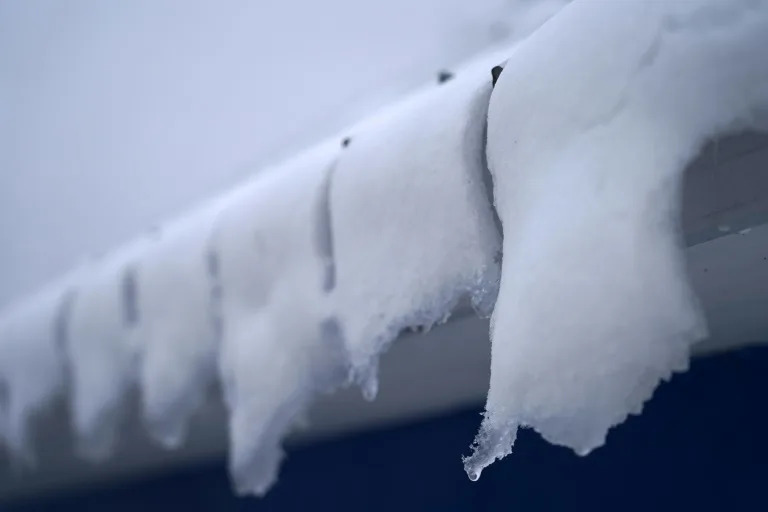
Snow melts on the roof of an ice fishing cabin in Sainte-Anne-de-la-Perade, Quebec, Canada in January 2024 (Anne-Sophie THILL)

Melting ice roads cut off Indigenous communities in Canada's far north as unseasonably warm weather on Friday also saw its largest city, Toronto, break a winter heat record.

Communities in Ontario and neighboring Manitoba provinces declared a state of emergency as the warm spell made the network of ice roads -- which across Canada spans more than 8,000 kilometers (5,000 miles) between dispersed populations -- unpassable.

Many remote communities in Canada's north depend on ice roads -- compacted snow and ice atop frozen ground, lakes and rivers -- for deliveries of essentials including fuel, equipment, non-perishable goods, as well as construction materials to build housing and infrastructure.

They allow trucks to reach areas in winter that are inaccessible at other times of the year.

"We're very concerned," Raymond Flett, chief of the Saint Theresa Point First Nation in northern Manitoba, told AFP.

The ice roads, he said, "are our lifeline. It's our only access."

The Nishnawbe Aski Nation said 30 Indigenous communities in northern Ontario were cut off and in desperate need of federal help.

"Winter temperatures have been significantly warmer than normal, exacerbated by the effects of climate change," it said in a statement, adding that many winter roads have become impassable for large loads and critical supplies.

Indigenous Services Minister Patricia Hajdu's office did not immediately reply to a request for comment.

Saint Theresa Point First Nation councilor Victor Walker warned that his community is "running out of supplies and fuel" and needs some 300 truckloads of gas, food and other essentials to get through the rest of the winter.

The community of about 5,000 people, he said, is considering flying in supplies but that comes with a hefty price tag that it can ill afford.

Environment Canada meteorologist Peter Kimbell said a cold blast could sweep across Manitoba and Ontario as early as next week.

He noted that winter warm spells are not unusual in Canada but "it is unusual to see this continued trend that we've seen all winter long."

Toronto on Friday broke a winter heat record as temperatures soared to 14.4 degrees Celsius (58 Fahrenheit). Its previous high was 10.6 degrees Celsius in 1938.

Several other cities in Ontario province were also flirting with new temperature highs including the nation's capital Ottawa.

"Records are being broken here and there across Ontario. A lot of places are also close to setting new records," Kimbell told AFP.

Temperatures in December and January, he said, have been about four degrees Celsius warmer than normal and so far February appears to be moving in that direction too.

Last year was the hottest on record, with the increase in Earth's surface temperature nearly crossing the critical threshold of 1.5 degrees Celsius, according to the Copernicus Climate Change Service.

That has resulted in intensified heatwaves, droughts and wildfires across the planet.

amc/md


Greta Thunberg joins banned French anti-motorway protest

AFP
Sat, 10 February 2024 

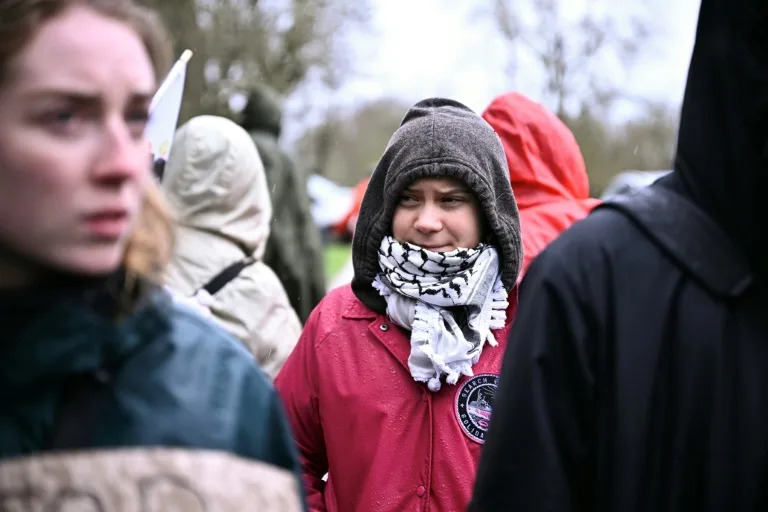
Thunberg, wearing a Palestinian scarf, joined other protesters under heavy rain (Lionel BONAVENTURE)

Climate activist Greta Thunberg on Saturday joined a banned anti-motorway protest in southern France where police fired tear gas and made arrests a day earlier.

A global figure in the fight against climate change, Thunberg has been fined by one Swedish court for her direct action protests there. But she saw another case against her thrown out by an English court last week.

Wearing a Palestinian scarf and an anorak, Thunberg joined other protesters under heavy rain at the site in Saix where a new motorway -- the A69 linking the southwestern city of Toulouse to the town of Castres -- is planned, AFP journalists saw.

They held up banners saying "Stop A69". Critics of the project say it is harmful for the environment and does not take into account the current climate crisis.

The protest organisers had gone ahead with the rally despite authorities banning the gathering because of "risks of serious harm to public order".

AFP journalists saw at least two arrests and the use of tear gas by police at the site on Friday.

Activists had set up camp toilets and signposts on private land where they planned to create a so-called "zone to be defended".

Police cleared pallets and trolleys used to block a small road running alongside the field, which is close to the route of the planned motorway.

A police source told AFP they expect up to 200 people to attend the protest, while organisers estimated between 500 and 1,000.

"We're going ahead with the event, because it's a private event on private land," said Paul, a spokesman for the movement who asked not to give his family name.

He added that the wooded area is the subject of a dispute over its expropriation for the motorway. Local authorities say the land is illegally occupied.

Environmentalists have protested several times in recent months along the planned route of the A69.


'We were very surprised': Magma under Reykjanes Peninsula rushed into Grindavík dike at a shockingly fast rate

Hannah Osborne
Thu, February 8, 2024 

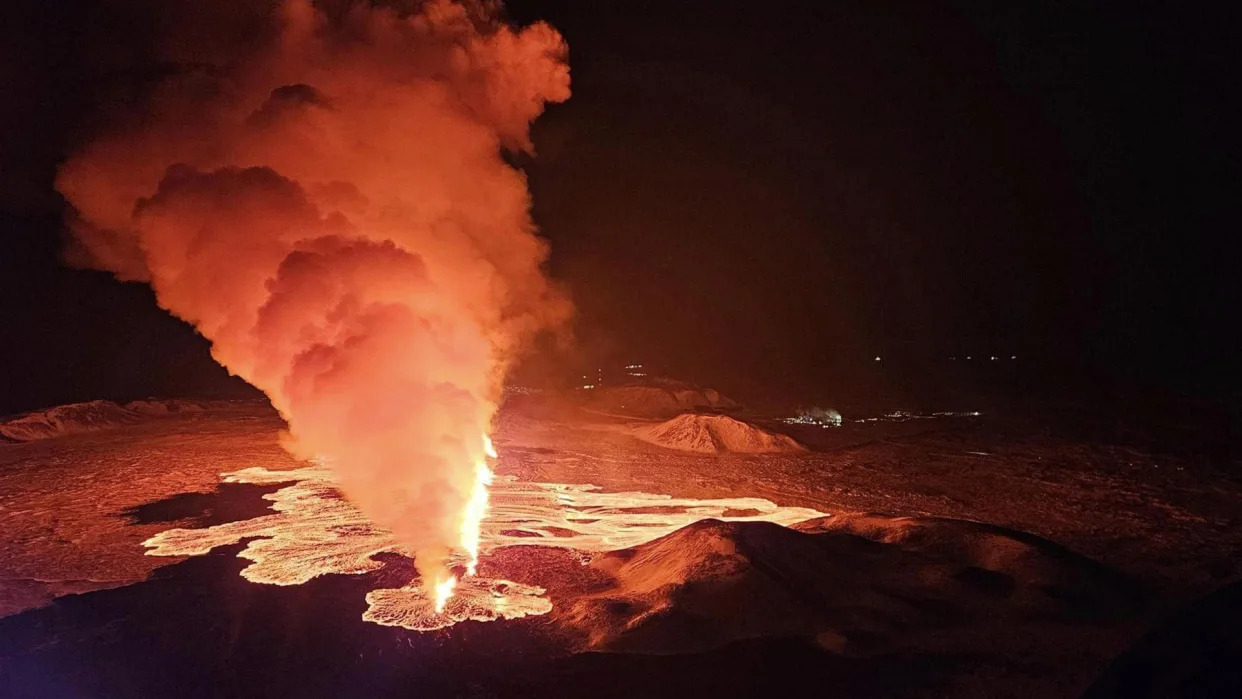
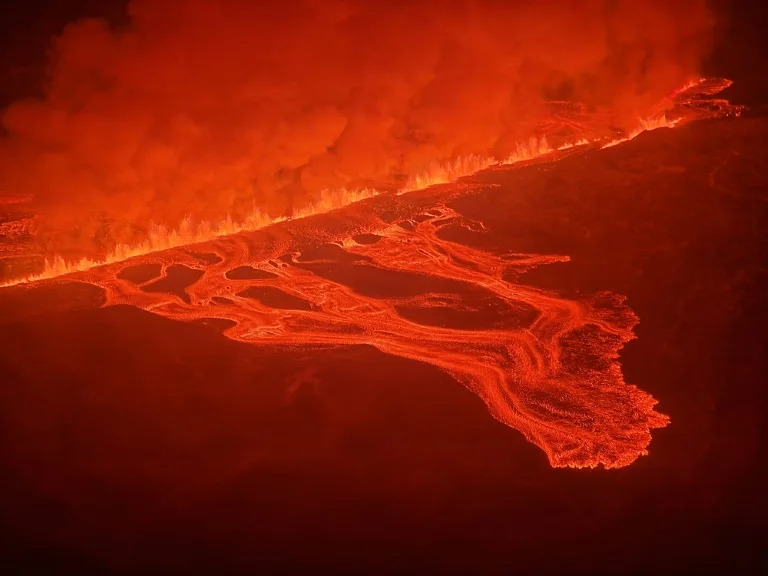
An aerial view shows lava after volcano eruption northeast of Sylingarfell, near Grindavik, Reykjanes Peninsula, Iceland early Thursday, February 8, 2024.


Magma flowed into the dike beneath Grindavík at an unprecedented rate of 261,000 cubic feet per second (7,400 cubic meters per second) before the volcano first erupted in Iceland's Reykjanes Peninsula, according to a new study.

"We were very surprised," lead author Freysteinn Sigmundsson, a geophysicist at the University of Iceland, told Live Science in an email. During the three previous eruptions in the region that took place between 2021 and 2023, magma flow into the dike was estimated to be less than 3,500 cubic feet per second (100 cubic m per second). "For the Grindavík dike it was almost 100 times higher," Sigmundsson said.

A 9.3-mile (15 kilometers) magma dike — a near-vertical tunnel running from the magma chamber beneath — formed beneath Grindavík in November, 2023,. At that point the region experienced a massive increase in seismic activity. Officials evacuated the fishing town, which has a population of around 3,800, given the risk of an eruption.


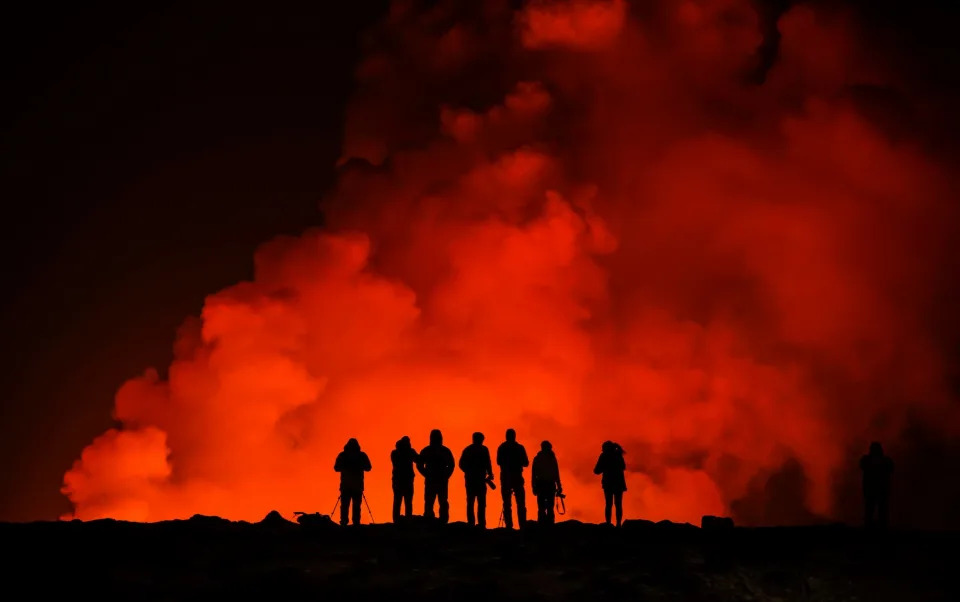
The volcano erupted on Dec. 18, with a 2.5-mile (4 km) fissure opening and sending lava spewing up to 100 feet (30 meters) into the air. The volcano erupted again on Jan 14., with two fissures opening on the outskirts of Grindavík. A third eruption occurred today (Feb. 8), with a 2-mile-long (3 km) fissure opening up near Mount Sundhnúkur to the north of Grindavík. The events are part of a millenia-long cycle that fuels eruptions.

Related: 'Time's finally up': Impending Iceland eruption is part of centuries-long volcanic pulse


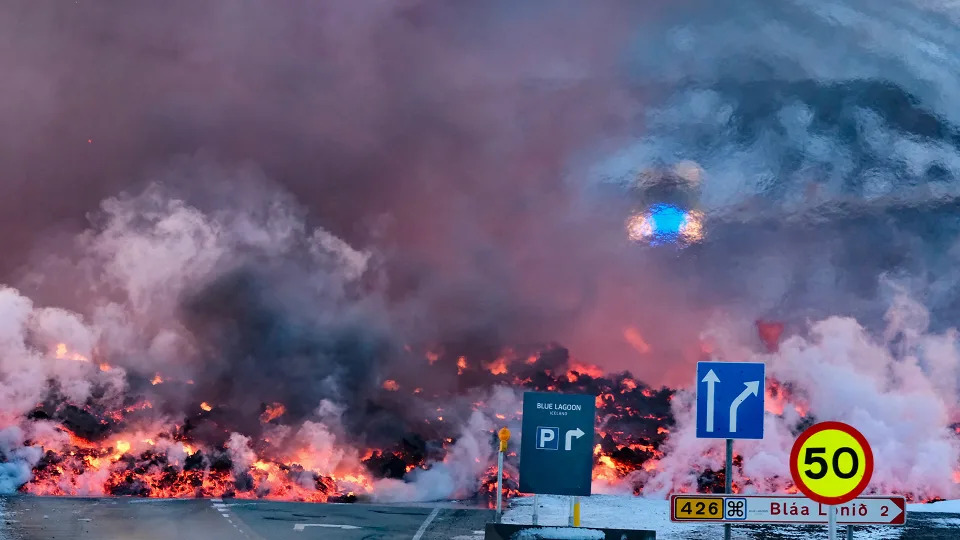
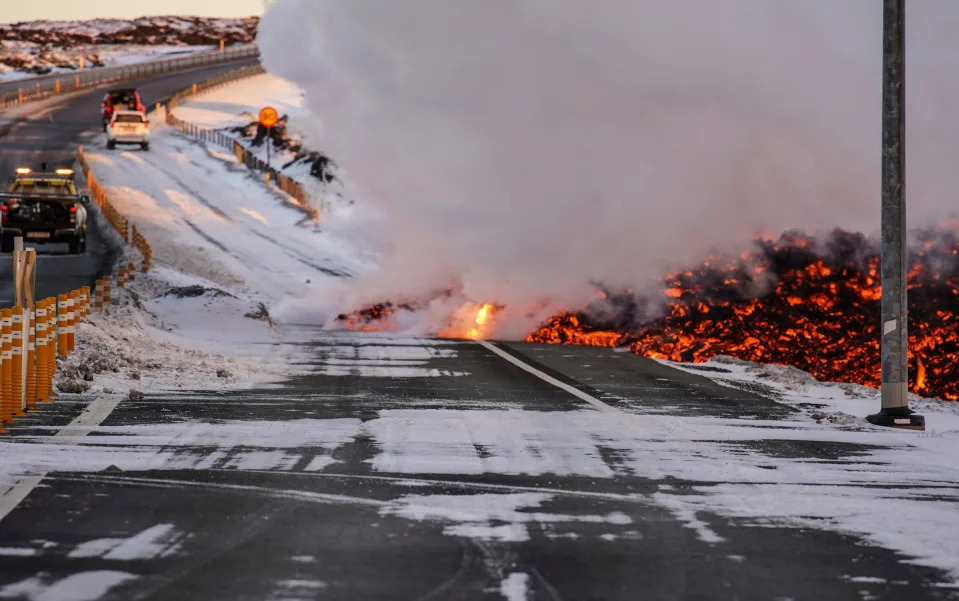
Molten lava is seen overflowing the road leading to the famous tourist destination

In a new study published Feb. 8 in the journal Science, researchers examined the formation of the dike that led to the eruptions by combining satellite-based observations and seismic measurements, along with physical models. They found the magma flowed from the chamber into the dike at an exceptionally fast rate, comparable to the estimated rate of the 1783/84 eruption of Laki, which is around 130 miles (209 km) west of Grindavík . Within a year of the 8-month-long eruption, 60% of the country's livestock and 20% of the population died.

The Reykjanes Peninsula sits at the boundary of the Eurasian and North American tectonic plates. This section of the boundary has been stretching without any eruptions in the last 800 years. The Grindavík dike formed after magma accumulated about 3.1 miles (5 km) beneath the surface in what is known as a magma domain.

"A magma body is like an 'expanding balloon' inside the Earth, that can rupture," Sigmundsson said. The scientists found that the eruption took place with only modest overpressure — the amount of pressure that exceeds the surrounding pressure at that depth. This modest pressure alone could not have led to such immense speeds of magma flow.

"It means that other factors were important in explaining the fast magma flow — namely the forces due to the prior stretching of the crust (tension) as well as a large fracture on the boundary on the magma domain," Sigmundsson said. "The stretching forces contributed very significantly to the driving pressure for magma flow in the dike, causing the very fast flow."

RELATED STORIES

'Hunter-gatherers must have gazed in horror': What would Toba's supereruption have been like for our ancient relatives?

Heat bursts from Iceland's recent eruptions in eerie NASA satellite image

'The area has reactivated': Iceland volcano gears towards another eruption leaving Grindavík in precarious position

Discovering such a high inflow rate of magma has implications for other volcanoes. A dike with a high inflow rate of magma is potentially more hazardous than those filling at lower speeds. But it's also important to place the fill rate in context of the geological setting, as this will help determine the likelihood of magma reaching the surface.

The ability of this chamber to fill so quickly also has implications for future hazards on the Reykjanes Peninsula — even areas not in the direct path of erupting magma.

"The consequences of extensive faulting and fracturing above the dike in Grindavík, showed how very destructive such events can be, even without an eruption," Sigmundsson said.


How an unprecedented magma river surged beneath an Iceland town

Daniel Lawler
Thu, February 8, 2024 

The latest fissure to break open and spew lava in southwestern Iceland (HANDOUT)

A river of magma flowed underneath an Icelandic fishing village late last year at a rate never before recorded, scientists said Thursday, as the region suffered yet another dramatic eruption.

Authorities in Iceland declared a state of emergency on Thursday as lava burst a key water pipe during the third volcanic fissure to hit the western Reykjanes peninsula since December.

Before 2021, the peninsula had not seen an eruption in 800 years, suggesting that volcanic activity in the region has reawoken from its slumber.

After analysing how magma shot up from a reservoir deep underground through a long, thin "vertical sheet" kilometres below the village of Grindavik in November, researchers warn that this activity is showing no signs of slowing down.

That prediction seemed to be borne out by the latest fissure that split the Earth's surface near the now-evacuated village, which occurred just hours before the new study was published in the journal Science.

Lead study author Freysteinn Sigmundsson, a researcher at the University of Iceland's Nordic Volcanological Centre, told AFP that it was difficult to say how long this new era of eruptions would continue.

But he estimated there were still months of uncertainty ahead for the threatened region.

- A mighty molten river -


Over six hours on November 10, the surging magma created a so-called dyke underground that is 15 kilometres (nine miles) long and four kilometres (2.5 miles) high but only a few metres wide, the study said.

Before Thursday's eruption, 6.5 million cubic metres of magma had accumulated below the region encompassing Grindavik, according to the Icelandic Meteorological Office.

The magma had flowed at 7,400 cubic metres per second, "a scale we have not measured before" in Iceland or elsewhere, Sigmundsson said.

For comparison, the average flow of the Seine river in Paris is just 560 cubic metres a second. The magma flow was closer to those of larger rivers such as the Danube or Yukon.

The magma flow in November was also 100 times greater than those seen before the recent eruptions on the peninsula from 2021 to 2023, Sigmundsson said.

"The activity is speeding up," he said.

The November magma flow precipitated more serious eruptions in December, last month and again on Thursday.

Increasing underground pressure has also led to hundreds of earthquakes and pushed the ground upwards a few millimetres every day, creating huge cracks in the ground and damaging infrastructure in and around Grindavik.

The hidden crevasses that have riddled the town likely pose more danger than lava, Sigmundsson said, pointing to one discovered in the middle of a sports pitch earlier this week.

- More magma to come -


The village, as well as the nearby Svartsengi power plant and the famed Blue Lagoon geothermal spa, have been repeatedly evacuated because of the eruption threats.

The long-term viability of parts of the region sitting on such volatile ground has become a matter of debate.

Sigmundsson emphasised that such decisions were up to the authorities, but said this was definitely "a period of uncertainty for the town of Grindavik".

"We need to be prepared for a lot more magma to come to the surface," he said.

The researchers used seismic measurements and satellite data to model what was driving the magma flow.

Iceland sits on the Mid-Atlantic Ridge, a crack in the ocean floor separating the Eurasian and North American tectonic plates.

As these plates have slowly moved apart over the last eight centuries, "tectonic stress" built up that was a key driving force for magma to surge through the underground geological crack, Sigmundsson said.

The researchers hope their analysis could inform efforts to understand what causes eruptions in other areas of the world.

Volcano in Iceland erupts for the third time in two months

Laura Baisas
Thu, February 8, 2024 

Molten lava overflows the road leading to the Blue Lagoon geothermal spa, a popular tourist destination in western Iceland.

A newly active volcano system in southwestern Iceland erupted again on Thursday February 8. This is the third eruption since December 2023 on the Reykjanes Peninsula, which is home to about 31,000 residents and is one of the most populated areas of the island nation. This new eruption also prompted an evacuation of the Blue Lagoon spa, a popular tourist destination and geothermal spa.

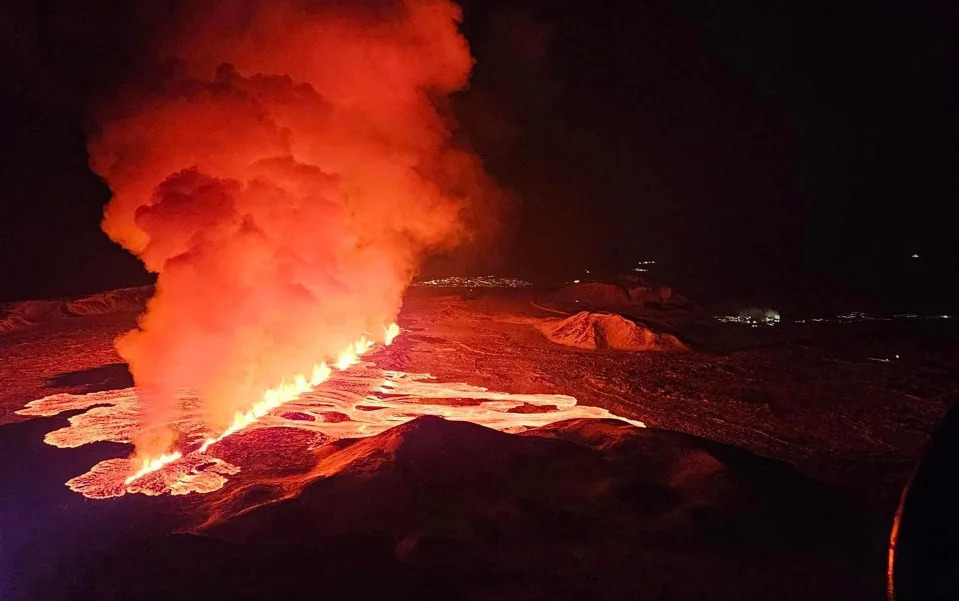
According to Iceland’s Meteorological Office, the eruption occurred at 6 a.m. local time northeast of Mount Sýlingarfell. The orange glow of lava was visible from the capital city of Reykjavík, about 30 miles away from the eruption. The eruption began to slow as of 2:45 p.m. local time and is concentrated in three main areas. The fissure is estimated to be close to two miles wide and erupted about two and a half miles away from the town of Grindavík. A stream of lava flowed over the main road that connects the town to the capital. Grindavík was evacuated in November 2023 following a series of earthquakes. An eruption eventually occurred there on December 18, 2023 with a second eruption on January 14, 2024.

The Meteorological Office said there was no immediate threat to the fishing community of about 3,800 from this most recent eruption.

https://www.youtube.com/watch?v=qKz87aZPHnQ

Several communities on the Reykjanes Peninsula were also cut off from sources of heat and hot water after a supply pipeline was swallowed by a river of lava. According to the Associated Press, the Civil Defense agency said lava reached the pipeline that carries heat and hot water from the Svartsengi geothermal power plant. Residents were urged to use electricity and hot water and electricity sparingly, while power plant workers began to lay a new underground water pipe to use as a backup.

The Blue Lagoon uses excess water from the power plant and was closed when the eruption began. According to Iceland's national broadcaster RUV, all guests were safely evacuated and lava spread across the road exiting the spa after the eruption.

Iceland sits over the Mid-Atlantic Ridge, the boundary between the Eurasian and North American tectonic plates. It averages about one volcanic eruption every four to five years. The most disruptive eruption in recent times was the 2010 eruption of the Eyjafjallajokull volcano. Enormous clouds of ash spewed into the atmosphere, disrupting air travel across the Atlantic Ocean for months. Air travel has not been impacted by these most recent eruptions.

[Related: Geologists: We’re not ready for volcanoes.]

The Svartsengi volcanic system on the Reykjanes Peninsula had been dormant for about 800 years. Since 2021, there have been several eruptions. The threat to the roughly 31,000 residents of the peninsula will likely continue as the volcanic system begins to get more active.

“It’s like a tap of water that is now open underneath the ground,” said Grindavik spokeswoman Kristin Maria Birgisdottir, according to The New York Times. Birgisdottir added that unless the volcanic area was “turned off soon,” the peninsula would be seeing “continuous events.”

The two previous eruptions only lasted a few days, but signaled what Iceland’s President Guðni Th. Johannesson called, “a daunting period of upheaval” on the populated Reykjanes Peninsula.


Pictured: Icelandic volcano erupts for third time

Our Foreign Staff
Thu, February 8, 2024 

Lava flows across the main road linking Grindavik to the Blue Lagoon spa - Marco Di Marco/AP


A volcanic eruption on the Reykjanes peninsula in south-western Iceland started on Thursday – the third to hit the area since December, authorities have said.

Images showed lava flowing from a fissure, illuminating a plume of smoke rising into the night sky.

The Icelandic Meteorological Office said: “At 5.30 this morning, intense small earthquake activity began north-east of Sylingarfell. About 30 minutes later, an eruption began in the same area.”

It added that, based on an initial assessment from a flyover by the Coast Guard, the fissure was about three kilometres (1.86 miles) long.

Lava illuminated a plume of smoke rising into the night sky - Marco Di Mario/AP

The volcanic eruption started on the Reykjanes peninsula early on Thursday morning - Icelandic Department of Civil Protection and Emergency Management/AFP

It happened in the same area as previous eruptions on Dec 18 and Jan 14, near the fishing village of Grindavik, which had been evacuated.

Iceland is home to over 30 active volcano systems, the highest number in Europe. It straddles the Mid-Atlantic Ridge, a crack in the ocean floor separating the Eurasian and North American tectonic plates.

Lava flow has spilled onto roads near the famous Blue Lagoon - MARCO DI MARCO/AP

Until March 2021, the Reykjanes peninsula in Iceland had not experienced an eruption for eight centuries.

Fresh eruptions occurred in August 2022, and in July and December last year, leading volcanologists to say it was probably the start of a new era of activity in the region.
Demonstrators urge ouster of Hungarian president in paedophile case

DPA
Fri, February 9, 2024 

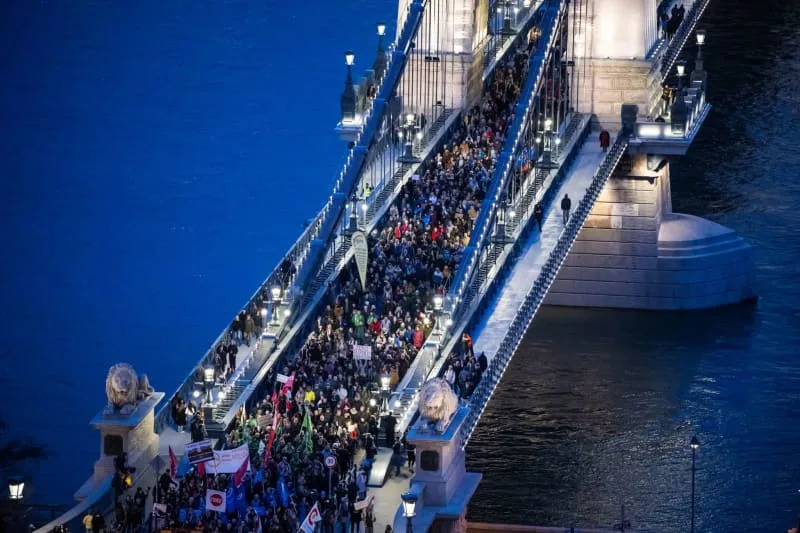
People march on the Chain Bridge during a protest to demand the resignation of Hungarian President Katalin Novak at Sandor Palace. Marton Monus/dpa

Thousands of demonstrators turned out in Budapest on Friday evening to demand the ouster of Hungarian President Katalin Novák over how she handled a pardon in connection with a case involving the abuse of children.

It recently became known that Novak pardoned a man who had been legally convicted of aiding and abetting the sexual abuse of children and young people.

Novák did not give a reason for the controversial pardon. The man she pardoned was the deputy head of a children's home in Bicske near Budapest.

According to the court ruling, he forced children to recant their testimonies as victims of abuse against the director of the home in order to exonerate his boss.

The home director was sentenced to eight years in prison. His pardoned deputy received a prison sentence of three years and four months. The pardon had already taken place in May 2023, on the occasion of Pope Francis' visit to Budapest.

Prime Minister Viktor Orbán submitted a proposal to parliament on Thursday evening to change the Hungarian constitution so that in future, criminals whose crimes victimize children should generally not be pardoned.

This was the first time Orbán has ever distanced himself from Novák, the former vice president of his ruling populist national-conservative Fidesz party.

She promised to support the proposed constitutional amendment.

At the close of Friday's demonstration, called by the Momentum opposition party as well as student associations, the angry crowd threw numerous stuffed animals in front of the door of the presidential palace in Budapest's Castle District as a symbol of children in danger.


Protesters take part in a protest against Hungarian President Katalin Novak decision to pardon a man in a case of child sexual abuse. Marton Monus/dpa

Protesters lay down stuffed animals during a protest against Hungarian President Katalin Novak decision to pardon a man in a case of child sexual abuse. Marton Monus/dpa

Protesters lay down stuffed animals during a protest against Hungarian President Katalin Novak decision to pardon a man in a case of child sexual abuse. Marton Monus/dpa

Orban Moves to Contain Fallout From Pardon in Pedophilia Case

Marton Kasnyik
Thu, February 8, 2024


(Bloomberg) -- Hungarian Prime Minister Viktor Orban pledged to change the constitution after a pardon in a pedophilia-related crime sparked opposition calls for the president to resign.

President Katalin Novak, a rare woman in high office in Hungary who was tapped by Orban in 2022 for the largely ceremonial post, pardoned the deputy director of a children’s home last year. He had been convicted in 2019 of coercing children to withdraw testimonies against his boss, who had sexually abused them.

“I submitted a proposal to change the constitution to make it impossible to pardon crimes committed to the detriment of minors,” Orban said in a video on Facebook on Thursday.

A former minister in charge of family policy in Orban’s government, Novak has condemned pedophilia-related crimes but has refused to justify her pardon, citing clemency rules. Hungarian news website 444.hu was the first to report on the pardon last week, which the presidential office hadn’t made public.

Hungarian opposition parties are organizing a protest on Friday in front of the presidential palace to reiterate their call for Novak to resign.

 Bloomberg Businessweek


Pressure mounts on Hungary's president to resign over pardon in child sexual abuse case

JUSTIN SPIKE
Updated Thu, February 8, 2024 

Hungarian President Katalin Novak delivers his speech during Pope Francis' meeting with the authorities, civil society, and the diplomatic corps in the former Carmelite Monastery in Budapest, Hungary, Friday, April 28, 2023. Pressure is mounting on Hungary’s head of state to resign after it was revealed that she issued a presidential pardon to a man convicted as an accomplice in a child sexual abuse case. 
(AP Photo/Andrew Medichini, Pool, File)


BUDAPEST, Hungary (AP) — Pressure is mounting on Hungary's head of state to resign after it was revealed that she issued a presidential pardon to a man convicted as an accomplice in a child sexual abuse case.

Hungary's opposition parties say that President Katalin Novák, Hungary's one-time minister for families and a close ally of Prime Minister Viktor Orbán, is no longer fit to hold office after she pardoned the former deputy director of a state-run children's home last year.

The man was sentenced to more than three years in prison in 2018 for helping to cover up the sexual abuse committed by the institution's director, who himself was sentenced to eight years for his abuse of at least 10 children between 2004 and 2016.

Novák, who issued the pardon along with around two dozen others on the occasion of Pope Francis' April 2023 visit to Hungary, has denied that she acted improperly and rejected calls for a formal explanation of her decision.

“Under my presidency, there has not been and will not be pardons for pedophiles, as it was in this case,” she said during a news conference on Tuesday.

Novák's office did not respond to an Associated Press request for comment.

All of Hungary's opposition parties have called for Novák's resignation. Democratic Coalition, the largest of the parties, has initiated an ethics proceeding against her in parliament.

On Thursday, a Democratic Coalition lawmaker delivered a letter to Catholic Church representatives in Hungary to pass to Pope Francis, saying that Novák had “served sin” by granting the pardon on the occasion of the pontiff's visit.

The lawmaker, Olga Kálmán, said the pardon had expunged the criminal record of the children's home's former deputy director and allowed him to work among children again.

“This pardon means that from now on, he has no criminal record and has not been barred from practicing his vocation. From the moment of his pardon, he can go back to working in an orphanage,” Kálmán told the AP.

In a Facebook post on Tuesday, one of the sex abuse survivors, Mert Pop, wrote in a comment that Novák's decision “deprives victims of due justice,” and that “the obscurity surrounding the pardoned offender provokes deep concern among those who have suffered, and in society at large.”

“Confronted with the gravity of the crimes committed, the decision to pardon is unexpected and inexplicable, causing deep pain and disappointment to those affected, further complicating their lives,” Pop wrote. He said he expects an explanation from Novák on behalf of the victims.

As controversy rose on Thursday, Orbán said in a video on Facebook that he had proposed an amendment to Hungary's constitution that would prevent those convicted of crimes against children from receiving presidential pardons.

“There is no mercy for pedophile offenders, that is my personal belief,” Orbán said. “It’s time to settle this issue."

Hungary's former justice minister, Judit Varga, also has come under fire, since her endorsement was required for the pardon to take legal effect. Varga is expected to lead the list of European Parliament candidates from Hungary's governing Fidesz party when elections are held this summer.

Kálmán, the opposition lawmaker, said she thinks Novák and Varga “should not represent me or Hungarians, either in Hungary or abroad.”

A protest against Novák's decision has been called for Friday in front of the presidential palace in Budapest.
340 Myanmar troops flee into Bangladesh during fighting with armed ethnic group

Associated Press
Thu, February 8, 2024 


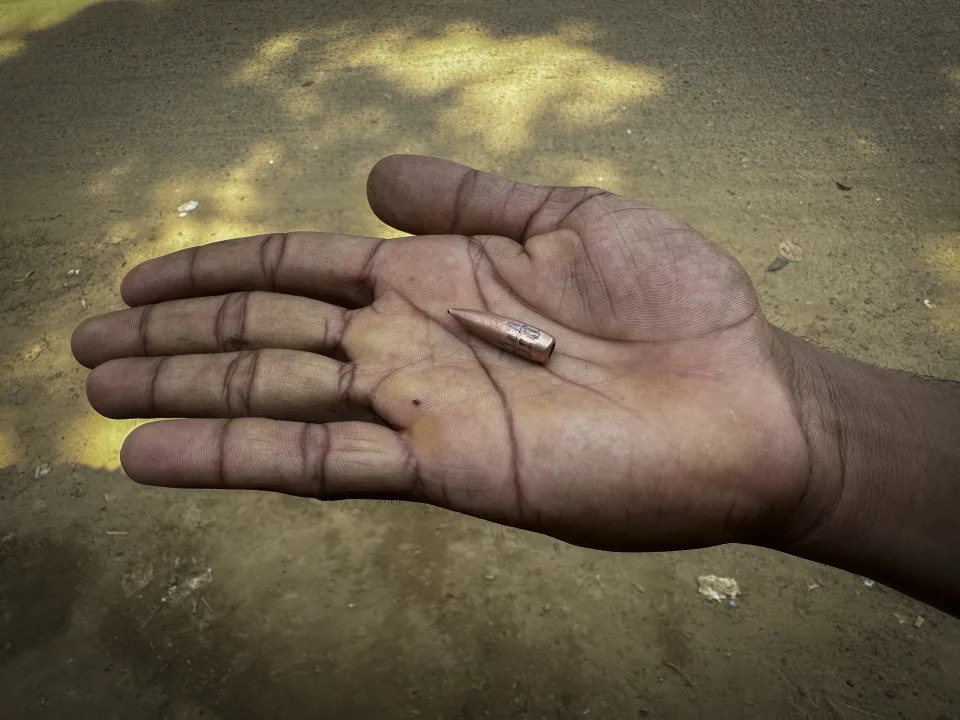
A Bangladeshi boy displays a bullet, allegedly shot from Myanmar during fighting between Myanmar security forces and Arakan Army, an ethnic minority army, in Ghumdhum, Bandarban, Bangladesh, on Monday, Feb. 5, 2024. Nearly a hundred members of Myanmar's Border Guard Police have fled their posts and taken shelter in Bangladesh during fighting between Myanmar security forces and an ethnic minority army, an official of Bangladesh's border agency said Monday.
 (AP Photo/Shafiqur Rahman)

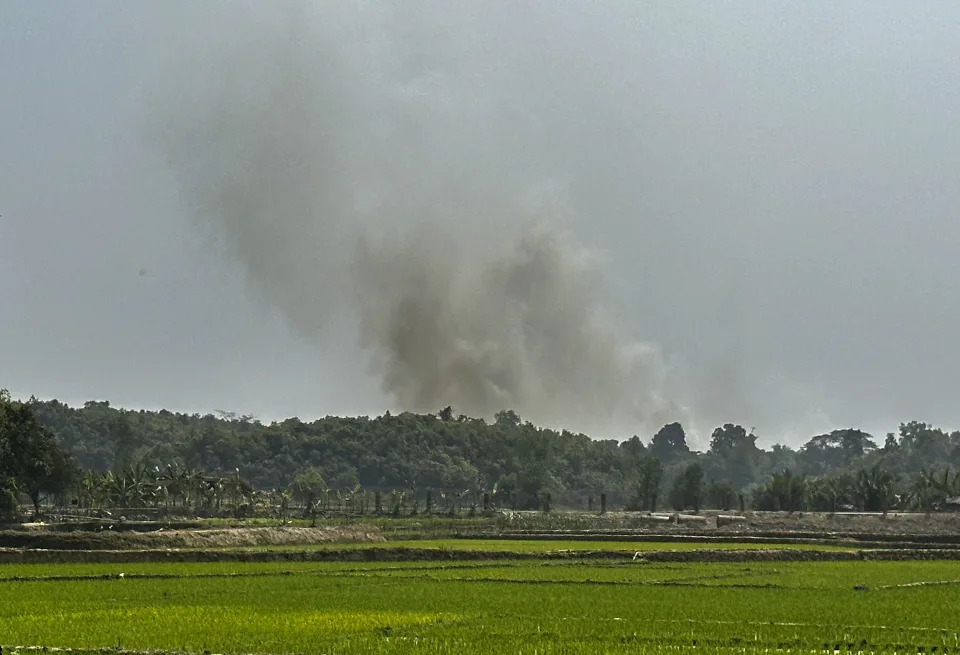
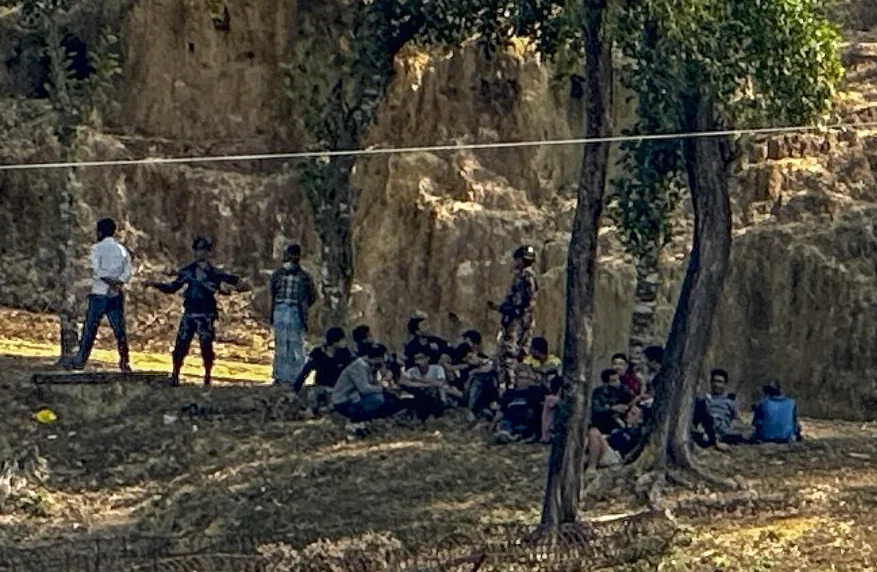
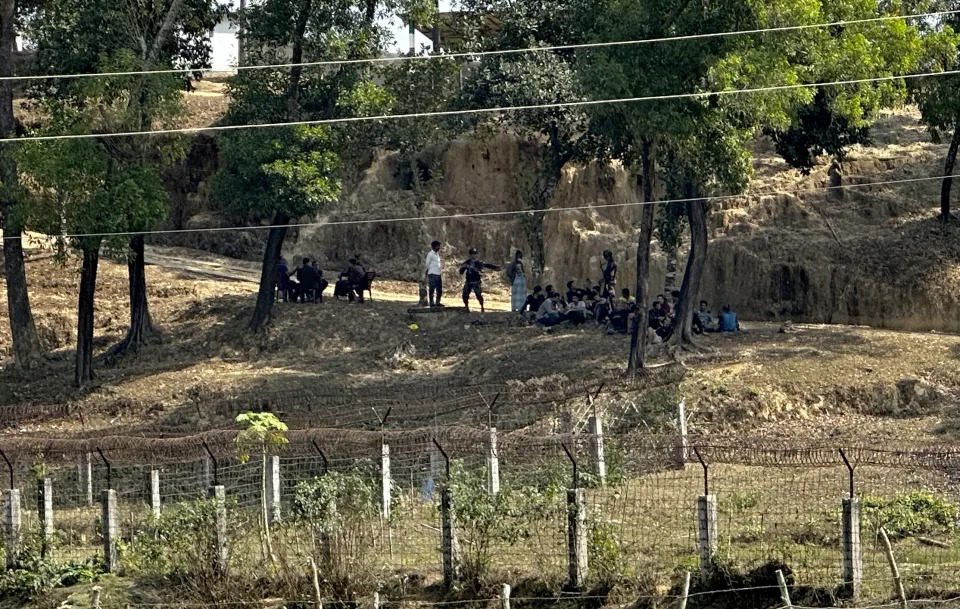
NEW DELHI (AP) — About 340 members of Myanmar's Border Guard Police and soldiers have fled into Bangladesh during fighting with an ethnic minority army, Bangladesh's foreign minister said Thursday.

Hasan Mahmud said 340 security personnel had entered Bangladesh by Wednesday. He said Bangladesh is having discussions with Myanmar's government about the issue and that it is willing to take them back.

Mahmud made the comments while on a visit to India, his first since becoming foreign minister last month.

Earlier this week, Bangladesh's border agency said some Myanmar troops had entered in recent days during fighting with the Arakan Army in Myanmar's Rakhine state bordering Bangladesh. It was the first time that Myanmar forces have been known to flee into Bangladesh since an alliance of ethnic minority armies in Myanmar launched an offensive against the military government late last year.

Officials said the troops that entered had been disarmed and taken to safe places.

Mahmud said he had also raised the issue with India, which shares a 1,643-kilometer (1,020-mile) border with Myanmar and is home to thousands of refugees from Myanmar in different states. Indian officials in November estimated that thousands had entered northeastern states in India to flee heavy fighting in Myanmar's western Chin state.

Separately on Thursday, India's Home Ministry announced that it would end visa-free movement between India and Myanmar “to ensure the internal security of the country.” The Free Movement Regime, as it is known, is an agreement between the two countries that allows people living along the border to travel up to 16 kilometers (10 miles) inside the other country without a visa.

The Arakan Army is the military wing of the Rakhine ethnic minority that seeks autonomy from Myanmar’s central government. It has been attacking army outposts in the western state since November.

It is part of an alliance of ethnic minority armies called the Three Brotherhood Alliance that launched an offensive in October and gained strategic territory in Myanmar’s northeast bordering China. Its success was seen as a major defeat for the military government, which seized power in February 2021 from the elected government of Aung San Suu Kyi and is now embroiled in a wide-ranging civil war.

Bangladesh shares a 271-kilometer (168-mile) border with Buddhist-dominated Myanmar and hosts more than 1 million Muslim Rohingya refugees, many of whom fled from Myanmar starting in August 2017 when its military launched a brutal “clearance operation” against them following attacks by an insurgent group.
The EU is throwing its weight around the business world

Alexis Keenan
·Reporter
Thu, February 8, 2024

The European Union is making life a lot more challenging for businesses across the globe.

The 27-nation bloc has aggressively adopted new laws meant to police personal data, social media content, and the dominance of Big Tech. It has sued to block mergers. And it has readied the world’s first comprehensive legislation to police artificial intelligence.

The actions are raising the stakes for how companies operate both inside and outside the EU. Just last month, EU opposition to a union of two American tech companies — Amazon (AMZN) and robot vacuum maker iRobot (IRBT) — was enough for the firms to call off their $1.4 billion merger.


EU opposition to a union of two American tech companies — Amazon and robot vacuum maker iRobot — was enough for the firms to call off their $1.4 billion merger. (AP Photo/Michael Sohn) 

Resistance from the EU was also enough to persuade Silicon Valley-based Photoshop maker Adobe (ADBE) to give up on plans to acquire San Francisco-based web-based design platform Figma and motivate US biotech giant Illumina to sell off a cancer-screening company called Grail.

Big companies in the US and across the globe now face a critical decision: Do they adjust the way they make products and provide services to the EU’s more aggressive laws or bet that more lenient regulations will take hold in other countries where they operate?
'The Brussels effect'

Some giant companies that operate globally aren’t willing to take the chance of tiptoeing around the EU, which remains the world’s third-largest economy and is home to roughly 450 million people.

"We've seen businesses say, ‘I'm going to build my products, my widgets, my service, to align with the most restrictive guidelines and not have different jurisdictional approaches,'" said Jordan Fischer, a lecturer on cross-border information governance at the University of California Berkeley and partner at Constangy.

This pressure to adopt the EU’s version of business compliance even outside its jurisdiction is growing, though isn't new. It's known as "the Brussels effect," a term coined in 2012 by Columbia Law School professor Anu Bradford to describe how the EU's aggressive legislation exerts “unprecedented and deeply underestimated global power."

Brussels, in Belgium, is considered the unofficial capital of the EU.

The Berlaymont building that hosts European Commission in Brussels, Belgium. (Getty Images) (Bosca78 via Getty Images)

"Companies with customers, or hopes of future business, in the EU decide to comply with the regulations in order to be able to continue selling into the EU, and interacting with potential EU consumers," said Meredith Kolsky Lewis, director of cross-border legal studies at University at Buffalo School of Law.

The EU, which was created in 1993, has a long history of moving more aggressively in its regulation of businesses than the US.

It even chalked up some early victories. In 2001, its antitrust stance doomed a $42 billion proposed merger between GE and Honeywell, even though that industrial union had received approval in the US. In 2007, it adopted broad environmental legislation that pushed chemical companies around the globe to adhere to new restrictions.


GE Chairman and CEO John Welch, left, and Honeywell Chairman and CEO Michael Bonsignore, right, shake hands during a press conference in 2000 where GE agreed to acquire Honeywell. (DOUG KANTER/AFP via Getty Images) (DOUG KANTER via Getty Images)
'It's not a big problem for the Googles of the world'

In more recent years, the EU’s attempt to rein in tech giants has become a core focus. The EU's first major tech legislation, the General Data Protection Regulation (GDPR), went into effect in 2018.

It is designed to protect consumer privacy and security and imposes obligations on companies anywhere in the world as long as they "target or collect data related to people in the EU."

The EU then added two more laws in subsequent years — the Digital Markets Act and Digital Services Act— that attempt to curb the dominance of Big Tech companies like Apple (AAPL), Amazon (AMZN), Meta (META), and Microsoft (MSFT), and the content of major online social media and e-commerce sites.

"Where regulation like the GDPR has the biggest effect — it's actually outside of Europe, in countries in the developing world," said Charles Kenny, an economist and senior fellow at the Washington think tank Center for Global Development.

"And I think that's sad. I think it's something that European rule makers and regulators tend not to take into account."

In response to tech regulations that include GDPR, which Kenny said made no exceptions for startups, a group of African Union nations formed an alliance to advocate for rules more friendly to entrepreneurs in poor nations like Sierra Leone and Ghana.

"It's not a big problem for the Googles of the world or the Facebooks of the world to comply. It is a big problem for small tech startups," Kenny said, adding that he agrees that certain levels of regulation are needed.

"I worry the same might happen with these AI regulations."

The EU does intend to apply new legal restraints around artificial intelligence this year after EU members last week signaled their agreement on the world’s first comprehensive legislation to regulate AI.

The new rules will focus on the uses of AI technology and classify how heavily they are regulated depending on how risky the application is, with facial recognition and certain medical innovations requiring approval before being made available to customers.

Federal laws specific to AI don’t exist yet in the US, and it’s unknown whether that will happen.

The combination of the added tech regulations from the EU and confusion within the US as to its own intentions means more uncertainty and further complexity for global businesses, Lewis said.

Despite the hard line that the EU has taken with its tech laws, Fischer said there is reason for companies to hope that the EU and the US will come into greater alignment. She pointed to a framework concluded with the US this year known as the Trade and Technology Council.

"I think that makes a lot of companies breathe a little bit easier. Not easy. But easier," Fischer said.

Alexis Keenan is a legal reporter for Yahoo Finance. Follow Alexis on Twitter @alexiskweed.
Massive hydrogen reservoir discovered beneath an Albanian mine could be an untapped source of clean energy

Sascha Pare
Thu, February 8, 2024 

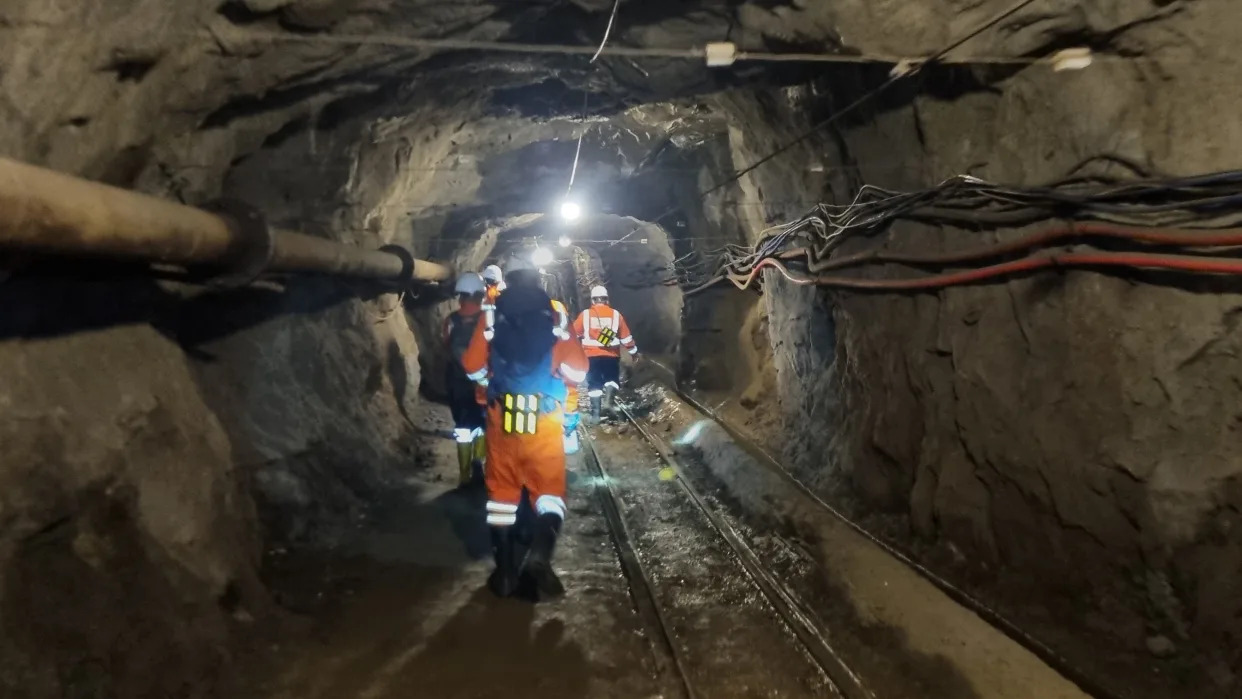
Researchers walk down the tunnel of a chromium mine in Albania.


A massive hydrogen reservoir may be lurking deep beneath a chromium mine in Albania, a new study has found.

The reservoir sits within a portion of Earth's crust and mantle that once lay at the bottom of the ocean and was scraped off when the tectonic plate it rode on slid beneath another plate. The crumpled slab of crust and mantle was thrust onto land between 45 million and 15 million years ago and formed a 1,900-mile-long (3,000 kilometers) rocky belt, known as an ophiolite, that extends from present-day Turkey to Slovenia.

Ophiolites exist worldwide, and research has previously documented hydrogen gas leaking from boreholes and mines drilled into these formations. In the new study, scientists discovered the reservoir thanks to huge clouds of hydrogen gas wafting from pools of water inside the Bulqizë mine, which is located 25 miles (40 km) northeast of Tirana, Albania. Such hydrogen reservoirs could be tapped to provide carbon-free fuel, but the deep infrastructure needed to do so is lacking and the gas is inherently difficult to extract.


Related: Will the drive for EVs destroy Earth's last untouched ecosystem?

"We have seen plenty of hyper alkaline springs hosted in ophiolites worldwide where hydrogen is bubbling [out]," lead study author Laurent Truche, a professor of geochemistry at Grenoble Alpes University in France, told Live Science in an email. But "what we have observed deep in the mine is another dimension," Truche said, and "turns a draining pool inside a mine gallery into a breathtaking 30-square-meter [323 square feet] jacuzzi bubbling with almost pure hydrogen."

Truche and his colleagues explored the deepest levels of the Bulqizë chromium mine and recorded extreme quantities of hydrogen gas leaking from the rocks and bubbling through pools of water. Their measurements suggest that at least 220 tons (200 metric tons) of high-quality hydrogen escape from the mine every year, which is one of the largest natural hydrogen flow rates documented to date.


A dark tunnel in the Bulqizë chromium mine in Albania.

Hydrogen is a highly flammable gas. The high concentrations measured inside the Bulqizë mine are thought to have sparked three explosions since 2011, killing four miners and injuring many more. "Our study will help to understand the phenomenon and to improve safety," Truche said.

The discovery also sheds light on the geological conditions that seal large reserves of natural hydrogen underground. Hydrogen venting from the Bulqizë mine likely accumulated in tectonic fractures between two blocks of rock deep within the ophiolite, according to the new study, which was published Thursday (Feb. 8) in the journal Science. This fault zone is estimated to be 33 feet (10 meters) wide, up to 3,300 feet (1,000 m) long and up to 16,400 feet (5,000 m) deep, and it "can easily be observed in the deepest mine galleries," between 1,640 feet (500 m) and 3,300 feet deep, Truche said.

RELATED STORIES

Wind and solar power overtake coal for the first time ever in the US

Strange methane leak discovered at the deepest point of the Baltic Sea, baffling scientists

Water leaking into Earth's core may have birthed a mysterious layer that churns out crystals

"We still don't know how this fault is sealed, but it has no visible footprint at the surface," he added.

As much as 55,000 tons (50,000 metric tons) of hydrogen could lurk in the reservoir beneath the mine — enough to sustain the high flow rate for 238 years, according to the study.

Deposits of natural hydrogen are a promising source of carbon-free energy if they are extractable and sufficiently large.

"What sets our discovery apart is the large flux of almost pure [hydrogen] gas we have observed," the authors wrote in the study. "In the context of energy transition, our findings could substantially affect the ongoing search for new energy resources."
SPACE
Watch a massive X-class solar flare explode from the sun on Feb. 9 

Daisy Dobrijevic
Fri, February 9, 2024 

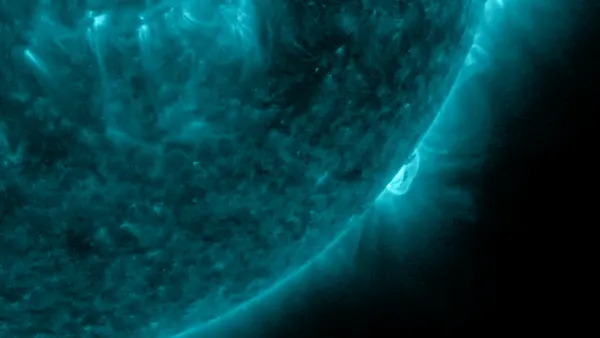
X-flare eruption on Feb 9.

The sun has unleashed a powerful X-class solar flare today, peaking at 8:10 a.m. (1310 GMT) and triggering shortwave radio blackouts across South America, Africa and the Southern Atlantic.

The solar flare erupted from sunspot AR3576 — the same sunspot that put on a fiery show on Feb. 5 with an M-class flare and plasma eruption.

Luckily for us, the sunspot moved beyond the sun's limb yesterday (Feb. 8), placing Earth outside of its direct firing line. "Goodness knows how big this flare would have been if it had happened this side of the sun," solar physicist Keith Strong wrote in a post on X.


Related: Solar maximum will arrive sooner and last longer than previously expected, say scientists

The monstrous solar flare was accompanied by a coronal mass ejection (CME) — a large release of plasma and magnetic field from the sun.

"There was a clear eruption with a coronal wave suggesting a very fast CME to the west, " said heliophysicist Alex Young in a post on X.

If a CME hits Earth it can cause disturbances to our magnetic field and lead to geomagnetic storms which can be troublesome for Earth-orbiting satellites but a delight to aurora chasers on the hunt for dramatic displays.

Due to the location of the sunspot so far south, it is unlikely that any CME from sunspot AR3576 will strike Earth directly; it is more likely to pass straight under us.

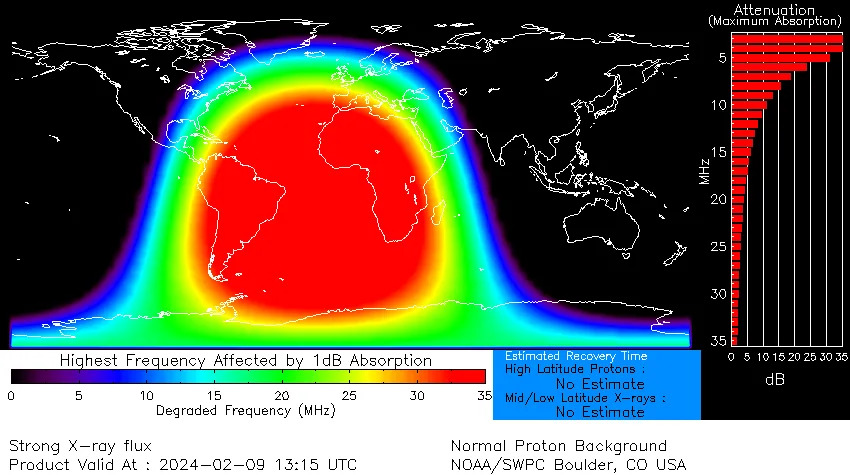
While we may not be in the direct firing line, it doesn't mean we are not affected. The X-flare caused extensive radio blackouts due to the strong pulse of X-rays and extreme ultraviolet radiation sent barrelling toward Earth at the time of the eruption. Traveling at the speed of light, the radiation reached Earth in just over eight minutes and ionized the upper layer of Earth's atmosphere — the thermosphere — triggering shortwave radio blackouts on the sun-lit portion of Earth at the time including South America, Africa and the Southern Atlantic.


shortwave radio blackouts appear as a bright red region over South America, Southern Atlantic and Africa.

Solar flares are triggered when magnetic energy builds up in the solar atmosphere and is released in an intense burst of electromagnetic radiation. They are categorized by size into lettered groups, with X-class being the most powerful. Then there are M-class flares that are 10 times smaller than X-class flares, then C-class, B-class and finally A-class flares which are too weak to significantly affect Earth. Within each class, numbers from 1 to 10 (and beyond, for X-class flares) denote a flare's relative strength. The recent flare clocked in at X.3.38 according to Spaceweatherlive.com using data from NASA's GOES-16 satellite.

Related stories:

— Upcoming solar maximum may help solve the sun's gamma-ray puzzle

— Severe space weather is messing up bird migrations, new study suggests

— Solar storms can destroy satellites with ease — a space weather expert explains the science

The sun is becoming incredibly active as it approaches the most active part of its approximately 11-year solar cycle known as the "solar maximum." Just yesterday (Feb. 8) a giant sunspot crackling with M-class solar flares turned to face Earth. The sunspot — AR3576 — is so big it was seen by the Perseverance Rover on the surface of Mars. Could we see a similarly powerful X-flare eruption from the "Martian sunspot"? Only time will tell.

Solar and space weather scientists are monitoring the sun carefully as energetic solar flares and CMEs can be problematic for satellites in space and electronic technology here on Earth. Scientists at NOAA's Space Weather Prediction Center analyze sunspot regions daily to assess the threats. The World Data Center for the Sunspot Index and Long-term Solar Observations at the Royal Observatory of Belgium also tracks sunspots and records the highs and lows of the solar cycle to evaluate solar activity and improve space weather forecasting. NASA also has a fleet of spacecraft — known collectively as the Heliophysics Systems Observatory (HSO) — designed to study the sun and its influence on the solar system, including the effects of space weather.


'Martian' sunspot 15 times wider than Earth could soon bombard us with solar flares (photo & video)

Daisy Dobrijevic
Thu, February 8, 2024

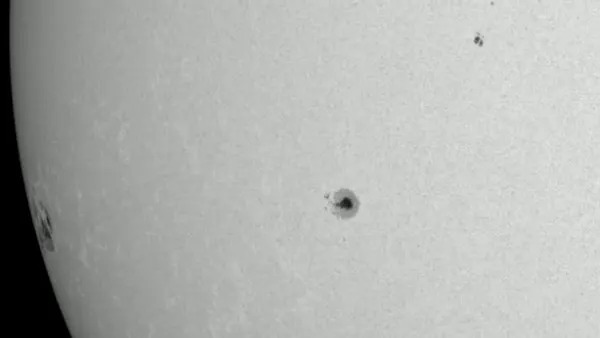
Gif animation showing the giant sunspot coming into view.

A sunspot so large it was seen from the surface of Mars is now facing Earth.

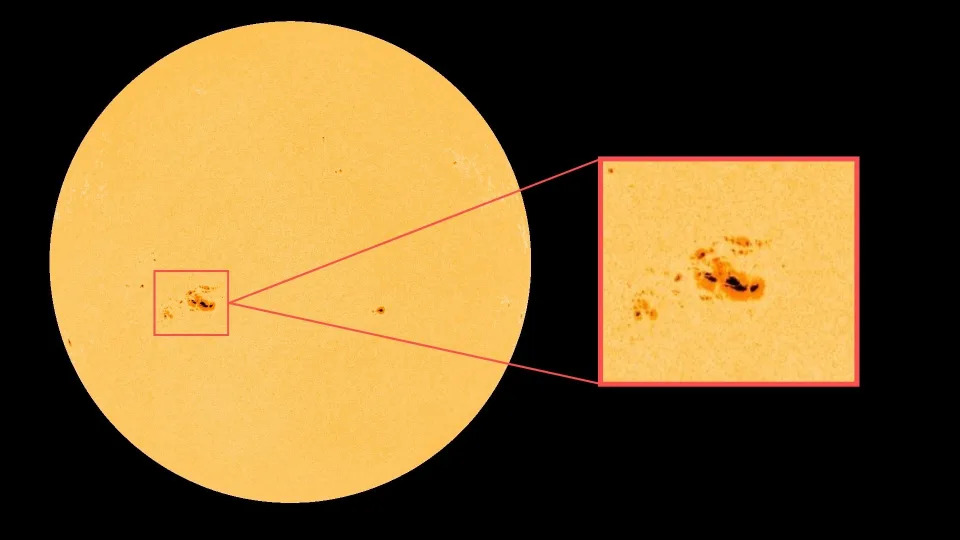
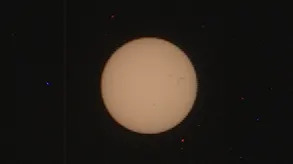
The gargantuan sunspot group AR3576 from end to end stretches for more than 124,274 miles (200,000 kilometers) and contains at least four dark cores each larger than Earth, according to Spaceweather.com. It was imaged by NASA's Perseverance Rover from the surface of Mars just last week.

The sunspot is so big it can be seen from Earth without the need for complex viewing equipment. Just don a pair of certified eclipse glasses and look up! For more information on how to safely view the sun check out our handy sun viewing guide.

Related: Powerful solar flare unleashes colossal plasma plume, sparks radio blackouts across South Pacific (video)

Sunspots are dark, cooler regions on the surface of the sun that can spawn eruptive disturbances such as solar flares and coronal mass ejections (CMEs) — large releases of plasma and magnetic field from the sun.

The frequency and intensity of sunspots visible on the surface can be used to indicate the level of solar activity at any given time during the 11-year solar cycle that is driven by the sun's magnetic field. As we approach solar maximum — the highest rate of activity — sunspot regions such as AR3576 are becoming more frequent.


Sunspot AR3576 appears as a large dark orange spot on the surface of the sun.

The magnetically complex sunspot is already crackling with M-class solar flares, and National Oceanic and Atmospheric Administration (NOAA) forecasts predict this sunspot could pose a threat for X-class solar flares — the most powerful type of solar flare.

Solar flares are triggered when magnetic energy builds up in the solar atmosphere and is released in an intense burst of electromagnetic radiation. They are categorized by size into lettered groups, with X-class being the most powerful. Then there are M-class flares that are 10 times smaller than X-class flares, then C-class, B-class and finally A-class flares which are too weak to significantly affect Earth. Within each class, numbers from 1 to 10 (and beyond, for X-class flares) denote a flare's relative strength.

large dark patches on the surface of the sun when viewed from Mars.

Strong solar flares can also be accompanied by CMEs. When CMEs hit Earth they can disrupt our magnetosphere resulting in geomagnetic storms which in turn can create stunning aurora displays closer to equatorial regions than is usually possible during calm conditions.

Solar and space weather scientists are keeping a close eye on the sun as energetic solar flares and CMEs can be problematic for satellites in space and even electronic technology down on Earth.

Scientists at NOAA's Space Weather Prediction Center analyze sunspot regions daily to assess the threats. The World Data Center for the Sunspot Index and Long-term Solar Observations at the Royal Observatory of Belgium also tracks sunspots and records the highs and lows of the solar cycle to evaluate solar activity and improve space weather forecasting.

NASA also has a fleet of spacecraft — known collectively as the Heliophysics Systems Observatory (HSO) — designed to study the sun and its influence on the solar system, including the effects of space weather.


Did NASA Really Find Heaven? That Viral TikTok Claim Explained

Cassidy Ward
Fri, February 9, 2024 

Did NASA Really Find Heaven? That Viral TikTok Claim Explained


When it comes to outer space, we’ve learned to expect the unexpected. Every time we think we have a handle on what’s out there and how it all works, we build a new telescope or figure out some new technique and reality gets a little bit weirder.

In 1994, an alleged Hubble image was published alongside a report that NASA scientists had discovered the “City of God” in deep space. If you’re feeling skeptical, that’s good and correct. We like to imagine brave explorers like the crew of The Ark, nobly seeking out new worlds in deep space, despite the danger. When compared with other occupations, leaving the planet has a higher-than-average likelihood of ending in death, but if an astronaut is headed for the afterlife they don’t expect to fly there direct. Or do they?

A viral video making the rounds on TikTok has resurrected the 30-year-old image of God’s heavenly hangout. Just to be clear right up front, the image is fake, but let’s get into how we know that it’s fake and not part of an elaborate government cover up.

The First Time Hubble “Saw Heaven”


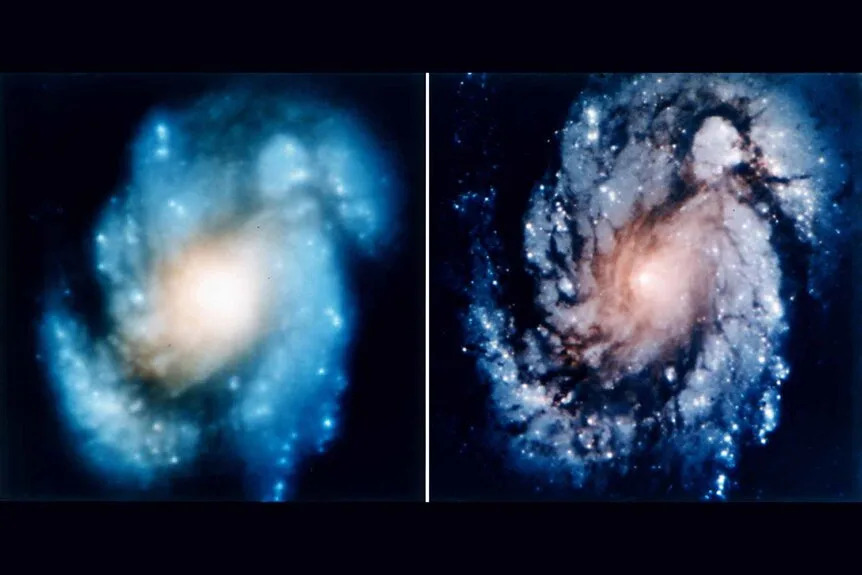
Galaxy M100 before and after Hubble repair
This before (left) and after (right) image of the core of the galaxy M100 shows the dramatic improvement in Hubble's view of the universe after the first servicing mission in December 1993. Photo: NASA

The modern popular image of the cosmos was largely defined by the Hubble Space Telescope and its awe-inspiring views of the universe. Hubble launched aboard the space shuttle Discovery on April 24, 1990 and was deployed the following day. Pretty quickly, NASA realized that there was a defect in the primary mirror, causing the images to come in blurry. Despite that, Hubble started sending back images of nearby planets and distant cosmic objects, and astronomers got busy rewriting our understanding of existence.

In December 1993, astronauts carried out the first Hubble servicing mission. They installed instruments and updates designed to correct for the flawed mirror. After installation, the clarity of Hubble images was dramatically improved. At the time, Hubble was the most powerful orbital telescope in existence, and it allowed us to investigate the nature of the universe like never before. Humanity was being granted an unprecedented view of the heavens and we were primed for world-shattering discoveries.

RELATED: Hubble spies what may be a rogue black hole just 5,000 light years away

The TikTok in question claims that NASA actually found heaven with the Hubble Space Telescope back in 1994, shortly after repairs were completed. All of the video’s claims come in the form of a voiceover, which itself is based on information the narrator allegedly received from their uncle, who allegedly worked for NASA. Already, we have to make a lot of concessions to believe what we’re being told. It’s not passing the sniff test, but let’s keep going.

Over the course of nearly five minutes, we're told that this image of a heavenly building is a confirmed NASA leak and that the organization attempted to bury the truth about it. None of that is true, of course, even if the video’s narrator really does have an uncle who works at NASA.

People have been claiming that NASA found evidence of some religious tradition or another for decades. As soon as scientists really started digging into the clockwork of the universe, people started claiming to find evidence of the divine.
No, NASA Didn’t Take Pictures of Heaven with the Hubble Space Telescope (or Any Other Telescope)

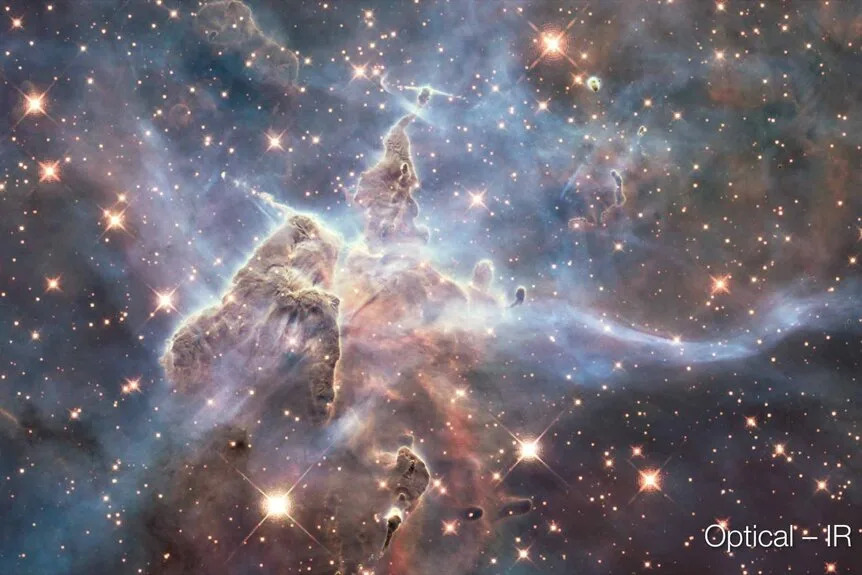
Herbig Haro 901 is an immense pillar of gas and dust inside the Carina Nebula, a huge star-forming region in our galaxy. The pillar is several light-years tall and contains a few massive young stars. 
 NASA, ESA,and the Hubble 20th Anniversary Team (STScI)

In 2016, an image started circulating online reported to feature the gates of heaven nestled into a nebula. Captions featured the usual claims that scientists were stymied by what they had found, but that wasn’t true, because the image was fake. More accurately, it was a work of art that was later co-opted to sell a religious story online. The image was one of a number of similar works by Adam Ferriss, an artist known to use a pixel sorting process to create art out of Hubble images. Ferriss began with an actual Hubble image of Messier 17, the Swan Nebula, and created the so-called gates of heaven by sorting the pixels to create stacks. Ferriss never made any claims of legitimacy about his work, but it was later picked up by third parties who attached the heaven’s gate narrative.

At least those posters had the good sense to pick up a new image and spin a new story. The recent viral video on the City of God image couldn’t even do that. Instead, it recycles a story from 1994, one that everyone knew was fake when it hit newsstands 30 years ago. The image was originally published in a Weekly World News story called “Heaven Photographed by Hubble Telescope.” The story was republished online in 2009. For those of you who don’t remember Weekly World News, it was a supermarket tabloid concerned with half-bat, half-human hybrids and figuring out whether you were descended from aliens. You bought Weekly World News for the chuckles, not because it was telling you the truth they didn’t want you to know.

The story is built on a tenuous foundation of truth. It begins talking about Hubble’s recent repairs, the ones which corrected the mirror defect, and the first clear images taken afterward. Allegedly, astronomers pointed Hubble at “the edge of the universe” and saw a brilliant celestial city floating in space. The image, like the magazine itself, is in black and white. It shows what looks like a distant city, or maybe a large house on a hill, set against a dark, star-speckled sky.

Spikes of light sprawl from the edges of the city, stretching out into space at odd angles. It helps to sell the image, giving the city a heavenly look, but it also reveals its artificial nature. Because the spikes are all wrong. You’ve probably noticed, when looking at images from Hubble or the James Webb Space Telescope (JWST) that bright objects like stars have characteristic spires of light spread out around them. You might also have noticed that the spikes visible in Hubble images are different from the spikes in JWST images, and there’s a reason for that.

RELATED: Psst! Wanna see an actual Hubble image of a planet forming around a nearby star?

Diffraction spikes are a key feature of images taken with mirror-based telescopes. Light collected by the primary mirror gets distorted a little bit, both from interacting with the mirror itself and from passing by the support struts. When looking at large, diffuse objects the distortion is small enough that it’s not really noticeable. When looking at stars, however, the high concentration of bright light causes distinct spikes. Importantly, diffraction spikes are artifacts of the telescope’s structure, they are not representative of the object being observed, which means we can determine whether a particular image was taken by a particular telescope from the pattern of spikes.

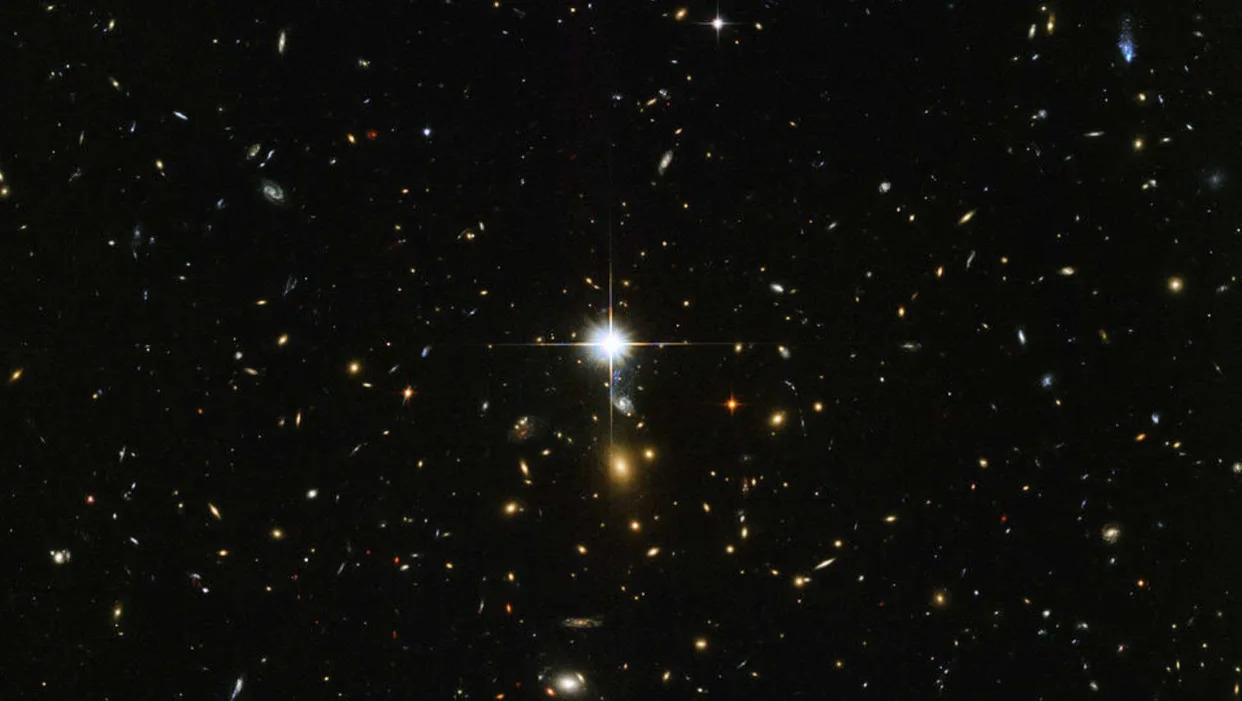
Right off the bat, the scattered nature of the spikes in the picture of heaven doesn’t make sense. There are roughly a dozen spikes splayed out in all directions but favoring the left side. The diffraction spike pattern doesn’t match Hubble or any other orbital telescope. Hubble’s diffraction spikes (which you can see in the actual Hubble image, above) come in the form of a simple cross, paired horizontal and vertical spikes. There are only four and they always splay out at 90-degree angles to one another. That doesn’t prove the story or that the image is fake, but it does prove Hubble didn’t capture it.

The rest of the story falls apart if you pull its threads even a little. It hinges on the comments of author and researcher Dr. Marcia Masson. The thing is, there is no record of Dr. Masson in the scientific literature, doing astronomical work at the time of the alleged photo’s release or at any other time.

Every other claim in the story including that then-President and Vice President Bill Clinton and Al Gore had “taken a deep personal interest” in the photo and that scientists were forced to conclude that “the only logical explanation was that the city was inhabited by the souls of the dead” and “we found where God lives,” come from unnamed NASA sources.

Of course, maybe that’s all just a part of the cover up.

The story of The Ark is currently in stasis but returns for Season 2 on SYFY later this year! Who knows what they'll find. In the meantime, catch a wide selection of science fiction streaming now on Peacock.


Massive European Satellite to Plummet Back Down to Earth Uncontrollably

Victor Tangermann
Thu, February 8, 2024 


Tin Can Deorbit

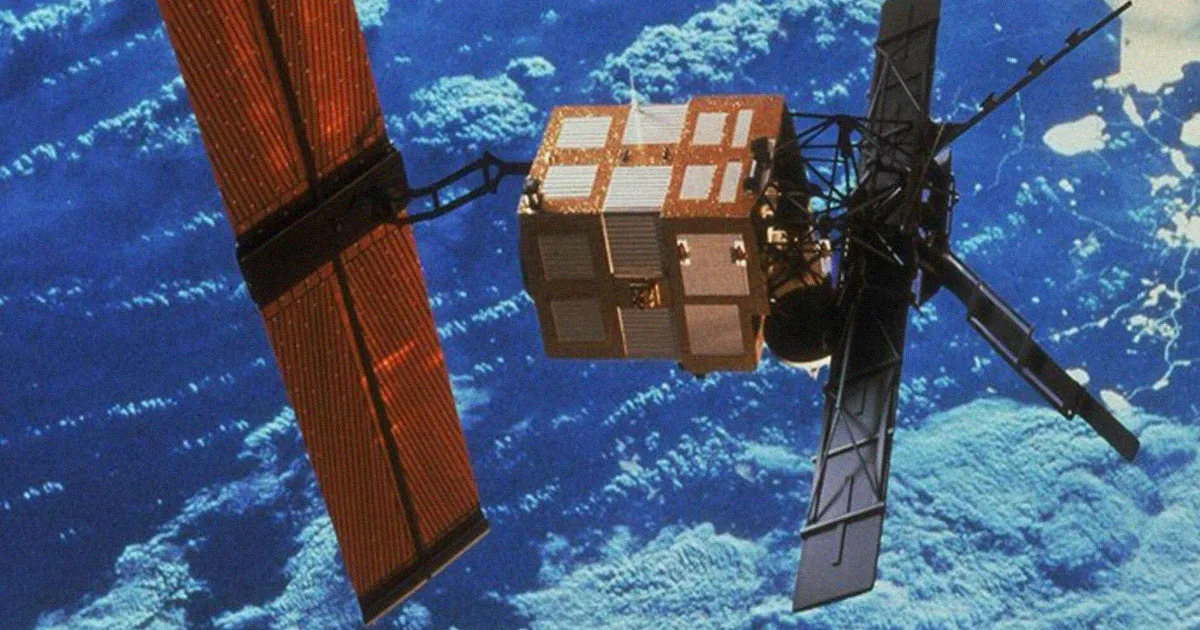
A massive, defunct satellite is set to come crashing through the Earth's atmosphere, plummeting towards the ground, in just a matter of weeks.

Launched into orbit in 1995, the European Space Agency's European Remote Sensing 2 (ERS-2) satellite was decommissioned over a decade ago. Since then, it's used up the last of its fuel reserves and is set to reenter the atmosphere "around mid-February" per an ESA statement.

Even without the fuel, the massive Earth observatory still weighs north of 5,000 pounds, a giant piece of space debris that could technically wreak havoc if it were to crash into a populated area.

Fortunately, as the ESA is quick to point out in a FAQ specifically about the reentry, "the annual risk of an individual human being injured by space debris is under 1 in 100 billion."

In other words, you're orders of magnitude more likely to be hit by lightning.

Crashing Down

As Space.com points out, far larger objects have uncontrollably made their descent from orbit, including the core stage of China's Long March 5B rocket, which weighed a whopping 23 tons when it crashed back down a week after liftoff back in 2022.

NASA officials have since called out China for its reckless habit of allowing massive rocket parts to come raining down unassisted.

And the risks are real, especially when it comes to recently-launched rocket boosters. Just last month, videos circulated on social media showing what appears to be a pair of rocket boosters of a Chinese Long March 3B rocket uncontrollably tumbling towards an inhabited area, resulting in massive fireballs.

As to where the ESA's mammoth satellite will land is impossible to tell at this point.

"The satellite is under frequent observation, and we are tracking its orbital altitude as it decays," the ESA's FAQ reads. "However, because the reentry is ‘natural’, it is impossible to predict exactly when and where the satellite will begin to burn up."

Besides turning into a massive piece of space junk, the ERS-2 satellite has "collected a bounty of data on Earth’s diminishing polar ice, changing land surfaces, sea-level rise, warming oceans and atmospheric chemistry," per the agency. It has also assisted during natural disasters.

While a largely uncontrolled descent sounds like a reckless decision, its eventual plummet is still technically a more desirable outcome than having it pose a threat to space explorers later down the line.

Our planet's orbit is already chockful of space junk — and the problem is only bound to get worse as more rockets are launched (and satellites decommissioned).

More on reentries: NASA Terrified of Space Station Careening Out of Control and Crashing Into People


Mutant wolves roaming Chernobyl Exclusion Zone have developed cancer-resilient abilities: study

Allie Griffin
Thu, February 8, 2024 


Howl about that?

Mutant wolves that roam the human-free Chernobyl Exclusion Zone have developed cancer-resilient genomes that could be key to helping humans fight the deadly disease, according to a study.

The wild animals have managed to adapt and survive the high levels of radiation that have plagued the area after a nuclear reactor at the Chernobyl power plant exploded in 1986, becoming the world’s worst nuclear accident.

Humans abandoned the area after the explosion leaked cancer-causing radiation into the environment, and a 1,000-square-mile zone was roped off to prevent further human exposure.

But in the nearly 38 years since the nuclear disaster, wildlife has reclaimed the area — including packs of wolves that seem to be unaffected by the chronic exposure to the radiation.

Scientists examine a wolf in the Chernobyl zone, measuring the radioactive contamination levels. PBS

A nuclear reactor at the Chernobyl power plant exploded in 1986, becoming the worst nuclear accident in history. Getty Images

Cara Love, an evolutionary biologist and ecotoxicologist in Shane Campbell-Staton’s lab at Princeton University, has been studying how the mutant wolves have evolved to survive their radioactive environment and presented her findings at the Annual Meeting of the Society of Integrative and Comparative Biology in Seattle, Washington, last month.

In 2014, Love and her colleagues went inside the Chernobyl Exclusion Zone and put GPS collars equipped with radiation dosimeters on the wild wolves.

They also took blood from the animals to understand their responses to the cancer-causing radiation, according to a release published by the Society of Integrative and Comparative Biology.

With the specialized collars, the researchers can get real-time measurements of where the wolves are and how much radiation they are exposed to, Love said.

Wolves wonder freely inside the exclusion zone around the Chernobyl nuclear reactor. REUTERS

They learned that the wolves are exposed to 11.28 millirem of radiation daily for their lifespans — more than six times the legal safety limit for humans.

The Chernobyl wolves’ immune systems appeared different than normal wolves’ — similar to those of cancer patients going through radiation treatment, the researchers found.

Love pinpointed specific regions of the wolf genome that seem to be resilient to increased cancer risk, the release states.

The research could be key to examining how gene mutations in humans could increase the odds of surviving cancer — flipping the script on many known gene mutations, like BRCA, that cause cancer.

Chernobyl dogs — the descendants of former residents’ pets — may also possess similar cancer resilence, though they haven’t been studied the same way as their wild cousins.

Wolves have continued to breed in the Chernobyl zone, making lair inside abandoned house. adventure – stock.adobe.com

The Chernobyl wolves’ immune systems appeared different than normal wolves’ — similar to those of cancer patients going through radiation treatment, the researchers found. adventure – stock.adobe.com

Dogs were immediately in the area after the disaster and have adapted better than other species — like birds, which experienced extreme genetic defects as a result of the toxic radiation.

The findings are especially valuable as scientists have learned that canines fight off cancer more similarly to the way humans do than lab rats.

Unfortunately, Love’s work has stalled somewhat as she and her colleagues have been unable to return to the Chernobyl Exclusion Zone — first due to the COVID-19 pandemic, and now due to the ongoing war between Russia and Ukraine.

The big wheel in the abandoned city of Pripyat, Chernobyl. Graham Harries/Shutterstock

An abandonded summer camp, Pripyat, Chernobyl. Graham Harries/Shutterstock