EU's competition chief Ribera slams climate deniers as fires rage: 'They are lying'
In her interview with Euronews, Ribera took aim at 'dangerous and stupid' European politicians who cast doubt on climate science and dismiss environmental policies as ideological rather than grounded in evidence.
European Commission Executive Vice-President Teresa Ribera launched a fierce attack against climate deniers, accusing politicians who dismiss the link between global warming and Europe's devastating wildfires of "lying to people" and putting lives at risk.
"We have lots of new parliamentarians in the European Parliament, political families and national politicians who are very vocal against climate science and climate action. This is dangerous, they are lying to people," Ribera told Euronews in an exclusive interview.
As deadly wildfires rage across Spain, France and Greece, Ribera warned that climate scepticism is undermining Europe's ability to prepare for increasingly destructive disasters. Speaking from Madrid, which has been badly impacted, she compared denying the role of climate change in wildfires to giving alcohol to alcoholics.
"The closest example would be someone in public office saying you can drink as much whiskey as you want and then drive because road accidents have nothing to do with alcohol, only with the condition of the road or the car," she said. "This is stupid."
Ribera dismissed claims that the fires are simply part of Europe's season cycle, arguing instead that climate change is creating "new types of wildfires" that are more intense and increasingly threaten communities, infrastructure, wildlife and human lives.
"This is just dangerous," she told Euronews. More than 10,000 excess deaths were recorded across Europe during late June's extreme heatwaves.
The Spanish commissioner, who oversees the EU's clean, just and competitive transition, made the remarks at a politically sensitive moment in Brussels.
Over the past year, the EU's political focus has shifted away from its once ambitious climate legislation — the hallmark of Ursula von der Leyen's first-term European Green Deal — towards competitiveness, industrial policy and cutting red tape for companies.
Several governments and political groups have urged Brussels to ease environmental rules even further, arguing it is the only way to remain competitive against the United States and China.
Some of the measures include watering down the bloc’s methane rules, which would require oil and gas producers to reduce and monitor their emissions, as well as the nature restoration law, which is seen as crucial for protecting forests and peatlands.
Ribera, however, warned against rolling back the bloc's climate agenda.
Europe cannot respond to one of its worst wildfire seasons by dismantling the very policies designed to reduce climate risks, she argued. While regulation can be simplified, she said, abandoning the foundations of the Green Deal would be a mistake.
"Providing the right answer is not just getting rid of everything that has been building these green roots to keep on building prosperity," Ribera said.
Fire crews tackle blaze close to major nuclear power sites in UK
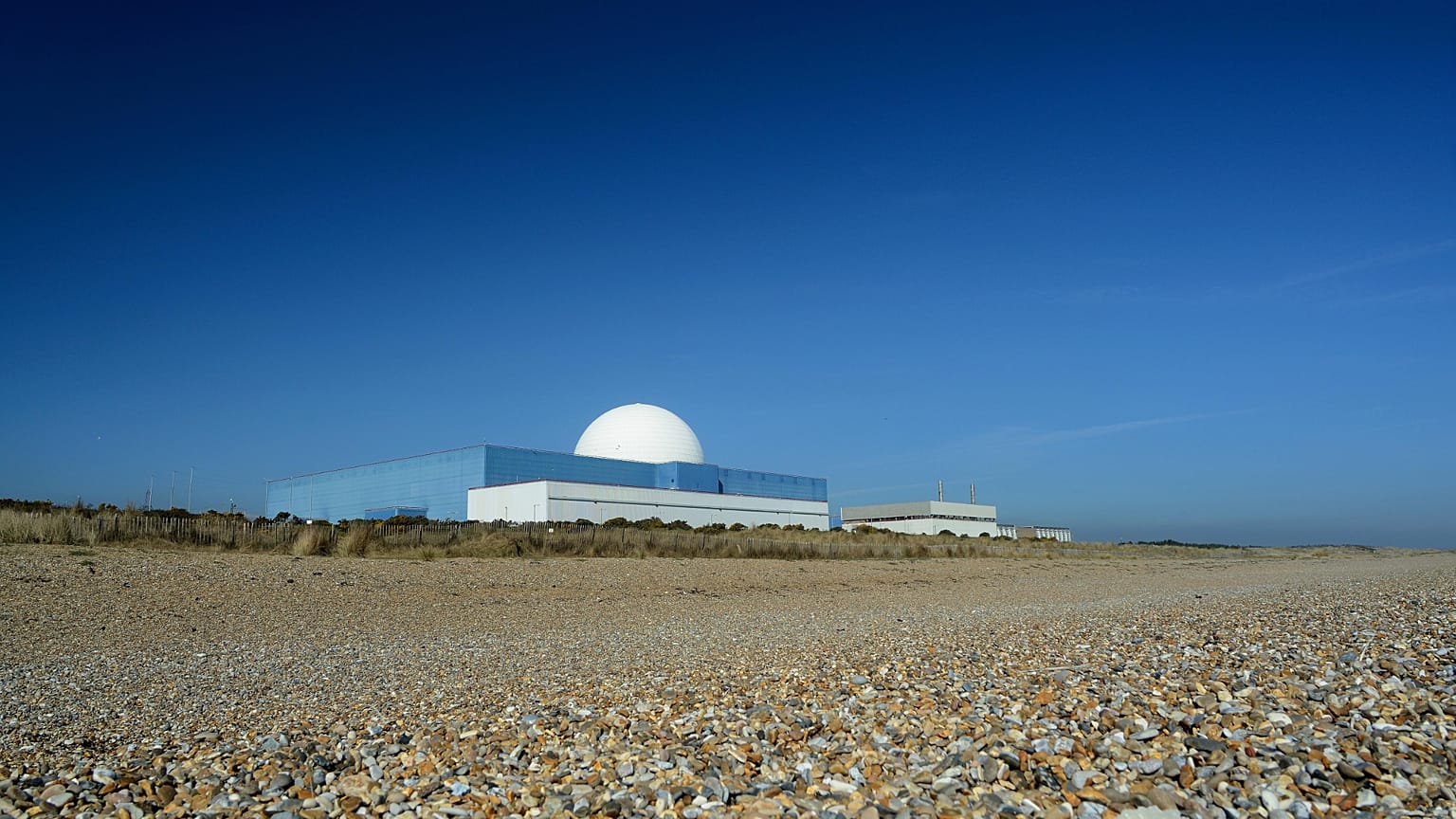
A spokesperson for energy company EDF told Euronews that the fire "is not currently affecting operations at Sizewell B power station" but that the company was "continuing to monitor the situation."
Firefighters are continuing to battle a large wildfire close to three major nuclear power sites in the UK county of Suffolk.
The blaze broke out on Wednesday on Dunwich Heath on the UK's east coast before it spread quickly southwest. It is currently covering around 100 hectares.
A spokesperson for energy company EDF told Euronews that the fire "is not currently affecting operations at Sizewell B power station" but that the company was "continuing to monitor the situation."
"We are not on high alert," they added.
Sizewell B has a well-rehearsed emergency plan ready to go for emergency scenarios, including a fire on its site.
In a post on its official X account, the planned Sizewell C nuclear station said it was also "closely monitoring the fire at Dunwich Heath" but that it "currently poses a low risk to Sizewell C due to its distance from the site and the watercourses in between."
"Our sites and offices remain open and operating as normal," the post reads. "We are continuously assessing smoke conditions and any impacts on the road network to help keep people safe and ensure emergency services have priority access."
Residents and visitors have been told to avoid the area around the fire, with some locals evacuated from their homes to a rest centre.
Suffolk Fire and Rescue Service has deployed 18 fire engines as well as specialist equipment such as drones and 4x4 quad bikes to tackle the flames, amid what it called "challenging conditions." Officers from Suffolk Police are also supporting fire crews at the scene.
Angela Rayner, the UK Secretary of State for Housing, Communities and Local Government, thanked firefighters for their work and said the government was "ready to offer our support."
"My thoughts are with people who have been affected by the Suffolk wildfire," she added in a social media post.
Europe's wildfire battle
It comes amid a series of wildfires that have ravaged parts of Europe this month.
In southwestern France, a devastating blaze has burned through around 42,000 hectares over the last week, while Spain's Madrid region has also been hit hard.
Fires have also affected parts of Italy, Greece, Portugal and Turkey.
Southern Europe is dealing with fewer blazes but ‘greater’ wildfire risk. Is there a solution?
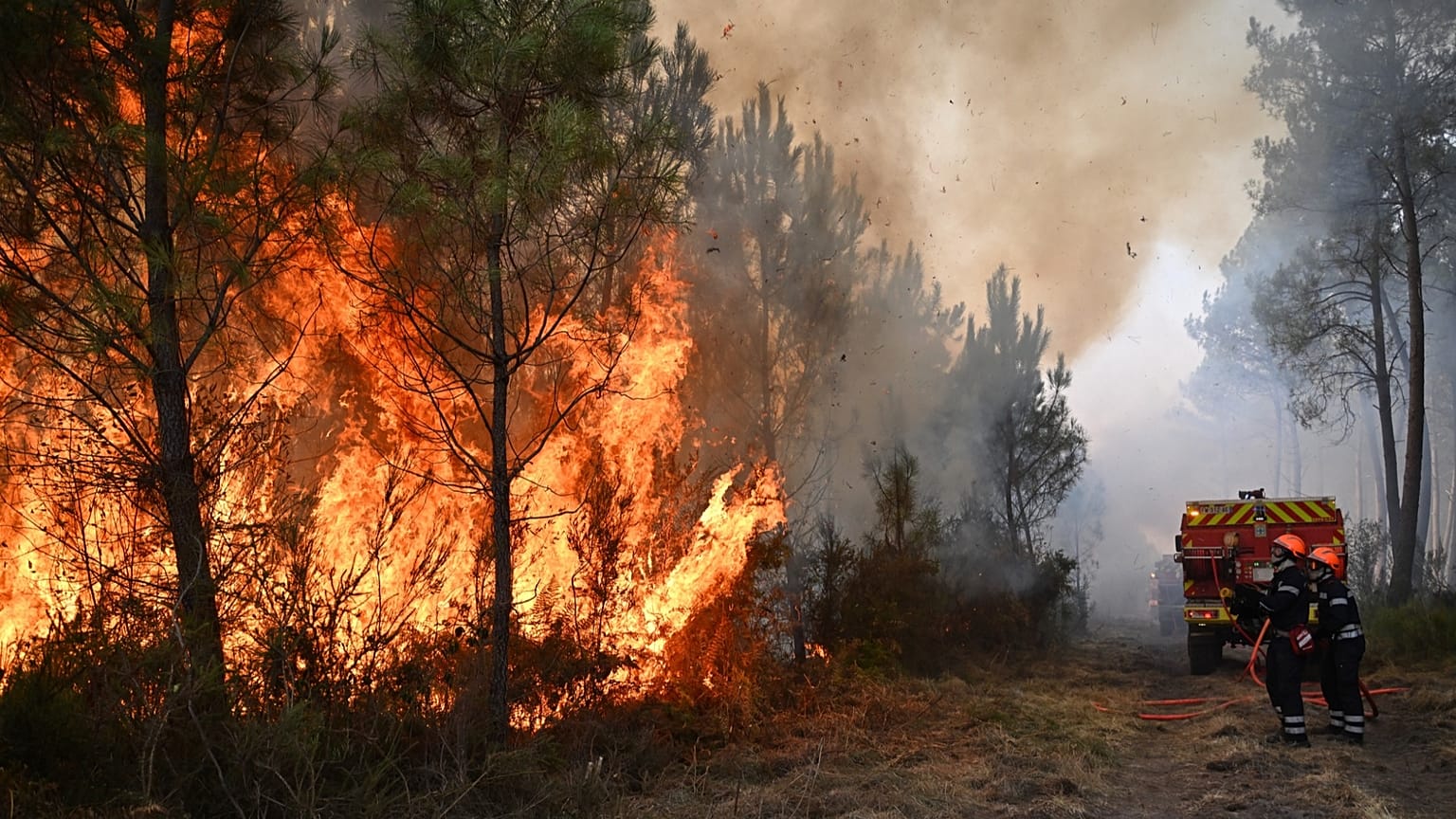
A major new study warns that Portugal, Spain, France, Italy and Greece are experiencing more ‘fire-promoting’ weather.
Scientists have sounded the alarm over “major intensification” of fire-promoting weather in southern Europe, as large swathes of the continent continue to burn.
Uncontained blazes have swept across Spain and France in recent weeks, scorching more than 120,000 hectares across the two countries, and forcing more than 300,000 people to abandon their homes.
It’s the biggest evacuation effort since World War II, and means the EU is bound for its worst wildfire season on record.
While emergency response systems have helped control some of the spread, a fire four times the size of Paris threatened to surge again in southwest France yesterday (29 July), while three firefighters were killed on the Greek island of Crete.
The bloc’s firefighting capacity is struggling to keep pace with the increasing intensity of the fires, which have become so powerful they have triggered their own thunderstorm.
As Europe braces for yet another heatwave, fears of flare-ups remain high. Now, new research lifts the lid on how Europe is becoming increasingly exposed to deadly wildfires.
What’s behind Europe’s increased wildfire risk?
A new study, published today in the journal Scientific Reports, has analysed national wildfire records from Portugal, Spain, France, Italy and Greece alongside weather and climate data between 1981 and 2025.
Researchers found that in parts of France and Spain, the intensity of fire-promoting weather (hot, dry and windy conditions) had increased by up to 50 per cent between 2016 and 2025 compared with 1981 to 2010.
The number of days with “highly fire-promoting conditions” also increased from fewer than 10 days per summer in 1981 to 2010 to around 25 days over the last decade in parts of each country studied.
The report authors say that the frequency of fire-promoting weather reflects an increase in warm, dry days and is “linked to large-scale climate patterns” including the naturally occurring El Niño.
“Smaller air-pressure differences across the North Atlantic coincided with an increase in fire-promoting weather in parts of Greece, Italy, Corsica and Spain,” the report states.
“Sea-surface-temperature anomalies in the tropical Pacific, associated with El Niño, preceded fire-promoting weather in parts of northwestern Iberia, in Sicily, and southern Greece.”
It is worth noting that most El Niño events have temporarily increased global average temperatures by around 0.2℃. This is not as significant as human-made climate change, caused by the burning of fossil fuels, which has pushed the global surface temperature up by approximately 1.3 - 1.5℃ compared to pre-industrial levels.
According to the EU’s Copernicus Climate Change Service (C3S), Europe is the fastest-warming continent on the planet, with temperatures rising more than twice as fast as the global average.
An attribution analysis from World Weather Attribution (WWA) also found that Europe’s recent June heatwave – which saw temperatures climb to 40℃ in several countries – would have been “virtually impossible” as recently as 1976 – just 50 years ago.
Despite this, the annual number of wildfires during the past 10 years was around 40 per cent lower than the 1981 to 2010 period across the five countries – suggesting that fire management efforts are paying off, including improved training for fire brigades and better public awareness campaigns.
How Europe can lower its wildfire risk
Unless climate change is tackled, by weaning off fossil fuels and transitioning to clean energy, global temperatures will continue to rise – increasing the risk of extreme weather that fuels wildfires.
In the interim, there are many wildfire management practices that can help reduce the risk. This includes ‘prescribed burns’, which involve intentionally setting fire to a designated area of land under monitored weather conditions.
They are often used to clear out dead leaves and small trees, which can in turn lower the risk of larger wildfires that often break out in the summer. A 2025 study from Stanford University found that prescribed burns can reduce the severity of subsequent wildfires by an average of 16 per cent and net smoke pollution by an average of 14 per cent.
According to the World Wildlife Foundation (WWF), ensuring “sustainable land use management” can also help control deadly infernos – particularly in areas that are already high wildfire risk.
“It is important to regulate land-use change and update zoning guidance to ensure that development does not exacerbate fire risk,” the organisation states.
“The impacts of fires do not stop when they are put out, as floods and soil erosion can follow. After a fire, reduce the risk of further damage by ensuring that burned land is rehabilitated with vegetation adaptable to a changing climate.”
Experts from environmental organisations including WWF and Wetlands International Europe are also calling for the restoration of landscapes and healthy water systems to tackle drought and wildfires.
Wildfire risk can heighten after just a few days of scorching temperatures, as moisture evaporates from grass, shrubs and other vegetation. This makes them easier to ignite and harder to extinguish.
But wetlands and rivers absorb, store and slowly release water – making them natural fire breaks. However, depleting water levels and degradation are dwindling their ability to stop the spread of blazes.
Re-introducing species that have been proven to stop wildfire damage is also worth considering. Beavers, for example, have been described as natural firefighters due to their dam-building activity which has been found to halt the spread of blazes by keeping vegetation green during droughts.

No comments:
Post a Comment