Thursday, September 18, 2025

4 beer and wine discoveries


American Chemical Society


Scientists regularly uncork fresh insights into beer and wine — even though they were invented thousands of years ago. Four recent discoveries go beyond buzz and bouquet, diving into the haziness and gluten content of beer as well as the astringent taste and potential health impacts of wine. Sip back and learn more about research published in ACS’ Journal of Agricultural and Food Chemistry. Reporters can request free access to these papers by emailing newsroom@acs.org.

  1. Yeast extracts add haze to lager beer. Hazy beer styles are becoming more popular, and their namesake characteristic usually comes from tiny particles made of barley proteins and hop polyphenols. Alternatively, to produce haziness, researchers have added yeast extracts to two brands of clear lager. The additions made both beverages extremely cloudy because of interactions between ribonucleic acids (RNA) in the extract and proteins in the beer. The researchers say that yeast RNA extracts could be another way to create desirable haziness levels.
  2. Lateral flow test detects gluten in beer, food. People who want or need to avoid gluten should know whether their drinks are safe to consume. A new lateral flow strip detects this protein in food and drinks, and it is sensitive to concentrations from 0 to more than 20 parts per million (ppm). The strip’s three lines indicate four ranges below the U.S. Food and Drug Administration’s gluten-free limit (20 ppm), showing results in less than three minutes with 98% accuracy. Researchers demonstrated the device’s effectiveness using real-world samples, including foods labeled gluten-free and a gluten-containing beer.
  3. Tannins in red wine make you pucker. A recent small-scale study examined why red wine has an astringent taste, often described as drying or lip-puckering. Trained tasting panelists rated red wines with higher tannin content as more astringent. The researchers found that tannins act like a lid for the tiny aquaporin channels in the tongue and salivary glands, letting water exit more than it enters. They say this discovery helps explain red wine’s drying mouthfeel and enhances the understanding of beverages’ perceived characteristics.
  4. Wine sulfites change the gut microbiome. Sulfites help wine last longer but can cause headaches or digestive issues for some people. So, researchers studied in lab tests how sulfites added to wine and an ethanol-containing liquid affect gut bacteria. They passed the samples through a three-stage process meant to mimic human digestion. After digestion, samples with sulfites contained lower amounts of some beneficial bacteria and greater amounts of bacteria related to negative health effects than before digestion. However, the changes were less in the real wine samples, which the researchers say suggests compounds, such as polyphenols, in wine offered slight protection.

###

The American Chemical Society (ACS) is a nonprofit organization founded in 1876 and chartered by the U.S. Congress. ACS is committed to improving all lives through the transforming power of chemistry. Its mission is to advance scientific knowledge, empower a global community and champion scientific integrity, and its vision is a world built on science. The Society is a global leader in promoting excellence in science education and providing access to chemistry-related information and research through its multiple research solutions, peer-reviewed journals, scientific conferences, e-books and weekly news periodical Chemical & Engineering News. ACS journals are among the most cited, most trusted and most read within the scientific literature; however, ACS itself does not conduct chemical research. As a leader in scientific information solutions, its CAS division partners with global innovators to accelerate breakthroughs by curating, connecting and analyzing the world’s scientific knowledge. ACS’ main offices are in Washington, D.C., and Columbus, Ohio.

Registered journalists can subscribe to the ACS journalist news portal on EurekAlert! to access embargoed and public science press releases. For media inquiries, contact newsroom@acs.org.

Note: ACS does not conduct research but publishes and publicizes peer-reviewed scientific studies


WMO report on global water resources: 2024 was characterized by both extreme drought and intense rainfall


Johannes Gutenberg University Mainz is a major contributor to the report of the World Meteorological Organization


Johannes Gutenberg Universitaet Mainz

A water discharge measuring point in Tyrol 

image: 

A water discharge measuring point in Tyrol

view more 

Credit: Photo/©: Robert Reinecke


In global terms, the past year was distinguished not only by extreme drought but also by unusually heavy rainfall. These are the core findings of the report of the World Meteorological Organization (WMO) on the status of our planet's water resources that was published today. The regions most affected by severe drought conditions in 2024 were the Amazon basin and Southern Africa. There was excessive rainfall, for instance, in the African tropics and the resultant flooding resulted in the deaths of 2500 people while 4 million were forced from their homes. Far more rain fell in Central Europe than in the reference period of 1991 to 2020. "2024 was the warmest year since the beginning of industrialization as the surface temperature of the Earth rose by a mean of 1.55°C," states Junior Professor Robert Reinecke of the Institute of Geography of Johannes Gutenberg University Mainz (JGU), who contributed to the WMO report. "And we will be facing the ever-increasing problem of more frequent droughts and more torrential rainfall as a result of climate change. Even in Germany, it is imperative that we put in place a long-term strategy that will enable us to cope with the recurring and intensifying weather extremes." Reinecke also draws attention to the fact that over the past 3 years, the rate of glacier loss has been the largest ever recorded. According to the report of the WMO, an agency of the United Nations, glaciers globally lost some 450 gigatons – in other words, 450 billion metric tons – of ice in 2024.

Concern for groundwater

Reinecke is also concerned about the state of groundwater resources. "Groundwater is a dependable source of drinking water. Unfortunately, it has been overutilized for a considerable period. Although it may appear that the levels of groundwater recovered to some extent in 2024, there continue to be losses, for instance, in Southern Europe. I consider this a cause for concern as many aquifers can require thousands of years to become fully replenished." When working on the report, Reinecke collaborated with researchers at Goethe University Frankfurt and the Global Runoff Database Centre in Koblenz, which operates under the auspices of the WMO. Together, they contributed the results of modeling and other data.

The Earth System Modeling group at JGU, headed by Reinecke, was also involved in developing the methods used to analyze groundwater data for the report and is also in charge of upgrading one of the global water models employed. In order to better understand the effects climate change is having on groundwater status, the group is currently working on collating a corresponding data record for the world as a whole.


New book challenges misconceptions about evolution and our place in the tree of life


UMBC biologist dismantles myth of “primitive” organisms with insights from modern science


University of Maryland Baltimore County

Puerto Rican Oriole 

image: 

The Puerto Rican Oriole is on the species evolutionary biologist Kevin Omland studies. His work has challenged conventional wisdom about evolution, and his new book, Understanding the Tree of Life, calls on decades of research and teaching to dismantle outdated views that place humans at the pinnacle of evolution or label certain species as "primitive." Instead, the book emphasizes shared traits alongside unique adaptations, using engaging examples from research on genomes, fossils, and animal behavior.

view more 

Credit: Ryan Mandelbaum


In a world where evolutionary biology often gets boiled down to simplistic hierarchies of "primitive" and "advanced" species, a new book by University of Maryland, Baltimore County (UMBC) biologist Kevin Omland offers a fresh, genomics-informed perspective. Understanding the Tree of Life, published by Cambridge University Press as part of its "Understanding Life" series, invites readers to rethink evolution as a continuous, branching process where all organisms—from humans to platypuses to bacteria—are interconnected cousins sharing a common ancestry.

Omland draws on decades of research and teaching to dismantle outdated views that place humans at the pinnacle of evolution or label certain species as "primitive." Instead, the book emphasizes shared traits alongside unique adaptations, using engaging examples from research on genomes, fossils, and animal behavior. It covers topics like speciation, the diversity of life, and different types of phylogenetic trees, making complex ideas accessible without sacrificing accuracy.

"This book is about shaking up how we think about evolution," Omland explains. "We often hear that humans are a 'recent arrival' or that sharks and crocodiles are 'ancient,' but that's misleading. Every lineage has been evolving for the same amount of time since their last common ancestor. Genomics shows us that evolution is ongoing in every species—processes like mutation and natural selection are constantly at work."

No species is superior

The inspiration for Understanding the Tree of Life stems from Omland's 25 years teaching introductory biology at UMBC, where he's witnessed bright students grapple with counterintuitive concepts. "I've had countless classroom interactions that revealed misconceptions, like viewing species on a ladder from lower to higher," Omland says. "This book builds on those conversations to help readers see that there are no primitive organisms—every one is a mix of ancient inheritances and recent innovations tailored to its niche."

One standout example Omland highlights is the platypus, often dismissed as primitive because it lays eggs. Yet, as he describes, it boasts recent adaptations like electroreceptors in its bill for hunting in murky waters and venomous spurs for defense. "We judge from a human perspective—our vision is great, but can we sense prey buried in mud? The platypus can," Omland notes. Such stories underscore the book's core message: Evolution doesn’t have a destination; it's a complex history of gains and losses, with no species superior to another.

Omland's research on bird plumage and song evolution informs this view, showing how traits appear and disappear across lineages. A 2014 landmark paper from his research group found that female birdsong was present in the common ancestor of all songbirds. Counter to long-term assumptions, the authors found that many temperate lineages have recently lost female song. As another example of trait disappearance, tetrapods gained legs, only for some of their descendants—like snakes and whales—to lose them. This challenges dictionary definitions of evolution as a mere accumulation of complexity, urging a more nuanced understanding rooted in modern science.

We’re all cousins

The book also carries a broader humanistic appeal, beginning and ending with the idea of universal relationship. "We're all cousins—not just with other humans, but with every organism on Earth," Omland says. "My most distant human relative shares an ancestor with me from about 200,000 years ago, but we're cousins with trees and bacteria too, tracing back billions of years. On this small planet, we should treat all our cousins with care."

Fellow researchers praise the book's clarity and impact. "In this fascinating book, Kevin Omland takes us on a tour of the tree of life, intertwining marvelous stories of evolutionary adaptation with cogent explanations of how scientists discover what we know about the history of life," says Jonathan Losos, acclaimed author and William H. Danforth Distinguished University Professor at Washington University in St. Louis.

David A. Baum, professor of botany at the University of Wisconsin–Madison, adds, "Omland identifies and debunks significant misinterpretations about evolutionary history that are widespread inside and outside of professional scientific circles.”

Stacey D. Smith, associate professor of ecology and evolutionary biology at the University of Colorado Boulder, echoes Baum. “Omland strips away all of the misconceptions about phylogenetic trees and our own evolutionary history,” she says, “so that we can see the fundamental beauty in the continuously unfolding story of life on this planet.”

Aimed at nature enthusiasts, students, and practicing scientists, Understanding the Tree of Life promises to transform how readers view biodiversity and humanity's role in it. The book is available now from Cambridge University Pressmajor retailers, and local bookstores around the world.

Kyrgyzstan


Bishkek’s construction boom brings surge of construction injuries, deaths

Authorities tighten oversight in important sector.

Sep 11, 2025
EURASIANET


A Kyrgyz construction worker wearing a bucket hat and sandals hammers while standing on a narrow beam on the twelfth story of an apartment block in the Oktyabr District of Bishkek on June 12, 2025. Construction injuries, especially serious falls, have spiked in Kyrgyzstan as construction has boomed. (Photo: Alexander Thompson/Eurasianet)

On February 8, a construction worker in his early forties fell to his death from the eighth story of a building on Bishkek’s southeast side just a week after another worker in his early fifties fell from a construction site and died in the same district.

Two months earlier, on the evening of November 27, 2024, an 18-year-old construction worker fell from an apartment tower and died, again on the southeast side.

A few months prior to that incident, downtown this time, a worker fell to his death from the upper floors of another apartment block under construction – this one, local media Vesti reported, was being built illegally.

Construction is booming in Bishkek. Massive apartment towers – and in the south of the city, whole new neighborhoods – have sprouted on practically every available plot of land amid steady economic growth and heavy investment by the President Sadyr Japarov’s government in housing and infrastructure.

But the steady drumbeat of construction deaths in the headlines highlights a tragic side effect of a building boom that has won the government much praise.

Numbers released by the State Committee for National Security showed that the most common cause of serious injury on sites – falls – has soared in Kyrgyzstan from 11 cases in 2022 to 73 cases in 2023 and 172 cases in 2024. In the first three months of this year, there were more than 30 cases, according to the committee’s figures.

“The construction sector is the most dangerous,” said Usen Nurmanbetov, deputy chair of the Professional Construction Workers Union of Kyrgyzstan.

The State Committee for National Security has taken notice. A statement issued by the government agency lays the blame for the injuries and deaths squarely on “inadequate” safety measures, negligence and corruption by government safety inspectors and construction companies.

In the statement, the committee also accuses companies of buying off injured or dead workers’ relatives to avoid legal claims and says safety inspectors have “colluded” with companies to let them start construction without fulfilling safety requirements.

In the spring, security services agents arrested Tilek Kadykeev, head of the agency that conducts construction inspections, and Ernis Minkeev, the general director of Avangard Style, one of the country’s biggest construction companies, in connection with a construction accident in May. Both were released to house arrest a few days after they were taken into custody.

“It’s a very important signal to the construction sector,” said Eldiyar Karachalov, a former construction union official and labor law expert. “It means that the government is starting to take safety and responsibility for violations very seriously.”

Avangard did not comment in the local press on the arrest at the time.

Representatives of the construction industry say construction safety has greatly improved in the past few years, and the rise in accidents is because the number of sites and workers on them has exploded.

“Conscientious companies, the first thing they think about is the safety of the citizens and potential buyers who come to visit the project and the creation of safe conditions for workers,” said Ainura Sagyn, the chairwoman of the International Builders’ Association of Kyrgyzstan, a trade group representing many of the country’s largest construction firms, including Avangard Style.

“In relation to what is prescribed by law, they do it all,” she said in an interview with Eurasianet. “The big companies are fully, thoroughly providing [safety] equipment. No one is skimping on that.”

The scope of construction in Bishkek is impressive. In 2024, Bishkek added 65 million square feet of real estate, twice as much as a few years ago, Economist.kg, a financial news site, reported.


The building boom started gaining traction around 2008, fueled by labor migrant remittances from Russia and pro-growth policy under successive governments. It was supercharged by а government building program operated by the State Mortgage Company, which Japarov reformed in 2022, Sagyn said.

“Thanks to our leadership, what’s going on right now is support for many entrepreneurs, and not just in the construction sector,” she said.

The company has financed the construction of 737 apartment blocks with more than 61,800 apartments across the country through its current program, the state Kabar news agency reported in March.

The country’s housing deficit is frequently cited at around 320 million square feet.

None of his members have any trouble finding work now, said Nurmanbetov, the union official.

But rapid growth has pushed construction companies to recruit many younger workers with little experience, and different stages of a project are often completed by separate teams of workers, which requires frequent safety training, he said.

Nurmanbetov blames four-fifths of accidents on workers who don’t follow safety rules so they can move to the next job more quickly and a fifth on negligent companies rushing to meet deadlines on the cheap.

All across Bishkek construction workers can be seen in sandals without hardhats working late into the night on dark sites where anti-fall safety nets are installed haphazardly.

The growth has also strained the resources of government inspectors who have stepped up safety monitoring after moratoriums on many inspections of private industry, meant to spur growth, expired this year, Karachalov, the labor expert, said.

“Business felt that … under those conditions it was possible to turn a blind eye to certain violations,” he told Eurasianet.

However, new labor code regulations introduced by Japarov’s government last month reduced the compensation companies must pay out to workers seriously injured on the job from 10 years’ salary to seven years’ salary and cut the compensation for families of those who die from their injuries from 20 years’ salary to 12 years’ salary, a decision Karachalov called “a pity.”

“At the same time we’re seeing the strengthening of inspections at construction sites, we’re seeing a reduction in financial penalties,” Karachalov said. “Perhaps the authorities are looking for balance.”

Alexander Thompson is a journalist based in Bishkek, Kyrgyzstan, reporting on current events across Central Asia. He previously worked for American newspapers, including the Charleston, S.C., Post and Courier and The Boston Globe.


Albania aims to revive domestic defence industry as it hosts top NATO officials

IT NEVER HAD A DEFENSE INDUSTRY

Albania aims to revive domestic defence industry as it hosts top Nato officials
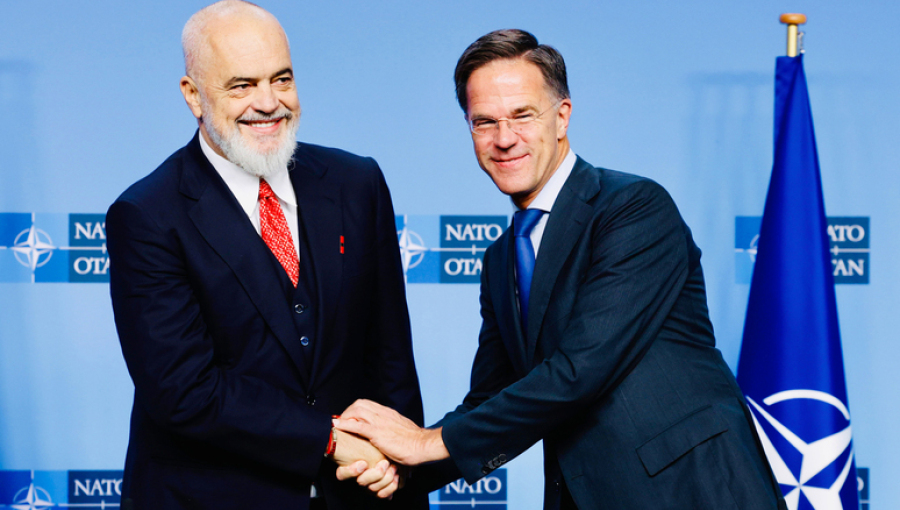
Albanian Prime Minister Edi Rama (left) with Nato Secretary General Mark Rutte. / Nato
By bne IntelliNews September 17, 2025

Albania is moving to reinvigorate its domestic defence sector and expand its role in regional security, Prime Minister Edi Rama and Defence Minister Pirro Vengu said during high-level meetings this week with Nato officials and partner countries.

Albania plans to invest into defence production and strategic infrastructure, with the aim of supporting both national security and NATO operations amid growing geopolitical tensions in Europe and the Middle East.

Speaking alongside Dutch Prime Minister Mark Rutte, Rama said Albania was “restarting the renaissance” of its defence industry, including plans for a new military port in Porto Romano and participation in the EU SAFE programme, which supports security and defence initiatives across Europe.

“Albania wants to do more. We are very keen to discuss the further work that needs to be done to make possible the new military port and to strengthen our defence industrial base,” Rama said.

Vengu outlined five priorities for Albania’s defence sector at the 28th Adriatic Charter Chiefs of Staff (SHBA-A5) conference in Tirana, which was attended by Nato’s Supreme Allied Commander Europe (SACEUR), General Alexus Gregory Grynkewich, who is on his first official visit to Albania.

“Our goal is to position Albania as a reliable hub for the defence industry, supply chains, military connectivity and interoperability, military mobility throughout Southeast Europe and the Adriatic region, and in the space of undeniable strategic importance for Atlantic security,” Vengu said, according to a defence ministry statement. 

He said that Albania will focus on expanding its defence industry, modernising its armed forces, investing in critical infrastructure, increasing defence budgets, and strengthening interoperability with allies through training and operations.

The meetings highlighted Albania’s growing contributions to NATO missions. Vengu noted that Albania participates in the Kosovo Force (KFOR), supports Nato Forward Land Forces in Latvia and Bulgaria, and continues to provide military and political assistance to Ukraine.

Albania, which ceased domestic arms production after the collapse of its communist regime, has now authorised its state-owned company KAYO to form a joint venture with a private partner to produce Nato-standard armoured vehicles, including for export. 

Czech defence firms are also reportedly exploring cooperation in ammunition, airspace control systems, and AI-based surveillance and cybersecurity tools. KAYO will hold a minimum 45% stake in the joint venture and contribute over 20,000 square meters of real estate for the project.

The government’s efforts to revive the defence sector coincide with broader regional security initiatives. Albania hosted Bulgarian Defence Minister Atanas Zapryanov earlier this week to discuss joint infrastructure and industrial projects, including Corridor VIII and the Porto Romano port, aimed at improving mobility for NATO forces. The two ministers reaffirmed their commitment to international missions, including NATO Forward Presence in Bulgaria and KFOR in Kosovo.

Rutte, speaking alongside Rama, praised Albania’s commitment to NATO. “Albania is doing a lot when it comes to Ukraine… You are really punching above your weight. Albania can always count on Nato, and Nato can count on Albania,” Rutte said, according to a NATO statement.

Albania’s push to modernise its armed forces and expand domestic production is part of a broader trend in Southeast Europe, where countries are increasingly seeking to strengthen defence capabilities and industrial independence in response to regional instability.


Renewables sector warns Croatia risks losing billions in investments

Renewables sector warns Croatia risks losing billions in investments
/ bne IntelliNews
By bne IntelliNews September 17, 2025

Croatia risks losing billions in investments and falling short of its renewable energy targets unless urgent government action is taken, industry groups warned in a joint letter to the European Commission on September 16.

The Renewable Energy Sources of Croatia (OIEH), together with European associations SolarPower Europe and WindEurope, said the country’s renewable energy development has effectively halted while the government gradually removes electricity subsidies for households and businesses. 

The industry associations warned that without rapid intervention, Croatia risks increasing fossil fuel imports, losing market confidence, and undermining both European and national climate and energy objectives.

They called on Brussels to demand immediate measures from Zagreb, including adopting a zero-euro per kilowatt connection fee, opening the balancing market for renewable energy sources (RES), and integrating electrification and energy storage into national plans.

Currently, 60 projects totalling 3.5 gigawatts (GW) of solar, wind, geothermal, and battery capacity, worth more than €3bn, are blocked. About €25mn has already been paid through energy permits for these projects, which risk expiring by year-end if no action is taken. The letter warned that local communities stand to lose significant revenues and domestic industry could miss opportunities to secure long-term energy purchase contracts.

A key bottleneck is the connection fee for projects larger than 10 MW, which has not been set since 2022. Instead, the Croatian transmission operator HOPS has sought to shift modernisation costs to new projects, raising their cost by 30-40% and making them economically unviable. Although the government pledged in March to introduce a zero-euro connection fee and flexible contracts for battery storage, the measure has yet to be implemented. If delays continue, up to 2.5 GW of projects could be abandoned next week.

The letter also highlighted a dysfunctional balancing market, where HEP Proizvodnja, a state-owned subsidiary, is effectively the sole provider of balancing services, preventing solar and wind plants from participating. This inflates costs for balancing services and distorts competition, the groups said.

Croatia’s electrification and renewable energy targets are also lagging. In 2022, renewable energy accounted for just 2.4% of transport energy consumption, with electricity from RES at only 0.2%, far below the EU average. By 2030, the target is a modest 5.8%, while the national goal for overall energy consumption from renewables is at least 42.5%.

Serbia in talks with Russia on nuclear power plant construction

SANCTIONS, WHAT SANCTIONS?!

Serbia in talks with Russia on nuclear power plant construction
/ bne IntelliNews
By Tatyana Kekic in Belgrade September 17, 2025

Serbia has entered talks with Russia’s state nuclear corporation Rosatom on the potential construction of a nuclear power plant, the Russian daily Izvestia reported on September 17, as Belgrade seeks to revive its dormant atomic energy programme.

Serbian Ambassador to Moscow Momcilo Babic told Izvestia that discussions with Rosatom were “serious” and that progress could be made in the coming years. “We need electricity. We will do it anyway,” Babic was quoted as saying.

The talks follow Serbia’s decision in November 2024 to lift a historic ban on nuclear power imposed by the former Yugoslavia after the Chernobyl disaster. The government expects domestic electricity demand to quadruple by 2050 and is pursuing nuclear energy as a way to bolster energy security amid Europe’s shift away from Russian oil and gas.

Belgrade is currently exploring its options, including both large-scale plants and small modular reactors (SMRs). It is working with French utility EDF on a technical study, and earlier this month signed two memorandums of understanding with South Korea’s KHNP on nuclear cooperation.

Rosatom has signalled it can provide a full package – from construction and maintenance to fuel supply and waste management – and could offer Serbia a preferential loan, in line with its practice in other countries. If Belgrade opts for a large-scale plant, Rosatom is expected to propose its VVER-1200 reactor, already deployed in Belarus.

EU pressure could complicate cooperation with Moscow, given Serbia’s EU accession bid and Brussels’ demand for alignment with its foreign policy and sanctions against Russia. Ivana Stradner, a fellow at the Washington-based Foundation for Defence of Democracies, noted on X that Serbia was “asking Washington to postpone sanctions on Russia’s Gazprom” while negotiating a nuclear deal with Rosatom, implying the approach was contradictory.

Energy Minister Dubravka Djedovic-Handanovic previously said France’s expertise was valuable but noted Paris has not built new plants in decades. By contrast, Rosatom is currently building 39 power units abroad.