Monday, October 06, 2025

China’s Occupation Of Tibet Is Not Just Illegal: It’s An Environmental And Security Catastrophe In The Making – OpEd

Tibet Buddhist Monk Buddhism Meditation Enlightenment

By 

As 7 October marks seventy-five years since China’s invasion of Tibet, the consequences of that act of aggression continue to unfold across Asia. What began in 1950 as Mao Zedong’s military conquest has hardened into a decades-long occupation—one that threatens not only the cultural survival of the Tibetan people, but also the region’s strategic stability and fragile Himalayan ecology.


In October 1950, the People’s Liberation Army crossed the Jinsha River under Mao’s command, claiming to “liberate” Tibet from feudalism. In reality, it was the beginning of an illegal annexation that dismantled a sovereign nation, redrew South Asia’s strategic geography, and set off environmental changes whose effects now extend far beyond the plateau.

However, relations soured, and by 1954, discontent among Tibetans grew, leading to armed resistance. A brutal crackdown by Chinese forces followed the uprising in 1959, resulting in significant human rights abuses, including the destruction of monasteries and forced relocation of Tibetans. The Chinese government’s efforts to modernise Tibet involved substantial infrastructural changes, yet these often benefited Han Chinese settlers disproportionately, leaving many native Tibetans in poverty.

The geopolitical significance of Tibet, particularly regarding its proximity to sensitive areas like Sinkiang and India, influenced China’s actions. The resistance to Chinese rule persisted, highlighted by the Dalai Lama’s exile and international condemnation of China’s policies in Tibet. The Tibetan struggle has drawn global attention, emphasising issues of cultural preservation, human rights, and environmental impact.

The forceful incorporation of Tibet by the People’s Republic of China (PRC) violated international norms against the use of force for territorial acquisition. The invasion ended Tibet’s decades of de facto independence and subjugated its government through a treaty signed under duress.

The invasion directly violated the fundamental international norm that prohibits the use of force against another state. While China claims historical ties to the region, most international legal scholars agree that Tibet had the status of a sovereign state in 1950, making the military takeover an act of aggression.


After capturing eastern Tibet, the PRC forced Tibetan delegates to sign the Seventeen-Point Agreement in Beijing in May 1951. This agreement officially made Tibet a part of China. However, many scholars and the Tibetan government-in-exile consider the treaty invalid because it was signed under duress, and the Tibetan delegates lacked the authority to sign it. The Dalai Lama later repudiated the agreement.

The annexation also ran contrary to the principles of the newly formed United Nations. The UN Charter, established in 1945, bans the use or threat of force by member states for territorial gain. By invading Tibet in 1950, the PRC committed an internationally wrongful act from which no rights could be derived.

The PRC has long referred to the events of 1950–1951 as the “Peaceful Liberation of Tibet,” framed as a reclamation of its rightful territory and an effort to free Tibetans from a feudal system. This narrative is heavily contested, especially in light of the invasion of eastern Tibet and the human rights abuses that followed. China justifies its claim by citing historical relationships between ancient Chinese and Tibetan rulers.

While many in the international community reacted with shock to the invasion, Tibet was largely diplomatically isolated and received little foreign support. The global context of the Cold War and a desire by nations like India and the United States not to jeopardize relations with China limited official responses.

The UN General Assembly discussed the issue in the late 1950s and 1960s, passing resolutions condemning China’s human rights violations.

The International Commission of Jurists (ICJ) found that China had violated the terms of the Seventeen-Point Agreement and committed human rights abuses.

Following a brutal crackdown on a 1959 Tibetan uprising, the 14th Dalai Lama and tens of thousands of Tibetans fled into exile. The Tibetan government-in-exile continues to maintain that Tibet is an independent state under illegal occupation.

This illegal occupation of the Tibet Autonomous Region (TAR) has also led to rapid militarisation of the region. A major aspect of this militarization is the expansion of dual-use infrastructure and troop deployment, which enhance China’s strategic capabilities. China’s military build-up is primarily seen as a threat to India, particularly along the disputed Himalayan border known as the Line of Actual Control (LAC).

India has still not forgotten the 1962 humiliation. But it has given a bloody nose to the PLA whenever it has indulged in any misadventure. In 1967 India and the PLA soldiers clashed in Nathu La and Cho La along the Sikkim-Tibet border. Triggered by India’s attempt to demarcate the border with a barbed wire fence, the conflict escalated into artillery duels and intense machine gun fire, resulting in significant casualties on both sides. India ultimately prevailed, inflicting heavy losses on the Chinese forces and establishing a period of peace in the region for a long period.    

Again in 2020, the armies of the two countries clashed on Galwan Valley in Ladakh, where both sides suffered heavy casualties. The clashes intensified China’s determination to strengthen its military control over high-altitude areas and infrastructure. In response, India has also expanded its own military infrastructure in the region.

Beijing’s 14th Five-Year Plan includes an $11.2 billion investment in TAR infrastructure by 2035, with major strategic implications for India. Construction of new and upgraded airports, including military and dual-use facilities, with some located close to the India-China border. Expansion of all-weather road and rail networks is happening to facilitate the rapid movement of troops and heavy equipment.

China’s military construction and infrastructure development threaten the Himalayan glaciers that feed major rivers in South and Southeast Asia, raising concerns about future water shortages for downstream populations. The construction of dams on rivers like the Yarlung Tsangpo (Brahmaputra) could also threaten India and other riparian states.

Threats to the local environment

In August 2025, the Institute for Security and Development Policy (ISDP) released a report on the ecological damage caused by China’s military expansion in Tibet. Military construction and movement of troops are accelerating the thawing of permafrost on the Tibetan Plateau, which contains vast amounts of sequestered carbon. This process releases greenhouse gases and disrupts the region’s hydrological systems.

The report noted that extensive construction of roads, airstrips, and bases has led to land degradation and damage to glaciers. This disrupts local biodiversity and affects water resources.

China’s illegal occupation of Tibet is not only a threat to regional security but also to the ecology. Unless the international community intervenes and puts pressure on China to stop the anarchy and environmental destruction in Tibet, there will be destruction of unimaginable proportions. A region with almost half of the world’s population can’t afford destruction of such dangerous proportions.


Ashu Mann

Ashu Mann is an Associate Fellow at the Centre for Land Warfare Studies. He was awarded the Vice Chief of the Army Staff Commendation card on Army Day 2025. He is pursuing a PhD from Amity University, Noida, in Defence and Strategic Studies. His research focuses include the India-China territorial dispute, great power rivalry, and Chinese foreign policy.
The Japanification Of China – OpEd

TWO COMPETING FORMS OF STATE CAPITALI$M


October 6, 2025 
Liberty Nation
By Andew Moran

No country for old yen, or big trouble in little China? While the world’s two economic powerhouses can share movie title puns, they are also experiencing comparable economic conditions, albeit three decades apart. In the aftermath of the pandemic, there have been increasing signs of the Japanification of China, which could threaten not only Beijing’s influence but also President Donald Trump’s efforts to rebalance international trade.

Japanification in the 1990s

The 1990s will forever be etched in time as the “lost decade” for Japan.

During this period, which coincided with the Asian Crisis, Tokyo suffered a tsunami of economic challenges, including deflation, slowing growth, near-zero interest rates, soaring public debt, weak consumer demand, and zombie companies (indebted businesses that survived on cheap credit). Back then, Japan also grappled with an aging population and a shrinking workforce, issues that remain prevalent in today’s economic climate.

Economists have identified several contributing factors to the resulting mess, including the collapse of asset prices, financial institutions exposed to bad loans, and misguided fiscal and monetary policies. The chaos, of course, forced consumers to close their wallets and businesses to refrain from investing.

Has Japan ever fully recovered from this horrendous period? Not quite. Fast forward to the present, and Japan is facing a plethora of old and new problems, primarily inflation, rising interest rates, and an aging population. The annual inflation rate is hovering around 3%, long-term government bond yields are above 2%, and the Bank of Japan has raised interest rates to their highest levels in nearly two decades. Additionally, almost one-third of Japan’s population consists of individuals aged 65 and older, a result of a combination of declining birth rates and increasing life expectancy.

While Japanese officials have become less gloomy about the nation’s prospects, the damage has been done, and its ranking as an economic superpower has gradually slipped. Germany is now the world’s third-largest economy, and Japan is struggling against India for number four.

In 2025, an economic malaise – a Japanification, if you will – is incrementally seeping into China.

No Yuan Saw It Coming

Will the 2020s be the lost decade for China? Depending on who is being asked, some will say that China is mirroring Japan’s 1990s, while others will pontificate that the nation’s problems differ from what unfolded in Tokyo.

Concerns about price deflation have been mounting in China amid deteriorating consumer demand, with monthly rates coming in below 0%. Moreover, the producer price index, which measures prices paid for goods and services by businesses early in the supply chain, has been stuck in deflation since September 2022.

The People’s Bank of China and the central government have continually eased monetary and fiscal policy, with officials accelerating their efforts amid trade strife with the United States. From Beijing’s stimulus tools to the central bank’s interest rate cuts and reserve requirement reductions, policymakers are throwing everything but the kitchen sink to support the economy.

Red ink has flooded the country. While the central government maintains a mountain of IOUs, it is the local governments that have a noose hanging around their necks. Beijing has stated that it will not bail them out, which poses a challenge because the appetite for muni-bonds has severely eroded. Like Japan decades ago, China has long suffered from a zombie apocalypse, with local firms struggling to stay afloat and barely surviving. In many cases, these companies are acquired by large corporations at the government’s behest.

On the real estate front, who could ever forget about Evergrande? The collapse of China’s property market – both residential and commercial – continues to impact the country’s growth prospects.

Finally, there’s an issue afflicting the rest of the world: a shrinking population. In recent years, China has reversed its policies aimed at containing the population, whether by abandoning its one-child policy or implementing measures to stimulate the birth rate. China’s population numbers reached their zenith in 2021 and have been steadily declining, emulating Japan’s aging crisis.

As the saying goes, if China catches a cold, the global economy contracts pneumonia. It makes sense, considering that Beijing accounts for approximately one-third of the worldwide GDP growth. Emerging markets, particularly commodity exporters, rely heavily on China’s demand for raw materials. Should investors lose confidence in China, a collapse in equities would materialize, triggering capital flight and market instability.

President Trump’s vision for the international marketplace would also be harmed.

Trumponomics 2.0 at Risk

A chief objective behind the president’s tariff agenda is to rebalance global trade, transforming the United States into a lead producer and the rest of the world, including China, into a consumer. If Chinese consumers are not buying anything now, then why would they if their economy slows or contracts? Treasury Secretary Scott Bessent even stated during his confirmation hearing earlier this year that China is in a recession, if not a depression.

This is a double-edged sword, of course. On the one hand, the Japanification of China would make officials more vulnerable, potentially forcing them to accept trade terms that favor the United States. On the other hand, if the lost decade – or decades – come to China, it would disrupt the global economy. At this point, the only thing economic observers and investors can do is wait, hold their families close, and determine if the 1990s will be repeated in the 2020s or 2030s.


About the author: Economics Editor at LibertyNation.com. Andrew has written extensively on economics, business, and political subjects for the last decade. He also writes about economics at The Epoch Times and financial markets at FX Daily Report. He is the author of “The War on Cash.” You can learn more at AndrewMoran.net.

Source: This article was published by Liberty Nation

Liberty Nation is a project of One Generation Away, a non-profit 501(c)(3) organization. Liberty Nation is true to the OneGen organizational mission: to apply America’s founding principles to the issues of today. Liberty Nation does not endorse political candidates, nor endorse specific legislation, but offers commentary, analysis and opinions – the good, the bad and the ugly — on all things related to the American political discourse.


Japan’s new ‘Iron Lady’ Sanae Takaichi – a win for Taiwan, a slap in the face for China

Japan’s new ‘Iron Lady’ Sanae Takaichi – a win for Taiwan, a slap in the face for China
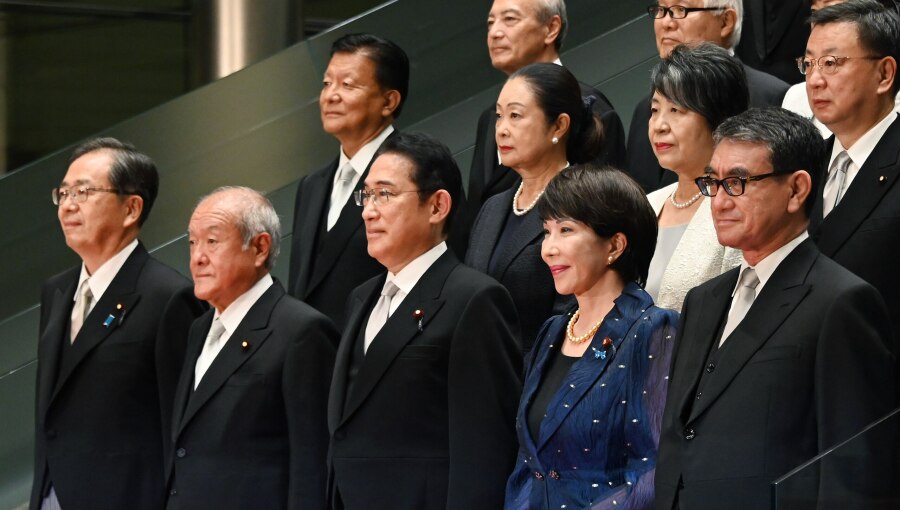
The Cabinet of PM Kishida - Takaichi front row, second from right / Japan PM Office - https://japan.kantei.go.jp/
By bno - Taipei Office October 6, 2025

After weeks of political manoeuvring and internal party turbulence, Japan’s ruling Liberal Democratic Party (LDP) has chosen Sanae Takaichi as its new leader, setting her on course to become Japan’s first female prime minister. Her victory marks not only a symbolic break in Japan’s patriarchal political order, but also a return to a more hard-line, national security-driven posture - especially toward Beijing.

Takaichi’s ascent comes amid a period of acute disruption for the LDP. In 2024, her centrist rival Shigeru Ishiba had won the party leadership, edging her out in a run-off, only to preside over a rough electoral cycle. The LDP and its coalition partner Komeito lost their majority, forcing Ishiba to cling on to power for as long as he could.

By the middle of this year, however, mounting internal pressure and a plunging popularity rate forced Ishiba to announce his resignation as party leader and thus prime minister. That in turn opened the door to a new leadership contest, and one pitting Takaichi as representing the LDP’s more right leaning of members, against the more middle-of-the-road contenders.

As a result, Takaichi prevailed over Agriculture Minister Shinjiro Koizumi, in a victory greeted by a notable rally in financial markets: Japan’s Nikkei index leapt 4.5 %, reflecting investor expectations of renewed fiscal stimulus and continuity with the pro-business policies of Shinzo Abe’s era.

That Takaichi was at various times described as an heir of Abe is a fact not lost on many Japanese voters.

She held a number of important posts during Abe’s period as prime minister, serving most notably as Minister for Internal Affairs and Communications. More recently she served as Minister of State for Economic Security under then-PM Fumio Kishida.

And on October 15, she will be confirmed as Japan’s next prime minister.

Aged 64, Takaichi has long been associated with Japan’s staunch conservative wing. She openly cites Margaret Thatcher as a source of inspiration: strong character, conviction, and national resolve tempered by “womanly warmth” multiple sources in the British media have pointed out over the weekend.

At home, her domestic and economic agenda is not too dissimilar to that of Thatcher and leans toward a revival of Abenomics which saw a mix of fiscal stimulus, tax cuts, and monetary easing with the ultimate goal of of jump-starting growth in Japan, while at the same time controlling deflation, and most importantly appearing to reach out to the LDP’s core backers.

Yet Takaichi’s more contentious territory lies in defence, security, and especially foreign policy.

She is an outspoken advocate for revising Japan’s postwar pacifist constitution and formalising the role of the Self-Defense Forces as a military force Reuters and the FT have reported.

She has also referred to a Taiwan emergency – should China invade – as a Japan emergency.

That the original Iron Lady from Grantham in Lincolnshire, stood firm against an Argentine threat when the Falkland Islands were invaded in 1982, and ordered a task force to go and liberate the islands will not be lost on Japan’s new Iron Lady over the issue of defence of Taiwan – itself a former Japanese territory and a hugely popular holiday spot for modern day Japanese.

Similarly galling to China, Takaichi is said to be a regular visitor to Yasukuni Shrine, which, given its enshrinement of Japan’s war dead, including a number of convicted war criminals, is seen as a political slap in the face by Beijing.

More specifically on the subject of China, Takaichi’s posture is markedly hawkish. She has repeated criticisms of Beijing’s regional assertiveness and has urged Tokyo to take a tougher line on issues ranging from Taiwan to the East China Sea, and is expected to follow up on her political leanings despite Politico earlier in October saying Takaichi “called herself a “moderate conservative” during the run-up to the election.” 

To say Takaichi’s time as prime minister of Japan could lead to rising tensions with Beijing would, long-time Japan watchers have already noted, be a major understatement.

And while at home she must face economic pressures centred on inflation, stagnating wages, and an ageing demographic, on the foreign affairs front, Takaichi will need all the diplomatic nimbleness she can muster, especially as US–Japan ties work to take a tougher stance on China.

Her inclination toward Taiwan has already been noted on the island and welcomed by many.

Beijing has as expected already reacted cautiously, calling her election an internal Japanese matter while urging Tokyo to honour previous commitments on issues including history - and Taiwan - according to the SCMP; China-speak for ‘don’t rock the boat on issues directly affecting Chinese claims over the already independent and self-governing island’.

To this end, Takaichi’s election and her attitude towards China in recent years places Tokyo at a sensitive diplomatic inflection point. How she calibrates assertiveness and restraint vis-a-vis China in the coming months will test Japan’s ability to maintain strategic balance between Washington and Beijing

For now though, the biggest winner in Sanae Takaichi coming to power is Taiwan.

A Market Economy Coexisted With Totalitarianism Under Stalin, An Arrangement That Continues In Putin’s Russia – OpEd

STATE MONOPOLY CAPITALI$M

Moscow, Russia. Photo Credit: step-svetlana, Pixabay

By 

Most people see a market economy and totalitarianism as antithetical phenomena and believe that where one exists, the other cannot. But in fact, even in the darkest days of Stalin’s totalitarian system, a kind of market economy existed albeit not in its own name; and a similar arrangement now exists in Putin’s Russia, Dimitry Savvin says.


The editor of the Riga-based conservative Russian portal Harbin points to the case of Nikolay Pavlenko who created a private construction firm which operated in the USSR between 1948 and 1952, a case described by Russian historian Oleg Khlevnyuk in a 2023 Moscow book, The Corporation of Imposters (harbin.lv/algoritm-rynochnogo-pererozhdeniya).

What Pavlenko did was criminal “only” in the official Soviet understanding, Savvin says. In fact, what he did was to “establish a private construction enterprise masked as a military institution and over the course of several years successfully conduct commercial activity” in a totalitarian state.

As “phantasmagorical” as that may seem, he continues, “in essence, the mechanisms of coexistence with a totalitarian state and a private commercial enterprise which Pavlenko developed are in many respects typical” and were later employed “not only in the Soviet Union” but also in North Korea and since the 1990s by entrepreneurs in Russia.

Shortly after the German invasion of the USSR in 1941, Pavlenko, “suddenly discovered” that if one had the write papers and stamps, one could operate as a kind of covert free market player. He ran one such business during the war and established a second in 1948, when he was routinely sought out by officials because of his good and speedy work.

Eventually the party leadership caught up with him; and in 1952, hie operation was shut down and he was shot. But his operation, which was certainly far from unique, dis played four characteristics that help to explain why such things reemerged in some other communist countries, the post-Soviet USSR, and especially in Putin’s time.


First of all, Pavlenko’s organization was not political but commercial in the purest sense. Second, his organization mimicked state institutions; third, he did nothing criminal except for operating as a private firm in a system that denied that possibility; and fourth, if the leadership hadn’t been obsessed with defending socialism, what he did might have continued.

            “We see that little islands of market arrangements are natural for man and humanity” and emerge in communist and other totalitarian states, Savvin says, a pattern that requires us to recognize that with the proper masking, free market phenomena can and will exist under totalitarianism rather than being totally excluded by it.  

Savvin’s observation carries with it another implication that he doesn’t discuss but that is critical for those who want to overcome totalitarianism. In the 1990s, many Western leaders believed that if they got the economy right in the Russian Federation, totalitarianism would be precluded. But in fact that was not true.

Had such leaders focused more on democratic procedures and laws and worried somewhat less about the economy which they expected would do all the heavy lifting Russians and the world might have been spared the rise of the new totalitarianism under Vladimir Putin now.


Paul Goble

Paul Goble is a longtime specialist on ethnic and religious questions in Eurasia. Most recently, he was director of research and publications at the Azerbaijan Diplomatic Academy. Earlier, he served as vice dean for the social sciences and humanities at Audentes University in Tallinn and a senior research associate at the EuroCollege of the University of Tartu in Estonia. He has served in various capacities in the U.S. State Department, the Central Intelligence Agency and the International Broadcasting Bureau as well as at the Voice of America and Radio Free Europe/Radio Liberty and at the Carnegie Endowment for International Peace. Mr. Goble maintains the Window on Eurasia blog and can be contacted directly at paul.goble@gmail.com .


Russia’s Most Powerful Weapon: Lies – OpEd

 Spreading disinformation. Photo Credit: Phạm Nhật, Unsplash fake news propaganda

By 


The Kremlin’s Disinformation War  

The recent discovery of a massive, foreign-linked telecom network in New York—packed with over 100,000 SIM cards and capable of crippling cell service across the city—is a stark reminder of how modern conflict is waged. This new frontier of warfare operates not with bombs, but with invisible threats that target the very infrastructure of society.


Yevhenii Dorohanov, from the National Police of Ukraine, has a good idea of what may be the reason.

“The disinformation you see online,” he says, “is well-planned, carefully targeted, and meant to sow division and anger. The goal is to destroy the fabric of society.”

Dorohnov’s job is to track how the Kremlin pushes propaganda and also to counter the disinformation that has almost certainly reached you, likely without your knowing it.   Read on for an unusually candid look at how Russia’s disinformation machine works.

Russia’s Strategy: Divide and Distract

Here’s an example of how Russian information warfare works in Ukraine. The Russians post a false report on Facebook or Telegram that a village has been captured by Russian troops. Since the people in the area are avid for information, the report will spread to all the surrounding towns and villages within minutes.

 “The result is panic,” Dorohanov explained. “Civilians from the neighboring towns now believe that the front line of the war is about to come to their village. They flee from their area, with the result that supply chains freeze, and commanders waste time correcting what never happened. The disruption ripples across every layer of society.”


The same tactics work in the West, only the narratives differ. “Before elections,” he says, “Russian propagandists focus on spreading false information on corruption or misuse of funds, or anything that undermines people’s faith in their leaders.”

Yevgeniy didn’t comment on the assassination of Charlie Kirk but he did say that the purveyors of Russian disinformation will move instantly in cases of a national tragedy.  They’ll swing into action, spreading conspiracies and amplifying distress and anger. “The point isn’t persuasion,” he said. “The point is to create discord, anger, and chaos.”

I pressed him on the mechanics. “How,” I asked, “do Russian operatives spread their messages?” 

The answer is fake accounts on social media. They use SIM cards to create fake identities.  A SIM card, by the way, is the small chip in your smartphone that stores a mobile phone’s subscriber identity and allows it to connect to a cellular network. With a SIM card, you can open an account on Facebook or TikTok, or other social media.

The Russians use SIM cards on an industrial scale to create fake identities on social media. In a recent operation, Ukrainian police confiscated over 150,000 fraudulent SIM cards that were used to create fake identities on social media.  

“One SIM card can register multiple accounts,” Yevgeniy explained. “And with e-SIMs, which are contraband, entire farms of fake accounts can be created automatically. In the Russian-occupied areas of Ukraine, there’s even a market where thousands of ordinary people are recruited to buy SIMs in bulk.”

“The fake accounts are trained to act like humans,” Yevgeniy continued. “The fake accounts will do things like click on memes, leaving harmless comments. Facebook’s algorithms see them as real people. Then, when those same bots choose to like or share disinformation, the system thinks the disinformation is popular and pushes it to the top of your feed.”

It doesn’t take thousands of bots. Sometimes a few dozen, deployed strategically, are enough to convince the algorithm that a topic is trending. “The goal is to make disinformation unavoidable and everywhere,” he said.

The Russians who do this work are called “trolls,” and the areas where they work are called “troll farms.” We in the West don’t know how many troll farms Russia has, but estimates are that there are thousands of them, and they’re there to spread disinformation.  

Online, some pose as patriots, others as critics. It’s a full-time job, and it’s guided by intelligence services that study exactly which communities are most vulnerable, whether it’s people angry about police violence, fearful about immigration, or suspicious of elites. It’s a good guess that Russian troll farms are doing everything they can right now to get Americans at each other’s throats over Charlie Kirk’s memorial service.

The troll farms have a rapid response approach. As Dorohanov says, “When a major event breaks, they mobilize within minutes. Multiple narratives appear at once, each designed to inflame a different group.”

I asked how effective this kind of information campaign is compared to bombs. His answer surprised me. “In democracies, once citizens stop trusting their leaders-or each other-you don’t need to fire a shot.”

As our interview drew to a close, I asked what advice he would give to people in the West who want to protect themselves.

“Be skeptical,” he said. “Ask yourself: who benefits if I believe this? Check with reliable sources. And above all, don’t share unless you know it’s true.”

Yevgeniy’s final words lingered with me: “The danger isn’t that you’re lied to. The danger is that you stop believing in truth at all.”


Mitzi Perdue

Mitzi Perdue is a public policy advocate and co-founder of Mental Help Global.

Babis’s Czech Election Victory Poses Potential Headache For Brussels, Kyiv – Analysis

ANOTHER ANTI-EU FASCIST OLIGARCH


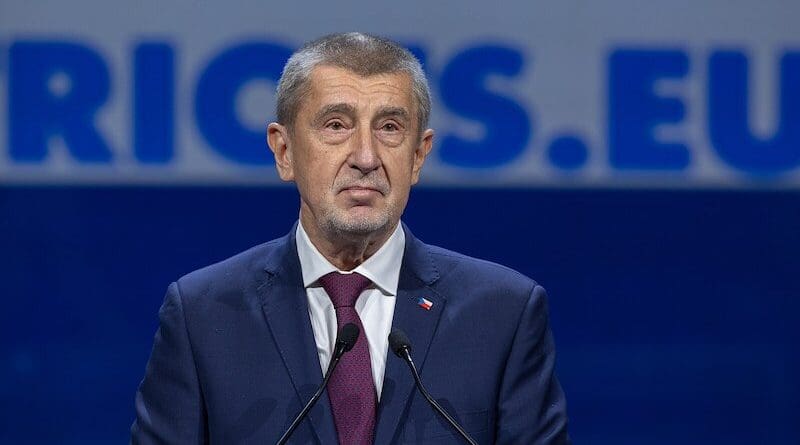
File photo of Czech Republic’s Andrej BabiÅ¡. Photo Credit: Vox España, Wikimedia Commons


October 6, 2025 
By RFE RL
By Rikard Jozwiak


The election victory this weekend of right-wing populist Andrej Babis risks turning the Czech Republic into another Central European problem child for Brussels after he campaigned on vows to slash support for Ukraine and confront the EU over immigration and environmental policies.

Babis, a former prime minister and billionaire sometimes referred to in the media as the Czech Donald Trump, easily took the most votes with his ANO (YES) party garnering 35 percent.

A triumphant Babis said after the results came in that he would seek a one-party minority government, though he would hold talks with two small parties including the far-right SPD that could give him a majority in parliament.

There is no panic yet in the corridors of power in Brussels with some officials assessing that Babis is “no Robert Fico or Viktor Orban.”

That’s a reference to the leaders of Slovakia and Hungary, who in recent years have caused the bloc all sorts of headaches by watering down or holding up sanctions on Russia, pausing both military aid, economic support, and EU accession negotiations for Ukraine and undermining the rule of law in the club in general.

Still, Orban was the first leader in Europe to congratulate Babis, who was Czech prime minister from December 2017 to December 2021.

Filip Nerad, who has followed Czech-EU politics for the think-tank Globsec, told RFE/RL that the Babis government will be more critical toward big EU initiatives such as the “Green deal” that aims to make the bloc climate neutral by 2050.

He also said Babis opposes the migration pact, which enters into force next year and is aimed to create a common EU asylum system.

Still, the 71-year-old leader may not totally align with Budapest and Bratislava, giving some hope Brussels may be able to work with Prague on some level.

“Overall the Czech Republic will be less in the mainstream in Brussels and cooperate more with Hungary and Slovakia, but don’t expect that Prague will follow Budapest and Bratislava on everything,” Nerad said.

The assumption, speaking to both European and Czech officials, that Babis indeed is different from his two Visegrad peers is based on three observations.

Firstly, the nature of his election win.

While his ANO party clearly came out on top, the three other populist parties — the SPD, Motoriste sobe (Motorists for Themselves) and Stacilo (Enough) — fared poorer than expected.

Stacilo failed to clear the 5 percent threshold to gain seats in parliament, removing a potential coalition partner for Babis.

While the Slovak-born Babis may aim to form a minority government of just ANO ministers with the political backing of the Motorists and SPD, analysts said talks between the parties are likely to prove difficult.

And his government might end up wobbly and weak. He might even eventually turn to the more mainstream parties in the outgoing government.

Second, while his rhetoric on the campaign trail often was anti-EU, he may be forced to move toward the middle to work along side pro-West President Petr Pavel, who is popular among Czechs and a likely counterbalance to Babis.

Pavel doesn’t have many levers of power, but one he does possess is approving cabinet ministers. And he’s already said he won’t accept any “anti-systemic” candidates if he is to sign-off on Babis’s government.

It is also worth noting that many other senior ANO officials such as Karel Havlicek and Adam Vojtech are considered moderate and even were well-regarded in Brussels during their previous stints as government ministers.

Finally, there is Babis himself, who despite having sharpened his criticism of the European Union in recent years and is in the same European political group that has challenged the mainstream direction of Europe’s policies, has practical reasons to remain Western-oriented.

His business interests in agriculture and media are linked to both Austria and Germany and dependent on generous EU funds.

He has sought close political ties with Italian Prime Minister Giorgia Meloni and with France. On top of that, he has promised to honor the Czech Republic’s commitment to NATO.

“We want to save Europe…and we are clearly pro-European and pro-NATO,” Babis told reporters after his election win.

Pavel Havlicek, who follows Czech-EU relations for the think tank AMO, notes that “Brussels most likely is looking at the Czech vote with skepticism and worry.”

But, he adds, “it will be important for Brussels to stay merit-based and judge Babis on his deeds and not necessarily his rhetoric” as he could prove to be “more pragmatic and willing to negotiate than Fico and Orban.”

One EU official, speaking to RFE/RL on condition of anonymity, said Babis’s election is likely to remove the Czechs from their leadership role in some parts of the bloc.

Concretely, the Czechs have spearheaded an “ammunition initiative” that has been key in getting millions of rounds of mainly desperately needed ammunition to Kyiv as it fights to repel invading Russian forces.

Babis has been a sharp critic of the initiative, though he has left the door open for it to fall under NATO auspices.


Czech soldiers in any possible future peace-keeping mission in Ukraine can likely be ruled out and weapons might not be transferred to the war as readily as before.

There are other projects driven by the Czechs that may quietly might die out too.

The country has been pushing Brussels for over a year to limit the movement of Russian diplomats in EU countries and to impose EU-wide sanctions on the current ruling regime in Georgia as it backslides on democratic reforms and veers toward Moscow.

Prague was also instrumental in creating a new sanctions framework for Russian hybrid action around the globe and encouraging Kosovo to apply for EU membership.Rikard Jozwiak is the Europe editor for RFE/RL in Prague, focusing on coverage of the European Union and NATO. He previously worked as RFE/RL’s Brussels correspondent, covering numerous international summits, European elections, and international court rulings. He has reported from most European capitals, as well as Central Asia.


RFE RL

RFE/RL journalists report the news in 21 countries where a free press is banned by the government or not fully established.


Babiš pledges loyalty to Europe as Czech coalition talks begin

HIS FINGERS WERE CROSSED


By Euronews
Published on 

Billionaire former prime minister Andrej Babiš won the Czech Republic's parliamentary elections according to partial results on Saturday.

Leader of the ANO movement and former Czech Prime Minister Andrej Babiš vowed loyalty to Europe as talks to form a coalition government began.

"We were very reliable partner. And we are patriots for Europe. And we want to win next elections because Europe is suffering," Babiš said in response to questions from reporters on Sunday.

On Saturday, Babiš' ANO party won parliamentary elections with 34.5% of the vote and 80 seats in a 200-member parliament. He soundly beat the Together conservative coalition of Prime Minister Petr Fiala, who received 23.2%

The major anti-migrant force, the Freedom and Direct Democracy party, got 7.9% while a right-wing group calling itself the Motorists collected 6.8%.

Babiš has said his aim was to form a one-party government and he will have to seek tolerance from the two groups. Electoral math dictates he will have to join forces with additional parties in order to reach a majority.

If he wants to govern alone, his minority Cabinet would need at least tacit support from the Freedom party and the Motorists to win a mandatory parliamentary confidence vote to rule.

BabiÅ¡ joined forces with his friend, Hungary's Viktor Orbán, last year to create a new alliance in the European Parliament, the “Patriots for Europe,” to represent hard-right groups, a significant shift from the liberal Renew group that BabiÅ¡ previously belonged to.

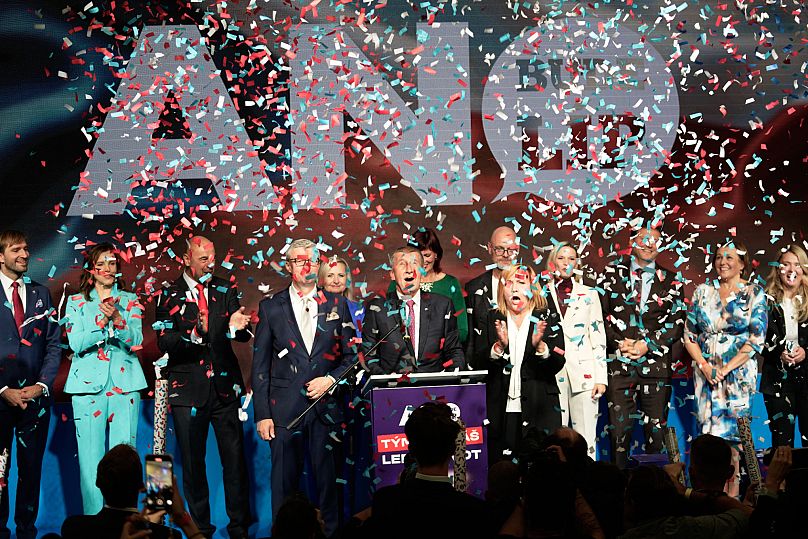
Chairman of opposition "ANO" (YES) movement Andrej Babis addresses the media after most of the votes were counted in the parliamentary elections in Prague, Oct. 4, 2025. AP Photo

The Patriots are united by anti-migrant rhetoric, a critical stance toward EU policies tackling climate change, and the protection of national sovereignty.

The Motorists, who are backed by former EU-skeptic President Václav Klaus, share these views while the Freedom party wants to lead the country out of the EU and NATO and plans to expel almost all of some 380,000 Ukrainian refugees from the country.

Babiš declared his party "clearly pro-European and pro-NATO" after his victory. At a press conference on Sunday, he said that "negative information is constantly being spread abroad, which I think is unfair."

"After all, I was prime minister, and our orientation was clear. I am simply concerned that Europe should function, because its economic development is not going in the right direction."

The billionaire campaigned on a platform of prioritising domestic issues over international ones such as Russia's war in Ukraine.

Babiš said he was planning to abandon an internationally recognised Czech initiative that acquires artillery shells for Ukraine on markets outside the EU.

“We don't like it,” BabiÅ¡ said about that initiative. “We have a different view of it,” he added.

He also said he opposed a NATO commitment to significantly increase defence spending and criticised a deal to purchase 24 US F-35 fighter jets.

President Petr Pavel is scheduled to meet with Babiš and other party leaders on Sunday. The head of the strongest political force usually gets a chance from the president to form a new government.