It’s possible that I shall make an ass of myself. But in that case one can always get out of it with a little dialectic. I have, of course, so worded my proposition as to be right either way (K.Marx, Letter to F.Engels on the Indian Mutiny)
Sunday, February 08, 2026
Turkish Fishermen Find Unexploded Drone in Waters Near Istanbul
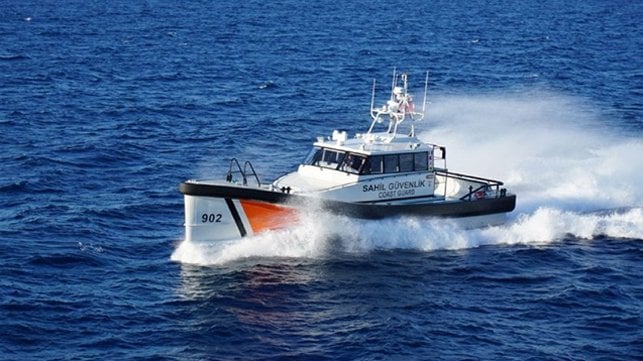
The Turkish Coast Guard Command responded to the reports of an object in the water near Istanbul (Coast Guard)
The Turkish Coast Guard Command confirmed it was investigating the latest incident of an unexploded drone found in its waters. Earlier in Russia’s war with Ukraine, the concern had been errant mines, but more recently, Turkey is reporting a series of incidents with drones that have either crashed into its region or been spotted floating in the waters of the Black Sea.
The latest incident happened midday on Thursday, February 5, when a group of Turkish fishermen reported finding an unidentified device in the water. They were near Karaburun, in a district on the northwestern side of Istanbul.
The fishermen notified the Coast Guard Command, which sent a SAS team to investigate. According to the media reports, the team confirmed the object was an unmanned aerial vehicle. The team secured and neutralized the device. They analyzed it and, according to the reports, destroyed the UAV.
Turkey Today is reporting that it believes the device was a Russian-made Geran-2. It is based on the Iranian Shahed-136, a kamikaze aerial drone. The Coast Guard would only say that it was continuing to investigate the device.
Last July, Turkish officials confirmed the discovery of a 3-meter-long drone that looked a bit like a jet ski. Reports said it was carrying explosives. Since then, Turkey Today reports several other recent discoveries. In December, it says Turkey shot down a drone that violated its airspace. Over a five-day period, the newspaper says two more drones were found that had crashed in Turkey.
Concerns were raised because late last year and in January, a number of commercial vessels reported being struck by unknown objects, causing explosions and, in some cases, fires. Ukraine took credit for attacks on a few tankers heading to Russia, but the other incidents officially remain unsolved. Recently, it was reported that tankers were attempting to hug the Turkish coastline for added protection as they headed to the Russian terminals in the eastern Black Sea.
Dockworkers Disrupt Ports in Italy Protesting Alleged Arms Shipments
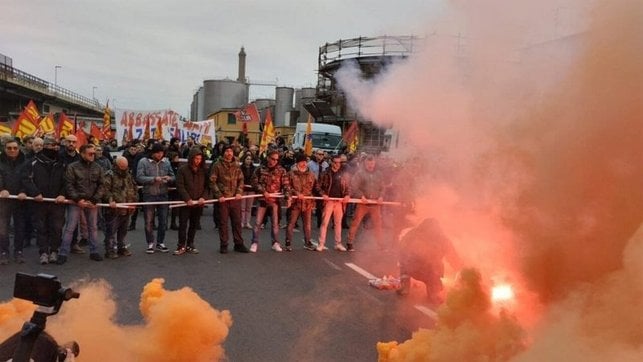
Italy's UBB union staged a 24-hour strike impacting many of the country's ports (UBB)
Port across Italy were reporting strikes and disruptions in their operations as unionized dockworkers staged a 24-hour strike to protest the alleged “militarization” of the ports. Reports indicate ships of Zim and MSC Mediterranean Shipping Company were being targeted and forced to hold offshore or divert.
Unione Sindacale di Base (UBB) called for the 24-hour action. They allege the ports are being “militarized” as shipments of arms and military equipment move on ships using their ports. The protest focused on arms to Israel, an issue that repeatedly appeared during the war in Gaza. Activists during the war protested against the ships moving through the ports and sought to deny port calls. The U.S. Federal Maritime Commission is investigating incidents related to Maersk Line, Ltd.'s American-flagged ships denied port calls in Spain in 2024.
The union’s calls for a day of action appear to have been largely followed, impacting most of the large ports in Italy. They are claiming that sympathy actions were also seen in Spain at Bilbao and Pasaia, Turkey in Mersin and Antalya, and even in Tangier Med, Hamburg, Bremen, Marseille, and Barcelona.
Among the ships that were reported to be impacted were three Zim containerships, all scheduled for port calls in Italy. AIS signals appeared to show that the Zim Virginia was holding off the Livorno coast, with the union saying the ship had been unable to dock. They are alleging the ship is “loaded with weapons.”
Additionally, the Zim New Zealand was holding in Fos-sur-Mer in France. The union reports it had been scheduled to dock in Genoa. The Zim Australia was holding in the Koper anchorage in Slovenia, with the union reporting it had been scheduled to dock in Venice and then proceed to Ravenna.
Additionally, the MSC Eagle III is sailing in the Mediterranean with its AIS signal showing it is coming from Israel. The union reports it was due to sail into Ravenna and then go on to Venice. Its AIS signal currently shows it is going to the anchorage at Koper.
According to the union’s reports, the container and RoRo terminals were blocked in Genoa, backing up road traffic as well as rail. Ships were reportedly not able to dock, and the strike had spread to La Spezia and Vado Gateway. They reported a 78 percent stoppage at La Spezia.
Similarly, in the east, in Trieste, the union said there was a broad impact on intermodal operations reaching Austria and Germany. They noted that those operations were already having to deal with delays due to adverse winter weather. The strike at Trieste, they said, was also impacting industrial traffic to Central Europe.
EU Calls for Maritime Service Ban Targeting Russia's Shadow Tanker Fleet
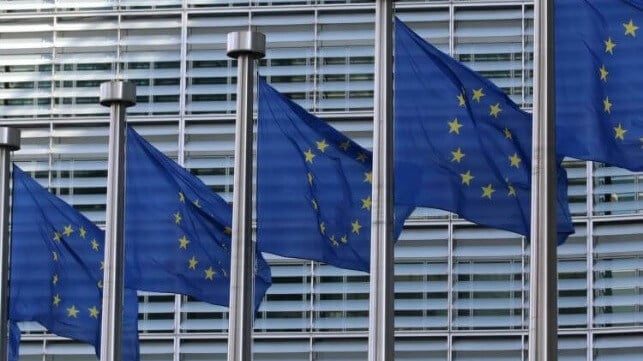
The European Commission wants to ban all maritime services for the shadow tanker fleet as part of the next round of sanctions
The European Commission, the executive branch of the European Union, took the wraps off its proposed 20th sanction package against Russia since the start of the war in Ukraine, saying the time has come to slash Russia’s energy revenues. The proposed new package again targets the shadow fleet and Russia’s energy industry, as well as adding further sanctions on imports and exports and Russia’s regional banks.
The EU notes that “important peace talks are underway in Abu Dhabi,” with EU President Ursula von der Leyen saying, “We must be clear-eyed, Russia will only come to the table with genuine intent if it is pressured to do so. This is the only language Russia understands.”
In announcing the proposed new effort, the EU contends its sanctions are having a dramatic impact on the Russian economy. It said that Russia's fiscal revenues from oil and gas dropped by 24 percent in 2025 compared to the previous year. The EU contends it is at the lowest level since 2020, and is contributing to Russia’s widening fiscal deficit.
“Oil and gas revenues in January will be the lowest since the war began. Interest rates stand at 16 percent, and inflation remains high,” said von der Leyen.
The new package is designed to increase the pressure even further and timed to the fourth anniversary of the invasion of Ukraine in February 2022. The package requires the approval of the EU member states, and portions need to be coordinated with the G7. It targets energy, financial services, and trade.
The EU is calling for a “full maritime services ban for Russian crude oil.” It said the new ban would slash Russia’s energy revenues and make it more difficult to find buyers for the oil. The goal is also to make it more difficult for Russia to attract more tankers into the shadow fleet to maintain the oil trade.
The EU would also add another 43 tankers to its sanctions, bringing the total to 640 vessels. This is in addition to sweeping bans on providing maintenance and other services for LNG tankers and icebreakers.
This comes after the EU started in January using a formula to create a sliding scale on the existing oil price cap. It also said it would start a rolling list of tanker sanctions, adding vessels at regular intervals.
The new import bans will include metals, chemicals, and critical minerals not yet under sanctions. The EU estimates the value at over €570 million. The export restrictions would include technologies Russia uses to produce explosives. The EU proposes a quota on ammonia to cap existing imports. It would also target 20 more Russian regional banks and tighten the ban on goods ranging from rubber to tractors and cybersecurity services. The EU sets the value of the ban on these goods at €340 million.
Another element of the new package seeks to cut sanction evasion. For the first time, the anti-circumvention tool would prohibit exports of certain computer and radio equipment to jurisdictions where the EU says there is a high risk that the products would be re-exported to Russia.
US Sanctions More Tankers as Indirect Talks with Iran Begin
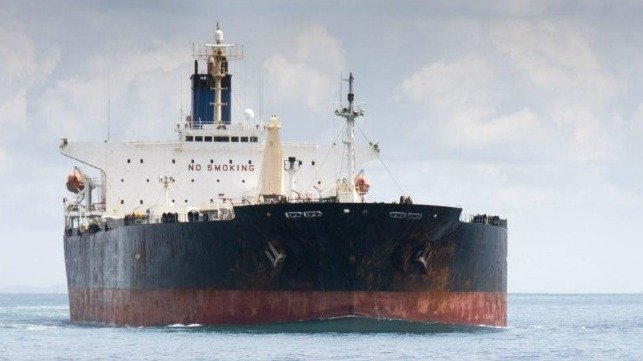
U.S. added 14 more crude oil, product, and LPG tankers to the sanctions list (file photo)
The U.S. State Department announced on Friday morning, February 6, that it was adding to the list of sanctioned tankers and companies supporting Iran’s oil industry as it seeks to keep up the pressure on Tehran. The move came as U.S. officials and Iran’s Foreign Minister were starting indirect talks in Oman.
The State Department accused the latest batch of vessels of continuing the efforts to move millions of barrels of Iranian crude oil and playing a key role in the Iranian export supply chain. The announcement encompassed 14 tankers and 15 entities involved in the trade, as well as four entities that the U.S. said have engaged in the transshipment, sale, and purchase of Iranian-origin petrochemical products.
The listing includes companies based in the United Arab Emirates, China, India, Kazakhstan, and Turkey, as well as front companies set up in the Seychelles and Marshall Islands. Two individuals associated with the trade were also included.
The vessels run the gamut with crude oil tankers registered in Barbados and Cameroon, and one tanker, which the U.S. reports is falsely flagged in Aruba. It also includes oil product tankers registered in Panama and Barbados, as well as LPG tankers registered in Palau, Panama, and San Marino.
“The?United States will continue to?act?against the network?of?shippers and traders?involved in the transport and acquisition of Iranian crude oil,?petroleum products, and petrochemical products, which?constitutes?the regime’s primary source of income,” said the U.S. State Department.
The NGO United Against Nuclear Iran highlights that it had identified seven of the 14 vessels sanctioned today as evading sanctions. The group’s online tracking of the tanker fleet lists more than 190 tankers that have been sanctioned since 2020.
The new sanctions were announced as the indirect meetings commenced in Oman. Iran’s foreign minister said the talks had been “a good start,” and that they expected them to continue. Abbas Araghchi said the talks were focused on the “nuclear issue,” but the U.S. had said they would also include ballistic missiles and Iran’s support for regional military groups.
A report released by The New York Times today concluded that Iran is working on restoring its ballistic missile capabilities and nuclear sites after the attacks last year by the United States and Israel. It writes that an analysis of satellite imagery suggests Iran has repaired several ballistic missile facilities but made little progress on its nuclear sites.
Donald Trump had said in an interview with NBC News that Iran’s leadership should be “very worried.” He continues to emphasize the U.S. armada and says the U.S. is ready to strike to end Iran’s nuclear ambitions and aggression in the region.
China Moves to Penalize Panama for Court Ruling Against CK Hutchison
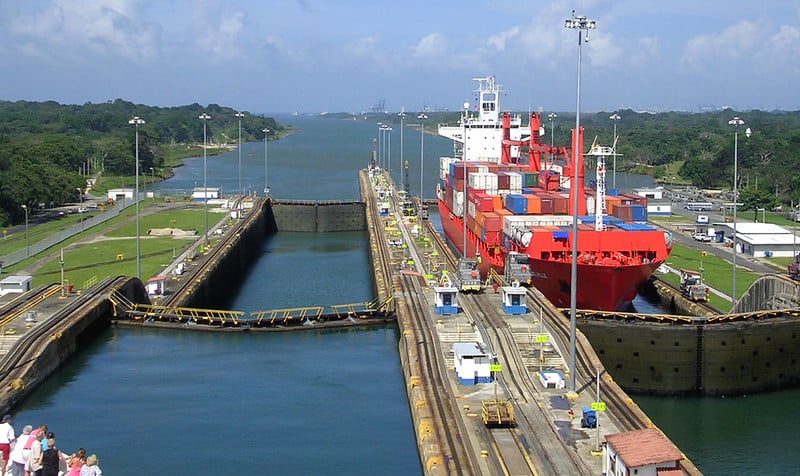
Both the U.S. and China are applying heavy pressure to Panama in a bid for influence at a strategic maritime choke point (file image courtesy Roger W / CC BY)
The Chinese government has reportedly forced a pause on infrastructure deals in Panama in retaliation for a Panamanian court's decision to suspend CK Hutchison's seaport operations contracts, according to Bloomberg. The development comes as Hong Kong-based Hutchison launches an arbitration process against Panama over the cancelation.
Last week, the Panama Supreme Court ruled that contracts that allowed Hutchison to operate two container ports near the Panama Canal were "unconstitutional." Hutchison - which has been trying to sell the operating rights for the two ports as part of a giant package deal for its global portfolio - disputes this finding, and has accused Panamanian authorities of disregarding its communications during the trial. For now, the terminals remain in the firm's operational control, it says.
In response to the ruling, Hutchison has initiated arbitration proceedings in Hong Kong against the Panamanian government. The arbitration process could take years; if successful, it would likely result in a compensation payment, legal analysts say.
The Panamanian court ruling against Hutchison followed nearly a year of pressure from the Trump administration over alleged Chinese influence in the Panama canal zone. The White House, without evidence, has accused China of "running" the canal; it initially threatened to take action to "take back" the canal from Panamanian control. Secretary of State Marco Rubio recently told Panama that China's presence near the canal "is unacceptable," and could prompt the U.S. to take unspecified measures to "protect its rights under the treaty" that transferred control from the U.S. to Panama in 1999.
Hutchison's giant plan for a $23 billion port portfolio sale would have handed its two Panama port leases to an American company, BlackRock, a favorable development for U.S. interests. Everything else would be sold to Terminal Investment Limited (TIL), the ports division of the Aponte family's shipping empire - if the deal can be concluded.
Against this backdrop of U.S. pressure, the government of China has accused Panama's supreme court of giving in to "hegemonic powers" by ruling against Hutchison. In a statement, Beijing's Hong Kong affairs office - responsible for the jurisdiction where Hutchison is headquartered - called the ruling "utterly ridiculous," and threatened "a heavy price both politically and economically" for Panama if it is not reversed.
That cost is already being imposed, according to Bloomberg and Reuters. Chinese state companies have been instructed to pause all talks over new infrastructure projects in Panama - a serious threat, given China's prominent role in Panama's construction sector. Chinese customs officials are also reportedly applying additional scrutiny to Panama's agricultural exports. Possible further actions could include rerouting cargo to other seaports, depriving Panama of revenue.
So far, Panama's leaders have been unequivocal in resisting Chinese pressure. President Jose Raul Mulino said Wednesday that Panama's government respects the independence of the judiciary, and as a "country of laws," it has no interest in overriding the court system.
The Panama Canal is at the center of a hot dispute between the United States and China, with the latter accusing Washington of pressuring Panama into evicting a Hong Kong company from two canal port concessions - Copyright AFP/File MARTIN BERNETTI
Panama’s President Jose Raul Mulino on Wednesday rejected China’s threat to make the Central American country pay a “heavy price” after a Hong Kong company was evicted from two ports on the Panama Canal.
Writing on X, Mulino “strongly” rejected the threat from the Beijing office overseeing affairs in semi-autonomous Hong Kong, which came after Panama’s Supreme Court invalidated CK Hutchison’s port concession.
US President Donald Trump has piled pressure on Panama to cancel Hutchison’s contract by threatening to reclaim the US-built waterway over what he claimed was China’s outsize influence on the canal.
Last week, Panama’s Supreme Court ruled that the concession was “unconstitutional” and found it had “a disproportionate bias in favor of the company” without “any justification” and to the “detriment of the State’s treasury.”
The United States hailed the ruling but China reacted angrily.
On its WeChat account, China’s Hong Kong and Macao Affairs Office accused Panama of buckling to outside pressure, Bloomberg reported.
“Panamanian authorities must recognize the situation and correct their course,” the office was quoted as saying.
“Persisting in this misguided path will result in a heavy price, both politically and economically,” it added.
Mulino condemned the threat, insisting that Panama was a country that upholds the rule of law “and respects the decisions of the judiciary, which is independent of the central government.”
He added that the foreign ministry would issue a statement on the matter “and adopt the corresponding decisions.”
The Panama Canal, which connects the Atlantic and Pacific oceans through Central America, handles about 40 percent of US container traffic.
– ‘Cold War mentality’ –
Since 1997, Hutchison has managed the ports of Cristobal on the interoceanic canal’s Atlantic side and Balboa on the Pacific side.
The concession, which reflected the growing inroads of Chinese companies into Panama’s economy, was extended for 25 years in 2021.
After Trump threatened last year to seize the canal, Panama’s independent comptroller general reviewed Hutchison’s contract and subsequently recommended it be annulled.
The Supreme Court backed the comptroller’s view that the terms of the concession ran counter to Panama’s interests.
Following the ruling, the Panamanian government tapped Danish company Maersk to temporarily take over management of the port terminals until a new concession is awarded.
Hutchison’s port concession has come to symbolize the battle for influence and trade between the United States and China in Latin America.
Beijing’s foreign ministry spokesman Lin Jian on Wednesday reiterated that China would “firmly defend the legitimate and lawful rights and interests” of Chinese companies.
Accusing the United States of a “Cold War mentality and ideological bias,” he said: “It is quite clear to the world who exactly is seeking to forcibly own the Panama Canal and eroding international law in the name of the rule of law.”
The Supreme Court ruling came amid Hutchison’s stalled effort to sell the ports.
In March, it announced plans to transfer its stake in the Panamanian terminals to a group of companies led by the US firm BlackRock, as part of a package valued at $22.8 billion.
That deal was initially seen as favorable in Washington, but interests cooled after China warned the agreement could harm its global interests and urged parties to proceed with “caution” or face legal consequences.
AI to track icebergs adrift at sea in boon for science
British scientists said Thursday that a world-first AI tool to catalogue and track icebergs as they break apart into smaller chunks could fill a “major blind spot” in predicting climate change.
Icebergs release enormous volumes of freshwater when they melt on the open water, affecting global climate patterns and altering ocean currents and ecosystems.
But scientists have long struggled to keep track of these floating behemoths once they break into thousands of smaller chunks, their fate and impact on the climate largely lost to the seas.
To fill in the gap, the British Antarctic Survey has developed an AI system that automatically identifies and names individual icebergs at birth and tracks their sometimes decades-long journey to a watery grave.
Using satellite images, the tool captures the distinct shape of icebergs as they break off — or calve — from glaciers and ice sheets on land.
As they disintegrate over time, the machine performs a giant puzzle problem, linking the smaller “child” fragments back to the “parent” and creating detailed family trees never before possible at this scale.
It represents a huge improvement on existing methods, where scientists pore over satellite images to visually identify and track only the largest icebergs one by one.
The AI system, which was tested using satellite observations over Greenland, provides “vital new information” for scientists and improves predictions about the future climate, said the British Antarctic Survey.
Knowing where these giant slabs of freshwater were melting into the ocean was especially crucial with ice loss expected to increase in a warming world, it added.
“What’s exciting is that this finally gives us the observations we’ve been missing,” Ben Evans, a machine learning expert at the British Antarctic Survey, said in a statement.
“We’ve gone from tracking a few famous icebergs to building full family trees. For the first time, we can see where each fragment came from, where it goes and why that matters for the climate.”
This use of AI could also be adapted to aid safe passage for navigators through treacherous polar regions littered by icebergs.
Iceberg calving is a natural process. But scientists say the rate at which they were being lost from Antarctica is increasing, probably because of human-induced climate change.
Pakistan’s capital picks concrete over trees, angering residents
Major infrastructure development in Islamabad has meant large-scale clearance of trees and natural vegetation - Copyright AFP Aamir QURESHI
Shrouq Tariq
Pakistan’s capital Islamabad was once known for its lush greenery, but the felling of trees across the city for infrastructure and military monuments has prompted local anger and even lawsuits.
Built in the 1960s, Islamabad was planned as a green city, with wide avenues, parks and tree-lined sectors.
Many residents fear that vision is steadily being eroded, with concrete replacing green spaces.
Muhammad Naveed took the authorities to court this year over “large-scale tree cutting” for infrastructure projects, accusing them of felling “many mature trees” and leaving land “barren”.
The World Wide Fund for Nature (WWF) blamed major infrastructure development, including road construction and monuments, for the mass razing of trees and natural vegetation in Islamabad.
Between 2001 and 2024, the capital lost 14 hectares of tree cover, equal to 20 football pitches, according to Global Forest Watch, though the figure does not account for tree cover gains during the same period.
For Kamran Abbasi, a local trader and resident since the 1980s, it feels like “they are cutting trees everywhere”.
“It is not the same anymore,” he told AFP.
“Trees are life. Thousands are cut to build one bridge.”
– Smog and pollen –
Meanwhile, air quality in Islamabad continues to deteriorate.
Pollution is a longstanding problem, but plants can help by filtering dirty air, absorbing harmful gases and cooling cities.
“Forests act as powerful natural filters… cleaning the air and water, and reducing the overall impact of pollution,” Muhammad Ibrahim, director of WWF-Pakistan’s forest programme told AFP.
There were no good air quality days in Islamabad last month, with all but two classed as “unhealthy” or “very unhealthy” by monitoring organisation IQAir.
While some trees are felled for infrastructure, officials justify removing others to tackle seasonal pollen allergies that are especially acute in spring.
That problem is largely attributed to paper mulberry trees, which were planted extensively during the city’s early development.
“The main reason is pollen allergy,” said Abdul Razzaq, an official from the Capital Development Authority (CDA) in Islamabad.
“People suffer from chest infections, asthma and severe allergic reactions. I do too,” he told AFP.
The government plans to remove 29,000 pollen-producing trees and plants, according to a recent WWF report.
However, critics argue that pollen allergies are an excuse to justify broader tree-cutting, particularly linked to military and infrastructure projects.
The solution lies not in indiscriminate tree removal, but careful urban planning, experts say, replanting with non-allergenic species — and greater transparency around development projects in the capital.
– Capital under axe –
In recent months, large bulldozers have been spotted levelling former green belts and wooded areas, including near major highways.
According to WWF and unnamed government officials, some of the cleared land is tapped for monuments commemorating the brief but intense armed conflict between Pakistan and neighbouring India last May.
Other plots were razed to make way for military-linked infrastructure.
“We know that trees are being cut for military-related projects, but there is not much we can do,” a government source told AFP, requesting anonymity for security reasons.
“The people in power, the military, can do whatever they want.”
Pakistan’s powerful military has ruled the country for decades through coups and is deeply involved in the country’s politics and economy, analysts say.
At a proposed military monument site along the city’s express highway, WWF recorded more than six hectares of land clearing last year, with work continuing in 2026.
It saw “no active plantation… indicating that the clearing is infrastructure driven”.
The military did not respond to AFP’s request for comment.
Naveed’s court case seeking to halt the widespread felling, which is still being heard, argues there is “no excuse” for the tree loss.
If a monument is “deemed essential, why was it not placed in any existing park or public place?”, he argues.
In reply to Naveed’s petition, authorities said roads and infrastructure projects were approved under regulations dating back to 1992.
What’s at stake for Indian agriculture in Trump’s trade deal?
A farmer inspects wheat crop in his field on the outskirts of Amritsar on April 3, 2025 - Copyright AFP/File Narinder NANU
Anuj SRIVAS
Indian farmers have expressed concern that New Delhi has made too many concessions to Washington after the two countries brokered a new trade deal that would lower tariffs.
Under the terms of the deal that was laid out in a joint statement from both countries released on Saturday, India will “eliminate or reduce tariffs on all US industrial goods” and other food and agricultural products.
Meanwhile, the US will apply a reciprocal tariff rate of 18 percent on goods from India, including textiles and apparel, leather and footwear, plastic and rubber, organic chemicals, and certain machinery, the joint statement added.
The terms were released after US President Donald Trump announced a trade deal with India, stating that Prime Minister Narendra Modi had promised to halt Russian oil purchases.
Modi lauded the new trade deal in a post on the social media platform X later on Saturday, saying it would open up opportunities and generate jobs.
But Indian farmer unions weren’t convinced, calling the deal a “total surrender” to American agricultural giants.
“Indian industry, agriculture… are now under grave threat of cheap imports that will be dumped into Indian markets,” the Samyukt Kisan Morcha (SKM), a coalition of multiple farmers’ unions, said in a statement following the announcement.
The group also called on farmers to join a nationwide protest on February 12.
– What’s on the table? –
The joint statement states that India will “eliminate or reduce” tariffs on a “wide range of US food and agricultural products”.
This includes tree nuts, some fresh fruit, soybean oil, wine, spirits and other “additional products” that were not specified.
Siraj Hussain, a former agriculture ministry top official, said Indian consumers were purchasing more nuts, “so it’s import may not have much impact on local production”, and will help satisfy high demand.
Domestic growers do worry, however, about cheap imports on items such as apples, which they believe could have dire impacts on local producers.
“Import of fresh fruits such as apples… will ruin the farmers,” SKM said. Officials hope safeguards included into the agreement — such as import quotas or minimum import prices for commodities including apples — will reduce the impact of foreign competition.
New Delhi’s promise of lower duties on dried distillers’ grains and red sorghum for animal feed could also reduce the need for local soybean meal.
Opposition lawmaker Jairam Ramesh said the move to ease imports of dried distillers’ grains and soybean oil would hurt “millions of soybean farmers” in key Indian states such as Maharashtra and Madhya Pradesh.
– What’s off the table? –
To stem concerns, India’s Trade Minister Piyush Goyal reassured farmers that their interests would be safeguarded, adding that the key red lines that had been drawn by New Delhi had not been crossed.
He said “no concessions” had been extended in “sensitive areas” such as grains, spices, dairy, poultry, meat and several vegetables and fruits — including potatoes, oranges and strawberries.
The trade minister also said genetically modified crops were not part of the agreement.
This includes GM soybean, which the US has searched hard to find new markets for.
– Small farms ‘can’t compete’ –
While the farm sector contributes just 16 percent to India’s GDP, it provides livelihood to over 45 percent of the population.
This makes the industry a key voting bloc often wooed by political parties. Farmer groups have also shown, on multiple occasions, that they are a street force to be reckoned with.
In 2021, the government abandoned plans to reform the sector after months of intense protests that blocked the national capital’s highways and led to Delhi’s historic Red Fort complex being stormed by tractors.
“Indian farms are very small and they can’t really compete with highly subsidised US agriculture,” Hussain, the former agriculture ministry official, said.
– India and US trade –
Between January-November 2025, when New Delhi was negotiating with Washington, Indian imports of American agricultural goods rose 34 percent year-on-year, raking in just under $2.9 billion.
Top imports included cotton, soybean oil, ethanol and various nuts such as almonds. This happened even before the trade deal, although the rise is partly due to India reducing tariffs on some of these US items.
Experts have said that a further reduction on duties for products such as soybean oil, which was announced in the joint statement, will likely lead to a jump in goods being imported by India from the US.
THE GRIFT
Serbian minister on trial over Trump-linked hotel plan
Culture Minister Nikola Selakovic, centre, arrives at the Belgrade courthouse greeted by dozens of protesters - Copyright AFP Oliver BUNIC
Serbia’s culture minister and other senior officials appeared in a Belgrade court Wednesday to face corruption charges over a scrapped hotel project linked to the son-in-law of US President Donald Trump.
Nikola Selakovic and the three other defendants were jeered as “thieves” by dozens of protesters as they arrived at the Belgrade court.
Prosecutors say officials forged key documents that would have cleared the way for a Trump-branded luxury hotel to be built on the site of the bombed-out former Yugoslav army headquarters in the capital.
Selakovic had waived his right to ministerial immunity, allowing the trial to proceed, and all the defendants pleaded not guilty to the charges.
“It is not clear to me what wrongdoing I am accused of,” Selakovic told the Special Court for Organised Crime.
The plan to demolish the army headquarters faced fierce opposition in Serbia, as the site was regarded as both a memorial for the victims of a NATO-led bombing campaign in 1999 and a rare example of modernist architecture.
Despite the outcry and an ongoing investigation into the project’s approval, the government moved to fast-track the work by issuing a document allowing the removal of the site’s “cultural-heritage status”.
But the plan, backed by Trump’s son-in-law Jared Kushner, was ditched in December after organised crime prosecutors indicted Selakovic and three others for alleged abuse of office and forgery.
“Because meaningful projects should unite rather than divide, and out of respect for the people of Serbia and the City of Belgrade, we are withdrawing our application and stepping aside at this time,” Kushner’s Affinity Partners said at the time.
The trial is the first of a sitting minister in decades in Serbia and has drawn strong reactions from both supporters and critics of President Aleksandar Vucic.
Vucic and government ministers have criticised prosecutors over the hotel case and over a trial linked to a deadly train station roof collapse in November 2024.
The disaster sparked a widespread, student-led anti-corruption movement and calls for early elections, which Vucic has rejected.
FASCISTS OF A FEATHER
German far-right MP detained over alleged Belarus sanctions breach
Dornau, picture here last October, has been stripped of his parliamentary immunity - Copyright AFP JENS SCHLUETER
German police detained a regional lawmaker of the far-right Alternative for Germany (AfD) in a state parliament Wednesday for questioning about a suspected breach of EU export sanctions on Belarus.
A photo in the Bild newspaper showed Joerg Dornau, 56, a businessman and MP for the Moscow-friendly party in the eastern state of Saxony, being led out of the state parliament’s debating chamber.
A little earlier, deputies had voted to strip him of his parliamentary immunity.
Dornau is accused of having exported a vehicular crane to Russia ally Belarus in 2022 and falsely declaring the destination as Kazakhstan, say Leipzig prosecutors.
Customs officers searched his home and vehicles, prosecutors said.
“The searches serve to secure items that may be considered as evidence in the investigation,” prosecutors said.
“There will be no search of the premises of the state parliament or the parliamentary groups,” they added.
The Saxony parliamentary AfD group told AFP it saw no reason why Dornau had to be detained immediately before a parliamentary session, saying that it appeared to have been “staged for media consumption”.
“The allegations against Mr Dornau have been known for a long time,” it added. “These allegations must be clarified as quickly as possible in a fair trial in accordance with the rule of law.”
Under European Union sanctions put into place after Russia’s full-scale invasion of Ukraine in 2022, exports of industrial equipment to Belarus, Russia’s close ally, are heavily restricted.
Dornau was fined over 20,000 euros ($23,617) last August by parliamentary authorities for having failed to disclose his financial interest in a Belarusian onion farm.
In December, German prosecutors said they would not pursue allegations that Dornau had employed political prisoners on the Belarusian farm because was not clear that a crime had been committed.
The AfD is accused of being overly friendly to Moscow, while many inside the party say it is in Germany’s interest to have a good relationship with Russia.
Though no AfD politician has been convicted of spying for Russia, some have been accused of inappropriate links.
Prosecutors in Dresden last year opened an investigation into AfD national MP Maximilian Krah following reports he had taken money from Russia and China during his time as an MEP in the European Parliament.
Krah denies the allegations.
MSF says its hospital in South Sudan hit by government air strike
MSF says it has been present in the territory that makes up present-day South Sudan for more than four decades - Copyright Medecins Sans Frontieres/AFP KAREL PRINSLOO
Doctors Without Borders said Wednesday its hospital in Lankien, South Sudan was hit by a government air strike overnight, after another of its health facilities was looted.
The medical charity, which goes by its French acronym MSF, said the hospital in Jonglei State “was hit in an air strike by the government of South Sudan forces during the night of Tuesday”.
The hospital was “evacuated and patients were discharged hours before the attack” after it received information about a possible strike against the city, it said in a statement.
But “one MSF staff member suffered minor injuries”, it added.
“The hospital’s main warehouse was destroyed during the attack, and we lost most of our critical supplies for providing medical care,” said the statement.
In a separate incident, MSF said its health facility in Pieri, also in Jonglei, had been looted on Tuesday by unknown assailants, making it “unusable for the local community”.
“Our colleagues from Lankien and Pieri had to flee with the community, and their fate and whereabouts are still unknown, as we are trying to establish communication with them,” the organisation said.
Gul Badshah, MSF’s operations manager in South Sudan, stressed that the charity had “shared the GPS coordinates of all our facilities with the government and other parties to the conflict before, and we received the confirmation that they are aware of our locations”.
“The government of South Sudan armed forces are the only armed party with the capacity to perform aerial attacks in the country,” he added.
– ‘Unacceptable’ –
MSF highlighted that it was the only health provider serving around 250,000 people in Lankien and Pieri, cautioning that attacks on its facilities there “mean that local communities will be left without any healthcare”.
Badshah said MSF would “make the necessary decisions to protect the safety of our staff and healthcare facilities” there.
“While we are aware of the enormous needs in the country, we find it unacceptable to be a target for attacks,” he said.
MSF has been present in the territory that makes up present-day South Sudan for more than four decades, he noted.
South Sudan is the world’s newest sovereign state, which has been beset by civil war, poverty and massive corruption since it was formed in 2011.
MSF said it had experienced eight targeted attacks in South Sudan last year, forcing the closure of two hospitals in Greater Upper Nile and the suspension of general healthcare activities in Jonglei, Upper Nile and Central Equatoria.
The bombing of MSF’s hospital this week came after the South Sudanese government in December imposed restrictions on humanitarian access in opposition-held areas of Jonglei, restricting its ability to deliver essential medical assistance there.