Thursday, July 02, 2026

Denmark, Portugal, Lithuania lead the way as EU share of electricity from renewables hits 46%


By Angela Symons
Published on

The EU has hit a renewable energy milestone. Which countries are leading – and which are lagging behind?

The EU’s share of electricity generated from renewables continues to grow, new Eurostat data reveals

In the first quarter of 2026, it reached 45.5 per cent of the total electricity generated. This is up from 42.7 per cent in the same period in 2025.

Wind led the way, covering 44.9 per cent of the total renewable electricity, followed by hydropower at 28 per cent and solar at 17.3 per cent. The remainder came from combustible renewable fuels (9.4 per cent), geothermal and other energy sources (0.4 per cent).

It comes as the EU doubles down on green, homegrown power as a national security measure after the Iran war energy crisis highlighted the volatility of relying on fossil fuel imports.

Which EU countries are leading on renewables – and which are falling behind?

Denmark leads with the highest share of electricity from renewable sources in the EU at 90 per cent – mostly wind power – according to Eurostat. In second place thanks to an abundance of hydropower, Portugal boasts 82.9 per cent, followed by Lithuania – another wind leader – with 75.7 per cent.

At the other end of the spectrum, the countries benefiting least from the green transition are Czechia, with 12.7 per cent of its electricity generated from renewables, Malta (13 per cent) and Slovakia (17.2 per cent).

Renewables are lowering household bills in Europe

As well as slashing planet-heating emissions, investment in renewables is helping to reduce energy bills at a time when gas prices are at an all-time high. The EU saved €51.4 billion in 2025 by lowering fossil fuel imports, according to a recent report by the International Energy Agency (IEA).

A separate report by the Centre for Research on Energy and Clean Air (CREA) found that consumers in five EU countries – Denmark, Finland, France, Sweden and Slovakia – will save €8.5 billion on their energy bills this year thanks to the high clean energy share in their electricity mix.

On top of the elevated oil and gas prices due to the ongoing crisis in the Strait of Hormuz shipping route, which Iran closed in response to the US-Israel offensive, European energy bills rose further amid June’s unprecedented heatwave.

Electricity bills in France and Germany alone rose by more than €700 million in just one week as energy demand for cooling spiked, forcing them to fall back on gas to meet demand, according to new analysis by environmental NGO 350.org.

It has raised fresh questions over whether Europe’s ‘merit order’ system – in which the most expensive power source required to meet demand, typically gas, sets the price for the entire grid – can ever be compatible with a renewables-dominated future.

Focusing on building enough storage and renewables to push gas out of the pricing equation altogether could be the long-term solution – but the recent price spikes show how far Europe still has to go.

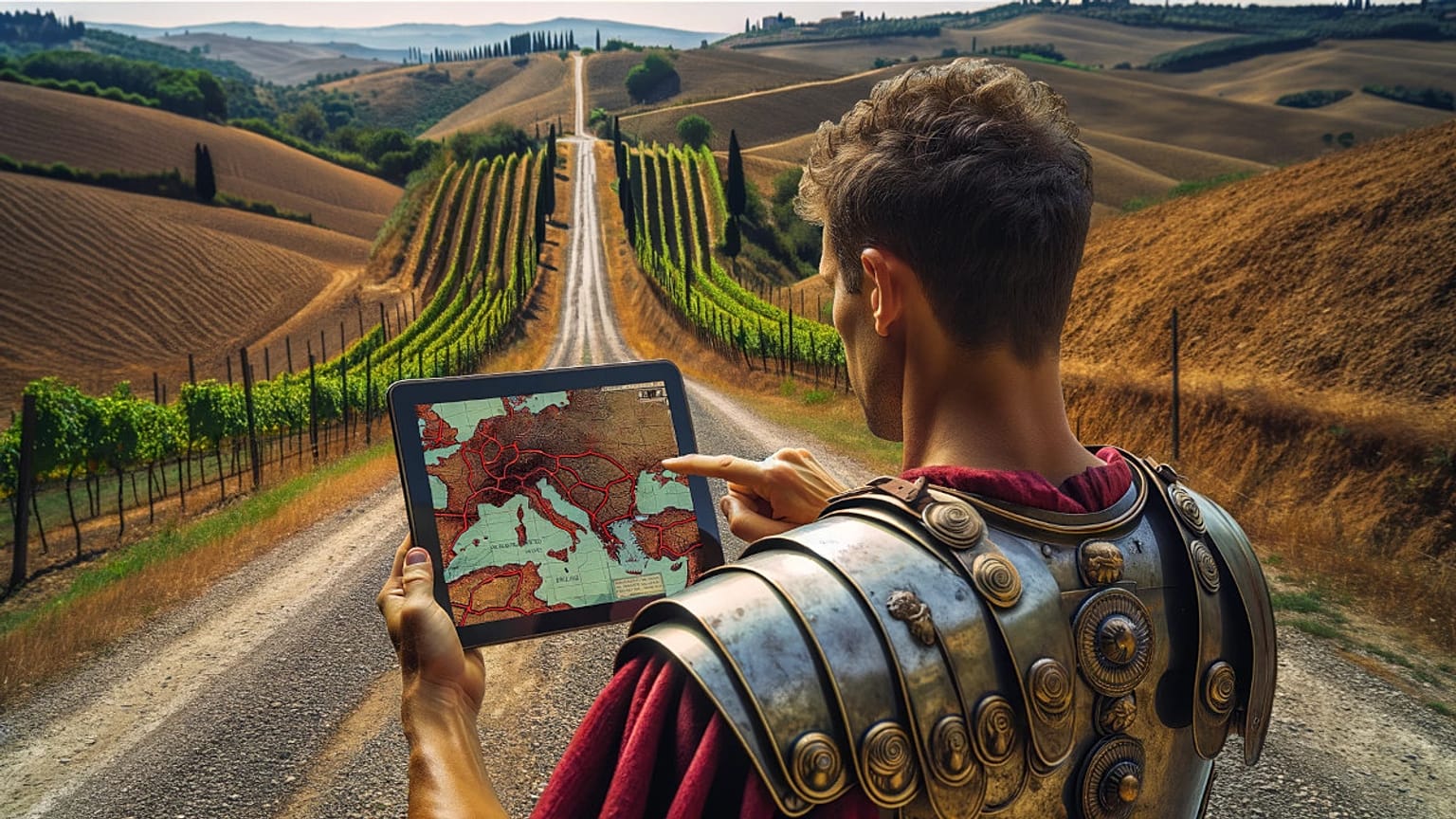
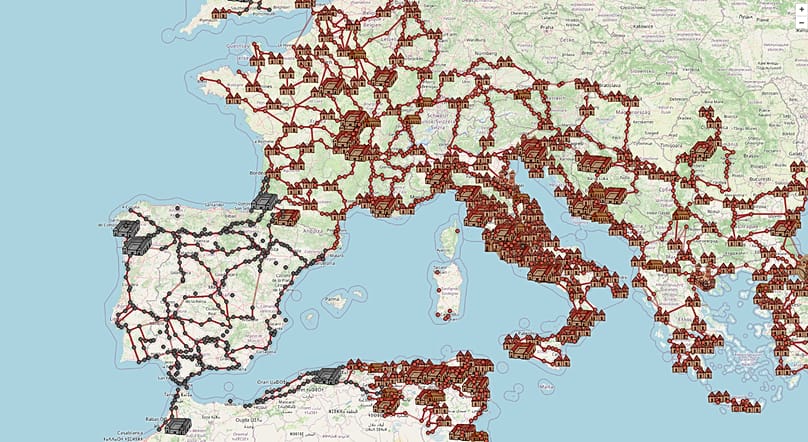
Ancient Rome's 'Google Maps' is here and working: Omnesviae

Google Maps for the Roman Empire
Copyright omnesViae

By Jesús Maturana
Published on

A new digital tool lets users explore the Roman Empire’s road network and, using historical data, estimate travel times between cities 2,000 years ago.

A Dutch engineer has reconstructed, using academic sources and historical maps, the road map that connected the Roman Empire. The result, accessible from any browser, including on a mobile phone, lets users plot routes between ancient cities and find out how many days the journey would have taken on foot or on horseback.

The tool is called OmnesViae (Omnesviae.org (source in Spanish)) and is based primarily on the Tabula Peutingeriana, a medieval copy of a Roman map that depicted the cursus publicus, the Empire's official road network.

As the western part of that document has been lost, the data for that area comes from the Antonine Itinerary, another record from the Roman period. Behind the project is René Voorburg (source in Spanish), who drew on the work of historian Richard Talbert on the Tabula (source in Spanish) and on location data from the Pleiades Project. The code and database are open-access and can be consulted on Codeberg.

OmnesViae, the Google Maps of the Roman Empire
OmnesViae, the Google Maps of the Roman Empire Omnesviae - Openstreet Maps

How it works and what it shows

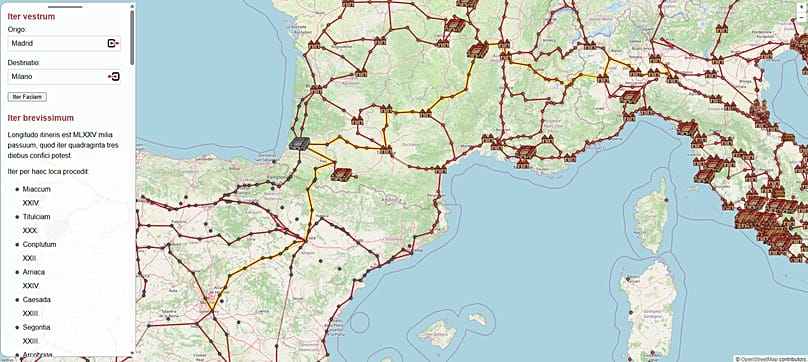
The site is designed to be used on a computer, but it also works well in a phone browser. You simply enter a starting point and a destination for the system to calculate the quickest route according to the distances given in ancient sources, and highlight it in yellow on a modern map.

It also provides detailed information on intermediate stops, which is particularly useful because many Roman roads followed rivers or passed close to settlements that still exist today, albeit under different names.

Simulation of a journey calculation from Madrid to Milan in Omnisviae
Simulation of a journey calculation from Madrid to Milan in Omnisviae Omnesviae - Open Street maps

When Madrid and Milan are entered as the destination, the website identifies them as Miaccum and Mediolanvm, and sets Conplutum, today’s Alcalá de Henares, as the first significant stop. Among the final stages are Avgvsta Tavrinorvm (Turin) and Placentia (Piacenza).

According to the planner’s calculations, the journey would have taken 43 days to cover 1,500 Roman miles. To put the difference with the present day into context: the same itinerary by road can now be done in 14 days (340 hours) on foot, 16 hours by car (source in Spanish).

A project that keeps growing

OmnesViae is not the only initiative seeking to reconstruct the communications map of the Roman world. In recent years, other projects with similar approaches have appeared, some focusing on calculating travel costs and times depending on the time of year, and others aimed at documenting the physical course of the roads more precisely using digital mapping techniques.

Voorburg keeps his tool up to date and has completely rewritten the original version, which was active between 2011 and 2024, now incorporating artificial intelligence support for the site’s translations and illustrations.

D.E.I.

California to institute Bruce Lee Day, first for a Chinese-American in state history

A cardboard cutout of Bruce Lee at Oracle Park before a baseball game between the San Francisco Giants and the San Diego Padres in San Francisco, 30 July, 2020
Copyright AP Photo

By Gavin Blackburn
Published on

In the 1960s, Lee found work in Hollywood, notably as Kato in the TV series "The Green Hornet," but studios wanted him to play racist stereotypes and paid him less than his white counterparts.

Martial arts icon Bruce Lee, who was born in San Francisco, will become the first Chinese American in California history with an annual namesake day.

Governor Gavin Newsom signed a law on Tuesday afternoon officially designating 17 May as Bruce Lee Day, according to the office of state Assembly member Matt Haney, who represents San Francisco.

An 18-year-old Lee returned to San Francisco on 17 May 1959, after spending his childhood in Hong Kong.

Lee’s daughter, Shannon, who is CEO of the Bruce Lee Foundation, said the honour is a testament to her father's enduring legacy as a bridge between cultures.

“From young people who found confidence and possibility in his philosophy, to families who finally saw themselves represented on screen, to athletes who still draw on his teachings of discipline and inner strength, his reach is profound," she said in a statement.

Haney called Lee the epitome of the best of California.

California Governor Gavin Newsom delivers his final state budget plan at the Capitol Annex Swing Space in Sacramento, 14 May, 2026
California Governor Gavin Newsom delivers his final state budget plan at the Capitol Annex Swing Space in Sacramento, 14 May, 2026 AP Photo

“At a time when Asian Americans were too often absent from or stereotyped on screen, Bruce Lee helped generations see themselves represented with strength and dignity,” he said in a statement.

The foundation and various Asian American organisations hope Lee will be celebrated every year with voluntary commemorative activities around the state such as cultural exhibits, public events and classroom lessons.

Born in 1940 to Chinese parents who were touring with an opera, Lee was allowed to have birthright citizenship.

A few months later, the family returned to Hong Kong where Lee became a child actor and began learning Chinese kung fu.

He moved back to the US in 1959 and enrolled in the University of Washington in Seattle two years later. He dropped out and threw himself into practicing and teaching martial arts.

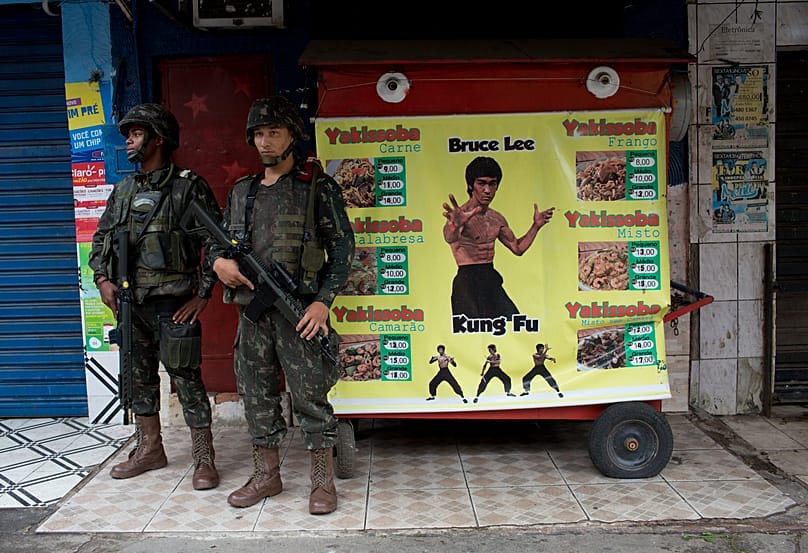
Soldiers stand next to an oversized food menu with images featuring Bruce Lee in Rio de Janeiro, 21 August, 2017
Soldiers stand next to an oversized food menu with images featuring Bruce Lee in Rio de Janeiro, 21 August, 2017 AP Photo

In the 1960s, Lee found work in Hollywood, most notably as Kato in the TV series “The Green Hornet,” but studios wanted him to play racist stereotypes and paid him less than his white counterparts.

He pivoted back to Hong Kong and soon became a megastar of martial arts flicks, including “The Big Boss” and “Fist of Fury.” Lee died in 1973 at 32 after an allergic reaction to pain medication.

Lee's name and likeness remain popular. A treatment for a proposed TV action series he wrote inspired the HBO Max show “Warrior.”


How NASA, Microsoft and the EU use AI to speed up post-quake rescues in Venezuela

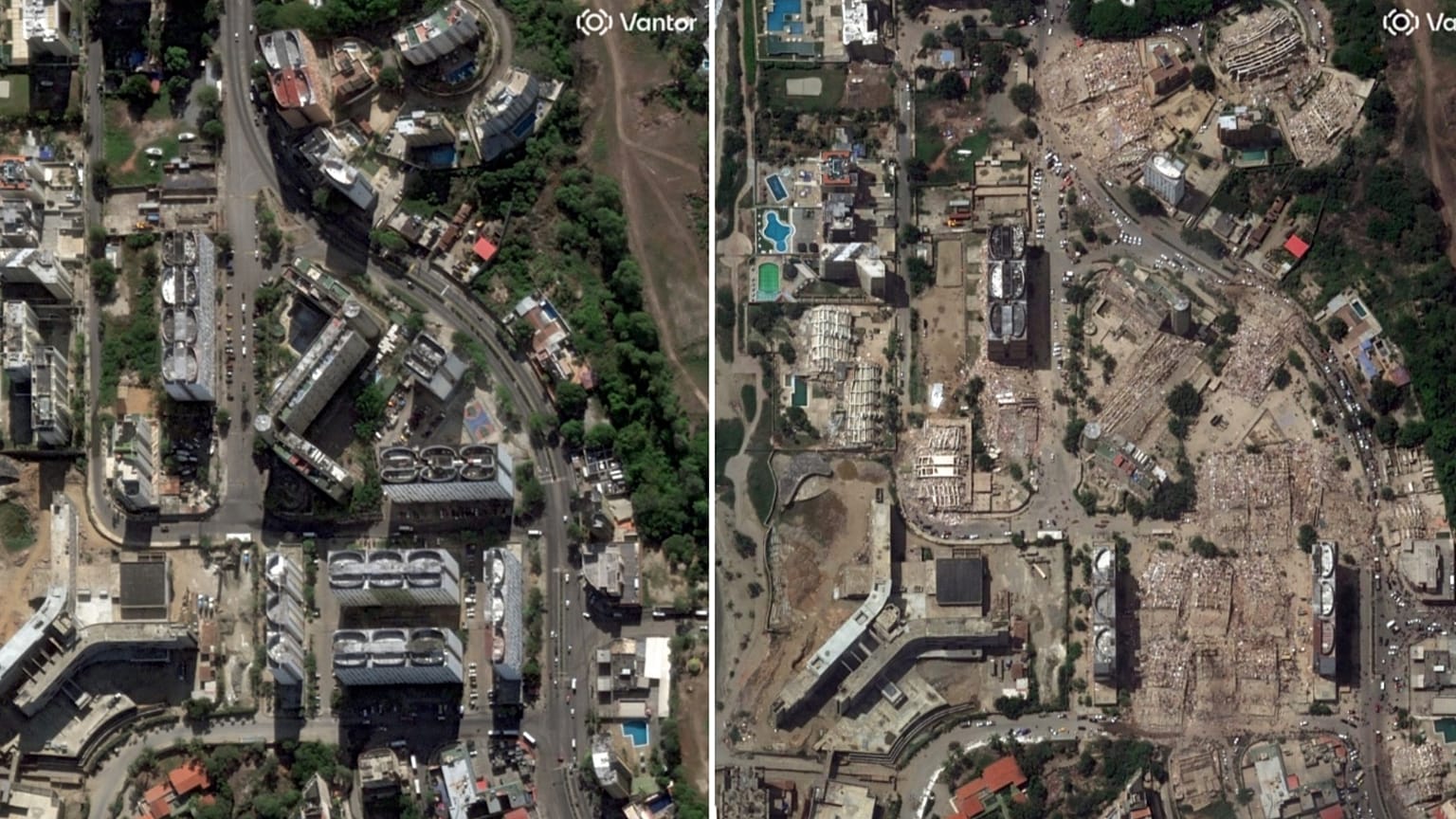
These satellite images provided by Vantor show buildings in Caraballeda, Venezuela, on 28 December 2025 (left) and on Friday 26 June 2026.
Copyright AP Photo

By Christina Thykjaer
Published on


Artificial intelligence is now a key ally for emergency crews. Space agencies, tech firms and international bodies use satellite images and AI to map the areas hardest hit by the quake.

As rescue teams continue to search for survivors in the rubble of the twin earthquakes that struck Venezuela, another race is under way from space. Space agencies, tech companies and international organisations have activated a network of artificial intelligence and geospatial analysis tools to identify, within hours, the areas most likely to have been devastated and to help direct emergency resources where they are needed most.

One of the key players is NASA, which has activated its disaster response programme together with researchers at Oregon State University. Their task is to analyse radar images captured before and after the quake to detect abrupt changes in the ground and in buildings. Using this system, scientists estimate that nearly 59,000 buildings may have been damaged or destroyed, a preliminary figure that helps to steer the initial rescue efforts.

undefined

However, those images would not be possible without the European Copernicus programme. The Sentinel-1 satellites, operated by the European Union and the European Space Agency, supply the high-resolution radar imagery that makes it possible to measure ground movements of just a few centimetres and to spot buildings whose shape has changed after the earthquake. That information is the raw material on which the artificial intelligence algorithms work.

Microsoft has joined that effort through its AI for Good lab. The company has developed computer vision models capable of automatically analysing thousands of satellite images to classify buildings according to the likelihood that they have been damaged. Rather than replacing teams on the ground, these models help set priorities and highlight which neighbourhoods should be inspected first.

All that information ultimately reaches those who need it thanks to the United Nations Centre for Humanitarian Data (HDX), the platform where Microsoft publishes its damage maps so that governments, NGOs and rescue teams can consult them almost in real time. This way, different organisations work from the same database and can better coordinate the humanitarian response.

undefined

Experts stress that none of these tools replaces inspection on the ground. The maps generated by artificial intelligence provide probabilistic estimates, not a definitive diagnosis. But when thousands of buildings may have been affected and every hour counts in the search for survivors, having an almost instant snapshot of the disaster can make the difference between arriving in time and arriving too late.


 Security guard rescued from building basement eight days after Venezuela earthquakes


An international rescue team saved a 43-year-old man from a collapsed shopping centre in Venezuela's La Guaira on Thursday, eight days after back-to-back earthquakes devastated the coastal region. Rescuers first made contact with the survivor, Hernán Alberto Gil Flores, at the weekend and were able to pass him water and liquid nutrients through a narrow shaft as they navigated the complex rescue operation.

Issued on: 02/07/2026 
By: FRANCE 24

Rescue workers load Hernan Gil, a survivor of Venezuela's twin earthquakes, into an ambulance in Catia La Mar, La Guaira State, Venezuela on July 2, 2026. © Federico Parra, AFP

Rescuers pulled a 43-year-old security guard alive from a collapsed basement early Thursday, ending a grueling days-long operation that became a symbol of hope after the devastation of twin earthquakes that struck Venezuela eight days earlier.

Hernán Alberto Gil Flores was extracted safely after being trapped since June 24 under the rubble in the basement of the Galerías Playa Grande shopping center in the coastal town in La Guaira. Rescuers initially made contact with him over the weekend.

Teams carrying flags from across the world cheered as rescuers carried Gil on a stretcher covered in an orange tarp through throngs of people into a Red Cross ambulance. A group of men in red Costa Rican Red Cross uniforms embraced and laughed in relief.

Gil Flores, who worked as a night-shift security guard at the complex, was inside his small security cabin when the first violent tremor struck. While the surrounding concrete structure collapsed around him, his workstation cabin held ground, shielding him from crushing debris and creating a vital pocket of air.

“When we found him, he asked us not to tell his wife that he was alive, just in case he wouldn’t make it,” Costa Rican Red Cross rescuer Minyar Collado told The Associated Press.

A specialized team from the Costa Rican Red Cross first detected signs of life and established contact with him on Sunday.

His wife, Gusbimar González, told the AP, that she had days of despair before rescuers made contact, but that then “when I learned he was alive, I saw a ray of light in the darkness.” The couple has two children, ages 8 and 10.

The operation was coordinated by an urban search and rescue team of Chilean firefighters, who worked around the clock with specialized teams from the United States, Portugal and Mexico, among others.

“We (were) never going to leave him here,” Collado said before the rescue.

Rescuers navigated highly unstable structural conditions, torrential rain and persistent aftershocks to tunnel down to the survivor. They used a telescopic camera to maintain constant contact with Gil Flores, passing water and liquid nutrients through a narrow shaft to keep him hydrated during the final three days of the extraction.

María Paz Campos, a veteran firefighter from Chile, talked him through the entire operation, and kept him calm during the final excruciating hours of Thursday.

In a video published by the Chilean firefighters in the hours before the rescue, Gil Flores is seen drawing, seemingly to pass the time. Campos then gently tells him to look at the camera and to wear protective goggles.

“I need that you keep the goggles on, for the small particles that are falling, to avoid them getting into your eye,” Campos told the Venezuelan survivor.

The collapse of the building was triggered by two back-to-back earthquakes on June 24 that registered magnitudes of 7.2 and 7.5, respectively. The shallow, violent tremors damaged or destroyed tens of thousands of buildings across northern Venezuela, killing more than 2,200 people, injuring over 11,000 and leaving La Guaira state as the hardest-hit region in the country.

(FRANCE 24 with AP)


All members of Venezuelan nu-metal band Van Der Dijs confirmed dead in devastating earthquakes

All members of Venezuelan nu-metal band Van Der Dijs confirmed dead in devastating earthquakes
Copyright Instagram screenshot

By David Mouriquand
Published on

The band Van Der Dijs were in their rehearsal space at the time of the natural disaster.

All four members of Venezuelan nu-metal band Van Der Dijs have died following the devastating earthquakes that struck the country on 24 June.

According to Venezuelan outlet Últimas Noticias, vocalist Manuel van Der Dijs, guitarist Gabriel Gómez, bassist Xander Hernández and drummer Abraham Foucault were killed after the Costamar II building where they were rehearsing in the coastal state of La Guaira collapsed.

La Guaira has been among the areas worst affected by the disaster. Their bodies were later recovered from the rubble by rescue teams.


Van Der Dijs were an emerging nu-metal band in Venezuela’s rock scene. They formed in 2024 and released their first single, 'Nemesis', later the same year. They released more singles, the latest being this year’s '15 Minutos' – released just one month ago

They had played a sold-out show at the Centro de Arte Moderno in La Castellana, Caracas, on 19 June, and their official Instagram page was promoting upcoming dates around the country.

The earthquakes that hit Venezuela registered magnitudes of 7.2 and 7.5 and caused widespread destruction across the country. They have left Venezuela facing a major humanitarian crisis. Hospitals are overwhelmed and rescue teams are continuing to search through collapsed buildings.

More than 2,290 people have been confirmed dead, with thousands more injured and many still missing.


20 million children use AI and adopt it faster than adults, UNICEF says

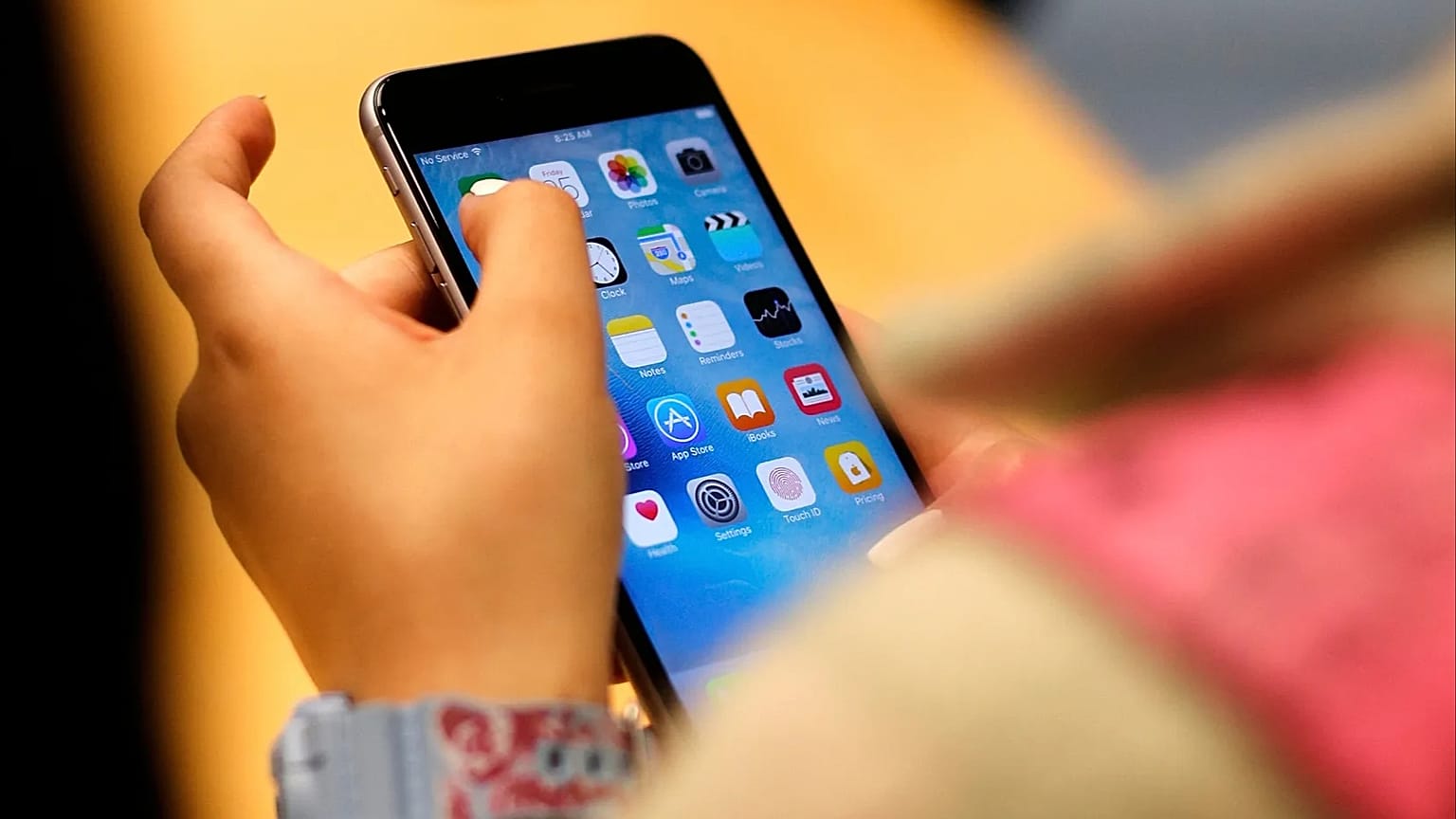
FILE - A child holds an iPhone at an Apple store on Sept. 25, 2015 in Chicago. (AP Photo/Kiichiro Sato, File)
Copyright Copyright 2018 The Associated Press. All rights reserved.

By Una Hajdari
Published on


New UNICEF analysis finds children are adopting AI faster than adults, with millions turning to it for homework help and, in some cases, personal advice — as safeguards for young users lag badly behind.

At least 20 million children across 10 countries have used artificial intelligence, according to new analysis from UNICEF, with many young people adopting the technology far faster than adults.

The UN children's agency said children are outpacing adults "by adopting it at rates more than three times faster," based on data gathered from the 10 countries surveyed.

The findings show more than 2 million children or one in ten said they turn to AI "for advice on things that worry them." An estimated 13 million children reported using AI tools to support their learning and homework.

UNICEF said the rapid uptake is running ahead of efforts to regulate the technology, leaving children particularly exposed.

"Children are more exposed to AI systems — including how they are designed, their underlying business models, and how their own data is used — yet have far less power to avoid or challenge them," the agency said, adding that "most AI governance does not prioritise children."

The organisation also warned that the long-term effects of AI on young people remain largely unknown.

"Evidence about its role in cognitive development, emotional dependency, and exposure to harm is just emerging," UNICEF said. "In effect, a generation is growing up inside a global experiment."

Children themselves have expressed unease about the technology.

According to the analysis, a third of children in the surveyed countries said they were worried about AI being used "to scam and trick others, or spread misinformation," while a quarter feared having their images or videos manipulated into sexually explicit deepfakes.

UNICEF said many AI systems are reaching children with inadequate protections, describing safety as "seemingly, an afterthought."

Calls for action ahead of UN dialogue

The findings were released ahead of the first Global Dialogue on AI Governance at the United Nations.

UNICEF is urging governments, the private sector and other partners to embed children's rights, particularly the right to safety and protection, into global AI governance.

The agency's recommendations include investing in research into AI's effects on children's development and well-being, especially the risks.

UNICEF described the current period as "a decisive moment," saying that "the choices made about AI now will shape children's safety, privacy, well-being, and their equal access to opportunities for decades to come."


Window to control AI is closing and it could widen inequality, UN experts warn

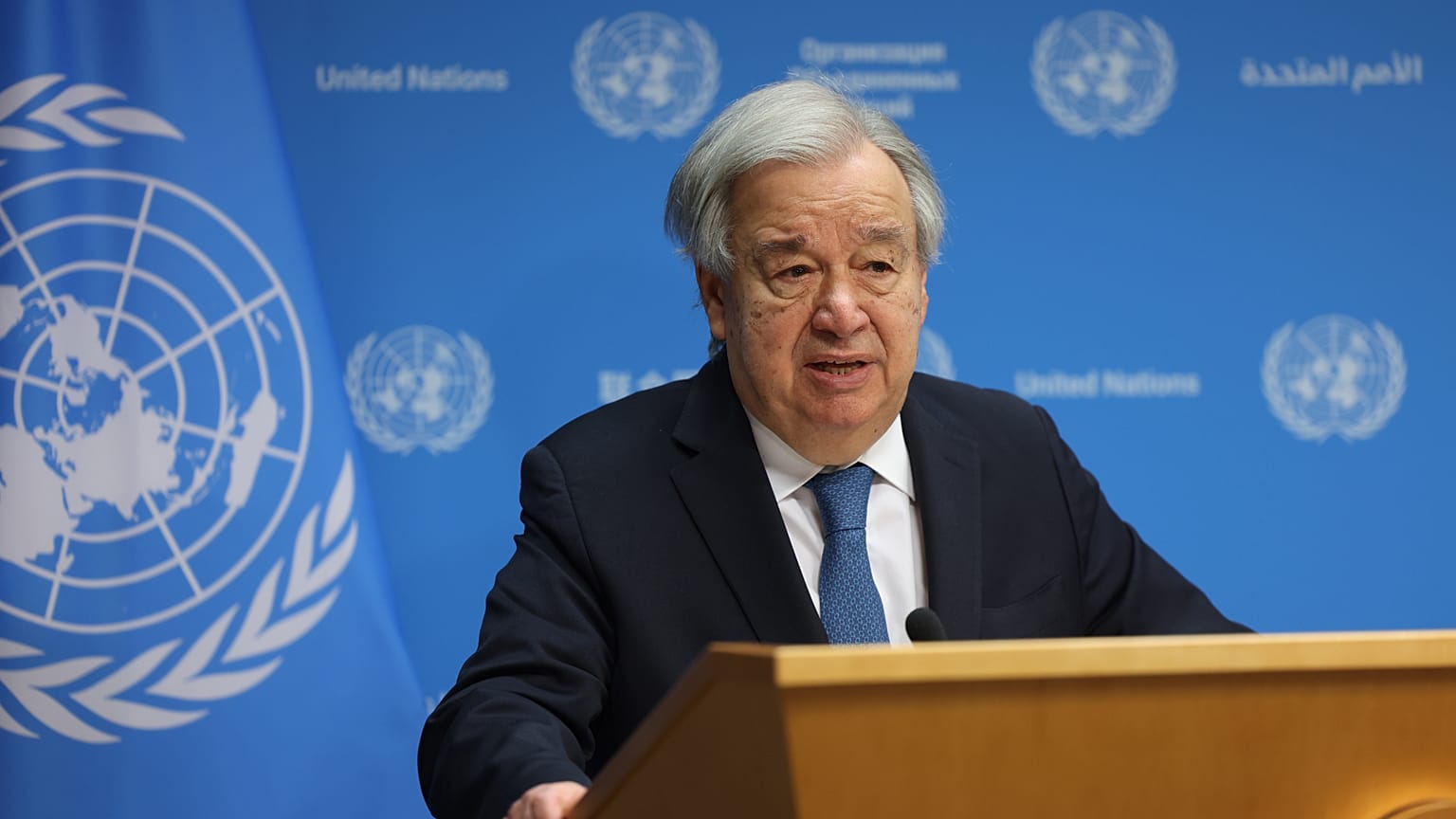
United Nations Secretary General Antonio Guterres speaks about the release of a U.N. report on artificial intelligence during a news conference at U.N. headquarters, July 1
Copyright AP Photo/Jason DeCrow

By Pascale Davies
Published on


UN warns AI could widen the gap between rich and poor countries in a new report.

The development of artificial intelligence may worsen global inequality and the window for global governance to remedy that is closing fast, according to a new report from the United Nations.

The findings come from a preliminary report released this week by the UN's Independent International Scientific Panel on Artificial Intelligence, a body of 40 experts drawn from around the world and established by the General Assembly in 2025.

“The more AI advances without shared rules, the less say governments and people will have in the outcome,” said António Guterres, the UN secretary general, at a press conference on Wednesday.

“Our message to governments is simple: do not wait … the science is here. We can no longer say we did not know what we do.”

What did the report find?

The report said that the industry is moving at an exceptional speed and that generative AI can now write software, analyse huge datasets, produce lifelike images and video, and assist in scientific discovery.

It said agentic AI, where AI agents can complete complex tasks with minimal involvement, is going even further.

According to the panel, the difficulty of tasks these systems can handle has been roughly doubling every few months. As AI grows more autonomous, the panel warns it could become increasingly difficult to monitor and control without stronger safeguards in place.

The report flagged the growing risks, including AI being used to generate sexual abuse material and explicit deepfakes, with women and children disproportionately targeted.

It also noted AI is making disinformation more convincing and harder to detect, which the panel says is eroding public trust and democratic discourse.

Cybersecurity is also at risk, with criminals using AI for fraud and social engineering as well as being used for harmful thinking in vulnerable users, contributing to mental health crises, including suicide.

The report also noted that the data centres powering AI are also a growing source of greenhouse gas emissions.

The AI benefits

But the report was not all doom and gloom. Some of the benefits it noted were AI models mapping the structure of over 200 million proteins, speeding up drug discovery, vaccine research and work on antibiotic resistance.

It also said the technology is helping flag food insecurity before it turns into a full-blown crisis and broadening access to education, mental health support and tools for people with disabilities.

An uneven playing field

AI is also not being evenly distributed across the globe. The report estimates that the United States controls roughly three-quarters of the computing capacity behind the world's leading AI supercomputers, with China holding around 15%.

It means the two countries have around 90% of that capacity between them, with the most advanced AI models being built by companies based in those same two nations.

Developing countries, though, lack the talent, infrastructure and funding to build or audit the AI systems they use.

The panel warned that without effort to close this gap, AI risks widening global inequality.

Regulation struggles

When it comes to putting in place AI regulation, the report said there was an "evidence dilemma" in that lawmakers need solid data before writing effective rules, but AI often evolves past that data before it is even compiled.

More than 40 AI governance frameworks now exist worldwide, but the panel describes them as fragmented, inconsistent and rarely tested for whether they actually work.

Much of the safety testing that does happen is still conducted by the same companies building the technology, which raises questions about independence.

The panel calls for stronger third-party evaluation, more international coordination and shared standards, alongside investment so countries can build the expertise and infrastructure needed to govern AI on their own terms.

The panel's findings will feed into the UN Global Dialogue on AI Governance, set to open in Geneva on July 6, 2026, where member states will debate coordinated international approaches to managing the technology.

Anthropic to restore global access to most powerful AI models

Anthropic said on Tuesday it would restore global access to its most advanced AI models after the US government lifted export restrictions imposed earlier this month over national security concerns. The decision marks a reversal after the company worked with Washington to strengthen safeguards around the technology.


Issued on: 01/07/2026
By: FRANCE 24
Video by: Peter O'Brien

Cover image: FILE PHOTO: Anthropic logo, a keyboard, 
and a robotic hand as seen on June 5, 2026. © Dado Ruvic, Reuters


Anthropic will soon begin restoring access globally to its most powerful AI models, Fable 5 and Mythos 5, after the US government lifted a restriction on where they could be released, the company said on Tuesday.

"We've received notice that the Department of Commerce has lifted export controls on Claude Fable 5 and Mythos 5," Anthropic posted on X. "We'll begin restoring access tomorrow."

Earlier this month, US authorities blocked access to the models on national security grounds.

Just four days ago, the company said it had received authorisation from the government to allow a small group of American cybersecurity firms to access Mythos 5.

Secretary of Commerce Howard Lutnick said in a June 26 letter to the company that "Anthropic has worked with the US government to address risks associated with the Covered Models," Politico reported.

Cover image: SPOTLIGHT © FRANCE 24
17:28


The government abruptly forced Anthropic to cut off access to its two cutting-edge artificial intelligence models on June 12 after discovering vulnerabilities in the safeguards put in place to prevent misuse of the tool.

On Tuesday, Lutnick told Anthropic in a letter that the Trump administration had "withdrawn" its previous restrictions on the release of the company's models, Politico reported.

The letter indicated that the Trump administration was satisfied, at least for now, that Anthropic had "taken steps in close coordination with the US government to address the risks associated with Claude Mythos 5 and Claude Fable 5."

Like Anthropic, rival AI lab OpenAI has also complied with Washington's requests to restrict its own release of a new, powerful model called GPT-5.6 to a limited set of approved partners.

"This isn't quite the process that we think is optimal," OpenAI CEO Sam Altman said on Friday in a post on X, alongside an explanation of the GPT-5.6 launch.

Anthropic did not immediately respond to a request for comment on Tuesday.

The Trump administration issued an executive order on June 2 calling for the federal government to take multiple steps over the subsequent two months to take action on AI and cybersecurity – including creating a voluntary "framework" for private companies, such as Anthropic and OpenAI, to test and release their powerful "frontier" AI models in collaboration with the government.

Susie Wiles, the president's chief of staff, posted on Tuesday on X that the Trump administration was grateful for the cooperation from tech companies, though she did not name any.

"My gratitude to companies across industries who continue to work closely with the White House to implement the President's" executive order on AI and cybersecurity, Wiles said. "This includes excellent work around advanced model access and guardrail testing and security."

Earlier in the day, CIA Director John Ratcliffe compared the capabilities of the most advanced artificial intelligence models to nuclear weapons, in a tacit defence of the Trump administration's recent hard line on controlling the release of the most powerful AI technology.

"In conversations with many of the president's other national security and economic security advisers, we're talking about the impact of these frontier AI models," Ratcliffe said during a speech at the AWS summit in Washington.

"It would be ... not misplaced to refer to their capabilities as akin to digital nuclear weapons," Ratcliffe said.

(FRANCE 24 with AFP)