Thursday, July 02, 2026


UN to close its human rights office in Burkina Faso following junta's suspension
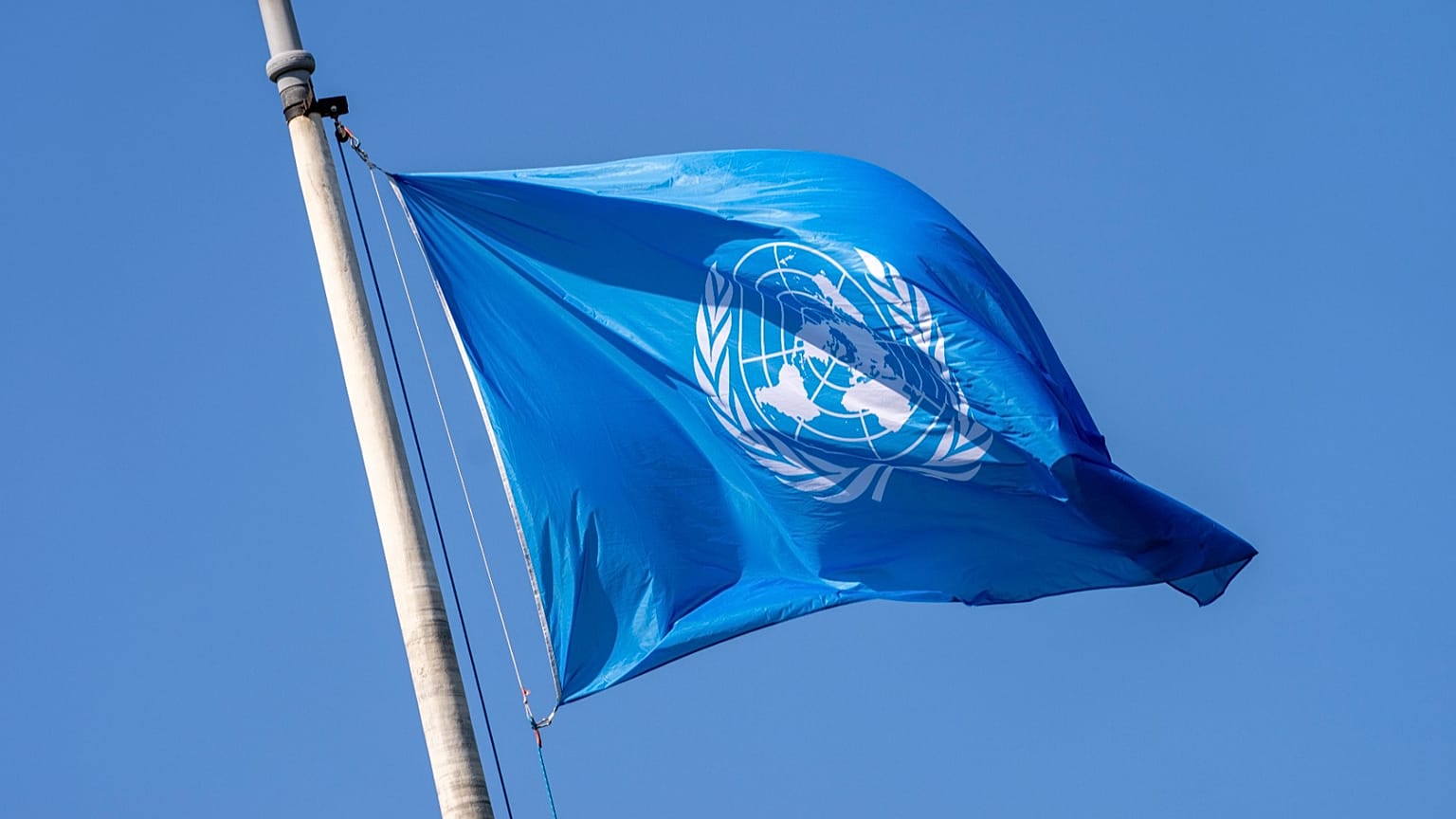
The UN flag waves the International Court of Justice in The Hague, 23 May, 2024
Copyright AP Photo

By Gavin Blackburn
Published on

Junta chief captain Ibrahim Traoré has pursued anti-Western policies since seizing power in a coup in September 2022, while critical voices are met with repression.

The United Nations announced on Thursday it would close its human rights office in Burkina Faso, saying the authorities' indefinite suspension of its operations meant it could not carry out its duties.

The decision comes three months after military-ruled Burkina Faso suspended the office's work over a press release which had called on the west African nation to uphold civic space.

The UN Human Rights Office's branch in the country is set to close by 30 November.

Junta chief captain Ibrahim Traoré, 38, has pursued anti-Western policies since seizing power in a coup in September 2022, while critical voices are met with repression.

"I deeply regret the Burkinabe authorities' decision indefinitely suspending our in-country operations, and that intensive engagement with the authorities since has not resolved the matter," UN rights chief Volker Türk said in a statement.
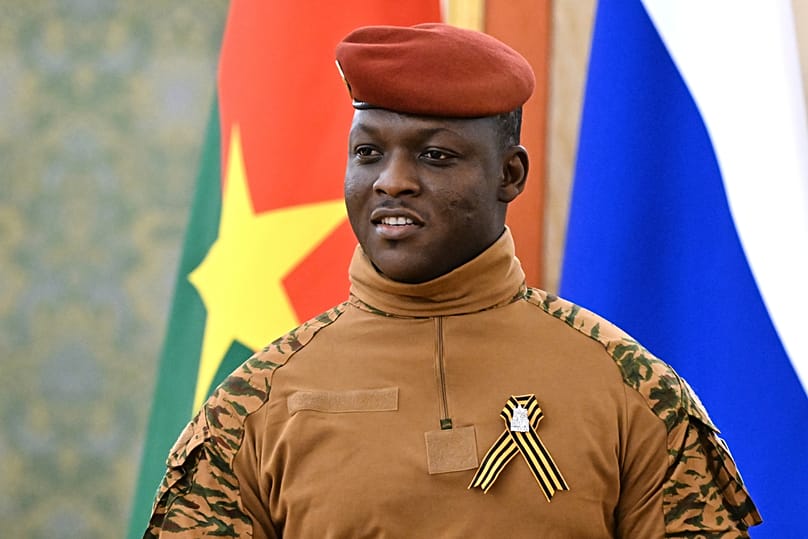
Burkina Faso President Ibrahim Traoré arrives at the Grand Palace at the Kremlin in Moscow, 10 May, 2025
Burkina Faso President Ibrahim Traoré arrives at the Grand Palace at the Kremlin in Moscow, 10 May, 2025 AP Photo

"This has directly affected our ability to implement our mandate and ultimately necessitated my decision to wind down the country presence."

The office was set up in October 2021 and had conducted human rights monitoring and documentation and had advocated for respect for human rights.

It had also trained nearly 4,000 members of the defence and security forces on international human rights law and humanitarian law, the statement said.

"Despite the closure, my office and I remain committed to continue supporting and cooperating with the government, national institutions, civil society, and other stakeholders, to keep promoting and protecting human rights in Burkina Faso," said Türk.

Violence in the Sahel

The press release that seemingly upset the Burkinabe authorities was issued on 5 February.

In it, Türk called on the government to end all forms of repression of civic space and to overturn its intention to prohibit all political parties.

"Real civic and democratic space, allowing pluralistic voices of political parties and organisations, and strengthened rule of law are essential for lasting peace, security and social cohesion in Burkina Faso," he said.

The UN high commissioner for human rights last month said west Africa's violence-wracked Sahel region, where military rulers are battling jihadist insurgencies, was at a "dangerous tipping point."
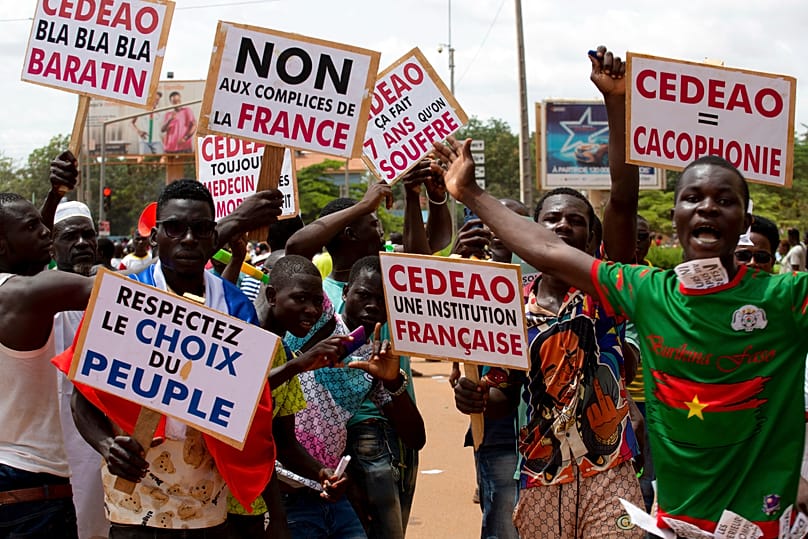
Supporters of Burkina Faso’s junta in the streets of Ouagadougou, 4 October, 2022
Supporters of Burkina Faso’s junta in the streets of Ouagadougou, 4 October, 2022 AP Photo

Türk voiced concern about the actions of authorities and security forces in Burkina Faso, Mali and Niger, where juntas seized power in coups between 2020 and 2023.

They have made sovereignty and the fight against jihadists their priority after years of deadly attacks by groups linked to Al-Qaeda and the so-called Islamic State.

The three countries have forged closer ties with Russia and have moved away from the former colonial power France.

Burkina Faso's ruling junta on Friday severed diplomatic ties with France, accusing Paris of persistently acting against its interests.

INTERVIEW

US shows ‘increasingly blatant’ bias over DRC peace deal, says Rwandan minister

The fragile peace process between Rwanda and the Democratic Republic of Congo is under renewed pressure, as the United States imposes fresh sanctions over alleged links to mineral trafficking from areas controlled by M23 rebels. Rwandan Foreign Minister Olivier Nduhungirehe tells RFI Kigali is being unfairly blamed – arguing that the Congolese government has failed to meet its own commitments under the US-brokered peace deal.


Issued on: 02/07/2026 - RFI

A man carries supplies through Kishishe, eastern Democratic Republic of Congo. Fighting in eastern DRC has displaced millions of people as Rwanda and the DRC seek to implement a US-brokered peace agreement. © Alexis Huguet / AFP

The eastern DRC has been torn apart by decades of conflict involving the country's army and more than 100 armed groups competing for land, power and valuable minerals such as gold and coltan, a mineral used in mobile phones and laptops.

The M23 rebel group controls large swathes of eastern Congo – a group the DRC, the United Nations and several Western governments say Rwanda supports, which Kigali denies.

For its part, Rwanda says its main security threat is the Democratic Forces for the Liberation of Rwanda (FDLR), an armed group linked to the 1994 genocide against the Tutsi people in Rwanda – and accuses the Congolese government of failing to dismantle it.

A peace agreement signed in Washington on 27 June, 2025, was meant to address both sides’ concerns. The DRC agreed to dismantle the FDLR, while Rwanda agreed to withdraw its forces and end its alleged support for M23.

Rwandan Foreign Minister Olivier Nduhungirehe attends the signing of the Washington peace agreement between Rwanda and the Democratic Republic of Congo on 27 June 2025. AP - Mark Schiefelbein

Washington sanctions former DRC president Kabila over 'support' for rebels

The accord has come under renewed scrutiny in recent weeks.

On 25 June, the United States sanctioned Gasabo Gold, a Rwandan gold-refining company, two of its executives and three related mining firms, freezing their assets and barring US citizens from doing business with them. Washington accuses them of helping smuggle gold out of areas controlled by M23.

At a recent UN Security Council meeting, White House senior adviser for Africa Massad Boulos said neither side had fully met its commitments.

To help ensure both sides keep their promises, the two countries and their international partners set up a Joint Oversight Committee. At its sixth meeting in London last week, Rwanda and the DRC agreed to reduce tensions around Minembwe and strengthen monitoring of the ceasefire.

It is against this tense backdrop that Nduhungirehe rejected the allegations against Rwanda and accused the United States of bias in its mediation efforts.

RFI: At the latest Security Council meeting, Massad Boulos questioned whether Rwanda was meeting its commitments under the Washington agreement. How do you respond?

Olivier Nduhungirehe: You have to consider those comments alongside what Secretary of State Marco Rubio said on 5 June during a hearing before the House of Representatives. He said Rwanda was implementing its commitments, even if it was not enough. But he said nothing about the DRC.

The problem is that the DRC's commitments are also an integral part of the Washington agreement. So far there has not been the slightest sign that they have begun implementing them.

Mass graves found in eastern DRC following M23 withdrawal from Uvira

RFI: But what about your own commitments?

ON: On those commitments, the problem is that the peace agreement was signed by two parties, each with security obligations and commitments. Even the Americans say the Congolese government has never begun implementing its main security obligation.

RFI: You say the DRC has failed to neutralise the FDLR, which is based on Congolese territory. But Massad Boulos has also said Rwanda should withdraw from Congolese territory. Why has Rwanda not done so?

ON: Do you think the Washington agreement is a one-sided agreement that concerns only Rwanda?

Why, in a peace agreement, do we acknowledge that one party has failed to implement its commitments, continues to support the FDLR and continues to use drones that kill civilians, while at the same time saying the other party must fulfil its obligations, as if the agreement applied only to Rwanda?

At some point we have to be consistent. Both parties, as required by the Washington agreement, must implement their obligations. It is not only Rwanda that must do so.

RFI: The US has sanctioned Gasabo Gold and several other Rwandan companies accused of taking part in trafficking gold and coltan from areas controlled by M23 in eastern DRC. What is your response?

ON: The United States acknowledges that the Congolese side has not fulfilled its obligation to neutralise the FDLR. The United States also acknowledges there has been an increase in drone attacks. Have you seen the latest statement by the International Contact Group referring to those drone attacks?

But when it comes to sanctions, only Rwanda is sanctioned. So there is a problem. That brings us to another point about the mediation. We are disappointed by what we see as its bias, a bias that is increasingly blatant and increasingly glaring.

Despite the evidence on the ground, and despite the information we have provided to the Americans almost every day since last year about Kinshasa's daily violations of the peace agreement, in the end only Rwanda is sanctioned. That is a problem.

Goma's residents reflect on life a year after DR Congo city fell to M23 rebels

RFI: What explains that?

ON: You would have to ask those who impose the sanctions. That is not us.

RFI: This is not the first time Rwanda has faced sanctions. The Rwandan army, military officers and now Gasabo Gold have all been sanctioned. Why do you think Rwanda keeps being singled out?

ON: Yes, exactly. That is the question that should be put to those who impose the sanctions.

If the Americans or the Europeans said the DRC was implementing its commitments, I would understand why they were not sanctioning the DRC. But the problem is that they themselves acknowledge the DRC has done nothing to neutralise the FDLR.

In fact, instead of moving towards that solution, the DRC has gone in the opposite direction. For example, in mid-March, during the first meeting between the DRC, Rwanda and Burundi, following the capture of Uvira, the Congolese army said in Kisangani on 29 March that the Congolese army would take action against the FDLR.

But what happened? Two days later, on 31 March, they sent helicopters to Walikale [a mineral-rich town in North Kivu province] carrying weapons, ammunition and money to those same FDLR fighters. We provided that information to the Americans.

So there is a problem with this mediation. The bias of the US mediation does not bode well for the effective implementation of the Washington agreement. Nor does it bode well for lasting peace in eastern DRC and the wider African Great Lakes region.
Mali's war on civilians deepens as alliances shift, HRW says

Human Rights Watch (HRW) says the army, allied militias and Islamist armed groups have all committed abuses with impunity since the attacks in northern Mali in April.


Issued on: 01/07/2026 - RFI

Tuareg rebels of the Azawad Liberation Front (FLA) coalition gather at the Kidal roundabout in Kidal, on 26 April, 2026. AFP - ABDOLLAH AG MOHAMED

By: Melissa Chemam

In a new report titled Mali: Grave Abuses Amid Renewed Fighting, published at the end of June, the human rights NGO examines abuses committed in the country by the Group for the Support of Islam and Muslims (JNIM), as well as by the Malian army and its Russian proxies from Africa Corps, since the attacks of 25 April.

On that day, jihadists and their partners from the Azawad Liberation Front (FLA) killed Defence Minister Sadio Camara and captured the northern town of Kidal.

Since then, the Malian army and its Russian partners from Africa Corps have intensified their "counter-terrorism" operations, while JNIM jihadists have imposed new blockades on civilian populations.

Impunity fuels abuses


Against this backdrop, Human Rights Watch (HRW) has investigated abuses committed by the various parties to the conflict.

The organisation points out that humanitarian law prohibits any deliberate or indiscriminate attack against civilians, and that "long-standing impunity continues to fuel the cycle of abuses against civilians in Mali," according to Ilaria Allegrozzi, Sahel researcher at HRW and author of the report.

She told RFI that she had wanted to focus on the impact of the hostilities on civilians, having initially assumed that most casualties were caused by clashes between JNIM and the FLA on one side, and the Malian army and Africa Corps on the other.

"But in reality, you see in our report that yes, there were casualties in clashes, in Kidal, during the fighting, but most of the people killed were killed by the Malian army, either during counterinsurgency ground operations in the centre of Mali or during the drone strikes that we documented. And that's even more worrying," she added.

HRW called on the UN and the African Union (AU) to support independent efforts to "hold those responsible for serious abuses accountable," as well as a fact-finding mission aimed at laying the groundwork for criminal investigations and prosecutions.

What worries the NGO most is the continued impunity — its primary recommendation is that the crimes be investigated and those responsible brought to justice.

Renewed fighting

There is no official casualty count for the multiple attacks of 25 April, but HRW offers a partial one: in the cities of Gao and Kidal alone, the clashes reportedly left 13 civilians dead and at least 25 injured.

The HRW report details the violence committed since then.

Between 6 and 21 May, JNIM torched more than 40 civilian vehicles bound for Bamako as part of a blockade imposed on the road to the capital — a conservative figure covering only that two-week period.

On 14 May, FLA spokesman Mohamed El Maouloud Ramadane told Human Rights Watch: "We took sufficient measures so that civilians are not collateral victims of the fighting. We wrote several times to communities located around the city [of Kidal] to tell them to leave and not to approach military sites."

The NGO also points to the public execution of a civilian in Tonka, in the Timbuktu region, on 21 May, and attacks on tanker trucks that since September 2025 have killed drivers, caused severe fuel and electricity shortages, disrupted education, and paralysed daily life.

Changes of alliance


Successive governments in Mali have battled Islamist and separatist armed groups since 2012.

After coups in 2020 and 2021, General Assimi Goïta seized power, expelled French and UN forces, and strengthened ties with Russia. He also terminated a nine-year peace agreement with predominantly Tuareg armed groups.

In 2024, the al-Qaeda-linked coalition JNIM, seeking to expand Islamist rule across the Sahel, entered into an alliance with the FLA - the Tuareg separatist coalition seeking independence for northern Mali - espite their ideological differences. The two joined forces during the April 2026 offensive.

Meanwhile, the military regime sought the protection of the private Russian group Wagner, now rebranded as Africa Corps, a development analysts say has only deepened the cycle of violence.

"The Malian army has committed abuses against civilians even prior to the arrival of the Wagner fighters, now the Africa Corps," Allegrozzi said.

"But of course things are getting worse because Wagner came to Mali with a very heavy background and a very bad reputation in terms of respect for human rights, with examples in the Central African Republic, in Ukraine, in Libya."
FEMICIDE

Sudan's RSF paramilitaries accused of crimes against humanity in El Fasher

Sudan's paramilitary Rapid Support Forces committed crimes against humanity and ethnic cleansing while deliberately targeting children during their campaign to seize El Fasher, the capital of North Darfur state, Amnesty International said on Wednesday.


Issued on: 01/07/2026 - RFI

Women displaced from El Fasher queue for food aid at Al-Afadh camp in Al Dabbah, northern Sudan, in November 2025, after fleeing fighting in North Darfur. AP - Marwan Ali

The global rights organisation called for an immediate nationwide ceasefire and the deployment of an international force to protect civilians after documenting killings, torture, rape, sexual slavery, forced displacement and other abuses between early 2024 and October 2025.

Sudan has been at war since April 2023, with fighting between the army and the Rapid Support Forces (RSF) killing tens of thousands of people and forcing millions to flee, according to the United Nations.

Both sides have been accused of atrocities, and a UN fact-finding mission said in February that the 2025 assault on El Fasher bore the "hallmarks of genocide".

Agnès Callamard, Amnesty International's secretary general said: "The war in Sudan is a war on civilians. The world was warned of the horrors that civilians in El Fasher confronted as the RSF laid siege to the city. It is a stain on the conscience of humanity."

The investigation was based on interviews with 247 people, including 208 survivors, as well as analysis of 89 videos and satellite imagery.

A letter setting out the findings was also sent to RSF leader General Mohamed Hamdan Dagalo on 10 June 2026, but no response had been received by the time the report was published.

Children under fire


Systematic attacks targeted villages, towns and displacement camps around El Fasher that were home to many people from the Zaghawa, a non-Arab ethnic group in Darfur, Amnesty said.

Homes were burned after residents had fled, leaving areas uninhabitable and preventing displaced people from returning.

A siege of El Fasher from May 2024 until October 2025 restricted food and humanitarian supplies, causing what Amnesty described as a manufactured famine.

The organisation said the evidence supports a finding of persecution based on ethnic identity and that the documented acts "may be relevant to the crime of genocide".

Its investigation is continuing.

"Children were not collateral damage of this violence – often, they were deliberately targeted and have suffered immensely," Callamard said.

Urgent calls for action


A final RSF offensive on El Fasher on 26 October 2025 left hundreds of civilians trying to flee executed, while many others were tortured or detained, Amnesty said.

The RSF also attacked the Saudi Maternity Hospital, a protected medical facility, in what Amnesty described as a war crime.

"A nationwide ceasefire is immediately needed," Callamard said. "An independent and adequately resourced international force must be deployed to Sudan to protect civilians against crimes by all parties to the conflict.

"The international community must move beyond statements of concern and take concrete steps to protect civilians, breaking the cycle of impunity."

Amnesty has urged all countries to stop supplying arms and ammunition to parties in the conflict.

The NGO specifically urged governments to stop providing arms to the UAE until it complies with the UN embargo, and called on the UN Security Council to expand the existing arms embargo on Darfur to the rest of Sudan.
Paris death penalty congress warns abolition cannot be taken for granted

The fight to abolish the death penalty remains "eminently contemporary", French President Emmanuel Macron said as campaigners, judges and former death row prisoners gathered in Paris this week for the World Congress Against the Death Penalty, amid rising executions worldwide and renewed support for capital punishment in some democracies.


Issued on: 02/07/2026 - RFI

A gurney used for lethal injections at the Texas death house in Huntsville, Texas. More than 110 countries have now abolished the death penalty, but executions continue to rise in a number of others. ASSOCIATED PRESS - Pat Sullivan

Speaking on Tuesday at the ninth World Congress Against the Death Penalty (ECPM) in Paris, Macron said abolition should not be treated as a settled achievement, 45 years after France scrapped capital punishment.

"Many people pretend to believe that it is a foregone conclusion," he said. "But the risks remain in many countries – and nothing can be taken for granted."

The congress, organised by the NGO Together Against the Death Penalty, is being held from 30 June to 2 July at several venues across Paris and is due to close on Thursday.

Macron said the debate was returning "amidst confusion over principles and language", particularly in the wake of crimes that shock public opinion.

In a post on X, he wrote: "The existential struggle for the abolition of the death penalty is never a foregone conclusion."

In France, calls for a tougher response have followed several recent child murder cases, including that of Lyhanna, aged 11, whose death exposed alleged failings in the handling of earlier rape complaints against the suspect, and Louis, aged 17, killed in an alleged lynching in Narbonne.

A CSA poll for right-wing media outlets CNews, Europe 1 and the Journal du Dimanche, published on 14 June, found that 68 percent of French people supported holding a referendum on reinstating the death penalty for crimes against children.

"The death penalty has never made a society safer. Never," Macron told the congress. "Because it does not act as a deterrent. That is simply not true. This has been demonstrated, observed and measured."

He said capital punishment had "never had the deterrent effect" claimed by its supporters, including "often authoritarian" governments that present it as a tool of order.

France's President Emmanuel Macron delivers a speech during the 9th World Congress Against the Death Penalty in Paris, France, on 30 June 2026. AFP - CHRISTOPHE PETIT TESSON


Abolition under pressure

Speaking at the congress on Wednesday, European Court of Human Rights President Mattias Guyomar also warned that support for restoring the death penalty was re-emerging in Europe, despite the continent having abolished it.

He said the court's case law had established that capital punishment was fundamentally incompatible with human dignity.

France abolished the death penalty in 1981, shortly after François Mitterrand became president. The last person sentenced to death in France, Philippe Maurice, was pardoned by Mitterrand that same year and is among the campaigners attending the Paris congress.

Macron has framed abolition as a democratic principle rather than a purely legal one, saying it rests on the idea that even those who commit serious crimes retain their humanity.

"Whatever any one of us may have done, we do not have the power to deny them this shared humanity," he said, calling that principle a "cornerstone of all our democratic societies".

According to Isabelle Lonvis-Rome, France's ambassador for human rights, 114 states have now definitively abolished capital punishment. But 47 countries still retain it, including the United States.

Lonvis-Rome said the long-term global trend remained abolitionist, even as several countries were seeing a "resurgence of executions" used as tools of "political repression, social control or in response to security crises".


Executions rising

ECPM says China, Iran, Saudi Arabia and Iraq carried out the highest number of executions in 2024.

Iran has drawn particular concern. According to Norway-based Iran Human Rights and ECPM, Iranian authorities executed at least 1,639 people in 2025 – the highest figure recorded since 1989.

The congress also heard from former death row prisoners, including Daniel Gwynn, an American who spent nearly 30 years under sentence of death before being exonerated in 2024.

"I was targeted because of the colour of my skin. I was young, I was 24, I didn't know the law. And this system crushed me," Gwynn told RFI. "I was sentenced to death and held in solitary confinement for 28 years."

Gwynn said he had received no compensation or apology after his release.

"Not even a bus ticket to get home," he said. "Because the authorities don't want to admit they were wrong, or even that they did it on purpose. To this day, I don't even know how I became a suspect in this case."

Asked what he would say to supporters of capital punishment, Gwynn said the argument that it prevents crime does not stand up.

"The death penalty doesn't work. It has no deterrent effect on crime," he said. "There are always people who commit murders. So it is not a deterrent. And there is a more humane way to punish someone for a crime they have committed."


France advances assisted dying law with strict rules and safeguards

France's National Assembly has approved a new version of a bill creating a legal right to assisted dying, bringing the country closer to a major change in end-of-life care. The legislation sets out who could qualify, how requests would be made and the safeguards designed to prevent abuse of the law.


Issued on: 02/07/2026 - RFI

France's National Assembly has approved a bill that would create a legal right to assisted dying, with a final parliamentary vote expected on 15 July. AP - Mosa'ab Elshamy

While supporters say the bill – approved on Tuesday after a lengthy legislative process – would give seriously ill patients a final choice, opponents warn it remains too permissive.

Expected to receive final adoption on 15 July, the bill would create a "right to assisted dying", allowing eligible people who request it to use a lethal substance with medical support.

Under current legislation, known as the Claeys-Leonetti law, patients in France can refuse or stop medical treatment.

In certain cases, they can also receive deep and continuous sedation with pain relief until death. However, healthcare professionals cannot provide or administer a substance to cause death.

The words "assisted suicide" and "euthanasia" do not appear anywhere in the text.

A new legal right


"It is the patient who asks. Nobody is forced and nobody is encouraged," Philippe Vigier, an MP from the Democratic Movement, a centrist party which supports the bill, told RFI.

The Association for the Right to Die with Dignity, a campaign group known as ADMD, says the bill would shift decision-making towards seriously ill patients.

"It will bring a real change to healthcare democracy by putting the sick person back at the centre of the decision," siad ADMD head Jonathan Denis, adding the text would create a "final option" for seriously ill people facing unbearable suffering.

The French Society for Palliative Care and Support, a professional organisation representing palliative care workers, however, strongly opposes the proposed new right.

The bill took account of "none of the concerns, none of the warnings" raised by palliative care professionals, the group's president, Ségolène Perruchio, told RFI.


Access conditions


To qualify for assisted dying, patients would have to meet five conditions. They would have to be adults who are either French citizens or legal, long-term residents of France.

They would also need to have a serious and incurable illness that threatens their life and has reached an advanced or terminal stage. The bill defines an advanced stage as entry into an irreversible process marked by worsening health that affects the person's quality of life.

Patients would also have to experience suffering linked to that illness that cannot be adequately relieved by treatment, or suffering they consider unbearable after choosing not to receive or to stop treatment. Psychological suffering on its own would not qualify.

Applicants would also have to be able to express a free and informed decision, even if they had previously written advance directives.

This would exclude some people with neurodegenerative diseases such as Charcot disease, a progressive condition that weakens muscles and gradually paralyses the body, if cognitive problems prevent them from confirming a request they had made earlier in writing, Denis said.

Opponents say the criteria leave too much room for interpretation. They are "extremely broad" and "extremely vague" and "leave an enormous role for the doctor's own subjectivity", Perruchio warned.

Making the request

Patients would have to submit a written request to a practising doctor or, if that is impossible, use another method suited to their abilities.

The doctor could not be a relative, an in-law, a spouse, a civil partner, a life partner or anyone who stands to inherit from the patient. If the patient cannot travel, the doctor would have to visit their home or the place where they are receiving care to collect the request.

The doctor would have to explain the patient's medical condition and how it is likely to progress, the option of palliative care, access to psychological or psychiatric support and the right to withdraw the request at any time.

The doctor would also have to explain the conditions for accessing assisted dying and how the process would work.

The decision would then be taken after consultation with a multidisciplinary group including at least one other doctor specialising in the illness, as well as a nurse or nursing assistant involved in the patient's care. At the patient's request, the doctor could also seek the views of a trusted person or, if the patient has not named one, a relative.

The decision would have to be given, with reasons, within 15 days of the formal request. After a reflection period of at least two days, the patient could confirm the request.

As a final safeguard, on the day the substance is administered, the doctor or nurse would have to confirm once again that the patient still wishes to proceed.

If a doctor refuses the request, the patient could challenge that decision before an administrative court, including through an emergency procedure.

Safeguards and refusals


One of the most debated issues was who should administer the lethal substance.

Patients should be able to choose between administering the substance themselves or asking a doctor or nurse to do it, argued MPs from France Unbowed, a hard-left party, and the Socialist Party.

Instead, as in the original version of the bill, self-administration would remain the rule, while a doctor or nurse could administer the substance only if the patient is physically unable to do so.

The ADMD had argued for patients to have a free choice between the two options, a position the final bill does not reflect, to Denis's regret.

After a request is approved, a date would be agreed with the doctor or nurse accompanying the patient. The procedure could take place at the patient's home, at the home of a relative, in a hospital, in a care home or in another healthcare setting. The patient could be surrounded by people of their choosing.

The costs of the procedure would be fully covered.

Lawmakers removed a provision during the latest reading that would have classified a death through assisted dying as a "natural death". However, the bill says death insurance policies would still apply so that beneficiaries are not deprived of cover.

The bill includes several safeguards. Patients could withdraw or postpone the process at any time, and healthcare professionals would have to suspend it if they believed the patient was under pressure.

If more than three months passed between approval and administration, the patient's wishes would have to be reassessed.

The proposal also requires every stage of the procedure to be recorded and would create a control and evaluation commission under the health minister. The commission would carry out checks after procedures, make recommendations to the government and parliament and report failures or suspected offences to professional bodies or prosecutors.

The National Authority for Health, France's independent health authority, and the National Agency for the Safety of Medicines and Health Products, the country's medicines safety agency, would jointly define and assess the lethal substances that could be used.

They would also draw up recommendations on good practice.

Healthcare professionals would be able to refuse to take part under a conscience clause. Anyone who refused would have to inform the patient or colleague immediately and provide the names of professionals willing to participate.

Those professionals would have to register with a new commission that would keep a register accessible only to healthcare workers.

The conscience clause offers only partial protection because it covers the doctor or nurse carrying out the procedure, but not everyone else involved in caring for the patient, Perruchio said.

"There is no conscience clause for the nursing assistant who washes the patient half an hour before the euthanasia, or for the person who prepares the body half an hour afterwards, or for the psychologist who meets the family," she added.

The bill would not create an offence of obstructing access to assisted dying, similar to the existing offence covering abortion. It would also not create an offence of encouraging someone to seek assisted dying.
PCUSA, American Academy of Religion call Gaza war a genocide

(RNS) — The largest Presbyterian denomination in the US and the American Academy of Religion both referred to Israel's war in Gaza as genocide in new resolutions condemning the war.


Palestinians inspect damage to their tents following an Israeli airstrike in Khan Younis, Gaza Strip, Tuesday, June 30, 2026. (AP Photo/Abdel Kareem Hana)

Chloe Landen
July 1, 2026 
RHS

(RNS) — The largest Presbyterian denomination in the United States voted Tuesday evening (June 30) to recognize Israel’s war in Gaza as a genocide, two days after the Presbyterian Church (U.S.A.) unanimously voted to divest from Palantir Technologies and General Electric Aerospace over technologies used in the war.

Tuesday’s vote at the denomination’s General Assembly in Milwaukee passed 454-15 and called for Presbyterians to also lobby Congress for an arms embargo against Israel and to boycott Israeli products that contribute to the war.

Additionally, the American Academy of Religion adopted a Resolution in Solidarity with Gaza last week condemning the Israeli government for the war in Gaza, calling it a genocide. The association of religious studies scholars that boasts 6,000 members worldwide referred to the war at its Annual Business Meeting in Atlanta as a “scholasticide,” or an “intentional effort to comprehensively destroy the Palestinian education system.” The motion was approved by 98% of members, according to a news release


The religious organizations’ resolutions add to growing criticism accusing Israel of committing genocide in Gaza — a claim Israel has repeatedly denied.

Since the war in Gaza began after the Oct. 7, 2023, Hamas attacks on Israel, more than 73,000 Palestinians have been killed, according to the Gaza Health Ministry, which is run by the Palestinian Authority. Almost a third of the reported casualties have been children, according to a United Nations Human Rights Council investigative body. Additionally, according to the U.N., 2 million Gazans are displaced, leaving swaths of Palestinians suffering from starvation, dehydration, inadequate shelter, poor sanitation, environmental exposure and other continued risks caused by the war.


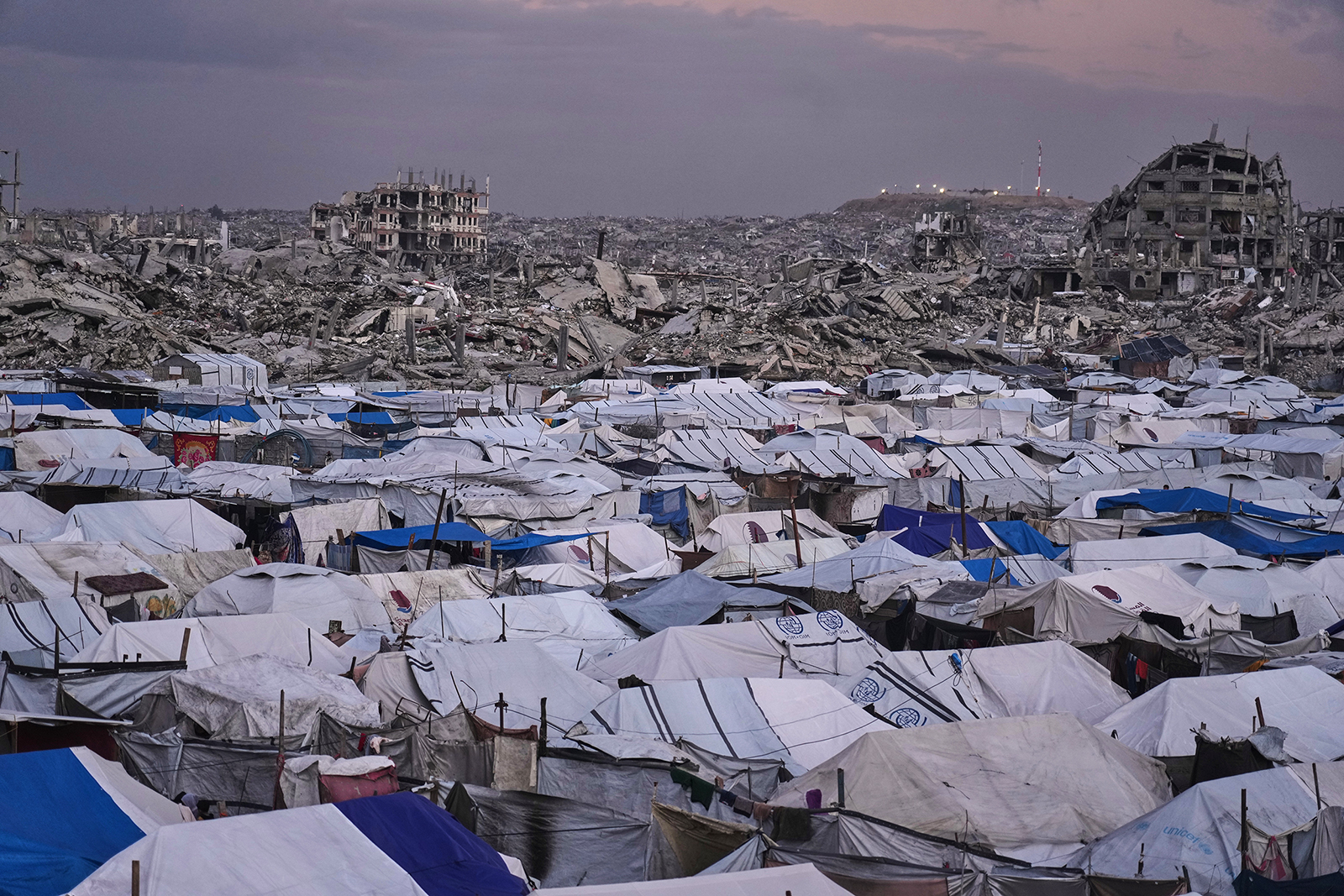
A tent camp for displced Palestinians stretches across the Zeitoun neighborhood of Gaza City, Jan. 14, 2026. (AP Photo/Jehad Alshrafi)

On Tuesday, the U.S. House deliberated an amendment to cut funding for Israel. The bill was spearheaded by Kentucky Republican Rep. Thomas Massie but has mostly received support from House Democrats.
RELATED: Israeli drone strike kills Palestinian siblings in a Gaza tent camp

PCUSA’s decision to divest from Palantir and GE reflects the two corporations’ active roles in conflicts that have drawn condemnation from humanitarian groups, the denomination said.

Palantir Technologies, a data analysis and technology firm that provides militaries with artificial intelligence, has used its technologies to support the Israel Defense Forces post-Oct. 7, according to a UN report. Al Jazeera reported Palantir’s software has been instrumental in interpreting data to develop “kill lists” for the Israeli military.

General Electric provides Israel with engines and manufacturing components that have been used in military assaults deemed war crimes by human rights organizations, PCUSA wrote in its analysis.

This week’s votes are not the first time PCUSA has criticized Israel and divested from corporations. In 2014, the denomination divested in three companies — Caterpillar, Inc., Hewlett-Packard and Motorola Solutions  — that provided Israel with equipment to aid in the occupation of Palestinian territories. And in 2024, PCUSA voted to divest from Israel bonds and approved a resolution denouncing Christian Zionism. The denomination began considering divestment from GE and Palantir the same year.

“We are pleased that the denomination has taken meaningful steps to address the genocide and other gross human rights abuses against Palestinians and others around the world,” the Rev. Marietta Macy, the co-moderator of the Palestine Justice Network of the PCUSA, said in a recent news release.


Mourners carry the body of Palestinian Abdullah Moussa, 30, who was killed in an Israeli airstrike, during his funeral in Khan Younis, southern Gaza Strip, Saturday, June 27, 2026. (AP Photo/Abdel Kareem Hana)

The International Association of Genocide Scholars, a group with 500 members that includes Holocaust experts, accused Israel of genocide last year.

Last month, a U.N. commission reported that Israeli forces deliberately shot at Palestinian children’s “vital organs using precision weapons such as quadcopters and snipers” and inflicted “death and severe bodily and mental harm” to hundreds of thousands of Palestinian children “through (the) use of high impact weapons” on residential buildings, schools and displacement camps. In targeting children, Israel is “intend(ing) to destroy the existence of the Palestinians in Gaza as a group,” the report concluded.

Israel’s Foreign Ministry called the report “a propaganda piece as outrageous as its previous ones” and “libelous,” The Washington Post reported.

Church investment is a direct “instrument of mission,” PCUSA wrote in its initial considerations. PCUSA noted in its analysis that GE’s materials have also been used in alleged war crimes in Yemen and for the forced migration and re-education of China’s Uyghur population, and that Palantir’s technology has been used in human rights violations against asylum seekers in the U.S.

The Rev. Marcella Glass, chair of the Committee on Mission Responsibility Through Investment of the PCUSA, told RNS that her committee began “focused engagement with Palantir and GE Aerospace on human rights concerns in conflict-affected” areas in 2024. The engagement included dialogue and filing shareholder resolutions with both companies.

“Despite our engagement, both companies continue to provide products or services to customers that are credibly accused of human rights or international humanitarian law violations with no sign of slowing down or changing course,” Glass said. Therefore, MRTI recommended PCUSA divest from both companies.

“We pray that this action motivates both companies to take a hard look at their connections to human rights violations and end these practices,” Glass added. She noted that if either company were to end its contracts “with customers connected to human rights violations” or stop “providing services connected to such violations,” MRTI would recommend their removal from the divestment list to a future General Assembly.


Rabbi Jessica Rosenberg, associate director of religious and cultural organizing at Jewish Voice for Peace, an anti-Zionist group, told RNS in a statement that PCUSA’s decision to divest from Palantir and GE “marks yet another important milestone in the growing movement to hold the Israeli government and military accountable.”

It is unclear how the recent PCUSA and American Academy of Religion resolutions will be received by mainstream Jewish leaders and groups. But before PCUSA’s 2014 divestment vote, Rabbi Rick Jacobs, president of the Union for Reform Judaism, asked the denomination to reconsider, claiming that “a vote for divestment will cause a painful rift with the great majority of the Jewish community.”

The Union for Reform Judaism declined an RNS request for comment.

Israel's targeting of Gaza's children proves genocidal intent, UN inquiry finds

The deliberate targeting of Palestinian children is central to a United Nations-mandated report's conclusion that Israel is committing genocide in Gaza. The commission argues that children have not only been victims of the war, but have been targeted in ways that help establish genocidal intent. Israel has dismissed the findings of the report, released this week, as "defamatory".


Issued on: 26/06/2026 - RFI


A Palestinian man mourns his wife and two children, who were killed in an Israeli strike in Deir al-Balah, Gaza, on 2 May 2025. © Abdel Kareem Hana / AP

Children have been killed directly through military attacks and indirectly through the destruction of schools and hospitals, starvation and the collapse of essential services, the report said.

The Independent International Commission of Inquiry on the Occupied Palestinian Territory, including East Jerusalem, and Israel, mandated by the UN, said it had found "reasonable grounds" to conclude that Israel was committing genocide.

The commission said Israel's actions have left a generation physically and psychologically scarred, while undermining the ability of Palestinians to survive as a group.

The report, which was released this week and is around 100 pages long, documents what it describes as violations and crimes committed against Palestinian children in Gaza between 7 October, 2023 and 31 March, 2026.

More than 20,000 children were killed in Gaza between 7 October, 2023 and 7 October, 2025. More than 40,000 were wounded and more than 58,500 lost at least one parent or became orphans, the commission said.

Because children represent the future of a people, the commission argues, deliberately targeting them supports the conclusion that Israeli authorities intended to destroy Palestinians as a people in Gaza in whole or in part.

'Maximum damage'

The commission said Israeli forces repeatedly bombed densely populated neighbourhoods, schools and crowded refugee camps while dismantling the systems children need to survive and develop.

It said 97 percent of schools were destroyed, 95 percent of universities were damaged, with 22 of Gaza's 38 universities completely destroyed.

It also accuses Israel of targeting maternity and neonatal services, contributing to miscarriages and birth defects, while starvation imposed by Israel killed children through malnutrition and caused long-term harm.

By 1 October, 2025, 151 children had died from malnutrition, it said.

"Israel is attacking the very ability of the Palestinian people to exist and determine their future by targeting children," commission chairman Srinivasan Muralidhar said.

The report said Israeli forces also deliberately targeted children using precision weapons.

The report cites evidence that it says shows children were shot in the head and upper body by quadcopter drones, other drones and sniper rifles "to inflict maximum damage".

Among the cases it documents is an incident in which a baby being breastfed inside a tent was shot in the head by a drone equipped with an infrared camera.

It also cites the widely reported killing of five-year-old Palestinian girl Hind Rajab, who was trapped for hours in a car after members of her family were killed as she waited for rescuers to reach her.

"The severe physical and psychological injuries, collective trauma, orphanhood, separation, disability, repeated displacement, starvation and collapse of the education and healthcare systems have destroyed these children's childhoods and will continue to affect them throughout their lives in Gaza," the report said.

Israeli denials

Israel rejected the findings, calling the report "defamatory" and a "slanderous masquerade".

The country's Foreign Ministry said the claims had not been verified and described the commission as "a fundamentally flawed mechanism whose very purpose is to single out and vilify Israel rather than seek the truth".

It accused the commission of ignoring "Hamas's brutal tactics, which ruthlessly target Israeli children and use Palestinian children as human shields".

Israel has also previously accused the commission of anti-Semitism and of acting as Hamas proxies.

The commission said its findings were based on evidence rather than allegations.

"We know who they are," commissioner Chris Sidoti said, referring to Israeli military divisions, brigades and units which the report identifies as potentially involved in incidents in which children were killed in Gaza and the occupied West Bank.
'The reality behind the figures'

The commission said children have continued to be killed and seriously wounded despite the October 2025 ceasefire. Since the truce began, at least 265 children have been killed, an average of one each day.

"Raghad, a 17-year-old Unicef youth ambassador, was killed in Gaza on Monday while travelling to her final secondary school examination," Baptiste Chapuis, Unicef's advocacy and international programmes chief, told RFI.

For the children who survive, the damage can last a lifetime.

"Fear and violence have become so regular, so everyday and so constant that the trauma we see is no longer just an episode in their lives," Chapuis said.

"It is intrinsically linked to their daily reality and to the very fabric of their childhood. Everyday life is filled only with anxiety, fear, sleeplessness and the loss of loved ones. That is the reality behind the figures in this report."

Unicef spokesman James Elder emphasised the everyday circumstances in which children had been killed.

"These children were not killed in a war zone. They were killed in their homes. In their schools. While playing football. While fishing. They were shot, bombed and targeted by drones."

In eight months, more than 400 children have been wounded, with doctors treating brain haemorrhages and severe injuries to the head, chest and abdomen.

"The reality is that Palestinians continue to be killed and injured in Gaza even after the ceasefire announced last October, while the amount of humanitarian aid allowed into Gaza remains far below what is needed," Muralidhar said.

Child mortality remains high, many children are still waiting for emergency medical evacuation and medicines remain in critically short supply, the report said.

Violence beyond Gaza

The commission also examined the treatment of children in the occupied West Bank and East Jerusalem, where it said violence by Israeli settlers and soldiers against children has increased.

It said torture, sexual violence and deprivation of food during arrests and detention, mainly affecting boys, amount to crimes against humanity under international law.

More than half of Palestinian children held in Israeli prisons at the end of last year were being detained without charge or trial, the child rights NGO Defence for Children International said.

Israel and the occupied Palestinian territories rank first in the latest UN secretary-general's report on children in armed conflict, ahead of the Democratic Republic of Congo. The violations listed include killings, mutilations, sexual violence, deliberate obstruction of humanitarian access and attacks on hospitals and schools.

The report also said videos showing Israeli soldiers destroying and mocking children's toys raise "serious ethical, disciplinary and legal concerns", adding that they symbolise "the dehumanisation of Palestinian childhood itself".

Israel said its actions are justified by what it describes as a constant terrorist threat.

Call to action

An earlier inquiry published in September last year concluded that genocide was taking place in Gaza, saying Israel had committed four of the five prohibited acts under the 1948 Genocide Convention.

Shortly afterwards, UN High Commissioner for Human Rights Volker Turk said he saw "growing evidence" of genocide in Gaza.

As the occupying power, Israel has a legal duty to protect, care for and ensure the survival of Palestinian children, the commission said.

"Israeli authorities have violated every standard of international law in their treatment of Palestinian children, and they must be held accountable," Sidoti said.

The latest report concludes that much of the harm suffered by Palestinian children "was not incidental but intended to destroy the existence of Palestinians in Gaza as a group".

It calls on the international community, including France, to use all available diplomatic means to stop the violations, ensure those responsible are held accountable and guarantee unrestricted humanitarian access to Gaza.

"As long as these systematic violations continue, the killing and mutilation of children will continue without pause. Do we really believe that the life of a Palestinian child is worth less than that of a child from another country? What justifies such a double standard? Chapuis said.

"The scale of the violations of international humanitarian law and children's rights over the past two and a half years has been documented. No one will be able to say they did not know."

This story has been adapated from the original version in French by Anne Bernas

Marco Rubio Helps Israel Pursue Goal of Civil War in Lebanon


In order to sabotage a deconfliction track outlined in Switzerland and continue their endless project to secure more lebensraum, the Israelis have turned to the U.S. State Department and the Israel Lobby’s man in charge

by | Jul 2, 2026 | 0 Comments

After President Donald Trump and Vice President JD Vance committed the United States to a deconfliction cell with Iran in Switzerland – a mechanism enforcing a ceasefire in Lebanon as well as Iran – Israel and its powerful lobby moved instantly to sabotage it. And in a preview of the sorts of foreign policy fissures that will likely define the 2028 GOP primary, the lobby has deployed Secretary of State Marco Rubio as the man to pursue Israel’s interests and pave the way for Israel’s further occupation of Lebanon.

The first article of the 60-day interim agreement signed by the U.S. and Iran conditions an end to the conflict on the “immediate and permanent termination of military operations on all fronts, including in Lebanon” and on “ensuring the territorial integrity and sovereignty of Lebanon.” That second clause, more than any other, appears to be the one Israel is most reluctant to accept.

Despite Israeli withdrawal now required to end a war that now threatens to destabilize the entire global economy, Prime Minister Benjamin Netanyahu recently said that Israel would occupy southern Lebanon indefinitely, stating that “we dominate southern Lebanon, from the summit of the Beaufort, and we will remain as long as required,” adding that “we do not intend to withdraw from it.” Defense Minister Israel Katz meanwhile said there was “no American demand for Israel to withdraw from Lebanon,” and that Israel would not withdraw even if there were one, later telling reporters that southern Lebanon was Israel’s “playground.”

That Iran has set out to secure the complete “territorial integrity” of Lebanon is unacceptable to Israel, which seeks to ethnically cleanse southern Lebanon and possibly further north, with the goal of seizing the land for the Greater Israel Project.

In order to sabotage a deconfliction track outlined in Switzerland and continue their endless project to secure more lebensraum, the Israelis have turned to the U.S. State Department and the Israel Lobby’s man in charge, Marco Rubio, whose spearheaded deconfliction framework was signed by the governments of Israel and Lebanon in Washington on Friday.

Intended to supplant the one announced by Vance – which the Times of Israel reported “infuriated Israel” – Rubio’s agreement strips out the guarantee of Lebanese territorial integrity that Iran insists is necessary to end the war and replaces it with an Israeli wishlist that includes permissions for continued Israeli occupation of a “security zone” and a plan to deputize Lebanese forces to accomplish the likely-impossible objective of “disarming” Hezbollah.

Such an agreement is unacceptable to Hezbollah, which has vowed to keep fighting until Israeli forces leave Lebanon. That is why Israel and Marco Rubio deliberately excluded the group from the deal, producing a “peace deal” between two warring parties to which only one of them agreed.

Indeed, although the deal was pitched by Marco Rubio as “a framework for lasting peace and security,” statements made by Israelis and Hezbollah in recent days reveal that narrative to be nothing more than propaganda designed exclusively for Western audiences. On Israel’s Channel 13 after the signing of the Rubio deal, an Israeli analyst remarked how “it seems we’re leading the state of Lebanon into civil war,” adding “maybe it’s not so bad for us, let the Lebanese government fight Hezbollah.” That was “the goal from the start,” replied his co-host. Lebanese lawmaker Hassan Fadlallah, who is close to Hezbollah, agreed with the Israeli assessment, telling Al-Mayadeen on Friday that Lebanese ​authorities would not be able to enforce the agreement signed ‌in ‌Washington ​on ‌Friday ⁠unless, with ​U.S. backing, “they go ⁠to civil war.”

As John Mearsheimer foresaw in April, “what I think Netanyahu wants to do is to foment civil war in Lebanon, a war with the government on one side and Hezbollah on the other,” describing the strategy as a way of weakening them both. “The Israelis can’t disarm Hezbollah, so they want the Lebanese government to do it.”

In response to questions about the apparent divergence between the Lebanon frameworks pursued by JD Vance and Marco Rubio, the White House has denied that any divisions exist at all. Israel Katz has essentially said the same, admitting that even after Trump linked the Iran and Lebanon tracks and demanded that Israel stop “bringing down buildings in Beirut,” the IDF expanded ground operations north of the Litani River and enlarged its occupation of southern Lebanon, all of it, Katz said, “carried out with U.S. approval.”

Whether the intra-administration split is real or kayfabe, the status quo in Lebanon and its spoiling effect for a peace deal remain the same.

Harrison Berger is a correspondent at The American Conservative. He has contributed to Drop Site News, The Nation, and Responsible Statecraft. Previously, he was a researcher and producer for System Update with Glenn Greenwald. His work focuses on civil liberties and U.S. foreign policy. He studied Political Science and Russian Studies at Union College (NY).


11-year-old boy dies from rabies in Canada after waking up to a bat on his face

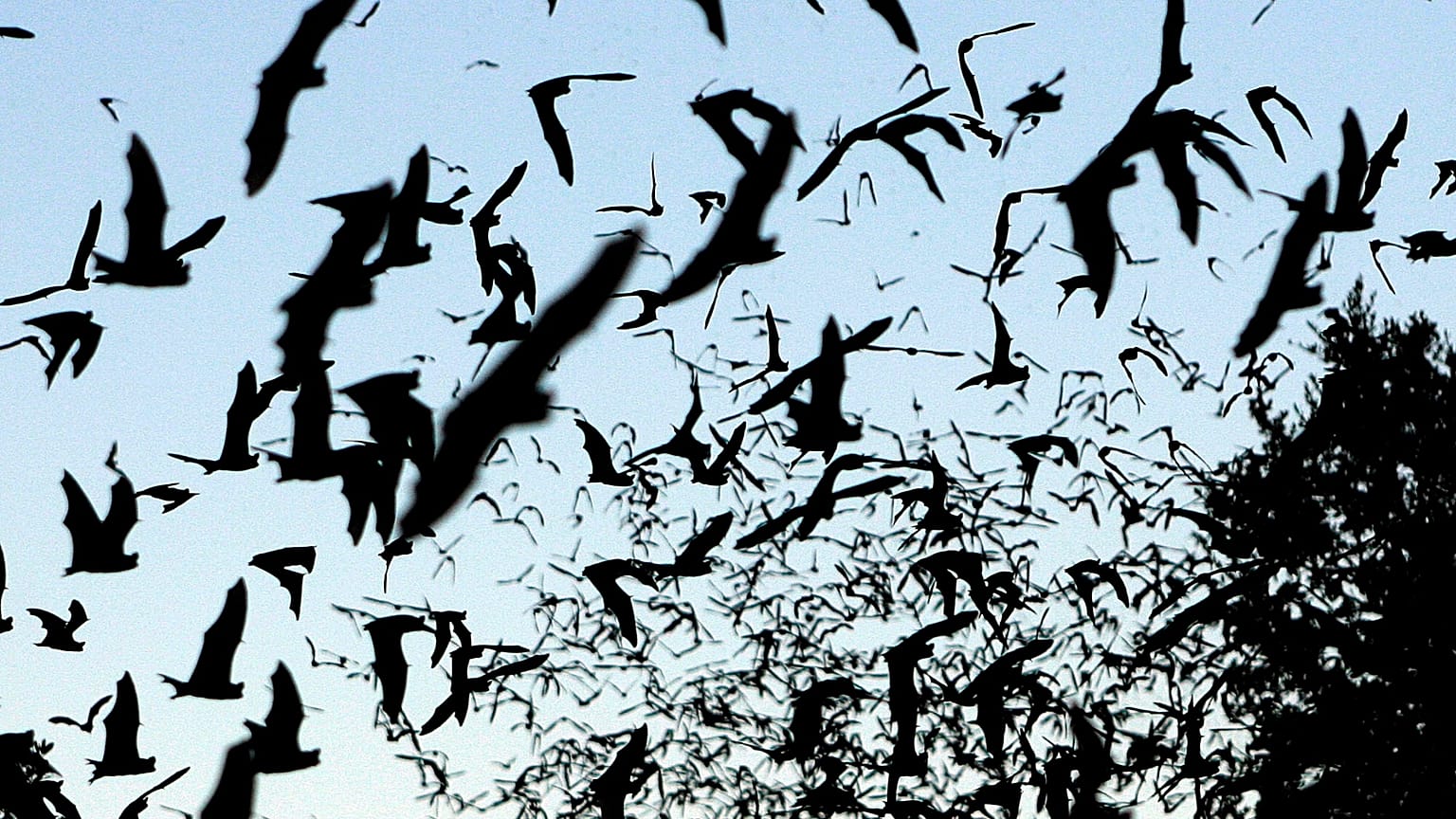
In this Aug. 6, 2009, file photo, bats take flight outside the Old Tunnel Wildlife Management Area near Fredericksburg, Texas.
Copyright AP photo

By Nathan Rennolds
Published on

Rabies is a rare but deadly infection usually spread by a bite or scratch from an infected animal. It is almost always fatal after the onset of symptoms, although vaccination and early treatment can help to prevent it.

An 11-year-old boy died from rabies in Canada after he woke up to find a bat "on his nose and mouth," according to a report in the Canadian Medical Association Journal.

The boy died in hospital in Ontario after developing severe symptoms including bulbar palsy, a neurological condition affecting the nerves controlling muscles used for speaking, swallowing, and breathing.

His family said that around 19 days before the onset of initial symptoms, he had been staying in a cottage in northern Ontario, where he had been awoken by a bat on his face.

The child swatted the bat away and the father caught it and released it. The boy is said to have had no visible lesions from the incident and "his parents did not consider that the bat had behaved erratically". They therefore decided not to seek medical advice.

The boy later began experiencing facial numbness and swelling and was taken to a local urgent care clinic, where he was prescribed antiviral medication for suspected Bell's palsy - temporary weakness or lack of movement usually affecting one side of the face.

He then had consecutive visits to hospital after he began vomiting and developed pain while swallowing, receiving an initial diagnosis of severe herpes gingivostomatitis, an oral infection that can cause painful sores.

But the child's condition began to deteriorate. He developed a fever of 39.1°C, as well as difficulty swallowing, confusion, hallucinations, hypersalivation and neurological conditions. He was intubated and taken to a paediatric intensive care unit while medical staff consulted with the infectious diseases service.

"When we saw the patient in the PICU, we strongly suspected rabies, given the bat exposure and typical neurologic features," doctors said. Tests confirmed rabies on the boy's fourth day in hospital.

"The patient’s hospital course was complicated by autonomic dysfunction, ventilator-associated pneumonia, and progressive neurologic decline," per the journal entry. "By day 5 of admission, his brain stem reflexes were absent. Life-sustaining therapies were withdrawn on day 17 of admission, and he died peacefully with his family at his bedside".

Rabies is a rare but deadly infection usually spread by a bite or scratch from an infected animal.

It is almost always fatal after the onset of symptoms, although vaccination and early treatment can help to prevent it.

According to the US's Centers for Disease Control and Prevention, there are a number of "unusual" behaviours that can indicate rabies in bats. It says people should watch out for bats that are active during the day, that are found in unusual places such as inside a home or on the ground, that are unable to fly or are easy to approach, or that have "made contact with you".