Sunday, July 05, 2026

Largest US Data Center Project Ever Proposed Is Officially Dead

  • QTS withdrew its Virginia Supreme Court appeal on July 2, killing the 2,100-acre, roughly $100 billion Digital Gateway campus for good.

  • The retreat follows a March court ruling that voided the project's 2023 rezoning over a notice error, and lands days after Blackstone sold a majority stake in three other Northern Virginia data centers to Digital Realty.

  • Blackstone's broader data center business is unaffected: it still manages more than $150 billion in digital infrastructure assets and just took its acquisition REIT public in May.

The largest data center project ever proposed in the U.S. is officially dead.

Blackstone-owned QTS Realty Trust withdrew its appeal to the Virginia Supreme Court on July 2, closing out a three-year legal fight over the Prince William Digital Gateway, a planned 2,100-acre campus in Prince William County, Virginia that would have packed 37 buildings and 22 million square feet of data centers next to Manassas National Battlefield Park. At full build-out, the project carried an estimated $100 billion price tag and would have been the largest data center complex in the world.

QTS was the last developer standing. Co-developer Compass Datacenters, backed by Brookfield, dropped its own appeal in April, and the Prince William Board of County Supervisors withdrew from the litigation the same month after spending nearly $2 million in taxpayer funds defending the original rezoning. That approval, granted in 2023, was voided by the Virginia Court of Appeals in March, which found the county's public notice for the rezoning hearing fell short of the state's six-day spacing requirement between newspaper notices.

In its withdrawal filing, QTS said the project had "advanced through years of planning, analysis, and public review" and would have delivered tens of billions of dollars in capital investment and thousands of jobs to the county. The company added that Virginia remains central to its business, pointing to $5 billion in ongoing investment in the Richmond region on top of its existing Northern Virginia footprint.

The retreat comes days after Blackstone agreed to hand Digital Realty full ownership of three built-and-leased Northern Virginia data centers valued at $7.8 billion, in a $3.5 billion cash-and-stock deal. That transaction extends an existing joint venture rather than an exit, but the timing puts fresh attention on how Blackstone is managing its data center bets in the state that hosts more capacity than anywhere else in the world.

Northern Virginia remains the industry's biggest hub, and the region's buildout keeps running into local resistance over land, water and grid strain. Several states have floated moratoriums or tighter permitting rules as utilities warn that data centers are driving an outsized share of new electricity demand, and grid operators in some regions have started asking developers to bring their own power generation rather than compete for scarce capacity. A Gallup survey released in May found 71% of Americans oppose data center construction in their area, with 48% strongly opposed, running higher than opposition to a local nuclear plant.

For Blackstone, the Digital Gateway collapse doesn't change the broader trajectory. The firm still manages a data center portfolio worth more than $150 billion globally, and in May it raised $1.75 billion taking its acquisition vehicle, Blackstone Digital Infrastructure Trust, public on the NYSE, to keep buying already-built, leased facilities tied to AI demand. What the Prince William outcome shows is that even the biggest players in the space can lose a fight over land use once local opposition organizes and the legal process runs its course.

By  Charles Kennedy for Oilprice.com


Will Climate-Driven Heatwave Help Make the Case Against Big Tech Data Centers?

As power grids become strained amid the latest US heatwave, residents of communities with data centers are being asked to make sacrifices in the form of cost, comfort, and potentially safety.



Drone image of the Markley Group data center within a residential neighborhood in Lowell, Massachusetts on May 12, 2026.

(Photo by Danielle Parhizkaran/The Boston Globe via Getty Images)

Stephen Prager
Jul 02, 2026
COMMON DREAM

The rise of global temperatures has made oppressive summer heatwaves an annual occurrence, and for many Americans, air conditioning is no longer optional.

But as scorching temperatures bear down on the US once again this week, affecting more than 250 million people across the country, some are suddenly being forced to share the precious cool air with data centers that have popped up in their towns to power the breakneck build-out of artificial intelligence technology.

Alarmed by ‘Rapid, Largely Unregulated Rise’ of AI Data Centers, 500+ Groups Demand Congress Pass Moratorium

To keep their massive arrays of computer servers cool, these complexes require large amounts of energy even in normal times. But during a heatwave, the demand becomes even greater.

As power grids become strained, residents of communities with data centers are being asked to make sacrifices in the form of cost, comfort, and potentially safety.

In Henrico County, Virginia, which has 37 data centers, thousands of county employees received an email last week from County Manager John Vithoulkas warning them that beginning on July 1, the rate paid by “government and school facilities will increase dramatically—by 25%, increasing costs by an estimated $5 million next fiscal year.”

“To mitigate the impact of higher electric costs, I am asking that we, collectively, make slight adjustments to conserve electricity across our individual workspaces,” he said in the email, which was obtained by 404 Media. “Turn off your lights when leaving your workspace, including when you leave for the day,” he continued. “Turn off your computers/laptops at the end of each workday. If your workspace has windows, adjust the blinds to manage heat from sunlight.”

He also informed them of the high cost of running “space heaters,” which Frank Landymore of Futurism.com suggested was a thinly veiled way of telling residents to turn down the AC, since nobody would be using space heaters in 100-degree heat.


It was a signifier of what’s happened across the entire mid-Atlantic grid, whose largest operator, PJM Interconnection, is experiencing record energy demand.

According to Reuters, the grid that supplies power to 67 million people has seen a roughly 1,000% increase in capacity prices since 2024 as a result of the AI boom, which is already being passed onto consumers in the form of higher bills.

To reduce the risk of outages caused by an overburdened grid, the US Department of Energy granted PJM the authority to require data centers to operate backup diesel generators.

Under the emergency order, Politico reported, data centers are allowed to produce enough diesel emissions that the Environmental Protection Agency (EPA) would categorize it as a “possible human carcinogen.”

The result has been what Shaolei Ren, a professor at the University of California, Riverside, told The Associated Press could be “a disaster for the local air quality” in communities with data centers.

In Lowell, Massachusetts, where a Markley Group data center sits in the working-class Sacred Heart neighborhood, residents told the AP that they were staying inside to avoid smelling the diesel fumes being belched up near their homes.

Public backlash led the Lowell City Council to vote unanimously for a moratorium on data center building in February. But many residents feel the damage has already been done, with the Markley center gobbling up their town’s electric and water resources.

One resident told The Harvard Crimson in May that since the center came to town, his winter electric bill has shot up from $40 to $177.

As temperatures spiked this week, more than 200 protesters flooded a local zoning meeting to voice their anger about the noise, pollution, and surveillance equipment bearing down on their homes. One 14-year-old girl was dragged out of the meeting by police officers.

“I’m not hurting anyone,” she shouted as cops escorted her through the exit. “We just don’t want data centers!”


Within roughly three years, data centers have come to consume about 4.5% of all electricity in the US, a number that is expected to keep ballooning in the coming years.

Even before the data center boom began, scientists had long warned that the climate crisis caused by human carbon emissions would make US heatwaves more frequent, longer, and more intense.

Heatwaves in major US cities are already three times as common as they were in the 1960s, according to an EPA report from 2024, and the average heatwave season is now 46 days longer.

The number of heat-related deaths in the US more than doubled from 1,069 in 1999 to 2,325 in 2023, according to a JAMA Network study analyzing mortality data from the Centers for Disease Control and Prevention.

With more than 1,500 data center projects currently underway across the US, a vicious cycle appears poised to accelerate.

The rapid buildout of data centers has already culminated in massive emission spikes. Amazon, which once pledged to reach net-zero emissions by 2040, saw its carbon output increase by 16% in 2025 in large part due to its multi-billion dollar data center buildout.

According to a report out Wednesday from the Environmental Integrity Project, at least 74 natural gas-fired power plants are being planned to power the industry’s expansion, which are expected to release 662 million tons of greenhouse gas—equivalent to the entire nation of Australia—per year.

Many of the plants are being built in low-income areas that already have poorer health outcomes and could produce nearly 160,000 tons of health-damaging pollutants that can cause lung damage, asthma, and heart attacks.

“In their wholehearted embrace of dirty and outdated gas power, data center developers are announcing to the public that they don’t care about us,” said Alex Bomstein, the executive director at Clean Air Council. “We deserve better than decades of toxic pollution, parched streambeds, and climate chaos.”

Power Prices Triple on PJM as Heat Wave and Data Centers Collide


  • PJM demand hit roughly 163 gigawatts Thursday, just short of the grid's 20-year-old record, as the DOE issued its third emergency order of 2026.

  • Wholesale prices spiked past $2,000/MWh and operating reserves fell to 5,091 MW, leaving PJM little cushion against an unplanned outage.

  • PJM's own numbers show nearly all its demand growth through 2030 comes from data centers, and capacity costs have already jumped more than 11-fold.

America's biggest power grid pushed to the edge of an all-time record this week, and the bigger force behind it may be tied to data centers.

PJM Interconnection, which delivers power to 67 million people across 13 states and Washington, D.C., saw electricity demand surge to roughly 163 gigawatts on Thursday as a brutal heat dome pushed heat indices past 110 degrees from Washington to New York, according to Reuters. That fell just short of the grid's 2006 all-time peak of 165,563 megawatts, even after PJM had forecast Thursday's load could top 166,000 MW. Wednesday's preliminary peak hit 161,910 MW, among the highest readings PJM has ever recorded. 

The National Weather Service has warned the dangerous heat will persist through the Fourth of July weekend, with heat indices reaching as high as 115 degrees in parts of the mid-Atlantic, per Utility Dive.

The U.S. Department of Energy stepped in Tuesday with its third emergency order of 2026, authorizing PJM to push power plants past normal pollution limits and, as a last resort, force large data centers onto backup generators during peak hours.

The order lets PJM direct any customer with at least 50 megawatts of peak load to switch to onsite backup power within 15 minutes of an emergency signal, freeing capacity for homes and hospitals. The DOE issued similar orders after a January cold snap and a May heat-and-maintenance squeeze.

“Maintaining affordable, reliable, and secure power in the PJM service territory is non-negotiable,” Energy Secretary Chris Wright said in a statement Tuesday.

Day-ahead power topped $2,000 per megawatt-hour in parts of the system Thursday, and the Western Hub benchmark settled at $1,222.75/MWh, according to power markets data firm Yes Energy, nearly triple where it stood during a comparable peak last summer. PJM's operating reserves, the cushion it keeps on hand for the unexpected, sank to 5,091 MW Thursday from 10,996 MW a day earlier, leaving little room to absorb a plant tripping offline.

During a comparable late-June peak this year, natural gas supplied 44 percent of PJM's generation, coal another 19 percent, nuclear 20 percent and solar just 6 percent, according to the U.S. Energy Information Administration.

PJM projects peak demand will grow by 32 gigawatts between 2024 and 2030, with all but 2 gigawatts of that increase coming from data centers, according to PJM figures cited by Canary Media. The buildout has already pushed PJM's capacity market, the mechanism that pays generators to guarantee future supply, to a record $333.44 per megawatt-day, up more than 11-fold from $28.92 just three auctions earlier. Independent market monitor Monitoring Analytics has tied 63 percent of that run-up to data center demand, a tab of roughly $9.3 billion now landing on ratepayers.

Utilities asked customers to help bridge the gap in the meantime…

 Maryland's BGE and Potomac Edison told customers to raise their thermostats, grill outdoors instead of cooking inside, and hold off on running dryers and dishwashers until evening. PJM's 18 gigawatts of fast-start reserves held, and the grid avoided rolling blackouts. But the record it dodged this week is one it's now forecast to break soon enough, with or without a heat wave to blame.

By Michael Kern for Oilprice.com 


Copper's Next Move Depends On Washington, Not The Strait Of Hormuz

  • Aluminum's war-driven price spike has mostly unwound even as Gulf shipping recovery slips toward 2027.

  • Copper's next major price move now hinges on a delayed Trump administration tariff decision, not the Strait of Hormuz.

  • Tin and lead, both untouched by the Iran war, posted H1's biggest swings in opposite directions, up 27% and down 7%.

Six months after Operation Epic Fury upended the metals complex, the Strait of Hormuz still can't decide if it's open. Days after the two countries signed a memorandum of understanding on June 17, Iran's military declared the strait closed again, only for Iran's own foreign ministry to tell state media shipping was “operating normally.” 

Under that same agreement, Washington has until July 19 to fully lift its naval blockade, while Tehran is only committed to its “best efforts” to restore pre-war traffic. Base metals have spent the first half of the year pricing exactly that kind of confusion. What's changing heading into the second half is which risk is actually moving the tape.

The LME Index, the exchange's basket of six base metals, swung from euphoria to dejection and closed H1 somewhere in the middle. The dispersion underneath that number tells the real story: metals with direct Gulf exposure are unwinding their war premium, while the ones without one never needed it.

Missile strikes on smelters in the UAE and Bahrain knocked out roughly 2 million tons of regional annualized output between February and May, sending LME three-month aluminum to a four-year high above $3,780 a ton in early June. Most of that premium has already unwound as the market prices in something like normality, even as Gulf oil flows through Hormuz remain years from fully recovering.

The strait closure squeezed sulfuric acid supply, hitting leach producers, while collapsing smelter treatment terms have left processors relying on byproducts just to stay afloat. Copper prices topped $14,000 a ton in June, within reach of January's record. But copper's real swing factor now sits in Washington, not the Gulf.

Commerce Secretary Howard Lutnick's June 30 review of the domestic refined copper market was supposed to tell President Trump whether to impose a tariff starting at 15% in January 2027, and the decision still hasn't landed. BNP Paribas metals strategist David Wilson said opponents are “still actively and significantly lobbying to not have a tariff,” a sign the outcome remains genuinely contested.

Zinc, largely insulated from the war, was H1's surprise performer, up 14% by June on an unexpected global deficit outside China. Nickel tracked Indonesian mining quotas more than anything in the Gulf, spiking on production cuts before sliding back on talk of a loosening. Tin and lead, untouched by the conflict entirely, simply followed their own fundamentals: tin up 27% on a structural supply squeeze, lead down 7% on surplus and warehouse arbitrage.

As Vandana Hari of Vanda Insights put it, the strait “continues to reopen but it's patchy, unpredictable, and not fully transparent.” Once that premium finishes fading, base metals will trade the way they always have, on their own supply and demand, and, for copper, on whatever Washington decides next.

By Michael Kern for Oilprice.com

Codelco debt and high costs hurt competitiveness, document says

Photo by Codelco

Chile’s state-run copper giant Codelco sees soaring costs, which are over one-and-a-half times above its global rivals, and heavy debt are the main challenges to the struggling company’s competitiveness, according to an internal document seen by Reuters.

The document said that, compared with industry rivals, Codelco has “significantly higher” costs, with a direct cost (C1) 57% higher than major international mining companies and 72% higher than the main national operations.

“The main competitive gap identified by the comparison is concentrated in operational costs, which remain significantly above international and national benchmarks,” the report said.

The analysis also highlighted that the company’s net debt to EBITDA is 3.8x, compared to 0.7x for global mining and 0.5x for the industry in Chile.

Despite losing its spot as world’s largest copper producer in 2025, the report showed that the quality of its mining resources weren’t the main detriment compared to competitors.

The document showed that Codelco’s average ore grade was 0.62% compared to 0.59% at its global counterparts, despite being below the 0.80% of other miners in Chile.

“Codelco’s main challenges are focused on increasing operational competitiveness, improving profitability and increasing the return on the significant investments made, rather than on its production scale or the quality of its resource base,” the report said.

It added that comparisons showed that there are “significant room for improvement in productivity, operational efficiency, and economic performance.”

In its latest earnings, the company said it faced rising costs across several of its mines for varying reasons, including the fatal accident in El Teniente, poor ore grade in Ministro Hales and maintenance costs in Chuquicamata, El Salvador and Gabriela mistral.

The results said costs also rose due to currency appreciation, the rising cost of materials and lower production.

After a scandal involving inflated production figures, Codelco’s new chairman, Bernardo Fontaine, has said he’s reviewing all the company’s operations and projects to restructure its investment and production plans.

Codelco, by law, must return all its profits to the state and debt has become its main source of financing. That debt has also ballooned due to its multi-billion mine expansion projects that were intended to counteract declining ore grades but have been plagued by missteps, cost overruns and accidents.

(By Fabian Cambero; Editing by Alexander Villegas and Nick Zieminski)


Column: LME metals whipsawed by war and peace in first half of 2026

LME warehouse. Credit: Steinweg Group

(The opinions expressed here are those of Andy Home, a ​columnist for Reuters.)

The early-year euphoria that propelled both copper and tin to record highs was doused by the launch of Operation Epic Fury at the end of February.

The Iran war has dominated the headlines ever since, which has been challenging for traders because the headlines have been so confusing.

The Strait of Hormuz seems to have entered a quantum ​universe in which it can be simultaneously open and closed, depending on which protagonist is talking at any given point in time.

Schrödinger’s Strait “continues to reopen but it’s patchy, unpredictable, and not fully transparent,” according ‌to Vandana Hari, founder of oil market analysis provider Vanda Insights.

That is an equally good description of the current peace talks, which are taking place in Doha.

Amid the fog of war and peace, the LME Index, a basket of the six base metals traded on the London market, has swung from exuberance to dejection to resilience over the first half, ending the period somewhere in between.

LME Index YTD relative performance

Individual performances have diverged widely, depending on each metal’s sensitivity to the ebb and flow of the Gulf news.

LME Metals relative performance H1 2026

Aluminum hit

Aluminum has been a direct casualty of the ​war in the form of missile strikes on two Gulf smelters and constrained logistics at others.

Regional production dropped by an annualized 2 million metric tons between February and May, according to the International ​Aluminium Institute.

The unprecedented supply shock sent LME three-month aluminum to a four-year high of $3,787.50 per ton at the start of June.

The war premium has since almost completely unwound as ⁠the market prices in a return to some sort of normality.

LME aluminium stocks off and on warrant
LME aluminum stocks off and on warrant

Part of the new normal, however, is low LME inventory. Combined on- and off-warrant stocks have shrunk to just over 400,000 tons, most of it Russian metal.

Copper confusion

The ​war has injected another level of confusion into an already confused copper market.

At a macro level, the potential impact on global growth is negative for copper. But on a micro level, the closure of the Strait has created a ​sulphuric acid shortage, squeezing copper producers using leach technology.

The copper concentrates market, meanwhile, is dysfunctional, with smelter treatment terms collapsing to the point that processors are now relying on everything but copper to make money.

The refined metal market is still on tenterhooks, awaiting a decision on whether US President Donald Trump will impose tariffs. A decision is due any day.

The premium for US delivery continues to suck in metal from the rest of the world.

CME-LME copper arbitrage

Caught between conflicting signals, LME three-month copper has been treading water between $13,000 and $14,000 per ton since ​the middle of May.

Investors still like copper’s story of structural supply deficit, and there are plenty of super-bulls biding their time in the LME options market.

Zinc surprise

Zinc, which has little direct exposure to the war, has been the ​surprise performer among the LME pack so far this year.

LME three-month zinc hit a near four-year high of $3,658 per ton in early June and closed the month up 14% from the start of the year, the second-strongest price performance after tin.

The global zinc market was supposed ‌to be in ⁠a big supply surplus this year, but the latest assessment from the International Lead and Zinc Study Group is for a small deficit.

The shortfall is concentrated in the world outside China, where smelter production continues to under-perform. China itself is steadily lifting production and is on course to reach a state of self-sufficiency in the near future.

Nickel plays the Indonesian numbers game

Nickel trading has been all about Indonesia and the government’s attempt to rein in its runaway production sector.

Sharp reductions in this year’s mining quotas boosted the LME three-month nickel price to a two-year high of $20,000 per ton in May.

The sulphur squeeze emanating from the Gulf has piled more pressure on Indonesian producers using acid in ​leaching operations.

However, growing speculation that Indonesia is set to ​loosen its mining quotas has sent the price crashing ⁠back towards the $16,000-per-ton level.

While Jakarta weighs its options, surplus metal continues to accumulate. LME stocks have topped out, but Shanghai Futures Exchange inventory has just surpassed 100,000 tons for the first time since 2016.

Turbulent tin and oversupplied lead

Tin and lead have been wholly unaffected by events in the Gulf, allowing each to follow its own narrative path.

In ​the case of tin, this is a bull promise of structural supply deficit in the face of rising demand for the electronic soldering metal.

Tin has been pricing ​scarcity for many months and ⁠was the outperformer of the LME complex in the first half of 2026, with year-to-date gains of 27%.

LME stocks of lead, on and off warrant

Lead , by contrast, is a market weighed down by surplus metal and closed the first half with year-to-date losses of 7%.

Combined LME on- and off-warrant inventory has been hovering around the 500,000-ton mark since the start of the year.

Lead has assumed aluminum’s mantle as the market of choice for inventory financiers, with LME trading characterized by warehouse arbitrage and inventory rotation between on-warrant and off-warrant storage.

That, of ⁠course, also speaks ​volumes about how much aluminum dynamics have changed since the start of the Iran war.

(Editing by Marguerita Choy)

 BRAZIL

Boliden in talks to buy Votorantim’s controlling stake in Nexa


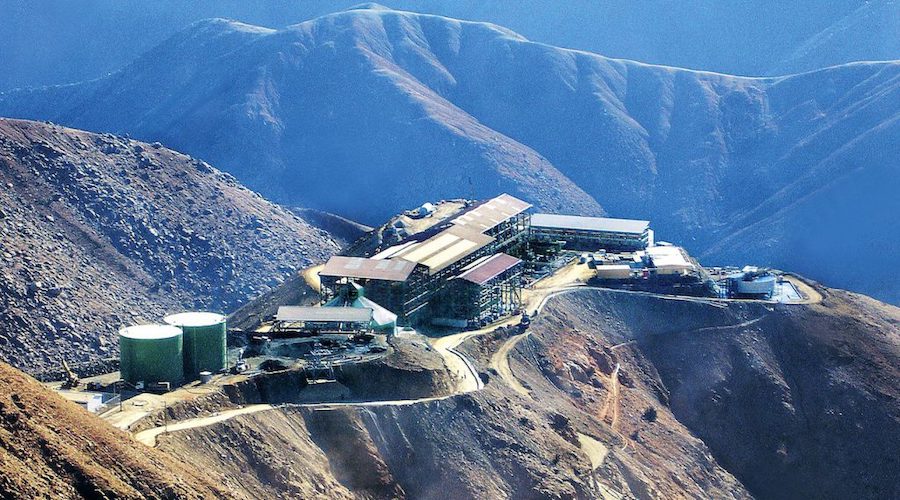
Cerro Lindo, in Peru, is one of Nexa’s most important mines. (Image courtesy of Nexa Resources | Flickr.)

Boliden (STO: BOL) is discussions to acquire a majority stake in zinc miner Nexa Resources (NYSE: NEXA) from Brazilian investment group Votorantim.

In their statements issued late on Thursday, both Boliden and Nexa confirmed that these talks are taking place, following earlier speculation. The companies did not provide further details, and cautioned that there is no certainty that a deal would materialize from these talks.

Shares of Nexa jumped 2.8% during after-hours trading, giving it a market capitalization of about $1.8 billion.

The announcements follows reports earlier this year that Votorantim is close to selling its controlling stake in Nexa. In April, the group told local newspaper Estadao that a deal to sell its 64.7% interest would come in the region of 7 billion reais ($1.4 billion). Before that, it had already sold aluminum producer CBA to Chinalco and Rio Tinto for about 4.7 billion reais.

A deal with Votorantim would further enhance and broaden Boliden’s base metals exposure. Nexa is one of the world’s leading zinc producers, operating five polymetallic mines and three smelters across Brazil and Peru.

GOOD OLD US IMPERIALISM

US envoy says Cook Islands minerals are a top priority


US Ambassador Jared Novelly (top left) held his first official meeting with New Zealand’s Foreign Minister, Winston Peters, this week. Credit: US Embassy NZ | X

The new US ambassador to New Zealand and several Pacific island nations said on Friday that securing Cook Islands seabed minerals was a top priority, and that China’s push for influence in the Pacific carried risks for small island states.

Jared Novelly, US ambassador to New Zealand, the Cook Islands, Niue and Samoa, said in a press conference that critical minerals had moved rapidly up his agenda over the last year.

“When I was getting briefings in October, November last year, the critical minerals thing was kind of a lesser item,” Novelly said. “Fast forward to February, March of this year, critical minerals, and particularly in the Cooks, is either 1A or 1B of my priorities.”

Washington has made securing critical minerals a strategic priority as it seeks to reduce its reliance on China-dominated supply chains and support defence and clean-energy industries.

The Cook Islands’ waters contain deposits of polymetallic nodules, sought for batteries and other technologies, and the government has allowed exploration, but not commercial extraction. In February, the Cook Islands and the US signed a non-binding framework on critical minerals research and supply-chain security, including deep-sea minerals in Cook Islands waters. It has also signed an exploration and research agreement with China.

Novelly, a Missouri businessman and sports team owner who is the inaugural US ambassador to the Cook Islands, said he planned to spend time in the country and would look to introduce US companies that could help with the minerals’ extraction.

The Cook Islands government did not immediately respond to a request for comment.

He said he also believed he needed to warn Pacific countries to be cautious in dealings with Beijing.

“China has made no bones about they want a base in the Pacific, they want an expanded presence there,” he said, adding that island nations needed to understand “what a debt trap is” and that “there can be strings attached”.

China in recent years has become a major player in the region, in development finance, ports, airports and telecommunications, and has sought a greater role in the military, policing, digital connectivity and media. Beijing says its relationships in the region are based on mutual respect and delivering benefits to the Pacific people.

Novelly said he was also exploring ways to support Pacific economies beyond aid, including by reducing the cost of remittances.

US faces more skeptical Kiwis

Novelly arrived in New Zealand earlier this week and presented his credentials to the governor general on Wednesday before hosting the embassy’s annual July 4 party.

Novelly said Washington respected New Zealand’s role in the South Pacific, including defence cooperation, but said partners needed to spend more on security.

“It’s important that you care as much about your defence as we care about your defence,” he said, echoing US policy towards partners and allies around the globe.

Novelly arrives as New Zealanders’ views of the United States have fallen. A June survey by the Asia New Zealand Foundation found that, for the first time in a decade, they viewed Washington as more of a threat than China.

But Novelly said it was not something he had experienced on his visits to the country and “there seems to be a very friendly camaraderie that occurs between folks from the US and Kiwis.”

On New Zealand’s nuclear-free policy, which restricts visits by nuclear-powered or nuclear-armed vessels, Novelly said any change was a decision for Wellington but that he would like to see a US aircraft carrier visit in Auckland harbour.

“I would really like the opportunity to work with New Zealand on that,” he said.

(By Lucy Craymer; Editing by Kate Mayberry)


Japan buyers agree on higher aluminum fees Due to war disruption


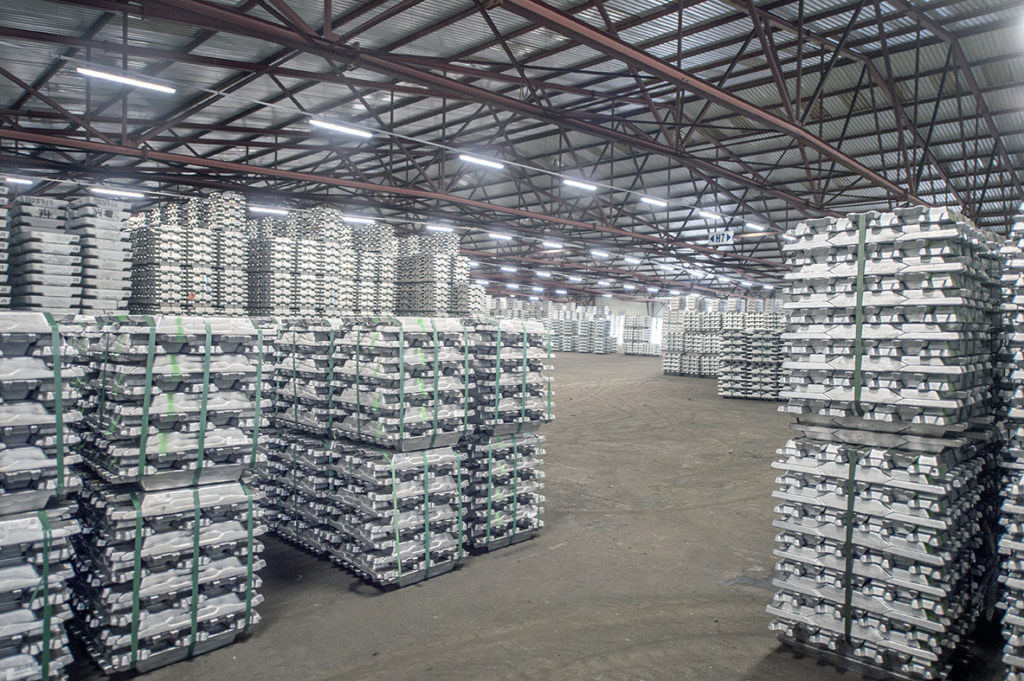
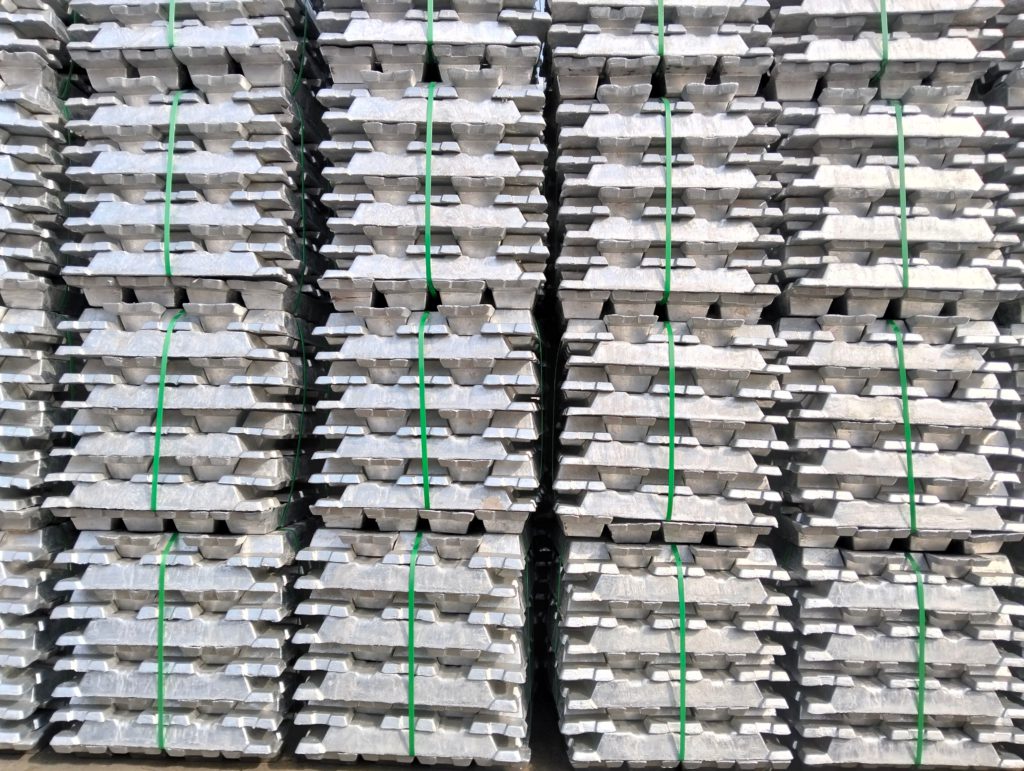
Aluminum ingots. Stock image.

Aluminum buyers in Japan, where the automobile industry is heavily dependent on metal imports, agreed to pay a sharply higher premium for third-quarter shipments after two producers lowered their initial demands.

Rio Tinto Group and South32 Ltd. reached an agreement with at least one Japanese customer to set the third-quarter premium at $395 a ton over London Metal Exchange prices, according to traders familiar with the negotiations. The fee, while above second-quarter levels, was less than suppliers’ initial offers of more than $400 a ton, they said, asking not to be named as the discussions are private.


Japan’s reliance on the Middle East for high-end aluminum is forcing companies to cut back on production and scramble for alternative supplies, leaving it vulnerable to demands for higher prices from producers. The agreed fee compared with a premium of $350 a ton for second-quarter shipments from Rio Tinto and $353 a ton from South32.

Rio didn’t immediately respond to a request for comment, while South32 declined to comment. The two companies initially offered premiums of between $460 and $480 a ton, the traders said.

There looks to be some relief coming for Japanese buyers, however. While the longer-term outlook for aluminum is bullish, traders say sentiment is weakening in the short term as supply conditions improve. That also helps explain why aluminum has retreated nearly 20% on the LME after climbing to a four-year high a month ago.

Emirates Global Aluminium, the Middle East’s top producer of the metal and a major supplier to the Japanese market, said this week that it aimed to speed up resumption of output at its Abu Dhabi facility that was damaged during the Iran war, with repairs of the main smelter ongoing.

About 7% of the aluminum production pots at the company’s Al Taweelah smelter are back online, Emirates Global’s chief financial officer Pal Kildemo said in an interview. The company is exporting metal by drawing down inventories and aims to get stockpiles back to normal levels by the end of the year, he said.

In China, some smelters and merchants have been maximizing overseas sales of stranded aluminum wire, typically used in power cabling for its strength and flexibility, and the buyers included Korean and Japanese firms, according to Chinese customs data. Much of the wire being shipped is probably being remelted abroad into aluminum ingots, which China has largely stopped exporting directly due to tariffs, traders have said.

(By Alfred Cang)


Chile’s Novandino Litio seeks environmental approval for $3B Atacama lithium project


Stock image.

Novandino Litio, the joint venture between Chilean lithium producer SQM and state-owned copper miner Codelco, filed for environmental approval on Friday for a $3 billion project aimed at extending lithium production in the Atacama salt flat until 2060, a regulatory filing showed.

The “Operational Continuity and Future Mining Development Project in the Atacama Salt Flat” is part of the SQM-Codelco partnership, forged under Chile’s plan to boost state involvement in the lithium sector, a critical source of battery materials for electric vehicles.

The project would maintain current operations while gradually introducing new infrastructure and technologies aimed at improving efficiency in lithium production, as well as the extraction of potassium salts and other brine-derived products.

The plan calls for a gradual shift to new processing technologies aimed at reducing freshwater use from company-owned wells, while improving resource efficiency through treated brine reinjection and enhanced environmental monitoring.

SQM CEO Ricardo Ramos said in May he expected final approval for the initiative to be secured in 2029, with investment beginning in 2030.

(By Fabián Cambero and Fabiola Arámburo; Editing by Alexander Villegas)


SQM-Codelco Venture Targets 70% Lithium Output Surge in Chile

Chile's two biggest lithium players, SQM and state-owned Codelco, are laying the groundwork for a major expansion that could lift production from their joint venture by more than 70%.

In an environmental impact study tied to a planned $3 billion overhaul of operations in the Atacama Desert, the Novandino venture said it is targeting annual lithium production of up to 470,000 metric tons, compared with guidance of roughly 270,000 tons for 2026.

The project is designed to capitalize on expected long-term growth in lithium demand as electric vehicles and grid-scale battery storage continue expanding globally. If achieved, the higher output would further cement Chile's position as one of the world's most important suppliers of battery materials and could add pressure on higher-cost producers elsewhere.

However, the increase will take years to materialize. Under the current development plan, production is expected to rise gradually to around 300,000 tons before the venture begins a seven-year transition to an integrated production system that includes direct lithium extraction (DLE) technologies.

Analysts said the 470,000-ton target was larger than many in the industry had expected because the project had previously been presented primarily as an environmental modernization effort rather than a major capacity expansion.

Benchmark Mineral Intelligence analyst Federico Gay said reaching that level would require additional engineering work, further studies, potential changes to production quotas, and successful deployment of DLE technologies aimed at reducing water consumption in the Atacama salt flats.

"It will take several years, certainly not this decade, to achieve that capacity," Gay said.

The SQM-Codelco partnership is a cornerstone of Chile's strategy to increase state participation in lithium production while expanding output from the country's world-class brine resources.


BHP seeks to restart Cerro Colorado mine with $1.5B investment

Cerro Colorado mine in Chile. (Image by Zwansaurio | Flickr Commons)

BHP (ASX: BHP) has begun the process to reopen the Cerro Colorado copper mine in Chile, targeting an investment of $1.5 billion to keep the operation running for 20 years.

On Wednesday, the Australian miner said it has applied for a new environmental permit for Cerro Colorado. Located in the Atacama Desert, the mine is part of BHP’s Pampa Norte division in northern Chile that also includes the Spence operation.

The copper mine has been closed since late 2023 after it was denied its water permit following protests by local communities.

In an attempt to restart the operation, BHP said it would explore the use of leaching technologies and desalinated water. Under its application, it laid out plans to use treated wastewater transported through a pipeline of more than 100 km from the municipality of Alto Hospicio to the mine site.

This initiative, according to the company, would enable the mine to run for 20 years. Its total cost is estimated at $1.5 billion.

BHP had previously planned to reboot the Cerro Colorado operation by the end of this decade. The mine represents a small part of its Chilean portfolio, in comparison to the giant Escondida mine and the nearby Spence growth project.

Canada commits $352M to Red Chris mine expansion in British Columbia


Newmont’s Red Chris copper-gold mine. Credit: Newmont

The Canadian government confirmed on Thursday C$500 million ($352 million) in financial support for the Red Chris Block Cave expansion project in British Columbia — part of a push to fast-track major mining projects in the country.

“We will invest $500 million to expand Red Chris mine, which will increase Canada’s annual copper production by more than 15%, support critical minerals demand for clean energy and manufacturing, and reduce greenhouse gas emissions by over 70% once operational,” it said in a statement.

The Red Chris porphyry deposit in BC’s Golden Triangle has a massive mineral endowment containing an estimated 20 million oz. of gold and 13 billion lb. of copper across its measured, indicated and inferred resources.

Newmont (NYSE: NEM, TSX: NGT), the world’s largest gold miner, holds a majority ownership and operates Red Chris in partnership with Canada’s Imperial Metals (TSX: III), which holds a 30% joint venture stake.

Last month, the project received crucial regulatory approvals, paving the way for a transition from open-pit mining to an underground operation and extending its lifespan into the mid-2040s.

“Newmont welcomes the government of Canada’s announcement of a C$500 million contribution to support the Red Chris Block Cave project,” the Colorado-based miner said in a statement.

“As we advance through our approval process toward a final investment decision, this commitment strengthens the business case for the development of a world-class copper-gold operation.”

Newmont is currently completing a definitive feasibility study for the project. The Red Chris Block Cave is expected to create more than 1,800 jobs during construction and sustain a total approximate workforce of 1,500 peak-season operational roles.