Monday, July 13, 2026

Deferring a Crisis: The Iran-US Ceasefire Cracks


 July 13, 2026

Photograph Source: The White House – Public Domain

Ceasefires in the Middle East seem especially susceptible to revision, alteration and contradiction.  Missiles still get fired; airstrikes initiated.  Destruction to infrastructure, and death, follows.  Yet despite the misunderstandings, the sniping and the harrying, these odd understandings are often described by those funny political coves as “holding”.  In the case of the ceasefire between Tehran and Washington, articulated with some fanfare with a Memorandum of Understanding, only the most piously delusional would claim it was holding in any way.

The June 18 MoU stipulates from the outset that the US, Iran and their allies “declare the immediate and permanent termination of military operations on all fronts, including Lebanon, and undertaken from now on not to initiate any war or any military of operation against each other, and to refrain from the threat or use of force against each other, and ensuring the territorial integrity and sovereignty of Lebanon.”  The parties further understood that Iran would commit to a gradual reopening of the Strait of Hormuz to commercial shipping; the US would grant modest sanctions relief on Iranian crude, refined products and petrochemical products as well as lift its own naval blockade.  Further talks would take place to reach a final agreement in 60 days.

The Lebanon side of the bargain has, from the outset, been a wretched shambles, with Israel continuing its operations with various shades of intensity against Hezbollah even as it seeks to occupy the south of the country.  The Lebanese government has been increasingly confined to the status of humiliated water carrier.  As for Tehran and Washington, the Strait of Hormuz has again become an area of rattling contentiousness.  Despite being a mere 33 kilometres at its at its narrowest point, this humble body of water was, prior to the February 28 US-Israeli assault on Iran, responsible for the transiting of 20 to 21 million barrels of oil a day, making up somewhere between 20% to 21% of the total global consumption of petroleum liquids.  Liquified natural gas to the proportion of 22% of global trade also took place through the strait.

Iran has continued to target vessels in the strait’s southern corridor, notably those transiting near the Omani coastline. Iran’s chief negotiator Mohammad Bagher Ghalibaf has declared in rather purplish terms that the Strait was a “divine gift from God granted us during this war and our greatest instrument of power”.  Iran maintained sovereignty over Hormuz, though it would coordinate management matters with Oman and the Gulf states.  Indeed, pursuant to Clause Five of the MoU, Iran and Oman had “already reached agreement on all legal and service-related matters.”  It was only at the insistence of the Gulf states that transit fees would not be charged for 60 days.

On July 7, the United Kingdom Maritime Trade Operations centre noted three attacks on commercial shipping in the strait.  While Tehran is suspected of being behind these, given that the tankers were not seemingly travelling through Iran’s approved transit route, it has so far not claimed responsibility for the actions.

These incidents took place even as representatives gathered in the disagreeable atmosphere of the North Atlantic Treaty Organization (NATO) summit just concluded in Ankara. US Central Command (CENTCOM) was swift in initiating strikes conducted “in response to Iranian attacks on three commercial vessels” transiting through the Strait.  On July 8, another wave of attacks was announced by CENTCOM “to further degrade” Tehran’s “ability to threaten the freedom of navigation in the Strait of Hormuz.  The United States is holding Iran accountable for recent unjustified aggression against commercial shipping and civilian crews navigating a vital international waterway.”  Sanctions have also been reimposed on Iranian oil sales.

The response from Iran was not long in coming, keeping to the script written at the start of the war.  The Islamic Revolutionary Guard Corps (RGC) promptly announced drone and missile strikes against the US Fifth Fleet headquarters in Bahrain and Ali Al Salem Air Base in Kuwait.  Again, the Gulf states must be rueing their misplaced reliance on Washington’s security guarantee.

The NATO summit provided the appropriate backdrop of perverse dysfunction for US President Donald Trump, who managed to berate bruised allies even as various arms deals were made.  In responding to a question about whether the ceasefire with Iran had ended, he claimed, as far as he was concerned, “it’s over.”  He had no further appetite to “deal with them anymore, they’re scum.”  They were “sick people, they’re led by sick people, and they’re vicious, violent people.  And if they had a nuclear weapon, they’d use it.”

Groping for some rationalisation of these latest US attacks – some 80 sites struck across southern Iran – military pundits sense a shift towards crippling Tehran’s maritime denial capability, notably the country’s menacing use of fast attack craft, small submarines and armed speedboats.  (CENTCOM insists that 60 small boats had been targeted.)  But the occluding language of Washington’s military-industrial complex, one so inured to the propaganda of muscular might over subtle sense (when in doubt, resort to the favoured word “degrade”), remains blinded to the continued resilience of Iran’s war machine.

Even Trump, for all his raging petulance, can see that the diplomatic trail has not gone entirely cold, if only because he has no other sensible option.  At the summit, he made grumbling mention of his chief negotiators, Steve Witkoff and Jared Kushner.  “I don’t care, they can talk.  But I think they’re wasting their time.”  The Iranians were “a bunch of lying guys.”  Given that negotiations, especially covering Iran’s nuclear program, have been placed in cold storage for the duration of the funeral obsequies for the late supreme leader Ayatollah Ali Khamenei, those lying guys will be waiting full of anticipation.

Binoy Kampmark was a Commonwealth Scholar at Selwyn College, Cambridge. He lectures at RMIT University, Melbourne. Email: bkampmark@gmail.com

Ex-White House Deputy warns Trump leaving US at risk of 'fundamental rupture'


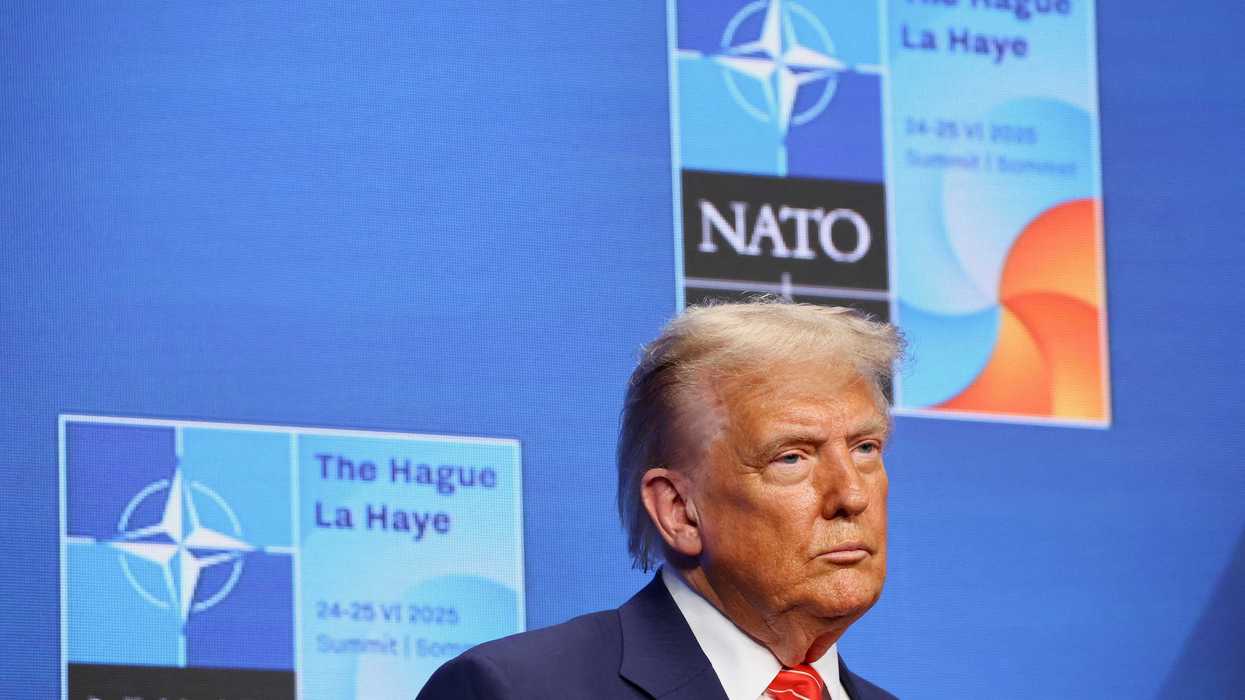
President Donald Trump looks on during a press conference at the NATO summit in The Hague, Netherlands, June 25, 2025. REUTERS/Piroschka Van De Wouw

July 12, 2026
ALTERNET


President Donald Trump's alienation of key allies is creating a world in which the world views the U.S. as a major threat to be avoided and prepared for, one former White House deputy warned for The New York Times, and the situation is leaving the country at risk of a "fundamental rupture" under future presidents.

Jon Finer is a journalist and diplomat who previously served as deputy national security adviser during the Biden administration, and currently serves as a "distinguished senior fellow" at Yale Law School and the Center for American Progress. In a new opinion piece published by the Times on Sunday, he sounded the alarm about how Trump's treatment of global allies is "already costing us" in the near term, and about how it will leave us weakened in the years to come. Whereas three years ago, he explained, Europe navigated the threats posed to it by China, now it must do so for the U.S. instead.

"Three years later, de-risking from predatory superpowers remains the fundamental challenge facing European leaders, but China is no longer the main country of concern: The United States is," Finer explained. "As they publicly seek to mollify a vindictive American president, policymakers across Europe are quietly working to reduce their decades-long dependence on the United States by increasing their own defense, energy and technology industries and diversifying their relationships with other nations. That dynamic was on display last week at the NATO summit in Ankara, Turkey, where President Trump renewed his threats against the U.S. allies Denmark and Spain."

He continued: "It’s not just Europe backing away from the United States. Leaders of America’s partners in Asia and the Middle East are quietly doing the same. The second Trump administration’s ostentatious corruption, trade conflicts, military adventurism and mercurial artificial intelligence regulation have produced a new moment in international affairs: a nearly global grand strategy of countries distancing themselves from the world’s most powerful nation."

This "sea change" for the U.S. is costing it the benefits to the "economy and national security" that came with being an ally that other nations relied on for military protection and technology. As these allies now move away from the U.S., Finer warned that it is "limiting our ability to respond to China’s industrial advantages."

"One doesn’t have to look far to see the costs," Finer argued. "The lost war against Iran, the first in which we didn’t have diplomatic or military alignment with our closest allies in Europe and Asia, caused a spike in gas and fertilizer prices that contributed to a $132 billion hit to American consumers, according to Moody’s. Even as Europe increased its military spending by 14 percent, to $864 billion, in 2025, its military purchases from American companies actually fell by almost half. Mr. Trump’s immigration policies are also driving countries away. Four million fewer visitors came to the United States in 2025 than in 2024, at an estimated cost of more than $8 billion. America is hemorrhaging future skilled labor as enrollment by international university students dropped 17 percent last fall from the prior year, already costing universities at least an estimated $1 billion, and potentially costing the country hundreds of billions in future revenue."

He concluded: "As our partners enhance their own resiliency to us, future American administrations must prepare plans for avoiding a more fundamental rupture. Whoever succeeds Mr. Trump will be the first to take office with countries around the world asking not what America can do for them, but rather seeking to do as much as possible without us. The first step to coping with the fallout is realizing just how much — and how permanently — the world has changed."


Syria: Al-Sharaa Dismisses Trump’s Proposal for Military Intervention in Lebanon


Aseel Saleh |


Analysts suggest that the shift in the balance of power, resulting from the recent regional war, has pushed Syria’s new ruler to reconsider his stance towards Hezbollah, despite enjoying support from the Trump administration.


Syrian interim President Ahmad al-Sharaa. Photo: AP

US President Donald Trump announced mid-June that he discussed with Syrian interim President Ahmad al-Sharaa the possibility of Syria’s military intervention in Lebanon to disarm Hezbollah.

Trump claimed that by tasking Syria with this mission, he aims to stop the mass killing committed by Israel during its attempts to dismantle the Lebanese resistance movement.

“I’ll tell you what, Israel is fighting Hezbollah too long and too many people are being killed, and you don’t have to knock down an apartment house every time you are looking for somebody, because there are a lot of people in those apartment houses and they are not all Hezbollah, that I can tell you. And I suggested to Israel to let Syria take care of Hezbollah, cuz to be honest with you, I think they’d do a better job of doing it.” The US President said on the sidelines of the G7 Summit.

The proposal of the US President was, however, interpreted as another attempt by the US to ignite division and sectarian strife in the West Asia region, and to restore the balance of power that shifted during the recent regional war.

Syria’s new rulers have for long adopted a hostile position towards Hezbollah and Iran, due to their support for Syria’s former President Bashar al-Assad. The transitional leadership in Syria, which is known for its extremist background, has also promoted anti-Shia rhetoric since it took over Syria in December 2024. Shia Islam is the religious doctrine followed by the Iranian leadership, Hezbollah, and other actors within the Axis of Resistance.

This sectarian rhetoric was enhanced by a propaganda campaign, which media mouthpieces of the Syrian interim government launched, introducing the new leadership of the country as the successors of the Umayyad Caliphate, the historic rivals of Shia Muslims.

It is worth noting that Syria saw a surge in sectarian violence after Hayat Tahrir al-Sham (HTS) rose to power, resulting in the deaths of hundreds of people from different religious sects, including Druze and Alawites.

Al-Sharaa seems to have recalculated his regional policy 

Despite his longstanding hostility to Iran and Hezbollah, as well as his alignment with Washington, Al-Sharaa dismissed Trump’s proposal in an interview with Al Mashhad TV late June.

Al-Sharaa confirmed that his country has no intention of military intervention in Lebanon, but it is willing to cooperate with the Lebanese State in finding “other solutions” for disarming Hezbollah. He also demonstrated openness to dialogue with the Lebanese resistance movement.

“Today, the situation in Lebanon requires collective solutions, and Syria can be relied upon to help chart a safe path forward. However, this does not mean war, nor does it imply a return to the historical tutelage that the former Syrian regime imposed on Lebanon. Rather, it means providing the Lebanese state with support, strengthening its institutions, and finding common ground between various political actors and powerful forces in Lebanon, including Hezbollah, to reach a solution that satisfies everyone,” Al-Sharaa stated.

Analysts argue that the shift in the balance of power across West Asia, which resulted from the recent regional war, has transformed Al-Sharaa’s political position towards Hezbollah.

The US and its proxy in West Asia, Israel, failed to defeat the Axis of Resistance after a three-year all out multi-front war. This in turn seems to have made US allies in the region, including Damascus, reconsider their relations with the Iran-led resistance coalition.

Israel reacts to Al-Sharaa’s statements by escalating its assaults on southern Syria

Al-Sharaa’s refusal to get involved in dismantling Hezbollah has apparently provoked the ire of Israel, which reacted by escalating its assaults on southern Syria during the past week. The Israeli Occupation Forces (IOF) launched artillery shelling, carried out ground incursions, and set up checkpoints in various villages of Daraa and Quneitra. 

The escalation showcased Tel Aviv’’s deepening fear of losing its security grip over its neighboring countries, and takes “the Greater Israel” project a step backward. It also indicates that the influence of the Iran-led Axis of Resistance on the region has grown, in a way that represents an existential threat to the Israeli occupation state.

Courtesy: Breakthrough News

Snakebite Deaths in India Far Lower than Feared: ICMR Study


Rajeev Choudhury |

But the study found that 43% of victims die before reaching hospital.

India's first nationally representative community-based study on snakebites has delivered a surprising finding: the number of deaths from venomous snakebites may be significantly lower than previously believed. But the same research also exposes a deeply troubling reality — nearly half of all snakebite victims die without ever reaching a hospital.

The interim report of the ICMR-National Task Force study, published in Nature Communications, surveyed 7,094 snakebite cases across 31 districts in 13 states, covering a population of 83.9 million. The study recorded a mortality rate of 0.33 per 100,000 people — far below the 6 per 100,000 estimate derived from the Registrar General of India's One-Million Death Study. In Kerala, for example, the study recorded 31 snakebite deaths in 2024-25, whereas the older estimate would have predicted 2,100.

"The anticipated mortality for the study was estimated to be 6/100,000 based on the mortality data reported in the One Million Death Study. However, with a mortality rate of 0.33 per 100,000 population, the deaths captured in our study were much lower than the anticipated estimate."

Behind every statistic is a household suddenly pushed into crisis. The statistics reveal a troubling reality: 43.1% of deaths occurred outside of hospital settings, either at home or while in transit. That means nearly half of those who die from snakebites never get the chance to receive anti-snake venom (ASV) — the medicine made to neutralise snake venom.

Who is most affected?

Snakebites are a disease of poverty. The study found that 53% of victims were below the poverty line. The study further found that males (64.1%) in the age group of 30-39 years (20.9%) were the worst affected during monsoons (62.1%); they are India's farmers and daily wage labourers – people who work outdoors, often barefoot, in fields and forests.

"Snakebite envenoming (SBE) is a neglected tropical disease and a significant cause of mortality and disability in India," the researchers note. The World Health Organization classifies snakebite as a neglected tropical disease – a condition strongly linked to poverty, inequality and limited access to health care.

Why do so many die before reaching hospital?

Rural victims often rely on faith healers or traditional medicine for immediate care. A significant proportion of snakebites are from non-venomous species or are "dry bites", meaning bites without venom release, on which faith healers build their reputations. However, this reliance has dire consequences: valuable initial hours are wasted in cases of true envenoming, where venom enters the body following a poisonous snakebite.

The study also found that only 12% of victims had insurance cover, despite BPL cardholders being eligible for Ayushman Bharat. Treatment was predominantly availed in public sector hospitals, with exceptions like Kerala and Punjab. The average out-of-pocket expenditure for a victim was ₹6,500, while the mean treatment cost was ₹7,500 — rising to ₹27,400 in the private sector. For many farming families, the situation means a choice between medical care and food for the rest of the month.

What does the study mean for India's public health response?

The ICMR study, covering all five geographical zones of India, is the only nationally representative community-based assessment of snakebite incidence, mortality and economic burden. It was conceptualised to cover 13 of 28 states, though high-burden states like Uttar Pradesh, Bihar and Madhya Pradesh were excluded, and the study remains in progress in West Bengal.

Researchers acknowledge limitations: snakebite is a medicolegal case, which discourages reporting. In some communities, snakebite is considered a bad omen and kept secret. The study also relied on ASHA workers — frontline health workers whose primary role is in maternal and child health — to report incidents, which may have led to undercounting.

The way forward

One unmeasured outcome of the study is the training of ASHA workers in study districts on first-aid measures, identification of venomous species and recognising symptoms of neuro- and haemotoxicity suggesting envenoming.

"Trained health workers would be the interface between the victim and the health system, especially in remote regions with inadequate health facilities, thereby helping overcome the issue of victims depending on faith healers and alternate systems of medicine."

Researchers have identified several evidence-based solutions: strengthening primary health centres, improving round-the-clock emergency care, ensuring adequate anti-snake venom availability, training ASHA workers, promoting scientifically correct first aid, and expanding financial protection for vulnerable rural households.

The ICMR has also launched the "Zero Snakebite Death Initiative" — a four-year national implementation research project with a financial outlay of ₹13.5 crore, scheduled to begin in January 2026. The initiative aims to co-develop, pilot and implement a composite model of community engagement for snakebite prevention and mitigation.

For now, the message is clear: snakebite remains a disease of poverty, geography and delay. The solution lies not in better medicines alone but in better systems — systems that reach the farmer in the field, the labourer in the forest, and the family that cannot afford the journey to a hospital.

The writer is a Delhi-based freelancer who writes on health issues and medical discoveries.

 INDIA

Beginning of End of ‘Madrassa’ Education in Country?


S.M.A. Kazmi |


After UCC, will other BJP-ruled states follow the Uttarakhand government’s template to abolish the Madrassa Board from July 1?


Madrassa students

Dehradun: With the abolition of the Madrassa Board by the Bharatiya Janata Party (BJP) government in Uttarakhand and replacing it with the Uttarakhand State Minority Authority, is it the beginning of the end of madrassa education in the country under the present ruling (Rashtriya Swayamsevak Sangh) RSS-BJP dispensation?

The Madrassa board in Uttarakhand has been abolished from June 30, 2026, and a new Minorities Education Authority will be the regulatory authority of minority education in the state.

Although, the nomenclature of Uttarakhand State Minority Authority has been camouflaged covering all the minorities, practically it is aimed at “strangling” religious education being imparted to Muslims through the madrassa education system.

The ‘Jamait-Ulema -a Hind’, a body of clerics along with some madrassa owners, have gone to Nainital High Court against the abolition of the Madrassa Board. The next date of hearing is July 8.  

Chief Minister Pushkar Singh Dhami, inaugurating the Uttarakhand State Minority Education Authority on July 1, said that ‘Devbhoomi’ (Abode of Gods) Uttarakhand had taken a lead in minority education to provide quality, modern, and cultured education to all sections of society.

But there is widespread fear that the same template would be adopted by other BJP-ruled states to abolish the madrassa education system in their respective states in the coming days and years. This would be on the lines of the Uniform Civil Code (UCC), which was first implemented by Uttarakhand and later adopted by Gujarat, Assam and now West Bengal.

Dhami is the ‘poster boy’ of the RSS Hindutva brigade and pioneered in inventing several forms of ‘jehads” starting with ‘land jehad’, ‘love jehad’, ‘mazaar jehad’, ‘thook jehad’ and ‘nakal jehad’. The Muslim community here believes he has personally led a ‘jehad’ against “madrassas, mazars and masjids” in the state in the past five years. Vilifying the madrassas for spreading bigotry and Islamic fundamentalism, the Dhami government has closed more than 200 madrassas and bulldozed more than 600 mazaars through the state.

The mazaars (shrines) have been demolished on grounds of being illegal and “encroaching” on government land. However, there is no account of Hindu temples and shrines on government and forest land meeting the same fate. Several mosques in the state have also been closed on one pretext or another. While aggressive Hindutva groups have been targeting Muslims almost on a daily basis on some pretext or other, the state BJP has adopted a legal method to target the community.     

The Muslim community, which is at the receiving end of ire of ‘Sangh Parivar’ led by Dhami, believes that the new legislation is aimed at targeting Muslim ‘madrassas’ as part of the vilification of the community. They are of the opinion that the new law is a clear violation of constitutional guarantee to the minorities to run and manage their educational institutions.

“We have approached the Nainital High Court and are hoping and awaiting a fair judgement to seek our constitutional rights,” Fazlur Rehman, spokesman of the Jamiat, told this writer. The Jamait is already fighting legal cases against UCC and sealing of madrassas. 

As per the new law, the Uttarakhand Madrasa Education Board Act 2016 and the Uttarakhand Non-Government Arabic and Persian Madrasa Recognition Rules 2019, stand repealed from July 1, 2026. As per the new legislation, the Uttarakhand State Minority Education Authority will be established to grant minority educational institution status. Any educational institution established by the Muslim, Christian, Sikh, Buddhist, Jain, or Parsi community will be required to obtain recognition from the authority to qualify for minority educational institution status.

Hafiz Shanazar, a spokesperson of the Uttarakhand unit of Jamait-e-Ulema-e-Hind said that the law was part of the strategy to target Muslims and their educational Institutions. “The law is aimed at hitting the Muslims and ‘madrassas’ as part of a vilification campaign by BJP,” he said.

The law proposes that the proposed Authority will ensure that education is imparted in accordance with the standards set by the Board of School Education, Uttarakhand.

There are 465 madrassas in Uttarakhand that are  affiliated with the Madrassa Board. Nearly a hundred madrassas are also affiliated with the education department running regular classes along with religious education of Quran and Urdu.

Interestingly, most of the madrassas were running schools and teaching NCERT books but Chief Minister Dhami and the pliant media have been giving an impression that madrassas are imparting ‘objectionable’ education that needed to be brought under control and streamlined.

 “Apart from teaching the Holy Quran, we are having regular classes up to class 12 affiliated with Uttarakhand Education Board having NCERT books,” said Maulana Sharfat who is running a ‘madrassa’ in Jeewangarh area near Vikasnagar town of Dehradun district. 

“There are few ‘madrassas’ which impart purely religious education and these are affiliated with Darul Uloom, Deoband. The repeal of the Uttarakhand Non-Government Arabic and Persian Madrasa Recognition Rules 2019 is also a big blow for education of Arabic and Persian languages in the state,” claimed Hafiz Shahnazar.

Muslims form the biggest minority group in the state with 13.95% of the population, as per state government data, followed by Sikhs with 2.34%, as per the 2011 census. Christians are 0.37%, Buddhists - 0.15% and Jains-0.09% of the total population.

But, surprisingly, except Muslims, none of the minority communities having large educational institutions have raised a voice against the law yet. Apparently, the other minorities are presuming that the new law is aimed at targeting Muslims and ‘madrassas’ only.

The new law said that the proposed Authority will ensure that education is imparted in accordance with the standards set by the Board of School Education, Uttarakhand. A simple understanding says that all minority-run educational institutions would have to adhere to the Board of School Education, Uttarakhand.

In Dehradun and Mussoorie, there are old Christian missionary educational institutions which are affiliated to a different board like ICSE, CBSE and even International Baccalaureate. Will all these schools be asked to adhere to the Uttarakhand School Board curriculum like ‘madrassas’?

Children of most ministers, bureaucrats and business persons are studying at these Christia- run schools. “Will the BJP government dare to implement its ‘agenda’ in these schools?” said Hafiz Shah Nazar.

Another interesting aspect of the new Authority, as explained by the Secretary, Minority Welfare, Parag Madhukar Dhakate, was that the minorities would be free to impart religious education but with a rider. The first half of the day would be devoted to general studies like Maths, Science, English, Hindi and Social Sciences while the students would be free to get lessons in religious studies. Meaning thereby that after studying for six hours, the students of madrassas would again study for six hours. Nobody dared to ask him if it was humanly possible for young students to study for so long in a day? 

“The madrassas under Madrassa Board were teaching general subjects along with religious education but it was propaganda by RSS-BJP that ‘anti-national’ things were being taught,” said Khurshed Ahmed Siddiqui, a social worker of Dehradun. 

Another aspect that has further worried the Muslim community is a clause in the Uttarakhand State Minority Authority Act that no educational institution would force it’s students to indulge in any religious activity. “This clearly shows that Muslims would not adhere to their religious practices in madrassas any more. The madrassas are training young Muslims to teach Islam and its basic tenets, which includes ‘namaz’ (prayers) and ‘roza’ (fasting). So now onward, Muslims students would not offer prayers in their madrassas, as most of these have mosques attached. They would not be allowed to wear skull caps,” said Maulana Sharafat of Jeewangarh Madrassa in Vikasnagar tehsil of Dehradun.  

The ‘madrassas’ affiliated with the Madrassa Board used to get some benefits under Central government schemes started by the Manmohan Singh government, which were since stopped after the advent of the BJP government in 2017 in the state.

The first scheme was to give money for infrastructure development by the Union government. However, none of the ‘madrassas’ in Uttarakhand was given money on this count. The second scheme relates to providing grant to teachers by the Central government. A B.Ed teacher was to get Rs.12,000 and a graduate teacher Rs.6,000 per month as honorarium to improve the standard of ‘madrassa’ education and encourage them to teach English, Science and Mathematics. The amount was not salary but was to be paid once in a year. The honorarium of 565 such teachers from 187 ‘madrassas’ has not been paid since 2017 and the Central government scheme was stopped and renamed.

The Uttarakhand BJP government has been targeting madrassas for the past several years. In line with this, Principal Secretary of the Minority Welfare Department, L Fanai, in a letter dated December 23. 2024, had ordered all District Magistrates to constitute a high-level investigation committee to investigate the madrasas running without registration.

The writer is a senior freelance journalist based in Dehradun, Uttarakhand. The views are personal.