Tuesday 21 July 2026, by Manuel Rodríguez Banchs
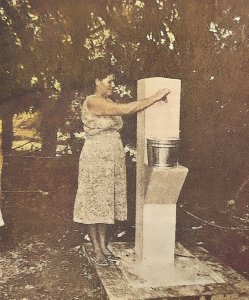
Thirty years ago, the Taller de Formación Política [Workshop for Political Education or TFP] [1] published the book Water in Puerto Rico: Crisis of Nature or Social Crisis? Many of the problems pointed out in that text have worsened and continue to threaten our society. Many of the criticisms, complaints, and warnings that were made have been confirmed. Unfortunately for the country, everything that was pointed out about the super-aqueduct project has also been borne out. Likewise, the proposed alternatives remain valid. A new reading of the text, with the benefit of hindsight, has prompted the following reflections.
The water crisis in Puerto Rico has been predictable, and we see its effects repeatedly. Each time the water situation worsened, proposals emerged and solutions were presented through large-scale projects involving the construction of new infrastructure, including various forms of privatisation and the diversion of public funds to private companies. A prime example is the super-aqueduct, a project that was unnecessary, environmentally damaging, and a source of corruption. Furthermore, it was warned that a pipe six feet in diameter and over 50 kilometers long would cause ruptures and breakdowns that would be difficult to repair and would present access problems. The proposed solutions have generally arisen as reactions to critical situations and have not been the product of the necessary reflection on the root causes of the problems that they are intended to solve. Planning and maintenance have been absent from water management as a vital resource and from the administration of the Autoridad de Acueductos y Alcantarillados (Puerto Rico Aqueduct and Sewer Authority or AAA). Although the privatisation of the AAA was a failure, this policy has persisted through outsourcing.
Government policies over the past 50 years have been aimed at ensuring the conditions for the pursuit and capture of private profit. They have promoted a reduction in the size of government, but contrary to the stated objective of this reduction, the announced savings have not been achieved, and public spending has not been reduced. Instead, neoliberal programmes have been adopted that have facilitated the diversion of public funds into private pockets.
Social Crisis
Every day, large areas of the country face the problem of a lack of drinking water. Tens of thousands of people are deprived of this vital resource daily. According to official data, the most recent crisis deprived more than 110,000 subscribers of this resource, which—according to census figures—affected more than 250,000 people. This situation was not adequately resolved due to the deep fragmentation, divisions, and power struggles within the Partido Nuevo Progresista (New Progressive Party or PNP). These struggles have spread to all branches of government. The inadequate response to this crisis is also related to the ineptitude of the people that the PNP places in management positions in government agencies and departments. According to the most recent corruption scandal revealed by Sebastián Negrón Reichard, former Secretary of Economic Development, this situation is a consequence of the only criterion used for the selection of these people: their affiliation and activism in PNP campaigns, regardless of their ineptitude. According to messages released by Negrón Reichard, sent by Francisco Domenech, the governor’s secretary, the criterion for these appointments is that they be people "who screwed up" in the governor’s primary campaign and the general election. According to some of these messages, the governor’s secretary—who is also the governor’s spokesperson—does not tolerate the appointment of people "who are not members of the New Progressive Party to positions of trust."
However, the country’s water supply problems predate the most recent breakdowns in the super-aqueduct and have two main sources. On the one hand, they stem from the deterioration of infrastructure, a lack of planning and maintenance, a lack of understanding of the system by managers and contractors, and the reduced supply capacity of the reservoirs and problems at the filtration plants. It is estimated that the AAA loses approximately 65% of water produced due to leaks, breakdowns, and overflows. Infrastructure deterioration can be mitigated through planning and preventive and corrective maintenance programmes. The lack of knowledge of the system is limited to senior management and AAA contractors, as AAA workers are very familiar with the complexity of the system. They have the experience, knowledge, and ability to identify pipes, leaks, and other problems. However, neither the AAA management nor the government takes them into account or allows them the necessary participation to address the serious problems we face.
On the other hand, water supply problems are also due to the reduction in storage capacity. Sedimentation of reservoirs seriously affects their storage capacity and limits water availability, according to the final draft of the Climate Change Mitigation, Adaptation and Resilience Plan for Puerto Rico [2] of the Committee of Experts and Advisors on Climate Change (CEACC) revised in 2024. [3] The reduction in reservoir capacity and the problems at filtration plants are a consequence of sediment buildup in both reservoirs and filters. This sedimentation, which reduces storage capacity and impairs filtration, originates from two main sources: a) erosion and b) particulate matter from construction projects. Deforestation of the forests that protect the watersheds that feed reservoirs causes soil erosion. This erosion increases sedimentation in lakes through rainwater runoff, which contributes to weathering, carries away decomposing material, and transports rocks and soil eroded from the surface into the reservoirs. But currently, environmental destruction—which also includes cases of deforestation—is primarily due to construction projects that affect forests and areas near rivers and streams, many of which feed into lakes that store water. This situation is exacerbated by the waste from these same construction projects, which is also carried by the water and contributes to increased sedimentation.
Crisis of Nature
Puerto Rico is one of the 10 countries in the world most affected by the climate crisis, according to the Climate Risk Index (CRI) published in February 2025 by the international body Germanwatch. [4] The sedimentation situation worsened with Hurricane Maria, which struck Puerto Rico on September 20, 2017, exacerbating sediment accumulation. Rising temperatures, altered rainfall patterns, and the intensification of phenomena such as hurricanes and droughts directly impact ecosystems and infrastructure, and, as we have experienced in recent years, disrupt daily life.
The climate crisis is in turn accelerating the water supply crisis in Puerto Rico. Some forecasts indicate that there will be changes in rainfall patterns. [5] Between 1950 and 1980, severe droughts that led to rationing occurred every 20 to 25 years. It is important to note that under normal conditions, Puerto Rico receives enough rainfall to meet its needs if it had sufficient storage capacity. However, it’s important to recognise that the climate crisis has led to changes in the intensity and frequency of droughts, which now occur every five years. This means we will face more droughts requiring rationing, which demands planning and preparation.
The Puerto Rico Comprehensive Water Resources Plan - which has not been updated since 2016 - of the Department of Natural and Environmental Resources indicates that, historically, droughts begin with a reduction in rainfall in April and May, and when they are severe, reservoirs do not fill up sufficiently. [6] According to the document, periods of lower-than-normal rainfall in the Caribbean region coincide with variations in the El Niño phenomenon, which in turn reduces the number and intensity of hurricanes. Experts have confirmed that this meteorological phenomenon is already present, so drought conditions can be expected in the Caribbean. [7] The extreme drought of 2015 required severe restrictions that affected more than one million people and resulted in millions of dollars in agricultural losses, according to data from the U.S. Geological Survey. Another drought, in 2020, forced water rationing measures and led to the declaration of a drought emergency for all of Puerto Rico. In 2024, the most severe drought category observed in Puerto Rico was “moderate drought,” which was present in the southwest and northwest corners of the island, as well as in the eastern interior, covering between 40% and 55% of the territory between January and March, according to the National Weather Service’s annual report published in January 2025.
Another factor affecting water availability on the island is rising sea levels. Rising sea levels increase the influx of seawater into aquifers. As sea levels continue to rise, this intrusion will increase, reducing the availability of groundwater. It is essential to consider all these factors when planning and preparing to mitigate the impact on this vital resource.
A new threat
In addition to the problems with the development model adopted in the country, which prioritises the interests of capital and drives the construction of environmentally destructive projects like Esencia in Cabo Rojo, there is a new threat that also has irreversible consequences for water resources. I am referring to the data centres promoted by Big Tech. Specifically, I am referring to the demand for a new type of these structures that arises as a consequence of the massive use of generative artificial intelligence.
Data centres are not new. [8] These buildings have existed for decades and house the servers and other hardware necessary for the internet to function. However, since ChatGPT’s public launch in late 2022, generative artificial intelligence has experienced a dramatic boom, requiring a large amount of new, much more energy-intensive equipment. According to a Consumer Reports report [9] (CR), to meet the increased energy demand of these data centres, electric companies are investing billions of dollars in building new transmission lines and new power generation plants. [10] This is one of the main reasons why new data centres can increase electricity bills. Residential electricity costs are also rising due to the proliferation of new, larger-scale data centres that draw power from the same residential grids, increasing demand. In places where electricity generation and transmission are privately owned and therefore subject to market forces, this increased demand also leads to higher electricity prices.
The rise of generative artificial intelligence requires these large data centres to operate 24 hours a day, generating a lot of heat whilst causing them to overheat considerably. To prevent overheating, these facilities use constant water circulation systems to cool their equipment. According to estimates by the Environmental Protection Agency (EPA), a data centre can consume up to 5 million gallons of water per day. [11] This only includes direct consumption for cooling the centre. Generating the electricity to keep data centres running requires millions of additional gallons of water—even more than is needed for cooling.
The increasing and widespread use of generative artificial intelligence comes at a growing environmental cost. In addition to the energy consumed by technology companies to operate their data centres, they also use enormous quantities of water for cooling due to the excessive heat they generate. A report published by the United Nations University Institute for Water, Environment and Health warns that by 2030, water consumption for the operation of artificial intelligence will equal the annual needs of 1.3 billion people. [12] Therefore, it is necessary to be aware of the threats to water posed by new technologies in order to organise an effective resistance.
The ecosocialist alternative
The government of Puerto Rico serves colonial capitalism, which in turn is subservient to foreign capital. It responds to interests that prioritise short-term private profit over the well-being of the country and the survival of humanity. This is confirmed by the passage of Law 82-2026, which eliminated the absolute prohibition on construction in specially protected rural areas. This legislation authorises the approval of building permits on these lands if the central government, municipalities, or the Fiscal Control Board determine that the project is strategic. Two other bills have also been introduced to further deregulate the granting of building permits, accelerating environmental vandalism. The country’s current development model is unsustainable. Addressing the crisis we face and averting climate catastrophe will only be possible if we abandon the prevailing concept of development. Instead of facilitating environmental vandalism, we must take measures to protect the environment.
It is estimated that Hurricanes Irma and Maria caused the loss of approximately 10% of the country’s forest cover. This does not include the daily deforestation caused by construction projects in areas that should be protected. Therefore, it is urgent to reforest the country, particularly the areas surrounding water basins. It is necessary to prohibit construction on the coasts while simultaneously planting dunes and mangroves. Dredging reservoirs to increase storage capacity is critical. This must be combined with a coherent programme for water conservation and consumption reduction. Adopting a permanent preventive and corrective maintenance plan for the Water and Sewer Authority’s infrastructure is essential. We need to accelerate the transition to renewable energy sources.
But to achieve these advances, a reform of the public service is essential—one that includes the recovery of privatised services—through a democratic process with the participation of workers, who have firsthand knowledge of the system’s problems and needs and how to solve them, and with the participation of users who directly face the consequences of government mismanagement. We must take all urgent and necessary measures to mitigate the social and environmental problems that afflict us and the effects of the climate crisis.
Overcoming the social and environmental problems that afflict us and reversing the reversible effects of the climate crisis is impossible under the rules of this economic system. The climate crisis is perhaps the most dramatic example. It is not possible to address the climate crisis without making the energy sector—as well as water management—public property and administering it democratically with the dual objective of satisfying our needs and reducing environmental impact. We must also reduce unnecessary, nonessential, or harmful production. But this, in turn, requires placing broad sectors of productive activity under the same social and democratic control. This demands overcoming capitalism. Therefore, we support all struggles for immediate demands that allow us to improve our situation within capitalism, while simultaneously highlighting the need to change this system and continuing to fight for a truly democratic, solidarity-based, and ecological society.
27 June 2026
Translated by David Fagan for International Viewpoint from Prensasinprisa.
Footnotes
[1] The TFP was founded in August 1977. It was a historical research project and a political organisation. It studied moments from the past and intervened in the most important social and political struggles in Puerto Rico between 1977 and 2008. Former members of the Taller, along with militants from other revolutionary organisations and activists from various struggles, founded the Movement Towards Socialism (MAS) and later went on to found the organisation, Democracia Socialista (Socialist Democracy or DS, within which supporters of the Fourth International organise.).
[3] Law 33-2019, which tasked the Committee of Experts and Advisors on Climate Change (CEACC) with developing the plan to address the implications of climate change, stipulates that the Joint Committee of the Senate and the House of Representatives, after formally receiving the draft, “shall have no later than the conclusion of the next regular session to present the Plan simultaneously to both bodies of the Legislative Assembly.” However, the legislature has not acted on the Plan.
[5] https://caribbeanclimatehub.org/wp-content/uploads/2024/05/Guia-Practica-WEB-1.pdf}] On the one hand, a reduction compared to the average is anticipated, along with an increase in heavy and torrential rain events. This presents a serious situation for our entire environment in the Caribbean. A CEACC report published in 2022 highlights that the effects of climate change have distinct nuances, including sedimentation in most reservoirs, high temperatures, and drought. According to these projections, water availability in Puerto Rico will decrease even further. Reduced rainfall could lead to more frequent and prolonged droughts.
The United States Drought Monitor recently noted that 4.6% of Puerto Rico is currently under moderate drought and 36.3% under abnormally dry conditions, according to data validated as of June 9 of this year.[[https://www.drought.gov
[7] https://www.cpc.ncep.noaa.gov/products/analysis_monitoring/enso_advisory/ensodisc_Sp.shtml}] According to the National Oceanic and Atmospheric Administration’s (NOAA) National Integrated Drought Information System, Puerto Rico has faced significant droughts since 1950.[[The municipalities most prone to drought in Puerto Rico are principally: Santa Isabel, Salinas, Juana Díaz, Guayama and Coamo (south); Lajas, Cabo Rojo, Sabana Grande and Guánica (southwest); Moca and Isabela (northwest); and Las Piedras and Juncos (east interior).
[8] The data centre map indicates that there are eight data centres in Puerto Rico, none of the magnitude of those being developed by Big Tech companies in other countries. https://www.datacentermap.com/puerto-rico/
[9] Consumer Reports is an American non-profit organisation, founded in 1936, dedicated to conducting independent testing, research, and reviews of products and services. Its primary goal is to help consumers make informed, fair, and safe purchasing decisions.
[10] https://www.consumerreports.org/data-centers/ai-data-centers-impact-on-electric-bills-water-and-more-a1040338678/

.png)
.png)