Saturday, August 15, 2026

With Oral History Project, Journalists Remember ‘Fearless’ Colleagues Killed by Israeli Forces in Gaza

“He never wavered for a single moment from carrying out his mission, reporting the news, delivering the truth, and exposing the atrocities of the Israeli genocide in the Gaza Strip,” said one journalist of Al Jazeera correspondent Anas al-Sharif.
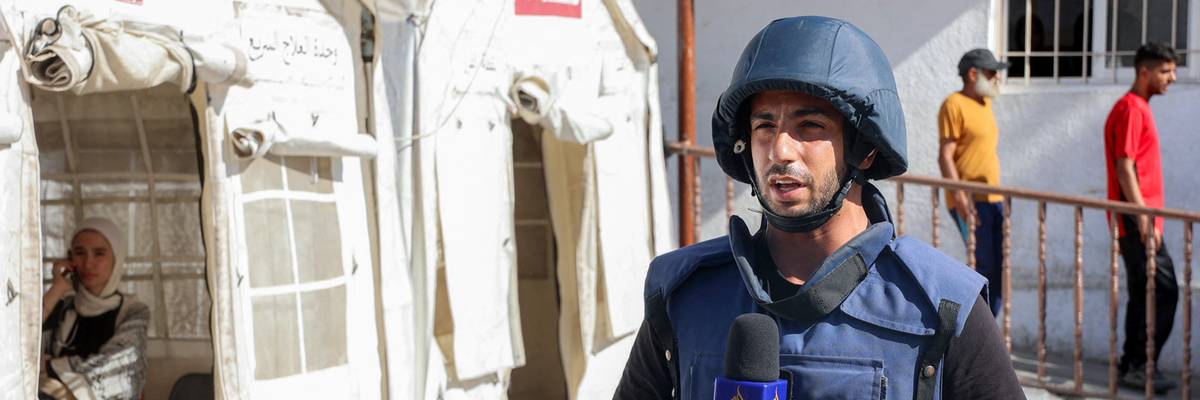


Al Jazeera correspondent Anas 
al-Sharif reports near a hospital in Gaza City, Gaza on October 10, 2024.
(Photo: AFP via Getty Images)


Julia Conley
Aug 13, 2026
COMMON DREAMS


Just over a year after six journalists—Anas al-Sharif, Mohammed Qraiqea, Ibrahim Zaher, Mohammed Noufal, Mohammed al-Khalidi, and Moamen Aliwa—were assassinated in an Israeli strike on their tent outside Al-Shifa Hospital in Gaza City, a collective of media workers on Wednesday set out to ensure that all 270 Palestinian reporters who have been killed while covering Israel’s nearly three-year assault on the exclave are remembered by the world.

The New York War Crimes collective, a project of Writers Against the War on Gaza (WAWOG), said it initially aimed to gather remembrances of al-Sharif, a 28-year-old Al Jazeera correspondent who was born in Jabalia refugee camp and started his career as a volunteer for Al-Shamal Media Network before becoming internationally known for his “ceaseless coverage” of Israel’s US-backed assault on Gaza.

The responses the collective got, said the organizers, “transformed the project. Anas, his colleagues told us, would not have wanted to be remembered as a singular hero, but as a servant of the Palestinian cause.”

“So, over the course of the following year, we gathered spoken testimonies from fellow journalists, photographers, cameramen, journalism professors, students, and workers across the media sector in Gaza,” reads the website for the project, titled A Living Record. “Each contributor was asked to record a personal remembrance of one or more martyrs, to tell a small part of the history that, as [journalist] Samira Nassar says, should be written in gold.”


A number of journalists spoke to WAWOG about al-Sharif, who reported from northern Gaza while the Israel Defense Forces (IDF) were heavily restricting humanitarian aid there as they waged intense attacks there on refugee camps and other civilian infrastructure.

“All the journalists were in awe—really in awe—of him,” said Isra al-Madallal. “Just the fact that he was in the north while all the other journalists were in the south was enough to make everyone keep asking, ‘How are you? Where are you? What are you doing? What is happening? May God keep you steadfast.’ And the starvation—that was something that they lived through together, something intense.”

Another colleague, Doaa Shaheen, said Al-Sharif served as “the voice of Jabalia, the voice of the north as a whole; he never left

“He never wavered for a single moment from carrying out his mission, reporting the news, delivering the truth, and exposing the atrocities of the Israeli genocide in the Gaza Strip,” said Shaheen, adding that when her fellow Jabalia camp native was killed she thought: “So that’s it? He’s been martyred? So where is Anas’ voice?”


Freelance journalist Baraa Lafi remembered Mariam Abu Dagga, a visual journalist who extensively documented how children were being affected by Israel’s attacks, which have been called a genocide by leading human rights groups and Holocaust scholars. She photographed overwhelmed hospitals as medical workers struggled to care for sick and injured Palestinians, as well as documenting the impact of Israel’s blockade on humanitarian aid.

Lafi was wounded in the Israeli double-tap strike on Nasser Hospital that killed Abu Dagga, as well as Moaz Abu Taha, Hussam al-Masri, Ahmad Abu Aziz, and Mohammad Salama, just weeks after Al-Sharif and his colleagues were killed.

“As a journalist, Mariam was brave. Braver than many men,” said Lafi. “Everyone could see that. Mariam in the field was not unassuming and timid—no. She was fearless. She ran toward the fire, she was first on the scene. If she saw an injured child in distress, she would stop and comfort them. If she saw someone upset, she would stop and stay by their side. If Mariam saw a mother searching for her children—whether during famine or bombardment—she would stop filming and stay by her side, going with her from hospital to hospital to help her find them.”


WAWOG collected remembrances from several reporters of “journalists as a collective,” with Bisan Owda, who won the Peabody Award in 2024 for her coverage of the war on social media, saying that despite Israel’s slaughter of more than 73,000 Palestinians and decimation of the exclave’s civilian infrastructure, “there’s still goodness here, in this small place, in the ground underneath us, in those who fight the evil spreading through the rest of the world. To me, those are the people and journalists of Gaza.”

“To me, these individuals were daring enough to dream, to believe that we can make a difference,” said Owda. “We are brave. We are the ones who have the courage to document with our cameras, to change the narrative, change our current conditions, and to draw attention to our people’s oppression. To change what is happening. You are dealing with the bravest people on the face of the Earth. They are the ones spreading the truth to combat every false narrative in the world.”

As The Living Record was published Wednesday, protesters rallied outside The New York Times headquarters in New York City to demand accountability for the killing of journalists in Gaza, while Drop Site News correspondent Mohamed Awad was detained by Israeli forces in Ramallah, the West Bank.

WAWOG said that in the fall, as the third anniversary of Israel’s assault on Gaza approaches, it plans to publish more eulogies of Gaza journalists who have been killed in the exclave.
Solidarity Is Not Enough: Why the World Must Force Accountability for Gaza Now

Israel’s official position leaves the international community with no choice but to take direct, coordinated action across five key fronts.


Protesters carry placards with the images of Donald Trump and Benjamin Netanyahu during a protest.
(Photo by Marcos del Mazo/LightRocket via Getty Images)


Ramzy Baroud
Aug 14, 2026
Common Dreams

It is now official: Israeli Prime Minister Benjamin Netanyahu has flatly rejected the core conditions of the Board of Peace framework, explicitly stating that Israel will neither adhere to a ceasefire nor withdraw its forces from Gaza.

During a cabinet meeting on Sunday, Netanyahu stated with unambiguous language, “Israel rejects the 15-point document published by the Board of Peace for Gaza.”

In a previous conversation with lead envoy Nickolay Mladenov, Netanyahu set conditions—such as demanding unilateral operational freedom for the Israeli military to strike inside Gaza at will—that render a genuine peace agreement structurally impossible.

The Israeli army leadership, under Chief of Staff Eyal Zamir, reinforced this posture by outlining three uncompromising “red lines” to the political establishment: complete operational freedom to eliminate perceived threats anywhere in the strip, strict control over all weapons entering or exiting Gaza, and zero military withdrawal unless Hamas is completely disarmed.

We must resolutely reject the premise that the slaughter of the innocent can ever become an accepted routine.

One can fault Netanyahu for many things, including ongoing genocide. But in recent years, he has been remarkably straightforward about his intentions; therefore, no one can claim that Netanyahu has fooled anyone.

Earlier this year, while speaking at a conference in an occupied West Bank settlement, Netanyahu explicitly boasted that he had instructed the Israeli military to expand its physical footprint and permanently occupy at least 70% of the Gaza Strip—a massive expansion far beyond the temporary administrative demarcation lines established in previous truce outlines.

Meanwhile, his far-right ministers have pushed the government’s rejectionist stance even further. Finance Minister Bezalel Smotrich and National Missions Minister Orit Strock issued a joint demand for an emergency cabinet meeting to roll back authorization for the deployment of the International Stabilization Force (ISF).

The ISF, designed under the Board of Peace framework as a transitional peacekeeping body, was meant to oversee humanitarian security, starting with pilot recovery zones in Rafah.

Yet Smotrich and Strock claimed the security cabinet was “misled” into approving the force, arguing that allowing international personnel into Gaza endangers Israeli operational freedom and directly contradicts their explicit war aims.

These latest moves, along with the military’s strict “red lines,” confirm what recent months of relentless bombardment have made clear: The Israeli government has no intention of ending its genocide in Gaza or relinquishing control over the besieged and devastated territory.

But highlighting such positions will make no difference, aside from once more accentuating Israel’s total lack of desire for peace and its intention to perpetuate conflict.

While true, such realization on its own is worthless considering that what is taking place in Gaza and the West Bank is beyond horrific, and that the daily killing of Palestinians makes the term “ceasefire” a cruel joke.

While diplomats debate frameworks, Israeli strikes continue to claim civilian lives daily—bringing the post-truce death toll to over 1,250 and the total killed since October 2023 to more than 73,000.

Therefore, action is needed, and urgently so. Indeed, Israel’s official position leaves the international community with no choice but to take direct, coordinated action across five key fronts.

First, Arab, Muslim, and allied governments must leverage every available international platform, starting with the United Nations General Assembly and Security Council, to formally condemn Israel’s violation of the Gaza peace framework and expose its bad-faith negotiations.

States must move beyond symbolic statements and invoke mechanisms like the “Uniting for Peace” resolution to bypass Western vetoes, push for binding sanctions, and implement a universal arms embargo against Israel.

Second, a renewed global campaign must recenter Gaza and the West Bank, exposing Israel’s broader territorial objectives—specifically the systematic ethnic cleansing of Gaza and the quiet, administrative annexation of the West Bank.

Civil society, trade unions, and grassroots organizations worldwide must pressure their respective national governments to sever diplomatic, economic, and military ties with Israel until it complies with international law.

Third, International legal bodies must accelerate their proceedings. Pressure must be renewed on the International Criminal Court (ICC) to execute arrest warrants for senior Israeli leadership, while the International Court of Justice (ICJ) must enforce provisional measures and issue definitive rulings regarding Israel’s violations of the Genocide Convention.

Legal compliance must be treated as a non-negotiable prerequisite for international relations.

Fourth, a unified international media push is necessary to counter state-sponsored propaganda, keeping public focus fixed on Israel’s long-term strategic plans: the permanent displacement of Gaza’s population and the formal takeover of Palestinian land.

Independent media outlets, journalists, and cultural institutions must challenge official narratives that frame Israeli aggression as self-defense, centering the lived realities and testimonies of Palestinians under siege instead.

Fifth, the international community must bypass Israeli obstruction to ensure massive quantities of food, medical supplies, and shelter materials enter Gaza immediately to prevent widespread starvation and winter exposure.

International aid agencies must establish protected humanitarian corridors by global mandate, refusing to allow Israel to use manufactured famine and humanitarian denial as weapons of war.

With Israel’s intentions fully unmasked, the global community must shift from passive mediation to active enforcement.

Israel wants to normalize genocide, just as it normalized the illegal siege on Gaza before that; the military occupation of the West Bank, East Jerusalem, and Gaza before that; and the ongoing displacement of Palestinians since 1948.

We must resolutely reject the premise that the slaughter of the innocent can ever become an accepted routine.

Knowledge of the atrocity is not enough. Expressing solidarity in words alone is not enough. Concrete, decisive action is required today—and holding the perpetrators accountable remains entirely within our power if the world finds the political courage to act.


Our work is licensed under Creative Commons (CC BY-NC-ND 3.0). Feel free to republish and share widely.


Ramzy Baroud
Ramzy Baroud is a journalist and the Editor of the Palestine Chronicle. He is the author of five books including: "These Chains Will Be Broken: Palestinian Stories of Struggle and Defiance in Israeli Prisons" (2019), "My Father Was a Freedom Fighter: Gaza's Untold Story" (2010) and "The Second Palestinian Intifada: A Chronicle of a People's Struggle" (2006). Dr. Baroud is a Non-resident Senior Research Fellow at the Center for Islam and Global Affairs (CIGA), Istanbul Zaim University (IZU). His website is www.ramzybaroud.net.
Full Bio >
Doctors Without Borders Accuses Israel of ‘Deliberate Effort to Make Existence Itself Impossible’ in Gaza

“What we are witnessing in Gaza is not a series of isolated shortages, it is a policy of attrition by design.”


Displaced Palestinians, including many children, wait in long queues to receive hot meals distributed by a charitable organization in Gaza City, Gaza on June 7, 2026.
(Photo by Moiz Salhi/Anadolu via Getty Images)


Jake Johnson
Aug 13, 2026
COMMON  DREAMS


The renowned humanitarian group Doctors Without Borders said Wednesday that the Israeli government is still restricting the entry of engine oil and generator parts to the Gaza Strip, imperiling life-saving hospital functions and other essential services in the decimated territory.

Doctors Without Borders, known internationally as Médecins Sans Frontières (MSF), noted that Gaza’s remaining healthcare system relies “almost entirely” on generators, “with most electricity cut by Israeli authorities and much of the electrical infrastructure destroyed.” The group said that in some Gaza facilities, its teams barely have sufficient engine oil to last a month and have been forced to “buy engine oil at the local market at exorbitant prices.”

Filipe Ribeiro, MSF’s head of mission in Palestine, said that “what we are witnessing in Gaza is not a series of isolated shortages, it is a policy of attrition by design.”

“For more than two years, we have observed Israel’s policies restricting the entry of supplies,” said Ribeiro. “These policies do not merely delay aid; they dismantle the very systems people rely on to survive.”

Israel’s continued restriction of supplies comes as the country’s military, which is armed by the United States, keeps up its deadly bombing of the strip despite a purported ceasefire deal that took effect in October 2025. Israeli attacks have killed more than 1,200 people in Gaza since the start of the ceasefire agreement. The Israeli government, headed by Prime Minister Benjamin Netanyahu, has rejected a US-backed plan for Hamas disarmament in exchange for Israeli withdrawal from Gaza.

Earlier this week, a group of United Nations experts condemned Israel’s recent “strikes on hospitals and shelters, the killing of police officers and UN-contracted staff, attacks on fishers, and abductions and abuses by armed groups reportedly collaborating with the Israeli military, as well as the killing of humanitarian workers, who through their work protecting and promoting fundamental human rights, are human rights defenders.”

“These restrictions have become increasingly far-reaching, also preventing the entry of routine items ranging from ointments for skin diseases to rubber seals needed for medical sterilization equipment.”

According to MSF, Israel’s sustained attacks and obstruction of supplies “extend far beyond hospitals.”

“Without engine oil, all transport services could stop, including much-needed water trucks during the peak of summer heat, ambulances, buses transporting medical staff to work, and trucks delivering humanitarian supplies,” the group said. “Bakeries and flour mills also rely on generators, meaning food production could also be affected.”

MSF characterized Israel’s continued obstruction of engine oil and spare generator parts as “one piece of a larger pattern of structural violence imposed by Israeli authorities to intentionally restrict access to vital services and supplies as part of the ongoing genocide against Palestinians in Gaza.”

“These restrictions have become increasingly far-reaching, also preventing the entry of routine items ranging from ointments for skin diseases to rubber seals needed for medical sterilization equipment,” the group said. “The shortages now impact virtually every aspect of life in Gaza, leaving hospitals and humanitarian organizations without basic supplies.”

Ribeiro said in a statement that “the items change, but the logic remains the same: reducing people to conditions in which life becomes untenable, and dignity is systematically stripped away through the denial of the most ordinary, most essential goods.”

“This is not bureaucracy,” he added. “It is a deliberate effort to make existence itself impossible.”
‘Waiting to Die’: Gaza Cancer Patients Dying at More Than Double the Pre-War Rate as Israel Blocks Treatment

“I am dying. There isn’t a feeling for me to even feel.”


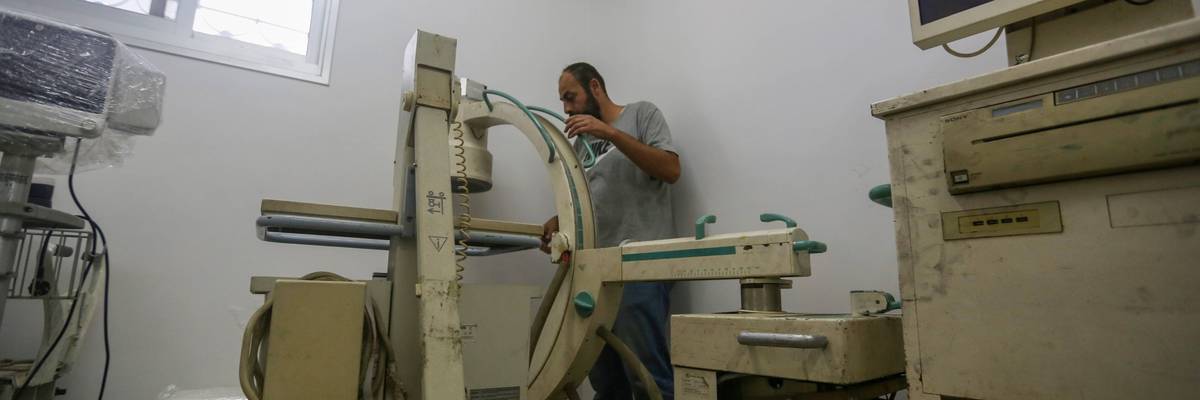
The medical equipment maintenance department at Al-Shifa hospital repairs damaged medical devices using salvaged parts, due to a shortage of new spare parts, on August 13, 2026 in Gaza City, Gaza.
(Photo by Ahmad Hasaballah/Getty Images)

Stephen Prager
Aug 14, 2026
COMMON DREAMS

Israel is causing a wave of preventable cancer deaths in Gaza, leaving an estimated 17,000 people with no avenue for treatment.

As Reuters reported on Thursday, Israel has destroyed the only specialized cancer hospital in the strip and is preventing Palestinians from seeking treatment outside the exclave.

The result: Doctors say that cancer patients in Gaza are dying at between double and triple the rate they were before Israel began its genocidal war there. Israel’s restrictions on aid entering Gaza have made chemotherapy and other forms of treatment inaccessible.

33-year-old Khuloud Abu Sahmoud, a mother of two with ovarian cancer who spoke with Reuters, has been waiting to exit Gaza for nearly a year to receive treatment.

According to Middle East Eye, she is one of at least 4,000 cancer patients in Gaza who have been issued medical referrals to leave the strip but who have been stuck waiting for final permission from Israeli authorities.

In the meantime, her cancer has metastasized to her lungs and bones.

“I am dying. There isn’t a feeling for me to even feel,” Sahmoud told Middle East Eye. “Every day my disease progresses.”

She said that her fingernails have all fallen out and she has been left “just waiting to die.”

“The border crossing for me is the only lifeline. The only vein for me to be saved, to receive treatment abroad,” she said. “I haven’t taken any treatment for three months. I’m living on painkillers.”

She said she made her request to travel in October 2025 after a ceasefire was reached between Israel and Hamas, which was supposed to allow for aid to flow freely into Gaza and for people to leave.

“There has been no response to any appeal so far,” Sahmoud said. “We haven’t received any calls.”


The Coordinator of Government Activities in the Territories (COGAT), the Israeli military authority responsible for administering civilian matters in Gaza, has denied that it is blocking Palestinians from receiving treatment, with a spokesperson stating that permission to travel is “wholly dependent on the receiving country’s request.”

But the agency’s own medical evacuation procedure requires that every patient leaving Gaza undergoes Israeli security screening and “will not be approved if there are security reasons that prevent their passage.”

Israel has also imposed strict numerical restrictions on the number of people allowed to leave through the Rafah crossing, the main exit point from the strip.

Palestinian health officials said only about 11,000 people in total—not just cancer patients—have been allowed to exit since the crossing reopened in February, an average of about 55-60 people per calendar day. This is fewer than half the number who were expected to leave following the ceasefire.

According to Reuters, “a further 20,000 patients, including 5,000 with cancer, are registered for treatment abroad but not yet ⁠permitted to leave.”

All of the 36 hospitals and most primary healthcare facilities in Gaza have sustained damage from Israeli attacks, with only around half even partially functioning, according to the World Health Organization. As of the ceasefire, WHO reported that more than 1,700 Palestinian healthcare workers, including doctors, nurses, and paramedics, have been killed.

“Since the genocidal war on the Gaza Strip, among the most severely affected groups by this extermination are oncology and cancer patients,” said Mohammed Abu Selmia, the director of Al-Shifa Hospital, which has been repeatedly raided, besieged, and damaged, and has just recently restarted oncology services.

Selmia said this is because of the restrictions on the entry of chemotherapy treatments and Israel’s destruction of diagnostic equipment, including MRI facilities.

“This group is suffering immensely,” he said. “Recently, we have been recording a significant number of deaths ranging from three to five daily because patients are not receiving the chemotherapy needed to save their lives.”


The official death toll from Israel’s military campaign in Gaza since October 2023 sits at 73,389, according to the Gaza Ministry of Health. But this only includes violent deaths from the war itself.

Independent analyses have suggested that the true death toll is much higher when factoring in those who have perished due to disease and starvation as a result of Israel’s attacks on medical facilities, civilian infrastructure, and restrictions on aid.

Another cancer patient, Elham al-Skafi, said, “They stopped giving me chemotherapy because it is not available in Gaza.”

“I come in to get nutritional fluids, just so I can stay on my feet, and blood transfusions,” she said. “That is what is currently available. This is what I take.”

She said she’s had a transfer referral for over a year and a half now to leave the country for treatment.

“I am sitting and waiting,” she said. “If the crossings were open, I would have left.”
US, Turkish Officials Suspect ‘Plot’ That Led to Trump Plane Switch Was Israeli Ruse

A former top US intelligence official said the reliance on apparently faulty Israeli intelligence was “a great example of how we got into the war with Iran.”


President Donald Trump speaks at a press conference during the 2026 NATO Ankara Summit in Ankara, Turkey, on July 8, 2026.
(Photo by Beata Zawrzel/NurPhoto via Getty Images)


Stephen Prager
Aug 13, 2026
COMMON DREAMS

US and Turkish officials are reportedly suspicious that the supposed Iranian assassination plot that led President Donald Trump to make an elaborate escape from Ankara using a catering truck last month may have been a fabrication by Israeli intelligence.

Earlier this week, it was reported that Trump had to be secreted onto a nondescript plane to leave a NATO summit on July 8 after Israel passed an intelligence report to the CIA warning that Iran had planned to launch a missile at Air Force One. But new reporting indicates that neither Turkish nor American officials found the evidence all that compelling.

The alleged threat came at a highly volatile time, as the “memorandum of understanding” between the US and Iran to end nearly five months of war was on the verge of collapse, in part thanks to Israel’s attempts to undermine it.

As Middle East Eye reported on Tuesday, Turkish officials suggested that the intelligence report was “probably a ruse by [Israeli Prime Minister Benjamin] Netanyahu’s government to portray itself as protecting Trump, derail negotiations with Iran, and undermine Trump’s apparently close relationship with [Turkish President Recep Tayyip ErdoÄŸan].”


Turkey tightened security after US officials informed it of the plot. But after examining the details of the scheme—which purportedly involved using shoulder-fired missiles to attack Trump’s plane within a kilometer of the runway—they said they found the intelligence report highly implausible.

“Of course, we took the report very seriously and tried to assist our American counterparts as much as possible,” one person familiar with the matter said. “Yet it was very clear to us that there was no way this report was true.”

It turns out that it wasn’t just Turkish officials who felt this way. The Washington Post on Wednesday cited a senior US official who said that the CIA analysts who’d received the report from Israel “did not view the intelligence as compelling and conveyed that skepticism to Trump administration officials.”


Another official said the report was “Israeli-derived, not US-generated, and viewed as low confidence.” The Secret Service acted on the report anyway out of an abundance of caution.

Nevertheless, the Post indicated that there was a striking amount of doubt among US intelligence officials about the motives of one of the country’s top allies, whom they suggest passed the information along to nudge Washington toward Israel’s own foreign policy objectives:
Some US intelligence officials saw Israel’s sharing of the warning about threats to Trump’s life as designed less to inform than to influence the president’s decision-making and US policy in the region, a current and a former US official said. Israel views Iran as by far its most urgent near-term threat.

But it views Turkey as a medium- to long-term threat and is anxious about warming ties between Washington and Ankara, bolstered by the personal rapport between Trump and Turkish President Recep Tayyip ErdoÄŸan, the current official said.

It “fit a broader pattern of Israeli intelligence reporting that some officials see as designed as much to shape presidential decision-making as to inform it,” the former official familiar with the matter said.

Iranian leaders have denied any attempt to assassinate Trump. As they try to push him to admit defeat in the war the US and Israel started in February and accept a series of harsh surrender terms, they are having a laugh at his reaction to what they say was a fabricated plot.

Abbas Araghchi, Iran’s foreign minister, portrayed it as part of a larger pattern of the US having been misled by faulty Israeli intelligence.

Netanyahu was notably one of the driving forces behind Trump’s mistaken belief that an operation to topple the Iranian government would be quick and painless.

“The US has long miscalculated due to intelligence failures,” Araghchi wrote Thursday on social media. “Case in point: The war on Iran. Now, an even bigger miscalculation on the Strait of Hormuz.”

“Worse than fake news is fake intelligence,” he said. “Be careful.”

Joe Kent, the former director of the US National Counterterrorism Center, who resigned in March after accusing Trump of being manipulated into starting the war by false reports that Iran posed an imminent threat, said that “the story of Trump secretly switching airplanes is actually a great example of how we got into the war with Iran... ‘Israeli-derived, not US-generated, and viewed as low confidence’ by our own intelligence agencies.”

“It’s smart to take all threats seriously,” Kent said. “But if you’re basing a decision about going to war on information from a liaison intel service or an ‘ally,’ it’s important to remember they are most certainly providing that information to influence us as well as inform us.”
‘Menace to the World’: With Iran Talks Stalled, Trump Vows to Declare Strait of Hormuz a US Territory

“He absolutely needs to be impeached, removed, and locked up,” said one progressive critic, calling the president “a completely unhinged lunatic.”


President Donald Trump delivers remarks at the General Motors Proving Ground in Milford, Michigan, on July 27, 2026.
(Photo by Daniel Torok/White House/flickr)


Jessica Corbett
Aug 14, 2026
COMMON DREAMS

In yet another remark that triggered alarm around the world, President Donald Trump said Friday that he planned to declare the Strait of Hormuz—which Iran has blockaded for much of the past five months over his and Israel’s illegal war—a US territory.

Just two days after the latest inflation figures demonstrated, in the words of one expert, “Trump’s catastrophic mismanagement of our economy,” the president ignored the economic fallout from his war, which led Iran to restrict ship traffic through the strait, driving up fuel prices worldwide.

“We’re bringing the prices way down,” he told a Long Island crowd. Trump also said that “after we finish defeating Iran, which is being very badly defeated, pretty soon, I’ll be declaring the Hormuz Strait a territory of the United States.”


Some critics responded to clips of the comments on X by mocking Trump—an infamous liar. Congressman Ted Lieu (D-Calif.) quipped, “Awesome! And the Easter Bunny is real.”

Ryan Costello, policy director at the National Iranian American Council, said that “this jingoism rings a bit hollow when most of the US bases near the strait have been essentially abandoned due to danger from Iranian missiles and drones.”

Progressive political commentator Kyle Kulinski declared that “he absolutely needs to be impeached, removed, and locked up. He’s a completely unhinged lunatic, and he’s a sadistic violent menace to the world.”

After high initial claims about lower prices, Trump admitted that gasoline has soared due to his war, but said: “For you to pay a tiny little bit more for your gasoline, just remember, you’re doing it so that a very evil country cannot have a—a country, really it’s the No. 1 state sponsor of terror in the world—we don’t want to have them have a nuclear weapon. So, remember that when you have to pay a little bit more, you’re at $4, it’s OK. I’ll never apologize. I did the right thing.”


Trump’s threat over the strait between the Persian Gulf and the Gulf of Oman came just before a monthlong ceasefire between the US and Iran is set to expire on Monday. A senior White House official told Politico that the situation is “static.”

“It doesn’t matter how close or how far we are,” said the official, who has heard no mention of a potential extension of the ceasefire. “What matters is if Iran wants to come to the table and agree to a deal. Right now, they haven’t done that.”

The Associated Press reported Friday that “the Trump administration appears to be reaching out to a broader swath of countries that might be able to help pressure Tehran,” and Ali Vaez, Iran project director at the International Crisis Group, told the outlet that “everyone is just urging both sides to stop this reckless game of chicken.”

In addition to launching an illegal war on Iran in February, and invading Venezuela in January to abduct its president, Trump has made threats against various other nations during his second term, including Canada, Cuba, Colombia, Greenland, and Mexico. He’s also threatened to seize the Panama Canal and killed hundreds of people by blowing up boats allegedly smuggling drugs.


This article has been updated with additional comment from President Donald Trump and Public Citizen.
Trump's new 'highly unusual' demands add strain to Navy already 'under the gun': report

Bennito L. Kelty
August 14, 2026
RAW STORY


A U.S. sailor, assigned to Helicopter Sea Combat Squadron 14, conducts maintenance on an MH-60S Sea Hawk in the hangar bay of Nimitz-class aircraft carrier USS Abraham Lincoln during the ongoing conflict with Iran August 9, 2026. U.S. Navy/Handout via REUTERS 

President Donald Trump is making matters worse for already embattled Navy sailors with his latest demand for steam catapults, per Politico.

According to reporting on Friday, Trump's costly order for aircraft carriers to ditch their electromagnetic catapults for steam-powered systems is "compounding" pressures as the Navy deals with poor conditions on the USS Abraham Lincoln.

"The Navy is really coming under the gun now," a U.S. official told Politico. "We have ships pushing their limits in the Middle East and the Caribbean with no end in sight."

On Friday, Trump brushed off concerns from sailors on the USS Abraham Lincoln, where sailors have reportedly been jumping overboard and attempting suicide. He said that their nine-month deployment has been "not nearly long enough." Defense Secretary Pete Hegseth similarly downplayed the concerns, saying, "Some deployments are longer than others."

Trump and Hegseth "both owe these sailors and their families an apology," Sen. Chris Coons (D-DE), the Senate Democrats' top defense appropriator, told Politico. "If they can't take care of the troops under their watch, they should step aside for leaders who can."

Trump's demand to switch the catapult systems on future aircraft carriers to steam threatens to put the Navy under more financial and logistical strain, as a government report estimated that the new battleships are already expected to cost billions more than anticipated, Politico reported.

The modifications ordered by Trump are "highly unusual and disruptive for the Navy," Todd Harrison, an Air Force veteran and longtime defense budget analyst at the conservative American Enterprise Institute, told Politico. "Especially since these are changes the Navy did not request."

Acting Navy Secretary Hung Cao said on Friday that the USS Abraham Lincoln would return to port, but he agreed, "There is no question our young men and women have been pushed to their limits," adding, "But they have never broken."
'Oh my God!' Wife of USS Lincoln sailor 'infuriated' after Trump accused families of lying

Nicole Charky-Chami
August 14, 2026 
RAW STORY


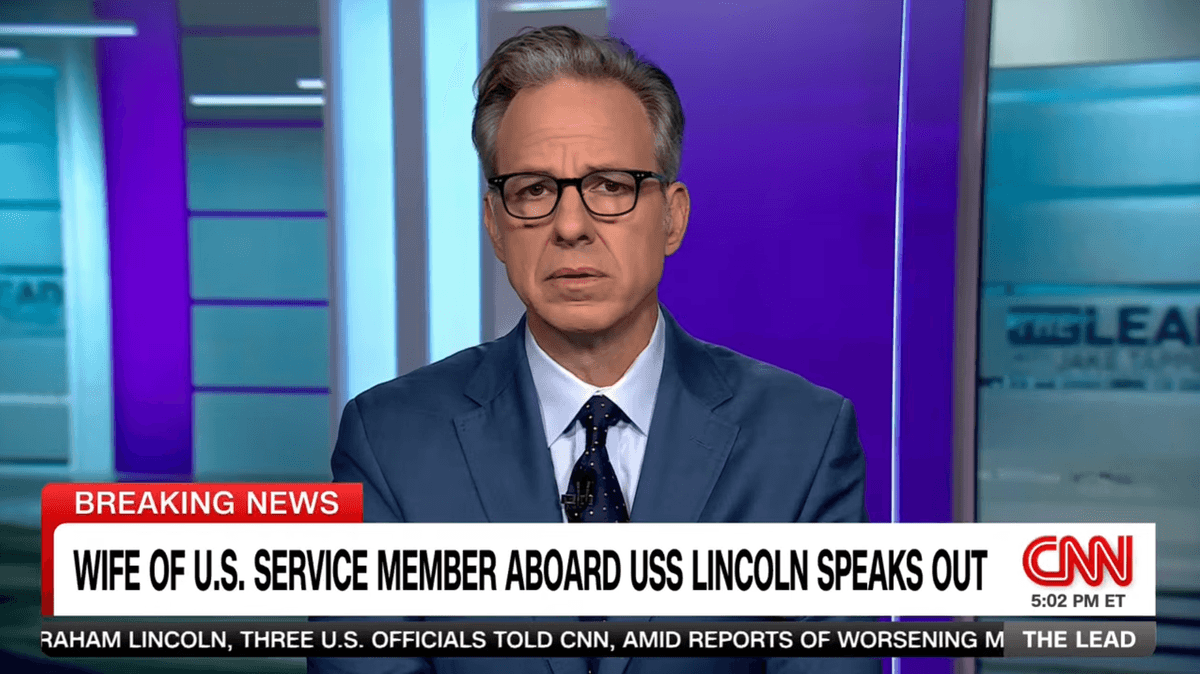
CNN anchor Jake Tapper spoke with the wife of a U.S. service member on the USS Lincoln after President Donald Trump dismissed concerns from military family members receiving information about poor conditions on the ship. (CNN/Screenshot)

A U.S. service member's wife had a blunt response on Friday for President Donald Trump after he dismissed reports of poor conditions on the USS Abraham Lincoln, even as families expressed serious concerns about their loved ones.

CNN anchor Jake Tapper spoke with the unnamed woman, who shared that she could not identify herself over concerns for her husband's safety and career. Tapper asked what her reaction was to Trump's remarks after the president said he did not think the deployment was "long enough." Nearly 5,000 sailors and Marines have been deployed on the warship for nine months in the Arabian Sea during the Iran war.

"Oh my God! I don't think the man thinks before he talks," she said. "I was really hoping that at some point there would be a redemption. Try to redeem yourself at least a little bit with everything that you do and everything that you say. Have some empathy. Take some accountability for what's going on with your military, your ships, and your war. It's infuriating."

She slammed Defense Secretary Pete Hegseth and Trump for their comments dismissing the reports of deteriorating conditions and low morale among the troops.

"What the president is saying today, essentially saying that families are lying and service members are lying, even though the proof is right here on my phone, it is not fabricated," she said. "Nobody is lying."

She criticized the Trump administration for not showing sympathy for service members "that they claim to scream and shout that they support when it's politically sound for them to use, 'support our troops, support our troops' until our troops need support. And now suddenly everyone's lying. And it's a fabrication and it's a misrepresentation."

"I would so badly love to plaster my face and blow the whistle so loud on social media with my name and be like, 'this is real. We are real people. Those are real people on that ship. This is actually happening.' But unfortunately, I have to protect my husband's career."


'Heartbroken' military families beg for help over 'miserable' new warship revelations


Nicole Charky-Chami
August 14, 2026
RAW STORY


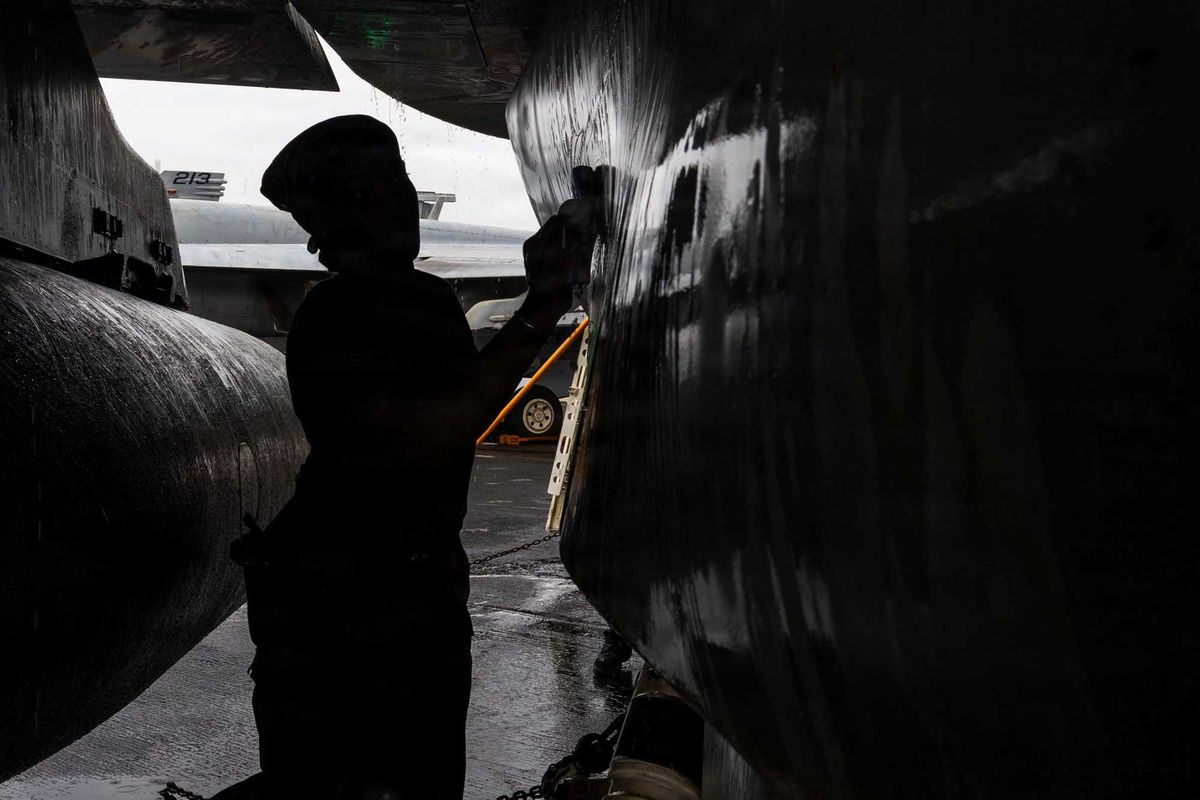
A U.S. sailor, assigned to Electronic Attack Squadron 133, scrubs an EA-18G Growler on the flight deck of the Nimitz-class aircraft carrier USS Abraham Lincoln during the ongoing conflict with Iran August 9, 2026. U.S. Navy/Handout via REUTERS

As concerns mounted Friday over poor conditions onboard the USS Abraham Lincoln, families of military service members on another Navy ship were pleading for help

A new report from independent journalist Aaron Parnas detailed the troubling conditions and declining morale shared by sailors' families, including how service members on the USS George H.W. Bush were facing "virtually no food, water, or soap," The Daily Beast reported.

A loved one of two U.S. sailors told Parnas via text how the situation was worsening for sailors on the warship in the Arabian Sea as the Iran war now drags on for more than five months.

"They've been out at sea for 146 days with no end in sight," the unnamed family member said. They learned about the conditions when her sister-in-law left the ship for a family emergency. "Morale is low, and everyone is miserable. It's heartbreaking."

The USS Bush left Norfolk, Virginia, in March, The Beast reported.

The reports onboard follow growing frustration about the USS Abraham Lincoln's roughly 5,000 sailors and Marines, who are nine months into a deployment that was supposed to end in May, with no return date announced.

Defense Secretary Pete Hegseth has pushed back on the accounts, telling reporters Thursday that the conditions had been "completely misrepresented," though he did not specify his concerns with the reporting. Sen. Richard Blumenthal (D-CT), who pressed Hegseth for answers, rejected that characterization as disrespectful to the sailors enduring the hardships.

The Navy has acknowledged the war disrupted supply routes but said the Lincoln now has access to clean water and healthy meals. The carrier USS George Washington is being sent to relieve the ship, which has been at sea more than 240 days with only two port calls.

CNN flags White House's 'remarkable' reaction to Trump's dismissal of suffering sailors

Bennito L. Kelty
August 14, 2026 
RAW STORY


U.S. President Donald Trump holds a printed-out article as he speaks to the members of the media after disembarking Marine One, before boarding Air Force One, en route to John F. Kennedy International Airport, at Joint Base Andrews, Maryland, U.S., August 14, 2026. REUTERS/Ken Cedeno

The White House had a "remarkable" response to President Donald Trump's response to sailors suffering on the USS Abraham Lincoln.

Sailors aboard the USS Abraham Lincoln have been suffering from an ongoing nine-month deployment, which has led to a lack of food and depleted morale. Six sailors are reported to have attempted suicide, and others have jumped ship. Family members of the deployed sailors have attested to the poor conditions, with one slamming Trump.

When Trump was asked whether the deployment of the aircraft carrier had gone on too long, he responded, "No, no, no, not nearly long enough."

God's money': White House enrages with vow that public cash belongs to evangelicals


On Friday, CNN White House correspondent Kevin Liptak said White House staff offered no clarification on the comments.

"When I went to the White House today to ask if they had any context or wanted to clarify any of the president's comments, they said that they were just going to point back to what the president said, which is really kind of remarkable," Liptak said. "When you talk to people in the military, there is a degree of stunned when you hear what the president said."


Liptak noted Trump's reaction to the question. He seemed "visibly irritated" about being asked about the USS Abraham Lincoln. "He kind of snapped after that first answer," Liptak said. "He sort of abruptly turned and walked away, which is not his norm when he's speaking on the tarmac."


The USS Abraham Lincoln was deployed ahead of the conflict in Iran. According to Liptak, the attention around the conditions "underscores what is the concern that you hear consistently among American officials, which is just how long this war has gone on."

He added, "These lengthy deployments only remind the American public that the president's initial six weeks was absolutely wrong," and noted, "You also hear concerns about the munitions stockpile and the worry that you hear from military officials is that the longer these deployments go on."


'Sick': Firestorm as 'Cadet Bone Spurs' dismisses disgruntled military families

Nicole Charky-Chami
August 14, 2026 
RAW STORY


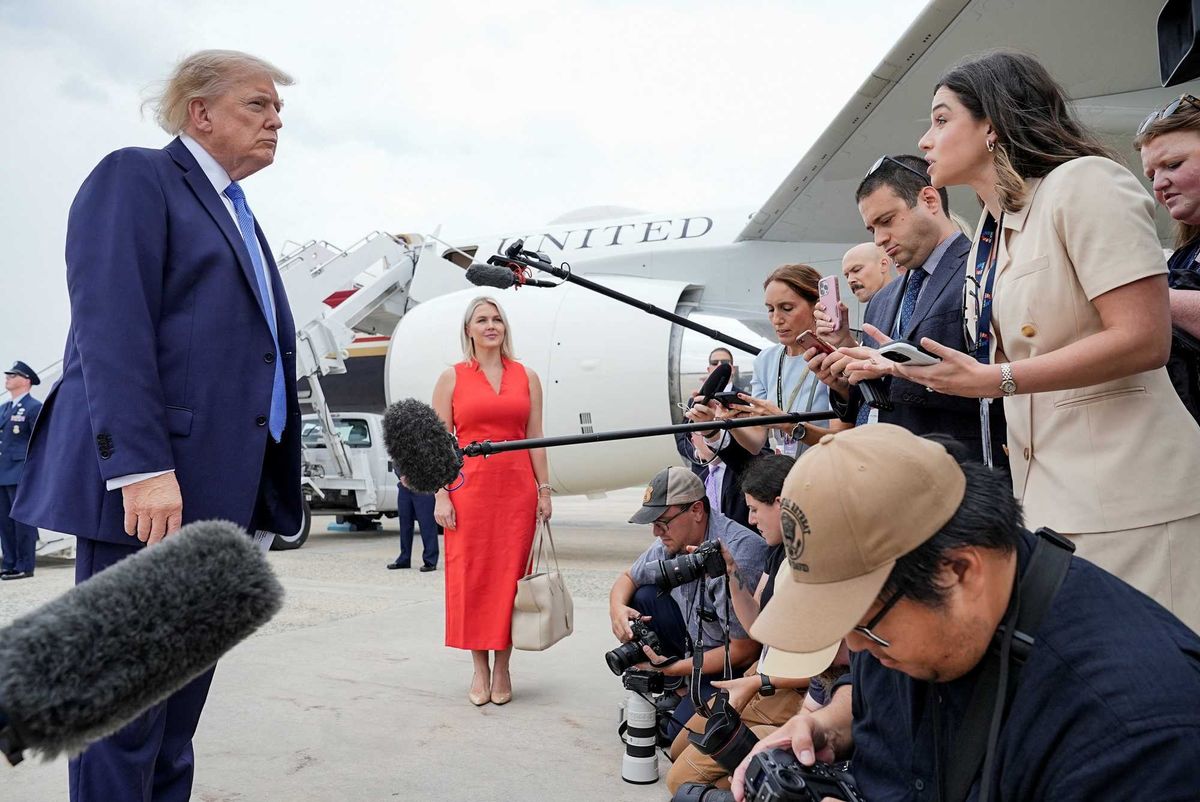
President Donald Trump, flanked by White House Press Secretary Karoline Leavitt, speaks to the members of the media, after disembarking Marine One, before boarding Air Force One, en route to John F. Kennedy International Airport, at Joint Base Andrews, Maryland, U.S., August 14, 2026. REUTERS/Ken Cedeno

People were outraged on Friday after President Donald Trump downplayed the reportedly poor conditions on the USS Abraham Lincoln, where service members have described a dire situation.

Trump was boarding Air Force One at Joint Base Andrews in Maryland heading to John F. Kennedy International Airport in New York when the press corps started asking him questions about the naval vessel and sailors on board.

"Family members of service members are concerned about conditions on the USS Lincoln," one reporter said

"That ship is moving. No, they’re not," Trump responded, saying that the ship would be replaced with another ship.

"Has the deployment gone on too long?" The reporter asked.

"No, no, no. Not nearly long enough," Trump said, not acknowledging military family members' worries.

Political commentators and media experts reacted to the president's remarks.

Internet personality and Chronicles associate editor Pedro L. Gonzalez reacted to Trump's response.

"Trump doesn't care about American troops at all," Gonzalez wrote on X. "He thinks people who serve in the military are suckers. He thinks people who fight and die for this country are fools. I don't know how you can hear Trump explicitly state that he's unconcerned about these service members and their families, that he thinks they haven't been deployed *long enough* in his idiotic war, and still conclude that he's deeply concerned about American lives."

Sen. Ruben Gallego (D-AZ), an Iraq war veteran, had a sharp reaction to Trump's comments.

"Cadet Bone Spurs thinks he understands what happens on deployments," Gallego wrote on X.

Progressive activist Alex Cole mocked Trump.

"Trump: We love our military. Military: We have concerns. Trump: No you don’t," Cole wrote on X.

U.S. Army veteran and activist Skyleigh Uhrich had a direct message for families of military service members.

"Attention Military & Military Families: Trump said 200 days of deployment at sea with no port of call is not along [sic] enough! All of you need to vote accordingly in November, all of your family members are being used as pawns in his sick game! He wouldn’t last 24 hrs pathetic mf!" Uhrich wrote on X.

Liberal commentator Lucas Sanders responded to the president.

"Translation: I don’t care about their conditions," Sanders wrote on X.


US Military Morale in the Middle East Is in the Overflowing Toilet

Rotten food, no room in the incoming missile shelters, confiscation of alert notification devices for incoming missiles (cellphones), infrequent mail, jumping off aircraft carriers, overflowing toilets... military families speak out for their loved ones, again and again.


In this handout released by the US Navy, aircraft are staged for flight operations on the flight deck of the Nimitz-class aircraft carrier USS Abraham Lincoln (CVN 72) in support of Operation Epic Fury on March 2, 2026 at sea.
(Photo by US Navy via Getty Images)


Ann Wright
Aug 14, 2026
Common Dreams


Rotten food, overflowing toilets into bunking areas, no room in the incoming missile shelters, confiscated cellphones that are the notification devices for incoming missiles, infrequent mail, social media closed down, were some of the issues that military families identified at the national conference of Veterans For Peace.

Spouses and parents of Air Force, Army, Marine, and Navy members told of plummeting morale, lack of basic supplies, and attacks on US military bases that are not reported in the US media

The frustration of the military families at the VFP conference echoed the descriptions of life on US military bases in the Middle East under attack by the Iranian response to the brutal US-Israeli five-month attack on Iran made by military families who met with the acting assistant secretary of the Navy and the commander of the US Pacific Fleet in San Diego on August 6, 2026.
Big Problems on Long Deployments for US Naval Vessels, Ships’ Infrastructure, and Sailors’ Physical and Mental Health

On August 6, 2026, the Navy’s senior leadership held listening sessions with the families of aircraft carrier USS Abraham Lincoln‘s sailors—one in-person session in San Diego, and a second online session later the same evening. Family members leaked recordings of those sessions that described conditions aboard the aircraft carrier USS Abraham Lincoln: showers plagued with stubborn mildew, flagging morale, heavy fatigue, shortages of supplies and food, contaminated water supplies, and lost mail.

US troops suffered shrapnel wounds, broken bones, smoke inhalation, and other injuries. But one category appeared far more often than any other: head trauma.

Since departing from Naval Base San Diego on November 21, 2025, the USS Abraham Lincoln and its crew of 5,000 sailors and Marines has been deployed more than 250 days, with only a stop in Guam in December and a brief visit in Oman in June after 208 days at sea.

A second aircraft carrier USS Gerald R. Ford had similar problems when it sailed from the Caribbean to the Middle East after being off Venezuela in the kidnapping of Venezuelan President Nicolas Maduro and his wife in January 2026. During that deployment, the ship’s toilets kept failing, with sewage often overflowing and spilling onto the floor. Additionally, a fire broke out in the laundry room, causing enough damage that the Ford went into a port on the Greek island of Crete for repairs.

More than 200 sailors were treated for smoke inhalation, with one sailor medically evacuated from the carrier, after being injured in the damage control effort. Two others were treated for lacerations.

The smoke damage from the laundry room fire extended to the berthing. More than 100 bunks and personal gear were destroyed in the fire.

Articles in Stars and Stripes and the Navy Times detail at least six attempts by crew members to jump overboard from the USS Abraham Lincoln, with interviews conducted with sailors and families of those on board who described the impacts of the lengthy deployment.
USS Abraham Lincoln Sailor’s Father Proposes ‘Parent Swap’ To Replace His Son

One parent was fed up with the conditions his son is living under. On August 13, Jefferson Kelley, the father of a USS Abraham Lincoln sailor wrote to his U.S. Sen. Bernie Moreno (R-Ohio) asking Moreno to make an official inquiry to the US Navy to see if he could do a “parent swap” with his son, Jackson, 20, due to the terrible conditions aboard the USS Abraham Lincoln.

Kelley said he had not been asked by his son to make the swap, but he had read of the conditions on the aircraft carrier that included food rations, safety concerns, water contamination, and poor mental health, which has purportedly led to some sailors attempting to jump overboard during the 250 days at sea and felt that he as a parent should share the burden.

Kelley had not discussed his proposal with his son, before writing to the Senator, which may make his son’s remaining time on the aircraft carrier more difficult than it already is!
Army and Marine Ground Forces Under Missile Attacks

Families of US ground forces on the US military bases scattered all over the Middle East describe overcrowding to no room in shelters against incoming missiles and command’s confiscating of cellphones that are the notification devices for incoming missiles.

The US military says that Iran watches social media postings of attacks and to prevent such postings, cellphones may be taken away, but families respond that notification of incoming missile attacks is by cellphone.

According to the news outlet War Horse, the only public source for injuries during the US attack on Iran is the Defense Casualty Analysis System, which provides monthly totals for the War on Iran with limited demographic data.

More than 400 casualties (nonlethal) were recorded in the first month between February 28 and April 8 of the US attack on Iran, with Army personnel accounting for most of the casualties.

More than 270 of the roughly 400 casualties (nonlethal) were Army soldiers, and about one-third of those were reservists. Enlisted soldiers accounted for most Army casualties, including 57 sergeants and 53 specialists. But also wounded were 64 Army officers, including 20 captains, and 13 lieutenant colonels or colonels.

The Navy reported 64 casualties, none of whom were classified as seriously injured. The Air Force recorded 51 casualties, and the Marine Corps recorded 19. Unlike the Army, the other branches did not list the type or cause of injury.

US troops suffered shrapnel wounds, broken bones, smoke inhalation, and other injuries. But one category appeared far more often than any other: head trauma.
Hundreds of Troops Suffering From Head Trauma

A large portion of the wounded suffering from head trauma has led some military health experts to worry that traumatic brain injuries—caused by damage to the brain that can impact thinking, movement, and emotion—could become the signature injury of this war, as in the US wars in Iraq and Afghanistan.
18 US troops have been killed and 624 wounded Since February 28

The Pentagon has attempted to reduce the accounting on the number of US military killed or wounded in the war on Iran by separating those killed or wounded before the May 1 ceasefire and after. The total killed and wounded before and after the ceasefire are 18 US troops have been killed and 624 wounded since the US began its war against Iran on February 28.


Senate Armed Services Committee Finally Getting Involved

The US Congress is finally getting involved. On August 12, 2026, Sen. Richard Blumenthal (D-Conn.), a member of the Armed Services Committee, wrote a letter to Defense Secretary Pete Hegseth and the acting secretary of the Navy to express “serious concern” about the increasing length of deployments and demand answers about living conditions aboard the carrier.

“There have been widespread reports of shortages of basic supplies, water contamination, plumbing issues, deteriorating mental health, deck safety concerns,” aboard the ship, he said in the letter, as well as “disruptions in the mail system, which have caused many care packages in route to the ship to be lost in transit for months.”

Blumenthal’s letter ends with six questions for Hegseth and the Department of Defense to answer concerning conditions on the USS Abraham Lincoln and a call to treatment servicewomen and men properly:
The men and women aboard the Lincoln have answered the call to serve their country. The Department owes them not only adequate supplies, maintenance, and support during this deployment, but a sustainable force-generation model that does not rely on repeatedly extending sailors and ships to meet persistent operational demands.

Our servicemembers deserve nothing less than the full support of their government—and the American people deserve a military strategy that is worthy of the sacrifices we ask them to make.


Update: This article has been edited to include a new section, “USS Abraham Lincoln Sailor’s Father Proposes ‘Parent Swap’ To Replace His Son.”


Our work is licensed under Creative Commons (CC BY-NC-ND 3.0). Feel free to republish and share widely.


Ann Wright
Ann Wright is a 29 year US Army/Army Reserves veteran who retired as a Colonel and a former US diplomat who resigned in March 2003 in opposition to the war on Iraq. She served in Nicaragua, Grenada, Somalia, Uzbekistan, Kyrgyzstan, Sierra Leone, Micronesia and Mongolia. In December 2001 she was on the small team that reopened the US Embassy in Kabul, Afghanistan. She is the co-author of the book "Dissent: Voices of Conscience."
Full Bio >
ACLU Says New Flock Camera Guardrails Nothing But a ‘Thinly Veiled PR Attempt’

“Transforming an exceptionally dangerous mass surveillance system into one that is fully protective of civil rights and civil liberties is a difficult, if not impossible task.”


A Flock Safety automated license plate reader is seen in Aurora, Colorado on June 27, 2024.
(Photo by Tony Webster/flickr/cc)


Brett Wilkins
Aug 13, 2026
COMMON DREAM


The ACLU on Thursday largely dismissed new privacy measures announced by surveillance tech company Flock Safety, arguing the changes do little to address mounting concerns about the company’s sprawling automated license plate reader network and abuses of its technology by law enforcement agencies and other malicious actors.

Flock on Thursday unveiled new guardrails for its law enforcement customers, including a reduction in default license plate data retention from 30 days to seven, mandatory auditing tools designed to flag suspicious searches, and requirements that officers associate searches with case numbers.

The ACLU said the changes “seem to be a thinly veiled PR attempt to counter communities’ genuine privacy concerns with its mass surveillance system with largely hollow security promises, rather than an earnest effort to address them.”

ACLU senior policy counsel Chad Marlow asserted that “transforming an exceptionally dangerous mass surveillance system into one that is fully protective of civil rights and civil liberties is a difficult, if not impossible task.”

“That is even more the case with a company like Flock, whose nearly $1 billion in venture capitalist funding has locked it into an operational model that seeks to trade our privacy for massive profits,” he continued. “Given that Flock’s latest announcement still appears more focused on addressing a PR problem than the significant privacy and other harms its products create, we will continue to analyze the company’s proposals fairly and honestly.”

Flock Safety’s new guardrails come amid growing nationwide backlash against automated license plate readers (ALPRs). As more and more instances of alleged police abuse emerge—including use of Flock cameras to stalk exes, track abortion patients, target undocumented immigrants, and spy on protesters—an increasing number of law enforcement agencies are canceling or not renewing contracts with the company.

“Abuse of Flock technology, at any level, is unacceptable,” Flock Safety said in its statement Thursday. “We have strengthened safeguards over the past nine years, from basic audit logs to proactive monitoring. Sixteen weeks ago, we introduced audit assistance, which detects abnormal activity and flags it for administrator review. In recent weeks, those reviews have been associated with arrests of several law enforcement officers who allegedly abused the system.”

“We will now require all law enforcement customers to adopt this feature by the end of this year,” the company continued. “In addition, we will institute proactive lockout. When a user’s activity meets defined criteria for abnormal behavior, Flock will automatically suspend access pending administrator review. The goal is to intervene before misuse becomes recurring or widespread.”

“In July 2025, we introduced an optional case code requirement for searches,” Flock noted. “Results from participating agencies have been promising, so we will now require case codes for all law enforcement searches by the end of the year. Agencies may bypass the requirement in emergencies, but every exigent search will be flagged for administrator review.”

“We are not perfect,” the firm added, “so we will keep listening, improving, and building a better standard for public safety technology together.”

However, the ACLU analyzed Flock’s announced changes and found that “the devil will be in the details”:
For example, an exception to the data retention policy is something called evidence mode, which is “when a search is tied to a case number, that data is preserved instead of aging out after seven days.”... “If ‘evidence mode’ only retains hit result data that police determine may be evidence in an active investigation of a specific case, then the change may be a positive one. But if evidence mode triggers the retention of any ALPR data that is searched, then the new mode could indefinitely retain all the ALPR data Flock collects and shares nationally.”

Another “change” the company is implementing is that local police will be able to decide what types of offenses other Flock customers can search their data for... Flock has attempted this before, and the security measure failed because police were easily able to circumvent the system’s requirement that they input the purpose of their search.

Finally, Flock announced that in response to the reports of police abuse, they will now require reasons for a search, and that they plan to universally roll out its audit assistance tool to detect police misuse. Flock’s announcement fails to note how easily users have circumvented “search reason” security measures in the past or how its new policy improves the quality of the feature.

“Change may still come as Flock faces this ever-growing threat to its corporate viability,” the ACLU said, “but we certainly won’t be holding our breath.”