Wednesday, September 09, 2026

Macron hosts global space summit in Paris snubbed by US companies

French President Emmanuel Macron is hosting dozens of leaders, technology experts and scientists in Paris for a two-day global space summit that opens on Wednesday, as major US companies including SpaceX and Blue Origin stay away.


Issued on: 09/09/2026 - RFI

The European Space Agency's Ariane 6 rocket lifts off from the Guiana Space Centre in Kourou, French Guiana, on 9 July 2024. © JODY AMIET / AFP

Around 2,000 participants from 120 countries are expected at the International Space Summit at the Grand Palais, with Russia, Iran and North Korea among the notable absentees.

Germany is co-hosting the event with France, although Chancellor Friedrich Merz confirmed last Friday that he would not attend because of scheduling conflicts.

The summit aims to produce joint declarations laying the groundwork for future negotiations on issues including space traffic and the sharing of scientific data from space.

Contracts are also expected to be signed, while space ministers will discuss Europe's position in a sector dominated by the United States and China.

US companies absent

Some of the biggest names in the US space industry will not attend.

France's Ministry of Higher Education, Research and Space confirmed last Thursday that SpaceX and Blue Origin, along with startups Stoke Space and Starcloud, would not be among the attendees, citing political pressure.

"It's hard not to link it to the rumours of pressure," a ministry spokesperson told French news agency AFP.

The Crew Dragon spacecraft, launched by SpaceX's Falcon 9 rocket, carries astronauts to the International Space Station. REUTERS/Joe Skipper/

A White House official told companies during a private call that attending the two-day summit "could look like tacit support for EU policy positions", US news website Politico reported, citing three anonymous sources familiar with the call.

The companies on the call included billionaire Elon Musk's SpaceX, Stoke Space, K2 Space and Astra.

The official also said France had not coordinated with the US on the summit, accused the country of "anti-competitive practices" and suggested its panels were not designed to include the American perspective and could diminish US industry efforts, the sources told Politico.

Two of the sources were connected to space companies and the third was in politics, Politico said.

The White House did not immediately respond to an AFP request for comment.

European independence

France remains open to working with US partners and allies, the French ministry spokesperson said, "even though strategic about-turns and political pressures sometimes make the task needlessly complex."

Washington's decision to abandon or scale back some space programmes and reduce funding for Nasa in its 2027 budget has prompted Europeans to question their dependence on the United States and their own role in lunar exploration.

Human spaceflight has not previously been a priority for the European Space Agency (ESA), which has relied on the United States for astronaut access to space.

ESA director Josef Aschbacher warned last month of a potential shortage of European launch vehicles by 2030, pushing Europe to develop its own solutions.

Europe's heavy-lift Ariane 6 rocket could be adapted for human spaceflight, ArianeGroup executive president Christophe Bruneau told a press conference.

That would require modifications to the launcher, including a configuration "allowing astronauts to abort the mission in the event of danger."

Ariane 6 is set to reach a rate of nine to 10 launches a year from 2027, Bruneau said, with discussions under way on how to increase capacity.

Employees of ArianeGroup and ArianeSpace look at the Vulcain®2.1 engine of the Ariane 6 European expendable launch vehicle at the Europe's Spaceport, in Kourou in the French overseas department of Guiana, on 26 March 2024. AFP - LUDOVIC MARIN
Reusable capsule

Ariane 6 is also on track to meet the European Commission's sovereign targets, including the Iris² satellite constellation and several German projects, Arianespace head David Cavaillolès said.

Ahead of the summit, another European company announced it had raised record funding to develop a reusable space capsule.

The Exploration Company, founded in 2021 by former Airbus defence and space executive Hélène Huby, said on Tuesday it had raised €387 million, bringing its total capital raised to approximately €577 million.

The funds will allow the company to continue developing Nyx, a reusable space capsule designed to carry cargo to space stations and return it to Earth.

Huby is serving as Macron's special envoy to the space summit alongside astronaut Thomas Pesquet.

(with AFP)
A grain being developed in the US could offer farmers a way to improve soil health while making crops more resilient to drought and heavy rainfall."


By Yolaine De Kerchove Dexaerde & Ruth Wright with AP
Published on
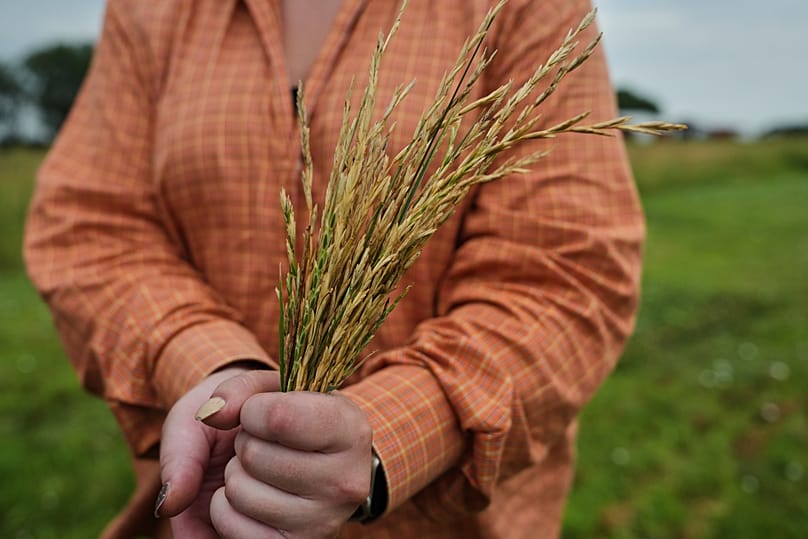
Skyler Grove holds a bundle of Kernza, Tuesday, July 28, 2026, at The Land Institute in Salina, Kan. AP Photo/Joshua A. Bickel

A grain being developed in the US could offer farmers a way to improve soil health while making crops more resilient to drought and heavy rainfall.

Bryce Black kneels in a wheat field battered by intense drought. He holds two strands, remarking on how small the seed head is compared with what's normal.

After a late October rain last year, the fourth-generation farmer was optimistic about his 1,800 acres (728 hectares) of winter wheat. But a dry winter and spring brought extreme drought when the wheat needed moisture to establish itself. He ended up harvesting about 1,500 acres (607 hectares), but the yield was the lowest he's had since taking over his family's farm in 2017.

“It was just a grit your teeth and get through it type of deal,” says Black, who also grows corn, soybeans and milo on his family’s 4,500-acre (1,821 hectare) farm. “It is disheartening, you know? And it’s kind of hard to know what to do.”

When these weather events occur, farmers often look for new ways to protect their crops and their bottom line.

What is a perennial grain?

Some farmers are putting perennial grains in rotation to build resilience against extreme weather like drought and intense rainfall. Researchers are working to develop perennial versions of common annual grains like wheat, sorghum and rice, but the work is slow. And widespread adoption by farmers is challenging because perennial crops don’t yield as much, harvesting can be difficult and the market is still developing.

Despite the challenges, Black is intrigued. “I’m in survival mode,” he says. “If you can plant something and then you don’t have to go back for four or five years … that would save so much money, so much labour, everything. That’s what makes it enticing.”

Five years ago, David Mueller planted a 12-acre (5 hectare) field of Kernza, a perennial grain similar to native grasses found in parts of Europe and western Asia.

Perennial grains don’t require yearly planting, harvesting and replanting. Instead, they are planted once every few years.

Researchers say their root systems, which can reach several feet down, can access water deeper in the ground. That helps them better withstand short-term drought. And when heavy rain hits, the larger root structures can absorb excess water that would otherwise run off and erode the soil. Those deeper roots also sequester more carbon, reducing pollution in the atmosphere.

Inside the institute developing perennial crops

Kernza is one of several perennial grains under development at The Land Institute in Salina, Kansas, about an hour’s drive north of Mueller’s farm. The institute, which formally began domesticating Kernza in 2001, works with researchers and farmers around the world to develop perennial versions of wheat, rice, sorghum and other grain and oil seeds.

Some farmers in Southeast Asia and parts of Africa have started planting and harvesting perennial rice in their fields. Kernza, though, is furthest along and was first harvested on a farm in 2010.

In the US last year, Kernza was cultivated on 3,511 acres (1,421 hectares), compared with 37.2 million acres (15.1 million hectares) of winter, spring and Durum wheat harvested or planted in 2025-26.

Mueller's Kernza field is one of almost 100 acres (40 hectares) he has planted since 2018. He's used the crop to rebuild soil with drainage issues or to reestablish organic matter on his family's farm in Halstead, Kansas, where they also farm about 600 acres (243 hectares) each of corn and soybeans.

He also said Kernza uses about a third of the fertiliser that wheat needs, and because it's planted once every few years, he doesn't have to run gas-burning farm equipment as often.

“Not only are we able to utilise those acres profitably, but then we also build up that soil and work on some benefits to make it hopefully profitable to raise other crops on those fields in the future,” Mueller said.

Soil degradation is a serious threat

A 2024 United Nations report suggests that by 2050, soil degradation could cause more than $20 trillion in losses to the global economy. Farming perennials is less disruptive to that carbon-capturing soil.

Soil serves as a reservoir, capturing planet-warming carbon dioxide from the atmosphere that plays a role in climate change, experts say. Annual cultivation - the plow, plant, harvest and repeat cycle - strains soil formation, which takes thousands of years and rapidly degrades the farmland. Perennial roots can also bring that carbon deeper into soils, where it is less likely to be disturbed, says Laura van der Pol, The Land Institute's lead soil ecologist.

And soil that has more carbon in it tends to be better for plants.

“Incorporating perennials into our agriculture seems like really the only option to have soil for generations if we want to continue to grow food,” van der Pol said. “It’s hard to imagine getting to a place where we could have soil and abundant food without a perennial option.”

Lower yields and harvesting can be challenging

Pilot programs involving perennial grains are in the works around the world, testing how to grow them in different regions, climates and soils, but the research is early and slow-moving.

Chief among the challenges is the crops' grain yield, says Lee DeHaan, who leads the Institute’s Kernza domestication program. Kernza farmers are getting yields of about 20 to 40 per cent of what they might get from a wheat crop in the area. That's because a perennial crop has to use energy not only to grow seeds for grain, but also to grow roots to penetrate the soil so it can survive for more than a year. That contrasts with annual crops, which are engineered to put as much energy as possible into making as much seed as they can in one growing season.

Researchers at Cornell University also have found that establishing a Kernza field can be difficult as it contends with weeds in its first year. Finding the right seeding rate to maximise yield i also still being studied, says Matthew Ryan, a sustainable cropping professor at Cornell University.

Mueller says new varieties of Kernza are yielding more than previous ones, but the yield can decline as the crop ages. Yields on perennial rice are similar to annual ones, officials at The Land Institute say.

Harvesting Kernza specifically can be challenging. The grain is smaller than wheat, for example, and farmers and researchers are still finding the best ways to adapt farm equipment so the kernel isn't damaged during harvest.

Still, Ryan says farmers who experience crop loss due to drought or major flooding may be prompted to think about ways to build more resilience into their operations.

“I think farmers, more than other people, realise that the climate is changing,” he says. “They prompt people to think, and I feel like they are driving farmers to practice this.”

‘More toxic than car exhaust’: What’s the solution to Europe’s wildfire air pollution problem?


Copyright AP PhotoAP Photo/Caroline Blumberg

By Angela Symons with AFP
Published on 08/09/2026 - EURONEWS

Tackling air pollution and climate change together could save lives and boost economies, UN reports show.

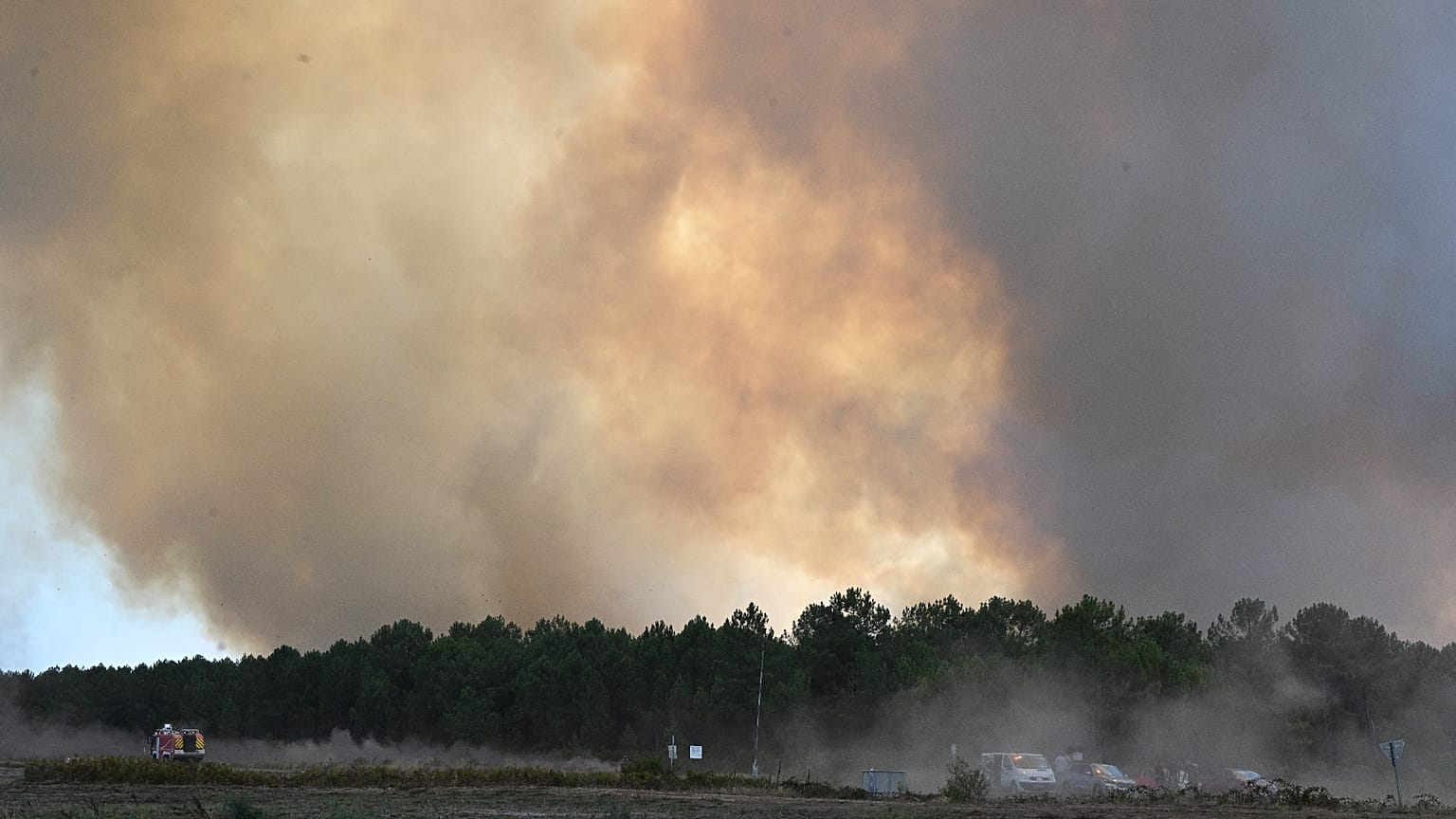
Climate change-driven wildfires and heatwaves are worsening air pollution, with damaging consequences for nature and human health, according to the World Meteorological Organization (WMO).

Global warming is making these events worse as they release microscopic airborne pollutants that risk undermining international efforts to improve air quality, the United Nations' weather and climate agency warned on Monday (7 September).

"Extreme wildfires are increasing, leading to big health consequences because of the high toxicity of smoke," the WMO said in a statement accompanying its latest annual Air Quality and Climate Bulletin.

"Whilst regulations in Europe and North America have reduced industrial and transport PM2.5 emissions, exposure to fire-related PM2.5 has increased."

Particulate matter PM2.5 is composed of microscopic particles and droplets of less than 2.5 micrometres in diameter, which is a health hazard because it can penetrate deep into the lungs and bloodstream. It is emitted by fossil fuel-driven industrial activities, farming, domestic heating and transport, as well as by wildfires and dust storms.

The report said the world needs to better monitor air pollutants such as aerosol – including black carbon and microplastics – fine particles and ground-level ozone.

These pollutants "are not sufficiently monitored even though they are widespread and are potentially harmful to ecosystems", the WMO said.

"[We need] complementary and coordinated policies on air quality and climate because they cannot be dealt with in isolation."

Powerful wildfires are releasing toxic smoke


"Air quality and climate change can't be dealt with separately. If one worsens, the other does too," says Lorenzo Labrador, from the WMO's Global Atmosphere Watch network of scientists.

"In places where there are relatively powerful forest fires, we find a lot of fine particle pollution," he says.

Microparticles generated by burning vegetation are "much more toxic" than those emitted by other sources, even car exhaust, he stresses.

They damage the health of people and wildlife living far from the fire itself because they are carried by the wind, but their poisonous effect is not sufficiently taken into account in air quality assessments, Labrador says.

"Conventional risk models based on total PM2.5 concentrations may underestimate wildfire-attributable mortality by up to 93 per cent," the WMO says.

One study cited in the WMO Bulletin says extreme fire-smoke events have tripled globally since the 1990s, contributing to nearly 100,000 additional deaths per year between 2010 and 2018, although this may be an underestimate.

Ozone and microplastics worsen air pollution

Another source of air pollution that carries major health risks is ground-level ozone, which accumulates when temperatures rise, atmospheric conditions stagnate and solar radiation is intense, as seen during recent heatwaves in China, Europe and the southeastern United States.

"This increased exposure to ozone pollution has the potential to lead to tens of thousands of additional premature deaths," particularly due to respiratory diseases, the WMO warned.

Another growing concern is aerosol particles, which can also travel to oceans and continents far from their source.

They can alter the way the atmosphere reflects sunlight, change the chemical properties of land and water, and pollute otherwise clean environments.

"One example is the deposition of black carbon – or soot – on snow and ice, which reduces the amount of sunlight reflected by these surfaces and in turn can hasten the melting process," the WMO explained.

Another example is microplastics, formed when plastics break down because of sunlight or other factors, and found virtually everywhere – in the air, the soil and the oceans.

One simulation in the WMO Bulletin estimates there are "51 million tonnes for land and 22 million tonnes for the ocean – which are in turn a source of microplastics for the atmosphere".

"As plastic production and, critically, mismanaged plastic waste, continues to increase," monitoring the airborne paths that carry microplastics from their source and dump them in remote environments will be "crucial", the report said.
Economic benefit of tackling climate change and air pollution together

A separate report released on 7 September by the UN Environment Programme (UNEP) and the Climate and Clean Air Coalition (CCAC) highlighted the economic benefits of tackling climate change and air pollution as a joint problem.

It found that every $1 (€0.86) invested in climate and clean air action can return $15 (€12.92). This is higher than tackling climate and clean air separately, and it includes both market and non-market economic gains, split across health systems, productivity and avoided climate damage.

“For too long, we have treated climate action as a cost to be managed and air pollution as the unfortunate outcome of development," says Inger Andersen, Executive Director of UNEP. “This report shows the opposite: clean air is a key driver of development, health, food and energy security, and climate stability – an asset we must invest in.”

Targeting emissions in six sectors – energy and fossil fuel systems, industry, transport, agriculture and food systems, residential cooking and heating, and waste management – the report lays out measures that, by 2050, could halve global carbon dioxide emissions and prevent 144 million air pollution related premature deaths.

Renewable power, energy efficiency, electric vehicles, low-sulfur shipping fuels, more efficient fertiliser use, better wastewater management, and phasing down HFCs are among the 25 measures proposed.


Delay tactic or genuine solution? Carbon capture under fire again as EU invests in ‘unproven’ technology

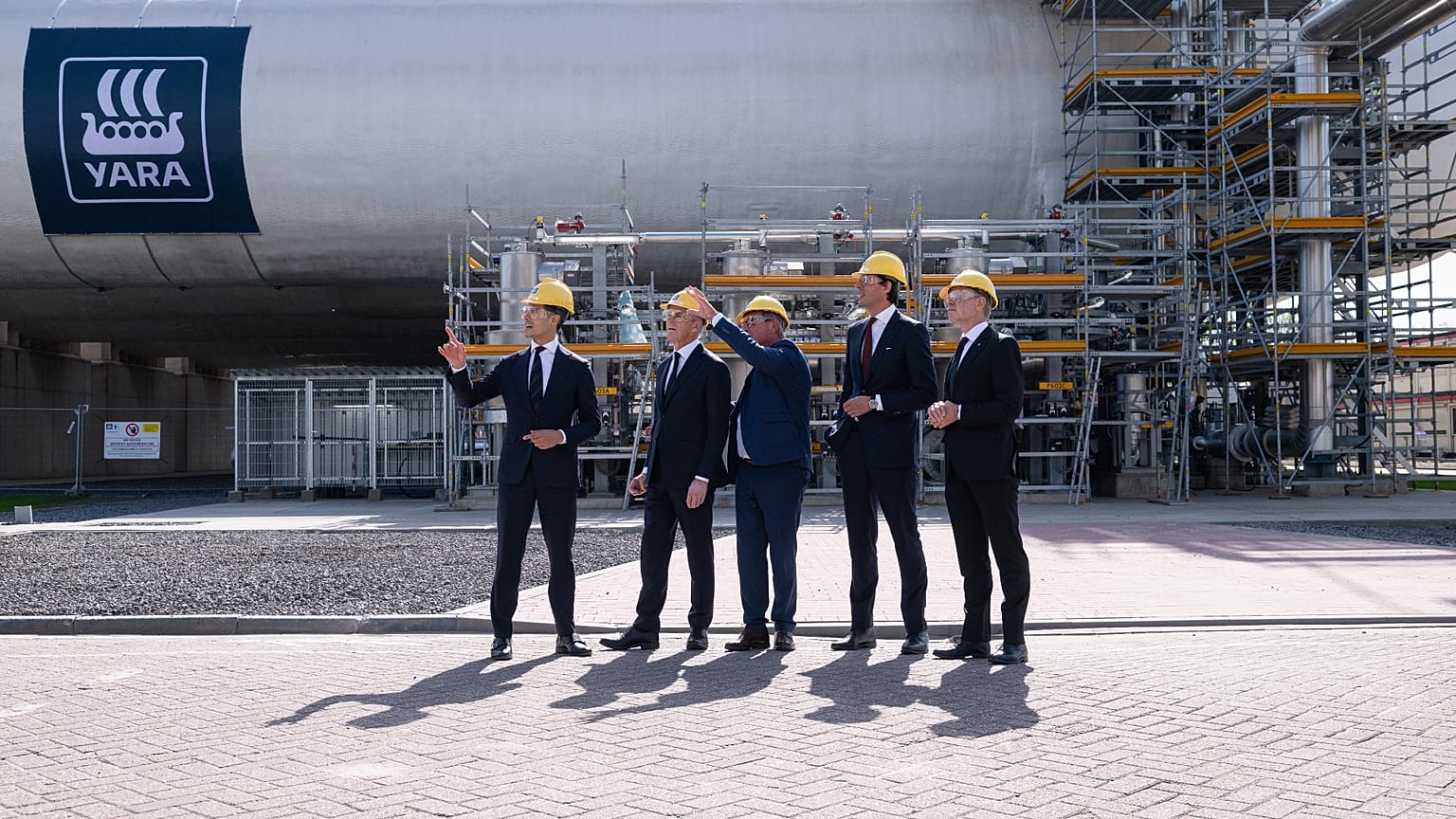
Wopke Hoekstra, European Commissioner for Climate, Net Zero and Clean Growth, second right, visits Yara Sluiskil, 7 September 2026
Copyright European Union, 2026, licensed under CC BY 4.0

By Ruth Wright with AFP
Published on

Carbon capture and storage has been found to be “technically uncertain and very high cost”.

CO2 emitted by a fertiliser factory in the Netherlands will be stored underneath the seabed in Norway, in what the owners are calling the “largest commercial carbon capture and storage (CCS) project in Europe”.

At an opening ceremony this week, the ammonia and fertiliser plant announced that it will capture 800,000 tonnes of CO2 a year then liquefy it to be sent by ship to Norway.

Having funded the project, the European Commission was keen to promote its investment – with the Commissioner for Climate, Net Zero and Clean Growth attending the inauguration alongside the Prime Ministers of both countries.

While the Commission says the Sluiskil plant, run by Norwegian chemical company Yara, is a “strategic investment”, opponents say it is “risking billions in taxpayers’ money to fund a dangerous distraction that delays climate action”.

As one of the most divisive topics in climate action, we look into the facts about carbon capture and how the EU came to be funding this experimental technology.

What is carbon capture and storage?

Carbon capture and storage (CCS) refers to technologies designed to prevent CO2 from entering the atmosphere in the first place and/or to remove it after it has been emitted.

As is done at the Sluiskil plant, most projects use a liquid to chemically remove the CO2 emitted from the production process, where it is then compressed into a liquid-like state and transported typically through a pipeline to a storage site. At that point, it’s either stored deep underground or is transformed into things like building materials or synthetic fuel. In the case of the latter, this technology is referred to as CCUS, where the ‘U’ stands for utilisation.

As of February 2026, there were 75 operational CCS projects around the world, according to climate change publication Carbon Brief. Almost all of them are at fossil-fuel extraction and processing sites, according to the IEA’s database. Together, these projects capture 62.5 million tonnes of CO2 (MtCO2) each year. This is equivalent to 0.2 per cent of total global emissions in 2025.

While Yara’s chief executive, Svein Tore Holsether, said in a statement, “The carbon capture facility in Sluiskil proves that large-scale industrial decarbonisation is possible today”, the cumulative emissions saved are a very, very tiny drop in the ocean.

US non-profit the Institute for Energy Economics and Financial Analysis (IEEFA) has conducted in-depth research into CCS. Their Energy Finance Analyst, Andrew Reid, says: “Despite the political and financial support that has been pointed to CCS over the past three to four years, it remains technically uncertain, very high cost, and reliant upon huge subsidies to move from feasibility to construction and operation.”

CCS: To help the fossil fuel industry to extract and sell more oil and gas

To understand its uses, it’s important to understand where carbon technology originates from. According to Carbon Brief, it “was originally rolled out at US and Canadian oil wells in the early 1970s as a way to achieve “enhanced oil recovery”. This involves injecting captured CO2 into depleted wells – a process that stores the gas, but also helps to extract more oil.” This is by far the most significant use for carbon capture worldwide, with three-quarters of it used for this purpose.

This means that “the majority of CO2 that is both captured and used today helps the fossil-fuel industry to extract and sell more oil and gas,” according to Carbon Brief.

How did the EU end up funding carbon capture and storage?

One of the arguments against CCS, which campaigners have been making for years, is that it is a way for polluters to keep polluting, rather than emitting less of the gases which are heating up the planet at alarming rates.

“All capture and storage projects suffer from the same problem: they distract attention and resources from cutting emissions at source and give polluting industries like fertiliser production a pass to keep on polluting,” says Rachel Kennerley, Senior International Carbon Capture Campaigner at the Center for International Environmental Law (CIEL).

Belén Balanyá, researcher and campaigner at Corporate Europe Observatory (CEO), has been tracking the lobbying efforts of the fossil fuel industry for 25 years. She has recently focussed on lobbying by the CCS industry. The outcomes of annual COP climate talks are known to be influenced by lobbyists representing industry. Balanyá found that around 500 CCS lobbyists were at COP29 in 2024. A year earlier, at COP28, CCS proponents (largely tied to fossil fuel industries) scored a significant win with the endorsement of “abatement and removal technologies” in the agreement.

Referring to fossil fuel industries, Balanyá says, “You look at what’s on the agenda and it’s always escape hatches to stay in business,” she tells Euronews Green. “It’s where they move when they’ve been forced to – when there’s more knowledge and more acceptance about climate change and their role and that they have to decarbonise.”

CCS being endorsed in a COP agreement may have contributed to its legitimacy in political circles within the EU. The CCUS Forum (now the Industrial Carbon Management (ICM) Forum), set up by the European Commission in 2021, is an annual event with working groups that feed directly into EU policymaking. CEO found that every group has been co-chaired by the fossil fuel industry or associated organisations.

A newly released report from the UN Environment Programme (UNEP) details the risks of overshooting 1.5°C of warming and how we can limit them. It assessed what it called Carbon Dioxide Removal and found that many issues remain with the technology, such as whether it can scale sustainably (due to costs, land and energy use), whether it would actually keep CO2 out of the atmosphere permanently and who’s responsible for regulation and leaks.

CCS: Good or bad?

Wherever commentators stand on CCS, there is some agreement that for some industries, the technology can be useful. Yara’s project targets emissions from ammonia production which “provides a relatively concentrated CO2 stream, making this one of the more straightforward industrial applications of carbon capture rather than an example of the very hardest emissions to abate,” according to Domien Vangenechten, Programme Lead in Clean Economy at E3G.

“The lesson should therefore not be that Europe needs CCS everywhere, but that we should pragmatically deploy it where it can cut substantial emissions today.”


Possible massacre and cannibalism 7,000 years ago uncovered in Granada

Found in Neolithic caves
Copyright IPHES-CERCA

By Escarlata Sánchez
Published on

Analysis of nearly 1,000 bones found in three caves in Granada shows that cannibalism was a recurring Neolithic practice, with signs of collective violence, possible rituals and skulls turned into containers.

Three caves in Granada reveal that cannibalism was a recurrent practice during the Neolithic in the south of the Iberian Peninsula. The analysis of nearly 1,000 human remains found at Malalmuerzo, Carigüela and Majólicas has made it possible to date these assemblages for the first time and determine that acts of cannibalism took place in different periods and social contexts.

One of the most striking cases is Malalmuerzo, where researchers suggest that the cave may have been the scene of an episode of collective violence followed by acts of cannibalism around 5000 BC.

More than half a century after these sites became key references for the study of prehistoric cannibalism, an international team has re-examined the remains using radiocarbon dating and new taphonomic analysis techniques.

The results indicate that Neolithic cannibalism in the Iberian Peninsula was not an isolated phenomenon, but a practice that recurred at different times and under varying social circumstances, in line with evidence documented in other regions of Europe.

The research, published in the 'Journal of Archaeological Science', involved universities and research centres in Spain, Austria, Brazil and Argentina.

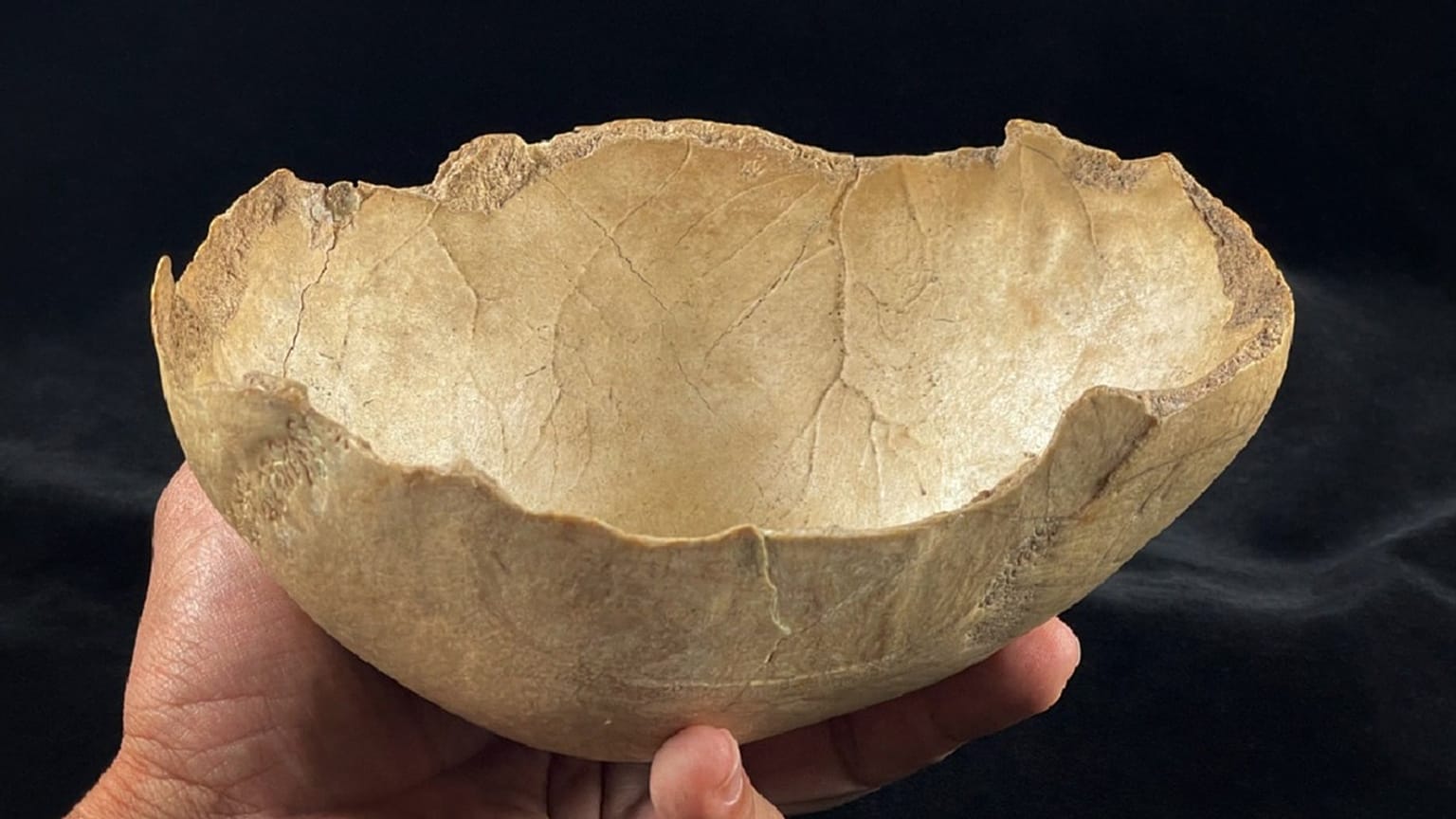
The skull found in a Neolithic cave. Cortesía: IPHES-CERCA

Cannibalism in three Granada caves with different contexts

The team examined nearly 1,000 human remains from the three caves in search of evidence of deliberate manipulation. The researchers studied cut marks, fractures and tooth marks under the microscope and combined statistical analyses, machine learning and direct radiocarbon dating to determine how and when the bones were modified.

Although all three sites show evidence linked to cannibalism, such as cut marks, cooking and bite marks, each tells a different story. Malalmuerzo shows signs of violence; Carigüela reveals the recurrence of these practices and a distinctive treatment of skulls; and Majólicas points to possible ritual practices.

For decades, prehistoric cannibalism tended to be interpreted as a homogeneous phenomenon. However, the new study shows that practices that appear similar may reflect different social realities and that their meaning needs to be analysed by jointly considering chronology, the archaeological context and the evidence preserved in the bones.

This is how Antonio Rodríguez-Hidalgo, Ramón y Cajal researcher at the Institute of Archaeology of Mérida and one of the study’s authors, explains it.

A possible massacre followed by cannibalism at Malalmuerzo

The Malalmuerzo cave offers one of the most striking findings of the research. The remains point to a possible episode of collective violence around 5000 BC, involving individuals of different ages whose bodies were subsequently consumed.

In Carigüela, the new dates indicate several episodes of cannibalism throughout the Neolithic. Among the most unusual discoveries are two skulls that were modified so they could be used as containers.

The most recent episode is documented at Majólicas, around 3800 BC, and does not appear to be linked to a violent context. Some bones stained red, probably with cinnabar, point to possible ritual practices.

The remains found. IPHES-CERCA

Neolithic cannibalism was recurrent in Europe

The three Granada sites fit into a broader pattern observed in Europe. Cannibalism during the Neolithic would not have been a continuous practice, but a phenomenon that appears concentrated in specific periods and regions.

Anthropophagic practices are particularly concentrated in three phases: the late 6th millennium BC, the mid-5th millennium BC and the late 3rd millennium BC, the last already in the Bronze Age.

Although the researchers have not identified a single cause that explains all these episodes, they believe they may be linked to changes in social organisation, relations between different groups and the way in which death and violence were understood.

New techniques reveal secrets of remains excavated decades ago

The research also highlights the scientific value of historical archaeological collections and shows how new techniques can provide unprecedented information on material excavated decades ago.

Among the authors is Miguel C. Botella, then director of the Laboratory of Forensic Archaeology at the University of Granada, whose work was crucial to the study of these remains.

"His work helped establish Malalmuerzo, Carigüela and Majólicas as benchmark sites for the study of cannibalism in Europe’s late Prehistory," concludes Francesc Marginedas.


Driverless race cars compete in Italy in Europe’s first autonomous multi-car race


By Roselyne Min
Updated

The competition is fought largely through programming, simulator sessions and the constant search for a balance between speed and risk.

Italy’s Formula 1 city of Imola has hosted Europe’s first multi-car race for fully autonomous cars.

Five teams from the Abu Dhabi Autonomous Racing League (A2RL) competed at the historic Imola circuit, with cars racing without steering wheels, pedals or even drivers.

The teams represented Germany, Italy and the United Arab Emirates (UAE).

Even if the cars drive themselves, making them competitive still requires a team of humans capable of developing the best AI-driven racer.

“The teams that come here are all about winning,” said Stephane Timpano, CEO of ASPIRE, the organisation behind the event.

"They are scientists. They look like scientists, and they behave like scientists, but once the competition starts, it’s about showing that they have the best software, the best code in the car, and what they want is to win".

All teams used the same SF23 single-seaters developed by Dallara for Japan’s Super Formula series, regarded as one of the fastest racing championships outside Formula 1.

But the human controls have been taken out. Instead, the cars use cameras, radar and lidar sensors to perceive their surroundings, while an onboard computer controls the car.

Just like in any other motorsport competition, mechanics work on the cars, engines roar and engineers closely monitor streams of telemetry data.

Organisers also hope putting autonomous cars on a familiar racing stage can help build public trust in AI.

“Create trust. I think this is the biggest issue we will have with AI going forward,” Timpano said.

“A lot of people are reluctant to engage with AI, are worried about what is going to happen with their jobs, their life and what AI is able to do,” he added.

Pushing autonomous driving to its limits

For autonomous driving experts, however, the competition is fought largely through programming, simulator sessions and the constant search for a balance between speed and risk.

“The league addresses one of the biggest challenges in developing autonomous vehicles, which is testing risky scenarios in a controlled environment, at high speeds,” said Alexander Winkler, A2RL’s head of sporting.

He said racing against other vehicles travelling at similarly high or different speeds creates situations and data that would be difficult to reproduce in ordinary road testing.

“To me, as a professor, this is probably one of the most difficult engineering problems you have today. It is not just autonomous driving, but autonomous driving at the very, very limit of handling,” explained Marko Bertogna, a professor at the University of Modena and Reggio Emilia.

And once the race starts, the engineers have to let their code do the driving.

“When the race starts, it’s hands off,” said Sascha Buettner, team lead of TUM, the participating team from the Technical University of Munich in Germany.

“And so this is basically just letting a child do its thing and just looking at them and, you know, wishing them all the best, essentially hoping to be proud. But, of course, that can go wrong. Our AI driver can stumble, it is all possible.”

Despite the cars now approaching professional drivers in outright performance, organisers say AI still cannot reproduce everything a human brings to racing.

“Still today, this car is not able to reproduce the fantasy of a driver. You don’t see that in the car,” Timpano continued.

“With time, it may get there. But I see it the other way around. Our human pilot can use AI to have a better performance in the safest way.”

The winner of Saturday's 12-lap autonomous race was Kinetiz from the UAE.

Founded in 2023, A2RL is based in Abu Dhabi in the United Arab Emirates.


Vivian Wilson hits out at AI and estranged father Elon Musk in new Desigual fashion campaign

Elon Musk’s estranged daughter Vivian Wilson hits out at AI and Elon in new Desigual fashion campaign
Copyright Screenshot Instagram Desigual


By David Mouriquand
Published on

The new Desigual campaign stars Elon Musk's estranged daughter Vivian Wilson and aims to “send a clear message: the greatest rebellion is no longer about fighting against the system but about refusing to be part of it."

Elon Musk’s estranged eldest daughter Vivian Wilson is front and centre in a bold anti-AI campaign for Spanish fashion label Desigual.

The campaign, helmed by directing trio PSG (made up of Yukihiro ‘Sho’ Shoda, Pau López and Gerardo del Hierro - formerly known as TURBO), sees the transgender model, acitvist and social media personality take a stand against artificial intelligence.

Illustrating the campaign’s title, ‘Born to Disobey’, one clip sees the 22-year-old using a robot as a golf tee, walking it like a dog on a leash, and trying to teach it to say "Desigual". Throughout, the robot malfunctions, leading Vivian to the conclusion: “Some things aren’t meant to be fixed.”

Per a press release, the campaign aims to “send a clear message: the greatest rebellion is no longer about fighting against the system but about refusing to be part of it. When everything invites you to obey, the answer is attitude, irony and the freedom to be yourself.”

Wilson told People that it was important to her to take a stance on the impact of AI on the fashion industry “because it takes jobs away from talented creatives while being detrimental for the environment.”

“Art is emotion through expression,” she added. “Since emotion is inherently human, AI takes away any underlying intention and replaces it with plagiarized colors and shapes.”

Vivian Wilson Screenshot Instagram Desigual

Beyond the obvious (and potent) anti-AI stance, it’s hard not to recognise the barely veiled dig at Elon Musk.

Born in 2004 to Elon Musk and his first wife, Justine Wilson, Vivian began her gender transition at the age of 16, with the consent of both her parents. Elon Musk later claimed that he had been “tricked into signing documents”, whilst Vivian Wilson has insisted that her ex-husband was fully aware. On her eighteenth birthday, Vivian won a court case allowing her to take her mother’s maiden name, thereby severing all ties with her father. Having become an influencer and model, she has emerged as a leading voice in the defence of trans rights in the US.

Elon has said that his child is “dead” and that Vivian was “infected by the woke mind virus”.

In this context, lines in the Desigual campaign like “He was designed to obey. Not me” and “Some things aren’t meant to be fixed” take on new meaning, appearing not only as a plea against the AI technology Elon Musk and others like him peddle, but as direct jabs possibly aimed at her estranged father.

Additionally, the malfunctioning and completely useless robot in the campaign ad, called DESI84, looks suspiciously like the Tesla Bot (Tesla Optimus) marketed by Elon Musk’s company. Coincidence?

DESI84 Screenshot Instagram Desigual

Last year, Vivian commented on commented the accusations that Elon Musk made a Nazi-like gesture at Donald Trump’s inauguration.

“I’m just gonna say let’s call a spade a fucking spade,” she wrote on Instagram’s Threads platform. “Especially if there were two spades done in succession based on the reaction of the first spade” - referring to the fact Musk did the salute twice on stage.

Wilson also hit back at claims that her father’s gesture could be explained because of his “autism”.

“I don’t know why ya’ll are reacting with such vigour, I’m clearly only talking about card suits,” she later quipped. “I mean I have ADHD and this was CLEARLY just an accident that people happened to interpret to mean something other than just card suits.”

She added: “After all, there’s no proof I’m not just talking about card suits. People assuming that I’m not just talking about card suits just goes to show how dishonest people/the media can be.”