Three-way race: Who will win power in chess?
Holger Hank
DW
September 24, 2026
The era of Russian presidents is coming to an end at the World Chess Federation (FIDE). Two Germans and one Kazakh are up for election. Among the issues at play are money, Kremlin influence, and unanswered questions
The era of Russian presidents is coming to an end at the World Chess Federation (FIDE). Two Germans and one Kazakh are up for election. Among the issues at play are money, Kremlin influence, and unanswered questions

FIDE presidential candidate Wadim Rosenstein is also an avid player
Image: Meurer/Beautiful Sports/IMAGO
"Gens una sumus" ("We are one family") is the motto of the World Chess Federation (FIDE). Yet when officials from some 200 countries gather for their congress in Samarkand on Saturday, September 26, it is not likely to feel like a joyous family reunion.
A new FIDE president is to be elected in Uzbekistan, and a three-way, politically charged race for the post has erupted, with the outcome uncertain. It has been clear since July that the incumbent FIDE president, Arkady Dvorkovich, would not be standing for re-election. The European Union had placed the former Russian deputy prime minister on its sanctions list due to his support for Russia's war of aggression in Ukraine.
Three entrepreneurs vying for the top job
The candidates standing for election are Kazakh billionaire Timur Turlov and two Germans: investor Jan Henric Buettner and entrepreneur Wadim Rosenstein, who is running as the official candidate of the German Chess Federation (DSB).
For the first time in over 30 years, FIDE will not be led by a Russian. Nevertheless, the three contenders repeatedly face two questions: What are their ties to Russia? And where do the millions come from that FIDE uses to finance itself and its competitions? For the Kremlin, chess remains a component of Russia's soft power, and little happens within FIDE without financial backers linked to Russia.
Jan Henric Buettner: The Formula 1 model
Buettner is arguably the best positioned to answer these questions. A native of Hamburg, he has made a name for himself in the chess world through his collaboration with former world champion Magnus Carlsen. The 62-year-old German has no known ties to Moscow that would require explanation. On the contrary: "We are the only team with no connection to Russia," Malcolm Pein — Buettner's candidate for vice president — told DW.
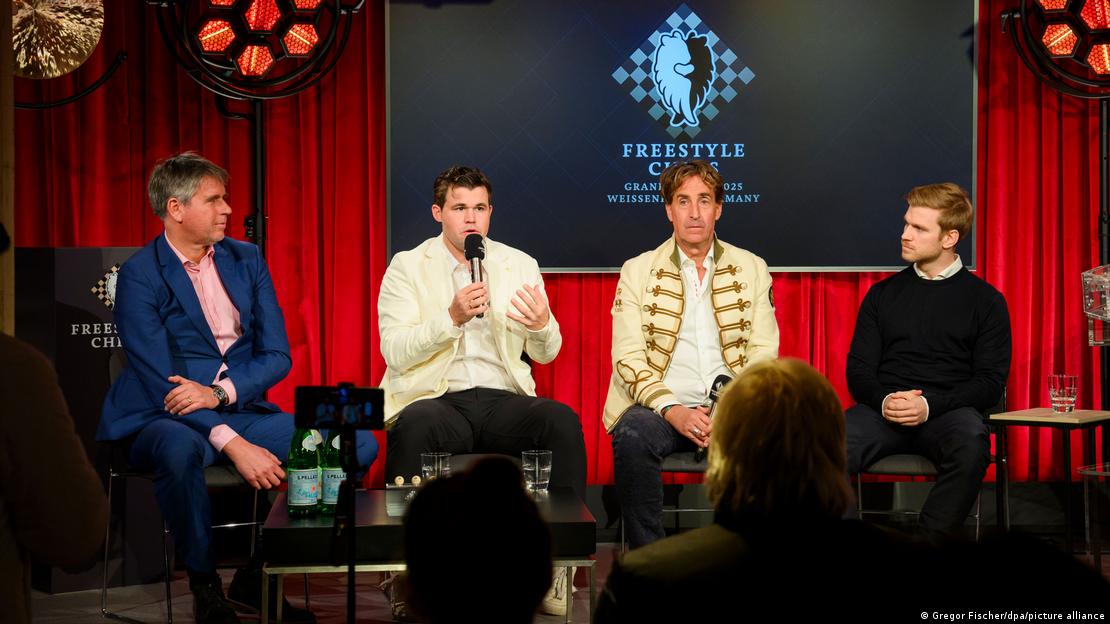
Jan Henric Buettner (3rd from left) is championing "Freestyle" chess alongside former world champion Magnus Carlsen (2nd from left).Image: Gregor Fischer/dpa/picture alliance
Buettner and his running mate say they intend to reduce reliance on Russian financial backers and make chess commercially successful. Buettner plans to distribute 20% of FIDE's revenue to chess federations worldwide. The former AOL executive looks to Formula 1 motor racing as his model – a vision likely considered too radical by many officials in the chess world. Consequently, Buettner is seen as having only an outside chance of winning.
Buettner and his running mate say they intend to reduce reliance on Russian financial backers and make chess commercially successful. Buettner plans to distribute 20% of FIDE's revenue to chess federations worldwide. The former AOL executive looks to Formula 1 motor racing as his model – a vision likely considered too radical by many officials in the chess world. Consequently, Buettner is seen as having only an outside chance of winning.
Timur Turlov: The establishment candidate
The favorite to become FIDE's new president is Timur Turlov. Born in Moscow, he became a Kazakh citizen in 2022 and is one of the wealthiest men in the Central Asian nation. The entrepreneur is considered a close associate of outgoing President Dvorkovich and, by extension, a member of the FIDE establishment. Regarding finances, too, the status quo is likely to remain unchanged under the 38-year-old; after all, Turlov's publicly traded financial firm, Freedom Holding Corp., has been FIDE's main sponsor for many years.
The prospect of Turlov potentially holding the dual roles of FIDE president and major financial backer does not sit well with everyone in the chess community. Furthermore, Freedom Holding Corp. and its CEO are currently on Ukraine's sanctions list. Ukrainian authorities accuse Turlov's company of helping to finance Russia's war of aggression. Press reports also suggest that the US Securities and Exchange Commission (SEC) has taken an interest in Turlov's financial firm.
Report: Hamburger Sparkasse closes account
In the spring of 2026, Turlov acquired the Hamburg-based chess software company Chessbase. Shortly thereafter, the German chess news website perlenvombodensee.de reported that the company's principal bank, Hamburger Sparkasse, had closed the Chessbase business account.
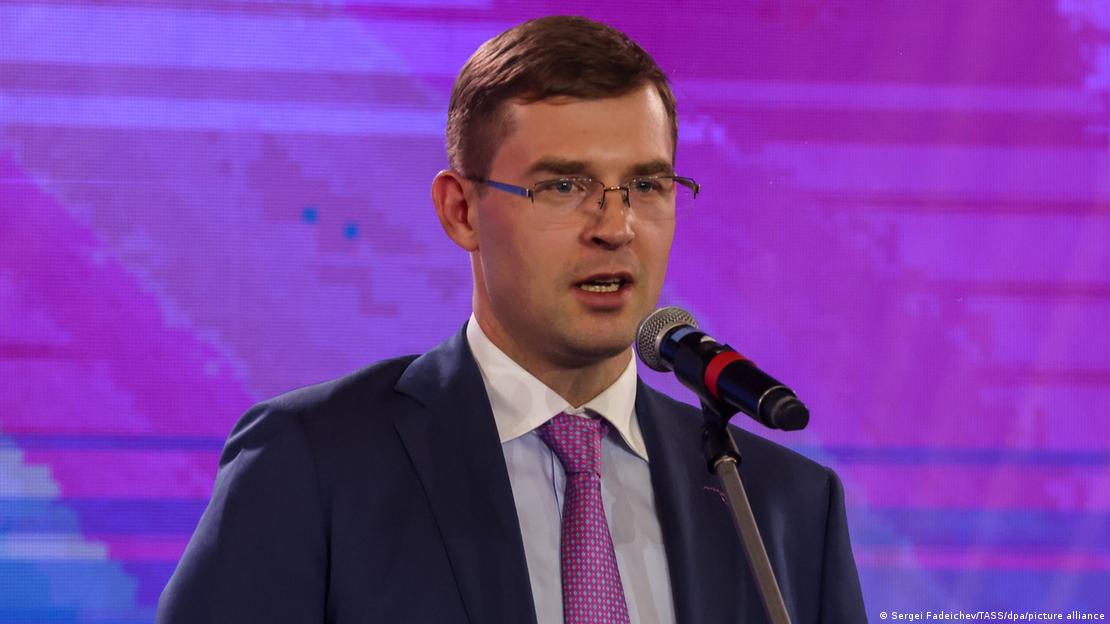
Timur Turlov of Kazakhstan is considered the favorite in the race for the FIDE presidency
Image: Sergei Fadeichev/TASS/dpa/picture alliance
Chessbase declined to comment on the matter. Hamburger Sparkasse also did not address the specific case but told DW: "If a business relationship falls under currently existing sanctions – for example, against countries such as Russia, Belarus, or Iran – this may unfortunately result in us being unable to continue specific business relationships."
DW approached Timur Turlov for comment but had received no response by time of publication.
The position of Volodymyr Kovalchuk, vice president of the Ukrainian Chess Federation is clear.
"If Turlov wins the FIDE election and poses a threat to Ukraine's security, then we will push for him to be sanctioned by the EU as well," Kovalchuk told DW.
However, there are now signs of a rapprochement between Turlov and the Ukrainians: Turlov is currently advocating for a Ukrainian official to be elected as a vice president on the FIDE board.
Wadim Rosenstein: Many outstanding questions
The third figure in the mix, Wadim Rosenstein, is also facing intense scrutiny in Ukraine.
"It is absolutely clear that we will not support such a candidate and, should he be elected, will also propose him for sanctions," Kovalchuk said.
Rosenstein was born in 1990 in what is now Ukraine and moved to Germany at the age of nine. In the autumn of 2022, the entrepreneur and amateur chess player began organizing elaborate chess events.
Questions have dogged him ever since, with his business activities and connections to Russia being the primary focus of this scrutiny. According to Rosenstein, the companies within his Düsseldorf-based "WR Group" operate in various sectors, ranging from toilet paper trading and real estate to industrial logistics. Until 2022, a key focus was supporting German companies in regions including Ukraine and Russia, Rosenstein told DW a few months ago. However, he said he was no longer active in Russia; instead positioning himself "globally" across "70 countries," including Kazakhstan, Uzbekistan, and Turkey.
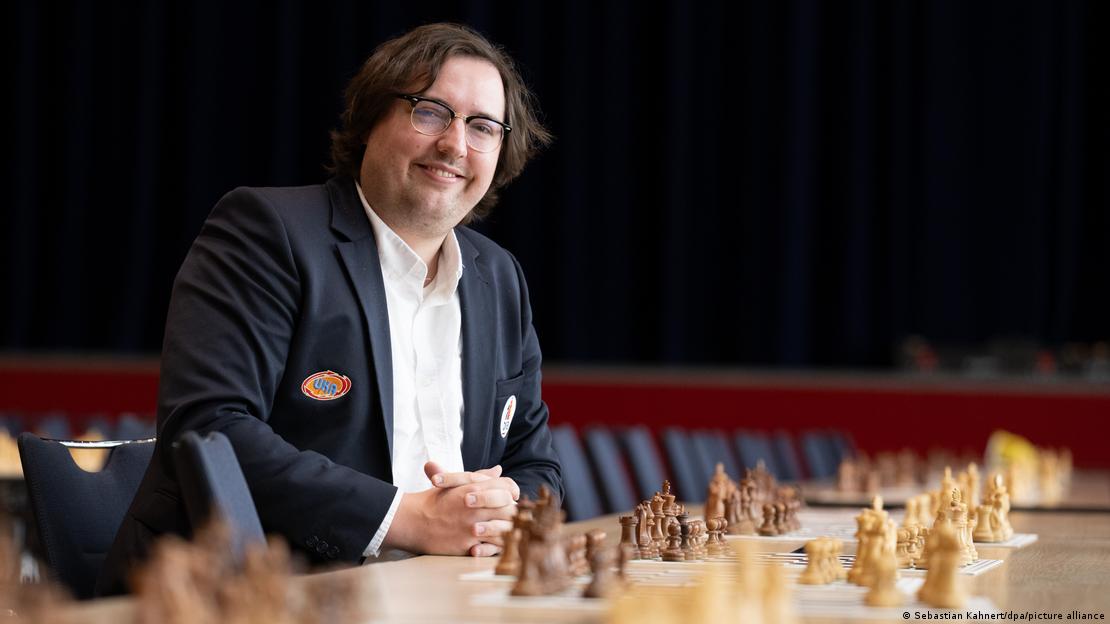
DSB President Paul Meyer-Dunker supports Wadim Rosenstein's bid to become the next FIDE presidentImage: Sebastian Kahnert/dpa/picture alliance
The company in Russia
However, one of the Düsseldorf entrepreneur's remaining companies in Russia has enjoyed economic success in recent years. In July, Rosenstein told DW that these companies were active "only on paper."
It has since become clear that "WR RUS," at least, is anything but a paper tiger. The Moscow-based company has been owned by Rosenstein since 2021. Publicly available data show that "WR RUS's" profit grew from around €300,000 ($341,230) to €1.7 million ($1.93 million) between 2022 and 2025.
Furthermore, records confirm that Rosenstein's German companies – "WR Logistics" and "WR Certification" – collaborated with "WR RUS" through the end of 2023. Documents from "WR RUS" also show a dividend payment equivalent to around €30,000 for the year 2023, which apparently went to him and one of his German companies.
DW again approached Wadim Rosenstein for comment on these matters but received no response by the time of publication of this report.
High-priced players, upscale venues
Since 2022, millions have been poured into Rosenstein's elaborate chess events year after year. The list of Rosenstein's events is long: it includes a top-tier tournament featuring world number one Magnus Carlsen, the 2023 World Team Blitz and Rapid Chess Championship at the prestigious Rheinterrasse in Düsseldorf, and, most recently, the global "WR Women's Chess Tour." A premium venue in Stuttgart has been selected for the tour's finale in November – a location whose name the sponsor is likely to appreciate, Rosenstein Palace.
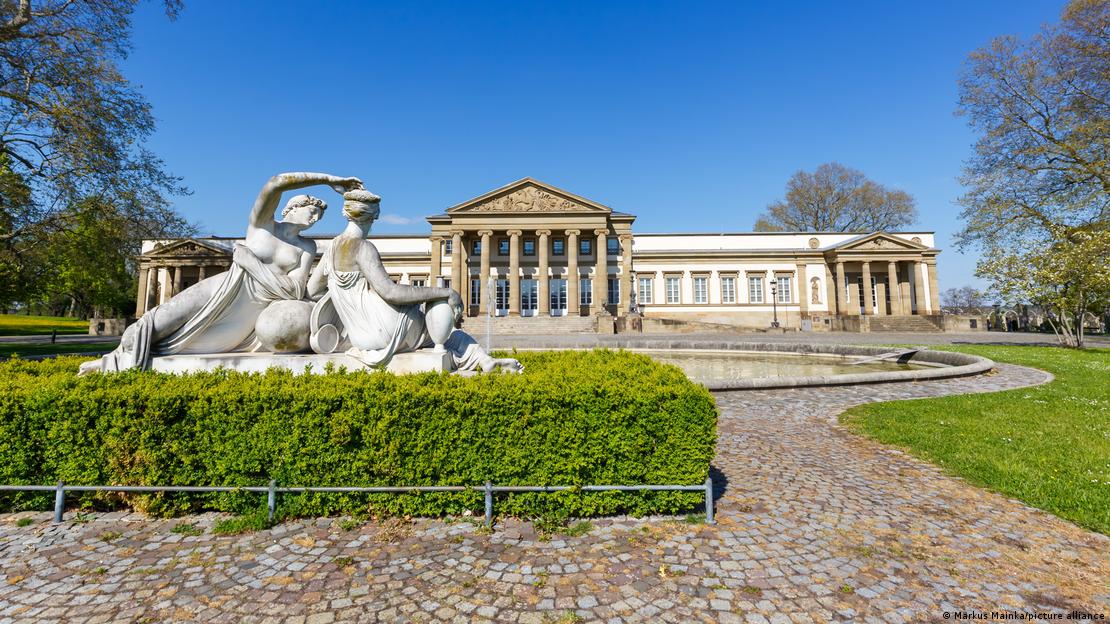
A grand setting for the WR Women’s Chess Tour 2026:
Rosenstein Palace in Stuttgart.
Image: Markus Mainka/picture alliance
The FIDE presidential campaign is also costly. On social media, Rosenstein presents himself aboard a private jet during an international campaign tour. According to the Frankfurter Allgemeine newspaper, a portion of the campaign costs is to be covered by Rosenstein's running mate for the vice-presidency – a wealthy real estate entrepreneur from Singapore.
Rosenstein has not disclosed the total cost of his numerous chess activities to date or the exact source of the funds. His company, "WR Logistics," is one of the main sponsors. Rosenstein told DW in July: "I have also used my own funds and brought on partners who trust me."
But who are these partners?
A sponsor that didn't exist
While Rosenstein was preparing his FIDE candidacy in April 2026, he introduced the Düsseldorf-based company "Glotech." He stated he was "proud to introduce our next partner." The sponsor is reportedly providing €250,000 for chess activities in Europe. According to Rosenstein, Glotech is "a true supporter of our vision."
However, according to Glotech Managing Director Evgeni Schukin, this support never existed: "There was no agreement, and we did not make such funds available."
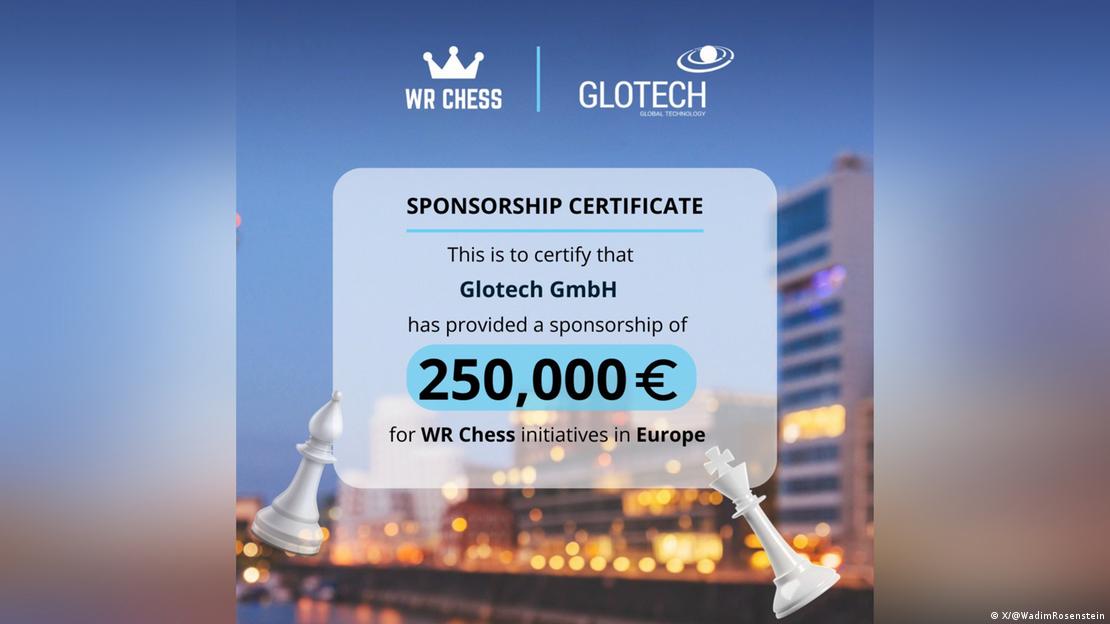
A professional-looking certificate: According to "Glotech GmbH," there was no sponsorship agreement (the graphic, which has since been deleted, was published on Wadim Rosenstein's "X" account in April 2026).
Image: X/@WadimRosenstein
Rosenstein is campaigning primarily on the pledge that FIDE would operate "professionally" under his leadership. On his official website, "WR 2026," he promises transparent and direct communication.
DW approached Rosenstein for comment on the financing of his chess activities, but he did not respond.
Political connections
With the support of the DSB and its president, Paul Meyer-Dunker, Rosenstein has succeeded in establishing himself as a serious challenger to the Turlov, the favorite within FIDE.
The 36-year-old also enjoys support from the world of German politics. In early September, Rosenstein met with Bavarian Interior Minister Joachim Herrmann.
"Joachim Herrmann supports the candidacy of the German applicant Wadim Rosenstein," a subsequently issued statement read.
The Bavarian Interior Ministry told DW that this support related to the "sport-specific focus" of the bid but did not constitute "an assessment of Mr. Rosenstein's private or business activities, nor a prejudgment of any potential reviews by competent authorities."
Online debate cut short
The DSB only learned of the meeting between its FIDE candidate and the Bavarian interior minister after the fact. According to Meyer-Dunker, the DSB supports Rosenstein because he stands for "consistent professionalization" and "greater transparency" within the World Chess Federation. The DSB "has no information regarding Wadim Rosenstein's business activities beyond what has appeared in public reports," Meyer-Dunker said.
Rosenstein had an opportunity to address questions and explain his plans for FIDE's finances in early September. A US chess website had organized an online debate for the candidates. Rosenstein delivered the opening statement; he spoke for just under four minutes, then suddenly exclaimed: "See you in Samarkand!" before cutting the connection.
DW has approached Rosenstein several times to ask why he did not participate in the rest of the discussion regarding FIDE's future. There has been no response to this either.
Dasha Thyssen contributed to this article as a co-author. This article was originally written in German.


