Saturday, October 03, 2026


Underwater umbrellas for coral reefs could help protect against heat damage, study finds


Temporary shades placed over especially vulnerable Caribbean corals mitigate and even partly reverse bleaching driven by marine heatwaves


Frontiers

A shaded coral

image: 

A shaded coral photographed by Karen Neely.

view more 

Credit: Karen Neely


High sea temperatures driven by the climate crisis damage corals, bleaching them ghostly white and killing them. While restoration of dead reefs is possible, it’s difficult and expensive, and restored corals are vulnerable to future heatwaves. Finding ways to stop or slow the damage to existing reefs is crucial. Now scientists think they’ve found a way to protect some especially vulnerable Caribbean corals: umbrella-like shades. Shading can’t cool the water, but it prevents UV and irradiance damage, which makes heat damage to corals worse.  

“Heat-related coral bleaching is probably the biggest threat to reefs worldwide, and we absolutely have to address climate change to have any hope of reefs as we know them existing in the future,” said Dr Karen Neely of Nova Southeastern University, lead author of the article in Frontiers in Marine Science. “Solutions like shading can offer temporary protection on small scales. The 2023 coral bleaching event in Florida essentially wiped out branching corals, and at some inshore sites had a devastating impact on brain corals. This study stemmed directly from that event: we wanted to provide proof of concept for tools to save targeted corals in similar future events.” 

Safer in the shade? 

In the summer of 2024, Neely and her team set up 20 custom-made shades over 10 different colonies of two species of brain coral, Pseudodiploria clivosa and Colpophyllia natans, at Newfound Harbor in the Florida Keys. They also selected 20 matching corals to act as controls.  

The umbrella-like shades, made of pipes with nylon cloths attached, were temporarily fixed to the seabed with cord and floated 30cm over each shaded coral. They reduced light by 60%. Divers visited every two weeks to track color changes and take tissue biopsies from the corals, to monitor the algae living inside the corals’ tissues. Corals have a symbiotic relationship with these algae: the coral provides the algae with a home and the algae provides the coral with most of its nutritional needs. Algae also lend corals their color, so when corals turn white under heat stress, we know that the relationship has broken down and the coral is starving.  

Although the heat stress measured at Newfound Harbor that summer was the second-highest on record, the shaded corals lost less color than expected — and the differences were greatest during the most intense periods of thermal stress. Shaded corals even recovered some of their color after the shades were installed.  

However, Neely and her team also saw less bleaching than they expected overall, and no dead coral. This could have been because 2023’s record heatwave meant that most of the corals were occupied by an algae called Durusdinium, which is very heat-tolerant but is associated with lower coral growth and possibly greater susceptibility to disease.  

“Shades reversed the observed bleaching, but the event wasn’t severe enough to cause mortality on control or shaded corals,” said Neely. “However, we know that even bleaching that doesn’t cause mortality can impact corals’ future disease susceptibility and reproductive capacity. It would be interesting to quantify if and to what extent shade structures benefitted these corals after their removal by tracking disease and reproductive output.” 

Under the umbrella 

There were no differences in density of algae occupation or algae species between the control and shaded groups. This could have been influenced by the sampling location: the team’s permits stipulated sampling from the corals’ edges, which are less exposed to the light and experience less bleaching. This means that even the samples from the controls received some shade. 

Similar constraints also meant that the scientists couldn’t install the shades until well after the water temperature got high enough to bleach coral; if they’d been installed earlier, the shades might have been more effective. However, there was still a significant positive impact.  

“Scaling is the big limitation of this study; shading is not a cure-all for coral reefs, and its use would require hard decisions about what corals are worth saving,” said Neely. “We found it was effective on two highly-susceptible coral species, so it is likely to be useful for most others, but additional studies would be needed to confirm that. It is also likely that thermal stress would reach a point at which no amount of shading could help a coral, but only future experimentation would be able to define the bounds of that.” 

Karen Neely and Kathryn Toth work on a shade

Karen Neely (left) and Kathryn Toth (right) work on a shade. 

Photograph by Arelys Chaparro. 

Kathryn Toth and Arelys Chaparro at work on a coral shade

Kathryn Toth (left) and Arelys Chaparro (right) at work on a coral shade. 

Photograph by Karen Neely


COVID-19 immunity may help protect against other bat coronaviruses


Study identifies links between virus host range and immune recognition


The Pirbright Institute

A Rhinolophus bat

image: 

A Rhinolophus bat. Photo courtesy of Bernard Agwanda, National Museums of Kenya.

view more 

Credit: Bernard Agwanda, National Museums of Kenya


People who recovered from COVID-19 infection or were vaccinated against SARS-CoV-2 are more likely to have immunity to other closely related bat coronaviruses that could have the potential to threaten future human health.

In a joint study by The Pirbright Institute and King’s College London (KCL), scientists found bat coronaviruses most likely to infect a wide range of animal species are those most closely related to SARS-CoV-2 and most likely to be recognised by immunity generated through COVID-19 infection.

The research, funded by the Biotechnology and Biological Sciences Research Council (UK Research and Innovation - UKRI), Wellcome, and the Medical Research Council (MRC - part of UKRI), is published today in two companion articles in PLOS Biology. 

Researchers examined how a diverse group of bat sarbecoviruses - the coronavirus sub-group that includes SARS-CoV-1 and SARS-CoV-2 - interact with ACE2, the cellular receptor used by many coronaviruses to enter host cells.

They investigated the ability of these viruses to use ACE2 proteins from a broad range of bat and mammalian species, including humans, livestock, rodents and animals previously proposed as intermediate hosts.

The team discovered so-called "generalist" sarbecoviruses, which can use ACE2 receptors from many different species, were largely confined to the same evolutionary group as SARS-CoV-2.

Pirbright postdoctoral scientist and lead author, Dr Nazia Thakur, said: "Our findings suggest that the bat coronaviruses currently considered most likely to spill over into humans are also most likely to be recognised by existing COVID-19 immunity. While spillover risk can never be eliminated, widespread exposure to SARS-CoV-2 may have raised the barrier for related viruses to establish themselves in human populations."

The team analysed 15 representative bat coronavirus spike proteins using libraries of ACE2 receptors from 34 species. Broad ACE2 usage was a defining feature of viruses closely related to SARS-CoV-2, including the BANAL viruses discovered in Laos. Viruses from other evolutionary groups, including a novel UK bat coronavirus RhGB07, showed more restricted receptor usage. To aid in their analyses the Spike structure of RhGB07 was also resolved by collaborators in Switzerland.

The study also investigated how SARS-CoV-2 host range has evolved during the pandemic. Researchers found variants, particularly those within the Omicron lineage acquired mutations in the receptor binding domain which resulted in shifting patterns of ACE2 usage across animal species, highlighting the dynamic relationship between viral evolution and host susceptibility.

To understand the implications for human health, the scientists examined blood samples from people who had recovered from COVID-19. Antibodies in these samples successfully neutralised a range of closely related bat coronaviruses. Importantly, researchers also detected lower levels of neutralisation against more distant bat sarbecoviruses, suggesting some degree of broader protection.

Katie Doores, Professor of Viral Immunology at KCL, said, “These viruses showed the strongest antigenic similarity to SARS-CoV-2, meaning they were more readily recognised and neutralised by antibodies generated following COVID-19 infection. In contrast, more distantly related bat coronaviruses tended to be "specialists", capable of using ACE2 receptors from only a limited range of hosts.”

Further experiments at KCL and Pirbright identified several monoclonal antibodies capable of recognising a remarkably diverse range of sarbecoviruses. The second companion article identified where these monoclonal antibodies bind, highlighting conserved regions of the coronavirus spike protein, and offering important clues for the development of next-generation vaccines and therapeutics.

Dr Dalan Bailey, head of Pirbright’s Viral Glycoproteins group, added: "One of the encouraging findings was evidence of cross-neutralisation of even some of the more distantly related bat coronaviruses. This suggests that broadly protective, pan-sarbecovirus vaccines or therapeutics may be achievable."

The work highlights the importance of understanding virus host range, receptor usage and immune recognition together rather than in isolation. By identifying characteristics that distinguish higher-risk viruses from those less likely to spill over into humans, researchers hope to strengthen global pandemic preparedness efforts.


RHGB07 protein spike

An RHGB07 protein spike 

Credit

Kelvin Lau

WAR IN UKRAINE

What links matryoshka dolls, Belarusian nuns, French churches and Russian troops?


In recent years, visitors to French churches and cathedrals may have come across Belarusian nuns selling matryoshka dolls, religious icons and honey. They come from the Saint Elisabeth Convent in Minsk and present these sales as a means of funding their charitable work. However, the convent openly supports Russia’s war in Ukraine and has helped collect supplies for Russian soldiers.


Issued on: 01/10/2026 - RFI

Matryoshka dolls – commonly known as "Russian dolls" – are being sold by Belarusian nuns at French churches, with the funds supporting Russian troops. 
© Karl-Josef Hildenbrand / picture alliance / Getty Image

“The nuns at the convent look after orphaned children, who are usually abandoned because they have a physical or mental disability. The orphanage is home to 200 children. The sisters are involved in other social work – in particular, they look after the homeless, alcoholics and drug addicts at a shelter 30km from the convent," notes the announcement of a sale organised by the sisters of Saint Elisabeth Convent at the Sacred Heart parish in Val d’Or, central France, in July 2022.

In May 2023, the Diocese of Paris announced a similar "exhibition and sale" at the parish of Saint-Léon, featuring icons, handicrafts, honey and herbal teas. In May this year, the Belarusian nuns were selling their wares at the Celtic Orthodox Church in Saint-Dolay in Brittany.

During the summer, they ran a stall for several weeks in Les Sables-d’Olonne near Nantes on France's Atlantic coast – which was the subject of an investigation by the newspaper Ouest-France. Because since 2022, members of the convent have taken part in fundraising campaigns for the Russian army, financing vehicles and equipment.

Continent-wide network

Natallia Vassilevitch, a Belarusian theologian in exile, is the founder of the organisation Christian Vision – which has been documenting the monastery’s activities for several years.

She tells RFI the community carefully tailors its message to its audience. "On the Russian-language website, there are photos of children with automatic rifles. They know exactly who they’re addressing. They understand what can be said and what cannot be said."

She continued: "These contacts were first established [by the convent] in the late 1990s and early 2000s. [They] would simply load up a car a bit haphazardly, the nuns would set off, arrive at the parishes and say: 'Hello, we've come from Belarus, we do good work, we help children, can we sell our goods here?' At any Orthodox event, any religious festival, any Christmas market, wherever you go in Europe, the monastery sells its products."

According to Vassilevitch, over the years these nuns have built up a network across the continent. Between them, members of the convent speak several foreign languages and organisations linked to the community have been registered in Germany and Poland.

A 2024 investigation by the Belarusian media outlet Buro described Saint Elisabeth Convent as a veritable "Orthodox business conglomerate" around which several legal entities, dozens of retail outlets and numerous workshops are centred. Around 1,600 people are said to work in the various organisations linked to the monastery.


Vehicles and drones

Christian Vision's StopSEM project tracks fundraising campaigns for Russian military personnel and has gathered publications from the convent and its partner groups documenting examples.

Some of these fundraising operations are channelled through a group called Aid to the Brothers, coordinated by the convent's Sister Alexandra, whose secular name is Liudmila Liakhova.

In 2023, Christian Vision identified at least seven vehicles whose purchase had been financed in whole or in part with the help of the convent's network, and which were intended for the transport of military personnel and the evacuation of the wounded.

 Drones were also supplied.

When questioned about these purchases at the time by Vot Tak, an independent Russian-language media outlet operated by Poland's public broadcaster, Sister Alexandra confirmed that her group was assisting the military by purchasing requested equipment.

According to Vassilevitch, however, the convent's involvement goes beyond sending supplies. She reports that it is encouraging vulnerable men, notably former prisoners, to join the Russian army.

"They tell them these stories with great enthusiasm: 'look, our brother went off to fight, he died over there and became a hero', whereas he could have been a homeless alcoholic who died in a gutter."

A priest decorated by Putin


The convent's spiritual father, Archpriest Andrei Lemeshonok, has since 2022 made numerous statements justifying the Russian invasion. In May 2025, he declared that the convent itself was now "a combat unit".

On 4 November 2025, Lemeshonok was received at the Kremlin and presented by President Vladimir Putin with the Pushkin Medal – a Russian state honour awarded, according to a presidential decree, for his contribution to the preservation and promotion of the Russian language and culture abroad.

During the ceremony, Lemeshonok thanked the Russian president for "the hope" he had restored to the people, comparing his commitment to a journey towards Golgotha, the hill outside Jerusalem where the Christian gospels say Jesus Christ was crucified.

This ideological affinity was nothing new. During mass protests against Belarus's President Alexander Lukashenko in 2020, Lemeshonok took a stand in favour of the Belarusian authorities. In January 2023, Lukashenko himself visited Saint Elisabeth, where he too publicly defended his support for Russians fighting in the war.

Question over visas

Despite this, representatives from the convent continue to make fundraising trips to France.

In Les Sables-d’Olonne, Father Antoine Nouwavi, head of the local parish, explained to Ouest-France that he had refused to welcome the nuns in 2023 and 2024 after discovering the allegations against their convent.

He finally agreed to their return after receiving a letter from the Mother Superior of Saint Elisabeth stating that reports of her support for the war were false and that the money raised in France was intended exclusively for charitable causes.

The priest acknowledged, however, that he did not have the means to verify the final destination of the funds raised.

Christian Vision says it has alerted church leaders in France to the group's activities. According to Vassilevitch, the number of communities willing to welcome the nuns has since fallen.

Other European countries have taken a stricter approach. In Sweden, the Church last year officially recommended that its parishes no longer host the nuns of Saint Elisabeth. Their stalls have also been banned or closed down in Poland, the United Kingdom and Switzerland. In Germany, a member of the Bundestag has called for an investigation into their activities.

Vassilevitch questions why countries continue to grant the nuns visas, given that it is currently difficult for Belarusians to obtain a permit to enter the Schengen zone.

"The question is, why? Why does no one check, when they cross the border, what they are carrying, or whether the use being made of these visas actually corresponds to the reason they were issued, given the various threats Europe is currently facing?"

When asked by RFI about the presence and activities in France of representatives from Saint Elisabeth Convent, the French Ministry of Foreign Affairs replied that it had "no information to provide on this matter".

This article has been adapted from the original version in French by Anya Stroganova.
INTERVIEW


'Absolutely nothing' justifies arrest of Niger journalist, rights expert tells RFI

Journalist Moussa Kaka has been missing since 31 August, when he left the offices of radio and television station Saraounia in the capital, Niamey, to return home. His family has not seen him since and the Nigerien authorities have offered no explanation. Alioune Tine, a Senegalese human rights activist, believes they are implicated in his disappearance.


Issued on: 01/10/2026 - RFI

Nigerien journalist Moussa Kaka has been missing since 31 August.
 AFP - BOUREIMA HAMA

Kaka, a prominent figure in Nigerien journalism and a former RFI correspondent, has spent more than three decades reporting from the country.

He was previously imprisoned in Niamey from September 2007 to October 2008, accused of complicity in threatening state security or authority after interviewing leaders of the Tuareg-led Niger Movement for Justice (MNJ).

Press freedom group Reporters Without Borders (RSF) is calling for an investigation into his disappearance, saying it has strong reason to believe the country's military authorities are involved.

It has now referred the case to the United Nations Committee on Enforced Disappearances, having previously referred it to the African Union's special rapporteur on freedom of expression and access to information.

Tine, founder of the Afrikajom think tank, which focuses on democracy and security in Africa, spoke to RFI about the case. He believes it is part of a wider deterioration of the civic space in Niger since the military, led by General Abdourahamane Tiani, took power in a coup in July 2023.

RFI: It’s now been a month since we last heard from Moussa Kaka. What does that make you think?

Alioune Tine: It is extremely worrying and difficult to understand, particularly in a country where the military is in power. We should be able to protect people's lives and fundamental freedoms. We are very concerned. We strongly want to see clear, concrete signs that Moussa Kaka is alive.

We knew him as a professional journalist who did fantastic work. I knew him personally. I intervened in 2007 and 2008, when he was in prison. I mediated between RFI and president Mamadou Tandja and he was released.

But we knew where to find Kaka. We could speak to the authorities about Moussa Kaka and his freedom. Once there was a connection and people were talking, Moussa was freed.

We're asking the current authorities, and particularly General Tiani, to give us the opportunity to speak with him, to express our concerns and desire to have news of Moussa Kaka, to see him free and continuing to do his work as usual.

RFI: So, for you, is this an enforced disappearance?

It is an enforced disappearance because responsibility lies first and foremost with the Nigerien general, whom we solemnly call on to tell us where Moussa Kaka is, whether he is still alive and, if he is alive, to release him. His family is extremely anxious.

Alioune Tine © RFI

RFI: Reporters Without Borders believes the Nigerien authorities are involved in his disappearance. The G25, which brings together several Nigerien civil society organisations, says that according to its investigation, Kaka is being held by an intelligence service called the DGDSE. Do you find this information credible?

Completely credible, because it’s becoming increasingly difficult in Niger to be an independent civil society activist who acts independently and says what they think.

There has been an enormous deterioration in civic space, with human rights violations. All of this means that the people and organisations who believe he is being held hostage by the Nigerien intelligence services have information that is credible today, and that must be taken seriously. We have to ask those responsible – that means the Nigerien authorities – to release Moussa Kaka.

There is absolutely nothing to justify the arrest and enforced disappearance of Moussa Kaka.

RFI: A year ago, several journalists in Niger were arrested. Most of them were subsequently released. Do you see the Nigerien authorities taking a harder line towards the press?

There is a hardening, because it is obvious that serious events have happened recently – the attempted coup [in July 2024]. And when journalists report truths that people do not like, the government takes measures and tries to govern through fear, to terrorise people so that they remain silent.

And that is what’s happening. People no longer dare to speak in Niger. It’s also happening in [other] African countries where we have military dictatorships.

The African and international communities can't continue to remain completely indifferent to these things – they're dark stains.

RFI: Do you think the African Union and the African Commission on Human and Peoples' Rights (ACHPR) in Banjul could do more?

The ACHPR, which is due to meet in October here in Dakar, is on the front line. The African Union too, ECOWAS and even the Alliance of Sahel States (AES). We have to call on all of them.

African citizens are being arrested. And I think no African, no African institution, should remain indifferent to these phenomena.

What we need today is a real mobilisation of African public opinion in defence of people's fundamental freedoms.

RFI: In the three countries of the central Sahel [Mali, Burkina Faso, Niger], the military regimes in power often accuse journalists of not being patriotic enough. Isn't Kaka proof that you can be both an independent journalist and a patriotic citizen who loves his country?

Of course. Most professional journalists are patriotic journalists. That's why they can't be manipulated.

I've been to Mali and worked with independent experts. Journalists are really responsible people, for the most part. They are patriots, for the most part.

So, honestly, I think there's no need to be afraid of the true words of people who present the facts. On the contrary, there needs to be dialogue with journalists to protect the nation and tackle the same challenges – insecurity and attacks by armed terrorist groups.

When it comes to insecurity, there needs to be unity among Nigeriens. Nobody likes to see their country attacked.

In that context, we need to put an end to this never-ending transition. That means the constitutional order must be restored. People must wake up.

RFI: When you were a UN human rights expert, from 2018 to 2024, you met with several West African heads of state. Do you think contact with the Nigerien authorities is possible today?

It's very difficult. I used to find it easy to meet the Nigerien authorities, during [former president Mamadou] Tandja's time. And after Tandja, with [former president Mahamadou] Issoufou and even [former president Mohamed] Bazoum. I see myself as one of the most Nigerien of Senegalese people because I have been with them. When I'm in Niger, I feel at home.

RFI: Do you feel a sense of helplessness in this regard now?

That's it, helplessness. Because there is too much resistance, we’re facing such a level of radicalism. It really strips us down.

But we’re not despairing. If we have the opportunity to go there, meet the authorities and advocate, we’ll do it. We mustn’t retreat in the face of the military’s resistance.

We see journalists disappearing, we see civil society organisations and leaders disappearing. But that isn’t a good image for our continent, for our region.

And it calls on all democrats, all African citizens, all African public opinion, to mobilise to put an end to it. If we mobilise, we can put an end to it.

This interview was adapted from the original version in French by Christophe Boisbouvier.

EU farmers face falling produce prices as fuel and fertiliser costs rise


By Tamsin Paternoster 
Published on

Eurostat figures show a widening gap between the prices farmers receive and those they pay, as EU ministers discuss support and farming groups demand help.

EU farmers received lower prices for their products on average in the second quarter of 2026, while the prices of supplies used in agriculture increased, according to Eurostat.

Agricultural output prices fell by 5.8% compared with the same period in 2025, the statistics office said. It was the third consecutive quarter of year-on-year decline.

Meanwhile, average prices for goods and services consumed in agriculture, such as energy, fertilisers and animal feed rose by 4.7%.

Ministers for agriculture, who met on 28 September, highlighted high production costs, particularly for fertilisers and energy, alongside lower output prices and pressure on farmers' profit margins.

Milk prices fall as energy costs climb

Milk prices recorded a particularly sharp fall, with the average price farmers received being 16.6% lower than a year earlier. Cereal prices fell by 5.6%.

On the other side of the balance sheet, energy and lubricant prices rose by 22%, while fertilisers and soil improvers became 13.4% more expensive.

Average agricultural output prices fell in 20 EU countries, with Denmark recording the steepest decline, at 17.2%, followed by Ireland at 16.2%.

Input prices rose in every member state, with the largest increases in Lithuania, at 16.4%, and Romania, at 11.7%. These country comparisons also cover the second quarter of 2026 against the same quarter in 2025.

Farming groups have responded with anger over rising fuel prices, with Spanish farmers demanding urgent aid for rising diesel and fertiliser costs at a meeting with agriculture minister Luis Planas on 22 September, warning of protests if the government failed to act.

In France, record fuel prices have prompted demonstrations by farmers and blockades by fishermen, while the government has announced the expansion of targeted fuel relief measures.

What is the EU doing?

On 17 July, the European Commission announced a €540 million allocation to compensate the farmers most affected by economic losses linked to higher fertiliser and energy costs arising from the Middle East crisis.

France was allocated approximately €107.1 million and Spain €50.2 million. National authorities are responsible for deciding how to target the funding at the farmers and sectors most affected.

Ministers also discussed longer-term measures under the Commission's fertiliser action plan on 28 September. Published in May, the plan aims to improve fertiliser affordability and availability and strengthen the EU's domestic supply resilience.

Farmers unite worldwide against what they call ‘chemical colonisation’

Farmers and activists around the world are mobilising on Saturday for an international day of action against pesticides – denouncing products sold by major agrochemical companies that they say are damaging their health and destroying their livelihoods.


Issued on: 02/10/2026 - RFI

"No more cancer. Stop fumigating us," reads the banner of Exaltacion Salud protesters in Argentina demonstrating against the use of pesticdes. © Cortesía Virginia Roldán

By:  Zeenat Hansrod

“Pesticides are manufactured in France and exported to the Global South by companies who know full well that these pesticides contain molecules banned here," said Fleur Breteau, founder of Cancer Colère, one of four French organisations behind Saturday’s campaign.

"They are making money in breach of French regulations and in defiance of human rights laws.”

Farmers and organisations from countries including Pakistan and Argentina have joined the mobilisation, sharing what Breteau describes as the same anger over “chemical colonisation”.

“We, farmers, need to unite because of chemical colonialism by these very powerful agrochemical firms. As a Western person, as a French person, it is a big no because they are making money while breaching French laws,” said Breteau, who is battling breast cancer for a second time.


Illegal spraying of pesticides in Parada La Lata (Exaltación de la Cruz) in 2020, less than 1 km from a house and a rural school. © RFI/Agustín Brun


Health concerns in Argentina

In Argentina, Agustín Brun, an activist with Exaltacion Salud, a group fighting the use of chemical pesticides, also supports the campaign. He lives in Exaltacion de la Cruz in Buenos Aires province, a town closely surrounded by fields heavily sprayed with pesticides.

“The European Union and China, big buyers of our grains, export pesticides – some of which are banned in their own countries – while importing commodities at a cheaper price without having to face the socio-environmental costs and health issues of pesticide contamination at home,” Brun told RFI.

“In other words, those countries are outsourcing their problems.”

Developed countries “extract” products from Argentina that mostly benefit large pharmaceutical and agrochemical companies such as Bayer-Monsanto and Syngenta, Brun said.

“In my town we have found several agrochemicals molecules, including atrazine, in the soil, water and human blood samples. There is a high rate of cancer and other chronic diseases, higher in Exaltación de la Cruz than in nearby cities,” he said.

A landmark study by researchers at the National University of Rosario Faculty of Medical Sciences found that young people living in agricultural villages exposed to pesticide fumigation were 2.5 times more likely to develop and die from cancer than those living in areas unexposed to agrochemicals.

“We can feel it in our own bodies, you know?” Brun said. “Several members of our groups died of cancer.”


We need to unite to fight against chemical colonialism. As a Western person, we say that we refuse that firms produce forbidden pesticides in our country and send them to the global south. It's a big no. It's against the French laws.
01:00
Fleur Breteau from Cancer Colère association in FranceZeenat Hansrod

Scientific evidence has linked atrazine exposure to cancer. Scientists have described atrazine as an endocrine disruptor and said it can have neurotoxic, teratogenic and genotoxic effects, as well as harming the liver and kidneys.

Atrazine was first developed by agrochemical company Syngenta, Brun said. Syngenta is one of four global giants in the seed and pesticide sector, alongside BASF, Bayer and Corteva, and is also one of Argentina’s biggest pesticide suppliers.

Atrazine has been banned in 60 countries, including across the European Union.

In 2019, a small aircraft illegally sprayed pesticides over a school near Brun’s town.

“The children and school staff were poisoned and suffered health damage,” Brun said. “A ban against aerial spraying of pesticides was then introduced throughout our municipality, not the province, but we’ve been campaigning for such a ban since 2012.”
Global mobilisation

Exaltacion Salud is among the organisations taking part in Saturday’s global protest. Actions are also planned in countries including Costa Rica, Pakistan, the United States, Belgium and Indonesia, as well as Hawaii.

“We’ve realised that anger is healthy,” Breteau told RFI. “And it’s led us to come together and unite our forces. There are millions of us and we’re right to be angry. When we bring all this helplessness and distress together, we can become very powerful. And this is what we will demonstrate on Saturday 3 October.”

France’s emergency agriculture bill passed, amid divisions over pesticides

In France, protesters will march outside one of Syngenta’s pesticide manufacturing plants in Saint-Pierre-la-Garenne, about 100 kilometres north-west of Paris, with several actions also planned in a neighbouring field.

Farmers, cancer patients, people affected by pesticide contamination, health workers, cancer researchers and lawyers are expected to join the demonstration.

“Four giants of pesticide and seed manufacturing industry, BASF, Bayer, Corteva and Syngenta, have formed a sort of oligopoly where they wield immense power worldwide,” Breteau said. “They are patenting living organisms and are making farmers dependent on their pesticides, seeds and technology to grow food.”

Syngenta was acquired in 2017 by Chinese state-owned ChemChina, itself a subsidiary of Sinochem Holdings.

“A seed from Syngenta won’t grow if you simply put it in the ground on its own, it needs pesticides to thrive,” Breteau said. “It’s as if you were putting pesticides in a child’s feeding bottle and saying, ‘It will make them grow faster’. It’s madness.”
Syngenta's response

Syngenta told RFI that farmers must be able to rely on a range of solutions and technologies to address the interconnected challenges of agricultural production, climate change and food security.

It said it strives to develop innovative solutions for all farmers and farming models.

“We fully respect the right to assemble and protest,” a Syngenta spokesperson said. “However, organising a protest at the Saint-Pierre-la-Garenne site seems ill-founded given the reality of its current operations: 70 percent of the site’s current output is suitable for use in organic farming.”

In Kenya, Susan Owiti of the Kenyan Peasants League told RFI that most pesticides used in the country are banned in the United Kingdom. She also described their sale in poorer countries as a form of chemical colonisation.

“Whoever feeds you, controls you,” she said. “Food sovereignty is about taking control and ownership. Control over what you are growing. So, by dumping their banned products onto us, the Global South, they want to take control of our food systems.”

The Kenyan Peasants League, a social organisation representing around 5,000 peasant farmers transitioning to agroecology, is taking part in the 3 October mobilisation on social media. It plans a “Twitter storm” and Facebook posts to raise awareness about pesticides and showcase the experiences of its farmers.

Owiti, a small farmer and activist from Migori in western Kenya, said she has farmed all her life.

“Agroecology farming has been a family tradition for as long as I can remember,” she said. “It means that we work closely with nature. I use my own seeds, make my own manure and develop my own pesticides based on knowledge passed on from my grand-mother and our elders.”

“We do not rely on agrochemical companies.”

In Kenya where the majority of farmers are women, they regularly help each other when there is a lot of work. Here in Apuoyo village, female farmers are weeding a maize and beans field, September 2025. © RFI/Kenyan Peasants League

Pesticides sold by major agrochemical companies, some of which may contain banned molecules, are degrading soil, affecting the health of farmers and their families and trapping them in debt, Owiti said.

“Because they need the pesticides for the seeds purchased from these companies, the farmers find themselves borrowing money from banks to pay loans to pesticide companies,” she said.

Owiti said she had seen many women – who make up most farmers in Kenya – suffering from skin and pulmonary diseases because they do not use protective equipment when handling pesticides.

“The government needs to implement the Agroecological strategic plan launched by the ministry of Agriculture in 2024,” she said.

The National Agroecology Strategy for Food System Transformation covers the period from 2024 to 2033.

Sharing the ancestral knowledge of older farmers is another way to “fight the big companies”, Owiti said.

“The older farmers, they are like libraries holding years and years of research,” she said.

She said passing this knowledge between generations and on to younger farmers would help preserve it and allow them to move away from agribusiness practices.

Why France's agriculture law may not help the farmers it claims to defend
Political battle

Breteau also accuses lawmakers of being influenced by major agrochemical companies.

“Today the red line has been crossed and ethics trampled over,” she said. “Lawmakers, mostly from the centre to the far-right, are casting doubts over the scientific evidence between some pesticides and the diseases they cause.

“Laws are being passed that reintroduce pesticides which were previously banned due to their toxicity to human health.”

Breteau became known in July 2025 when she shouted from the public gallery of the French parliament: “You are in league with cancer and we will make sure everyone knows it.”

French MPs were debating the Duplomb Bill, which included lifting restrictions on the use of pesticides, including acetamiprid.

“There’s a political ploy to force even more pesticides upon us, not to make the life easier for farmers or food sovereignty, it is simply matter of profit,” Breteau said.

“Pesticides are designed to boost production and increase yields at the expense of our health, biodiversity, clean water whilst using as few workers as possible.”

The European Parliament will examine the Food and Feed Safety Simplification Omnibus in October. It aims to streamline food and feed legislation, while its proposal for “efficient renewal procedures for pesticides” has come under criticism.

“It will authorise more than 90 percent of the pesticides currently in circulation, even if scientific studies show they are toxic,” Breteau said.

“In other words, once voted we won’t be able to take them off the market, despite their proven toxicity. So, this is very serious because it creates an unrestricted European market for these pesticide manufacturers.

“Any Member of the European Parliament who vote for this Omnibus law, we’ll regard them as criminals.

“How are we all supposed to get better in a world that poisons us a little more every day?”

NUKE NUT

Putin says all weapons 'on agenda' if Russia's Kaliningrad attacked

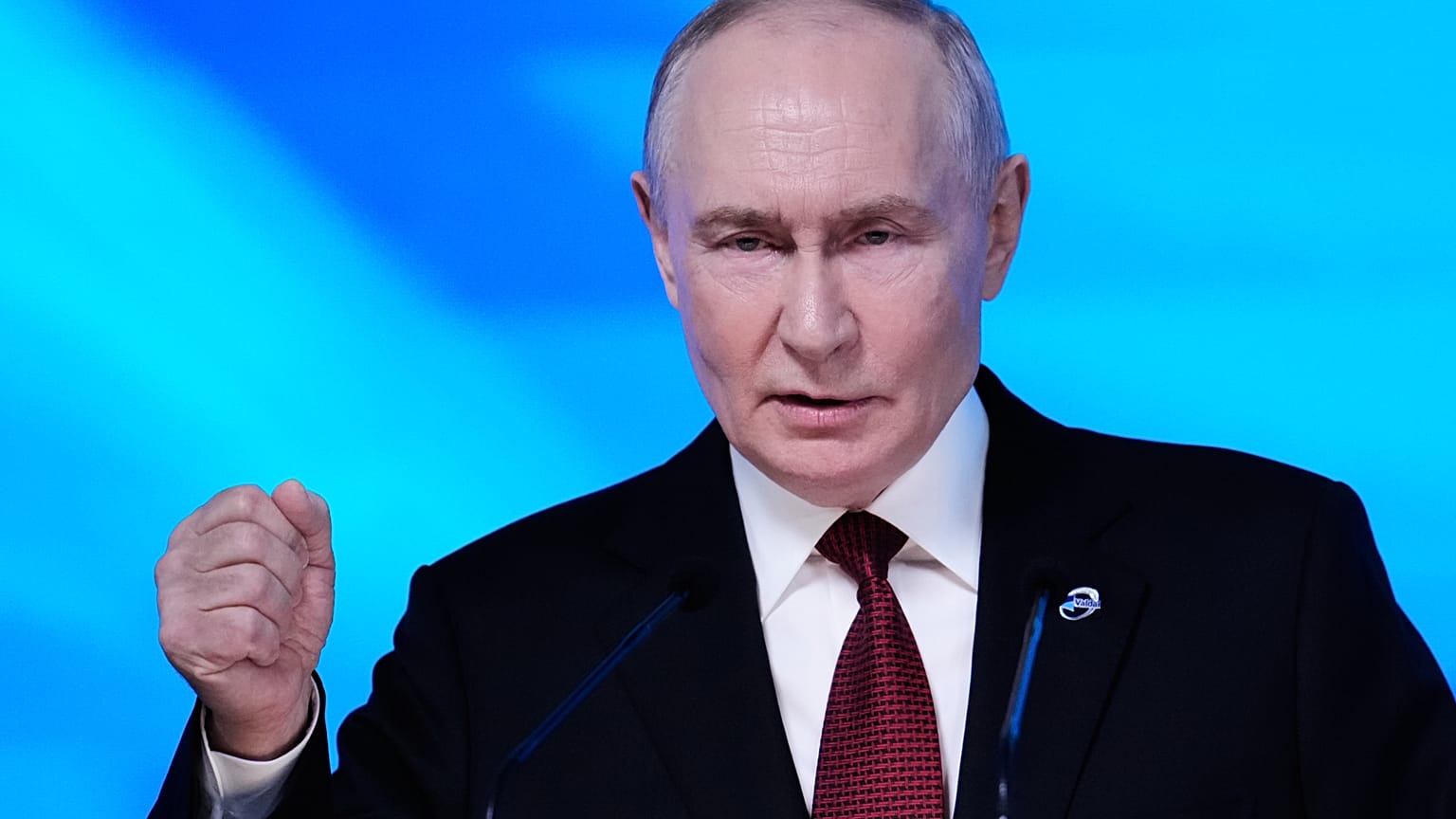
Russian President Vladimir Putin speaks at the session of the Valdai Discussion Club in Moscow, Thursday, 1 October 2026.
Copyright Copyright 2026 The Associated Press. All rights reserved

By Gael Camba
Published on

Russia would consider using "all types of weapons" if its exclave of Kaliningrad was attacked, Russian President Vladimir Putin said Thursday, while insisting that Moscow had "no intention of attacking anyone."

Russian President Vladimir Putin threatened the West that he would use "all weapons" in its arsenal — including nuclear — if Kaliningrad were attacked.

Putin comments came as tensions mounted over Kaliningrad — Russia's heavily militarised territory that borders Poland, Lithuania and the Baltic Sea.

"If it comes to a direct attack on the Russian Federation... then, of course, the question of the Russian Federation deploying all types of weapons at our country's disposal will inevitably and immediately be on the agenda. This is inevitable," Putin said at the annual Valdai forum.

In recent months, NATO countries have conducted several military exercises along Kaliningrad's borders. That prompted Moscow to issue a statement condemning what it called "provocative statements and actions of the North Atlantic Alliance's leadership and NATO member states".

NATO in turn has denounced Russia's "threat of force, including any irresponsible nuclear rhetoric".

On Thursday, Putin once again condemned the "successive military exercises in the Baltic Sea" and the "attempts to intercept" Russian vessels.

"All this constitutes an escalation," he said.

"We have no intention of attacking anyone — neither in 2029, nor in 2030, nor in 2050," Putin said.

"However, if we face aggression, we will be compelled to respond. Citizens of European countries need to clearly understand this," he added.


Russia leads world in cat ownership — yet has 2.8 million strays

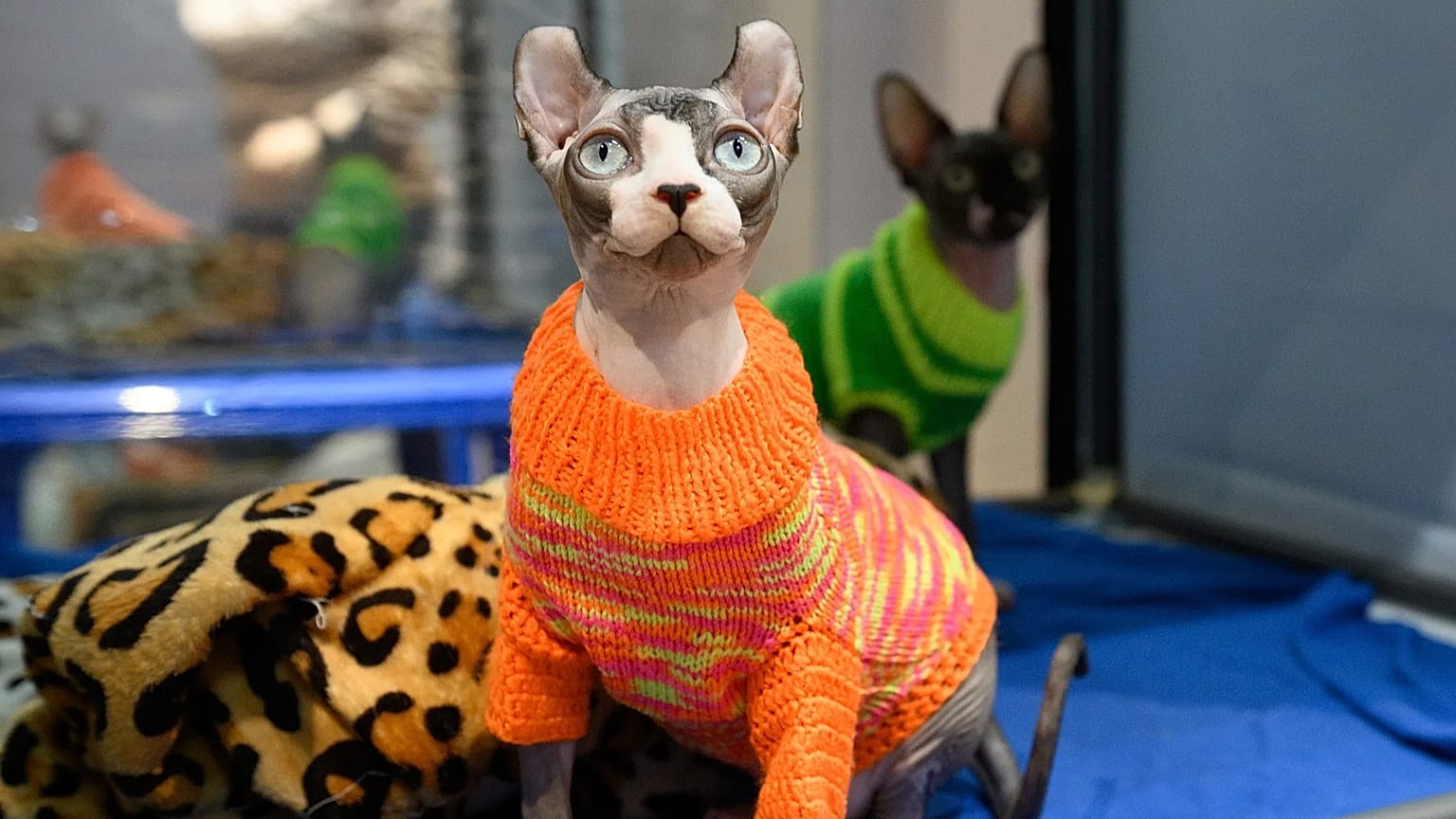
FILE; An elf cat at an international cat show in Sochi, 29 January 2022
Copyright AP Photo

By Irina Aleksandrova
Published on

Nearly 59% of Russian households own at least one cat, the highest rate globally, but the 2022 mobilisation order left hundreds of thousands of animals abandoned when owners fled the country or were sent to the front in Ukraine. Up to 98% of Russia's stray cats and dogs were once domestic pets.

Russia has the highest rate of cat ownership in the world, with nearly 59% of households keeping at least one cat — and an estimated 2.8 million stray cats living on its streets, a number that rose sharply after the 2022 mobilisation order sent thousands of pet owners fleeing the country or to the front amid Russia's ongoing all-out war in Ukraine

According to a 2024-2026 study by analytics platform Seasia Stats, Russia ranks first globally for cats as pets. Romania ranks second in Europe at 48%, followed by Poland at 41%, Latvia at 37% and Hungary at 35%.

Outside Europe, Indonesia, the Philippines, Thailand, New Zealand and the US also make the top 10. The Seasia Stats findings are consistent with a 2023 study by insurer Ingosstrakh and the Financial University, in which 58.8% of Russian respondents described themselves as cat owners.

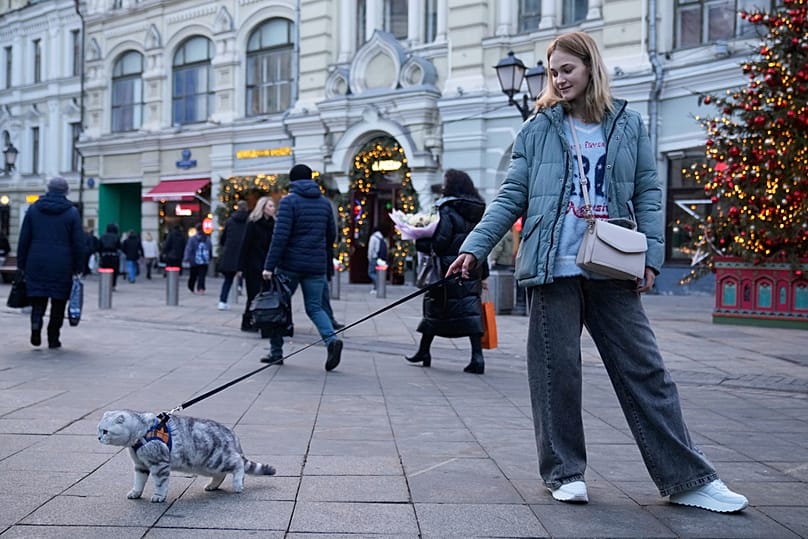
A woman walks a cat on a lead in Moscow, Wednesday, 11 March 2026. Pavel Bednyakov/Copyright 2026 The AP. All rights reserved.

The stray figures come from a separate study by the Centre for Animal Nutrition and Well-being Studies, the Nika animal charity and research firm Ipsos.

They put the total stray animal population in Russia in 2025 at nearly 3.6 million, of which 2.8 million are cats and 800,000 are dogs.

Of those, around 170,000 were in shelters at the time of the study, while the rest were living on the streets. Researchers say up to 98% of stray cats and dogs were once domestic pets abandoned by their owners.

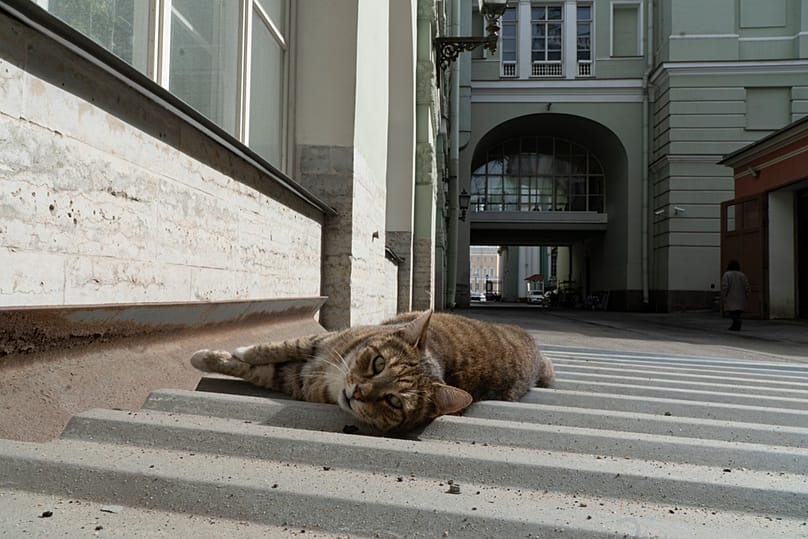
A cat living in the basement of the State Hermitage Museum in St Petersburg, Russia, 10 April 2024. Kirill Zarubin/AP

Animal welfare organisations recorded a sharp increase in abandonments after Russia announced partial mobilisation in September 2022.

Men who received call-up papers were either leaving the country or preparing for deployment and in many cases could not arrange care for their animals or find shelter places.

On classified advertising websites, owners threatened to have pets put down if no one took them. Shelter volunteers reported similar ultimatums from people surrendering animals in person.

Russia has 819 shelters, the overwhelming majority privately run, alongside hundreds of charities and tens of thousands of volunteers. Together they care for between 170,000 and 250,000 animals — no more than 5–7% of the estimated stray population.

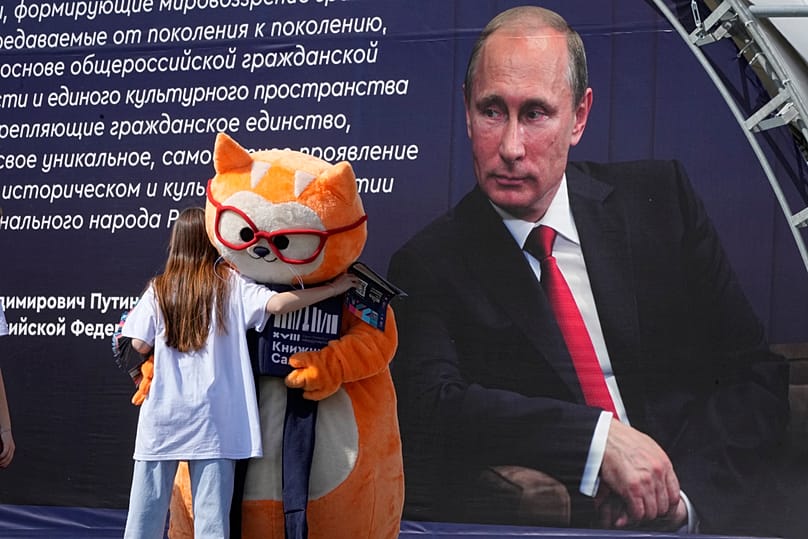
A woman hugs a performer in a cat costume next to a portrait of Russian President Vladimir Putin on Palace Square in St Petersburg, Russia, 21 May 2023. Dmitri Lovetsky/Copyright 2023 The AP. All rights reserved

The popularity of cats in Eastern Europe has historical roots: before industrialised agriculture, cats served a practical function on farms, where their presence and scent deterred rodents.

In Southeast Asia, researchers link rising ownership to urbanisation and the growth of a middle class.

Cats have lived alongside humans for around 10,000 years. Today, they are human companions of choice, alongside dogs.