Monday, October 05, 2026

Authorities say lab technician in Siberia did not die of plague

05.10.2026, DPA

Photo: Taneèek David/CTK/dpa

Russian health officials say the death of a laboratory worker in Siberia was not caused by the plague pathogen. 

The Interfax news agency reported on Monday that the worker at an institute specializing in the control of plague-related diseases died of "pneumonia of unknown origin," according to Rospotrebnadzor, the Russian authority responsible for disease control.

No microorganisms "related to her professional activities" were detected in samples taken from the 28-year-old patient. The woman died last Friday at the district hospital in the town of Shelekhov near Irkutsk in Siberia.

Rospotrebnadzor said investigations revealed that there had been no laboratory accident at the institute in Irkutsk. Previously, there had been unconfirmed reports that the woman might have become infected with pneumonic plague when a test tube accidentally fell on her.

The sanitary and epidemiological situation in the Irkutsk region, as well as in the cities of Irkutsk and Shelekhov, is stable, the authority stated, adding that a "package of measures" is being implemented there. 

The People of Baikal Telegram channel reported that two general hospitals and a children's hospital in Irkutsk have been placed under quarantine. According to local reports, the institute's staff were in quarantine at their workplace. No further infections have been recorded.

Pneumonic plague is a severe form of the disease caused by the bacterium Yersinia pestis. It can develop when the infection spreads to the lungs. The infection can be treated with antibiotics if treatment begins early.

Intelligence chief says Germany is engaged in 'shadow war' with Russia

05.10.2026, DPA

Photo: Kay Nietfeld/dpa

The German intelligence services believe that Germany must become significantly more resilient, particularly in the face of the threat posed by Russia.

"Russia is waging a shadow war against us," Martin Jäger, president of the international Federal Intelligence Service (BND), said during a public hearing of the Bundestag's Parliamentary Oversight Committee.

This involves, for example, attempts at intimidation, against which, Jäger said, the intelligence services are "the first line of defence."

The president of the domestic intelligence service, formally known as the Federal Office for the Protection of the Constitution (BfV), Sinan Selen, told the committee that Russia is demonstrating its willingness to engage in sabotage and murder.

The spectrum, he said, also includes disinformation campaigns and attempted attacks, such as the one at Leipzig airport in August when a drone rigged with explosives was discovered next to Ukrainian cargo aircraft.

"We have already achieved some successes in thwarting these threats," Selen added. However, he believes the situation is escalating, which is why the German intelligence services must align their capabilities with those of other European partner services.

Selen, Jäger and the president of the Military Counter-Intelligence Service (MAD), Martina Rosenberg, are normally only available to answer questions from members of the Parliamentary Oversight Committee in closed-door sessions. A public hearing takes place just once a year.

So far in this parliamentary term, only lawmakers from the conservative bloc, the Social Democrats and the Greens have been represented on the committee, which keeps a close eye on the intelligence services. Candidates from the far-right Alternative for Germany (AfD) and the hard-left The Left parliamentary groups failed to secure enough votes.

A Green pope? Vatican describes environmental destruction as an 'ecological sin'

Cover image: Pope Leo prays in the Lourdes grotto in France. © Vatican TV

Issued on: 28/09/2026 - 
05:32 min
From the show


In recent years, the Catholic Church has taken a growing stance in favour of climate action, culminating with the Vatican's signing of the landmark Paris climate agreement in 2022. As Pope Leo wraps up his four-day visit to France, FRANCE 24's Valerie Dekimpe looks at where religion and the environment meet.


Heatwaves, wildfires expose a third of world to extreme ozone pollution

Heatwaves and wildfires helped expose 34 percent of the world’s population to “extremely poor” ozone air quality in the first eight months of 2026, according to a European Union report published Wednesday. Asia recorded the highest exposure, while ozone pollution remained difficult to curb despite decades of progress in reducing other harmful emissions.


Issued on: 30/09/2026 
By: FRANCE 24

(FILE) This year's ozone pollution was fuelled in part by record-breaking heatwaves and wildfires. © Sajjad Hussain, AFP

Heatwaves and wildfires combined with human-caused emissions this year to expose one third of the world's population to extremely high levels of ozone pollution, a European Union report said on Wednesday.

In a new analysis covering the first eight months of 2026, the European Union's Copernicus Climate Atmosphere Monitoring Service (CAMS) highlighted the close relationship between climate change and air pollution.

When heat and sunlight react with airborne emissions from wildfires, vehicles and industry, they create ground-level ozone pollution, which can damage lung tissue, cause breathing problems, trigger asthma attacks and lead to other health issues.

Despite progress in cutting the most harmful air pollutants in recent decades, ozone has proved more difficult to tackle as climate change fuels the conditions that favour its formation.

This year's ozone pollution was driven in part by record-breaking heatwaves and wildfires that seared Europe and North America and sent smoke well beyond their borders.

Indonesia has experienced major wildfires, while the warming El Nino weather pattern, which started in June and is due to peak later this year, could drive more fires in southeast Asia, according to the analysis.

"Air pollution does not stop at borders. It can travel thousands of kilometres, crossing continents and oceans and affecting air quality far from its source," CAMS director Laurence Rouil said in the Atmosphere Watch report.
'Extremely poor' air

CAMS uses satellite data and computer models to track air pollution and wildfires.

The report found that 34 percent of the global population was exposed to "extremely poor" air quality between January 1 and September 15, meaning concentrations of ozone were well above the World Health Organization's exposure guidance.

The WHO's guideline sets 100 micrograms of ozone per cubic metre as the maximum recommended level of exposure, averaged over eight hours.

Another 17 percent of the world breathed "very poor" air, while five percent was exposed to "good" levels of ozone.

Asia has the highest rate of exposure to ozone pollution, with 53 percent of its population breathing "extremely poor" air. Another 22 percent was exposed to "very poor" ozone.

The continent's widespread emissions are driven by industrialisation, economic development and transport, as well as wildfires and the burning of agricultural residue.

New Delhi, Dhaka, Chinese megalopolis Chongqing and Pakistan's Lahore were among cities whose ozone levels were "extremely poor".

Two thirds of the population in North America and 45 percent in Europe were exposed to "poor" or "very poor" air quality.

EU regulation has been effective in reducing emissions from air pollutants, except for ozone, the report said.

Ozone pollution is linked to 60,000 premature deaths per year in Europe, Ian Marnane, an official at the European Environment Agency, told a media briefing.

Ozone levels in North America also remained "relatively unchanged" despite ambitious emissions reduction policies, the report said.

Smoke from forest fires, crop burning and cooking are significant contributors to Africa's air pollution while Saharan dust travels as far as Europe.

Eight percent of Africa's population endured "extremely poor" air quality this year. It was "very poor" or "poor" for 19 percent of the continent.

Ozone levels were very high in the Brazilian city of Sao Paulo and extremely elevated in Rio de Janeiro but the air quality was "good" or "fair" for 81 percent of South America's population.

One bright spot was Oceania, including Australia and New Zealand, where 66 percent of the population enjoyed "good" ozone levels and 34 percent lived under "fair" conditions.

(FRANCE 24 with AFP)

'Send in the Clowns': Viral video fuels claims Denmark trolled Trump and Rubio
\
Cover image: TRUTH OR FAKE © FRANCE 24

Issued on: 24/09/2026 
04:25 min


A viral video claims Danish officials played Judy Collins's "Send in the Clowns" as US Secretary of State Marco Rubio arrived for a Greenland signing ceremony, sparking claims of Danish "trolling". Our checks of separate livestreams confirm the song really played and the video was not manipulated. Denmark has denied choosing the music, while the UN says it did not organise the event. Whilst the song was real, there is no evidence Denmark selected it deliberately. Vedika Bahl fact-checks.


On the sidelines of the UN General Assembly, the United States, Denmark and Greenland signed a deal on Tuesday to expand Washington's military presence in Greenland. The agreement came after months of diplomatic tensions over the Arctic territory, with Denmark also seeking to reaffirm its control over the island.

But an unusual song played before the signing has sparked a wave of speculation online.

A video circulating widely on social media claims Danish officials deliberately played Judy Collins's version of the classic Broadway song "Send in the Clowns" as US Secretary of State Marco Rubio arrived.

The clip has amassed more than a million views in a single post on X, with the footage also widely shared on Bluesky, Threads, Facebook and Instagram.
The song's lyrics include the line: "Where are the clowns? Send in the clowns. Don't bother, they're here."

Social media users quickly interpreted the music as a deliberate dig at the US delegation, with some praising Denmark for what they described as "epic trolling". Others questioned whether the footage was genuine, while some went further, sharing AI-generated images depicting members of the US delegation as clowns.

The speculation raised a key question: did the song actually play at the ceremony, and if so, was it deliberately chosen by Denmark?

We checked footage from multiple livestreams of the event.

The original viral video carries the watermark of US-based outlet MAGNO News. In its Facebook livestream, just before the 11-minute mark, Rubio and other delegates can be seen entering as "Send in the Clowns" plays in the background. The Guardian's livestream, filmed from a different angle, also captures the same song playing as the delegates arrive.

The evidence therefore confirms that the song really was played. There is also no indication that the viral footage was manipulated, but there's also no evidence that Denmark selected it.

Whilst the song played as Rubio entered, the ministers for Denmark and Greenland entered along with him. If this was an attempt to "troll" a particular nation or send a message, it didn't go quite as intended as all countries' representatives entered together.

A spokesperson for Denmark's Ministry of Foreign Affairs stated that Denmark was "not involved in selecting the music for the signing".

Fact-checking outlet Lead Stories also contacted the United Nations. The spokesperson for the UN secretary general directed the outlet to the US mission, saying it had not organised the event.

It's possible the song was played by coincidence or accident, rather than as a deliberate message to any one country.

So while "Send in the Clowns" was genuinely playing before the signing of the Greenland deal began, the claim that Denmark deliberately selected it to mock the US delegation remains unsubstantiated.


:


THE EPSTEIN CLASS


Ex-prince Andrew launches bid to ‘quash’ Epstein-affair search warrants


Britain's disgraced former prince, Andrew Mountbatten-Windsor, filed a legal action on Monday to quash warrants that led to searches of his residences. The police arrested the 66-year-old on February 19 on suspicion of misconduct over his links to the late convicted sex offender Jeffrey Epstein.


Issued on: 05/10/2026 
By: FRANCE 24

Britain's Andrew Mountbatten-Windsor, formerly known as Prince Andrew, at St. George's Chapel, Windsor Castle, England, on April 20, 2025. © Kirsty Wigglesworth, AP


Britain's disgraced former prince, Andrew Mountbatten-Windsor, has launched a High Court challenge "to quash search warrants" obtained by police ahead of his arrest earlier this year, the judiciary confirmed Monday.

The London court is set to hold a private hearing on Thursday, the judiciary said in a statement, as King Charles III's brother challenges Thames Valley Police over searches of his former and current homes on royal estates.


The force arrested the 66-year-old on his birthday on February 19 on suspicion of misconduct in public office related to his links to late US sex offender Jeffrey Epstein. He was released later that day while remaining under investigation.

The ex-prince has denied all wrongdoing.

Officers, who swooped on the remote Sandringham royal estate in eastern England to detain Andrew, searched both his home there and his former Royal Lodge residence in Windsor, west of London.

The Daily Telegraph was the first to report the legal challenge by Andrew, late on Sunday.

The newspaper noted it was the first time a member of Britain's royal family has challenged the lawfulness of criminal proceedings against them since the trial of Charles I in 1649.

It said his legal team wanted to examine whether the search warrants granted by a judge sitting at London's Old Bailey court – formally known as the Central Criminal Court – were lawful.

Andrew's legal team did not immediately respond to a request for comment.
Cover image: SCOOP © Phil Noble, Reuters
12:57


The judiciary's press office said, "The case concerns an application by Andrew Mountbatten-Windsor for a judicial review to quash search warrants issued by a judge at the Central Criminal Court on 18 February 2026".

It added Thursday's hearing concerned an application by Thames Valley Police to restrict access to court documents in the matter.

The police force said in a statement: "Whilst our investigation into misconduct in public office continues, we are engaged in legal proceedings in relation to warrants previously obtained from the Central Criminal Court.

"As these legal proceedings are currently ongoing, it would be inappropriate for us to comment further."

Andrew's arrest and the police searches marked a new low point for the disgraced ex-prince, who was stripped of his royal titles last year over his connections to Epstein.

New revelations from documents relating to the American financier released by the United States earlier this year included emails in which Andrew appeared to share potentially confidential information with him.

(FRANCE 24 with AFP)


Andrew takes legal action against UK police over search warrants

05.10.2026, DPA

Photo: Yui Mok/PA Wire/dpa

Andrew Mountbatten-Windsor is taking legal action against Thames Valley Police in a bid to quash search warrants which led to his arrest, with a private High Court hearing to take place on Thursday, a judicial spokesperson said on Monday.

The former Duke of York was arrested on his 66th birthday earlier this year on suspicion of misconduct in public office following allegations he shared sensitive information with Jeffrey Epstein during his time as the UK’s trade envoy.

The Telegraph previously reported that Andrew has been granted permission to challenge whether Thames Valley Police acted lawfully over the searches relating to his arrest in February.

A judge at the Old Bailey issued warrants which allowed police to raid Andrew’s residence on the Sandringham Estate and his former Windsor home, Royal Lodge.

On Monday, a judicial spokesperson confirmed that a hearing in Andrew’s legal claim is due to take place at 2pm on Thursday at the High Court, before Mr Justice Hilliard.

The spokesperson said the hearing will concern a bid by Thames Valley Police to restrict access to court documents, with the hearing to begin in private.

It is not known whether Andrew will attend the hearing.


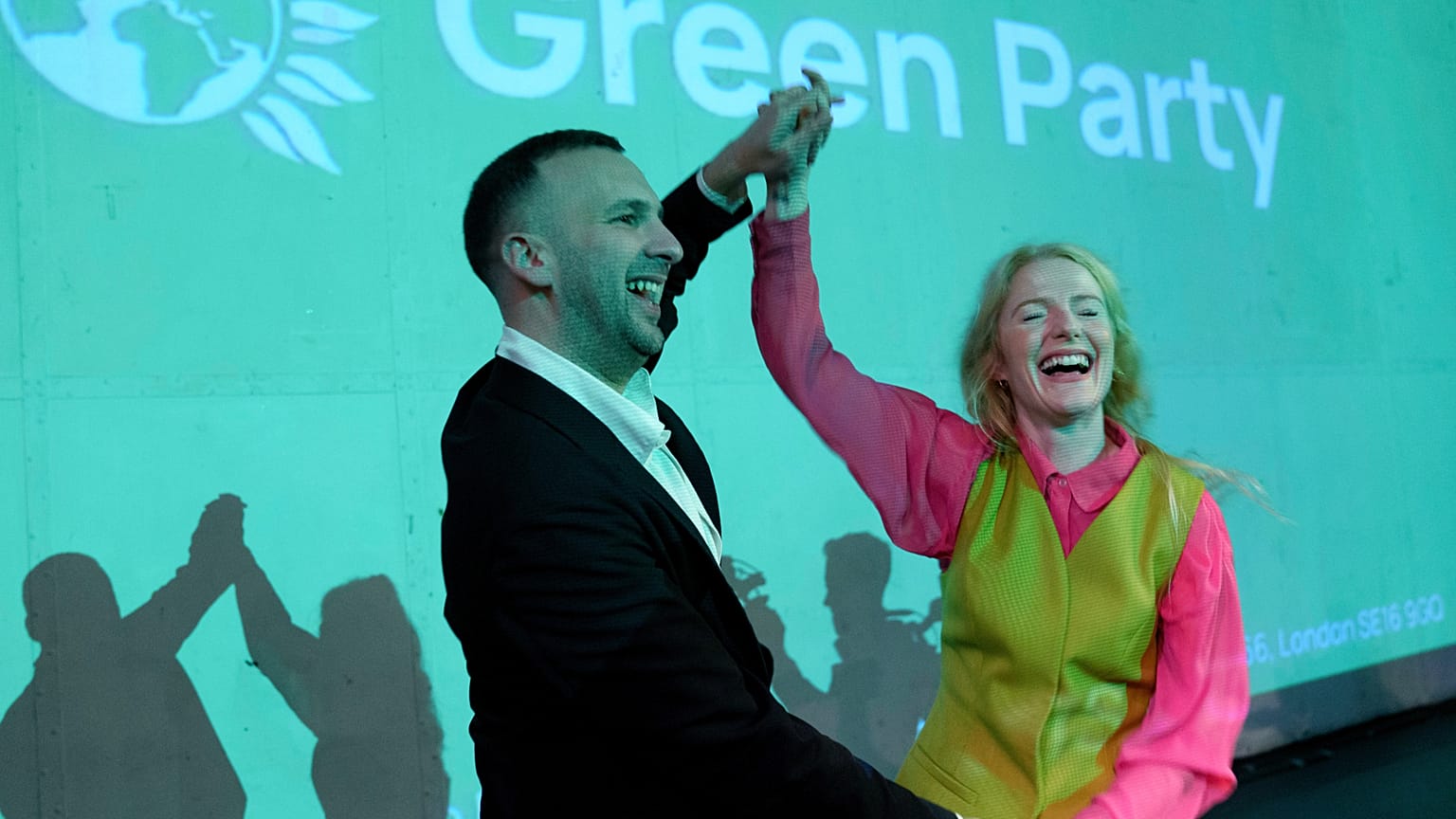
Britain's Green Party votes to class Zionism as a form of racism

Issued on: 05/10/2026 -

Britain's Green Party voted on Sunday to class Zionism as a form of racism, drawing criticism from British Jews and from the Israeli government which said it now ​viewed the party ‌as "a body that gives legitimacy to terrorism".


Israel bars UK Green leader after party votes to define Zionism as racism

Zac Polanksi is the leader of the Green Party in the UK
Copyright AP Photo

By Simon Ormiston
Published on

UK Jewish groups say the motion stokes hatred after a string of attacks on their community, while the government and other parties have condemned a policy that even at least three out of five Green MPs opposed.

Israel has barred the leader of Britain's Green Party Zack Polanski from entering the country after the party's members voted to define Zionism as racism.

Foreign Minister Gideon Sa'ar took the decision on Sunday evening, hours after the vote at the left-wing party's annual conference, Israel's foreign ministry said. It called the resolution "a clear antisemitic text" and described the ban on Polanski as a "first step".

"The Greens have adopted not only the green of Hamas, but also its ideology: the elimination of the State of Israel through armed struggle," the ministry said.

Israel's president, Isaac Herzog, called the party's decision "a disgrace".

"Zionism is the national liberation movement of the Jewish people, and it forms the basis for the Jewish people's right to a state and a national home in the Land of Israel," Herzog said on X.

The motion passed by 1,022 votes to 813. It states that Zionism will be "treated as any other form of racism" and commits the party to supporting a "single democratic Palestinian State in all of historic Palestine".

Jewish groups warn over safety

The vote comes at a time of heightened fear among British Jews. The Board of Deputies of British Jews said the motion stoked "anti-Jewish hatred after a year in which British Jews have been murdered attending their synagogue, stabbed in the streets, and seen their community buildings firebombed".

Two worshippers were killed in an attack on a Manchester synagogue on Yom Kippur last year. In March, ambulances run by a Jewish volunteer service were set alight in Golders Green, north London, the first in a string of arson attacks on synagogues and other Jewish sites in the capital. Two Jewish men were stabbed in the same neighbourhood in April.

Last week, two Iranian nationals were charged over an alleged plot to carry out an attack in Manchester around this year's Yom Kippur.

The Community Security Trust, which monitors antisemitism, recorded 1,926 incidents in the first half of 2026, its second-highest half-year total, including a record 135 assaults.

Ahead of the Green Party vote, the heads of the Board of Deputies, the Community Security Trust and the Jewish Leadership Council wrote to the party.

"This motion would make the Green Party the first electorally significant UK political party in living memory to adopt what appears to be an overtly antisemitic political platform," they said.

UK parties condemn vote

Bridget Phillipson, chair of the ruling Labour Party and minister for women and equalities, condemned the decision.

"It is shameful to vote against a two-state solution for Israel and Palestine and to condemn the vast majority of British Jews and Jews around the world as racist for supporting Israel's right to exist," she said in a party statement.

The opposition Conservatives described the Greens as "toxic to its core".

"British Jews should not have to disclaim a belief in Jewish self-determination and the existence of Israel in order to be accepted by a British political party," said Chris Philp, the party's shadow home secretary.

Divisions in the party

"This has been a serious and deeply felt debate within our membership," a Green spokesperson said.

In a joint statement, Polanski and the party's MPs said there was "no conflict between supporting the rights of Palestinians and the rights of Jewish people".

The motion exposed divisions in the party. At least three of its five MPs opposed it, and Polanski, who is running to become an MP in former prime minister Keir Starmer's London constituency, skipped the vote.

He said earlier this week that the "displacement and genocide of the Palestinian people" was "clearly racism".

United Nations investigators have accused Israel of committing "genocide" in the war in Gaza, a finding that Israel has rejected.

The Greens, who hold five of the 650 seats in Britain's parliament, have surged in popularity under Polanski, attracting voters dissatisfied with the centre-left Labour government's stance on the Israel-Hamas war. Polls show his popularity has taken a hit in recent months following several missteps.

Spanish PM Sanchez calls snap election as pressure mounts over housing crisis

Spanish ​Prime ​Minister ​Pedro Sanchez on Monday called an early ​election ‌for ‌November ​29. Facing the electorate now could be risky, as Sanchez's Socialist Party is trailing in opinion polls.


Issued on: 05/10/2026 
By: FRANCE 24

Cover image: Spain's Prime Minister Pedro Sanchez during the 4th International Conference on Financing for Development, in Seville, Spain, July 2, 2025. © Marcelo del Pozo, Reuters
04:25


Spanish Prime Minister Pedro Sanchez said Monday he would call an early election on November 29, after parliament rejected housing relief measures proposed by his government.

"To do more, we need to renew and broaden the support of the people," Sanchez, in office since 2018, said in a televised address, adding his aim was "to secure a much broader, progressive majority in parliament".

In recent weeks, Spanish residents have demanded solutions from the government over housing affordability, holding protests in cities across the country after public outrage grew over the televised eviction of an 87-year-old woman in Madrid last month.

Right-wing opposition parties joined forces to scuttle two emergency decrees in Parliament that included measures to reduce evictions and real estate speculation.

The setback sparked wide speculation that Sanchez could consider moving up a national election from next year.

Sanchez has been Spain’s prime minister since 2018, making him one of Europe’s longest-standing leaders.

Sanchez has stood out globally for taking a strong stance on progressive issues from Palestinian statehood to defending multilateral institutions and cracking down ​on "tech oligarchs", even as a series of setbacks and scandals weakened his position at home.

Facing the electorate now is a risky move as Sanchez's Socialist Party is trailing in opinion polls.

An election defeat would spell the end of one of Europe's last few left-leaning governments at ⁠a time when the far-right is making unprecedented gains across the region as a growing swathe of European voters desert the centre ground.

Opinion polls suggest a coalition led by the conservative People's Party (PP) with the support of Vox ‌is the most likely outcome in Spain, ushering a far-right party into central government for the first time since the return of ⁠democracy after the death of dictator Francisco Franco.

Still, Sanchez, a wily political operator, has proven time and again his ability to surprise those who had long written him off.

Despite never winning enough votes to form a majority government, he has cobbled together a series of fragile and seemingly ​impossible coalitions including voices from the far-left to the separatist right to remain in power for three successive terms lasting eight ‌years.

But growing fragmentation among his partners has meant the government has passed little in the way of legislation in its third term and failed to pass a budget since 2023, even as Spain's economy has continued to be one of the best performing in the developed world.

(FRANCE 24 with AP, AFP and Reuters)
Woman at centre of Cornell gang rape lawsuit targeted with threats, lawyer says


The woman who alleged that she was drugged and raped by seven male students at a Cornell University fraternity house has been the target of threats, her lawyer told CNN on Sunday. Cornell's president earlier voiced support for an external review of the Ivy League institution facing widespread outcry over its handling of the case.


Issued on: 04/10/2026 
By:
FRANCE 24
Video by:
Shirli SITBON


Cover image: Cornell University's Chi Phi fraternity house, where the plaintiff says she was drugged, assaulted and raped by seven male students. © Lauren Petracca, Reuters
01:59


The woman who has alleged that she was drugged and raped by Cornell University students has been the target of threats, her lawyer said on Sunday.

Thomas Giuffra, who represents the woman identified as "Jane Doe", told CNN that people have threatened to silence or harm her if she does not withdraw her civil lawsuit alleging that several members of a Cornell fraternity drugged and raped her in 2024.

"She's received multiple threats," Giuffra said on CNN's "State of the Union".

Giuffra said he had also been threatened.

"I'm not afraid of these people," he said. "But the threats, the abuse to protect what's going on, the status quo – these guys are disgusting. They should stay in their mother's basement and stay out of the world."


Cornell University President Michael Kotlikoff said in a video message on Saturday that the university will examine the role of fraternities and sororities on campus following the outcry over the school's handling of the rape allegations.

"At their best, these organizations can provide ​students with friendship, belonging, mentorship and a powerful sense of community," he said. "But being part of ​a group can never diminish individual responsibility."

Kotlikoff also voiced support for an "independent review by an outside law firm" into Cornell's handling of the case.

Since the lawsuit was filed last month, prosecutors in Tompkins County, New York, have been criticized for their initial handling of the allegations in 2024. New York Governor Kathy Hochul last week named state Attorney General Letitia James as special prosecutor to look into the case.

US President Donald Trump, a critic of James for years, lambasted the decision to appoint her. "And I feel badly for whoever she's looking at because they won't get a fair shake," Trump told reporters on Friday.

Asked about Trump's comment, Giuffra said the case shouldn't be politicized. "It has nothing to do with politics," Giuffra said.

(FRANCE 24 with Reuters)


Italy’s Ustica enigma: Can French files solve mystery crash blamed on stray missile?


France’s decision to share defence documents with the Italian judiciary has raised hopes of a breakthrough in investigations into the 1980 crash of a passenger jet near the island of Ustica, which a former Italian president claimed was mistakenly shot down by a French fighter jet. Sceptics caution that the files are unlikely to shed light on one of Italy’s most enduring mysteries, let alone reveal a culprit.


Issued on: 03/10/2026 - 
FRANCE24
By: Benjamin DODMAN

The reconstructed wreckage of Itavia Flight 870, which crashed near the island of Ustica in June 1980. © Emiliano Grillotti, AP


A rocky outpost of Italy in the Tyrrhenian Sea, the island of Ustica owes its name to the smouldering volcanic lava that gave its striking rock formations their dark hue.

For many Italians, however, the picturesque island is synonymous with a notorious plane crash that claimed 81 lives, and the intricate cover-up that buried its causes in a thick fog of lies, decoys and mysterious deaths.

The fate of Itavia Flight 870, which plunged into waters off Ustica on June 27, 1980, remains a subject of fierce debate after countless expert reports and judicial enquiries spanning several decades. The most widely accepted theory suggests the plane was caught up in an aerial dogfight and mistakenly shot down by a fighter jet, which a former Italian president has claimed was French.

News this week that French authorities would hand over defence documents to Italian investigators has been greeted as a potential gamechanger in Italy, where prosecutors and plaintiffs have long accused France and other Western allies of withholding evidence.

The 11th-hour twist led prosecutors on Wednesday to abort plans to shelve the latest investigation into the crash, throwing a lifeline to families of the victims who have relentlessly lobbied Italian governments and the judiciary to pursue the case.
Cover-up

The DC-9 plane operated by the now-defunct Itavia carrier was in the final stretch of its journey from Bologna to Palermo on a clear summer evening when it suddenly broke up and crashed into the sea, killing all 77 passengers and 4 crew members, all of them Italian.

The incident is known in Italy as the strage di Ustica, a term commonly used to refer to the deadly terrorist attacks that rattled the country in those years, many of which also remain shrouded in mystery.

WATCH MORE  Victims of Italy’s deadly ‘Years of Lead’ demand justice

“At first, it was labelled an ‘accident’ or a ‘tragedy’. But as efforts to cover up the incident became apparent over time, people started calling it a ‘strage’ (massacre),” said historian Cora Ranci, who has written a book about the Ustica affair and the many smokescreens she says have hampered investigations.

Like other unsolved civilian massacres, she added, the Ustica affair “has contributed to the erosion of trust between citizens and institutions in Italy, fuelling the sense that those in power are bound by a code of silence and that their actions are shrouded in secrecy”.

The reconstructed wreckage and other recovered items lie in a hangar near Rome in December 2003. © Emiliano Grillotti, AP

Following the crash, officials hastily concluded that it had been caused by mechanical failure, precipitating the demise of the already struggling carrier Itavia. Judicial inquiries resumed only years later under pressure from victims’ families, spurred by an investigative journalist convinced that the plane had been shot down.

Progress was slow, hampered by the fact that tracking data and radar scans had been wiped clean at all but one of the various Italian bases within range of the incident, leaving investigators with little hard evidence to work on. Four air force generals were eventually tried on charges of treason and withholding evidence, though none were convicted.

The untimely deaths of at least 15 military personnel and others connected to the case – through transport accidents, shootings, stabbings and suicides by hanging – furthered muddied the waters, compounding the sense of a conspiracy to hide the truth.

In 2013, Italy’s highest court ruled that the plane had been brought down in an aerial battle, either by a missile or through a near-collision, without identifying a culprit. It ordered the state to compensate families of the victims, adding that cover-ups in the investigations were considered “definitively ascertained”. The ruling was in line with the conclusions of an earlier, decade-long inquiry, which determined that the intended target of the operation was a smaller aircraft travelling in the DC-9’s slipstream to evade radar detection.

“We’ve known for years that the passenger plane was downed in a combat operation,” said former senator Daria Bonfietti, the head of the association of families of the victims that lobbied the authorities to recover the wreckage and reopen investigations decades ago. But, she added, “we still don’t know who did it.”


The Libya link


Despite the court rulings, some remain deeply sceptical of the missile scenario, leaning instead towards the theory of a bomb exploding on board the plane. They point to the numerous terrorist attacks that shook the country in those years, including the strage di Bologna, a train station bombing that killed 85 people and injured score more just weeks after the Ustica crash.

Potential culprits cited by proponents of the bomb theory – which has never been upheld in court – include far-right activists, Palestinian militant groups and Muammar Gaddafi’s Libya.

The late Libyan strongman is also at the heart of the missile hypothesis, which gained further traction in 2007 when former Italian president Francesco Cossiga claimed that the passenger jet had been shot down by French military planes who were after Gaddafi.

Cossiga, who was prime minister in June 1980, cited Italian intelligence but offered no evidence to back up the allegation. He claimed Italian sources had tipped off Gaddafi, ensuring that he was not on board the smaller plane allegedly tailing the Itavia flight.

Now at Bologna's Ustica Memorial Museum, the wreckage is part of an art installation designed by French artist Christian Boltanski, featuring a lamp for each of the 81 victims. © Davide Alberani, Wikimedia Creative Commons

Proponents of the Libyan link say it is substantiated by the recovery, three weeks after the Ustica disaster, of the wreckage of a Libyan MiG fighter on a mountain in Calabria, which may have been chased and downed on the same night as the DC-9.

“We know from declassified documents that Italy at the time was covertly allowing Libyan aircraft to fly though its airspace to Yugoslavia for purposes of training and maintenance,” said Ranci, adding that it was common practice for those jets to evade detection by tailing commercial flights. On top of creating dangers for civilian planes, this tacit agreement infuriated the Americans and even more so the French, who were fighting a proxy war with Gaddafi’s Libya in Chad.

The Ustica crash came months after France’s embassy in Tripoli was ransacked and after a botched Libyan attempt to shoot down a French surveillance aircraft over the Mediterranean, which sent tensions spiralling.

Bonfietti, whose elder brother was on board the Itavia flight, said successive judicial inquiries had established that multiple military aircraft were operating over the Tyrrhenian on the day of the crash, including US, French and other NATO aircraft. “Now we need those countries to tell us what they were up to and why they kept quiet about it,” she said.


“If Gaddafi was indeed their target, it’s obvious that whoever carried out the operation could not openly claim it – not in a Cold War context,” Bonfietti added. “Instead, they decided to cover up what happened and pretend the plane experienced a mechanical failure.”
Locating the Foch

Allegations of French involvement resurfaced in 2023 when former Italian prime minister Giuliano Amato urged France to come clean on the mysterious plane crash, asking President Emmanuel Macron to look into the matter.

“If he shows that the allegation is unfounded, so much the better. If it is true, he should apologise,” Amato, who served as deputy PM at the time of the incident, told a news conference, suggesting it would be easier for someone Macron’s age to overcome old taboos.

Bonfietti said she had personally asked Italy’s current Prime Minister Giorgia Meloni to raise the issue with Macron when they met for a summit in June. According to Italian media reports, it was those talks that helped pave the way for the release of French documents.


Italy's Prime Minister Giorgia Meloni raised the Ustica issue with French President Emmanuel Macron during a bilateral summit in Antibes in June. © AFP

The former senator said she hoped the new files would help expose what she described as France’s “past lies”, including about the whereabouts of a French aircraft carrier that Cossiga claimed was involved in the Ustica incident. Italian prosecutors say testimony from witnesses contradicts French claims that the Foch carrier was docked at Navy headquarters in Toulon on June 27 and that the Solenzara base in Corsica had closed and ceased all radar recordings hours before the Ustica crash.

“If the Foch was instead in the Tyrrhenian, as witness accounts suggest, it would have been in a position to detect and record what happened,” said Ranci, adding that the same applied to a US Navy carrier stationed in the Tyrrhenian – which US officials claimed had switched its radar off that night – and an AWACS mobile radar station believed to have been flying overhead.

Contacted by FRANCE 24, France’s defence ministry said it had “always responded to requests from the Italian judicial authorities” in connection with the case. It said it “recently confirmed (to Italian authorities) that a batch of documents could be used in legal proceedings”, adding that these documents “had been brought to the attention of the Italian authorities several years ago”.

The ministry did not say whether classified documents previously withheld would this time be handed over.

Analysts have voiced scepticism that the French documents would lead to any breakthrough, stressing that the decision to make them available to Italian prosecutors in no way constitutes an admission of guilt. According to Professor Gregory Alegi, a professor at LUISS University in Rome and a prominent critic of the missile hypothesis, France’s willingness to share more information “suggests they know they have nothing to fear”.

Some families of victims have expressed hopes that French cooperation might open new lines of investigation, urging prosecutors to also pursue the terrorism lead. All agree the French move will at least ensure the inquiry is not shelved.

“It’s quite possible the French sent us nothing new – their shopping list or something – but the important thing is they sent us documents and so investigations go on,” said Bonfietti. “We owe it to our loved ones to keep fighting for the truth.”