Monday, October 05, 2026

Balochistan: The Female Face Of Insurgency – Analysis


Baluchistan, Pakistan. Credit: VOA


October 3, 2026
SATP

By Ruchika Kakkar


Key Takeaways:

SATP reports that the banned Balochistan Liberation Front claimed its new all-female Karima Armed Assault Division’s first operation on Sept. 22, 2026, an ambush on an Action Task Force convoy near Jusak on the CPEC highway in Kech; no independent casualty figures were released, and the group also posted training footage.

The piece reads KAAD, named for activist Karima Baloch, as a 2025–26 shift after the BLF’s first claimed female suicide attack at Nokundi on Nov. 30, 2025, catching up with the BLA’s Majeed Brigade, which has publicized female attackers since the April 26, 2022 Karachi Confucius Institute bombing.

Claims about a mixed-gender Saddo battalion, a May 22, 2026 BLA women’s wing, and named attackers in Herof operations are group statements, not verified battlefield facts; the author treats the trend as recruitment and branding under pressure, not proof of a wider social mandate.


On 22 September 2026, the Balochistan Liberation Front (BLF) – a banned Baloch ethno-nationalist separatist group in Pakistan, waging an insurgency in Balochistan, allegedly from bases in Afghanistan – claimed that its newly formed all-female unit, the Karima Armed Assault Division (KAAD), carried out its first armed operation near Jusak in the Turbat tehsil (revenue unit) of Kech District in Balochistan. According to BLF spokesperson ‘major’ Gwahram Baloch, KAAD fighters ambushed a Pakistani military Action Task Force (ATF) convoy on the China-Pakistan Economic Corridor (CPEC) Highway. The group stated that the attack damaged military vehicles and left several ATF personnel dead or injured, though it did not release specific casualty figures. At the same time, the BLF’s media wing Aashob released training footage showing more than 20 uniformed women handling heavy weapons in mountainous terrain.

In a subsequent statement demarcating KAAD’s objectives, the BLF declared that its female fighters would operate on dual fronts: militarily against the Pakistani Army, intelligence agencies and military infrastructure, and socially against patriarchy, class exploitation and what the organisation terms regressive traditions within Baloch society. The statement positions KAAD as both an operational combat formation and a deliberate ideological project. BLF portrays its female members as predominantly highly educated and politically conscious, leveraging their involvement to frame insurgency as an intellectual and political movement rather than a purely armed or tribal uprising. It further contends that women’s participation bolsters the movement’s legitimacy and helps transcend regional, tribal and sectarian divides. KAAD, named after the prominent Baloch activist Karima Baloch, a former chairperson of the Baloch Students Organisation (BSO-Azad), whose death in suspicious circumstances in Toronto, Canada, in December 2020 became a significant rallying point, is presented by the BLF as an organised unit that combines armed, political, ideological and organisational roles.


The formation of KAAD forms part of a wider strategic and political shift within the BLF in 2025-2026. For years, the group had largely avoided both suicide operations and the systematic recruitment of female fighters. This stood in contrast to the Balochistan Liberation Army (BLA), another Baloch ethnonationalist militant organisation, whose Majeed Brigade had first popularised high-visibility suicide attacks from 2022 onward, as well as the use of female operatives in those missions. The BLF only began employing female suicide operatives later, with its first confirmed case on November 30, 2025, and subsequently formalised this change by creating KAAD as a competitive response to BLA’s tactics. BLA’s methods had generated significant media attention, prompting the BLF leadership under Allah Nazar Baloch to adjust its approach, while also seeking to expand the group’s operational scope.

In 2025, on November 30, Zareena Rafiq, aka Tarang Maho/Trang Mahoo, associated with the BLF-formed Saddo Operational Battalion (SOB), carried out a suicide attack on the Frontier Corps (FC) headquarters in Nokundi, Chagai District of Balochistan. BLF presented this as its first use of a female suicide bomber. The attack resulted in the death of at least one FC trooper and injuries to several others, though casualty figures remain contested. The involvement of a relatively small number of Baloch women in armed and suicide operations has drawn significant attention. SOB is named after Commander Waja Sado aka Saadat Marri / Sado Marri, a veteran Baloch fighter born in 1927 who participated in earlier phases of Baloch resistance during the 1960s, 1970s and later years. He was killed on December 3, 2007, during an attack on an FC post in Kech. BLF messaging describes SOB recruits as highly motivated volunteers selected for discipline and a willingness to undertake high-risk operations. It is labelled as an evolutionary step that moves the BLF beyond traditional guerrilla tactics toward more professional, high-intensity special operations.


Although KAAD and SOB are operational units within BLF, they feature distinctly different structural frameworks and roles. Unlike KAAD, which is an exclusively female unit, SOB is not restricted to women. It includes male members and functions as an elite mixed-gender formation designed for complex, high-intensity missions.

As the South Asia Intelligence Review (SAIR) noted earlier, the participation of Baloch women in insurgent groups, including as female fidayeen (suicide) attackers, has become increasingly prominent in recent years. Women in Balochistan have been prominent in non-violent political activism over the past decade. Much of this activism has centred on issues of enforced disappearances and extrajudicial killings, reflecting a parallel but distinct form of mobilisation within Baloch society. The first confirmed use of a female suicide bomber by a Baloch insurgent group occurred on April 26, 2022, when BLA attacked the Confucius Institute at the University of Karachi. The bombing killed five people, including three Chinese nationals, their Pakistani driver, and a security guard. In claiming responsibility, the BLA released the image and identity of the attacker, Shaari Hayat Baloch aka Bramsh, a member of the group’s Majeed Brigade suicide squad. She had joined the Majeed Brigade two years earlier.

Significantly, BLA is also actively expanding its women’s wing. On May 22, 2026, BLA publicly announced the creation of its women’s wing and released a video via its media wing, Hakkal, featuring Shaynaz Baloch as its ‘commander’. In the approximately 11-minute video, Shaynaz Baloch appears in combat gear alongside other armed women, states that she joined the organisation about seven years earlier as an ordinary member, and appeals to Baloch women and youth to join the struggle. She frames women’s participation as equal and rooted in historical Baloch tradition.

During Operation Herof 2.0, a large-scale, multi-district offensive launched by BLA across Balochistan in January-February 2026, the group heavily publicised the front-line involvement of its female cadres. In February 2026, Asifa Mengal, a 24-year-old Majeed Brigade operative, carried out a vehicle-borne suicide attack on the Inter-Services Intelligence (ISI) headquarters in the Nushki District of Balochistan.


Similarly, in February 2026, Hawa Baloch, a fighter on the Gwadar front in Gwadar District, recorded a final propaganda video against the Pakistani state hours before dying in combat; and Dur Jan Baloch, a militant within BLA’s specialised Fateh squad, featured in BLA media carrying weapons alongside male fighters during attacks in Nushki.

In recent years, BLA has strategically deployed highly educated women for high-impact suicide missions, exemplified by the actions of Summiya Qalandarani and Mahal Baloch. On June 24, 2023, Qalandarani, a 25-year-old Computer Science student and BLA media propagandist, executed a suicide bombing targeting a Pakistani military convoy near Chakar Azam Chowk in Turbat, killing a police constable and prompting the BLA to officially declare the “era of women’s active participation in the armed struggle.”

Building on this tactical shift, law student Mahal Baloch aka Zilan Kurd, participated in BLA’s coordinated “Operation Herof” on August 26, 2024, driving a vehicle-borne improvised explosive device (VBIED) directly into the gates of the FC Headquarters at Bela in Lasbela district to breach the military infrastructure.

The emergence of female suicide bombers marks a departure from traditional patterns in the Baloch insurgency. Using women enhances operational effectiveness by exploiting gendered assumptions in security protocols while expanding the recruitment base available to insurgent organisations. Sustained military operations, arrests, and targeted killings often shrink the pool of available male recruits, prompting groups to seek alternative sources of manpower. The present shift combines tactical innovation, ideological rebranding, and gendered symbolism in an effort to reposition the organisation within the increasingly competitive landscape of Baloch militancy.

KAAD is significant primarily because it may signal a tactical shift from the occasional participation of women in Baloch militancy toward a more institutionalised female combat structure. It reflects an organisational strategy shaped by the pressures of prolonged conflict. The growing presence of women in militant violence highlights the capacity of these groups to adapt, innovate, and reshape social norms to ensure their own survival.


Ruchika Kakkar, Research Assistant, Institute for Conflict Management

Source: This article was published by SATP


About SATP
SATP, or the South Asia Terrorism Portal (SATP) publishes the South Asia Intelligence Review, and is a product of The Institute for Conflict Management, a non-Profit Society set up in 1997 in New Delhi, and which is committed to the continuous evaluation and resolution of problems of internal security in South Asia. The Institute was set up on the initiative of, and is presently headed by, its President, Mr. K.P.S. Gill, IPS (Retd).
View all posts by SATP →


‘No Response Yet’: Silence From Pakistan On Grave Human Rights Violations Surrounding Forced Religious Conversions And Child Marriage Of Minority Girls – OpEd


October 5, 2026
By Kashif Nawab


Three UN Special Rapporteurs join UN Human Rights Council side-event to remind Pakistan of its international human rights and domestic law obligations to protect its children against slavery and sexual violence, and uphold human rights.

“We don’t know where they are keeping her […] We have terrible thoughts about what is happening to her,” the mother of Maria Shahbaz pleads in the video playing in the Human Rights Council side-event room Concordia 1; “Help us bring our daughters back,” is the appeal that echoes from the families of girls abducted and forcibly converted by their Muslim neighbours.

Professor Nicolas Levrat, UN Special Rapporteur on minority issues provides the keynote statement. His position is clear, the impunity surrounding forced religious conversions will, “not be solved by new laws or legislation.” He notes that Pakistan has ratified the Convention on the Rights of the Child and that the rights of children are explicitly stated there; the practice of forced religious conversion and child marriage violate Pakistan’s international and domestic law commitments. Prof. Levrat, UN Special Rapporteur on minority issues expresses opposition to legislation banning forced religious conversion noting during the event noting that – internationally – such legislation is always applied discriminatorily by the majority religion against minority religions. Prof. Levrat instead appeals to the Pakistani authorities to ensure better access to justice for minorities, noting the opening testimonies of the families where the father of Maria Shahbaz described how the family went from court to court and “nothing happened.” Professor Levrat calls for training and technical cooperation of law enforcement and legal authorities. He does not disregard legal appeals, but emphasises that there are several hurdles to protecting the rights of the child that need to be tackled in tandem – the law but also education to counter the societal pressure against minorities. “This has to be worked on,” he says, noting there is a widespread bias in favour of the dominant group, “the authorities need to seriously consider the complaints – issue justice,” Prof. Levrat concludes.

Joining online Dr. Katarina Schwarz, an international and comparative legal scholar with extensive experience on contemporary forms of slavery, human trafficking, and related forms of exploitation and the newly appointed Special Rapporteur on contemporary forms of slavery and trafficking in persons, raises how child marriage falls under the category of slavery. She clearly describes how slavery does not occur in a vacuum but often foments in an environment of discrimination and often targets women and girls. She adamantly defends the legal position that responsibility to protect the girls rests with the state. She urges Pakistan to work preventatively and implement “Robust and effective protection to fulfil their obligation.”


Joining online as well, the Special rapporteur on violence against women and girls, its causes and consequences, Reem Alsalem, opens her statement with a clear outline of the legal frameworks for the protection of women and girls in Pakistan. She is positive to the passing of the Child Marriage Restraint Bill 2026 which passed in Punjab and came into force in May 2026, setting 18 years as the minimum legal age for marriage for both boys and girls and declaring underage marriage a non-bailable offence. Section 5 of the law also made cohabitation with a child resulting from such a marriage as child abuse, regardless of the child’s consent. The passing of this bill in Punjab is significant, as Punjab is the state where the majority of abductions and forced religious conversions of Christian girls occur, as noted in Jubilee Campaign’s report “Stolen Girls.” She notes with concern the inconsistent application of these laws however, where accountability often was dependent on which court and the level of engagement by the lawyers. She also describes how lack of accountability is exacerbated due to pressure on victims and families to withdraw complaints by the abductors and sometimes even law enforcement.

Christophe Foltzenlogel, advocacy officer with the European Centre for Law and Justice, expounds on the backdrop of discrimination of minorities, particularly against Christian minorities, in Pakistan. He describes the slow justice system, specifically in an anti-blasphemy law case: “Consider Shahzad Masih. He was just 16 years old when [authorities] arrested [him] in 2017 simply for repeating a conversation.” He says that even though the police commissioner testified that Shahzad’s words were not insulting because of immense pressure from fundamentalist groups who pack the courtrooms to intimidate judges, the court refused to try him as a minor and sentenced him to death in November 2022. Shahzad Masih recently told his lawyers: “They should just hang me. I cannot bear this suffering of waiting every single day.”


Christophe Foltzenlogel joins his co-panelists in emphasising that Pakistan has the laws but is not implementing them. He spotlights the mishandling of justice in forced religious conversion cases and woefully notes that there is more care given to intangible objects that have been stolen than the abduction of a human life. In cases of theft the object is sought out and placed under police custody or returned to its owner but even now, 13-year old Maria Shahbaz – abducted by a 30 year old man – remains under the control of her abductor, “the thief.”

Joseph Janssen, Pakistani human rights advocate and advocacy officer with Jubilee Campaign, has met with survivors of forced religious conversion and abductions. He outlines the extent of the problem drawing from Jubilee Campaign’s report “Stolen Girls.” He describes what took place in the court during one of the most recent cases of a minor who was forcibly converted and married off to an older Muslim man, Amber Nadeem. He says, “I personally witnessed lawyers arguing that because she had converted to Islam, she could not return to her Christian parents, as this would constitute apostasy. Her status as a child was being pushed aside.”

This speaks to the societal pressure described by Professor Nicolas Levrat, noting that there are injustices that need to be confronted in tandem with the legislative and other advocacy to secure sustainable protection for minorities today and tomorrow, recognising minorities as equals in dignity and rights.

“Maria Shahbaz’s case has been raised locally and internationally, including at the European Parliament and the United Nations,” Joseph Janssen concludes, “Yet she remains in the custody of her alleged abductor and purported husband. Why has she still not been placed in government protective custody, away from those accused of harming her?”


He echoes the plea of the families: Pakistan needs to rescue the girls from their abductors while they wait for justice and heed the international and domestic calls for implementation of existing laws and not just lip service, Maria Shahbaz and others need to be returned to their parents.

“No response yet,” Prof. Nicolas Levrat says in response to a question about what has happened to the the UN Special Procedures’ communication which raised concern the impunity surrounding forced religious conversions and abductions of women and girls in Pakistan and other countries. The communication was followed up several times with press releases including most recently in April 2026, noting that the scale and persistence of these human rights violations, “point to systemic discrimination against non-Muslim women and girls who are forced or compelled to convert to Islam in order to marry Muslim men.” The Special Procedures in that release called on the government of Pakistan to: “intensify efforts to eradicate forced conversions, to raise the minimum age for marriage to 18 in all provinces and territories, to criminalise forced religious conversion as a distinct offence and to enforce applicable laws pertaining to human trafficking and sexual violence.” The implementation of the recommendations is yet to be seen but the panelists’ hopes are that this side-event will be a reminder to Pakistan to put the plight of Pakistan’s daughters on the top of their agenda, to bring them back to safety and rescue them from the grasp of their rapists and captors.


About Kashif Nawab
Kashif Nawab is a Director with Social Action Transformation of Humanity (SATH) in Pakistan.

ORTHODOX FASCISM

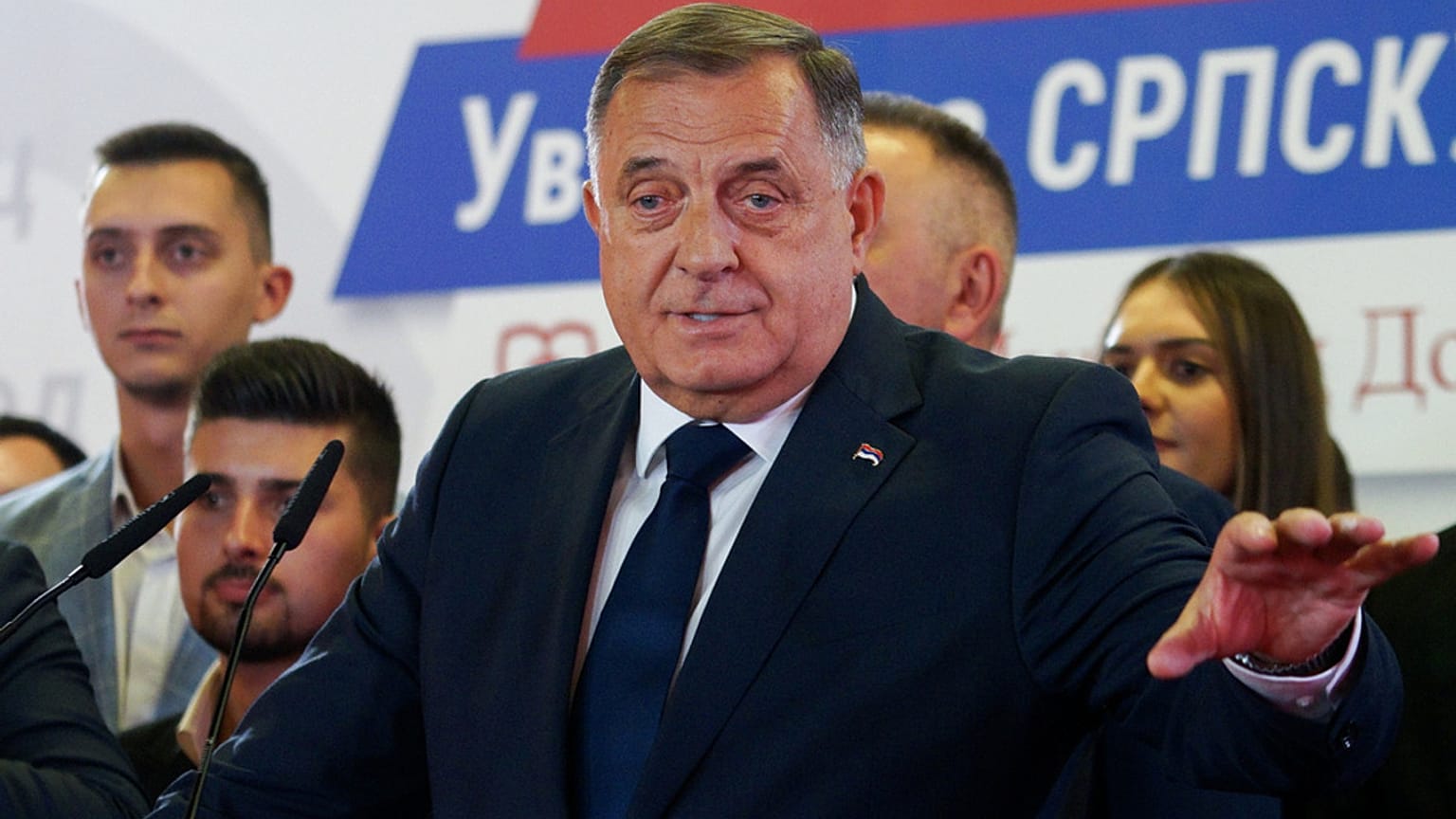
Serb separatist politician Milorad Dodik thanks Trump, Putin as he declares victory in contested Bosnia vote

Milorad Dodik of the Alliance of Independent Social Democrats (SNSD), speaks after the publication of general election results, in Banja Luka, Bosnia, Sunday, Oct. 4, 2026
Copyright AP Photo

By Malek Fouda
Published on

Pro-Russia Serb nationalist politician Milorad Dodik – who is serving a six-year ban from holding public office for defying rulings of Bosnia’s international envoy and Constitutional Court, claimed victory on Sunday, saying his party would hold a “vast majority”.

The former president of Bosnia's Serb statelet, Milorad Dodik, said his party had retained power in the entity and its seat on the shared presidency, as preliminary results showed a drop in turnout for Bosnia's general elections.

Dodik led the declarations for a dizzying number of posts to be decided in the general elections in a complex system that has held the partitioned Balkan country together since the 1995 peace deal.

The key race was for the tripartite presidency, split between Bosnian Muslims or Bosniaks, and the Serb and Croat ethnic groups. Dodik's Serb nationalists ran on a platform of greater autonomy and secessionist rhetoric.

"If it had not been for (US President) Donald Trump's magnificent victory, we would probably be political corpses today," he told supporters in Banja Luka, in a speech that also thanked his close ally, Russian President Vladimir Putin.


"But now, thanks to the new environment, we are political winners," he added.

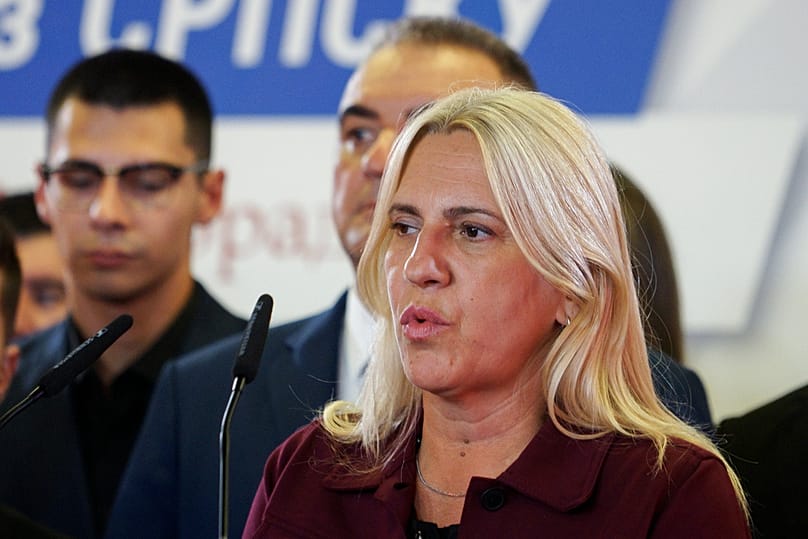
Zeljka Cvijanovic of the Alliance of Independent Social Democrats (SNSD) speaks after the publication of general election results, in Banja Luka, Bosnia, Sunday, Oct. 4, 2026 Radivoje Pavicic/Copyright 2026 The AP. All rights reserved

The 67-year-old was not on the ballot after being convicted of overstepping his powers and banned from the presidency for six years.

But he remains a central figure in the Bosnian-Serb Republika Srpska entity.

With 95% of the ballots counted, according to electoral officials, his candidate, Zeljka Cvijanovic, was firmly on track to retain her spot in the presidency.

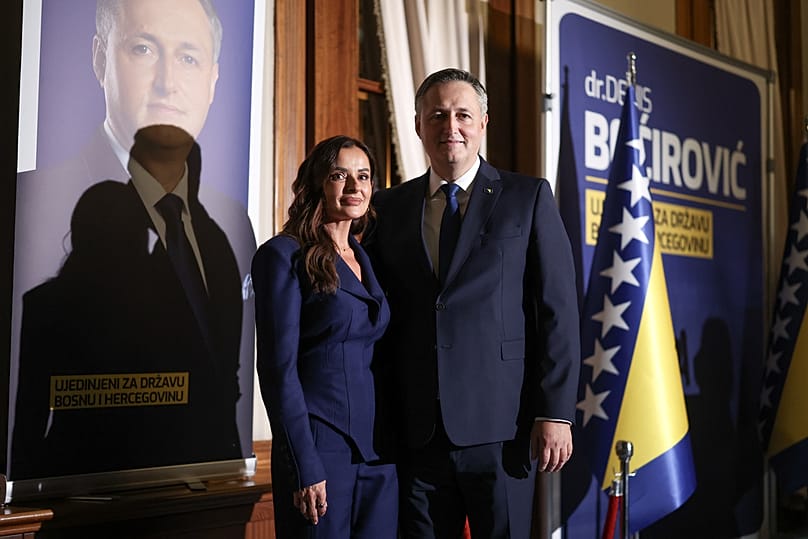
Meanwhile, Bosniak presidential incumbent Denis Becirovic also claimed victory after results showed him leading a tighter race for his seat.

"A freedom-loving, anti-fascist and civic Bosnia and Herzegovina is alive," Becirovic, from the Social Democrats party, told supporters in Sarajevo.

Denis Becirovic (SDP) poses for a photo with his wife after declaring himself winner of the Bosniak seat of the tripartite Bosnian Presidency in Sarajevo, Sunday, Oct. 4, 2026 Armin Durgut/Copyright 2026 The AP. 

Bosnian Croat nationalist candidate Darijana Filipovic also claimed victory in her bid for the Croat presidential seat.

Dodik's party was also projected to retain power in the Serb entity's parliament and local presidency by a large margin.

The US-brokered ‘Dayton agreement’ ended the 1992-95 conflict but entrenched divisions that often paralyse decision-making.

It divided Bosnia into two semi-autonomous entities –s the Serb-run RS and a Muslim-Croat federation – linked by a weak central government.

Turnout dropped nearly 10% from the last election in 2022, to around 42% on Sunday, according to official figures.

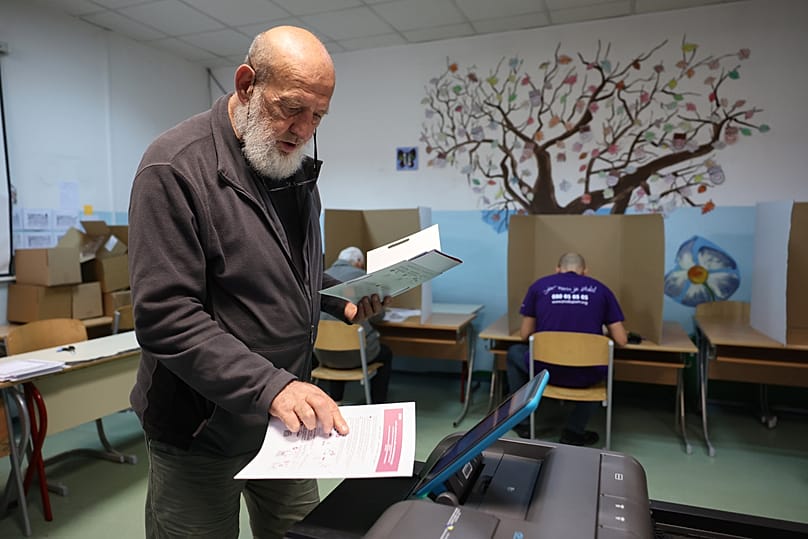
A man places his ballot into an electronic ballot box during the general election in Sarajevo, Bosnia, Sunday, Oct. 4, 2026 Armin Durgut/Copyright 2026 The AP. All rights reserved

In the Muslim-Croat federation, Becirovic advocates a path toward the European Union and NATO

But if Dodik's party returns to the presidency, it would almost certainly mean the political deadlock that has blocked the necessary reforms for years would remain.

After two decades in power, Dodik and his party have repeatedly clashed with the country's central authorities and vocally oppose EU membership.

Croat nationalist parties are also pushing for electoral reform. They want a greater say in choosing the Croat member of the presidency in the entity they share with the more numerous Bosniaks.


Russia And Ukraine’s New Theories Of Victory? – Analysis


October 3, 2026

By Patial RC


Key Takeaways:

The essay says the war’s “victory” test is endurance, not the next village: Russia hits Ukrainian energy, transport, and industry to break daily life; Ukraine hits Russian refineries, logistics, and defence plants to raise the cost of fighting.

It notes Russia held parliamentary elections in September 2026 while Ukraine’s October 2023 parliamentary and May 2024 presidential votes remain postponed, a gap Moscow uses on legitimacy, and that each side hopes the other’s public will tire first.

Neither is said to have a classical win; the cycle is strike, repair, adapt, and regenerate, so the outcome depends on which economy, industry, and political system wears out sooner.


The Russia-Ukraine war may be entering a new and more consequential phase—not because either side has found a way to win the war on the battlefield, but because the definition of victory itself is changing. The central question is no longer simply who can capture more territory, destroy more tanks or hold the next line of defence. Increasingly, it is becoming a contest over something more fundamental:Which side can destroy the other’s capacity to sustain a prolonged war before its own capacity is exhausted? This is pushing the conflict far beyond the trenches of close combat at the front lines.

Russia is increasingly targeting the foundations that allow Ukraine to function as a state to fight this war: energy, infrastructure, transport, industry, communications, economic activity and, ultimately, public resilience. Ukraine, unable to match Russia’s manpower and missile resources symmetrically, is increasingly targeting the foundations that allow Russia to wage war: refineries, energy infrastructure, logistics, military facilities and defence-industrial capacity. The emerging strategic equation is therefore stark:

Russia wants to make Ukraine unable to continue; Ukraine wants to make Russia unable to continue. Neither strategy requires the complete destruction of the opponent.Each requires only sufficient degradation to make continued war increasingly costly, politically difficult and strategically unsustainable. That is why the next decisive battles may take place hundreds of kilometres behind the front—at refineries, power stations, logistics hubs, defence factories, data centres and economic centres rather than in the trenches. The war is evolving from a contest of territorial attrition into a contest of national endurance.

Ukraine’s Theory: Make War Unaffordable to Russia

Unable to match Russia’s enormous missile and manpower resources symmetrically, Ukraine was the first to increasingly exploit its comparative advantages in drones, with precision strikes in depth, intelligence, electronic warfare and technological innovation. Its objective is to attack the war waging machinery in Russia’s depth areas.

Ukrainian strikes have increasingly targeted oil refineries, energy infrastructure, logistics, military facilities and defence-industrial assets deep inside Russia. Recent reporting indicates that attacks on Russian refineries have reduced fuel-processing capacity and contributed to shortages in some regions. Kyiv’s broader objective is to raise the economic cost of sustaining the war.


The logic is straight forward. If Ukraine cannot match the Russian army on the battlefield which is near impossible, it can attempt to make the Russian war effort more expensive. It requires Ukraine to degrade enough of the Russian system that maintaining the war becomes increasingly difficult and costly.This amounts to a form of strategic neutralization by the gradual erosion of the economic and industrial foundations supporting its military objectives. The underlying message is simple:

“Make the war unaffordable to Russia.”
Russia’s Counter-Theory

For much of the war, Russia’s strategy appeared centred on territorial conquest and attrition. Moscow expected sustained pressure along the front eventually to exhaust Ukrainian manpower and weaken Western support. But the campaign has acquired another dimension.

Russian missile and drone attacks reach deep into Ukraine, including Kyiv and other major urban and economic centres. Their consequences increasingly extend beyond immediate military targets to energy, transport, industry and economic activity.

The objective, therefore, is not simply to destroy Ukraine’s armed forces but to disrupt the wider system that enables Ukrainian society to function and the state to sustain a prolonged war. Moscow may not need to capture every important Ukrainian city if it can make those cities increasingly difficult to live and work in. A city repeatedly deprived of electricity, transport and communications becomes less productive. Businesses hesitate to invest. Workers leave. Infrastructure requires constant repair. Government expenditure rises while revenues decline.

Economic exhaustion. Population displacement. Infrastructure degradation. Declining morale. Political pressure. Russia may therefore be seeking to erode not merely Ukraine’s military strength but its capacity to function as a modern state under wartime conditions.


“Break Ukraine’s ability to function and fight.”


Russia is attacking Ukraine’s ability to live and function normally. Ukraine is attacking Russia’s ability to wage war economically.

Both are betting that the people will eventually ask: How long can this continue and how much longer can we afford to continue?

The war is increasingly becoming a contest of National Resilience.
The Psychological Battlefield

There is another dimension: Morale. Repeated Russian attacks appear intended not only to destroy infrastructure but also to demonstrate to Ukrainians that nowhere is completely safe.

That psychological effect becomes particularly significant when electricity, heating, transport and communications are repeatedly threatened. If Ukrainians begin to expect another cycle of blackouts, attacks and economic disruption every winter, Moscow may hope that the cumulative burden eventually produces pressure for a settlement.


The same dynamic is increasingly visible inside Russia. Ukrainian long-range drone attacks have brought the war closer to Russian cities and disrupted parts of everyday economic life. The psychological barrier separating the Russian population from the war has consequently become thinner.

The more each side attempts to make the other population feel the cost of war, the greater the possibility that the target population adapts rather than capitulates. The psychological battlefield is therefore becoming reciprocal. Each side is attempting to convince the other that the costs of continuing the war are becoming greater than the benefits.
The Political Battlefield: Elections and Legitimacy

Russia has demonstrated that it can conduct elections while the war continues. Its parliamentary elections were held in September 2026 despite the continuing conflict and Ukrainian drone attacks.For Moscow, holding elections provides an opportunity to demonstrate institutional continuity and project the image of a state capable of maintaining its political machinery despite the war.

Ukraine’s parliamentary election, due in October 2023, and presidential election, due in May 2024, have not been held. This creates an important political asymmetry: Russia is conducting elections while the war is going on and Ukraine is postponing elections. For Ukraine, the continued postponement creates an issue that Moscow can exploit politically and diplomatically.


Russia has incorporated Ukraine’s deferred elections into its narrative concerning the legitimacy of the Ukrainian leadership.
The Race Against Time

For both sides, time has become a weapon. Russia needs its military, economic and psychological pressure to accumulate faster than Ukraine and its Western partners can adapt.

Ukraine needs its long-range strike capabilities and domestic defence production to grow faster than Russia can regenerate its military capabilities. The financial dimension is critical.

Russia is devoting enormous resources to sustaining its war effort, while Ukraine remains heavily dependent on external financial and military assistance. Both sides therefore face the same fundamental calculation: how long can their economic systems continue absorbing wartime expenditure?

The answer will depend not only on the size of their economies but also on their ability to regenerate military equipment, maintain industrial production, repair damaged infrastructure and preserve political support.
From Victory to Coercion

This explains why the meaning of “Victory” has become increasingly complicated. Neither side has an easy path to a classical military victory. Russia has not achieved all of its maximal objectives. Ukraine has not restored all its territory through military force.

The central question is therefore ;Which side can create enough pressure on the other to make a negotiated settlement preferable to continued war?

Russian strikes provoke Ukrainian retaliation. Ukrainian deep strikes provoke Russian escalation. Each side presents the other’s attacks as justification for its own both imposing pain without becoming capable of imposing a decisive settlement.
The Emergence of a Prolonged War

This may be the most important evolution in the character of the conflict. The war is increasingly becoming a prolonged war of targeting infrastructure. The objective is no longer necessarily to destroy the enemy’s armed forces in one decisive campaign. It is to progressively weaken the economic, industrial, infrastructural and psychological foundations that allow those armed forces to continue fighting.


The central question now is: Not how much territory has been captured? But, how much national capacity remains available to sustain the conflict? This changes the meaning of strategic success.

A country can suffer extensive infrastructure damage yet continue fighting if it possesses sufficient external support, domestic resilience and the ability to regenerate its military capacity. The war is therefore increasingly becoming a contest between destruction and regeneration.
The Risk of Strategic Exhaustion

This creates a dangerous possibility: Strategic Exhaustionwithout political resolution. Neither side may need to defeat the other’s armed forces completely. It may be enough to make the cumulative cost of war increasingly difficult to sustain.

The cycle becomes: strike → retaliation → escalation → adaptation → regeneration → another strike.

New air defences appear. New drones are developed. Production is dispersed. Infrastructure is repaired. Alternative supply routes are established.
The Real Endgame

The coming phase may therefore be less about who captures the next village and more about whether either theory can alter the opponent’s strategic calculation.

If Russia succeeds in turning Ukrainian winters into prolonged crises of energy, mobility, employment and displacement, Moscow may conclude that time is working in its favour.

If Ukraine can expand its ability to strike Russia’s energy and defence-industrial infrastructure while maintaining external financial and military support, Kyiv may conclude that time is becoming a burden for Moscow.

The war has consequently entered a race of Strategic Exhaustion:

Russia seeks to exhaust Ukraine’s capacity to function. Ukraine seeks to exhaust Russia’s capacity to sustain the war. Both sides are becoming increasingly capable of imposing costs while remaining unable to impose a decisive settlement.

The decisive battle is therefore no longer taking place on the battlefield alone but is dangerously becoming a prolonged war of infrastructure targeting. It is being fought across energy networks, refineries, defence factories, logistics systems, financial resources, cities, political institutions and public resilience.

The Russia-Ukraine conflict is thus evolving into something broader than a conventional war of territorial attrition. It is becoming a struggle to degrade the opponent’s capacity to function, fight and endure.


The new theories of victory are not simply theories of capturing territory but are theories of making the opponent’s war unsustainable.

And the battle that determines the eventual outcome may be fought not at the front, but in the economic, industrial, infrastructural and political depth of both nations.


About Patial RC
is a retired Infantry officer of the Indian Army and possesses unique experience of serving in active CI Ops across the country and in Sri Lanka. Patial RC is a regular writer on military and travel matters in military professional journals. The veteran is a keen mountaineer and a trekker.
View all posts by Patial RC →

North Korea, Russia Evade U.N. Sanctions To Buttress Moscow’s Drone Program

Drone factory in Russian Republic of Tatarstan. Photo Credit: Screenshot of Russian media


The Multilateral Sanctions Monitoring Team’s September 2026 report says about 100,000 North Korean workers remain abroad, mostly in China and Russia, earning $450–800 million in 2025 for nuclear and missile programs, in breach of the requirement to repatriate them by the end of 2019.

It estimates 15,000–30,000 in Russia, including a group assembling drones at Alabuga, which CSIS says grew to a complex of up to 116 buildings producing more than 5,500 drones a month; Russia issued more than 36,000 visas to North Koreans in 2025, four times 2024.

Workers are said to average $7,500 a year, with the regime taking up to 90%; the 11-country team was formed in October 2024 after Russia vetoed and China abstained on renewing the U.N. sanctions panel.


North Korea has sent workers to Russia to manufacture military drones, violating United Nations Security Council resolutions, an international monitoring team reported, noting the number of North Koreans working in Russia has sharply increased since Moscow’s war with Ukraine began in 2022.

Overall, an estimated 100,000 North Korean laborers are deployed overseas, mostly to China and Russia, the Multilateral Sanctions Monitoring Team (MSMT) reported.

“At least 17 countries are suspected of continuing to host labourers, generating between $450 million and $800 million in 2025 to fund [North Korea’s] unlawful nuclear weapons and ballistic missile programs,” the September 2026 report said.


An estimated 15,000 to 30,000 North Koreans work in Russia, including a contingent deployed in the Alabuga Special Economic Zone facilities assembling uncrewed aerial vehicles (UAV) for Russian armed forces to use against Ukraine, the report said.

Since late 2021, the UAV factory and associated facilities in the zone have expanded from two buildings to a 17-facility complex of up to 116 buildings, producing more than 5,500 drones monthly for the war in Ukraine, the Center for Strategic and International Studies (CSIS), a United States-based think tank, reported.

The number of imported workers began increasing in 2020, when Russia allowed student visa-holders to work, creating a scheme to camouflage North Korean laborers as students. The deployments violate a U.N. Security Council resolution requiring U.N. members to repatriate income-earning North Korean nationals by the end of 2019.

North Korea and Russia “have built an extensive ecosystem of state-led sanctions evasion,” the report said. Russia issued more than 36,000 visas to North Koreans in 2025, four times the 2024 total, The Wall Street Journal newspaper reported.

North Korean dictator Kim Jong Un, who has supplied missiles and armed forces to Moscow to fight Ukraine, exports workers to fund his illegal weapons programs and reinforce his alliance with Russian President Vladimir Putin. Kim’s actions illustrate his willingness to expose North Korea’s people to danger to serve his objectives, analysts say.


“Kim’s major concern isn’t North Korean workers getting killed,” Peter Ward, a research fellow at the Sejong Institute, a think tank in the Republic of Korea (ROK), told the newspaper. “His motivations are financial.”

Each North Korean laborer in Russia generates $7,500 in average annual wages, the MSMT estimated, but the North Korean regime confiscates up to 90% of those earnings. In some cases, the amount exceeds earnings, leaving workers indebted to Pyongyang.

“The regime is selling the labor of its citizens under a state-to-state arrangement, controlling whether they may leave and collecting most of their wages,” Victor Cha, president of the Geopolitics and Foreign Policy Department and Korea chair at the CSIS, told U.S. lawmakers in September 2026.

An estimated 20,000 to 70,000 North Korean laborers are deployed in China. Despite a temporary repatriation of as many as 20,000 workers from 2023-25, about 10,000 new North Korean workers arrived in China between January 2025 and January 2026, the MSMT report found.

The MSMT comprises Australia, Canada, France, Germany, Italy, Japan, the Netherlands, New Zealand, the ROK, the United Kingdom and the U.S. It launched in October 2024 to monitor U.N. sanctions against North Korea after Russia and China scrapped a previous Security Council enforcement tool. Russia vetoed and China abstained from renewing the prior U.N. panel that had enforced sanctions over North Korea’s nuclear and missile programs for 15 years.


About Indo-Pacific Defense Forum
Indo-Pacific Defense Forum is sponsored by the United States Indo-Pacific Command (USINDOPACOM) and publishes daily online articles, daily social media updates and a quarterly magazine to provide timely updates on the Indo-Pacific security environment.
View all posts by Indo-Pacific Defense Forum →


Casa de México in Madrid unveils 2026 Day of the Dead altar inspired by Michoacán and Agustín Lara

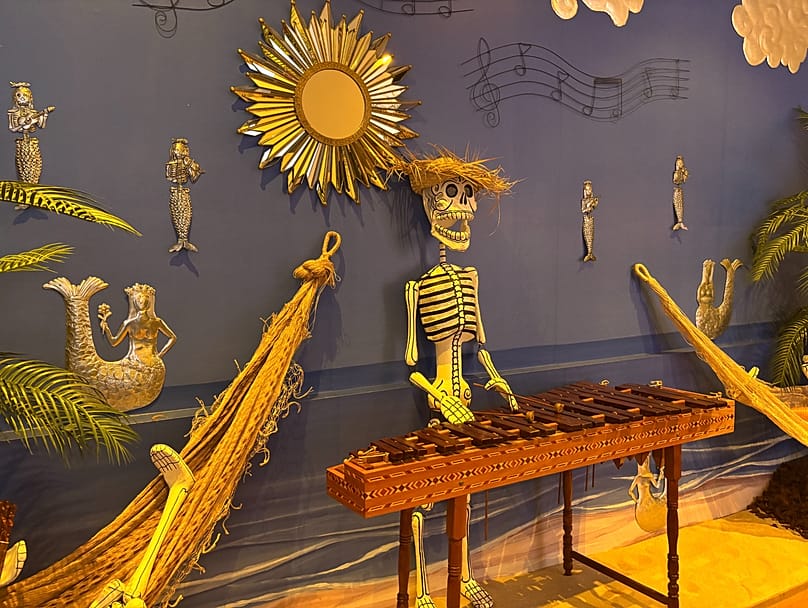
The 2026 Day of the Dead altar at Casa de México in Madrid.
Copyright María Muñoz Morillo.

By Maria Muñoz Morillo
Published on

Casa de México in Madrid unveils "Viva la vida!", its 2026 Day of the Dead altar honouring Agustín Lara, inspired by Michoacán and the monarch butterfly, with a musical tour. Free entry from 2 October to 8 November.

The Casa de México in Spain Foundation is unveiling the ninth edition of its Day of the Dead altar, the institution's most visited exhibition of the year. Under the title "Viva la vida!", the 2026 installation has been designed by Mexican artist Beatriz Redo and pays homage to composer Agustín Lara, with a set design inspired by the cemeteries and mountains of Michoacán.

The set recreates a mountain cemetery in Michoacán on the night of Day of the Dead, when, according to tradition, families gather to symbolically reunite with their deceased loved ones.

Beatriz Redo, the designer of this year's installation, explains that she wanted to pay tribute to the monarch butterfly, one of the region's great symbols: "Michoacán is an area of Mexico that receives the migration of the monarch butterfly, a massive migration that comes from Canada and coincides with the days at the end of October and the beginning of November. Tradition also links it to Day of the Dead," she notes.

Among the Purépecha and Mazahua communities of Michoacán, the arrival of these insects in the region's forests is interpreted as the return of the souls of the departed.

Agustín Lara, the musical protagonist of the tour and a great lover of Madrid

The altar is dedicated to Mexican singer and composer Agustín Lara (1897–1970), who was married to film star María Félix. Lara, known as 'El Flaco de Oro', was a prolific composer and author of classics such as 'Granada', 'Solamente una vez', 'María Bonita' and the emblematic chotis 'Madrid', which reflects his close relationship with Spain.

The artist is depicted at the top of the altar as a papier-mâché skull next to his piano, created by artisans Raimundo Amezcua and Marta Linares. New this edition, the entire tour will be accompanied by his most emblematic songs, something unprecedented in this exhibition and which will guide visitors on a visual and sonic journey through one of the most colourful traditions in the world.

Image of part of Casa de México's 2026 Day of the Dead exhibition with 'skeleton' mermaids made from embossed tin. María Muñoz Morillo
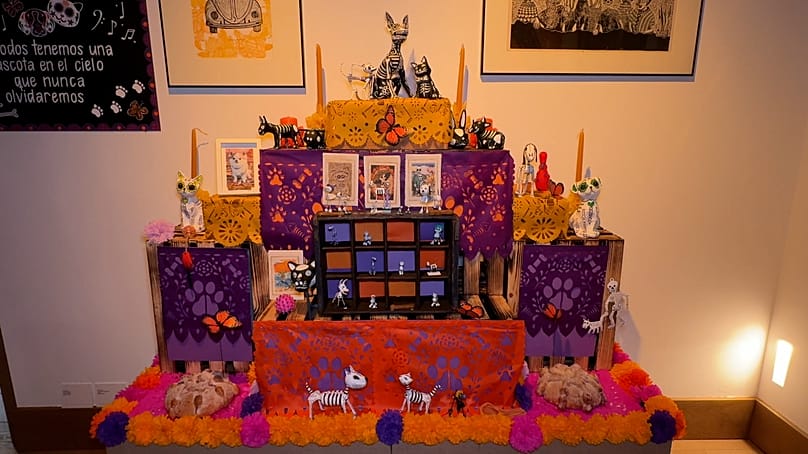

Papel picado, a tradition rich in symbolism, and an altar for pets

One of the most representative craft elements on the tour is papel picado, a traditional technique created with hammer and chisel that is also used for patron-saint festivities and birthday parties.

Its role on Day of the Dead goes beyond decoration: "When it is hung up and begins to move, it represents the moment when the souls arrive at the altar to consume everything we have placed in the offering for the deceased," explains Citlali Pérez from Casa de México's Communications Department.

In addition to the main altar, the experience includes a tour with pieces of Mexican folk art and other complementary altars. New for 2026, an altar dedicated to pets has been added to remember the animals that bring so much companionship and happiness to households. On the second floor, visitors can also leave a message for their deceased loved ones; once Casa de México removes the exhibition, these messages are burned in a ceremony.

Image of the altar dedicated to pets for the 2026 Day of the Dead at Casa de México (Madrid). María Muñoz Morillo

Beyond Casa de México: altars in Madrid and Santander

The foundation is extending the celebration beyond its headquarters on Calle Alberto Aguilera. In collaboration with Madrid City Council, three other altars will be open to visitors from 23 October to 2 November at:

- CentroCentro, designed by Guillermo González

- La Montaña de los Gatos, in El Retiro park, designed by Fer Ferez

- Arganzuela Greenhouse, designed by the studio Señoritos Creativos

The newly opened Faro Santander cultural centre will also host an altar designed by set designer Cristina Faesler, in collaboration with Casa de México.

A heritage recognised by Unesco

The Day of the Dead celebration in Mexico was declared Intangible Cultural Heritage of Humanity by Unesco on 7 November 2003.

Of pre-Hispanic origin, the tradition understands death as the beginning of a journey to Mictlán and sees the altar not as a reason for sorrow, but as a celebration of memory and the bond between generations, through photographs, candles, cempasúchil flowers and objects that were meaningful to the deceased.

An artisan catrina in the Casa de México (Madrid) exhibitions for the 2026 Day of the Dead. María Muñoz Morillo.

Image of a painting made from bone that tells the history of Mexico for the 2026 Day of the Dead at Casa de México (Madrid).
Image of a painting made from bone that tells the history of Mexico for the 2026 Day of the Dead at Casa de México (Madrid). María Muñoz Morillo

Dates, opening hours and free entry to the 2026 Day of the Dead altar

The altar can be visited from 2 October to 8 November, Monday to Sunday, including the public holidays on 12 October and 2 November. Admission is free.

Monday: 10:00 – 18:45

Tuesday to Friday: 10:00 – 13:45

Saturday and Sunday: 10:00 – 12:30

Guided visit (around 20 minutes, covering the building's three floors): Tuesday to Friday from 14:00 to 20:30, Saturdays from 13:00 to 20:30 and Sundays from 13:00 to 18:30.

Access without a booking is via a queue and is subject to capacity; for the guided visit with booking, you must subscribe to Casa de México's newsletter at casademexico.es.

New molecule restores memory in animals with Alzheimer's' disease

File photo
Copyright AP Photo/Evan Vucci
By Ioannis Karagiorgas 
Published on

The molecule RSQ-020 targets the Tau protein, which, when it folds incorrectly and forms clumps, is implicated in many severe neurodegenerative diseases.

A Greek research team led by Giorgos Skretas has developed an innovative pharmaceutical molecule that, in preclinical tests, restored learning and memory capacity in animal models with characteristics of Alzheimer’s disease.

The discovery is the result of collaboration between scientists at the Alexander Fleming Biomedical Sciences Research Centre, the National Hellenic Research Foundation and the spin-off company ResQ Biotech. The molecule, RSQ-020, acts by targeting the Tau protein which, when it folds abnormally and forms aggregates, is linked to the onset and progression of serious neurodegenerative disorders.

The development of RSQ-020 relied on a new technological platform created by the same research group. The method uses modified bacteria which can produce an enormous number of different candidate molecules while simultaneously indicating which of them have genuine biological activity. The aim is to pinpoint substances capable of repairing the malfunction of proteins that have lost their normal structure.

This approach differs markedly from the traditional route to drug discovery, said Giorgos Skretas, director of the Institute of Bioinnovation at the Alexander Fleming Biomedical Sciences Research Centre and collaborating researcher at the Institute of Chemical Biology of the National Hellenic Research Foundation.

According to him, classical drug development is based on finding a molecule that “fits” a specific protein target, like a key in a lock. However, the proteins involved in misfolding diseases do not have a stable shape but change constantly, which makes it particularly difficult to develop effective treatments.

“Instead of simply looking for a molecule that will bind to a specific site on the protein, we look directly for one that delivers the desired effect. Our technology allows us to see when a faulty protein is restored, because the bacteria we use emit a green signal when that happens,” the researcher said.

How it works in practice

In practical terms, the scientists inserted a human protein they are studying into a bacterium and programmed it to light up only when this protein returns to a more normal state. At the same time, the same cells produce billions of different small molecules, each representing a potential solution to the misfolding problem.

When a bacterium emits light, this is a sign that it contains a molecule which has achieved the desired objective.

In this way, instead of relying on lengthy tests carried out exclusively under laboratory conditions, researchers can, within a short period of time, identify molecules that are already working inside living cells – an environment that more closely mirrors the real conditions of a human disease.

The technology was initially developed with a focus on amyotrophic lateral sclerosis (ALS) and the SOD1 protein, but its potential applications extend to many other neurodegenerative conditions. Protein misfolding is a common hallmark of diseases such as Alzheimer’s, Parkinson’s and other serious disorders of the nervous system.


Alleged Indian leader of neo-Nazi child abuse ring goes on trial in Paris


Paris (France) (AFP) – An Indian man went on trial in Paris on Monday, accused of running a neo-Nazi child exploitation ring in which young girls were allegedly coerced into performing sexual acts online and engaging in self-harm.


Issued on: 05/10/2026 - RFI

Investigators say the victims were targeted by a group of men who communicated on the popular messaging platform Discord © MAURO PIMENTEL / AFP

The group is believed to have abused numerous young girls, most of them minors, in countries including the United States, the Netherlands, Britain and Estonia.

Investigators say the victims were targeted by a group of men from Germany, New Zealand and the United States who communicated on the popular messaging platform Discord. They espoused racist and anti-Semitic views and expressed hostility toward feminists and the LGBT+ community.

Rohan Rane, a 29-year-old Indian national who came to France to study at a business school in the southeastern city of Antibes before becoming a fitness coach, is described by investigators as the group's leader.

He is being tried on charges including torture or acts of barbarity against minors, organised extortion and dissemination of child sexual abuse material. If convicted, he faces up to life in prison.

The case was triggered in November 2020 by a report from the National Center for Missing and Exploited Children.

The US child protection organisation discovered online images of a 12-year-old girl with her chest exposed while another user encouraged her to carve the name "Rohan" into her body.

Five American women, aged 18 to 21, have joined the case as civil parties and were expected to testify by video link this week.

According to a court document released by the US Department of Justice, the internet-based group dubbed CVLT espoused "neo-Nazism, nihilism, and paedophilia as its core principles."

Closed-door trial

The Paris criminal court on Monday ordered the trial be held behind closed doors.

The decision was made despite a request for an open trial by Hippolyte Marquetty, a lawyer for the five American victims, and followed a request from US authorities.

According to the ruling read out by the presiding judge, the group allegedly led by Rane, which was particularly active in the United States, had already sought to intimidate victims and witnesses and had threatened US prosecutors.

The court also cited the risk of offending public morality, noting that videos showing the torture and humiliation of victims, often under the age of 15, were expected to be screened during proceedings scheduled to run until Friday.

Backed by child protection groups, Marquetty unsuccessfully opposed the closed-door proceedings, arguing that it was "paradoxical" for a defendant accused of isolating his victims to be tried behind closed doors.

He said his clients believed it was important to raise awareness of the dangers teenage girls face on social media.

Noting what he described as "absolutely exemplary cooperation with the United States", the prosecutor had recommended granting the request for closed-door proceedings so as not to jeopardise that cooperation.

Rane declined to comment on the request for a closed-door trial.