Wednesday, October 07, 2026

CHRISTIAN NATIONALIST FASCISM
US top diplomat Rubio says West must choose ‘national power’ or decline

US Secretary of State Marco Rubio delivered a combative defence of Washington’s right to wield its “national power” in Athens on Wednesday, while urging Europe to “awaken from its long slumber”.


Issued on: 07/10/2026 -  RFI

U.S. Secretary of State Marco Rubio speaks at the Pnyx hill, where ancient Athenians held democratic assemblies, with the ancient Parthenon temple atop the Acropolis in the background, in Athens,Wednesday, Oct. 7, 2026. Mark Schiefelbein/Pool AP via AP - Mark Schiefelbein

"We are at an inflection point ... not only in the history of my nation but an inflection point in the whole of our civilisation," Rubio said in a speech beneath the Acropolis.

"Either we choose to act now, or lose the choice to act at all," the top US diplomat said.

The United States under President Donald Trump has made its choice, according to Rubio.

"We choose the unapologetic pursuit of national power: to take back control of our critical supply chains, to reindustrialise our economy, to rebuild our defence, to fight for dominance of the technologies and industries of the future," he said.

"There is new competition between great powers again. There is vulnerability, aggression, terrorism, a whole universe of new threats and attacks again," Rubio said.

"We must rebuild our institutions and our alliances to face these threats together," he said.


Rubio said that in Europe he saw encouraging signs of what Washington hoped "will be the beginning of a generational shift, skyrocketing defence spending, a flurry of new partnerships and programmes, expanded manufacturing and production."

"We believe that Europe can awaken from its long slumber and rekindle the fire that was lit here millennia ago," he said.


Ancient Greeks


His speech, which was packed with praise for the ancient Greeks, followed an address in February when he argued in a speech to world leaders at the Munich Security Conference, that Europe was threatened by mass immigration and called for it to defend Christian civilisation.

Man maditation at the Pnyx, a hill near the Acropolis in Athens, where US Secretary of State Marco Rubio makes a speech on 7 October 2026. AFP

But he also flagged the energy sector, and announced a joint agreement on information-sharing on drug trafficking and terrorism.

"As you see a world that faces ... destabilising events, you recognise how important this alliance with Greece is to the United States," he said, referencing conflict in the Middle East and the Russian invasion of Ukraine.

In the Middle East, he argued that Iran had "lost complete control" of the strategic Strait of Hormuz, seeking to offer reassurance at a time when the United States is struggling to find a way out of the war just weeks before key US legislative elections.

Rubio took part Wednesday in a "strategic dialogue" with Greece on regional and energy security amid high tensions triggered by the wars in Iran and Ukraine.

United States Secretary of State Marco Rubio. © Yuki Iwamura / AP

One day before Rubio's arrival, Greek police said more than 2,000 demonstrators gathered in central Athens on Tuesday to protest his visit.

Syntagma Square, in the heart of the Greek capital, was closed to traffic, with a heavy police presence to beef up security, AFP photographers saw.

The visit has been overshadowed by media reports about possible conflicts of interest involving the US ambassador to Greece, Kimberly Guilfoyle, a former fiancee of Donald Trump Jr. and ex-wife of California Governor Gavin Newsom.

In a letter addressed to Rubio, Congressman Gregory Meeks sought clarification of a Wall Street Journal report alleging that Guilfoyle had stated the United States could create "political change" in European countries.

Rubio is to meet conservative Prime Minister Kyriakos Mitsotakis on Wednesday evening, before departing for Lisbon on Thursday.

(with newswires)


Thousands march fearing return of a Bolsonaro presidency in Brazil

Rio de Janeiro (Brazil) (AFP) – Thousands of people joined a student march Wednesday in downtown Rio de Janeiro to protest presidential candidate Flavio Bolsonaro and a surge of the far-right in Brazil.


Issued on: 07/10/2026 - RFI

Brazilians young and old joined the spirited student march after the son of far-right former president Jair Bolsonaro finished first in Sunday's election © Pablo PORCIUNCULA / AFP

Wearing stickers declaring "Never Again Bolsonaro" and "No to the father, no to the son," Brazilians, young and old, joined the spirited student march after the son of far-right former president Jair Bolsonaro finished first in Sunday's election.

Flavio Bolsonaro and second-placed candidate, the veteran leftist President Luiz Inacio Lula da Silva, will battle it out in a run-off on October 25.

"I'm here because I believe in democracy. Because I'm scared," said Alice Carneiro, 25, an administrator in maritime shipping, crying as she expressed fears about a possible backlash against her wife, who is trans.

Protesters evoked life under Jair Bolsonaro, who was in office from 2019 to 2022 and is remembered for his handling of the pandemic, which claimed more than 700,000 lives in Brazil, the second-highest death toll in the world after the United States.

"I remember my family's lives being at risk during the pandemic... I remember the vaccine denial," said Carneiro.

Amid drums and fireworks, massive flags read "Get Out Bolsonaro," while some protesters expressed concern about Flavio Bolsonaro's plans to grant amnesty to his father, currently serving a 27-year sentence for attempting a coup after his 2022 election loss.

"Dictatorship Never Again," read one poster.

"I find this rise of the far-right and the rise of Bolsonarism in Brazil very, very sad," said Emmanuel Araujo, 19, who is preparing to take university entrance exams.

"Most people voting for Bolsonaro aren't doing so because they believe in his proposals. It's anti-PT, anti-Lula politics, driven by hatred and resentment toward previous administrations," he said, referring to Lula's Workers' Party.

"Lula might not be my preferred candidate, but amid this barbarism, we have to choose between someone we can keep criticizing and someone who might take away our right to speak," he said.

fb/md

© 2026 AFP


A heavy lift: Thieves steal Dalí's 200kg diamond-studded 'Book of the Apocalypse' in France

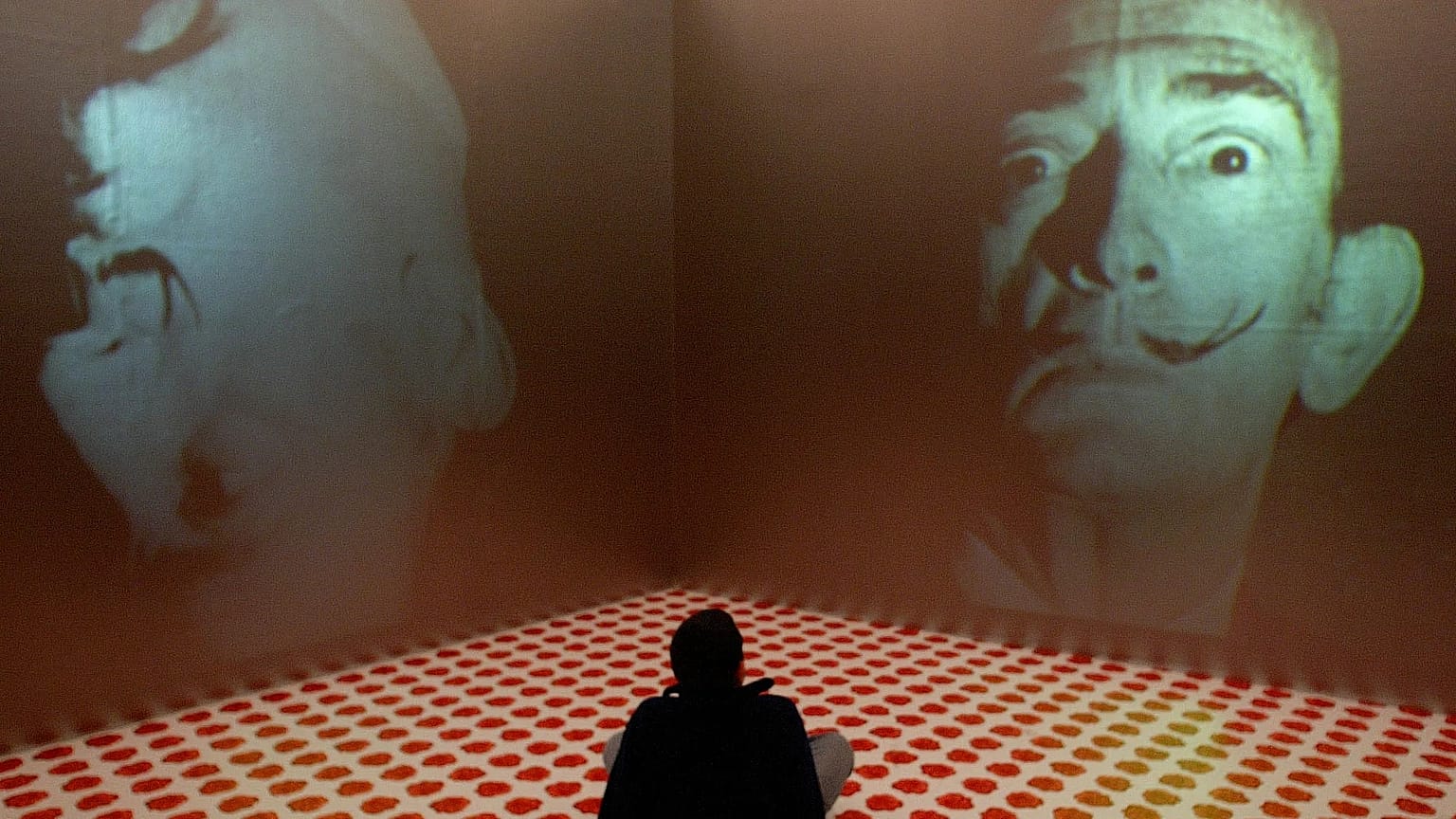
A Dalí exhibition in Barcelona, 2004.
Copyright AP Photo/Bernat Armangue

By Christina Molle with AFP
Updated

Police in central France are searching for an art collector's book worth an estimated €1 million that was stolen from an art centre in Issoire in Puy‑de‑Dôme. The "Book of the Apocalypse", a 210‑kilo volume contains works by Salvador Dalí, Jean Cocteau and Bernard Buffet.

Another theft in the art world: the "Book of the Apocalypse", described as one of the most expensive (and heaviest) books in the world, was stolen from a private museum in Issoire, in Auvergne, overnight from Sunday to Monday, the Clermont-Ferrand public prosecutor’s office has said.

The original and unique copy of this book, conceived by the Auvergne publisher Joseph Forêt, was designed as a total work of art inspired by the Apocalypse of Saint John.

Weighing 210 kilos in total, this work made up of 150 parchments was produced between 1958 and 1961 by seven leading writers and seven leading painters of the time, among them Ossip Zadkine, Léonard Foujita, Jean Cocteau and Jean Giono. Salvador Dalí, for his part, sculpted the cover using the lost-wax casting technique.

A work that has travelled the world

After being shown in nearly 150 exhibitions around the globe between 1961 and 1972, the book disappeared from view for several years. Stored in Switzerland, it was eventually sold to Japanese collectors.

As they were preparing to auction it off, piece by piece, it was bought in 2003 by Christian Karoutzos, CEO of an art restoration company in Issoire. He decided to display the cover and several parchments in his contemporary art centre in the town until the autumn.

"It is a cathedral-like work, a masterpiece, unique in the world", the new owner lamented to ICI Pays d’Auvergne after the theft, adding that"France was murdered last night, French heritage was murdered".

"This was a privately owned work kept in a small private contemporary art museum that also housed other, less valuable pieces", said Issoire’s mayor, Bertrand Barraud. He stressed that the loss was "incalculable" and that it was "the work of a lifetime".

An investigation has been opened by the Clermont-Ferrand gendarmerie’s research unit. The work is estimated to be worth several million euros.

It's the latest in a long line of high-profile art thefts in France which began with the daring broad daylight robbery at the Louvre in Paris on 19 October 2025, when thieves managed to steal royal French jewels valued at €88 million euros_._


Brussels eyes agricultural carve-outs from Ukraine's EU membership

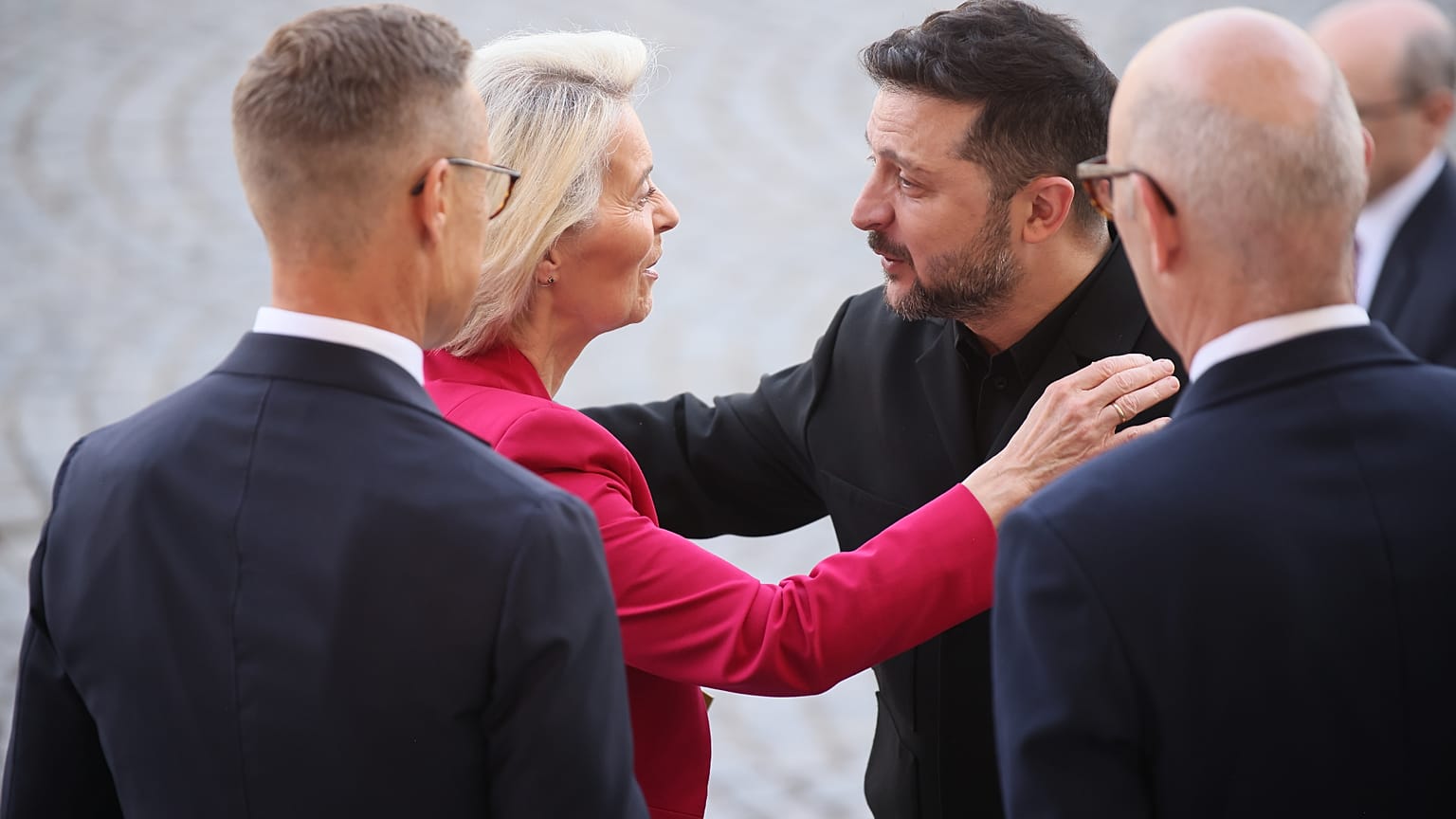
Ukraine's President Volodymyr Zelensky, center right, and European Commission President Ursula von der Leyen, center left.
Copyright AP Photo/Thomas Padilla

By Luca Bertuzzi
Published on

The European Commission proposed excluding Ukraine's agricultural products from the EU market and agricultural funding even when Kyiv joins the EU, in a move to smooth the country's accession process and address concerns from several member states.

The European Commission proposed to exclude certain agricultural products from accessing the European market and receiving EU funding even after Ukraine becomes a full member of the bloc.

The proposal comes as part of an enlargement strategy meant to prepare the Union to better absorb new countries, and is meant to address concerns from several member states that their agricultural sector could be undercut by the Ukrainian one.

“One area where we have to be very careful is agriculture. Why? Because the structure and the size of agriculture in Ukraine is really unique, therefore, we are proposing that we do special arrangements, which would limit the financial support, and market access for some of the Ukrainian agricultural products,” EU’s Enlargement Commissioner Marta Kos said.

Agricultural carveout

For the enlargement chief, Ukraine’s partial integration is possible, and the objective is to make Kyiv a full member state, but the Commission is proposing targeted amendments to exclude Ukrainian wheat and grain from the EU’s agricultural framework.

“What we propose now is about protecting European farmers,” Kos noted, adding that the Commission will propose to include the measure in the EU’s common position on agricultural policy when negotiating the accession of Ukraine.

According to the Commission, the idea is to help Ukraine regain access to its traditional markets, in particular in Northern Africa and the Middle East, which Russia’s war of attrition made it difficult to reach.

The EU executive argues that, if such regions were deprived of Ukrainian grain as it was diverted to the European market, it would substantially harm the food security of the importer countries and even trigger risks of mass famine.

Troubled accession

However, the measure is also meant to address concerns from EU countries like Poland that Ukraine’s agricultural exports might seriously challenge their national farmers and markets, Euronews understands.

Kyiv applied to become an EU member shortly after Russia’s war of aggression started in 2022, but its accession bid has stalled until earlier this year due to opposition from Viktor Orbán’s Hungary.

However, as Orbán was ousted from power earlier this year, the accession process started moving, with two more accession clusters expected to be opened as early as next week.

Thus, the Commission’s move seems meant to prevent these concerns from affecting Ukraine’s sensitive enlargement process from being delayed further.

“It doesn't mean that Ukraine will not become a member of the EU,” Kos continued. “We can afford that Ukraine will become a member of the EU, but we will set special conditions for agriculture.”

Tentative timeline

At the same time, Brussels is conscious that Ukraine, because of its size and ongoing war effort, poses a specific challenge to the EU’s enlargement process. Nevertheless, Kyiv has been included in a group of four “frontrunners” that will receive a dedicated roadmap later this month.

The roadmap will include an indicative timeline for joining the Union and a breakdown of the most important steps to get there. Still, for the other three frontrunners, Montenegro, Albania and Moldova, the timeline is relatively intuitive.

Montenegro’s declared ambition is to become the 28th member by 2028. Albania is poised to see its ambition to conclude the accession homework by the end of next year formally endorsed. Moldova is similarly targeting the first half of 2028.

For Ukraine, there is no obvious timeline, since the accession path might inevitably become linked with the eventual peace process with Russia.

“The country is at war. We will have to see. There are so many ifs [for Ukraine’s roadmap],” Kos said.

AUSTERITY KILLS

IMF chief signals austerity is back as global public debt heads for 100% of GDP

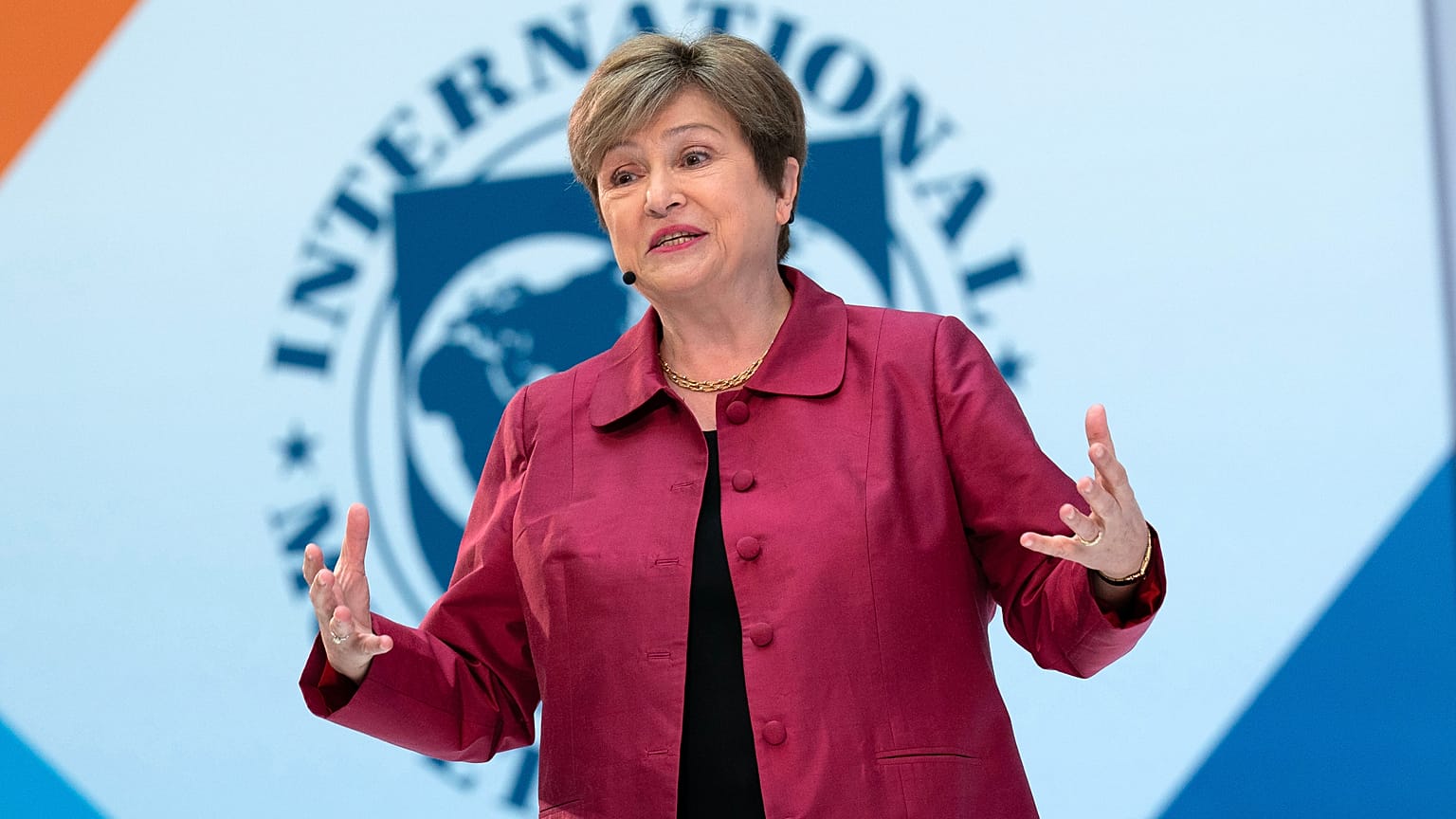
FILE. International Monetary Fund (IMF) Managing Director Kristalina Georgieva speaks at a news conference in Washington, 9 April 2026
Copyright AP Photo/Jose Luis Magana

By Quirino Mealha
Published on


IMF chief Kristalina Georgieva has urged heavily indebted governments to tighten their belts and central banks to take a hawkish stance, signalling a return to austerity as the energy shock from the Iran war, record public debt and a credit-fuelled AI investment boom weigh on the global economy.

The days when governments could lean on cheap money and fast growth to keep their debts in check are over, according to the head of the International Monetary Fund (IMF), who called for spending discipline and tighter monetary policy around the world.

Speaking in Singapore on Wednesday, ahead of the IMF and World Bank annual meetings in Bangkok next week, Kristalina Georgieva said policymakers "can no longer rely on higher growth rates alone to solve fiscal problems".

Worldwide public debt is close to levels last seen after World War II and could top 100% of GDP before 2030, the IMF chief warned, singling out developed economies as the "worst offenders".

"Yet, we don't see decisive action in the high-debt advanced economies where the need of the hour is for credible medium-term fiscal consolidation plans," Georgieva said, adding that "fiscal space is crying out for replenishment".

Borrowing costs are already climbing, she noted, with 10-year government bond yields in the US, Germany and Japan at their highest levels since 2007, 2009 and 1996 respectively.

On monetary policy, Georgieva described recent rate hikes by the US Federal Reserve, the European Central Bank and the Bank of Japan as "highly appropriate".

"Now may be a good time for a prudently hawkish bias in many countries' monetary policy," she said.

The IMF chief also warned that the global economy is being pulled in opposite directions by a negative energy supply shock from the Iran war and a positive demand shock from artificial intelligence, adding that "the combined impact of these two forces is highly uneven across the world".

Oil prices remain at about $100 a barrel, she said, well above the $89 the IMF assumed for this year in its July forecasts, which put global growth at 3% in 2026 and 3.4% in 2027.

"Even if the war in the Gulf were to end soon, the problem of high energy prices will likely persist for some time," Georgieva said.

An AI boom with risks attached

"Love it, hate it, or fear it, AI is here," the IMF chief said, describing the technology as "rapidly becoming a key driver of countries' relative fortunes in the world economy".

If done right, AI could lift global growth by as much as half a percentage point a year, according to IMF estimates.

Over a decade, that would be like adding "an economy the size of ASEAN to the world economy", Georgieva said, referring to the Southeast Asian bloc.

But she cautioned that "the AI building boom is inflationary", with spending on the technology, relative to the size of the economy, likely to outstrip past investment waves in railways, power grids and telecoms.

A letdown for investors could become "a far-reaching shock," she warned.

Georgieva also flagged dangers ranging from job losses and cyberattacks to cutting-edge models that could "escape human control and run amok".

The IMF is due to publish updated global growth forecasts during next week's meetings in Bangkok.


Christa Pike awake a week after lethal injection as her lawyers seek answers

Christa Pike's failed execution took place on 30 September, 2026.
Copyright AP Photo

By Simon Ormiston
Published on

Christa Pike remains shackled to her hospital bed with burned and blistered arms, while Tennessee has suspended executions and its prison chief has resigned.

A US death row inmate who survived an attempt to execute her by lethal injection is conscious and speaking, her lawyers have said, as they go to court to find out what went wrong.

Christa Pike, 50, was given two doses of the drug pentobarbital at a Tennessee prison on 30 September. She is believed to be the only person to survive after lethal injection drugs were administered.

"Against all odds, Christa Pike is conscious, speaking, and continues to receive critical medical care," her attorneys said on Tuesday.

"Despite the severe damage she endured to her arms, she is still handcuffed and shackled to the bed," they said. "Her prognosis remains unclear but, at a minimum, we expect a long recovery."

'Pike was sentenced to death for the 1995 killing of 19-year-old Colleen Slemmer, committed when she was 18. She would have been the first woman executed by Tennessee in more than 200 years.

Her lawyers are due in court in Nashville on Wednesday, seeking an order requiring the prison system to preserve evidence including drug lot numbers, needles and execution logs.

The Tennessee attorney general's office said the order was unnecessary because the prison system is "obliged to maintain this evidence in other cases and must assure it is preserved".

Experts have focused on whether a problem with the IV line caused the drug to pool in her tissue instead of entering her bloodstream. A court filing said both Pike's arms were "swollen, burned, and blistered" when she arrived at hospital.

Governor Bill Lee called what happened "deeply disturbing" and ordered a "comprehensive, third-party review". He has suspended executions in the state pending the investigation, and the prison chief has resigned.

Pike's lawyers have again called on Lee to commute her sentence to life imprisonment without the possibility of parole.


Puigdemont welcomes Spain's amnesty but warns it is not the solution for Catalonia


By Rafael Salido & Sertac Aktan
Published on

The Catalan pro-independence leader, who has lived in self-imposed exile in Waterloo for nine years, hailed the Supreme Court's move to lift his arrest warrant over alleged embezzlement linked to the 'procés'.

The former president of the Catalan regional government, Carles Puigdemont, who, thanks to a decision by the Supreme Court, can now return to Spain after nine years on the run from justice, on Tuesday celebrated the end of the court case hanging over him but warned that the amnesty he has been granted "is not the solution" to the independence aspirations of part of the Catalan population.

Talking at a brief press conference in the Belgian town of Waterloo, where Puigdemont has lived since leaving Spain after an arrest warrant was issued against him for his role in organising the 1 October 2017 referendum, he declared: "As far as relations between Catalonia and Spain are concerned, nothing is being resolved today."

The leader of Junts per Catalunya lamented that the legal process he has faced in Spain since then amounts to "an improper use of judicial powers" and argued that "it is typical of authoritarian regimes and therefore unacceptable in a European democracy".

The former head of the Catalan government left the country after Catalonia's unilateral declaration of independence and the triggering of Article 155 of the Spanish Constitution. However, the passage of the amnesty law in 2024 opened the door to his possible return.


Even so, until now, Puigdemont risked arrest if he returned to Spain, as the embezzlement warrant remained in force. On Tuesday, the Supreme Court judge Pablo Llarena lifted the arrest warrant after the Constitutional Court endorsed the application of the amnesty law to the offence of embezzlement.

The court ruled in response to an appeal lodged by former Catalan minister Dolours Bassa, after the Supreme Court had refused to apply the amnesty to the embezzlement charge in her case.

The underlying question was whether the use of public money to fund the independence referendum could be covered by the amnesty law. The Supreme Court had ruled that it could not, on the grounds that there had been a personal financial benefit for those driving the vote. The Constitutional Court, by contrast, rejected that interpretation.

In his statement, the pro-independence leader, who has not revealed when he plans to return to Spain, said he decided "to go into exile in order to do politics" with the aim of defending the rights of Catalan citizens who, in his view, were "under threat" from article 155, and argued that the Constitutional Court's decision represents "a disavowal of the repression" to which some of those responsible for the 'procés' have been subjected.