Wednesday, October 07, 2026


The Caspian Sea has been shrinking for decades. Now, a new island has emerged
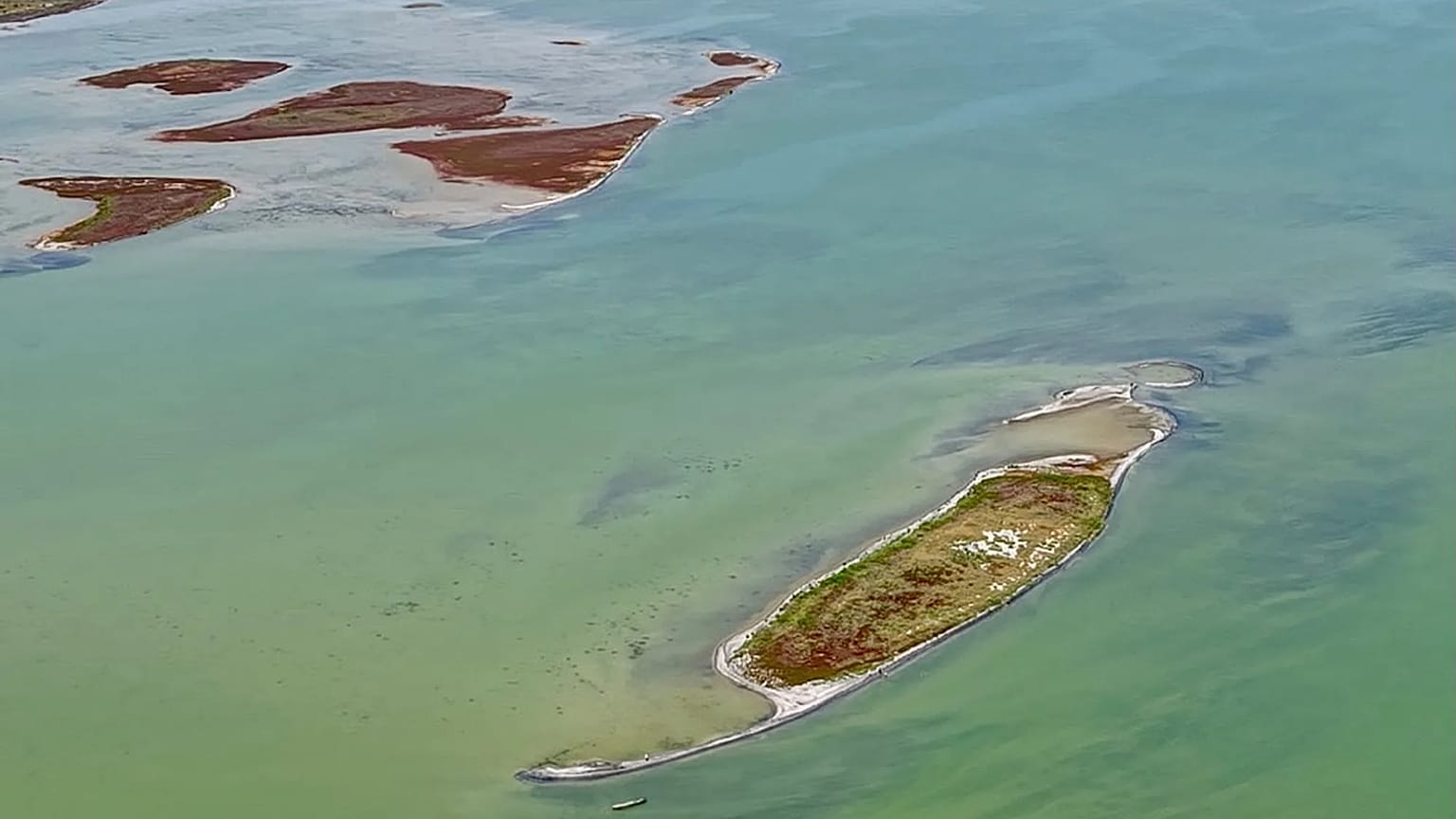
Aerial view of a new island in the northern Caspian Sea, Kazakhstan.
Copyright Copyright: Daniyar Akimzhanov

By Meruyert Zhakiyanova
Published on

Scientists warn that parts of the northern Caspian could face an Aral Sea-like scenario, while climate change and human water use are adding pressure on the region.

The Caspian Sea is the largest inland body of water on Earth, but for years it has been shrinking.

The northern and north-eastern parts along Kazakhstan's coast form the shallowest sector of the Caspian Sea, typically ranging between just three and six metres. But as water levels continue to fall, following decades of climate change and human activity, environmentalists are discovering clusters of under-water islands.

The latest was spotted days ago near Kulaly Island during a recent aerial survey.

Volunteer and environmental activist Daniyar Akimzhanov was part of the group that reported the discovery. He says that the newly emerged island is relatively small, but it is far from an isolated case.

In fact, over the past four to five years, Akimzhanov says he has documented several new islands in this part of the Caspian Sea.

“The one in the photo I sent you is the smallest. There are much bigger new islands,” he explains.

The Caspian Sea's secret islands

Some stretch around one kilometre in length and 200 to 300 metres in width and wildlife has already begun reaching the newly exposed land.

Akimzhanov says he personally spotted a wild boar on one of the islands, while wolves also make their way there across the ice. The newly emerged islands usually do not get names, he says.

The Kazakh Research Institute of the Caspian Sea, which began work in September 2025 after being established on the instructions of President Kassym-Jomart Tokayev, says more areas of land are likely to emerge. However, not all of them will become permanent islands.

“The future of each newly exposed area depends on the seabed topography, waves, wind-driven changes in water levels and the subsequent dynamics of the Caspian Sea level,” the institute says.

The emergence of new islands is one of the most visible signs of a much broader transformation: the Caspian Sea is retreating.

The Caspian Sea is retreating

The Caspian Sea is the world's largest landlocked body of water. It is bordered by five countries: Kazakhstan, Russia, Azerbaijan, Iran and Turkmenistan. More than 80 per cent of its river inflow comes from Russia’s Volga River.

Dr. Sifan Koriche, a hydroclimate scientist at the University of Alabama who has published several studies on the Caspian Sea, explains its water balance in simple terms.

“It's like a simple water balance. The incoming water is from river inflow and precipitation, while the outgoing water is only through evaporation,” he says.

According to instrumental observations, the Caspian Sea level in the Kazakh sector fell from -26.82 metres in 1996 to -29.27 metres in 2025. This represents a decline of 2.45 metres over the past three decades, or an average of around 8–9 centimetres per year.

The decline has continued. According to the Kazakh Research Institute of the Caspian Sea, the average sea level at the Kulaly Island monitoring station stood at -29.42 metres as of July 2026, the lowest level recorded during the entire study period.

The north-eastern Caspian, including the coast of Kazakhstan's Atyrau region, is particularly vulnerable to falling water levels. With an average depth of around six metres and a very gentle seabed slope, even a relatively small drop in water level can cause the shoreline to retreat over long distances.

The scale of the retreat is already visible. According to the Kazakh Research Institute of the Caspian Sea, between 2000 and 2025, the area covered by water in the studied part of the north-eastern Caspian decreased by around 16,384 square kilometres.

Satellite images analysed by the institute also show how the coastline has changed in recent years. Between 2021 and 2026, falling water levels gradually exposed new areas of seabed near Kulaly Island and the Tyuleniy Archipelago.
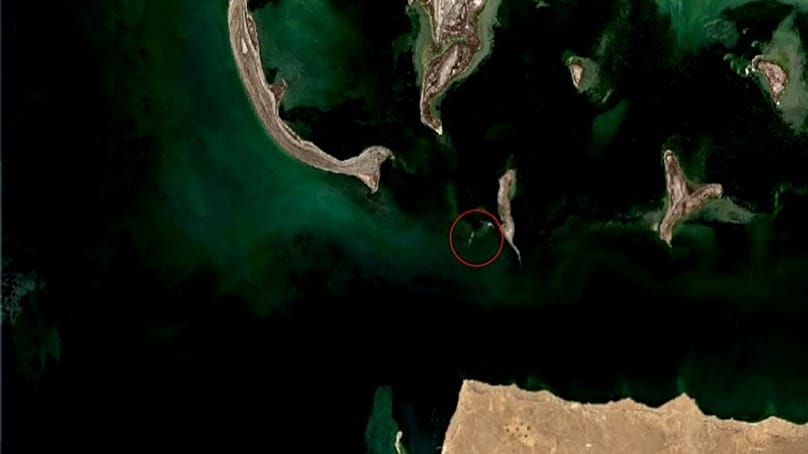

Satellite image of the north-eastern Caspian Sea in 2021. Copyright: Kazakh Research Institute of the Caspian Sea
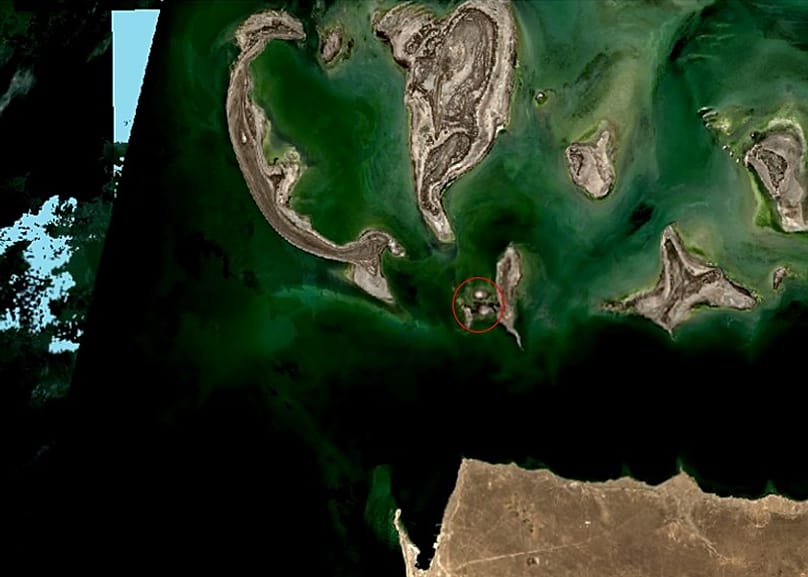
Satellite image of the same area in 2026. Copyright: Kazakh Research Institute of the Caspian Sea

The Caspian has historically experienced periods of both falling and rising water levels. From the 1930s to 1977, its level dropped by around three metres. Over the following two decades, it rose again by about 2.5 metres, before beginning another period of decline.

But while fluctuations in the Caspian Sea level are not new, scientists say climate change and human activity are now affecting its water balance.

Previous research has linked the decline in recent decades mainly to increased evaporation from the Caspian Sea as regional temperatures have risen. A decrease in precipitation has also contributed, but to a smaller degree.

Human activity also affects how much water reaches the Caspian. Dams regulate the rivers flowing into the sea, while water is extracted across the basin for irrigation and other uses. The way reservoirs are managed can also affect river flows reaching the sea.

Why Caspian seals are declining

The Caspian seal, found nowhere else in the world, has already undergone a dramatic population decline. Over the past 100 years, its population has fallen from around one million to about 100,000.
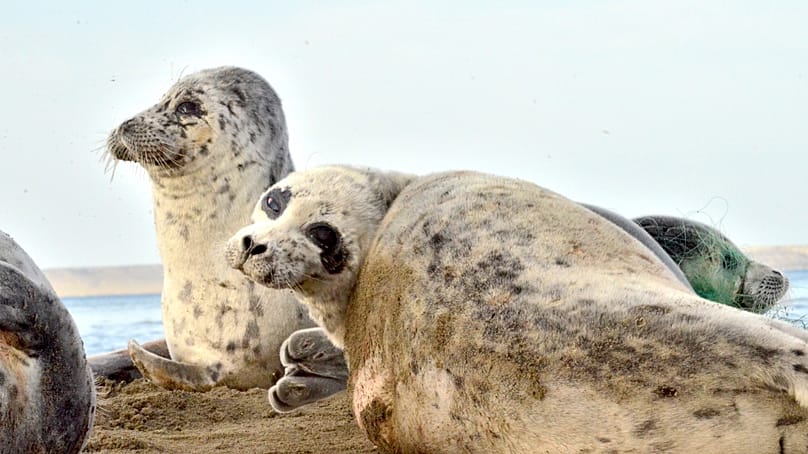
Caspian seals in Kazakhstan. Copyright: Mirgaliy Baimukanov

The retreating sea is adding pressure on the species by transforming the isolated islands it uses as seasonal haul-out sites.

According to seal researcher Assel Baimukanova, the area of island haul-out sites has decreased more than 15-fold since 1995.

In 2021, Baimukanova and other researchers from the Institute of Hydrobiology and Ecology stayed on a small newly formed island they called New Durnev, where thousands of seals gathered. When they returned in 2023, the island had expanded significantly and could at times be reached by car. It later connected to the mainland.

“For seals, it became inaccessible. No isolated island means no seals,” Baimukanova said.

As the sea retreats, seals are also being pushed westwards. The north-eastern Caspian had long served as a natural refuge for the animals because it was difficult for people to access. Further west, seals face more human activity, including fishing, shipping, tourism and oil and gas operations.

Warming temperatures pose another threat to the seals: the loss of stable winter ice. Caspian seals give birth on ice, but Baimukanova says warmer winters are making it thinner and less stable.

For newborn pups, the loss of stable ice cover means they have very little chance of survival.
Assel Baimukanova
Seal Researcher

The effects of the retreating sea go beyond wildlife. The Kazakh Research Institute of the Caspian Sea says shrinking shallow waters are also affecting wetlands and could pose growing challenges for fisheries, ports, shipping and other coastal infrastructure.

What happens next?

Most climate scenarios suggest that the Caspian Sea will continue to decline during the 21st century, although scientists stress that the exact scale remains uncertain.

Koriche's research projects a decline of up to eight metres by the end of the century under an intermediate climate scenario, although results vary significantly between models.

To illustrate what even a smaller decline could mean, Koriche says a five-metre drop could expose around 77,000 square kilometres of seabed in the northern Caspian.

Koriche says the entire Caspian is not facing an Aral Sea-like scenario because its central and southern basins are much deeper. But parts of the shallow northern Caspian could face significant desiccatio

“The northern part covers a quarter to one third of the water body. There is a chance that this northern region could face a scenario similar to the Aral Sea,” he says.

But the scale of the future decline is not predetermined. Koriche's research suggests that human water extraction could add up to seven metres to the decline under some scenarios.

He says measures should focus both on slowing the decline and adapting to it. This includes better management of water use across the Caspian basin, particularly the Volga, as well as stronger monitoring and data sharing between countries.

The Kazakh Research Institute of the Caspian Sea also says adaptation is becoming increasingly important. Measures include protecting vulnerable ecosystems, monitoring newly exposed seabed and adapting ports and other coastal infrastructure.

Some regional initiatives are already underway. Kazakhstan has proposed an interstate programme to conserve the Caspian Sea's water resources, while the five Caspian states are also working on a 2026–2036 action plan under the Tehran Convention to improve monitoring, assess the impacts of sea-level changes and develop adaptation measures.

“Effective solutions are only possible through coordinated action by all five Caspian states,” the institute says.

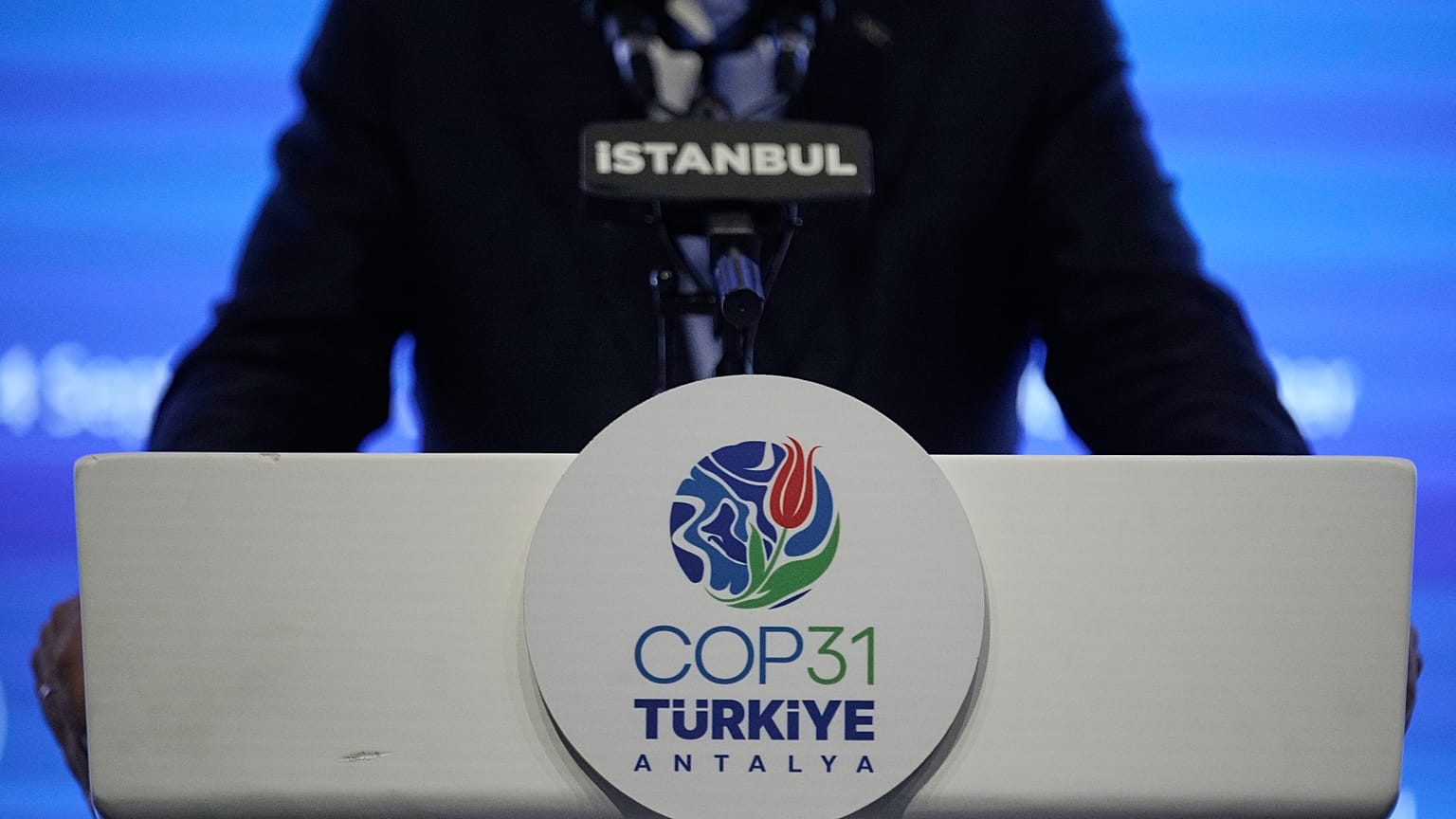
 

Electrification, AI and fossil fuels: What to expect as Türkiye hosts major climate summit next month

COP31 President-designate and Turkiye's Environment, Urbanization and Climate Change Minister Murat Kurum speaks during the Istanbul Climate Finance Summit, Sept. 4, 2026.
Copyright AP Photo/Khalil Hamra

By Angela Symons with AFP
Published on


The UN talks in Antalya next month will be backdropped by the energy crisis, extreme heat and Nepal's flood disaster.

All eyes will be on Türkiye next month as the country hosts the world's biggest climate summit.

COP31 opens in the seaside city of Antalya on 9 November, bringing 197 countries together to grapple with record global temperatures, mounting climate damage, and growing pressure to shift away from planet-heating fossil fuels.

While Türkiye won out as host country, the marathon negotiations will be steered by Australia in an unprecedented arrangement reached after both nations bid to stage the world's premier climate gathering.

This year's formal UN talks are set to be light on big-ticket items, with voluntary climate pledges taking centre stage.

Alongside these, the host intends to push electrification as one path to reducing emissions and dependency on fossil fuels. Critics have warned that electrification must be pursued in tandem with clean power if it is to deliver on decarbonisation.

How will a devastating year of climate disasters and turmoil in global energy markets shape discussions inside and outside the negotiating rooms?

Will a fossil fuel phaseout be on the table at COP31?

Efforts to reach a global consensus on setting concrete targets or pathways for phasing out fossil fuels have stalled and the perennially thorny issue is not a formal item in the COP31 negotiations.

In the absence of consensus, Brazil is expected to release a voluntary 'roadmap' to guide the transition away from coal, oil and gas after nations failed to agree on the process at last year's COP.

But frustration over the fossil fuel impasse could reignite in Antalya. This year, about 60 nations demanding faster action on fossil fuels staged their own breakaway conference outside the United Nations process.

It is unclear how they may be accommodated at COP31 but Türkiye and Australia have promised predictability at COP31 and no last-minute surprises.

Why a focus on electrification could be problematic

Türkiye and Australia want the focus instead on electrification – essentially, replacing technologies that burn fossil fuels directly, like diesel cars and gas heating, with electric alternatives.

Their flagship initiative in Antalya urges countries to commit to a voluntary target to raise the share of final energy demand met by electricity from about 20 per cent today to 35 per cent by 2035.

The hosts say boosting electrification could cut heat-trapping emissions and reduce reliance on costly fossil fuel imports – a major concern for nations after the Middle East war triggered a global energy shock.

But around one-third of the world's electricity is still produced using coal, and the electrification target does not explicitly state how that extra power should be produced, raising questions of credibility.

What voluntary climate pledges are expected on the sidelines of COP31?

Apart from the centrepiece electrification goal, Türkiye is spearheading a range of voluntary initiatives on themes including artificial intelligence, methane and waste reduction, and climate-resilient cities.

These non-blinding pledges are slated for a separate 'action agenda' which runs parallel to the formal COP talks, where decisions are taken by consensus and nations must agree on every line of the text.

This year the hard-fought negotiations contain few headline-grabbing items and deal mostly with technical issues carried over from previous conferences.

Climate finance in the wake of the Nepal floods

Another recurring sore spot at COPs, the amount of financial assistance provided by wealthy countries will be scrutinised again in Antalya, especially after devastating floods in Nepal linked to climate change.

Kathmandu's appeal for assistance has revived longstanding calls for historic polluters to cough up more to help poorer nations shift to renewable energy, adapt to climate impacts, and recover from disaster.

Türkiye has pitched itself as a bridge between developed and developing countries and incoming COP31 President Murat Kurum said closing the climate finance "chasm" would be a key priority in Antalya.

Who will host COP's 'global stocktake' in 2028?

At COP33 in 2028, countries will undertake a 'global stocktake' of progress on climate action. These take place every five years and assess where the world has fallen short in meeting the goals of the Paris Agreement.

But this crucial COP doesn't have a host yet after India withdrew its candidacy.

China is mulling a bid, according to sources familiar with the matter, as Beijing seeks to burnish its reputation as a global leader on climate change, particularly in the absence of the United States.

A decision does not have to be taken this year but the prospect of a politically-charged Beijing COP is expected to be a hot topic in Antalya.


Climate damage already ‘locked in’ – but these 10 insights show our future is still being decided

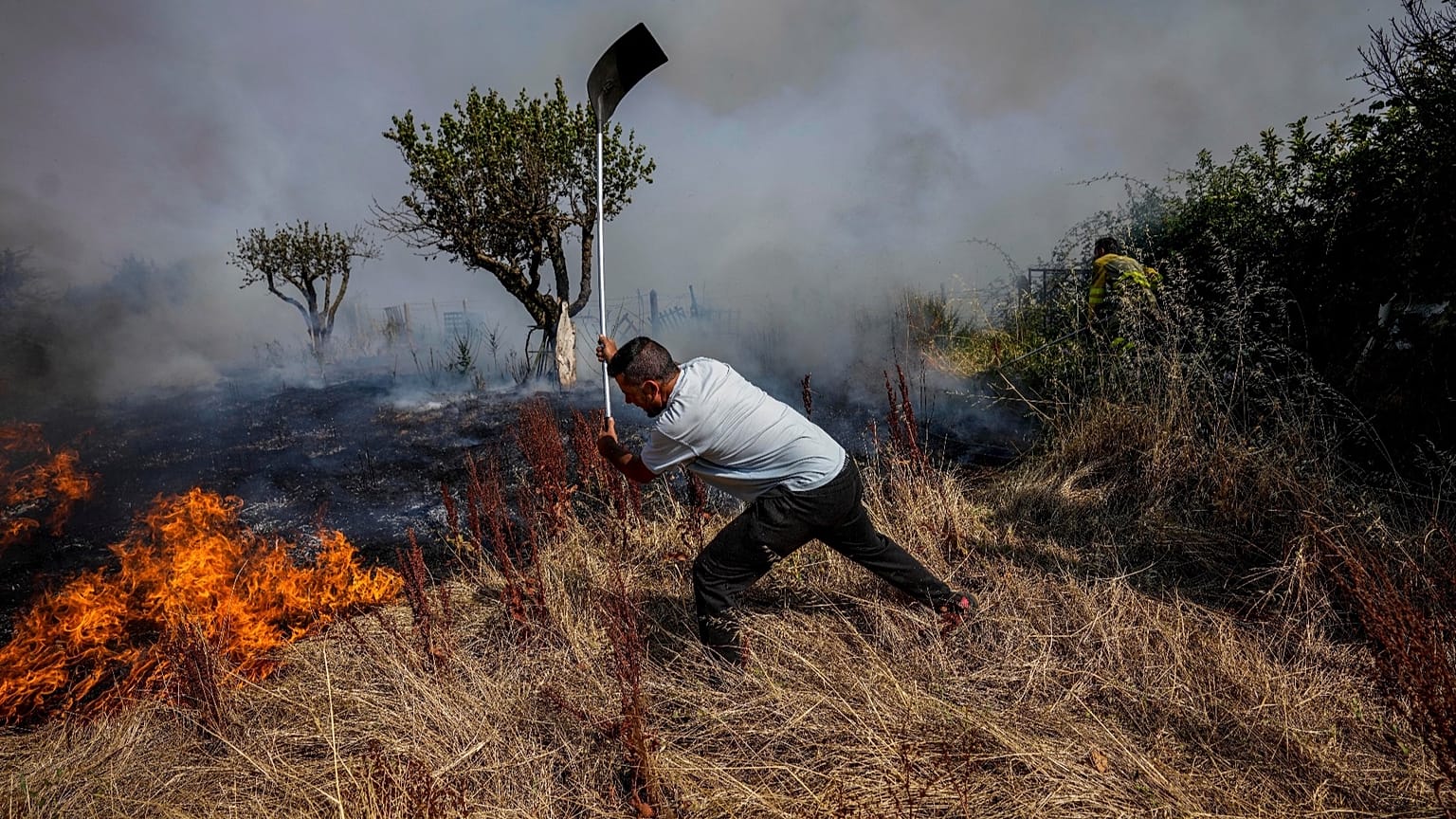
A local resident fights a forest fire with a shovel during a wildfire in Tabara, north-west Spain, July 19, 2022.
Copyright Copyright 2022 The Associated Press. All rights reserved.

By Liam Gilliver & Craig Saueurs
Published on

From rising sea levels to food systems fuelling climate change – experts have laid out 10 insights that require urgent action.

Past emissions have already “locked in” future climate impacts – but the scale of this damage still depends on what action we take right now, according to a major new study.

The 10 New Insights In Climate Science report is produced by more than 70 scientists from nearly 30 countries and aims to translate complex research into accessible, concise insights to “inform high-stakes decisions”.

Published today (6 October) it warns that the overshooting of 1.5°C, as set out in the legally binding Paris Agreement, carries “rapidly escalating risks of irreversible impacts” for our oceans, glaciers and permafrost – and that the economic and social costs of doing so are greater than previously understood.

10 insights to prevent further climate damage

“The evidence is unequivocal," says Johan Rockström, director of the Potsdam

Institute for Climate Impact Research, co-chair of The Earth League and a member of the report’s editorial board.

“1.5°C is a limit that we cross at our own risk. Beyond it, the risks of cascading and potentially irreversible climate impacts increase, with every additional tenth of a degree making them more severe.”

The 10 New Insights highlights, created by Future Earth, The Earth League and the World Climate Research Programme, point to a “narrowing window for action” but one that is still open, showing us what is already locked in, what can still be avoided, and where policy can have the greatest effect.

Ocean heat uptake clouds long-term outlook

The ocean continues to absorb record amounts of heat due to human-caused climate change – locking in further warming for years to come.

In August, global sea surface temperatures reached 21.1°C – the hottest ever recorded. Experts warned last year that the planet’s ocean acidification - where the water’s pH is lowered due to CO₂ absorption - entered the danger zone for the first time.

The new report says deep cuts to greenhouse gas emissions are “urgently needed” to prevent further long-term heat accumulation.

“The ocean has been our planet’s shock absorber,” says Wendy Broadgate, Global Hub Director at Future Earth and a member of the report’s editorial board.

“Because heat takes decades to penetrate ocean depths, today's emissions effectively lock in further warming and sea level rise. Deep, rapid emissions cuts are the only way to limit these risks.”

Sea levels keep rising

Melting glaciers and ice sheets are driving rising seas, putting more people at risk of severe flooding.

The report warns that some sea-level rise is already irreversible due to the impact of past emissions, but the magnitude of this still depends on how quickly the world acts to cut greenhouse gases.

Freshwater sources are getting scarce

Water gaps are widening as continental drying – the long-term, large-scale decline in freshwater availability and water storage – accelerates. According to the UN, By 2030, one-in-two people are expected to face severe water shortages.

“Climate change and growing water use are causing the rapid loss of freshwater across continents, threatening water security, ecosystems, and food production,” the report says.

“The consequences of inaction extend from threats to local livelihoods to cascading impacts across the Earth system.”

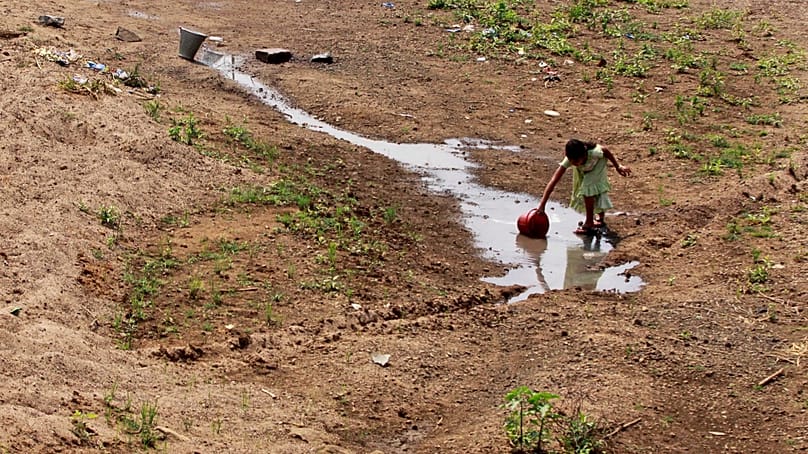
n this Tuesday, April 2, 2013 photo, a village girl collects water from the dried “Bada Nadi” river near Bhanjanagar.
n this Tuesday, April 2, 2013 photo, a village girl collects water from the dried “Bada Nadi” river near Bhanjanagar. Copyright 2013 AP. All rights reserved.

Governments are being encouraged to develop holistic water management plans, known as Integrated Water Resource Management, that take into account the entire water cycle: from source to distribution, treatment, reuse and return to the environment.

Nature-based solutions such as restoring wetlands, rivers and forests can also help capture fresh water that remains on land, rather than letting it dry up or run straight into the ocean.

Impacts of overshooting 1.5C

A recent report from the United Nations Environment Programme (UNEP) warned that global temperature rise will exceed 1.5°C, likely within the next few years. This would accelerate much of the environmental degradation the natural world is already experiencing, from shrinking ice sheets to rising sea levels and “unprecedented dieback” of coral reefs and rainforests.

The UNEP says that there are “no good outcomes if we remain above 1.5°C” and that governments must focus on making the overshoot as small and short as possible.

Food systems still fuel climate change

The report says that transforming food systems, particularly through more plant-rich diets, can deliver major benefits for climate, biodiversity and health, but they must be done “carefully and fairly”.

Globally, food and agriculture contribute one-third of total greenhouse gas emissions, second only to burning fossil fuels – and meat has been identified as the main culprit.

In fact, animal-sourced foods make up between 81 and 86 per cent of total greenhouse gas emissions from EU food production, despite only supplying an estimated 32 per cent of calories and 64 per cent of protein.

According to the carbon footprint calculator CO2 Everything, one 100g serving of beef is equivalent to 78.7 km of driving, releasing 15.5 kg CO2 equivalent.

Understanding the ‘social cost’ of carbon

Experts warn that the economic damages caused by carbon emissions are "substantially higher” than previously estimated – adding that every extra tonne of CO2 carries “additional risk”.

“Using more realistic, up-to-date climate models reveal a social cost of carbon up to four times higher,” the report says.

Strengthening claims for compensation

Advances in science have made it possible to trace climate impacts back to the emissions that caused them.

That means scientists can now link a single company or major emitter to warming – and perhaps even to specific losses or damages.

Moving forward, this extra evidence could strengthen climate litigation and demands for compensation.

‘Climate clubs’ can help industries clean up their act

‘Climate clubs’ made up of countries working together on climate and trade policies can create a collective force to cut down on carbon emissions.

These so-called clubs can rally behind carbon border taxes that prevent companies from off-shoring to places with weaker climate policies, for example – a problem known as ‘carbon leakage’.

But there’s a caveat. While climate clubs can accelerate industrial decarbonisation, they can also have a punitive effect on developing countries that lack the tools, money or technology to cut emissions.

That’s why the authors suggest that wealthier nations may need to combine tougher rules with technical or financial support for other economies.

Climate obstruction is getting harder to spot

Progress is being derailed by more than just denialism.

The report says that carbon-heavy industries are holding back effective policy not just by denying climate change exists anymore. Lobbying efforts now also include a bevy of subtler tactics, from greenwashing to the digital spread of disinformation.

To combat this more deceptive form of climate obfuscation, the report calls for greater transparency in lobbying and political donations, stronger rules against making misleading environmental claims and coordinated action against disinformation.

Conflict creates unequal energy transitions

Wars, trade disputes and fierce competition over energy sources are complicating the global push to decarbonise.

Energy security concerns, like those caused by the war on Iran and the war in Ukraine, have not been met with one universal response. While many wealthy countries have invested in renewables as a buffer against shocks in the oil and gas markets, others have doubled down on fossil fuel production or sought new sources overseas.

The report explains that global instability could make the energy transition more unequal than it already is.

Some blocs of nations could wall off neutral or politically unstable nations, ultimately slowing the global efforts to transition away from fossil fuels. And since more often than not, the most vulnerable suffer from price spikes, the authors add that there is valid reason to be concerned about climate justice in the future.


Climate change driving child marriages and teen pregnancies, study finds


The charity Plan International said on Monday that global warming has increased the risk of child marriages, teenage pregnancies and violence against girls. Its report coincides with talks in the South Pacific nations of Fiji and Tuvalu, where climate change is affecting all aspects of daily life.


Issued on: 05/10/2026 - RFI

Climate disasters such as floods, droughts, cyclones, and extreme heat are destroying the health and education services girls depend on. © Flickr/CC/Ab Rashid

Climate disasters such as floods, droughts, cyclones, and extreme heat are destroying the health and education services girls depend on while also forcing families to marry off young daughters as a "survival strategy", Plan International said.

The charity's report – Change Her Forecast, the State of the World's Girls 2026 – was based on interviews with 5,000 girls and young women aged between 15 and 24 in Bangladesh, Kenya, Peru, Senegal and Zimbabwe.

It said one in 10 girls reported an unintended pregnancy "following a climate-related event" and 33 percent reported an increase in unintended pregnancies in their community.

"Nine in 10 girls said climate-related events were placing serious pressure on their family's survival, health, and stability," according to the report, released ahead of the international day of the girl child on 11 October.

Some 28 percent said they had witnessed an increase in violence against women following climate related events.

The figure rose to 60 percent in Zimbabwe, which has been severely hit by rising temperatures blamed on human activity.

"Slow-onset drought destroys the household economies that keep girls out of marriage," said Plan International.

"Across 52 countries and three decades, prolonged drought emerged as the hazard most consistently associated with rising rates of child marriage and early unions, as families lose harvests, livestock, and income over months and years until marrying a daughter becomes a survival strategy."

Plan International said countries had to allocate "a defined share of climate adaptation finance to adolescent girls' health, including sexual and reproductive health services."
Heatwaves and rising seas

The United Nations climate chief on Monday also pointed to health problems linked to climate change, notably extreme heat.

Highlighting the need for urgent action, Simon Stiell cited a new survey showing more than two-thirds of health professionals across five continents had seen complications caused by intense heat in the past five years.

"Climate-driven extreme heat during pregnancy is increasingly linked to premature birth, stillbirth, low birth weight, and maternal complications," he told delegates at the UN "pre-Cop" gathering, which kicked off in the Fijian city of Nadi.

The talks are a precursor to Cop31, the larger UN global climate summit, to be held next month in Turkey.

Fiji urged developed nations to back a just transition to renewable energy and support those most vulnerable to climate change.

The South Pacific is among the most vulnerable regions in the world to global warming – from rising sea waters jeopardising homes to increasing temperatures causing coral bleaching.

Fiji's climate minister Lynda Tabuya called for commitments from developing nations to a "just transition", with support for "countries in the world that suffer the most".

A UN report released in August found developing countries needed $310 billion-$365 billion to adapt, yet had only $26 billion in adaptation finance available in 2023.

Up to 1.2 billion people could be displaced by 2050, with Pacific island countries experiencing sea level rise at twice the global average, according to the report.

"We rely on and we appeal to countries to commit to climate finance," Tabuya said.

(with AFP)
Evicted pensioner who sparked Spain housing protests dies: tenant union

Madrid (AFP) – An 87-year-old Madrid woman whose eviction triggered nationwide protests over Spain's chronic housing crisis and a political debate that culminated in early elections died on Wednesday, a tenants' union said.


Issued on: 07/10/2026 - RFI


As in other European countries, housing has long been a top concern in Spain © Manaure Quintero / AFP


"We are sorry to announce that Maricarmen passed away today," the Madrid Tenants' Union said in a statement about Maricarmen Abascal, adding that her cause marked "a turning point in the history of this country".

Abascal became a symbol of Spain's housing market on September 23 when she was evicted from her life-long Madrid home on a stretcher after the real estate firm that owned the apartment drastically hiked the rent.

Outrage at her eviction triggered national demonstrations, with hundreds of people camping in Madrid's Puerta del Sol square in the most symbolic of the protests.

The movement piled pressure on the minority leftist government to present urgent housing measures, including more restrictions on evictions and the automatic renewal of tenant contracts.

But their rejection in parliament last week prompted Socialist Prime Minister Pedro Sanchez to call a snap election for November 29 in which housing will feature prominently.

"The housing debate is at the centre, but the cost to get here has been too high," the tenants' union said of the election, originally due in 2027.

Abascal had been hospitalised with exhaustion after her eviction, but a deal had been reached with the company that owned her flat allowing her to return home.

"This solution has come too late. A totally avoidable situation after a torturous process," added the tenants' union.

© 2026 AFP


Sánchez announces 21 urgent housing measures after nationwide protests ahead of snap election

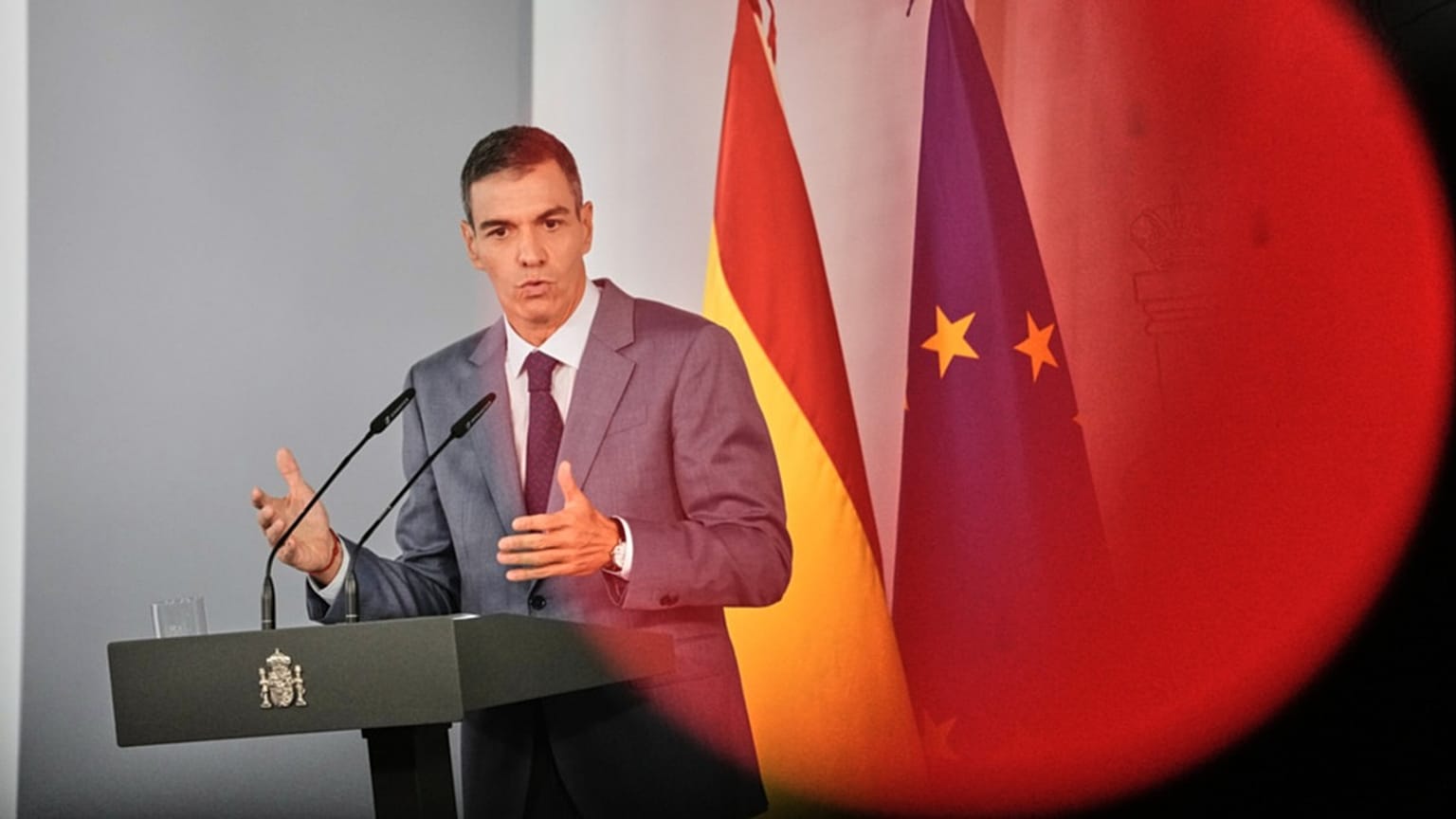
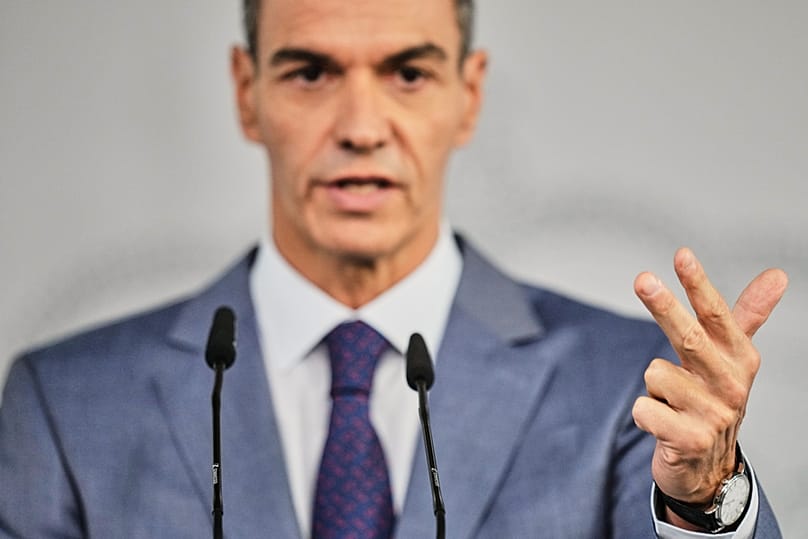
Spain's Prime Minister Pedro Sanchez speaks during a press conference at the Moncloa Palace in Madrid, Tuesday, Oct. 6, 2026
Copyright AP Photo

By Malek Fouda
Published on

Sánchez has come under fire domestically after an 87-year-old woman was evicted from her residence in Madrid, sparking national controversy. Pressure have piled on Sanchez’s administration to step down as protesters accused the government of not doing enough to tackle a rampant housing crisis.

Spain’s government approved urgent measures to tackle the housing crisis on Tuesday after violence erupted in Barcelona and tens of thousands took to the streets demanding a quick resolution.

The angry protests followed nationwide demonstrations over the weekend. All were triggered by the eviction of 87-year-old María del Carmen Abascal from her Madrid home last month.

The approved steps were similar to those Parliament rejected last week.

Spain's Prime Minister Pedro Sanchez speaks during a press conference at the Moncloa Palace in Madrid, Tuesday, Oct. 6, 2026
Spain's Prime Minister Pedro Sanchez speaks during a press conference at the Moncloa Palace in Madrid, Tuesday, Oct. 6, 2026 Bernat Armangue/Copyright 2019 The AP. All rights reserved

Prime Minister Pedro Sánchez's coalition government lacked a majority and suffered a bruising legislative defeat when right-wing opposition parties voted down emergency decrees to address the housing crisis. He has called an early election for 29 November in response to the pressure.

The 21 approved measures include facilitating renting or buying a new home, extending eviction protections for vulnerable residents, regulating room rentals, imposing a new tax on seasonal rentals, prohibiting speculative real estate purchases, and granting tax breaks to property owners and tenants who pay on time.

“We will not allow any more evictions like the one Maricarmen suffered or like those that have occurred since the decrees were repealed,” Sánchez told reporters at the Presidential Palace, referring to Abascal by her nickname.

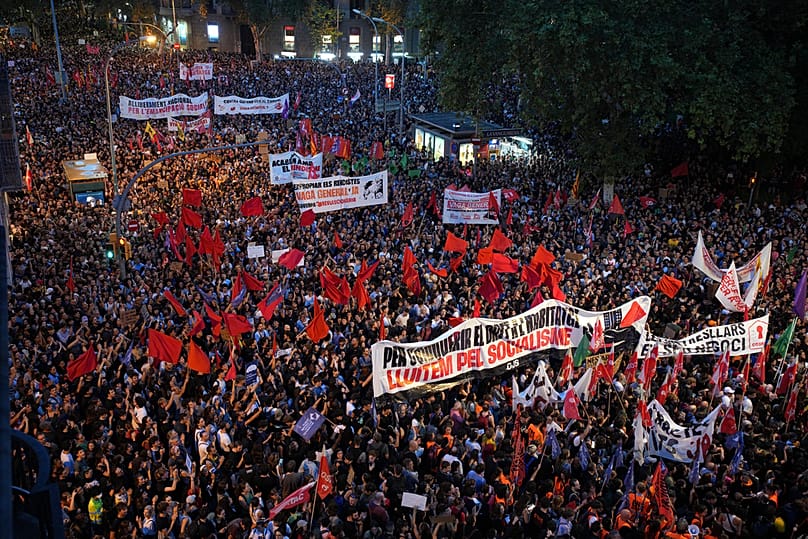
Tens of thousands march protesting the housing situation in Spain just hours after Pedro Sánchez announced an early general election, in Barcelona, Spain, Monday, Oct. 5, 2026
Tens of thousands march protesting the housing situation in Spain just hours after Pedro Sánchez announced an early general election, in Barcelona, Spain, Monday, Oct. 5, 2026 Emilio Morenatti/Copyright 2026 The AP. All rights reserved

The government will also set up a €10 billion fund to provide loans of up to €50,000 to buy a first home, as well as construction subsidies, added the Spanish premier.

The steps will need to be ratified by an interim legislature instead of the Parliament, which was dissolved after a call for a snap election. It consists of 69 members rather than the 350 that sit in the regular Parliament. Sánchez's coalition will need just 35 votes to pass the measures.

The prime minister still asked for opponents' votes, saying: “We are not talking about an ideological issue, but about common sense.”

“Many Spaniards are waiting for solutions, not just those gathering in town squares, nor the thousands of protesters in the streets. I’m referring to millions of citizens who are waiting for their representatives to show the courage to stand up to the powerful, rather than submit to them,” he said.

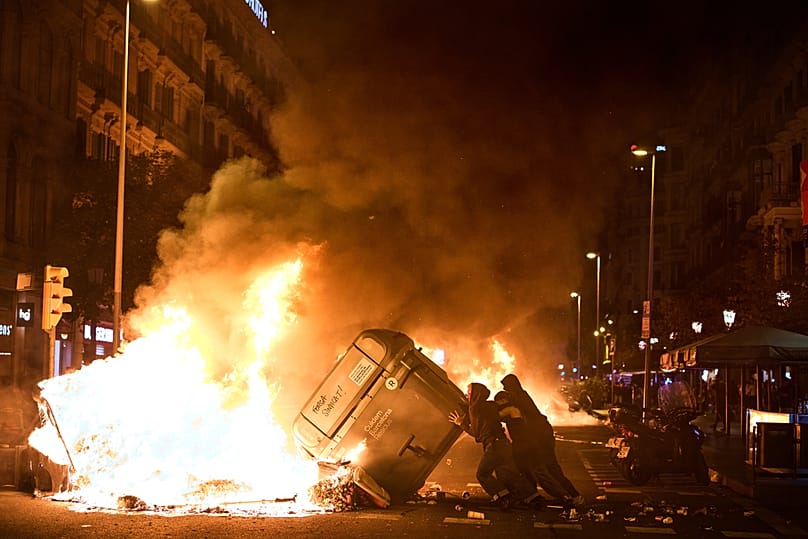
Protesters set trash cans on fire during clashes with police in a protest over Spain's housing crisis hours after Sánchez announced a snap election, in Barcelona, Oct. 5, 2026
Protesters set trash cans on fire during clashes with police in a protest over Spain's housing crisis hours after Sánchez announced a snap election, in Barcelona, Oct. 5, 2026 Emilio Morenatti/Copyright 2026 The AP. All rights reserved

Protests turn violent in Barcelona

In Barcelona, Spain’s second-largest city, a severe weather alert over the weekend had forced organisers to reschedule the protest for Monday.

What began as a massive peaceful march turned violent when groups of hundreds of hardcore activists clashed with police, throwing stones and setting fire to trash containers.

Alejandro Quiroga, professor of political science at Madrid’s Complutense University argued that having decrees approved by the interim legislature was constitutional but also a necessary political move by Sánchez.

A protesters holds a USSR flag next to trash cans on fire during clashes with police in a demonstration over Spain's housing crisis, in Barcelona, Spain, Monday, Oct. 5, 2026
A protesters holds a USSR flag next to trash cans on fire during clashes with police in a demonstration over Spain's housing crisis, in Barcelona, Spain, Monday, Oct. 5, 2026 Emilio Morenatti/Copyright 2026 The AP. All rights reserved

“I don’t think Sánchez had an alternative,” said Quiroga. “If you are calling early elections so you can keep the public’s focus on housing, you can’t just sit back and do nothing about it. That wouldn’t have been smart.

Rising costs and a housing shortage are pricing many Spaniards out of the housing market, despite strong economic growth in Europe’s fourth-largest economy.

The protesters have been demanding stronger tenant protections, measures to combat fraud, and a ban on evictions when alternative housing is unavailable.