Wednesday, October 07, 2026


Shots Fired at Chinese Containership in the Red Sea
containership
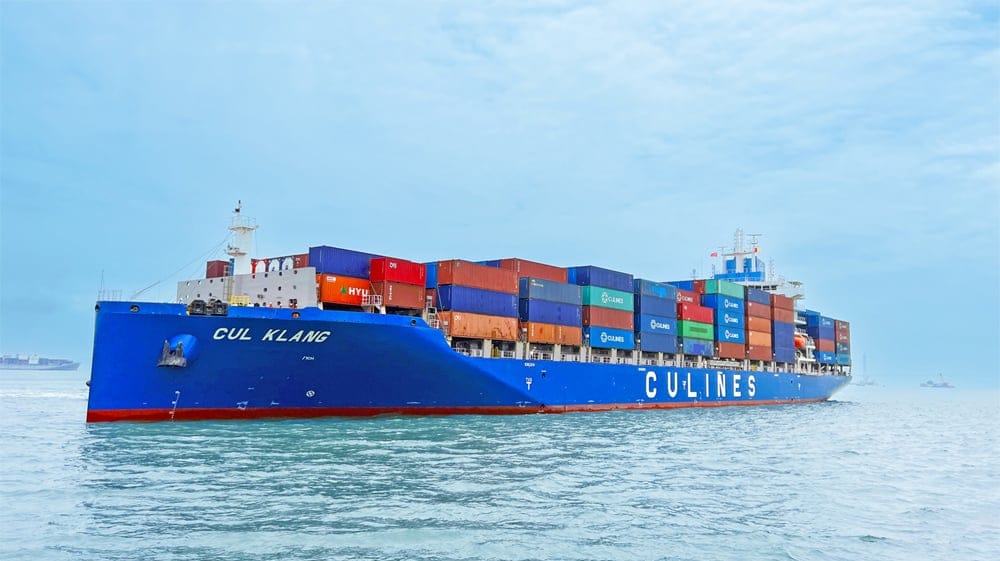
Security reports are indicating the Singapore-flagged CUL vessel was shot at in the southern Red Sea (CUL Lines file photo)

There were reports of a new incident in the southern Red Sea early on Wednesday, October 7, although the details are unclear and there were no claims of responsibility. It comes as fighting is intensifying along the coast of Yemen as Saudi and government forces are clashing with the Houthis while attempting to reclaim areas lost in the recent fighting.

MSCIO, the EU-sponsored Maritime Security Centre Indian Ocean, received reports of a small boat harassing a passing containership. The vessel said that shots had been fired by a small craft while it was transiting the southern Red Sea in the area north of the Bab el-Mandeb. The small craft was reported to have subsequently moved away from the area, and the containership was continuing its northbound passage through the Red Sea. The crew was uninjured.

The ship is being identified by security consultants as the Singapore-flagged CUL Klang (35,300 dwt). Delivered in 2024, the ship is operated by the Chinese CUL Lines, which maintains routes to the Mediterranean, Middle East, and intra-Asia. The vessel has a container capacity of 2,433 TEU and is displaying a message on its AIS that reads “China owned&CHN crew.”

In the past, reports have indicated that some of the small boats might be fishing boats in the region and simply acting to protect their boats and fishing nets. The Houthis have said they would be only targeting ships linked to Saudi Arabia, further raising doubts that they would target a Chinese container vessel. Their forces are also engaged in a series of clashes with Saudi-backed forces and those aligned to the internationally recognized government of Yemen.

Yemen’s Homeland Shield Forces, a pro-government military faction, had announced that it was part of a “large-scale offensive” in the area around al-Waziya in the mountainous Taiz region. Other reports of fighting were along the coast south of Mocha. There were reports of strong fighting around Dhubab, located to the south of Mocha and near the Bab al-Mandeb.

The Sudi forces reported on Tuesday they had retaken Mocha and key parts of the coastline. They claimed to once again be in control of the Bab el-Mandeb, but today there are conflicting reports, with both sides claiming to have retaken strategic parts of the coastline.

The Houthis claimed to have also launched a series of missile attacks into Saudi Arabia. There were confirmed reports of strikes at or near the airports in Abha and Riyadh. Associated Press reports that three people were killed at the two airports and a total of at least 30 people were injured.

Saudi forces claimed to have downed additional missiles launched toward Saudi Arabia. They also said they had struck a launching platform in Sana, Yemen.


If it was an organized attack by the rebels on shipping, it would be the first confirmed incident in days. UK Maritime Trade Operations received a report from a tanker on October 4 of multiple explosions near the vessel while it was sailing south of the Bab el-Mandeb in the Gulf of Aden. There were several other reports in the Gulf of Aden earlier in September, but the last report of an incident in the Red Sea dates to late August, when a tanker was struck off the Saudi port of Yanbu.


Saudi Bypass Pipeline Quickly Rebounded After Attack, Export Data Shows
Copernicus
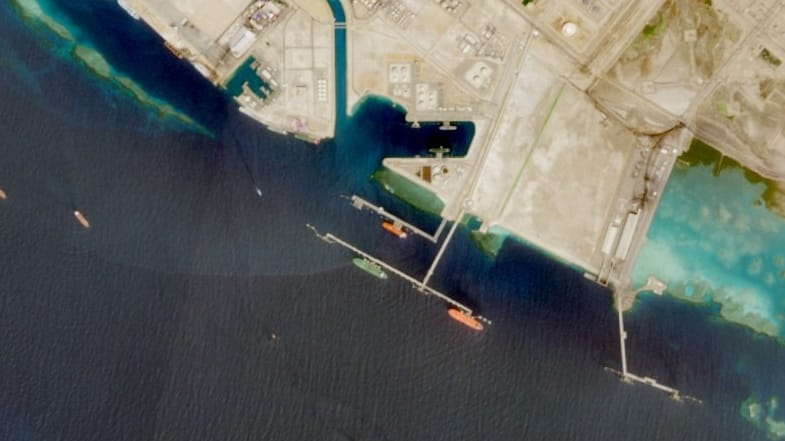
Tankers at the loading piers at Yanbu, as seen from space, October 5 (Copernicus / Sentinel-2)

Published Oct 6, 2026 11:17 PM by The Maritime Executive


Operations at Saudi Arabia's Red Sea loading terminals have rebounded more swiftly than expected, according to a new analysis from Kpler. The consultancy found that with the East-West Pipeline restored to service, loadings from the two main Aramco terminals on the Red Sea came in at about 45 million barrels in total from September 17 through October 4 - an average of about 2.5 million barrels per day over the period.  

Tstrong showing reflects Aramco's ability to rapidly circumvent or repair damaged pumping stations on the pipeline route. Three stations were hit in a suspected Iraqi militia strike on September 11, temporarily disabling the line. But the line was reactivated in less than a week, and flows are already back up to 5.8 million barrels per day, Saudi Energy Minister Prince Abdulaziz bin Salman told an audience at the Energy Intelligence Forum, per Kpler Mideast chief Amena Bakr. This volume approaches the 7 million bpd average that Aramco sustained in the months prior to the attack, and it would be sufficient to supply Saudi Red Sea refineries and export terminals alike.  

The rebound at Yanbu is key to Saudi Arabia's success in restoring its oil trade, despite the Iranian blockade of the Strait of Hormuz.  According to Standard Chartered, Saudi oil exports hit nearly 7 million barrels per day in September, up from 2.5 million bpd the month before. In addition to the volume shipped through the pipeline, Aramco substantially increased tanker loadings at its core Arabian Gulf terminals, dispatching more crude through the strait despite security concerns. 

Iran has substantially accelerated its campaign of attacks on energy shipping in the strait, and has hit 12 tankers and gas carriers in the last seven days alone. Still, despite the deteriorating security environment, tanker operators have been moving about 10-14 million bpd of petroleum out of the Strait of Hormuz alone in recent days, Vitol CEO Russell Hardy said at the EI Forum on Tuesday. That supply is critical for pricing, he said. "Without it, you do have that $200 per barrel scenario," he told Reuters. 

Quick Action Stops OSV From Sinking at Dock in the Netherlands

OSV
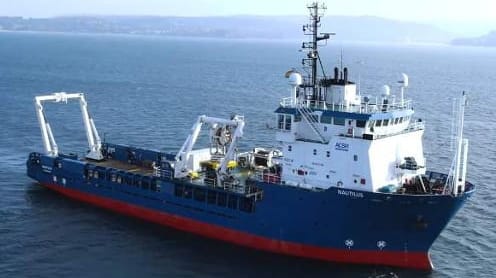
The Spanish-flagged OSV reported it was taking on water as it docked in the Netherlands (ACSM Ships)

Published Oct 6, 2026 9:12 PM by The Maritime Executive

The harbor master and local emergency services are reporting that a quick, coordinated action on Monday evening prevented a Spanish-flagged offshore support vessel from sinking at the dock in Eemshaven in the Netherlands. The vessel Nautilus reported that it was taking on water as it was returning to the Dutch port around 18:30 on October 5.

The local emergency service, Veiligheidsregio Groningen, scaled the incident to a Level 1 emergency, reporting the vessel was clearly sinking with the forward section sitting lower in the water. It believed the ship was in danger of going under at its dock. The police and fire departments responded, with the harbor master organizing a rescue.


Built in 2001, the Nautilus is a 73-meter (239-foot) OSV used to support the offshore wind energy industry. Dutch broadcaster RTV Nord quoted the local authorities saying the water was entering the ship through the engine room. They believed it was a leak from a valve. 

It did not specify how much water had entered the ship or the rate of flooding. However, the ship was ordered evacuated, and two crewmembers were checked by an ambulance for minor injuries. The Dutch national waterways authority responded, placing an oil containment barrier around the vessel as a precaution in case it sank at the pier.

Within less than an hour after the first report, a follow-up said an emergency team from a private salvage company was aboard the vessel. In addition, two tugs were positioned alongside to further secure the vessel. 

Unconfirmed reports said the vessel lost power, further complicating the salvage efforts, but the salvage crew was able to pack off the leak and stop the entry of water. By 23:00, the harbor master was reporting the water ingress had been stopped. Pumping was underway, and the report said the vessel was rising.


Japan Launches First Vessel Sanctions in Support of Ukraine

tanker at sea
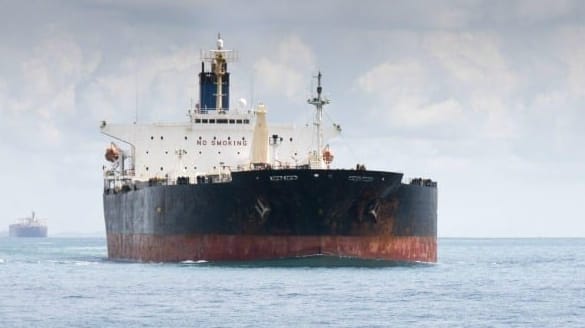
Japan sanctioned 31 tankers in its first ever vessel specific sanctions (file photo)

Published Oct 5, 2026 6:18 PM by The Maritime Executive


The Japanese government announced a package of sanctions at the end of last week designed to target Russian trade, which included its first-ever vessel sanctions. According to the government, it was imposed for the purpose of contributing to the international effort for achieving peace.

The move was seen as an effort by the Japanese government to further align with the West. The package included 35 vessels as well as 33 entities and nine individuals. Japanese companies are required to obtain permission for payments to the individuals or entities and for capital transactions.

In addition to specific restrictions on exports to the Russian Federation and Belarus, Japan targeted several other companies seen as supporting the Russian war efforts. It included four companies in Turkey and the UAE.

The vessel sanctions targeted a network based in Oman by including 13 crude oil tankers registered in Oman. It also targeted 17 vessels flagged in Russia, mostly crude oil tankers, but also a product tanker and four RoRos or cargo vessels. The vessel sanctions also included five tankers that are identified as having a false flag or no known registry.

Japan provided a temporary exclusion for contracts that had been entered into before October 2. It, however, only gave the companies a month, until November 1, to complete previous contracts. The sanctions include elements such as services or repairs to the vessel as well as a prohibition against providing insurance or any other supporting services.

The sanctions, however, did not extend to Russia’s gas operation. Japan has been an importer of Russian gas, although the government reports it is working to transition to other sources. Last week, the UK, while extending sanctions to Russia’s newest gas carriers, noted that it was maintaining an exclusion for Japan as well as Korea. It said that Japan had committed to $20 billion in financial aid to Ukraine to be used to rebuild infrastructure, along with a recent $100 million aid package for Ukraine from Korea.


Bulgaria calls off search for 10 missing sailors after drone attack sinks cargo ship


By Simon Ormiston & Anna Kirchheim
Published on

A second vessel hit in the same strike is still on fire and expected to go down, as Bulgaria's president convenes her national security council.

Bulgaria has called off the search for the 10 crew of a cargo ship sunk in a drone attack in the Black Sea, after finding no trace of the sailors.

The operation ended at 5pm local time (4pm CET) on Tuesday and will not resume, Rumen Nikolov, head of rescue operations at Bulgaria's Maritime Administration, told reporters in Varna on Wednesday.

Searchers found three life rafts and an overturned lifeboat from the 83-metre long Alfa Watan but no one from its crew, he said, adding that no trace of the sailors was likely to be found.

The second ship hit in the attack, the Able, will probably sink as well, Nikolov said, according to shipping news site Maritime.bg. Its engine room flooded after a sea drone struck the stern, it is sitting heavily down at the stern and it was still burning on Wednesday morning.

Pollution in the area is minimal, he said.

Bulgaria President Iliana Iotova has convened the country's national security council to discuss maritime security.

All 18 of the Able's crew, 11 Turkish and seven Indian, were rescued by the Bulgarian ferry Dioscuria and are now in Varna. Two were hospitalised, one with burns and one with a head injury.

Sea and aerial drones hit the ships at about 3am local time (2am CET) on Tuesday, around 70 nautical miles east of the town of Byala in Bulgaria's exclusive economic zone, Bulgarian Prime Minister Rumen Radev said.

The crew of the Dioscuria, which was in the area, saw an explosion on the first ship and rushed to the scene, Radev confirmed. They found an overturned lifeboat and life jackets but no one from the crew.

Radev said two helicopters were sent to Varna to pick up rescue teams and a Su-25 aircraft was deployed to carry out aerial reconnaissance over the area.

Both vessels had sent distress signals during the night and one disappeared from Border Police radar at about 9am local time (8am CET) on Tuesday, public broadcaster BNR reported.

Both vessels are Turkish-owned, according to the Equasis merchant shipping database and it is believed to be the first attack on shipping in Bulgaria's exclusive economic zone.

Ship tracking website vesselfinder.com shows the Alfa Watan was sailing under the flag of Togo and was headed for the Romanian port of Sulina.

The second ship was carrying wheat and sailing south, Radev said. The cargo of the sunken Alfa Watan is not yet known.

Radev, who called the attack "absolutely unacceptable", did not say who launched the drones, while European Commission President Ursula von der Leyen called the developments "concerning".

Three attacks on civilian shipping in the Black Sea within two days

Tuesday's attack occurred the day after a Turkish-owned cargo ship carrying grain from Ukraine to Italy was attacked off Romania's coast in the Black Sea by at least one drone and sank after catching fire, killing two crew members.

Azerbaijan's Foreign Ministry said the ship's captain, Azerbaijani national Rustam Ismayil oglu Hasanov, died and his body was being repatriated. A second Azerbaijani crew member, Mahammad Hamza oglu Suleymanzade, is still missing and the search and rescue operation is ongoing. Azerbaijan's Foreign Ministry said their families were informed and they were receiving logistical and financial support.

11 other crew members were rescued by the Romanian authorities. Three Azerbaijani sailors and one Indian crew member among them are receiving emergency medical care in Romania.

Azerbaijan's Foreign Ministry explicitly reiterated its urgent warning to Azerbaijani citizens to refrain from travelling to active conflict zones, working in high-risk areas, or taking employment on transport vessels operating along contested maritime corridors.

Ukraine's President Volodymyr Zelenskyy blamed Russia for yesterday's sinking of the cargo ship and called it "a horrific strike by two Russian drones on a civilian vessel" in neutral waters.

India condemned Tuesday's attack as part of the crew members were Indian nationals. The Indian Foreign Ministry released a statement saying that "India views these attacks on commercial shipping and seafarers with grave concern," adding that "the targeting of traffic in international waterways is severely undermining global commerce and welfare of people across the world."


Bulgaria Suspends Search for Missing Crew as Russia Denies Attack

cargo ship Alfa Watan
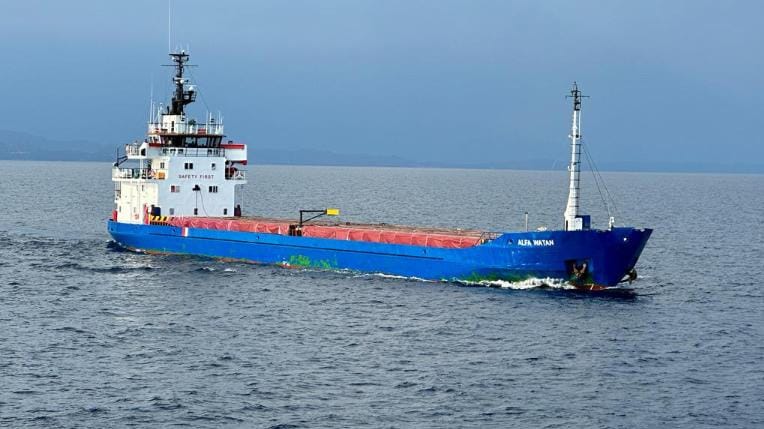
Alfa Watan was lost will all hands (Photo in 2023 by Alkhdair - courtesy of Vessel Finder)

The crew of a small Turkish cargo ship struck early Tuesday morning, October 6, off the coast of Bulgaria has not been located, and based on the results of the search, Bulgaria ended the search. Officials told the media in a briefing on Wednesday about the two attacks, that they believe the cargo ship Alfa Watan (3,200 dwt), registered in Tonga, sank in a matter of minutes, and that they were continuing to monitor the second vessel, Able (7,400 dwt), which has been abandoned in the Black Sea.

Multiple agencies from Bulgaria, aided by Romanian aircraft, searched the Black Sea approximately 70 miles east of the Bulgarian coast. Another cargo ship, Mercy, flagged in St. Kitts and Nevis, also diverted to the area to aid in the search. 

The authorities said they had received a signal from the Alfa Watan’s distress beacon at around 02:30 local time. Initial reports said they had located an overturned lifeboat, three rafts, and various debris. There was no sign of the crew, and the search was unable to locate any traces of the crew.

Bulgarian authorities have declined to comment on the specific number of seafarers who were lost, but media reports are saying there were between 10 and 12 crew, likely all from Syria. The ship, which was built in 1976, was owned by a Turkish company and was sailing into the Black Sea.

The second ship that was hit yesterday, another Turkish-owned general cargo ship, Able, registered in Palau, continues to draft after the evacuation. The Chief Director of Bulgaria’s Maritime Administration Agency, Rumen Nikolov, reported that the ship had issued a distress call around 03:30, with the crew reporting they were preparing to evacuate the ship.

Nikolov reported the ship was struck in the stern and that a large fire had resulted. The captain suffered a head injury but was released from the hospital. The chief engineer was severely burned and is in a hospital. The other crewmembers received a medical check and are in a hotel in Varna.

The authorities reported that the Able is low in the water at the stern. Nikolov set the odds at 90 percent that he believed the ship would sink in the coming hours.

Russia’s embassy in Bulgaria told Reuters that the two ships were not on the Ministry of Defense’s target list. It cautioned that an investigation was needed to identify the source of the drones that struck the two ships.

The Maritime Administrator in Bulgaria, however, said the ship was outside the country’s direct responsibility and that they were not planning an underwater search. He did not comment on whether any debris from the drones had been recovered.

Bulgaria’s president, Illiana Votova, however, convened the National Security Advisory Council to map out steps to increase security in the region. She said Bulgaria would be working with Romania and Turkey to strengthen safety measures for merchant shipping while also calling on both Russia and Ukraine to stop the attacks on merchant shipping in the Black Sea.


Top photo from 2023 by Alkhdair - courtesy of Vessel Finder


Bulgaria Says One Crew is Missing and Second Rescued After Drone Attack

Bulgarian patrol boats
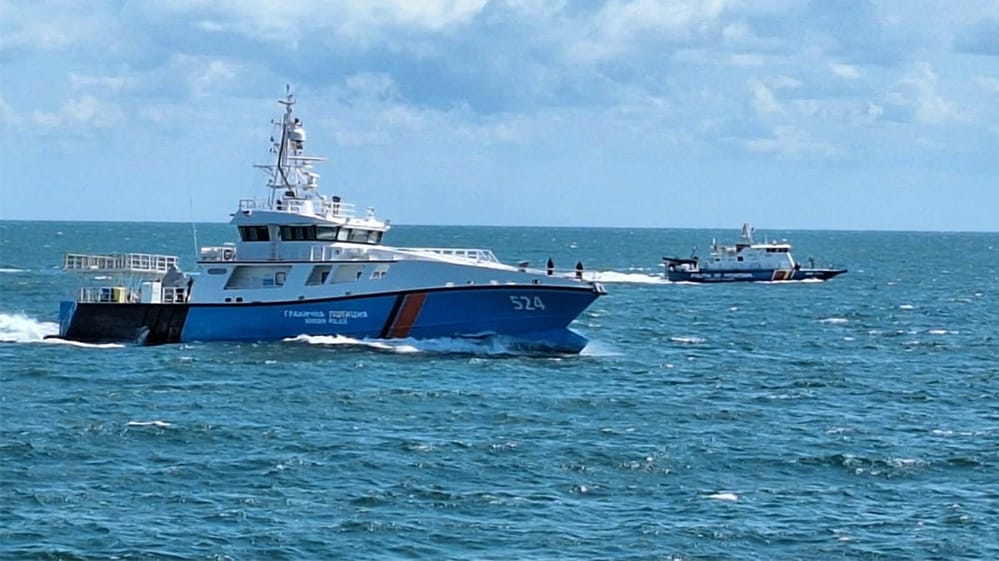
Bulgaria was continuing to search for the missing crew of the vessel that was believed to have sunk after the attacks (Bulgarian Border Police)

Bulgarian officials are denouncing the attack on two small cargo ships in the Black Sea while reporting that the crew of one vessel is missing. The reports said the two ships were attacked overnight, with 18 seafarers rescued and a search and rescue operation continuing.

Bulgaria's Prime Minister Rumen Radev convened a special meeting of the government, and he called the attacks “absolutely unacceptable” and a “gross violation of international law.” He declined to officially state who had attacked the ships, but reports are widely attributing the strikes to Russia, a charge repeated by Ukrainian President Volodymyr Zelensky in a posting on social media.

“If this war is not ended in time, it will continue to expand its spatial scope and increase the risk of even a global conflict,” said Radev. He pointed out that Bulgaria does not border Ukraine or Russia and lies at a critical point in the Black Sea, more than 140 nautical miles from Ukraine.

According to the reports, the Bulgarian ferry Dioscuria was in the area approximately 70 nautical miles east of Byala in the eastern part of Bulgaria when the attacks took place. Bulgarian officials said the strikes were attacks by air and sea drones.

The ferry’s crew saw an explosion and headed to the area, which officials emphasized was in Bulgaria’s EEZ. The Navy, Air Force, and Border Police also responded.

The ferry crew reported seeing an overturned lifeboat, three rafts, and life jackets in the water but was unable to locate any crewmembers. The ship, which is being identified as the Turkish-owned Alfa Watan (3,160 dwt), is believed to have sunk. Built in 1976, it is registered in Togo. The ship was sailing from Egypt and bound for Sulina, Romania, according to its AIS transmission.

The Bulgarian forces also responded to a second vessel that was on fire and aided in the rescue of 18 crewmembers from Turkey and India. Two were reported to be severely injured and were transported by the Bulgarian Navy to Varna for medical treatment. The 16 other crewmembers were transported to shore by a border patrol boat.

The second vessel is identified as the Turkish-owned Able. Built in 1991, the ship is registered in Palau and reportedly had a cargo of wheat heading for Italy.

Bulgarian officials reported they are continuing to search for the crew from the first ship. They did not comment on the number of missing individuals.

The reports said it was the first attack in Bulgarian waters, and it was quick to draw international commendation. Hungary’s Prime Minister posted on social media that they would stand with Bulgaria.


Ship sinks after drone attack in Bulgaria's Black Sea zone, crew missing

Ship sinks after drone attack in Bulgaria's Black Sea zone, crew missing
PM Rumen Radev said the attack was "absolutely unacceptable". / government.bgFacebook
By bne IntelliNews October 7, 2026

A cargo ship sank and its crew went missing after drones attacked two merchant vessels in Bulgaria's exclusive economic zone in the Black Sea on October 6, Bulgarian officials said, raising concerns about the widening risks to civilian shipping from the war in Ukraine.

The vessels were attacked by air and sea drones at about 3 a.m. local time, around 70 nautical miles (130 km) east of the Bulgarian coastal town of Byala, Prime Minister Rumen Radev said.

One of the ships, the Togo-flagged Alfa Watan, sank. The vessel was Turkish-owned and was reportedly heading towards the Romanian port of Sulina. Its cargo and the number of people aboard were not immediately clear.

A Bulgarian vessel that went to the scene found an overturned lifeboat, life jackets and rafts but no crew members, Radev said. A search-and-rescue operation was under way.

The second vessel, the grain carrier Able, was hit and caught fire. Its 18 crew members - 11 Turkish and seven Indian nationals - were rescued by the Bulgarian roll-on/roll-off vessel Dioscuria, Radev said. Two crew members, including the captain, were seriously injured and taken to a military hospital in Varna.

"This is an absolutely unacceptable attack, a gross violation of international law and maritime affairs," Radev said at an emergency government meeting, BTA reported.

He said it was not immediately known whether the drones had originated from Russia or Ukraine.

Rising Black Sea risks

The incident comes as attacks on commercial shipping in the Black Sea have increased, with vessels carrying Ukrainian grain among those hit, and as European governments warn of a growing threat from Russian hybrid warfare.

European Commission President Ursula von der Leyen condemned the attacks, saying the situation in the Black Sea was becoming increasingly concerning.

"Commercial ships – and innocent crews – are being targeted, with lives already lost at sea," von der Leyen said on X. "Attacks on civilian shipping are unacceptable."

She noted that the incident came a day after a Turkish ship carrying Ukrainian grain was hit and sunk off Romania.

Radev did not directly blame Russia for Tuesday's attack, but linked the incident to the war in Ukraine.

"As I have long maintained, if this war is not halted in time, it will continue to expand its geographical reach and increase risks, including the risk of a global conflict," he said, according to BNR.

Bulgaria, a NATO member, does not border Russia or Ukraine but occupies a strategically important position on the western Black Sea. Its exclusive economic zone covers more than 29,000 square kilometres.

President Iliana Iotova will convene Bulgaria's Consultative Council on National Security on October 7 to discuss risks to maritime security and critical infrastructure stemming from the war in Ukraine, her office said.

The Bulgarian authorities were also monitoring the sunken vessel and the surrounding area for possible environmental risks, Radev said.

The incident followed a separate attack near Ukraine's port of Odesa in which a Marshall Islands-flagged vessel was reportedly hit, killing one crew member and injuring seven others.


Drones hit two ships off Bulgaria's coast, search and rescue ongoing as one sank


By Simon Ormiston & Anna Kirchheim
Published on

Drones hit two ships off Bulgaria's coast and one of them sank, with the crew missing, the day after another drone attack sank a ship near Romania's shore in the Black Sea, in two consecutive drone attacks on NATO's Eastern flank countries.

A massive search is under way in the Black Sea for the crew of a cargo ship that sank after drones struck two commercial vessels off Bulgaria's coast early Tuesday, the day after another drone attack sank a Turkish grain ship off the coast of Romania, killing 2 crew members.

Sea and aerial drones hit the ships at about 3am local time (2am CET), around 70 nautical miles east of the town of Byala in Bulgaria's exclusive economic zone, Bulgarian Prime Minister Rumen Radev said.

The crew of the Bulgarian ferry Dioscuria, which was in the area, saw an explosion on the first ship and rushed to the scene, Radev confirmed. They found an overturned lifeboat and life jackets but no one from the crew.

Officials have not said how many people were on board, nor the origin of the drones.

A second ship was attacked and caught fire, with all 18 of its crew rescued by the Dioscuria. Eleven are Turkish and seven Indian, according to the televised address from Radev.

Two of them were hospitalised, one with burns and one with a head injury. The other 16 were being brought ashore on a Border Police patrol boat.

Radev said two helicopters were sent to Varna to pick up rescue teams and a Su-25 aircraft was deployed to carry out aerial reconnaissance over the area. The operation is being run by the Maritime Rescue Coordination Centre.

Both vessels sent distress signals during the night and one disappeared from Border Police radar at about 9am local time (8am CET), public broadcaster BNR reported.

Bulgarian shipping news site Maritime.bg named the sunken ship as the Alfa Watan and the second as the Palau-flagged Able. It said the strikes were the first attack on shipping in Bulgaria's exclusive economic zone.

Both vessels are Turkish-owned, according to the Equasis merchant shipping database.

Ship tracking website vesselfinder.com shows the Alfa Watan was sailing under the flag of Togo and was headed for the Romanian port of Sulina.

The second ship was carrying wheat and sailing south, Radev said. The cargo of the sunken Alfa Watan is not yet known.

Radev, who called the attack "absolutely unacceptable", did not say who launched the drones, while European Commission President Ursula von der Leyen called the developments "concerning".

Three attacks on civilian shipping in the Black Sea within two days

Tuesday's attack occurred the day after a Turkish-owned cargo ship carrying grain from Ukraine to Italy was attacked off Romania's coast in the Black Sea by at least one drone and sank after catching fire, killing two crew members.

Azerbaijan's Foreign Ministry said the ship's captain, Azerbaijani national Rustam Ismayil oglu Hasanov, died and his body was being repatriated. A second Azerbaijani crew member, Mahammad Hamza oglu Suleymanzade, is still missing and the search and rescue operation is ongoing. Azerbaijan's Foreign Ministry said their families were informed and they were receiving logistical and financial support.

11 other crew members were rescued by the Romanian authorities. Three Azerbaijani sailors and one Indian crew member among them are receiving emergency medical care in Romania.

Azerbaijan's Foreign Ministry explicitly reiterated its urgent warning to Azerbaijani citizens to refrain from travelling to active conflict zones, working in high-risk areas, or taking employment on transport vessels operating along contested maritime corridors.

Ukraine's President Volodymyr Zelenskyy blamed Russia for yesterday's sinking of the cargo ship and called it "a horrific strike by two Russian drones on a civilian vessel" in neutral waters.

India condemned Tuesday's attack as part of the crew members were Indian nationals. The Indian Foreign Ministry released a statement saying that "India views these attacks on commercial shipping and seafarers with grave concern," adding that "the targeting of traffic in international waterways is severely undermining global commerce and welfare of people across the world."


Bulgarian PM says drone attack on two ships is 'flagrant' breach of maritime law

File photo of Bulgarian Prime Minister Rumen Radev
Copyright AP Photo

By Simon Ormiston
Published on

The EU pledged "full solidarity" with its eastern members as the search went on for the sunken vessel's crew, and no one has yet been blamed for the strikes.

Bulgarian Prime Minister Rumen Radev has condemned a drone attack on two commercial ships in the Black Sea that sank one of them, calling it "a flagrant violation of maritime law"

"Such an attack within the Bulgarian exclusive economic zone is absolutely unacceptable," he told reporters on Tuesday at the start of an emergency government meeting on the strikes.

Sea and aerial drones hit the vessels at about 3am local time (2am CET), around 70 nautical miles east of the town of Byala according to Radev, the Bulgarian Telegraph Agency (BTA) reported. He did not say who was behind the attack.

Radev warned that unless the war in Ukraine is brought to an end, it will keep widening its reach and raising the risks, including that of a global conflict.

"The situation significantly complicates navigation in the Black Sea, drives up insurance premiums, and makes maritime traffic extremely difficult," Radev said.

European Commission President Ursula von der Leyen said attacks on civilian shipping were "unacceptable" and that the EU stood "in full solidarity with our member states on the eastern flank".

"The situation in the Black Sea is increasingly concerning. Commercial ships – and innocent crews – are being targeted, with lives already lost at sea," she wrote on X.

The crew of the sunken ship are still missing and the search for survivors is continuing. Radev said the state's priority was to protect lives regardless of who was sailing in Bulgaria's economic zone.

The Bulgarian prime minister also addressed the Emil, a cargo ship attacked by Russian drones in August and now drifting towards Bulgaria's waters. Moscow confirmed the strike, claiming that the ship was carrying military equipment for Ukraine.

"We will not in any way allow the Bulgarian coast to be threatened," Radev said.

The emergency meeting brought together the defence, interior, transport and environment ministries, the presidency and the security services.

The attack came a day after a Turkish-owned cargo ship carrying grain in the Black Sea was hit by at least one drone and sank after catching fire.