It’s possible that I shall make an ass of myself. But in that case one can always get out of it with a little dialectic. I have, of course, so worded my proposition as to be right either way (K.Marx, Letter to F.Engels on the Indian Mutiny)
Saturday, October 17, 2026
Wild birds rewrite rules for travel
The largest study of flight costs in the wild finds that riding the air can make flying cheaper than swimming, overturning a textbook ranking
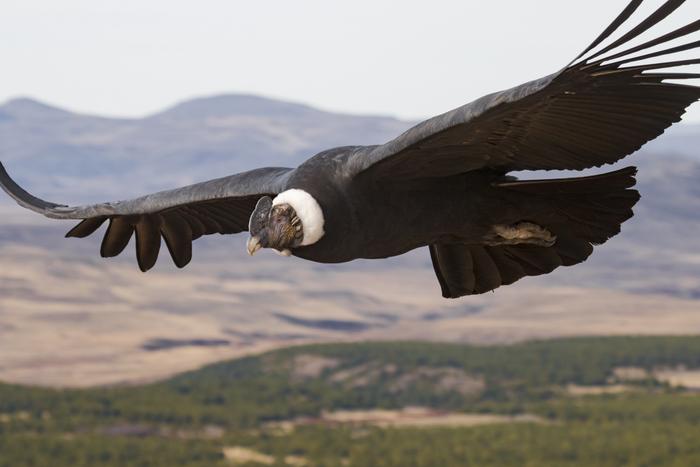
An Andean condor and a trumpeter swan both weigh about 11 kilograms. Yet the condor covers each kilometer of flight for about a fifth of the swan’s energy bill. The difference is the air: the condor rides rising currents and flaps for 0.1% of its flight time, while the swan flaps for 99%. A new study of 50 bird and bat species in the wild showed that once the atmosphere is taken into account, flying can be the cheapest form of travel.
“To us, the sky might just look like background for flying animals, but it is an essential resource that can dramatically change the cost of a journey,” says first author Dr. Martina Scacco.
Textbooks rank the ways animals travel by cost: swimming is the cheapest, flying comes next, and running is the most expensive. That ranking comes from laboratory measurements of animals in swim tanks, in flight tunnels, and on treadmills. Outside the lab, the study found that this ranking changes.
“The laboratory rules tell us that condors and swans must have the same energy bill because they have the same body mass. Yet seeing how condors soar and swans flap, we know that clearly there must be a difference,” says senior author Prof. Emily Shepard from Swansea University.
The study put a price on that difference: the condor’s cost of transport was 79% lower than the swan’s, making soaring flight cheaper than swimming.
"When flying animals have access to natural atmospheric flows, they have free fuel from the sky. This study exposes the mistakes we make when we ignore the real-world conditions that animals have been responding to for millennia,” adds Shepard.
Published in Science, the work led by scientists from the Max Planck Institute of Animal Behavior (MPI-AB) and Swansea University is the largest study yet to examine the cost of long-distance travel for wild animals. It combines 17 years of GPS and accelerometer tracking from 850 birds and bats of 38 species with four years of radar data covering 12 size classes of smaller flyers. The animals range in size from about 12 grams to more than 11 kilograms. An international team of 68 researchers contributed data to the project.
The study is the first to factor in the role of atmosphere in the movement of so many wild animals at a global scale, offering a key to conservation and management of aerial species.
“If atmospheric conditions change, so too will the cost of flight, and therefore how animals decide to migrate and establish communities,” says senior author Dr. Kamran Safi from MPI-AB.
The findings offer a new framework for predicting the energetic cost of flight, and how climatic changes might affect where and when animals travel in the future.
Measuring cost of transport in the wild
The team used accelerometers to tell apart high-cost flapping from low-cost soaring. With GPS data, they matched each stretch of flight with the wind and rising air the animals met on the way. This enabled them to calculate the time individual animals spent flapping or soaring along a stretch of flight, and to approximate how much energy they spent per meter travelled—their cost of transport.
“We boiled the differences down to fuel economy, nature’s equivalent of miles per gallon,” says Scacco. This allowed the scientists to compare transport costs across species and flight modes, “like we compare freight costs of sea mail or air mail,” she adds.
Indeed, when compared, the 50 species fell into two main groups: soarers and flappers. Among the soaring birds, size had a marked effect on transport cost: the heavier a soaring bird, the less it flapped and therefore the lower its cost of transport.
How to fly a hundred laps of the planet
Soaring vultures offer a vivid example. The seven vulture species in the study flew for a combined 128,000 days and more than 4.3 million kilometers, enough to circle the planet more than 100 times. Remarkably, they achieved that while flapping only 0.1% to 7% of flight time. And the heaviest vulture, the Andean condor, flapped least of all.
They did this by exploiting atmospheric energy. Soaring birds rode rising columns of air, which lowered their cost of transport the most, “like us riding the elevator to the top floor,” says Shepard. “Soarers are masters at extracting energy from the environment. When conditions are right, they can drive their costs down to very little.”
But conditions are not always right. The larger the soaring bird, the more restricted they were in terms of when and where they could fly.
Costly, but flexible flight
Flapping birds, on the other hand, use high-energy movement to cope with more variable conditions. Wind had the most significant effect on their transport costs, with tailwinds providing support and headwinds presenting resistance.
Says Safi: “Air can drive flight costs up as well as down for flappers. What surprised us was just how much flappers operate in costly conditions where their fuel economy is really low. We hope that our framework will drive further investigations of the different trade-offs these two groups face, and of potential energy saving mechanisms we might still be missing.”
In future work, the authors aim to build on their findings by measuring animals’ energy use directly, such as through heart rate monitoring. Doing so will capture differences in individual physiology, providing an even more realistic measure of the energetic cost of flight.
Studying data from 50 species of birds and bats using 17 years of observations has provided insights that challenge the traditional view that flight has a predictable energetic cost that’s always higher than the cost of other types of movement, like swimming or resting. Birds and bats can dramatically reduce the energy needed to travel, the new study shows, by exploiting winds and rising air currents. But to date, these environmental effects have largely been overlooked in estimates of flight costs. Current estimates of the energetic costs of movement across the animal kingdom are largely based on laboratory studies that do not capture the widely variable environmental conditions animals encounter in the wild. In nature, animals routinely exploit moving air and wind to reduce the energy required to travel long distances. These effects are particularly important for flying animals, as winds can dramatically alter how fast they travel, while updrafts can allow soaring birds to almost eliminate the need for flapping their wings and move vast distances at very low energetic costs. Although how atmospheric conditions influence birds’ flight behavior has been studied, the realized effect of these conditions on energy expenditure has not been measured directly. Here, Martina Scacco and colleagues measured the effective cost of transport – the energy flying animals use to travel a given distance – under real-world conditions. Scacco et al. analyzed data from 50 species of birds and bats spanning three orders of magnitude in body size (~12 grams to more than 11 kilograms), using 17 years of high-resolution GPS and acceleration sensor measurements from 850 animals, which was supplemented by radar observations of smaller species. The global biologging dataset allowed the authors to analyze how often animals flapped their wings versus soaring or gliding during sustained flights and compare the energetic costs of flights across species and environmental conditions.
The findings show that the energetic cost of flight in the wild largely depends on how animals interact with the atmosphere. Soaring birds, particularly larger species, can dramatically reduce their energy use by exploiting rising air currents and other atmospheric streams. This, in some cases, reduced flight costs to levels comparable to swimming or even resting. In contrast, frequent flapping species generally have flight costs closer to laboratory predictions and experience greater variation depending on wind conditions. According to the authors, the findings challenge the traditional view that flight has a predictable energetic cost based primarily on body size and biomechanics. Instead, Scacco et al. argue that atmospheric conditions are a fundamental part of flying animals’ energetic landscape and should be incorporated into models of animal movement, migration, and responses to environmental change. “The findings of Scacco et al. encourage researchers to further develop device-tracking technologies and conduct detailed wind-tunnel measurements of the metabolic costs of different flight modes,” writes Anders Hedenström in a related Perspective.
Researchers at MIT and the Woods Hole Oceanographic Institution (WHOI) analyzed over 15,000 ice cliffs in Antarctica to reveal how they behave over time.
With rising temperatures, the buttressing ice shelves at the edges the Antarctic ice sheet are melting and calving off at record rates, leaving behind sheer cliffs of solid ice. The stability of these exposed ice cliffs could influence how Antarctica further breaks apart and contributes to sea level rise around the world.
Scientists have assumed that an ice cliff’s stability depends on its height: Ice cliffs that are taller than 100 meters — about the height of the Statue of Liberty — should collapse under their own weight. And once a cliff sloughs off, it should expose even taller, inland cliffs that collapse in turn. At least, that’s been the idea.
But researchers at MIT and the Woods Hole Oceanographic Institution (WHOI) have found that the stability of an ice cliff depends on more than its height. And even when a cliff topples, it doesn’t necessarily set off a runaway collapse.
In a study appearing in Science, the team presents an analysis of over 15,000 ice cliffs in Antarctica that were monitored by satellites over a four-year period. They observed how the ice cliffs and the larger ice sheet evolved over time, and found that those ice cliffs that collapsed did so at a much faster rate than scientists had predicted. But these collapsing cliffs also quickly stabilized, instead of continuing to erode the larger ice sheet.
“We found that when the cliffs were retreating, they were doing so faster than what has been modeled, which would mean more ice loss and higher contributions of sea level rise,” says study author Caroline Needell, a graduate student in the MIT-WHOI Joint Program. “But because we found that the retreat was short-lived, and all the glaciers eventually stabilized, that would suggest that things won’t be so bad. We don’t see this runaway effect.”
The study’s co-authors are Catherine Walker, assistant scientist at WHOI, and Jeremy Bassis, associate professor at the University of Michigan.
Ice height
In glacial science, ice cliff collapse is described by a process known as marine ice cliff instability (MICI), which assumes that if an ice cliff exceeds a critical height, it will collapse. If then a taller cliff is exposed, it too should collapse, triggering a cascade of instabilities that shrink and erode the ice sheet over time.
In previous studies, scientists have characterized MICI mainly by modeling the physical properties of ice, scaling these relationships up to the size of an ice cliff and combining these predictions with a few observations of actual ice cliffs in Antarctica. Through these efforts, scientists had determined that ice cliffs become unstable and collapse when they are taller about 100 meters.
“Predictive ice-sheet models that have been used so far to represent ice cliff instability just take into account cliff height,” Needell notes. “That’s the only variable that matters. And once the cliff height reaches the critical threshold, usually 100 meters, it should initiate this runaway effect of ice sheet retreat.”
But she and her colleagues wondered: How tall do ice cliffs really get? And when they collapse, do they really set off a runaway retreat?
To answer these questions, they looked to data collected by NASA’s Ice, Cloud, and Land Elevation Satellite-2 (ICESat-2) — a satellite that passes over the Earth’s polar regions and uses a laser altimeter to measure the height of ice sheets, glaciers, sea ice, and the level of the ocean in and around Antarctica.
The team collected the satellite’s data from 2019 to 2023, which included measurements every three months of over 15,000 ice cliffs. From this dataset, they observed that the average ice cliff was about 30 meters tall — much shorter than the proposed critical height. But they did see a few rare ice cliffs that exceeded 100 meters.
They also looked for other features that might influence a cliff’s stability. Interestingly, they found that ice cliffs that more or less stayed in place over time also had thicker mélange — a term for the slushy mix of broken icebergs and sea ice that gathers at the front of an ice cliff.
“We measured mélange height and found taller cliffs have thicker mélange, which could be a built-in stabilizing effect,” Needell explains.
The satellite data also showed that the height of the surrounding water can stabilize a cliff: The deeper the water, the more it can buoy and push back against the cliff, keeping it from collapsing.
Glacial speed bump
“After we did that global analysis, we thought, ok, let’s zoom in on the tallest cliffs and see how they’re behaving,” Needell says.
The team focused in on four regions around the Antarctic ice sheet where the satellite captured the tallest ice cliffs, each about 100 meters tall, with one that was 127 meters tall. They compiled measurements of these four cliffs and how they evolved every three months, over four years.
From these measurements, they saw that indeed, the tallest cliffs collapsed, and the ice sheet in those regions retreated, at a surprisingly faster rate than MICI models had predicted.
“But that retreat was short-lived,” Needell notes.
After that, the ice spread back out toward the ocean.
“It’s this rapid retreat, punctuated by periods of stabilization,” Needell says. “That was puzzling to us. Then, we thought: We need to look at all the things that affect cliff height.”
The first thing they considered was the topography of the land underneath the ice. If that topography is relatively flat, then the slope of the overlying ice sheet reflects that actual height of the ice itself. But if there’s a bump or rise in the land, the ice sitting directly over that bump is in fact shorter than it appears. The topography then could act as a literal speed bump, thinning the overlying ice, and making it less likely to collapse.
When the researchers checked topographic measurements of Antarctic, they found that indeed, ice cliffs stabilized around regions where the land happened to rise up.
They also found that the taller a cliff is, the faster they “thin out” — as they collapse, once tall cliffs settle into shorter, more stable cliffs that prevents further collapse.
“Now we know what to look for,” Needell says. “We really need to know the bed topography, and we need to know the ice thinning rate, in order to get ice cliff instability right, because this value really matters in the context of projecting sea level rise.”
This research was supported, in part, by NASA, the U.S. National Science Foundation, and the DOMINOS project, a component of the International Thwaites Glacier Collaboration.
An ice cliff near Brown Bluff on the Antarctic Peninsula. Scientists are usingobservations of ice cliffs like this one to test theories about how tall cliffs may influence glacierretreat and future sea level rise.
Woods Hole, Mass. (Oct. 15, 2026) — A new study led by the Woods Hole Oceanographic Institution (WHOI) provides the most comprehensive observational analysis yet of the towering ice cliffs that fringe Earth's ice sheets, giving scientists new evidence to evaluate a long-debated process that could influence future sea level rise. Improving these projections is increasingly important as rising seas threaten coastal communities and infrastructure worldwide.
The Marine Ice-Cliff Instability (MICI) is a theory that proposes extremely tall ice cliffs, taller than about 100 meters above the waterline, can become structurally unstable and trigger a cycle of rapid, self-sustaining ice loss. Because that process has never been directly observed, scientists have debated whether it should be included in projections of future sea level rise. To test the theory against real-world observations, researchers analyzed the characteristics of ice cliffs using 15,330 individual satellite observations collected around the margins of Earth's ice sheets.
The study, published in Science, utilized satellite laser altimetry, a technique that measures surface elevation by timing how long it takes laser pulses to travel from a satellite to Earth's surface and back. Those measurements allowed the researchers to calculate cliff heights and compare them with ice thickness, water depth, crevassing, and calving rates across thousands of locations around the ice sheets.
“Our findings suggest ice-sheet models may underestimate how quickly tall ice cliffs can break apart. At the same time, the observations show that glaciers often thin and retreat into regions where the conditions become less favorable for continued rapid retreat,” said Caroline Needell, an MIT-WHOI Joint Program doctoral student and lead author of the study. “These findings show that some of the processes described by marine ice-cliff instability occur in nature, but they also show that other factors can limit rapid retreat.”
Global sea level has already risen by more than eight inches since 1880, and scientists project it will continue to rise throughout this century as ice sheets lose mass. By identifying the conditions that drive and limit rapid ice-cliff retreat, the study helps scientists improve models of how ice sheets contribute to future sea level rise. More accurate projections are increasingly important for coastal communities, where rising sea levels can worsen flooding, accelerate erosion, damage infrastructure, and intensify storm-surge impacts.
“Understanding how ice sheets lose mass is key to improving projections of future sea level rise,” said Catherine Walker, a glaciologist at WHOI and author of the study. “To make better predictions, we need observations that show how glaciers behave where they meet the ocean and help us improve the models we use to understand future change.”
Unlike previous studies that focused on individual glaciers or computer simulations, this work examines thousands of ice cliffs across Earth's ice sheets using a consistent set of satellite observations. The dataset gives scientists a way to test ice-sheet models against real-world measurements, helping improve predictions of how glaciers may respond as the climate changes.
"When ice sheets start to calve, they can do so very rapidly,” said Jeremy Bassis, a geophysicist at the University of Michigan and author of the study. “Fortunately, all of the examples we have so far suggest that the rapid retreat documented in this study is short-lived and the glaciers eventually re-stabilize. Whether that remains true in the future as climate change continues to push ice sheets out of their comfort zone is something we do not yet know."
“Marine ice-cliff instability has been a source of uncertainty in projections of future sea level rise,” Walker continued. “These observations provide a new global dataset to test the theory against real-world measurements and improve ice-sheet models by identifying the conditions that drive rapid ice loss and those that limit it.”
This research was supported by the National Science Foundation, NASA, the U.S. Department of Energy, the DOMINOS project, a component of the International Thwaites Glacier Collaboration, and the Natural Environment Research Council.
###
Woods Hole Oceanographic Institution
Woods Hole Oceanographic Institution (WHOI) is a private, non-profit organization dedicated to marine research, engineering, and higher education. Founded in 1930 and based in Cape Cod, Massachusetts, WHOI’s mission is to understand the ocean and its interaction with the Earth system, and to communicate the ocean’s vital role in the global environment.
Children and young people broadly support the use of health data for research that could improve lives, but they want strong safeguards, transparency, and greater involvement in decisions about how their information is used, a review led by researchers at the University of Cambridge has found.
The team reviewed the existing evidence, bringing together studies that capture the views of more than 4,700 children and young people and almost 1,500 parents and carers on the use of large health datasets – ‘big data’ – in children's healthcare research.
They found that children and young people, parents and carers were broadly supportive of using health data for research where there was a clear potential benefit, including improving healthcare, advancing scientific knowledge, and supporting people with similar experiences. However, support was conditional, with participants wanting research to be carried out ethically, by trustworthy organisations, and with appropriate safeguards and transparency around how their data are used.
Large-scale health datasets, drawn from electronic health records, administrative systems, registries, and digital technologies, are transforming healthcare research, generating insights into disease patterns, treatment outcomes, and population health trends.
However, there are often concerns about data being routinely reused beyond their original purpose, for example being sold to commercial companies, and about opaque governance structures and the fact that participants are typically far removed from researchers who analyse their information.
Studies of public attitudes to health data use have found broad but conditional support for data sharing, particularly where there is perceived public benefit and trust in the organisations involved. However, much of this evidence comes from general adult populations, with less evidence specifically exploring the views of children and young people, particularly those who are underrepresented in research.
Researchers from the Department of Psychiatry at the University of Cambridge carried out a systematic review of existing evidence among children and young people, including both qualitative and quantitative evidence. This allowed them to bring together findings from different types of research and identify common themes across the evidence base. Their findings are published today in PLOS Digital Health.
The review included 17 studies involving 6,261 participants, including at least 4,710 children and young people and 1,443 parents and carers.
Although participants were broadly supportive, they wanted strong protections to ensure their information is used safely and fairly. They were concerned about the potential loss of privacy and the possibility of being identified even when data are anonymised, and about the misuse of data by organisations, particularly commercial companies.
Trust was also and important issue. Young people were generally more comfortable sharing data when it was managed by trusted public organisations such as health services, universities, or non-profit researchers. They were less comfortable when private companies were involved.
A particularly important finding was that young people wanted a greater say in decisions about their data as they grow older. Some studies suggested that young people should become increasingly involved in decisions about consent and data use as they mature, rather than having decisions made entirely by parents or institutions.
Charlotte Burdge, a PhD student at the Department Psychiatry, University of Cambridge, who led the review, said:“‘Big data’ has the potential to unlock valuable insights into health and disease, but as our review has shown, we shouldn’t take for granted that everyone will give unqualified support for their data to be used.
“Young people are generally in favour and can see the benefits, but they understandably want to ensure their data is used ethically and securely, that they have control over how it’s used, and that their views are taken seriously.”
One practical measure to build trust and transparency is to make it clearer to participants how their data are being used and governed, she says. Understanding why data are being used, who may access them, and what safeguards are in place will be important as the use of data in healthcare research continues to expand.
The findings are particularly relevant as Cambridge develops new approaches to using health data and other routinely collected data to improve children’s healthcare. Charlotte’s work contributes to Children and Adolescents Data Resource (CADRE), led by Dr Anna Moore, also from the Department of Psychiatry, which is helping to establish the digital foundations for the new Cambridge Children’s Hospital. Ensuring that children and young people and families are involved in thinking about how data are collected, linked, and used will be an important part of developing data-driven approaches that are trusted and responsive to their needs.
Charlotte added: “For research such as ours, it’s important that we work with patients and members of the public from the outset to understand any concerns they may have and find out what would be meaningful for them. This will help ensure that what we’re doing aligns with their expectation.”
The researchers emphasise that these findings should not be interpreted as representing one uniform view among all underrepresented groups. People’s experiences and perspectives are shaped by their individual circumstances, backgrounds, and previous experiences with healthcare and research.
This research was funded by UKRI Medical Research Council through the Datamind, the Office for Life Sciences and the National Institute for Health and Care Research (NIHR) Mental Health Translational Research Collaboration Mission, hosted by the NIHR Oxford Health Biomedical Research Centre. Additional support was provided by the NIHR Cambridge Biomedical Research Centre and the NIHR Applied Research Collaboration East of England.
Reference
Burdge, C et al. Perceptions, attitudes, and concerns of underrepresented groups regarding the use of big data in children and young people’s healthcare research – a systematic literature review. PLOS Digital Health; 15 Oct 2026; DOI: 10.1371/journal.pdig.0001434
Perceptions, attitudes, and concerns of underrepresented groups regarding the use of big data in children and young people’s healthcare research – a systematic literature review