Saturday, October 17, 2026

‘Monstrous’: Netanyahu Casts Doubt on Filmed Israeli Settler Attack of American Journalist

“You mean the footage of the Israeli terrorists beating her up isn’t clear enough?” one critic sardonically asked.
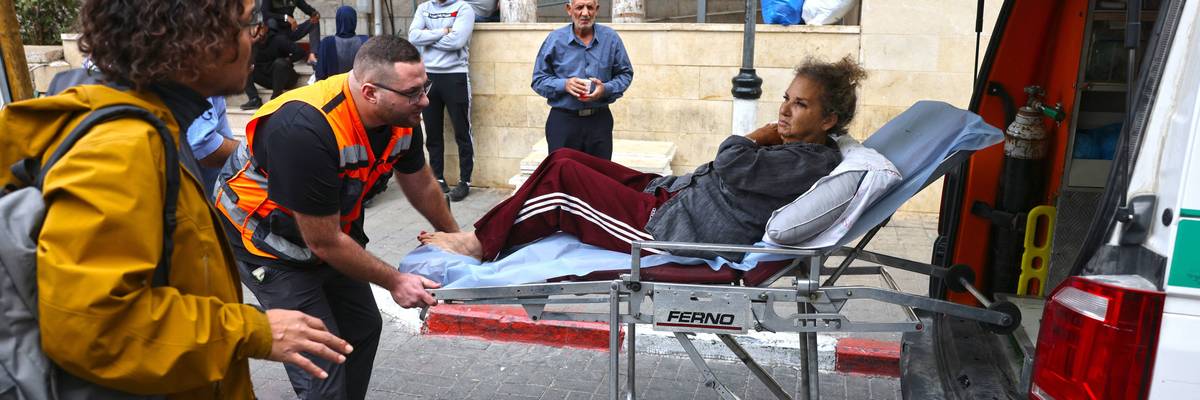


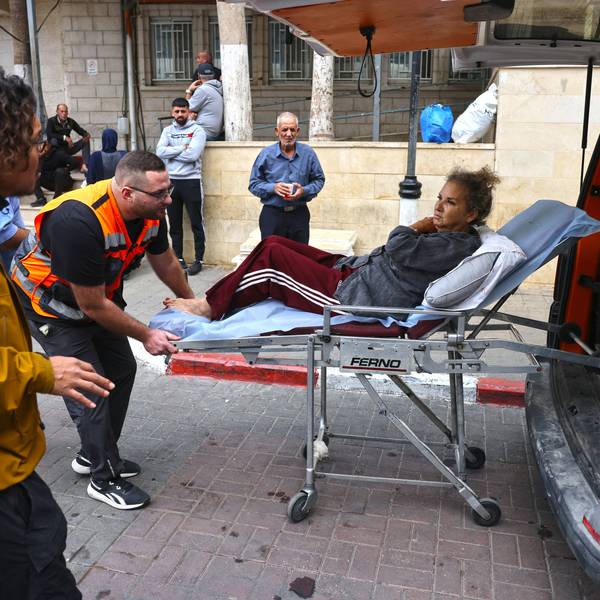
American freelance photojournalist Heidi Levine is transferred on a stretcher into a Palestinian ambulance from the government hospital in the Israeli-occupied city of Ramallah on October 16, 2026.

(Photo by Ahmad Gharabli/AFP via Getty Images)

Brett Wilkins
Oct 16, 2026
COMMON DREAMS


Israeli Prime Minister Benjamin Netanyahu faced blistering criticism Friday after his office published a statement casting doubt on the circumstances surrounding a brutal attack earlier in the day by settlers in the illegally occupied West Bank that left an American journalist hospitalized.

“The facts surrounding the confrontation near Abu Falah, during which Washington Post photojournalist Heidi Levine was allegedly assaulted, remain unclear and are under investigation,” Netanyahu’s office said on social media.


As Common Dreams reported, Levine—a 63-year-old Jewish American by birth who has reported from war zones including Afghanistan, Kosovo, Iraq, Lebanon, Libya, and Syria—was covering Palestinian farmers desperately trying to harvest their olives when around 80 masked settler colonists descended upon them.


Armed with rocks, clubs, sticks, assault rifles, and the self-assured belief that their deity figure promised them all the land that was once ruled by Jewish kings millennia ago, the settlers set fire to the olive trees that are the backbone of Palestine’s rural economy and a literal symbol of Palestinians’ rootedness in their homeland.

The assailants fired guns and threw rocks at the olive harvesters, reportedly wounding at least two Palestinians. While documenting the attack, Levine—who, like other journalists killed or wounded by Israel, was clad in a helmet and a blue vest clearly marked “PRESS”—was set upon by settlers, knocked to the ground, and kicked dozens of times while her equipment was stolen.

“Israel unequivocally condemns violence against anyone—Jews, Arabs, Christians, or journalists,” Netanyahu’s office claimed. “Those responsible will be held accountable.”

“But serious questions remain,” the statement continued. “Reports indicate some 200 Arabs and far-left activists confronted approximately 40 Israeli youths. Footage shows masked individuals on both sides hurling objects, amid reports of fireworks fired at Jewish youths. Other footage appears to show Levine knocked down and immediately helped to her feet by the same unidentified individual.”


“The investigation must establish the facts, including who initiated the violence,” the office added. “We will not allow disputed incidents to be exploited to demonize the hundreds of thousands of law-abiding Jewish residents.”

The colonization of the occupied Palestinian territories by Jewish settlers—many of them non-Israelis who are availing themselves of the ethnosupremacist and apartheid policy of allowing any Jew to live in a land whose Palestinian inhabitants have been ethnically cleansed from it for nearly 80 years—is inherently illegal under international law.

Washington Post executive editor Matt Murray pushed back on Netanyahu’s statement on social media, saying: “To be clear: Some facts are neither in dispute nor unclear. Our photographer was clearly marked as press. She was clearly beaten. These are not partisan or risible statements, but indisputable. We urge a thorough investigation and accountability.”

International observers also criticized Netanyahu’s statement.


“They are actually trying to justify an American WaPo journalist being severely beaten by a mob of settler terrorists,” US commentator Krystal Ball said on social media, using the syllabic abbreviation for the Post.

Irish journalist Barry Malone responded to Netanyahu’s post on X, saying: “Hi. There’s video. It’s clear.”

US physician Amira Dalton said, “Israel lies and then calls you an antisemite for calling out their lies.”

The X account Israel Exposed, which has more than 400,000 followers, sardonically asked, “You mean the footage of the Israeli terrorists beating her up isn’t clear enough?”

The Israeli veterans’ group Breaking the Silence said that “you can see the settlers who attacked Heidi Levine, a journalist for The Washington Post. But what you can’t see is the state behind them: a state that funds them, arms them, and, above all, grants them near-total impunity for their actions. This violence does not happen in a vacuum. Israel enables it.”


While Lt. Col. Ariella Mazor, chief international spokesperson for the Israel Defense Forces, claimed the military had sent battalions to the West Bank to contain the outbreak of violence, eyewitnesses said the IDF was involved in the attack on Abu Falah.

“The army did nothing to stop the settlers,” Israeli journalist Oren Ziv, who was present during the attack, told The Washington Post.

That’s because Israel’s far-right government is unapologetically seeking to “finish the job of 1948,” as Netanyahu once put it—a reference to the ethnic cleansing of more than 750,000 Palestinians during the creation of the modern Israeli state—and take all of Palestine.

“The entire land is ours,” Israeli National Security Minister Itamar Ben-Gvir said earlier this month, in the lead-up to Israel’s October 27 elections.“This is our country.”

Last month, Israeli Finance Minister Bezalel Smotrich vowed to do in the West Bank “what we did in Gaza,” where three years of genocidal annihilation have left more than 250,000 Palestinians dead or wounded, nearly 2 million people forcibly displaced, and an estimated 70% of the territory under Israeli control.

According to the United Nations Office for the Coordination of Humanitarian Affairs, at least 1,138 Palestinians—at least 250 of them children—have been killed by Israeli soldiers and settlers in the West Bank since October 2023.

At least nine Americans have been killed by Israeli settlers and security forces in the West Bank since January 2022, including journalists, human rights activists, and Palestinian Americans visiting relatives.

Despite claims by Israel that perpetrators of such attacks will be held accountable, impunity is the general rule.

“Sadly, none of them will be prosecuted,” Levine said of her attackers. “I am sure of it.”

Multiple US senators demanded that Israel bring Levin’s assailants to justice.

“The continued lack of accountability for settler violence in the West Bank has allowed attacks on innocent people, including multiple Americans, to go unanswered, and it is eroding what should be a strong alliance between the US and Israel,” Sen. Catherine Cortez Masto (D-Nev.) said on social media. “Prime Minister Netanyahu isn’t doing nearly enough to stop the violence.”

Sen. Chris Van Hollen (D-Md.) also took to social media after Friday’s attack, writing, “Today, another American citizen and journalist was brutalized by Israeli settlers attacking Palestinians in the West Bank.”

“This repeated violence and brazen impunity for attacks against Americans and Palestinians alike are unacceptable,” he added. “When will [President Donald] Trump and [Secretary of State Marco] Rubio DO SOMETHING?”


Israeli Settlers Brutally Beat Washington Post Journalist Heidi Levine While Attacking Palestinian Olive Farmers

“Unfortunately, I know very well that none of them will be prosecuted for what they have done and continue to do,” she said.
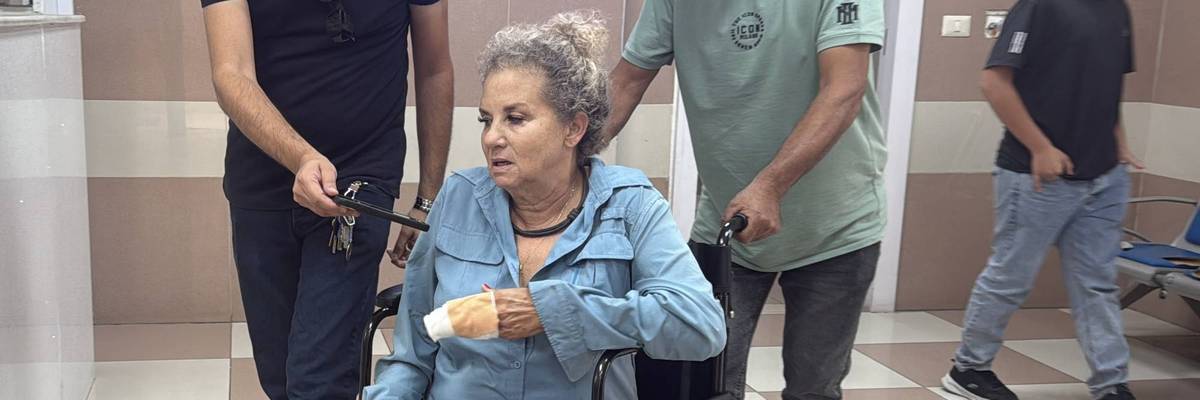


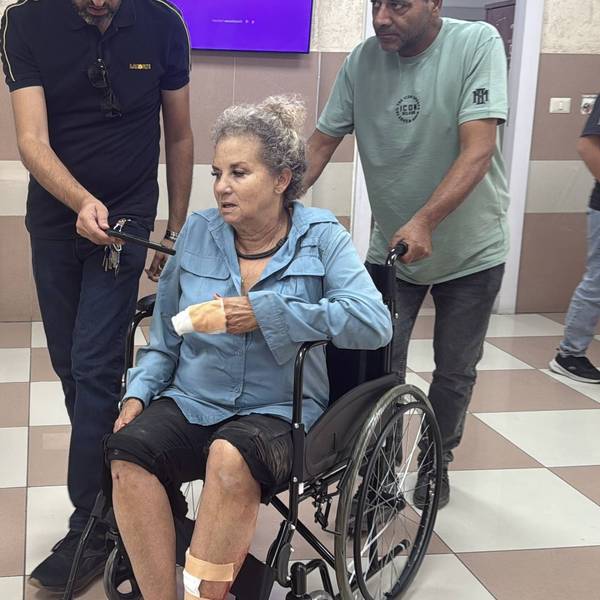
Heidi Levine, American photojournalist for The Washington Post and a foreign solidarity activist, receives medical treatment at a hospital after being attacked by Israeli settlers in the village of Turmusayya, northeast of the city of Ramallah, West Bank, Palestine, on October 16, 2026.

(Photo by Issam Rimawi/Anadolu via Getty Images)

Stephen Prager
Oct 16, 2026
COMMON DREAMS

A gang of masked Israeli settlers brutalized a Washington Post journalist on Friday while they attacked Palestinian olive farmers and set fire to their grove in the occupied West Bank—the latest in an escalating series of state-backed terrorist attacks amid the Palestinian olive-growing season.

Roughly 80 masked men from a nearby hilltop settlement descended upon an olive grove near the village of Abu Falah, north of Ramallah. Video shows them hurling rocks and torching olive trees as Palestinian families fled downhill.


Gunfire could be heard, and at least two Palestinian men were reportedly wounded in the attack. Four more were reportedly hurt in separate attacks nearby.

Documenting the attack was 63-year-old Heidi Levine, an award-winning American photojournalist with the Post who has more than four decades of experience covering wars around the world.

Amid the rampage, Levine—clad in a helmet and a vest with a bright blue “PRESS” marker—was knocked to the dirt by a group of masked settlers, according to video posted by the American journalist Jasper Nathaniel, who was on the scene.


Another video shared by Israeli activist and journalist Andrey Khrzhanovskiy shows one of the settlers repeatedly beating Levine with a long stick while she lies on the ground defenseless. Levine later said she was kicked approximately 50 times and that the attackers took all of her recording equipment and other electronic devices.

Palestinian men reportedly threw stones to ward off the attackers, allowing other journalists to reach Levine.

A video shows Nathaniel, Khrzhanovskiy, and others rushing to a bloodied Levine and helping her to her feet. “They took everything,” she said. “They took all my stuff.” More Israeli settlers hurled rocks at them as they fled the scene.

Levine was taken to a hospital in Ramallah after Palestinian colleagues helped her get an ambulance. From her hospital bed, she spoke about the attack.


“My son Michael has always told me that his biggest fear would be that his mother would be killed by the settlers,” Levine said, noting that she’d covered the Israel-Palestine conflict for more than three decades and also been attacked 15 years ago.

“I was attacked, pushed to the ground,” she said. “Luckily I had my flak jacket and helmet; otherwise I probably wouldn’t even be here, because they just kept kicking me and kicking me.”

Levine, who is Jewish by birth, described the attackers as “Jewish terrorists” who “are giving everyone in the country a horrible reputation.”

“I don’t know how a parent could raise such monsters,” she said.

“While we are relieved that Heidi has received medical care and is safe,” said Washington Post executive editor Matt Murray in a statement Friday morning, “we are outraged by this unwarranted attack on a journalist doing her job and urge a thorough investigation and follow-through from authorities.”

Levine, however, said she was confident that her attackers would never face justice. “Sadly, none of them will be prosecuted,” she told reporters. “I am sure of it.”


Particularly in recent years, under a far-right government that has accelerated the expansion of illegal settlements, settlers almost never face legal consequences for violent attacks.

A Guardian investigation found that from 2020 to 2025, more than 96% of police investigations into settler violence concluded without indictments, and only 2% resulted in convictions. Since 2020, despite dozens of fatal attacks, only one Israeli has been charged with killing a Palestinian in the West Bank.

“This violence does not happen in a vacuum. Israel enables it.”

Lt. Col. Ariella Mazor, chief international spokesperson for the Israel Defense Forces, told the Post that the incident is under investigation by the IDF and claimed the military had sent battalions to the West Bank to contain the outbreak of violence.

However, according to eyewitnesses, the Israeli military itself was reportedly involved in the attack on the village, firing tear gas at the Palestinians. Soldiers reportedly drove military jeeps through the olive groves and stood beside settlers rather than dispersing them.

Israeli activist Oren Ziv told the Post, “The army did nothing to stop the settlers.”

This has been the case in many of the more than 1,600 documented attacks that have occurred over the first eight months of the year—during which at least 23 Palestinians were killed and over 1,100 injured, according to the United Nations.
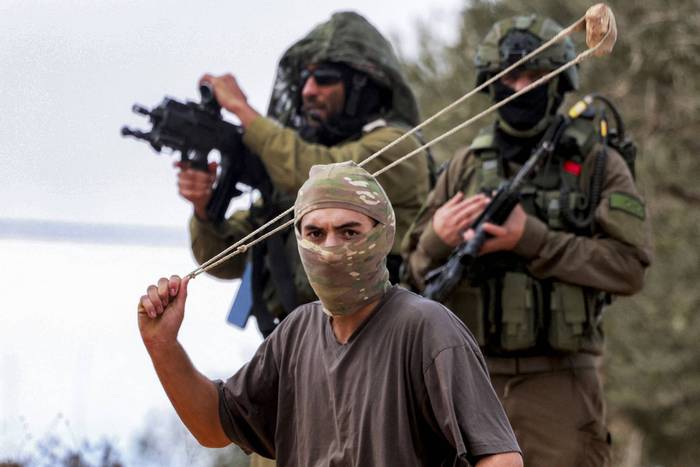

Israeli army soldiers stand behind a masked man swinging a slingshot while hurling stones at Palestinians who had gathered for the annual olive harvest season, during an attack by Israeli settlers on the Palestinian village of Beita, south of Nablus in the occupied West Bank, on October 10, 2025. (Photo by Jaafar Ashtiyeh/AFP via Getty Images)

Investigations by Amnesty International and Human Rights Watch have documented soldiers standing by as settlers attack Palestinians and destroy their property, shielding settlers from Palestinians attempting to defend themselves, and sometimes directly participating in attacks. Israeli authorities have also armed thousands of settlers and incorporated many into military units.

Israel’s Foreign Press Association, which independently provided video of settlers brutalizing Levine, said it had repeatedly warned Israeli authorities about threats to foreign journalists working in the West Bank. “Our repeated calls for action to confront this lawlessness have been ignored,” the group said.

“You can see the settlers who attacked Heidi Levine,” said Breaking the Silence, a human rights group led by Israeli veterans. “But what you can’t see is the state behind them: a state that funds them, arms them, and, above all, grants them near-total impunity for their actions. This violence does not happen in a vacuum. Israel enables it.”

At least nine Americans have been killed by Israeli settlers or security forces in the West Bank since January 2022, while numerous others have been injured—including journalists, human rights activists, and Palestinian Americans visiting family.

Members of Congress have requested information from the State Department about Israeli settler attacks on Americans, but have found themselves stonewalled by Trump administration officials.

Neri Zilber, a journalist and adviser to the US-based Israel Policy Forum, noted the lack of response from American institutions to the surge of settler terrorism.

“This happens every day in the West Bank. Every single day,” he wrote on social media. “Palestinians attacked, journalists attacked, Israeli and foreign observers attacked. When is the IDF going to start taking this seriously? And where is the US Embassy and Trump administration?”

By Delivering a Shortened Workweek, Lula Proves He’s Still in the Running

Many US media outlets think the fight is over in Brazil, but it is far from over here; Lula is nearly tied in the polls and has a lot ahead of him.


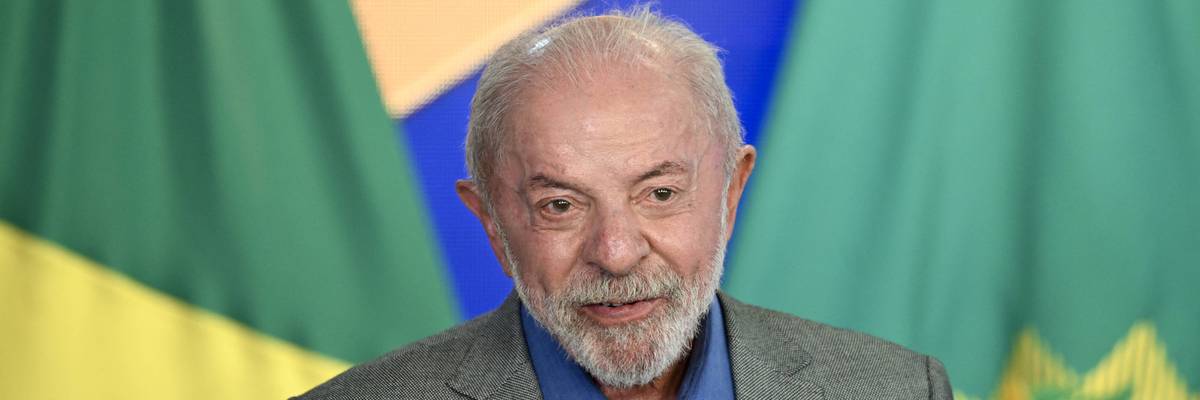
Brazilian President Luiz Inacio Lula da Silva speaks during the signing ceremony for the decree regulating the Legal Framework for the Electronic Games Industry in Brasilia on October 14, 2026.
(Photo by Evaristo Sa/AFP via Getty Images)


Mike Elk
Oct 17, 2026
Payday Report

Greetings from Rio de Janeiro, where President Luiz Inácio Lula da Silva is mounting a hell of a comeback after achieving the Workers’ Party’s 40-year goal of shortening the Brazilian workweek from six to five days.

Now, polling shows Lula is back in the fight, even as US media ignores it.


Polls Show Brazilian Presidential Race Tied

Following the first round of the election, where Lula trailed Flávio Bolsonaro by 1.8%, many wrote off Lula’s campaign. However, in the past week Lula has pulled off an impressive series of street mobilizations that have rocked the Brazilian presidential race, with over 1 million marching on Copacabana Beach on a Monday afternoon when Lula wasn’t even there.

With more than 38 million Brazilians not voting in the first round of the presidential election and Bolsonaro only leading by 2 million votes in the first round, many Bolsonaro allies worry that the scale and magnitude of Lula’s rallies could inspire massive Get Out the Vote efforts throughout the country.

The mobilizations helped create the energy that led the Brazilian Congress to pass a measure shortening the Brazilian workweek from six days to five Wednesday. This may now create enough energy to help Lula win the presidency.

Various polls this week have shown the race nearly tied.

A new PoderData poll shows Lula and Bolsonaro tied, with a little over a week until election day. Yet another poll released by Real Big Time Data shows that Bolsonaro is only leading by 1%. A third poll by CNT and MDA shows Bolsonaro at 50.5% while Lula has 49.5%
Bolsonaro Party Leader Worries About Mass Lula Mobilizations

With more than 38 million Brazilians not voting in the first round of the presidential election and Bolsonaro only leading by 2 million votes in the first round, many Bolsonaro allies worry that the scale and magnitude of Lula’s rallies could inspire massive Get Out the Vote efforts throughout the country.

In an audio message sent to party insiders, top Bolsonaro ally Congressman Gustavo Geyer said that he was worried about the potential of the street protests to mobilize the vote for Lula.

In the audio message, Geyer complained at length about the 4 million-strong WhatsApp group “Lula’s Army.” Previously, a Bolsonaro-appointed Supreme Court Justice, Kassio Nunes Marques, blocked the WhatsApp group for several hours before being overruled by other members of the Brazilian Supreme Court.

“The campaign of electoral terrorism that Lula and the PT [Workers’ Party] are conducting in a criminal manner—that ‘Lula’s Army’ channel, created by that ‘Rachadones’ character—is truly managing to mobilize the left in a way we have never seen before,” said Guyer. “The demons of Workers’ Party have crawled out of the catacombs of hell and are genuinely making an impact on the tracking polls.”
Lula Shortens Brazilian Workweek With Only One Vote Against

For nearly 40 years, the Workers’ Party has tried and failed to shorten the Brazilian workweek from six days to five. But this week, Lula pulled off a stunning victory when the Brazilian Senate voted to shorten the Brazilian workweek while not decreasing the pay of workers.

Only one senator voted against the measure, and Senator Flavio Bolsonaro skipped the vote rather than vote against it.

Brazilian labor leaders say that the success of the vote proves the momentum their campaign is having in the streets.

“The Bolsonaro family lost,” said Miguel Torres, the president of the Força Sindical labor federation. “It’s a victory for workers.”
Bolsonaro Wants Supreme Court to Silence Unions

Fearing attacks from unions, Flavio Bolsonaro went to the Brazilian Supreme Electoral Tribunal, part of the Brazilian Supreme Court, this week to ask it to silence union attacks against him on social media.

Bolsonaro’s lawsuit names 56 people, mainly union leaders and student leaders. Flavio wants the court to block these individuals from using their institutional channels to promote Lula.

“This offensive doesn’t just target Lula’s campaign. It’s directed against public participation, against the right of citizens to organize, express support, and criticize a candidacy,” said André Matheus, a specialist in freedom of expression and vice-president of the Lawfare Commission of the Institute of Brazilian Lawyers (IAB).

For more, check out ICL Noticias.


Help Cover Lula’s Comeback Fight

Many US media outlets think the fight is over in Brazil, but it is far from over here. Lula is nearly tied in the polls and has a lot ahead of him. We’ve got nine days left, and Payday intends to cover the tough fight ahead.

We need your help to cover this story that no one else is covering: Donate today.


This work is licensed under a Creative Commons Attribution 4.0 International License


Mike Elk
Mike Elk is the senior labor reporter at Payday Report and member of the Washington-Baltimore NewsGuild. He previously served as senior labor reporter at POLITICO and at In These Times Magazine.
Full Bio >


Lula Celebrates End of Brazil’s 6-Day Work Week, Fulfilling Key Pledge Ahead of Election


“Those who work so hard to build Brazil also deserve having time to live.”


Brad Reed
Oct 15, 2026
COMMON DREAMS


Brazilian President Luiz Inácio Lula da Silva celebrated on Wednesday night after Brazil’s legislature overwhelmingly approved a constitutional amendment to end the country’s six-day work week.

Under the amendment, which Lula has made a central plank of his reelection campaign, the work week will be shortened to 40 hours without a salary cut.

The amendment is projected to give an extra day off to millions of workers who previously had to work for six days under the old 44-hour work week.

In a Wednesday social media post, Lula celebrated the amendment’s passage as “an historic achievement for millions of workers.”

The Brazilian president said the shorter work week will mean “more time to live, rest, be with family, be with children as they grow, take care of yourself, and enjoy life.”

“Those who work so hard to build Brazil also deserve having time to live,” Lula added.

Polls show that Lula is currently locked in a tight race against rival Flávio Bolsonaro, son of former Brazilian President Jair Bolsonaro, who is still serving a criminal sentence for efforts to instigate a coup after his loss in the 2022 election.

According to a Wednesday report in The Guardian, the shortened work week could give Lula a boost among key demographics ahead of the October 25 presidential runoff.

Specifically, The Guardian noted that “the change is expected to affect mainly workers in retail, restaurants, and hotels,” which were “one of the groups which Lula lost the most support from since the 2022 election, when he defeated Jair Bolsonaro.”

Victor Escobar, a researcher at the Laboratory of Parties, Elections, and Comparative Politics, told The Guardian that the amendment’s passage “could indeed benefit Lula’s reelection campaign.”

Polls show that ending the six-day work week is overwhelmingly popular with Brazilian voters and Bolsonaro recently came out in its favor after months of signaling opposition.

1933


‘The Government is Trembling’: Protests Erupt in France, Spreading to 140 Cities

“For years we’ve had climate, economy, and equality problems, but the government is not doing anything about it,” said one protester.


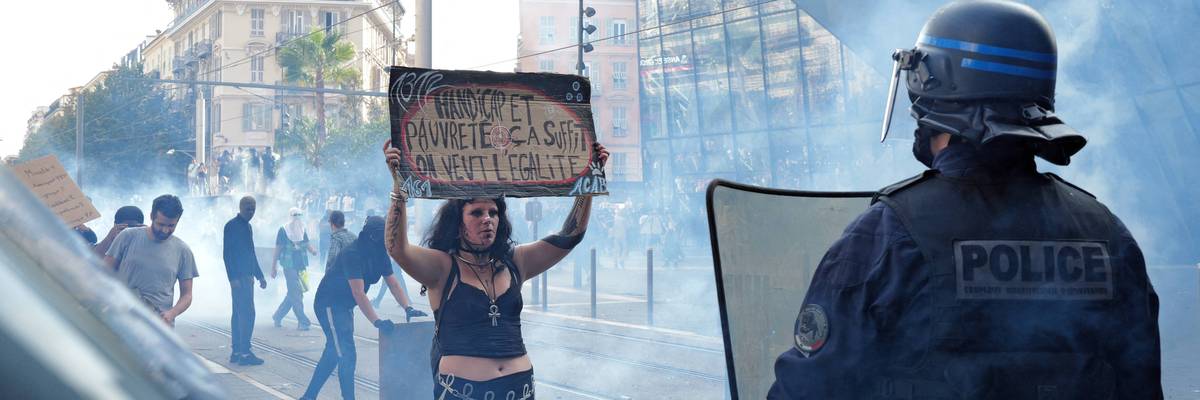
A protester holds a sign in front of a police officer in Nice, southern France, on October 17, 2026.
(Photo by Valery Hache/AFP via Getty Images)

Brad Reed
Oct 17, 2026
COMMON DREAMS


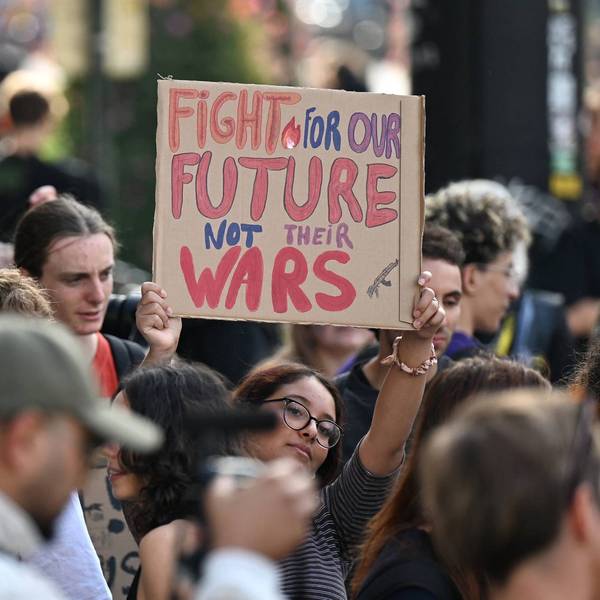
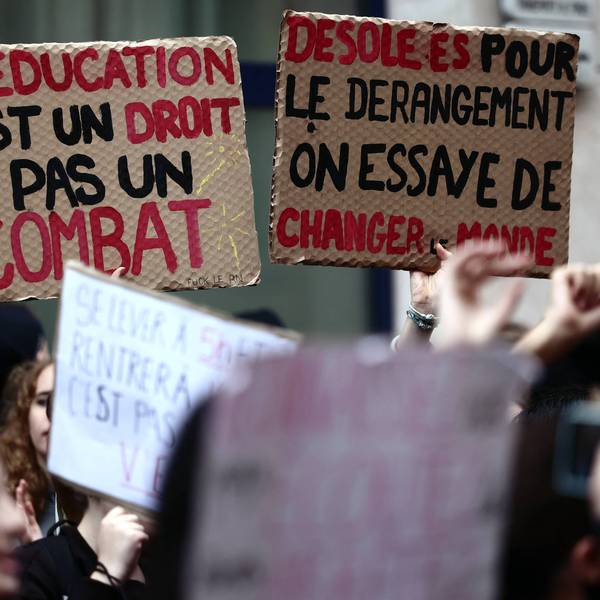
Protests erupted throughout France on Saturday, with demonstrators citing a wide variety of grievances including inequality, the high cost of living, and poor conditions in the nation’s schools.

As reported by Agence France-Presse, tens of thousands of demonstrators marched in Paris and other cities to protest what they said was inaction by the French government on the biggest problems facing the country.


‘This Is Going Global’: Anti-Austerity Protests Spread From Spain and France to Chile, Belgium, and Beyond


‘Savagery’: Horrific Injuries as French Police Crack Down on Nationwide Student Protests

“For years we’ve had climate, economy, and equality problems,” one protester identified as Agnes told AFP, “but the government is not doing anything about it.”

18-year-old student Kamil Alahyan told AFP that there are “so many reasons” to protest, including “the elections coming up in 2027, politicians who lie, the ultra-rich who’ve been taking more and more wealth over the past 10 years.”

A 19-year-old protester identified as Lola expressed a similar view in an interview published by The Guardian on Saturday.

“We are fighting because the cost of living is too harsh,” Lola said, “because the price of fuel is too high, because high school pupils are being violently attacked and hurt all over the country just for trying to protest and ask for more teachers and decent learning conditions.”

Student organizer Ryad Rani told AFP that “the government is trembling and it’s right to tremble because when the French people are angry, they never let up.”

Saturday’s demonstrations mark the expansion of a movement that began last month when students blockaded their schools to protest staffing shortages, dilapidated buildings, and a widely criticized university application system.

According to The New York Times, demonstrations took place in at least 140 cities across the country.

Some of the protests did turn violent in major cities including Lyon, Marseille, and Paris, AFP reported. A Saturday BBC report claimed that more than 270 protesters have been arrested nationwide.

French Prime Minister Sébastien Lecornu accused “ultra-left groups” of inciting violence at the demonstrations.

“To those who clearly want to use these acts of violence as a ‘warm-up’ ahead of the presidential election, let me be clear: we will not be intimidated,” Lecornu wrote in a social media post. “No one will impose their political agenda through violence.”

Jean-Luc Mélenchon, leader the left-wing France Unbowed party, slammed the media for focusing too much on the isolated incidents of violence and not reporting on the overwhelmingly peaceful nature of the demonstrations.

“Crowds of people everywhere, calm and joyful everywhere when the police aren’t around,” Mélenchon wrote in a social media post that featured photos of peaceful marches from across the country, which he described as “images you won’t see in the official media.”


Student Protesters Inspire One Another—and Should Inspire All of Us

When high schoolers in the US protest, they demonstrate our historic connection to the recent uprising in France.


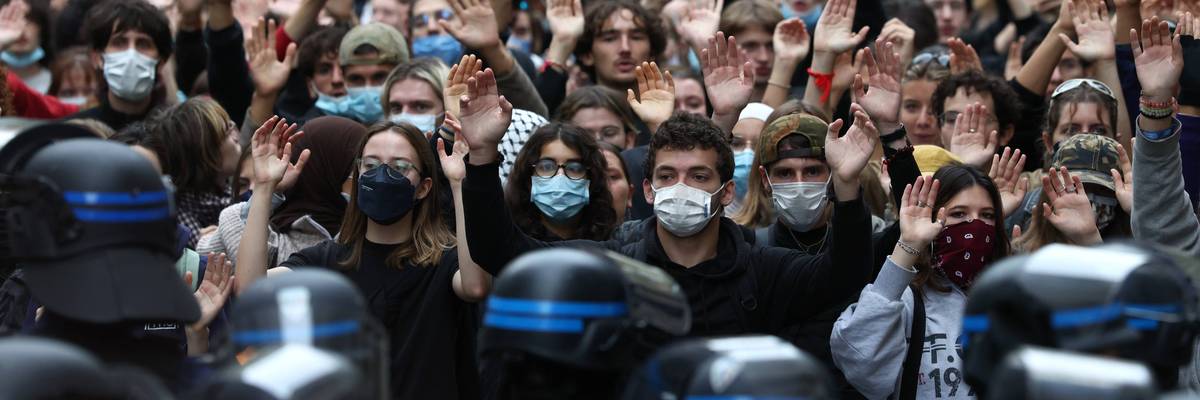
Students raise their hands in front of Police officers as they demonstrate outside Sciences Po during a protest over school overcrowding and decay on October 7, 2026 in Paris, France.
(Photo by Tom Nicholson/Getty Images)

Jon Hale
Oct 17, 2026
Common Dreams

High school students in France have captured international attention by protesting essential conditions of schooling—too few teachers, too many funding cuts, and a crumbling infrastructure. After nearly 7,000 arrests—more than 85% of whom were under 18—French education minister Edouard Geffray conceded to some of their demands and offered to hire 3,000 more teachers.

The role of high school students is clearly impactful, but we need not look to France to understand the power of student-led activism. The United States, in fact, is rich with examples.

Protestors have made reference to May 1968 protests in France, when 10 million workers, about two-thirds of the workforce, went on the largest general strike in French history. Students in France inspired a transnational movement that galvanized millions around decolonization, national liberation movements, and the rights of students in a new social order.

Those 1968 uprisings were also informed, most likely, by high school student activism in the United States.


As I explore in my book in 2022, “A New Kind of Youth,” high school students were agents of social change in the U.S. for more than 100 years. The NAACP, the oldest longstanding civil rights organization, began mobilizing high school students in 1921, where they challenged many of the same schooling conditions that French high schoolers protest today. More than a century earlier, the first NAACP youth chapters rejected textbooks with racist histories and demanded more equitable investments in segregated Black schools, for instance.

The NAACP was not the only organization to see the potential of youth activism. Radical organizers Esther Cooper Jackson, James E. Jackson, Edward Strong and others who worked in solidarity with interracial and international working-class coalitions formed the Southern Negro Youth Congress in 1937 in order to mobilize youth to actualize full citizenship rights for all, including equitably funded education.

By the Second World War, thousands of high school youth formed local organizations and joined national and international conferences in calling on state and federal agencies to alleviate discriminatory schooling conditions, end police brutality, build international solidarity, and promote pacifism in the face of wars for empires, all the while illuminating the links between racism and capitalism.

In 1946, activist scholar W.E.B. DuBois spoke to hundreds of young people assembled in South Carolina, and delivered a stirring speech he titled “Behold the Land.” As an elder in the Black freedom struggle, Du Bois charged the youth movement he saw unfolding before him. He observed that young people, many of whom were in high school, were “embarked upon a great and holy crusade, the emancipation of mankind, the upbuilding of democracy, the breaking down…of forces of evil.”

Du Bois’s words, not surprisingly, were prophetic.

High school students emerged as overlooked progenitors of key Civil Rights Movement victories. Robert Russo Moton High School student Barbara Johns orchestrated a student walkout in 1951 in Farmville, Virginia. She led her classmates in a schoolwide walkout and marched downtown. Facing expulsion, she reached out to Oliver Hill, a Virginia-based attorney with the NAACP.

The NAACP responded to Johns’ call and organized the small but committed Black community in the heart of Virgina to file a suit that demanded desegregation. The court case became Davis v. Prince Edward County, Virginia (1951)—one of the five court cases behind the Brown v. Board of Education (1954).

Students turned out in larger numbers and provided needed momentum in other parts of the Civil Rights Movement. When Dr. Martin Luther King, Jr. tackled segregation in Birmingham, Alabama, in 1963, he called for massive nonviolent protests. It was youth from elementary to high school, not local adults, who responded to the call.

An estimated 4,000 students participated in the Birmingham Children’s Crusade. They prompted the iconic photographs of the notoriously racist police commissioner Bull Connor who turned police dogs and fire houses on children. When the dust settled, more than 2,000 students were arrested and expelled from school.

Moderate segregationists listened in the wake of the offensive. State and federal governments conceded basic points and desegregated public spaces in Birmingham. During the “Freedom Summer” of 1964, President Lyndon B. Johnson signed the Civil Rights Act into law, promising anti-discriminatory protections for all.

Historic student activism led to historic liberal milestones that protected basic civil rights and made the United States more inclusive.

To be sure, such concessions fell short in enacting a genuine collective and participatory democracy. But youth activists were quick to respond to its shortcomings, making demands for today’s most salient issues. High schoolers went on strike to support common sense gun reform legislation during the March for Our Lives protests in 2018. Youth not yet in college participated in the Fridays for Future climate justice protests and joined Black Lives Matter protests in 2020.

When high schoolers protest, they demonstrate our historic connection to the recent uprising in France. The connection proffers inspiring indications that massive youth organization will lead to structural change. And the material demands made in France—for better schooling conditions and equitable investment in education in the race of austerity cuts—resonate across the United States and other struggling democracies.

It’s time that we listen, again, to what high schoolers have to say.


Our work is licensed under Creative Commons (CC BY-NC-ND 3.0). Feel free to republish and share widely.


Jon Hale
Jon Hale, professor of education history at The University of Illinois Urbana-Champaign and author of “A New Kind of Youth,” a history of high school student activism in the southern United States.
Full Bio >


‘Inspired By the Young People,’ Greta Thunberg Joins French Students Demanding School Fundin

“Our future is being robbed away from us,” said the Swedish climate activist. “It just gives a signal to young people that you’re not prioritized in our society.”


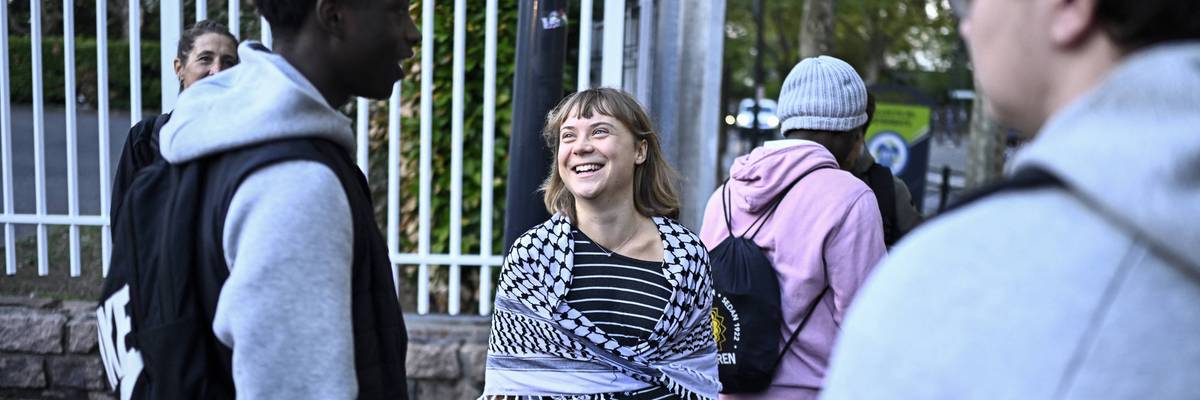
Swedish activist Greta Thunberg speaks with students as they prepare to take part in a blockade at the Lycée Paul Eluard in Saint-Denis, on the outskirts of Paris on October 13, 2026, as part of a nationwide student mobilization.
(Photo by Julien de Rosa/AFP via Getty Images)

Julia Conley
Oct 13, 2026
COMMON DREAMS


Arriving Tuesday in the Paris suburb of Saint-Denis to stand with students demonstrating against poor school conditions, climate and rights activist Greta Thunberg had one question for French leaders and authorities who have appeared shocked that hundreds of thousands of high schoolers would rise up against disinvestment in their education: “What do you expect young people to do?”

“Of course we’re going to revolt, of course we’re going to rise up,” the Swedish climate action leader told L’Humanité. “It should have been expected.”


Hundreds of Schools Closed Across France as Students Demand More Education Funding


Thunberg joined the protesters—a group that originally included students, mostly aged 15-18, when the demonstrations began last month, but that’s grown to include hundreds of thousands of people including union members and teachers—as the movement entered its fourth week.

She expressed pride in the French students who have led the movement, and denounced political leaders for refusing to invest in public education.

“Our future is being robbed away from us,” she told Agence France-Presse. “Schools are not getting investments that they need... It just gives a signal to young people that you’re not prioritized in our society.”


Hundreds of schools have been closed as students have formed chains at the building entrances and marched through Paris and cities and towns across France, demanding more funding for schools.

Students are raising alarm about dilapidated buildings, overcrowded classrooms, and too many teacher absences, and the protests have exploded as French President Emmanuel Macron’s government tries to pass a budget including a modest increase in education funding—which students and teachers have denounced as an effective cut due to inflation.

Students are calling for €10 billion increase in investment for the country’s lycées, or high schools.

Thunberg said that students “are not being included in the conversation,” and condemned French authorities for their “extremely violent” response to the protests.

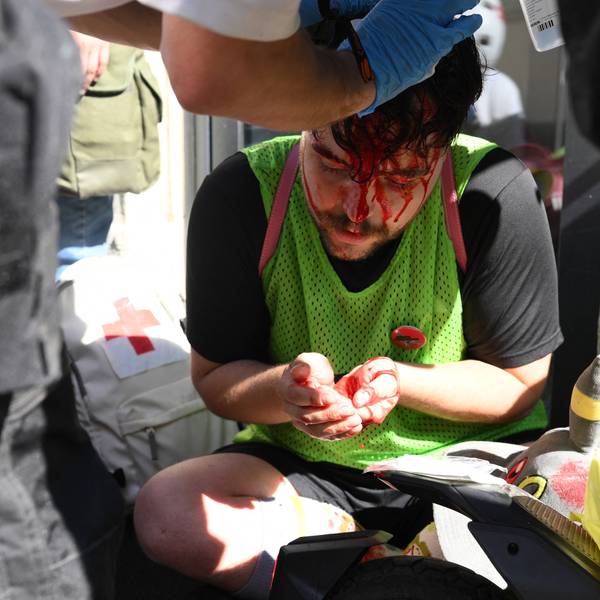
Police were pushed to end their use of stun grenades last week after a teenager lost his hand because of one of the weapons. Another student lost the use of his eye, and another lost many teeth when tear gas canisters were fired at close range.

“That the police are now meeting it with such violence and politicians are meeting it as if it’s something unexpected, or that young people are destroying things, just shows that they are living in a completely different reality,” said Thunberg.


At least 24 instances of police brutality are being investigated, and the violent police response has drawn condemnation from international human rights groups.

“They should know that all over the world we are following these developments. We are inspired by the young people who are demanding their basic rights,” Thunberg told reporters outside Lycée Paul Eluard in Saint-Denis. “Whether it’s not funding schools enough, or the climate crisis, or social injustice crises... It’s about time that young people are stepping up and reclaiming that future.”

The government is prosecuting about 1,500 people for their participation in the protests, which are backed by the leftist political party France Unbowed, led by presidential candidate Jean-Luc Mélenchon.

In Paris on Tuesday, students blockaded the entrances to their schools, while in Marseille, some pushed dumpsters on wheels in front of school doors.

Speaking to L’Humanité, Thunberg called on “workers’ movements, migrants’ rights movements, climate movements” and others to “stand united because we are facing the same enemy.”

“We are not going to give up, and we are going to fight for this future that is being stolen from us right before our eyes,” she said.


Why it's still hard to get the right over-the-counter hearing aid


Four years after hearing aids went OTC, UCSF researchers say lower prices and more choices have expanded access, but many consumers struggle to navigate their options.


University of California - San Francisco


Someone shopping for an over-the-counter (OTC) hearing aid may have to sort through dozens of products, determine which ones are regulated by the FDA, figure out what insurance will cover, and find an expert willing to help choose and set up a device.

A new JAMA Viewpoint by UC San Francisco researchers says these hurdles show why making hearing aids available without a prescription, while an important step, has not been enough to ensure people can find and use the devices they need.

“Over-the-counter hearing aids have opened the door for many people who might otherwise never have gotten hearing aids,” said Kathryn A. Phillips, PhD, a UCSF professor of health economics and health services research. “But people still have to figure out what to buy, whether they can afford it, and where to get help.”

The U.S. Food and Drug Administration created the OTC category in 2022 for adults with perceived mild-to-moderate hearing loss, allowing them to buy hearing aids without a prescription or professional fitting.

The change has substantially lowered costs. OTC hearing aids are about $500 on average, compared with $3,400 for prescription devices, according to data cited by the authors. Among people buying hearing aids for the first time, 70% chose an OTC device.

But Phillips and co-author Christine K. Cassel, MD, found major obstacles remain.

Products vary widely in price, features, and ease of use, and consumers may have trouble determining whether a device is a regulated hearing aid. One study cited in the article found that only about one-quarter of Amazon listings marketed as OTC hearing aids could be verified as FDA cleared or registered.

Expert help can be hard to find, too. One in 5 OTC hearing-aid users reported receiving no professional assistance, while just 51% received the full range of services that can include evaluation, device selection, and fitting. Audiology practices have long bundled these services with prescription hearing aids, an approach that does not easily accommodate people who buy devices on their own.

Insurance adds another hurdle. Traditional Medicare does not cover hearing aids, and coverage varies among Medicare Advantage, Medicaid, and commercial insurance plans. Even plans that offer coverage may have requirements designed around prescription devices such as having to use certain vendors.

A policy breakthrough and what came next

Cassel, a UCSF professor of medicine and expert in geriatrics and health policy, helped lay the groundwork for making hearing aids available over the counter. She co-chaired a hearing-loss working group for the President's Council of Advisors on Science and Technology, whose work helped inform the federal policy that led to the FDA rule.

“Making hearing aids available over the counter removed an important barrier, and that was a major advance,” Cassel said. “Now we need trustworthy information, professional help when people want it, and coverage policies that reflect the way hearing aids are sold today.”

For Phillips, the remaining gaps became clear when she developed hearing loss and entered the OTC market herself.

After struggling to find professional guidance, Phillips spent more than $2,000 on OTC hearing aids and months working with customer service to adjust them. Then the parent company of the brand she had purchased stopped servicing the devices in the U.S.

Her experience helped prompt her to examine the broader evidence on how well the new system was working.

“I study how new technologies move into health care and what policies help people benefit from them, and suddenly I was experiencing those questions myself,” Phillips said. “I realized that if I was having this much trouble navigating the system, other people were probably struggling, too.”

Making access work in practice

Phillips and Cassel suggest several ways to make the system easier to navigate. Consumers could receive copies of their audiograms and hearing-aid programming information, much as they can take an eyeglass prescription to the provider of their choice. Audiologists could offer stand-alone consultations to people who buy OTC devices, and insurers that cover hearing aids could explicitly include OTC products in their plans.

The authors also call for better data on who uses the devices, what people pay, how well the devices work across diverse populations, and how they affect audiology services and health care delivery. Future legislation that expands hearing aid coverage should account for OTC devices as well.

The lessons may extend beyond hearing care, Phillips said, as regulators consider moving other medical products from prescription to over-the-counter status.

“Changing a regulation can create access, but it doesn't automatically create a system that people can navigate,” she said. “If we want these changes to improve people's health, we have to pay attention to what happens after the product reaches the shelf.”


Authors: Kathryn A. Phillips, PhD, and Christine K. Cassel, MD, of UCSF.

Funding: The work was supported by the National Human Genome Research Institute (R01-HG011792).

Disclosures: Phillips reported receiving personal fees from the Institute for Clinical and Economic Review evidence review committee and previously consulting for Illumina, Roche, and Danaher outside the submitted work. No other disclosures were reported.

About UCSF: The University of California, San Francisco (UCSF) is exclusively focused on the health sciences and is dedicated to promoting health worldwide through advanced biomedical research, graduate-level education in the life sciences and health professions, and excellence in patient care. UCSF Health, which serves as UCSF’s primary academic medical system, includes highly-ranked specialty hospitals and other clinical programs, and has affiliations throughout the Bay Area. UCSF School of Medicine also has a regional campus in Fresno. Learn more at ucsf.edu.
 

###

Follow UCSF

ucsf.edu | Facebook.com/ucsf | Instagram.com/ucsf | YouTube.com/ucsf