A socialist roadmap for Malaysia

First published at Think Left.
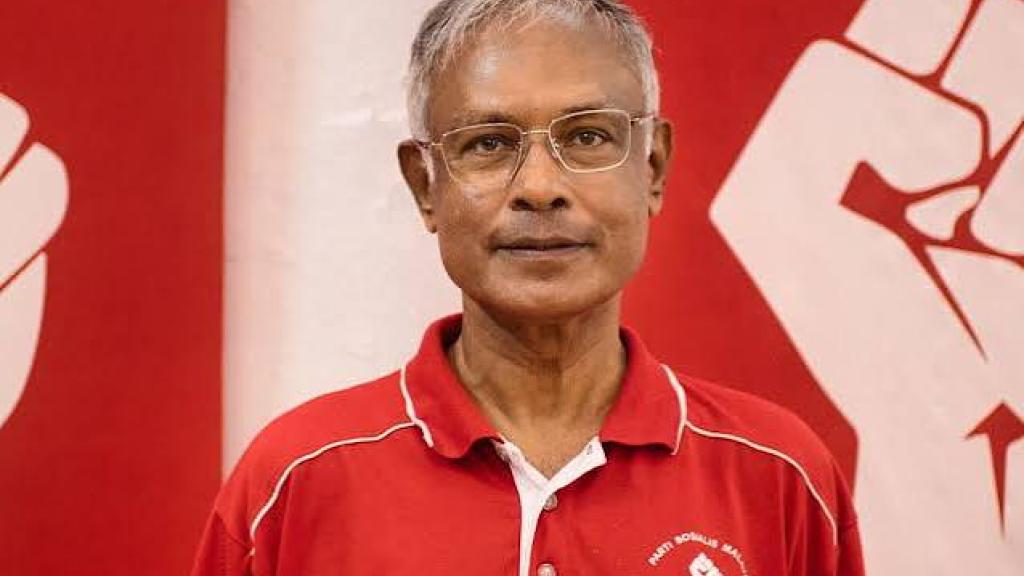
[Editor's note: Parti Sosialis Malaysia Chairperson Jeyakumar Devaraj was invited to Kathmandu by the Nepali Communist Party to share about the situation in Malaysia. on 24 September 2026. The following is a summary of the points he raised.]
It is a great honour for me and for the PSM, to be given this chance to share about Malaysia and our work. Thank you very much for this opportunity. Actually, we are a small party and we haven’t done even a fraction of what the communist movement in Nepal has achieved. You have abolished the Monarchy, won positions in the Constituent Assembly, designed a forward-looking constitution and even formed the government. I would like to share with you the PSM’s analysis of the Malaysian situation and the challenges facing the Left in Malaysia.
The Malayan/Malaysia Government
1. Malaysia has had a right-wing government since Independence in 1957. After WW2, there was a progressive alliance of the Unions — the PMFTU, the urban middle class, the Malayan Communist Party, and a radical Malay coalition, Putera. The British cracked down on this progressive alliance in 1947–48 and put many of the Malay leaders in prison and outlawed most of the unions, and hanged the secretary-general of the Pan Malayan Federation of Trade Unions, Ganapathy.
2. The MCP (Malayan Communist Party) took to the jungle and launched an armed struggle in June 1948. The British responded with the Brigg’s Plan. The Chinese rural population were shifted to guarded camps — there were 540 of them all over Malaya — with overnight curfews. The residents were not allowed to take uncooked rice when they went out to tend to their fields. Estate workers were given a daily ration of cooked rice, prepared by management. The estate workers were not allowed to buy uncooked rice. As a result of these restrictions, the MCP could not get food to support its armed units, and was forced to retreat to the Thai border by 1952, and downsize its operations in Malaya.
3. The British encouraged the Malay aristocracy, big Chinese businessmen and Indian landowners to come together to take over the administration of the country. The Alliance Party was thus formed. The MCP was keen to return to the political process, and offered to lay down its arms, but the Alliance party insisted on surrender, which the MCP would not accept. So, at Independence in 1957, a right wing, anti-communist coalition — the Alliance — took over from the British. They were staunchly anti-communist, but they were, at the same time, nationalists and implemented several good socio-democratic programs
- Schools were built in all districts and education was given free to the entire population.
- Clinics were built in rural areas, and free treatment was given. By 10 years after Independence, 90% of the population was within 3 miles of nearest health facility.
- They opened forest lands to initiate a large land scheme — FELDA — where more than 100,000 landless farmers were given 10 acres of land each. These FELDA scheme now constitute about 15% of total agricultural land in Malaysia.
- They initiated SOCSO, a social security fund supported by contributions from employers and workers on a 3:1 ratio, to cover all formal workers for occupation injuries and severe disability. This wasn’t the result of persistent worker mobilization and pressure. It was top down.
- In 1970’s petroleum act was legislated. All petrol within Malaysia was deemed to be the property of the State, and foreign companies had to sign production sharing agreements with a government owned company — Petronas.
- Also in the 1970s the government initiated special export zones and invited foreign capital to set up assembling of electrical and electronic goods.
- In the early 1980s, the government carried out the “Dawn Raid” in the London Sock Exchange, where they bought up more than 50% of the equity of companies owning Malaysian plantations in a well-coordinated stealth attack. After that the British changed their stock exchange laws to make this kind of maneuver more difficult to pull off.
4. Overall, people’s standard of living improved.
- Neonatal mortality was 31 / 1000 livebirths in 1951. Dropped to 4.4 / 1000 in 2022
- Maternal mortality dropped from 280 / 100,000 births in 1957 to 25 / 100,000 in 2020
- Life expectancy increase from 57 years at independence to 75 years currently
- Malaysia has managed to generate enough jobs for its citizens, and there are now 5 million migrant workers in Malaysia. Our work force is 16 million, we have extra 5 mil jobs.
Is there still a need for socialism?
5. So, people might ask, is there really a need for a Socialist struggle in Malaysia. After all if Malaysia can navigate the global capitalist system so successfully, why not continue to do the same?
The PSM’s answer is — yes, there is still a need for Socialism in Malaysia. Malaysia is a rich country, but 75% of the people are in economic hardship
- wages are low. Many need to work long hours overtime or have a second job to make ends meet.
- Most families are in debt. On the average, the debt of working class families is 2x their annual income. 20 – 40% of their income goes to pay this debt every month.
- 21% of the children under the age of 5 years are stunted. Their height is below the 3rd percentile for their age. This indicates chronic malnutrition. Can you imagine, in a rich country, 1/5 of the small children are not getting enough food.
- 75% of the people aged more than 70 years do not have any income or savings. Old age poverty is a big problem in Malaysia.
- Now, about 50% of our young people graduate with degrees and diplomas, but only 1/3 of them get graduate level jobs. Our economy does not generate enough gradual level jobs. The rest have to compete for semi-skilled employment, and the wage floor is depressed by the presence of the 5 million migrant workers.
- Malaysia has universal health care, but the system has been under-funded for the past 30 years. Hospitals are packed, and the waiting list is long. There are not enough specialists in government service.
So, it’s a rich country, in a way a success story for the Global South, but the wealth generated is not being shared with the working population.
A faulty development model!
6. The problem is that our success in growing the GDP and creating jobs is based on being a low cost production hub so that foreign capital will come to invest. We are constrained by the low wages in other ASEAN countries — we are scared to raise our wages, as we might lose investment capital to other ASEAN countries.
We have also brought down our corporate taxes from 40% of profits in 1980s to its current 24% because we are in a race to the bottom with our ASEAN neighbours. All ASEAN countries are trying to pull foreign investment by lowering tax rates. Thailand’s corporate tax is now 20%. Vietnam too. Singapore is 17% of corporate profits.
As a result we do not have enough government revenue to spend more on public health care or start a pension scheme for all elderly Malaysians. Our government debt is already 65% of the GDP and debt servicing is more than the national health budget.
7. To get out of this situation needs fundamental changes to the way the Malaysian economy is articulated to the international capitalist economy. We need to build our independent technological capacity. We need our own R&D. We also have to build aggregate demand in the global south so that our businesses have a growing market and are not so dependent on the US and EU markets. We need to re-negotiate the Trade Agreements that we are in, to regain greater control over our national economy to carry out the tasks mentioned above. Only a socialist party can conceptualise and institute such fundamental changes.
The need for a clear roadmap
8. The PSM is nowhere near capturing State power. We have a long way to go. But we believe that we need to have a clear roadmap detailing how to increase our political strength, tackle the ethnic and religious divisions, build the party and the peoples’ movements so that we can contest for State Power.
The Maoist strategy of protracted armed struggle to encircle the cities could not work in 1948. It is extremely unlikely for it to work in Malaysia today. And anyway, the Malaysian public do not have the appetite for such a drastic approach. A peoples’ insurrection is possible, if the government pisses off the people. But even so, nowadays, when the insurrection leads to the toppling of the government, the people expect a general election to re-elect a new government — see Egypt, Bangladesh, Sri Lanka and Nepal. So it looks like the Left has to prepare seriously for an electoral approach to power.
9. At the Madan Bhandari School, there were some people who said that religion is backward, and based on ignorance. So, the left movement should denounce it and not have anything to do with it. We do not hold such a position in the PSM. Malaysian society is very religious. Not only the Muslims. The Hindu’s, the Christians, the Buddhists and Confucianists — all of them are very attached to their religions, and turn out in the thousands for the celebrations. We believe that we should not cede the religious space to the right wing and to imperialism. We must have a presence in that space to neutralize their attempts to use religion as a vantage point to sabotage and defeat us. Remember Gramsci! Hegemony in all spheres. We need to identify the religious groups that have alternative, progressive views — like in Malaysia the largest Islamic party is using the Hudud enactment as their battle cry — you know, the cutting of hands for theft, and stoning for adultery. But there are also Muslims who talk of the Maqqasid Syariah — the higher values of the Syariah, such as concern for the sick and the poor, compassion for all mankind, harmony with the environment, etc. They are much the smaller group, but are in essence much closer to socialist principles that are based on solidarity. We should see how we can work with them. We need a “Liberation Theology” in all religious groups.
10. The roadmap we need, must also cover the 10-year period after coming into power. For taking power isn’t enough. We need to stay in power to consolidate the changes that we want to bring. There are many Left movements that could not stay in power. We need to identify the challenges that they faced and have our strategies of dealing with these problems. The PSM has identified several major areas that we must include in our roadmap post capture of State power.
11. We must build the productive capacity of our economy. The basic needs of food, housing, transport, medicines must be available to all. We must be able to provide enough jobs to the people. So, in Malaysia, where the value of exports is about 70% the value of our GDP, we are not in a position to disengage with the global capitalist system abruptly. That would cause economic chaos. We will have to build the alternative economy alongside the MultiNational (MNC) linked economy. For example we need to build lots of electric buses so that we can transit from the private car to public transport. We need to plan how we can develop the technology and capacity to build these buses in Malaysia itself.
This means that
- As incoming government, we will need to manage a capitalist economy for some time. Maybe 5 years, or 10. Maybe more.
- We need to work together with the small industrialists in the country to develop our country’s industrial capacity. In other words we need to recognize their role in building the technological capacity of the nation. I am not saying that they are a revolutionary class that can stand up to imperialist interests and lead the revolution. They can’t. Our government, the representative of all the working people in our country — the workers, the farmers, the petty traders — has to be the anti-imperialist force. But, the small bourgeoisie can play an important role in expanding our productive forces. So we must have a deal with them as a class — we will recognize your right to some ownership of productive capacity and your right to a portion of the profits as long as you (the small industrialists) follow labour law, pay taxes correctly, avoid polluting the environment, and most importantly abstain from trying to bribe government leaders and senior officials. The last “sin” should be the one we should be most strict about.
- We need to involve the popular masses in our efforts to build a socialist economy. We should not be paternalistic — relying on the government machinery to improve welfare handouts. Socialism is supposed to be the self-emancipation of the working people. This approach wasn’t well developed in the Soviet Union or in the Warsaw Pact. But we must learn from Venezuela how to use the communes approach to make people participate in the social transformation. How we can devolve some of the budget as well as the responsibilities of local government to them to manage.
We need to learn from the cooperative movement in Kerala, in Spain and elsewhere, for that is another way to mobilise ordinary people to participate in the transformation of the economy.
And of course, the unions. We should make it mandatory for all working places to have unions. Then we need to conduct classes for the union leaders as to their roles. We need to work towards worker management of factories and other work places. At some point we can ask for a % of business profits to be paid to workers as an annual bonus. - We have to handle the Government Linked companies (GLCs). In Malaysia, our employment provident fund has assets under management (AUM) of RM 1.2 trillion. Our GDP is RM 2.2 trillion. GDP is income, while AUM is wealth, so they are not directly comparable. But you can understand the size of the fund. And we have PNB, an investment fund for the Malays. This has an AUM of about RM 400 bil. Khazanah, our sovereign fund has AUM of about RM200 bil. Similarly KWAP, our public sector pension fund also about RM 200 bil. The Tabung Haji, to help Muslims go for their Haj, has AUM of about RM 100 bil.
Altogether, these Government Linked Investment (GLICs) companies, own about 30% of the shares in the Msian stock exchange. In the companies where the GLICs hold significant stocks they have the right to nominate Directors and even the CEO, if their holdings are the largest.
The PSM joins the others in the opposition to criticize cronyism and nepotism when the government puts its party members and MPs up as Directors in these GLC companies. But what would we do, if we came to power? Put up some random businessman?
We have been thinking about this — one idea that has come up is that general public should choose the directors to oversee their investments. We need a system whereby, in the General elections, in addition to choosing the MP and member for the State Assembly, the people in each parliamentary constituency also choose 3 individuals to serve as their watchdogs in the GLC companies. We could have a proviso that at least 1 must be a woman, at least 1 must be Malay and at least 1 a non-Malay. The 660 odd directors chosen this way must be given training, by a dedicated agency, in simple accounting, company law etc so that they will be able to understand the paperwork involved. And then, deployed to all the GLCs that the government has significant shares in. The agency should assist the people’s directors should they need more information or legal advice etc.
12. How about NGOs? They carry out important functions in society. But they can also become Trojan Horses that can be used by Imperialism to bring down progressive governments. So it would be foolish on our part to let them be misused.
But are we going to follow what Vietnam and China do? They can be quite harsh on the individuals who take up labour, environment and governance issues outside the party structure. We see in the news how these activists are arrested on some charge regarding unrelated issues and jailed for long terms.
Don’t get me wrong. I fully support Vietnam and China as they are outside the imperialist camp. But supporting a country does not mean blindly supporting everything they do. The PSM supports Venezuela, but we were upset when they recognized Israel. But we handled it privately — sent the Ambassador a letter stating our unhappiness, asked for a personal meeting and in that meeting asked him to convey our concern and unhappiness to his government.
So for NGOs, we are discussing some ideas. The government could set up a funding agency for NGOs. This agency, which should be given an annual allocation by the government, must not come under the control of the executive branch of government. It must be independent. Maybe we can get the former head of the Bar Council, the Human Rights commission, a well known academic etc to sit on this funding agency and distribute funds to NGOs that apply, and also monitor their work. At same time we should discourage the soliciting of funds from outside sources. Do we make it illegal? Not decided yet.
Additionally, we must set up Tribunals where ordinary people and the NGOs which have problems with government programs, can bring their complaints. These Tribunals will serve as pressure valves for discontent. And if the people can prove abuse of power or corruption, or unintended negative consequences, the government must accept the findings of the Tribunal and respond accordingly.
13. Corporate capture of the leaders of our movement is a significant risk. We must recognize this. As a member of the government, you will have the power to benefit corporations and they will try to influence you. Political leaders do not have to look for corruption. It will come looking for you.
I was an MP before. In my first week, a timber tycoon came to see me and offered RM700,000 for help in getting a logging concession. I politely refused. But this kind of temptation will be all the more, if you hold the office of Minister or Deputy Minister.
We are putting our leaders in a very dangerous place. How can the movement help them steer clear of corruption and from being bought? We must have effective mechanisms
In my Party we passed a resolution in Congress a few years ago that our elected representative must get the permission of the party before buying a new car or house. Our MPs and ADUNs must agree to this level of oversight if they wish to be candidates for the party. We, the MPs , must be prepared to listen to the concerns of our non-elected colleagues.
When I was elected MP, Parliament told me that I could stay in a 5 star hotel and that the Parliament will settle the bill. If I stayed in a cheaper hotel the money saved would not be returned to me or to my party. So I stayed in an expensive hotel for the first week. Then 2 CC members asked me for tea, and asked me whether that was a right thing to do for Socialist MP. It is still people’s money, and you will be mixing with the affluent day in, day out. Is this the image you want to give to the people? I realized that they were correct, and after that, for the whole of my 2 terms in parliament, stayed in the YMCA Hostel.
We need to identify more such mechanisms that will help our elected representatives steer clear of corruption.
14. Living simply. In our long journey to turn our economies around and build a self-sufficient industrial base, there might be economic downturns and ordinary people might face hardships. If we, the vanguard of the movement, have affluent lifestyles — big houses, fancy cars, expensive watches and clothes, it does not make for good optics in times when the ordinary people might be having trouble with basic needs. And do not forget, the imperialists are just waiting to find some weakness or mistake that they can highlight and use their media to viral. So, simplicity is very important if you choose to be the face of the party – the elected leaders.
Comrades, we must look at our current situation realistically. The Left is in retreat in many parts of the world. We have been out maneuvered in so many countries — Mossadeq in Iran 1952, Arbenz in Guatamala in 1954, Kassim in Iraq in 1962, Soekarno in Indonesia in 1965, and half a million killed there then, Allende in Chile in 1973, Najibullah in Afghanistan in 1992, and the list goes on. Nepal in 2025 is just the latest in this list. And there is the tremendous pressure on Venezuela and Cuba that is ongoing now.
The Left needs to regroup, we need to plan, we need to be realistic. We should not be dogmatic. Sloganeering is good for the morale. But it cannot replace clear, impassionate analysis of the situations in our countries and the developing of clear masterplans specific to our national situation — a roadmap of how we plan to expand the productive forces of our economies, and bring them under the control of the people, how we are going to involve the popular masses in the creation of the better order, how we are going to protect our leadership from corporate influence/capture. All of this requires sober thought and discussion, and specific initiatives / programs.
We must realise, that Marx and Engels did not look into the specific problem that we are facing — building socialism in the peripheries when the centre is still controlled by imperialists. Marx and Engels considered the working class the grave-diggers of capitalism. They expected the first successful socialist revolutions to take place in the advanced capitalist countries — Britain, the US, Germany. They did not forsee that the huge dividends from imperialistic plunder of the world would enable the leading capitalist nations to give in to many of the economic demands of their own working class. In addition, political rights — the universal vote — were also given as a major concession to the working class of advanced capitalist countries. These 2 concessions — economic and the political — enabled the imperialist core to avoid a workers’ revolution.
If revolution had taken place as Marx and Engels envisioned it, socialist reconstruction would have been much easier, for the countries with the most advanced technologies and economies would have become socialist first. No one would have had the capacity to attack them or try to sabotage them. What happened was quite different. The major revolutions took place in the peripheries — in countries that were much, much poorer than the leading capitalist countries. There is little in classical Marxism that addresses the specific problems we are facing. We need to use Marxist methodologies and insights to help us plan our line-of-march. But we should not be too dogmatic about the classical texts or expect we can copy-paste solutions to our problems from them.
More than 100 years ago, the great revolutionary, Rosa Luxemberg said that the alternatives facing humankind is either Socialism or Barbarism. The PSM believes that she is correct. There is no way the blind pursuit of profits by the richest corporation in the world can lead to a better life for everyone. We need to work together to build the socialist alternative. And we need to work smart.
Thank you, comrades.
Malaysia: Class, inequality and the left’s transitional program
Interview original recorded for BFM 89.9 program, Beyond the Ballot Box. Transcription, introduction and footnotes by Mark Johnson for Europe Solidaire Sans Frontières.
Jeyakumar Devaraj is Chairperson of the Parti Sosialis Malaysia (PSM, Socialist Party of Malaysia). He served as Member of Parliament for Sungai Siput from 2008 to 2018. Interviewed by Dashran Yohan, a journalist and broadcaster at BFM 89.9, where he presents the program Beyond the Ballot Box, Devaraj argues that Malaysia has been economically recolonised: GDP has grown 24-fold in fifty years while wages have only doubled, because free trade agreements and capital mobility have stripped the state of the instruments — tariffs, wage legislation, taxation — needed to retain nationally produced wealth.
The ethnic polarisation that dominates Malaysian politics is, he argues, a direct consequence of the destruction of the parliamentary left in the 1960s, not an organic feature of society. The working class — 13 million wage earners plus 2 million smallholders and a million market traders, together the marhaen — does not yet see itself as a class. PSM’s answer is a 20–30 year transitional program, built from the ground up on the mass line model, aimed at developing regional South-South solidarity on the scale of the 1955 Bandung Conference.1
How would you describe the class and class interests of the founding fathers of Malaysia — Tunku Abdul Rahman, Tan Cheng Lock, Tun Sambanthan, and the Alliance Party leadership at large?
Tan Cheng Lock was a big businessman. Sambanthan was a rich Indian landowner in Sungai Siput. Tunku is from royalty — the educated faction, a lawyer. But we mustn’t forget that there was an alternative multicultural Malayan coalition. For the Indians, you had the trade union leadership — Ganapathy and Veerasenan were heading the unions. You had the MPAJA (Malayan People’s Anti-Japanese Army) group. From the Chinese side, it was diverse — from the business class right through to the working class. And you had people from the KMMM (Kesatuan Melayu Muda — Young Malay Union): people like Boestamam, Malay teachers, Malay journalists. Not the elite aristocrats you saw in UMNO (United Malay National Organisation) later, but educated people from the ground.
They came together and formed a coalition with the Malayan Democratic Union (MDU) — mainly English-educated intellectuals — and they wrote a constitution, a People’s Constitution, about ten years before our federal constitution. They were already very powerful. When ignored by the British, they carried out the Hartal, a one-day general strike in 1947, and stopped the whole country. But the British attacked them, put them under detention.
In contrast, the second group — the Alliance — was something the British actually fostered. The MCA (Malaysian Chinese Association) was formed at the behest of the British. It was a group of the economic elite coming together, given positions, and they used those positions to promote themselves politically. They won the 1955 elections because the left was completely suppressed. The British wanted to pass independence to a group aligned to their way of thinking, not anti-property, not anti-capitalism. I think it was planned.
How was the parliamentary left systematically dismantled, and what were the consequences for how Malaysia expresses itself politically?
In the 1959 federal elections, the Socialist Front had eight parliamentary seats out of 104. They were the third-largest party. What the Alliance did was refuse a peace treaty with the communist forces. The communists were prepared to come out of the jungle in 1955 — they knew the armed struggle was not taking them anywhere — but they did not want to surrender and be put in camps. The Alliance kept the communist threat alive and used it to justify arresting not just armed groups but the parliamentary left. The Labour Party had close to 1,000 people arrested through the 1960s — each time they put up a new leader, that person got arrested. They defanged the left, removed the militant leaders, and left the corrupt or self-serving ones alone.
When the Labour Party decided not to contest in 1969, it gave the DAP (Democratic Action Party) space to expand — but on an ethnicised platform. The PAP (People’s Action Party) style of “Malaysian Malaysia” became the main opposition challenge, which is a very different kind of politics from what the left was offering. Once the left was crushed, political dialogue became overwhelmingly ethnic, and we have now inherited sixty years of that.
What is the distinction between the PAP-style Malaysian Malaysia concept and what the left was proposing?
The nuance is in the class analysis. The People’s Constitution and the left’s approach would not have used ethnicity to address the obvious economic backwardness of the Malay population — they would have used class, and built affirmative programs based on socioeconomic position rather than politicised ethnicity. The Malaysian Malaysia concept says we are all completely equal — I come from India, you come from China, a third person from Indonesia, we are all immigrants equally. A lot of Malays, even progressive Malays, find this offensive. The left’s position was different: yes, equal before the law, but with recognition that this is the Nusantara Melayu, and that the Malay community’s backwardness was a product of colonial economic exclusion, not inherent incapacity. Article 153 of the Constitution, when it was introduced in 1957, was not about Ketuanan Melayu2 — that concept came later in the 1970s. It was about correcting a structural economic gap. The left would have handled this from a socioeconomic basis rather than through politicised ethnicity.3
You argue that Malaysia’s post-independence development produced mixed results. What is your assessment?
Life expectancy at independence was 57 years; it is now about 75. Infant mortality has fallen from 30–40 per 1,000 to around 7. People are living materially better than before — we should not deny that. Many assets that were in British hands — plantations, mines, banks, petroleum — have been taken back to a significant degree. The Petroleum Development Act (Petronas Act), which vested all petroleum found in Malaysia in the state and required any foreign prospector to negotiate a revenue-sharing agreement with Petronas, was a serious act of foresight. Other countries have tried to copy it. SOCSO (Social Security Organisation — the state workers’ compensation and disability insurance fund set up in 1971)4 was built after independence. The public health system, though undermined since the 1990s, had a very good initial basis.
And compared to the region, Malaysia’s management of multiculturalism has been better than most. In southern Thailand, Malay Muslims who have lived there for 1,000 to 1,500 years get no recognition of their language or culture. Under Suharto, Indonesian Chinese could not celebrate Chinese New Year or maintain Chinese schools. Burma, Sri Lanka — compared to these, Malaysia has had much more give and take. There are problems, but they should be discussed from a starting point that acknowledges what has been built.
But why, despite 24-fold GDP growth in real terms over fifty years, do wages remain so low?
In the 1970s, when Dr Lim Chong Eu pioneered export processing zones in Penang, Malaysia had leverage. Multinationals could not go to China — it was then a communist state. They could not go to Vietnam or Thailand, which was a Cold War frontier state. So we could demand certain conditions from them. That leverage is gone. After the fall of the Soviet Union, after China and Vietnam opened to capital, we lost our negotiating position. Now if we raise wages, raise taxes, or refuse their treaty terms, they say they will move to Vietnam or Thailand or Indonesia. So a rich country has been manœuvred into a situation where it cannot capture its own wealth.
GDP has grown 24-fold in fifty years, but average wages have only grown about 2.3-fold. And this figure does not capture the full picture because of commodification. In the 1970s, a rural worker coming to the city could build a small house on an unused plot with the help of family and friends, without debt. Now that is impossible. Housing has been fully commodified. When you live in a small flat, your elderly relatives cannot move in with you — so you pay for an old folks’ home. Childcare used to be handled within the extended household; now it is commercialised. So though wages have nominally doubled, the complexity and cost of life has increased enormously. The wealth is there — it is just not reaching working people.
You use the term “recolonised.” What do you mean?
We have our own flag, our own anthem, our Merdeka Day celebrations. But we have little control over our economy. If a progressive government came to power and told manufacturers to raise wages 20% a year for three years, they would face capital flight — the factories would move to Vietnam or Indonesia. And there is another dimension. Malaysian wages are about one-sixth of wages in the US and Europe. Multinationals produce their electronic components here at that cheap rate, mark them up five times in their home markets, and pocket the margin. That markup does not appear in our GDP figures — GDP records the factory-gate price, not the final sale price. So we are producing value that leaves the country unrecorded. Most of our political parties do not seem to recognise that we have been economically recolonised.
What is the key inequality that needs to be resolved — between ethnic groups, within each ethnic group, or between Malaysia and the global North?
All three aspects have to be addressed. Forbes recorded that the 50 richest Malaysians grew their net wealth by 30% in a single year. At the same time, in 2004, median formal sector income for Malays was RM 2,200 (EUR 468) per month, against RM 4,000 (EUR 850) for Chinese workers. Both dimensions — inter-ethnic and class — matter.5
The ethnic squabbles over matriculation places and university seats are ultimately squabbles over scarce resources. We produce 200,000 graduates a year but only 50,000 graduate-level jobs. Three-quarters of graduates will not get jobs that match their qualifications. But this scarcity is artificial. This country needs engineers to rehabilitate rivers and switch to solar energy, social workers for low-cost housing estates, kindergarten teachers, doctors and nurses in the public system. The jobs are there to be done. We cannot fund them because government revenue is only 16% of GDP, and government debt exceeds RM 1.3 trillion (EUR 276 billion), approaching the statutory ceiling. That is artificial scarcity — the result of 55% of national wealth going to the top 10%.6
The long-term answer lies in rebuilding the Bandung spirit.7 ASEAN has 680 million people — double the US population. If we could coordinate minimum wage increases across ASEAN in tandem, onshore production regionally, and build shared technology, we could develop ASEAN as a zone of prosperity for working people. Indonesia has the same problems. Thailand has the same problems. We need to talk to each other.
How do you describe the class composition of Malaysia today?
The biggest class is the working class. Active EPF (Employment Provident Fund — Malaysia’s mandatory retirement savings scheme) contributors number about 9 million. Add approximately 2 million government employees receiving wages — that gives about 11.5 million wage earners in the formal sector. Then there are about 1.5 million informal wage workers not paying EPF. Altogether about 13 million wage earners.
But the working class in Malaysia does not see itself as a class. It sees itself as Chinese, Indian, Malay. People do not realise they need to come together and demand better wages, social protection, healthcare, and old age pensions as a class.
Beyond the working class, there are about 2 million in the peasantry — rubber and oil palm smallholders, FELDA (Federal Land Development Authority — the state scheme that allocated agricultural land to rural Malay families from the 1950s onwards)8 settlers. Another million or more with small market stalls and owner-operated businesses. Together these form what we call the marhaen9 — not only workers but peasants, fishermen, and the urban poor. Add them up and you have 15 million or more: the majority of the population, producing the wealth but not receiving it.
What are the weaknesses of the left that have prevented it from overcoming these challenges?
The left has to be realistic. We cannot jump from where we are to a completely socialist society in one step, because we are so deeply integrated into the capitalist system. We need a transitional program — a 20 to 30 year plan that gradually transfers wealth to working people, builds people’s institutions, develops technological capacity and domestic markets, empowers workers to take over management of enterprises in stages, and protects party and union leadership from corporate capture. That is reformism, but reformism is not a bad word. AMLO [Andrés Manuel López Obrador] in Mexico is an example of moving in a left direction within a highly constrained system. Revolutionary fervour without a roadmap scares people away.
The Belgian Workers Party (PTB/PVDA) has built a mass base through community clinics, food banks, and learning centres. What do you make of that model?
The PTB (Parti du Travail de Belgique/Partij van de Arbeid van België — Belgian Workers Party)10 began as the Maoist party of Belgium. Their approach is the mass line: the primary job of the party is to go to the ground, understand people’s problems, and address them in the here and now. That is what has taken them forward. They are now winning council seats across Belgium and are one of the parties in the West that is actually growing.
PSM began as education groups in rubber estates 40 years ago. That mass line orientation is something we believe in and need to deepen. The key constraint is manpower. Running a free tuition class once a week fixes your weekend. It requires sustained commitment. But when you run programs on a solidarity basis rather than a commercial one, local communities chip in. In effect you are creating the socialist ethos, the socialist culture, within the interstices of the capitalist system. That has to be done before you can take over anything, because you need the values, the aptitudes, the capacity already built.11
What would you say to people feeling hopeless in a time of wars, genocide, and political crisis?
The political analysis most people have been given in Malaysia is no longer valid. Ethnic mobilisation has become toxic. It is time to organise for the marhaen — for the majority across all communities — and address the problems they all share. It is time to recognise that Malaysia has been economically recolonised and develop a long-term plan to rebuild the Bandung project: our own markets, our own technology, our own capacity, our own ideology.
PSM is not alone in trying this. We need to build this project regionally — can we, in 30 years, have progressive governments across Southeast Asia that come together around these goals? We need a reset: of ethnic politicking, of macro-economic policy, and of political culture so that our leaders remain free of corporate influence. With 2,000 to 3,000 members, we cannot change a nation. We need thousands more. If you want to do something, come. There is so much to be done.
- 1
On the colonial and parliamentary history of the Malaysian left, readers are referred to the companion article, Jeyakumar Devaraj, “Contemporary Challenges for the Malaysian Left,” published at LINKS and ESSF.
- 2
Ketuanan Melayu (Malay supremacy) is a political doctrine asserting the special position and rights of ethnic Malays as the indigenous people of Malaysia. The concept gained prominence in UMNO politics in the 1970s and became a contested term in Malaysian political discourse. It is distinct from Article 153 of the Constitution, which was framed as a corrective measure for economic disadvantage rather than an assertion of ethnic supremacy.
- 3
On ethnic politicking and PSM’s critique, see Jeyakumar Devaraj, “A more nuanced, balanced approach needed to build a better Malaysia”.
- 4
SOCSO (Social Security Organisation, or Pertubuhan Keselamatan Sosial) was established under the Employees’ Social Security Act 1969. It provides compensation for workplace injuries and long-term disability pensions for workers in the formal sector.
- 5
On inequality and the failure of neoliberal economic policy to address Malay youth needs, see Aziff Azuddin and Dashran Yohan, “What Do Malay Youths Want?”
- 6
On poverty measurement and the class dimensions of inequality in Malaysia, see Sivarajan Arumugam, “Much More is Needed to Eradicate Hardcore Poverty in Malaysia”, ESSF, 19 October 2025. Available at: https://www.europe-solidaire.org/spip.php?article76689
- 7
The Bandung Conference of 1955, held in Bandung, Indonesia, brought together leaders of 29 newly independent Asian and African states. It was a founding moment of the Non-Aligned Movement and articulated a vision of South-South economic and political cooperation independent of both US and Soviet blocs. For a recent discussion of the Bandung legacy in the context of Malaysian and regional socialist politics, see “Socialism 2025 Conference: Solidarity and Socialism in the Asia-Pacific”, ESSF, January 2026. Available at: https://www.greenleft.org.au/2026/1445/world/malaysias-socialism-2025-conference-solidarity-and-socialism-asia-pacific
- 8
FELDA (Lembaga Kemajuan Tanah Persekutuan — Federal Land Development Authority) was established in 1956 to open new land for settlement by landless rural Malays. It allocated approximately 10 acres of land per family for oil palm and rubber cultivation and became one of the world’s largest palm oil producers. At its peak it covered nearly half a million hectares.
- 9
Marhaen is a Malay/Indonesian political term for the marginalised majority — originally referring to the poor peasantry, later extended in Malaysian socialist usage to encompass the working class, smallholders, fishermen, and the urban poor as a collective political subject distinct from both the capitalist class and the state apparatus.
- 10
The PTB/PVDA (Belgian Workers Party) was founded in 1979 as a Maoist organisation and has since evolved into a broad socialist party. It built its base through community health clinics (médecins du peuple/dokters van de mensen), food banks, and cultural centres before entering electoral politics. By the 2020s it had become one of Belgium’s fastest-growing parties, winning seats at federal, regional, and local levels.
- 11
For a more critical assessment of the PTB/PVDA, see Daniel Tanuro, Where Is the Workers’ Party of Belgium Going? And First, Where Does It Come From?; Red Mole, From Ceaușescu to Corbyn: Why the Belgian Workers’ Party Is No Blueprint; and Adam Novak, Belgium: Tanuro Accuses PTB of Double Standards.