Sunday, August 23, 2026

Bad River Tribe Scores Victory in Fight to Remove Illegal Oil Pipeline
Source: YES! Magazine

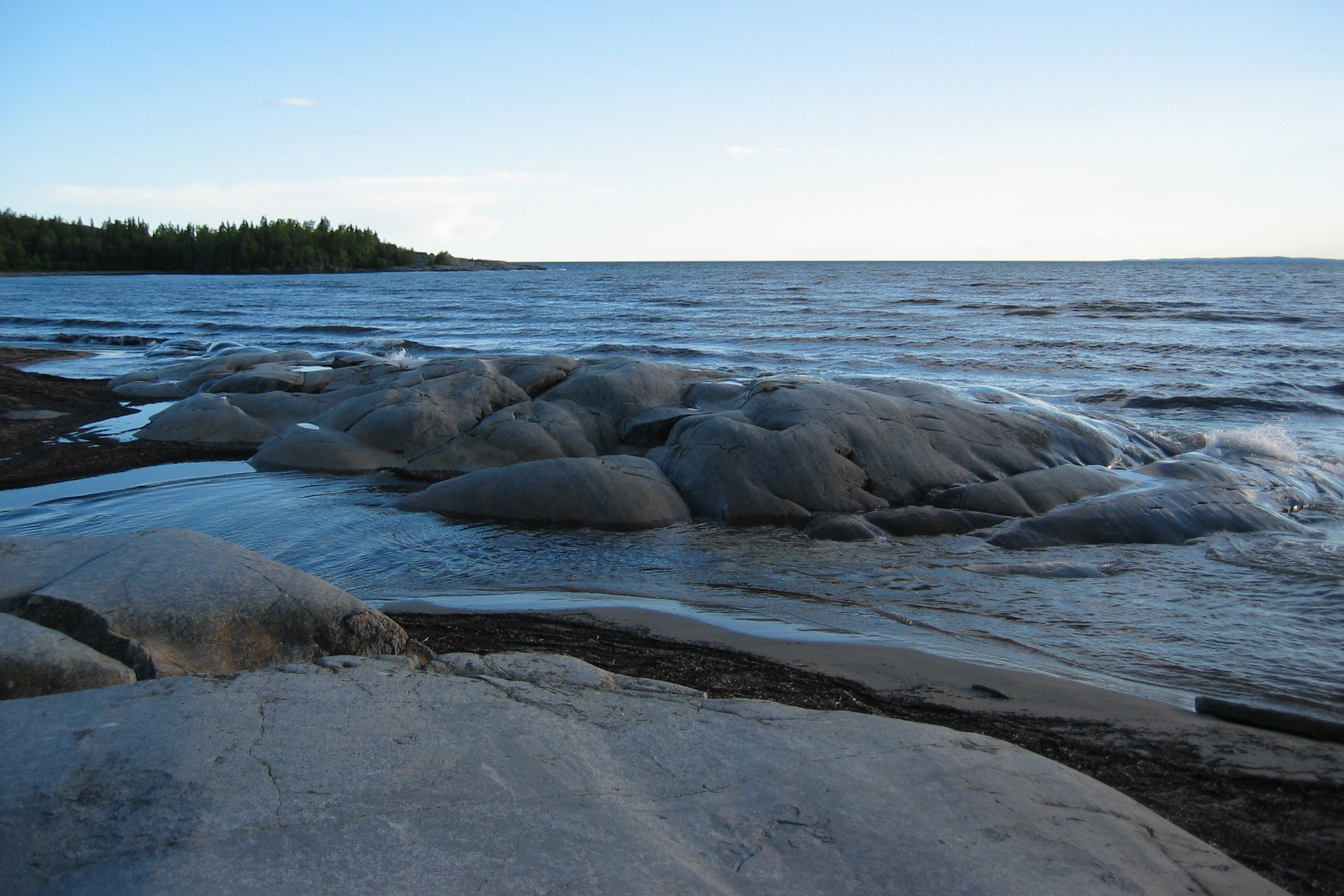
At the northern tip of Wisconsin, a river meanders northward to the world’s second-largest freshwater lake. As it flows, the river gives life to walleye as well as wolves and medicinal plants. Where the waters reach Lake Superior, abundant—but vulnerable—wild rice grows.

This land and this river have been home to the Mashkiigong-ziibiing and their ancestors, the Chippewa, Ojibwe, and Anishinabe, for more than 500 years. The wild rice (manoomin in Ojibwe) that grows near where Lake Superior meets the land is a sacred dietary staple. And it’s why the Chippewa settled near Lake Superior; their ancestors foretold to go west until they found food that grows on water.

Today, the Mashkiigong-ziibiing, or the Bad River Band of Lake Superior Tribe of Chippewa Indians, is up against the odds to defend its land rights, sovereignty, and healthy water.

The small 8,000-person Bad River Tribe has taken on a billion-dollar Canadian oil pipeline company to demand the removal of an illegal oil pipeline.

“Most communities can not afford those legal battles,” says documentary filmmaker and producer Mary Mazzio, who has been filming the land rights battle at Bad River since 2022. “This is not a wealthy community, but this is a priority for them because of what’s at stake for them: Lake Superior and fresh water for the country.”

Currently, more than 30 million people rely on fresh water from Lake Superior, according to the National Oceanic and Atmospheric Administration.

Mazzio released her documentary Bad River: A Story of Defiance in November 2024. It was awarded the best documentary film from the Environmental Media Association as well as being nominated for the Critics Choice best historic documentary and the best political documentary. The film has elevated the Tribe’s efforts and broadcast them across the country—even getting shared on social media by Leonardo DiCaprio with support from Mark Ruffalo, Edward Norton, Channing Tatum, and Jason Momoa.

“This is about a very small group of people fighting so hard for one of the world’s most precious resources, doing it at risk, at their own cost, for all of us Americans,” Mazzio says. It’s about redefining the American myth of conquest and Manifest Destiny.

As the case makes its way through the courts and environmental agencies, the Bad River Tribe is in a defining moment in its history, as members hold strong in their defense of manoomin and the fresh waters that sustain it—and sustain us all.

Treaties and a Sovereign Framework

The Bad River Tribe’s fight for sovereign autonomy is an all-too-familiar battle across North America. Since the 19th century, treaties, legal acts, and the Bureau of Indian Affairs have attempted to eliminate and control Native Americans. For example, the 1887 Dawes Act, also known as the Allotment Act, illegally broke up reservation land into parcels, which could then be purchased by private outside groups like timber companies.

“The Dawes Act intent was to assimilate people,” says Patty Loew, Bad River Tribal member and retired Northwestern University journalism professor. “We lost 98% of our land within 25 years.”

The Bad River Tribe’s 124,655-acre reservation—and tribal members’ right to fish, hunt, and gather on ceded territory as well as have a tribal government—still remains thanks to the seventh-generation mentality, says Edith Leoso, the Bad River Tribe’s former tribal historic preservation officer. Leoso says this framework is how the Ojibwe people made decisions during the time of the treaty signings as well as today: “How is what we’re doing now going to affect us seven generations from now?”

Despite the protections the Tribe had put in place through treaties and their own government, the Bureau of Indian Affairs allowed a Canadian oil company called Lakehead Pipeline, now Enbridge Energy Partnership, to build part of its 645-mile pipeline through the Bad River Reservation in the early 1950s.

And they did so without any tribal input.

The Enbridge Line 5 pipeline now runs from Superior, Minnesota, through Wisconsin and Michigan until it reaches Sarnia, Canada. Every day, it transports 540,000 barrels (23 million gallons) of crude oil through this landscape, threatening the beings who depend on this land and water.

Erosion Exposing the Pipeline

In the early years, the 12-mile segment of pipeline that sliced through the Bad River Reservation was overlooked.  “The priorities were to buy back land that was originally in reservation borders,” Loew says. Thanks to the income from its casino, which opened in the 1980s, the Tribe has managed to buy back about 70% of that land, says Tribal Chairman Robert Blanchard.

This is no small feat for a community of this size. “The average income of the people living on the reservation is $8,000 annually,” Leoso says. Their progress has taken decades of commitment and investment, using the casino income, which brings in about $40 million a year.

When a number of easements granted to Enbridge expired in 2013, the Bad River Tribal Council voted against renewing pipeline access. The council was motivated by a spill a few years earlier, when another Enbridge pipeline burst and poured more than 800,000 gallons of oil into the Kalamazoo River in neighboring Michigan. Leoso says this influenced the Bad River Tribe’s decision to vote no.

“It was unanimous,” she says. “No one abstained. I was surprised because we’re so conditioned to just go along with everything. I was like, ‘Oh, OK. We’re starting to play ball now? Let’s do this thing.’”

In the 12 years since then, the pipeline has still been illegally operating on Bad River tribal land.

Because of climate change, the risks are getting closer to home. When the pipeline was originally installed, it was approximately 350 feet from the Bad River, but erosion and two catastrophic flood events in 2016 and 2018 shifted the river’s course, so the pipeline is now just 12 feet from the river.

While Bad River has been fortunate to have not yet experienced a spill or rupture, the risk is ever present. In 2017, the National Wildlife Federation found that 29 other spills have occurred on the Enbridge Line 5 between 1968 and 2017, totaling 1.1 million gallons of oil.

Still the pipeline remains on the Tribe’s land.

In 2017 the Tribe doubled down, passing a resolution insisting the pipeline be decommissioned and removed from the reservation. And in 2019, the Bad River Tribal Council sued Enbridge for violating its treaty rights.

Enbridge offered $24 million to settle the lawsuit. The Bad River Tribal Council declined to settle and persisted with legal action. When I asked then-Tribal Chairman Mike Wiggins in 2023 what this money could do for the Tribe, Wiggins replied with a question of his own: “How much is your water worth?”

The pipeline, should it leak, threatens the very thing that brought the Tribe to this land and allowed its members to thrive.

“We’re facing a threat to wild rice from Enbridge,” Loew says.

Manoomin, or Northern wild rice, is particularly sensitive to pollution and flooding, according to a 2023 climate vulnerability assessment conducted by the Great Lake Fish and Wildlife Indian Commission, an intertribal agency of the Lake Superior Chippewa Tribes. Pollutants from industrial runoff, like sulphate, are linked to the collapse of rice beds.

Kathleen Smith works for the commission as the Genawendang Manoomin, which translates to “she or he who takes care of the wild rice.” Smith spends time surveying and collecting data in her canoe or via aerial surveys. She says that rain events can uproot the manoomin: “The 2016 flood prevented rice for a few years.”

For the people who depend on wild rice for physical and cultural sustenance, this loss is existential.

Defying the Odds

Enbridge’s proposed workaround is to reroute the pipeline to avoid crossing the Bad River Tribe’s land. The new segment of pipeline would be 41 miles long and would cost the company $450 million. Though the reroute wouldn’t cross the reservation, it would still cut through the Lake Superior watershed that fills the Bad River.

“We remain committed to finding an amicable solution that recognizes the sovereignty of the Bad River Band, protects the environment, and secures essential energy infrastructure that millions of people on both sides of the border rely on,” Juli Kellner, a communications spokesperson for Enbridge, said in an email in March.

The Line 5 Wisconsin Segment Relocation Project permit is the most-studied pipeline project in state history, she added, and called the pipeline an “energy lifeline, feeding a network of refineries that produce critical transportation fuels, propane, and thousands of everyday consumer goods.”

In September 2022, Judge William Conley of the U.S. District Court for the Western District of Wisconsin concluded that continued pipeline operations constituted trespassing. But he did not issue an injunction that would have shut down the pipeline immediately, citing “significant public and foreign policy implications.”

In his ruling in June 2023, Judge Conley ordered Enbridge to remove the portion of Line 5 that runs through the Tribe’s reservation by 2026. Enbridge would also need to pay the Tribe $5.1 million and a portion of their profits.

“It was good news,” current Tribal Chairman Blanchard says with trepidation. “At the same time, we’ve got to expect what has happened. They appealed it, and they have the money to appeal and appeal and appeal. We don’t.”

And so, the 12 miles of pipeline still cut across the Tribe’s land. As the community continues to wait for the pipeline’s removal, Leoso says they’re “on edge.”

“It was a victory,” Leoso says. “But a small victory. We know it’s never going to stop. They have acquired most of the land around the reservation for that reroute.”

Never Give Up, Prioritize Land

In March 2024, Enbridge offered the Tribe $80 million to “settle past disputes.”

The Tribe refused the money.

In April 2024, the Biden Department of Justice issued an amicus brief in the case, stating that Enbridge “lacks any legal rights to remain on those lands.” The U.S. Court of Appeals for the 7th Circuit heard arguments in the case in 2024 but has not yet issued a ruling.

As of May 2025, the Tribe still has not seen a decommission and removal plan. And Leoso hinted that she is fearful of what the Trump administration will try to come in and change.

“The Bad River Band is not looking for monetary damages. They want [Line 5] out of the watershed,” explains Mazzio, the filmmaker.

“We’ve been sending that message ever since Europeans touched foot over here,” Leoso says. “We keep telling the federal government they shouldn’t approve these things, they shouldn’t allow these things to happen, because it will impact the environment so much that it will kill us.”

As the oil continues to flow through the Line 5 pipeline and fossil-fueled climate disasters rage around it, Leoso says succinctly, “And now those things are killing us.”

In the fall of 2024, Enbridge was given reroute permits by the Wisconsin Department of Natural Resources to build the new 41-mile pipeline. The Bad River Tribe and environmental groups are now suing the department.

Enbridge is still awaiting federal permits, and Kellner says the company will not begin construction until all necessary permits are in hand. The U.S. Army Corps of Engineers has listed the project as eligible for emergency fast-tracking under President Trump’s executive order declaring an national energy emergency. After releasing a draft environmental assessment, the agency has received over 150,000 comments opposing the reroute.

Blanchard says the rerouted pipeline could still harm the Tribe’s ceded territory. “We do want it removed from the reservation, but we don’t want it within the Bad River watershed.”

Since the rerouted pipeline would be upstream from the Bad River, if there were to be a spill or leak, it could affect the Tribe’s ability to hunt, fish, and gather on the reservation, which he believes still violates the treaties.

“We are looking after our land, water, and harvest,” Blanchard says. “I do harvesting of wild rice and traditional medicine, all to feed my family, and I want my great-great grandkids to have what I have and to be able to do what I have done. Money is nice, but is it worth giving up land?”

This article was originally published by YES! Magazine; please consider supporting the original publication, and read the original version at the link above.

Kala Hunter is an environment and climate journalist who writes for the Ledger-Enquirer in Columbus, Georgia, about the local ripples of the climate crisis, stories about who and what is solving it and who and what is delaying action. Hunter has a master’s in journalism from Northwestern University and her work has appeared in Chicago Health Magazine, Sentient Media, and Mongabay.

Monsters, Coyotes and Other Native Tales of Resistance

August 21, 2026

Part II, read Part I here.

In Necessity: Climate Resistance and the Thin Green Line, Chief Don Sampson tells a story written by beloved Umatilla storyteller Edith Motanic, “The Monster Who Comes Up the River.” He explains how the monster in this folk tale symbolizes the insatiable appetites of colonial powers that devour Native lands and how the wily coyote, spirit of Indian resistance, tricks the monster and ultimately outwits him. Chief Sampson adds that there is a moral to this contest between the monster and coyote and it concerns competing forces within the human spirit. We all carry the capacity for good and for evil. Indigenous people can become selfish betrayers of their own people.

The Windigo legend circulates similarly among First Nations Peoples. According to Shawn Smallman, author of Dangerous Spirits: The Windigo in Myth and History, the image of the windigo beast “was a means of defining moral social behavior, which could serve as a warning against greed and selfishness.” This cannibalistic forest beast takes over the spirits of victims and turns them into other windigos. Driven by insatiable hunger, the beast appears as a towering, emaciated figure emanating the odor of decaying flesh and arousing feelings of intimate horror.

For many Indigenous scholars and cultural critics, the Native cannon of windigo folklore unfolds historically alongside settler colonialism and reflects as much the anxieties of the colonizers as it does the fears of the colonized. From the late 19th through the mid twentieth centuries, Christian missionaries, white trappers, traders and anthropologists reported what came to be termed windigo psychosis, a mental disorder where the sufferer holds the delusional belief that he is possessed with the evil spirit of the windigo monster and is driven to acts of cannibalism. While a few cases of cannibalism have been documented historically, they generally occur in famine or other extreme conditions of scarcity.

Windigoism and the Psychiatric Gaza

Fascination with windigo psychosis among Western psychiatrists and anthropologists led to a hotly debated controversy in the 1980s over the historical validity of the phenomenon. The challenge for these white experts, including American psychiatrists, was to identify and diagnose cases where the person is driven by madness to acts of actual cannibalism. Scholars in the 1960s began to look more carefully at the case material on which this diagnostic picture was formed. In 1981, anthropologist Lou Marano looked back on reports that circulated in psychiatry of psychosis-induced cannibalism among First Nations peoples. “In the vast majority of cases in which the Indians employ the term there is no psychosis by either Algonkian or European criteria, much less a psychosis involving murder and cannibalism,” Marano concludes. “Unfortunately, anthropologists zeroed in on the bizarre, the grotesque, and the macabre in Landes’s reports rather than on their inconsistencies and their second-hand nature.”

The term windigoism is used very broadly among First Nations and Native peoples, Marano points out, for states associated with “going mad.” Among the Ojibwe, “almost driven to windigo” refers to madness that arises from life-threateningly harsh conditions. The term is invoked with considerable sympathy as it expresses despair and distress of people who are separated from the group or lost. To white anthropologists and psychiatrists, the search for evidence of actual cannibalism in the reports they collected blinded them to the social symbolic meaning of the story. Scholars documenting the phenomenon agree, however, that tales of windigoism circulate among the Cree, one of the largest groups of First Nations and Indigenous peoples in North America, living mostly in Canada from Quebec to Alberta. Missionary settlers among the Cree were a common source of these stories, imposing their own cure of Christian conversion on sufferers.

Decolonizing Family Memory

My mother grew up in Norway Valley, Alberta–an area of Norwegian settlers straddling a Cree Reserve. Working with Tara Houska and other Native activists fighting pipelines transporting oil from the Tar Sands fields in Alberta, led me to revisit my own family history. What do we owe to Indigenous people as descendants of white settlers? In Canada, The Truth and Reconciliation Commission (TRC), operating from 2008-2015, was one form of recognition and place for reparations. Based on legal settlement between Residential Schools Survivors, the Assembly of First Nations, Inuit representatives and the parties responsible for creation and operation of the schools, the federal government and the church bodies, the TRC opened space for uncovering repressed memories of Native suffering–repressed in white colonial narratives but also among Indigenous people themselves.

For those of us who are conscious of the debts we share as descendents of white settlers, disturbing conflicts arise over how we pass on our own family stories of hardship. As a clinical psychologist, I hold a longstanding interest in family stories passed from one generation to the next and in working through family mythologies. One debt we owe to Indigenous peoples, including the Palestinians, is that they have helped us to understand the historical inter-dependencies of the oppressors and the oppressed. And we have learned how oppressed people can become the oppressor, as we see in the brutal subjugation of Palestinians by Jewish Israelis.

My mother worked as a maid for a wealthy family in Bellingham as a young woman in the 1930s before she married my father. She had many stories about growing up dirt poor in Northern Alberta. Her parents, like many rural poor people, were drawn to Spirit-filled Pentecostalism. Their faith was forged by the hell-fire preachers at revival meetings, those seasonal gatherings of believers and backsliders in tents on the prairies.

One beloved family story passed on from my mother unfolded around her own brave and adventurous mother, Ma, following her older brother Ole who had gone before her, leaving Norway in 1906 to arrive in New York City. She then traveled to northern Minnesota where she secured a job as a cook in a hotel. Eight years after marrying my grandfather, Pa, a Norwegian farmer and carpenter, the couple migrated with their four young children to an area at the border of Alberta and Saskatchewan, not far from what are now the tar sands oil fields. My grandpa had seen a post in their town, a railway hub in Minnesota, that announced land grants for white settlers by the Canadian Pacific Railroad. White settlers served as paramilitary sites protecting the rails going through Indian country. My grandparents had seven more children in a cabin that was built by Pa at Frog Lake–an area of Scandinavian settlers that became Norway Valley. The settlement straddled the Reserve of Frog Lake Nation–a band of Cree. My mother liked to tell us stories about her brothers running away from the lashings of Pa and how the brothers found sanctuary from his abuse among the Cree.

Of the many pioneer stories about family hardships that were passed on in my family, the story that put Frog Lake in Canadian history books was not among them. In 1885, twenty-three years before my grandparents arrived at Frog Lake, the largest violent resistance to white settlers in Canadian history took place. The Frog Lake Massacre, or what the Cree call the Frog Lake Rebellion, was organized by a band of Cree that had settled in the area but had not yet accepted the government’s reserve site. In resisting treaty demands and the decimation of buffalo that had left the Cree people in a state of near starvation, Chief Big Bear and Wandering Spirit, the war chief of the band, organized a campaign to seize weapons and food supplies, targeting the Hudson Bay Company post. Cree men attacked and killed nine whites in the small settlement of Frog Lake. Eight Natives, including Wandering Spirit, were hanged on Nov. 27, 1885 in the largest mass hanging in Canada’s history.

My mother and her siblings are now dead and I have no way of knowing what they knew of this history, although a commemorative grave in their town honors the white settlers who were killed. Local records from the region suggest that the massacre was a formative cultural memory for whites as well as for Indigenous people: “After the Indian uprising of 1885 twenty-five years passed before the influx of white settlers began to move into the area…Because of the wide-spread publicity that stemmed from the rebellion, Frog Lake was the place to which the pioneers came.” My grandparents were among those pioneers, encouraged by the Royal Canadian Mounted Police to settle in Frog Lake alongside the Reserve as part of a larger program of Indian pacification.

Solomon (Sa-we-pah-u) Delver, a Cree member whose family story is recorded along with that of my grandparents in Frog Lake, recalls another legacy of the era.

When I was a very small boy, I don’t know how old I was, I was sent to the Roman Catholic Residential School at Onion Lake. I was there for twelve years. My dad had sent me there to learn to understand the language of the white people. It was hard for me to be brought up as an orphan. I stayed with the nuns; they told me I am really a Roman Catholic which is how I was brought up. I used to ask a blessing before every meal I had. I used to go to Church in the evenings and in the mornings to the service in the Chapel before breakfast. I remember all these things when I was in the Residential School. It was hard far away from home, but it was the only way in which I could understand the White men.

Delver explains how his father sent him to the residential school to learn the language of white people. Yet laws passed in Canada made removal of Native children from their families and severing ties with their cultures mandatory. There were 25 residential schools in the province of Alberta and many were open until the last of the schools closed in the 1990s. The network of boarding schools was established by the Canadian government’s Department of Indian Affairs after the Indian Act of 1876 and administered by Christian churches, primarily the Catholic Church and the Anglican Church. Smaller denominations ran Residential Schools as well although their religious oppression may have taken more subtle forms. The Doctrine of Discovery, the papal edict of the late 15th century subsequently incorporated into international law that provided religious authority for European conquest of the continent, was a guiding worldview, supported by a series of Supreme Court decisions in the US and Canada, that justified claims on Native lands.

Solidarity and Survival

In my deeper understanding of my mother’s stories and my own familial work of “decolonizing history,” I still find a place for one of my mother’s favorite memories of the Cree. She liked to tell the story of being sent to fetch fish from an ice trap at the age of 10 and getting lost in thick fog in trying to find her way home. She remembered releasing the reins of her horse, knowing that the animal would know the way. In the fog surrounding her, she realized that she was passing through the Cree Reserve and closer than she had ever been to the Indians. The story ended with Mom’s girlhood astonishment: “After I passed through, I realized that they were not going to hurt me. The Cree Indians were actually good people.”

The monstrous violence inflicted on the Cree by white settlers never found a place in her family stories. Nor was there a place for recognizing Indigenous peoples’ own right to resist their colonizers. It is up to us, as descendants of those settlers, to join in the ongoing work of Indigenous resistance. As ravenous industries devour more of life, land and the planet itself, our collective survival lies in that shared struggle.

This is the second piece of a four-part series. These can be read along with other weekly commentary on her Substack page.

Jan Haaken is professor emeritus of psychology at Portland State University, a clinical psychologist and documentary filmmaker.


Source: Barn Raiser

When I first dreamed up this series, one intent I held was that Din and Ana’s investigations would put our two detectives in positions where they could examine all the internal organs of the Empire. How do these strange people make these biological miracles of theirs? How do they arm themselves, make their laws, treat their brains–and, perhaps, feed themselves?

How a fantasy empire feeds itself at first seemed like a rather dull subject (despite this, of course, being the dictating factor for nearly every major power throughout most of human history). But the more I turned my thoughts to how we feed ourselves in our real, present reality, the more commensal it all seemed.

We here in the West—if not in all of human society—maintain an unspoken, unshakeable belief that the farm is the natural state of man. Even though relatively few people work in agriculture now (at least compared to the past), there seems to be a free-floating awareness that our modern lives are an unnatural violation, and we should return to this primordial, traditional manner of life: the lowing of livestock, the Wellington boots, the smell of freshly tilled soil and the distant cock’s crow.

Yet agriculture, of course, is by default phenomenally unnatural. Each farm is a little bubble of unnatural reality, where crops and creatures do not succumb to the afflictions of the natural world: within these zones, they are unnaturally blessed with food and water and warmth; they are treated with medicines to render them unnaturally resistant to diseases and blights; why, even the creatures and crops themselves are deeply unnatural things. If your eye ever falls upon an illustration of the prehistoric ancestors of today’s corn or potatoes, for example, you’ll be stupefied to imagine that ancient civilizations ever thought they could breed crops from such piddly specimens.

Farms are not sites of hallowed tradition. They are, if anything, laboratories for profound biological change. We simply prefer to believe otherwise: if we paid it any attention, it could cause discomfort whenever we sit down to eat.

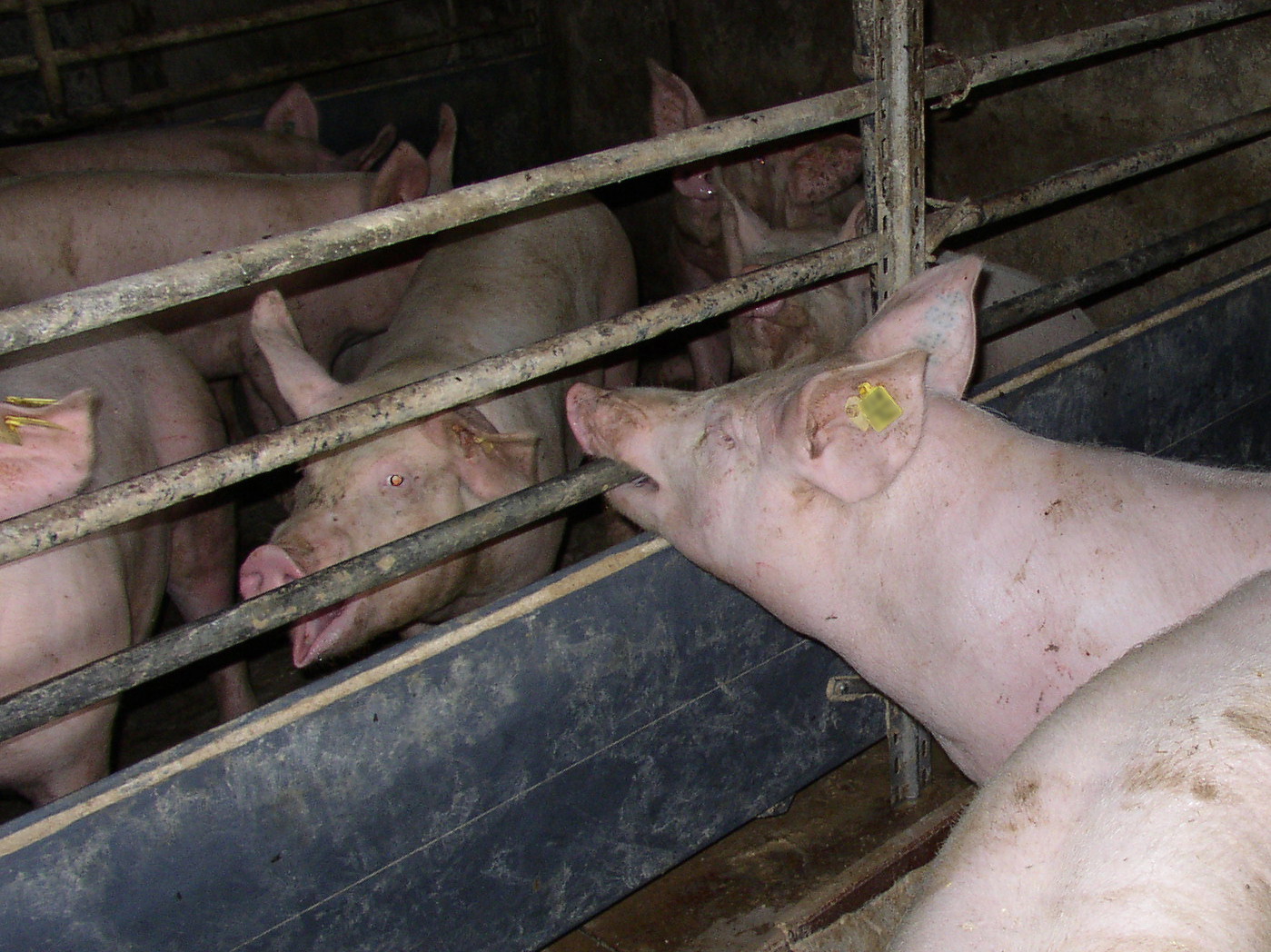
Because today, despite its veneer of rustic heritage, there are few industries more profligate and reckless than agriculture. It seems mad to devote precious water to growing alfalfa in the deserts of Arizona, all for cattle feed—and yet, we do it. It is mad to burn down the Amazon rainforest to grow soybeans for chickens and pigs—and yet, we do it. It is a foul thing to imagine piglets ground into paste to be fed to their own mothers, and yet this is fairly common practice. Just the land required to grow cattle and their feed is staggering to the point of stupidity. How many wars in human history have been fought for a fraction of this territory? The Ruhr Valley and the Aquitaine are rounding errors in comparison.

For each of these madnesses, very clever people can explain precisely why it is done this way—but, at heart, the reason is always the same: we hunger for these tastes, and demand to have those hungers sated. These practices are simply the most efficient methods of doing so.

The more I thought on it, the stranger the biologies of our world seemed. And how brilliantly we have hacked them, all the way from the stone age to this age of information. I realized that if I tried to shape the agriculture of the Empire of Khanum so it hewed close to our own methods, readers would reject it for being too foolish, too unbelievable, and too short-sighted. They’d toss the book aside and condemn it as absurd.

It is that short-sightedness that troubles me most now. I write this in early January of 2026, when many of the south and western American states have just experienced one of the most anomalous winters in living memory. Here in central Texas, it was another year when I wore shorts and short sleeves when hanging Christmas lights, and got bit to pieces by mosquitoes while doing so. We have yet to get below freezing even once, and have just tipped back over into severe drought. Many of the Rocky Mountains are totally without snow, all the way up to Wyoming. Though the upcoming summer’s heat and drought are usually assuaged by snowmelt, now the year appears quite daunting.

There is an unnerving, unspoken awareness that something, somewhere, has gone terribly awry.

We are living in an unnatural moment, and the future shall be more unnatural yet. And while it’s impossible to put it into quantifiable terms, probably about a third of that unnatural future can be attributed to agriculture: to its deforestation, to its fertilizer production, to all the incredible labor required to farm and grow flesh. Though we’ve dreamed up solutions to other causes of climate change, we have almost no answers to the problem of farming. But farming itself shall be curtailed in time, certainly: it was one thing to go a year without a freeze, but much more catastrophic, and yet now much more imaginable, would be a year without rain.

To meet this unnatural moment of our own making, we will have to imagine and fashion things far more unnatural than everything that came before, including methods of producing food. We shall have to become much more like the Empire of Khanum, I suspect, and attempt creations likely both strange and unnerving—though they shall be hardly stranger than what we’re doing now.

Whether we succeed remains to be seen. It is not a question of cunning—for I know we’re a very cunning species—but bravery, gumption and wisdom. There, I’m much less sure. Tradition is a hard thing to jettison, even when the very land refuses to foster it any longer.

But nature has rendered its verdict. The future is unnatural, whether we like it or not.


This article was originally published by Barn Raiser; please consider supporting the original publication, and read the original version at the link above.