It’s possible that I shall make an ass of myself. But in that case one can always get out of it with a little dialectic. I have, of course, so worded my proposition as to be right either way (K.Marx, Letter to F.Engels on the Indian Mutiny)
Monday, October 19, 2026
Solidarity with Ukraine
You can’t defend peace when there is no peace to defend Saturday 17 October 2026, by Colin Long
The Australian Greens’ new national leader, David Shoebridge, might think he is taking a principled position on Australian defence policy and peace, but that’s far from the case. In an interview with the Sydney Morning Herald, Shoebridge said that Australia should not provide any military support to Ukraine, should wind back US access to bases in Australia and scrap the AUKUS agreement. I’m with him on the latter two, but on Ukraine he is effectively calling for the destruction of Ukraine and the mass murder of its people.
Peace is the fundamental business of the left. But peace does not mean mindless pacifism. When countries come under attack from aggressors, they are entitled to defend themselves. Ukraine is entitled to defend itself. There is no point acknowledging that Russia is an aggressor against Ukraine and calling for the withdrawal of Russian troops, but then objecting to the supply of weapons to Ukraine. Objecting to Ukraine receiving weapons from wherever it can get them is doing Putin’s work for him. Putin won’t stop if Ukraine is unable to defend itself. The war would certainly end – but only with a subsequent crushing of Ukraine and hundreds of Bucha massacres. And then Putin will set his sights on the next victim – the Baltic states, Finland, Georgia, Sweden? Would Shoebridge object to weapons supplies to those countries?
There is a big difference between stopping weapons supplies to an aggressor or stopping arms going to countries before war has broken out, on the one hand, and stopping supplies of weapons to a country that is under attack, on the other. The former might end a war or stop it breaking out. The latter just guarantees that the victim loses. There is no peace to defend in Ukraine. There is a war and killing to stop. And while the war might end if the victim is unable to defend itself any longer, how is that a just peace? And ending the war on Russia’s terms won’t end the killing. It will just allow the killing of Ukraine and its people to continue in “peace”.
There is no practical or ethical difference between someone who supports Putin’s aggression towards Ukraine and someone who claims to oppose it but won’t support Ukraine’s right to defend itself. It’s like seeing an innocent person being beaten up on the street, yelling at the aggressor to stop but grabbing the arms of the victim and holding them behind his back while the thug continues to punch him in the face. This ethical inconsistency completely undermines Shoebridge’s objections to Australia’s dangerously subservient relationship to the US. Why would anyone trust the Greens’ judgement on Australia’s own defence policies when Shoebridge shows such poor judgement on Ukraine’s right to self-defence?
In November, the International Network of Solidarity with Ukraine is sending a Solidarity Convoy to Ukraine. We’ll be taking generators, stoves and other equipment to help Ukrainians get through another harsh winter under Russian bombardment. You can donate here. We won’t be taking weapons because we don’t have authority or the resources to do so. But we fully support Ukraine’s right to obtain arms to defend itself.
I hate hearing about the destruction being wrought in Ukraine, about the hundreds of thousands of soldiers from both sides being killed and wounded on the frontlines, the civilians, including many children, suffering and dying because of Putin’s war. But expressions of dismay about war and love of peace are fine for comfortable Greens politicians from inner-city Sydney. They are of no use to people enduring daily drone terror attacks.
Shoebridge claims to oppose Putin’s invasion and says the Greens support “basic humanitarian and civil assistance” to Ukraine but not the supply of weapons. This is mealy mouthed cowardice. Should others supply weapons? If they do, are they less principled than the Australian Greens? Are the Greens better than those who advocate for or supply weapons for Ukraine’s defence? Or do the Greens hope that others supply weapons while they keep their hands clean with “humanitarian and civil assistance”? What is the point of such assistance if Ukraine is defeated and occupied by Russia? Or do the Greens think that everyone should be as “principled” as them and that no-one should supply weapons? Again, the result of that, of course, would be Ukraine’s defeat by a Russia determined to eradicate it from the map.
It is rather ironic that Shoebridge’s call to end weapons supplies to Ukraine replicates similar calls from the Trump regime and all the European far-right parties. What colour do you get when you mix red, brown and green?
Anti-imperialism should be consistent. Aggression by one state against another should be resisted wherever it occurs – Israel’s relentless aggression against Palestine and other countries; the US’s aggression towards Venezuela, Cuba and numerous other states; Russia’s invasion of Ukraine. Ukrainians have a right to self-determination and self-defence. No geopolitical alliances, no complaints about NATO, no “western imperialism”, no false narratives about the Ukrainian government’s ideology: none of these justify the invasion of one sovereign nation by another and the killing of hundreds of thousands of soldiers and civilians.
Russia is an aggressive petro-state determined to impose its nationalistic, imperialist agenda on neighbouring states. It is, alongside Trump’s USA, the centre of the global far-right ecosystem of ethno-nationalism, Christian extremism, anti-LGBTQ prejudice, and anti-democratic politics. Putin’s regime is supported by far-right, anti-union parties and individuals all over the world: Farage’s Reform UK; Le Pen’s Rassemblement National, the Alternative for Germany, members of Pauline Hanson’s party, including Malcolm Roberts, the Freedom Party of Austria, Orban’s Fidesz in Hungary, the UK’s Tommy Robinson, the US’s Tucker Carlson, and many more.
Ukrainian unions and leftists are highly critical of their government’s policies towards the nation’s workers. But they support the war effort. Unionists and leftists are on the front lines. Workers bear the burden on the homefront in hospitals, on the railways, in fire and rescue services. They support their nation’s struggle. They can oppose their government’s domestic policies in a way that would get them only vicious repression in Russia. They ask only for our solidarity and our support – including the supply of weapons.
Imperialism should be resisted everywhere. Australia’s role in it as a satrap of the US needs to be recognised and resisted. We can oppose AUKUS and support Ukraine’s right to self-defence. You can show real practical support for Ukraine’s workers and unions, and for its struggle for national independence, by supporting the International Network in Solidarity with Ukraine’s Solidarity Convoy to Ukraine.
In an exclusive interview with Euronews, Katarína Mathernová defended Europe's support for Ukraine and said Kyiv could complete the technical preparations for EU membership by 2030.
Kyiv has become a "true frontline city" as Russia intensifies its aerial campaign against Ukraine, the European Union's ambassador to the country Katarína Mathernová told Euronews, warning that relentless attacks are increasingly disrupting everyday life in the capital ahead of winter.
Speaking exclusively to Euronews' Europe Today programme, Mathernová, who has lived in Ukraine since September 2023, said the situation had deteriorated sharply since late August, when Russia began launching frequent daytime attacks alongside its overnight bombardments.
"What happened since the end of August of this year is that Kyiv became a true frontline city," she said.
Air-raid alerts have forced children to interrupt lessons and seek shelter, doctors to suspend medical procedures and metro services to halt. Attacks on bridges have further complicated movement around the capital, she added.
"The situation is very, very, very difficult and the winter is not here yet," Mathernová warned.
Recalling strikes on the National Academy of Sciences, a hospital near the EU delegation and a kindergarten in central Kyiv in September, Mathernová accused Russia of routinely violating the laws of war.
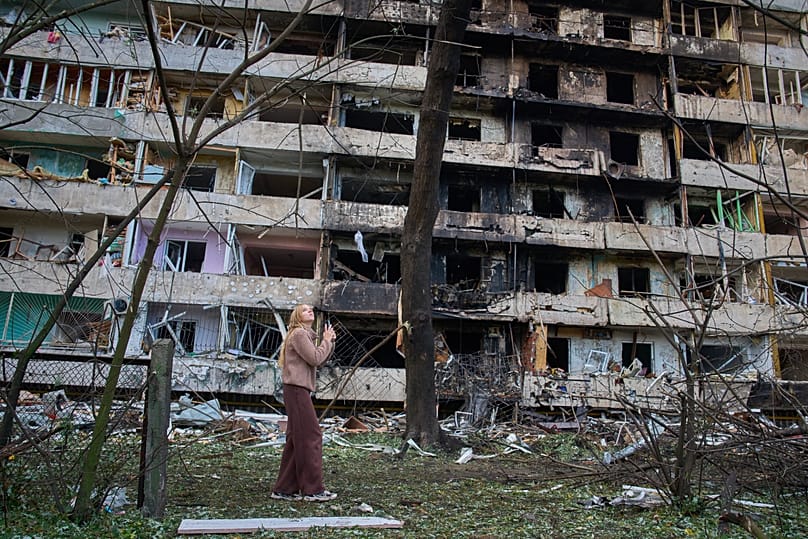
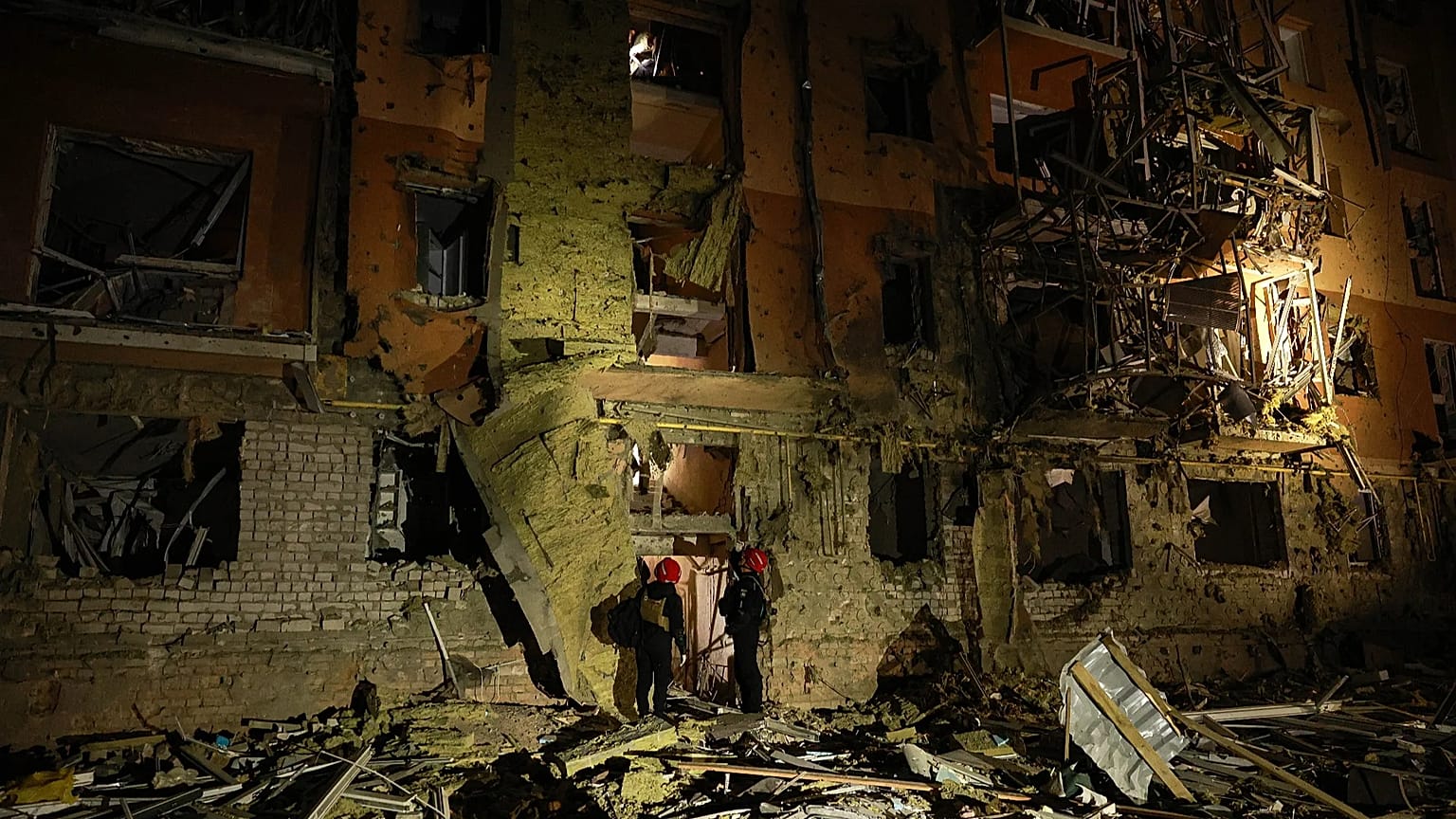
A young woman reacts as she looks at her damaged home after Russia's night missile attack in Kyiv, 14 October, 2026 AP Photo
"Let's remind ourselves that attacking civilian targets is a war crime. It goes against the laws of war," she said.
"The war crimes are happening on a daily basis."
Her comments come as Russia increasingly deploys faster, jet-powered drones, posing additional challenges for Ukraine's air defences.
Europe remains Ukraine's most reliable supporter
Amid mounting tensions between Kyiv and Washington, Mathernová said Europe had become Ukraine's most dependable source of military and financial assistance.
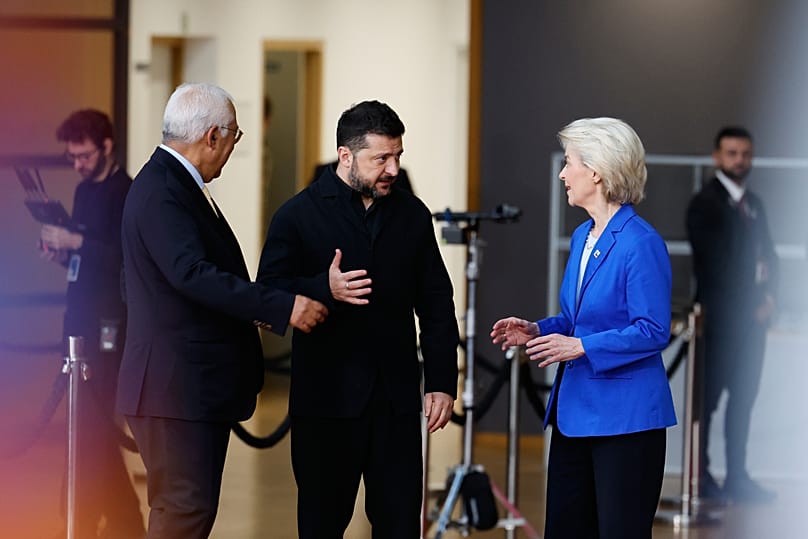
Having attended discussions between Zelenskyy, European Commission President Ursula von der Leyen and European Council President António Costa, she said she had sought to convey the urgency of the situation facing Ukrainians under intensifying Russian attacks.
The EU was now providing roughly three-quarters of Ukraine's financial support, according to Mathernová, who said European leaders remained determined to sustain that assistance while encouraging other partners to contribute more.
She also stressed that the bloc had no intention of easing sanctions against Moscow while the war continued.
Antonio Costa, Volodymyr Zelenskyy and Ursula von der Leyen arrive for the EU summit at the European Council building in Brussels, 16 October, 2026 AP Photo
Asked about European support for Ukrainian strikes on Russian oil refineries, Mathernová declined to comment on the potential diplomatic consequences for relations with Washington.
She nevertheless backed the position of EU foreign policy chief Kaja Kallas, who has described such strikes as legitimate self-defence.
"It's the fossil fuel industry that is fueling the war on the Russia side," Mathernová said.
Hungary rapprochement raises hopes for EU accession
Beyond military and financial assistance, one of the most consequential aspects of European support for Ukraine is the prospect of EU membership.
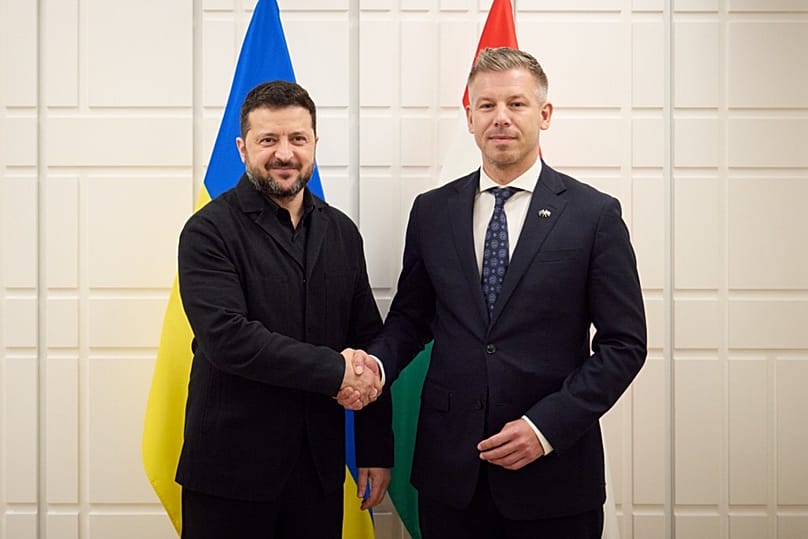
A recent meeting between Zelenskyy and Hungarian Prime Minister Péter Magyar in Brussels has raised hopes of further progress in Ukraine's accession talks.
Mathernová, who did not attend the meeting, said public accounts suggested the talks had gone well, offering grounds for optimism after years of disputes between Kyiv and Budapest.
Earlier in the week, the EU opened two additional negotiating clusters, covering the internal market and competitiveness and inclusive growth, bringing the total to four out of six.
Ukrainian President Volodymyr Zelenskyy shakes hands with Hungary's Prime Minister Péter Magyar in Brussels, 16 October, 2026 AP Photo
"There are only two clusters left to open and hopefully that will be done before the end of the year," she said.
A new joint task force launched by EU Enlargement Commissioner Marta Kos and Ukrainian Prime Minister Serhii Koretskyi will meet twice a week over the coming months to help Kyiv accelerate reforms, particularly on the rule of law and anti-corruption.
For Mathernová, the political will to join the EU is already there. The challenge now is turning that ambition into concrete reforms.
"I still think that all the technical work and all the preparation can be done by the end of the decade," she said.
That, however, would not necessarily mean membership by 2030. Ukraine's eventual accession would still require the agreement of EU member states.
Relate
'The European Union will be stronger with Ukraine'
Mathernová also sought to ease concerns about the economic implications of Ukrainian membership, arguing that similar fears had accompanied previous rounds of EU enlargement.
She recalled how the accession of Spain and Portugal had unsettled European wine producers, while the bloc's eastern enlargement in 2004 prompted anxieties over competition from agricultural producers and workers in the new member states.
Ukraine's vast agricultural sector and economic potential would inevitably raise similar questions, she acknowledged, but these could be addressed through negotiations, transitional arrangements and compromise.
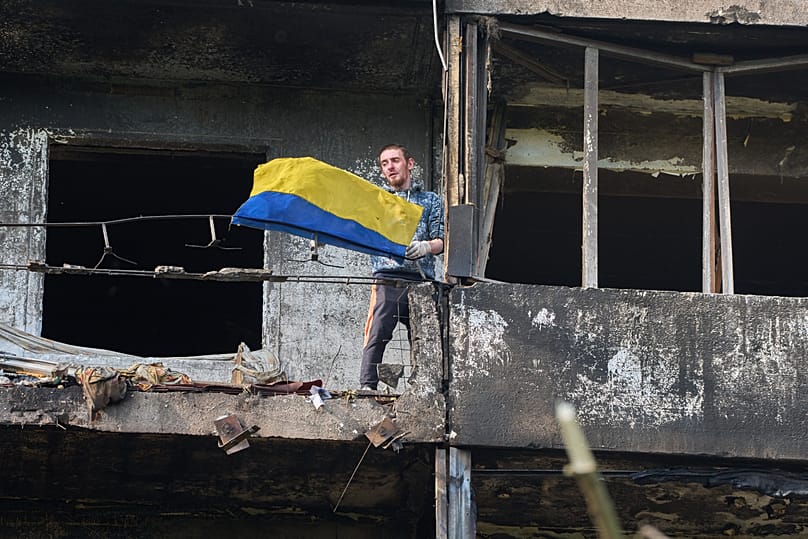
A man hangs out the national flag at his damaged apartment balcony after a missile strike during Russia's night air attack in Kyiv, 14 October, 2026 AP Photo
Political obstacles could prove harder to overcome. Mathernová cited North Macedonia's prolonged accession struggles as a reminder of how bilateral disputes can hold up enlargement, although she remained confident that sustained diplomacy could help resolve such differences.
Despite those challenges, she insisted that Ukraine's eventual membership would benefit the bloc as a whole.
"I am deeply, deeply, deeply convinced that the European Union will be stronger, more relevant in the world, more competitive with Ukraine in its midst," she said.
HE LIES LIKE HIS BOSS
Marco Rubio denies there was any pause in US intelligence sharing with Ukraine
Meanwhile, Ukraine is pushing ahead with plans to develop European alternatives to US-made air defence systems and Starlink satellite communications, with discussions already under way.
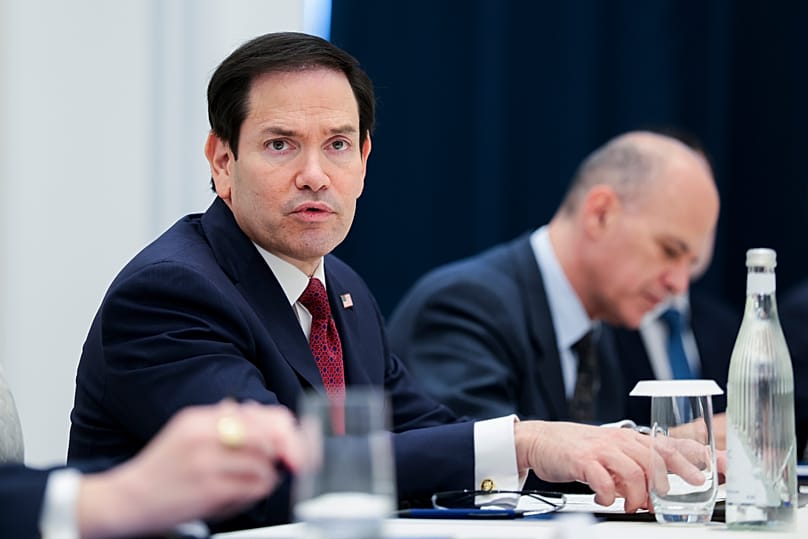
US Secretary of State Marco Rubio denied on Monday that there had been any suspension of intelligence sharing with Ukraine and called on President Volodymyr Zelenskyy to "focus" on ending the war with Russia.
"There has been no pause," Rubio told reporters when asked about Ukraine's claims that the United States had briefly halted the sending of intelligence to help counter Russia's missile attacks.
The Ukrainian leader told US media on Sunday that the move had been "deblocked by the American side" after a three-day suspension.
Rubio, who is in Uzbekistan for talks with Central Asian officials, said that President Donald Trump wanted Zelenskyy and Russia's President Vladimir Putin to concentrate on ending the Russian invasion, now into its fifth year.
"What he (Zelenskyy) should be focused on and what we want to be focused on is bringing an end to this war," Rubio said.
"That's what we want everybody to be focused on. That's what we want the Russians to be focused on. That's what we should be focused on. That's what the president has made a priority: is trying to bring a war and an end to this war," the top US diplomat said.
US Secretary of State Marco Rubio attends a meeting in Samarkand, 19 October, 2026AP Photo
Trump, who says he has made a deal with Russia to secure fuel exports in exchange for the easing of sanctions, has made renewed attacks on Zelenskyy in recent days over the war.
The US leader wrote on his Truth Social platform on Sunday that he was making "great progress" in negotiating peace between Russia and Ukraine, but claimed: "Zelenskyyy doesn't care, and frankly, with all of the money that Europe is famously giving him...he doesn't want to end this war and probably never did."
"Zelenskyyy is using Diesel Refineries in Russia as a target, knowing that these attacks are seriously hurting the world diesel markets, including those in the United States," Trump said.
But Zelenskyy said he was "thankful" that the United States has resumed intelligence sharing after a pause had left his country more vulnerable to Russian missile strikes.
"It was blocked for some period of time. And then it was deblocked by the American side. We are very thankful for this. Now it works," he told NBC's "Meet the Press" in an interview published on Sunday.
"Only (the) United States has this unique intelligence to tell our side when Russia uses ballistic missiles. And we didn't get it during ballistic attacks during three days," Zelensky added.
In the past week, Kyiv also reported restrictions to satellite services operated by Elon Musk's SpaceX, which Ukraine relies on for battlefield communications, shortly after US President Donald Trump criticised Ukraine and urged it to stop targeting Russian oil refineries.
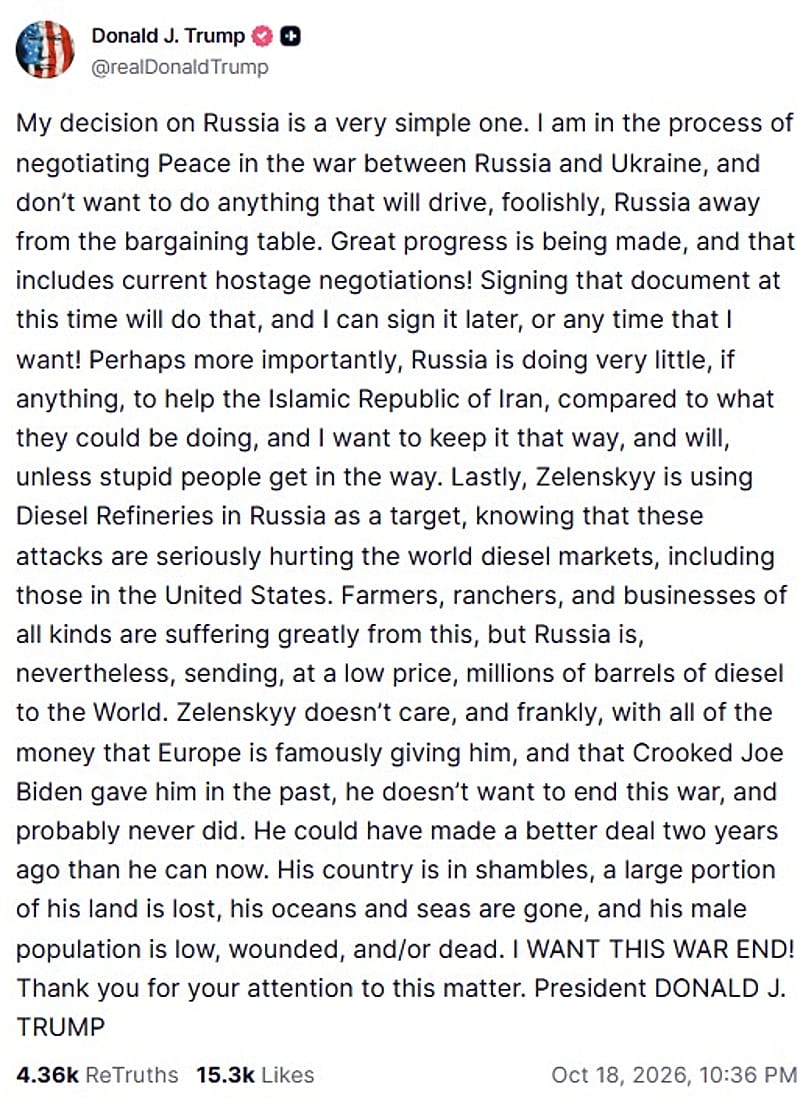
A screenshot of a post on US President Donald Trump's Truth Social account, 19 October, 2026@realDonaldTrump
Zelenskyy said he believed "it was a message from American government to limit the speed. And technically, SpaceX did it."
The Trump administration has denied it was behind any slowdown and Zelensky's remark drew a quick rebuke from a top US official.
"President (Donald) Trump and Secretary (of State Marco) Rubio have categorically said that no one in the Trump administration did that. And I think it is very reckless for President Zelenskyy to make such a charge," Bessent told NBC in a separate interview aired on the same show Sunday.
Bessent did not provide an alternative explanation.
Musk, who has himself been critical of Zelenskyy and has called on him "to go," said on Wednesday that any disruptions reported by Ukraine in using the Starshield satellite communications system would be the responsibility of the US government.
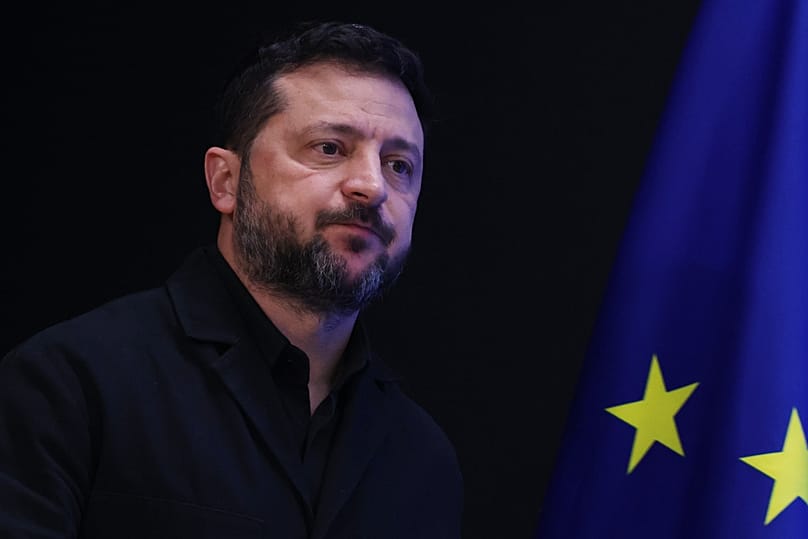
Ukraine's President Volodymyr Zelenskyy arrives for a media conference at the EU summit in Brussels, 16 October, 2026AP Photo
European alternatives
Meanwhile, Ukraine is pushing ahead with plans to develop European alternatives to US-made air defence systems and Starlink satellite communications, with discussions under way and Kyiv expecting progress considerably sooner than sceptics anticipate, a senior Ukrainian presidential official told Euronews last week.
In an exclusive interview with Euronews’ Europe Today programme, Ihor Zhovkva, deputy head of President Volodymyr Zelenskyy's office, said Ukraine was seeking to reduce its reliance on American capabilities as uncertainty over Washington's support places growing pressure on Europe to strengthen its own defences.
"We are, of course, relying on the unique capabilities provided by the United States, whether air defence systems or Starlink," Zhovkva said.
"But Ukraine has already begun substantive discussions with European countries about a European air defence system."
Ukraine's €70bn gap revives EU calls to make peace with Russia
Belgium's De Wever wants relations with Moscow normalised, while Slovakia and Hungary say they will not join the proposed 2027 funding package for Kyiv as the bloc's big economies run out of fiscal room. / bne IntelliNewsFacebook
A growing number of EU leaders are questioning whether Europe can keep paying for Ukraine's war, as Kyiv faces a €70bn funding gap for 2027 and the bloc's largest economies struggle with rising debt.
Belgian Prime Minister Bart De Wever has repeated calls he first made in a March interview with Belgian daily L'Echo for the EU to normalise relations with Russia and negotiate an end to the war, arguing that Europe could not end the conflict militarily or economically without full US backing.
De Wever's argument is finding more company as the bill grows. Belgium, which holds most of Russia's frozen central bank assets at Euroclear, led opposition last December to the reparations loan that would have lent them to Ukraine. EU leaders did not agree to use the assets and instead approved a €90bn loan to Kyiv, financed through joint EU borrowing. At the Brussels summit on October 15-16 De Wever again refused to discuss using the assets before the war ends, and Czech Prime Minister Andrej Babis said Czechia would not guarantee EU borrowing for Ukraine in the bloc's next Multiannual Financial Framework (MFF) seven-year budget.
Slovak Prime Minister Robert Fico said on October 17 that Slovakia would not take part in funding Ukraine's €70bn request for 2027, Mezha reported, and claimed that Hungarian Prime Minister Peter Magyar had taken the same line. Fico complained that the summit had spent too little time on peace initiatives. The camp arguing for talks with Moscow was for years led by Magyar's predecessor, Viktor Orban, almost alone.
Ukrainian President Volodymyr Zelenskiy told the summit the war would cost Ukraine €155bn next year. The leaders asked the European Commission to come up with a plan to cover the gap, but left open who pays. The Commission is expected to set out its options in November. If they include fresh joint borrowing it would be only the third time the EU has issued common debt on this scale, after the 2020 pandemic recovery fund and the current Ukraine loan, and several capitals oppose it.
The money is getting harder to find. Italy, France and Belgium all carry public debt above 100% of GDP, and France, Belgium and Poland have run deficits of more than 5% of GDP over the past year, according to Eurostat data.
France is in the worst political shape. Nearly 2,400 people were arrested and about 1,000 police officers injured in nationwide riots on October 17 that grew out of student protests over school and university underfunding and were joined by groups opposed to austerity and higher living costs.
But social unrest if rising across Europe as the dysfunctional European economy slides towards crisis. Experts say that France in particular will need a Greek-style ECB bailout soon if it can’t cut its budget deficit which is currently over 5% of GDP – well in excess of the EU’s own Excessive Deficit of 3% of GDP, mandated by the EU foundation treaty.
President Emmanuel Macron addressed the nation on October 18, condemning those who "destroyed, smashed, and looted".
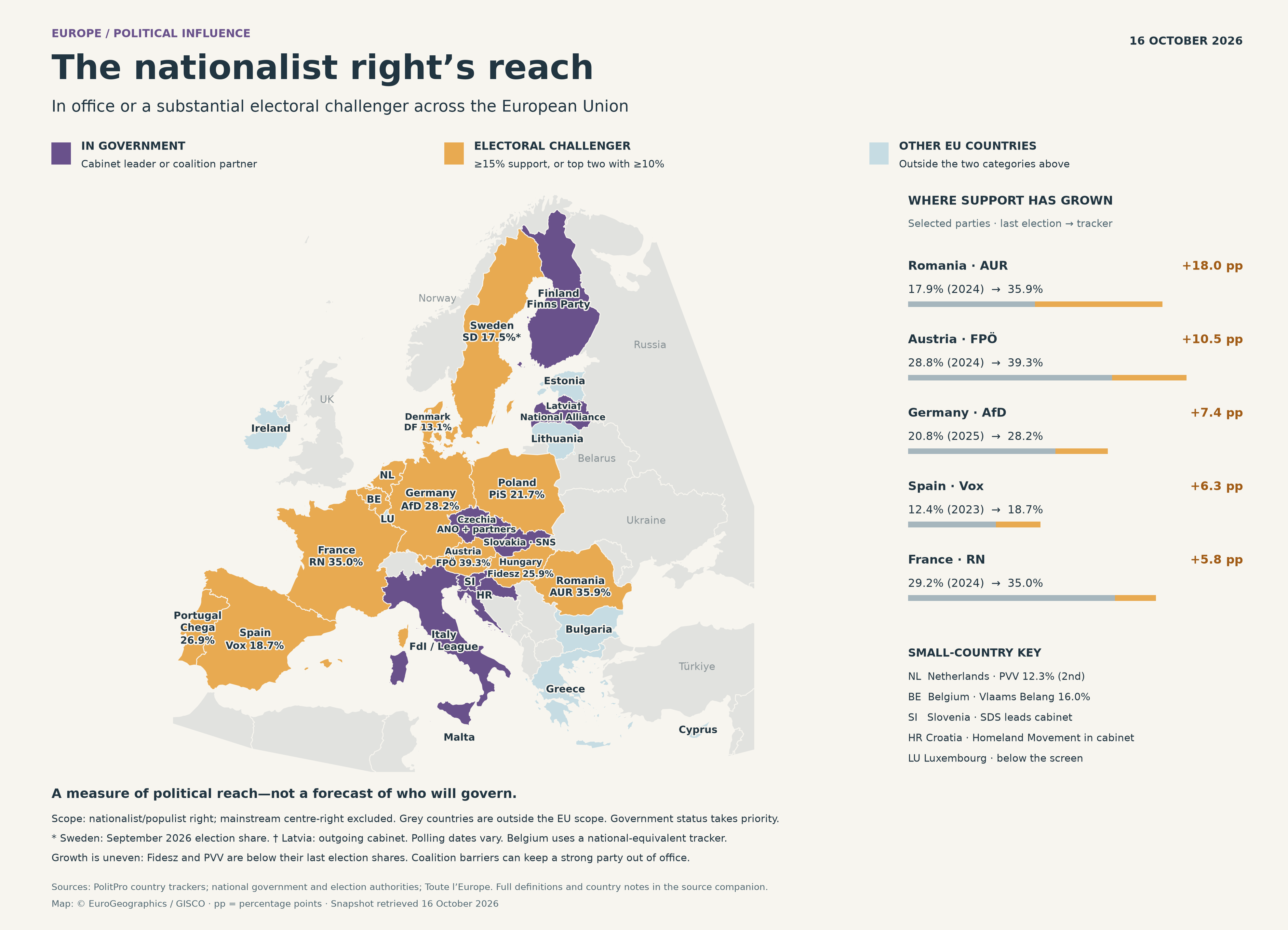
The deteriorating situation is also driving the rise of the nationalistic popular far-right parties across the continent, including France where, head of National Rally far-right party, Marine Le Pen looks like a shoo-in for the next presidential elections.
Energy is the other pressure. Europe has lost cheap Russian pipeline gas, the closure of the Strait of Hormuz has cut off Qatari LNG, and Germany's industrial model of importing cheap Russian energy and exporting high-value manufactures has broken down. The US is adding to the pull: Trump envoys Steve Witkoff and Jared Kushner have pressed Ukraine and European governments to accept a restart of Russian gas transit through Ukraine as part of a peace deal, The New York Times reported, a proposal Berlin has rejected.
THE NEW GLOBAL ALLIANCE OF TYRANTS
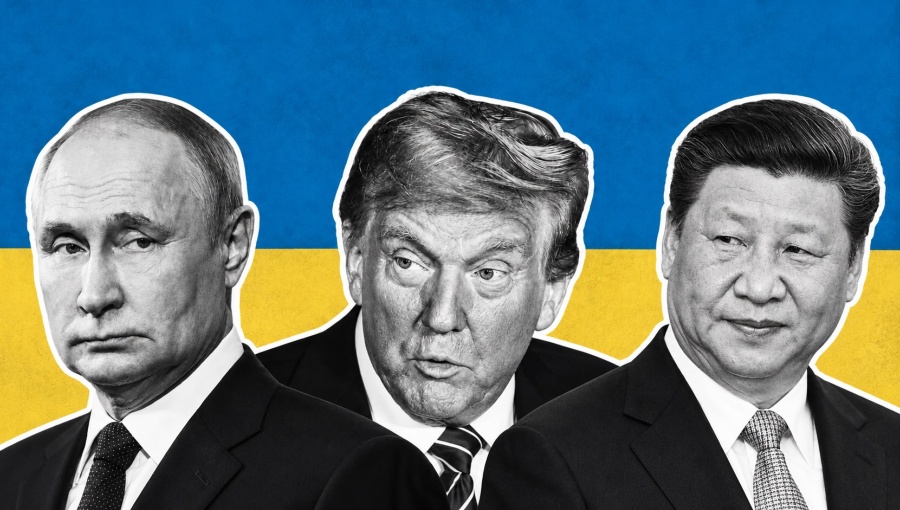
Putin proposes Ukraine peace summit with Trump and Xi that leaves Zelenskiy out
Moscow wants a three-way meeting in China next month as Washington squeezes Kyiv's air defences, intelligence and satellite links to force it to stop hitting Russian refineries. / bne IntelliNewsFacebook
Russian President Vladimir Putin has proposed meeting Donald Trump and Xi Jinping next month to settle the war in Ukraine. Volodymyr Zelenskiy has not been invited, The Wall Street Journal reported on October 18.
Putin floated the idea during his October 9 phone call with Trump, the same call that produced the controversial diesel deal for the US to buy Russian fuel and bring prices down at the pump ahead of next month’s midterm elections, a former Russian intelligence officer briefed on the matter told the paper.
The Kremlin wants the three leaders to meet on the sidelines of the Asia-Pacific Economic Cooperation (APEC) summit in Shenzhen on November 18-19. Beijing has signalled it would not object if Trump agrees.
"There is no clear understanding yet regarding the meeting itself or its potential agenda, although all three parties acknowledge the hypothetical possibility of such a meeting taking place," Kremlin spokesman Dmitry Peskov told the paper. A senior US official said Trump had not agreed to the summit but could be receptive to it.
The proposal comes amid mounting US pressure on Kyiv over its refinery strikes. Trump has demanded that Zelenskiy halt Ukraine’s bombing of Russia’s refineries and unilaterally announced an “energy ceasefire” on October 11, although it quickly became apparent that neither the Kremlin or Bankova had agreed to it – or even knew of its existence. Zelenskiy held off bombing refineries for three days but then resumed again after Russia ignored the deal. This weekend, Ukraine launched a new massive drone strike against the oil port in St Petersburg in defiance of Trump’s wishes further undermining the already bad relations between Bankova and the White House.
Washington has responded by throttling intelligence sharing and access to the Starlink communications network, and slowed crucial Patriot interceptor deliveries; intelligence sharing has since resumed, Zelenskiy said, although much confusion remains over the state of the service. Trump has also put on hold the Graham Act's hellish sanctions on Russia, all while demanding that Ukraine stop its drone campaign against Russian refineries. With US diesel prices at record highs and the midterm elections on November 3, Trump wants the strikes stopped, and Putin is offering him a format in which Ukraine has no seat at the table.
Zelenskiy accused Trump of pushing Ukraine to capitulate to Russia in an interview with Bloomberg on October 18, escalating a week-long row with the US president.
Trump answered in a post on Truth Social the same day, defending his decision to hold back the sanctions bill and turning on the Ukrainian leader.
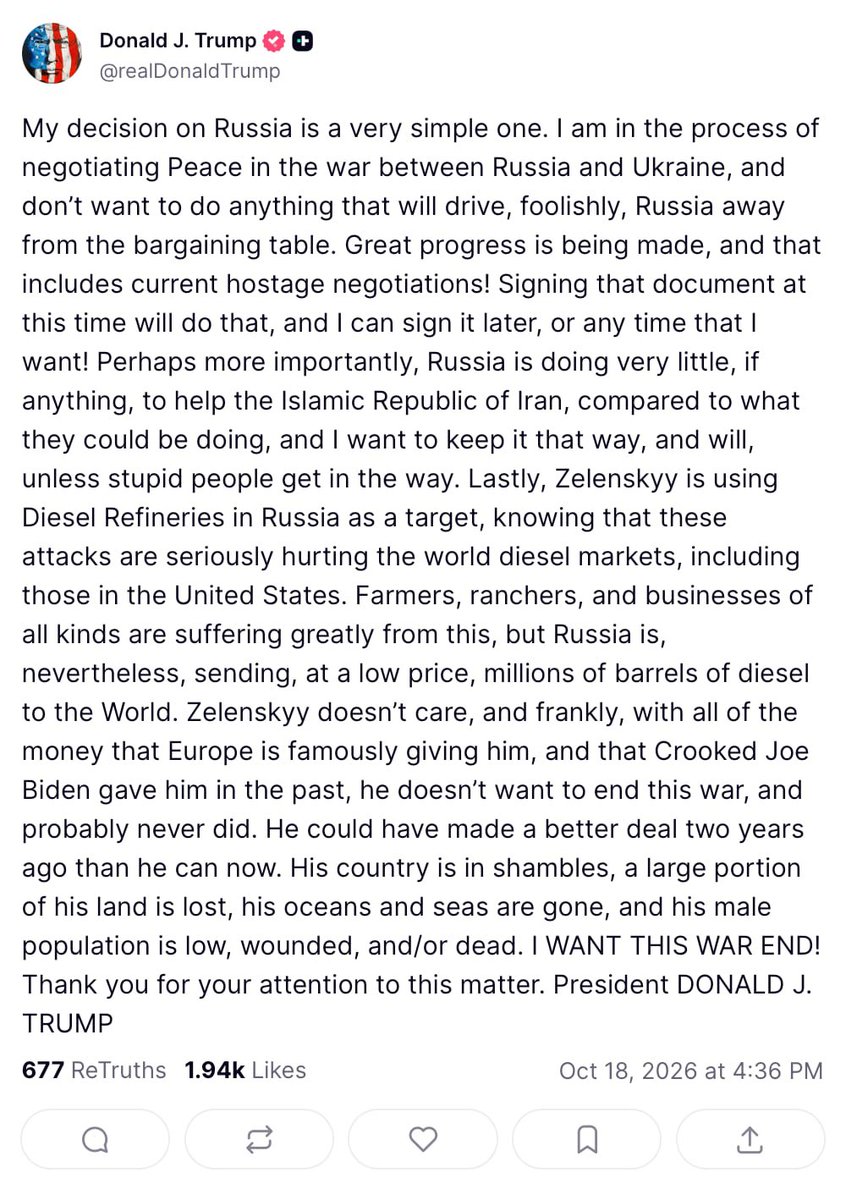
Trump's Truth Social post of October 18 on Russia, Ukraine's refinery strikes and Zelenskiy. Source: Donald J. Trump on Truth Social
"Zelenskyy is using Diesel Refineries in Russia as a target, knowing that these attacks are seriously hurting the world diesel markets, including those in the United States," Trump wrote. "Zelenskyy doesn't care, and frankly, with all of the money that Europe is famously giving him, and that Crooked Joe Biden gave him in the past, he doesn't want to end this war, and probably never did.”
In the last week the two presidents have traded increasingly vitriolic barbs. Trump called for Zelenskiy replacement as president after he very publicly criticised the diesel deal as a “betrayal” of Ukraine and followed up by calling Zelenskiy a “dictator” in a TV interview. Zelenskiy has since accused Trump of actively working towards Ukraine’s defeat in the war.
Trump added in this weekend’s post that Russia was "doing very little, if anything, to help the Islamic Republic of Iran" and that he wanted to keep it that way.
No missiles
Zelenskiy told Bloomberg that the US is now supplying just 12 Patriot interceptors a month, about a quarter of the rate under former president Joe Biden, and that Kyiv has to pay for them. Washington has approved only part of the missiles European allies have already paid for under Nato's Prioritised Ukraine Requirements List (PURL) scheme. "The American side approved the delivery of only some of them, but not the rest. And this is not a technical issue," he said. It has also been reported that Secretary of War Pete Hegseth has ordered Europe not to share what interceptors it has left with Ukraine, potentially cutting the Armed Forces of Ukraine (AFU) off completely from the only weapons that can stop Russia’s ballistic missile.
He has offered a trade, which the US has so far rejected. "My latest model was: We don't target Russian diesel, you give us missiles for Patriot systems to protect our facilities. But they just want us to stop attacking diesel," Zelenskiy said. The White House has already refused Kyiv any reward for halting the strikes, and Ukraine's interceptor missiles run dry as Russia's winter campaign intensifies. Coupled with a new class of Geran-5 jet powered drones, Ukraine is currently almost totally without effective air defences just as Russia scales up its winter bombing campaign.
The intelligence tap has been turned back on, for now. Zelenskiy said on NBC's Meet the Press on October 18 that the US had resumed intelligence sharing after blocking it for a period. The Washington Post reported on October 15 that US officials had warned Kyiv the flow would stop if Ukraine kept hitting Russian oil refineries, and Ukraine received no early warning of Russian ballistic missile launches on Kyiv on several occasions since October 12.
No satellite links, gas back on
Satellite links are the other pressure point. Ukraine has no access to the Pentagon's Starshield network, the military adjunct to the commercial Starlink communications network, and since October 14 Starlink terminals in Ukraine have shut down at speeds above 160 km/h, cutting out the interceptor drones Kyiv uses against Russia's jet-powered Shaheds, NV reported.
Ukrainian tests in EU countries ran the same terminals at more than 180 km/h. "The restrictions apply on Ukrainian territory, but they do not apply in EU countries. This means it is a planned operation," Zelenskiy said. US officials deny that Washington ordered any restriction.
US envoys Steve Witkoff and Jared Kushner are meanwhile pressing Ukraine and its European allies to accept the resumption of Russian gas transit through Ukrainian pipelines as part of a peace settlement, The New York Times reported. German officials pushed back hard at talks in Florida. Zelenskiy spoke to the two envoys on October 18 and said a face-to-face meeting with Trump's team could take place as early as this week.
Trump has made it clear from the start that he wants to do business with Russia. Zelenskiy reported earlier this year that there is a so-called Dmitriev package of deals worth an astonishing $12 trillion on the table. In addition to the gas project, the US envoys also suggested that some $100bn of Russian frozen assets be released and used to fund a US-Russia joint venture fund – a proposal rejected out of hand by Brussels.
Winter campaign
On the ground, Russia is trying to freeze Ukraine into submission as the heating season begins. Russian forces have massively scaled up strikes on what remains of Ukraine's energy and oil and gas facilities hitting them 76 times since Trump declared an "energy ceasefire" on October 11, Zelenskiy said on October 18. Russia has launched nearly 2,700 strike drones, 1,700 guided bombs and 66 missiles in the past week, most of them ballistic. Overnight strikes on substations in the Odesa, Khmelnytskyi, Vinnytsia and Zhytomyr regions left tens of thousands of families without power as of October 18.
Ballistic missiles hit Kyiv on the nights of October 18 and October 19, killing at least one person in the first attack, the Kyiv Independent reported. A hospital was damaged in the second attack, and missile debris struck a 25-storey residential block, journalist and former presidential spokeswoman Iuliia Mendel reports. Pro-Russian military bloggers claimed strikes over the weekend also hit the Zaporizhstal steel mill and the Zaporizhtransformator plant in Zaporizhzhia and a metals plant in Kryvyi Rih.
Russia has already reduced Ukraine’s generation capacity from 54GW pre-war to 12GW as of July, creating a 5-6GW deficit, but the recent campaign has taken out around a quarter of the remaining capacity and has begun to target key substations linking what remains of the nuclear power generation capacity that link these power stations to the grid.
A Russian plan intercepted by Ukraine, reported by The New York Times on October 15, aims to isolate Kyiv, Kharkiv and Odesa without electricity, heat and water this winter, using about 70 ballistic missiles, 720 long-range drones and 150 guided bombs. Kyiv's three combined heat and power plants have already lost more than half their pre-war capacity of about 1.3 GW.
Despite being now completely responsible for Ukraine’s funding and military support, the EU has also not been invited to the mooted summit and without a rapporteur is currently playing no role in proposed peace talks whatsoever.
Putin seeks Ukraine summit with Trump and Xi but refuses talks with Zelenskyy
The proposed talks come as Washington eases economic pressure on Moscow while pressing Ukraine to halt strikes on Russian oil infrastructure, raising concerns in Kyiv that the Kremlin is securing concessions without making any of its own.
Russia's President Vladimir Putin has reportedly proposed a three-way summit with US President Donald Trump and Chinese leader Xi Jinping next month to negotiate an end to the full-scale invasion of Ukraine, according to US media.
The proposal was reportedly made during a telephone conversation between Putin and Trump on 9 October, which also produced a controversial agreement involving Russian diesel exports to US and international markets.
Citing people familiar with the discussions, the Wall Street Journal reported on Sunday that the Kremlin suggested holding the meeting on the sidelines of the Asia-Pacific Economic Cooperation summit in Shenzhen which takes place on 18–19 November.
Kremlin spokesman Dmitri Peskov confirmed to the paper that discussions were under way, although no agreement has been reached yet on the meeting or its agenda.
A senior US official told the newspaper that Trump has not agreed to attend but could be receptive to the proposal.
There was no indication that Ukraine would participate in the proposed talks.
The prospect of such a meeting comes as Trump seeks to revive negotiations with Moscow, arguing that imposing further economic pressure on Russia could undermine efforts to end the war.
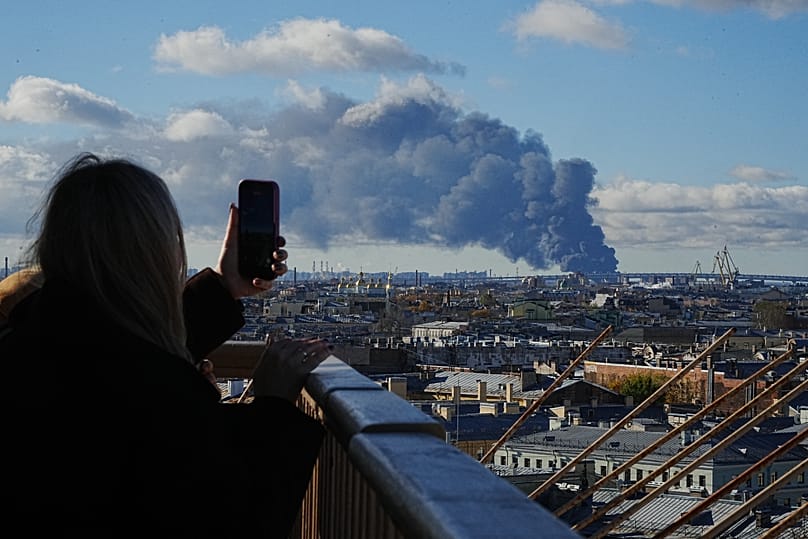
Smoke billows into the sky following Ukrainian drone strikes on an industrial zone in St. Petersburg, Russia, on Sunday, Oct. 18, 2026. AP Photo
"My decision on Russia is a very simple one," Trump wrote on his Truth Social platform on Sunday.
"I am in the process of negotiating Peace in the war between Russia and Ukraine, and don't want to do anything that will drive, foolishly, Russia away from the bargaining table. Great progress is being made, and that includes current hostage negotiations!"
He offered no details of any concessions secured from Moscow.
Trump's remarks followed his decision on 16 October to waive a series of new sanctions and tariffs targeting Russia and countries trading with it, just days before the measures were due to take effect.
The move came a week after his agreement with Putin on Russian diesel exports, as Washington seeks to contain soaring fuel prices exacerbated by the war in Iran.
Trump defended the diesel arrangement by arguing that Russia had refrained from providing more substantial assistance to Iran in its conflict with the US.
"Russia is doing very little, if anything, to help the Islamic Republic of Iran, compared to what they could be doing, and I want to keep it that way, and will, unless stupid people get in the way," he wrote.
A young woman reacts as she looks at her damaged home after Russia's night missile attack in Kyiv, Ukraine, Wednesday, Oct. 14, 2026. AP Photo
He also praised Moscow for supplying diesel to global markets at reduced prices, portraying the agreement as a contribution to easing pressure on international energy supplies.
At the same time, Washington has increasingly pressed Kyiv to suspend its campaign against Russian oil refineries, which Ukraine considers legitimate military targets because of the revenue they generate for Moscow's war effort.
The Trump administration even reportedly threatened to suspend intelligence-sharing and weapons deliveries unless Ukraine halted the strikes.
The dispute further strained relations between Washington and Kyiv, particularly as Russia continues to bombard Ukrainian cities and critical infrastructure.
Relate
Zelenskyy accuses partners of ignoring reality of Russia's war
Volodymyr Zelenskyy warned that easing pressure on Moscow risks prolonging the war, accusing Russia of rejecting diplomatic efforts to end the conflict while intensifying its attacks on Ukraine.
His latest comments followed another overnight bombardment in which, according to Zelenskyy, Russian forces launched 16 ballistic missiles at Kyiv and the surrounding region, alongside more than 200 drones across the country, including jet-powered variants.
More than ten energy facilities were damaged, leaving at least 550,000 households without electricity, he said. A medical clinic, a school, a metro station and residential buildings were also damaged.
Zelenskyy also said Ukraine had once again received no advance warning from its partners about the incoming ballistic missiles.
"Putin not only doesn't want to end this war – he doesn't even want to take any steps toward de-escalation," Zelenskyy wrote on X.
He stressed that Ukraine had responded positively to every ceasefire proposal put forward by its partners, while Russia had continued its attacks.
"When deliveries of missiles for Ukraine's air defence are blocked while Russia is granted relief or delays in sanctions, this is, unfortunately, a denial of reality on the part of our partners," he said.
"The reality is that the war continues, and it continues solely because of Russian strikes and Russia's desire to drag this war out," Zelenskyy said.