Saturday, October 24, 2026

The Existential Crisis Of Statehood: Proliferation And Operational Impacts Of Proxy Warfare In Middle Eastern Conflicts – Analysis


Erosion of the Weberian Monopoly on Physical Violence: Modern proxy warfare is counterintuitive to historical processes of state-building, with arming, financing, and training sub-state actors beyond constitutional structures, creating a destabilizing ‘oligopoly of violence’.

Institutional Infiltration and Hybrid Sovereignty: Iranian-backed proxy networks use the weakness of the state within the region to create parallel political, military, and economic systems; they receive public funding and enjoy state immunity and constitutional impunity and are not subject to civilian oversight.

Shift from Pan-Arabism to Statist Preservation (Wataniyya): There has been a significant paradigm shift in the political agendas of the region from the 20th-century concept of trans-state Arab unity (Qawmiyya) to the need to protect territorial sovereignty, state borders, and nation-state existence (Wataniyya).

Great Power Disruption and Transactional Failure: Superpowers and global competitors—such as the United States, Russia, and China—use the Middle East as a zero-sum space of influence, prioritizing short-term counterterrorism, energy security, or geopolitical leverage over supporting the strengthening of Middle East state authority.


Introduction


The nation-state has been the most contested and least taken-for-granted political form in the modern Middle East. The territorial map of the region, largely laid out during the imperial reordering of the post-World War I era, has remained cartographically persistent. Still, the internal substance of state sovereignty in the region has been increasingly eroded. Following the Arab Uprisings of 2011, it was widely predicted that the borders drawn by Sykes-Picot were destined to disappear due to the free movement of people or sub-state fragmentation, but this never came to pass. Practical administrative powers of the States wielded within these borders, however, have greatly eroded, and the gap between de facto administrative control and domestic legitimacy, and de jure legal sovereignty (international recognition), has significantly widened.

Post-colonial independence produced many ‘hard, weak states’ that were structurally fragile and institutionally lacking strong civic legitimacy, yet coercively authoritarian in their behavior towards domestic dissent. The random delineation of imperial borders created a degree of incongruity between the borders and identities, sowing seeds of irredentism and structural vulnerabilities in the regional system. The struggle of sub-state or trans-state identity networks thus remained a continual threat to modern statehood in the Middle East, while the domestic state’s concerns centered on the regime’s survival.

The current status of the Middle Eastern nation-state can only be understood by studying the state’s internal structural weaknesses and the external actors that exploit it. Certain of these external dynamics are the most acrimonious challenges to statehood in the region today, above all the constant proliferation of asymmetric proxy warfare. Proxy war is an active erosion of the state that undermines the monopoly on physical violence, institutionalizes hybrid forms of government, and involves non-state armed actors in the host state’s constitutional and administrative power structure. Modern proxy war is not a war to overthrow the international boundary; it is a war that undermines the central state from within by exploiting structural differences at home. External sponsors arm sub-state proxies with high kinetic power and turn states into places of constant security rivalry, endangering the very survival of Westphalian governance in the Middle East.

From Pan-Arab Unification to Statist Preservation: The Reordering of Regional Priorities


Throughout the twentieth century, there was a strong push for supranational ideational movements to question the legitimacy of individual states in the Middle East. Arab nationalism was an anti-colonial movement that stood for nationhood, asserting that all Arabic-speaking peoples were a single, undivided nation (al-Umma al-‘Arabiyya) united by language, history, culture, and a sense of collective identity. It began in the late nineteenth century, during the so-called Nahda (Arab Awakening) under Ottoman rule. After the First World War and the establishment of the Western mandate regimes, the Arab nationalist movement became a fervent anti-imperialist movement that demanded political unification of the Arab community under the slogan of pan-Arabism (Qawmiyya).


In Pan-Arabism, post-colonial territories were viewed as artificial, temporary, and divisive constructs of European colonial powers. Classical Pan-Arab ideologues asserted that the Arab world was divided into independent states, a historical aberration that could not stand and had to be rectified by achieving pan-Arab unity. In this ideology, it was considered that the security and interests of the whole Arab nation (raison de la nation Arabe) were of absolute moral value and priority over the narrow self-interest of any state (raison d’état). The notion of individual state sovereignty (Wataniyya) was often denounced by Pan-Arabists as “regionalism” or disloyalty to the anti-imperialist cause.

The zenith of Pan-Arabism was during the 1950s and 1960s when the charismatic Egyptian President, Gamal Abdel Nasser, led the way. In 1956, Nasser nationalized the Suez Canal, and in his victory over the British, French, and Israeli forces, Cairo came to wield great trans-state ideological influence. Nasser appealed directly to the populations of neighboring Arab states via Radio Cairo’s Sawt al-Arab and played on popular pressure within the country against pro-Western conservative regimes. To a large degree, Nasser created an informal norm of regional behavior that established standards of conduct, thereby limiting the sovereignty of individual states and punishing states seeking security alliances outside regional “collective” security systems.

The most explicit effort to realize the Pan-Arab dream was in February 1958 when Nasser unified Egypt and Syria into the United Arab Republic (UAR). The UAR was a policy of political incorporation, in which the state sovereignty of each member state was supposed to disappear in favor of a single regional state. The UAR experiment, however, very quickly revealed the fundamental conflict between unionist ideals and structural realities. The union was highly centralized in Cairo, with the Egyptian military and technocrats controlling key offices; the Syrian political parties were disorganized, and Egyptian economic policies were imposed on Syria. The union was not an equal one for the political and military elites of Syria, who felt frustrated by their subservient position to Egypt, and saw it as a form of Egyptian administrative rule that looked to promote the Egyptian state rather than unity. In September 1961, the Damascus military coup dissolved the UAR and reestablished Syria’s independent statehood. The UAR’s demise dealt a major blow to the cause of Pan-Arabism, as it became clear that even ideologically similar peoples were unwilling to give up their local statehood and administrative autonomy.


While the UAR revealed the structural weaknesses of pan-Arab unification, the catastrophic Arab defeat in the Six-Day War of June 1967 brought an end to the pan-Arab ideology. The rapid military collapse of the Arabs undermined the revolutionary regimes’ most important claims to regional leadership and anti-imperialist legitimacy. Following 1967, Arab foreign policy made a turning point: a fundamental change in emphasis from the ideational to the pragmatic dimension and from trans-state action to Westphalian statecraft. Self-help, territorial defense, and realpolitik power balancing were the sole means of survival adopted by Arab regimes in response to the serious security threats they faced. Internal state-building was further encouraged by the regularities of war and increased domestic revenue flows from the 1970s oil boom, leading to greater state strength and resistance to external ideological subversion by individual governments. The notion of patriotism and loyalty based on the individual territorial state, called Wataniyya, became the dominant factor in international relations in the Middle East, replacing Qawmiyya.

The contemporary political leaders play the role of Arab nationalists (neo-pan-Arabism) defensively, not with the intent of creating a unified entity that would diminish the importance of the state and increase the power of the pan-Arab movement. The politics of the region is less about seeking to “blur boundaries” than about a fierce, defensive effort to preserve and strengthen the state. The modern regional order in the Middle East is focused on the security of state structures, national boundaries, and the integrity against sub-state disintegration. Unlike in the mid-twentieth century, when states embraced the option of political merger, today’s governments in the Middle East are driven to preserve the nation-state and its security against armed sub-state actors and other proxy forces that aim to weaken the state from within.

De-Structuring the Sovereign State: Iranian Proxy Networks and Great Power Dynamics


Non-state armed actors within asymmetric proxy networks pose the greatest current threat to state survival in the Middle East. This is the approach that the Islamic Republic of Iran has followed, building an advanced regional network dubbed the “Axis of Resistance” (Mihwar al-Muqawama). Iran’s proxy model was launched in the wake of the Islamic Revolution in 1979 and is being managed by Iran’s Islamic Revolutionary Guard Corps – Quds Force (IRGC-QF), giving Tehran the ability to deploy asymmetric force, create strategic depth, and intimidate regional and global opponents, without facing the financial burden or the direct military threat of conventional interstate conflict.

Iran’s proxy strategy does not aim to overthrow host states or take their place with formal colonies, but rather creates a situation of “hybrid sovereignty”. Hybrid proxy actors are not revolutionaries but rather reside in, exploit, and control formal state structures from the inside. The result is parallel sovereignties that gradually erode the state both politically, militarily, economically, and administratively.


Hybrid proxies compete in national elections, serve in the parliament, and occupy key cabinet positions in the political and institutional arena. They use political tactics and threats to obtain legislation that allows them to block national defense decisions, control civil ministries, and control huge sums of public money to pay their own staff, build their own military bases, and establish their own political networks. In the military sector, the formal state armed forces, known as the military apparatus, are underfunded or constrained. At the same time, hybrid proxies maintain their own military wings equipped with advanced kinetic weapons, including precision-guided ballistic missiles, armed uncrewed aerial vehicles (UAVs), and anti-ship cruise missiles. These armed wings are totally independent of operational control, having their own councils and external patrons, and are neither under the national defense ministries nor under the constitutional commanders-in-chief.

In the economic domain, proxy networks create shadow economies that are not subject to the central bank’s control. They are tasked with taking control of key international border crossings, overseeing illegal cross-border trade, levying illegal customs duties, and conducting commercial activities. These activities deprive central state treasuries of tax revenue and finance the militia. In the social sphere, Proxies run alternative social welfare systems, religious courts, and medical facilities. Their provision of basic services to the marginalized creates solid sub-state popular legitimacy which outstrips the under-resourced civil infrastructure of formal state structures. Hybrid proxy actors benefit from all the advantages of statehood, such as sovereign immunity, legal protection, state salaries, and state representation via official diplomatic agents, but do not assume the constitutional responsibilities, legal obligations, or civic duties imposed by contemporary Westphalian statehood.

The three regional case studies – Lebanon, Iraq, and Yemen – illustrate this type of state capture very clearly. Hezbollah has transformed from a secret movement to the strongest political and military group in Lebanon. Hezbollah has a technologically advanced military wing, both in the number of precision-guided missiles it possesses and in the capabilities of those missiles. Hezbollah maintains an effective veto over the cabinet’s decisions and controls the Lebanese military, with members in the country’s cabinet and parliament. Hezbollah’s unilateral actions, such as deploying thousands of fighters in Syria to preserve the Assad regime or to start wars on the borders with Israel without considering the consequences, have deprived the Lebanese government of its authority over war and peace, thereby removing the formal state from the list of sovereign powers.

However, in Iraq, the vacuum of security since the 2003 U.S. invasion was the breeding ground for the flourishing of armed groups that are backed by Iran. The creation of the Popular Mobilization Forces (PMF / Hashd al-Shaabi) was triggered by the emergence of ISIS in 2014, which brought together dozens of armed groups. In 2016, the Iraqi parliament passed a law to incorporate the PMF into the state security apparatus and to allocate government salaries to its members. But this was a legal incorporation, not a legal subordination of militias to the government. Establishing and cultivating strong allegiance to outside patrons, extensive black-market economic networks, control of border crossings, infiltration of state ministries, and unapproved military incursions into foreign countries are all hallmarks of key PMF brigades that are systematically undermining official Iraqi sovereignty.


The Ansar Allah-Yemen conflict has turned into a proxy war, where a domestic political issue became a catastrophic war. In 2014, the Houthis decisively seized the capital city of Sana’a, ousting the recognized government, after receiving advanced missile technology, armed drones, and tactical training from Iran and Hezbollah. The Houthis took over to collect taxes and run millions of people without internationally recognized authority in the north of Yemen. The Houthis, who have a geographic location along the Red Sea, used their fleet of advanced missiles and drones to target international maritime traffic, even though they never have to face international legal liability for their actions, while also threatening Saudi Arabia continuously and trying to make one of the regional powers weaker.

Moreover, the principal-agent slippage is very severe in the case of proxy warfare. As time goes on, non-state proxies develop local bases, acquire local revenue, and advanced military technology. This leads to the emergence of local political aspirations and independence among the proxies, which sometimes result in confrontation with their sponsors or in their sponsors becoming entangled in unnecessary escalations. If autonomous proxies launch an uncoordinated military operation or violate red lines, host countries face devastating counterattacks. The formal host has no veto over the foreign patron or the local proxy and is completely disenfranchised in matters of national security.

These sub-state proxy threats have been consistently ignored by the global great powers (the United States, Russia and China) in trying to help Middle Eastern states eradicate them. 

Great power interventions have often worsened state fragility because of three systemic factors:

The Middle East is one field of zero-sum strategic competition for the world’s powers.


 Great powers do not invest in transparent institutional state-building; instead, they foster their state or sub-state allies to outcompete their global rivals. In Syria, for example, the Russian military intervention has been based on the principle of preserving the regime and ensuring naval facilities in Tartus and Khmeimim, rather than on the goal of restoring a unified and responsible state apparatus. Second, external actors pursue short-term transactional policies and narrow security interests, rather than policies aimed at dismantling non-state militias, to address issues of energy transit, nuclear non-proliferation, and counterterrorism. The United States has, on many occasions, directly allied itself with sub-state actors to achieve tactical objectives against extremist groups which have, in turn, negatively impacted central state authority. Third, foreign involvement that focuses on regime change or rapid withdrawal has repeatedly undermined administrative governance. The 2003 invasion of Iraq by the US and the 2011 NATO invasion of Libya destroyed existing institutions and administrative systems, but did not create any viable alternatives. The resultant security vacuum enabled regional competitors and non-state networks of proxy forces to grow by leaps and bounds. But caught between aggressive sub-state proxy penetration and the transactional apathy of global powers, Middle Eastern states are structurally undermined and cannot assert exclusive Westphalian sovereignty over their national territories.


Conclusion


The Middle East is now a nation-state in crisis. The Middle Eastern state was often designed as a hard, weak state: tightly militarized, institutionally weak, structurally vulnerable, and lacking civic legitimacy. Proxy war aggressively takes advantage of this situation, and it is an engine of state de-structuring. External powers provide funding, arms, and training to sub-state actors, thereby breaking the Weberian monopoly of physical violence and replacing the state with a heterarchic oligopoly of force. The rise of hybrid proxy actors, like Hezbollah in Lebanon, the PMF in Iraq, and the Houthis in Yemen, who hold formal positions in the government and also operate as independent military forces, creates permanent political gridlock and structural weaknesses, as well as threatening neighboring countries. At the same time, one can see that Middle Eastern states are preoccupied these days with the fundamental problem of protecting their borders, institutions, and survival, shifting from 20th-century Pan-Arab unionism (Qawmiyya) to statist preservation (Wataniyya).


To restore stability in the Middle East, the era of proxy management must give way to rebuilding the political substance of the nation-state in a functional, empirical manner. Domestically, governments at various levels should establish clear civic institutions, promote national citizenship, and ensure that all organized armed militias are strictly subordinate to the unified constitutional defense forces, or even eliminate them. At the international level, the world’s great powers and regional powers need to shift from a competitive approach to indirect involvement in fragile states. Unless territorial sovereignty is respected and the central administrative system is rebuilt, the Middle Eastern state will continue to perpetuate a vicious cycle of institutional collapse, proxy rule, and conflict.


About Dr. Ramzi Bendebka
Dr. Ramzi Bendebka is an Assistant Professor and Researcher at the International Islamic University Malaysia, Kuala Lumpur, Malaysia. His research fields include International Studies, Middle Eastern and African Studies, Regional Studies, and the Asia-Pacific Region. He is a contributor to different well-known sites and platforms, like Asia Power Watch, the Atlas Institute of International Studies, and Modern Diplomacy. Ramzi Bendebka is a section editor, editorial board member, and reviewer in several journals. He edited several books, and his recent research paper, “New regionalism” in the Middle East and North Africa region (MENA): an evaluation of its characteristics, Journal of International Studies.
View all posts by Dr. Ramzi Bendebka →
War At Sea: The Maritime Crisis And The Forgotten Rights Of Seafarers – Analysis


By K.M. Seethi


Key Takeaways:

Escalating conflicts—from Russia’s war in Ukraine disrupting Black Sea grain shipments, to Houthi attacks forcing diversions around the Cape of Good Hope, to the post-28 February 2026 US-Israel-Iran confrontation—have turned major maritime routes including the Strait of Hormuz into conflict zones, trapping approximately 6,000 seafarers and causing deaths, vessel attacks, and prolonged strandings.

International maritime law (UNCLOS, Maritime Labour Convention, San Remo Manual) and naval operations such as Operation Prosperity Guardian provide limited protection, as enforcement is weak, crews face multinational accountability gaps, and militarisation of distress channels and waterways endangers civilian lives and the environment.

The crisis exposes a core contradiction in which global trade relies on roughly two million seafarers, many from developing countries, yet prioritises oil prices and strategic interests over their safety, evacuation rights, and human security, underscoring that freedom of navigation is incomplete without protecting those who sustain it.


The world’s oceans have become ever more dangerous for commercial shipping and the millions of seafarers who sustain international trade. The war in Ukraine, the continuing Houthi attacks in the Red Sea and the military confrontation involving the United States, Israel and Iran have made some of the world’s busiest maritime routes into conflict zones. Merchant vessels carrying oil, food, fertilisers and other essential commodities have come under missile and drone attacks. Shipping companies have been forced to abandon traditional routes, while thousands of seafarers remain exposed to dangers over which they have little control.

The situation has deteriorated considerably since the United States and Israel launched attacks on Iran on 28 February 2026. The subsequent confrontation has placed the Strait of Hormuz, one of the world’s most important energy corridors, at the centre of a growing maritime crisis. The consequences sprawl beyond rising oil prices, disrupted supply chains and higher insurance costs. They raise critical questions about the safety, dignity and rights of civilian seafarers caught in military conflicts.
From the Black Sea to the Persian Gulf

The maritime crisis acquired a new dimension following Russia’s invasion of Ukraine in February 2022. The Black Sea became a major theatre of military operations, threatening commercial vessels transporting grain, energy and other commodities. The disruption of Ukrainian grain exports contributed to global food insecurity, particularly in countries dependent on imports from the region.


The Black Sea Grain Initiative, negotiated in July 2022 with the involvement of Türkiye and the United Nations, temporarily facilitated the movement of Ukrainian agricultural exports. However, Russia’s withdrawal from the agreement in July 2023 renewed uncertainty over commercial navigation. Missile attacks, naval mines and strikes on port infrastructure continued to threaten merchant vessels and their crews.

The war demonstrated how fast civilian shipping could become vulnerable when major powers resorted to military force. Seafarers from countries having no direct involvement in the conflict found themselves exposed to attacks, prolonged confinement and uncertainty over evacuation.

The crisis subsequently spread to another vital maritime region. Following the outbreak of the Gaza war in October 2023, Yemen’s Houthi movement began attacking commercial shipping in the Red Sea and the Gulf of Aden. The Houthis presented their operations as part of their campaign against Israel and its supporters. However, attacks on merchant vessels placed civilian crews of different nationalities in danger.

The Red Sea and the Bab al-Mandab Strait form a crucial link between the Indian Ocean and the Mediterranean through the Suez Canal. Before the disruptions, the Suez route carried approximately 12–15 per cent of global maritime trade. Houthi attacks involving anti-ship missiles, drones and other weapons forced major shipping companies to divert vessels around Africa’s Cape of Good Hope. These diversions added thousands of nautical miles to voyages between Asia and Europe. Depending on the route, shipping times increased by one to two weeks. Additional fuel consumption, insurance premiums and operational expenses increased the cost of maritime transportation.


The effects were felt across the conflict zone and the countries dependent on imported food, energy and industrial materials faced additional costs. The longer voyages also increased greenhouse gas emissions, undermining efforts to reduce the environmental impact of international shipping.


The Strait of Hormuz: A Humanitarian Emergency


The confrontation involving Iran, Israel and the United States has created another serious crisis in the Strait of Hormuz. The narrow waterway connects the Persian Gulf with the Gulf of Oman and the Arabian Sea. It is indispensable to the transportation of oil and liquefied natural gas from the Gulf. According to the International Maritime Organization (IMO), approximately 6,000 seafarers remained trapped aboard commercial vessels in the region in October 2026. The organisation’s Secretary-General, Arsenio Dominguez, described the situation as critical and warned that safe navigation could no longer be guaranteed.

Reports published on 22–23 October indicated that the IMO had confirmed approximately 100 maritime incidents as of 9 October, while at least 24 seafarers had been killed since the conflict began on 28 February. Another 24 commercial vessels were reportedly attacked within approximately two weeks.

These figures reveal the seriousness of the situation. They also indicate the limitations of available information. The actual human consequences may be greater because smaller commercial vessels, fishing boats and other maritime workers are not always adequately represented in international reporting.


The attacks on the Singapore-registered vessels GFS Pride and GFS Giselle on 13 and 14 October validated the dangers. GFS Pride reportedly sank after being struck by a projectile, although its 21 crew members survived. GFS Giselle suffered hull damage, and its 22 crew members were evacuated. The immediate question concerns the fate of thousands of seafarers who remain stranded. They are unable to leave their vessels safely, return home or determine when normal commercial operations will resume. The IMO has advised shipping companies to avoid transiting the Strait until credible safety guarantees become available. Yet this warning provides little immediate relief to those already trapped in the conflict zone.

Seafarers as Victims of Geopolitical Conflicts

International maritime trade depends on approximately two million seafarers. A substantial proportion comes from developing countries, including India, the Philippines, Indonesia and other Asian nations. Their labour sustains the movement of commodities that support industrial production and everyday consumption across the world. However, seafarers remain among the most vulnerable workers during international conflicts. They spend long periods away from their families, often under difficult working conditions. When war breaks out, they face dangers that are unimaginable, going beyond the normal risks of maritime employment.


The current crisis has exposed them to missile attacks, drone strikes, naval mines, detention and prolonged confinement. Many experience anxiety over their families, uncertainty about wages and difficulties accessing medical assistance. Evacuation may become impossible when ports are closed or surrounding waters are militarised.

The multinational composition of commercial crews creates additional complications. A vessel may be owned by a company in one country, registered in another, operated from a third and staffed by workers from several countries. This complex arrangement makes accountability difficult when emergencies arise. For Indian seafarers, the crisis has particular significance. India is among the major suppliers of maritime labour to international shipping. Indian nationals serving aboard foreign-flagged vessels may be exposed to conflicts in which India has no military involvement. Their safety depends on shipping companies, flag states, coastal authorities and diplomatic intervention. When these institutions fail to coordinate, the seafarer becomes the weakest party in an increasingly complicated international system. The problem also concerns the right of workers to refuse dangerous assignments. Maritime employment should never require civilian workers to accept the possibility of death merely because commercial contracts must be fulfilled.

Maritime Law and Its Limitations

International law contains several provisions intended to protect commercial navigation and civilian seafarers. However, the present crisis has exposed serious weaknesses in their implementation. The United Nations Convention on the Law of the Sea (UNCLOS) establishes important principles governing navigation. Article 87 recognises freedom of navigation on the high seas, while Article 38 provides for transit passage through straits used for international navigation. These provisions are essential to the functioning of international maritime trade. But they cannot, by themselves, prevent missile attacks, naval blockades or the seizure of commercial vessels.


International humanitarian law also requires parties to armed conflicts to distinguish between military objectives and civilian persons and objects. Merchant vessels ordinarily enjoy civilian protection, although they may lose protection against attack under specific circumstances recognised by the law of armed conflict. The 1994 San Remo Manual on International Law Applicable to Armed Conflicts at Sea provides further guidance concerning naval warfare, blockades and the protection of merchant shipping. However, it is not a binding international treaty, and its provisions depend substantially on compliance by states and other parties to conflicts. The Maritime Labour Convention of 2006, adopted under the International Labour Organization, establishes standards concerning seafarers’ employment, health, safety, welfare and working conditions.

Nevertheless, the convention was not designed to resolve military confrontations between states. Its effectiveness depends on implementation by flag states, port authorities and shipping companies. In active war zones, these mechanisms are frequently inadequate.

The 1988 Convention for the Suppression of Unlawful Acts Against the Safety of Maritime Navigation also addresses serious acts of violence against shipping. Its application to particular incidents depends on the treaty’s jurisdictional provisions and exclusions, including those relating to armed conflict. The major difficulty is therefore one of enforcement. International maritime law recognises important rights and obligations, but there is no effective global mechanism capable of guaranteeing the physical safety of every merchant vessel during armed conflict. The IMO can issue warnings, coordinate assistance and facilitate negotiations. It cannot compel belligerent states or armed groups to cease attacks. Similarly, international labour standards offer protections that become difficult to enforce when commercial shipping enters militarised waters.

Militarisation and the Failure of Maritime Security

The international response to maritime insecurity has relied heavily on naval deployments. The United States and its allies established Operation Prosperity Guardian in December 2023 to protect commercial shipping in the Red Sea. European naval forces have also undertaken defensive operations, while the Indian Navy has maintained a substantial presence in the Arabian Sea and surrounding waters. These deployments have helped protect some commercial vessels and respond to emergencies. However, they have failed to eliminate the threat.

The continuing Houthi attacks demonstrate the limitations of military responses against armed groups operating from coastal territories. Similarly, the confrontation in the Persian Gulf shows how commercial shipping can become vulnerable when naval operations themselves form part of a wider military conflict. The reported dispute over the use of VHF Channel 16, the internationally recognised maritime distress and safety communication channel, illustrates another disturbing development.

Iran has accused American naval forces of using the channel to intimidate civilian crews. The United States maintains that its communications were intended to enforce its naval blockade and provide warnings. The Iranian allegations have not been independently substantiated.


Nevertheless, the controversy raises serious questions about the use of maritime safety systems during military operations. Communication channels intended to protect lives at sea must remain reliable and accessible to all vessels. The militarisation of international waterways also creates environmental dangers. Attacks on oil tankers and vessels carrying hazardous materials can cause serious pollution. The sinking of cargo ships threatens marine ecosystems, fisheries and coastal livelihoods. Longer shipping routes further increase fuel consumption and emissions. Thus, the consequences of maritime conflicts extend from commercial trade and labour rights to the environmental security of coastal communities.

The Forgotten Human Dimension

International discussions of maritime security frequently concentrate on oil prices, freight rates, insurance premiums and the strategic interests of major powers. The human consequences receive much less attention. The suffering of seafarers rarely attracts the international concern associated with other categories of civilian victims of war. Their isolation at sea, the multinational character of their employment and the commercial interests surrounding shipping contribute to this neglect.

The present crisis calls for a different approach. Protecting commercial navigation should begin with protecting the people who operate commercial vessels. Governments, shipping companies and international organisations must ensure that seafarers receive timely information about security threats, effective evacuation assistance, medical support and access to their families. Their right to refuse assignments in designated warlike or high-risk areas must be respected in accordance with applicable agreements. Compensation and insurance arrangements should provide meaningful protection when workers suffer injury, detention or death. There is also an urgent need for stronger international coordination to secure humanitarian evacuation corridors and prevent civilian crews from becoming instruments of military pressure.

Finally, the crisis reveals a major contradiction in the international maritime order. Global commerce depends on the freedom of the seas, but the protection of those who sustain that commerce remains inadequate. International law contains provisions intended to safeguard navigation and civilian lives, but political and military interests frequently override these obligations.

The wars in Ukraine and the Middle East have exposed this contradiction with disturbing clarity. The oceans cannot remain secure merely through the deployment of additional warships. Their security depends equally on diplomacy, restraint, respect for international law and recognition of the rights of those who work at sea.

For the thousands of seafarers stranded in the Persian Gulf and other conflict zones, these are immediate questions of survival. Their predicament should remind the international community that maritime security is ultimately about human security. The freedom of navigation loses much of its meaning when those responsible for keeping the world’s trade moving are denied the basic freedom to return home safely.


About K.M. Seethi
K.M. Seethi is Director, Inter University Centre for Social Science Research and Extension (IUCSSRE), Mahatma Gandhi University (MGU), Kerala. He also served as ICSSR Senior Fellow, Senior Professor of International Relations and Dean of Social Sciences at MGU. One of his latest works is "ENDURING DILEMMA Flashpoints in Kashmir and India-Pakistan Relations."
View all posts by K.M. Seethi →
Nearly Three Decades Of ASEAN Haze Diplomacy, And The Smoke Still Returns – Analysis


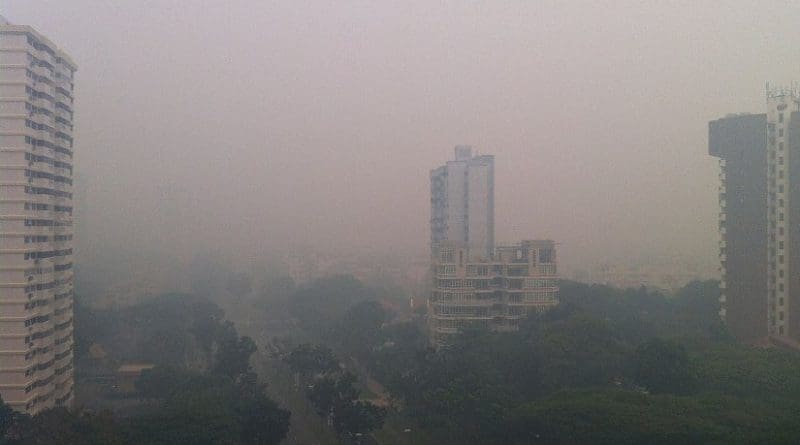
Haze in Singapore. File Photo by Wolcott, Wikipedia Commons.


October 24, 2026

By Collins Chong Yew Keat

Key Takeaways:

The article argues that ASEAN’s longstanding frameworks on transboundary haze, including the 2002 Agreement on Transboundary Haze Pollution and successive roadmaps, have produced little practical impact despite repeated large-scale fires, such as the 1997–98 and 2015 events that burned millions of hectares and caused multi-billion-dollar losses.

It attributes the persistent failures to economic incentives for land clearing, weak local enforcement, ASEAN’s lack of sanctioning power, and the principle of non-interference that favors closed-door consensus over accountability.

The author concludes that ASEAN can serve only as a coordinator and technical supporter, and that lasting prevention requires member governments to enforce domestic laws, share transparent data, strengthen corporate accountability, and prioritize peatland and forest management.


Every few years the same grey settles over the region, and almost identical script is repeated, where concerns are raised and actions are promised, but impact has been scarce. When domestic or bilateral actions are limited, ASEAN is seen as the convenient platform to be seen where at least efforts are made to address the long held conundrum.

But this risks the mechanism being used as a feel good factor, without the real structural and systemic changes and solutions needed. ASEAN has failed on the issue of haze, but other pressing and long held crises have also faced the same roadblock and impasse by the structural limitations of ASEAN.

Slowly, it has become a convenient and safe platform that lets governments show something is being done, but true efficacy has been limited.The central problem in Jakarta is the gap between political commitment, emergency action and real enforcement capacity.

The bigger question is how and why fires of this scale keep returning when the risks have been identified.In 1997–98, nearly 100,000 square kilometres burned, with losses estimated at about US$9 billion. The next big one was in 2015, where 2.6 million hectares burned at a cost of US$16.1 billion.

This year, Reuters has called this as Indonesia’s most intense El Niño-fuelled fire season in more than a decade.

The underlying causes have repeatedly been identified as clearing land by burning, the poor management of peatland, the economic interests of plantations, and weak oversight and enforcement at the local level. While El Niño did worsen the situation, it cannot be singled out as the sole convenient reason to set aside human and institutional responsibility.

As long as the priority is confined to emergency response rather than structural reform and prevention, the problem will persist.

Frameworks without implementation


ASEAN has been creating frameworks for cooperation, including the ASEAN Agreement on Transboundary Haze Pollution signed in 2002 and the haze-free roadmap for 2016–2020 and a second plan for 2023–2030. However, impact has been almost non-existent, and it looks better on paper than on the ground.


A three-pronged structural weakness explains this. First, the root causes of the haze are rooted in economic structures and land use, with large commercial interests at stake. Second, the capacity and the will to enforce laws differ between the central government, local administrations and enforcement agencies. Third, ASEAN itself has no enforcement power to penalise or to enforce the rules.

The Agreement has real diplomatic, political and institutional value but almost non-existent enforcement capacity, with no dedicated enforcement court and no power to sanction a member.

Hence, an agreement without clear accountability and consequences will risk being seen as a mere symbol of commitment, and it has been resting heavily on the will of the members to act.

The principle of non-interference further compelled this. The culture of consensus and the reluctance to cause diplomatic tension have pushed ASEAN to lean toward closed-door negotiation rather than open pressure.

The strategic dilemma is to keep harmony between governments or to apply more effective pressure for regional public health. ASEAN is not a supranational body that can act on members, and remains too focused on preserving government-to-government relations, where accountability too often is neglected.

The most effective pressure would be a combination of both preventive actions at the ground level, and to combine firmer bilateral diplomacy, transparent data, and the use of domestic legal instruments.

Acknowledge Shortcomings


What ASEAN must avoid is to become a comfortable diplomatic channel for soothing public criticism without any change in policy or effective enforcement.


ASEAN must first acknowledge the limits of its existing mechanisms and the structural ingrained limitations.

A four-pronged mechanism must then be in place. First, to strengthen transparent and accurate data sharing, including concession maps, ownership information and hotspot data. Second, to shape faster emergency protocols with clear response-time targets for exchanging information and considering assistance. Third, enhance corporate accountability and domestic enforcement through joint investigations. Fourth, to make peatland and forest management the main long-term priority for prevention. Fifth, to restructure the whole concept of commercial interest and the practice of slash and burn through both educational and enforcement led prevention measures both at the ground level and at the highest commercial accountability and deterrence, with costs involved.

ASEAN cannot be the only answer to this crisis, as its structure and mandate do not allow it to become an effective and capable long term regional enforcement body. Ultimate responsibility must eventually return to member governments and their domestic legal frameworks. ASEAN can function as a coordinator and provider of technical support, but it cannot substitute for national responsibility.


About Collins Chong Yew Keat
Collins Chong Yew Keat has been serving in University of Malaya, the top university in Malaysia for more than 9 years. His areas of interests include strategic and security studies, American foreign policy and power analysis and has published various publications on numerous platforms including books and chapter articles. He is also a regular contributor in providing op-eds for both the local and international media on various contemporary global issues and regional affairs since 2007.
View all posts by Collins Chong Yew Keat →


Tech executives back student-led list in Serbia election

Tech executives back student-led list in Serbia election
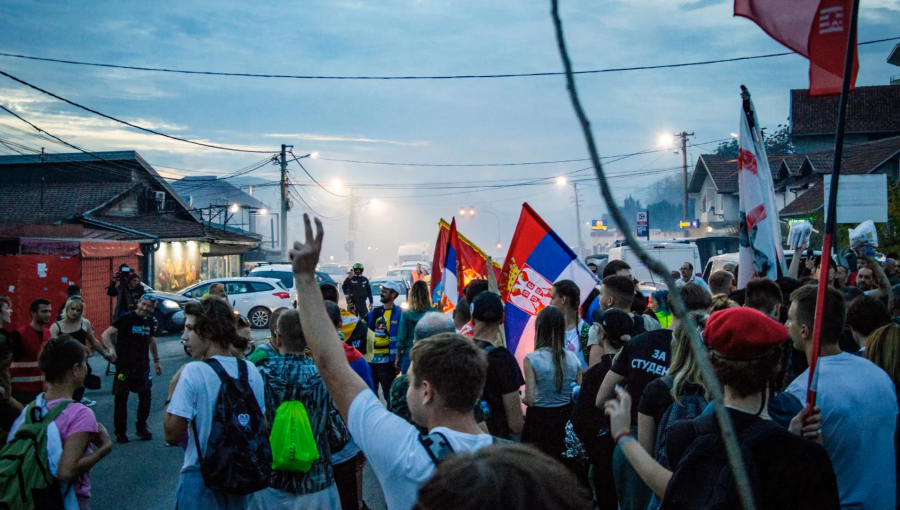
Serbian business leaders say rule of law is key to growth / studenti.org.rsFacebook
By Tatyana Kekic in Belgrade October 23, 2026

More than 170 Serbian business leaders and tech executives have signed an open letter backing a student-led electoral list ahead of the October 25 parliamentary election.

The signatories include Branko Milutinovic, co-founder of video game developer Nordeus, Dragan Tomic, the vice president of engineering at US data analytics company Databricks and executives from technology companies AMD and Cisco.

The letter, titled "We believe in a Serbia that can do much more", expresses support for the Student List, which is challenging the ruling Serbian Progressive Party (SNS) of long-standing ruler Aleksandar Vucic in the October 25 election.

The signatories praised the students for their solidarity, responsibility and perseverance, saying their demands for functioning state institutions were essential to economic development.

It argued that the rule of law, reliable institutions, education and responsible management of public finances were necessary to attract investment, create better-paid jobs and secure pensions.

The signatories said legal certainty and courts that resolve disputes fairly would encourage companies to invest, hire workers and plan for the long term. They also highlighted the importance of cooperation between universities and businesses in improving productivity and helping companies enter new markets.

Among the other signatories are Ivan Stojisavljevic, Nordeus co-founder and Take-Two Interactive vice president; Marija Ilic, co-founder of video game studio Two Desperados and president of the Serbian Gaming Association's board; and Igor Bogicevic, co-founder of biotechnology startup Seven Bridges and HR analytics company Orgnostic.

The list also includes Dusan Komar and Laszlo Horvath, co-founders of Ominimo, which announced in July that it had reached a valuation of $1.6bn, becoming Serbia's first unicorn company as a startup valued at more than $1bn.

Other signatories include Nikola Mrksic, co-founder and chief executive of artificial intelligence company PolyAI, and Aleksandar Kuzmanovic, a computer science professor at Northwestern University and co-founder of bloXroute Labs.

The signatories said they were expressing support in their personal capacities and called on other businesspeople and entrepreneurs to join them.

"We support the Student List, number 3, and we will vote for it on Sunday," the letter said, adding that the students needed an opportunity to put their proposals into practice.

The student movement emerged from anti-government protests that followed the collapse of a railway station canopy in the northern city of Novi Sad in November 2024, a disaster that killed 16 people and fuelled public anger over alleged corruption and accountability.

The election is being held more than a year ahead of schedule amid sustained protests and growing political pressure on Vucic and the SNS, which has dominated Serbian politics for more than a decade.


Central and Southeast Europe outstrip EU's post-pandemic growth

Central and Southeast Europe outstrip EU's post-pandemic growth
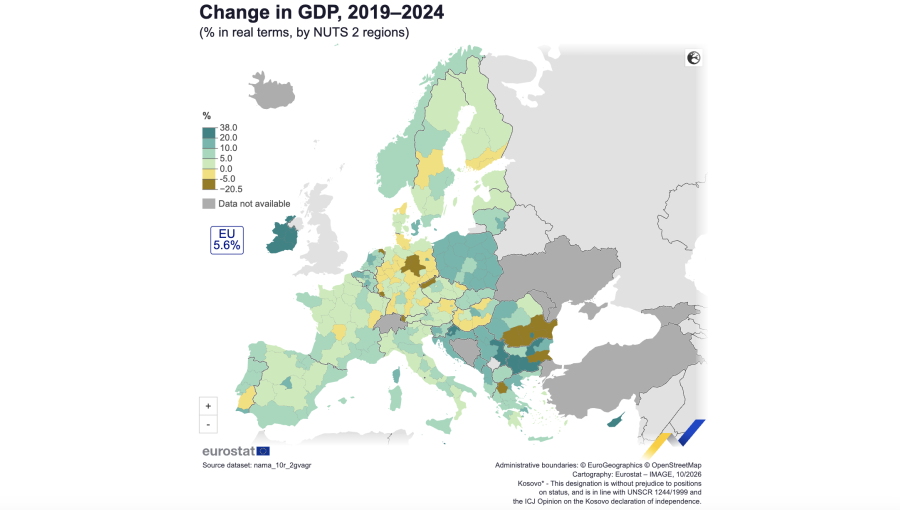
Romania's capital region grew by a third between 2019 and 2024, faster than any EU region outside Ireland, while three of the EU's five worst-performing regions were in Romania and Bulgaria, Eurostat data show. / EurostatFacebook
By IntelliNews October 23, 2026

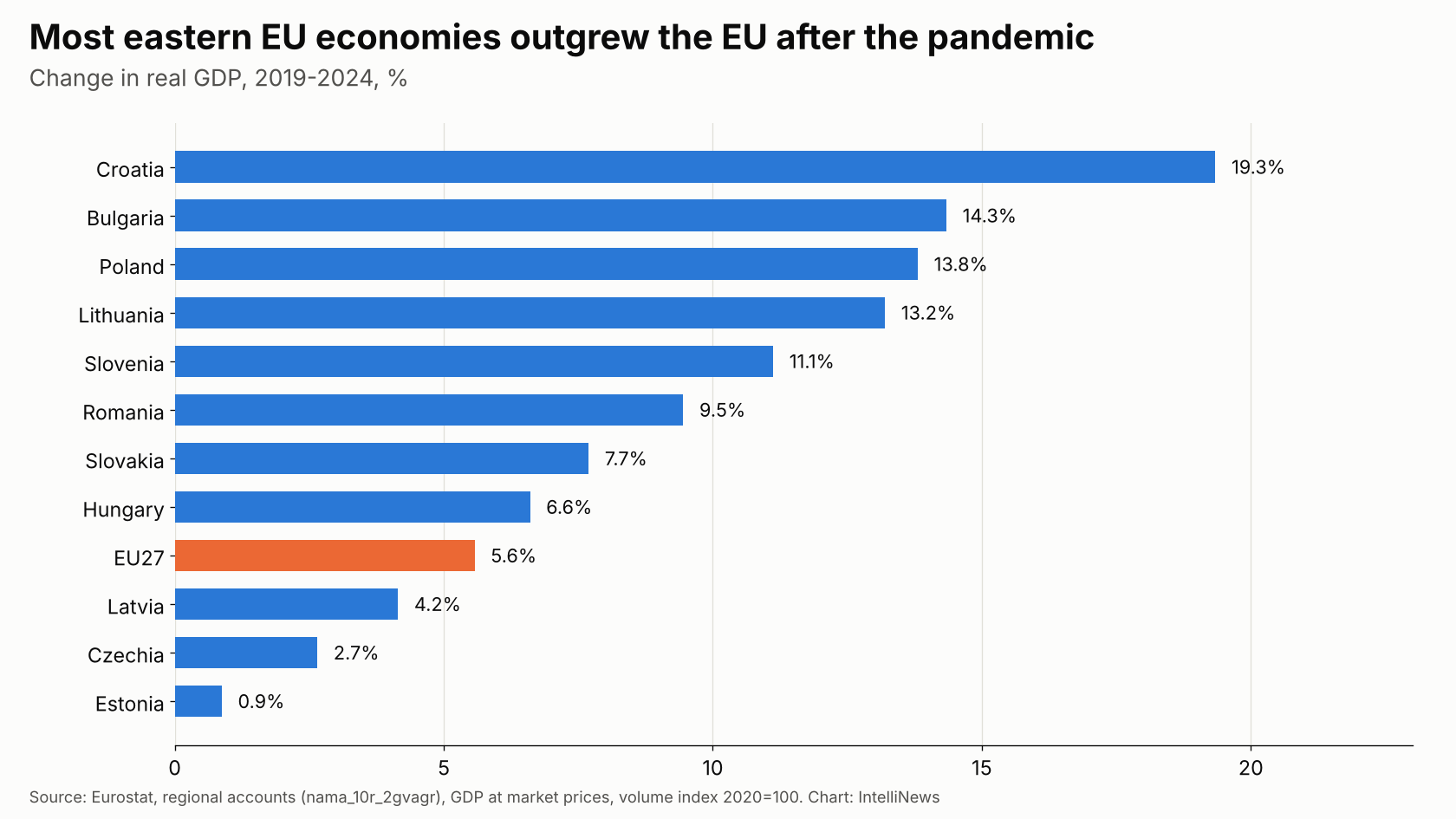
Most eastern EU members outgrew the bloc as a whole between 2019 and 2024, led by Croatia, Bulgaria and Poland, while Romania's capital region recorded the fastest growth outside Ireland, Eurostat data showed on October 22.

GDP across the EU rose by 5.6% in real terms over the period, compared with increases of 19.3% in Croatia, 14.3% in Bulgaria, 13.8% in Poland and 13.2% in Lithuania. Growth was unevenly distributed within several countries, with capital regions often outperforming the rest of the economy.

The Romanian capital region of Bucuresti-Ilfov expanded by 33.0%, faster than any EU region outside Ireland. At the other end of the table, three of the five regions where economic activity fell most were in Romania and Bulgaria. GDP in Bulgaria's southeastern Yugoiztochen region contracted by 20.5%, the largest decline in the bloc, while Romania's Sud-Muntenia and Sud-Vest Oltenia shrank by 13.5% and 11.3%, respectively.

Change in real GDP of the eastern EU member states and the EU27, 2019-2024. Source: Eurostat regional accounts.

Romania provides the starkest example of regional divergence. Bucuresti-Ilfov's 33.0% expansion compared with growth of 9.5% for the country as a whole. The western regions of Nord-Vest and Vest grew by 15.8% and 14.3%, but GDP in Sud-Est was 5.1% lower in 2024 than in 2019, while Nord-Est barely grew, at 0.4%. Romania's productivity has been catching up quickly, with GDP per employee reaching 87.2% of the EU average, but the gains remain concentrated around the capital.

Bulgaria showed a similar split. Its southern central Yuzhen tsentralen region grew by 25.3%, Severen tsentralen in the north by 22.9% and the Sofia region, Yugozapaden, by 21.8%, while Yugoiztochen, home to the Black Sea port of Burgas, recorded the steepest contraction in the EU.

Hungary's Pest region, which surrounds the capital, grew by 19.1% and Budapest by 11.9%, but GDP in four other regions was lower in 2024 than in 2019. The biggest decline was in Eszak-Magyarorszag in the northeast, down 4.3%. Hungary's economy as a whole grew by 6.6%, barely above the EU average, after years in which household consumption lagged the rest of the bloc.

Czechia, the second-weakest performer among the eastern members, recorded growth of just 2.7%. Its northwestern Severozapad region, a coal-mining area, saw GDP fall by 6.9%, while Moravskoslezsko, the industrial region around Ostrava, contracted by 1.2%. Prague grew by 4.4%. Estonia, classified by Eurostat as a single region, expanded by just 0.9% over the five years, while Latvia grew by 4.2%.

Poland's growth was more evenly distributed. Every region expanded, with increases ranging from 9.2% in Lodzkie to 17.7% in Pomorskie on the Baltic coast. The Warsaw capital region grew by 15.9%.

Croatia also recorded broad-based growth, led by Sjeverna Hrvatska in the north, up 25.9%, and the Adriatic region, which expanded by 19.7%. In Lithuania, the capital region around Vilnius grew by 19.0%, more than twice the 8.9% increase in the rest of the country. In Slovakia, the gap between the capital and the east was narrower, with Vychodne Slovensko growing by 9.4%, slightly faster than the Bratislava region at 9.0%.

Across the EU as a whole, 197 of the 244 regions with available data recorded higher economic activity in 2024 than in 2019, while GDP fell in 46. Almost all capital regions expanded, with Helsinki-Uusimaa in Finland the only exception. Ireland's three regions led the bloc, with Eastern and Midland recording growth of 38.0%.


Central Europe at the frontline of Europe's authoritarian populist surge

Central Europe at the frontline of Europe's authoritarian populist surge
Challenger parties take more than half the vote in four Central and Southeast European countries, and seven of the 10 European democracies where they are strongest are post-communist, according to the Authoritarian Populism Index 2026. / Image by Gerd Altmann from PixabayFacebook
By Clare Nuttall in Glasgow October 23, 2026

Populist, authoritarian and extremist parties secured more than half the vote in the latest parliamentary elections in Bulgaria, Czechia, Romania and Slovakia, while their combined support across Europe reached a record 32.6%, according to a report by Swedish think tank Timbro and the EPICENTER network published this week.

Italy is the only other country among the 31 European democracies covered where so-called challenger parties command a majority, and seven of the 10 countries where they are strongest are post-communist, the fifth edition of the Authoritarian Populism Index found. Challengers won more than 20% of the vote in 26 countries, with almost one in three European voters backing parties classified as populist, authoritarian or extremist — roughly three times the level seen for most of the post-war era.

The report, authored by Andreas Johansson Heinö, examines more than 260 parties using electoral data dating back to 1945 and includes a detailed analysis of 76 parties. It finds that the radical right is driving most of the increase, retaining support rather than fading after protest surges, while the radical left has edged up recently but remains well below its post-war strength. Social democrats have lost more than four in 10 voters since 2000, while Christian democrats have declined steadily since the 1970s. Liberal parties, by contrast, remain close to their record levels of support.

Challenger parties are also increasingly part of the political establishment. By summer 2026 they were represented in 11 of the 31 governments covered, although participation in power has produced different outcomes, moderating some parties, emboldening others and contributing to the collapse of coalitions elsewhere.

Central and Southeast Europe has supplied some of the clearest examples of the risks to liberal democracy. Of the 76 parties examined in depth, 18 are classified as highly authoritarian, including Hungary's Fidesz, Poland's Law and Justice (PiS) and Slovakia's Smer. These parties have "already demonstrated in government how far they are prepared to go in weakening judicial independence, constraining media pluralism, politicising state institutions or otherwise eroding liberal-democratic checks and balances", Johansson Heinö wrote.

Hungary also illustrates the limits of the model. Peter Magyar's newly founded centre-right Tisza won 53.2% of the party-list vote in the April election against 38.6% for Fidesz, securing 141 of 199 seats and ending Viktor Orban's 16 years in power. The report describes Fidesz as one of Europe's clearest examples of authoritarian populism developing within an electoral democracy, but notes that voters were able to remove it despite highly unequal conditions of competition. The radical-right Our Homeland Movement survived the realignment, winning 5.6% of the list vote.

In Czechia, Andrej Babis' ANO returned to power with 34.5% of the vote in 2025 and governs alongside the radical-right Freedom and Direct Democracy (SPD) and the Motorists for Themselves. The coalition marks the first time the modern Czech radical right has entered national government.

The government has shifted policy towards a more sovereignty-oriented line, cutting defence spending and scaling back support for Ukraine. Its plan to replace the licence fee for public broadcasters with direct state funding has also drawn mass protests. However, the index rates ANO as less authoritarian than Fidesz or Smer.

Slovakia's government under Robert Fico has moved further towards an illiberal national-conservative position. Smer has evolved from a pragmatic left-populist party into one with "a conception of sovereignty resembling that promoted by Viktor Orban in Hungary", the report says. It points to Fico's decision to end official military aid to Ukraine and his repeated meetings with Russian President Vladimir Putin, most recently in Moscow in May.

Coalition partner Hlas has been pulled towards Smer, while the hard-right, pro-Russian Republika won 12.5% in the 2024 European Parliament election.

In Romania, George Simion's Alliance for the Union of Romanians (AUR) has led the polls for much of the past two years. It is classified as highly authoritarian, as are the smaller S.O.S. Romania and the Party of Young People.

The index also counts the Social Democratic Party (PSD), which joined AUR in the no-confidence vote that brought down Ilie Bolojan's government in May, because of its populist and authoritarian traits. Simion has since threatened to move against President Nicusor Dan unless he calls a snap election.

Bulgaria presents a different type of challenger. Former president, now prime minister, Rumen Radev's Progressive Bulgaria, founded in March, won an outright majority in the 2026 parliamentary election after eight elections in four years. The report considers the party broadly mainstream on policy but populist in style, with a focus on corruption and oligarchic interests. Many observers compare Radev with Orban and Fico because of his calls for a more pragmatic relationship with Russia, a comparison he rejects. Radev's ally Iliana Yotova leads the race for the presidential election on October 25.

Poland's right has fragmented. Konfederacja has established itself as a substantial independent force, while Grzegorz Braun's Confederation of the Polish Crown now advocates leaving the EU. PiS suffered its biggest split in more than 20 years in July, when former prime minister Mateusz Morawiecki and dozens of supporters left to form the Rozwoj Plus group, which has around 40 MPs.

The report argues that Russia has become a new dividing line on the European right. Orban obstructed or delayed EU measures against Moscow while in office, while disagreements over Ukraine helped split Estonia's radical-right EKRE in 2024. Ties to US President Donald Trump's Make America Great Again (MAGA) movement have not delivered the electoral boost many expected, and Orban's defeat came despite almost unanimous backing from Europe's radical right.

The divide reflects a broader shift in the movement's priorities. Of the 76 parties examined in detail, 20 are classified as hard eurosceptic, making outright EU exit a minority position. Many now seek to reshape the bloc from within, redirecting cooperation towards migration control, border protection and national sovereignty.

The report's central concern remains the effect of these parties on democracy when they enter government, rather than their electoral success alone. Their records show that holding office can moderate some challengers but can also give others greater scope to weaken institutional checks and balances.


The struggle against fascism begins with the struggle against …

One may speak of a red, black, or brown "soviet state", as well as of red, black or brown fascism. Though certain ideological …Read more