Column: China’s major commodity imports ease, except for iron ore
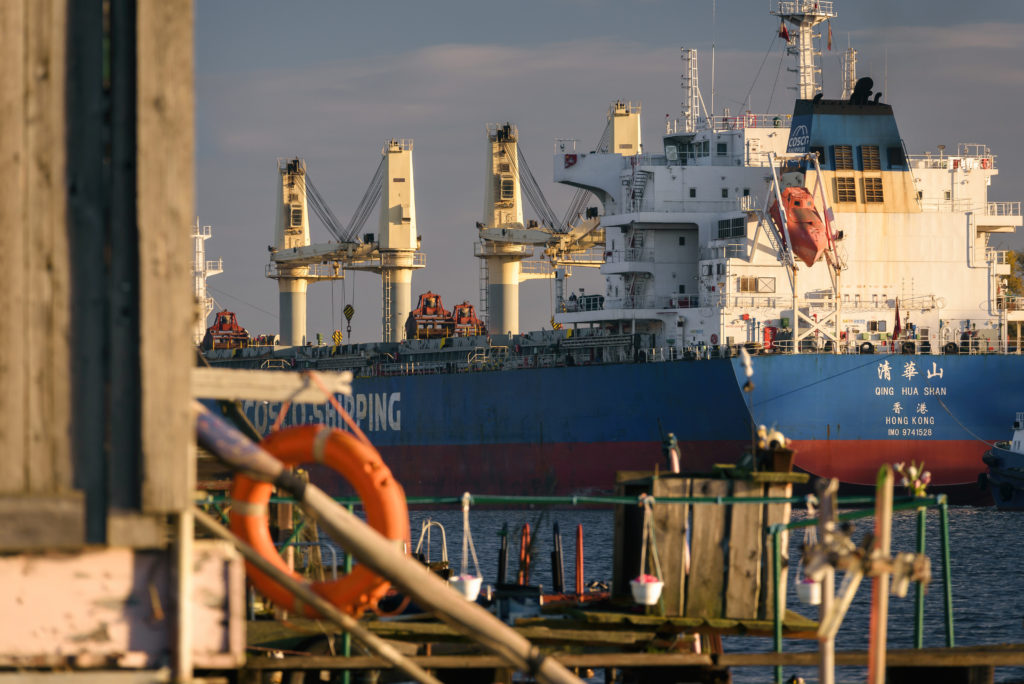
China’s imports of major commodities were largely soft in October as high prices weighed on volumes, with iron ore’s resilience bucking the trend despite the steel sector showing signs of pressure.

Crude oil, natural gas, copper and coal all showed declines from September, according to data released on Friday by the General Administration of Customs.
China, the world’s biggest importer of crude oil, saw arrivals of 11.39 million barrels per day (bpd) in October, the third straight monthly decline and down from 11.50 million bpd in September.
The easing in oil imports is most likely a reflection of the higher global prices that prevailed at the time when October-arriving cargoes would have been arranged.
Benchmark Brent futures hit a six-month high of $81.40 a barrel on June 23 during the brief conflict between Israel and Iran, and while they retreated to a low of $66.34 by July 1, they once again trended higher to reach $73.63 by July 31.
Since then, oil prices have been declining on a trend basis, with the occasional spike higher, largely caused by geopolitical events such as the announcement of new sanctions on Russia’s crude producers by US President Donald Trump.
Brent ended at $63.63 a barrel on Friday, and the current lower prices are likely to encourage China’s refiners to increase imports, even if much of the crude flows into commercial and strategic storages.
The impact of higher prices can also be seen in imports of natural gas, which totalled 9.78 million metric tons in October, down 11.5% from September’s 11.05 million and 7.2% below the 10.54 million from October last year.
It’s likely that pipeline volumes from Central Asia and Russia were largely steady, meaning the decline was from imports of liquefied natural gas, which have been trending weaker this year amid elevated spot prices caused by European demand for the super-chilled fuel.
Higher prices are also likely behind the 9.7% drop in imports of unwrought copper in October from September.
October arrivals were 438,000 tons, down from 485,000 tons in September and 506,000 tons in October 2024.
Copper prices have been trending higher since April, but the gains accelerated from late September, with London contracts jumping 12.8% from $9,927.50 a ton then to a record high of $11,200 a ton on October 29.
Coal, iron ore
But it’s not always prices driving China’s commodity imports, with coal being a case in point.
Imports of all grades of coal dropped 9.3% in October to 41.74 million tons from September’s 46.0 million tons, and were also down 9.8% from October last year.
The lower imports came as seaborne thermal coal prices languished near five-year lows, with commodity price reporting agency Argus assessing Indonesian coal with an energy content of 4,200 kilocalories per kilogram at $40.45 a ton in the week to July 4.
The grade, which is popular with Chinese utilities, has since recovered to $47.09 a ton in the week to November 7, but still remains well below the $52.30 from the same week in 2024.
However, with the northern winter imminent and higher domestic coal prices, it’s likely China’s imports will recover heading into the end of the year.
Iron ore was the surprise packet of China’s commodity imports in October, with arrivals of 111.31 million tons.
While this was down 4.3% from September’s record high of 116.33 million, it was up 7.2% from October last year and was also the fifth consecutive month that imports have topped 100 million tons.
The strength in imports isn’t price-related, as benchmark contracts in Singapore have been stable in a relatively narrow range anchored around $100 a ton so far this year.
Steel production has also been soft, dropping to a 21-month low in September of 73.49 million tons, with output for the first nine months of the year down 2.9% from the same period in 2024.
It appears that the strength in iron ore is largely because inventories are being rebuilt, with port stockpiles monitored by consultants SteelHome rising to 138.44 million tons in the week to November 7, a seven-month high and up from the low so far this year of 130.1 million tons in early August.
With inventories still shy of the 150.7 million tons they reached in November last year, there is still scope for iron ore imports to remain resilient heading into the end of the year.
(The views expressed here are those of the author, Clyde Russell, a columnist for Reuters.)
(Editing by Jamie Freed)

No comments:
Post a Comment