Cargo Ship Attacked in Omani Sector of the Strait of Hormuz
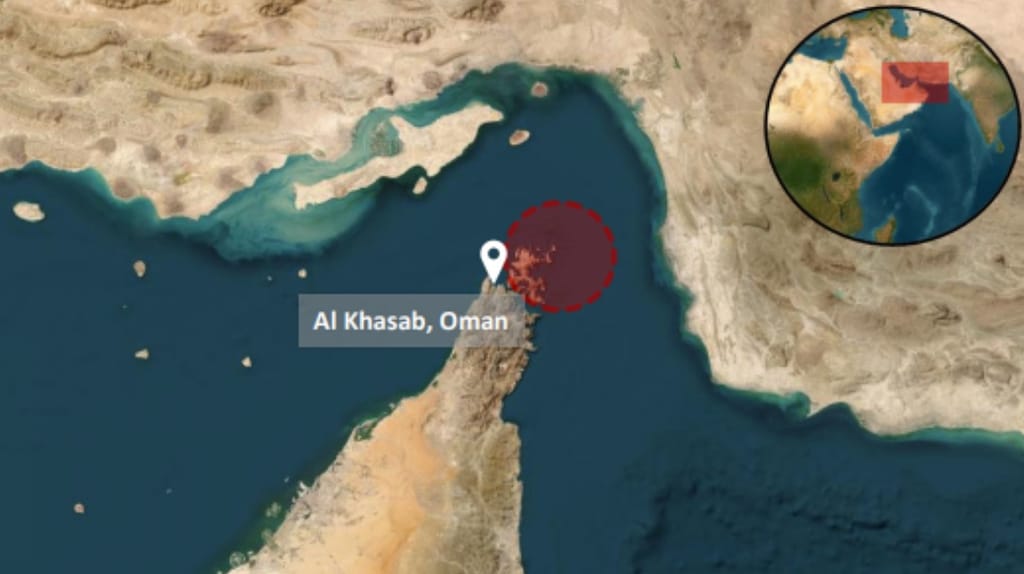
As talks between Iran and Oman on control over the Strait of Hormuz move forwards, a new attack has been reported off the Musandam Peninsula, in the Omani coastal channel used by GCC shipping interests.
At about 2200 hours on August 3, the crew of an unnamed cargo vessel broadcast a VHF distress signal, reporting that their ship had been hit by an unknown projectile. The incident occurred at a position about 20 nm to the northeast of Khasab, the midpoint of the "neutral" Omani coastal route through the strait.
Maritime security consultancy Vanguard Tech reports that the attack was more serious than the UKMTO brief suggests. According to its sources, the bulker Minoan Pioneer (IMO 9471630) was hit in her engine room, resulting in a complete blackout and a fire in the accommodations area. The third engineer went missing following the blast. A crew-led firefighting operation was still under way Tuesday morning local time.
A near-miss attack occurred about 24 hours earlier in the same region, about 20 nm northeast of Khasab. In that prior incident, the master of an unnamed tanker reported hearing a blast near the vessel. No damage occurred and the ship continued safely on its way.
All prior kinetic attacks in this area of the strait have been Iranian in origin. Iran objects to the Omani route, as it bypasses Tehran's "Persian Gulf Strait Authority" administrative regime; Iranian hardline leaders claim a sovereign right to control traffic through the strait, despite its status as a free and ungated waterway prior to the U.S.-Israeli conflict with Iran.
To preserve some degree of long-term control - and collect fee revenue from passing vessels - Iran is currently negotiating with the government of Oman on the contours of an acceptable split in administrative responsibilities. According to the New York Times, a proposed joint Iranian-Omani control regime for the strait would divide oversight of the channels into two directions. Inbound traffic would pass through a northern channel closer to the Iranian coast, and would be administered by Iran's authority. Outbound traffic would pass through an Omani-controlled lane. The two states would equally split the revenue from a "service fee" for each transit, a cost to shipping which did not exist before the war.
An American official who was briefed on the talks denied this account, telling the Times that the control scheme would be both temporary and toll-free.
Iran and the White House do not publicly agree on whether they are negotiating towards a peace agreement, though President Donald Trump claims that talks are progressing quickly and a "deal is imminent." On Sunday, the president called off previously-announced airstrikes on Iran, claiming that he wished to give diplomacy time to work and that he wanted to give Iran's leadership "every last chance before decapitation." Iran denies that talks with the U.S. are ongoing.
"Our negotiations are with Oman, we are focused on reaching an understanding on a route that will ensure safe shipping traffic through the Strait of Hormuz," an Iranian Foreign Ministry spokesperson told Bloomberg. "These are bilateral negotiations between the two coastal states. Others can play a constructive or destructive role in this process, but the issue is with Iran and Oman."
UAE Resumes Cross-Gulf Trade with Iran
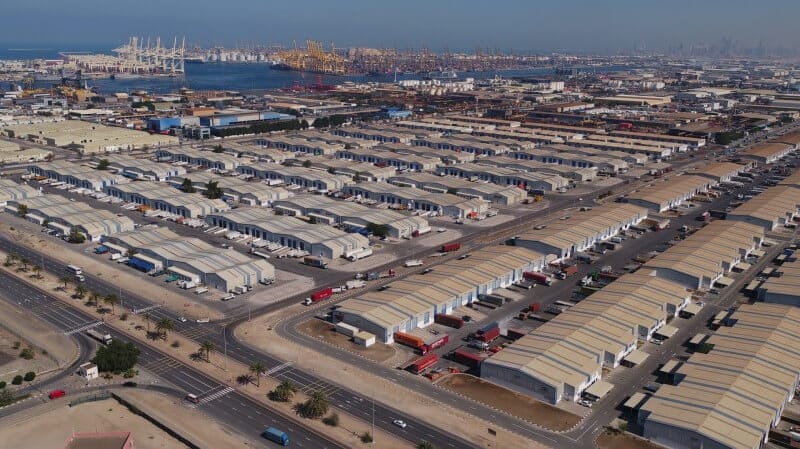
A little-appreciated consequence of the all-out war that broke out in the Gulf on February 28 has been the disruption to the United Arab Emirates’ trade with Iran.
A foundation of the Emirates’ extraordinary growth since 1979 has been its role as the import-export gateway to Iran. Not so long ago, about 90 percent of Iran’s trade with the outside world passed through DP World’s massive container terminal at Jebel Ali, where, from a central distribution point, global container liners transferred cargo to smaller ships servicing numerous Iranian ports within the Gulf. This was a hugely profitable business for DP World, the revenue stream for the Dubai government providing capital for the early phases of the Emirate’s explosive growth. The growth and profitability of Emirates Airline followed a similar pattern, with Dubai acting as a hub for Iranians wanting to switch from local networks and use the services of Emirates Airline’s unmatched global footprint. Business and trade with the supposedly isolated Islamic Republic were a huge engine for growth.
So, in this regard, Iran has not really been isolated since 1979 – it has been thoroughly integrated with the economies of the GCC, notwithstanding the strictures of global sanctions applied on Iran. There has been a strong mutual inter-dependency. So, while there have been political differences between the GCC and Iran, principally over Iran’s desire to be seen as the dominant nation in the region, the strategic aim behind its regional expansionism program, which sought to subvert the political system in many neighboring countries, there have always been strong economic reasons to maintain a working relationship. Expatriates in Dubai who never meet any locals may not appreciate just how many Iranians and Iranian businesses operate in Dubai, and how a large proportion of the Emirati citizen body has roots in Iran.
Private enterprise and commercial interest are powerful forces in the Emirates, and therefore it is no surprise that trade has once again started flowing across the Gulf, notwithstanding that Jebel Ali is temporarily cut from global supply through the Strait of Hormuz. Kpler analyst Rebecca Gerdes, who keeps a close eye on container movements in the Gulf, reports that more than 60 containerships made cross-Gulf passages in July, up from 10 in June. In the period up until July 31, traffic was averaging a daily container liner in each direction between Jebel Ali and the Rajaei civilian port in Bandar Abbas. Five container-carrying vessels, all flying flags of convenience, are apparently shuttling to this route, namely the Yekta 4 (IMO 9303675), Mehran 1 (IMO 1111117), Farahi 2 (IMO 9034688), J. Pioneer (IMO 9116711), and Capilano (IMO 9358577).
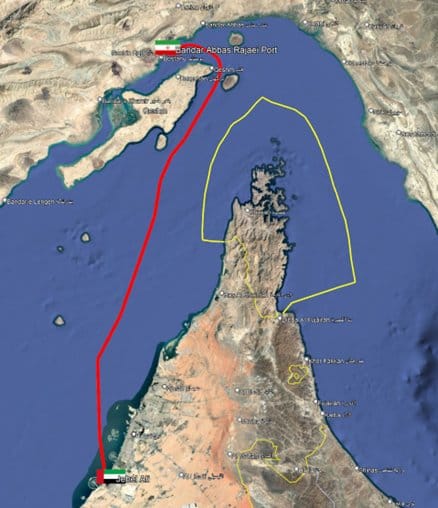
The route followed by Capilano and other container liners between Jebel Ali and Bandar Abbas Rajaei (red), keeping towards the Iranian coastline (Google Earth/CJRC/Kpler data)
The conflict between Iran and the United States has in recent days settled into what appears to be an economic contest of endurance, pitching the U.S. desire to limit inflation and oil price rises against Iran’s need for finance to fuel its war effort and to keep the population happy with essentials. The U.S. naval blockade of Iranian ships and ports being enforced from outside the Gulf applies most of the leverage the United States needs to have to keep an advantage in this battle, and the volumes being carried on the Jebel Ali to Bandar Abbas route will not make a substantial impact. The contents of the containers on the route one can expect are being closely monitored, and will tend towards medicines and foodstuffs rather than dual-use electronics and fertilizer.
Still central to the trade is Jebel Ali, with its sophisticated cargo handling and logistic facilities. The difference with the pre-war era is that Jebel Ali is now being serviced from the landward side, with goods being trucked (or railed) in and out from Fujairah, Khor Fakkan, Sohar, and Salalah, and from Europe and beyond by trucks coming from the Mediterranean and Saudi west coast ports. Clearly, these elongated trade routes, involving switches between transport means en route, are economically inefficient – but needs must. Moreover, between the UAE and Iran, there is a baseload of bilateral trade; the fresh fruit and vegetables in the Spinneys supermarkets in Dubai, amongst many other classes of goods, come largely from Iran.
Oman’s Foreign Minister has been an advocate for a new security regime in the Gulf, calling for the end of the containment of Iran and its integration into a legal and practical framework shared by all Gulf states. There is already a degree of economic integration between all Gulf states, as the resumption of cross-Gulf trade shows. But the bar to deeper integration at both the economic and political level appears to be an unwillingness on Iran’s part to observe legal and practical frameworks which the others all have, most noticeably the United Nations Convention on Law of the Seas (UNCLOS), the 1968 UN Non-Nuclear Proliferation Treaty, and the IMO’s 1968 Traffic Separation Scheme covering the Strait of Hormuz.

No comments:
Post a Comment