Russia is refining its use of hybrid interference to undermine European Union enlargement countries by combining disinformation, covert political financing, cyberattacks, economic pressure and proxy actors in ways tailored to local vulnerabilities, while the EU's response remains uneven despite a growing arsenal of countermeasures, according to a report prepared for the European Parliament.
The study, requested by the Committee on Foreign Affairs (AFET), argues that Moscow's efforts have intensified as countries in the Western Balkans and Eastern Europe move closer to the EU, seeking to exploit political divisions, weak institutions and unresolved conflicts to slow or derail accession.
"Russia has been intensifying its efforts to prevent the Western Balkan countries and the Eastern Trio – Georgia, Moldova and Ukraine – from progressing on their paths towards EU integration," the report says. While Russia's historical relationship with the former Soviet republics differs from that with the Western Balkans, it says Moscow's current policy towards both regions follows "a common strategic logic of contesting Western political and security penetration into what it perceives as its wider sphere of influence".
The report examines Albania, Bosnia & Herzegovina, Georgia, Kosovo, Moldova, Montenegro, North Macedonia, Serbia and Ukraine, arguing that Russia increasingly relies on what it defines as "hybrid interference" rather than conventional military means to influence domestic politics.
It defines hybrid interference as "the coordinated use, under peacetime conditions, of at least two distinct instruments" deployed by a foreign state or its proxies "to reshape another state's domestic political order below the threshold of open armed conflict". According to the study, such campaigns target "elections, party systems, institutional rules and foreign-policy orientation" while exploiting "fear, dissatisfaction and nostalgia" to encourage political change favourable to Moscow.
The authors argue that existing debates frequently blur the distinction between hybrid warfare, influence operations and political leverage, making it harder for governments to develop effective countermeasures.
Across the nine enlargement countries, the report identifies seven recurring vulnerabilities that create openings for Russian interference, including political polarisation, unresolved ethnic and constitutional disputes, weak media environments, corruption, energy dependence, fragile critical infrastructure and weaknesses in electoral systems.
Rather than operating independently, these vulnerabilities reinforce one another, the report says, with weak rule of law amplifying the effects of economic dependence while fragile information environments make elections particularly vulnerable to manipulation.
Russia's toolkit consists of six principal instruments, according to the study: covert political financing, information operations, legal and constitutional obstruction through proxy elites, economic and energy leverage, cyber operations, and security-sector penetration backed by support for proxy violence.
The report cites Moldova as "the most sophisticated example" of covert political financing designed to influence elections, while saying information operations increasingly rely on local media outlets and social media networks to spread pro-Kremlin narratives.
Legal and constitutional obstruction is identified in Bosnia, Montenegro and particularly Georgia, where the report says "foreign-agent-style legislation has been imported from the Russian model". Energy and economic leverage remain particularly important in Serbia, Montenegro, Bosnia, Moldova, Georgia and Ukraine, while cyber operations have accompanied elections and political crises in Georgia, Moldova and Ukraine.
The report devotes particular attention to Moldova, Georgia and Serbia as three contrasting examples of how Russian influence is adapted to different political environments.
It describes Moldova as having become a "laboratory" for electoral interference, with "large-scale illicit financing, disinformation and cyberattacks concentrated around the 2024-2025 electoral cycles". However, it says a reform-oriented government has responded by adopting "'militant democracy' tools", strengthening oversight and making effective use of EU support to maintain the country's pro-European trajectory.
Georgia, by contrast, is presented as an example of domestic authorities embracing methods associated with Moscow. According to the report, the country has "progressively internalised the Russian authoritarian playbook", with foreign influence legislation, election manipulation and anti-Western narratives reducing the need for direct Russian intervention while increasing Moscow's strategic gains.
Serbia occupies a more ambiguous position. The report describes it as "a regional hub for Russian geoeconomic, information and intelligence influence", particularly through energy links, media platforms and longstanding security cooperation, while simultaneously attempting to preserve its EU membership ambitions and reduce some of its strategic dependencies.
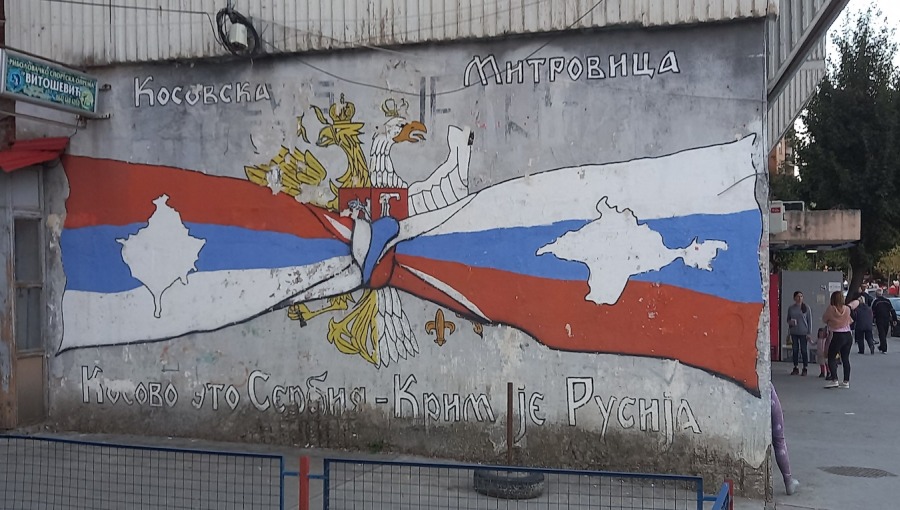
The study argues that unresolved regional disputes remain central to Russia's strategy. It identifies the separatist republics of Transnistria and Gagauzia in Moldova and Abkhazia and South Ossetia in Georgia, as well as Kosovo together with the wider "Serb question" as conflicts that continue to provide opportunities for political manipulation.
While warning that Russian hybrid interference poses "a structured challenge", the report says the EU has significantly strengthened its own response since 2016.
According to the authors, Brussels has moved "from ad hoc reactions to a layered strategic framework", integrating resilience against hybrid threats into enlargement policy, security cooperation, political conditionality and financial assistance. It highlights the development of the EU's Foreign Information Manipulation and Interference (FIMI) toolbox, growing support for independent media and civil society, and the increasing inclusion of hybrid-threat assessments in enlargement reports.
However, the report concludes that implementation remains inconsistent. Although the EU has developed "a sophisticated toolbox", it says "implementation remains fragmented", with many instruments remaining non-binding and enforcement in politically sensitive areas such as illicit finance, media regulation and party funding still weak. The effectiveness of EU measures continues to depend heavily on domestic political commitment and the credibility of the enlargement process itself.
To strengthen resilience, the report recommends making resistance to hybrid interference an explicit benchmark in EU accession negotiations, increasing funding for independent media, cyber resilience and media literacy, creating a regional rapid-response network against disinformation, strengthening election monitoring, improving transparency around political advertising and embedding democratic resilience more firmly within the enlargement process.
"Only by hard-wiring counter-hybrid measures into the enlargement framework and by aligning strategic, legal, financial and societal instruments, can the EU safeguard both the integrity of its democratic order and the credibility of enlargement," the report concludes.

No comments:
Post a Comment