It’s possible that I shall make an ass of myself. But in that case one can always get out of it with a little dialectic. I have, of course, so worded my proposition as to be right either way (K.Marx, Letter to F.Engels on the Indian Mutiny)
Sunday, November 23, 2025
Denmark Adds Subsidies as it Takes New Try at Offshore Wind Farm Tender
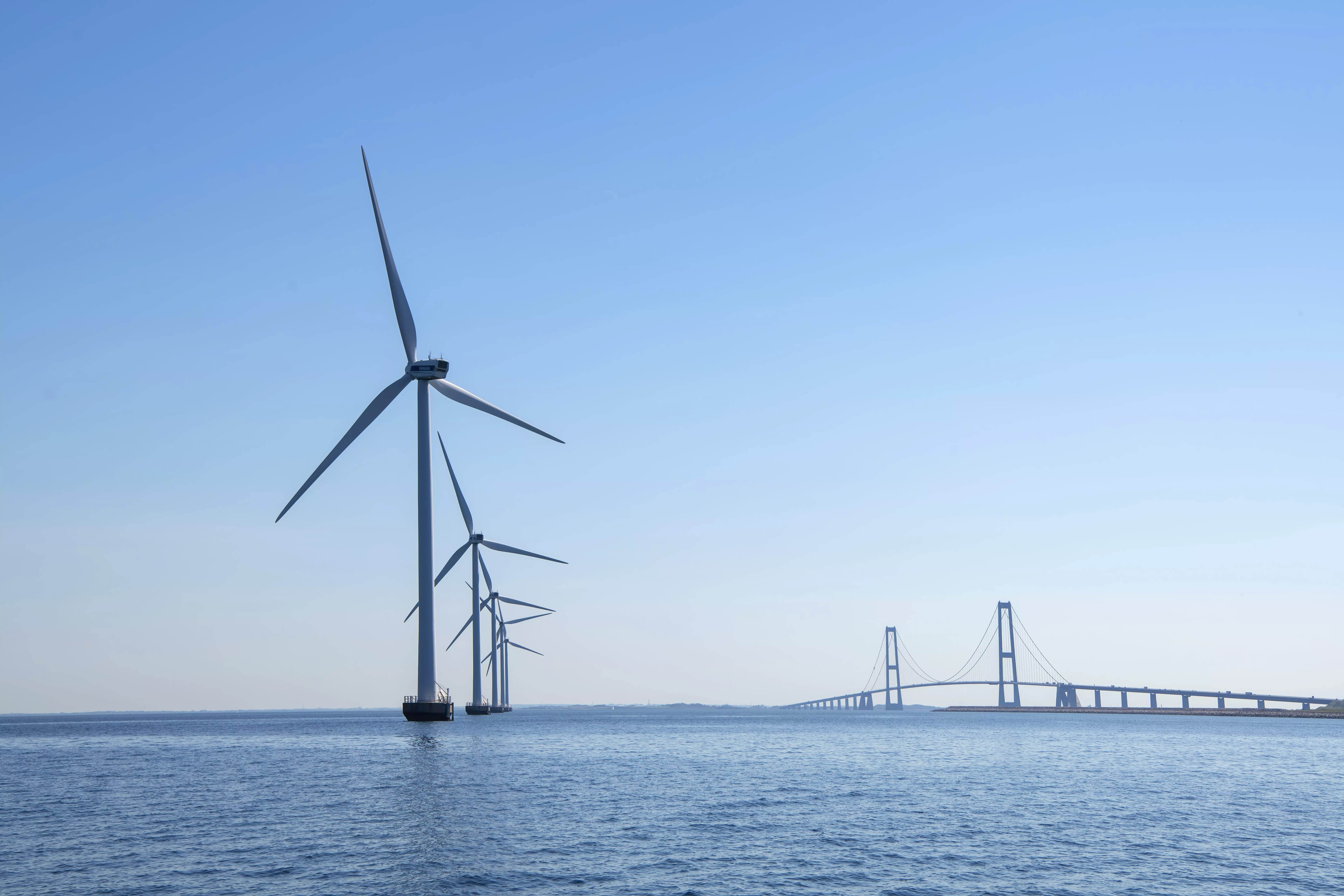
Denmark reworked the format adding subsidies for its next offshore wind farm tender
The Danish Energy Agency returned to the market for offshore wind farms, announcing the opening of a new round of tenders for three projects, which will run through 2028. It comes after the country failed to receive bids in a 2024 round and incorporates revisions based on the input from the market.
While it was not unexpected based on changes in the market, the agency still said it was disappointed in December 2024 when it failed to receive bids for three sites in the North Sea. It had spent two years planning that round and had targeted a minimum of 6 GW while saying there was a potential for 10 GW or more, depending on the developer’s plans.
The Danish Energy Agency had promised that it would engage in dialogues with the industry and rework the process to reflect the challenges. It said these dialogues provided the basis for two political agreements, which were reached earlier this year and are now reflected in the tender format.
Three areas are again being offered, but this time the process also incorporates a support scheme based on a Contract for Difference (CfD) mechanism. Under the scheme, Denmark guarantees the offshore wind producer a fixed price for the electricity generated by the wind farm. If the market price falls below the fixed price, the country contributes, and if the price exceeds the fixed price, the company rebates the difference.
The state has agreed to a payment cap of DKK 55.2 billion (approximately US$8.5 billion) for the life of the projects. According to the agency, this approach provides greater flexibility and certainty for the developers. It anticipates that the approach increases the likelihood of qualified bids.
A total of three sites are being offered, with two located to the west of Denmark in the North Sea. The first project has a minimum of 1 GW and must be completed by the end of 2032, while the second has a minimum of 1 GW and must be completed by the end of 2034.
The third project is to the east of Denmark and has a minimum of 800 MW. It must be completed by the end of 2032 and must also establish a so-called “nature-inclusive” design. That requires the developer to integrate elements into the structures to create habitats that benefit marine life, such as artificial reefs or havens for species such as fish and shellfish.
All the tenders must also incorporate sustainable elements. For example, there is a requirement concerning the recyclablity of the turbine blades. Denmark expects this round, which has a minimum of 2.8 GW, will be able to supply green electricity equivalent to the consumption of around three million Danish and European homes.
The deadline for submission for the first two projects is the spring of 2026. The third project with an end-of-2034 target date requires bids by the fall of 2028.
Denmark was the first country to host offshore wind farms, dating to 1991. Denmark currently has a total installed capacity of 2.7 GW of offshore wind power, with one additional wind farm under construction to add another 1 GW in 2027. Denmark was one of eight North Sea countries in October 2024 that recommitted to a pledge to build 120 GW of offshore power by 2030 and at least 300 GW by 2050. Denmark has a target for 14 GW of capacity by 2030.
US Navy Takes Delivery of 25th Virginia-Class Sub, Future USS Massachusetts
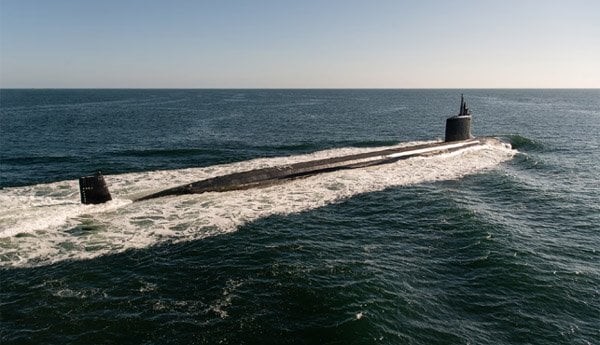
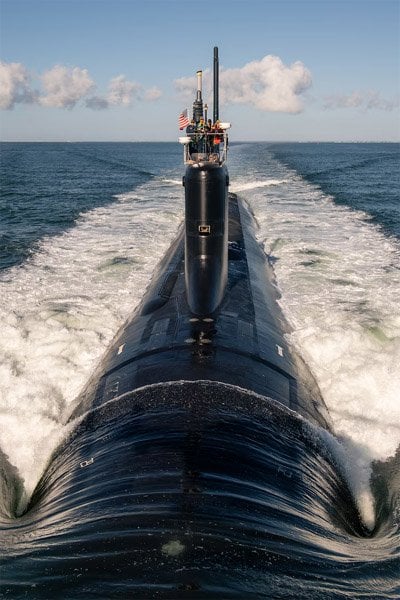
Massachusetts is the 25th submarine in the Virginia class (Navsea photos)
The U.S. Navy announced that it accepted delivery of the Submarine Force’s newest attack submarine, the future USS Massachusetts (SSN 798), from HII’s Newport News Shipbuilding on November 21. The delivery represents the official transfer of the submarine from the shipbuilder to the Navy and sets the stage for the vessel’s commission, which is scheduled for the spring of 2026, reportedly in Boston.
Massachusetts is the 25th Virginia-class submarine co-produced by General Dynamics Electric Boat (GDEB) and NNS through a long-standing teaming arrangement. It is the seventh of 10 Block IV configured attack submarines and the 12th Virginia-class submarine delivered by NNS.
SSN 798 was christened at the NNS shipyard in Newport News, Virginia, on May 6, 2023, as the fifth USN vessel to bear the name. The name has been dormant since 1947, when the last USS Massachusetts, a 1942-commissioned South Dakota-class fast battleship, was decommissioned.
US Naval Sea Systems Command highlights that when the vessel joins the fleet, Massachusetts will bring significant warfighting capability to the fleet. Virginia-class fast-attack submarines have enhanced stealth, sophisticated surveillance capabilities, and special warfare enhancements that enable them to meet the Navy’s multi-mission requirements.
“With each Virginia-class submarine delivery, the Navy strengthens its partnership with the shipbuilding industry to maintain our undersea dominance,” said Capt. Mike Hollenbach, Virginia Class Submarine program manager.
The first vessel of the nuclear-powered attack submarine class, Virginia, was commissioned 21 years ago. Nine more submarines are currently under construction, and four more have been authorized. The Navy plans a total of 66 vessels in the class. The original vessel through Block IV, which includes Massachusetts and four more under construction, is 377 feet (115 meters) in length and approximately 7,900 tons displacement with a complement of 135. The newer vessels in Block V and beyond are slated to be 460 feet (140 meters) and 10.200 tons displacement.
Following will be Idaho, Arkansas, Utah, Oklahoma, Arizona, Barb, Tang, Wahoo, and Silversides. The future Utah, the 28th vessel of the class, was christened on October 25 at the Electric Boat facility in Groton, Connecticut.
Massachusetts completed initial sea trials in October, HII reported. Over the course of several days at sea, the NNS and Navy team conducted testing of systems and components, including submerging the submarine for the first time and high-speed maneuvers while on the surface and submerged.
HII completed its phase of testing of the vessel, and the Navy accepted the ship. The submarine and the crew will continue to undergo a series of tests and trials before the boat’s official commissioning ceremony.
Could Civilian Deck Cargo Vessels Carry China's Army to Taiwan?
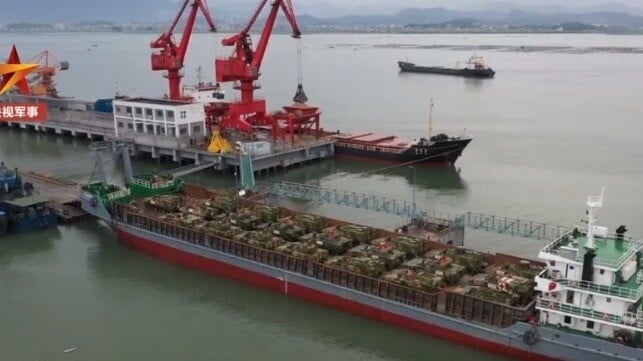
A civilian deck cargo barge carrying PLA armored vehicles (PLA / CMSI / Conor M. Kennedy)
China's civil-military fusion system is well known in tech and policy circles, and extends throughout its maritime industry as well. World-leading commercial shipbuilder CSSC builds the PLA Navy's warships; shipowning giant China COSCO conducts underway replenishment drills; and China's "maritime militia" fishing fleet conducts government operations in the Spratly Islands. Civilian vessels are also closely integrated into China's amphibious assault planning, and a new collection of satellite imaging from Reuters, BlackSky and PlanetLabs shows that the extent may be greater than understood by the public.
In a new report out Thursday, Reuters used high-resolution, high-frequency satellite imaging to review PLA amphibious drills near Jiesheng. In addition to ordinary activity, the imaging (and AIS data) revealed that a dozen commercial cargo vessels diverted from their ordinary operating areas, joined the exercise and loitered off the beach. At least some were bow-ramp deck cargo vessels, like the commercial vessel Huayzhixing, which had about 20 vehicles on deck and was offloading them onto the beach. It is believed to be the first published instance of a commercial bow-ramp workboat conducting a beach landing for the PLA.
The PLA Navy has limited amphibious tonnage of its own, but Western planners have long speculated that commercial vessels might bridge the gap if China launched a Taiwan Strait operation. Shallow-draft deck cargo boats like Huayzhixing are a ubiquitous sight on China's coastlines and waterways; they have been seen moving PLA ro/ro cargo before, but only to and from fixed piers, not in the surf zone. These simple vessels are inexpensive and built on short timeframes at small shipyards, and if integrated into Chinese planning, they could provide military transport capacity at scale, noted analyst Conor M. Kennedy in a previous research note for CMSI - though it is unclear if these unarmed working vessels would be able to deliver in combat.
The imaging also captured the operations of the PLA's temporary floating causeway system, China's functional equivalent of the "Trident Pier" used by the U.S. Army/U.S. Navy Joint Logistics Over the Shore (JLOTS) system. A multi-image sequence showed that Chinese forces can maneuver their pier pontoons into position, interconnect and then fully demobilize the pier system in about 3.5 hours or less - a small fraction of the time required for the American version of this capability.
Turkey Detains Officer After Poisoning Incident on Tanker
Tanker was anchored in Turkey when the crew was poisoned by gas from a tank (Moonik photo - CC BY-SA 3.0)
The chief officer working aboard a Turkish-owned tanker is being detained as the authorities investigate a poisoning incident. One crewmember was killed and two others remain in critical condition due to a buildup and release of toxic gases aboard the vessel, which was anchored in the Sea of Marmara.
The emergency call went out at approximately 1730 on November 19, reporting that one crewmember had collapsed, and two others were injured. The Turkish Coast Guard responded along with the maritime police and teams trained to handle chemicals and other toxic threats.
The tanker Swanlake was built in 2025 in China and was reported to be carrying a cargo of sunflower oil. The vessel is 8,338 dwt and has a crew of 13 Russians aboard.
Turkey’s Halt TV reports a crewmember reported to the bridge a dense gas coming from the vessel’s slop tank, but proceeded to either clean the tank or retrieve a hose from the tank. According to some reports, the crew had been cleaning the tanks after the cargo discharge, and the toxic gas was caused by a combination of the cleaning fluids and the wastewater accumulated in the slop tank.
Two additional crewmembers attempted to rescue the first crewmember who had collapsed. A third crewmember, using an oxygen tank, was able to remove the three crewmembers.
The authorities reported the first crewmember was deceased when they reached the vessel. The other two were rushed to a shoreside hospital and are reported to be in critical condition.
Tests showed elevated levels of hydrogen sulfide and carbon monoxide. Ammonia and other volatile organic gases were also present. According to the Turkish authorities, the leak came from the vessel’s heavily insulated cold tank after it had been emptied.
The authorities said they had arranged for the evacuation of the remaining crew from the vessel. The chief officer was being detained while the investigation proceeded into the circumstances of the poisoning.
The United States expanded its sanctions against Iran’s energy trade with coordinated actions by both the State Department and the Treasury. The efforts continue to increase the reach beyond Iranian operations to target the front companies and enablers of the energy trade, as well as tankers being used for the shipments.
The Trump administration highlights that it has sanctioned over 170 vessels responsible for shipping Iranian crude and petroleum products. In addition to going after international companies, it also expanded the sanctions to increase the actions against Iranian airline Mahan Air. It says the airline has been used to arm and supply Iran’s proxy groups.
The Treasury’s Office of Foreign Assets Control (OFAC) said its focus was on a network of front companies and shipping facilitators that bankroll the Iranian armed forces by selling crude oil. It contends that Iran has increasingly come to rely on the sale of its crude oil to supplement its annual budget and finance the rebuilding of its “depleted forces” after the war with Israel and the U.S. bombing earlier this year.
OFAC listed six additional vessels, some of which it says have been chartered by the various front companies to deliver the oil or conduct ship-to-ship transfers. It included vessels registered in Palau, Gambia, and Panama, used both for crude shipments and petroleum products, including liquified petroleum gas (LPG).
One vessel alone, Palau-registered Pioneer Sam (69,629 dwt), they allege has transported more than 30 shipments over the past two years, moving over 10 million barrels of Iranian fuel oil. They contend these tankers are moving crude and LPG to customers in East and South Asia, including Pakistan and Bangladesh.
At the center of the network, they said, is a company, Sepehr Energy Jahan, that is linked to the Armed Forces General Staff. Treasury associated the company to charterers and others in the UAE, a Panama-based shipping company, and others. Expanding the efforts, it also listed Germany-based trading company BPT Berlin Petroleum Trading, which is alleged to have arranged shipments via STS near Malaysia, and a Greek shipping company, Altomare, which it says chartered the Panama-flagged tanker Kallista to the front companies. They contend this vessel transported nearly four million barrels of oil on behalf of Sepehr Energy Jahan.
Concurrently, the State Department designated 17 entities, individuals, and vessels, which it said were all linked to the Iranian energy trade. It said that the previously listed Iranian Ministry of Petroleum, Iranian Oil Company, and National Iranian Tanker Company continue to rely on third-country service providers. State listed a maritime service provider in Singapore, ANBO Shipping also based in Singapore, and individuals in Singapore. It also designated a Marshall Islands-based shipping company and manager, and another company based in Vietnam, which manages two vessels. Another company is a commercial manager based in the UAE.
Among the vessels included by the State Department are two crude tankers flagged in Vietnam and a Comoros-flagged vessel.
The announcement of the sanctions came as Bloomberg reported that the U.S. Navy has used one of its destroyers deployed to the Caribbean to block the route of a sanctioned tanker bound for Venezuela. That tanker has been linked in the past to the Iranian trade and supplying Venezuela, as well as carrying products from Russia.
Since returning to the presidency in January 2025, Donald Trump has moved aggressively against the Iranian oil trade. The administration launched sanction packages against Iran in February and again in May.
Iranian Navy Loitering in Bandar Abbas Harbor
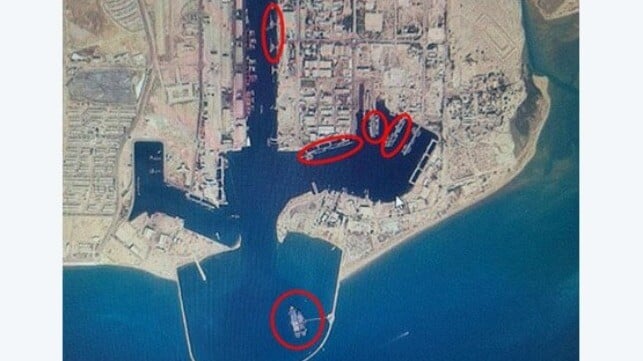
Frigates and long-range logistic vessels in a full Bandar Abbas Naval Harbor, early November 21 (Sentinel-2)
On a visit earlier this month to the headquarters of the IRGC Navy's 2nd Naval District in Bushehr, Deputy Chief of the Armed Forces Brigadier General Ahmad Vahidi stated that the presence of Iranian naval forces on Iran's maritime borders “instills such fear in enemies that they do not even dare to look sideways at these waters and lands.” During his visit, Brigadier Vahidi inspected some speedboats and a gallery of IRGC Navy martyrs who have fallen on operations this year.
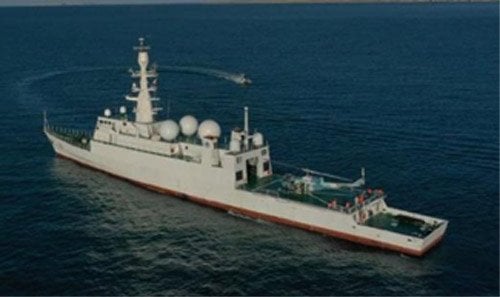
However, satellite imagery of Bandar Abbas Naval Harbor, taken on November 21, shows that most of the principal ships of the Regular Iranian Navy (Nedaja) are tied up in the harbor. All five of the Nedaja’s five operational Alvand and Moudge Class frigates are on dockside berths, as well as the intelligence collection frigate IRINS Zagros (H313).
IRINS Zagros (IRNA/Iranian Navy)
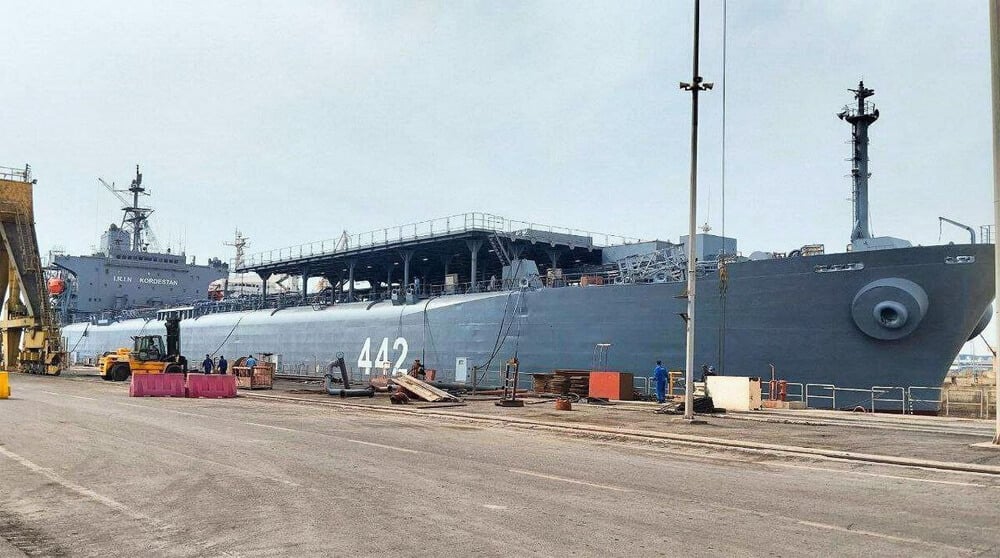
Both long-range fleet resupply ships vessel IRINS Makran (K441) and IRINS Kurdestan (K442), are on their permanent pier in the outer basin. Two of the larger logistics vessels often used to support Nedaja deployments, for example to the Red Sea and Gulf of Aden, namely the Hengam Class landing ships (IRINS Tonb (L513) and Lavan (L514) are alongside, with a third vessel of the class, IRINS Larak (L512), still under refurbishment in the floating dry dock close by. Unfortunately, the imagery available is not of sufficient resolution to determine how many of the Nedaja's submarines are in the harbor.
IRINS Kurdestan (K442)(@mhmiranusa)
Since the 12-Day War, the Nedaja has, like this morning, been largely tied up in Bandar Abbas. The permanent presence in the Red Sea and Gulf of Aden, maintained since 2008, has been allowed to lapse, and Maritime Executive has not seen evidence of naval deployments into international waters for many months. With the exception of a small-scale drone and missile firing in August this year, as part of Exercise Sustainable Power 1404, exercise activity has appeared to have ceased, and it remains to be seen if Exercise Maritime Security Belt, the annual joint exercise with Russia and China, takes place during its regular slot in March every year. At a bare minimum, one might expect to see the long-range two-ship training cruise for naval cadets set out, which normally takes place in February.
Such an extended period of inactivity is likely to affect the operational training standards and perhaps sap the morale of the Nedaja commanders and sailors. The inactivity could indeed be a consequence of poor morale within the fleet.
In two unusual recent incidents, uniformed members of Iran's regular armed forces have made public demonstrations against the current regime in Iran, displaying the national flag of Iran as it was before the Islamic Revolution in 1979. One of these demonstrations took place at a Tehran metro station, with a colonel and lieutenant in uniform seen being arrested within 5 minutes of unfurling a pre-1979 flag on the station platform. IRGC Basij internal security forces were also seen rehearsing riot drills in Mashhad on November 15, as authorities prepare for possible internal disturbances likely in the wake of general unrest and nationwide shortages of water in particular.
Iran's President Masoud Pezeshkian's warning that in two weeks Tehran would run out of water has since passed without any rainfall to alleviate the situation, and the President is now saying that moving the capital is essential. On top of shortages of drinking water, the drop in the water table is threatening land subsidence in Tehran - in an area where buildings are already vulnerable to earthquake damage. Without indicating that any finance is available to fulfil such a plan, officials say the intention is to move the capital to the port city of Chah Bahar on the Indian Ocean.
China Denounces US Suggestion for Greece to Sell COSCO’s Piraeus Concession
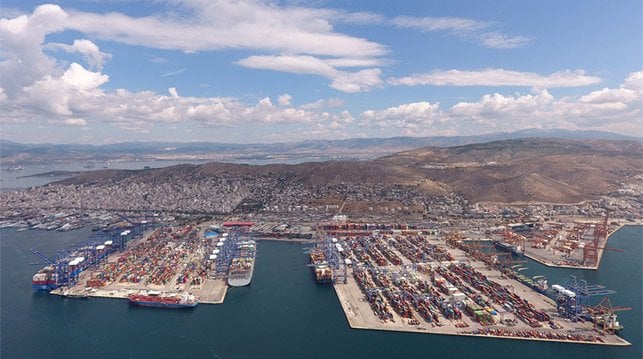
COSCO has been involved in the container terminal in Piraeus since 2009 and owned a controlling interest since 2016 (Piraeus Container Terminal)
The Chinese Embassy in Greece has unleashed strong criticism on the United States and its new ambassador to the Hellenic Republic after comments calling COSCO’s ownership of a Greek port “unfortunate,” and suggesting there were ways around it, including the sale of Piraeus. It is the latest criticism by the Trump administration of China’s global port strategy and follows the insistence earlier this year that China was controlling the Panama Canal.
The latest war of words was spurred by the new U.S. ambassador, Kimberly Guilfoyle, during her first weeks in Athens. The former Fox News host, who is a lawyer and former prosecutor, was confirmed to her first diplomatic post as the U.S. ambassador in September and arrived in Greece at the beginning of November. She has been making the rounds, meeting government officials, and made her remarks about Piraeus during a TV appearance on November 14.
Guilfoyle emphasized the importance of having American infrastructure in Greece while saying the U.S. could “balance against the Chinese influence.” She said there were ways around it and commented, “perhaps Piraeus could be for sale.”
A spokesperson for the Chinese Embassy lashed out, calling Guilfoyle’s remarks “erroneous” and an “unwarranted attack.” In a transcript of a Q&A, the remarks by the Chinese spokesperson said the remarks, “are not only malicious slanders against normal China-Greece commercial cooperation but also serious interference in Greece's internal affairs, reeking of Cold War mentality and hegemonic logic. These remarks violate the basic professional ethics of a diplomat and fully expose the sinister intentions of the U.S. to use the Port of Piraeus and even Greece to serve its own geopolitical interests. China expresses its strong dissatisfaction and firm opposition to this.”
The Chinese state-owned shipping group COSCO has a controlling stake in the Piraeus Container Terminal company, which was awarded in 2009 a 35-year concession to operate Piers II and III at Piraeus’ container terminal. China points out that it made the investments at the height of Greece’s debt crisis to provide a helping hand, and since then, the port has grown significantly. COSCO increased its position to 51 percent in 2016 and to 67 percent in 2021.
Greece’s State Department has also been dragged into the war of words. A spokesperson during a briefing on Tuesday, November 18, said that the Greek Prime Minister acknowledges the role COSCO has played in the port. They noted that China was the only one to submit a bid in 2009 during the country’s financial crisis. Asked about the future of the concession, the spokesperson said, “Greece respects the agreements that have been concluded in the past.”
Guilfoyle conceded during her interview that there were other ways for the United States to expand its influence in Greece. American investment is supporting the development of the new port in Elefsina. Greece is planning legislation enabling ONEX, the operator of Elefsina Shipyards, to develop a new concession for a terminal that would compete with COSCO’s Piraeus operations. The company recently highlighted its investment to restart and modernize Elefsina Shipyard and its operation at the Neorion Shipyard on the island of Syros. The U.S., in 2023, backed a $125 million loan to ONEX for the modernization of the Elefsina Shipyard.
Thessaloniki Port Expansion Begins as US Calls for Alternatives to COSCO
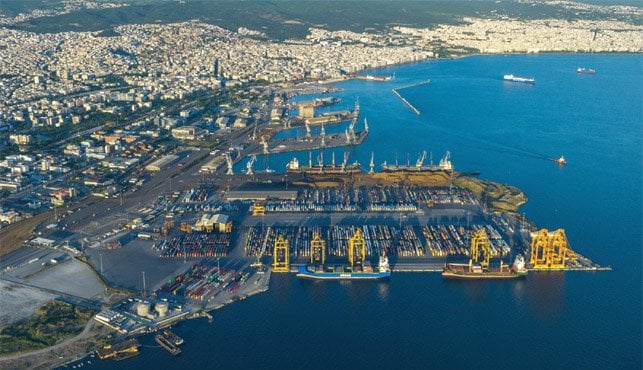
Thessaloniki is trippling its container capacity and set to become a gateway fr Eastern Europe (ThPA)
An agreement was signed to put into motion the planned expansion of the Port of Thessaloniki in northeastern Greece. While historically a smaller operation, the expansion comes as the United States has been calling for Greece to take steps to lessen the influence of China in Greek ports.
Port officials are calling the new project “the most important upgrade project in the history of the Port of Thessaloniki.” A port since ancient times, Thessaloniki has seen a rapid expansion trend since 2018. It has the potential to become not only a key secondary port of Greece but also a gateway for transshipment into Eastern Europe.
The port company has completed a new concession agreement with the Hellenic Republic, which, among other steps, calls for a drastic strengthening of the port’s infrastructure. Pier 6, which is used for containerships, will be lengthened by an addition of 513 meters (more than 1,600 feet). The yard space for containers will also be expanded.
A significant dredging program is part of the effort to deepen the navigation channel and the maneuvering area. The project is projected to require 40 months, and when completed, Thessaloniki will be able to handle very large container vessels (VLCVs) with a capacity of up to 24,000 TEU. It will be a unique capability for northern Greece. The total budget for the project is €195.6 million ($225 million).
The port’s capacity will be expanded to handle 1.5 million TEU annually. In 2024, the port handled 566,000 TEU, which represented a nine percent increase over the prior year. It also handled approximately 250,000 tonnes of general cargo and has a growing business with cruise ships.
“The expansion of Pier 6, the largest upgrade project in the history of the port, creates the conditions for Thessaloniki to strengthen its role in the Mediterranean as a strategic trade hub for Southeast Europe,” highlighted Dr. Ioannis Tsaras, CEO of ThPA S.A., the port’s operator.
The United States’ new ambassador to Greece, Kimberly Guilfoyle, has been emphasizing during her recent meetings that Greece needs to take steps to decrease China’s influence. Arriving this month in Greece on her first appointment as an ambassador, Guilfoyle called the 16-year-old agreement with COSCO for the operation of the container terminal in Piraeus “unfortunate.” She suggested there would be ways around the company’s controlling ownership stake of the container terminal, including the expansion of alternate ports. She also said, “Perhaps Piraeus could be for sale.”
Greece was quick to defend its agreement with the Chinese company and said it respects existing agreements. China’s embassy in Greece lashed out at Guilfoyle and the United States, saying that Guilfoyle’s remarks were interference and “violate the basic professional ethics of a diplomat.”
The Chinese Embassy called the U.S.’s remarks “erroneous” and interference in Greece’s internal affairs. It was emphasized that COSCO was the only bidder for the concession in Piraeus in 2009 at the height of Greece’s financial crisis. The Chinese official highlighted the strong growth of container operations in Piraeus after COSCO’s investment.
Crowley Mariners on Stena Immaculate Honored for Heroism and Safety Efforts
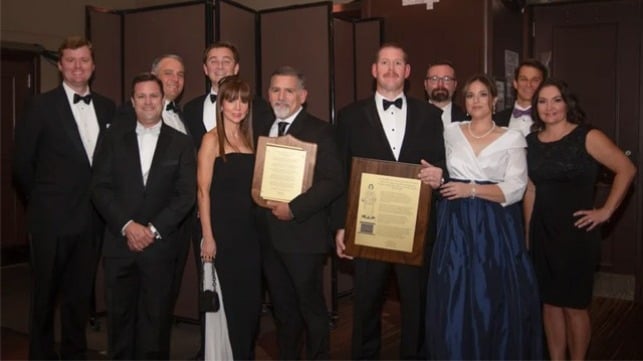
Chief Mate Jaime Torres (center left) accepted the award on behalf of the El Coquí crew and Third Mate Jeff Griffin (center right) accepted the award on behalf of the crew of the Stena Immaculate. (American Maritime Officers)
The United Seamen’s Service recognized Crowley mariners with honors at the 2025 Admiral of the Ocean Sea (AOTOS) Awards. As one of the most prestigious ceremonies in the industry, the AOTOS awards spotlight outstanding maritime achievement and pay tribute to American seafarers whose courageous actions and commitment to safety have made a profound impact on the industry and the welfare of those at sea.
The crew of the tanker Stena Immaculate was presented with the AOTOS Special Recognition Plaque for their extraordinary actions after the vessel was struck by a foreign cargo ship while anchored in the North Sea in March of this year. Despite a ruptured cargo tank and fire that engulfed both vessels, the crew acted decisively to contain the fire, safeguard thousands of gallons of jet fuel and ensure the safety of all 23 seafarers. Their swift response prevented further disaster and preserved the ship and its cargo. At the time of the incident, the Stena Immaculate was managed by Crowley through its joint venture with owner Stena Bulk USA.
The crew aboard Crowley’s owned and operated vessel, El Coquí, earned AOTOS Mariner’s Plaque for Heroism for their actions in the rescue of four U.S. boaters after their sailing vessel sank in the Atlantic Ocean north of the Dominican Republic. Responding to the U.S. Coast Guard’s request for assistance, the El Coquí diverted from its regular route between Jacksonville, Florida, and San Juan, Puerto Rico route. Working alongside the U.S. Coast Guard and nearby vessel Bonanza, the crew successfully located, retrieved and transported the boater to safety.
“We are incredibly proud of our mariners aboard the Stena Immaculate and El Coquí for receiving these honors,” said James C. Fowler, senior vice president and general manager of Crowley Shipping. “These awards are a testament to their courage, professionalism and dedication in moments of crisis. These mariners exemplify Crowley’s unwavering commitment to safety, and their actions remind us why we continually invest in training, preparedness and innovation to protect lives and uphold the highest standards in maritime operations.”
For more than 50 years, the AOTOS Awards, hosted annually by the United Seamen’s Service, has recognized individuals and organizations whose leadership have advanced the maritime sector while safeguarding the welfare of American seafarers.
The products and services herein described in this press release are not endorsed by The Maritime Executive.
Coast Guard Busts Luxury Yacht for Repeat Violations of a COTP Order
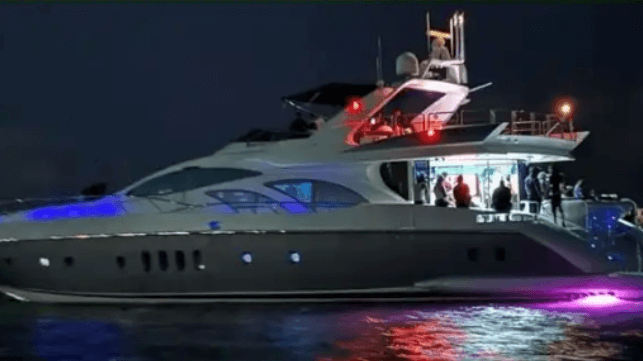
A large, capacious yacht got swept up in a Coast Guard charter-vessel bust in Miami last weekend, adding to its curious legal history. The Round, a 98-foot Italian-made motor yacht, was boarded and allegedly found to be in violation of a Captain of the Port order, which the operator had allegedly violated once before earlier this year.
A vessel matching The Round's name, appearance and Miami home port is listed on a for-charter advertising site, Giggster, for a rate of $1,300 per hour. According to a graphic released by the Coast Guard, inspectors cited the vessel for six violations, including failure to have a COI, failure to employ an appropriately credentialed mariner, and failure to have an endorsement for coastwise trade (the vessel is foreign-built and foreign-flagged).
The service noted that the maximum penalty for willfully and knowingly violating a COTP order is a felony, punishable by up to $250,000 in fines or six years in prison. Civil penalties range northwards of $100,000 per day, plus additional penalties for other violations, like unlicensed passenger-for-hire operations.
"The Coast Guard will continue to maximize its collaboration with state and local law enforcement agencies to enforce all applicable laws on the waterways of South Florida," said Lt. Michelle Haksteen, Coast Guard Sector Miami investigating officer. "Charter vessel operators need to be mindful of the safety regulations before embarking passengers to prevent the risk of an accident, voyage terminations and civil penalties due to non-compliance with established laws."
The Round is a 160 gross ton Azimut 98 series yacht, delivered in 2005 and initially named Leonardo II. More than two dozen fiberglass hulls of this design were built; this one was transported from Italy to Florida in 2013 under the ownership of two Venezuelan nationals, Luis and Ignacio Oberto, according to the Miami Herald.
In 2020, the Obertos got into a legal dispute over the yacht's ownership with another party, the automotive repair firm Excellent Auto Group of Hialeah, Florida. According to the Obertos, Excellent Auto's owners had taken possession of The Round with falsified documents and removed it from its berth under cover of darkness. The auto shop's owners vigorously denied the claim and contested it in court, and the suit was swiftly dismissed on technical grounds. The current owner is not recorded in Coast Guard records.
The Coast Guard has boarded The Round five times since 2020, and officers terminated a voyage in 2021 for "unsafe conditions." The vessel was issued a Captain of the Port order on Oct. 25, 2023; violated that order on March 23, 2025; and violated it again last weekend, according to the Coast Guard.
Another vessel boarded last weekend, the Second Wind, had allegedly violated a COTP order three times this year, having previously been stopped on Feb. 22 and again on May 16.
Fire Continues to Burn on ONE Containership at Port of Los Angeles
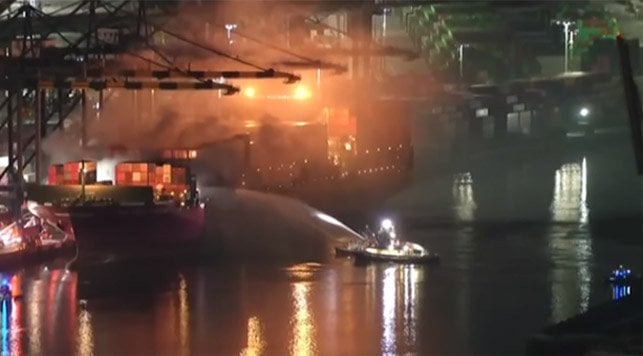
Electrical fire started below deck on the docked containership (CBS-TV screen capture)
Fire crews from Los Angeles and Long Beach responded to a fire aboard an Ocean Network Express (ONE) containership docked at the Port of Los Angeles on Friday evening, November 21. While residents in surrounding communities were told to close windows in their homes, the fire department reported the danger had passed with no injuries. The fire, however continues to burn on the ship which has been moved away from the dock.
According to the AIS signal, the vessel was moved overnight on November 22 to the Long Beach anchorage. A fire boat remains alongside with the Port of Los Angeles reporting fire crews and ship crew members are continuing fire suppression efforts. It is unclear how many containers might have been damaged, but the reports said the fire onboard has been substantially contained. Los Angeles Fire Department Capt. Adam Van Gerpen told the media that at least 40 containers were involved in the fire, and it was possible that it had spread to 100 or more after an explosion aboard the ship.
The crew aboard the ONE Henry Hudson (98,849 dwt) reported a below-deck electrical fire on the vessel at approximately 6:38 p.m. local time, according to the LA Fire Department. The vessel, which was built in 2009, had arrived from Tokyo, Japan, on November 19 and has a capacity of 8,212 TEU. The vessel is registered in Panama.
Early reports said that 15 crewmembers had been evacuated from the vessel, with two remaining aboard and six unaccounted for by the fire department. They later reported that all 23 crewmembers had been safely evacuated.
The fire spread into several container bays, according to the fire department. Fire crews were working with full breathing and safety apparatus because of reports that there was dangerous cargo aboard the vessel and in the area of the fire. Fixed-wing aircraft and drones were being used with heat-sensing equipment to show the extent of the fire.
Shortly before 8:00 p.m. local time, the fire department reported there was an explosion aboard the vessel affecting power, including lights and crane operations on the ship. Because of the dangers, firefighters were ordered to remain above deck. Fireboats were positioned alongside the vessel to provide cooling to the hull.
The Los Angeles Fire Department said containment efforts were proceeding slowly. At its peak, 186 fire personnel were working the incident.
The Port of Los Angeles and the U.S. Coast Guard reported that a safety perimeter had been established around the containership. Operations were suspended at the Yusen Container Terminal, where the vessel was docked, as well as three additional terminals in the port. Operations at the port resumed as normal on Saturday.
TSB Highlights Free-Fall Lifeboat Risk as Accidental Release Injures Crew
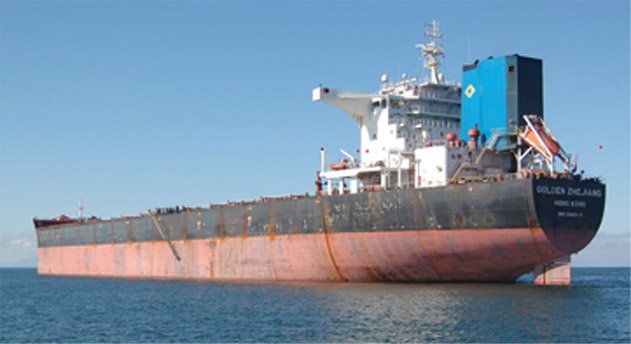
Golden Zhejiang with the lifeboat visible at the stern (Source: TSB)
Maritime investigators are yet again highlighting the dangers associated with free-fall lifeboats on commercial vessels after an inadvertent release sent a lifeboat flying into the water and caused serious injuries to a crewmember. The Transportation Safety Board of Canada (TSB) released its investigation report on a lifeboat incident involving the bulk carrier Golden Zhejiang, highlighting that cases of accidental lifeboat release remain prevalent and often lead to injuries.
On September 2, 2023, a crewmember aboard the 2010-built Golden Zhejiang sustained serious injuries when a free-fall lifeboat went flying into the water during a routine weekly safety check. The 292-meter vessel sailing under the flag of Hong Kong and with a gross tonnage of 92,270 was anchored in Trincomali Channel, British Columbia, awaiting loading when the incident occurred.
Investigators established that while conducting the safety check, the crew encountered an issue while testing the steering from inside the lifeboat. An attempt to troubleshoot the issue inadvertently activated the main release mechanism, causing the lifeboat to drop into the water with a crew inside. One crewmember sustained permanent, life-changing injuries and partial memory loss.
In its findings, TSB reports that the cables securing the lifeboat to the launching structure were not engineered and certified as load-bearing cables. Consequently, they were not safe for the intended use. It concluded that when the lifeboat was inadvertently released, the securing cables failed, causing the lifeboat to fall into the water.
The plunging of the free-fall lifeboat was an accident waiting to happen, considering that a hydraulic leak had existed for some time, something that had prevented the crew from performing required drills. Though the defect had been noted on the monthly safety checks since June 2023, it had not been reported in the planned maintenance system in order to have the leak repaired.
The free-fall lifeboat was part of the navigational equipment and life-saving appliances required in commercial vessels and was stowed on a launching structure located at the stern. On the day of the incident, the lifeboat was about 19 meters above the water surface and was positioned with its bow down at an angle of approximately 30 degrees toward the vessel’s stern. With an overall length of 7.5 meters and weighing 4,400 kilograms, it can accommodate up to 30 people.
While free-fall lifeboats are critical in saving the lives of crewmembers in instances when they are forced to abandon ship, cases of inadvertent releases remain widespread. Since 1996, TSB has investigated seven accidents on commercial vessels, all of which involved serious injuries.
The previous incident occurred in December 2020 when the crew on the bulk carrier Blue Bosporus was carrying out a free?fall lifeboat drill in English Bay, B.C. In that case, the wire rope slings holding the lifeboat failed, causing it to plunge into the water. Two crewmembers in the lifeboat were seriously injured.
Following the release of the Golden Zhejiang report, TSB is calling for stronger safety measures to prevent similar incidents. Columbia Shipmagement, which manages over 400 vessels, has since implemented safety enhancements including updated lifeboat labelling, revised familiarization checklists and work instructions, and installation of securing turnbuckles.