Saturday, November 07, 2026

The American People Voted to End the War on Immigrants—Now Democrats Must Act

Latino voters stood by their immigrant families and neighbors on Tuesday, and Democrats need to remember that. Remember the families who remain separated. The imprisoned and the dead. And those who stood with immigrants at the risk of their own lives.



Family members of Mexican immigrant Lorenzo Salgado Araujo grieve at a makeshift memorial during a candlelight vigil on July 8, 2026 in Houston, Texas.
(Photo by Brandon Bell/Getty Images)


Erika Andiola
Nov 06, 2026
Common Dreams

Yes, Election Day was a day of hope and victory. From coast to coast—and especially among Latino communities in key states like Texas—voters overwhelmingly rejected Immigration and Customs Enforcement violence, President Donald Trump’s mass deportation campaign, and billionaire-backed scapegoating. People saw through the lie that immigrants drive up the cost of living and chose a future focused on real economic relief. The future is suddenly looking brighter.

For an immigrant like me who came to this country and still has no ability to vote, there’s so much hope coming from Houston, where Latino voters turned out in record numbers and dedicated their vote to Lorenzo Salgado Araujo, the immigrant father who was killed by ICE. There’s hope coming from young first- and second-generation Latinos like my nephews and nieces who dedicated their votes to their immigrant family members and friends.

This message from voters is very clear for the newly elected candidates celebrating this week—everyone who won on the promise to fight back against Trumpism. Tuesday’s vote was a clear rejection of the war on immigrants. Let it also mark an end to Democratic cowardice, and the end of putting corporate interests over people.

Democrats, you had the Latino vote before and lost it. Now you have it back—don’t mess this up.

It’s time to act on the mandate that voters just delivered—especially the millions of Latino voters, horrified by the last two years, who just swung hard away from Trump.

Democrats, you had the Latino vote before and lost it. Now you have it back—don’t mess this up. History in California, Arizona, and Texas shows that while Latino voters will reject mass deportation campaigns, failing to deliver on promises made to our communities causes that support to slip. You cannot take us for granted. You need a positive, pro-working-class, pro-immigrant agenda, and you need to compete for our votes. You can start by showing true political courage by protecting our families and neighbors.

Getting ICE out of our communities is no longer just an immigration issue—it is a safety issue for us.

That courage starts with stopping ICE. Get those violent criminals out of our communities and make sure they can never terrorize us or anyone else again. Stop ICE and Border Patrol and all the other corrupted parts of the Department of Homeland Security. Bring to justice everyone in this government responsible for so many crimes and terrors against immigrants.

Inspect detention centers and enforce real congressional oversight. Shut off the pipeline that feeds from streets and sidewalks of immigrant communities into for-profit torture prisons where neglect and abuse have led to a rising toll of sickness, injury, and death.

At the local level, you can stand up for immigrants by fiercely defending sanctuary laws, cities, and states. Keep federal agents and anti-immigrant operatives out of our homes, schools, and churches. Stop ICE’s local enablers by ending 287(g) programs that turn local police into immigration enforcers. We cannot let local law enforcement take federal dollars to racially profile and target brown communities. Put an end to the abuse now.

Latino voters stood by their immigrant families and neighbors on Tuesday, and Democrats need to remember that. Remember the families who remain separated. The imprisoned and the dead. And those who stood with immigrants at the risk of their own lives.

Remember the deaths of Renee Good, Alex Pretti. Carlos Roberto Montoya, and Lorenzo Salgado Araujo. The unconstitutional and unlawful deportation of Kilmar Abrego Garcia. The detention of 5-year-old Liam Cornejo Ramos. The brave people of Minneapolis, Los Angeles, and Chicago.

I’m grateful for everyone who voted on Tuesday for decency, humanity, and the Constitution. I’m also grateful for the courageous people, immigrants and allies, who took to the streets in the last two years, like ambulance crews rushing to the scene of an emergency or firefighters to an out-of-control blaze.

Election Day gave us many victories, but organizing gives us power—so let’s turn this mandate into action, hit the streets, hold our leaders accountable, and build the safe, just future our families deserve.


Our work is licensed under Creative Commons (CC BY-NC-ND 3.0). Feel free to republish and share widely.


Erika Andiola
Erika Andiola is political director of NDLON, the National Day Laborer Organizing Network, which advocates for immigrant- and low-wage workers.
Full Bio >
Trump Weighing Executive Order to Label Disliked Nonprofits as ‘Terrorist’ Groups: Report

“There are entities that seek to hold the government accountable, and so the government uses the tools in its toolkit to try to silence them.”


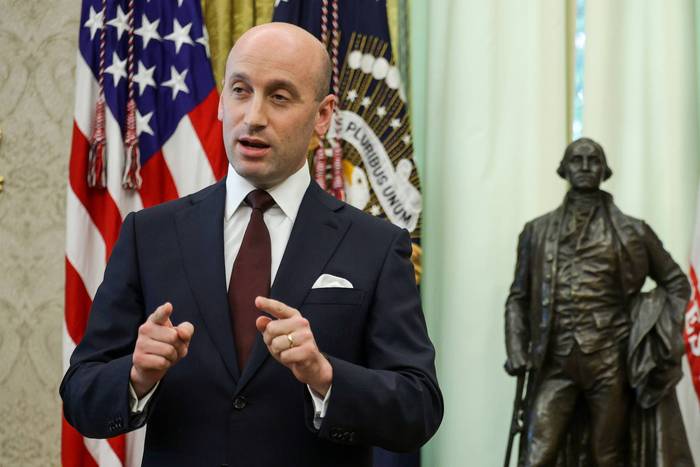
White House Deputy Chief of Staff Stephen Miller (L) smiles as US President Donald Trump holds signed executive orders in the Oval Office of the White House in Washington, DC, on August 6, 2026.
(Photo by Jim Watson/AFP via Getty Images)


Stephen Prager
Nov 06, 2026
COMMON DREAMS

President Donald Trump is reportedly considering a major escalation of his war against left-wing nonprofits with an executive order that would seek to suspend their tax-exempt status with the stroke of a pen.

The Wall Street Journal reported Friday that the order plans to label some nonprofit groups as having “terrorist” ties—an act that would immediately suspend their tax-exempt status, dramatically imperiling their ability to operate and raise money.

According to the report, the administration is seeking to use a little-known provision in the federal tax code to strip nonprofits of their status without going through the normal Internal Revenue Service investigation and appeals process.

The law, signed in 2003 by then-President George W. Bush, allows the president to identify an organization in an executive order as supporting or engaging in terrorism. The law also prevents organizations from challenging designation or suspension in proceedings concerning federal tax liability.

It’s not clear yet which groups will be targeted, but the administration and its allies in Congress have already signaled their intent to go after left-leaning groups like George Soros’ Open Society Foundations, the Southern Poverty Law Center (SPLC), and the Council on American-Islamic Relations (CAIR).

The latter was forced to cease operations in Florida Thursday following a state-level “terrorism” designation by Republican Gov. Ron DeSantis.


In September 2025, weeks after the assassination of right-wing activist Charlie Kirk, Trump signed National Security Presidential Memorandum 7 (NSPM-7), which identified “anti-capitalism,” “anti-Christianity,” “extremism on migration, race, and gender,” and “hostility towards those who hold traditional American views on family, religion, and morality” as ideological characteristics associated with “domestic terrorism.”

The memo directed the IRS and other federal agencies to investigate nonprofits and their funders for alleged connections to political violence.

Shanna Singh Hughey, a policy strategist at the anti-authoritarian watchdog group Protect Democracy, said in September that the memo’s vague and subjective language gave the administration expansive powers to target the nonprofits of its political foes.

“It goes way beyond that to the organizations that are connected to the folks who might be accused [of violence], including board members and staff, as long as that organization is accused of either funding or facilitating the violence done by the target,” she told Inside Philanthropy.

“This is exactly what we expect to see when authoritarians attempt to consolidate and hold power,” she said. “There are entities that seek to hold the government accountable, and so the government uses the tools in its toolkit to try to silence them.”


Then-White House Deputy Chief of Staff and Homeland Security Advisor Stephen Miller speaks during an event with US President Donald Trump in the Oval Office of the White House on August 6, 2026, in Washington, DC. (Photo by Alex Wong/Getty Images)

Trump’s reported plan to attack nonprofits comes on the same day that he named Stephen Miller, the chief architect of NSPM-7, as his new White House chief of staff.

Weeks before the memo was signed, Miller vowed to “dismantle and take on the radical left organizations in this country that are fomenting violence.” He has said that descriptions of Trump and his immigration policies as “authoritarian” or “fascist” were examples of language that “incites” violence.

He has also referred to the Democratic Party itself as “not a political party,” but “a domestic extremist organization.”

During a State Department ministerial on terrorism in July, Miller said that under NSPM-7, the administration was empowered to “disrupt, identify, defund, debank, arrest, and prosecute” what it called terrorist organizations.

In the same speech, he claimed that left-wing extremists invoke “civil liberties” disingenuously to evade criminal punishment.

Describing leftists as the “enemies of civilization,” he said, “It is essential that we are wise enough and strong enough to understand that these appeals must fall on deaf ears.”

STEPHEN MILLER, MVP

 MAGA'S Violent Propagandist


Trump Names ‘Hate-Filled Extremist’ Stephen Miller as New Chief of Staff

House Democratic leader Hakeem Jeffries said Miller is a “dangerous xenophobe and reckless extremist who has American blood on his hands.”


White House Deputy Chief of Staff Stephen Miller speaks during a TV interview with Fox News outside of the White House on August 12, 2026 in Washington, DC.
(Photo by Anna Moneymaker/Getty Images)

Brad Reed
Nov 06, 2026
COMMON DREAMS

Stephen Miller, the chief architect of the Trump administration’s widely decried mass deportation policy, has received a promotion to be the next White House chief of staff.

In a Friday social media post, President Donald Trump announced that Miller next week will take over for Susie Wiles, who served as his chief of staff for the past two years.

Critics of the administration were quick to denounce the appointment of Miller, who has a long documented history of promoting white nationalist literature and conspiracy theories.

“Stephen Miller is a vile, hate-filled extremist who has made cruelty his life’s work,” wrote the social media account of Democrats serving on the US House Committee on Homeland Security. “America just rejected the fear and bigotry he peddles and Trump handed him a promotion. They have learned nothing.”

House Minority Leader Hakeem Jeffries (D-NY)—likely the chamber’s next speaker—described Miller as a “dangerous xenophobe and reckless extremist who has American blood on his hands.”

“His presence in government should be eradicated like a malignant tumor,” Jeffries added. “Fire him today.”

Rep. Robert Garcia (D-Calif.), who is in line to be the next chair of the House Oversight Committee, issued a statement advising Miller to “lawyer up,” echoing his message to Trump earlier this week.

“Stephen Miller is the architect of the unconstitutional [US Immigration and Customs Enforcement] raids that have terrorized our communities and kidnapped and killed American citizens and immigrant families,” Garcia said. “Oversight Democrats will continue to investigate Miller for his misconduct, and we will fight against his hateful policies in Congress and the courts.”

Rep. Pramila Jayapal (D-Wash.) said appointing Miller was “a giant middle finger to every single voter who came out to the polls and demanded a change from the corruption and cruelty of the last two years.”

Jayapal vowed that Democrats in Congress would deliver “real accountability for the corruption that Stephen Miller and Trump profited from.”

Rep. Mark Pocan (D-Wis.) marveled that Trump elevated a hard-liner like Miller, even after his party suffered a historic defeat this week in the 2026 midterm elections.

“Tell me you learned nothing about why you had a devastating loss at the polls in November without telling me you don’t know why,” wrote Pocan. “Stephen Miller. The solution to nothing.”

Pocan’s remarks were echoed by Democratic Illinois Gov. JB Pritzker, who responded to news of Miller’s appointment by writing, “These losers learned nothing.”

Rep. Delia Ramirez (D-Ill.), in a statement sent to independent journalist Marisa Kabas, warned Miller to not “get too comfortable with your new title.”

“Part of the benefits package for your promotion is accountability for all the pain you have caused,” Ramirez added.

Democrats weren’t the only ones panning the appointment of Miller, as some Republicans criticized the decision as well.

Rep. Marlin Stutzman (R-Ind.), who earlier this week called for Miller’s firing, told Semafor reporter Nicholas Wu that making him White House chief of staff was a “horrible decision” by the president.

Outgoing Rep. Don Bacon (R-Neb.) told CNN’s Jake Tapper that picking Miller was “not a good choice” on Trump’s part.

“He’ll have an antagonistic relationship with many,” Bacon explained. “He did take the immigration issue for President Trump from a two-to-one favorable to a two-to-one unfavorable. He went from the Biden extreme to the other extreme. He cost us seats in Texas and Arizona by alienating many Hispanic voters who voted for Trump in 2024.”

Olivia Troye, former homeland security and counterterrorism adviser to Vice President Mike Pence, expressed disgust at Miller’s promotion.

“Stephen. Fucking. Miller,” she wrote. “What a dangerous joke. Except no one is laughing.”

Discussing the political ramifications of Miller’s appointment, New York Times columnist Jamelle Bouie mused that it could be a long-term benefit to Democrats.

“On the one hand, I think putting Miller in the driver’s seat puts all of us in genuine danger,” Bouie wrote. “On the other hand, if you want a path to 60-plus Senate seats in 2029, this is it.”

MS NOW host Chris Hayes expressed a similar sentiment.

“If you were thinking: What could Trump do to push his approval rating down even further and open up the possibility of a 1964/1980/2008-style victory for Dems in 2028?” wrote Hayes. “The answer is: put Stephen Miller in charge of everything. And guess what?”


Friday, November 06, 2026


Instructors want open, practical AI resources, not abstract theory, study finds


Higher Education Press


As generative artificial intelligence reshapes higher education, instructors are increasingly being asked to integrate AI into their teaching. But what do they actually need to do so effectively? A new study published in Frontiers of Digital Education provides a direct answer: trusted, timely, and adaptable resources focused on AI literacy, pedagogical strategies, and ethics—materials that are openly licensed, interactive, and grounded in practical classroom applications rather than abstract theory.

The research, led by Sevinj Iskandarova of Bridgewater College and colleagues from the University of Virginia, George Mason University, and James Madison University, employed a multiphase, mixed-methods design. Rather than assuming what faculty required, the team first conducted a statewide needs assessment survey of 149 instructors across diverse institutional types and academic disciplines.

Participants prioritized three core content domains: AI literacy, pedagogical strategies, and ethics. They also expressed a strong preference for the form such support should take. Instructors favored interactive and adaptable materials, openly licensed so they could be remixed and modified, and rooted in real classroom scenarios. The open licensing choice was deliberate: By making the resource free to reuse and adapt, the team aimed to support inclusive access and allow instructors in different teaching contexts to tailor the material to their own institutions, teaching contexts, and disciplines.

Those survey results fed directly into the design of an open educational resource prototype. In the prototype evaluation phase, 75 instructors completed an evaluation survey on the prototype and provided structured feedback. According to the authors, reviewers affirmed the utility of the resource while also suggesting areas for further refinement. The study frames this as formative evaluation—feedback used to improve the resource during development rather than to measure final effectiveness in classrooms.

“This study contributes an educator-informed process for translating instructors’ needs into the design and formative evaluation of an adaptable, openly licensed faculty development resource,” the authors write. They position the approach as a flexible, scalable, and community-oriented pathway for bridging institutional resource gaps and advancing inclusive faculty development in the age of AI.

The study documents a development process and does not report measured effects of the resource on teaching practice or student outcomes. The scope of the evidence is also bounded by its sample: the needs assessment drew 149 instructors from a single statewide survey, and the prototype evaluation involved 75 reviewers. The priorities reported reflect those participants rather than a census of all higher education faculty. Nonetheless, the research offers a concrete model for institutions tasked with preparing instructors for AI: ask faculty what they need, build openly and adaptably around the answers, and iterate based on structured peer feedback.


Generative AI uses more energy on non-English text


Models can use up to 15 times more energy to process, generate text in widely spoken languages, often with lower-quality output


University of Michigan


Graphs and photo of researchers

Key takeaways:

  • Gen AI uses 1.4 to 180 times more energy to produce text outside the English language.

  • Higher energy costs increase the barrier to using AI for billions of people worldwide—they must either pay more or switch to a non-native language.

  • AI developers could improve energy efficiency by training models optimized for specific languages or incorporating translation pipelines into their services.


When processing and producing non-English text, generative AI burns more energy and sometimes provides less accurate answers, potentially reinforcing existing global inequalities, according to University of Michigan Engineering researchers.

The energy disparity is greatest in languages that don't use Latin script and have less digital content available for training. AI models could use 1.4 to 180 times more energy to generate non-English text, with most Western European languages coming in at twice the energy expenditure or less. However, Hindi and Bengali, each spoken by hundreds of millions of people, require 7.9 and 15.3 times more energy than an equivalent English prompt.
 

"The languages that typically consume more energy also tend to have lower accuracy in the model output," said Naihao Deng, a doctoral student in computer science and engineering from the U-M AI Lab and the first author of the study, which was presented at the Empirical Methods in Natural Language Processing conference of the Association for Computational Linguistics.


"Most people will want to use AI models by asking questions in their native languages, and they may feel pressured to use it as it's incorporated into more parts of society, but the double penalty makes it more likely that certain people will be priced out of AI and that companies will be more reluctant to serve models in certain languages."


At present, around 5.2 billion people have to use more than twice as much energy to generate text in their first language compared to English speakers, according to the researchers' measurements and demographic data available in Ethnologue. But the researchers also provide recommendations to bridge the gap and ensure that users aren't penalized for trying to use AI in their language of choice.


To help quantify AI energy use and improve efficiency, the National Science Foundation and the Defense Advanced Research Projects Agency (DARPA) partially funded the research.

Measuring AI's language energy disparity


The researchers found the energy and accuracy disparity by measuring the amount of energy used by three open-source AI models, Alibaba's Qwen 3, Google's Gemma 3, and Meta's Llama 3.1. They asked each model to answer multiple-choice questions included in Belebele, a dataset for assessing the reading comprehension of AI models in 122 different languages. They then measured the amount of energy used to answer each question using the ML.Energy framework, developed at Michigan Engineering.


To check for the disparities in other types of tasks, the researchers also asked the models to answer a collection of grade-school math word problems and open-ended user prompts included in other benchmarking datasets. Because these datasets aren't multilingual, the researchers translated the English questions into seven other languages using Meta's translation tool, No Language Left Behind.


All the models used less energy for English text, on average. The energy disparity persists at larger model sizes and across different types of computer processors.


Extra tokens, extra cost


When working in other languages, the models used more energy because they had to generate more tokens, the basic unit of data used by AI. Tokens can represent entire phrases and words or single syllables and characters. AI models convert prompts into tokens before processing them, and then convert the output tokens into human language for the final response.


This problem escalates for scripts whose characters require more code to display. For example, the Devanagari script used in Hindi, Nepali and Marathi and the Bengali script have primary characters that change form and combine with accents to produce up to millions of unique characters.


A higher number of tokens takes up more computer memory and burns more energy. With more memory consumed in tokens, the model has less available for processing information. So, it processes the tokens in smaller batches, which uses more energy per token. This effect compounds the energy disparity compared to English text.


More tokens can also result in higher direct costs, since companies often price model access by the number of tokens generated.


Reducing AI's language energy disparity


To help fix the cost disparity, the researchers recommend that companies optimize their services for more languages. This could entail routing user queries to models tailored to specific languages. Companies could also translate user prompts to English before feeding them to a more generalized model, provided the translation is reliable.

"AI developers should be creating more resources for those languages with an energy and cost disparity," said Rada Mihalcea, the Janice M. Jenkins Collegiate Professor of Computer Science and Engineering, director of the U-M AI Lab and corresponding author of the study. "Crowdsourcing native speakers to help translate material or create resources to get enough training data could also help improve efficiency."

Additional funding sources include Ford, Laude Institute, OpenAI and the Survival and Flourishing Fund.


The study used the University of Michigan's Great Lakes high-performance computing cluster.


Study: The Language-Energy Divide: Measuring Energy Costs of Multilingual LLM Inference (DOI: 10.18653/2026.emnlp-main.2113)


When doctors and AI medical opinions diverge, humans must question the difference: HMSOM experts


Hackensack Meridian Health
The Hackensack Meridian School of Medicine

image: 

Carefully setting up a process of parallel assessments starting from the very beginning of data collection is the way to make the most of both human and machine when diagnosis and prognosis do not completely align, according to a new paper by experts including Hackensack Meridian School of Medicine Professor Dr. Charles Binkley. 


view more 

Credit: Hackensack Meridian Health


The human doctor and the artificial intelligence (AI) tool they are using more and more frequently are not going to always agree. 


Carefully setting up a process of parallel assessments starting from the very beginning of data collection is the way to make the most of both human and machine when diagnosis and prognosis do not completely align, according to a new paper in the journal npj digital medicine, a Nature publication. 


“Realizing the value of the divergence event in clinical human-AI interaction” assesses how best to reconcile the two “experts.” The lead author is Charles E. Binkley, M.D., FACS, HEC-C, the director of AI Ethics and Quality for Hackensack Meridian Health, as well as professor of Surgery, and chair of the Faculty Assembly for the Hackensack Meridian School of Medicine.


“Clinicians are told to be the ‘human in the loop’ but are typically given no method for doing so beyond ‘exercising their judgment,’” write the authors. “Efforts to make AI output both more technically explainable and human interpretable - have not directly correlated with improved clinical decisions and have sometimes created false confidence in incorrect AI output.”


The disagreements should instead be called “divergence events,” since there are nuanced differences between what the human and the machine are assessing, according to the authors. 


For instance, the physician actually speaking to the patient "brings a dynamic bedside gestalt” from seeing the patient “in-person” and speaking to family members. Meanwhile, the AI model has an enormous body of data from electronic health records and consequent pattern recognition from thousands or millions of prior cases, according to the authors. 


“Divergence visibility” is the key factor in reconciling the two, according to the team of experts, which included experts from University of Maryland School of Medicine, Beth Israel Deaconess Medical Center Harvard Medical School, New York Presbyterian/Columbia University Irving Medical Center, and Columbia University Vagelos College of Physicians and Surgeons. 


Various models of using AI as a tool posit potentially using it before the clinician fully assesses the case in its entirety, or using AI as a primary assessment and diagnostic tool. 


Sequential output (clinician forms a judgment, then considers the AI output, and finally revisits the clinical evidence and their reasoning if there is divergence before making a final call) may mitigate liability and also offer potential protection against the decline of clinical reasoning skills. An example: using the machine as a second and separate reader of breast cancer screening images. The two totally independent reads can then use an explicit reconciliation step to pinpoint exactly where the two opinions diverge. By recording that divergence point, and interrogating it, the clinician actively compares the reasoning and homes in on resolving the disagreement in a minute way. Following this structure could enable both the clinician and the machine to learn from each other at the point of divergence.


“The most consequential moments in clinical AI are the ones where the clinician and the AI system diverge,” the authors write. “How the field treats those divergence moments (either as only adjudications between two outputs, or as insightful interactions between two kinds of knowledge) will determine whether AI systems become a true partner for safer clinical decisions. 


“Human-AI interaction divergence visibility articulates a need to make the human-AI interactions visible to the clinician in real time and to the field over time, to truly advance patient care,” they add. 


AI’s gut reaction: Researcher finds that some bots still think in stereotypes


By studying how advanced generative AI models process tasks, a Rutgers expert on hidden biases found that most struggle to counter stereotypical assumptions


Rutgers University


Large-language models (LLMs), the technology that powers tools like Gemini and ChatGPT, are more nuanced than ever. But that doesn’t mean they aren’t biased. Some models are more prejudiced than others, a Rutgers University researcher has found.

In findings published in Nature Machine Intelligence, Calvin K. Lai, an associate professor of psychology at Rutgers-New Brunswick, reports that although LLM outputs are increasingly aligned with human values, the processes by which they reason are often rooted in deep-seated stereotypes.

“What we found across most models is that they consistently reproduced human implicit biases during their reasoning process,” said Lai, a member of the scientific advisory board at Project Implicit, a nonprofit organization for research and education on hidden biases. “No one wants models that are spewing out stuff that is racist or sexist.”

When people process information, the speed that they make associations can give researchers clues to hidden biases influencing their thinking. Unlike conscious bias – prejudices that are expressed deliberately – implicit bias refers to automatic assumptions, ideas that shape perceptions, judgments and behaviors based on categories such as race, gender or age.

“What we're capturing with implicit biases are forms of memory, like a gut reaction, that can be more intrusive or harder to control,” Lai said. “These biases can be unconscious in ways that we don't even know that we have them.”

To study these reactions in people, researchers use the Implicit Association Test, a widely used social psychology tool that can detect implicit biases. The faster a response to a question, the more implicit the bias is deemed. For instance, race-related studies using this test have shown that when people are presented with images of faces and words, they are quicker to associate white faces with pleasant words and Black faces with unpleasant words.

Lai and Messi H.J. Lee, an expert in machine psychology in South Korea and lead author of the study, wanted to see if a similar test could be developed and conducted for LLMs. 

When advanced LLMs work through a complex question or task, they produce “reasoning tokens,” which measure how much energy the model expended in responding. Researchers can examine these tokens, which offer insights into how proprietary models operate. 

Inspired by work on human implicit bias, Lai and Lee adapted the Implicit Association Test  to use reasoning tokens to gauge how much deliberation a model invests when processing potentially biased information. 

In their experiment, five reasoning models – OpenAI’s o3-mini, DeepSeek’s R1, Claude 3.7 Sonnet from Anthropic, OpenAI’s gpt-oss-20b and Alibaba Cloud’s Qwen-3 8B – were introduced to a list of male and female names, and words associated with “career,” such as “executive,” “professional,” and “salary,” and “family,” including “home,” “marriage” and “wedding.” 

The models were asked to pair a name with a career or family word. Researchers then counted the number of tokens generated during the reasoning process.

Next, the models were instructed to categorize words in a way that conflicted with established stereotypes (such as “Amy” and “executive” or “Kevin” and “home”). Tokens were again counted.

The researchers compared the average token counts across the two tasks, with higher token counts indicating greater computational effort. 

In nearly every model tested, more reasoning tokens were spent on tasks that conflicted with established stereotypes, suggesting greater computational effort when processing counter-stereotypical information. Only Claude 3.7 Sonnet exhibited reversed patterns.

Lai said the findings are significant, especially given that most LLMs are closed systems that don’t allow for easy inspection.

Moreover, he added, as the pace of model development accelerates and are increasingly used to automate activities, from dynamic pricing to emergency room staffing, the role of the researcher in understanding model behavior is more important than ever. 

“Given the growing deployment of language models in decision-making contexts, understanding and addressing these hard-to-detect patterns is crucial for preventing discriminatory outcomes,” he said. “But short of governmental accountability or legal mandates that require transparency, the best we can do is pick at these systems using the tools that are available to see what comes out the other side.”