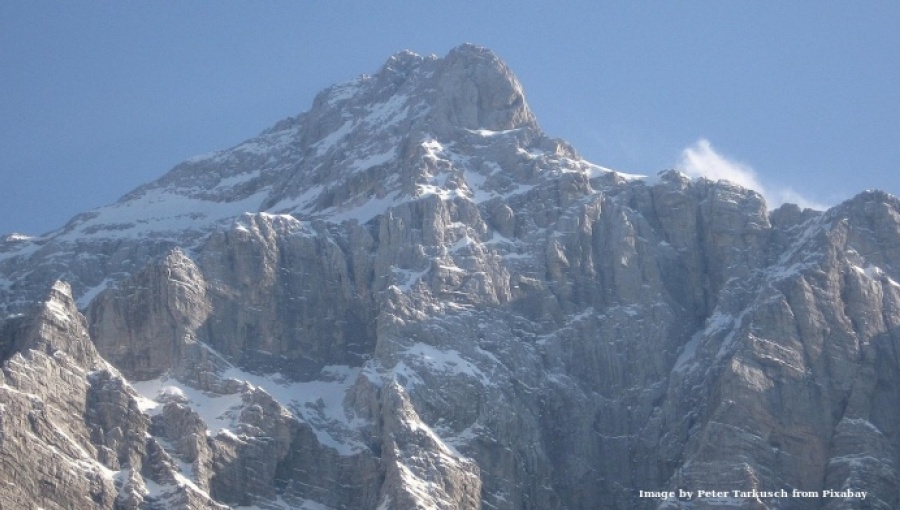
Slovenia’s Triglav Glacier, one of the country’s most recognisable natural landmarks, has lost its remaining ice following this year’s exceptionally hot summer, with the last patches disappearing at the end of the melting season in September, The Guardian reported.
The glacier beneath Mount Triglav, Slovenia’s highest peak and a national symbol, shrank dramatically over the past two centuries as temperatures rose.
It covered around 40 hectares in the mid-19th century, but its area had fallen to 14 hectares by the mid-20th century. Between 1983 and 2003, it lost 93% of its surface area, eventually surviving only as scattered patches of ice.
Researchers from the Anton Melik Geographical Institute at the Scientific Research Centre of the Slovenian Academy of Sciences and Arts have monitored the glacier since 1946. In August, they warned that the remaining ice was likely to disappear by the end of the 2026 melting season.
The melting season generally runs from early May to the end of October, when average monthly temperatures at the nearby Kredarica weather station, at 2,513 metres above sea level, are above freezing.
The remains of the Skuta Glacier, another small Slovenian glacier protected by its shaded location, could survive for several more years, according to the Guardian.
The disappearance of the Triglav Glacier highlights the effects of rising temperatures on mountain environments across Europe and beyond. Glacier loss threatens fragile alpine ecosystems and can affect water availability, as meltwater helps sustain rivers during summer.
The trend is also evident in other mountain regions, including the Himalayas, where retreating glaciers and related hazards pose growing risks to communities and infrastructure.

No comments:
Post a Comment