It’s possible that I shall make an ass of myself. But in that case one can always get out of it with a little dialectic. I have, of course, so worded my proposition as to be right either way (K.Marx, Letter to F.Engels on the Indian Mutiny)
Tuesday, October 14, 2025
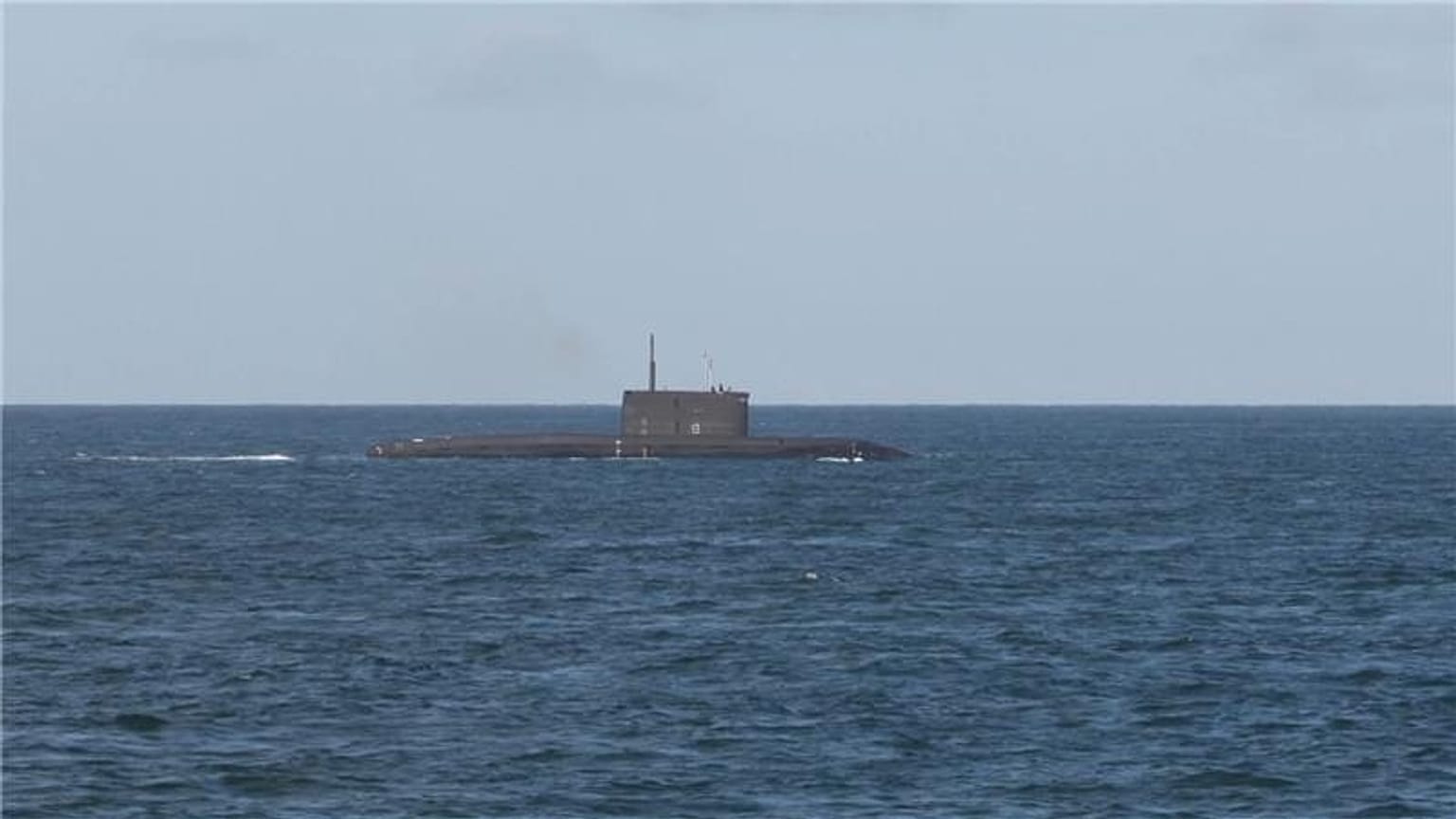
NATO chief Mark Rutte mocks Russia over 'limping' submarine in English Channel
The Russian submarine Nvorossiysk had surfaced off the coast of France last week and was later escorted by the Dutch navy in the North Sea.
NATO chief Mark Rutte has mocked Russia over a "broken" submarine that surfaced off the coast of France last week.
"Now, in effect, there is hardly any Russian naval presence in the Mediterranean left. There's a lone and broken Russian submarine limping home from patrol," he said during a speech in Slovenia on Monday.
Russia's Black Sea Fleet denied the submarine had surfaced because of a malfunction, instead claiming it was complying with navigation rules in the English Channel.
It also said on Monday that the submarine was conducting a "scheduled inter-fleet transit" after completing tasks in the Mediterranean.
The Novorossiysk submarine reportedly suffered a fuel leak, and the Dutch defence ministry said it was being escorted by the country's navy in the North Sea on Saturday.
"What a change from the 1984 Tom Clancy novel 'The Hunt for Red October,'" Rutte said during his speech. "Today, it seems more like the hunt for the nearest mechanic."
NATO'S Maritime Command said in a post on X last Thursday that the French navy was observing the submarine.
"NATO stands ready to defend our Alliance with constant vigilance and maritime awareness across the Atlantic," it wrote.EMENT
The submarine sighting follows several other sightings in the English Channel of ships allegedly belonging to Russia's so-called "shadow fleet".
French authorities launched an investigation earlier this month into the Benin-flagged Boracay oil tanker that was anchored off the coast of Saint-Nazaire in western France.
The so-called shadow fleet consists of aging vessels with obscure ownership and operating without Western-regulated insurance.
Russia's use of the vessels has also raised environmental concerns about accidents given their age and uncertain insurance coverage. A fuel leak on the surface submarine could raise similar concerns.
NATO Highlights Decline of Russian Navy After Sub Surfaces Off France
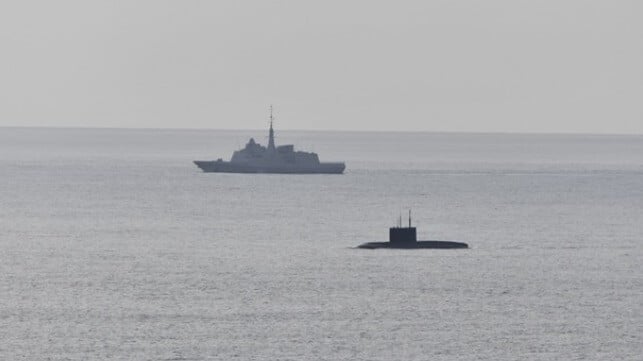
French frigate monitoring the Russian submarine after it surface off the coast of Brittany (NATO Maritime Command)
Speculation continues days after a Russian submarine surfaced off France during its trip home. Today, October 13, NATO Secretary General Mark Rutte took the opportunity to highlight the decline of the Russian navy, saying the vessel was “limping” and jokingly said it could be a “hunt for the nearest mechanic.”
Russian media have been quick to deny the Western media coverage and widespread rumors of a malfunction on the diesel-electric submarine Novorossiysk. TASS said today it is a routine journey home at the end of the patrol, and that the ballistic-missile submarine had simply surfaced due to international rules for the transit of the English Channel.
Rutte, however, openly talked of the decline of the Russian navy. He noted the lack of a Russian naval presence in the Mediterranean.
Rumors began to circulate on well-informed social media channels that the Novorossiysk had suffered a fuel leak. They suggested the vessel lacked onboard capabilities and was forced to surface to empty flooded compartments. Some reports said it was a dangerous fuel leak aboard the vessel, which was commissioned in 2012.
NATO Maritime Command was the first to highlight that the submarine had surfaced with a posting on social media entitled “We are watching.” In the October 9 report, they said a French frigate was conducting surveillance off the coast of Brittany, marking the presence of a Russian submarine operating on the surface.
Monitoring was later handed off to British and then Belgian vessels. The Dutch Navy on Saturday highlighted that its hydrographic survey vessel HNLMS Luymes had been tracking the Novorossiysk, which was traveling with the tugboat Yakov Grebelskiy. An NH90 helicopter was also used in the surveillance operation.
The UK’s Royal Navy and NATO forces have repeatedly highlighted their efforts at tracking Russian vessels during their transits through these waters. The Dutch highlighted that it was the second time this year that Novorossiysk has been tracked off the coast, although the mention this time of a “supporting tug” added to the speculation of problems aboard the submarine.
Russia aiding North Korea’s submarine programme: Seoul
In a disclosure that could shift strategic calculations across East Asia and beyond, South Korea’s Defence Minister Ahn Gyu-back told parliament on October 13, that Russia had likely provided “various technologies” to North Korea to assist in the development of submarines, The Kyiv Independent reports.
The revelation lends weight to long-standing suspicions that Moscow is exchanging military know-how for munitions, manpower, or other support in its ongoing war with Ukraine.
North Korea has over recent years advanced its underwater warfare ambitions, unveiling both ballistic missile submarines and, in March this year, what it claimed was a nuclear-powered strategic guided missile submarine, The Independent adds. Meanwhile, tensions in the Russia–North Korea relationship have increasingly centred on reciprocal security commitments. In June 2024 the two states signed a strategic cooperation agreement that includes mutual support in the event of attack. The military alignment has only grown tighter: data suggests that North Korea dispatched between 11,000 and 12,000 troops to fight alongside Russian forces in late 2024, with some Western estimates placing the number at 20,000 to 30,000.
As a result, critics warn the burgeoning partnership threatens not only European security but regional stability across the Asia-Pacific. And, while South Korea’s minister flagged Russian assistance, the precise nature of the transfers remains murky. It is not yet clear whether the technologies include propulsion systems, missile integration capabilities, stealth design, or control systems. And crucially, there is no public proof to date that North Korea has managed a successful SLBM test launch The Independent added.
Seoul has called for increased vigilance and intelligence sharing among allies though. In response, the United States, Japan, and others in the region will likely intensify maritime and undersea surveillance efforts, wary of an emerging submarine threat.
Russia Tests NATO’s Eastern Defenses – Analysis
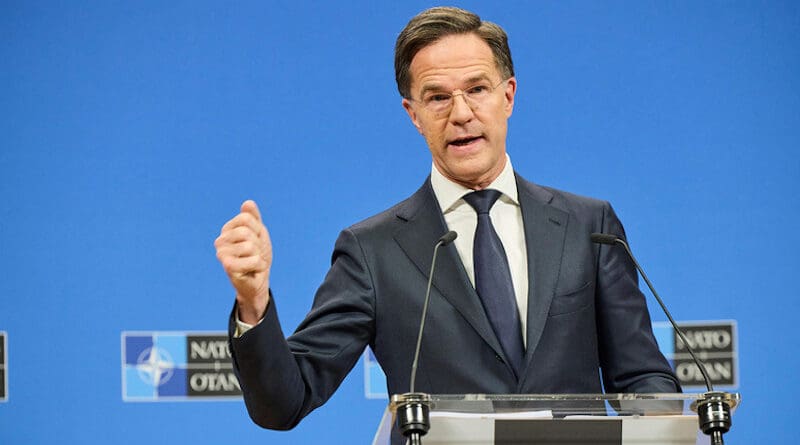
NATO Secretary General Mark Rutte. Photo Credit: NATO
In September, countries in the North Atlantic Treaty Organization (NATO) reported several incidents involving airspace violations. On September 10, 19 drones crossed into Polish territory, prompting Warsaw to call for Article 4 consultations (Polskieradio, September 10; see EDM, September 15).
In a separate episode on September 19, three Russian MiG-31 jets briefly entered Estonian airspace before being intercepted by NATO air policing units (Rus.Postimees, September 19). NATO Secretary-General Mark Rutte described these developments as concerning and emphasized that the Alliance remains attentive to safeguarding its members’ security (NATO, September 23).
These incidents reflect an increasingly complex security environment along NATO’s eastern flank. The combination of drone activity and jet overflights highlights the challenges of managing airspace security in an era of hybrid threats (Meduza, September 20). At the same time, the use of unmarked drones, short-duration incursions, and deactivated transponders complicates attribution and leaves room for differing interpretations of intent (24tv.ua, September 12). NATO leaders emphasize the importance of maintaining readiness and alliance unity in the face of threats from Russia, while Moscow views such maneuvers as responses to what it perceives as increasing Western military pressure (NATO, September 23; RBC, September 27). In this delicate environment, transparency, communication, and crisis-management mechanisms are likely to play a decisive role in preventing unintended confrontation (Lenta.ru, September 28).
The Zapad-2025 exercise, which took place in Belarus from September 12 to 16, has been noted for what it represents in terms of Russia’s evolving military posture (see EDM, September 15; President of Russia, September 16). The exercise was nominally characterized by some 13,000 troops, a number aligned with reporting requirements under the Organization for Security and Co-operation in Europe (OSCE) Vienna Document (Belta, February 20). Zapad- 2025, similar to previous iterations, may have represented an even larger body of activity outside the declared scope (seeEDM, September 15).
Contrary to past exercises oriented toward mass mobilization, this year’s Zapad exercise appeared to prioritize the deployment of more discriminate, high-leverage capabilities. These included integrated air and missile defense systems, electronic warfare assets, precision strike platforms, and enhanced command-and-control measures (TASS, September 18). Some in Belarus and Russia view the priority on these systems as a response to battlefield attrition lessons from Ukraine, as well as to Moscow’s adaptation to resourcing constraints (News.by, September 14)
The geography in the exercises, conducted deep within Belarus, in the context of smaller Collective Security Treaty Organization (CSTO) exercises, suggests attempts to develop a tiered area of operations along the eastern boundary of NATO (Kommersant, September 17). This would presumably provide Russia with greater room to project power toward the Baltic states or Poland if tensions are raised (see EDM, June 11).
Russian officials presented the exercises as routine and defensive in nature, designed to enhance coordination with Belarus and prepare for contingencies under the CSTO umbrella (President of Russia, September 16). From this perspective, Zapad is part of Moscow’s overall strategy to reassure domestic constituencies and regional allies about its military staying power. Others argue that the exercise serves as a testing ground for new operational ideas, particularly hybrid warfare, electronic predominance, and the coordination of distant strikes. Such experimentation does not necessarily imply an instant escalation, but rather indicates that Russia is continuing to formulate its doctrine for potential long-term competition with NATO (Belarusian Investigative Center, May 30).
More generally, Zapad-2025 illustrates the dual nature of Russian maneuvers. Externally, they are declared defensive in nature, but internally, they are doctrinally exploratory. The extent to which the changes are appreciated will depend on the political frame of analysis through which they are viewed, as stabilizing maneuvers within Russia’s declared defense zone, or as part of a broader effort to maintain leverage against NATO over an extended period of strategic tension (Russian Ministry of Foreign Affairs, September 18).
Outside of the brief military actions, the never-ending crisis cycle between Russia and NATO places perception management at the forefront (Mir24.tv, September 15). For Russia, limited incursions and drills, such as Zapad-2025, are not only military exercises but also a form of political communication with both domestic and foreign audiences. By demonstrating preparedness without directly crossing red lines, Russia maintains leverage without triggering escalatory measures. For NATO, the test is less about equalizing capabilities than about maintaining political unity among its 32 members, despite each having differing priorities and resource bases (see EDM, June 3, June 4,September 16, October 5). Burden-sharing, defense budgets, and policy toward Ukraine are potential fault lines that Moscow can exploit (see EDM, July 22). Confrontation is therefore as much about narrative control and alliance unity as it is about military deployments. Whether this phase coalesces into a prolonged standoff or stabilizes into managed competition will depend on how each one of them calculates deterrence and restrains itself (Pronedra.ru, September 15).
In response to these operations, NATO launched Operation Eastern Sentry on September 12, enhancing air and sea deterrence in its eastern direction with additional aircraft, frigates, and missile defense capabilities (NATO, September 12; see EDM, September 15, 17). During its June 2025 Hague Summit, NATO pledged to increase defense expenditure to 5 percent of GDP by 2035—3.5 percent for central military capabilities and 1.5 percent for infrastructure (NATO, June 15). That is from reactive deterrence to proactive resilience. Not all members of NATO have reached the former 2 percent threshold, casting doubt on whether the 5 percent mark can be achieved (Atlantic Council NATO Defense Spending Tracker, September 2025).
The Russia–NATO relationship now unfolds on multiple levels. Moscow employs graduated pressure and hybrid tactics to test boundaries, and NATO navigates the need for deterrence credibility against the risk of over-escalation. The standoff is not a brief fire but an occurrence within a broader cycle of competition, with each learning to react to the other (RG.ru, August 28).
The extent of the Alliance’s commitment to remaining united and maintaining its credibility will determine the direction of this confrontation. If NATO holds firm, it may gain a new purpose from today’s tensions. If divisions intensify, Moscow may achieve a strategic advantage without actual escalation (Zavtra.ru, September 23).
The Jamestown Foundation’s mission is to inform and educate policy makers and the broader community about events and trends in those societies which are strategically or tactically important to the United States and which frequently restrict access to such information. Utilizing indigenous and primary sources, Jamestown’s material is delivered without political bias, filter or agenda. It is often the only source of information which should be, but is not always, available through official or intelligence channels, especially in regard to Eurasia and terrorism.
770,000 migrants told to leave Russia
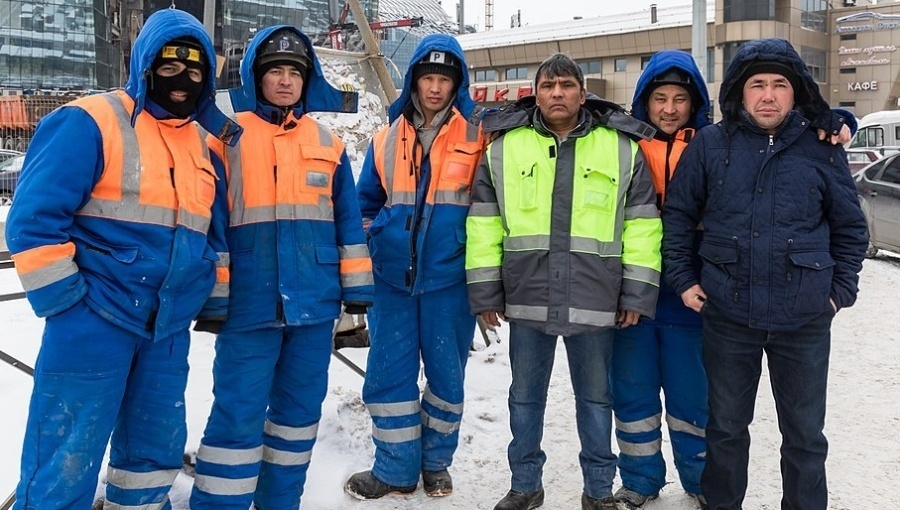
Labour migrants make up a vital part of Russia's workforce, but following last year's Crocus City terrorist atrocity calls for migration to Russia to be at least curtailed grew louder in the country. / Ninara from Helsinki, cc-by-sa 2.0
Speaker of the Russian State Duma Vyacheslav Volodin on October 13 announced that 770,000 migrants, who largely hail from Central Asia, must leave Russia.
Under a crackdown on labour migrants and accompanying relatives that has gathered pace in Russia this year – to the point where some commentators have talked of a display of crude xenophobia sometimes involving parties of street vigilantes, denied by the Russian authorities – the period of stay for migrants listed as "controlled persons" expired in September.
"According to the Ministry of Internal Affairs, as of September 1, 770,000 migrants were on the registry of monitored persons, a third of whom were women and children. A new migration regime—deportation—is now in effect for them," Volodin said.
The applicable expulsion regime means that a person under instruction to leave Russia is prohibited from obtaining a driver's license, driving vehicles, buying or selling cars and real estate, getting married, opening bank accounts, transferring money and managing bank savings.
Russia is currently facing complaints over how many children of Central Asian migrants are being banned from taking places in Russian schools.
Volodin also said that in the first eight months of 2025, approximately 35,000 foreign citizens who violated Russian immigration laws were deported.
The "controlled persons" registry for foreigners was launched in Russia on February 5.
State Duma deputies pushed for its introduction following the Islamist terrorist attack on Crocus City Hall in outer Moscow in March 2024, for which four Tajik migrants, alleged to have been the gunmen who carried out the atrocity that claimed more than 140 lives, are on trial.
This year has also seen Russian authorities begin the gradual introduction of a compulsory app that labour migrants must download to the phone to give authorities constant access to their geolocation data.
The issue of Russia’s treatment of Central Asian migrants was little discussed during open talks Russian leader Vladimir Putin held with the presidents of Central Asia’s five countries during the Central Asia-Russia summit that took place in Tajik capital Dushanbe on October 10. However, from protests lodged over various incidents, it is clear that Tajikistan, Uzbekistan and Kyrgyzstan in particular have in the past year become frustrated at Russia’s treatment of many of their nationals.
At the summit, Putin, did touch on the crackdown when, according to RBK, he said during a press briefing: "Russia is interested in its labour force, but it's important that it meets our needs. Furthermore, it's important that people live in decent conditions and comply with our laws and regulations. I always emphasise that they must be law-abiding."
Referring to migrants not complying with requirements, he added: "There are many of them—and Russian citizens are pointing them out. We need to think about our compatriots first."
In comments on Tajik labour migrants in Russia, of whom he said there were more than one million, Putin said Russian officials were striving to provide them with decent working conditions, and added: "They are employed in a wide range of industries, particularly in dynamically developing sectors such as construction, housing and utilities, transportation, and logistics, and they make a significant contribution to the growth of the Russian economy."
Given its shrinking population and workforce shortages, there is no doubt Russia needs a sizeable migrant population, a point underlined by Kremlin spokesman Dmitry Peskov late last year, when he said: “Migrants are a necessity. The fact is, we are facing a very strained demographic situation. We live in the largest country in the world, but there are very few of us.”
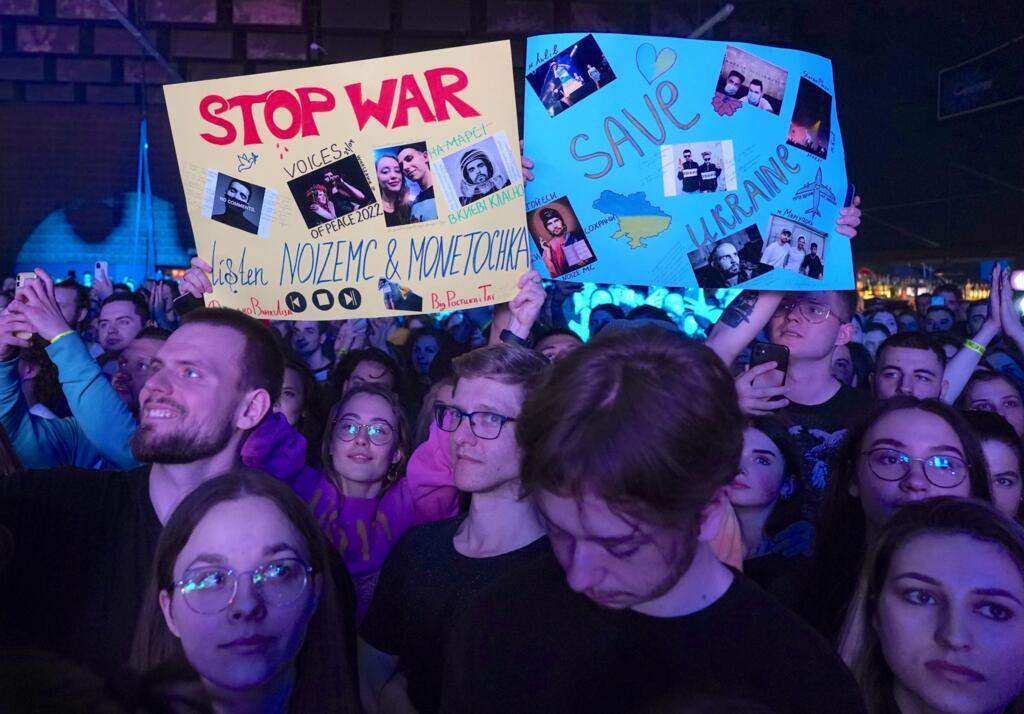
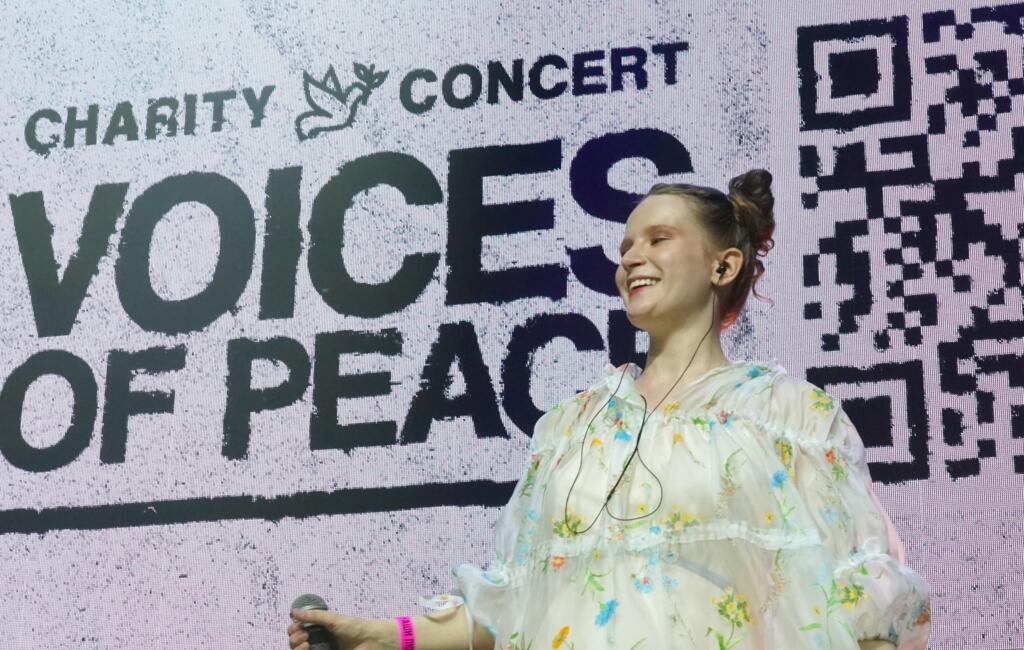
Monetochka: voice of resistance and hope for anti-Putin Russians Paris (AFP) – At a recent gathering of exiled Russians in eastern Paris the hall was packed. Members of the audience included Yulia Navalnaya, the widow of Russian opposition leader Alexei Navalny, and a Russian serviceman who deserted Moscow's army in Ukraine.
They all listened intently to a 27-year-old pop singer who has emerged as one of the brightest anti-Kremlin stars since quitting Russia in 2022 in protest against its invasion of its neighbour.
The singer-songwriter Monetochka, who is known for evocative pop songs and rebellious lyrics, has made it her mission to support the Russian diaspora as well as those who cannot protest against the war, propaganda and repression back home.
"It pains me a great deal to see the young generation growing up in an environment where war, violence and cruelty are being normalised," Monetochka, whose real name is Elizaveta Gyrdymova, told the conference at the weekend.
"All I can do is steer clear of these lunatics and support those they have taken hostage," Monetochka said of the Kremlin.
After the singer left Moscow with her composer husband and settled down in Vilnius, authorities declared her a "foreign agent", launched a criminal case against her and put her on Moscow's wanted list.
Subversive lyrics
The prosecution has complicated the logistics of her concert tours and cut off a major source of income.
She used to draw huge crowds in countries such as Serbia and Turkey but now has to avoid such Kremlin-friendly states and choose her airlines carefully to avoid extradition to Russia.
"Every flight I take must be approved by my lawyers," Monetochka told AFP in an interview in her dressing room in the 1,500-seat Bataclan hall ahead of her Paris concert late last week.
Despite the pressure, Monetochka, whose stage name means "little coin" in Russian, has managed to reinvent her career.
During her current tour she will perform in dozens of countries including the United States, Australia and Japan.
In 2024, she released a new album in exile and is now working on another one. Together with dissident rapper Noize MC she has raised more than 400,000 euros ($460,000) in support of Ukrainian refugees.
The singer rose to fame at the age of 17 but she has truly hit her stride in exile, with her lyrics becoming a powerful form of social and political commentary on modern Russia.
In front of a sold-out crowd in Paris she performed her new song "You are a soldier," whose lyrics feature lines such as: "You smell of blood, you're one big scar."
Alexander Sterlyadnikov, one of the Russian army deserters who found refuge in France, attended the concert and later thanked Monetochka for the "cool" song.
Another hit song, which evokes feelings of nostalgia for a pre-war Russia left behind, went viral on TikTok where Monetochka has 3.6 million followers.
She said she had hope for Russia and its young generation despite the unprecedented repression and the aggressive pro-war propaganda. - 'Our secret code' -
Despite the criminalisation of dissent, Monetochka's songs have not been banned in Russia, and she said that her fan base in the country has grown since the start of the war.
She calls her songs "our secret code" and a form of resistance that helps her fans in Russia survive the dark days.
"Not everyone in Russia supports the war, I know this by looking at my fans," she said. "Many of them travel from Russia to attend my concerts."
Monetochka has become a target of hate for propagandists, while high-profile dissidents in exile have praised her songs.
Last month, Alla Pugacheva, Russia's most famous pop diva and herself an outspoken critic of the Kremlin, told President Vladimir Putin that the war against Ukraine must end.
In the interview that went viral, Pugacheva, 76, also sang Monetochka's praises, calling her "smart" and "very interesting".
Monetochka said such encouragement from her "idol" was deeply inspiring.
She said she should have been more outspoken when she lived in Russia.
"Had I known that these people were actually preparing for war, I would have behaved differently," she said.
"At that time, I was far removed from all that."
Monetochka first ran into trouble with the Kremlin before the war when she expressed support for gay men and women. She said she was invited by a member of Putin's administration for a chat but did not show up, unlike many others.
She said that she was able to pack up and leave when the war broke out because she maintained her independence. She knew of artists who had been silenced due to Kremlin pressure on them and their families.
The singer, who has had two children in exile, also encourages fans to be kind to themselves in times of turmoil.
"Why all this heroism if there is no simple human happiness?"
Funding crunch puts one in three French NGOs at risk, survey shows
A budget crisis and shrinking public funding are squeezing France’s 1.4 million NGOs, and a new survey shows 30 percent of them lack sufficient cash flow, putting their work at risk.
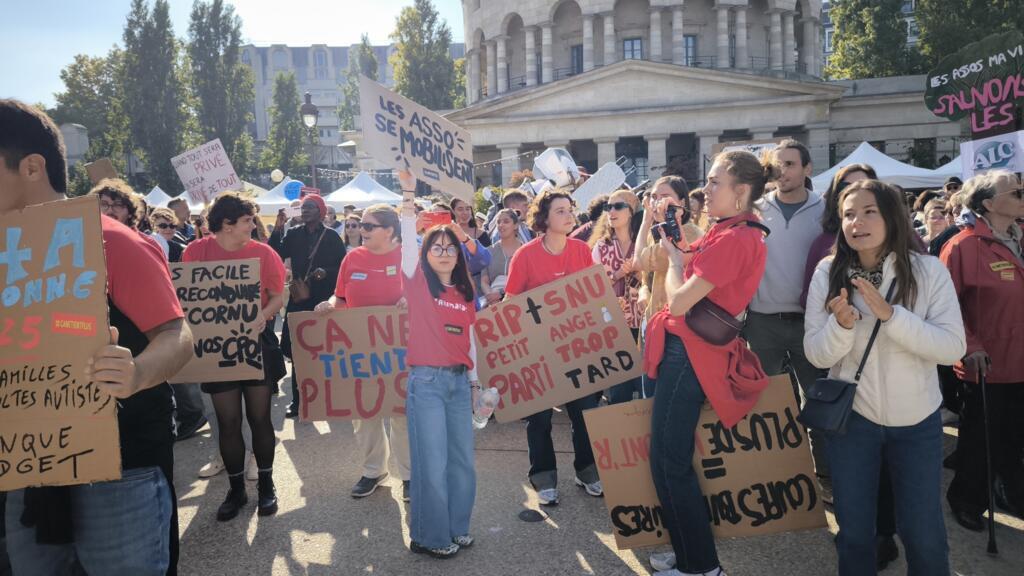
The Mouvement associatif, which represents 700,000 French organisations, organised a protest on 11 October to deliver what it called “a wake-up call” to public authorities across France.
“We came to support each other because our activities are in danger,” said Florence Bouhmana, an employee of Solidarité Laïqu, an organisation that fights inequality and promotes access to education in France and abroad. “Ça ne tient plus - everything is falling apart,” she told RFI.
The Mouvement associatif points out that associations are facing increasing needs and rising costs due to inflation, while receiving fewer resources from public authorities in the midst of a “budget crisis".
Organisations working in international solidarity, including Solidarité Laïque, are also feeling the strain of partially frozen funding from the French Development Agency (AFD), the main public funder in this sector.
Funding cuts
These difficulties were highlighted in a survey across nearly 5,000 associations, whichwas first published in spring 2025 and recently updated.
According to this survey, 30 percent of the 1.4 million associations reported having little or no cash flow.
Following delays in some payments - due to the 2025 budget only being adopted in January - 58 percent reported a decrease in public funding, and 20 percent even mentioned complete cuts in subsidies from the state or local authorities.
"People have had enough," said Lofti Ouanezar, CEO of Emmaüs Solidarité, lamenting the stagnant or declining resources despite growing hardship.
"We’re seeing more and more people on the streets, but also new groups - more women, young people, and poor retirees. For example, in our daytime shelter at Châtelet, we’ve gone from 200 to 300 people a day, but with the same resources. Yet we are the last safety net: after us, it’s the street!"
'A dynamic sector'
The situation also impacts a dynamic economic sector that employs 1.8 million people - 11 percent of the salaried workforce.
One in three associations had to reduce their payroll in 2025, according to the same survey. Claire Thoury, director of the Mouvement associatif, stated during a press conference ahead of the protest that the number of liquidations and rescue plans had doubled since 2022.
"We launched a redundancy plan just last week," confirmed Marc Dixneuf, CEO of AIDES, an organisation that has been fighting HIV and hepatitis for 40 years.
"Sixty-one jobs will be cut out of around 500, that’s 12 percent of our staff," explains the director. This is due to "600,000 euros in subsidies from the Health Ministry cut overnight, changes in pricing for testing and health centers and effects of the Ségur healthcare reforms."
In the middle of the crowd, Uriel Moulet walked around holding a sign that reads: "Do you have any questions?" The young woman works for CNAJEP, a coordinating body for youth and popular education organisations.
"When I was younger, I didn’t realise that many of the things I had access to - summer camps, community and youth information centers - were tied to associations," she explained.
"Sports, culture, youth, popular education, international solidarity, social services, the environment... associations are everywhere," she emphasizes. And "without them, society falls apart," reads a placard.
"Associations carry out part of the work of public services through delegation," explained Alexandra Cordobard, Socialist Party mayor of the 10th arrondissement of Paris, who came to support the protest. "So de-funding them also means abandoning those public policies."
Culture and sports sectors under pressure
The cultural and sports sectors, representing 25 percent and 20 percent of all associations respectively, are particularly under pressure.
A survey from May 2025 by the association of elected officials for sports (Andes) found that 43 percent of local governments cut their sports budgets this year.
Culture has been hit just as hard: almost half of local governments reduced their cultural budgets between 2024 and 2025, according to the Observatory of cultural policies (OPC).
At the national level, things haven’t been better. The government froze part of the Pass Culture funding for six months, and the Pass’Sport program, which gave discounts on sports club memberships, hasn't been available since September for kids aged 6 to 13.
Feminist organisations
Feminist organisations have also raised concerns. At the end of August, the Fondation des femmes (Women’s Foundation) warned of a "particularly critical" situation for associations supporting women victims of violence, at a time when demand continues to grow. A survey of 148 organisations found that over 70 percent reported worsening financial conditions in 2025.
"For years, feminist associations have been a lifeline for thousands of women experiencing violence. By cutting their funding, we’re closing that door - and leaving women to face their abusers. That’s a grave political failure, with consequences counted in human lives," Anne-Cécile Mailfert, president of the foundation, said.
"When associations are attacked, it’s the most marginalised people who are being attacked," added Sarah Durocher, president of Planning Familial, at the Mouvement Associatif’s press conference.
Like others, she criticised a growing climate of mistrust, exemplified by the "Republican Commitment Contract" (CER) introduced in 2021, which associations must sign to receive public funding or accreditation.
Some funding cuts are simply "political choices," she argued.
This is a view shared by Cordobard: "Now you also have to agree with the government to get support!" she warned, in reference to threatening statements made by former Interior minister Gérald Darmanin (in 2023) about funding for the Ligue des Droits de l’Homme (LDH).
"We need the associations doing the work," the mayor insisted. "In my arrondissement, food is distributed every night. If associations don’t do it, who will?"
‘No suggestion of democracy’ in US plan for future governance of the Gaza Strip
The only real positive for the people of Gaza is that Trump's plan specified Palestinians would not be expelled from the enclave.
As a fragile truce in Gaza holds, attention is turning to who will govern the devastated enclave. US President Donald Trump's 20-point plan envisions a temporary technocratic committee overseen by an international “Board of Peace”, with the Palestinian Authority reclaiming control later – a vision critics say sidelines many Gazans and revives echoes of colonial rule.
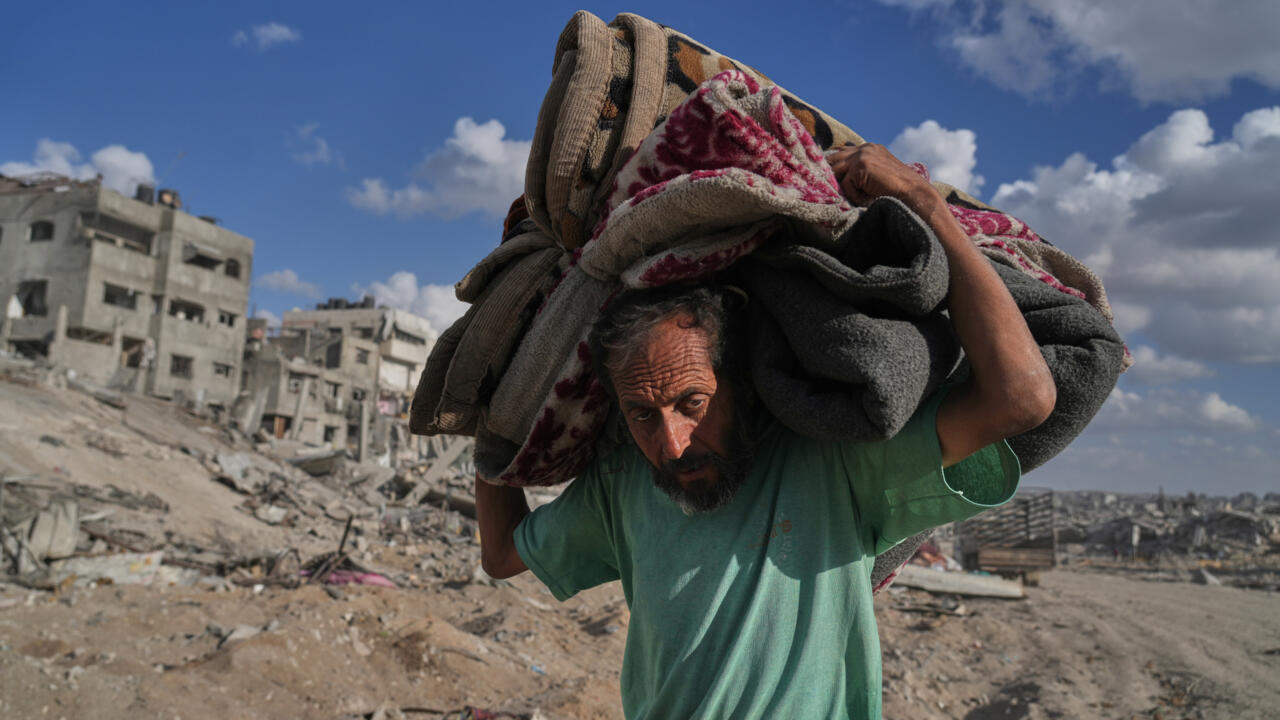
Since Friday last week, a ceasefire has taken effect. The 20 remaining living hostages held in Gaza by Hamas have returned to Israel, and the remains of those who died soon followed. The almost 2,000 Palestinian prisoners set to be freed have been released. And more desperately needed aid should start trickling into the Palestinian enclave again sometime soon.
But the “historic dawn of a new Middle East” that Trump claims will ring in “peace for all eternity” is still a very distant prospect. And the future of the Gaza Strip hangs in the balance.
In Trump's 20-point plan, he envisioned a Gaza initially governed by a temporary transitional committee made up of “apolitical” Palestinian technocrats that would be supervised by a so-called Board of Peace, spearheaded by Trump himself and involving former UK prime minister Tony Blair, a veteran Middle East negotiator.
Governance would then theoretically be handed over to the Palestinian Authority once it enacts key reforms. Mahmoud Abbas, the president of the Palestinian Authority, attended an international summit on Monday in Egypt aimed at finalising an agreement on how to end the war in Gaza.
But Israeli Prime Minister Benjamin Netanyahu has already pushed back on the Palestinian Authority's role in the plan and seems unlikely to accept it.
The Trump proposal also stipulates that Hamas would have no governing power in Gaza, but the group has said it expects to have some future role as part of a “unified Palestinian movement”.
And preceding all of this is the mammoth task of reconstructing the entire Gaza Strip, which has been devastated by two years of war.
To shed light on who could govern Gaza in the future, FRANCE 24 spoke with Anne Irfan, an expert on the modern Middle East and author of “A Short History of the Gaza Strip”, as well as a lecturer in interdisciplinary race, gender and postcolonial studies at University College London.
FRANCE 24: What do we know about the Board of Peace and the transitional committee that would temporarily govern Gaza?
All we know is that Trump's plan is to have this apolitical technocratic committee overseen by the Board of Peace that he said would include qualified Palestinians and internationals. There are really big questions that still remain, like where does the Palestinian Authority fit into this? What about Hamas? How will members be selected? We also have not been given any information on how long this interim arrangement would be in place, or what would be needed to move on to the next stage.
It has been extremely vague, and that is a deliberate part of the strategy.
What have the reactions to this proposed framework been so far?
The point that has been made a lot is that it seems to have quite strong colonial overtures to it, particularly the involvement of Tony Blair. He is a very controversial figure in the Middle East and [his involvement] has raised comparisons to the British Mandate, which governed Palestine for 30 years prior to [the establishment of Israel] in 1948.
There has also been criticism from some Palestinian figures that the plan seems to be what some are calling the “remote control” of Gaza. Meaning it would not be led by people who are from Gaza, nor from people inside Gaza itself.
It would be a [major step] to see Gaza free of Israeli occupation for the first time since 1967, but that seems extremely unlikely. Israel's Prime Minister Benjamin Netanyahu has said there will never be a Palestinian state on his watch, and the terms of the [plan] do not involve a full Israeli withdrawal from Gaza.
The only real positive for the people of Gaza is that Trump's plan specified Palestinians would not be expelled from the enclave.
Is the Palestinian Authority well positioned to rule over the Gaza Strip?
The Palestinian Authority is extremely unpopular with the Palestinian people. Its leader, Mahmoud Abbas, was elected 20 years ago and his mandate has long expired. And the Palestinian Authority's governance in the West Bank has not brought any benefits to Palestinians living there – they continue to lose land to Israeli settlers and the Israeli army still runs the occupied territory. There is very little that looks promising.
It is worth remembering that even in the West Bank, the Palestinian Authority is really only able to do what Israel will allow it to. We are not talking about an independent government. So that is the best model we have on offer, and there is nothing very good about it. Does Hamas have any future governing the Gaza Strip?
The line was that there would be no role for Hamas, but even Trump is giving mixed signals on this. He said he had approved giving them a role in managing internal security operations in Gaza, at least temporarily. Trump framed this as a measure to prevent chaos. There is inconsistency on this point.
Hamas has not agreed to disarm. There were reports that they may agree to give up power in exchange for amnesty, but that has not been confirmed.
What we do know is that Israel has not succeeded in its stated aim of destroying Hamas. The very fact that the group agreed to a ceasefire shows they retain some power in Gaza.
At least for now, Hamas is still part of the conversation.
Will Palestinians in Gaza have any say on the governance of the enclave?
The Gaza Strip is almost completely destroyed. It is difficult to get past the huge numbers of people who are wounded, bereaved, homeless or traumatised
Dissent exists, we did see protests against Hamas in Gaza in March this year. For a long time, Palestinians in Gaza and the West Bank have been calling for an end to the intra-Palestinian division and demanding elections. It is hard to imagine that demand has now disappeared.
But there doesn't seem to be any suggestion of democracy coming into play here.
What we are seeing from this phase of the truce deal is that ultimately, it is the US who has the real power to force things through.
This interview has been edited for length and clarity.
Trump as saviour of Israel vs. The west’s immoral hypocrisy: Papers analyse Gaza deal
PRESS REVIEW – Monday, October 13: Israeli papers, from right-wing to left-wing, have praised US President Donald Trump following the hostage release. Meanwhile, the Arab press highlights the West’s “outrageous” treatment of Palestinians. Finally, The New York Times describes the peace deal as a “defeat” for Israeli Prime Minister Netanyahu.
On the day of the hostage release and as Donald Trump declared the end of the Gaza war, some Israeli papers are expressing gratitude towards the US president. The right-wing Jerusalem Post features “God bless the peacemaker” on its front page, along with a thank-you note from the president of the World Jewish Congress, who praises Trump’s “visionary leadership” as “making history”. An opinion piece by the vice president of the same congress describes Trump as “the Alexander the Great of our time,” drawing a comparison: “Alexander, who saved the Jews, and President Trump – saviour of Israel.”
In its analysis, The Jerusalem Post covers the mixed reactions to Trump and Netanyahu at Tel Aviv’s hostage square, where Trump’s name was met with cheers and Netanyahu’s with boos. The article acknowledges Netanyahu’s role in securing the hostages’ release but also notes his “enormous responsibility for 7 October”. Finally, The Times of Israel reports that the prime minister warned of “major security challenges” ahead and that “some enemies are trying to recover to launch further attacks.”
Left-wing paper Haaretz also credits Trump. An opinion piece argues that “Trump rescuing hostages shows we must welcome help, even from controversial figures,” adding that Trump’s Middle East policy was more effective than Biden’s. It highlights the contrast between Trump and Biden, particularly in military operations in Gaza, asserting that “military pressure was indeed a factor in bringing the hostages back”. Another article in Haaretz discusses Israel’s “paradox of grief and joy”, noting that while some families will learn their loved ones will not return, even those reunited will feel the communal pain, creating a clash of emotions.
In the Arab press, Saudi Arabian Arab News features Pope Leo’s call for “courage” from those negotiating a peace plan for Gaza at the summit in Egypt. The Pope prayed to God for help in “accomplishing what now seems humanly impossible – rediscovering that the other is not an enemy”. Middle East Eye reported that on Sunday morning, the Israeli army raided the homes of some Palestinian leaders. The article also notes Israel’s refusal to include Palestinian leaders serving sentences in the deal, even threatening to sabotage the process if Hamas continued to pressure mediators for their release. Meanwhile, an opinion piece in Arab News condemns the West’s response to Gaza, titled “The immoral hypocrisy of West’s response to Gaza killings”. The author criticises the West for consistently emphasising Israeli tragedy while ignoring Palestinian suffering.
Finally, global analyses of the new peace deal are emerging. In The New York Times, an opinion piece discusses “the uncomfortable truth about Netanyahu’s victory”, suggesting that while the deal represents the beginning of the end for the conflict, Netanyahu is downplaying its significance and maintaining Israeli troops in Gaza. The piece argues that this deal contradicts Netanyahu’s government’s promises of “total victory and the destruction of Hamas,” rendering it a defeat for his leadership. In an editorial for the French left-wing Libération, deputy editor-in-chief Hamdam Mostafavi acknowledges Trump’s pivotal role in the ceasefire but emphasises that “many questions remain unanswered” – including the future of Gaza’s reconstruction, Palestinian leadership, and Netanyahu’s political fate. Lastly, a cartoon by Lebanese illustrator Hassan Bleibel illustrates Trump’s vision of peace: Palestinians returning home to find total destruction.
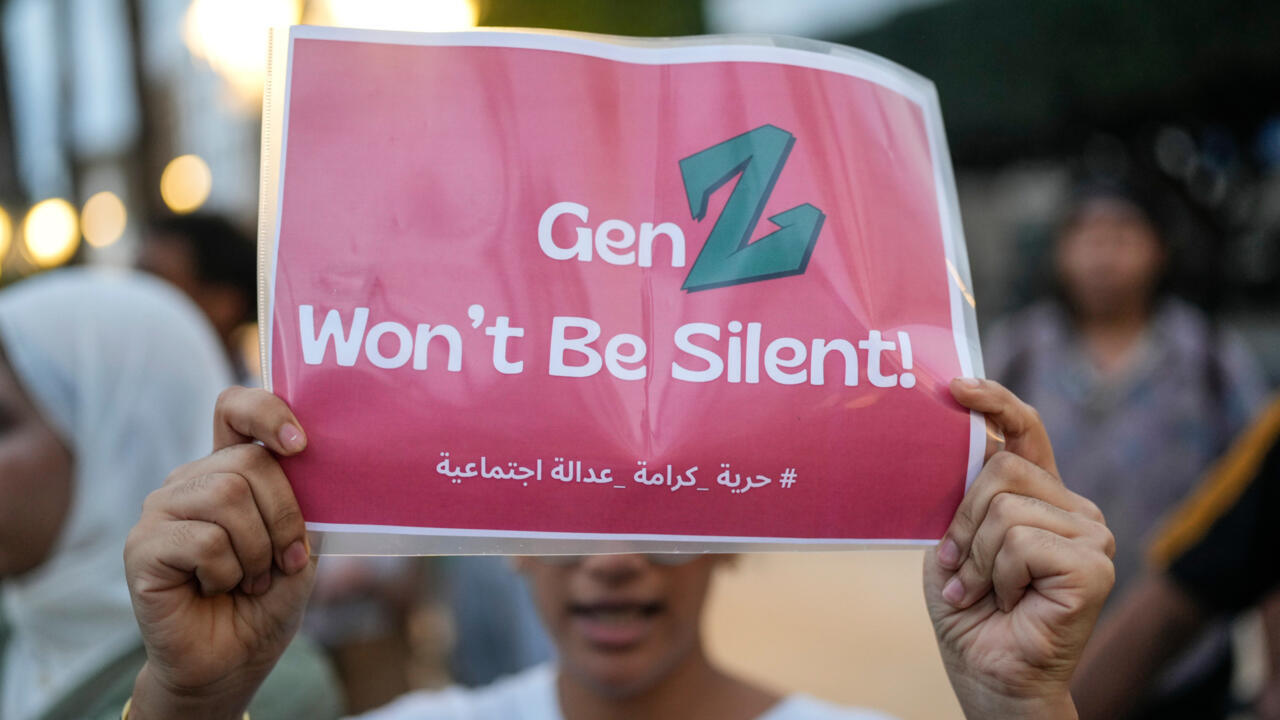
Morocco’s GenZ 212 youth collective calls for ‘peaceful sit-ins’ to demand reforms
Morocco’s GenZ 212 youth collective, the movement behind weeks of nationwide protests, called on Monday for “peaceful sit-ins” to demand reforms. The online group urged supporters to join demonstrations on Saturday across multiple cities after more than two weeks of near-nightly rallies across the kingdom.
The movement behind nationwide protests sweeping Morocco, the GenZ 212 youth collective, called Monday for "peaceful sit-ins" to push its demands for reforms.
The online movement, a driving force behind more than two weeks of near-nightly protests in the kingdom, called for demonstrators to take part in sit-ins Saturday in cities across the country.
"We call on young people in Morocco and all citizens to massively mobilise to support this movement until our demands are met," the group, whose founders remain unknown, said in a statement.
The protests erupted in late September, after the deaths of eight pregnant women during Caesarean sections at a hospital in Agadir, in southern Morocco, sparked anger over conditions at public health facilities
Protesters are also outraged over the state of the education system, alleged corruption and other issues.
The movement announced a pause in the protests ahead of King Mohammed VI's annual address to parliament Friday.
In the closely watched speech, the monarch said creating jobs for young people and improving the health and education systems were "priorities" – but made no reference to the protest movement.
The rallies in the north African country have drawn crowds ranging from dozens to several hundred people.
They have been largely peaceful, though some nights have seen spates of violence and vandalism.
Three people were killed in clashes with security forces earlier this month, while police have made dozens of arrests.
GenZ 212 also called Monday for a boycott campaign, without specifying the targets.
At protests in Casablanca, AFP reporters have seen demonstrators brandish placards against Afriquia, a fuel-distribution company that is a subsidiary of the Akwa group, co-owned by Prime Minister Aziz Akhannouch's family.
Akhannouch is Morocco's third-richest person, with a fortune estimated at $1.5 billion, according to Forbes.