Monday, November 02, 2026

As Big Oil Reports Billions in Q3 Profits, Climate Groups Say Tax Them to ‘Protect Communities’

A Greenpeace campaigner said the revenue should be used to help everyday people deal with “price shocks and extreme weather, and accelerate a just transition away from fossil fuels.”



The ExxonMobil Baytown Refinery is seen on January 13, 2026 in Baytown, Texas.
(Photo by Brandon Bell/Getty Images)


Jessica Corbett
Oct 30, 2026
COMMON DREAMS

As US fossil fuel giants on Friday followed European companies in reporting their soaring profits for the third quarter of this year, and as President Donald Trump’s illegal Iran War drives up prices worldwide, climate campaigners renewed calls to tax the corporations wrecking the planet.

Chevron and ExxonMobil respectively reported adjusted earnings of $10.4 billion and $17.5 billion for July-September, a day after UK-based Shell and the French firm TotalEnergies said their adjusted earnings were $10.8 billion and $9.1 billion—announcements that all came after Trump, who is personally invested in the industry, bragged that “we’re making a freaking fortune.”

Collectively, major firms in the United States have “earned more than $130 billion in profit as people pay much higher prices for gasoline, diesel, and other fuel,” The New York Times reported Friday, after analyzing “the performance of more than 50 large US oil and gas companies, most of them producers or refiners, in the six months from April through September.”


Meanwhile, as greenhouse gases in the atmosphere climb to unprecedented highs ahead of the next United Nations climate summit, COP31, the Climate Solutions Lab at Brown University estimates US residents have paid at least $81.5 billion more for gasoline and over $66 billion for diesel, or a total of $147.8 billion, since Trump began bombing Iran in February.

“Trump called on polluters to finance his campaign as a quid pro quo in exchange for his administration doing all it can to tear down protections for people and the environment,” Sierra Club’s director of beyond fossil fuels policy, Mahyar Sorour, noted Thursday. “That $1 billion campaign investment is bringing big returns for the biggest oil and gas companies that heeded the call and are now expected to double their Q3 earnings over last year as energy prices skyrocket due to Trump’s war in Iran.”

“It’s not just Big Oil that is profiting off of Trump’s action: The president himself is lining his own pockets and bragging about it on stage while Americans struggle to make ends meet,” Sorour stressed. “Trump does not care about people’s health or about building a secure, clean energy future. He cares about himself and his friends in Big Oil getting richer. We need to rein in Big Oil and Gas profiteering and enact a windfall profits tax.”


Rebecca Newsom, global political lead at Greenpeace International, pointed out Friday that “every time a crisis pushes up the prices, the same oil and gas giants are there to cash in. This is fossilflation. The rest of us pay, at the pump, at the checkout, and again through the climate disasters driven by the fuels the industry intends to extract down to the last barrel.”

“This is where decades of fossil fuel dependence have led us, and governments that keep letting these corporations off the hook are leaving households to foot the bill,” she continued. “It doesn’t have to be this way. If governments permanently increase taxes on oil and gas profits and clamp down on corporate profit shifting, hundreds of billions of dollars could be raised, while supercharging a shift in investment towards cleaner, more secure renewable energy.”

According to Newsom, “That revenue should protect communities from price shocks and extreme weather, and accelerate a just transition away from fossil fuels.”


Candice Fortin, US campaigns manager at the group 350.org, highlighted that the fossil fuel industry’s latest profit reports came just days before Americans head to the polls next Tuesday for elections that will determine control of Congress for the rest of Trump’s second term.

“As we head into the midterms, energy affordability is on everyone’s minds,” she said. “Families and small businesses want reliable electricity they can afford, and communities want a say in how their land, water, and energy resources are used. Yet as people struggle with energy bills and the impacts of extreme weather, the biggest oil companies are forecast to make billions.”

“We need an energy system that puts people first,” Fortin argued. “That means protecting households from losing access to essential electricity during extreme heat and cold, expanding affordable solar and wind power, and ensuring that new sources of electricity demand, including data centers, do not drive up bills or place additional pressure on communities. It also means making sure oil and gas companies pay their fair share towards the costs of the crisis, rather than leaving the public to pick up the bill.”




Trump’s ‘Election Denial Must Stop’: Progressive Lawmakers Demand US Recognize Lula’s Brazil Victory

“In the two largest democracies in the hemisphere, we cannot tolerate authoritarian efforts to deny election results, overturn the will of hundreds of millions of voters, or violently interrupt the peaceful transfer of power.”


Brazilian President Luiz Inácio Lula da Silva waves to supporters in São Paulo on October 25, 2026 after winning the presidential runoff election.
(Photo by Juan Barreto/AFP via Getty Images)

Brett Wilkins
Oct 30, 2026
COMMON DREAMS

Progressive leaders in the US House of Representatives on Friday demanded that President Donald Trump recognize Brazilian President Luiz Inácio Lula da Silva’s reelection victory, accusing the Republican of joining defeated far-right candidate Flávio Bolsonaro’s bid to undermine democracy in Latin America’s largest country.

“Trump continues to ramp up his election denialism,” Congressional Progressive Caucus Chair Greg Casar (D-Texas), CPC Deputy Chair Ilhan Omar (D-Minn.), and CPC Whip Jesús G. “Chuy” García (D-Ill.) said in a statement, adding that Lula won by “more than 4 million votes. Yet Trump called it ‘rigged’ and ‘corrupt’ and refused to recognize the outcome.”

Turning to loser Bolsonaro’s flight from Brazil to the United States, where senior Trump officials said he and his family would be granted visas, the progressives continued, “As soon as Flávio Bolsonaro touched down in Florida, he thanked Donald Trump for his support and claimed that Brazil’s election was stolen, outrageously declaring himself the rightful ‘president-elect.’”

“Trump’s and Bolsonaro’s partnership in election denial must stop immediately,” they stressed. “We demand that the United States join the rest of the world in accepting the results of Brazil’s election. In the two largest democracies in the hemisphere, we cannot tolerate authoritarian efforts to deny election results, overturn the will of hundreds of millions of voters, or violently interrupt the peaceful transfer of power.”


“As November approaches, we are committed to using every congressional tool at our disposal to defend election integrity at home and stop Trump’s election interference and denialism abroad,” the lawmakers added, alluding to next week’s US midterm elections.

The Trump administration’s response to the results of the Brazilian runoff has angered many in Brazil, especially those on the left.

According to Folha de São Paulo, the US State Department had prepared a customary statement congratulating Brazil on its election but was ordered to withhold its release after Bolsonaro challenged the results. The US Embassy in Brasília subsequently offered no indication of when the statement would be issued.

Lula’s leftist Workers’ Party addressed Trump’s behavior in a resolution saying that “Brazil will not accept foreign interests interfering in its democracy, nor will it accept political disputes serving as a pretext to disrespect the sovereign will of the Brazilian people, in elections that were widely monitored and recognized for their integrity.”

“The position of US President Donald Trump regarding the election results and [Bolsonaro’s] presence on US territory also requires attention,” the resolution added.

Dan Beeton, communications director at the Center for Economic and Policy Research, told Common Dreams on Friday that “the CPC leaders are right.”

“Trump should join the rest of the world and recognize Lula’s historic electoral victory and, hopefully, turn a new page in US-Brazil relations, which have deteriorated significantly during Trump’s second term, with Trump’s unprovoked and unnecessary tariffs, sanctions against officials responsible for holding former President Jair Bolsonaro accountable for his 2023 coup attempt, and other hostile actions,” Beeton added. “Trump will risk further isolating the US on the world stage as long as he doesn’t.”


KAIST cuts AI fine-tuning from 10 hours to 3… faster development of medical and coding AI


Professor Jae-Gil Lee’s research team from the School of Computing develops “CluSTER,” a technology that selects and distributes training data


The Korea Advanced Institute of Science and Technology (KAIST)

KAIST Cuts AI Fine-Tuning from 10 Hours to 3… Faster Development of Medical and Coding AI

image: 

Figure 1. Conceptual diagram of the clustering-based balanced data sampling and allocation method developed by the research team. Different colors represent clusters of data that have similar effects on learning, and different shapes within the same color represent specific data types within each cluster. In conventional training on the full dataset, data types with a large number of samples can be repeatedly included across multiple GPUs, so similar computations may be repeated. The proposed method selects diverse data from each cluster in a balanced way and allocates different clusters to each GPU, which reduces redundant computation. For

view more 

Credit: KAIST


Can AI fine-tuning, that once took 10 hours, be completed in just 3 hours? KAIST researchers have developed a technology that selects the most useful training data and distributes it evenly across multiple GPUs. By reducing repetitive learning of similar data, the method shortened training time by up to 69.6% while maintaining nearly the same AI performance. The technology is expected to help develop AI tailored to specific tasks, such as corporate customer service or assisting medical professionals with information retrieval, more quickly and at lower cost.

KAIST (President Choongsik Bae) announced on November 2 that a research team led by Professor Jae-Gil Lee from the School of Computing developed “CluSTER,” a large language model fine-tuning technology that groups and selects data with similar effects on learning and distributes them evenly across multiple GPUs.

To use a large language model in a specific field such as coding or medicine, it must be additionally trained on relevant data. This process is called “fine-tuning.” It is similar to teaching a broadly knowledgeable AI coding problems and solutions or medical questions and answers so that it can perform tasks in that particular field more effectively.

This process requires substantial computation, so multiple GPUs divide the data and process it in parallel. A GPU is a semiconductor device capable of rapidly performing the calculations required for AI training. Just as several people can divide up a large set of problems and solve them together, multiple GPUs split the training data, process it, and combine the results to improve a single AI model.

However, if the data are distributed randomly, multiple GPUs may repeatedly process data that have similar learning effects. This is like a student repeatedly solving problems that are very similar to ones they have already mastered, resulting in relatively little additional learning compared with the amount of computation required.

The research team therefore focused not only on “how much data to train on,” but also on “which data to select and how to distribute them.” The goal was to reduce repetitive learning while ensuring that the AI did not miss diverse information it needed to learn.

CluSTER first analyzes how each piece of data affects AI learning and groups together data with similar effects. The grouping is not based simply on whether the data cover the same topic or use similar words. Even problems that look different on the surface are classified into the same group if they teach the AI similar problem-solving abilities.

For example, when teaching a student addition, a problem about combining two apples with three apples and a problem about combining two pencils with three pencils tell different stories, but the calculation being learned is the same. In this way, the research team identified and grouped data that had similar effects on learning even when they were expressed differently.

The system then selects data from each group and distributes them so that multiple GPUs process a diverse range of learning information evenly. It is similar to reducing repetitive problems in a workbook while making sure that all important types of problems remain and are divided among several people to solve. The key feature is that the method does not merely reduce the amount of data, but also enables multiple GPUs to use the selected data efficiently.

The research team fine-tuned large language models with approximately 7 billion and 13 billion parameters using three training datasets from the coding and medical fields. Parameters are internal numerical values adjusted as an AI model learns and are used to reflect acquired knowledge in its responses. The team evaluated the effectiveness of the technology through a total of eight performance benchmarks.

In the experiments, the models maintained nearly the same performance even when trained on only about 31% of the full dataset, while training time was reduced by up to 69.6%. Applying the maximum reduction rate, training that previously took 10 hours could be completed in about 3 hours. The research team primarily conducted experiments in an environment using four GPUs and also confirmed better performance than conventional methods in an eight-GPU environment.

This study shows that AI training efficiency can be improved without adding more GPUs if the training data are selected and distributed effectively. In the future, the technology is expected to help companies and research institutions reduce the time and GPU costs required for additional training when developing AI for specific purposes such as coding assistance or medical question answering.

Professor Jae-Gil Lee said, “To improve the efficiency of AI training, it is important not only to use more GPUs, but also to intelligently select which data should be used for learning,” adding, “This study is significant because it shows that existing GPU resources can be used more efficiently to reduce the training burden of large-scale AI models.”

Hyunjin Kim, a Ph.D. student in the KAIST School of Computing, participated in the study as the first author, with Professor Jae-Gil Lee as the corresponding author. Youngeun Nam, a postdoctoral researcher at the University of Toronto, and Jaemin Han and Wonhyeok Choi, master’s students at the KAIST Graduate School of Data Science, participated as co-authors. The research findings were presented in October 2026 at the Conference on Empirical Methods in Natural Language Processing (EMNLP 2026), a major international conference in natural language processing.
※ Paper title: Clustering-Based Balanced Sampling and Allocation with Data Parallelism for High-Performance Fine-Tuning, https://arxiv.org/pdf/2609.12584
※ Author information: Hyunjin Kim (Ph.D. student, KAIST School of Computing, first author), Youngeun Nam (postdoctoral researcher, University of Toronto; KAIST alumnus, co-author), Jaemin Han (master’s student, KAIST Graduate School of Data Science, co-author), Wonhyeok Choi (master’s student, KAIST Graduate School of Data Science, co-author), Jae-Gil Lee (Professor, KAIST School of Computing, corresponding author)

This research was supported by the Institute of Information & Communications Technology Planning & Evaluation (IITP), funded by the Ministry of Science and ICT, through the SW Computing Industry Core Technology Development Program’s SW Star Lab project. The project title is “DB4DL: High-Usability and Performance In-Memory Distributed DBMS for Deep Learning” (RS-2020-II200862).

Is The New York Times Helping Trump Steal an Alaska Senate Race?

When Trump’s DOJ filed a potentially election-blocking lawsuit over the fact that there were two Dan Sullivans running as Alaska Republicans, the Times put its investigative efforts not into Trump’s threat to democracy, but into attempting to document that he might have a point.


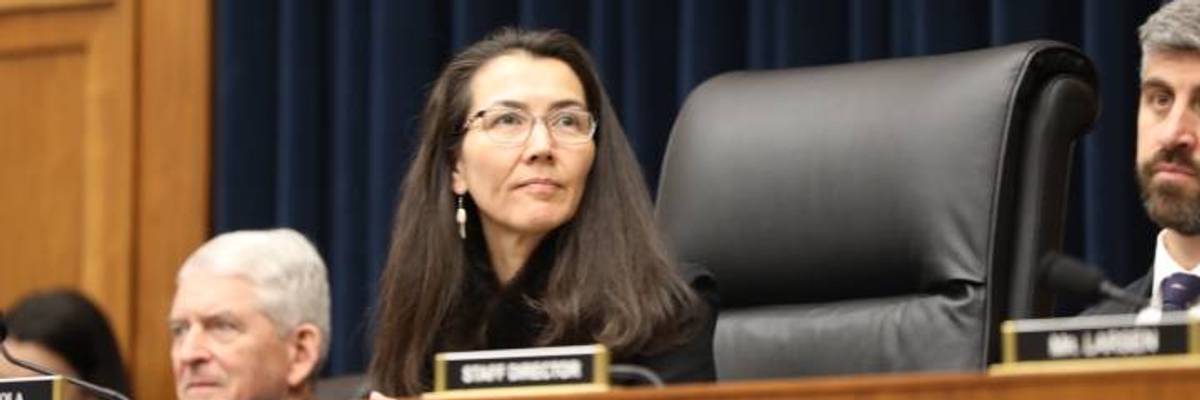
Democratic Alaska Senate candidate and current Rep. Mary Peltola speaks to the Transportation and Infrastructure Committee in December 2023.
(Photo by Mary Peltola’s Congressional Office)

Ari Paul
Nov 01, 2026
FAIR

We don’t know if there was a second gunman involved in the JFK assassination in Dallas. We do know that there is a second Dan Sullivan running for US Senate in Alaska.

Can you believe it? Two Dan Sullivans? In Alaska? The New York Times is on it.

Dan S. Sullivan is a Republican representing Alaska in the US Senate, facing a strong challenge from former Democratic Rep. Mary Peltola. Her viability in the race is worrying the GOP about the midterms generally—while also, as a pro-oil Democrat, encouraging those in her party who fear it’s moving too far to the left (Politico, 10/28/26).

People outside the snowy state learned about the existence of another Republican on the ballot named Daniel J. Sullivan, Jr.—the state has a multi-candidate ranked-choice system—when President Donald Trump ordered the Department of Justice, as ABC News (10/23/26) reported:
to preemptively file a lawsuit to try to block the certification of the crucial Alaska Senate race if Republican Sen. Dan Sullivan loses, citing name confusion among the candidates.

This struck many as a sign, as Time (10/28/26) put it, “that the midterm elections could face unprecedented interference by federal authorities.” The last time Trump won a major election, he instigated an insurrection to try to block certification of his opponent’s victory. His threat to annul the voting result in Alaska suggested that he was going to similarly reject the results of the 2026 midterms.

But The New York Times put its investigative efforts, not into Trump’s threat to democracy, but into attempting to document that he might have a point.
‘To Coax Other Would-Be Spoilers’

The New York Times produced an in-depth report (10/28/26) headlined “Inside Democrats’ Secret Effort to Stack Alaska’s Ballot.” The subhead: “Operatives aligned with Mary Peltola, the Democratic nominee for Senate, spent months recruiting candidates to peel votes from Senator Dan Sullivan, the Republican.”

The meat of the piece, by Times political reporter Kellen Browning, was this:
The Peltola campaign has repeatedly denied any involvement in [Daniel J. Sullivan’s] candidacy. But the Times has found, based on interviews and text messages, along with documents prepared for a potential lawsuit against the campaign, that not only did Ms. Peltola’s team work with people trying to recruit Mr. Sullivan to run for Senate, but the effort was much broader. The group worked to coax other would-be spoilers into the race, to dilute the incumbent’s support and help catapult the Democrat to victory.


Anyone who follows US elections closely knows that spoilers are a part of politics. Sometimes campaigns will quietly help third-party candidates from the opposite end of the political spectrum in hopes that they’ll siphon votes from their major rival (Fortune, 9/2/24). And other times they recruit candidates with a look-alike name in hopes that some voters will check the box next to the wrong candidate.

According to Ballotpedia, “28 states had at least one 2026 race between candidates that share the same last name.” In 1998, who did Georgia Republicans find to challenge civil rights hero and then-Democratic Rep. John Lewis? Another guy named John Lewis.

The Brookings Institution (10/28/26) recalled when John F. Kennedy first ran for Congress:
One of Kennedy’s opponents was an Italian-American Boston city councilor named Joe Russo. Kennedy’s father, Joe, set about to confuse voters by allegedly paying another Joe Russo, a janitor with no political experience, to run on the primary ballot as well—in hopes of splitting the Italian vote. As it turned out, it wasn’t necessary to get the other Joe Russo into the race—Kennedy won the primary by a large margin.

‘Common in Politics’

While not a particularly honorable campaign tactic, recruiting a candidate with a confusing name is not a crime. In fact, The New York Times admits:
Ballot-stacking tactics are common in politics and generally considered legal—and have been employed by both parties in Alaska. But this operation, which has not been reported before, reveals the lengths to which Democrats went to seek advantage in a Senate race that could determine control of the chamber.


So these tactics are “common,” and “legal,” but also reveal “the lengths” Democrats are willing to go to win a historic midterm election? Common, legal lengths?

The paper also said that “Alaska’s voting system makes it especially easy to add spoilers to the ballot,” which “allowed Mr. Sullivan of Petersburg, a longtime supporter of Ms. Peltola and other Democrats, to land a spot on” the ballot. It continued, “Republicans have also taken advantage of this system,” noting that when Peltola “ran for re-election to the House two years ago, the state Republican Party backed an effort to help a Democrat—an inmate who ran his campaign from a New York prison—stay on the ballot.”

While the article does lay out the drama of how Democrats seized an opportunity to make the election messier for the incumbent, the Times doesn’t ever make a case that Democrats broke the law.
‘Liberal Shrieks Fading Now’

You know what is a crime? Annulling an election so that the candidate who wins the most votes can’t take office. Though Trump administration officials had already announced an intent to commit that crime, The New York Times report seemed tailor-made to abet their efforts.

Predictably, Republicans seized on the Times investigation to lend legitimacy to Trump’s election-threatening efforts. Trump himself called for Peltola “to drop out of the race and be criminally prosecuted,” the New York Post (10/28/26) reported; it quoted the president, “They said they didn’t do it, and they did do it, and they got caught.” The tabloid explained:
Top aides of Peltola were behind the recruitment effort, The New York Times reported. She had originally denied any involvement, but Wednesday’s shock report revealed she was “definitely aware” of the scheme.


Wall Street Journal editorial board member Kimberley Strassel (10/28/26) explicitly cited the Times report as an after-the-fact justification for Trump’s election-nullification plan:
When the Justice Department sued Alaska over its manipulated Senate ballot, liberal shrieks could initially be heard up to the Arctic. They’re fading now, after The New York Times on Wednesday published evidence that Democrats rigged Alaska’s ranked-choice ballot with a decoy candidate who threatens to deny Republican Sen. Dan Sullivan re-election.


The National Review’s Michael A. Fragoso (10/28/26) also relied on the “bombshell New York Times report” to bolster his argument that the recruiting a same-named candidate was “different from lawful trickery.” The second Sullivan, Fragoso argued, is “designed to take voters who intend to vote for the incumbent and trick them into not doing so even though they want to.”

Tell that to Florida Democratic voters who were deceived into voting for Pat Buchanan for president with maldesigned ballots in 2000, an incident that helped usher George W. Bush into the White House without a popular mandate (American Political Science Review, 12/01).
‘Disturbing New Evidence’

The New York Times investigation prompted state officials as well as the feds to target Peltola (AP, 10/29/26). Alaska Gov. Mike Dunleavy, a Republican, announced that he had ordered an investigation into whether Peltola should face civil or criminal penalties, saying that the Times report
reveals disturbing new evidence of an organized effort to manipulate Alaska’s elections by recruiting candidates—including one with the same name as an incumbent US senator—to deliberately confuse voters and misdirect their votes.


Times editors had to have known that this article would be a gift to an administration that claims Democratic wins are not legitimate, and that the very notion of Republican losses can only be explained by complicated election rigging rather than not getting enough votes (New York Times, 8/20/26, 10/17/26, 10/25/26, 10/27/26, 10/27/26).

If the Times had found potential wrongdoing by Alaska Democrats, that would have been a necessary story for readers. This, however, is a long-read about the usual shenanigans of US electoral politics. It doesn’t add to our understanding of politics, nor is it especially damning in the bigger context.

It is mildly entertaining, for sure, but the biggest impact this investigation will have is providing more justification for an authoritarian administration that already has plans in place to shut down democratic outcomes.


© 2023 Fairness and Accuracy In Reporting (FAIR)


Ari Paul
Ari Paul is a New York-based journalist who has reported for the Nation, the Guardian, the Forward, the
Brooklyn Rail, Vice News, In These Times, Jacobin and many other outlets.
Full Bio >


Judge Throws Out Trump DOJ’s Push to Block Certification of Alaska Senate Election

The administration quickly appealed the ruling, making it clear that it “still wants to interfere in Alaska’s election and pursue an investigation that would violate the right to a secret ballot.”


Voters cast their ballots at a polling station at Midtown Mall on October 31, 2026 in Anchorage, Alaska.
(Photo by Justin Sullivan/Getty Images)


Julia Conley
Nov 01, 2026
COMMON DREAMS

With numerous recent court rulings dismissing the Trump administration’s attempts to intimidate election officials and its push to discount tens of thousands of ballots due to the dubious claim they were cast by noncitizens, a key midterm strategy of President Donald Trump—questioning the results of the election before it happens—is falling apart.

The US Department of Justice has focused in recent days on the Alaska US Senate election, with Trump personally calling on the DOJ to file a lawsuit arguing that a federal court must block the certification of the results if Republican Sen. Dan Sullivan narrowly loses his reelection bid—but Chief Judge Sharon Gleason of the US District Court in Alaska threw that effort out on Sunday, as well.

The administration has focused on the election because, along with Sullivan and former Rep. Mary Peltola, the Democratic candidate, another Dan Sullivan appears on the ballots Alaskans have begun casting: Daniel J. Sullivan, a retired teacher.

The DOJ argued in its lawsuit that if Sullivan loses his reelection race but would have won if the votes for Daniel J. Sullivan had gone to him instead, the election results should not be certified.

The Republican senator is clearly marked with his party affiliation and the word “incumbent” on the ballots, and observers have noted that the state’s ranked-choice voting system would likely stop Daniel J. Sullivan from acting as a “spoiler.”

“Voters are familiar with the system,” wrote Anna Griffin at The New York Times Sunday. “Any voter confused by the existence of two Dan Sullivans could simply rank both candidates.”

Voters interviewed at the polls in recent days have said the ballot did not cause confusion.


Still, the DOJ in its lawsuit called for an investigation should Sullivan lose narrowly, without explaining how officials would conduct a probe into the secret, anonymous ballots that American voters have a right to.

The administration, said Gleason as she rejected the lawsuit, “offers no rebuttal to the concerns regarding preservation of the secrecy of voting and provides no explanation of how its request for ballot segregation and a court-ordered investigation by law enforcement officers into certain voters’ intent could be implemented while preserving the secrecy of the ballot.”


As the DOJ filed an appeal to the ruling Sunday, a spokesperson for the department complained to the Times that Gleason had not addressed “the argument of the United States that Daniel J. Sullivan (a/k/a Decoy Dan) entered the race as a frivolous candidate to confuse voters.”

Entering an electoral race to act as a “spoiler,” while potentially inconvenient and aggravating for another candidate and sometimes denounced as a “dirty trick,” is generally not against the law in the US, according to legal experts. Neither is recruiting or encouraging someone to run as a spoiler, as Peltola’s campaign has been accused of doing in the Alaska case.

“Regardless of who encouraged him to run, the second Dan Sullivan validly qualified for the ballot. And this is a matter of state law,” Joshua Douglas, a law professor at the University of Kentucky, told Reuters this week.

Gleason rejected the DOJ’s claim that the administration is not attempting to interfere in “the time, place, and manner of Alaskan elections,” which the Constitution stipulates are to be determined by state officials.

“A court order preventing the state from certifying the election if certain circumstances occur; a court order requiring the state to segregate and preserve certain ballots; and a court order permitting the United States to conduct an investigation into the intent of those voters who cast ballots for Daniel J. Sullivan... certainly involve the time, place, and manner of Alaska’s election,” the judge wrote.

Sullivan said Sunday that he would accept the election results regardless of who wins, while also claiming the election could be “stolen.”

The DOJ’s decision to immediately appeal Gleason’s ruling, said journalist Adam Klasfeld, made clear that the administration “still wants to interfere in Alaska’s election and pursue an investigation that would violate the right to a secret ballot.”

Centrist Dems Dismiss the Progressive Wave at Their Peril

In the coming months, Hakeem Jeffries and others like Rahm Emanuel and James Carville may discover a growing canyon between their direction for the party and a Democratic base increasingly friendly to democratic socialism and impassioned for Medicare for All.


James Carville speaks onstage during Election Night Live With Brian Williams at Amazon Studios on November 5, 2024 in Culver City, California.
(Photo by Matt Winkelmeyer/Getty Images for Amazon Studios)

Roger Bybee
Nov 01, 2026
Common Dreams

The energy and votes unleashed this year by the insurgent new left of the Democratic Party would surely be welcomed by the Dems’ leadership after a long hangover from 2024 and setbacks at the hands of President Donald Trump, right?

Not exactly. These developments are viewed as anything but good news by many members of the party elite. Hakeen Jeffries (NY), in line to become Speaker of the House if Democrats prevail November 3, refused to endorse Zohran Mamdani last year even after he won the Democratic Party nomination in New York City. In Michigan, Jeffries had endorsed Senate candidate Haley Stevens, a big recipient of American Israel Political Action Committee (Jeffries himself has been a beneficiary of AIPAC), over the staunchly progressive Abdul El-Sayed, who won the primary. These choices were consistent with Jeffries’ history of hostility to progressives in the Democratic Party.

Over the last year, primary victories by progressives have given Jeffries much more to worry about. While there has been a general growing upsurge in support for Democratic candidates, much of the drive has been fueled by the left wing of the party. The Democrats have witnessed something of a rebirth charged by youthful, notably progressive momentum . While Democrats including moderates have gained ground in both special elections and primaries, the electoral strength of left-wing candidates has become a growing trend. From the election of New York Mayor Zohran Mamdani in 2025 to primary and special-election victories won by avowedly left-of center candidates this year, there is now a significant activated progressive core within the Democratic Party.

But Carville is correct on one point: Jeffries will encounter resistance from new House members wary that he will deeply alienate the electorate with tepid reforms that fail to produce tangible improvements in voters’ lives.

A number of the candidates are closely affiliated with the Democratic Socialists of America (DSA), others are independent progressives, and a much larger number are firmly committed to fighting for a Medicare for All healthcare plan. This trend reflects a broader, momentous shift to the left within the Democratic base. Democratic socialists make up only a minority, but they have earned a recognized place in the party. Recent polls from CBS News and The New York Times found that roughly 58-66% of Democrats view socialism positively, with that number rising to 70% in a ABC News/Washington Post/Ipsos poll conducted this month. CBS News polling revealed about 60% of Democrats favor a mix of socialism and capitalism.

But evidence of this relatively recent turn in the outlook of the Democratic base is only perceived as deeply disturbing by Jeffries and others like former Chicago Mayor Rahm Emanuel and James Carville, an influential Democratic strategist. Fittingly, Jeffries’ statement on democratic socialism and presumably DSA in particular projected no welcoming for an energetic, youthful element of the party: “There will never be a moment where I bend the knee to hard-left democratic socialism.” In this comment, Jeffries deploys a trope that DSA-backed candidates are somehow “hard-left” extremists fixed on espousing far-out symbolic views rather than winning substantial reforms at every level of government. In fact, the DSA-affiliated candidates and officeholders are pursuing broadly-shared progressive aims like taxing billionaires, sharply raising the minimum wage, providing universal childcare, and legislating a Medicare for All healthcare system.

On Medicare for All, Jeffries’ evident lack of support places him far outside the Democratic mainstream. At a 78% level of support, the base of the Democratic Party ardently backs a Medicare for All system that would largely replace large insurance corporations with a government-administered system as in Canada. A national Data for Progress survey found 65% of all voters support a Medicare for All system, including 71% of independents, and 49% of Republicans.

For the next Congress, Jeffries will be swimming against the tide on Medicare for All, as it is all but certain to become a pressing issue in the face of rising public concern over healthcare, which is already one of voters’ top affordability concerns and will become more sharply climbing as employers are aggressively thrusting rising insurance premiums back onto workers. Further, major cuts in Medicaid are already creating enormous stress for those otherwise lacking conventional insurance, and these reductions will intensify in 2027 when they come fully into effect.

At the same time, Medicare for All is gaining credibility as an alternative to the status quo. An important Yale study calculates that Medicare for All would save the US $1 trillion per year. Further, Medicare for All would save an estimated 114, 000 lives annually as the 27 million currently uninsured finally gain timely access to care.

Former Chicago mayor and diplomat Emanuel, a potential 2028 presidential contender, is another leading force who characterizes DSA and progressives as extreme and fiercely opposes Medicare for All. He told MS NOW that he believes that DSA simply has no place in the Democratic Party.

Emanuel, like Jeffries and several other figures in the Democratic establishment, caricatures DSA based on the most fanciful elements of DSA’s official long-term “agenda.” But that agenda is almost uniformly ignored by DSA officeholders, candidates, and local chapters alike. Still, Emanuel spotlights.impossible-to-achieve points on the agenda (e.g., abolishing the police and prisons) while ignoring the actual work of DSA conducted by officeholders like Mamdani, Rep. Alexandra Ocasio-Cortez (D-NY), and many others, and DSA chapters across the nation working on the minimum wage, taxation of billionaires, and well-funded public services—an agenda far different from Emanuel’s fixation on the much-derided sweeping privatization of services and sell-off of resources while mayor of Chicago.

Emanuel, who dismissed DSA on MSNOW TV as “an Ivy League seminar,” in reality seems less troubled by DSA’s meaningless long-term “agenda” than the more concrete programs that a new band of left-wing members will bring to the next session. Emanuel, for example, is singularly focused on repudiating the idea of Medicare for All legislation, which will gain a substantial influx of support if progressive candidates prevail in the midterms.

But the most ferocious voice excoriating the Democrats’ Left has been Carville, the long-time Democratic strategist. Carville describes DSA and the progressives as “over-educated little white turds,” conveniently ignoring the high-profile people of color within the progressive coalition, including, for example, Latina primary winners for the House from New York and a new House member from New Jersey. Carville has been unwilling to acknowledge the prominence of people of color in the democratic socialist camp, like Mamdani; Ocasio-Cortez; recently-elected US Rep. Analilia Mejia of New Jersey; and House candidates Melat Kiros of Colorado, Claire Valdez and Darializa Avila Chevalier in New York City, and Donavan McKinney in Michigan, the last two defeating entrenched incumbents in their primaries.

Escalating his attempts to alienate Blacks from DSA and the left wing of the party, Carville lashed out at DSA, claiming, “They think that Lenin was a more glorious human being than Martin Luther King or Frederick Douglass. That’s what they really think.” Of course, Carville somehow manages to overlook the fact that King himself considered himself a democratic socialist, as did other key Black giants like A. Phillip Randolph.

But nothing tops Carville’s comment earlier this month in which he actually expresses more fear of DSA and the left than having far-right Speaker Mike Johnson (R-La.) continuing in his post. The searing hostility of Carville toward the Democrats’ left was evident in The Bulwark Takes podcast: “I would be disappointed if it [the midterms] comes in at 225 House seats. And that would almost be—I would rather the Republicans keep the House by five than the Democrats win by five because if that happens, they’re hostage to the DSA,” Carville said. “Like Hakeem cannot move. There’s no place for him to go.” Whether meant even partly in jest, Carville displayed the venom gathering against the left electoral successes.

But Carville is correct on one point: Jeffries will encounter resistance from new House members wary that he will deeply alienate the electorate with tepid reforms that fail to produce tangible improvements in voters’ lives. Media accounts report that Jeffries has no visible challengers to becoming speaker, but he will surely face battles both with increasingly progressive Democrats in Congress and the party base to which they are giving a new voice. “He [Jeffries] needs all of our votes to be speaker,” Chris Rabb, the DSA-backed Democratic nominee in Pennsylvania’s third congressional district, pointedly told The New York Times.

Jeffries has cloaked his conventional centrist politics as simply representing a majority of Democratic voters, while feeling free to lash out at progressives critical of “corporate” members of Congress whose policies align closely with their donors in corporate America: “The extreme left is obsessed with talking trash about mainstream Democrats on Twitter, when the majority of the electorate constitute mainstream Democrats at the polls.”

But in the coming months, Jeffries and others like Emanuel and Carville may discover a growing canyon between their direction for the party and a Democratic base increasingly friendly to democratic socialism and impassioned for Medicare for All. Some in the establishment set may be preparing themselves for a battle with the marginal “white turds,” but not a significantly shifting “mainstream” of the party seeking the fighting spirit and visionary reforms offered by the party’s left.


Our work is licensed under Creative Commons (CC BY-NC-ND 3.0). Feel free to republish and share widely.


Roger Bybee
Roger Bybee is a Milwaukee-based freelance writer and progressive publicity consultant whose work has appeared in numerous national publications and websites, including Z magazine, Common Dreams, Dollars & Sense, Yes!, The Progressive, Multinational Monitor, The American Prospect and Foreign Policy in Focus.
Full Bio >
Rape as a Tool of Empire: Cornell, Palestine, and the Silence of Western Feminists

Just because a woman is brown and Muslim, or just because the man being abused is Palestinian, does not mean their pain should be ignored by the mainstream feminists of today.


Palestinians imprisoned at Sde Teiman are shackled and blindfolded 24 hours a day and are forced to sit still and silent in painful positions for hours on end.
(Photo by Whistleblower via Quds News Network)

Jenin M.
Nov 01, 2026
Common Dreams

I came across a tweet recently that reads: “Reminder that rape is used a weapon of war on a regular basis because it is one of the most demoralizing, terrifying, and life-changingly traumatic things that can happen to a human being.”

This post was in light of the gruesome sexual assault case coming out of Cornell University, and it really stuck with me. I’ve spent the past few years reading and talking about the experiences of Palestinians as they face every kind of abuse from Israeli soldiers and settlers. It is not lost on me that the vehicles used by the patriarchy to suppress women, like rape, are unfortunately present in every aspect of our society—the same society that has manufactured consent for a genocide in Palestine. From college campuses to Palestine, we are seeing sexual and gendered violence being intentionally used to strip human beings down to the barest parts of themselves.

It is this system of imperial patriarchy that cultivates a world in which two situations are allowed to occur simultaneously: A college girl can be drugged and sexually assaulted for seven hours, and women and men in Palestine can have their bodily autonomy ripped away from them as a tool of genocide. In both cases, the victims have been dehumanized by the outside world to such an extent that they are now an other.

Israel is committing one of the world’s greatest acts against feminism right now: dehumanizing Palestinians, men and women both, to such an extreme degree that they are seen as disposable cattle to Israeli soldiers and settlers.

And in both cases, their perpetrators and assailants can leave the crime scene unscathed, with their hands clean.

This summer, the Palestinian Feminist Collective (PFC) released a report on the harrowing sexual and gendered violence Palestinians have faced during 70-plus years of occupation, and increasingly so in the past three years of accelerated genocide. Israel has always treated its military personnel and settlers with impunity, allowing them free rein to sexually torture Palestinians. With extensive evidence, the report concludes that Israel systemically uses sexual violence as a method of genocide.

The stories that are recounted in “A Predatory State,” by both Palestinian men and women, are absolutely terrifying. When read all together, the pattern is plain and clear: Israeli soldiers and personnel operate within a dynamic of power where they believe they have complete authority over another human being. This results in gruesome and grotesque behaviors like sexual coercion, assault, harassment, and even enslavement. Palestinians are subjected to these abuses any time Israelis show up to steal their homes, massacre them, and round them up in mass-imprisonment campaigns.

I think of my family members who have lived in Palestine for generations. What have they experienced? What kind of trauma runs through my veins right now, as I am writing this? It is terrifying to know that as a woman in this world, the threat of sexual assault is always there. In Palestine, you can’t really avoid it when the perpetrators are at every checkpoint, storming into your house at night, encroaching on your backyards with their illegal settlements, guarding the prisons, and just being everywhere all at once. It’s not a matter of if but a matter of when. It also isn’t a matter of man or woman, because in reality it happens to both. In a culture that holds modesty as a core value, I can only imagine the emotional and socioeconomic toll sexual violence takes on Palestinian people and their families.

Bell hooks defines feminism as “a movement to end sexism, sexist exploitation, and oppression.” I would think anyone would see this situation and resonate with it as a feminist issue. The ideology is not selective, nor is it performative; it’s supposed to be something whole and intersectional. Feminism in practice should advocate for every person affected by the oppressive structures of patriarchy. That being said, you would be surprised at how many feminist and women’s organizations act otherwise.

The Western feminist space has become one where optics are the only thing that matters. These “feminist” organizations operate as an institution for the institution, yet they brand themselves as global caregivers fighting for gender equality. In reality, they are the fruition of neoliberal co-optation of actual revolutionary ideas. That is why they deem Palestinians as nonhuman, consistently failing to speak up about the sexual and gendered violence they face in genocide. Palestine is too revolutionary for them.

Reading through PFC’s report and then researching some of the most influential women’s organizations—who have either never said a word about Palestine, despite their decades of existence, or issued a few measly statements here and there—was a painful process. The first target we had identified at CODEPINK was the Center for Reproductive Rights. This global legal organization upholds reproductive and sexual rights for women, not only in courts but also through consultations with other human rights organizations. They are active worldwide, fighting for reproductive and sexual health as a basic human right from the US to Africa to Asia—but somehow Palestine is missing from their picture.

In Palestine, women are facing a maternal health crisis with hardly any functioning hospitals, dangerous sanitation levels, and an overall stressful quality of life. A report was recently published highlighting the unprecedented rise of miscarriages in Gaza under Israel’s blockade. In 2022, Gaza reported 57,000 births. In 2024, just one year after Israel’s genocidal campaign began, the birth rate in Gaza dropped to a staggering 38,000. Then, from December 2025 to April 2026, in the span of just six months, birth rates in Gaza declined by 67%.

This seems like something the Center for Reproductive Rights should absolutely make noise about, but every single one of our attempts to speak to them has been blocked and ignored. When you look at their board and staff, the answer is pretty clear. When you have an organization run by a culmination of ex-CIA operatives, presidential campaign officials, and venture capitalists, Palestine seems to be the antithesis of the “values” they ascribe to, and the “feminism” they follow.

Israel is committing one of the world’s greatest acts against feminism right now: dehumanizing Palestinians, men and women both, to such an extreme degree that they are seen as disposable cattle to Israeli soldiers and settlers. Yet, that does not concern the self-prescribed feminists who work for the state and war economy that is aiding and abetting this tragedy.

I leave Nawal El Saadawi’s quote here as a reminder that liberal, white feminism does not seek true liberation for all those the patriarchy oppresses. Just because a woman is brown and Muslim, or just because the man being abused is Palestinian, does not mean their pain should be ignored by the mainstream feminists of today. Feminism is intersectional and whole, and it is beautiful that way. These organizations’ hypocrisy in the face of injustice is a horrible stain on the feminist movement. I wish nothing more than for all of us to stand together as women subjected to struggle and scorn against the colonial powers of this world.

“Solidarity between women can be a powerful force of change, and can influence future development in ways favourable not only to women but also to men.”―Nawal El Saadawi, The Hidden Face of Eve: Women in the Arab World


Our work is licensed under Creative Commons (CC BY-NC-ND 3.0). Feel free to republish and share widely.


Jenin M.
Jenin is CODEPINK’s Palestine campaigner. She graduated with a bachelor’s degree in Public Policy from the University of Illinois at Chicago in December of 2023. For over five years, Jenin has been a community organizer and dedicated individual focused on the Palestinian movement through advocacy, digital storytelling, and grassroots mobilization. She is a firm believer in intertwined struggle and liberation for all.
Full Bio >
Global Summit Ends Without Securing Finance Commitments Needed to Protect Biodiversity

“This meeting should have been a turning point, not just a stocktake. Success required governments to commit the political will and financing needed to reverse biodiversity loss,” said one advocate.


Convention on Biological Diversity deputy executive secretary Jihyun Lee, CBD executive secretary Astrid Schomaker, and COP17 president Hambardzum Matevosyan are seen at negotiations at the United Nations biodiversity meeting in Yerevan, Armenia, on October 30, 2026.
(Photos by IISD/ENB/Mike Muzurakis_

Julia Conley
Oct 31, 2026
COMMON DREAMS


The 17th United Nations summit on biodiversity ended in Yerevan, Armenia on Friday with more than 200 countries adopting a “forward-looking” agreement aimed at speeding up and scaling up action to protect nature, reforming “harmful subsidies fueling nature’s demise,” and closing the biodiversity finance gap—with the global economy spending $1 on nature protection for every $30 it spends on destruction, according to a recent UN report.

But conservation advocates warned that with four years to go until 2030, when 30% of land and water is meant to be protected under the 30x30 goal set by the Kunming-Montreal Global Biodiversity Framework in 2022, biodiversity conservation is behind schedule, and the goal of accelerating beneficial finance is still falling short in the Yerevan Pathway that came out of the meeting.

The conference produced about $1.8 billion in nature-finance agreements, including a commitment of $500 million from the Netherlands to the Tropical Forest Forever Facility, which rewards countries for protecting their tropical forests. Six contributors also pledged $60.13 million to the Global Biodiversity Framework Fund, which supports the Global South in implementing the 2022 framework.

However, “overall spending on biodiversity remains far short of the $200 billion per year target in the Kunming-Montreal framework,” wrote John Cannon at Mongabay, while the framework’s demand to reform “damaging subsidies remains largely unmet.”

Experts say $700 billion in additional annual spending is needed to protect and restore ecosystems damaged by mining, drilling, and other industries, pollution, and other human activities.

Governments committed to reducing subsidies by at least $500 billion per year by 2030, but about $2.4 trillion “is still estimated to flow annually toward subsidies that can harm nature,” said Sustainable Business Services.

Daudi Sumba, chief conservation officer at World Wildlife Fund International (WWF), said that the Global Review that came out of the summit was “a strong signal to countries that they must do better when it comes to action for nature.”

“But without clear scaling of the funds to be able to deliver, I fear finance will remain the key issue that continues to haunt the UN biodiversity summits,” said Sumba. “Negotiators returning home must now turn the Global Review into clear dedicated action, scaling nature’s recovery by transforming the most damaging sectors and activities across our food and finance systems.”


The Cali Fund, a mechanism that came out of COP16 in Colombia and is designed to share digital sequence information on genetic resources, is also falling short of the goals set for it by last year’s conference. The fund aims to raise at least $1 billion annually from companies that access DSI from genetic resources for pharmaceuticals and other products, but “with only $10,000 pledged at the close of [COP17],” said WWF, “follow-up work at intersessional meetings will be important.”

“Back when the UN Convention on Biological Diversity was first adopted in 1992, one of the main pillars was ensuring the fair and equitable benefit-sharing from biodiversity, especially from provider countries and local communities,” said Vishaish Uppal, director of governance, law, and policy at WWF-India. “Almost 35 years later, we’re still not seeing the companies that profit off nature sharing their benefits with the Indigenous peoples and local communities that act as the custodians of much of the biodiversity that their businesses rely upon. It really is about time that countries iron out these differences, so that funding can reach the people and places that need it the most.”

An Lambrechts, a biodiversity politics expert at Greenpeace International, said that “giant corporations did everything they could to keep the Cali Fund voluntary two years ago, and then did everything they could to stop the fund from working in Yerevan.”

“It is unacceptable that big multinational corporations are turning massive profits from what they take from nature while contributing very little to its protection and leaving people across the world to face the impacts of the biodiversity crisis,” said Lambrechts.

“It is unacceptable that big multinational corporations are turning massive profits from what they take from nature while contributing very little to its protection and leaving people across the world to face the impacts of the biodiversity crisis.”

Negotiators also established a permanent body for Indigenous peoples and local communities under Article 8(j) of the Convention on Biological Diversity, but Sustainable Business Services warned that “questions remain over institutional status, representation, and the extent of their participation in decision-making.”

COP17, said the Wildlife Conservation Society (WCS), “put forth a clearer picture of the global biodiversity crisis and the gaps that must be closed to meet the world’s 2030 targets.”

But Susan Lieberman, vice president for international policy at WCS, said that “the negotiations themselves ended up weak on ambition.”

“This meeting should have been a turning point, not just a stocktake. Success required governments to commit the political will and financing needed to reverse biodiversity loss,” said Lieberman. “That means protecting and restoring ecological integrity, respecting the rights and leadership of Indigenous peoples and local communities, and reducing the drivers of decline. With just four years until 2030, we cannot afford another conference that diagnoses the crisis without accelerating the cure.”

Twenty-two of the 23 targets set by the Kunming-Montreal framework are behind schedule, and Lieberman said that COP17 “has clarified the challenge” of ensuring they are met.

“Now governments must summon the political will, resources and resolve to meet it,” she said. “We applaud the Armenian government, the [Convention on Biological Diversity] secretariat, and many governments and partners for keeping the momentum moving toward achieving the 2030 goals and targets. But ‘good enough’ should never be acceptable.”

Friends of the Earth International (FOE) also said the two weeks of negotiations had “ended with weak decisions and many unanswered questions,” pointing to “the capture of this space by transnational corporations” and the “greenwashing and false solutions like biodiversity offsets and credits” that it said would continue.

Along with calling out harmful subsidies, FOE helped launch a campaign during COP17 highlighting how “business sectors contribute to biodiversity destruction and related human rights impacts,” such as in the pulp and paper and biomass industries.

“In Indonesia, the expansion of industrial plantations and biomass production continues to drive forest loss and biodiversity decline,” said the Environmental Paper Network, which joined the initiative.

With the Yerevan Pathway, said Nele Marien, coordinator of the forest and biodiversity program at FOE, “the structural drivers of biodiversity loss remain an elephant in the room: the financial and legal systems that undermine biodiversity need to be addressed.”

Wilmer Lucitante, member of the Kofan nation and spokesperson for the Union of People Affected by Texaco and FOE Ecuador, said that COP17 is “a turning point, as the ways of operating of the Indigenous body of the convention were established.”

“Yet the measures are voluntary, and do not alter the power transnational corporations wield in our territories,” said Lucitante. “In the Kofan territory, from the time of Texaco and until now, fossil fuel companies have contaminated our lands and violated our rights. Voluntary measures are clearly not enough.”

WCS said the overall outcome of the summit, just before countries meet in Türkiye for the 31st UN Climate Change Conference, where climate finance is expected to be a major topic, was “too timid.”

“The COP17 decision merely encourages countries to begin applying a set of voluntary guidelines, which will be negotiated further before COP18,” said the group. “This ‘kicking the can down the road’ falls far short of what is needed at a time when climate change poses a significant threat to biodiversity ecosystems, and the loss and degradation of ecosystems is driving emissions and reducing the capacity of people and nature to adapt.”