Sunday, November 08, 2026

Trump officials brushed off Rubio's warning about Nvidia CEO's ties to alleged spy: report

By:Robert Davis
Nov 08, 2026
RAW STORY

Secretary of State Marco Rubio warned Trump administration officials about one of their biggest corporate allies' ties to an alleged spy this spring, and was met with silence, according to a new report.

The New York Times reported Sunday that Rubio told Trump administration officials about Nvidia CEO Jensen Huang's ties to an alleged Chinese spy, Alice Huang, about a year ago, citing "multiple people briefed on the matter." The report was published the same day as Nvidia's board of directors had opened an independent investigation into Huang's ties to the alleged spy. Jensen and Alice Huang are not related.

However, Rubio's warnings seemed to fall on deaf ears inside the administration, the New York Times reported. For instance, it said President Donald Trump waved off concerns about Huang because he views the company as central to America's competitive advantage over China in artificial intelligence and a key player in the recent stock market rally.

The report also raises questions about some of the policies Huang, whom the report describes as "a pivotal figure in the explosive growth of A.I., remained an influential voice with Mr. Trump over policy on the issue," has lobbied for.

"Mr. Huang has opposed calls for more tightly regulating the export of the most advanced A.I. chips and has pushed to be able to sell all but the most recently developed technology to China, the main competitor to the United States in the global rush for A.I. supremacy," according to the report.

Senator threatens new Trump probe after Chinese spy bombshell: 'Congress will get answers'

By:David McAfee
Nov 08, 2026
RAW STORY


Sen. Chris Coons (D-DE) is promising that Congress will dig into the Trump administration’s ties to Nvidia CEO Jensen Huang, after a New York Times report that a Chinese businesswoman close to Huang was an asset of Beijing’s top spy agency.

“The more I learn about the insane relationship between the Trump Administration, Chinese spies, and AI billionaires, the more I’m convinced there is nothing this administration does that isn’t corrupt,” Coons wrote on social media on Saturday. “Congress will investigate and get answers.”

Coons’ post drew nearly 300,000 views. His threat carries more weight after Democrats won control of the Senate on Tuesday, which will give them subpoena power and committee gavels in January.

ALSO READ:Women's historic midterm wave gives GOP a 'mollywhopping' over one issue: experts

The Times reported that a memo circulated among top Trump administration policymakers last spring cited intelligence that Alice Huang, a Chinese executive who developed a close relationship with Jensen Huang, was working for China’s Ministry of State Security. The two are not related.

According to people briefed on the intelligence, Alice Huang was recruited to collect intelligence on the Nvidia chief. It was part of a drive by Beijing to learn more about American AI chips and potentially influence the company to push for its most advanced chips to be made available to China.

The Times previously reported that Trump was briefed last year about Huang’s relationship with the woman “but chose not to do anything about it.”

Jensen Huang is one of Trump’s most influential allies in the tech world. In 2025, he persuaded Trump to roll back a ban on AI chip sales to China, according to the Times. The two later struck a deal allowing Nvidia to sell its second-most-powerful chip to China, with the U.S. government taking a 25% cut of sales.

Alice Huang’s company, Megaspeed, began a multibillion-dollar purchase of advanced AI chips in 2024. It has built data centers in Southeast Asia and rented their computing power to Chinese internet giant Alibaba, which the Times described as “a backdoor way” for China to access advanced Nvidia chips it can’t buy directly.

Republicans are paying attention too. On Thursday, the GOP leaders of three House committees asked Jensen Huang to appear at a closed-door briefing later this month about his interactions with Alice Huang.

Nvidia spokesman John Rizzo told the Times that the company does not share classified information with customers, and that Huang’s interactions with Alice Huang were “not unusual.” A spokesman for the Chinese embassy called the reporting “unsubstantiated” and “nothing but smears against China.” The White House and CIA declined to comment.

Susan Rice, who served as national security adviser to former President Barack Obama, sounded the alarm, too. “This is insane. Huge national security threat. WTAF?” Rice wrote on social media, sharing a post from Chris McGuire, a former national security official, that recapped the reporting on the alleged spy operation.


Trump is breaking new ground — in letting people starve


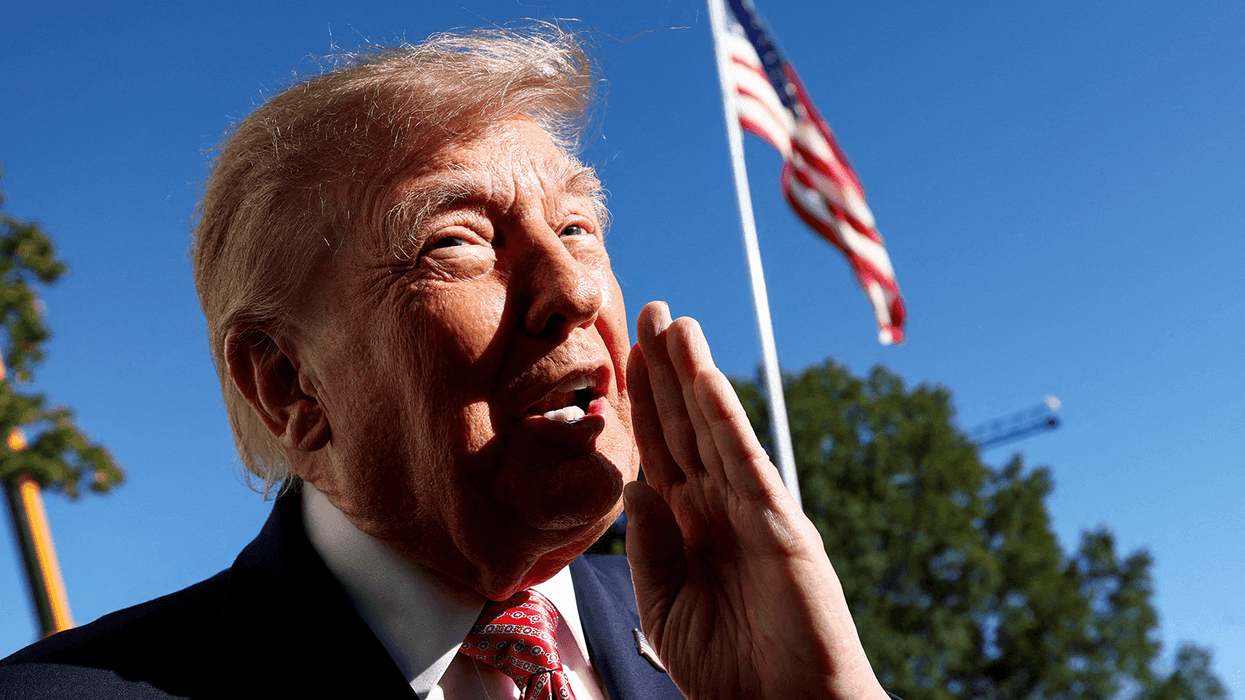
US President Donald Trump speaks to members of the media as he departs the White House en route to Kansas, in Washington, DC, US, October 19, 2026. 
REUTERS/Kevin Lamarque
November 08, 2026 
ALTERNET

President Donald Trump spent much of his second term slashing funds to foreign aid programs like USAID, which exist primarily to provide food, medicine and other humanitarian relief to developing countries. Now Trump is breaking new ground in letting people starve, at least according to a new report.

"For the first time since the 1980s, the U.S. government, faced with this kind of disaster, has done nothing and apparently plans to continue doing nothing," reported The Atlantic's Hana Kiros on Sunday.

Describing how famine has spread in Somalia in large part due to America pausing humanitarian relief there, Kiros wrote that "the Trump administration has said that it paused funding because in January, the Somali government, while in the process of redeveloping a port area, had destroyed a warehouse that contained 83 tons of fortified foods partly paid for by the United States. (The World Food Program’s second in command, Carl Skau, told me that the organization ultimately recovered all of the food.) "

Kiros added, "'The Trump Administration maintains a firm zero tolerance policy for waste, theft, or diversion of U.S. resources,' a State Department spokesperson told me in an email. But the decision may have been in the works weeks before that demolition. In November of last year, the State Department was considering distributing foreign assistance to Somalia, according to an internal document that I reviewed. A plan was drawn up, then, abruptly, on December 1, a senior State Department leader informed people who had worked on it that they should instead prepare for no funds to be sent at all, according to the document.'"

While no official explanation was provided, at least at first, it later came out that Trump administration officials believed Somali immigrants were more likely to commit welfare fraud.


"Whether Trump will ever decide to resume aid to Somalia is uncertain," Kiros wrote. "(The State Department declined to say.) In 1985, Peter McPherson, the head of USAID under Reagan and the architect of FEWS Net, brought photos of skeletal Ethiopian children to the Oval Office, which led Reagan to famously declare 'a hungry child knows no politics' and help the country through a famine, despite its Marxist dictator. McPherson told me that he believes Trump will be moved to reconsider helping Somalia when similar pictures appear on the nightly news. 'Of course, by then, many people will have died,' he said."

Speaking with AlterNet in July, one medical expert testified from her on-the-ground experience that the president's cuts to foreign aid have led to deaths on the ground.

"Elon Musk, singularly, as head of DOGE at the beginning of this administration, through his cuts has led to the deaths of millions," Dr. Monica Gandhi, an infectious disease doctor and professor of medicine at the University of California–San Francisco, told AlterNet at the time. "He was the executor of really dismantling USAID — essentially, the work to help the world's poorest children has been decimated by the world's richest man."


Gandhi continued, "I have a project in South Africa, and I can stand absolutely firsthand witness since he also executed the cuts to South Africa — meaning on February 7th, the Trump administration put out an executive order that said we will give no assistance to South Africa because of their 'egregious actions,' like supporting the ICC [International Criminal Court] case against Israel, or they think South Africa is committing a white genocide – all of that means that there's no funding going toward South Africa, even his home country. And I have seen firsthand the effects on deaths, on advanced HIV, people dying of tuberculosis, not able to get HIV medications or preventative medications. Elon Musk is singularly responsible for the deaths of millions."
Fox News pundit exposes how her colleagues are lying to viewers


Fox News pundit Jessica Tarlov speaks at Crooked Con.
November 08, 2026
ALTERNET


Despite the rage and despair they showed on-camera as Republicans suffered a historic wipeout in the midterms, one Fox News pundit says her colleagues act completely differently behind the scenes.

Jessica Tarlov is an on-air personality and pundit for Fox News, noted as one of the conservative network's vanishingly few liberal voices. Because of this, she frequently calls out and butts heads with her colleagues, taking them to task for their efforts to paint a rosy picture of conservative policies and leadership, particularly in the era of President Donald Trump.

This weekend, Tarlov appeared at Crooked Con, an event in Washington, D.C., hosted by the liberal media and activism organization, Crooked Media. During one of the event's panels, she sat for an interview with outspoken political YouTube creator and author Brian Tyler Cohen, who asked her what the vibe was like with her Fox News colleagues once they were off-camera.


"Totally fine. They don't care," Tarlov said. "I've talked to you about this. We're obsessed with politics. It's a reflection of our souls, right? It's our morals. It's our values... They don't feel the same way about it. They can compartmentalize these things. They can think about, oh, you know, another election will happen. There can be some degree of self-soothing, which I think you saw a bit of in the election night coverage, but in general, their lives have carried on like usual."

Cohen suggested that the lack of concern might be a result of the "asymmetry" between conservative and liberal leadership, as, in his words, "the most extreme policy" Democrats might try to push forward would be to give everyone healthcare. Tarlov countered that it is more likely that her conservative colleagues feel fine for the time being because Trump remains president.

"Donald Trump's also still sitting there in the Oval Office and has said, 'Just call me Mr. Veto,'" Tarlov said, referencing Trump's pledge to block much of what Democrats might try to pass until 2029. "So I'm not sure that there's this feeling that that much more will happen. I will say, though, to your point like, oh, what could happen when we're in office? If you talk to people who run small businesses, for instance, they would say that there are probably going to be a lot more regulations in place than if there's a Republican president... they definitely feel that there is a threat to American life with liberal governance. They just don't see this election as meaning that there's going to be liberal governance."


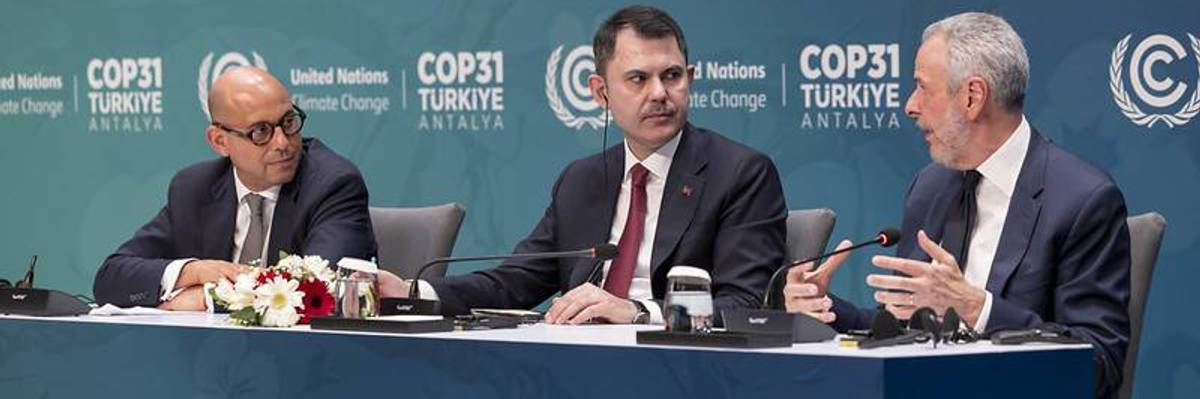
COP31: Will Countries Finally Deliver on Their Climate Promises?

Against the backdrop of increasingly frequent and extreme weather events, water stress, and food insecurity, this COP must prioritize critical mandates on equitable fossil fuel transitions, post-2020 climate finance, and global urban resilience.


A press conference is held concerning COP31 on February 12, 2026.
(Photo by UNclimatechange / Flickr/ CC BY-NC-SA 4.0)

Rachael Mellor
Nov 08, 2026
Common Dreams


The 31st Conference of the Parties to the United Nations Framework Convention on Climate Change, or COP31, marks a critical juncture in the global effort to translate diplomatic pledges into tangible climate action.

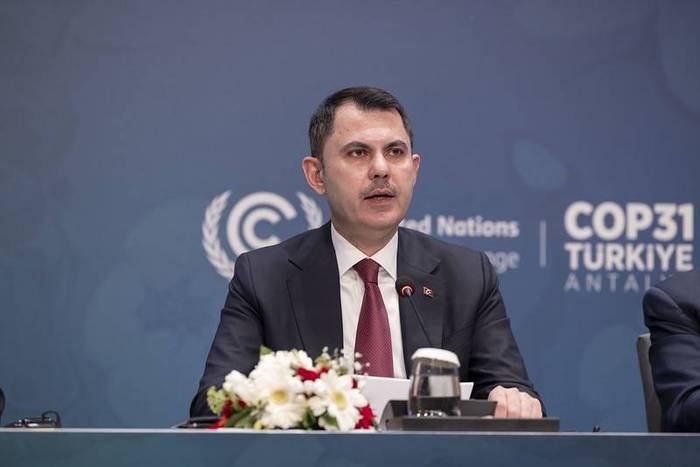
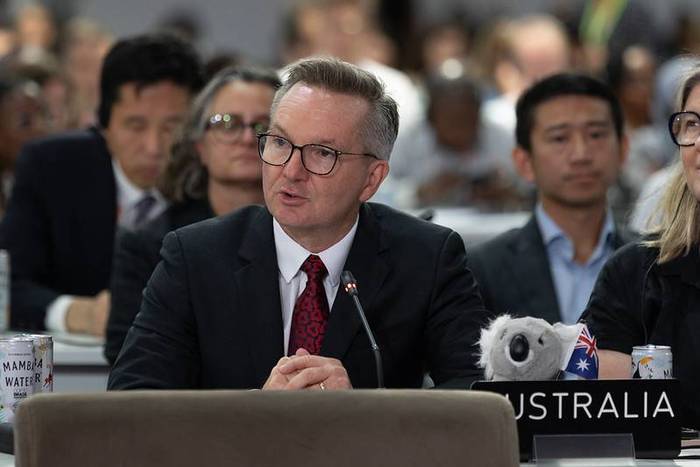
This year’s negotiations will operate under an unprecedented shared-leadership framework. Türkiye will host the event, and Murat Kurum, the Turkish minister of environment, urbanization, and climate change, will serve as the president-designate. Meanwhile, Chris Bowen, the Australian minister for climate change and energy, has been designated president of the negotiations.

In the run-up to the event, two major findings have been released:Levels of three key greenhouse gases reached record highs in 2025, and
The richest 0.1% of humanity generates more carbon than almost half the world population combined.

These shocking insights prompted 146 scientists to urge the United Nations to declare climate change an official “global health emergency” and finally force nations to act.
What Are The Objectives Of COP31?

Against the backdrop of increasingly frequent and extreme weather events, water stress, and food insecurity, this COP must prioritize critical mandates on equitable fossil fuel transitions, post-2020 climate finance, and global urban resilience.

This COP must ensure that the newly submitted nationally determined contributions are put into practice while also demanding the urgent submission of outstanding NDCs from parties that delayed their updates.

It will also enact the Climate Implementation Bridge, an initiative to help developing countries translate their high-level NDC commitments into concrete, investable portfolios that can secure international financing.

Murat Kurum has positioned this COP as a vital transition phase in global climate policy. He describes the 1.5°C goal as “a matter of survival. The survival of cultures, history, memories, your homeland, your homes.”

The following areas have been flagged as urgent priorities:

The Clean Energy Transition & Electrification—Transitioning away from fossil fuels, scaling up renewable energy resources, and building resilient energy grids. One target is to raise the share of global energy demand met by electricity from roughly 20-35% by 2035.

Climate Finance—Kurum has highlighted a massive global adaptation finance gap of $5.6-7.1 trillion. This is the total cumulative cost developing countries need to implement their NDCs by 2030. Nearly four years after the initial agreement of the Loss & Damage Fund at COP17, the fund has failed to materialize for frontline communities.Climate-Resilient Cities—Minimizing cities’ exposure to climate risks such as heatwaves through resilient infrastructure, sustainable housing, and low-carbon urban systems. One target is to slash energy intensity in the global building sector by at least 25% by 2035.Oceans & Seas—Strengthening marine and coastal resilience. COP31 will work toward an official Antalya Ocean Declaration to advance ocean-based climate solutions, support adaptation for climate-vulnerable coastal and island states, and address how oceans absorb massive amounts of human-generated carbon dioxide and excess heat.Food Security—Create dedicated road maps and collaborations linking sustainable agricultural systems, water availability, and rural livelihoods. Provide climate-resilient agricultural practice training to all young farmers globally by 2035.Zero Waste and Methane Reduction—Relieving pressure on natural resources, ecosystems, and the climate by cutting waste and reducing dependence on linear production and consumption models. One target is to reduce the increase in waste generation by 50% by 2035.Green Industrialization—Boost the use of circular materials in manufacturing and production to at least 15% by 2035.Cross-Convention Cooperation—This is the year of the triple COP, which brings together the three UN Rio Conventions for their Conferences of the Parties to tackle the interconnected crises in climate (UNFCCC COP31), biodiversity (CBD COP17), and land (UNCCD COP17). The plan is to integrate circular economies, sustainable agriculture, food security, biodiversity, and green industrial transformations into international policy.


Will a Shared-Presidency Model Help Or Hinder Progress?

Both Türkiye (proposing Antalya) and Australia (proposing Adelaide, in partnership with Pacific Island nations) submitted bids to host COP31 back in 2022. Without consensus on who would host, the process stalled as both nations refused to withdraw their bids.

At COP30, the two countries agreed to split responsibilities and divide leadership. Theoretically, this reduces the risk of negotiation gridlock, brings two very different perspectives into the mix, and allows both sides to hyperfocus on their responsibilities.

It also comes with its fair share of concerns, if the two presidents misalign on major priorities such as the urgency of fossil fuel phaseouts or the mechanisms of debt-free climate finance, it could lead to bureaucratic fragmentation, diluting accountability, and stalling consensus.

The Role Of Türkiye

Murat Kurum, the Turkish minister of environment, urbanization, and climate change and COP31 president-designate, speaks. (Photo by UNclimatechange / Flickr/ CC BY-NC-SA 4.0)


President Recep Tayyip Erdoğan sought the COP31 hosting rights to elevate Türkiye’s global profile and position the country as a major bridge and mediator between developed and developing nations.

The focus was on making COP31 a “COP of implementation,” not on bringing in more pledges.

Türkiye’s bid complements its own national initiatives like its 2053 net-zero target, new national climate laws, plans for an emissions trading system, and commitments to increase renewable energy investments.

When Türkiye voluntarily stepped aside in 2021 to let the United Kingdom host COP26 in Glasgow, it felt it had a strong claim and was unwilling to back down.

Türkiye will steer the summit’s overall direction and manage event logistics, infrastructure, and the massive green trade fair in Antalya (Growtech), with the Leaders’ Summit planned across Antalya and Istanbul.

It is also responsible for the non-negotiated Action Agenda, pushing for strong, measurable implementation and important side deals.
The Role Of Australia


Chris Bowen, the Australian minister for climate change and energy and COP31 president of negotiations, speaks. (Photo by UNclimatechange / Flickr/ CC BY-NC-SA 4.0)

Australia’s bid for COP31 was a chance to reposition itself as a clean energy superpower, build regional goodwill, and counter rising geopolitical competition from China.

It proposed an unprecedented co-hosting arrangement with Pacific Island nations to amplify the voices of the world’s most climate-vulnerable communities, acting as a heavyweight champion for its neighbors.

Their priorities are to address the existential concerns of Small Island Developing States (SIDS), including loss-and-damage funding and rapid divestment from fossil fuels.

“It is like taking a glass of water to a burning house if we do not urgently act to address the root cause of the existential threat facing Tuvalu, Fiji, and all Pacific countries: fossil fuel expansion,” said Bowen.

Australia is a shining example of the energy transition in action. By the end of 2025, renewable energy has provided well over half of Australia’s electricity needs. Today, 1 in 3 Australian homes generate their own power from rooftop solar panels.

As President of Negotiations, Australia will work with countries to build consensus, draft texts, and lead formal policy negotiations. Australia is also working with the past presidencies to deliver on key initiatives like the Belém Mission to 1.5°C and the Global Implementation Accelerator.

Australia’s approach will integrate First Nations knowledge and leadership, and it has selected Sally Higgins as the COP31 presidency youth climate champion.
The State Of The Climate Crisis


Nearly 50 parties have still not filed their updated NDCs. Major nations such as India, Argentina, Egypt, Iran, and Vietnam missed the standard deadlines, signalling an alarming lack of political will to pursue ambitious action under the Paris Agreement.

COP29 in Baku was billed as the “Finance COP,” yet developed nations fell far short of what was needed to meet mitigation targets. COP30 in Belém finished without securing binding, high-level pathways to funnel capital to the Global South.

The UN framework has repeatedly and frustratingly failed to mandate an outright phaseout of fossil fuels. Recent host nations with strong economic ties to oil and gas have successfully diluted negotiation language.

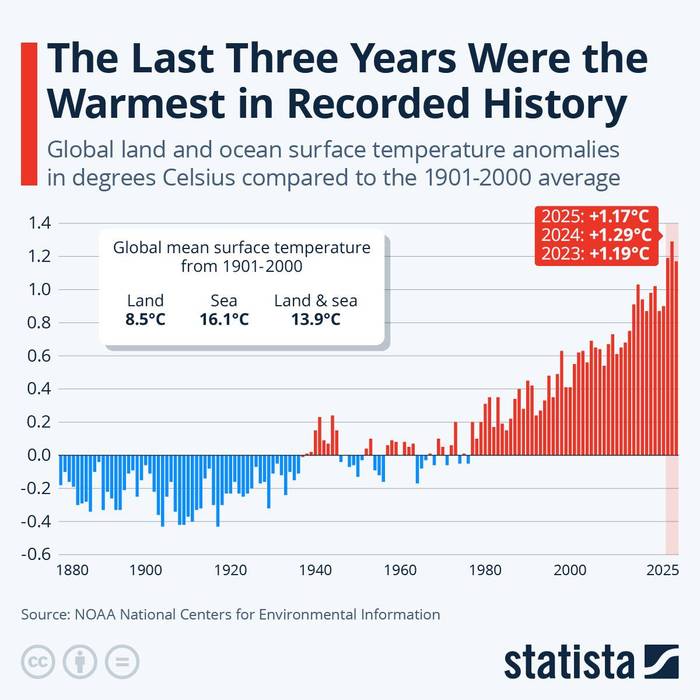
In light of this, the climate crisis continues to accelerate:In 2024, global greenhouse gas emissions reached a record 57.7 gigatons of carbon dioxide, a 2.3% increase from the previous year.Global carbon dioxide emissions in 2025 rose by 1.1% compared with 2024, setting a new all-time annual high.August 2026 tied as the joint-warmest month globally (matching July 2023), with global surface air temperatures reaching 1.65°C above preindustrial levels.The World Meteorological Organisation (WMO) has confirmed that the world is experiencing a historically powerful El Niño event dubbed a “super” El Niño. Record sea-surface temperatures are triggering widespread severe weather extremes, including severe droughts in parts of Africa and South America, disrupted monsoons in Asia, and intense heatwaves globally.The first four months of 2026 witnessed a staggering 150 million hectares burned by wildfires globally, roughly 50% above recent historic averages.Under current policies, global warming is projected to reach 2.8°C this century. Even if all national climate pledges were met, this figure is still projected to be 2.3-2.5°C.


Youth At COP31


Young people participate in a school climate strike on May 24, 2019. (Photo by Garry Knight)


Children and young people are disproportionately affected by climate change; therefore, their voices are particularly important at major climate and biodiversity conferences.

Today’s decisions have long-term consequences for their health, education, well-being, and future opportunities. Intergenerational justice looks at how present generations affect past and future people.

On July 23, 2025, the International Court of Justice issued the advisory opinion, which was unanimously adopted by all 15 judges: “Nations have a legal duty to combat the planetary crisis.”

This COP31 recognizes children and young people as important stakeholders and constituencies. Official mechanisms have been established to support youth participation:Presidency Youth Climate Champion (PYCC)—Sally Higgins serves as the COP31 youth champion, amplifying youth voices and ensuring inclusion in climate diplomacy alongside international climate envoys.EU Youth Policy Dialogue—Held on October 1, 2026 in Brussels, young representatives discussed intergenerational equity, AI energy demands, nature protection, and climate finance ahead of COP31.YOUNGO—The official children and youth constituency of the UNFCCC. It brings together over a million young members worldwide and helps train young advocates to participate in international negotiations, coordinate regional chapters, and ensure youth voices are heard inside the official rooms. They will co-organize the Global Conference of Youth (COY) ahead of COP31 to draft the Global Youth Statement and spearhead the official Youth-Led Climate Forum (YLCF) inside the COP venue.

Major youth organisations and umbrella networks driving the youth climate agenda at COP31 include the European Youth Forum, Generation Climate Europe, Youth Environment Europe (YEE), Regional Conference of Youth (RCOY) Networks, World Food Forum Youth Network, and UNICEF Climate Youth Tracks.


COP31: It’s Now Or Never


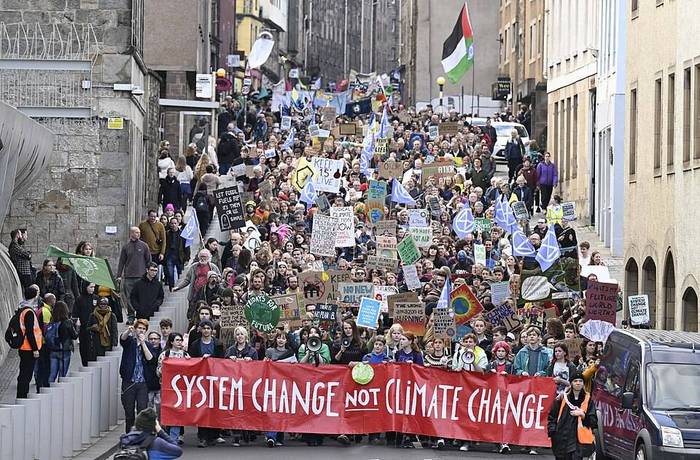
People in Edinburgh, Scotland participate in a march coinciding with COP27 on November 12, 2022. (Photo by Friends of the Earth Scotland / CC BY 2.0)


For years, global frustration has grown with these climate conferences; observers, climate scientists, and world leaders point to a persistent pattern of failure in climate finance, the fossil fuel transition, and consensus deadlocks.

COP28 and COP29 saw record-breaking attendance from thousands of fossil fuel lobbyists, diluting the voices of civil society and marginalized youth delegates. It is no wonder they were labelled a farce.

Whether the COP31 unprecedented co-hosting arrangement will help or hinder progress remains to be seen.

Both countries are already drawing criticism for expanding their coal and gas supply chains and omitting any mention of a global fossil fuel phaseout from their official pre-summit communications.

Since 2022, Australia has approved a major Hunter Valley coal mine expansion and 37 new fossil fuel projects.

Türkiye has plans to actively expand its domestic coal and gas capacity by 30% by 2035.

Pacific nations have also expressed their concerns about the joint presidency and the weakening of Australian regional solidarity. They worry the spotlight will shift away from sea-level rise and the vulnerability of small island nations.

On a positive note, the new voluntary “Electrification” pledge, which should help counter the stalemate on phasing out fossil fuels, gives us cause for hope. Another encouraging sign is that record funding for the global energy transition and renewable investment in 2025 reached $2.3 trillion.

It is also hoped that new transparency and funding disclosure rules introduced for delegates will limit the number of fossil fuel lobbyists delaying progress.

Drawing attention to the alarming global rise of militarism, COP31 President-Designate Murat Kurum publicly argued that wealthy countries need to spend much more on climate action than the 5% of GDP NATO members target for defense, warning that climate change is the ultimate security threat.

Without definitive progress at COP31, climate pledges, and indeed the COP conferences themselves, risk collapsing into broken promises and losing public trust. Influential figures such as Greta Thunberg, Chris Packham, Ban Ki-moon, and Mary Robinson have already declared the summits unfit for purpose.

Quite simply, time has run out for more empty words.


Our work is licensed under Creative Commons (CC BY-NC-ND 3.0). Feel free to republish and share widely.


Rachael Mellor
Rachael is a key writer for the nonprofit platform Better World Info, which focuses on global issues such as peace, human rights, environment, and social justice. Her articles are also published in The Transnational and Peace News. Follow her work at www.betterworld.info and @BetterWorldInfo.
Full Bio >
‘Enough. Have Mercy on Us!’ Suffering in Gaza Escalates as 70,000 Tents Destroyed by Floods

“We are poor people in Gaza,” said one man whose family of our lost their makeshift home to the storm water. “We want to live. We do not want to die from the bombing or the cold.”


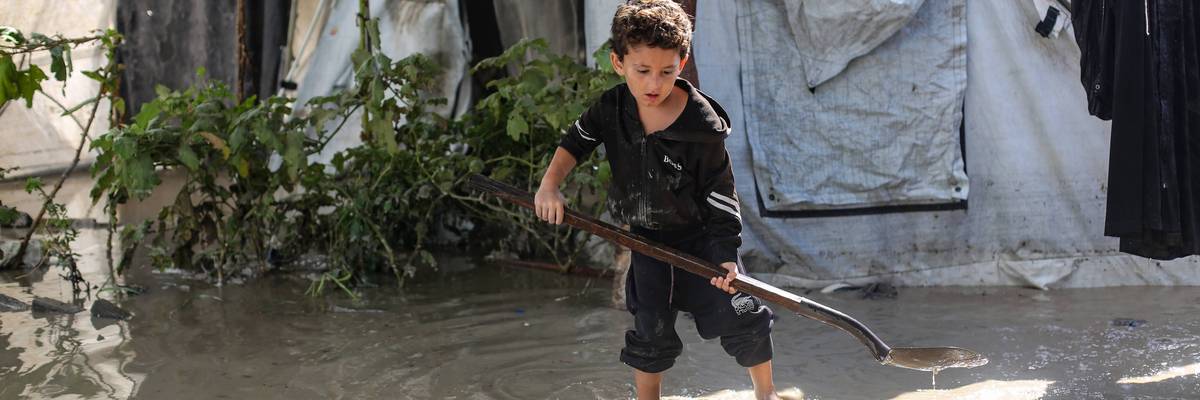
Displaced people inspect the damage caused to their tents by heavy rain on November 7, 2026 in Gaza City, Gaza. Rainwater inundated tent encampments across the territory, worsening the already dire living conditions of many Gaza residents displaced by war.
(Photo by Ahmad Hasaballah/Getty Images)


Jon Queally
Nov 07, 2026
COMMON DREAMS

The suffering of the people of Gaza went from horrific and beyond comprehension to something worse on Saturday after storm waters overnight destroyed tens of thousands of tents and flooded tens of thousands of people into further desperation, all while the US and Israeli governments continue to maintain a cruel blockade on life-saving supplies despite a fast-approaching winter and a military occupation with no end in sight.

“At least 70,000 tents have been flooded & blown away by the torrential downpour and tempestuous wind in Gaza since last night,” reported Palestinian journalist Abubaker Abed, citing statements from health and media officials. “Families are shelterless. Food prices are soaring. Children are starving and shivering with cold. Caravans and mobile homes must enter Gaza now to avert this cataclysm.”

Gaza’s Government Media Office on Saturday, holding Israel wholly responsible for the disaster, said initial losses from flooded and destroyed tents were estimated at $3 million and that dozens of walls of homes had collapsed, resulting in injuries, while the threat of broader building collapse remained a serious risk.

In a statement, Palestinian Health Minister Dr. Majed Abu Ramadan said, “What is happening in Gaza is not a passing winter crisis. I urgently call on the international community, the United Nations, and health, humanitarian, and relief organizations to intervene immediately to save the lives of hundreds of thousands of displaced people in the Gaza Strip, following the flooding of thousands of tents with rainwater and the absence of basic safe shelter conditions.”

Al-Jazeera reports:
According to the United Nations Office for the Coordination of Humanitarian Affairs (OCHA), about 950,000 displaced people in Gaza are living in areas exposed to flooding. Low-lying locations and sites near the coast are particularly vulnerable, with more than 400,000 people living in areas considered at high risk of flooding.
About 44,000 Palestinians are living in structurally unsafe buildings, while more than 4,000 buildings across the territory are estimated to require full or partial demolition due to damage caused by Israeli air strikes. About 294,250 families need shelter assistance ahead of winter, but the available supplies cover only 18 percent of their needs.

Ramadan further warned of “a catastrophic deterioration in health and environmental conditions, alongside growing risks of the spread of diseases and epidemics” if an emergency response was not rapidly and comprehensively deployed.


Video footage and eyewitness accounts offered a heartbreaking picture of those hit by the floods.

“We woke up and found ourselves surrounded by water,” a man named Mansour al-Sakni, 33, told the Middle East Eye. “The children were crying. I did not know what to do, and I started crying too.”

“We stood inside the tarpaulin shelter waiting for the rain to stop so we could try to push the water out of the room,” he said. “We are poor people in Gaza. We want to live. We do not want to die from the bombing or the cold. Enough. Have mercy on us.”

According to NBC News:
The territory’s civil defence service said it had received 1,500 distress calls from displaced residents. Three abandoned houses collapsed without causing injuries, it added.

At a tent encampment in Gaza City, some people tried to repair their tents, ⁠while others used sand to reinforce them and prevent water from entering. ⁠Some were busy getting their children out of flooded tents.

Olfat Magdoub, a Gaza resident, tried in vain to sweep water away from her tent.

“This is the first day of rain, and of course ⁠we are already flooded. What will happen if it rains again the next day? This is only the first day and ⁠we’re already overwhelmed,” said the woman.

“Two weeks ago when it rained, I swear to God, I spent four days sleeping on blankets spread on the floor because the rainwater had flooded the bedding. Same now, the mattresses are wet so we sleep on the ground.”

While the flooding devastated the people and families trapped by the blockade of life-saving aid and shelter, fresh ire was pointed at the US government for refusing to rebuke the Israeli government for its wanton disregard for human life and suffering.

On the ground in Gaza, the anguish of Palestinians, including children, was on display in videos of the devastation and ongoing catastrophe posted to social media:


“How long are we supposed to live like this?” declares the young boy featured in the video. “I swear I don’t know what to do. Have mercy on us for God’s sake! For the sake of God, have mercy on us!”


Children are particularly impacted by the rainwater and vulnerable to the increasingly dangerous conditions imposed by the floods


“What remains of Gaza’s homes is collapsing under heavy rain, amid the ongoing genocide and deafening silence,” said Ramy Abdul, chairman of the human rights group Euro-Med Monitor.

“For the fourth consecutive year,” Abdul added, “Gaza remains under a suffocating Israeli siege that prevents even the recovery of victims’ bodies from beneath the rubble.”
‘End the Genocide’: 200,000 March for Gaza in Amsterdam

“Too bad the US media can’t find out about this,” said one American critic recognizing that such displays of opposition to Israel’s violent campaign of ethnic cleansing and forced displacement are rarely given much coverage.


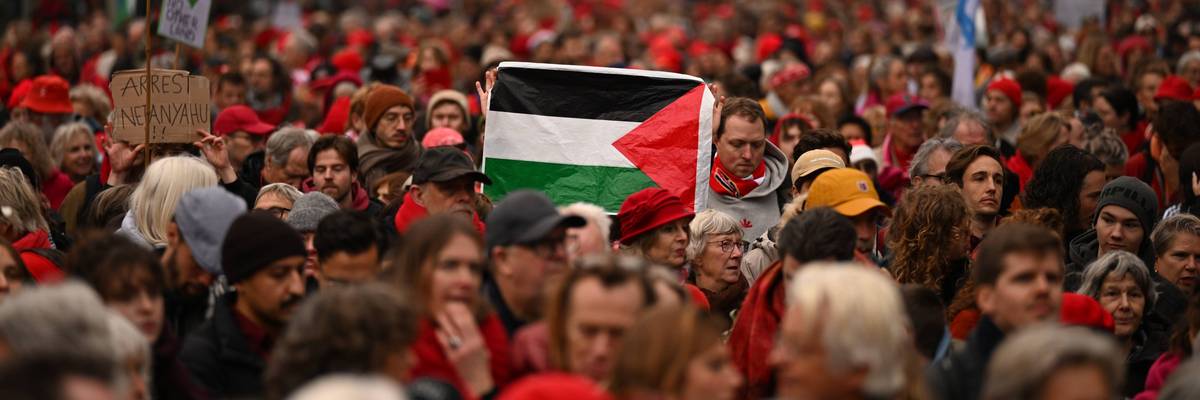
Demonstrators dressed in red gather at Museumplein during the fourth Red Line demonstration in Amsterdam, Netherlands, on November 8, 2026. Organized by humanitarian and human rights groups including Amnesty International, Oxfam Novib and Save the Children, the protest calls for action over the situation in Gaza, with participants carrying banners and signs across the square.

(Photo by Mouneb Taim/Anadolu via Getty Images)


Common Dreams Staff
Nov 08, 2026

An estimated 200,000 or more people—a sea of protesters dressed in red—marched and rallied in Amsterdam on Sunday to denounce Israel’s ongoing genocide in Gaza, castigate the Dutch government and others in Europe for not doing enough to end the suffering and bloodshed after more than 3 years of US-back bombing, intentional starvation, and endless displacement in the world’s largest open-air prison.

Organizers behind the “Red Line” rally—including The Rights Forum, Amnesty International Netherlands, Oxfam Novib, and others—celebrated the extraordinary turnout as they called for the Dutch government to do more to stop an Israeli government that “continues to kill, displace, and starve people in Gaza and the West Bank.”


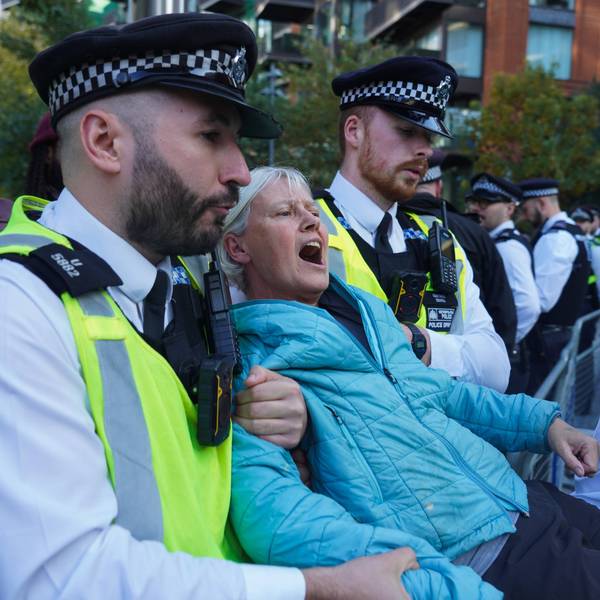
‘Kafkaesque’: London Cops Allow ‘I Support Genocide’ Sign, Arrest 320 Palestine Action Protesters


“What is happening there is inhumane,” said one protester, Mike van Dongen, who spoke to the Associated Press while he marched among the enormous crowd near the city’s Museumplein. “As far as I’m concerned, [the Dutch authorities] are doing nothing. They don’t dare take any serious steps.”

As Al Jazeera reports, the protesters “called for tighter trade restrictions on Israel and a halt to all arms sales” to help bring an end to violence in Gaza and the occupied West Bank.


Large crowds join Red Line Gaza protest in Amsterdam

Signs in the crowd read “Stop the Killing in Gaza,” “End the Genocide,” and “Free Palestine” as speakers at the rally demanded much tougher actions and global solidarity with those suffering in Gaza, including tens of thousands of people who lost their temporary tents and shelters over the weekend to rainstorms and flooding.

According to AP:
The campaign in Gaza has strained relations between the Netherlands and Israel. The Dutch foreign minister resigned last year after failing to secure new sanctions against Israel.

Since then, a new minority coalition government has taken power and introduced an import ban on products from Israeli settlements, which the Dutch government and most of the international community consider illegal — a move that provoked a diplomatic spat with Israel.

Agence France-Presse spoke with Steven Eisinger, a 33-year-old robotics engineer born in the United States who marched with a red scarf around his neck.

Eisinger, who is Jewish and has family living in Israel, said he wanted all arms shipments to Israel to end and that he attended the rally, according to AFP, “to voice his backing for Palestinians and his opposition to genocide.”


Victor Serge’s revolutionary literature

On the anniversary of the October Revolution, we revisit Victor Serge’s life and work. Caught between revolutionary hope and Stalinist betrayal, his writings illuminate Europe’s turbulent twentieth century.


By Ian Birchall

A 1913 courtroom sketch of Victor Serge by Paul Charles Delaroche. (Bibliothèque Nationale de France)

Review of Victor Serge: Unruly Revolutionary by Mitchell Abidor (Pluto Press, 2025)

Many readers will be familiar with Victor Serge’s literary work: his novels, notably The Case of Comrade Tulayev, and his fascinating autobiography Memoirs of a Revolutionary. All his work centers around the great historical events of the first half of the twentieth century, the hopes aroused by the Russian Revolution of 1917, and its subsequent disastrous outcome.

Now Mitchell Abidor has written a biography of Serge, based on extensive research and using documentation collected by the great Serge scholar and translator, Richard Greeman. While Abidor does not fundamentally challenge the account Serge himself presented in the Memoirs, he does add much fascinating detail that places Serge’s political evolution in context.

Anarchism and Bolshevism

Born to a Russian family in Belgium with the name Viktor Lvovich Kibalchich, Serge went through a remarkable process of intellectual development while still a teenager (he never went to school). He moved to Paris and became active as a writer and editor in the anarchist milieu, ending up in jail for five years.

The Russian Revolution of 1917 was the vital turning point in Serge’s development.

Abidor devotes the first quarter of the book to Serge’s time as an anarchist. Revolutionaries are not born such, but make themselves, often through a path marked by difficulties and contradictions. Though Serge always retained a certain sympathy for anarchism, Abidor shows that there were some deeply reactionary elements in the Parisian anarchist scene.

The influence of radical individualism and a marked pessimism about the possibility of social change meant that Serge was very skeptical about the viability of collective action. It was his later experiences of mass action, first in Spain and then in Russia, that would lead to a fundamental reorientation of his political activity.

The Russian Revolution of 1917 was the vital turning point in Serge’s development. For Serge, as for a whole generation devastated by the horrific mass slaughter of World War I, the rise to power of the Bolshevik Party was a moment of hope — hope that it would be possible to construct a quite different social order.

The young Serge had engaged in speculation about the possibility of revolution. Now a real revolution had happened, and even if it diverged from his earlier ideas, he was determined to play his part in it. With great difficulty, he made his way across Europe and put himself at the service of the Bolsheviks.

Postrevolutionary Russia was no paradise. The main reason — and one which Abidor might have stressed more — was the efforts made by the great powers of the West (Britain, France, the United States, etc.) to subvert and overthrow the new regime and to prevent the hope it embodied from infecting working people elsewhere in the world. Foreign armies invaded Russia to join up with native counterrevolutionaries; the so-called civil war was a war of national defense. Serge, who fought in the armed defense of Petrograd and wrote a powerful history, Year One of the Russian Revolution, understood this well.

Certainly Serge had, as Abidor shows, criticisms and reservations about the earliest years of the revolution. But there is no doubt that his main motivation in these years was a commitment to defend and propagate the revolution. He even supported the suppression of the Kronstadt revolt against the Bolsheviks in 1921 (though he changed his mind about this later). Serge developed the concept of “double duty”: the need to confront the external enemies of the revolution but also at the same time the negative factors within the revolution.

Like Vladimir Lenin and Leon Trotsky, Serge was convinced that the revolution could only survive and develop if it spread westward. In the mid-1920s, he moved to central Europe, aiming to play his part in the hoped-for German revolution that would have transformed the balance of forces throughout Europe. However illusory the hopes of a German revolution may appear to have been in retrospect, the Germany of 1923, described by Serge in a series of press reports, was on the verge of social and economic collapse — it really did look like a society on the brink of revolution.

Midnight in the Century

The ten years of revolutionary commitment were, in a sense, the most important years of Serge’s life. They gave him an ideal and a vision of hope against which subsequent deformations and betrayals of the revolution could be measured. By the late 1920s, things had changed catastrophically. Lenin was dead, Trotsky had been sent into exile, and Joseph Stalin was increasingly in control of the USSR.

Serge’s sympathies were with Trotsky, a figure whom, despite differences between them, he always admired. But the regime could not tolerate Serge’s support for the Left Opposition, despite — indeed because of — his record as a supporter of the revolution. He was arrested, savagely interrogated, and sent into exile over nine hundred miles from Moscow.

In a sense Serge was lucky: he was exiled, but not sent to a concentration camp. Most of his contemporaries who had oppositional sympathies ended up dead. One of the main reasons Serge avoided this fate was the fact that a significant group of friends and comrades in France waged a vigorous campaign for his release. Stalin, who needed allies on the French left, decided to exile him rather than put him on trial.

The ten years of revolutionary commitment were, in a sense, the most important years of Serge’s life.

Like many people, I have often been asked to express support for people imprisoned in foreign countries, and wondered if there was any point to it. Serge’s release shows that such campaigns can work, sometimes at least.

Serge returned to Belgium, then France. He continued to write copiously, both journalism and novels. While he had escaped Stalinism, other threats remained. Throughout Western Europe, fascism was on the rise.

After Francisco Franco’s triumphal march into Madrid and Barcelona in 1939, France was surrounded on three sides by fascist regimes in Germany, Italy, and Spain. It was, in a phrase Serge coined as the title for one of his novels, “midnight in the century.” When France was occupied by German troops the following year and a viciously right-wing, antisemitic regime established, Serge aimed to get out of Europe and escape to North America.

This was the phase of Serge the asylum seeker. Perhaps few asylum seekers have a political past like Serge’s, or a literary talent like his. But in his efforts to find a place on a boat bound across the Atlantic, Serge reminds us of the problems and torments faced by all refugees from his time to our own.

Serge found sanctuary in Mexico, which welcomed many refugees from Europe. Leon Trotsky had been exiled (and murdered by a Stalinist agent) there. Serge spent his last years surrounded by European exiles, with a variety of hopes and aspirations for the postwar world. He continued to write, both for publication and in his notebooks. He died in 1947, aged only fifty-six, in deep poverty (there were holes in his shoes), worn out by a life of struggle and persecution.

Unanswered Questions

For those like myself who have long admired Serge, the concluding section of Abidor’s book is perhaps the saddest. Abidor has carefully examined Serge’s published and unpublished writings from his last years, and he convincingly concludes that in his last years, Serge saw communism as the “main enemy.”

For those like myself who have long admired Serge, the concluding section of Abidor’s book is perhaps the saddest.

In one sense, this is scarcely surprising. Stalinist violence was not confined to the USSR: the pro-Stalin Communists in Mexico had physically attacked Serge and may even have tried to kill him. It was small wonder that he would come to see them as his principal enemy.

In fact, it is difficult to know how Serge would have developed had he lived longer. He died in the autumn of 1947; the Cold War had begun only earlier that year, with the proclamation of the Truman Doctrine as the US president promised material support to nations resisting communism and the turn to militant strikes by the Communist Parties of Western Europe. For the next forty years, world politics would be dominated by the confrontation between the US and Soviet blocs.

Some ex-Communists, like Arthur Koestler, became loyal and enthusiastic supporters of the Western camp. But there was also a much smaller current, represented by figures such as C. L. R. James, Hal Draper, Cornelius Castoriadis, and Tony Cliff, who took a different view. While arguing that Stalinism had nothing in common with socialism, they sought a political path that would be independent of both Washington and Moscow. Would Serge have backed the Americans in Korea and Vietnam, or would he have stood by the spirit of revolutionary independence that had characterized his life so far? We can only speculate.

The range of choices facing Serge can be illustrated by looking at some of the companions who shared his exile in Mexico. Marceau Pivert had been the leader of the French Socialist Party’s far-left faction during the 1930s before breaking away to form a group of his own. In 1945, he returned to France and rejoined the Socialist Party.

While he opposed all cooperation with the French Communist Party, Pivert became increasingly dissatisfied with the Socialist Party’s rightward drift. In particular, he remained committed to the cause of colonial liberation and strongly opposed the repression of the movement for Algerian independence; this led to his final break with the Socialist Party leadership shortly before his death in 1958.


Another of Serge’s close associates, Julián Gorkin, followed a different path. During the Spanish Civil War, he had been a leader of the POUM (Workers’ Party of Marxist Unity), which confronted the Communist Party of Spain from the left. Exiled in Mexico, he helped Serge obtain a Mexican visa, and together with him had faced violence from Mexican Stalinists.

However, by the time he moved to Paris in 1948, Gorkin had firmly aligned himself as an anti-communist in the Cold War. He became editor of a Spanish-language journal, Cuadernos, on behalf of the Congress for Cultural Freedom, which (as became widely known) was financed and controlled by the US Central Intelligence Agency.

Hope and Betrayal

One thing is clear: Serge’s perspective is primarily European. Although he had written a very perceptive article on the Chinese rising of 1927, he otherwise showed little interest in Africa and Asia. Yet the collapse of the old colonial empires was one of the most important developments after 1945. Britain was forced out of India, while France fought two bloody and disastrous wars in Indochina and Algeria. How Serge would have responded we cannot know.

If Serge’s death left unanswered questions, his life was a remarkable contribution to the politics of the socialist left.

If Serge’s death left unanswered questions, his life was a remarkable contribution to the politics of the socialist left. Abidor’s account is a fascinating and well-documented story; it deserves to be read and hopefully will encourage more people to read Serge’s own writings.

All of Serge’s life and work was dominated by a contradiction — the way the very real hope inspired by 1917 gave way to the betrayal of Stalinism. As Serge summed it up: “Out of a magnificent workers’ victory we have seen the rise, on the basis of the socialist ownership of the means of production, of an inhuman regime, profoundly anti-socialist in the way it treats human beings.”

It was this contradiction that shaped the world of the twentieth century. The heritage is still with us, as we face midnight in our own century. Thus rebels against the system are labeled “Marxists,” often by people who know little or nothing of what Marxism is. The memory of the Cold War and McCarthyite anti-communism remains with us. There is still much to be learned from the life and work of Victor Serge.


Ian Birchall is the author of Sartre Against Stalinism and many articles and essays on the twentieth-century French left.

Free Maricela Rueda!


Free Maricela Rueda!

On July 4, Maricela Rueda was arrested while protesting injustices at the Prairieland Detention Center in Alvarado, Texas. A tireless human rights advocate, Maricela remains incarcerated, leaving her young daughter without her mother and her family facing overwhelming financial challenges. We are raising funds to support her daughter and cover urgent household expenses. Please stand in solidarity with Maricela and her family during this difficult time.

LEARN MORE HERE

We will donate 40% of sales from the titles below to the legal defense funds for Maricela Rueda and the Prairieland Defendants.